
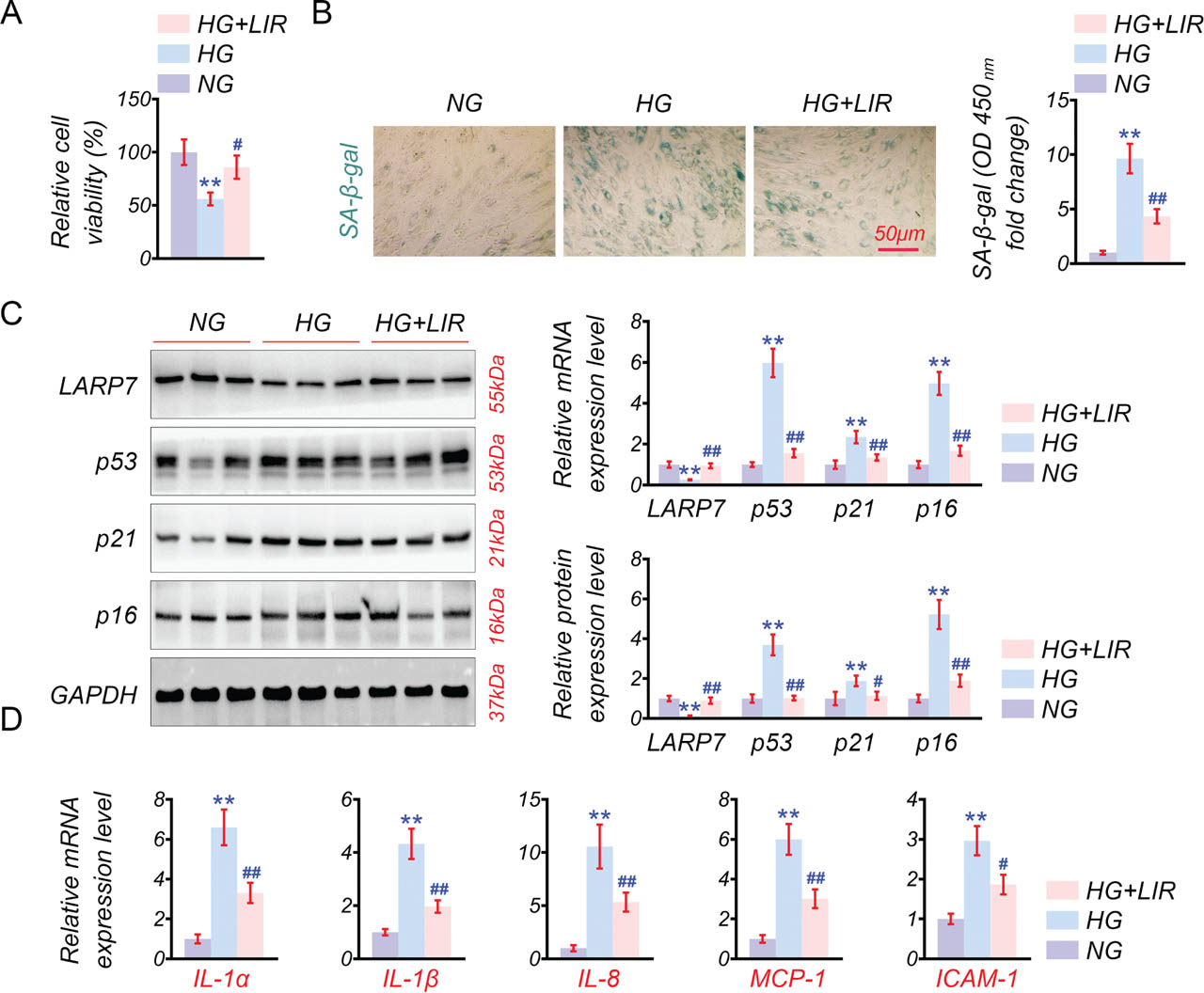
Fig 1.
LIR augments LARP7 expression and inhibits HG-induced HUVEC senescence. Cells were categorized into four groups: NG group (5.5 mM glucose), HG group (30 mM glucose), and HG + LIR group (30 mM glucose, 500 μM LIR). (A) CCK-8 assay to assess cell viability. (B) SA-β-gal staining to evaluate cellular senescence. (C) Western blot and qPCR analysis for changes in LARP7, p53, and p21 expression levels. (D) qPCR to quantify SASP gene expression levels of IL-1α, IL-1β, IL-8, MCP-1, and ICAM-1. n = 3 for each group. Scale bar: 50 μM. **p < 0.01 vs. NG, #p < 0.05, ##p < 0.01 vs. HG. HG, high glucose; HUVECs, human umbilical vein endothelial cells; LIR, Liraglutide; MCP-1, motif chemokine ligand 2; SASP, senescence-associated secretory phenotype.
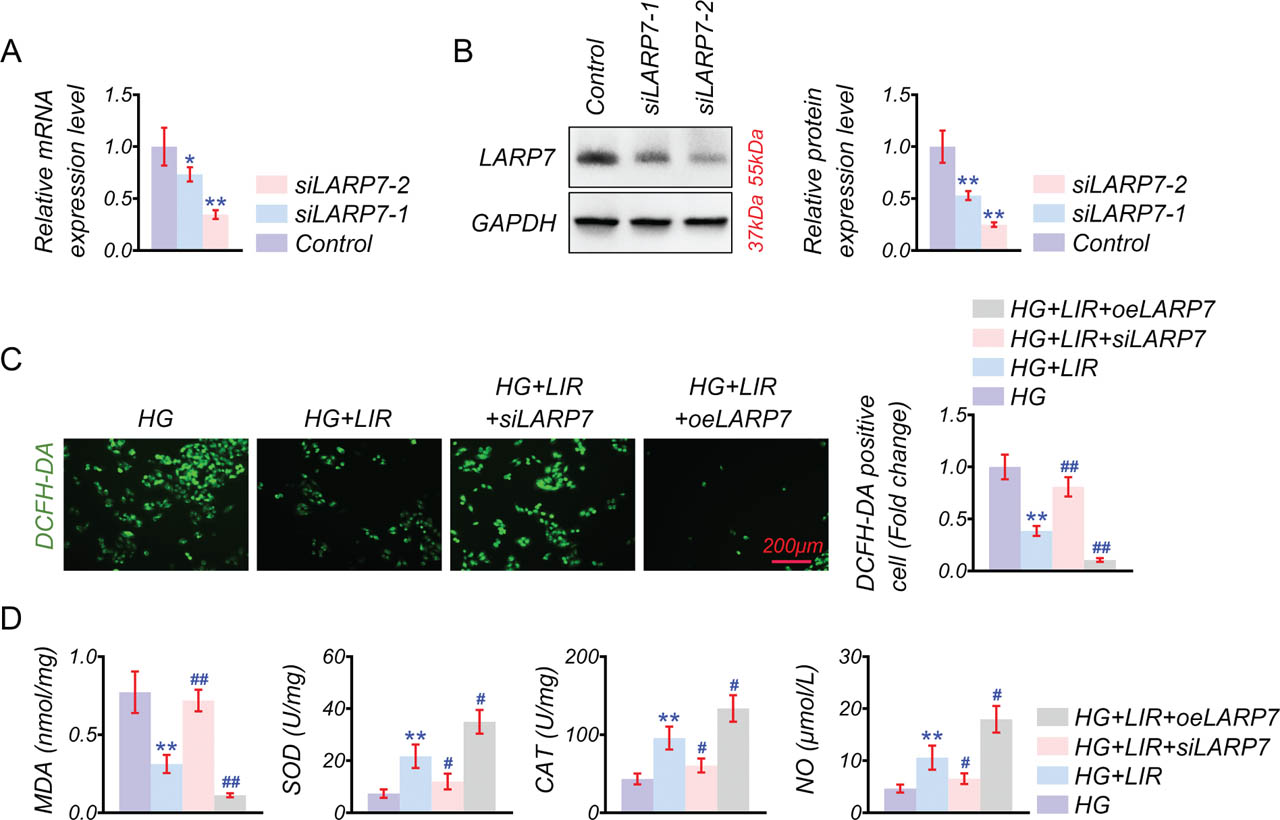
Fig 2.
LIR alleviates oxidative stress in senescent ECs via LARP7. Two distinct LARP7 knockdown vectors were constructed to mitigate off-target responses, with knockdown efficiency subsequently validated. (A,B) qPCR and Western blot for assessing LARP7 mRNA and protein expression post-transfection. The impact of LARP7 knockdown on HUVECs was examined in four groups: HG, HG + LIR, HG + LIR + siLARP7, and HG + LIR + oeLARP7. (C) DCFH-DA fluorescent probe for measuring cellular ROS content. (D) Assay kits to determine oxidative stress-related factors, specifically MDA/NO content and SOD and CAT activities. n = 3 for each group. Scale bar: 200 μM. *p < 0.05, **p < 0.01 vs. Control or HG, #p < 0.05, ##p < 0.01 vs. HG + LIR. CAT, catalase; ECs, endothelial cells; HG, high glucose; HUVECs, human umbilical vein endothelial cells; LIR, Liraglutide; MDA, malondialdehyde; NO, nitric oxide; ROS, reactive oxygen species; SOD, superoxide dismutase.
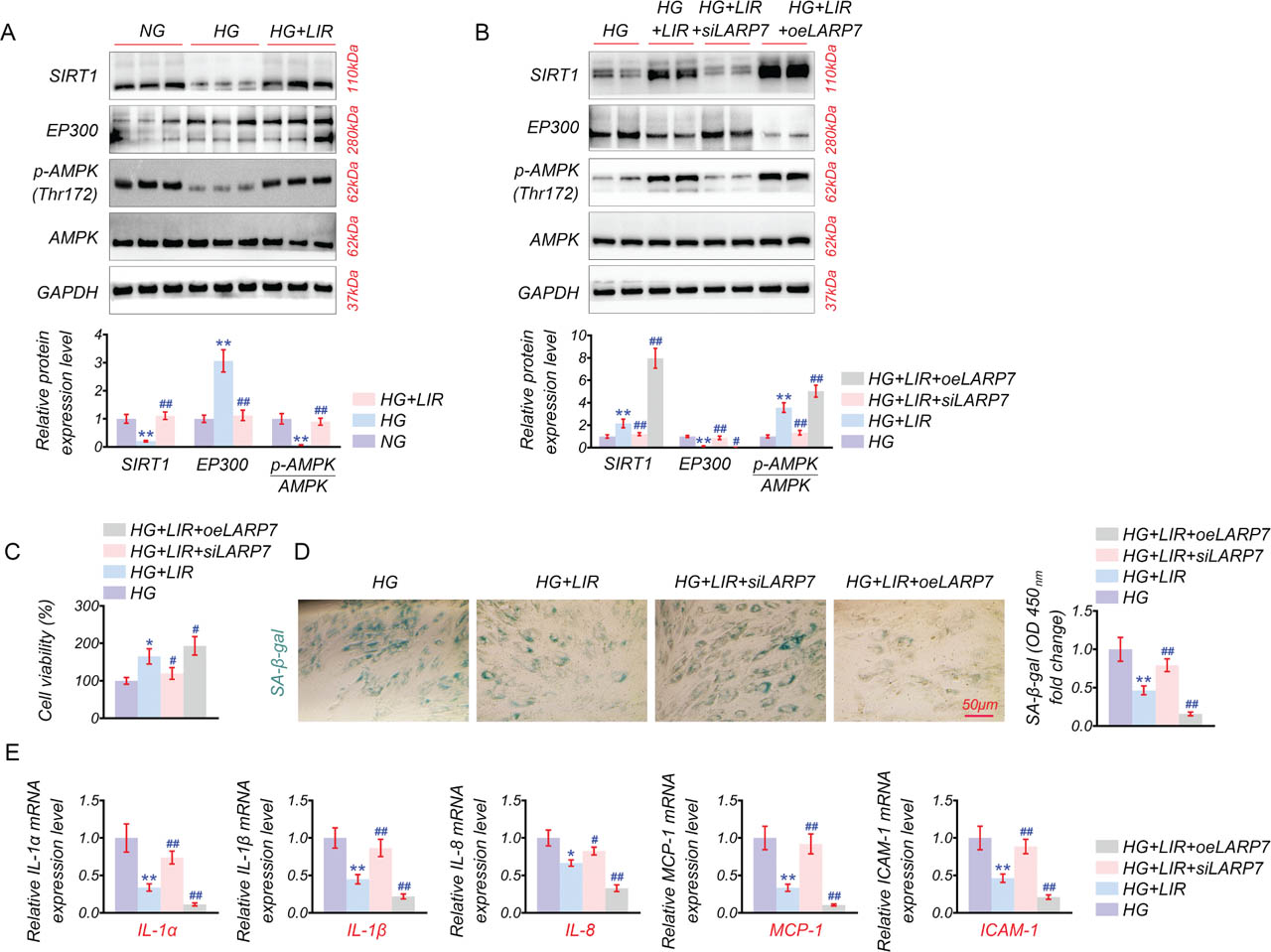
Fig 3.
LIR regulates EC senescence through the LARP7/SIRT1 pathway. Cells were initially segregated into NG, HG, and HG + LIR groups. (A) Western blot analysis for alterations in the known senescence signaling axes, focusing on SIRT1, EP300, p-AMPK (Thr172), and AMPK. Subsequent assessments in the HG, HG + LIR, HG + LIR + siLARP7, and HG + LIR + oeLARP7 groups were conducted to determine the effects on the senescence signaling axis and cellular phenotype. **p < 0.01 vs. NG, ##p < 0.01 vs. HG. (B) Western blot analysis for SIRT1, EP300, p-AMPK (Thr172), and AMPK. (C) CCK-8 assay for evaluating cell viability. (D) SA-β-gal staining to determine cellular senescence. (E) qPCR to measure SASP gene expression levels of IL-1α, IL-1β, IL-8, MCP-1, and ICAM-1. n = 3 for each group. Scale bar: 50 μM. *p < 0.05, **p < 0.01 vs. HG, #p < 0.05, ##p < 0.01 vs. HG + LIR. EC, endothelial cell; HG, high glucose; LIR, Liraglutide; MCP-1, motif chemokine ligand 2; SASP, senescence-associated secretory phenotype.
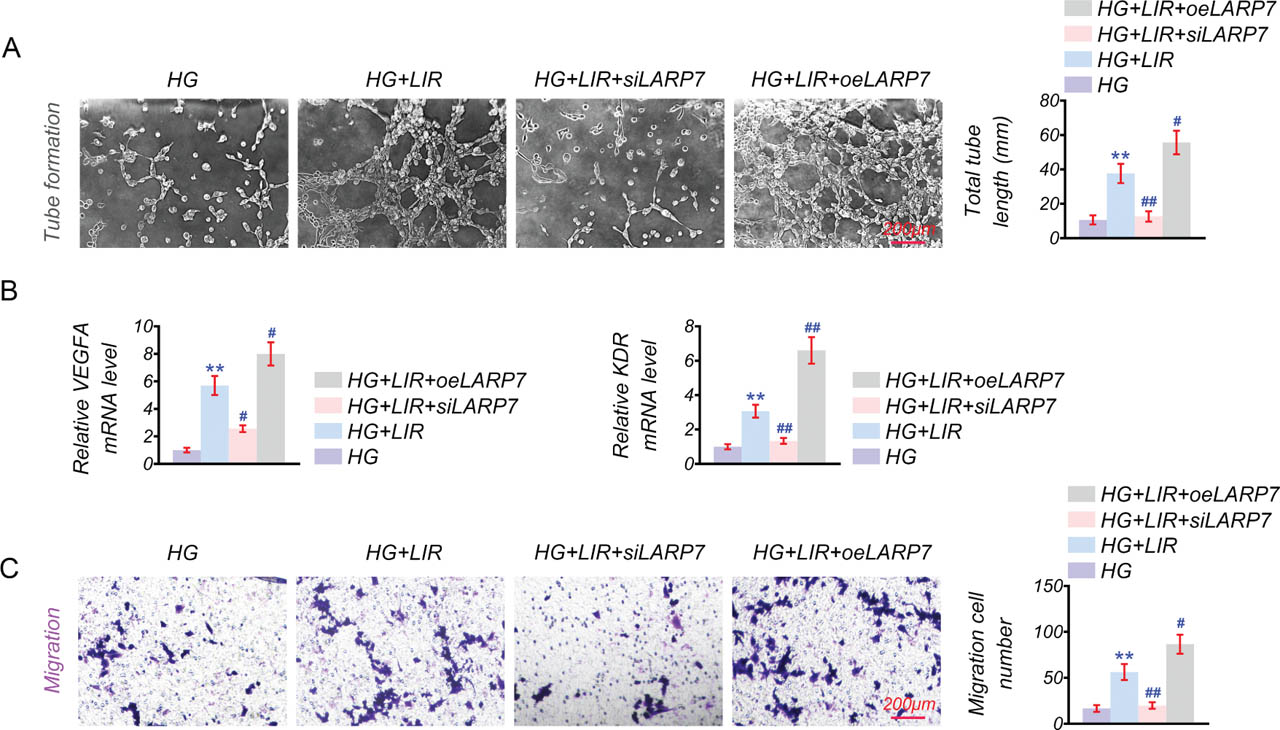
Fig 4.
LIR restores endothelial function impaired by LARP7 deficiency. Further investigation into the impact of LIR and LARP7 on HUVEC function was conducted in the HG, HG + LIR, HG + LIR + siLARP7, and HG + LIR + oeLARP7 groups. (A) Tube formation assay to measure angiogenic capacity. (B) qPCR is used to evaluate mRNA changes in VEGFA and KDR. (C) Transwell assay for assessing HUVEC migration capabilities. n = 3 for each group. Scale bar: 200 μM. **p < 0.01 vs. HG, #p < 0.05, ##p < 0.01 vs. HG + LIR. HG, high glucose; HUVECs, human umbilical vein endothelial cells; KDR, kinase insert domain receptor; LIR, Liraglutide; VEGFA, vascular endothelial growth factor A.
Table S1.
Sequences of transfection plasmid constructs used in this study
| Name | Sequence |
|---|---|
| LARP7 shRNA-1 | 5′- GGATGAACGCACAGTGTATGT -3′ |
| LARP7 shRNA-2 | 5′- GGACAGAGTTGAAGCATCTAG -3′ |
| Ctrl shRNA | 5′- GTTCAGATGTGCGGCGAGTAA -3′ |
Table S2.
qPCR primers used in the study
| Name | Sequence |
|---|---|
| GAPDH | Forward: 5′-CAGCCTCAAGATCATCAGCA-3′ |
| Reverse: 5′-TGTGGTCATGAGTCCTTCCA-3′ | |
| LARP7 | Forward: 5′-TGGAAACTCGAGATCCTTTCTG-3′ |
| Reverse: 5′-GTTTTGCCTGTCTATCAACCAA-3′ | |
| ICAM-1 | Forward: 5′-GTGATGCTCAGGTATCCATCCA-3′ |
| Reverse: 5′-CACAGTTCTCAAAGCACAGCG-3′ | |
| IL-1β | Forward: 5′-GCAACTGTTCCTGAACTCAACT-3′ |
| Reverse: 5′-ATCTTTTGGGGTCCGTCAACT-3′ | |
| IL-1α | Forward: 5′-TCTGCAAGATGCCACAAGGT-3′ |
| Reverse: 5′-TGAAGCCCACTTGGTTCAGG-3′ | |
| IL-8 | Forward: 5′-TTGGCAGCCTTCCTGATTTC-3′ |
| Reverse: 5′-AACTTCTCCACAACCCTCTGCA-3′ | |
| MCP-1 | Forward: 5′- GCCCCACTCACCTGCTGCTACT-3′ |
| Reverse: 5′- CCTGCTGCTGGTGATCCTCTTGT-3′ |