
Table 1.
SPAG9 and NY-REN-60 derived T cell epitope peptides predicted by computer algorithms SYFPEITHI, IEDB, and NetCTL
| Peptide | Peptide sequence | Peptide position | SYFPEITHI ranking | IEDB ranking | NetCTL ranking |
|---|---|---|---|---|---|
| S1 | SLLGGITVV | 837 | 32 | 0.4 | 1.27 |
| S2 | ALADGTLAI | 1016 | 29 | 0.7 | 1.42 |
| S3 | AIIESTPEL | 343 | 29 | 1.6 | 1.30 |
| S4 | ELMPLVVAV | 49 | 28 | 0.4 | 1.03 |
| S5 | VMSERVSGL | 19 | 26 | 1.6 | 1.21 |
| S6 | RLMELQEAV | 521 | 25 | 0.3 | 1.20 |
| S7 | SLFEELSSA | 381 | 25 | 1.0 | 1.19 |
| S8 | KLKDSILSI | 998 | 26 | 2.3 | 1.34 |
| S9 | VLQGELEAV | 447 | 28 | 1.7 | 1.02 |
| S10 | AVLENLDSV | 56 | 26 | 1.8 | 1.07 |
| S11 | LILENTQLL | 413 | 26 | 3.0 | 1.08 |
| S12 | DLIAKVDEL | 433 | 28 | 5.6 | - |
| N1 | WLLSGGVYV | 162 | 26 | 0.4 | 1.26 |
| N2 | SLFGMPLIV | 1099 | 26 | 0.5 | 1.23 |
| N3 | FMNSSIQCV | 744 | 24 | 0.4 | 1.49 |
| N4 | SLSEGLFNA | 231 | 24 | 0.5 | 1.26 |
| N5 | FLVPRDPAL | 1311 | 25 | 0.9 | 1.33 |
| N6 | LLFQVCHIV | 355 | 24 | 0.43 | 1.23 |
| N7 | LLAFLLDGL | 829 | 29 | 1.3 | 1.08 |
| N8 | GLHEDLNRV | 836 | 28 | 1.3 | 1.10 |
| N9 | LLDDEDHKL | 679 | 26 | 2.0 | 1.60 |
| N10 | NLIVGLVLL | 79 | 30 | 1.6 | 0.93 |
| N11 | FLCAFEIPV | 991 | 22 | 0.1 | 1.37 |
| N12 | MMRTELYFL | 1083 | 23 | 0.9 | 1.24 |
Table 2.
Sequences of peptides used in the peptide mix in the MLPC
| Peptide | Peptide sequence |
|---|---|
| RHAMM-R3165–173 | ILSLELMKL |
| WT1126–134 | RMFPNAPYL |
| PRAME300–309 | ALYVDSLFFL |
| MPP11437–445 | STLCQVEPV |
| Aur-A207–215 | YLILEYAPL |
| BCR-ABL922–930 | GFKQSSKAL |
| PR3-PR1169–177 | VLQELNVTV |
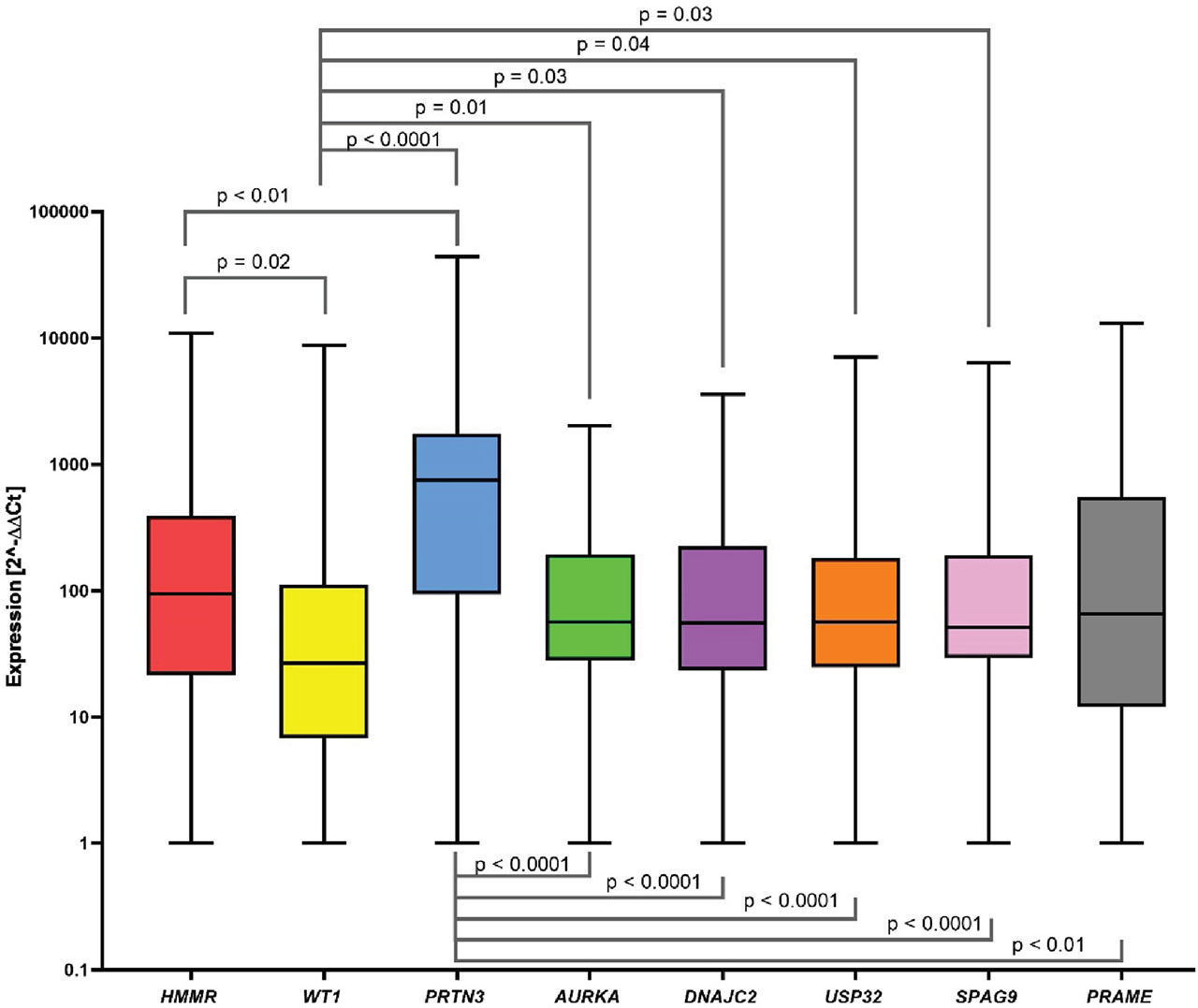
Fig 1.
Screening of HMMR, WT1, PRTN3, AURKA, DNAJC2, USP32, SPAG9, and PRAME gene expression in CML patients. The data is presented in a box and a whisker plot, where the whiskers indicate the min-max value, and the box marks the median. We observed statistically significant higher gene expression of HMMR vs. WT1, AURKA vs. WT1, DNAJC2 vs. WT1, USP32 vs. WT1, SPAG9 vs. WT1, PRTN3 vs. HMMR, WT1, AURKA, DNAJC2, USP32, SPAG9, and PRAME. In the remaining pairs, no statistical significance was obtained. CML, chronic myeloid leukemia.
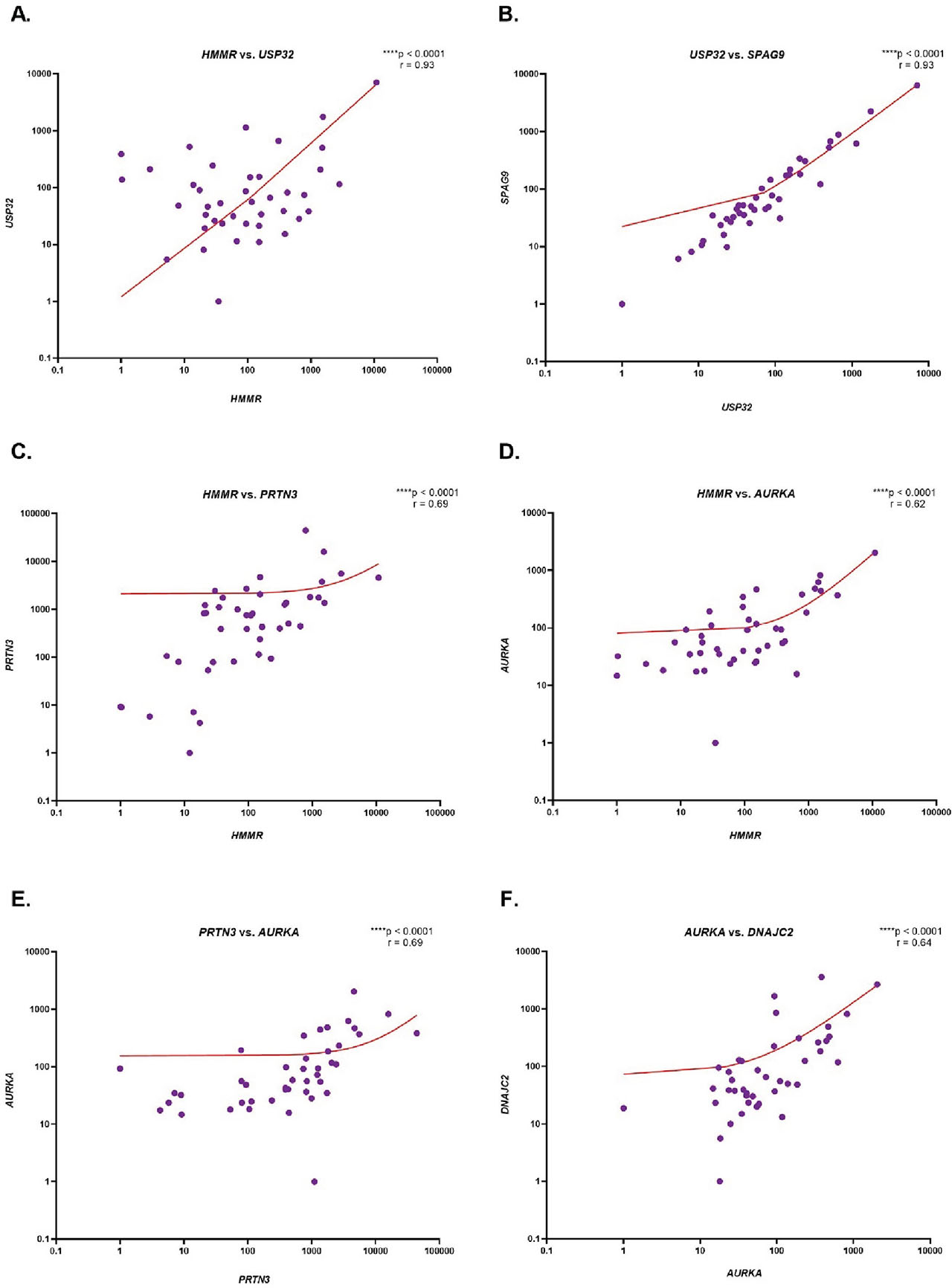
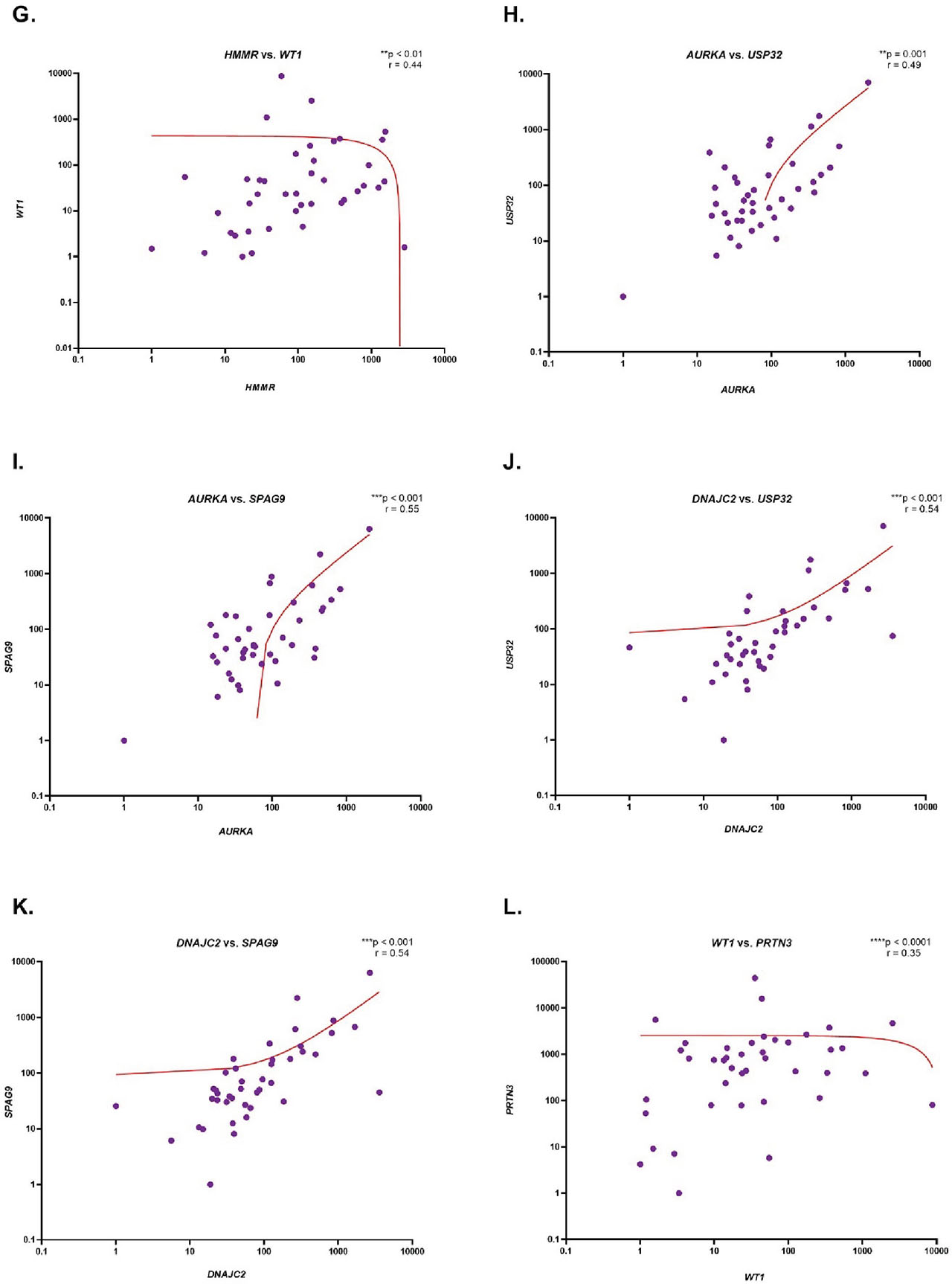
Fig 2.
Evaluation of the correlation of HMMR, WT1, PRTN3, AURKA, DNAJC2, USP32, SPAG9 and PRAME gene expression in CML patients. The results are presented as the log10 value of 2−ΔΔCt with the regression line marked. The graph shows only statistically significant correlations between HMMR and USP32 (A), USP32 and SPAG9 (B), HMMR and PRTN3 (C), HMMR and AURKA (D), PRTN3 and AURKA (E), AURKA and DNAJC2 (F), HMMR and WT1 (G), AURKA and USP32 (H), AURKA and SPAG9 (I), DNAJC2 and USP32 (J), DNAJC2 and SPAG9 (K), WT1 and PRTN3 (L). CML, chronic myeloid leukemia.
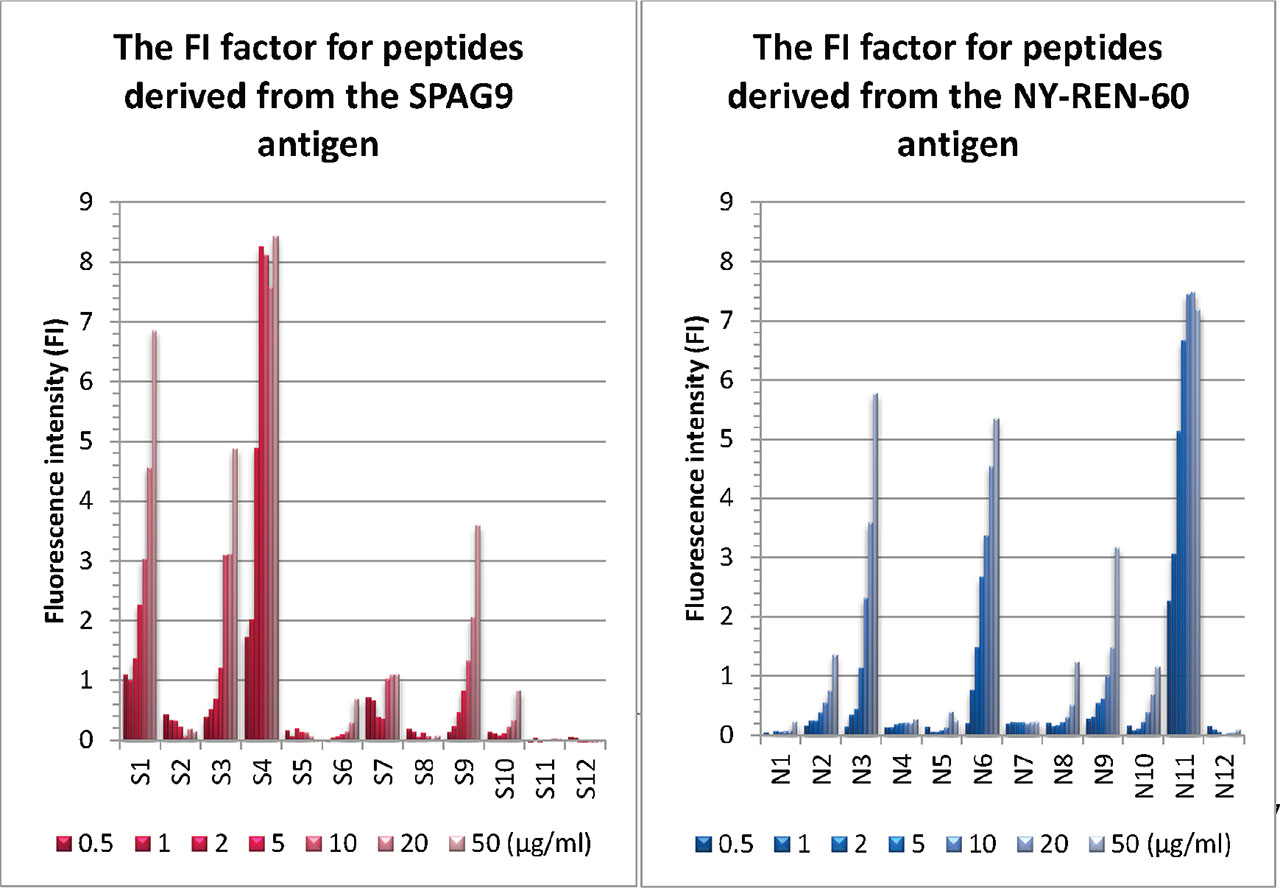
Fig 3.
FI factor for peptides derived from SPAG9 and NY-REN-60 antigens in the T2 peptide-binding assay. The affinity of 12 newly synthesized peptides (from SPAG9: S1–S12; from NY-REN-60: N1-N11) to the HLA-A2 receptor was assessed by adding the peptides at specific concentrations: 0.5 μg/mL, 1 μg/mL, 2 μg/mL, 5 μg/mL, 10 μg/mL, 20 μg/mL, and 50 μg/mL to the T2 cell line using two replicates. The FI factor was calculated as the ratio of the MFI of HLA-A*0201 on T2 cells with peptide to the MFI of HLA-A*0201 on T2 cells without peptide, using the formula FI = MFI (T2 with peptide)/MFI (T2 without peptide). FI, Fluorescence intensity; MFI, mean fluorescence intensity.
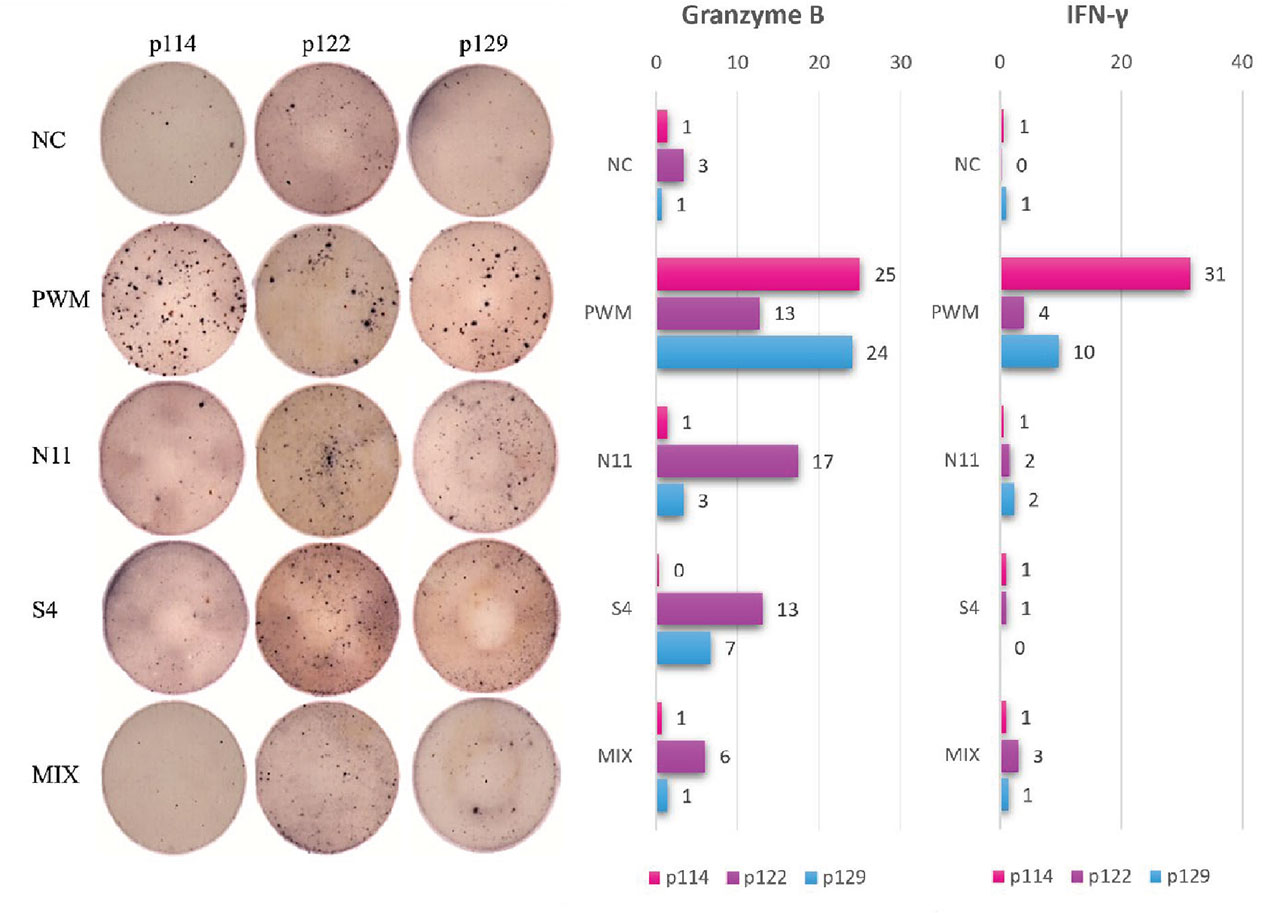
Fig 4.
Results of specific IFN-γ (red, brownish dots) and granzyme B (blue dots) release in response to peptide derived from tumor-associated antigens stimuli. The ELISpot assay was performed after mixed lymphocyte-peptide culture. CD8+ cells were pulsed with CD8− cells stimulated by N11 peptide derived from NY-REN-60 antigen and S4 peptide derived from SPAG9 antigen, as well as the mixture of peptides: RHAMM-R3165–173, WT1126–134, PRAME300–309, MPP11437–445, Aur-A207–215, BCR-ABL922–930, and PR3-PR1169–177. NC was CD8+ CML cells cultured without any peptide; PWM as a non-specific control was added to NC cells on ELISpot plates. IFN-γ and granzyme B spots were obtained from 104 cytotoxic T cells per well and spot averages were calculated from triplets. CML, chronic myeloid leukemia; ELISpot, Enzyme-Linked ImmunoSpot; IFN-γ, interferon-γ; NC, negative control; PWM, pokeweed mitogen.
Table 3.
Univariate and multivariate Cox proportional hazards analysis of immune cell populations for recurrence risk
| Variable | Univariate analysis | Multivariate analysis | ||
|---|---|---|---|---|
| HR (95% CI) | p-value | HR (95% CI) | p-value | |
| iNKT+CD161+ | 0.32 (0.11–0.94) | 0.039 | 0.09 (0.02–0.40) | 0.001 |
| CD8+PD1+ | 1.03 (1.02–1.05) | <0.001 | 1.03 (1.02–1.05) | <0.001 |
| CD56dimCD16+PD1+ | 1.06 (1.01–1.11) | 0.024 | 1.12 (1.05–1.19) | <0.001 |
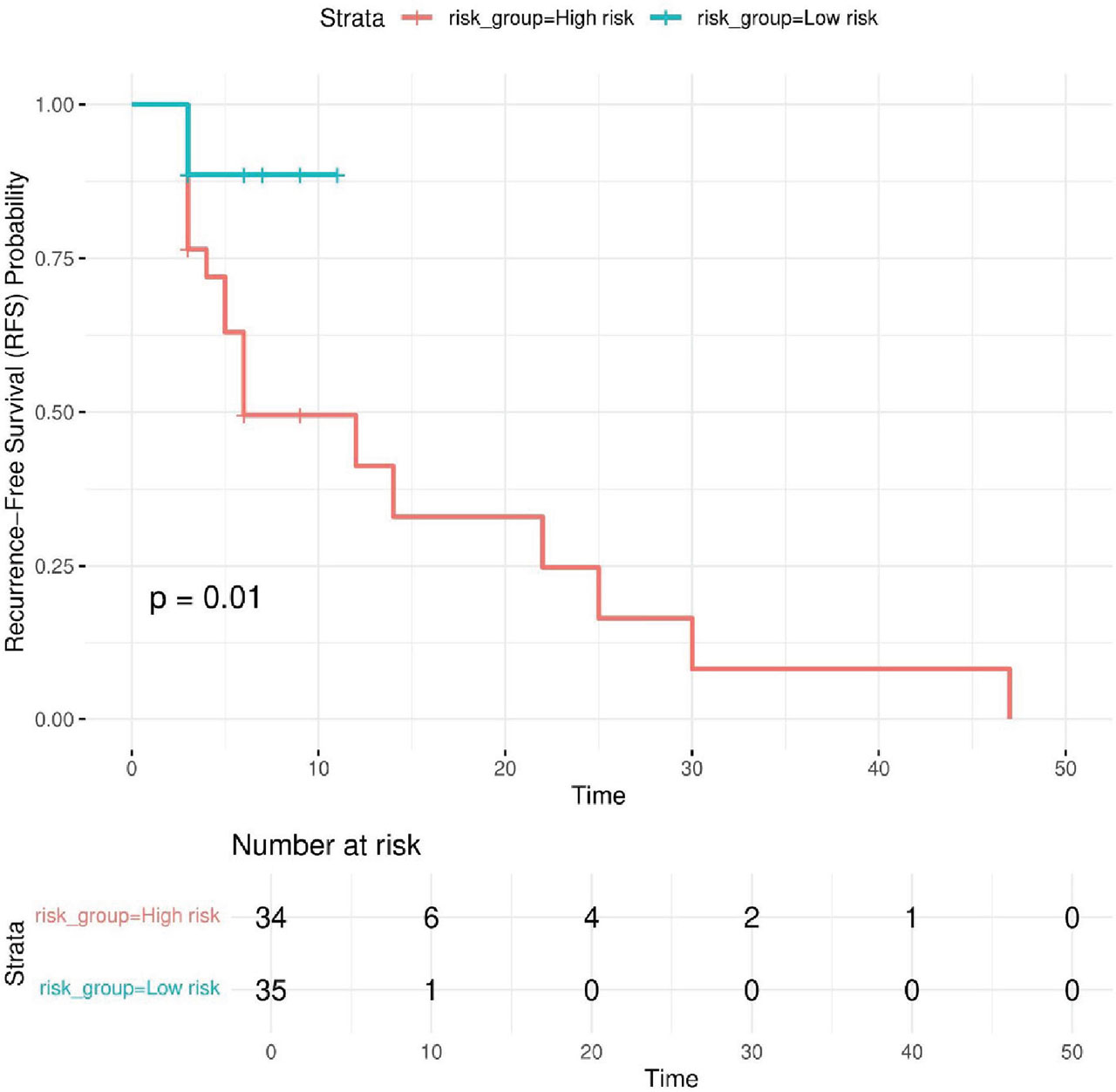
Fig 5.
Kaplan–Meier survival curves for high-risk and low-risk patient groups. The Kaplan–Meier plot illustrates RFS in patients stratified into high-risk and low-risk groups based on the median risk score derived from the Cox proportional hazards model and appropriately colored. The survival curves show a clear separation between the two groups, with the high-risk group exhibiting significantly worse RFS, while the low-risk group demonstrates longer recurrence-free intervals. The p-value (p < 0.05) indicates that the difference between the groups is statistically significant, confirming the model’s ability to distinguish between different risk categories. RFS, recurrence-free survival.
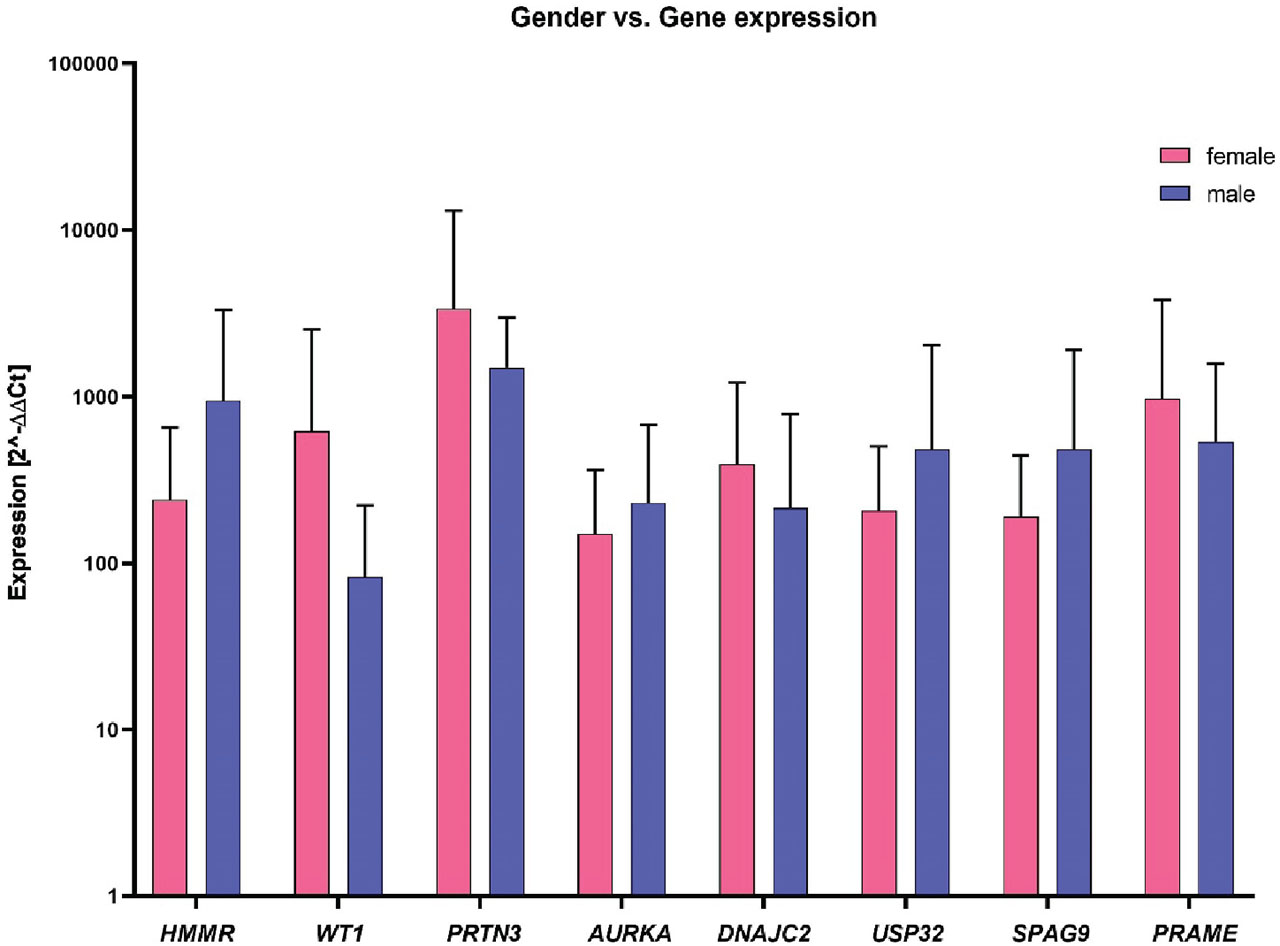
Fig 1.
Evaluation of the correlation between analyzed genes and the gender of the CML patients. Results, shown as mean with SD, were obtained by performing Mann-Whitney non-parametric test. There was no statistically significant correlation between the expression of each of the analyzed genes and the gender of the CML patients.
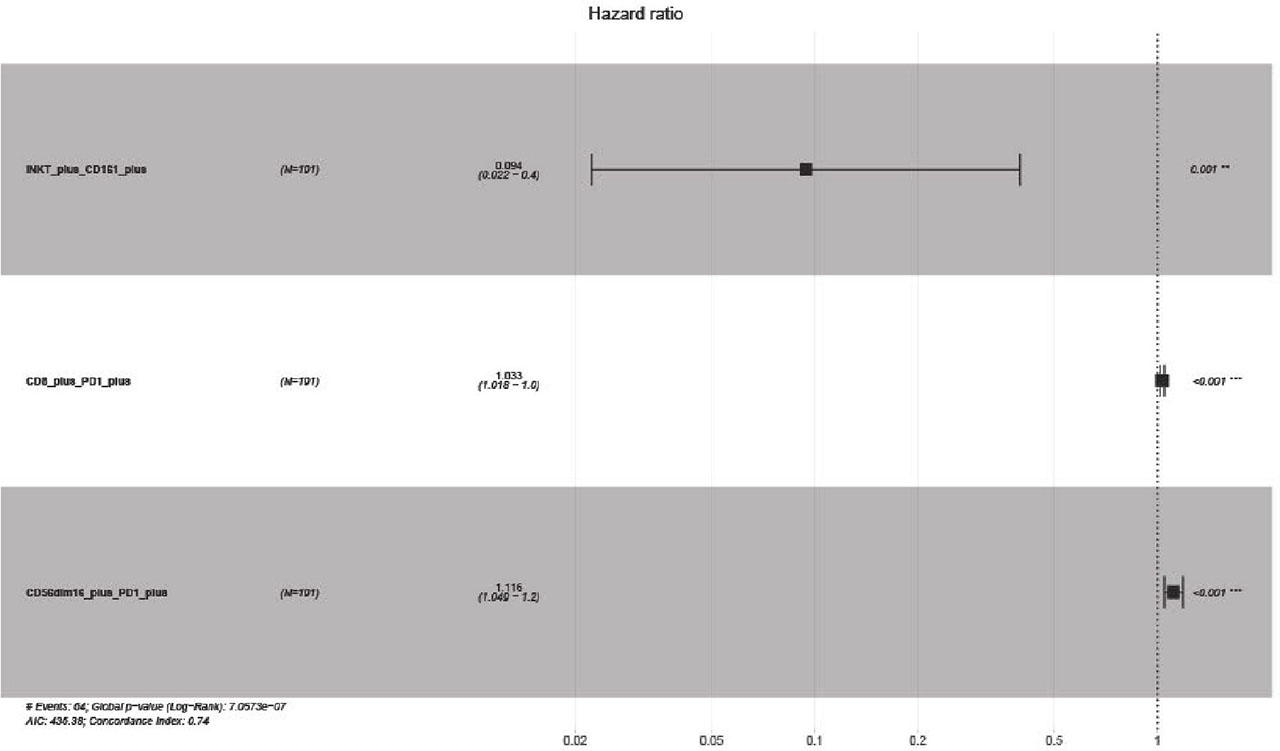
Fig 2.
Forest plot of the Cox proportional hazards model for immune cell markers. The forest plot illustrates the hazard ratios (HR) and 95% confidence intervals (CI) for immune cell markers included in the Cox proportional hazards model. Each marker is represented by a point estimate for the HR and a horizontal line indicating its 95% confidence interval. The vertical dashed line at HR = 1 represents the threshold for no effect. Markers positioned entirely to the left of this line suggest a protective effect, while those to the right indicate an increased risk. The number of observations (N) and the number of events are also indicated. A global p-value from the log-rank test confirms the overall model significance. Additionally, the Akaike Information Criterion (AIC) and Concordance Index (C-index) reflect the model’s goodness-of-fit and predictive accuracy.
Table 1.
Correlation between patients age and expression of the analyzed genes.
| Analyzed gene | HMMR | WT1 | PRTN3 | AURKA | DNAJC2 | USP32 | SPAG9 | PRAME |
| r | 0.1019 | −0.0712 | −0.0888 | −0.0792 | 0.1098 | 0.2229 | 0.0955 | −0.0251 |
| p | 0.5206 | 0.6625 | 0.5760 | 0.6179 | 0.4888 | 0.1668 | 0.5527 | 0.8812 |
Table 2.
Univariate Summary
| Univariate Model | Hazard Ratio (95% CI) | P-value |
| CD4_plus_CD25_plus_FoxP3_plus.txt | 0.89 (0.77 – 1.01) | 0.077 |
| CD56dim16_plus_PD1_plus.txt | 1.06 (1.01 – 1.11) | 0.024 |
| CD8_plus_PD1_plus.txt | 1.03 (1.02 – 1.05) | < 0.001 |
| iNKT_plus_CD161_plus.txt | 0.32 (0.11 – 0.94) | 0.039 |
| Model Comparison_Metrics | ||
| Model | AIC | Concordance |
| CD8_plus_PD1_plus.txt | 467.8898 | 0.6512 |
| iNKT_plus_CD161_plus.txt | 477.1068 | 0.5927 |
| CD56dim16_plus_PD1_plus.txt | 478.4037 | 0.5312 |
| CD4_plus_CD25_plus_FoxP3_plus.txt | 479.6236 | 0.5984 |
Table 3.
Model_Comparison
| Model | AIC | Concordance |
| cox_model_summary_stepwise_model | 430.0106 | 0.7923 |
| cox_model_summary_model_01 | 433.9947 | 0.7621 |
| cox_model_summary_model_02 | 436.375 | 0.7352 |
| cox_model_summary_final_model | 440.9907 | 0.7478 |
| cox_model_summary_full_model | 446.2834 | 0.817 |
| cox_model_summary_model_03 | 448.5368 | 0.6547 |
| cox_model_summary_final_model | ||
| Characteristic | Hazard Ratio (95% CI) | P-value |
| iNKT_plus_CD161_plus | 0.24 (0.08 – 0.73) | 0.013 |
| CD4_plus_CD25_plus_FoxP3_plus | 0.87 (0.75 – 1.00) | 0.049 |
| CD8_plus_PD1_plus | 1.04 (1.02 – 1.05) | < 0.001 |
| cox_model_summary_full_model | ||
| Characteristic | Hazard Ratio (95% CI) | P-value |
| DC | 0.83 (5.50 – 1.27) | 0.394 |
| cDC | 4.85 (3.38 – 69.52) | 0.245 |
| pDC | 0.25 (4.71 – 13.67) | 0.5 |
| cDC_PD1_plus | 0.96 (9.18 – 1.00) | 0.076 |
| pDC_PD1_plus | 1.04 (9.95 – 1.08) | 0.086 |
| CD56dimCD16_plus | 1.05 (9.69 – 1.13) | 0.254 |
| CD56brightCD16_minus | 0.58 (1.69 – 2.00) | 0.391 |
| CD56brightCD16_plus | 0.96 (4.83 – 1.89) | 0.895 |
| iNKT | 2.71 (6.05 – 121.03) | 0.608 |
| iNKT_plus_CD161_plus | 0.01 (4.82 – 2.14) | 0.093 |
| NKT | 1.04 (9.69 – 1.12) | 0.265 |
| CD56dim16_plus_PD1_plus | 1.15 (1.05 – 1.26) | 0.004 |
| CD56bright16_minus_PD1_plus | 0.96 (8.51 – 1.09) | 0.526 |
| iNKT_plus_PD1_plus | 0.98 (9.65 – 1.00) | 0.138 |
| NKT_PD1_plus | 0.97 (9.31 – 1.01) | 0.102 |
| CD4_plus | 1.04 (1.00 – 1.09) | 0.045 |
| CD4_plus_PD1_plus | 1.03 (9.84 – 1.08) | 0.208 |
| CD8_plus | 1.08 (1.01 – 1.14) | 0.013 |
| CD8_plus_PD1_plus | 1.05 (1.02 – 1.07) | < 0.001 |
| CD19_plus | 1.10 (1.03 – 1.18) | 0.006 |
| CD19_plus_PD1_plus | 1.01 (9.85 – 1.03) | 0.446 |
| CD4_plus_CD25_plus_FoxP3_plus | 0.75 (6.27 – 0.90) | 0.002 |
| cox_model_summary_model_01 | ||
| Characteristic | Hazard Ratio (95% CI) | P-value |
| iNKT_plus_CD161_plus | 0.10 (0.03 – 0.40) | 0.001 |
| CD4_plus_CD25_plus_FoxP3_plus | 0.86 (0.75 – 1.00) | 0.05 |
| CD8_plus_PD1_plus | 1.03 (1.02 – 1.05) | < 0.001 |
| CD56dim16_plus_PD1_plus | 1.11 (1.05 – 1.18) | < 0.001 |
| cox_model_summary_model_02 | ||
| Characteristic | Hazard Ratio (95% CI) | P-value |
| iNKT_plus_CD161_plus | 0.09 (0.02 – 0.40) | 0.001 |
| CD8_plus_PD1_plus | 1.03 (1.02 – 1.05) | < 0.001 |
| CD56dim16_plus_PD1_plus | 1.12 (1.05 – 1.19) | < 0.001 |
| cox_model_summary_model_03 | ||
| Characteristic | Hazard Ratio (95% CI) | P-value |
| CD8_plus_PD1_plus | 1.03 (1.02 – 1.05) | < 0.001 |
| CD56dim16_plus_PD1_plus | 1.05 (0.99 – 1.10) | 0.089 |
| cox_model_summary_stepwise_model | ||
| Characteristic | Hazard Ratio (95% CI) | P-value |
| cDC_PD1_plus | 0.96 (0.92 – 1.00) | 0.044 |
| pDC_PD1_plus | 1.04 (1.00 – 1.08) | 0.061 |
| iNKT_plus_CD161_plus | 0.08 (0.02 – 0.34) | < 0.001 |
| CD56dim16_plus_PD1_plus | 1.08 (1.02 – 1.15) | 0.013 |
| CD4_plus | 1.03 (1.00 – 1.06) | 0.035 |
| CD8_plus | 1.06 (1.02 – 1.11) | 0.003 |
| CD8_plus_PD1_plus | 1.04 (1.02 – 1.06) | < 0.001 |
| CD19_plus | 1.07 (1.01 – 1.12) | 0.012 |
| CD4_plus_CD25_plus_FoxP3_plus | 0.79 (0.67 – 0.93) | 0.004 |