
1. Introduction
Diffuse large B-cell lymphoma (DLBC) is a highly aggressive lymphoma and is featured with lymph node enlargement, extranodal lesions, or both (Wang 2023). DLBC is the most usual subtype of non-Hodgkin lymphoma, and it accounts for about 30%–40% of diagnosed cases (Sehn and Gascoyne 2015). Patients with DLBL can have a relapse after chemotherapy or radiotherapy, which remains the major cause for mortality (Poletto et al. 2022). The epithelial-mesenchymal transition (EMT) process can accelerate metastasis, angiogenesis, and therapy resistance in cancers (Huang et al. 2022). Therefore, understanding the pathogenesis of DLBC and seeking useful molecular targets to modulate EMT process are crucial for treatment of patients with DLBC.
More and more proteins have been ascertained to take part in the progression of DLBC, and they may be useful biomolecules for future targeted treatment. For instance, knockdown of BRD4 sensitizes ferroptosis in DLBC progression (Schmitt et al. 2023). In addition, USP21 modulates EZH2 expression to accelerate cell proliferation in DLBC progression (Ma et al. 2021). Upregulation of GPX4 restrains ROS-evoked cell death in DLBC (Kinowaki et al. 2018). Besides, GPNMB stimulates the Wnt/β-catenin pathway to aggravate the development of DLBC (Wang et al. 2021).
Cancerous inhibitor of protein phosphatase 2A (CIP2A) is one kind of protein that is dysregulated in diversified cancers and aggravates tumorigenesis. For example, in renal clear cell carcinoma, suppression of CIP2A refrained cell proliferation and vascularization (Gao et al. 2020). Additionally, CIP2A can interact with TopBP1 to heighten tumorigenesis in breast cancer (Laine et al. 2021). High expression of CIP2A exhibits in endometrioid adenocarcinoma and aggrandizes malignant growth and invasion (Yu et al. 2018). CIP2A can interact with AKT1 in oral squamous cell carcinoma to facilitate malignant behaviors (Che et al. 2023). Moreover, in pancreatic cancer, silencing of CIP2A can strengthen the sensitivity of gemcitabine (Xu et al. 2016). However, the regulatory influences of CIP2A in DLBC progression remain vague.
In conclusion, it was manifested that high expression of CIP2A can aggrandize cell proliferation, migration, and the EMT process in DLBC, and trigger the Wnt/β-catenin pathway. This study may supply hopeful insights for DLBC treatment.
2. Materials and Methods
2.1. Cell lines and cell culturefv
Normal human B lymphocyte (GM12878) and DLBC cell lines (SU-DHL-4, SU-DHL-6 and SU-DHL-10) were gained from the American Tissue Culture Collection (ATCC, Manassas, VA, USA), and the cells were kept into RIMI-1640 medium (Thermo Fisher Scientific, Inc, Waltham, MA, USA) with fetal bovine serum (FBS; 10%, Gibco Laboratories, Grand Island, NY, USA). Cell incubation was done in a humid incubator at 37°C, with 5% CO2.
2.2. Cell transfection
Short hairpin RNA targets CIP2A (shCIP2A) with negative control (shNC) were produced from GenePharma (Shanghai, China). The transfection into SU-DHL-6 and SU-DHL-10 cells was done through using Lipofectamine 2000 (Invitrogen, Carlsbad, CA, USA).
2.3. Western blot
Proteins extracted from DLBC cells were treated with 10% sodium dodecyl sulfate-polyacrylamide gel electrophoresis (SDS-PAGE) for separation. Then, they were migrated into PVDF membranes (Beyotime, Shanghai, China). Post sealing, the membranes were mixed with primary antibodies for overnight incubation, followed by secondary antibody (1/2000; ab7090) for another 2 h incubation. Eventually, using the chemiluminescence detection kit (Thermo Fisher Scientific, Inc.), the protein blots were determined.
The primary antibodies were CIP2A (1/2000; ab99518; Abcam, Shanghai, China), E-cadherin (1 μg/mL; ab231303), N-cadherin (1/5000; ab76011), α-SMA (1 μg/mL; ab7817), β-catenin (1 μg/mL; ab223075), c-Myc (1/1000; ab32072), cyclin D1 (1/10000; ab134175), and GAPDH (1/500; ab8245).
2.4. Tissue samples
The DLBC tumor tissues and adjacent normal tissues (n = 10) were obtained from Affiliated Jinhua Hospital, Zhejiang University School of Medicine. Informed consent was obtained from all patients. The collected tissues were kept in liquid nitrogen. This work was approved by the Ethics Committee of Affiliated Jinhua Hospital, Zhejiang University School of Medicine.
2.5. RT-qPCR
The RNAs from DLBC tumor tissues were obtained using TRIzol reagent (Invitrogen). The transcription was proceeded through the SuperScript™ II Reverse Transcriptase Kit (Invitrogen). Next, qRT-PCR was done through the SYBR Premix Ex Taq™ Kit (Takara, Shanghai, China). The 2−ΔΔCt method was utilized for assessing the relative mRNA expression of CIP2A.
The primer sequences were as follows:
CIP2A: forward, 5′-GAACAGATAAGAAAAGAGTTGAG CATT-3′, reverse, 5′-CGACCTTCTAATTGTGCCTTTT-3′; GAPDH: forward, 5′-CTGGGCTACACTGAGCACC-3′, reverse, 5′-AAGTGGTCGTTGAGGGCAATG-3′.
2.6. Cell cycle
For cell cycle, SU-DHL-6 and SU-DHL-10 cells were resuspended using phosphate buffer saline + propidium iodide. Then, 0.2% Triton X-100 and RNase A was mixed for 30 min in the dark. Finally, cell percentage (%) in G1, S, and G2 phases was measured through the flow cytometer (BD Biosciences, San Jose, CA, USA).
2.7. IF assay
After fixation and Triton X treatment, SU-DHL-6 and SU-DHL-10 cells were co-cultured with primary antibody Ki-67 (0.5 μg/mL, ab15580, Abcam) overnight, and the secondary antibody was further supplemented. Images were obtained through a fluorescence microscope (Olympus, Tokyo, Japan).
2.8. CCK-8 assay
SU-DHL-6 and SU-DHL-10 cells (1000 cells/well) were set in 96-well plates. Next, CCK-8 solution (10 μL, Beyotime, Shanghai, China) was mixed into each well for another 2 h incubation. Finally, using the spectrophotometer (Thermo Fisher Scientific), cell survival (%) was confirmed.
2.9. Colony formation assay
SU-DHL-6 and SU-DHL-10 cells (1000 cells/well) were set in 96-well plates. For 2 weeks, immobilization (4% paraformaldehyde) and staining (0.1% crystal violet) were performed for the colonies. The images were obtained and the colonies were calculated.
2.10. Transwell assay
Matrigel (Becton Dickinson, Franklin Lakes, NJ, USA) was used to coat the upper chambers. RPMI-1640 medium (200 μL) containing SU-DHL-6 and SU-DHL-10 cells (1 × 10⁵) was used in the upper chambers. RPMI-1640 medium (600 μL) containing 20% FBS was used in the lower chambers. Post 24 h, fixation and dyeing (0.1% crystal violet) were done for the moved cells. Finally, the invaded or migrated cells were detected under a single microscope (Olympus Corporation).
2.11. Statistical analysis
Data were exhibited as mean ± standard deviation (SD) with three repetitions. GraphPad Prism Software 9 (GraphPad Software, San Diego, California, USA) was adopted for statistical analysis. The comparisons were verified through using one-way analysis of variance (ANOVA). The value of p < 0.05 was seen as statistically significant.
3. Results
3.1. CIP2A exhibited higher expression in DLBC
As shown in ++ 1A, CIP2A exhibited higher expression in DLBC tissues from the GEPIA online database. Furthermore, it was discovered that CIP2A owned a higher expression in DBLC tissues (Figure 1B). In addition, the CIP2A protein expression was aggrandized in DLBC cell lines (Figure 1C). In general, it was found that CIP2A exhibited a higher expression in DLBC.
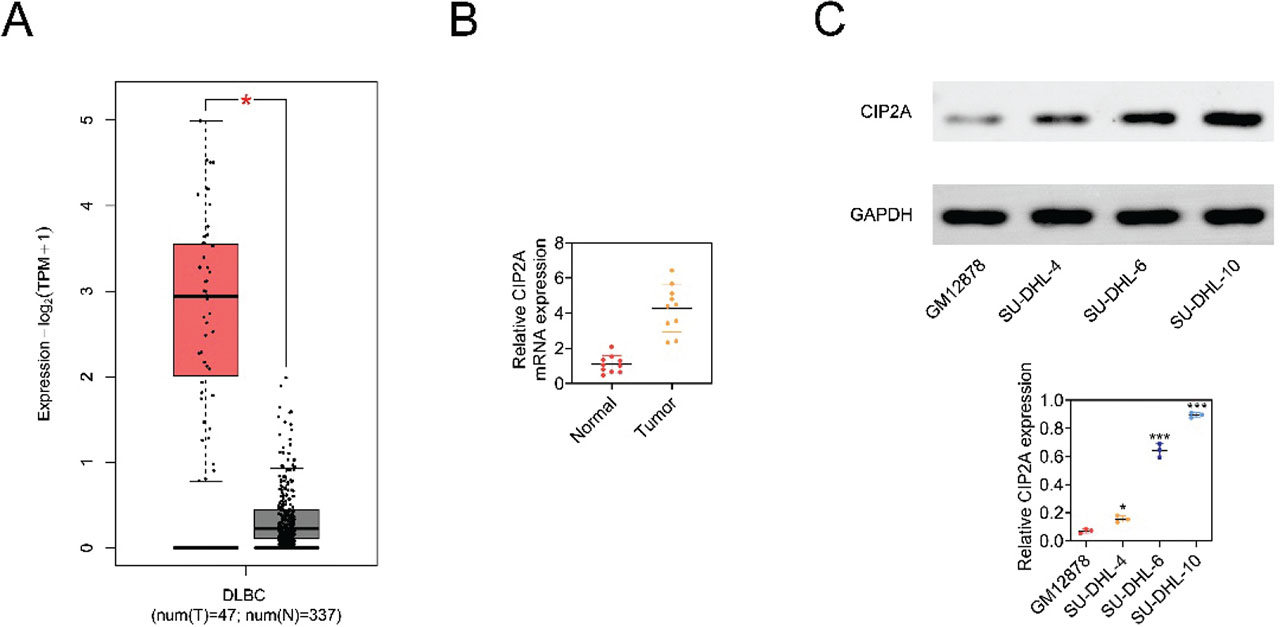
Fig 1.
CIP2A exhibited higher expression in DLBC. (A) The expression of CIP2A was verified in normal tissues or DLBC tissues from GEPIA online database. (B) The protein expression of CIP2A was examined in normal tissues (n=10) and DLBC tissues (n=10) through western blot. (C) The protein expression of CIP2A was measured in normal human B lymphocyte (GM12878) and DLBC cell lines (SU-DHL-4, SU-DHL-6 and SU-DHL-10). *p<0.05, ***p<0.001.
3.2. Inhibition of CIP2A restrained cell growth and metastasis in DLBC
The knockdown result of CIP2A was notarized, and CIP2A protein expression was lessened after silencing CIP2A (Figure 2-1A,B). The cell survival was cut down after CIP2A inhibition (Figure 2-1C). Moreover, the number of colonies was reduced after CIP2A suppression (Figure 2-1D). The cell migration and invasion capacities were attenuated after CIP2A knockdown (Figure 2-1E). The Ki67 protein expression was lessened after CIP2A suppression (Figure 2-2A). Besides, cell cycle was arrested in the G1 phase (Figure 2-2B,C). In short, inhibition of CIP2A resisted cell growth and metastasis in DLBC.
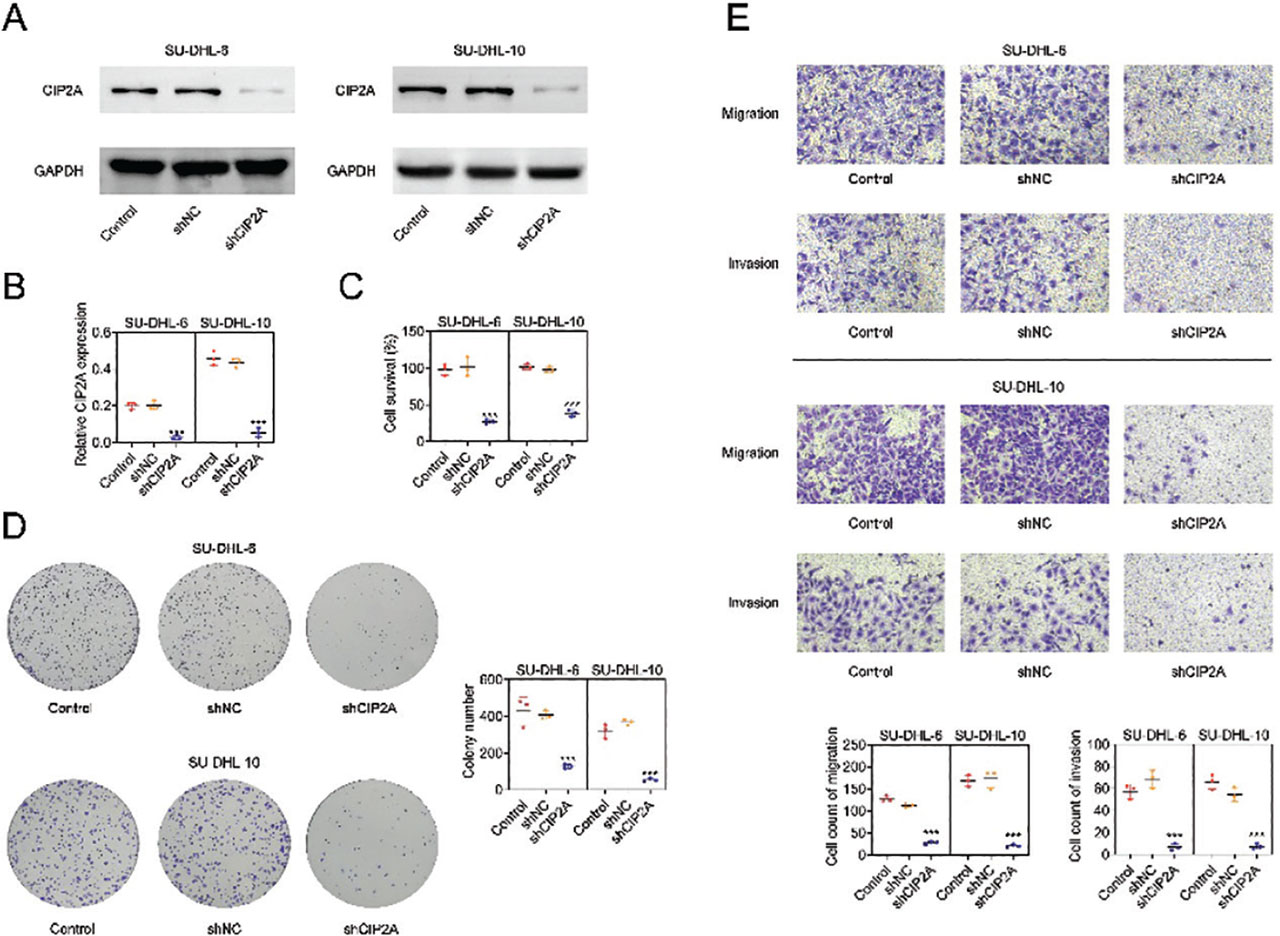
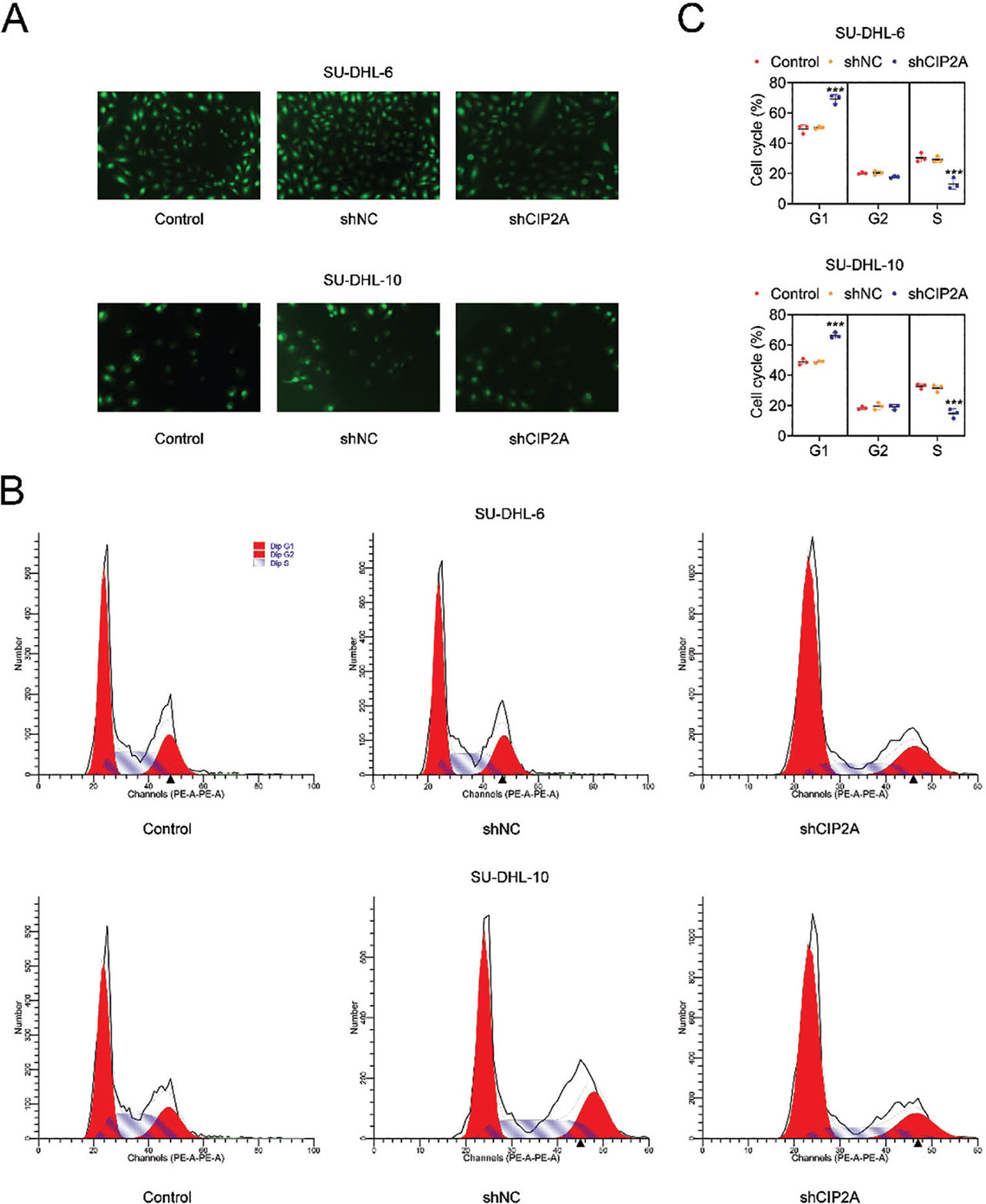
Fig 2.
Inhibition of CIP2A restrained cell growth and metastasis in DLBC. Groups were separated into the Control, shNC, and shCIP2A. (1A, B) The protein expression of CIP2A was determined through western blot. (1C) The cell survival was confirmed through CCK-8 assay. (1D) The cell proliferation was inspected through colony formation assay. (1E) The cell migration and invasion were measured through transwell assay. ***p < 0.001. (2A) The Ki67 protein expression was examined through IF assay. (2B, C) The cell cycle was evaluated through flow cytometry. ***p < 0.001. CIP2A, cancerous inhibitor of protein phosphatase 2A; DLBC, diffuse large B-cell lymphoma; shNC, short hairpin negative control.
3.3. Knockdown of CIP2A repressed EMT progress in DLBC
Next, the regulatory impacts of CIP2A on the EMT process were investigated. The protein expression of E-cadherin was ascended whereas N-cadherin and α-SMA were descended after suppressing CIP2A (Figure 3). These data demonstrate that knockdown of CIP2A repressed EMT progress in DLBC.
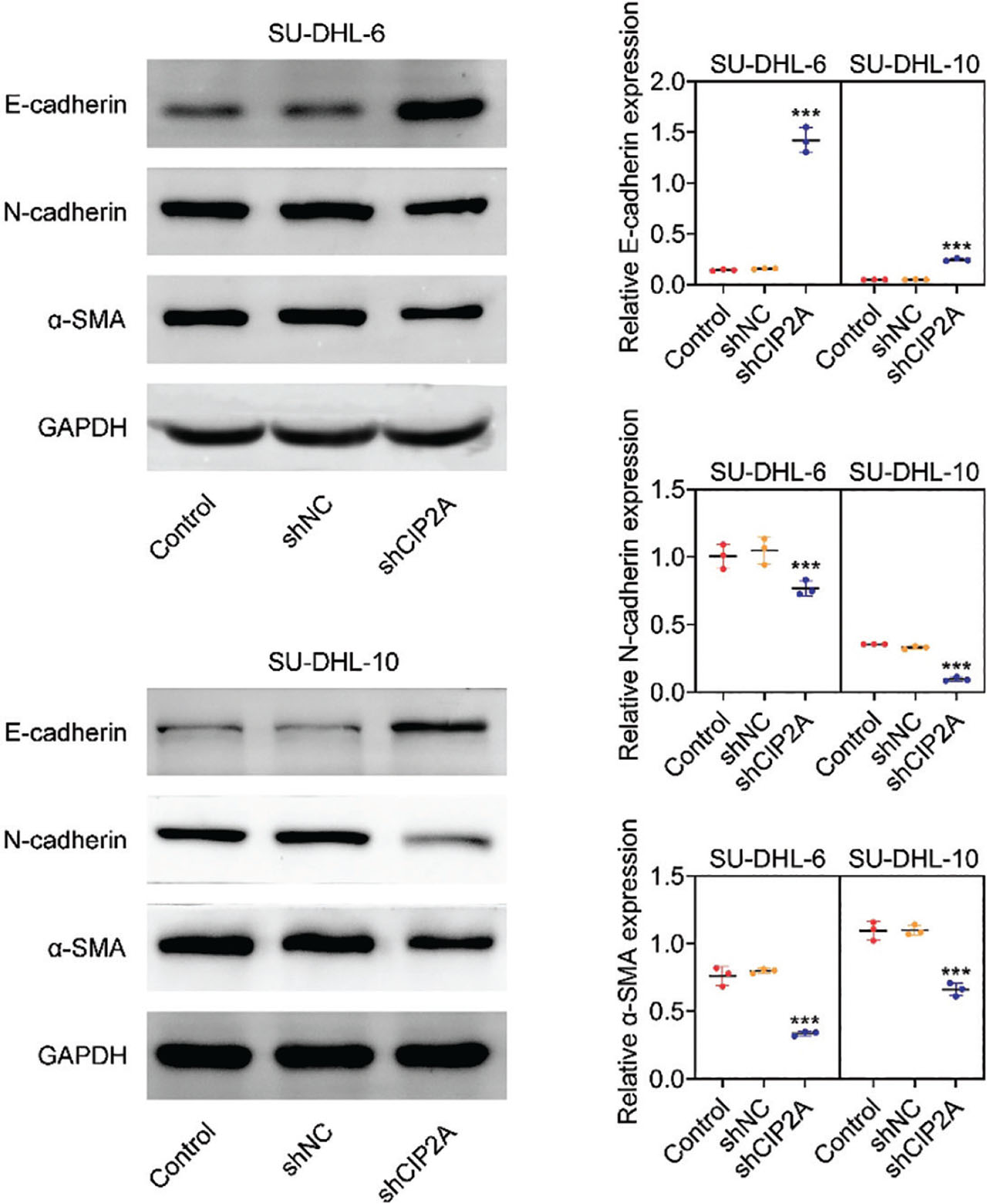
Fig 3.
Knockdown of CIP2A repressed EMT progress in DLBC. Groups were separated into the Control, shNC, and shCIP2A. The protein expressions of E-cadherin, N-cadherin, and α-SMA were evaluated through western blot. ***p < 0.001. CIP2A, cancerous inhibitor of protein phosphatase 2A; DLBC, diffuse large B-cell lymphoma; EMT, epithelial-mesenchymal transition; shNC, short hairpin negative control.
3.4. Suppression of CIP2A retarded the Wnt/β-catenin pathway
The β-catenin, c-Myc, and cyclin D1 protein levels were all declined after CIP2A knockdown (Figure 4), indicating that suppression of CIP2A retarded the Wnt/β-catenin pathway.
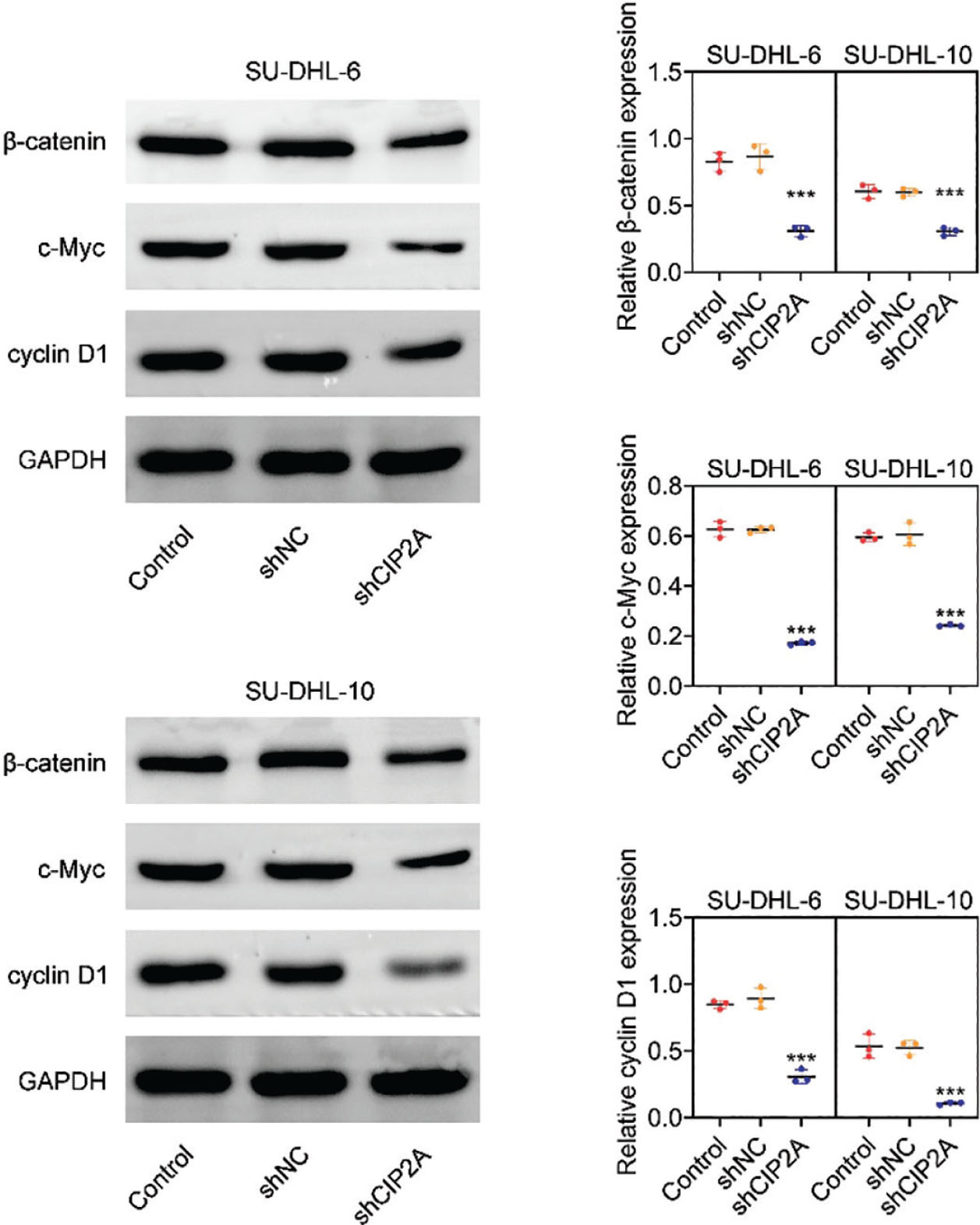
Fig 4.
Suppression of CIP2A retarded the Wnt/β-catenin pathway. Groups were separated into the Control, shNC, and shCIP2A. The protein expressions of β-catenin, c-Myc, and cyclin D1 were inspected through western blot. ***p < 0.001. CIP2A, cancerous inhibitor of protein phosphatase 2A; shNC, short hairpin negative control.
4. Discussion
CIP2A has been revealed to be dysregulated in multiple cancers and is closely associated with tumor growth (Xu et al. 2016; Yu et al. 2018; Gao et al. 2020; Laine et al. 2021; Che et al. 2023). However, the regulatory influences of CIP2A in DLBC progression remain unclear. In this study, it was discovered that CIP2A exhibited a higher expression in DLBC. Additionally, inhibition of CIP2A restrained cell growth and metastasis in DLBC.
EMT is a cellular transdifferentiation; endothelial cells can undergo cytoskeleton rearrangement, lose intercellular tight conjunction, and acquire migratory ability (Akrida and Papadaki 2023). EMT process displays pivotal functions in cancers, and it can motivate angiogenesis, metastasis, and therapy resistance, thereby aggravating the development of cancers (Jonckheere et al. 2022). Many researchers have focused on modulation of the EMT process in DLBC. For instance, PLAGL2 modulates the Wnt/β-catenin pathway to aggrandize the EMT process in DLBC (Jin and Wang 2022). Furthermore, lncRNA LINC01857 targets the miR-141-3p/MAP4K4 axis to accelerate cell growth and the EMT process in DLBC (Li et al. 2021). Moreover, high glucose upregulates HMGA2 expression to heighten the EMT process and metastasis in DLBC (Wang et al. 2019). Additionally, lncRNA SNHG14 sponges miR-152-3p to facilitate oncogenesis and EMT progress in DLBC (Tian et al. 2021). Similarly, the results from this study discovered that E-cadherin protein expression was ascended whereas N-cadherin and α-SMA protein expressions were descended after CIP2A knockdown, indicating that CIP2A suppression can retard the EMT progress in DLBC.
The Wnt/β-catenin signaling pathway exhibits a pivotal role in embryonic development, tissue regeneration, and cell homeostasis (Hayat et al. 2022). The Wnt/β-catenin signaling pathway includes Wnt proteins (Wnt ligands), Wnt receptors (Frizzled family proteins and LDL receptor related protein, LRP), Dishevelled (Dsh/Dvl) protein, β-catenin, glycogen synthase kinase 3β (GSK-3β), Axin/Conductin, and adenomatous polyposis coli (APC) protein (Kobayashi et al. 2025). Dysregulation of Wnt/β-catenin signaling can lead to multiple cancers, and suppression of this pathway has displayed effective anti-tumor responses (Chatterjee et al. 2022). The Wnt/β-catenin pathway has been proved to be a critical pathway in DLBC progression. For instance, in DLBC, glycoprotein PTGDS targets the Wnt/β-catenin/STAT3 pathway to invigorate tumor growth (Hu et al. 2022). FOXP1 can trigger the Wnt/β-catenin pathway in DLBC (Walker et al. 2015). Furthermore, FKBP3 evokes the Wnt/β-catenin pathway to strengthen malignant phenotypes in DLBC (Xing et al. 2024). Besides, TIMD4 potentiates the Wnt/β-catenin pathway to modulate cell proliferation and apoptosis in DLBC (Li et al. 2020). Importantly, in DLBC, it has been reported that WNT10A targets β-catenin/Snail pathway to intensify the EMT process (Sun et al. 2022). However, the regulatory impacts of CIP2A on the Wnt/β-catenin pathway in DLBC progression remain unknown. This study demonstrated that suppression of CIP2A retarded the Wnt/β-catenin pathway.
Conclusion
It was manifested that high expression of CIP2A can aggrandize cell proliferation, migration, and the EMT process in DLBC and trigger the Wnt/β-catenin pathway. These investigations will offer novel understandings in the clinical treatment of DLBC. Nevertheless, some limitations (missing investigations on other phenotypes, human samples, and animal model) also exist. In the future, more explorations on the roles of CIP2A in DLBC progression will be carried out.
Abbreviations
- α-SMA:
alpha smooth muscle actin;
- AKT1:
RAC-alpha serine/threonine-protein kinase 1 BRD4 bromodomain-containing protein 4;
- CCK-8:
Cell Counting Kit-8;
- EZH2:
Enhancer of Zeste Homolog 2;
- FKBP3:
FK506 Binding Protein 3;
- FOXP1:
Forkhead Box Protein P1;
- GAPDH:
glyceraldehyde-3-phosphate dehydrogenase;
- GEPIA:
Gene Expression Profiling Interactive Analysis;
- GPNMB:
Glycoprotein Non-Metastatic Melanoma Protein B;
- GPX4:
Glutathione peroxidase 4;
- IF:
Immunofluorescence;
- lncRNA:
Long non-coding RNA;
- mRNA:
messenger RNA;
- PLAGL2:
Pleiomorphic adenoma genelike 2;
- PTGDS:
Prostaglandin D2 Synthase;
- PVDF:
Polyvinylidene Fluoride;
- qRT-PCR:
Quantitative real time-polymerase chain reaction;
- ROS:
Reactive Oxygen Species;
- RT-qPCR:
Real Time-quantitative Polymerase Chain Reaction;
- shCIP2A:
short hairpin RNA targets CIP2A;
- SNHG14:
small nucleolar RNA host gene 14;
- STAT3:
Signal transducer and activator of transcription 3;
- SU-DHL-10:
Stanford University-Diffuse Histiocytic Lymphoma-10;
- SU-DHL-4:
Stanford University Diffuse Histiocytic Lymphoma-4;
- SU-DHL-5:
Stanford University-Diffuse Histiocytic Lymphoma-5;
- SU-DHL-6:
Stanford University-Diffuse Histiocytic Lymphoma-6;
- TIMD4:
T-cell immunoglobulin and mucin domain containing 4;
- USP21:
ubiquitin specific peptidase 21;
- WNT10A:
Wingless Type MMTV Integration Site Family, Member 10A
Acknowledgments
Not applicable.
Notes
[1] Funding
This work was supported by 2023 Jinhua Science and Technology Research Plan Public Welfare Projects (Grant No. 2023-4-079).
[2] Ethics approval
This article does not contain any studies with human participants or animals performed by any of the authors.
[3] Contributed by Contribution of authors
Caifang Zhao—designed and conducted the study; Caifang Zhao, Xiang Weng, Wei He, and Yanming Lei—supervised the data collection; Caifang Zhao, Xiang Weng, Wei He, and Yanming Lei—analyzed the data; Caifang Zhao, Xiang Weng, Wei He, and Yanming Lei—interpreted the data; Caifang Zhao—prepared the manuscript for publication and reviewed the draft of the manuscript. All authors have read and approved the manuscript.