
Table 1.
Pathologies and clinical manifestations
| Level of changes | Pathology | Clinical manifestation |
|---|---|---|
| Placental |
|
|
| Systemic |
|
[i] CNS, central nervous system; FIRS, fetal inflammatory response syndrome; VM, vascular malperfusion.
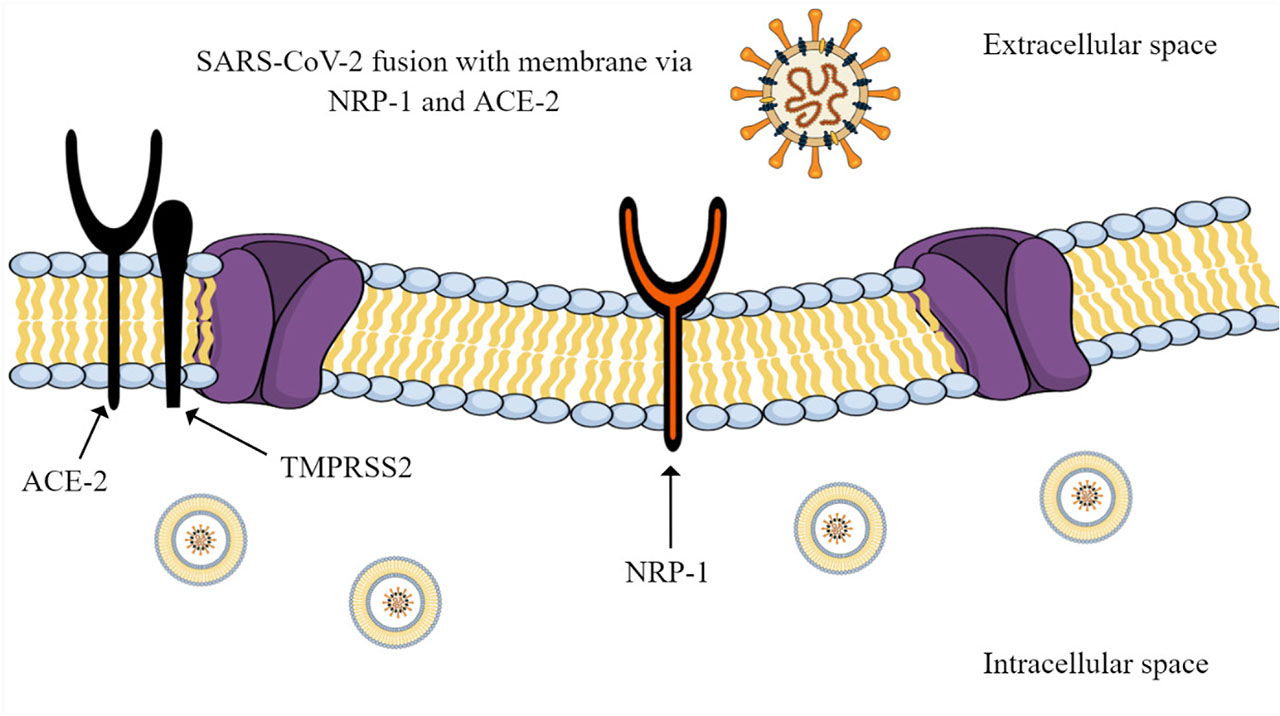
Fig 1.
SARS-CoV-2 cell entry via ACE2 and NRP-1 receptors. ACE2, angiotensin-converting enzyme 2; NRP-1, neuropilin-1; SARS-CoV-2, severe acute respiratory syndrome coronavirus 2; TMPRSS2, transmembrane protease serine 2.
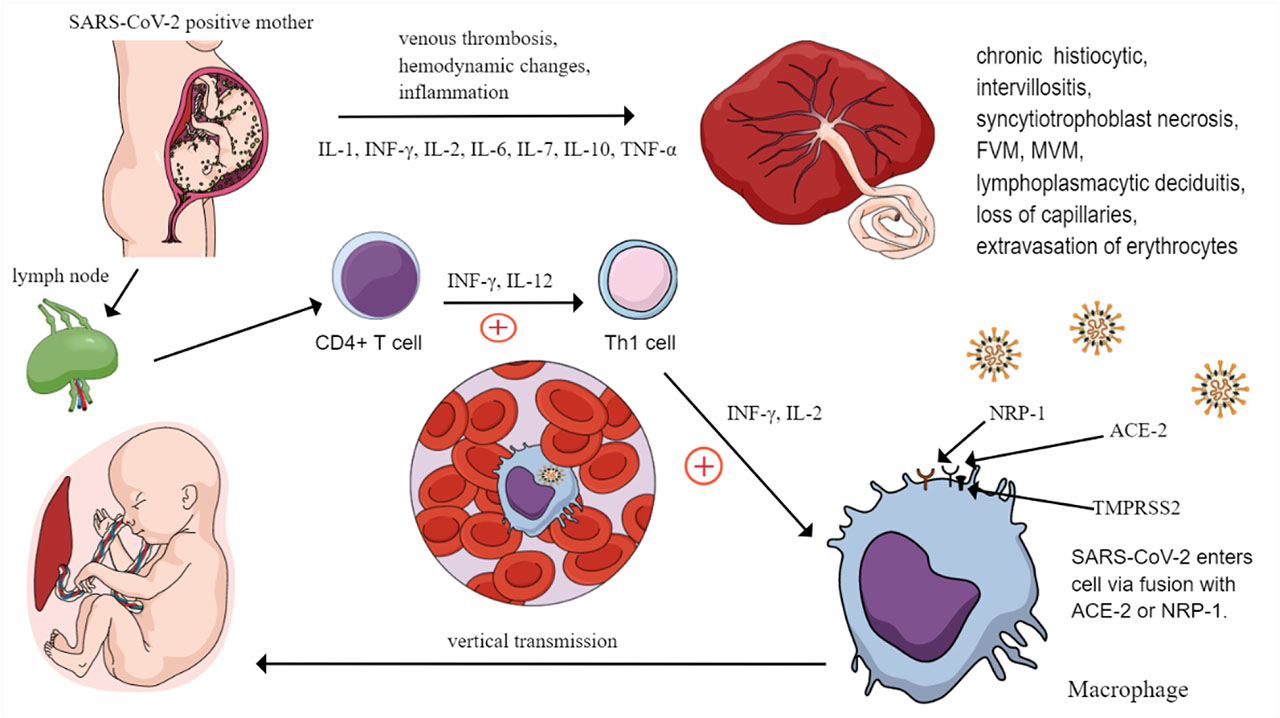
Fig 2.
The role of macrophages in SARS-CoV-2 vertical transmission. ACE2, angiotensin-converting enzyme 2; FVM, fetal vascular malperfusion; IL, interleukin; INF-γ, interferon-γ; MVM, maternal vascular malperfusion; NRP-1, neuropilin-1; SARS-CoV-2, severe acute respiratory syndrome coronavirus 2; TMPRSS2, transmembrane protease serine 2; TNF-α, tumor necrosis factor-α.
Table 2.
The mechanisms and probability of SARS-CoV-2 transmission
| Mechanism | Location in the body or transmission route | Transmission probability |
|---|---|---|
| ACE2 and TMPRSS2 protease | Heart, kidneys, tests, lungs, nasopharynx, smooth muscle cells, placenta | The risk of transmission is the highest during early pregnancy and decreases toward delivery |
| Perinatal transmission | Healthcare services and procedures | Extremely low risk of viral transmission |
| Breastfeeding | Breast milk | Extremely low risk of viral transmission |
| Sexual intercourse | Semen | Very low risk of viral transmission |
| NRP-1 | Hofbauer cells, endothelial cells, smooth muscle cells, adipocytes, Sertoli cells, placenta | This is the most likely route of SARS-CoV-2 transmission |
| Macrophages and monocytes | Various tissues – especially placental macrophages | Very high risk of viral transmission |
[i] ACE2, angiotensin-converting enzyme 2; NRP-1, neuropilin-1; SARS-CoV-2, severe acute respiratory syndrome coronavirus 2; TMPRSS2, transmembrane protease serine 2.