
Nearly three and a half million tonnes of fungicides, insecticides, and herbicides are applied worldwide each year, raising concerns about residue accumulation in agricultural products and their potential impact on human health (1). One synthetic triazole fungicide – propiconazole – developed specifically for agricultural use, has raised particular concern, as it is extensively applied to control fungal diseases in cereals, fruits, vegetables, and turf grass (2). Its chemical structure includes a triazole ring, common for systemic fungicides. While it is effective in plant protection, excessive or improper use can contaminate soil and water and affect non-target organisms, disrupt ecosystem balance, and reduce biodiversity. Residue build-up in crops may compromise food safety and promote fungicide-resistant pathogens, posing challenges for sustainable agriculture (3). Propiconazole is relatively persistent in the environment because its synthetic, complex chemical structure is not readily degraded by abiotic factors (4).
However, several bacteria have been reported to degrade propiconazole under laboratory conditions thanks to enzymes like cytochrome P450 monooxygenases and hydrolases, which are present in these bacteria (5). Hydrolase enzymes may drive propiconazole breakdown by hydrolysing susceptible (such as ether or ester) bonds and producing smaller transformation products. Specific enzymatic pathways and the resulting metabolites and their toxicities vary and require careful characterisation. Some bacteria can use propiconazole or its transformation products as carbon or energy sources, but the detailed mechanisms of degradation often differ between strains and remain underexplored (6).
Hydrolase enzymes from the Bacillus species, which are known for their robustness, broad substrate tolerance, and ability to hydrolyse various xenobiotic bonds without requiring complex cofactors, have been proposed as efficient biodegradation catalysts, but no study has yet investigated the potential of a hydrolase from the Bacillus paramycoides strains to degrade propiconazole at molecular level.
The aim of our study was to address this gap by characterising B. paramycoides hydrolase and evaluating its interaction with propiconazole in silico through docking and simulation analyses. We anticipated that this enzyme-focused approach could provide mechanistic insights that are not easily accessible from whole-cell degradation studies, particularly regarding substrate-enzyme interactions and predicted reaction behaviour under defined conditions. Moreover, because hydrolases can operate under mild environmental conditions and often do not require additional cofactors, they may be more amenable to practical bioremediation applications than oxidoreductase-dependent or whole-cell methods.
MATERIALS AND METHODS
Hydrolase sequence and its structure prediction
We relied on the FASTA protein sequence consisting of 317 amino acids, taken from the National Center for Biotechnology Information (NCBI, Bethesda, MD, USA) database under accession No. OJD80101.1, because hydrolases produced by B. paramycoides had already been associated with xenobiotic degradation, supporting its relevance for fungicide biodegradation studies (7). Hsp70 chaperone of Escherichia coli accession No. AAA18300.1 was conjugated with the protein to enhance the structural stability of the protein molecule.
The sequence was characterised using the ExPASy-ProtParam web tool (Swiss Institute of Bioinformatics, Lausanne, Switzerland), including the molecular weight, instability index, theoretical isoelectric point (pI), aliphatic index, and the grand average of hydropathicity (GRAVY) index, important for determining protein stability (Table 1).
Table 1
Physiochemical characterisation of the Bacillus paramycoides hydrolase enzyme
| Amino acids (N) | 932 |
| Molecular weight | 1869.85 |
| Theoretical pI | 5.18 |
| Negatively charged residues (N) | 127 |
| Positively charged resides (N) | 90 |
| Formula | C4492H7230N1258O1390S24 |
| Total No. of atoms | 14394 |
| Ext. coefficient | 26025 |
| Estimated half-life | 30 h (mammalian reticulocytes, in vitro) >20 h (yeast, in vivo) >10 h (Escherichia coli, in vivo) |
| Instability index | 38.07 |
| Aliphatic index | 100.71 |
| Grand average of hydropathicity | −0.095 |
To identify regions of the sequences that remain unchanged across different samples, we ran multiple sequence alignment on the ClustalW web tool (European Bioinformatics Institute, Hinxton, UK) and analysed the results with the Molecular Evolutionary Genetics Analysis X (MEGA X) software, version 10.2.2 (Pennsylvania State University, University Park, PA, USA) to highlight the conserved portions of the sequence important for their biological function. MEGA X neighbour-joining approach and Poisson substitution method were also used to determine sequence homology and evolutionary linkages (Figure 1). This ensured that the selected hydrolase shared conserved functional motifs typical of biodegradation enzymes and justified its selection for downstream structural modelling.
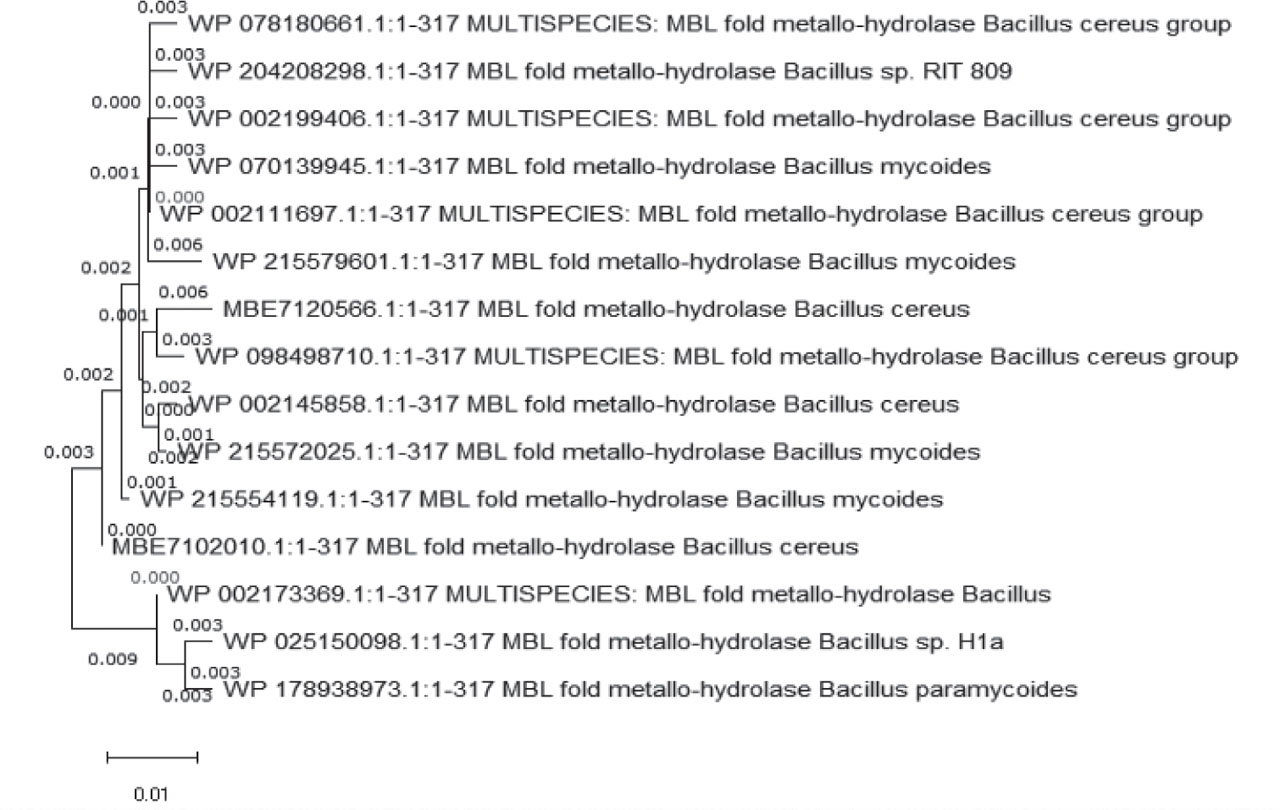
Figure 1
The phylogenetic tree for hydrolase
To gain preliminary insight into the folding pattern of the protein prior to three-dimensional modelling, the secondary structure of the B. paramycoides hydrolase was predicted using the Self-Optimized Prediction Method with Alignment (SOPMA) tool, as it helps to understand the arrangement of coils, B turns, and helices. Secondary structure prediction was included to support model reliability and confirm the presence of structural elements typical for hydrolase, including α-helices, β-sheets, and loop regions that contribute to the folding pattern associated with catalytic activity in bacterial hydrolases (Table 2).
Table 2
Secondary structure predicted with SOPMA
| Alpha helix | Extended strands | Beta turns | Random coils |
|---|---|---|---|
| 41.64 % | 19.24 % | 7.57 % | 31.55 % |
For the tertiary structure prediction we ran the primary hydrolase sequence through the SWISS-MODEL homology modelling server (Swiss Institute of Bioinformatics) (8) and selected the best out of the five predicted models for further bioinformatics analysis (Figure 2). Its structure quality was confirmed with the Ramachandran plot analysis (PROCHECK web tool, European Bioinformatics Institute) (Figure 3) (9). These steps ensured structural accuracy before docking studies.
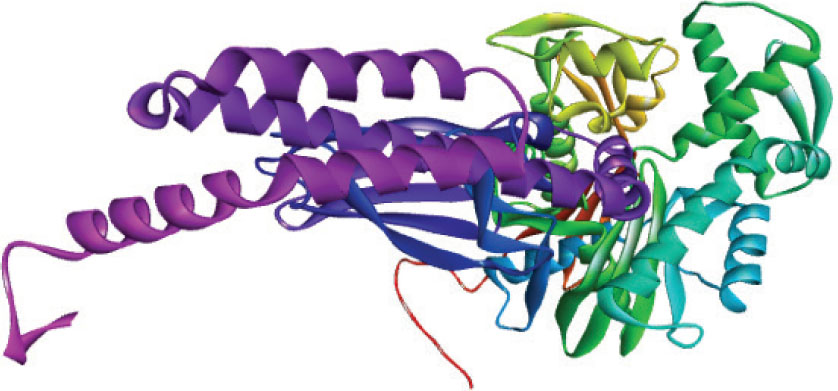
Figure 2
3D structure of hydrolase generated by the SWISS-MODEL tool. The purple region shows the Hsp70 chaperone of E. coli for the production of stable conjugate protein complex
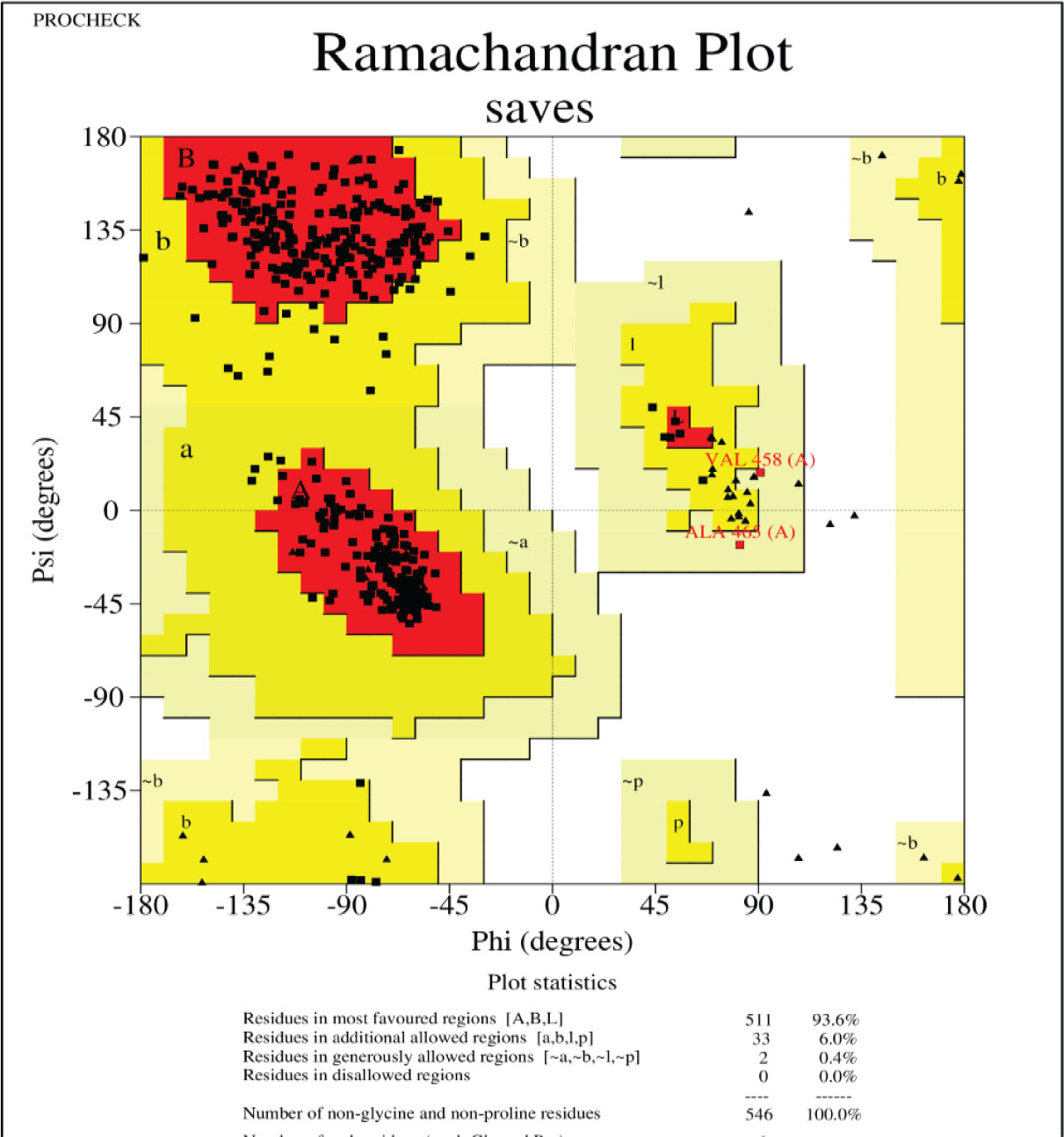
Figure 3
Ramachandran plot of hydrolase from Bacillus paramycoides
The active sites of the enzyme were identified using the Discovery Studio 2025 SP1 (BIOVIA, San Diego, CA, USA) (Figure 4) and purified 3D hydrolase and ligand structures uploaded to the PyRx virtual screening tool (10), version 0.8 (Scripps Research Institute, La Jolla, CA, USA) for site-specific docking analysis. The grid box was set to the predicted dimensions (Table 3) and the result for each compound obtained in terms of free binding energy. Active-site prediction was necessary to ensure docking on biologically relevant catalytic regions rather than arbitrary pockets.
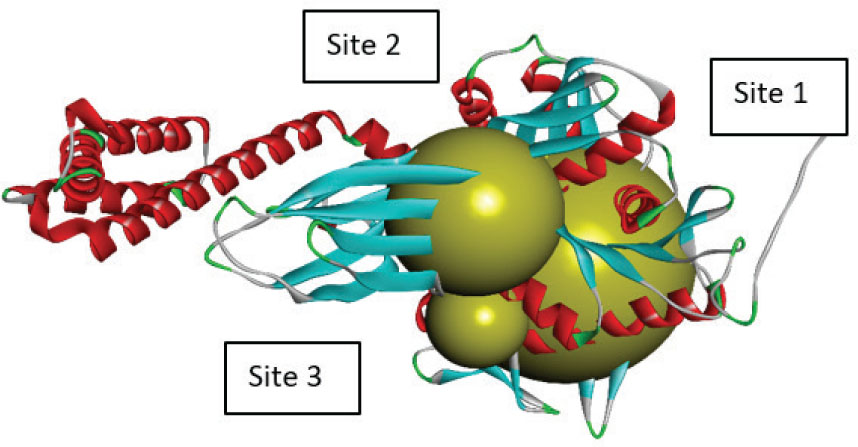
Figure 4
Active site prediction with Discovery Studio
Docking studies
We also virtually screened structure data file (SDF) formats of 11 propiconazole compounds from the PubChem database (NCBI) (11) (Table 4) on PyRx to ensure that interaction with the hydrolase is not impeded (energy minimisation). Then 11 propiconazole models were converted into autodock ligand (pdbqt) files to identify the most stable propiconazole conformers for reliable interaction assessment with the hydrolase.
Table 4
Selected propiconazole and its derivatives
| Ser. no. | Compound name | PubChem CID | Formula | Structure |
|---|---|---|---|---|
| 1 | (2R,4S)-2-(2,4-Dichlorophenyl)- 4-propyl-2-[(1H-1,2,4-triazol-1-yl) methyl]-1,3-dioxolane | 679162 | C15H17Cl2N3O2 | 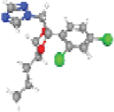 |
| 2 | 1-[[(2S,4S)-2-(2,4-dichlorophenyl)- 4-propyl-1,3-dioxolan-2-yl]methyl]- 1,2,4-triazole | 679164 | C15H17Cl2N3O2 | 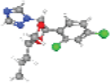 |
| 3 | 1-[[2-(2,4-Dichlorophenyl)-4- (2,2,3,3,3-pentadeuteriopropyl)-1,3- dioxolan-2-yl]methyl]-1,2,4-triazole | 129318213 | C15H17Cl2N3O2 | 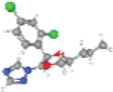 |
| 4 | Hispor | 156985 | C24H26Cl2N6O4 | 

|
| 5 | Propiconazole 4,4′-dihydroxybiphenyl | 86643422 | C27H27Cl2N3O4 |  |
| 6 | Propiconazole hydrochloride | 129773016 | C15H18Cl3N3O2 | 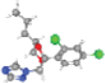 |
| 7 | Propiconazole TP1 | 155884399 | C13H11Cl2N3O4 | 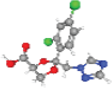 |
| 8 | Propiconazole TP2 | 703104 | C10H9Cl2N3O | 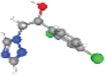 |
| 9 | Propiconazole-(phenyl-d3) | 124202653 | C15H17Cl2N3O2 |  |
| 10 | Propiconazole | 43234 | C15H17Cl2N3O2 |  |
| 11 | Propiconazole-d7 | 71751781 | C15H17Cl2N3O2 | 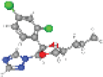 |
After docking with PyRx, interactions were predicted with the PyMOL Molecular Graphics System, version 2.6.2 (Schrödinger, New York, NY, USA) to identify the most favourably docked complex (12). This analysis provided insight into specific amino acid residues that form hydrogen bonds and have hydrophobic interactions with propiconazole supporting the proposed enzymatic degradation mechanism.
Site-directed mutagenesis analysis
To determine how natural mutations would affect the hydrolase degradation effects on propiconazole we ran the B. paramycoides FASTA sequence through the NCBI BLASTp query and identified the closest 10 sequences of other bacterial species with a 97–100 % match. These were pairwise-aligned, and their mutations recorded on specific positions manually. Then we analysed the effect of each mutation on the original protein structure using the MuPro, Phd-SNP, I-Mutant, and SIFT tools as described elsewhere (13). By predicting which mutations would have neutral, increased, or deleterious effect, we hoped to get an insight into the enzyme’s functional resilience and identify which variants could enhance or compromise propiconazole degradation in environmental settings.
Then we generated the 3D structure of a mutated protein complex with the SWISS-MODEL and docked it to the best three of 11 propiconazole derivatives using the Autodock Vina (Scripps) for molecular docking and Discovery Studio (BIOVIA) to study their interactions and bonds and assess how mutations would influence substrate affinity, following the procedure described in detail by Baroroh et al. (14).
Molecular dynamics simulations
Protein-ligand molecular dynamics simulations were performed using OpenMM version 8.4.0 (SimTK, Stanford University, Stanford, CA, USA). The protein was parameterised using the AMBER ff19SB force field, while ligand parameters were generated using the General AMBER Force Field 2 (GAFF2) as described elsewhere (15). Partial atomic charges of the ligand were calculated using the AM1-BCC method implemented in the Antechamber module of AmberTools (AMBER, University of California, San Francisco, CA, USA), and the resulting molecular parameters were then used to generate topology and coordinate files with the tleap program (AMBER). The protein-ligand complex was solvated in a periodic cubic box of TIP3P water molecules with a minimum padding distance of 1.0 nm from the solute. The system was neutralised by adding Na+ and Cl− counterions to achieve electroneutrality.
Energy was minimised over 20,000 steps to remove steric clashes, followed by equilibration under constant temperature and pressure (NPT ensemble) at 298 K and 100 kPa for 5 ns. Long-range electrostatic interactions were treated using the Particle Mesh Ewald (PME) method, and a 2 fs integration timestep was applied. Covalent bonds involving hydrogen were constrained using the SHAKE algorithm. Followed a 100 ns production simulation. Trajectory coordinates for subsequent analysis were saved every 50 ps, resulting in 2,000 frames.
Structural stability was evaluated using root mean square deviation (RMSD), residue flexibility using root mean square fluctuation (RMSF), and compactness using the radius of gyration (Rg). Principal component analysis (PCA) was performed to identify dominant collective motions of the complex.
Binding free energies were estimated using the molecular mechanics / generalised born and Poisson-Boltzman surface areas (MM/GBSA and MM/PBSA, respectively) methods to quantify interaction stability. In addition, distances between the ligand and key catalytic residues were monitored throughout the trajectory to assess dynamic maintenance of the binding pose.
RESULTS
Docking results and protein-ligand interactions
Table 5 shows the binding energies of B. paramycoides hydrolase docked to 11 propiconazole compounds, while Figures 5–12 show the interactions of docked complexes, Figure 13 the mutated structure of the hydrolase enzyme, and Figures 14–16 the interactions of the mutated hydrolase enzyme with propiconazol compounds visualised with PyMOL.
Table 5
Binding energies and types of intermolecular interactions of compounds with hydrolase
| Compounds | Molecular weight (g/mol) | Energy (kcal/mol) |
|---|---|---|
| 1-[[(2S,4S)-2-(2,4-dichlorophenyl)-4-propyl-1,3-dioxolan-2-yl] methyl]-1,2,4-triazole | 342.2 | −6.8 |
| Propiconazole TP1 | 344.15 | −6.6 |
| 1-[[2-(2,4-Dichlorophenyl)-4-(2,2,3,3,3-pentadeuteriopropyl)-1,3-dioxolan-2-yl]methyl]-1,2,4-triazole | 347.2 | −6.2 |
| Propiconazole | 342.2 | −6.2 |
| (2R,4S)-2-(2,4-Dichlorophenyl)-4-propyl-2-[(1H-1,2,4-triazol-1-yl)methyl]-1,3-dioxolane | 342.2 | −6.1 |
| Hispor | 533.4 | −6.1 |
| Propiconazole-d7 | 349.3 | −6.0 |
| Propiconazole 4,4′-dihydroxybiphenyl | 528.4 | −5.9 |
| Propiconazole hydrochloride | 378.7 | −5.9 |
| Propiconazole-(phenyl-d3) | 345.2 | −5.8 |
| Propiconazole TP2 | 258.1 | −5.7 |
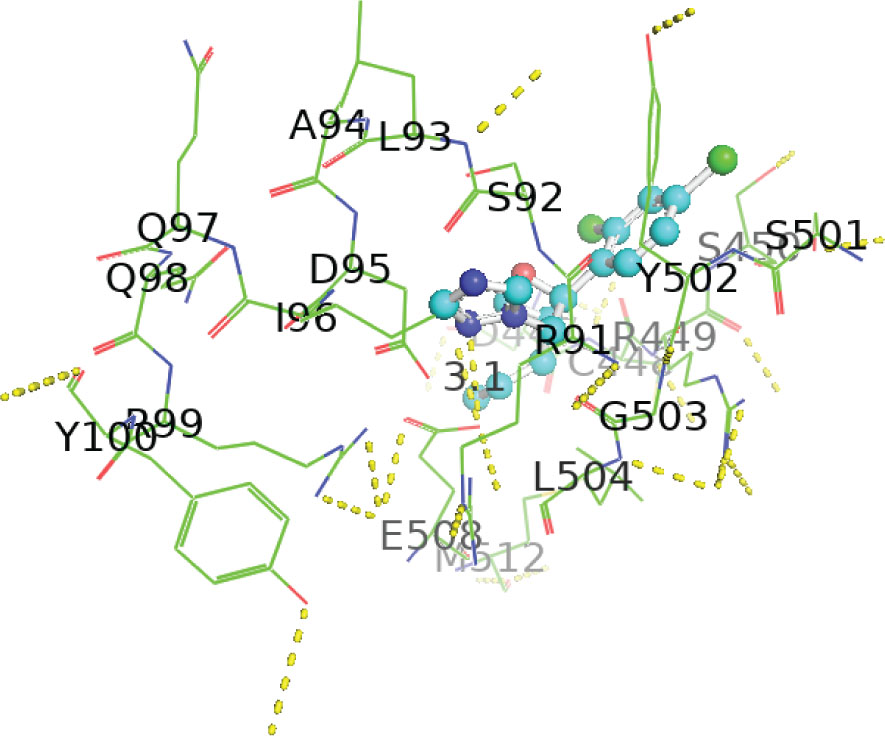
Figure 5
Interaction between hydrolase and (2R,4S)-2-(2,4-dichlorophenyl)-4-propyl-2-[(1H-1,2,4-triazol-1-yl)methyl]-1,3-dioxolane complex 1 visualised with PyMOL
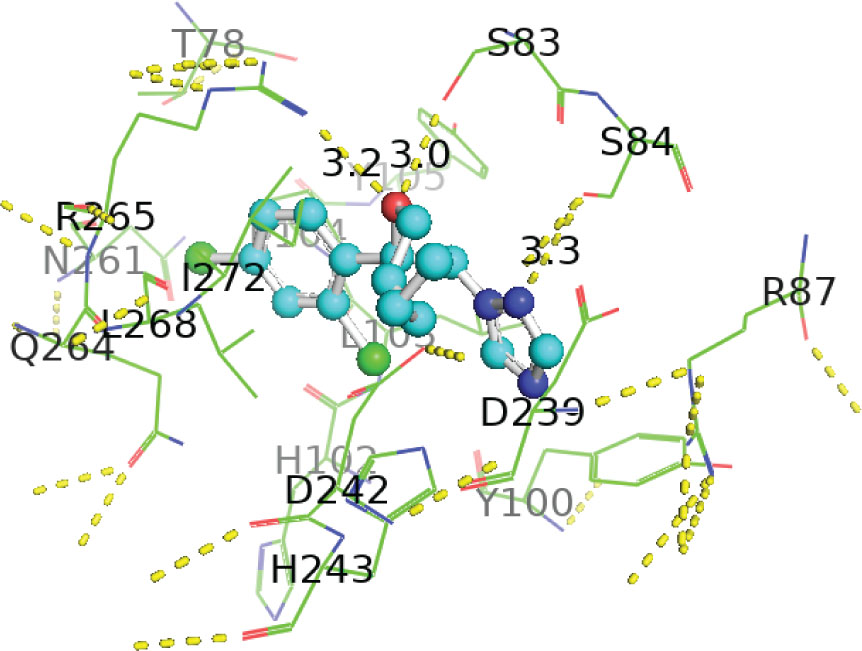
Figure 6
Interaction between hydrolase and 1-[[2-(2,4-dichlorophenyl)-4-(2,2,3,3,3-pentadeuteriopropyl)-1,3-dioxolan-2-yl]methyl]-1,2,4-triazole complex 2 visualised with PyMOL
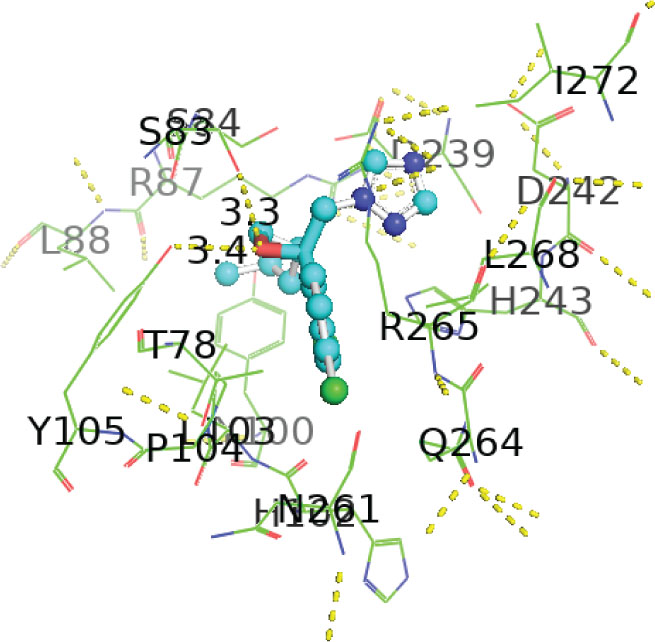
Figure 7
Interaction between hydrolase and 1-[[(2S,4S)-2-(2,4-dichlorophenyl)-4-propyl-1,3-dioxolan-2-yl]methyl]-1,2,4-triazole complex 3 visualised with PyMOL
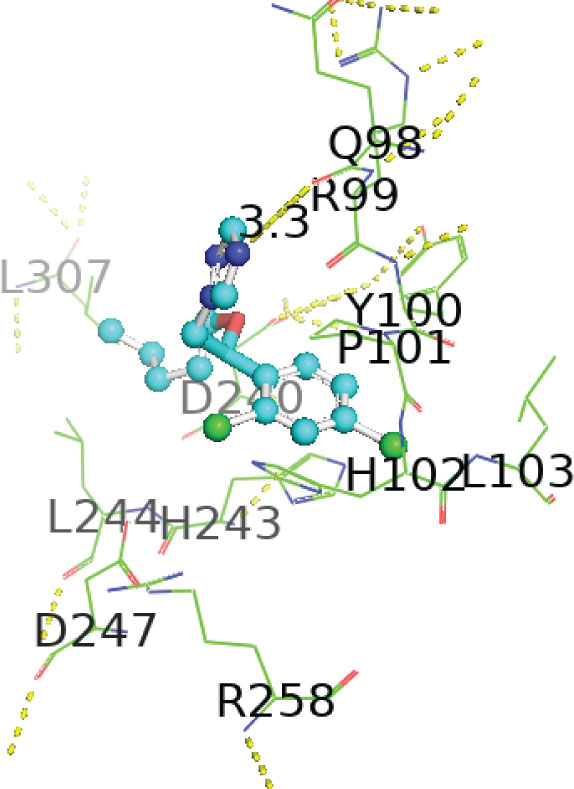
Figure 8
Interaction between hydrolase and propiconazole 4,4’-dihydroxybiphenyl complex 4 visualised with PyMOL
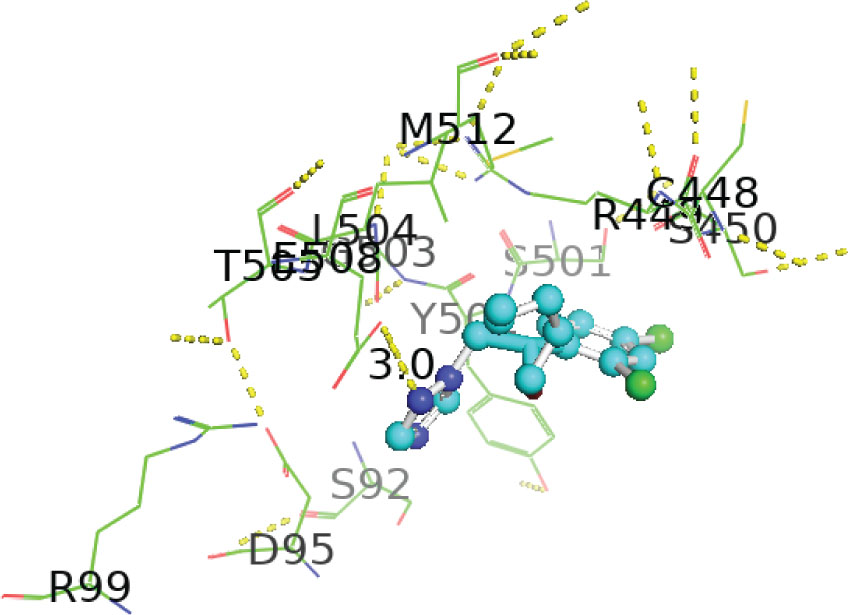
Figure 9
Interaction between hydrolase and propiconazole hydrochloride complex 5 visualised with PyMOL
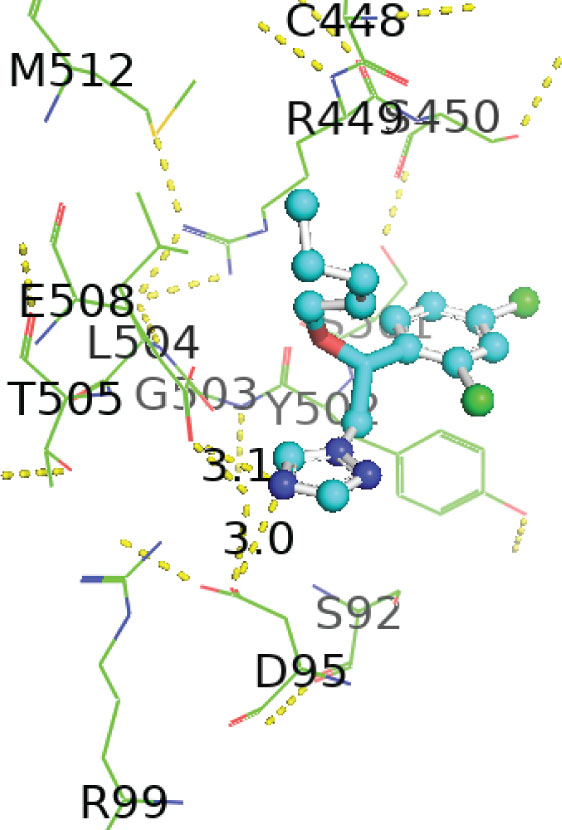
Figure 10
Interaction between hydrolase and propiconazole-d7 complex 6 visualised with PyMOL
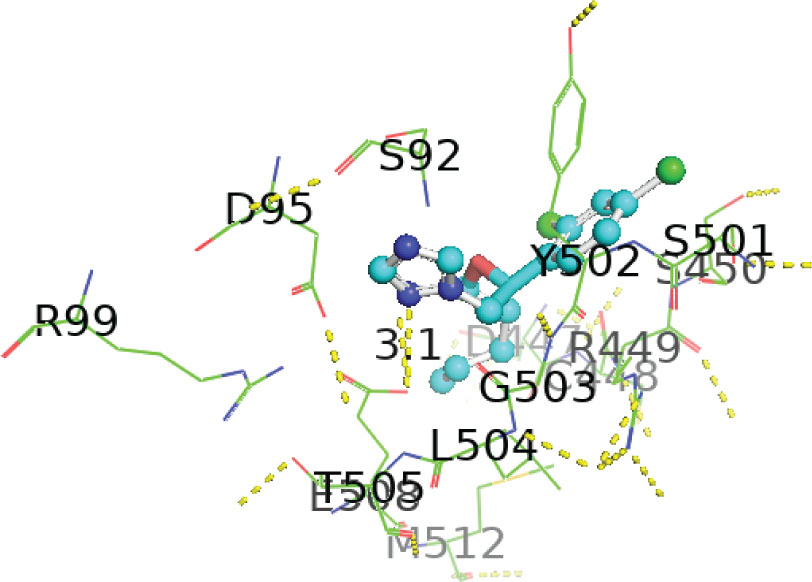
Figure 11
Interaction between hydrolase and propiconazole complex 7 visualised with PyMOL
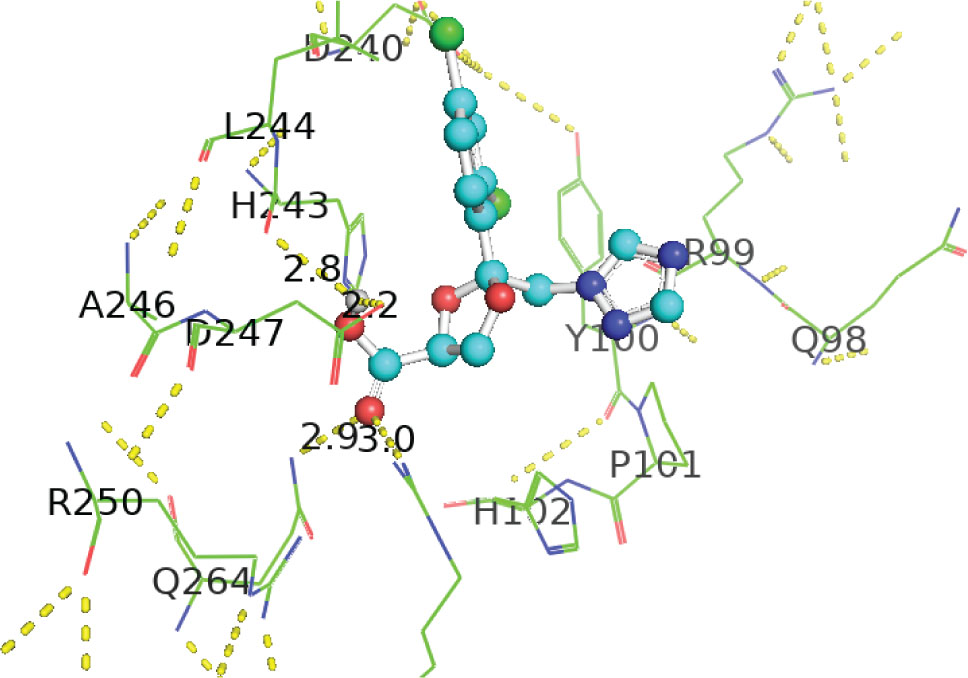
Figure 12
Interaction between hydrolase and propiconazole TP1 complex 8 visualised with PyMOL
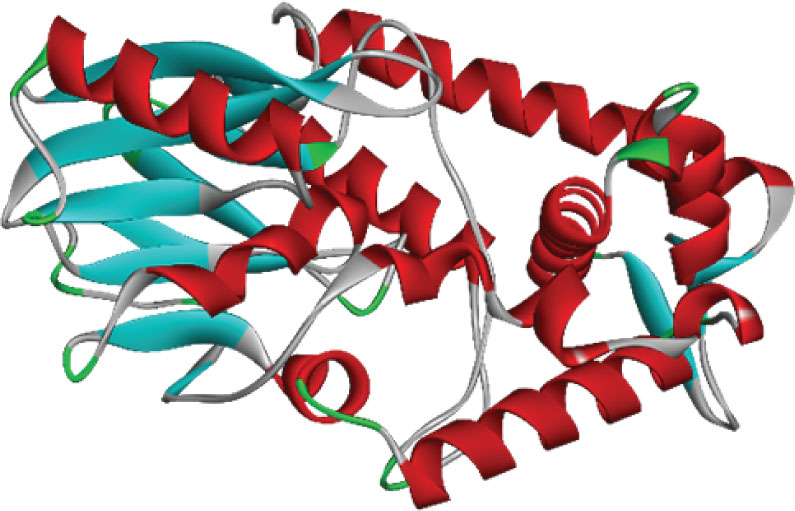
Figure 13
Mutated structure of hydrolase from Bacillus paramycoides
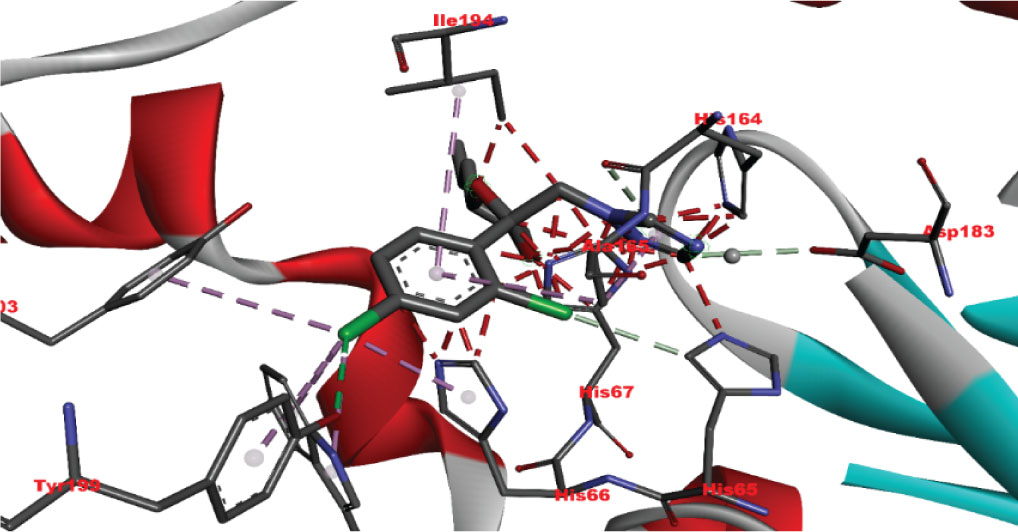
Figure 14
Interaction between hydrolase and propiconazole TP1. The ligand is positioned within the active site and stabilised by key catalytic residues, including His66, His67, and Trp92. Additional residues such as Phe13, Val15, Lys130, and Thr131 contribute through hydrophobic contacts and hydrogen bonding. Green lines represent hydrogen bonds, magenta lines hydrophobic and π–π interactions
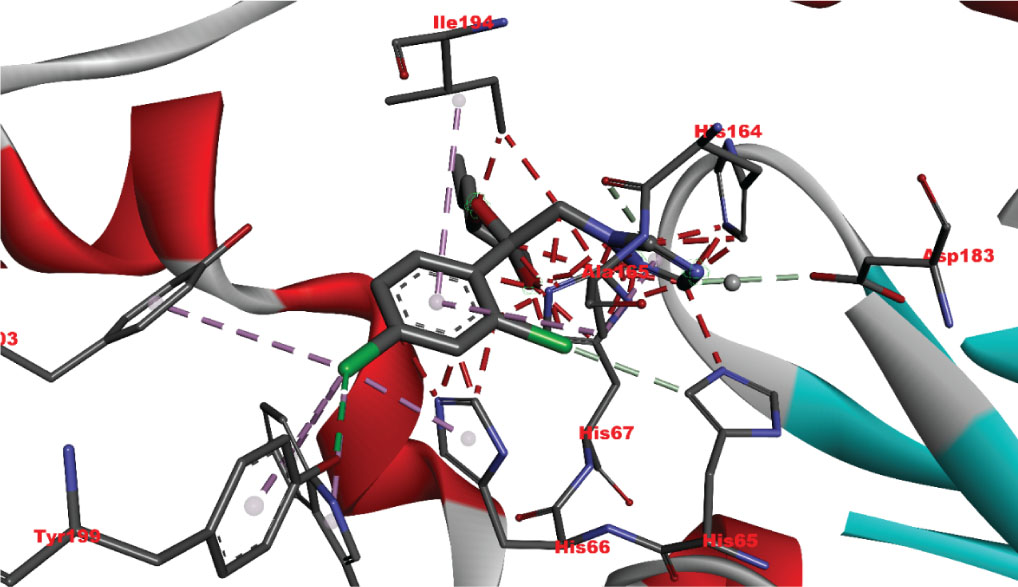
Figure 15
Interaction between mutated hydrolase and 1-[[2-(2,4-dichlorophenyl)-4-(2,2,3,3,3-pentadeuteriopropyl)-1,3-dioxolan-2-yl]methyl]-1,2,4-triazole
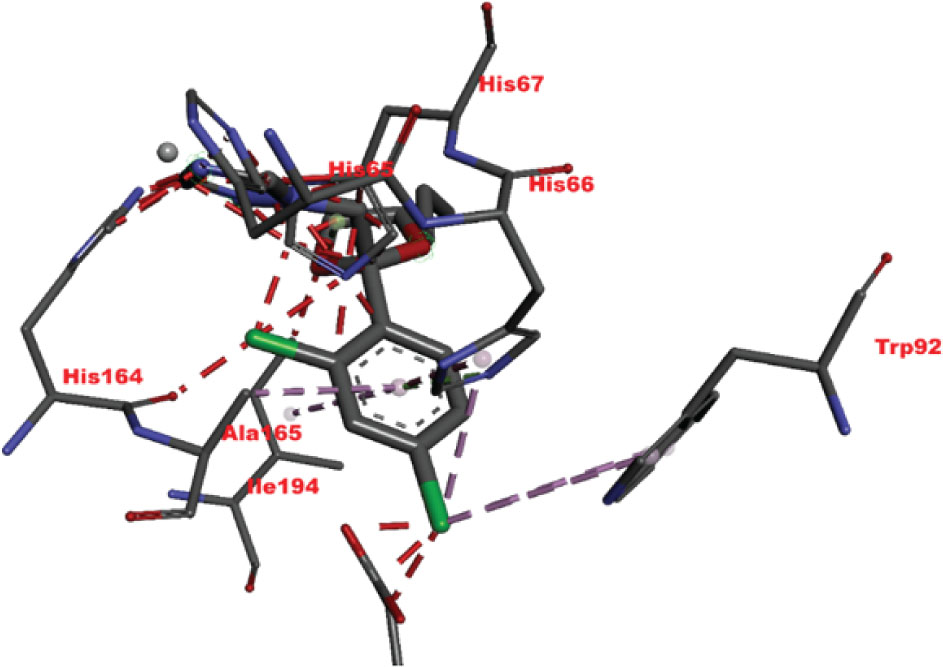
Figure 16
Interaction between mutated hydrolase and 1-[[(2S,4S)-2-(2,4-dichlorophenyl)-4-propyl-1,3-dioxolan-2-yl] methyl]-1,2,4-triazole
Table 6 shows how each mutation would influence the degradation effect of B. paramycoides hydrolase on propiconazole, and Table 7 the best docking energies (binding affinities, ranging from −7.1 to −7.4 kcal/mol) with three propiconazole variants obtained with the modelled mutated 3D structure predicted to increase the effect of the original structure. The mutated complex of hydrolase is more stable than the original structure, which suggests that mutation can enhance hydrolase functionality, stability, and interaction and can be utilised to improve degradation of propiconazole.
Table 6
Identified mutations and classification of mutants in silico
| Metallo-ß-lactamase fold metallo-hydrolase by species | Accession number | Amino acid substituted | Mutation position | Amino acid replaced with | I-mutant results | MU-PRO result | PHD-SNP results | SIFT results |
|---|---|---|---|---|---|---|---|---|
| Bacillus paramycoides | WP_178938973.1 | D | 151 | E | Increase | Increase | Neutral | Neutral |
| Bacillus cereus | WP_193645052.1 | N | 82 | K | Decrease | Decrease | Deleterious | Deleterious |
| Bacillus mycoides | WP_215554119.1 | V | 238 | M | Decrease | Decrease | Deleterious | Neutral |
| Bacillus thuringiensis | WP_264539129.1 | D | 123 | G | Decrease | Decrease | Neutral | Deleterious |
| Bacillus nitratireducens | WP_044737773.1 | L | 312 | W | Decrease | Increase | Neutral | Deleterious |
| Bacillus sp. CDB3 | WP_128853480.1 | H | 47 | Q | Decrease | Increase | Deleterious | Neutral |
| Bacillus sp. TH12 | WP_201056898.1 | A | 119 | V | Increase | Increase | Neutral | Neutral |
| Bacillus sp. NP247 | WP_219920057.1 | V | 50 | A | Decrease | Decrease | Deleterious | Deleterious |
| Bacillus sp. MYb209 | WP_105584583.1 | T | 33 | I | Decrease | Decrease | Neutral | Neutral |
| Bacillus toyonensis | WP_097999873.1 | K | 108 | R | Decrease | Decrease | Neutral | Neutral |
Table 7
Docking and interaction study of hydrolase with the best three propiconazole derivatives
| Pollutants | Docking energies (kcal/mol) | Amino acid residues | Distance between interacting amino acid residues (Å) | Type of bond interaction |
|---|---|---|---|---|
| Propiconazole TP1 | −7.4 | HIS66, TRP92, HIS67, VAL15, THR131, PHE13, LYS130 | 2.84, 2.93, 3.14, 4.26, 5.01, 4.92, 4.67, 4.99, 5.23, 3.02 | Alkyl, pi-alkyl, conventional, Pi-Pi T-shaped, hydrogen bonds, Van der Waals forces |
| 1-[[(2S,4S)-2-(2,4-dichlorophenyl)-4-propyl-1,3-dioxolan-2-yl] methyl]-1,2,4-triazole | −7.1 | HIS67, HIS66, TRP92, ILE192, ALA165, HIS164, HIS65 | 3.94, 4.85, 4.71, 4.31, 4.57, 3.68 | Pi-lone pair, Pi-alkyl, Pi-Pi T-shaped, Van der Waals forces |
| 1-[[2-(2,4-Dichlorophenyl)-4-(2,2,3,3,3-pentadeuteriopropyl)-1,3-dioxolan-2-yl]methyl]-1,2,4-triazole | −7.1 | ILE194, HIS164, ASP183, ALA165, TYR139 HIS67, HIS66, HIS65, | 4.42, 2.95, 2.75, 4.44, 5.50, 5.41, 3.76, 4.82, 2.70, 3.61, 2.08 | Alkyl, pi-alkyl, conventional, Pi-Pi T-shaped, carbon, Waals forces hydrogen bonds, Van der |
Molecular dynamic simulation findings
Figure 17 shows that the complex is stable (RMSD; panel A) and compact (radius of gyration; panel B) with little fluctuation towards 2.0 Å at 600 ns (RMSF; panel C). The RMSF profile, plotted against residue number, indicates that fluctuations are primarily confined to flexible loop regions, while residues forming the binding pocket exhibit comparatively low mobility. The fact that the two principal components (PC1 and PC2) remain in the range of −5–10 throughout the simulation suggests that the system will maintain relatively stable global motions while undergoing smaller, localised movements detailed in Figure 17 (panel D).
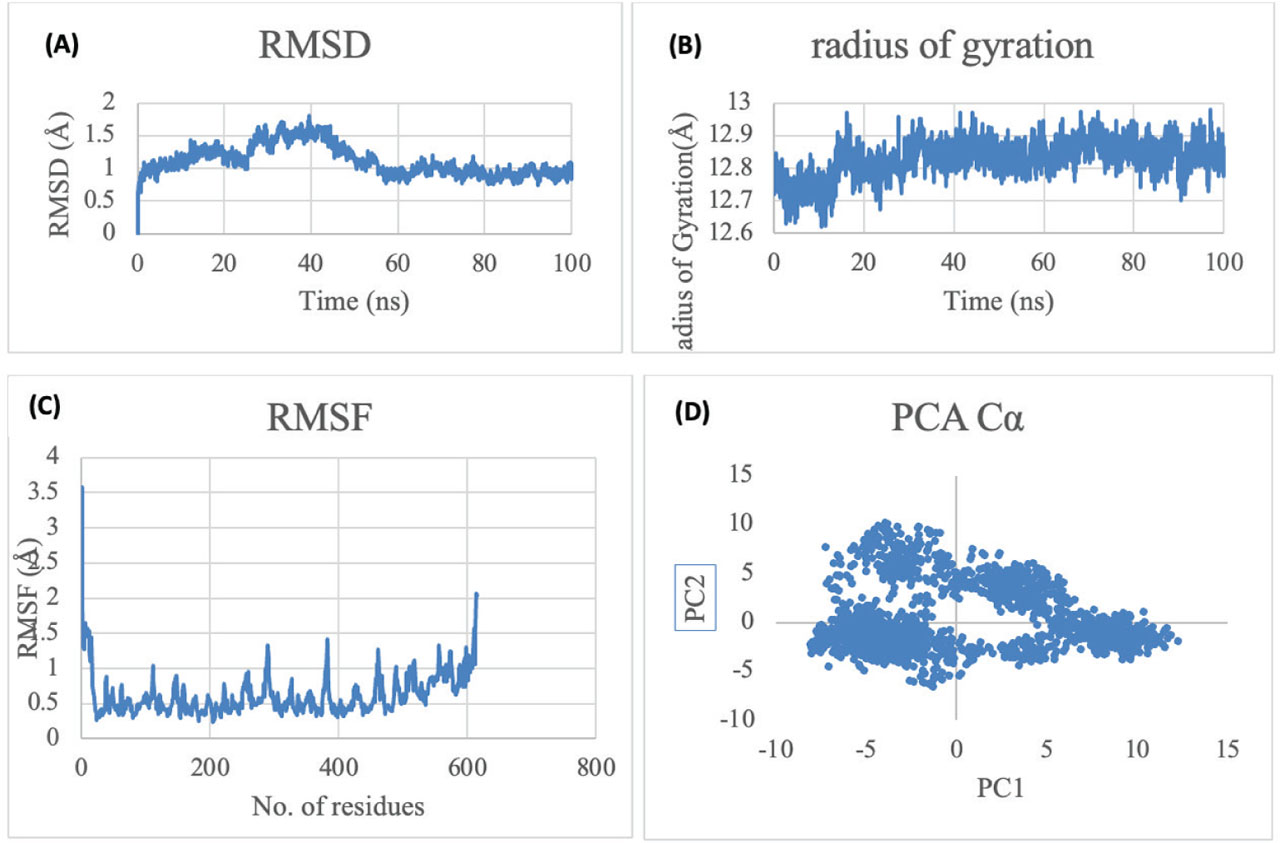
Figure 17
Protein–ligand complex analysis in molecular dynamics simulation. A) Root mean square deviation (RMSD) shows the overall structural stability of the complex by tracking backbone fluctuations over time. B) Radius of gyration (Rg) shows the compactness and structural integrity of the protein; consistent Rg values suggest a stable and well-folded conformation. C) Root mean square fluctuation (RMSF) highlights residue-specific flexibility, identifying regions with higher mobility such as loops, binding pockets, or terminal ends. D) Principal component analysis (PCA) illustrates dominant collective motions and major conformational transitions of the complex, helping to visualise large-scale structural dynamics that influence ligand binding and enzyme function
Distance monitoring between the ligand and catalytic residues throughout the simulation confirms that the ligand remains stable in the predicted active site (Figure 18). The sustained short-range proximity indicates persistent functional interactions, supporting the structural validity of the docking pose under dynamic conditions. In contrast, residues 78, 84, and 85 maintain substantially larger distances from the ligand, confirming that they are not involved in substrate stabilisation. This comparative analysis reinforces the correct identification of the catalytic pocket and demonstrates that propiconazole remains confined within the functional binding region during the simulation.
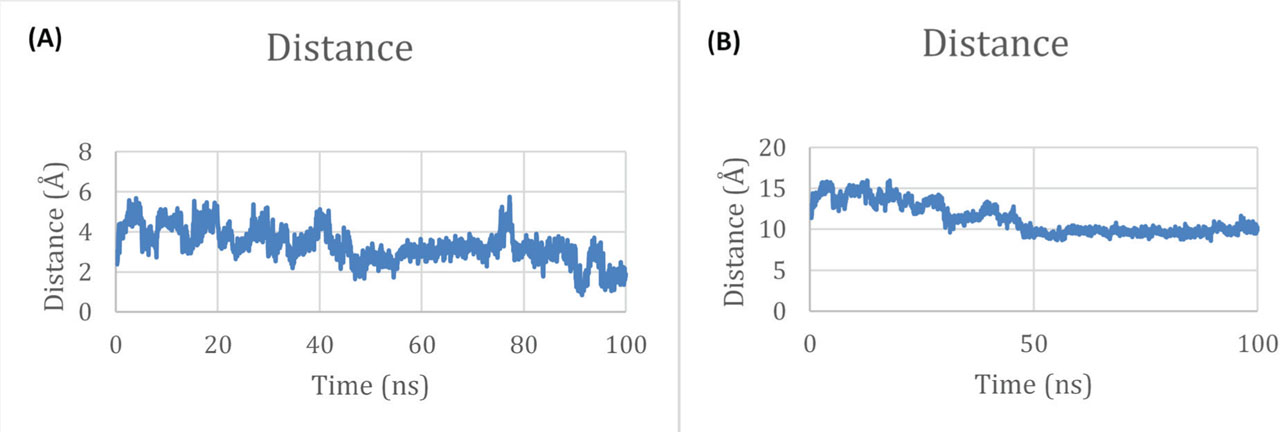
Figure 18
Distance analysis between the ligand and key protein residues in molecular dynamics simulation. A) Ligand-catalytic residue distances are consistently short (0.98–2.89 Å), which indicates stable interactions, essential for catalytic activity and effective binding. B) Significantly larger separation between the ligand and selected, non-catalytic residues (25.83–28.99 Å) confirms that these residues do not directly participate in ligand interaction and remain structurally distant throughout the simulation
The binding free energy calculations using MM/GBSA and MM/PBSA (Tables 8 and 9) indicate favourable protein-ligand interactions, with total binding energies of −35.91 kcal/mol and −6.75 kcal/mol, respectively. The interaction is primarily driven by van der Waals contributions, while polar solvation energy partially offsets the binding affinity.
Table 8
MM/GBSA complex–receptor–ligand energy decomposition
| Energy component | Average | SD | SEM |
|---|---|---|---|
| VDWAALS | −39.6668 | 5.9813 | 1.8915 |
| EEL | −0.6035 | 2.2259 | 0.7039 |
| EGB | 8.0517 | 2.9888 | 0.9451 |
| ESURF | −3.6938 | 0.5431 | 0.1718 |
| DELTA G gas | −40.2703 | 5.9055 | 1.8675 |
| DELTA G solv | 4.3579 | 3.1938 | 1.0100 |
| DELTA TOTAL | −35.9124 | 6.4629 | 2.0437 |
Table 9
MM/PBSA complex–receptor–ligand energy decomposition
| Energy component | Average | SD | SEM |
|---|---|---|---|
| VDWAALS | −39.6668 | 5.9813 | 1.8915 |
| EEL | −0.6035 | 2.2259 | 0.7039 |
| EPB | 12.9297 | 5.5557 | 1.7569 |
| ENPOLAR | −21.1805 | 3.2240 | 1.0195 |
| EDISPER | 41.7699 | 4.0950 | 1.2950 |
| DELTA G gas | −40.2703 | 5.9055 | 1.8675 |
| DELTA G solv | 33.5192 | 6.0584 | 1.9158 |
| DELTA TOTAL | −6.7511 | 7.0464 | 2.2283 |
DISCUSSION
Our findings give an important insight into the stability and reliability of the B. paramycoides hydrolase enzyme and demonstrate its ability to form stable complexes with the propiconazole.
The docking scores observed for the B. paramycoides hydrolase (−5.7 to −7.4 kcal/mol) fall well within the range of −5.0 to −8.0 kcal/mol reported for biologically active and catalytically relevant interactions, indicating that the enzyme-ligand complex exhibits a binding affinity consistent with functional degradation activity and supporting our hypothesis of the enzyme’s potential for propiconazole bioremediation (6). Our findings identify hydrogen bonding, hydrophobic interactions, and π–π stacking as major forces stabilising fungicide-enzyme complexes. Moreover, the dynamic stability observed in our AMBER molecular dynamics trajectories coincides with reported moderate structural flexibility and stable RMSD/Rg values in enzyme-ligand simulations.
Our study provides a more detailed enzyme-level mechanistic insight and additionally evaluates the effect of potential mutations through in silico site-directed mutagenesis described elsewhere (16), suggesting that the B. paramycoides hydrolase should offer a more stable and mutation-tolerant propiconazole degradation.
The addition of site-directed mutational analysis increases the research’s reliability, as incorporating likely mutations that occur over time and their impact on the stability of the enzyme-substrate complex can forecast the hydrolase’s long-term viability. Our docking simulations with mutant hydrolase (containing all mutations shown in Table 6) and propiconazole derivatives confirm that the enzyme will remain effective and robust even with mutations, bearing promise for future applications.
Study limitations
Despite the strength of the in silico approaches applied, this study has several limitations. First, all structural modelling, docking, mutational analysis, and molecular dynamics simulations were computed, which means that the predicted binding affinities and the propiconazole degradation potential of B. paramycoides hydrolase may not fully apply in real biochemical conditions. Second, the enzymatic mechanism of propiconazole degradation was inferred from docking interactions rather than validated by wet-lab assays, so the actual catalytic pathway, rate of degradation, and potential formation of intermediate metabolites remain unconfirmed.
CONCLUSION
Regardless of these limitations, this study provides a fair insight into the molecular and structural characteristics of B. paramycoides hydrolase and into its potential interaction with propiconazole. Molecular docking analysis indicates the formation of a stable enzyme-ligand complex, and site-directed mutagenesis analysis suggests that the complex should maintain this stability, despite certain amino acid substitutions. However, these predictions can only be validated by further in vitro and in vivo studies to establish the hydrolase’s practical applicability in environmental and agricultural settings. Overall, this work contributes to the broader understanding of using bacterial enzymes and formulations for sustainable bioremediation and supports research of biopesticides and biofungicides as safer alternatives to synthetic chemicals in agriculture.
Notes
Acknowledgments
This study was supported by the Researchers Supporting Project of the Princess Nourah bint Abdulrahman University, Riyadh, Saudi Arabia (Project No. PNURSP2026R182)