
Table 1
Baseline characteristics
| Characteristics | Low expression of RUNX1 | High expression of RUNX1 | p value |
|---|---|---|---|
| n | 190 | 191 | |
| Race, n (%) | 0.708 | ||
| Asian | 5 (1.4%) | 7 (1.9%) | |
| Black or African American | 14 (3.8%) | 11 (3%) | |
| White | 165 (45%) | 165 (45%) | |
| Age, n (%) | 0.384 | ||
| < = 60 | 100 (26.2%) | 109 (28.6%) | |
| >60 | 90 (23.6%) | 82 (21.5%) | |
| Clinical stage, n (%) | 0.250 | ||
| Stage I | 1 (0.3%) | 0 (0%) | |
| Stage II | 15 (4%) | 8 (2.1%) | |
| Stage III | 146 (38.6%) | 150 (39.7%) | |
| Stage IV | 26 (6.9%) | 32 (8.5%) | |
| Tumor status, n (%) | 0.288 | ||
| Tumor free | 40 (11.8%) | 32 (9.5%) | |
| With tumor | 129 (38.2%) | 137 (40.5%) | |
| Histologic grade, n (%) | 1.000 | ||
| G1 | 1 (0.3%) | 0 (0%) | |
| G2 | 22 (5.9%) | 23 (6.2%) | |
| G3 and G4 | 162 (43.7%) | 163 (43.9%) | |
| Primary therapy outcome, n (%) | 0.069 | ||
| PD | 15 (4.9%) | 12 (3.9%) | |
| SD | 10 (3.2%) | 12 (3.9%) | |
| PR | 15 (4.9%) | 28 (9.1%) | |
| CR | 122 (39.5%) | 95 (30.7%) | |
| Lymphatic invasion, n (%) | 0.212 | ||
| No | 29 (19.5%) | 19 (12.8%) | |
| Yes | 50 (33.6%) | 51 (34.2%) | |
| OS event, n (%) | 0.004 | ||
| Alive | 87 (22.8%) | 60 (15.7%) | |
| Dead | 103 (27%) | 131 (34.4%) | |
| DSS event, n (%) | 0.019 | ||
| No | 89 (25.1%) | 65 (18.3%) | |
| Yes | 91 (25.6%) | 110 (31%) | |
| PFI event, n (%) | 0.933 | ||
| No | 51 (13.4%) | 52 (13.6%) | |
| Yes | 139 (36.5%) | 139 (36.5%) |
OS (Overall Survival), DSS (Disease-Specific Survival), PFI (Progression-Free Interval), CR (Complete Response), PR (Partial Response), SD (Stable Disease), PD (Progressive Disease).
Table 2
Univariate and multivariate analysis
| Characteristics | Total (N) | Univariate analysis | Multivariate analysis | ||
|---|---|---|---|---|---|
| HR (95% CI) | p value | HR (95% CI) | p value | ||
| FCGBP | 379 | ||||
| Low | 190 | Reference | Reference | ||
| High | 189 | 1.852 (1.425–2.406) | <0.001 | 1.524 (1.148–2.024) | 0.004 |
| ANKRD13A | 379 | ||||
| Low | 189 | Reference | Reference | ||
| High | 190 | 1.732 (1.334–2.248) | <0.001 | 1.352 (1.006–1.819) | 0.046 |
| TMEM181 | 379 | ||||
| Low | 188 | Reference | Reference | ||
| High | 191 | 1.705 (1.314–2.211) | <0.001 | 1.216 (0.905–1.633) | 0.195 |
| RIPK4 | 379 | ||||
| Low | 188 | Reference | Reference | ||
| High | 191 | 1.704 (1.310–2.215) | <0.001 | 1.115 (0.817–1.520) | 0.493 |
| RUNX1 | 379 | ||||
| Low | 189 | Reference | Reference | ||
| High | 190 | 1.680 (1.293–2.182) | <0.001 | 1.429 (1.084–1.884) | 0.011 |
Values in bold are statistically significant.
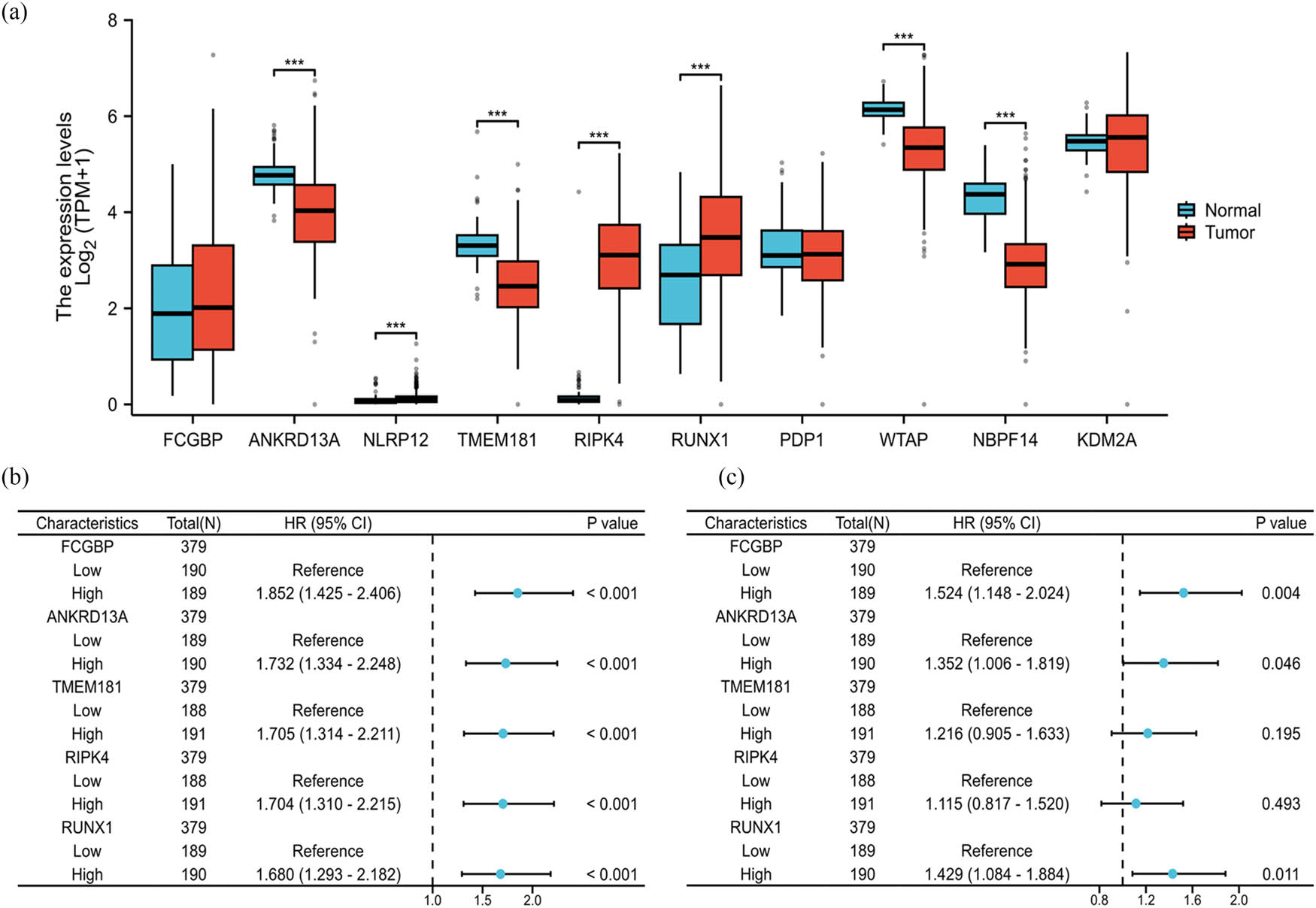
Figure 1
RUNX1 is an independent prognostic factor associated with both elevated expression in tumor tissues and poor clinical outcomes in OSC patients. (a) The expression levels of the top ten prognosis-related genes in OSC tissues (n = 427) and normal controls (n = 88). Data processing method: log2 (value + 1). Data were analyzed by unpaired two-tailed Student’s t-test. Data processing method: log₂(value + 1). ***p < 0.001. (b) Forest plot of univariate Cox regression analysis for OS. Univariate Cox proportional hazards regression was performed using the survival R package (v3.3.1). p < 0.05 was considered statistically significant. (c) Forest plot of multivariate Cox regression analysis for OS, HR, and 95% CI are shown. Statistical significance was assessed by the Wald test
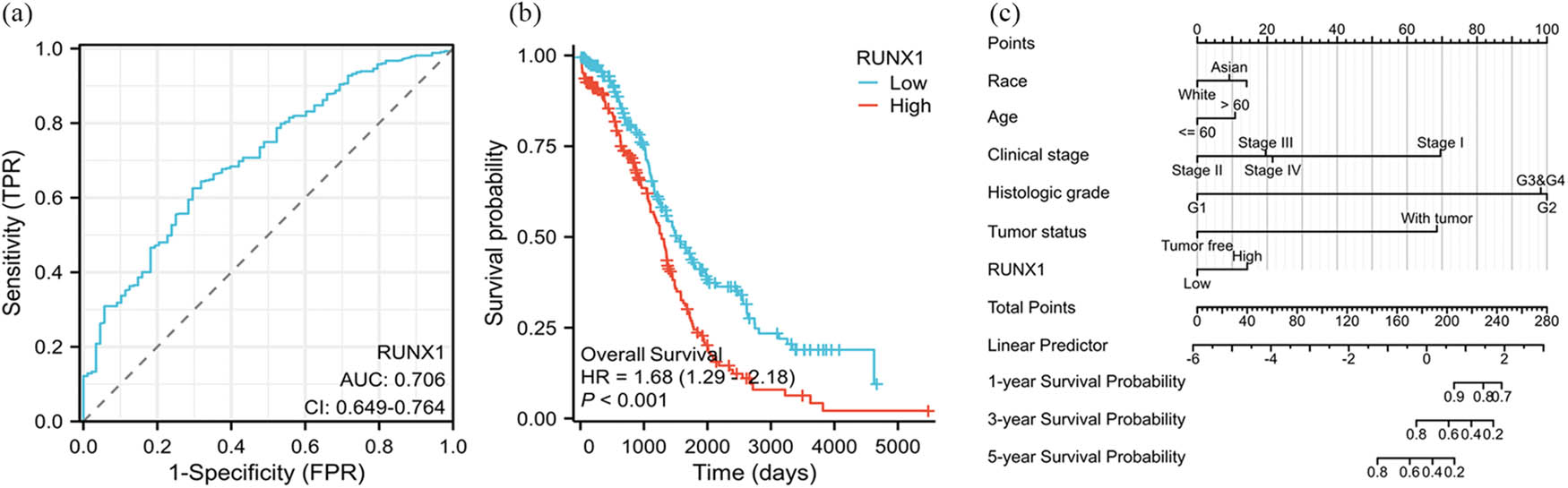
Figure 2
Diagnostic and prognostic significance of RUNX1 in patients with OSC. (a) ROC analysis of RUNX1 in OSC patients. The AUC for RUNX1 was 0.706 (DeLong’s test, p < 0.001). (b) Data were extracted in TPM format alongside corresponding clinical records. Kaplan–Meier survival curves comparing OS between OSC patients with high (n = 190) vs low (n = 189) RUNX1 expression. (c) Prognostic nomogram integrating RUNX1 expression and clinical variables to predict 1-, 3-, and 5-year OS probability
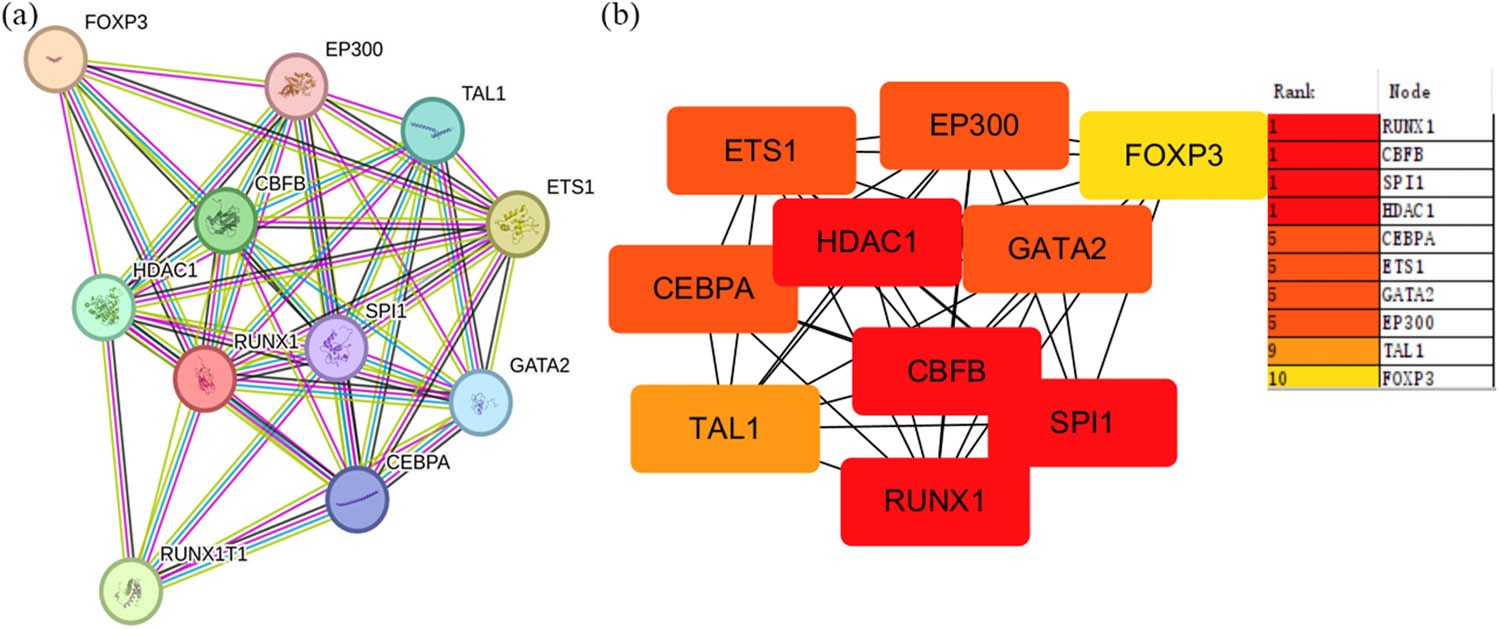
Figure 3
The analysis of top ten hub genes and the expression of the Top ten hub genes in OSC. (a) PPI analysis of the network linking RUNX1 in homo sapiens via STRING database (confidence threshold >0.400). (b) The Top ten hub gene linking RUNX1 in homo sapiens was shown by Cytoscape (CytoHubba plugin, ranked by MCC method)
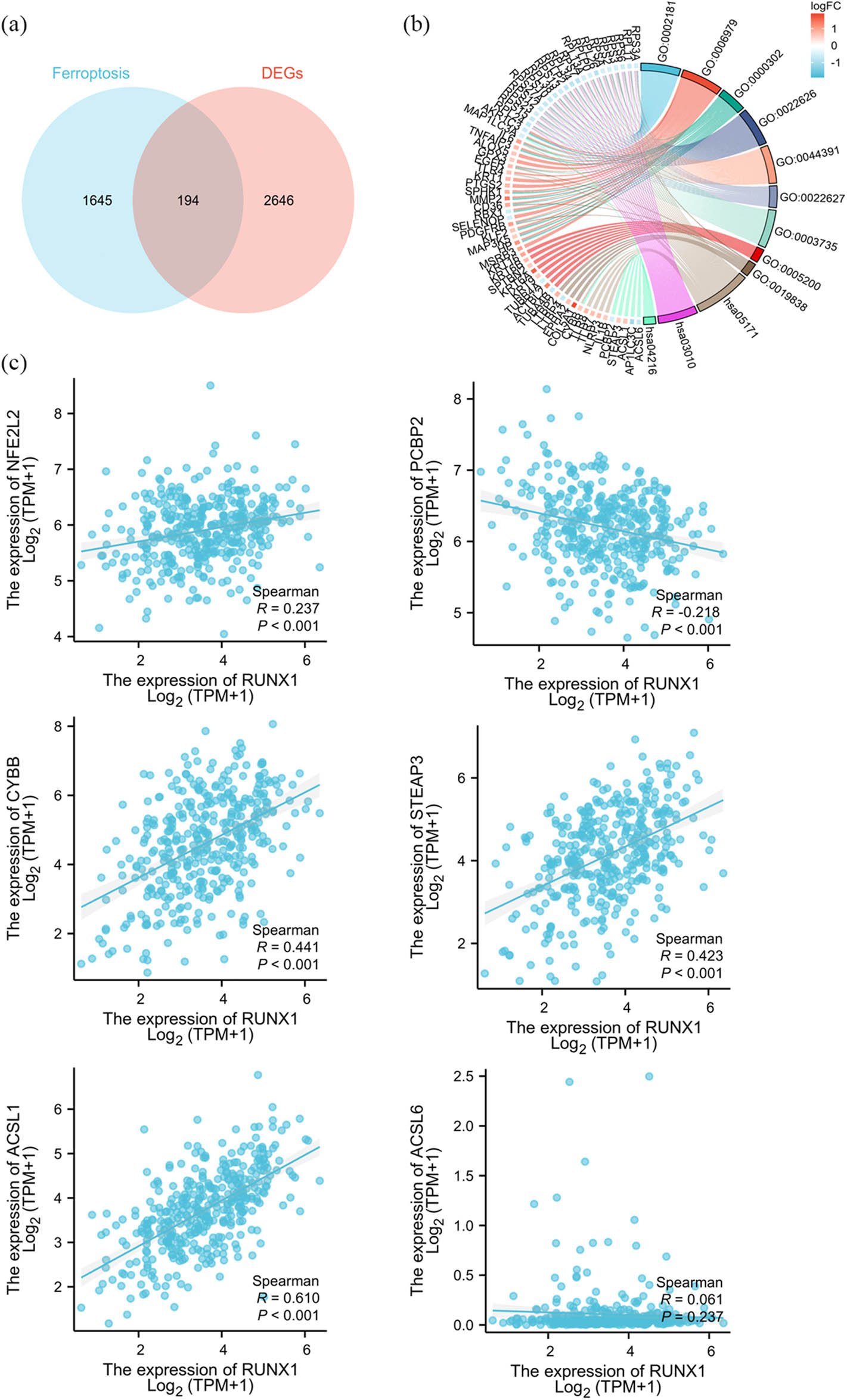
Figure 4
RUNX1 is potentially involved in regulating ferroptosis in OSC cells. (a) Venn diagram. Differential analysis was performed using DESeq2 package [42,43] on raw counts matrices from public datasets. Protein-coding genes meeting |log2FoldChange| >0.5 and adjusted p < 0.05 were filtered. Intersection was obtained with ferroptosis-related gene sets from GeneCards database. (b) GO/KEGG enrichment analysis combined with FC criteria for the 194 intersecting genes. Visualization was implemented using ggplot2 package to generate Chord diagram. (c) Correlation analysis of ferroptosis-related genes and RUNX1. RNA-seq data in TPM format processed via STAR workflow and clinical data from TCGA-OV project (n = 381). Data processing method: log2 (value + 1). Spearman analysis was performed
Table 3
GO and KEGG analyses incorporating fold-change criteria
| Ontology | ID | Description | Gene ratio | Bg Ratio | p value | p. adjust | z score |
|---|---|---|---|---|---|---|---|
| BP | GO:0002181 | Cytoplasmic translation | 20/189 | 146/18,800 | 2.72 × 10⁻¹⁷ | 9.34 × 10⁻¹⁴ | −4.4721 |
| BP | GO:0006979 | Response to oxidative stress | 21/189 | 433/18,800 | 2.83 × 10⁻⁹ | 4.86 × 10⁻⁶ | 2.4004 |
| BP | GO:0000302 | Response to reactive oxygen species | 14/189 | 203/18,800 | 1.85 × 10⁻⁸ | 2.12 × 10⁻⁵ | 1.6036 |
| BP | GO:0042060 | Wound healing | 19/189 | 429/18,800 | 7.1 × 10⁻⁸ | 6.09 × 10⁻⁵ | 2.5236 |
| BP | GO:0034614 | Cellular response to reactive oxygen species | 11/189 | 147/18,800 | 2.86 × 10⁻⁷ | 0.0002 | 1.5076 |
| CC | GO:0022626 | Cytosolic ribosome | 20/193 | 102/19,594 | 1.12 × 10⁻²⁰ | 3.65 × 10⁻¹⁸ | −4.4721 |
| CC | GO:0044391 | Ribosomal subunit | 20/193 | 178/19,594 | 9.76 × 10⁻¹⁶ | 1.59 × 10⁻¹³ | −4.4721 |
| CC | GO:0022627 | Cytosolic small ribosomal subunit | 12/193 | 43/19,594 | 6.94 × 10⁻¹⁵ | 7.54 × 10⁻¹³ | −3.4641 |
| CC | GO:0030055 | Cell-substrate junction | 27/193 | 428/19,594 | 1.62 × 10⁻¹⁴ | 1.32 × 10⁻¹² | 0.57735 |
| CC | GO:0005925 | Focal adhesion | 26/193 | 419/19,594 | 7.58 × 10⁻¹⁴ | 4.94 × 10⁻¹² | 0.39223 |
| MF | GO:0003735 | Structural constituent of ribosome | 20/190 | 181/18,410 | 3.18 × 10⁻¹⁵ | 1.41 × 10⁻¹² | −4.4721 |
| MF | GO:0005200 | Structural constituent of cytoskeleton | 8/190 | 104/18,410 | 1.23 × 10⁻⁵ | 0.0027 | 1.4142 |
| MF | GO:0019838 | Growth factor binding | 8/190 | 139/18,410 | 9.88 × 10⁻⁵ | 0.0123 | 1.4142 |
| MF | GO:0038187 | Pattern recognition receptor activity | 4/190 | 26/18,410 | 0.0001 | 0.0123 | 2 |
| MF | GO:0048027 | mRNA 5′-UTR binding | 4/190 | 27/18,410 | 0.0002 | 0.0123 | −2 |
| KEGG | hsa05171 | Coronavirus disease – COVID-19 | 28/115 | 232/8,164 | 5.15 × 10⁻¹⁹ | 1.11 × 10⁻¹⁶ | −2.2678 |
| KEGG | hsa03010 | Ribosome | 20/115 | 158/8,164 | 3.91 × 10⁻¹⁴ | 4.2 × 10⁻¹² | −4.4721 |
| KEGG | hsa04216 | Ferroptosis | 7/115 | 41/8,164 | 1.39 × 10⁻⁶ | 9.93 × 10⁻⁵ | −0.37796 |
| KEGG | hsa05144 | Malaria | 7/115 | 50/8164 | 5.55 × 10⁻⁶ | 0.0003 | 2.6458 |
| KEGG | hsa04066 | HIF-1 signaling pathway | 8/115 | 109/8,164 | 0.0001 | 0.0061 | 0 |
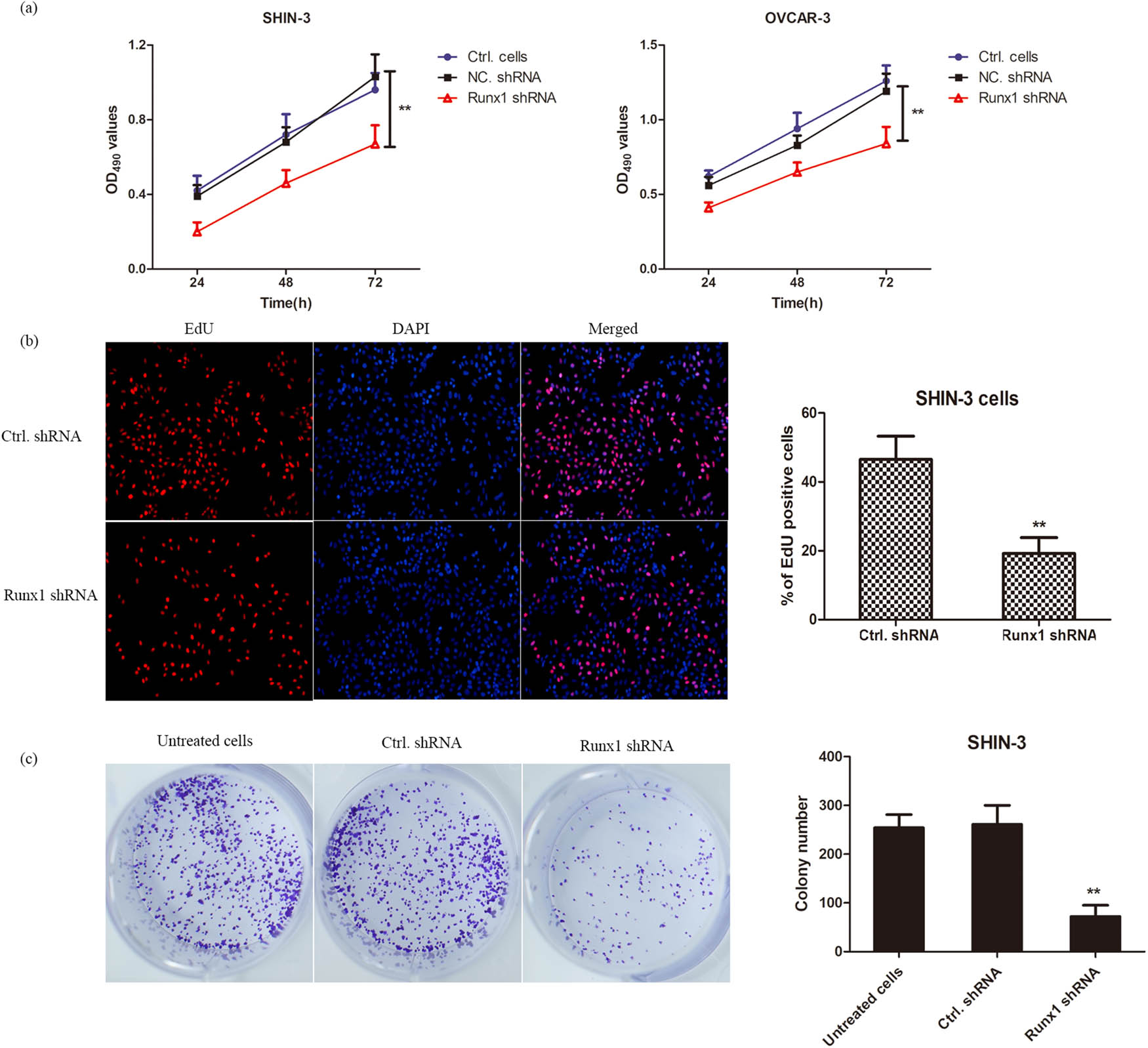
Figure 5
Knockdown of RUNX1 inhibits cell proliferation in SHIN-3 and OVCAR-3. (a) SHIN-3 and OVCAR-3 cells were infected with lentiviruses carrying RUNX1 shRNA or NC shRNA and assessed at 24, 48, and 72 h post-infection. Cell viability was measured by MTT assay following RUNX1 knockdown. Data are presented as mean value ± SD of at least three independent biological replicates, each with three replicates. Two-way analysis of variance (ANOVA) followed by Tukey s multiple comparisons test was used to compare the RUNX1 shRNA group with the NC shRNA group at each time point. **p < 0.01 vs NC shRNA group at each time point. (b) EdU incorporation assay with immunofluorescence staining. SHIN-3 cells infected with RUNX1 shRNA or NC shRNA lentiviruses were photographed to visualize EdU-positive cells at 48 h. Data are mean value ± SD from five randomly selected fields per well across three independent experiments. **p < 0.01. (c) Colony formation assay in RUNX1-knockdown SHIN-3 cells. Cells infected with RUNX1 shRNA or control shRNA lentiviruses were cultured for 2 weeks, with colonies (≥ 50 cells) counted and displayed. Data are mean value ± SD from three independent experiments, each performed in triplicates. **p < 0.01
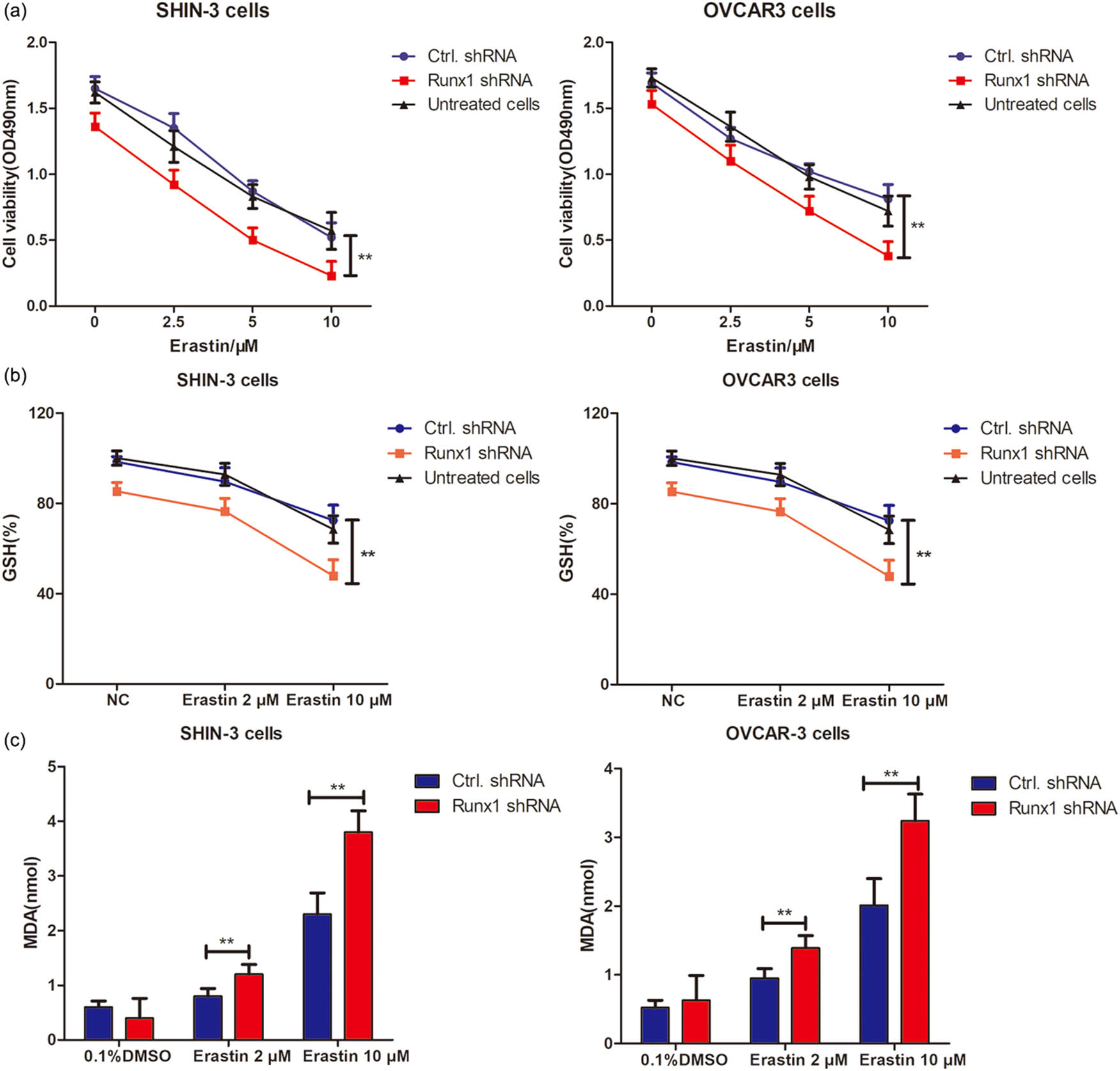
Figure 6
Knockdown of RUNX1 enhances erastin-induced ferroptosis in SHIN-3 and OVCAR-3 cells. (a) MTT assay. RUNX1 expression was knocked down by infection with RUNX1-specific shRNA lentiviral particles and treated with increasing erastin concentrations for 48 h. Viability was determined in RUNX1 shRNA or Ctrl.shRNA lentivirus-infected SHIN-3 and OVCAR-3 cells using MTT assay. Data are mean value ± SD of three independent experiments. **p < 0.01 vs Ctrl.shRNA group. (b) GSH production. RUNX1-specific shRNA or Ctrl.shRNA lentivirus-infected SHIN-3 and OVCAR-3 cells were treated with 2 or 10 μM erastin for 24 h. GSH production was measured as mentioned in Section 2. **p < 0.01 vs Ctrl.shRNA group. (c) MDA production. RUNX1-specific shRNA or Ctrl.shRNA lentivirus-infected SHIN-3 and OVCAR-3 cells were treated with 10 μM erastin for 24 h. **p < 0.01 vs Ctrl.shRNA group
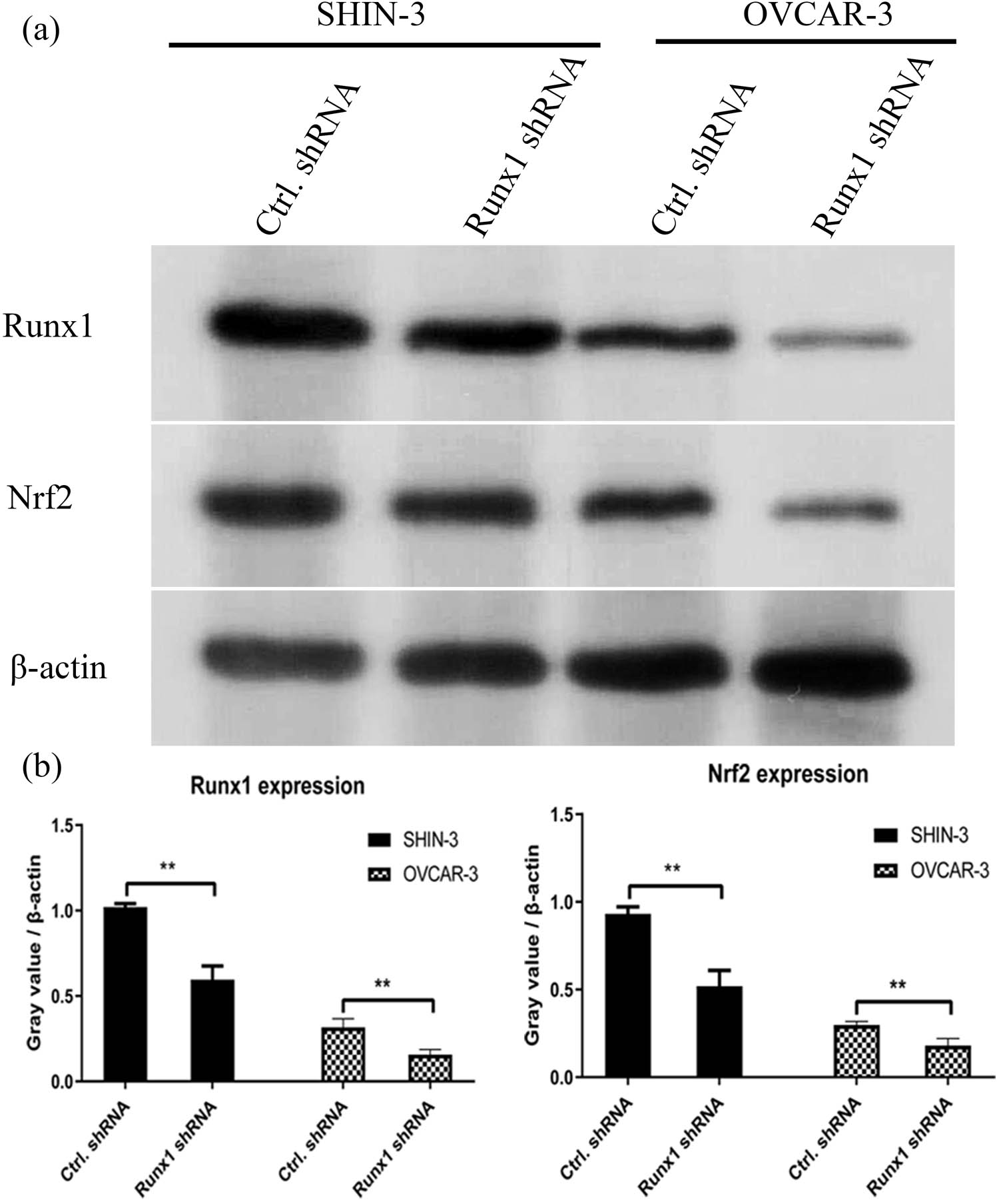
Figure 7
Western blotting analysis. (a) SHIN-3 cells were infected with RUNX1 shRNA or control shRNA lentiviruses for 24 h. (b) The relative expression of RUNX1 was shown in histogram. **p < 0.01, compared with NC ShRNA