
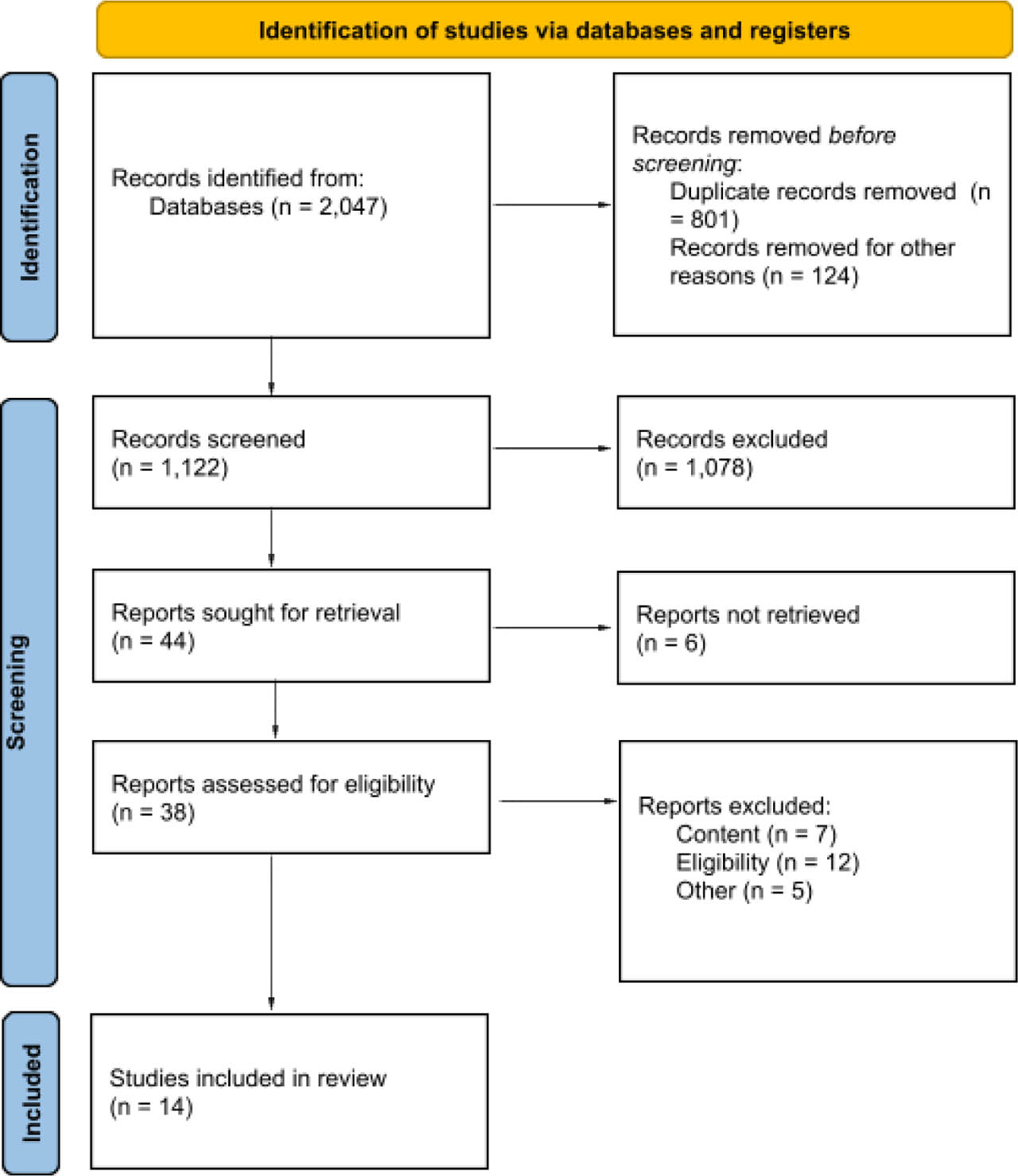
Figure 1.
Flow diagram of the review
Table 1.
Studies on the relationship between obesity stigma and income
| No. | Methodology | Results | Citation |
|---|---|---|---|
| 1 | Subjects: Twenty-five rural, low-income women—earning less than twice the poverty guidelines established by the Department of Health and Human Services or enrolled in a social assistance programme—currently or previously classified as obese (BMI >30 kg/m2). | Sixteen women reported experiencing obesity stigma in healthcare settings; all participants described encountering some form of weight-related stigma. | [13] |
| Main outcome measures: Data were obtained through face-to-face interviews using semi-structured protocols. Researchers coded the interviews using NVivo 11 software. Finally, all codes were compared to identify patterns that emerged as key themes. | |||
| 2 | Subjects: A sample of adults aged 35–89 years participated in a random-digit telephone survey (1,641 men and 2,203 women, including 1,086 Black Americans). | The study demonstrated that individuals with an income below $25,000 were more negatively affected by weight discrimination. Additionally, women with household incomes below $25,000 and between $50,000 and $75,000 reported lower aggregate mental health scores than those with household incomes exceeding $75,000. | [14] |
| Main outcome measurements: The SF-36, EuroQol, Quality of Life Scale, Health and Activity Limitation Index, and Health Utilities Index were used. | |||
| 3 | Subjects: Adolescents aged 15–19 years from low- or middle-income countries—Brazil, South Africa, and Indonesia (522 male and 678 female participants). For participants under 18 years of age, parental consent was obtained. Researchers used a national database to identify families with adolescents, then contacted them using a randomized method. | In South Africa, 73.3% of females and 64.7% of males reported experiencing weight stigma; in Brazil, these figures were 92.6% and 75.9%, respectively; and in Indonesia, these figures were 46.2% and 53.8, respectively. Overall, the majority of adolescents (71.8%) indicated an adverse effect of weight bias on their mental health. | [15] |
| Main outcome measurements: Researchers conducted a computer-assisted telephone interviewing survey, followed by qualitative thematic data analysis and statistical analysis using SPSS v.23. |
Table 2.
Studies on the relationship between obesity stigma and age
| No. | Methodology | Results | Citation |
|---|---|---|---|
| 1 | Subjects: Patients with a BMI of ≥35 kg/m2 who had never undergone bariatric surgery, and patients who had undergone LAGB and lost at least 50% of their excess weight. | Among the 32 women—8 with obesity (BMI of ≥35 kg/m2) and 24 who had lost 50% of their excess weight following bariatric surgery—the main shared themes included social impact and isolation, health implications, self-confidence, and experiences of unkind behaviour. | [16] |
| Main outcome measures: Audio recordings were made and transcribed during all focus group sessions. | |||
| 2 | Subjects: The study included 356 college students (mean age of 20.6 years; an average BMI of 23.3 kg/m2), 56% of whom were female. In terms of ethnicity, 54.3% were White, 23.3% Asian, 8.9% African American, 6.9% Hispanic, 1.4% Native American, and 2.9% identified as other; 2.3% of participants did not specify ethnicity. | Adults were less stigmatized than children, with men scoring 4.34 and women 3.85, compared with girls at 5.15 and boys at 4.77 (higher scores indicate greater stigmatisation). | [17] |
| Main outcome measures: A questionnaire featuring drawings of individuals with various types of disabilities. Participants were asked to select the one they liked best. Data were analysed using one-way ANOVA. | |||
| 3 | Subjects: Data were obtained from the 2016 Korean Study of Women's Health-Related Issues (K-Stori), a nationally representative, population-based, cross-sectional survey aimed at evaluating health awareness and needs among women at various life stages: adolescence (ages 14–17), childbearing (ages 19–44), pregnancy and postpartum (ages 19–44), perimenopause (ages 45–64), and older adulthood (ages 65–79). | Younger Korean women, more influenced by societal beauty standards, were more likely to engage in weight control, while older women with obesity generally showed little intention to lose weight. | [18] |
| Main outcome measures: Descriptive statistics of socio-demographic variables were analyzed and compared across age groups. Categorical variables were examined using the chi-square test, while continuous variables were analyzed with one-way ANOVA. To evaluate the accuracy of body weight perception, the weighted Kappa coefficient was calculated. |
Table 3.
Studies on the relationship between obesity stigma and education
| No. | Methodology | Results | Citation |
|---|---|---|---|
| 1. | Subjects: A sample representative of the German population was recruited using a Kish selection grid. Participants provided their own weight and height measurements for BMI calculation. Respondents who were not classified as overweight or obese, or who provided incomplete data, were excluded from the analysis. The final study sample consisted of 1,092 participants. | Participants with lower levels of education had substantially higher WBIS scores compared to those with higher educational attainment. (<12 years: M = 2.68, SD = 1.18; ≥12 years: M = 2.47, SD = 1.25; p < 0.05). | [19] |
| Main outcome measures: WBIS, BDI-PC, and SSS-8. Scores from the scales were analysed and interpreted. | |||
| 2. | Subjects: The first sample consisted of 456 members of the Obesity Action Coalition. The second sample included 519 individuals recruited via Mechanical Turk (MTurk—a platform on which businesses and researchers hire remote workers to complete small tasks, such as surveys, data labelling, and content moderation, for micro-payments). The third sample comprized 2,529 individuals from a national online survey panel conducted by Survey Sampling International, LLC. In all, 3,504 participants completed self-report measures and surveys. | The results indicated that adults with a high BMI and lower levels of education are more vulnerable to elevated weight bias internalisation. Education demonstrated a negative association with bias internalisation (B = −0.07; p = 0.019). | [20] |
| Main outcome measures: Modified WBIS; statistical analyses were conducted. | |||
| 3. | Subjects: In total, 1,018 participants were enlisted from 13 obesity units in Spain. | Education did not show a significant correlation with obesity stigma across the three questionnaires. | [21] |
| Main outcome measures: AFA, SSI, and WBIS; statistical analyses were conducted. |
Table 4.
Studies on the relationship between obesity stigma and sex
| No. | Methodology | Results | Citation |
|---|---|---|---|
| 1 | Subjects: A total of 692 adults, randomly selected. | Men reported experiencing greater stigmatisation than women. | [22] |
| Main outcome measures: Data were collected through computer-assisted telephone interviews. Analyses were conducted using SPSS v.22, and Mann–Whitney U tests were used to assess the significance of mean differences between groups. | |||
| 2 | Subjects: Women and men in the general population were classified as obese or non-obese; group sizes were as follows: women—obese (n = 276), non-obese (n = 1,220); men—obese (n = 169), non-obese (n = 769). | For both sexes, weight and shape concerns, and physical health, equally mediated the link between obesity and psychosocial outcomes—including psychological distress, life satisfaction, and social support. Binge eating had a modest effect, reaching significance only for men's life satisfaction. | [23] |
| Main outcome measures: To determine whether the effects of mediators on the relationship between obesity and outcomes differ by sex, a moderated mediation analysis was conducted. | |||
| 3 | Subjects: A total of 337 primary care patients with moderate to severe obesity, recruited from four diverse primary care practices in Greater Boston. | Among women, social stigma and sexual life were significant contributors to health status, while work life emerged as a notably more influential factor for men. | [24] |
| Main outcome measures: Descriptive analyses were conducted to profile health utility and QOL scores by sex and race/ethnicity. Separate multivariable linear regression models for each sex and race/ethnicity subgroup explored the relationships between demographic characteristics, BMI, QOL domains, and health utility. Changes in model R2 following the addition of each variable were analysed to assess the relative importance of each factor. |
Table 5.
Studies on the relationship between obesity stigma and race
| No | Methodology | Results | Citation |
|---|---|---|---|
| 1 | Subjects: Thirty-two participants, of whom 88% identified as female, 72% as Black, 3% as Hispanic, 3% as Pacific Islander, 3% as mixed race, and 19% as White. | Participants internalized the social stigma surrounding obesity, perceiving it as a personal failure attributed to a lack of willpower. Stigma emerged as the primary reason individuals declined bariatric surgery. The study suggests that healthcare providers could play a pivotal role in increasing the acceptance of bariatric surgery by shifting the social narrative away from stigmatising obesity and toward prioritising health. | [25] |
| Main outcome measures: The researchers likely employed thematic analysis to identify and examine patterns within the interview data. This process involved coding transcripts, identifying recurring themes, and interpreting the findings within the broader context of existing literature on obesity stigma and perceptions of bariatric surgery. | |||
| 2 | Subjects: Ethnographic studies conducted across regions of the global north and south. | Weight stigma, widely prevalent in the United States and other regions of the global north, has a substantial negative impact on both emotional and physical health. Early evidence also suggests the presence and spread of weight stigma in various regions of the global south. | [26] |
| Main outcome measures: | |||
| In Brazil, curvier body types were considered attractive in the early 2000s but were no longer viewed as desirable by 2015. | |||
| In Western Polynesia, larger body sizes continue to be culturally valued. | |||
| Compared to the United States, the United Kingdom, and New Zealand, American Samoa, Mexico, and Paraguay exhibited a higher prevalence of anti-fat norms. | |||
| 3 | Subjects: A sample of 337 patients with moderate to severe obesity was recruited from four distinct primary care practices across Greater Boston | Obesity-related social stigma had a disproportionately negative impact on the well-being of Caucasian patients. Weight-related work impairments were especially significant among Hispanic patients. Among African American women, impaired sexual function also contributed to reduced well-being, although its impact appeared modest. | [24] |
| Main outcome measures: Descriptive statistics were used to characterize health utility and quality-of-life scores by race/ethnicity and sex. Multivariable linear regression models, categorized by sex and race/ethnicity, assessed the impact of demographic factors, BMI, and QOL domains on health utility. Changes in model R2 with the addition of each variable were analysed to determine the relative importance of each factor. |