
1. Introduction
Gynecological cancers are the most common female neoplasms. The disease severely impacts quality of life, so periodic checks, especially in high-risk groups; early diagnosis; and lifestyle measures can make the difference in reducing mortality rates [1,2,3,4]. The most prevalent type is uterine neoplasm, i.e. endometrial and cervical cancer.
The clinical onset of endometrial cancer is usually represented by abnormal vaginal bleeding, most times in menopause. When the disease presents at a fertile age, the woman will often report unexpected bleeding compared to normal menstrual flow [5,6,7,8]. Very rarely, the neoplasm progresses asymptomatically and is an incidental finding, usually in early stages.
In consideration of the increased incidence of endometrial cancer, especially in high-risk, obese, or diabetic women and carriers of some DNA mutations, it is necessary to submit to instrumental clinical control all patients presenting with abnormal menstrual bleeding. Pain and leucoxanthorrhea are generally due to colliquative necrotic phenomena in some more advanced stages.
Other signs of disease in more advanced stages can be edema of the lower limbs, pubic area, and vagina for lymph node involvement, abdominal and pelvic pain, sub-occlusive syndromes, and dyspnea. Molecular characterization of endometrial cancer has revealed important details to improve the clinical efficacy of rationally designed combinatorial therapies [9,10,11].
In the last few years, we have witnessed an earlier diagnosis of cervical cancer based on the first level controls: cytology through Pap smear and Thin Prep, as well as HPV screening.
Colposcopy follows abnormal cytology: in a Level II exam, it allows for a targeted biopsy and an histological examination. When we find HSIL (high-grade intraepithelial lesion), conization is mandatory to make a precise diagnosis, to define invasiveness, or to characterize microinvasive carcinoma. In cases of advanced neoplasia, we can assist with an abnormal cervix and bleeding; however, the diagnosis still requires histological confirmation. The most frequent histological forms are squamous cancer, then adenocarcinoma type. There is a gradual increase in the clinical trials of cervical cancer to rationally identify the most efficient therapeutics [12,13].
Unlike cervical cancer, for ovarian cancer we do not have screening tests. In high risk women, those who carry alterations in the BReast CAncer genes 1 and 2 (BRCA1 and BRCA2) and some other high-risk genes, we adopt an intensive control, so early cases can be detected, and a preventive surgery, a mastectomy and/or oophorectomy, may be recommended after childbearing.
Symptoms that can lead to suspicion of cancer are also very generic and can vary from case to case, including abdominal or pelvic pain, early feeling of fullness, abnormal persistent distention, a change in bowel habits, vaginal bleeding, leg edema, and asthenia. Since these are generic symptoms, it is usually very difficult to make a diagnosis in early stages. When there is a suspicion, we perform a transvaginal and transabdominal ultrasound, together with measurement of tumor markers, in particular CA125, which can be of some utility, especially to define early disease recurrence. Then we usually perform a TC scan as second level exam, possibly an MRI, but the histological examination is mandatory to define the better therapeutic strategy, i.e. surgery and chemotherapy, alone or in combination, also with immunotherapy. Accordingly, molecular classification of reliable diagnostic and prognostic markers has significant role in improving the treatment outcome of ovarian cancer [14,15,16].
The adaptive immunological responses have evolved for the eradication and elimination of nearly any threat from the organism. Essentially, through combinatorial and orchestrated efforts of CD4+/CD8+ T cells and B cells, the adaptive immunological system causes extraordinary damage to detrimental invaders. Nevertheless, these immunological responses differentially target foreign invaders but spare healthy cells and scrupulously maintain self-tolerance. These complicated and challenging tasks are accomplished through multiple checks and balances. Accordingly, “co-inhibitory” receptors operate as breaks for the adaptive immunological responses, serving as checkpoints. Therefore, effector T cells have to pass these checkpoints to gain fully functional version.
Programmed death-ligand 1 (PD-L1) is frequently overexpressed on the surface of cancer cells and efficiently binds to PD-1 on the surface of functionally active B cells and T cells (Fig. 1). ITIM (Immunoreceptor tyrosine-based inhibitory motif) and ITSM (Immunoreceptor tyrosine-based switch motif) are present within PD-1. Upon the binding of PD-L1 with PD-1, ITIM and ITSM motifs are phosphorylated. These phosphorylated residues create binding sites for phosphatases. Src-homology 2 domain (SH2)-containing PTPs (SHP1 and SHP2) dephosphorylate key molecules in the TCR and CD28 transduction cascades, thus inhibiting the activation of T cells.
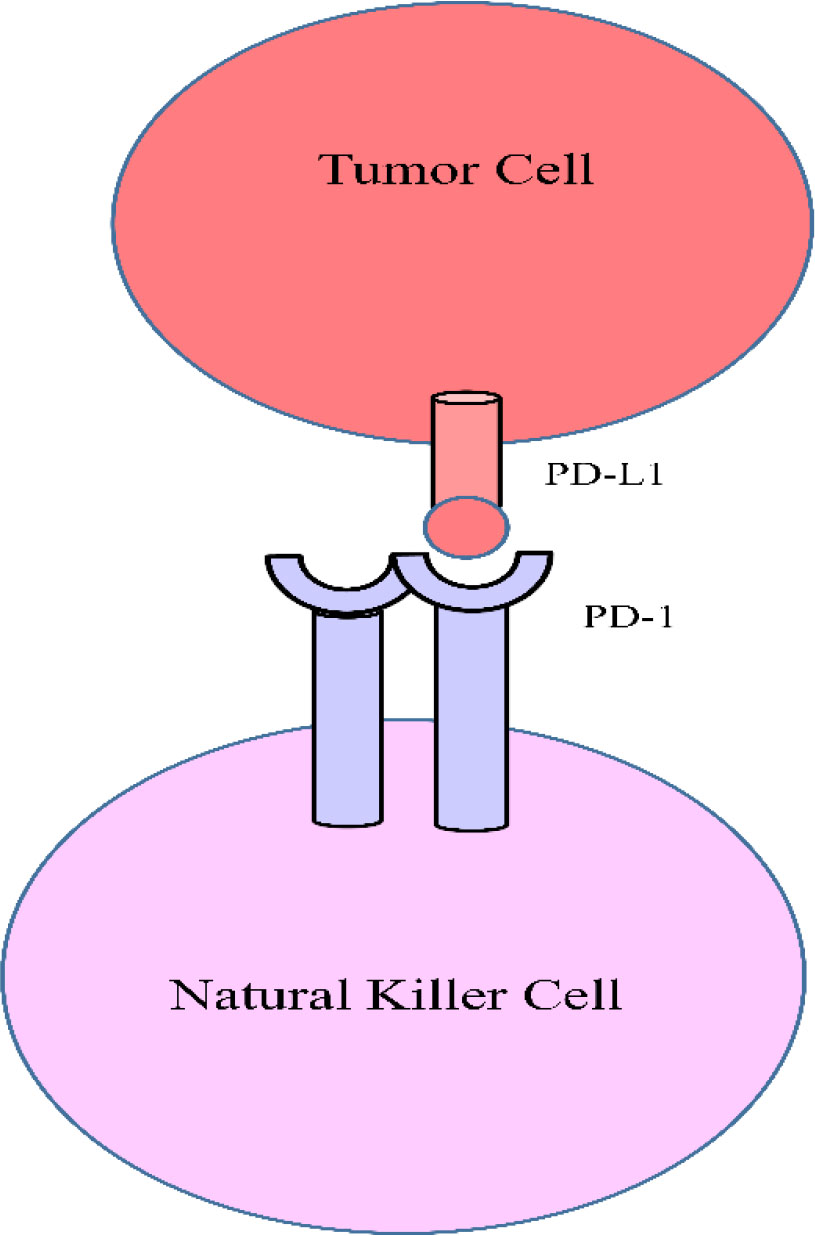
Figure 1.
PD-L1/PD-1 signaling causes exhaustion of natural killer cells and T cells
We have started to witness remarkable advancements in the field of immunotherapy. PD-L1/PD-1 signaling has a fundamental role in the immunosuppressive microenvironment in different gynecological cancers. In this mini-review, we have exclusively focused on the PD-L1/PD-1 signaling in ovarian, cervical and endometrial cancer. We have briefly described how different oncogenic pathways trigger the expression of PD-L1 in gynecological cancers.
2. Endometrial cancer
γ-glutamyl cyclotransferase (GGCT) potently bolstered proliferation and the migratory and invasive features of endometrial cancer cells. There was a significant shrinkage of the tumors in mice inoculated subcutaneously with GGCT-overexpressing-HEC-1-A cells. GGCT contributes to malignant biological properties of endometrial cancer cells during epithelial-to-mesenchymal transition. PD-L1 was noticed to be significantly suppressed in GGCT knockdown-HEC-1-A and ECC-1 cells. IFNγ released by CD8+ T lymphocytes and the apoptotic rate of endometrial carcinoma cells were markedly enhanced after the knockdown of GGCT. Importantly, PD-L1 overexpression made endometrial cancer cells resistant to CD8+ T lymphocytes [17].
LOXL2 overexpressing-KLE (endometrial cancer cells) remarkably inhibited cell growth and tumor xenografts. Prominently, cisplatin and anti-PD-1 antibodies combinatorially retarded the tumor growth of U14 (cervical cancer cells). However, the combination of cisplatin and anti-PD-1 antibodies failed to inhibit the growth of the tumors derived from LOXL2-depleted U14 cancer cells. Furthermore, there was a considerable increment in the number of tumor-infiltrating CD8+ T cells in the tumors developed from LOXL2-overexpressing U14 cancer cells [18].
Tissue-resident memory (TRM) cells co-express TIGIT and PD-1 within the tumor microenvironment. Therefore, combinatorial blockade of PD-1 and TIGIT by inhibitors might be useful in overcoming the inhibitory effects of these two immune checkpoints on the activities of Tissue-resident memory cells [19].
PRMT (Protein arginine methyltransferase) has an essential role in the progression of endometrial cancer. PRMT3 interacts with METTL14 (Methyltransferase 14) and methylates arginine residues. PRMT3 depletion causes the amplification of the antitumor effects of anti-PD-1 therapy on endometrial cancer cells by induction of ferroptosis. PRMT3-silenced cancer cells are killed by T cells. Moreover, treatment with anti-PD-1 and a PRMT3 inhibitor impaired the growth of patient-derived xenografts [20]. In another study, it was shown that METTL3 stabilized the expression of a long non-coding RNA FGD5-AS1. Co-culture of paclitaxel-resistant endometrial cancer cells with CD8+ T cells suggests that FGD5-AS1 knockdown significantly increases the ratio of CD8+ T cells and simultaneously reduces the apoptotic rate of CD8+ T cells. PD-L1 levels are high in FGD5-AS1-overexpressing or METTL3-overexpressing endometrial cancer cells. Anti-PD-l or anti-PD-L1 inhibitors efficiently enhanced the killing activity of CD8+ T cells [21].
FGD5-AS1 promotes the expression of PD-L1 by interfering with miR-142-5p-mediated targeting of PD-L1 [22]. Therefore, targeting FGD5-AS1 potently reduces PD-L1 on the surface of cancer cells.
3. Ovarian cancer
Ovarian cancer differs from other cancers because metastasis dissemination occurs through exfoliation and intra-peritoneal accumulation of tumor cells. Consequently, these tumor cells seed into the omentum, abdominal organs, and peritoneum. There was a notable decrease in the cluster formation of larger tumor cells in an animal model immunized with antigen-pulsed vaccines. CD4+ T helper 17 (Th17) cells are characterized by the production of interleukin-17. Th17-inducing dendritic cell (DC) (Th17-DC) vaccination induced a sharp increment in the infiltration of CD4 T cells in tumor tissues in the peritoneal cavity.
Importantly, Th17-DC vaccinated mice showed an increase in PD-L1-expressing ID8-SP17 cells. Likewise, CD4 T cells derived from the peritoneal cavity of Th17-DC vaccinated experimental models revealed an increase in the expression of PD-1. The Th17-DC vaccine effectively reshapes the tumor microenvironment by promoting the penetration of myeloid cells. Moreover, Th17-DC vaccine-mediated tumor preventive effects can be enhanced by anti-PD-1 during vaccination to reinforce penetration of eosinophils. It was shown that infiltration of the eosinophils was completely absent in CD4−/− mice. The synergistic effects of combinatorial usage of Th17-DC vaccine with anti-PD-1 were impaired by the elimination of CD4+ T cells [23].
Anti-PD-L1 mAb reduced tumor volume in wild-type mice bearing ID8 ovarian cancer cells and improved the survival of mice. Importantly, therapeutic effectiveness of anti-PD-L1 mAbs depends heavily on an intact adaptive immunity system in animal models. Anti-PD-L1 mAbs increased IFNγ+ and TNFα+ T cells in ID8 tumor-draining lymph nodes and ID8 tumor ascites [24].
Targeted inhibition of SIGLEC-7 using specific antibodies remarkably improved the functions of natural killer cells against ovarian cancer cells. DB7.2, a specific anti-SIGLEC-7 DNA-encoded mAb demonstrated a superior control of ovarian tumors in humanized mice. Interestingly, researchers have developed a class of bispecific NK cell engager (NKCE) that simultaneously targets SIGLEC-7 and FSHR (follicle stimulating hormone receptor). The potent and promising ability to kill FSHR+ tumors by SIGLEC-7 mAbs as well as bispecific SIGLEC-7 NKCE is valuable for the treatment of poorly responding ovarian cancers [25].
There is a notable increase in the infiltration of CD8+ and CD4+ TILs within tumor tissues in mice treated with carboplatin and anti-PD-1 [26].
Aspirin reduces IFNγ-mediated expression of PD-L1 in ovarian cancer cells. KAT5 (Lysine acetyltransferase 5) binds to the promoter region of PD-L1 and increases the levels of H3K27ac. However, aspirin caused blockade of KAT5-mediated upregulation of PD-L1 on cell surface of ovarian cancer cells. Monoclonal antibodies against PD-L1 impaired the tumorigenesis of ovarian cancer ID8 cells, whereas aspirin significantly improved the inhibitory effects of anti-PD-L1 antibodies against ovarian cancer [27].
Researchers have designed dual CAR-T cells for the treatment of cancers co-expressing NKG2D and PD-L1. Growth of SKOV3 tumors was inhibited and tumor xenografts were eradicated by NKG2Dp/αPDL1b-T cells [28].
RAD21 interacts directly with YAP/TEAD4 transcriptional co-repressors and recruits NuRD complex to transcriptionally downregulate interferon pathway in melanoma and ovarian cancer. RAD21 overexpression suppressed activation and cytotoxic activities of T cells. However, RAD21 depletion caused significant regression of tumor mass in immunocompetent C57BL/6 mice bearing B16-OVA (melanoma) tumors. Moreover, level of tumor-infiltrating CD8+ T cells was found to be enhanced significantly in mice bearing RAD21-silenced-B16-OVA cells. Anti-PD-1 mAbs inhibited tumor growth in syngeneic animal models injected with RAD21-silenced ID8Trp53−/− ovarian cancer cells [29].
LECT2 (leucocyte cell-derived chemotaxin-2) is a tumor suppressor. LECT2/CD209a axis induced downregulation of PD-L1. There was a significantly higher tumor burden in Lect2−/− mice xenografted with ID8 cancer cells. Distribution of metastatic tumors within the abdominal cavity, including those on the diaphragm, peritoneum as well as mesentery, was considerably higher as compared to Lect2+/− or Lect2+/+ mice. ID8 tumors infiltrated into the surrounding tissues and demonstrated an invasive front in Lect2−/− mice, whereas tumors had a smoother front and smaller size in Lect2+/+ and Lect2+/− mice. CD45b+/CD11b+ myeloid cells infiltrate into the tumor tissues in Lect2−/− rodent models as compared to Lect2+/+ models. Notably, the percentage of M-MDSCs is high in Lect2−/− mice. Overexpression of Lect2 significantly enhanced ascitic CD4 and CD8+ T cells in Lect2−/− EOC. Shrinkage of ID8 tumors was noted in Lect2−/− mice upon Lect2 overexpression. α-PD-L1 antibodies considerably inhibited tumor growth in Lect2+/+ models as compared to the size of tumors in Lect2−/− mice [30].
c-Myc and STAT3 have been shown to transcriptionally upregulate PD-L1 (Fig. 2). Irinotecan metabolizes to a more active metabolite. SN-38 has been reported to be effective against ovarian cancer. Major subpopulations of tumor-infiltrating immune cells were CD49b+, NKp46+, NKp44+, or NK1.1+ in tumor tissues treated with low doses of SN-38. Furthermore, SN-38 potently enhances the efficacy of anti-PD-1 Abs and causes regression of ID-8 tumors in tumor-bearing mice. SN-38 and anti-PD-1 Abs substantially downregulated PD-L1 and simultaneously increased nuclear FOXO3 in tumor tissues. SN-38 independently and combinatorially with anti-PD-1 Ab induced an increase in infiltration rate of NK1.1/CD49b+ NK cells and CD8+ T cells within tumor microenvironment. FOXO3 transcriptionally represses the level of PD-L1 in ovarian cancer cells (Fig. 2). Low-dose SN38 markedly reduced the levels of STAT3, c-Myc as well as PD-L1, but SN38 promoted nuclear accumulation of FOXO3 in tumor tissues derived from OVCA429 cancer cells [31, 32].
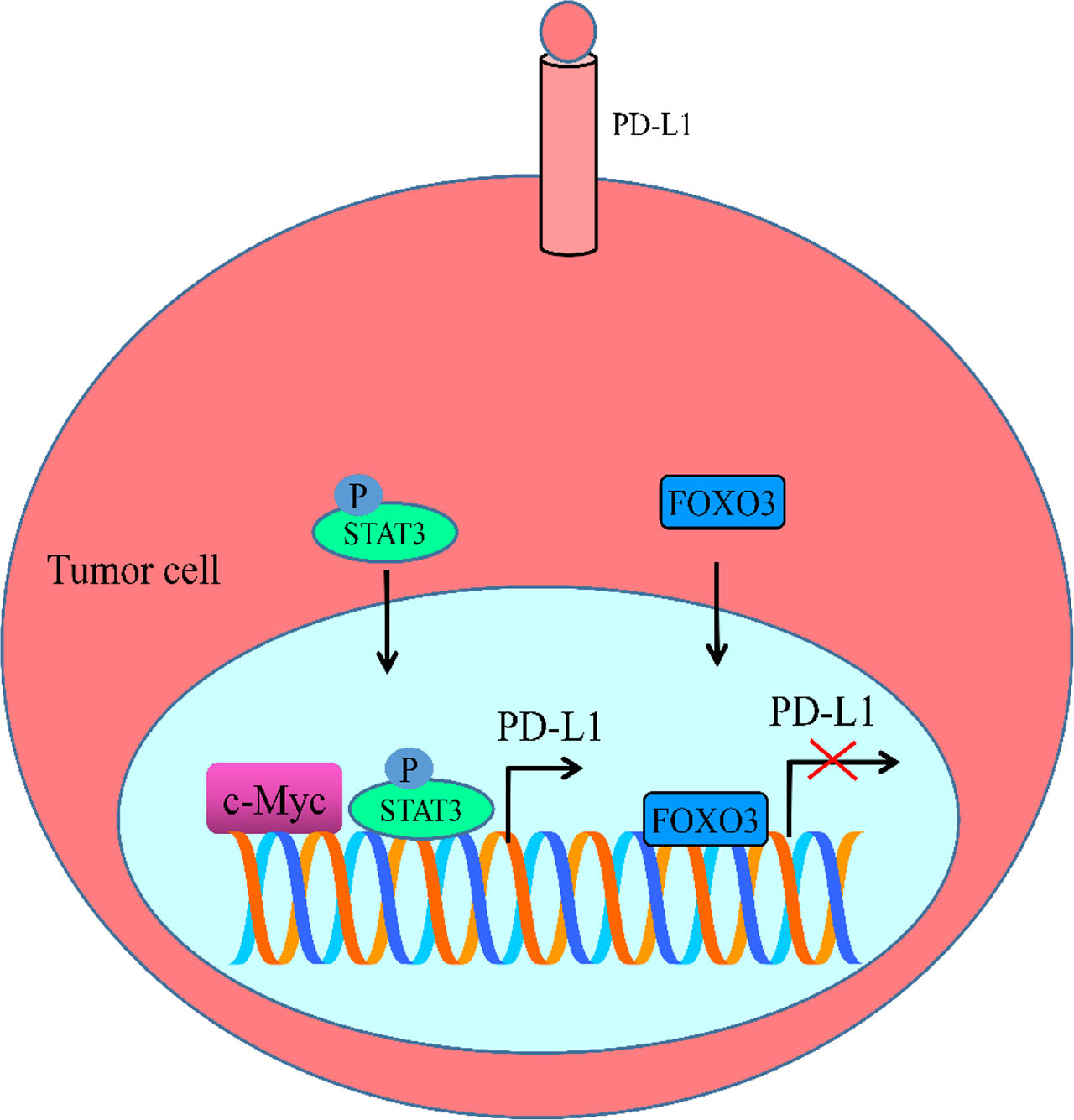
Figure 2.
c-Myc and STAT3 transcriptionally upregulate PD-L1. FOXO3 inhibits the expression of PD-L1
The clinical trial of nivolumab against ovarian cancer has generated important results [33]. The encouraging safety and clinical efficacy of nivolumab in platinum-resistant ovarian cancer patients warrant further large-scale investigations.
Oncogenic lncRNAs have a central role in the activation of PD-L1/PD-1 signaling in ovarian cancer. Carboplatin resistance against ovarian cancer has been found to be associated with LINC01503 overexpression. GATA1 (GATA-binding protein 1) transcriptionally activates LINC01503. LINC01503 interferes with miR-766-5p-mediated targeting of PD-L1. Therefore, targeting LINC01503 re-sensitizes ovarian cancer cells to carboplatin (Fig. 3) [34].
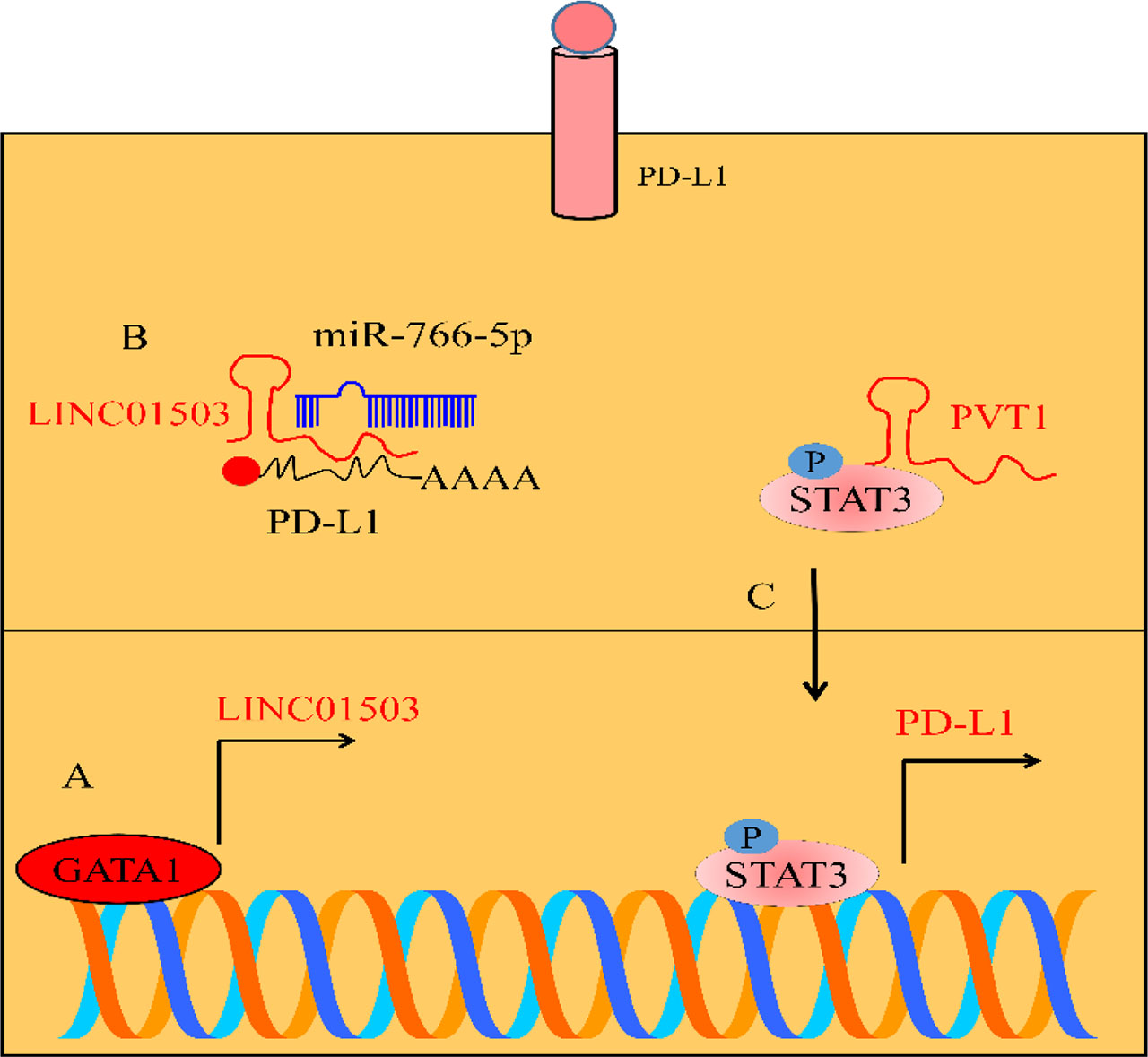
Figure 3.
(A-B) GATA1 transcriptionally activates LINC01503. LINC01503 interferes with miR-766-5p-mediated targeting of PD-L1. (C) PVT1 activates STAT3 signaling and consequent upregulation of PD-L1
LncRNA PVT1 activates JAK2/STAT3 signaling in ovarian cancer cells. STAT3 triggers the expression of PD-L1. Therefore, PVT1 inhibition leads to inactivation of JAK2/STAT3 and subsequent downregulation of PD-L1 (Fig. 3) [35].
HOTTIP-overexpressing ovarian cancer cells secrete interleukin-6 to activate STAT3/PD-L1 pathway in neutrophils and consequently inhibit the expansion and proliferation of T cells. HOTTIP triggers c-jun-mediated upregulation of interleukin-6. Interleukin-6 secreted by SKOV3 cancer cells causes IL-6/IL-6R/STAT3 signaling in neutrophils. STAT3-mediated activation of PD-L1 leads to the engagement of neutrophils with PD-1-expressing T cells. Tumor volume of mice injected with neutrophils treated with HOTTIP-overexpressing SKOV3 cells is much heavier. However, treatment with PD-L1 antibody led to expansion and infiltration of CD3+ T cells within tumor tissues and caused regression of the tumor mass [36].
CircNFIX acts as a sponge for miR-647 and upregulates IL-6R expression. CircNFIX activates JAK/STAT3 signaling and upregulates PD-L1. Levels of IL-6R and PD-L1, p-JAK1 and p-STAT3 were suppressed in circNFIX-silenced ovarian cancer cells. There was a profound reduction in the number of metastatic nodules on the surface of the lungs in mice injected with CircNFIX-silenced-A2780 cells [37].
Binding of PD-L1 to VEGFR2 induced intracellular signaling by activation of FAK/AKT cascade and enhanced migration and invasion of ovarian cancer cells. Likewise, c-Jun transcriptionally upregulated PD-L1 in ovarian cancer cells. Apatinib (VEGFR2) inhibitor worked efficiently with Durvalumab (anti-PD-L1 monoclonal antibody) and induced shrinkage of the tumors derived from OVCA433 cells [38].
Combination therapy consisting of bevacizumab, olaparib, and durvalumab led to the achievement of durable benefits with a non-progression rate at 3 months of 69.8% in two-thirds of the population of advanced ovarian cancer patients pre-treated heavily with platinum-resistant relapse [39]. Importantly, the overall rate of disease control was in concordance with a previously published pilot study of durvalumab and olaparib, including heavily pre-treated and platinum-resistant patients [40].
The combination efficacy of durvalumab and monalizumab (anti-NKG2A/CD94) was tested during the treatment of solid tumors. The combination was well tolerated, and significant immunological activation was noticed in the peripheral blood and tumor microenvironment in patients with advanced solid tumors [41].
CD73 is an ecto-5′-nucleotidase that generates extracellular adenosine. Extracellular ADO causes immune inhibition. Oleclumab, a monoclonal antibody, selectively inhibited the activity of CD73, and preclinical data suggested additive effects with durvalumab. Combinatorial treatment with oleclumab and durvalumab was well tolerated and showed a manageable safety profile. The disease control rate was 27%, the median PFS was 2.7 months (95% CI: 2.2–4.2), and the median OS was 8.4 months in ovarian cancer patients [42].
Batiraxcept is a recombinant fusion protein. Batiraxcept consists of an extracellular region of AXL combined with a human immunoglobulin G1 heavy chain. Combinations of Batiraxcept and durvalumab were safe and tolerable but did not demonstrate anti-tumor activities in a heterogenous population of platinum-resistant ovarian cancers [43].
In another clinical trial, patients were randomized to a sequential arm (tremelimumab followed by durvalumab on progression) or a combinatorial arm (durvalumab and tremelimumab) followed by monotherapy of durvalumab. It was reported that the combination regimen failed to add significant benefits in recurrent ovarian cancer patients (platinum-resistant) [44].
However, durvalumab and tremelimumab demonstrated activity with a durable clinical response with front-line neoadjuvant chemotherapy in advanced-stage ovarian cancer [45].
Germline BRCA1- and/or BRCA2-mutated (gBRCAm) platinum-sensitive relapsed ovarian cancers (PSROCs) are also being targeted using different drug combinations. Olaparib and durvalumab showed notable clinical efficacy in women with gBRCAm PSROC [46].
Gemogenovatucel-T and durvalumab revealed promising clinical activities in advanced BRCA-wild-type TNBC and stage III-IV recurrent/refractory ovarian cancer patients. There was an improvement in the prolonged progression-free survival in patients with PD-L1 (positive) tumors as compared to PD-L1 (negative) tumors [47].
4. Cervical cancer
ER-associated N-glycosyltransferases (STT3) trigger N-glycosylation and stabilization of PD-L1. Therefore, N-glycosylation of PD-L1 stabilizes and prevents PD-L1 from ubiquitin/proteasomal degradation. Overexpression of FAT4 anchors β-catenin to the cell membrane, thus preventing its nuclear accumulation and transcriptional upregulation of STT3. There is a rapid increase in the association of multi-component degradation machinery to β-catenin in FAT4 overexpressing-cervical cancer cells. Importantly, there was a considerable regression of the tumor mass in mice inoculated with FAT4 overexpressing-U14 and ME180 cancer cells [48].
Ubiquitin-specific protease 7 (USP7) is a deubiquitinating enzyme and protects EZH2 (Enhancer of zeste homolog-2). Classically, EZH2 epigenetically inactivates TIMP2 and promotes cancer progression. TIMP2 inhibits NF-κB-driven downstream signaling via blockade of NF-κB-mediated upregulation of PD-L1 in cervical cancer cells. USP7 inhibition significantly reduced PD-L1 expression in tumor tissues derived from C33A and MS751 cervical cancer cells. Furthermore, pulmonary metastatic nodules were found to be markedly decreased in mice injected with USP7-silenced-C33A and MS751 cancer cells [49].
PRMT5 enhances the transcriptional upregulation of STAT1 through symmetrically dimethylated histone H3R2. STAT1 triggers PD-L1 in cervical cancer cells. PRMT5 inhibitor (EPZ015666) led to a reduction in the levels of PD-L1 in U14 cells. The number and percentage of CD4+/CD8+ T cells were significantly higher in PRMT5 knockdown tumor microenvironment [50].
TFAP2A transcriptionally upregulates PD-L1 in cervical cancer cells. Knockdown of TFAP2A considerably inhibits rapid growth of HeLa-derived tumors in xenografted mice [51].
PD-L1 directly interacts with integrin receptors for the activation of intracellular signaling cascades. PD-L1/integrin β4 (ITGB4) promotes SNAIL-mediated transcriptional repression of SIRT3. Overexpression of PD-L1 markedly increases glucose uptake by cervical cancer cells and promotes lymph node metastasis [52].
Durvalumab (a PD-L1 checkpoint inhibitor) has been found to generate encouraging results in cervical cancer patients [53]. M7824 (MSB0011359C) is a bifunctional fusion protein composed of a mAb against PD-L1 fused to a TGFβ “trap.” M7824 has been tested in a phase I trial and reported to demonstrate early evidence of clinical efficacy and manageable safety profile [54].
Listeria monocytogenes is a promising and efficient platform for development of cancer vaccines mainly because of its characteristically unique features. Listeria monocytogenes is a unique delivery vehicle for the selective transfer of the tumor antigens to antigen-presenting cells, resulting in a strong anti-tumor immunological response. Lm-based vaccines designed against HPV-infected cancers have also shown significant results in animal model studies. Evidence suggests that Lm-LLO-E6 vaccine and anti-PD-L1 mAb synergistically suppress pulmonary metastatic nodules in mice injected with HPV-expressing cervical cancer cells [55].
Blockade of PD-1 together with CD96 led to a significant increase in the percentage of cytotoxic CD8+ TILs as compared to the single blockade. CD226, CD96, and TIGIT together regulate an intricate cascade to shape the immunological responses in which TIGIT and CD96 transduce inhibitory signals, whereas CD226 transduces activating signals. Combinatorial treatment consisting of antibodies against CD96 and PD-1 effectively induced regression of the tumors in xenografted mice [56].
Nivolumab (PD-1 inhibitor antibody) plus chemoradiotherapy has been reported to be effective against locally advanced cervical cancer. There was an increase in the number of CD8+CD28+ T cells in progression-free patients, mainly in the stroma. Therefore, progression-free patients demonstrated a high pre-existing infiltration of immune cells as compared to patients with progressive disease. Indeed, a positive correlation was found between intra-tumoral CD3+ T cells and total CD11c+ myeloid cells in progression-free patients signifying a preserved T cells/myeloid infiltrate. More importantly, progression-free patients demonstrated closer proximity of CD3+ T cells with PD-L1 positive tumor cells. Moreover, within the stroma, CD8+CD28+PD-1+ T cells were noticed to be in closer proximity with tumor cells and CD11c+CD86+ antigen-presenting cells in progression-free patients. Collectively, results suggested that CD28 co-stimulation was correlated with effective PD1-directed therapeutics, and CD28 expression on TILs served as a valuable biomarker for the predictability of treatment response [57].
Toripalimab (PD-1 blocking monoclonal antibody) plus concurrent platinum-based chemo-radiotherapy showed promising antitumor effects with manageable safety profiles in untreated locally advanced cervical cancers [58].
Tiragolumab (anti-TIGIT) and atezolizumab (anti-PD-L1) had been tested as second- or third-line therapy for PD-L1-positive persistent/recurrent cervical cancers. However, the objective response rate with the tiragolumab-plus-atezolizumab failed to achieve statistical significance [59].
Durvalumab, concurrent with chemo-radiotherapy, is well tolerated in patients with locally advanced cervical cancer. However, these combinations did not significantly improve progression-free. Concurrent durvalumab plus chemo-radiotherapy warranted further investigation in patients with high expression levels of tumoral PD-L1 [60].
5. Concluding remarks
Targeting of cell signaling pathways offers a unique approach, but the full spectrum of opportunities to target the deregulated oncogenic pathways in different cancers remains to be explored. PD-L1/PD-1 signaling is an inhibitory pathway hardwired into the immune system. It is crucial for the maintenance of self-tolerance and modulation of the amplitude and duration of immunological responses in peripheral tissues to reduce collateral tissue damage.
Previously unanticipated curiosity has galvanized the field of immunotherapy, and mounting evidence has started to dissect the mechanisms by which the PD-1 pathway transduces inhibitory signals. Overall, the PD-L1/PD-1 pathway has captured substantial attention because of its significant role in the immunosuppressive tumor microenvironment.
Transcriptional regulation of PD-L1 and ubiquitination mediated degradation of PD-L1 have generated renewed interest in gaining mechanistic insights. SPOP, an adaptor protein of Cullin 3 family E3 ligases, triggers the ubiquitination-mediated degradation of PD-L1. However, TMEM160 effectively blocks ubiquitination-mediated degradation of PD-L1 and enhances the stability of PD-L1 [61]. IRF1, an important transcriptional factor, stimulates the expression of PD-L1. SPOP binds to IRF1 and triggers ubiquitin-mediated proteasomal degradation of IRF1 in endometrial cancer cells [62]. Tumors expressing mutant SPOP displayed elevated PD-L1 levels and considerably reduced infiltration of CD3+ and CD8+ TILs. Accordingly, researchers are using different natural products, synthetic compounds, and anti-PD-1 antibodies to pharmacologically target the PD-L1/PD-1 pathway for the reactivation of the intratumoral immune system.
Furthermore, rapidly evolving knowledge about non-coding RNA-mediated regulation of PD-L1/PD-1 signaling is also providing precious information about challenges associated with immunotherapy. Different oncogenic lncRNAs have been reported to sponge tumor suppressor miRNAs and stimulate the expression of PD-L1 in gynecological cancers. Therefore, a multi-pronged approach consisting of targeted inhibition of oncogenic lncRNAs and signaling pathways which stimulate PD-L1/PD-1 signaling will be effective for a durable immunotherapy.
Notes
[1] Contributed by Authors’ contribution
Farooqi AA and Sundas Fayyaz conceived the idea. Cristina Donfrancesco and Gurkan Ozbey browsed literature and selected most relevant and mechanism based references. Farooqi AA and Sundas Fayyaz critically analyzed the write-up and prepared the diagrams. All the authors double-checked that none of the cited reference is retracted.