
1. Introduction
Knee osteoarthritis (KOA) is a chronic disease characterized by degenerative changes in the cartilage of the knee joint secondary to osteophytes, with clinical manifestations of knee pain, stiffness, enlargement, bone rubbing sound (sensation), and knee weakness with impaired mobility [1,2]. The incidence of KOA is increasing as the proportion of elderly people in the global population rises [3,4]. As life expectancy is increasing, the global prevalence of osteoarthritis of the hip and knee is approaching 5% [5]. According to epidemiological surveys, the prevalence of knee osteoarthritis in people aged 40 years and older in China reaches 20.50% and increases with age, and the number of people aged 60 years and older with symptomatic knee osteoarthritis reaches 37.35 million [6]. The prevalence of KOA in China is as high as 4% to 13%, and in the male and female populations over 60 years of age, the prevalence of KOA is 10% and 13%, respectively [7]. The prevalence of KOA shows an increasing trend with the progress of population aging and the increase in the average body mass of the population, and the prevalence of KOA in women is higher than that in men [8]. It is currently believed that both endogenous and exogenous factors can induce KOA, such as obesity and low physical activity [9]. It is believed that the incidence of KOA increases dramatically in women over 50 years of age, which may be related to hormonal changes during menopause [10].The degeneration and wear of articular cartilage in patients with KOA leads to increased friction between the joints, which causes pain, swelling, and limitation of movement, and in some patients, there are osteomalacia and inflammation of the joint capsule, which aggravate pain and joint dysfunction, and in severe cases, may lead to deformation and deformity of the joints [11]. KOA affects the walking ability and reduces the quality of life of individuals, but the pathological mechanism of KOA has not been fully elucidated so far [12]. The development of KOA is closely related to the damage of various structures of the knee joint, and the search for a reasonable and effective prevention and treatment method has become a common challenge for medical staff.
Magnetic resonance imaging (MRI) plays an important role in the prevention and treatment of KOA because it can show the details of articular cartilage, bone, ligament, muscle, and other structures, as well as lesions such as inflammation and oedema [13]. With the high-resolution images of MRI, physicians can assess the severity of KOA lesions, thereby developing individualized treatment plans and monitoring disease progression [14]. In addition to MRI, X-rays, Computed Tomography (CT) scans and ultrasounds are also commonly used in the diagnosis and treatment of KOA [15]. X-rays are often used for initial screening and diagnosis, as they can show narrowing of the joint space, osteophytes, and joint deformities [16], while CT scans provide more detailed information about the bone structure and are suitable for the assessment of osteophytes and joint deformities [17]. Ultrasound can be used to assess the condition of the joint capsule and ligaments, as well as to detect damage to periarticular soft tissues [18]. In contrast, the advantages of high resolution, no need for radiography, and outstanding soft tissue imaging allow MRI to more accurately assess the condition of cartilage and periarticular tissues [19]. In addition, MRI can perform multiplanar and multisequence imaging, providing more comprehensive diagnostic information and helping physicians to fully assess the severity and extent of the disease [20]. Although there has been some literature on the progress of KOA research [21,22], there is no visualization of globalized research trends in KOA with a long time span and a large number of included research literature. This study used bibliometric methods to analyze KOA-related literature in the Web of Science (WOS) database from 1975 to 2024, aiming to show the research progress, hot issues of KOA and its related authors, journals, countries, and institutes, and to reveal the current status and development trend of KOA research through visual analysis.
2. Methodology
2.1. Literature search and screening
The present study was based on a search of the WosCC database (https://www.webofscience.com/wos/woscc/basic-search) for literature published between 1975 and April 2024 or before. The search terms were #1 Osteoarthritis, Knee (Topic) or Knee osteoarthritises (Topic) or Knee Osteoarthritis (Topic) or Osteoarthritis of Knee (Topic) or Osteoarthritis of the Knee (Topic); #2 Magnetic Resonance lmaging (Topic); #3= #2 AND #1. Inclusion criteria for this study: research treatises or reviews whose full-text topic focused on the use of MRI in osteoarthritis of the knee; exclusion criteria:1) reviews that only briefly summarize published studies; and 2) review, consensus, and guideline type articles. The inclusion process was carried out independently by two researchers, and articles on which agreement could not be reached by both researchers were independently confirmed by a third person.
2.2. Data extraction
The data were extracted from the Web of Science Core Collection (WosCC) database as “Tab delimited file”. The extracted data included the title of the included article, author(s), institution, country of citation, year of publication, journal of publication, and impact factor of the journal. The downloaded and stored information was extracted using the bibliometric package (Version 3.0.0) of the R software (Version 3.2.5, https://www.rproject.org) [23]. The extracted data were stored in worksheets created in Microsoft Excel 2019 (Microsof Corp. Redmond, WA, USA) software.
2.3. Data visualization
Analysis of national publications and collaborations was performed using the Bibliometrics Online Analysis Platform (http://bibliometric.com), and visualization and analysis of the literature was carried out using VOSviewer software (VOSviewer version 1.6.20). The minimum number of occurrences of a term is 100.
3. Results
3.1. Search Terms
The search for the topic “Osteoarthritis, Knee” (or related terms such as “Knee Osteoarthritis,” “Osteoarthritis of the Knee”) yielded 58,754 results. When combined with the search for “Magnetic Resonance Imaging” (MRI), which returned 368,518 results, the intersection of these two topics resulted in 4,013 relevant articles.
3.2. Global Research Trends
MRI in KOA applications was first published in 1991 (n=7), and then the number of publications increased each year, with 2020 being the year with the highest number of publications (n=281). The United States was the country with the highest number of publications, followed by Germany, Australia, and China (Figure 1).
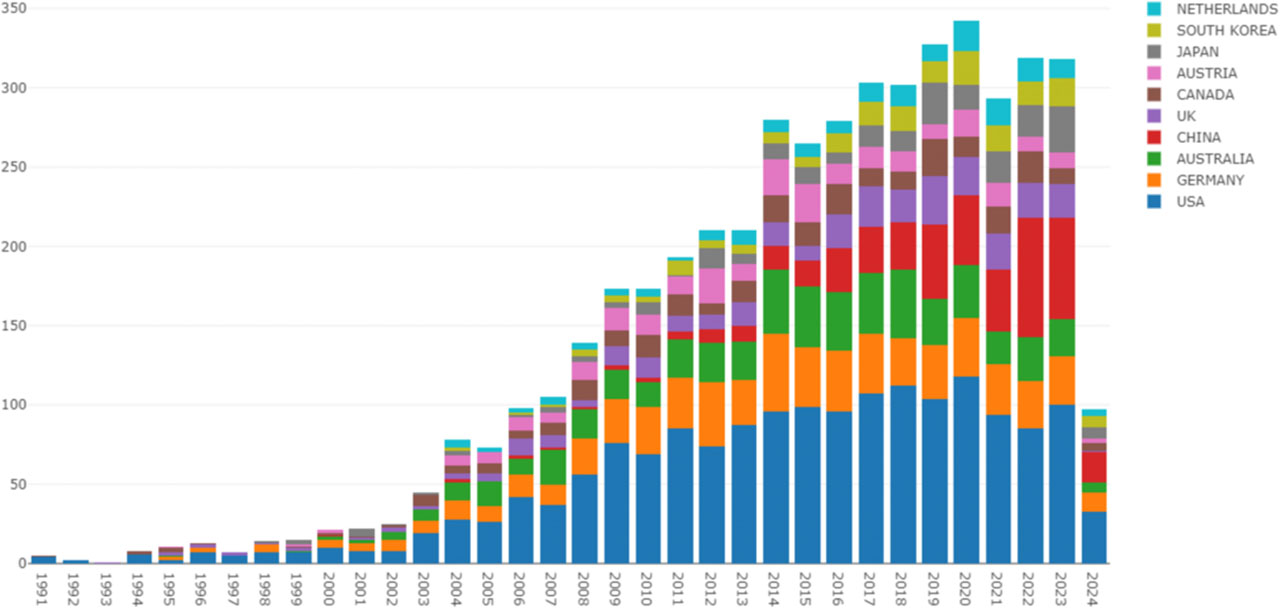
Figure 1.
Total number of communications by country
3.3. Cluster analysis
A total of 2,316 terms were analyzed, with the most relevant terms selected based on their relevance scores. The top 60% of these terms (1,390 terms) were included in the analysis. When considering terms that appeared at least 100 times, 136 terms were clustered into three distinct groups (Links = 9,030; total link strength = 295,113) (Figure 2A). Cluster 1 contained 49 items, Cluster 2 included 46 items, and Cluster 3 comprised 41 items. In Cluster 1, the term with the highest occurrence was “age” (Figure 2B), with 1,161 occurrences, 135 links, and a total link strength of 15,701. In Cluster 2, the term “imaging” had the highest occurrence (Figure 2C), with 2,989 occurrences, 135 links, and a total link strength of 32,200. In Cluster 3, “month” was the most frequently occurring term (Figure 2D), with 838 occurrences, 135 links, and a total link strength of 11,456.
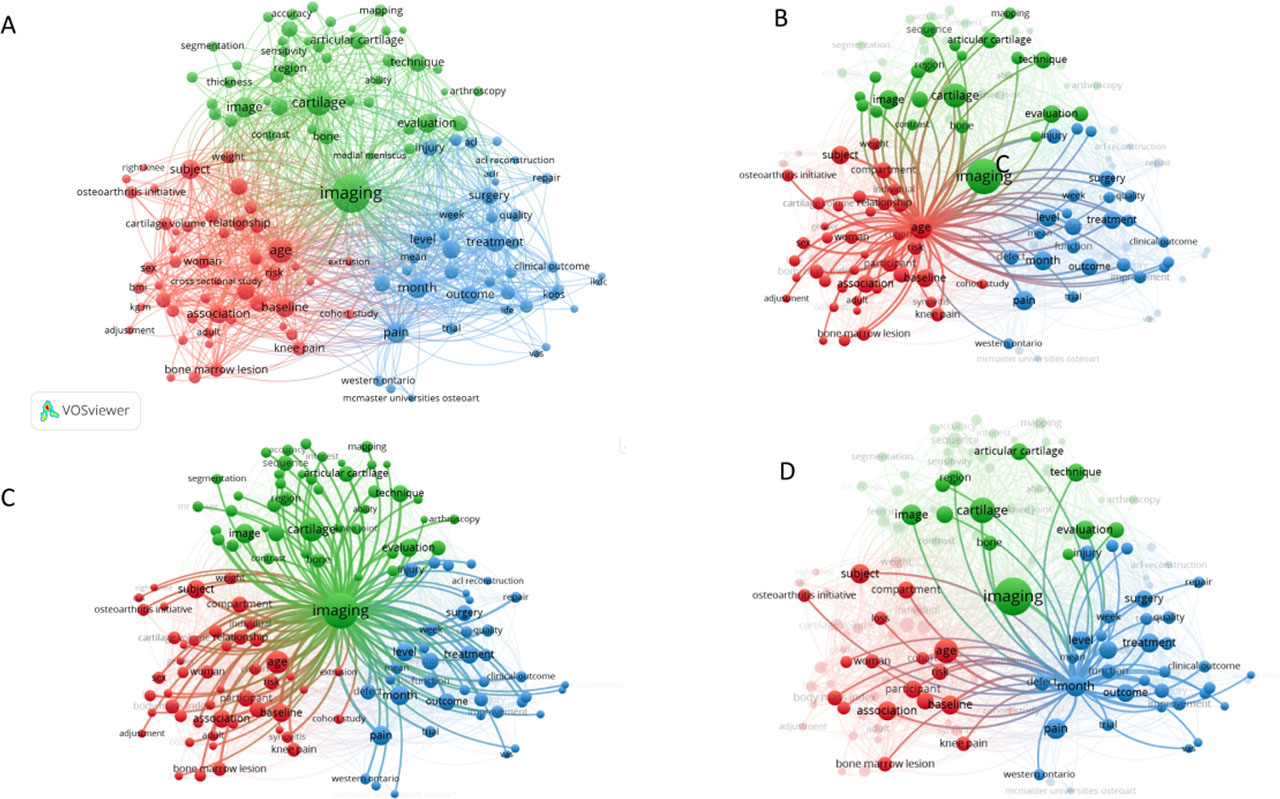
Figure 2.
Cluster analysis of all items (A. total clustering results; B. item situation of cluster1; C. item situation of cluster2; D. item situation of cluster3)
3.4. Co-authorship analysis
The relevance of a project was determined based on the number of documents co-authored by each individual. The unit of analysis was authors, with full counting employed, and articles with fewer than 25 co-authors were excluded from the analysis. A total of 149,987 authors were considered, with 130 authors meeting the inclusion criteria based on a minimum of 15 documents each. The co-authorship links between these 130 authors were assessed, and the author with the highest total link strength was identified. The largest connected set of items consisted of 117 items, which were clustered into eight distinct clusters (Figure 3A). The top three clusters, based on the number of items, contained 37, 21, and 20 items, respectively. In Cluster 1, the author with the highest document count was Ali Guermazi (Documents = 165, Links = 35, Total Link Strength = 514) (Figure 3B). In Cluster 2, the author with the highest document count was Flavia M. Cicuttini (Documents = 159, Links = 35, Total Link Strength = 481) (Figure 3C). In Cluster 3, the author with the highest document count was Ali. Guermazi (Documents = 117, Links = 29, Total Link Strength = 373) (Figure 3D).
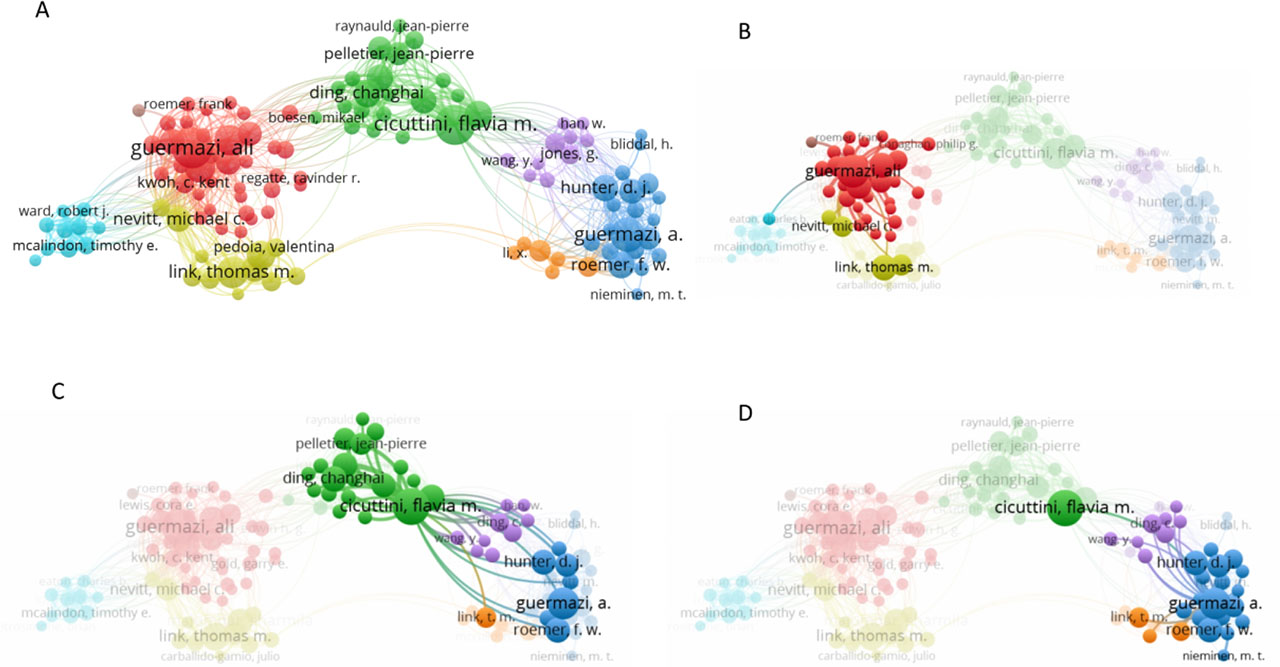
Figure 3.
Results of the Co-authorship analysis-author(A. Cluster analysis results of Co-authorship analysis; B. Co-authorship in Cluster1; C. Co-authorship in Cluster2; D. Co-authorship in Cluster3)
The unit of analysis was organizations, with full counting employed. Articles with 25 or more co-authors were excluded from the analysis. The minimum document threshold for an organization was set to 15, resulting in 132 organizations being included in the analysis out of a total of 3,730. These 132 organizations were clustered into 10 groups (Figure 4A). The three clusters with the highest number of items contained 33, 23, and 16 items, respectively. In Cluster 1, the organization with the highest document count was Stanford University (Documents = 110, Links = 62, Total Link Strength = 158) (Figure 4B). In Cluster 2, Monash University had the highest document count (Documents = 265, Links = 51, Total Link Strength = 526) (Figure 4C). In Cluster 3, the University of California, San Francisco, had the highest document count (Documents = 347, Links = 87, Total Link Strength = 738). Finally, in Cluster 5, Boston University had the highest document count (Documents = 387, Links = 99, Total Link Strength = 1,219) (Figure 4D).
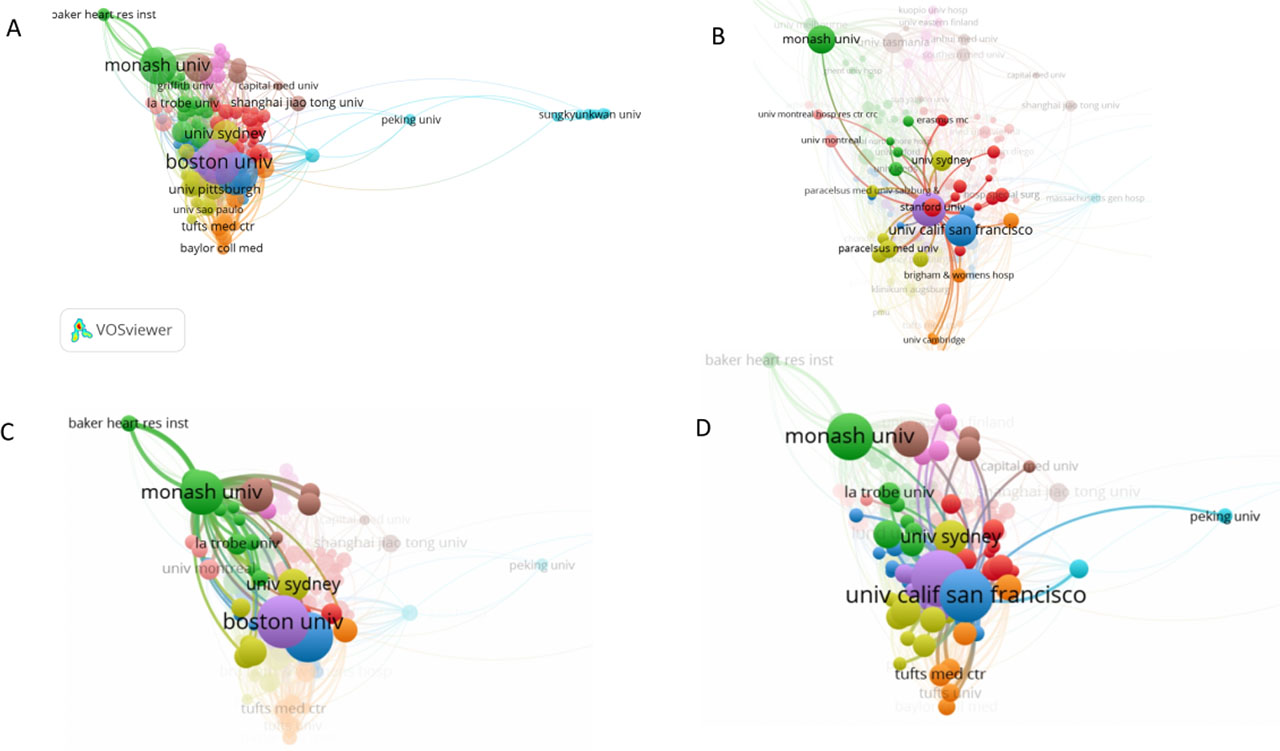
Figure 4.
Results of Co-authorship analysis-organizations (A. A visualization of the 10 clusters; B. Cluster 1: Stanford University (Documents = 110, Links = 62, Total Link Strength = 158); C. Cluster 2: Monash University (Documents = 265, Links = 51, Total Link Strength = 526); D. Cluster 3: University of California, San Francisco (Documents = 347, Links = 87, Total Link Strength = 738)
The unit of analysis was countries, and full counting was employed. Articles with 25 or more co-authors were excluded from the analysis. The minimum document threshold for a country was set to 5, resulting in 54 countries being included in the analysis out of a total of 82. These 54 countries were grouped into 11 clusters (Figure 5). The top four countries with the highest document counts were the United States (Cluster 4, Links = 432, Total Link Strength = 1,483, Documents = 1,712), Germany (Cluster 10, Links = 42, Total Link Strength = 990, Documents = 634), Australia (Cluster 9, Links = 30, Total Link Strength = 612, Documents = 537), and China (Cluster 9, Links = 21, Total Link Strength = 223, Documents = 411).
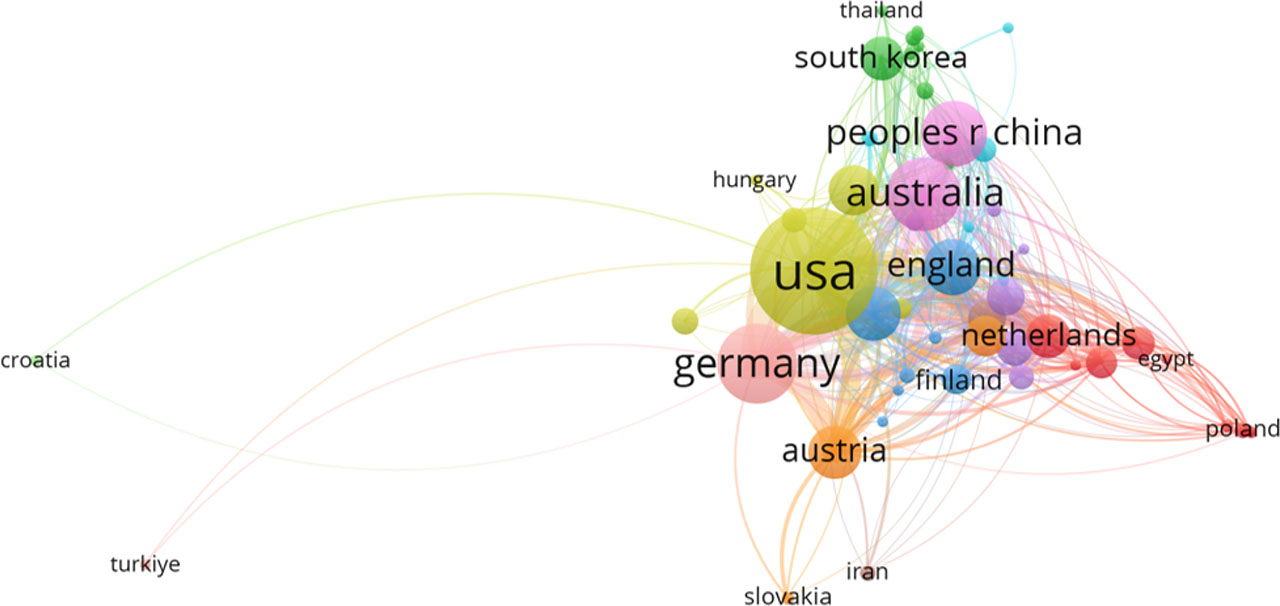
Figure 5.
Results of Co-authorship analysis-countries
3.5. Co-occurrence analysis
Co-occurrence analysis was performed based on all keywords. The counting method was full counting, the minimum number of keyword occurrences was 80, and 83 out of 8194 keywords were included in the analysis (Links=3008, Total link strength=49222). The top three keywords were osteoarthritis, knee, and MRI with Weight Occurrences values of 2129,1186, and 1107 in that order. The mean citation values were higher for joint (42.33), articular-cartilage (38.10), and progression (36.00). The clustering and co-occurrence analysis data were shown in Table 1.
Table 1.
Results of Co-occurrence analysis based on all keywords
| label | cluster | Weight Occurrences | Score Avg. citations |
|---|---|---|---|
| osteoarthritis | 3 | 2129 | 30.99 |
| knee | 2 | 1186 | 28.38 |
| mri | 3 | 1107 | 31.23 |
| articular-cartilage | 3 | 1014 | 38.10 |
| magnetic resonance imaging | 1 | 958 | 26.49 |
| cartilage | 3 | 847 | 31.98 |
| knee osteoarthritis | 1 | 800 | 28.88 |
| pain | 1 | 456 | 31.20 |
| joint | 4 | 442 | 42.33 |
| progression | 1 | 434 | 36.00 |
3.6. Citation and Co-citation Analysis
Citation analysis was conducted to assess the relevance of documents based on the number of citations they received. A minimum citation threshold of 200 was applied, resulting in 78 documents being included in the analysis out of a total of 4,013 (Figure 6A). The largest set of connected items consisted of 67 documents. The most frequently cited article was Whole-Organ Magnetic Resonance Imaging Score (WORMS) of the knee in osteoarthritis (Links = 24, Citations = 1,103, Published in 2004). Co-citation analysis, which determines the relevance of items based on the frequency with which they are jointly cited, was performed using cited references. A minimum of 100 references cited was required for inclusion, resulting in 60 references being selected from a total of 58,583. The reference with the highest citation value was by J. H. Kellgren (1957) (Links = 59, Total Link Strength = 2,659, Citations = 744, DOI: 10.1136/ard.16.4.494).
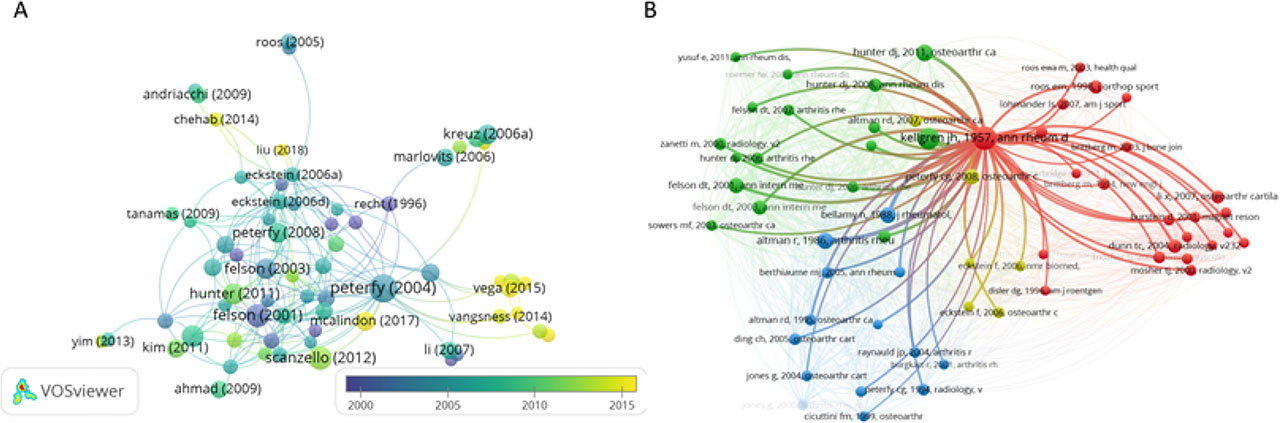
Figure 6.
Results of citation analysis (A. Projects citing each other; B. Projects co-cited)
4. Discussion
The results of cluster analysis showed that age, imaging, and month were the most critical terms in the three categories. The current study showed that the cause, incidence and treatment outcome of KOA were related to age [24]. The higher risk of KOA at older ages may be related to deficiencies in cellular oxidation and phosphorylation caused by mutations in mitochondria during aging, which in turn reduces cellular respiration and energy gain [25]. In addition to this, changes in the gut microbiota in the elderly can also affect the immune system, leading to an increased risk of infection and thus exacerbating the symptoms of KOA [26]. Poor joint mobility and some flexion contractures in middle-aged and elderly patients with KOA have also been shown to be a major factor in disability and poor prognosis [27]. At present, KOA is mainly diagnosed and identified by X-ray and MRI in clinical practice, and to a certain extent, imaging data can also be used to detect the development of the disease and the effect of treatment. Based on the principle of imaging, Peterfy et al. proposed the MRI semi-quantitative scoring system WORMS is a commonly used semi-quantitative scoring method to assess KOA [28]. In addition to this, MOAKS, musculoskeletal ultrasound combined with magnetic resonance imaging have also been used for clinical KOA grading scores [29]. After patients with KOA have been treated, current studies usually assess efficacy in terms of months, either after surgery or repair procedures [30]. For example, one study showed that the post-treatment quality of life score of the KOA population under 40 years of age (90.80 ± 12.78) was higher than the score of the KOA population over 60 years of age (69.00 ± 14.63) [31].
Ali Guermazi is a leading medical imaging specialist [32] specializing in the study and diagnosis of joint diseases. Ali Guermazi has extensive experience and expertise in the field of KOA. Dr Guermazi received his training in imaging at Stanford University and held a faculty position at Harvard Medical School. He has dedicated his research and clinical practice to the use of advanced imaging techniques, such as MRI and CT scans, to aid in the diagnosis and treatment of a wide range of joint disorders [33]. Ali Guermazi ‘s work is widely recognized with a large number of research publications in the field and participation in a number of clinical trials and medical projects [32]. F. M. Cicuttini is a well-respected expert in the field of medicine whose main area of research is bone health and joint disorders [34]. F. M. Cicuttini has extensive research experience in joint degeneration, osteoporosis, and osteoarthritis, and her research focuses on understanding the relationship between the health of the skeletal system and the development of disease, with a particular interest in the genetic, environmental, and lifestyle factors that influence bone health. The research of F. M. Cicuttini involves a wide range of clinical studies, epidemiological investigations, and molecular biology, and her findings have not only contributed to the development of a better understanding of bone health, but also to the development of a better understanding of bone health and disease. The research of F. M. Cicuttini involves clinical studies, epidemiological investigations, and molecular biology, and her research not only contributes to the understanding of the pathogenesis of KOA diseases but also provides an important basis for the prevention and treatment of related diseases. In addition, the team of F. M. Cicuttini is actively exploring new KOA treatments and interventions to improve patients’ quality of life and reduce the incidence of bone-related diseases [34].
Stanford University, Monash University, and the University of California, San Francisco, have emerged as leading institutions in the field of KOA research. Over the past two decades, Stanford University has published a significant number of studies on MRI applications in KOA, with approximately 20% of these focused on MRI-related topics. Key research keywords associated with Stanford’s publications include “anterior cruciate ligament reconstruction,” “ACL,” “deep learning,” and “knee osteoarthritis.” These keywords suggest potential future research directions, such as exploring the use of MRI in assessing post-operative outcomes following ACL reconstruction and the application of deep learning techniques in MRI image analysis. Most of Stanford’s publications in this area are in the form of original research articles. Monash University has also made significant contributions to the field, with research topics including “disease and pain,” “knee joint,” and “ACL reconstruction,” which align with the themes observed in Stanford’s research. However, unlike Stanford University, Monash University’s research on MRI in KOA tends to be more diverse in terms of study types, with a higher proportion of “other types” of studies. This may indicate a focus on developing new methodologies and techniques for MRI applications in KOA. The University of California, San Francisco has also contributed extensively to MRI research in KOA, with key themes such as “disease and pain,” “progression,” and “ACL reconstruction.” Their publications primarily consist of original research articles, emphasizing both theoretical and clinical perspectives on the use of MRI for diagnosing and treating KOA. While the research directions and methodologies of these three institutions in the KOA field show some similarities, each has its unique focus and strengths. Collectively, their contributions have provided essential scientific evidence for the early diagnosis, treatment, and rehabilitation of KOA, offering promising strategies for improving patient management and outcomes.
The most cited article used the WORMS scoring method to analyze the images and then calculated inter-observer agreement and associations between different features [35]. The results showed a high reliability of the WORMS method in assessing the OA knee and some associations between different features, these results support the use of the WORMS method in OA research and emphasize the importance of this scoring method in clinical and research practice.
This study has several limitations. First, it relies on publicly available databases like Web of Science and Scopus, which may exclude non-English publications or lesser-known journals, potentially introducing bias towards well-established fields. Additionally, focusing on literature from a specific time frame (e.g., the past decade) may overlook seminal earlier works or recent studies. The use of bibliometric metrics such as citation analysis and the H-index may also fail to capture the true quality and impact of research, as these focus on citation quantity rather than research influence.
5. Conclusion
The trend of increasing literature on MRI applied research in the field of KOA is not going to stop anytime soon in the future. The United States, Germany, Australia and China are the countries deeply involved in this field, with institutional collaborations in the United States and Australia being more influential. Ali Guermazi and Flavia m. Cicuttini are noteworthy for the direction of their research.
Notes
[1] Contributed by Authors’ contribution
Yuhan Sui conducted the article direction research and wrote the first draft of the article. Shengtao Wang carried out the data collation and picture drawing. Mingzhou Chen carried out data collation and language quality check of the article. Zhaoxu Li checked the overall quality of the article and was responsible for the revision of the final draft. All authors have no objection to the contribution part.