
Table 1.
Oligonucleotide sequences used in this study
| Primer | Primer sequence (5ʹ to 3ʹ) | Amplicon size | Annealing temperature |
|---|---|---|---|
| PmrA(F) | GATGGTTTAAATTTGGGTGCAGAT | 120 | 58 |
| PmrA(R) | TTGACTCGCAAGTTGAGCTTCT | ||
| PmrB(F) | GCCATTATTCGTCGTGGTTTAAA | 150 | 57 |
| PmrB(R) | GCGCTCAAAAAGACGGTTCA | ||
| PmrC(F) | CCATTTGGCTAGGTGCAATTT | 132 | 57 |
| PmrC(R) | CCGCATAATAGGTAGCAACAAG |
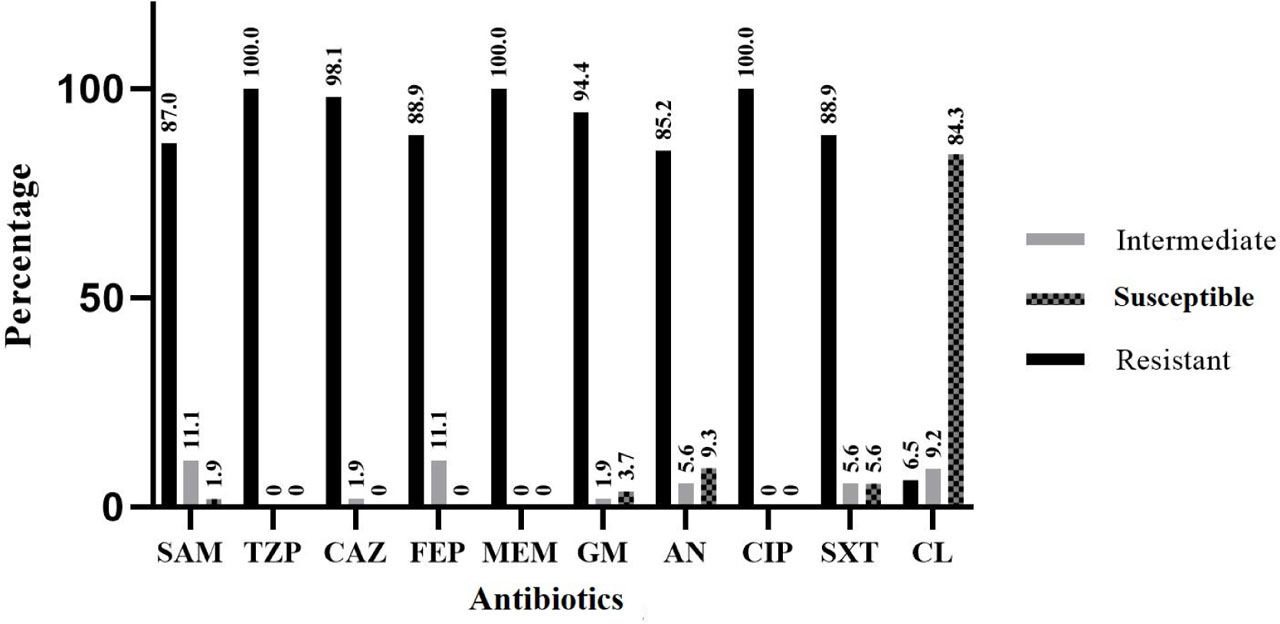
Figure 1.
The results of antimicrobial susceptibility of A. baumannii to the antibiotics investigated in this study. Overall, piperacillin/tazobactam, meropenem, and ciprofloxacin were the most commonly resistant antibiotics (100%). The two most effective antibiotics were colistin (84.5%) and amikacin (9.25%). SAM: Ampicillin-sulbactam; TZP: piperacillin/tozabactam; CAZ: Ceftazidime; FEP: cefepime; MEM: Meropenem; GM: Gentamicin; AN: amikacin; CIP: ciprofloxacin; SXT: Trimethoprim-sulfamethoxazole; and CL: Colistin
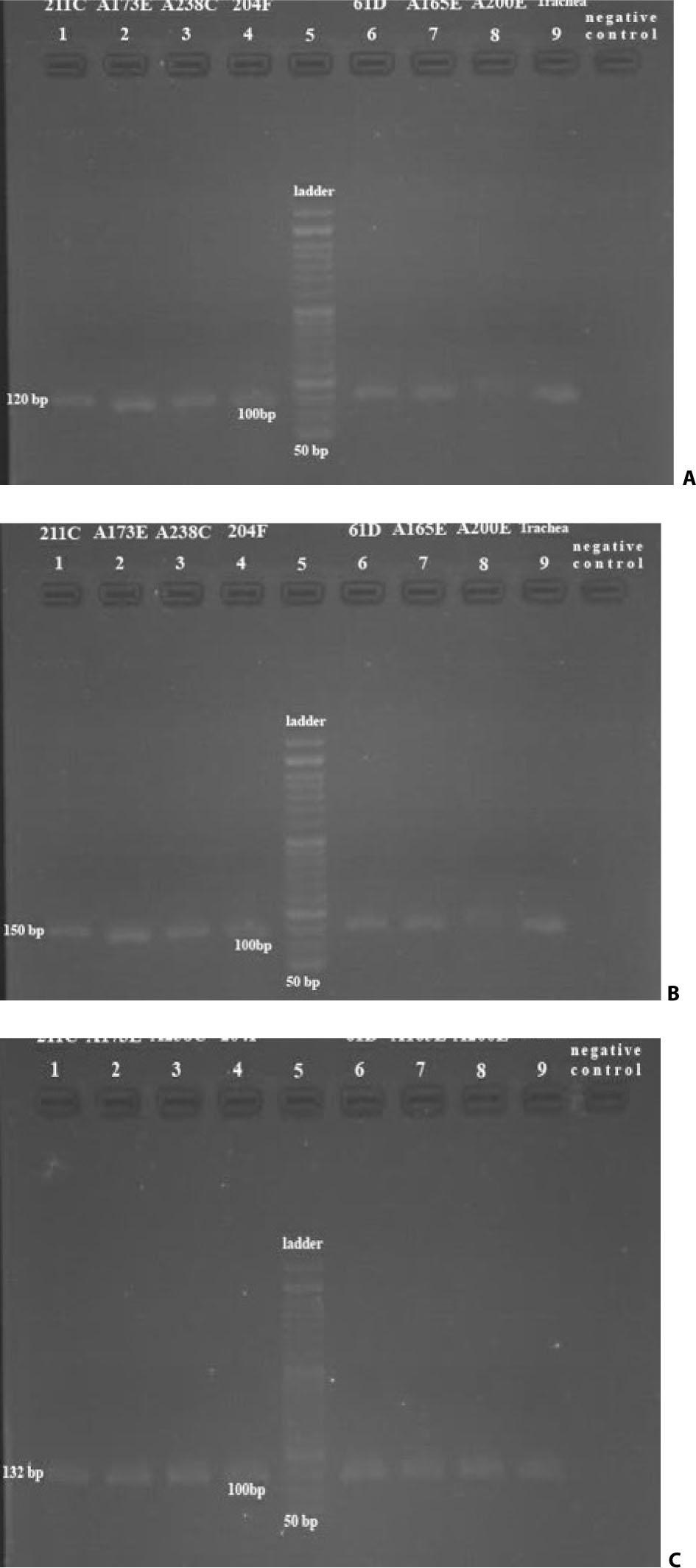
Figure 2
PCR amplification of the PmrA, B and C genes. Ladder: 100 bp-2kb ladder, lane 1: positive control for PmrA (120bp), B (150bp) and C (132bp) genes; lane 2–9: positive results and negative control