
Table 1.
Composition of the herbal cream prepared from Linaria scariosa extract
| Ingredient | Quantity for 100 g | Function |
|---|---|---|
| Linaria scariosa extract | 200 mg | Active ingredient |
| Cera alba (White beeswax) | 18 g | Thickening agent and consistency enhancer |
| Paraffin oil | 50 g | Oil phase, emollient |
| Eumulgin B2 | 0.3 g | Non-ionic emulsifying agent |
| Cutina GMS | 0.8 g | Co-emulsifier and consistency enhancer |
| Borax (Sodium tetraborate decahydrate) | 0.05 g | Emulsion stabilizer and pH-adjusting agent |
| Distilled water | q.s. to 100g | Aqueous phase |
Table 2.
Total phenolic, flavonoid, terpenoid, carotene, and lycopene contents of L. scariosa extract
| Classes of bioactive compounds | LS extract |
|---|---|
| Total phenolic content (μg EAG/mg) | 108.98 ± 0.67 |
| Total flavonoid content (μg EQ/mg) | 78.77 ± 0 .18 |
| Total terpenoid content (μg EUA/mg) | 0.14 ± 0.15 |
| Total carotene content (mg/100 mL) | 0.57 ± 0.12 |
| Total lycopene content (mg/100 mL) | 0.36 ± 0.08 |
Table 3.
Physicochemical, rheological, organoleptic and microbiological properties of the herbal cream
| Parameters | Physical observations after 6 months | |
|---|---|---|
| Organoleptic properties | Color | Dark yellowish-green color (L*= 31.9, a*=−11.0 and b*=+19.1) |
| Odor | Strong herbal odor | |
| Homogeneity | Homogenous | |
| Texture | Viscous, non-greasy and smooth | |
| Stability | Stable | |
| Physicochemical properties | pH | 6.8 ± 0.09 a |
| Washability | Warm water | |
| Spreading time | 14.91 ± 1.72 a S | |
| Spreadability coefficient (S) | 50.07± 5.94 g·cm/s a | |
| Density | 1.001±0.02 g/ml a | |
| Moisture content | 18.24% ± 0.10 a | |
| Dry matter content | 81.75% ± 0.12 a | |
| Ash content | 0.02% ± 0.087 a | |
| Microbiological stability | Total mesophilic aerobic microorganisms | ≤100 |
| Coagulase-positive Staphylococcus aureus | Complete absence in 1 g | |
| Escherichia coli | Complete absence in 1 g | |
| Pseudomonas aeruginosa | Complete absence in 1 g | |
| Candida albicans | ≤100 | |
| Rheological properties | Zero-shear viscosity (η0) | 1332 Pa·s |
| Flow behavior index (n) | 0.7825 | |
| Coefficient of determination (R2) | 0.998 |
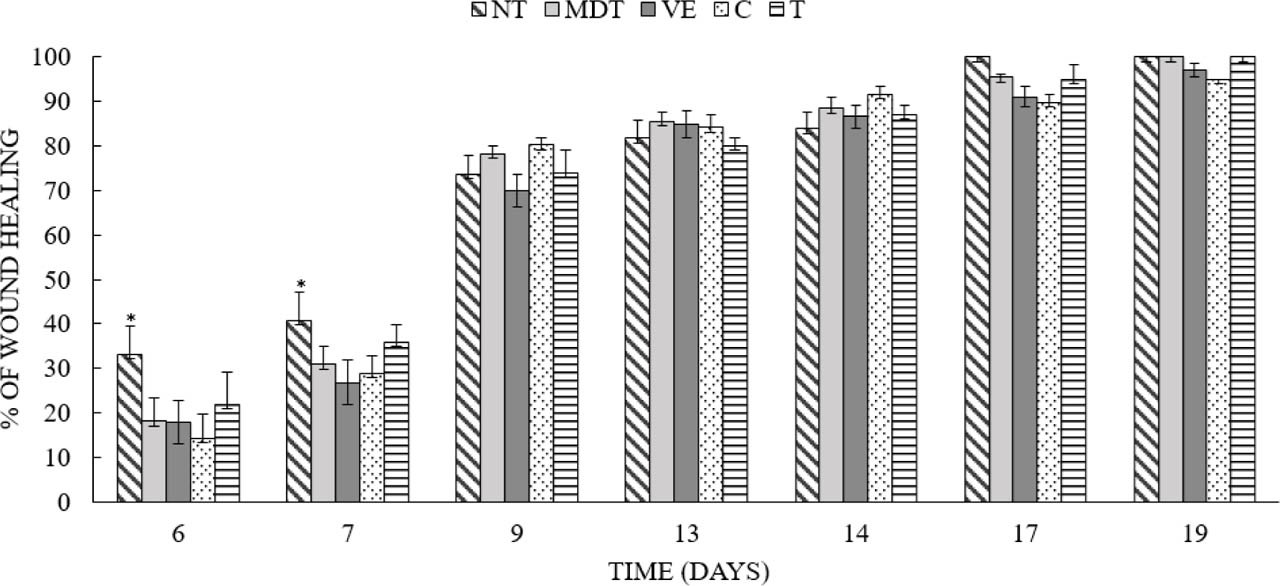
Figure 1.
Percentage wound closure for different treated groups over time. C: Control; MDT: Medicament; VE: Vehicle; T: Single dose of the herbal cream; NT: Double dose of the herbal cream.
Table 4.
Antioxidant potential of LS-herbal cream
| Sample | Iron chelating power EC50 (μg/mL)a | DPPH radical scavenging assay IC50 (μg/mL)a | Permanganate-reducing activity IC50 (μg/mL)a | Ferric-reducing antioxidant power μg eq AA/mg | Total antioxidant capacity μg eq AA/mg |
|---|---|---|---|---|---|
| LS-cream | 3.41 ± 0.27 | 87.63± 0.78 | 10.38 ± 0.4 | 0.528 ± 0.02 | 0.144± 0.01 |
| Ascorbic acid b | NT | 3.8 ± 0.08 | 0.42 ± 0.22 | NT | NT |
| BHA | NT | 6.73 ± 0.5 | NT | 0.62 ± 0.09 | 0.16 ± 0.07 |
| EDTAb | 0.63 ± 0.07 | NT | NT | NT | NT |
Table 5.
Anti-inflammatory activity of the LS cream
Table 6.
The in vitro antimicrobial activity of L. scariosa herbal cream
| Inhibition zones (mm) and minimum inhibitory concentrations | ||||||
|---|---|---|---|---|---|---|
| Gram-negative strains | ||||||
| Samples | Concentration (μg of extract/g of herbal cream) | E. coli ATCC 25922 | Pseudomonas aeruginosa ATCC27853 | Klebsiella pneumoniae ATCC70063 | M. morganii ATCC25830 | |
| LS-cream | 2000 | 15.17 ± 1.18 | 10.5 ± 2.121 | 11 ± 1.41 | - | |
| 1000 | 13.42 ± 1.53 | 9 ±1.414 | 10 ± 0.94 | - | ||
| 500 | 12.10 ± 2.26 | 8 ± 0.001 | 6.5 ± 0.71 | - | ||
| 250 | 11.05 ± 2.05 | 6.5 ± 0.707 | 6 ± 0.71 | - | ||
| 125 | 9.00 ± 1.41 | - | - | - | ||
| 62.5 | - | - | - | - | ||
| MIC (μg/mL) | 125 | 250 | 250 | - | ||
| Penicillin (10 μg/mL) | 22.50 ± 0.70 | 25.00 ± 0.00 | 23.50 ± 0.70 | - | ||
| Gentamicin (10 μg/mL) | 38.00 ± 0.5 | 39.00 ± 0.1 | 27.00 ± 0.5 | - | ||
| Gram-positive and fungal strains | ||||||
| Samples | Dilutions | Staphylococcus aureus ATCC 25923 | Streptococcus D | Enterococcus spp | Candida albicans ATCC 90029 | |
| LS-cream | 1/1 | 15 ± 1.18 | 13.5 ± 0.12 | 8.5± 0.23 | 11 ± 0.03 | |
| 1/2 | 14 ± 1.18 | 12.5 ± 2.12 | 7.5 ± 0.71 | 10.5 ± 0.71 | ||
| 1/4 | 11 ± 0.71 | 12.5 ± 0.54 | 7.3 ± 0.65 | 10 ± 0.46 | ||
| 1/8 | 10 ± 2.59 | 12 ± 0.71 | 7 ± 0.17 | 9.5 ± 1.41 | ||
| 1/16 | 11 ± 0.01 | - | - | - | ||
| 1/32 | 8 ± 1.65 | - | - | - | ||
| MIC (μg/mL) | 62.5 | 250 | 250 | 250 | ||
| Penicillin (10 μg/mL) | 26.00 ±1.4 | 21.00 ±1.41 | 16 ± 0.7 | 22 ± 0.8 | ||
| Gentamicin (10 μg/mL) | 34 ± 0.2 | 27.4 ± 0.32 | 36.00 ± 1.4 | 39 ± 0.2 | ||
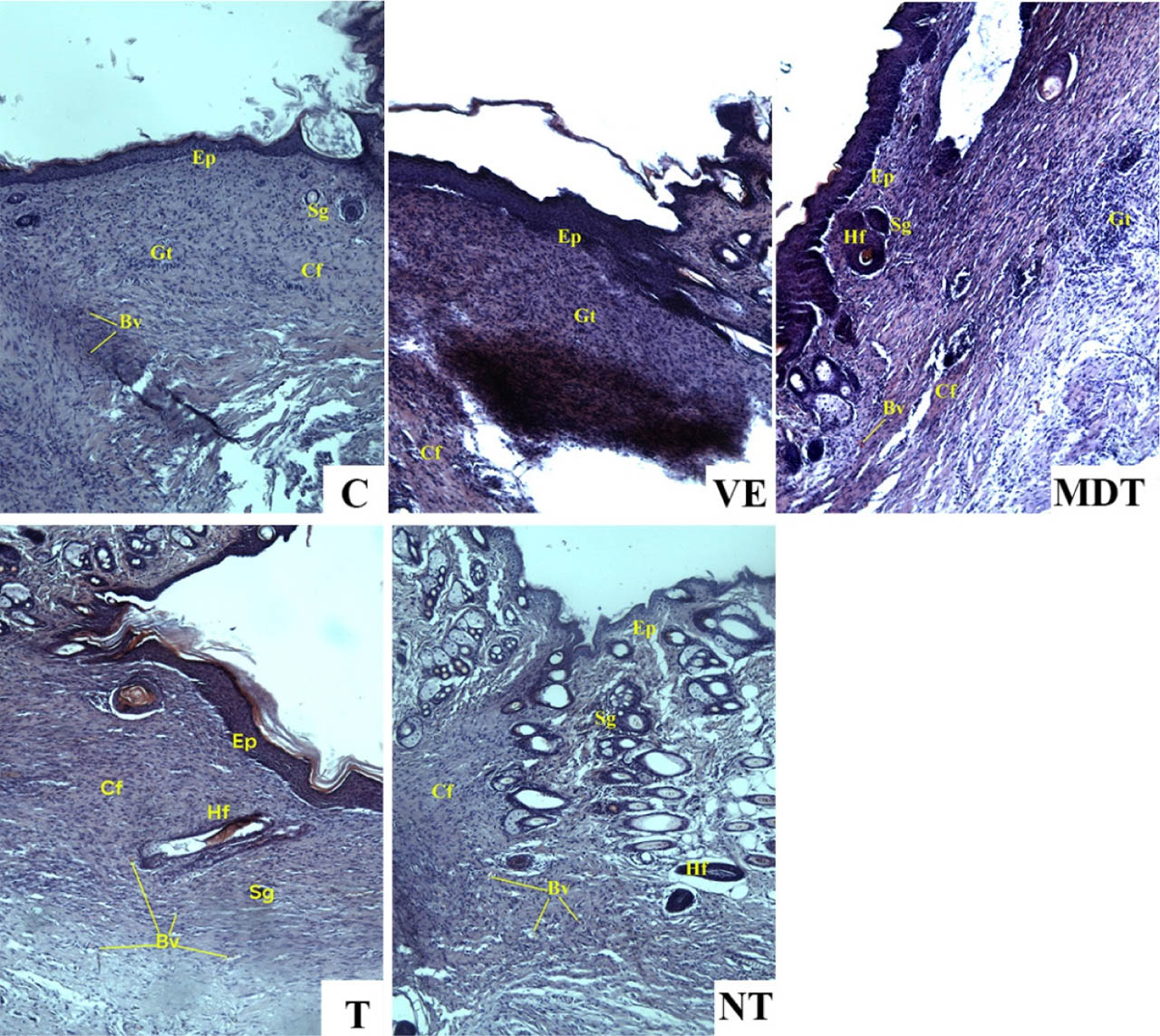
Figure 2.
Histological sections with H&E staining showing better healing in T and NT groups compared to other groups of the study, X400. C: Control; VE: Vehicle; MDT: Medicament; T: Single dose of the herbal cream; NT: Double dose of the herbal cream. Bv: Blood vessel, Cf: Collagen fiber, Ep: Epithelialization, Gt: Granulation tissue, Hf: Hair follicle, Sg: Sweat gland.
Table 7.
Modified histological scoring system adapted by Gupta and Kumar (2015) [44]
| Histological parameters | Score | ||
|---|---|---|---|
| 1 | 2 | 3 | |
| Epithelialization | Absent | Moderate | Marked |
| Differentiation | Absent | Present | / |
| Amount of granulation tissue | Profound | Moderate | Absent |
| Inflammation | Severe | Moderate | Weak |
| Collagen fiber orientation | Vertical | Mixed | Horizontal |
| Angiogenesis | <5/HPF | 6-10/HPF | >10/HPF |
Table 8.
Mean scores ± SD of histological parameters in all treated groups
| Histological parameters | Groups | |||||
|---|---|---|---|---|---|---|
| C | MDT | VE | T | NT | P value | |
| Epithelialization | 1.60 ± 0.54c | 2.60 ± 0.54ab | 1.80 ± 0.44bc | 2.80 ±0.44a | 3.00 ± 0.00a | 0.00 |
| Differentiation | 1.40 ± 0.54a | 2.00 ± 0.00a | 1.60 ± 0.54a | 2.00 ± 0.00a | 2.00 ± 0.00a | 0.03 |
| Amount of granulation tissue | 2.60 ± 0.54a | 1.20 ± 0.44b | 1.60 ± 0.89b | 3.00 ± 0.00a | 3.00 ± 0.00a | 0.00 |
| Inflammation | 1.40 ± 0.54c | 2.20 ± 0.44b | 2.40 ± 0.54ab | 3.00 ± 0.00a | 3.00 ± 0.00a | 0.00 |
| Collagen fiber orientation | 1.60 ± 0.54c | 2.40 ± 0.54ab | 2.20 ± 0.44bc | 3.00 ± 0.00a | 3.00 ± 0.00a | 0.00 |
| Angiogenesis | 1.60 ± 0.54c | 2.60 ± 0.54ab | 2.00 ± 0.70bc | 3.00 ± 0.00a | 3.00 ± 0.00a | 0.00 |
| Total histological score | 10.2 ± 1.09c | 13.00 ± 0.70b | 11.60 ± 1.14bc | 16.80 ± 0.44a | 17.00 ± 0.00a | 0.00 |
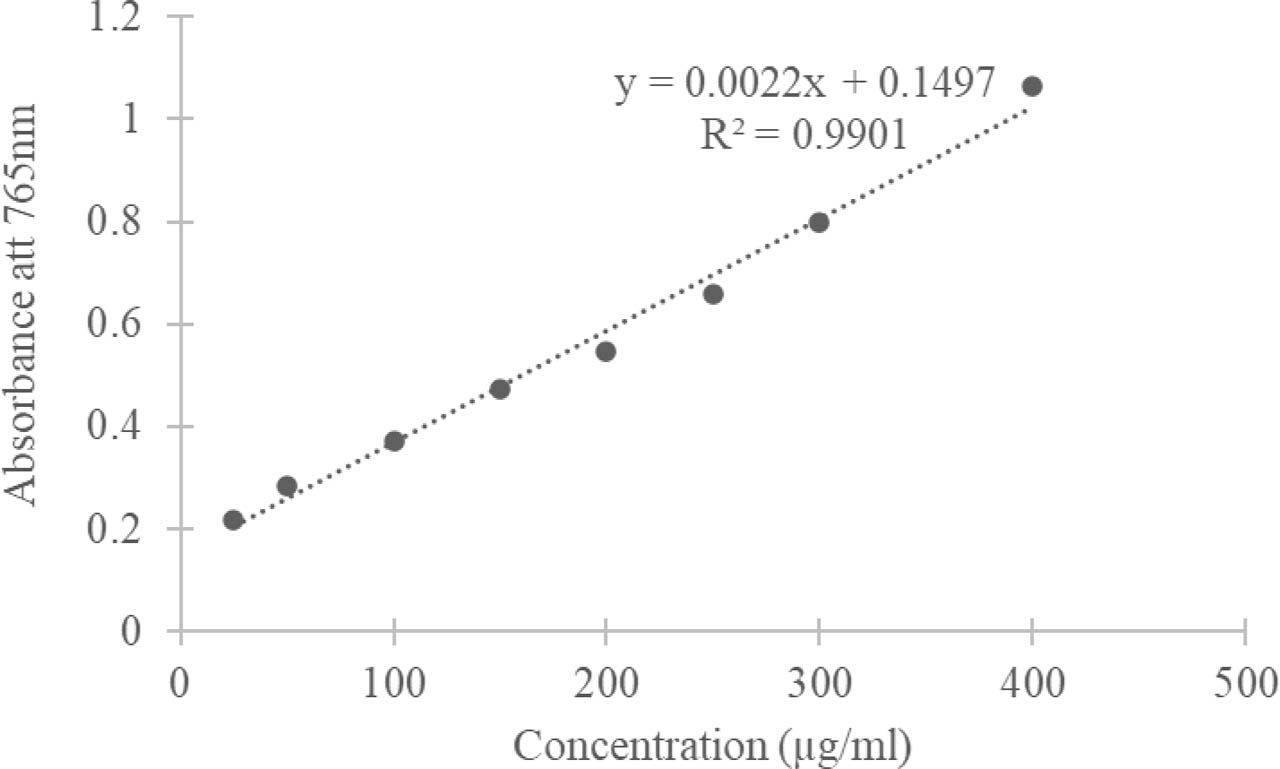
Figure S1.
Straight calibration curve of gallic acid for total phenolic content quantification
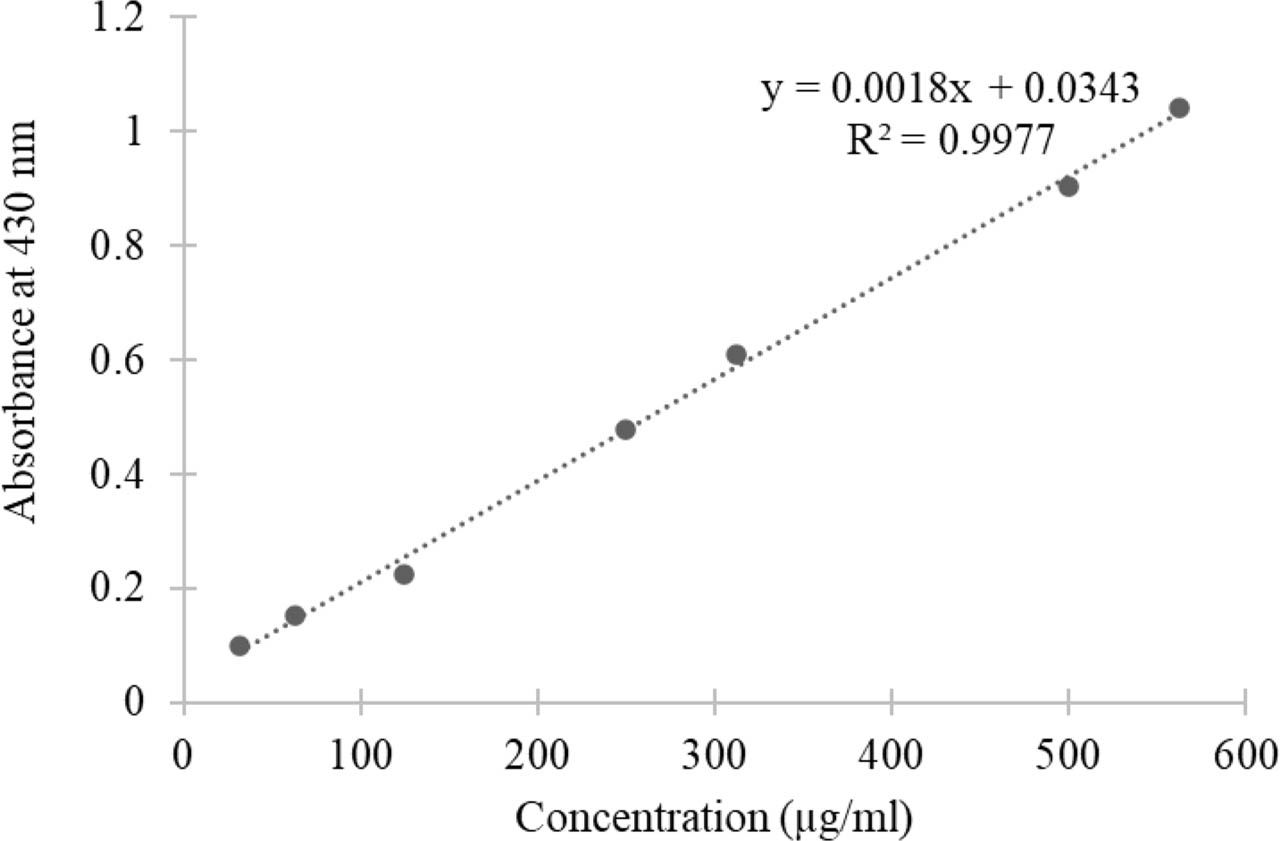
Figure S2.
Straight calibration curve of quercetin for flavonoid content quantification
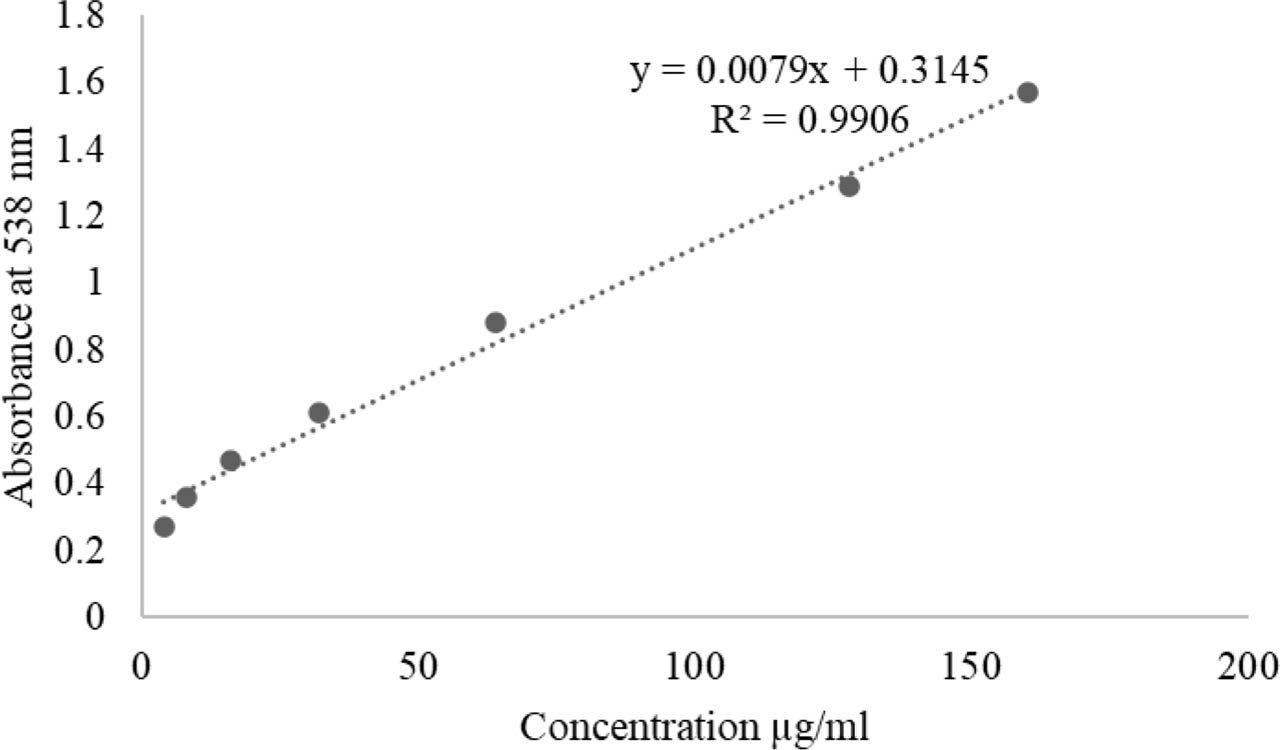
Figure S3.
Straight calibration curve of ursolic acid for total terpenoids content quantification
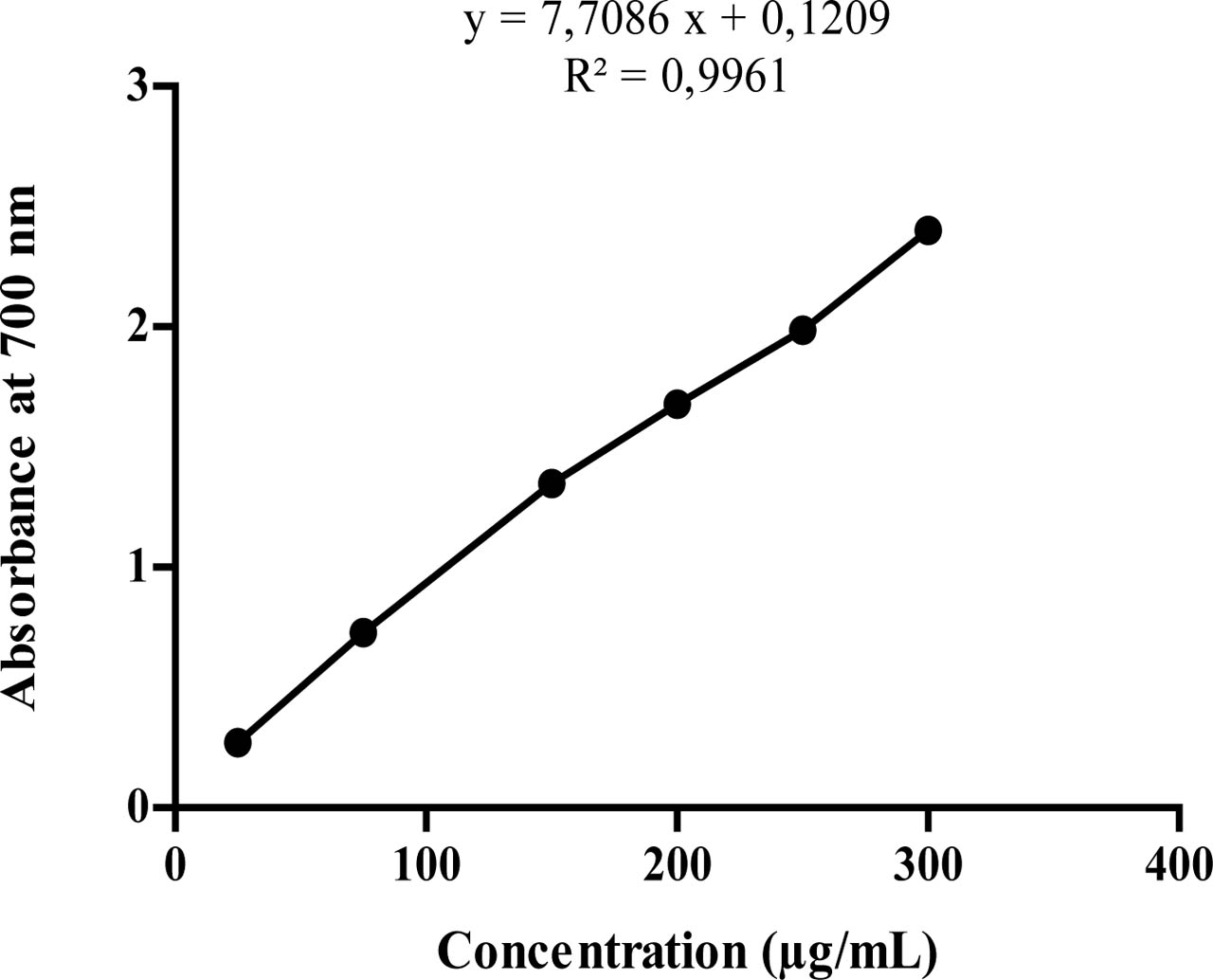
Figure S4.
Straight calibration curve of ascorbic acid for FRAP assay.
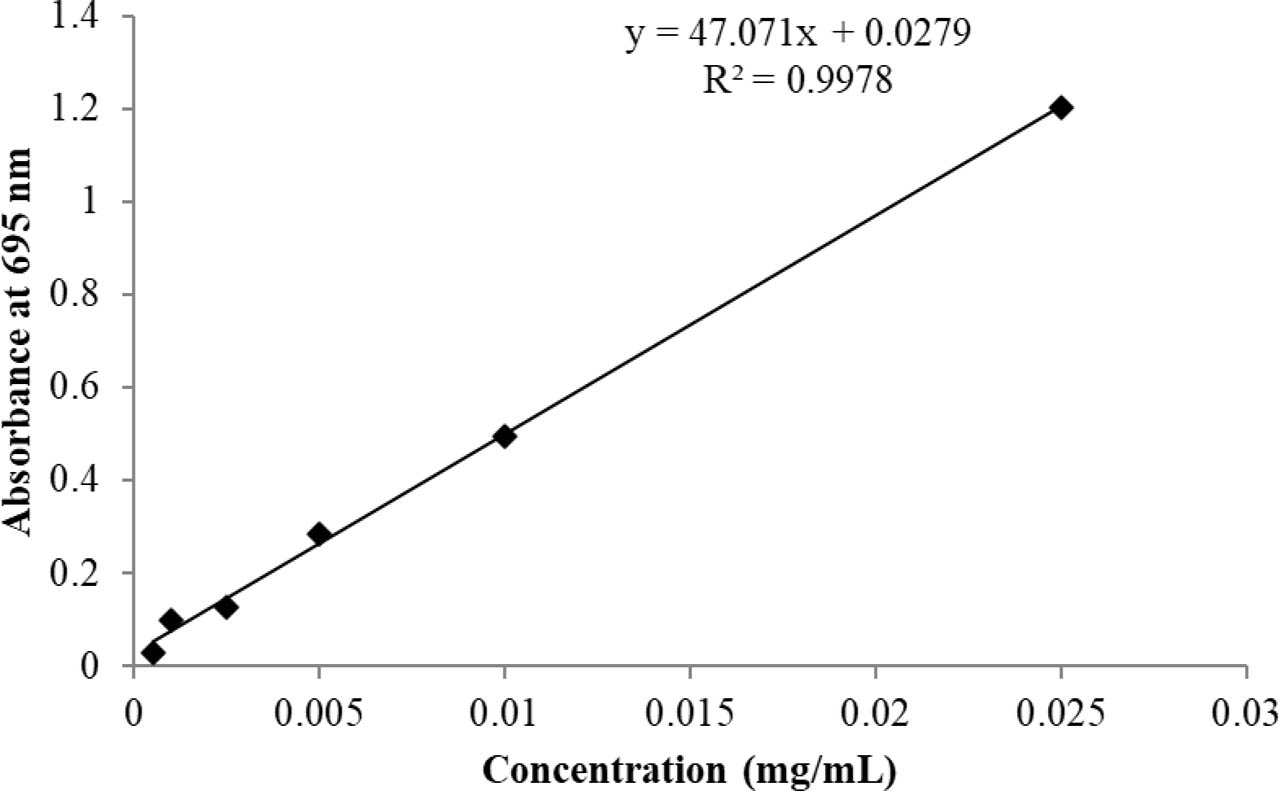
Figure S5.
Straight calibration curve of ascorbic acid for TAC assay
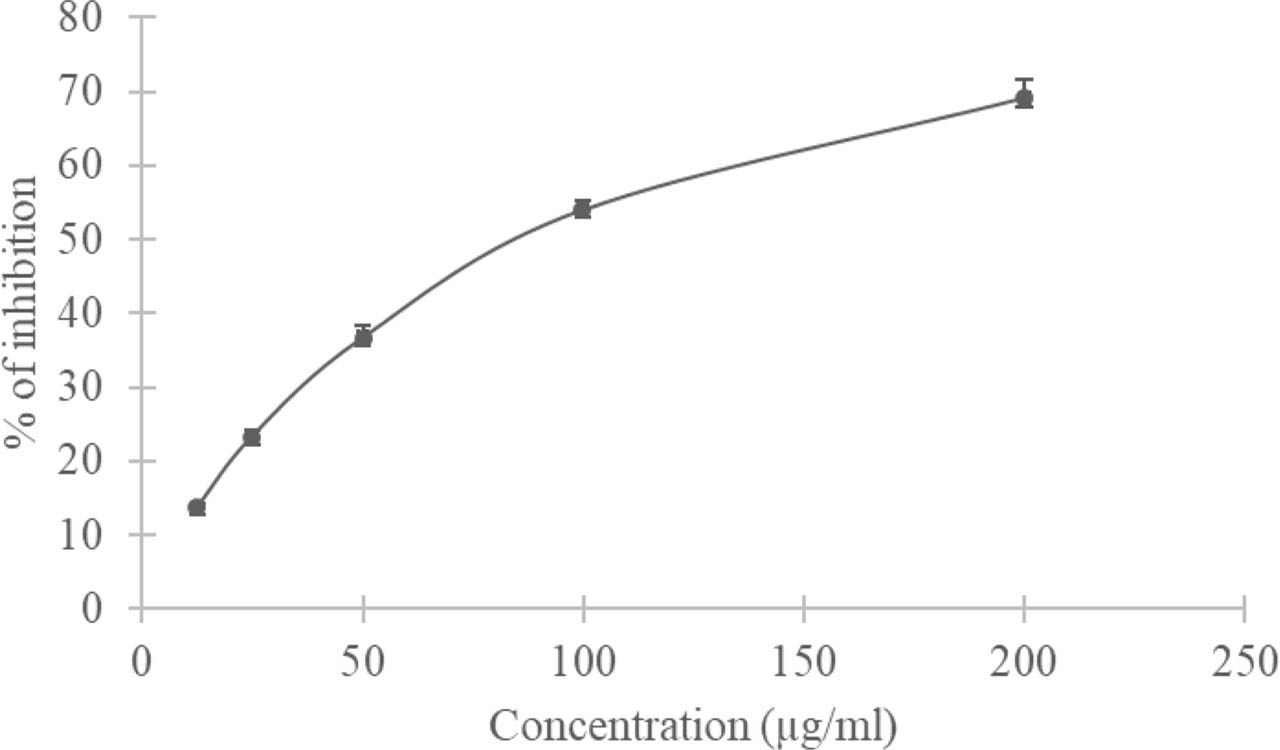
Figure S6.
DPPH radical scavenging activity Linaria scariosa herbal cream