
Figure 1
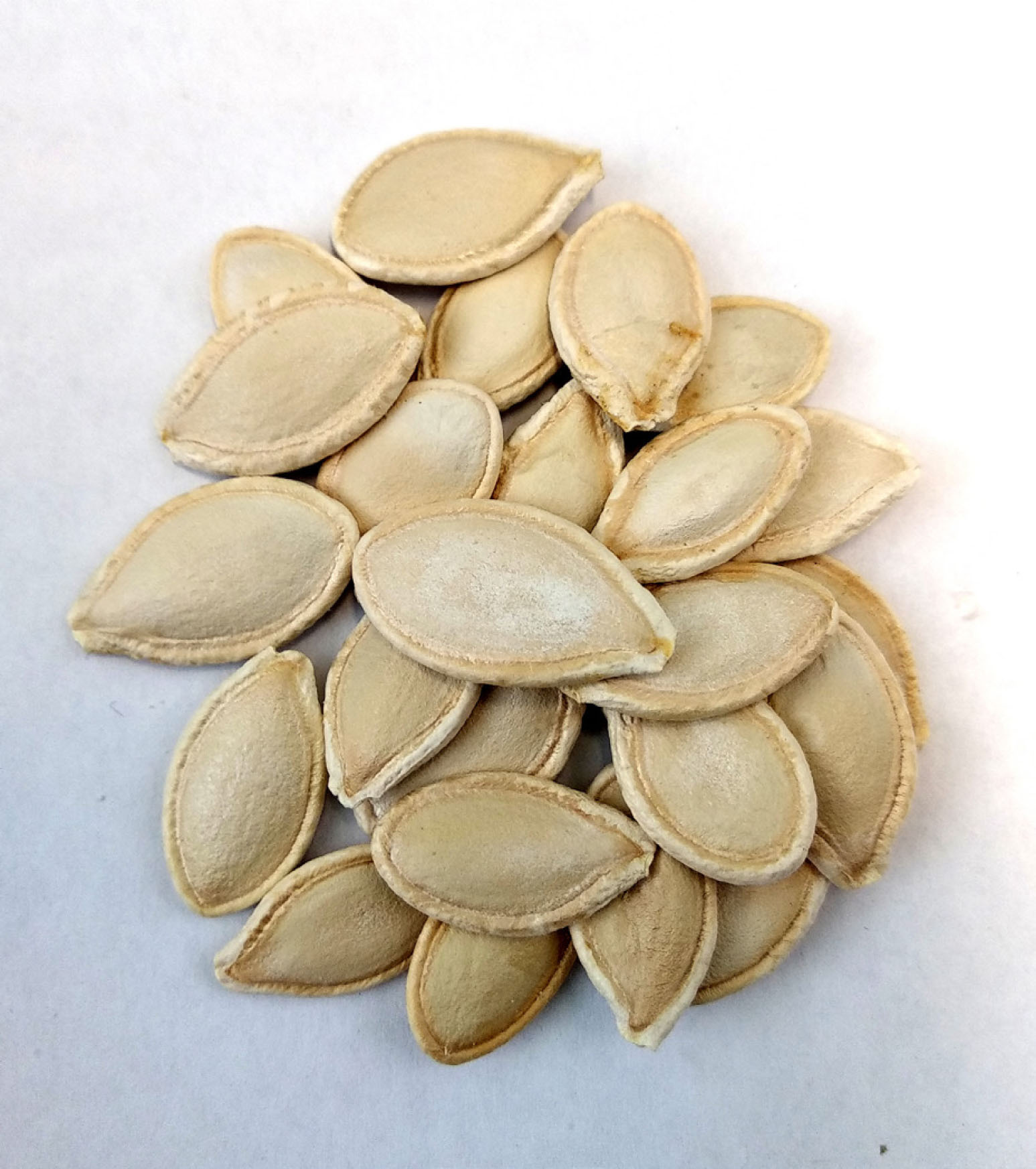
Pumpkin seeds: dried drug substance
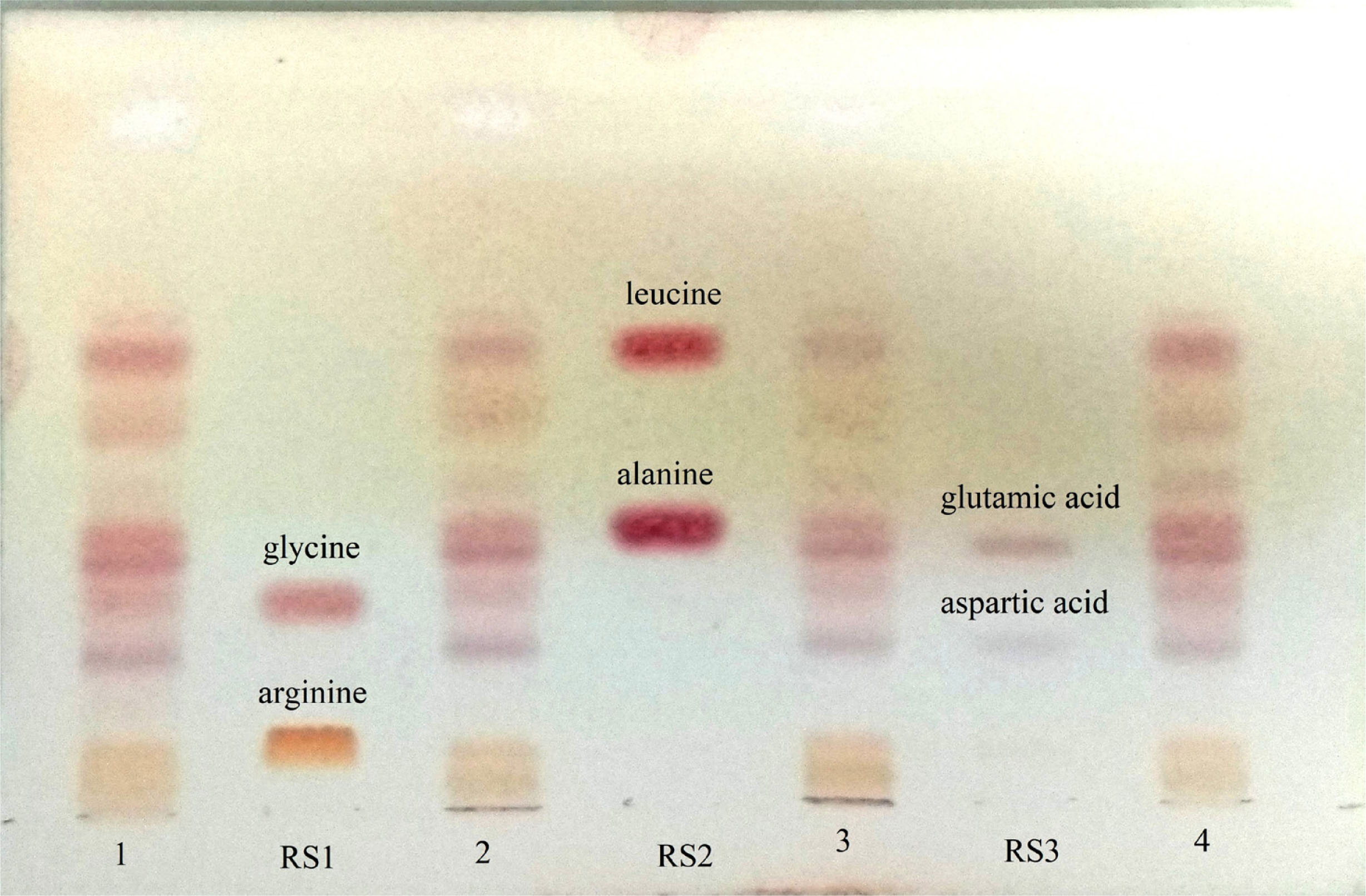
Figure 2
The chromatograms obtained for the identification of amino acids of various samples of pumpkin seeds under conditions of the procedure developed : 1,2,3,4, test solutions obtained from different series (RS 799, 800, 801, 802); RS 1, solution of arginine (zone with lower Rf) and glycine (zone with higher Rf); RS 2, solution of alanine (zone with lower Rf) and leucine (zone with higher Rf); RS 3, solution of aspartic acid (zone with lower Rf) and solution of glutamic acid (zone with higher Rf)
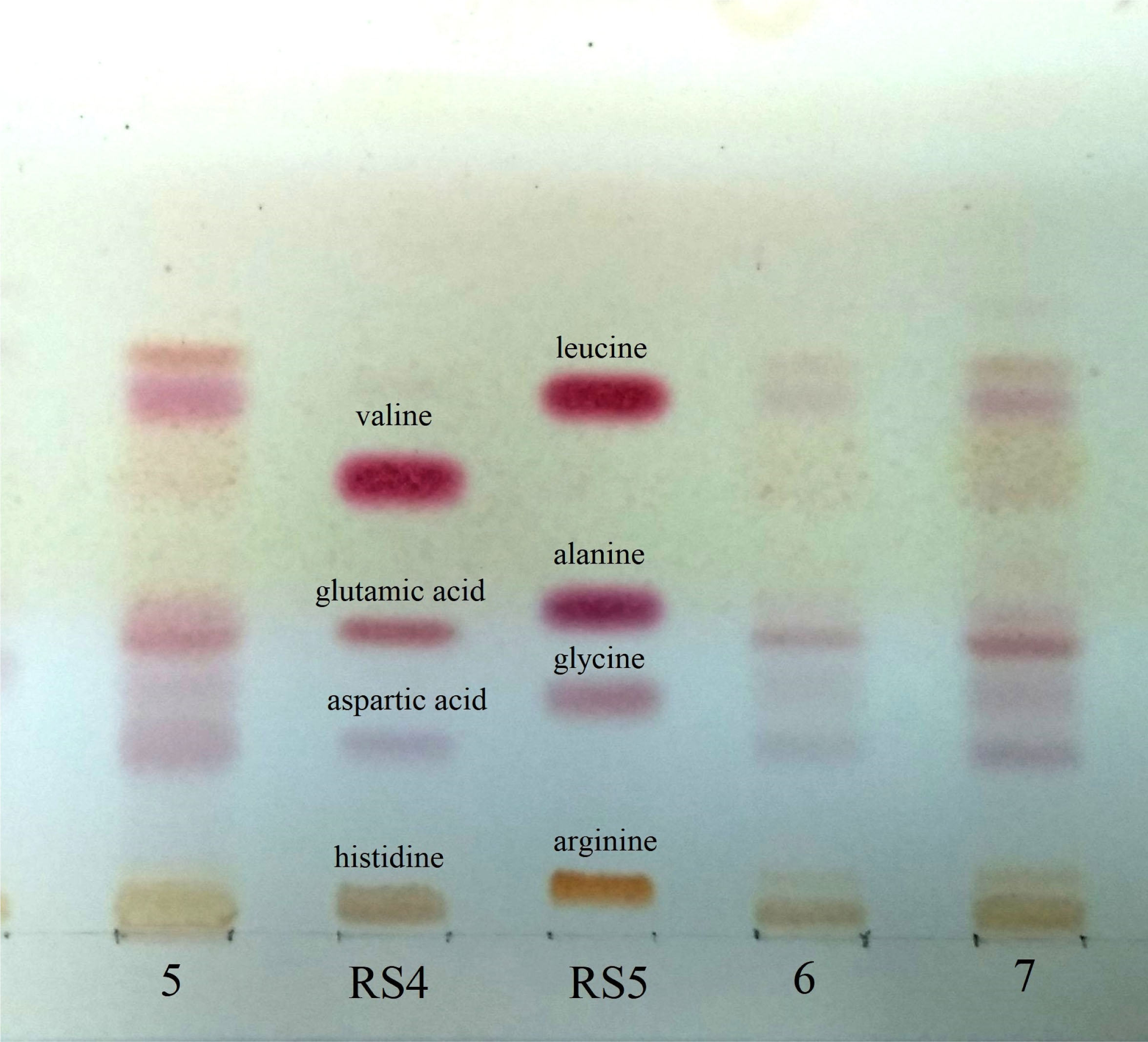
Figure 3
The chromatograms obtained for the identification of amino acids of various samples of pumpkin seeds under conditions of the procedure developed : 5,6,7, test solutions obtained from different series (RS 803, 804, 805); RS 4, solution of histidine, aspartic acid, glutamic acid, valine (in order of increasing Rf); RS 5, solution of arginine, glycine, alanine, and leucine (in order of increasing Rf)
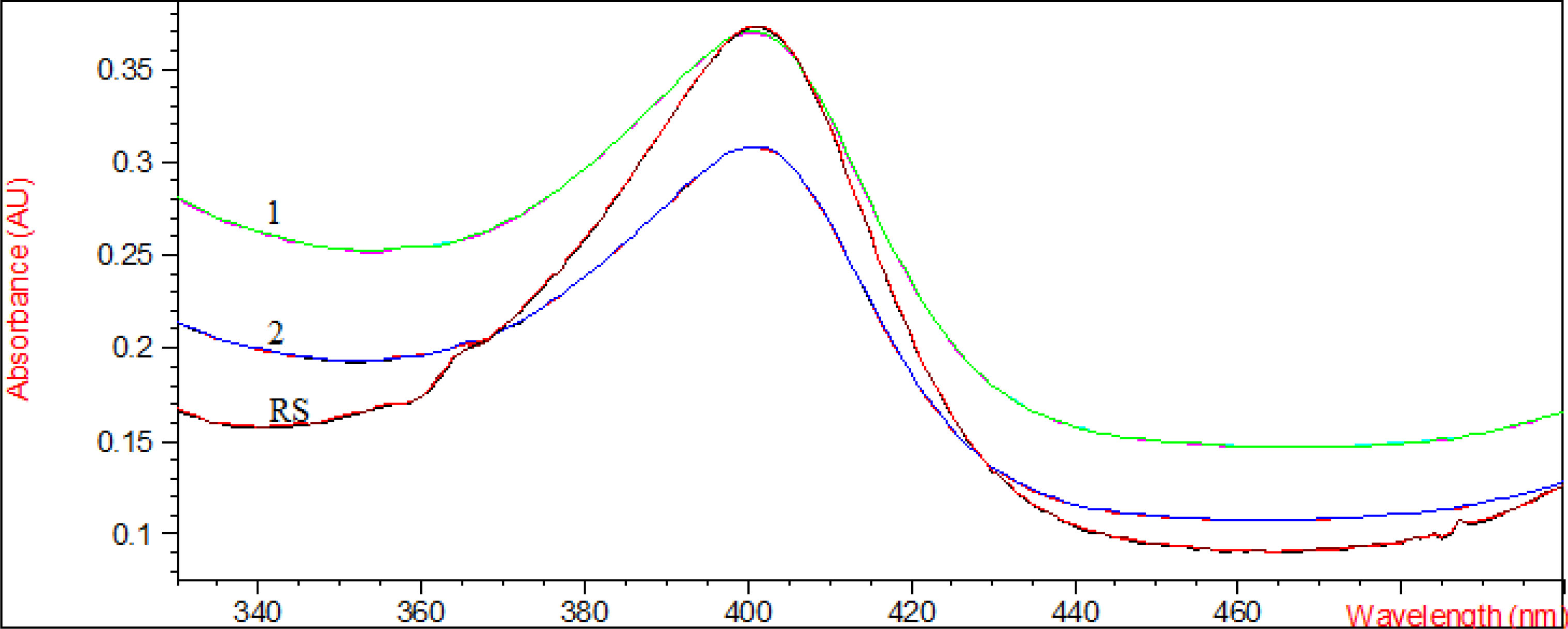
Figure 4
Typical absorption spectra obtained by assay amino acids content: 1,2, spectra of the test solutions obtained from the series of pumpkin seeds; RS, spectrum of solution of glutamic acid
Table 1
Results of amino acids assay expressed as glutamic acid and fat-free raw material in the different samples of pumpkin seeds
| RS (batches of pumpkin seeds) | The content of the amino acids expressed as glutamic acid |
|---|---|
| 799 | 2.0 ± 0.05 |
| 800 | 2.1 ± 0.03 |
| 801 | 1.9 ± 0.04 |
| 802 | 1.8 ± 0.05 |
| 803 | 2.5± 0.07 |
| 804 | 1.7 ± 0.03 |
| 805 | 1.8 ± 0.04 |
[i] The data (g/100 g fat-free raw material) are presented as mean ± SEM (n = 3)