

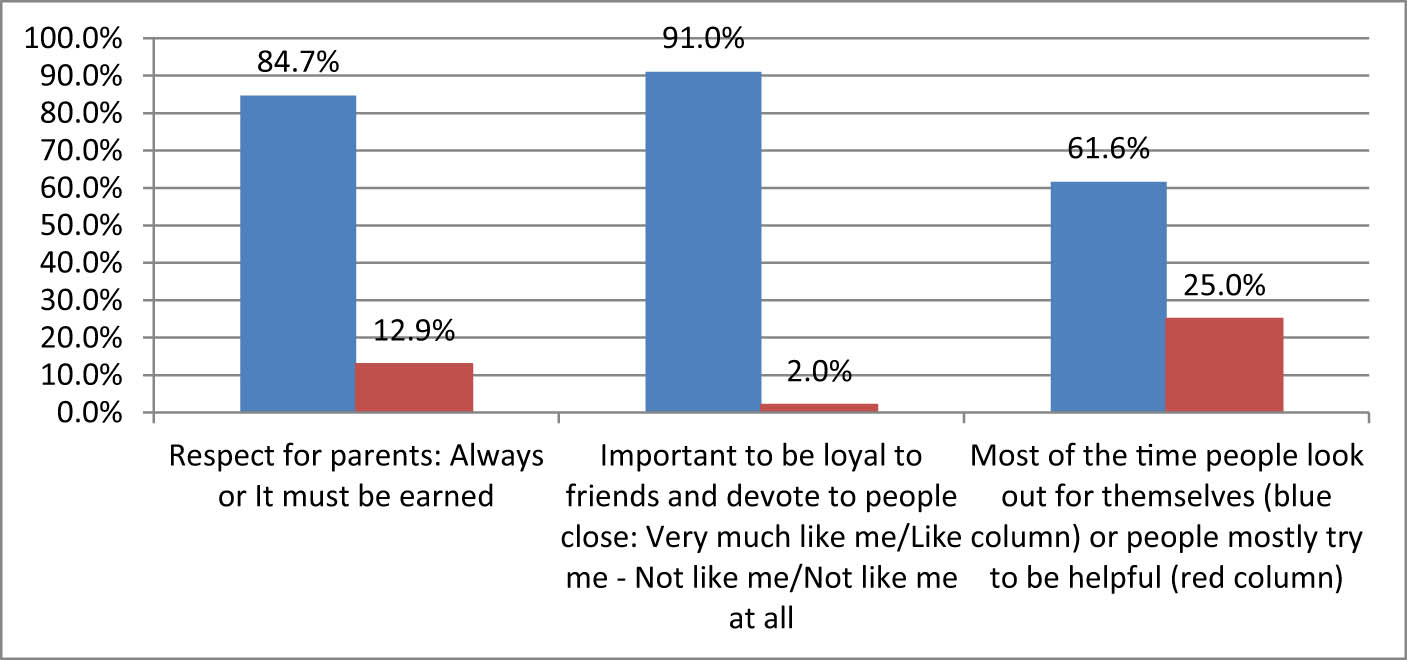
Figure 1
Indicators of the emphasis on particularistic norms in Albania. For the first indicator: Respect for the parents: Always 84.7% – It must be earned 12.9%, we are based in the item (v13): “norm of respect for parents” The data for Albania for this variable (v13) is taken from the fourth wave of the World Values Survey, Fourth Wave. For the second indicator: Important to be loyal to friends and devote to people close, the results are: Very much like me/Like me 91% – Not like me/Not like me at all 2%. Other answers available to the respondents (Somewhat like me and A little like me) can be considered neutral, thus their percentages were excluded from the data presented for this indicator. Source: European Social Survey. Round 6, 2012. For the third indicator: Most of the time people look out for themselves (61.6%) or people mostly try to be helpful (25%). Here the answers were on a scale from 0 to 10. The data were adjusted on a binary scale, respectively, responses with scores from 0-4 reflect the answers “Most of the time people look out for themselves", and those from 6-10 reflect the answers "people mostly try to be helpful". Those with a rating of 5, as they are in the middle and can be interpreted as neutral responses, have been eliminated from the data presented. Source: European Social Survey. Round 6, 2012.
Source: World Values Survey. Wave 4: 2000-2004 WORLD VALUES SURVEY (2014) & European Social Survey – Round 6 Data (2012).
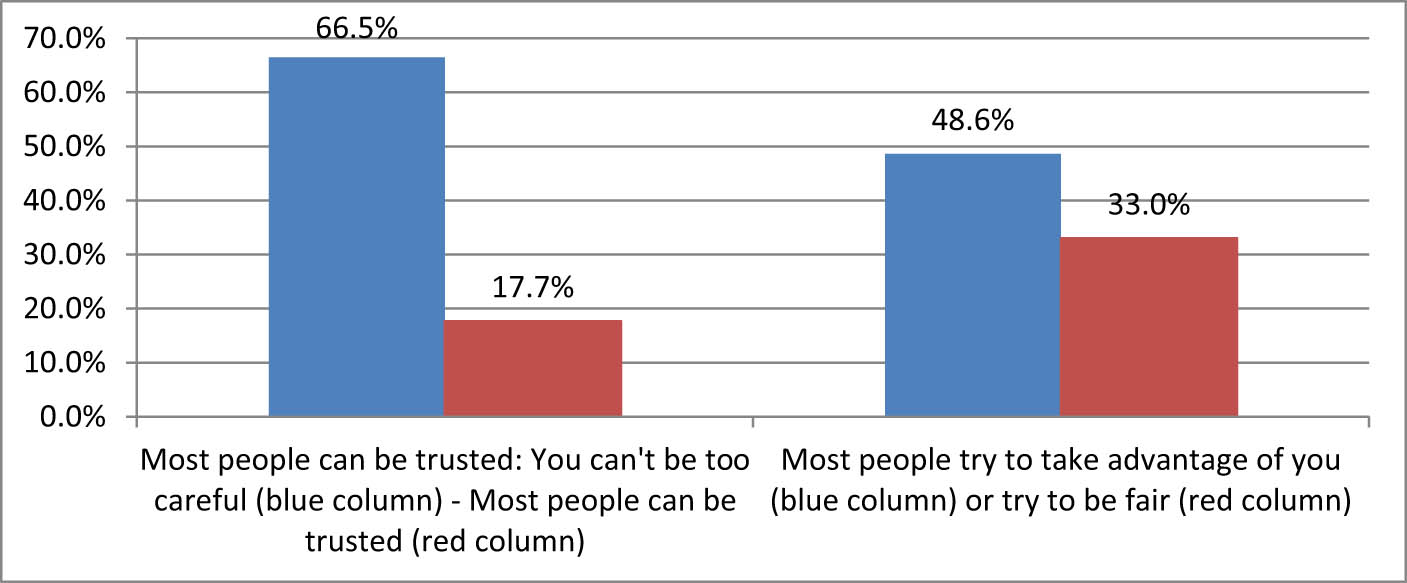
Figure 2
Indicators regarding the low interpersonal trust in Albania. For the first indicator, we rely on the measurement (A3) of the European Social Survey (Round 6), 2012: Would you say that most people can be trusted, or that you can't be too careful in dealing with people? Here, the answer ‘Can’t be too careful’ translates to: that need to be wary or always somewhat suspicious in dealing with other people, which means a low interpersonal trust in social relations between members of society. Here too, the answers of the Albanian respondents were on a scale from 0 to 10. We have adjusted the data on a binary scale, respectively, responses with scores from 0-4 reflect the answers (66.5% of them) "You can’t be too careful", and those from 6-10 reflect the answers (17.7%) of those who think "Most people can be trusted". As for the other (second) indicator here, we are based on item (A4) of European Social Survey (Round 6): “Most people try to take advantage of you if they got the chance, or would they try to be fair? Here, the answer "take advantage" means exploit or cheat that people think others could take against them, which is again an indication of low interpersonal trust among members of society. The answers were on a scale from 0 to 10, and we have adjusted them on a binary scale, specifically the responses with scores from 0-4 reflect 48.6% of those who think “Most people try to take advantage of you”; and those from 6-10 reflect the answers of 33% of those who think "Most people would try to be fair?".
Source: European Social Survey—Round 6 Data (2012).
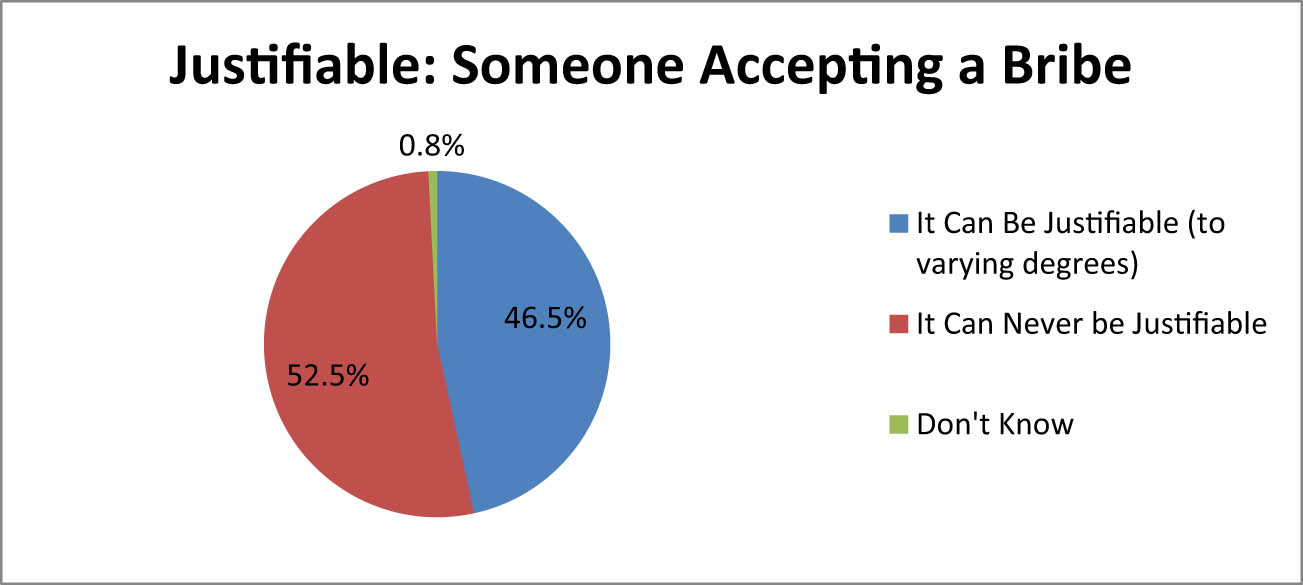
Figure 3
Justifiability of someone accepting a bribe in Albania. For Albania, this dimension is represented using a World Values Survey item “Someone accepting a bribe in the course of their duties,” which captures the extent to which corrupt behaviors are considered as justifiable (to varying degrees) versus never justifiable.
Source: World Values Survey Wave 4:2000–2004.
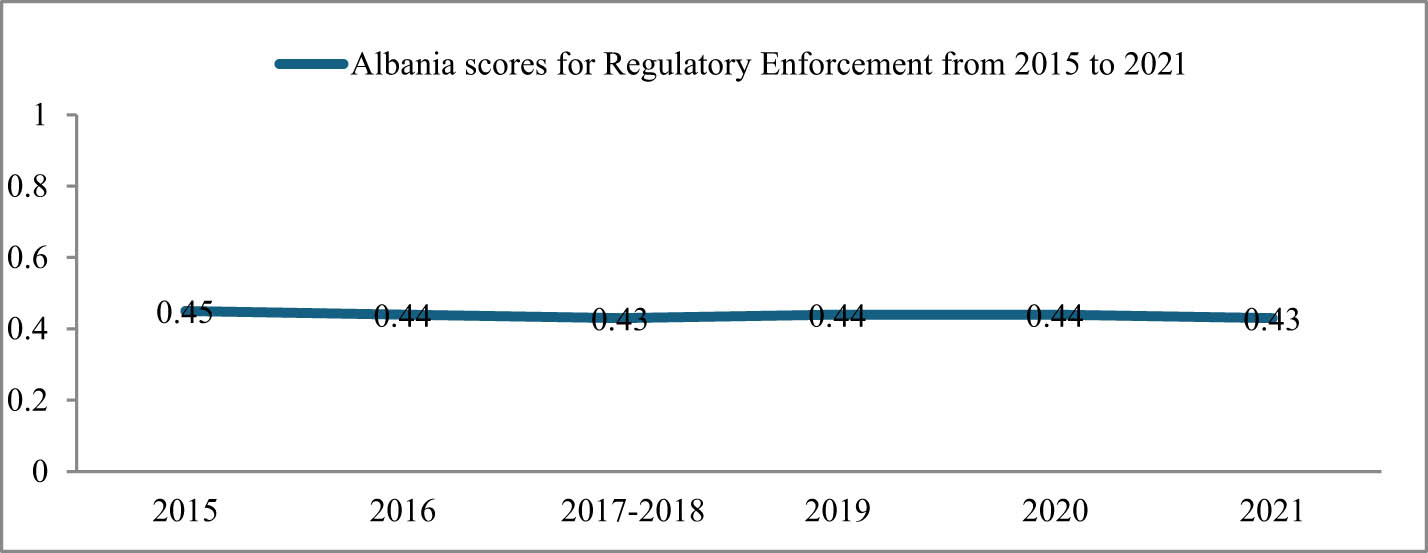
Figure 4
Regulatory Enforcement (of Rule of Law) for Albania.
Source: World Justice Project, Rule of Law Index (2021)
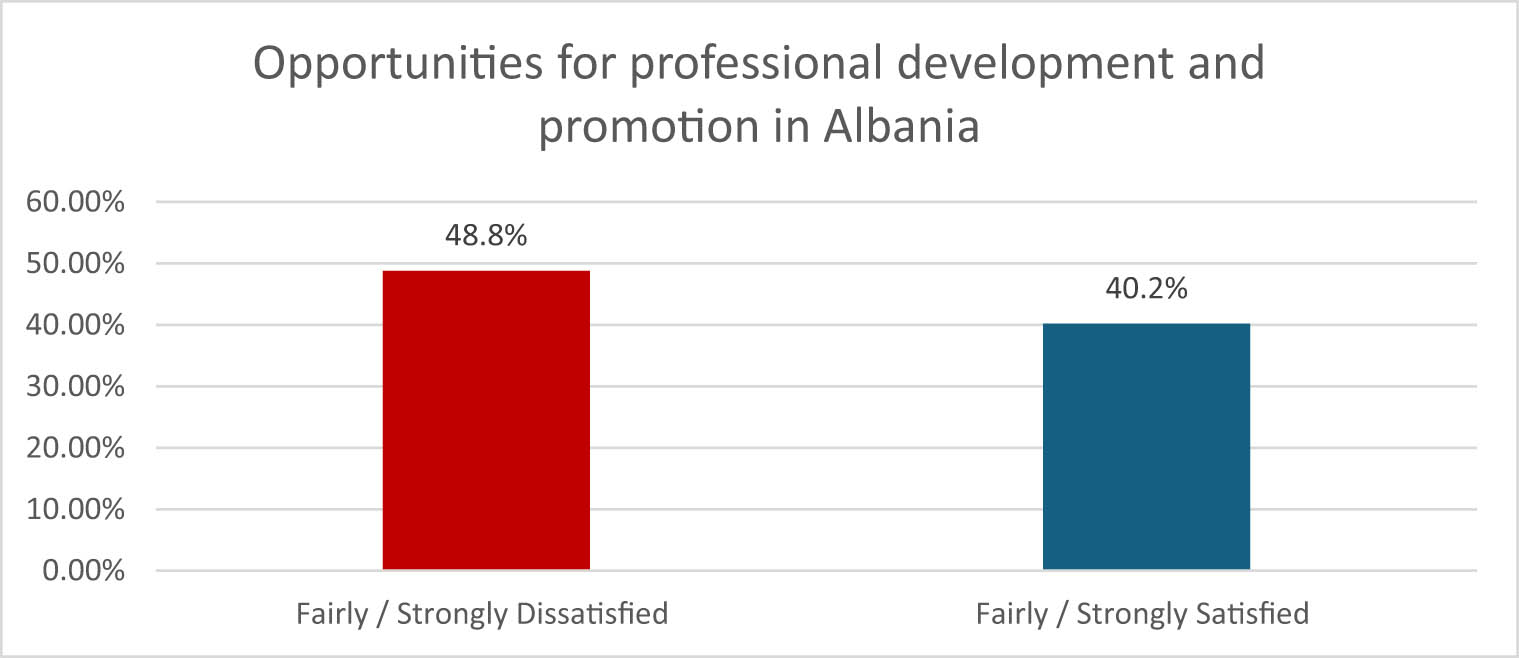
Figure 5
Dissatisfaction/satisfactions with opportunities for professional development and promotion in Albania.
Source: World Values Survey (Wave 7: 2017–2022)
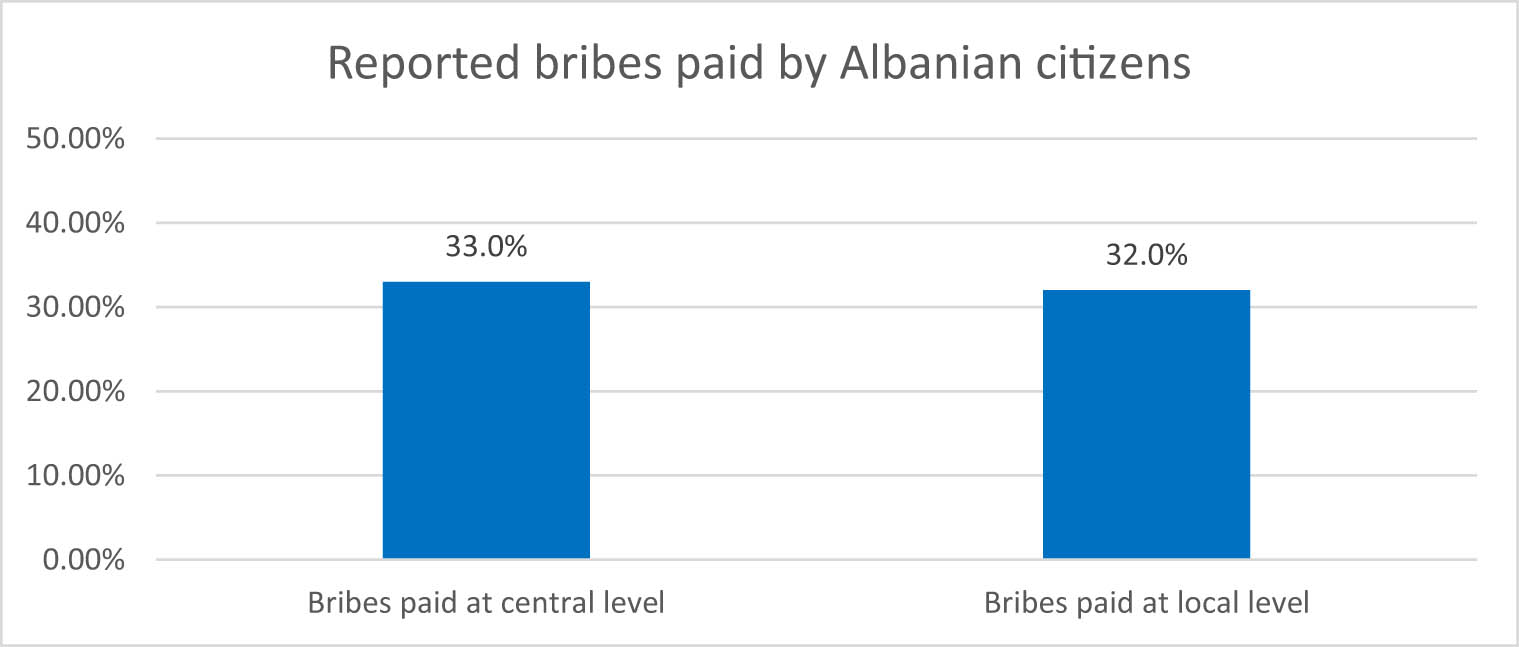
Figure 6
Reported bribes paid by citizens in Albania in contact with institutions.
Source: IDM and UNDP 2018: 37–38.