
1. Introduction
Against the worldwide problem of global warming and climate change, the efficient use of energy has become an increasingly important issue [1,2]. The increasing demand for energy and the resulting environmental degradation caused by the combustion of fossil fuels have necessitated the development of sustainable and energy-efficient building technologies. One of the main advantages that can be achieved by making buildings energy efficient is cost reduction. For example, the operation of commercial buildings requires a lot of energy. Electricity, heating, cooling, and daily activities make normal operating costs very expensive. Energy-efficient buildings require less frequent and less costly maintenance. This effectively extends the useful life of the building. The emission of harmful gases resulting from the combustion of fossil fuels poses a significant threat to both ecological balance and public health. Consequently, there is an increasing global effort to reduce reliance on fossil-based energy sources through more sustainable and efficient design strategies, particularly in the built environment.
Simulation-based methodologies have emerged as essential tools for evaluating the performance of building systems during early design stages, thereby contributing to the development of energy-efficient architectures [3,4]. Numerous programs for energy efficiency have been launched in developed countries to encourage businesses and building owners to invest in green energy and building [5,6,7]. In these countries, there are incentives for almost every aspect of energy efficiency, from the installation of solar panels to the installation of an energy-efficient heating, ventilation, and air conditioning (HVAC) system. When it comes to energy-efficient buildings, there are various standards that help to measure how energy efficient a building is [8]. These standards may vary by country, and some standards required by international agreements are implemented by governments. Some of the general standards are Energy Star, Leadership in Environmental and Energy Design (LEED), and the International Green Construction Code. Again, in order to limit the carbon output, air pollution, and waste generated by buildings, green building certification guidelines (such as LEED) for appliances and equipment are followed and supported by tax reductions for buildings with higher green awareness [9,10].
Some of the features that should be considered in an energy-efficient building design can be listed as follows [11,12,13]:
− In new buildings, orientation toward nature should be taken into account [14,15,16,17].
− By adapting existing buildings, a large amount of money can be saved from the energy needed to construct a new building [18].
− Insulation is a very important factor in making buildings energy efficient. Proper insulation of the building with a quality product helps to save energy by preventing hot or cold air from escaping [19,20,21,22,23].
− The right choice of windows, doors, and walls also supports energy efficiency [24].
− Energy performance can be improved through the use of insulated concrete and energy-efficient building materials [25,26,27].
− The HVAC system is arguably the most important part of a building. The optimization of chimney systems can be important to increase the building’s energy efficiency and to decrease the CO₂ release.
In particular, thermal systems such as heating and flue gas evacuation systems play a critical role in shaping the overall energy performance of buildings. Chimneys, as integral components of these systems, affect not only indoor thermal comfort but also external environmental parameters such as pollutant dispersion and acoustic emissions. Several studies in the domain of energy-efficient building systems have emphasized the role of flue and ventilation design in achieving optimal thermal performance. According to Maghrabie et al., chimney geometry directly impacts flue draft behavior and pollutant dispersion rates in solid fuel-based heating systems [28]. Similarly, Tawalbeh et al. noted that the flue gas velocity and cross-sectional design influence energy loss rates and combustion efficiency [29]. Material selection is another crucial determinant in chimney performance. Ceramic-based linings have been shown to improve thermal insulation and reduce heat loss, while concrete and chamotte materials provide structural durability under prolonged thermal cycling [30,31,32]. Most prior studies have focused on industrial flue systems or large-scale heating installations [33,34,35]. Limited research has been conducted on public-use buildings such as libraries, where moderate-scale heating systems and acoustic sensitivity are central concerns. Moreover, few studies have examined the combined influence of geometry and material under multiple temperature conditions (e.g., ±15°C) in humid subtropical environments. The aim of this study is to address this gap through a comprehensive simulation-based evaluation of chimney system performance in Rize province.
In regions such as Rize, Turkey, where high humidity and fluctuating temperatures are predominant, the design and material selection of chimney systems must account for both thermal resistance and aerodynamic stability. Consequently, simulation-based evaluations have gained prominence, offering architects and engineers a predictive tool for optimizing flue geometries and material behavior under real-world operating conditions.
In addition to simulation, the incorporation of artificial intelligence and multi-attribute decision approaches provides further analytical depth. For instance, the random forest regression algorithm can be used to prioritize key input variables (e.g., maximum negative pressure, flow velocity, inner wall temperature), offering findings into which parameters most strongly influence chimney performance. Such feature prioritization allows engineers to target the most critical aspects of flue design for optimization. Likewise, Technique for Order Preference by Similarity to Ideal Solution (TOPSIS) and VlseKriterijumska Optimizacija I Kompromisno Resenje (VIKOR) are widely used multi-attribute decision approaches that enable the ranking of design alternatives based on multiple, often conflicting, criteria. By applying these methods, it is possible to identify the most favorable combination of geometry and material under given environmental constraints while also quantifying trade-offs between thermal efficiency, aerodynamic stability, and acoustic performance.
This study aims not only to simulate the aerodynamic, thermal, and acoustic performance of chimney systems with square and rectangular cross-sections constructed using four different material configurations (chamotte form stones, varnished ceramic, ceramic with varnish inside, and concrete form stones) but also to complement the findings with random forest feature prioritization and multi-attribute decision-approaches-based ranking of design alternatives. A chimney system designed with two different chimney cross-sections, square and rectangular, for a library building with a 100,000 kcal/h heating boiler using coal as solid fuel was analyzed. Alternative scenarios created with different material combinations were evaluated comparatively in light of environmental performance, and the most favorable design was determined through simulation and decision analysis. Utilizing Kesa-aladin software, combined with machine learning and multi-attribute decision-approaches, this research provides a comprehensive framework for optimizing chimney geometry and material selection in public-use buildings.
2. Methodology
Kesa-aladin is a specialized simulation software developed in Germany, primarily designed for the design, performance evaluation, and safety analysis of chimney and exhaust systems used in heating technologies. The software enables accurate simulation of flue gas behavior, thermal losses, condensation risks, pressure drops, and acoustic transmission under various operating conditions. Its modular structure allows users to assess chimney configurations based on geometry, material selection, and climatic factors, making it particularly suitable for solid fuel systems. Kesa-aladin supports a wide range of chimney materials, including chamotte, ceramics, and stainless steel, and can model rectangular or circular cross-sections. One of its key advantages is the integration of real weather data to evaluate performance under local climate conditions, which enhances its reliability in region-specific architectural applications. Additionally, the software assists in compliance with European chimney standards (e.g., EN 13384), thus offering both practical design tools and regulatory alignment. Given its focus on chimney systems and its strong simulation capabilities in thermal and aerodynamic domains, Kesa-aladin serves as a critical tool in optimizing flue system performance in energy-efficient building design [35].
The software’s functional scope, as well as its comparative advantages and limitations in relation to other commonly used simulation tools, are presented in Tables 1–3 [36,37,38,39,40,41,42,43,44,45].
Table 1
Simulation software used in flue system analysis: Advantages and limitations
| Software | Main capabilities | Advantages | Limitations |
|---|---|---|---|
| Kesa-aladin | Thermal, aerodynamic, and acoustic simulation of flue systems under real operating conditions |
|
|
| ANSYS Fluent | Computational fluid dynamics (CFD) for heat transfer and fluid flow |
|
|
| Energy Plus | Building energy modeling including HVAC and envelope components |
|
|
| COMSOL multiphysics | Multiphysics simulation, including heat transfer and structural performance |
|
|
| Solid works flow | Thermal and fluid dynamics simulation inside CAD-integrated environment |
|
|
| Simulation | |||
| Autodesk CFD | Simulation of airflow and temperature distribution |
|
|
| Open FOAM | Open-source CFD platform for customized simulations |
|
|
| Wufi Plus | Hygrothermal simulation of building components including airflows |
|
|
| TRNSYS | Transient system simulation for HVAC and energy systems |
|
|
Source: Refs. 36–45.
Table 2
Key output parameters in flue system analysis by simulation software
| Software | Thermal parameters | Fluid dynamics parameters | Structural/acoustic parameters | Additional features |
|---|---|---|---|---|
| Kesa-aladin | Flue gas temperature | Pressure drop | Acoustic transmission | Material compatibility |
| Heat loss | Flow velocity | Vibration behavior | Real-climate simulation | |
| Condensation risk | Turbulence levels | |||
| ANSYS Fluent | Heat transfer rate | Velocity vectors | Thermal stress (with coupling) | Soot deposition modeling |
| Temperature gradients | ||||
| Pressure distribution | ||||
| Combustion gas flow | ||||
| CFD turbulence | ||||
| EnergyPlus | Seasonal heating demand | Ventilation flow rates (simplified) | — | Energy efficiency metrics |
| Carbon emission estimates | ||||
| Fuel consumption | ||||
| COMSOL multiphysics | Heat flux | Flow resistance | Structural deformation | Coupled heat-structure-flow analysis |
| Thermal conductivity | ||||
| Material stress | ||||
| Airflow patterns | ||||
| SolidWorks flow simulation | Surface temperature | Internal airflow | — | Design iteration with CAD-based geometry |
| Pressure gradients | ||||
| Thermal loss | ||||
| Autodesk CFD | Cooling/heating loads | Laminar/turbulent flow paths | — | Cloud-based computing |
| Thermal comfort mapping | ||||
| Design visualization | ||||
| OpenFOAM | Temperature field | Dynamic pressure | – (can be extended with custom models) | Advanced scripting for transient and turbulent flow |
| Wall heat transfer rates | Flow separation | |||
| Wufi Plus | Dew point | Air leakage | — | Hygrothermal risk analysis |
| Water vapor diffusion | Moisture-related airflow | Climate-responsive simulations | ||
| TRNSYS | Time-based heat gain/loss | System airflow rates (HVAC) | — | Scenario simulation |
| Integration with renewable systems |
Table 3
Coverage of chimney components in simulation software
| Software | Cap | Flue pipe | Wall penetration | Shaft | Base/connection | Insulation layer |
|---|---|---|---|---|---|---|
| Kesa-aladin | ✓ | ✓ | ✓ | ✓ | ✓ | ✓ |
| ANSYS Fluent | ✓ | ✓ | ∼ | ✓ | ✓ | ∼ |
| EnergyPlus | × | ∼ | × | ∼ | ∼ | ∼ |
| COMSOL Multiphysics | ✓ | ✓ | ✓ | ✓ | ✓ | ✓ |
| SolidWorks Flow Sim. | ✓ | ✓ | ∼ | ∼ | ✓ | × |
| Autodesk CFD | ✓ | ✓ | ∼ | ∼ | ✓ | × |
| OpenFOAM | ✓ | ✓ | ✓ (custom) | ✓ | ✓ (custom) | ✓ (custom) |
| Wufi Plus | × | ∼ | ✓ | ∼ | × | ✓ |
| TRNSYS | × | ∼ | × | ∼ | ∼ | × |

|
| |||||
Source: Refs. 36–45.
This study was conducted to evaluate the thermodynamic, aerodynamic, and acoustic performance of alternative chimney geometries and material configurations in the context of a public library building located in Rize province, characterized by a humid subtropical climate. The chimney systems were analyzed using Kesa-aladin, a specialized software developed for the simulation of chimney and flue gas systems in accordance with EN 13384-1 and EN 13384-2 standards. These standards establish the mathematical models for the steady-state calculation of chimney systems, integrating energy, mass, and momentum balances to predict flue gas behavior under operational conditions. The thermal performance is modeled through an energy balance equation of the form.
where Q loss is the heat transfer through the flue wall, α is the overall heat transfer coefficient, A is the surface field, T g is the flue gas temperature, and T a is the ambient temperature. The aerodynamic performance is evaluated via the pressure balance equation:which considers frictional losses, local resistances (e.g., bends, fittings), and acceleration effects. The available chimney draft is calculated according to the buoyancy-driven pressure differencewhere g is the gravitational acceleration, h is the effective chimney height, and ρ o and ρ g are the densities of ambient and flue gas, respectively. Additionally, condensation risk is assessed through a dew-point condition check, ensuring that T g > T dew throughout the system. Specifically, EN 13384-1 provides these formulations for single-appliance chimneys, while EN 13384-2 extends the methodology to multi-appliance systems connected to a common flue. By employing these standardized equations, the modeling framework guarantees that the results are technically robust, reproducible, and aligned with European safety and performance criteria [35].2.1. System configuration
This section outlines the design parameters, simulation setup, and evaluation criteria used in the research.
The target building is a library with a central solid fuel (coal) heating system. The boiler has a thermal capacity of 100,000 kcal/h (approximately 116.3 kW) and operates under steady-state conditions during the heating season. The chimney system was modeled in two cross-sectional geometries (square cross-section and rectangular cross-section). Each geometry was further evaluated using four different chimney material types (concrete form stones, chamotte form stones, varnished ceramic, and ceramic with varnished internal surface). The selected flue materials – chamotte form stones, varnished ceramic, ceramic with internal varnish coating, and concrete form stones – exhibit distinct thermo-physical and mechanical characteristics that directly influence their applicability in humid-region heating systems. Chamotte form stones, owing to their high refractoriness (typically above 1,500°C) and low thermal conductivity (0.8–1.0 W/m K), ensure excellent thermal insulation while maintaining structural stability under cyclic heating. Varnished ceramics, by contrast, combine the inherent durability of dense ceramic matrices with enhanced moisture resistance provided by surface coatings, which reduce porosity and limit condensate-induced degradation. Similarly, ceramics with internal varnish coatings offer improved protection against acidic condensates formed in humid conditions, thereby extending flue lifetime without compromising acoustic damping. Concrete form stones, though characterized by relatively higher thermal conductivity (1.4–1.8 W/m K) and susceptibility to moisture penetration, provide robust mechanical strength and cost-effectiveness, making them suitable for large-scale applications where structural rigidity is prioritized. Collectively, these materials represent a spectrum of trade-offs between thermal insulation, acoustic attenuation, aerodynamic smoothness, and durability in humid climates, which is important for the proposed sustainability-oriented flue system framework [35]. These material types were selected based on their mechanical durability, thermal resistance, availability in regional markets, and suitability for high-humidity and low-temperature conditions prevalent in Rize.
All performance simulations were conducted using Kesa-aladin v5.3, which enables multi-parameter flue system analyses through a graphical and parametric interface (Table 4).
Table 4
Computations and input and output parameters of Kesa-aladin simulation software [35]
| Software computations | Flue gas temperature profile |
| Flue gas velocity and density | |
| Pressure losses and draft behavior | |
| Sound levels generated by flue flow | |
| Heat losses through inner and outer chimney walls | |
| Wind speed effects under different external temperatures (±15°C) | |
| Input parameters | Boiler combustion data (fuel type, output power, exhaust temperature) |
| Chimney geometry and height | |
| Internal surface roughness coefficients for each material | |
| Outdoor air temperature and wind speed scenarios | |
| Insulation properties (Rockwool layer, stainless steel exterior, etc.) | |
| Output parameters | Mouth cross-sectional area (cm²) |
| Flow velocity (m/s) | |
| Flue gas density (kg/m³) | |
| Draft sound level (dBA) | |
| Wind interference velocity (m/s) at −15 and +15°C | |
| Stagnant pressure (Pa) | |
| Flue gas exit velocity (m/s) | |
| Maximum negative draft pressure (Pa) | |
| Flue gas temperature (°C) | |
| Inner wall and material surface temperature (°C) | |
| Insulation and outer wall temperature (°C) | |
| Direct airflow temperature and sidewall (R12) temperature (°C) |
Source: Author’s contribution.
Each configuration was modeled under identical boundary conditions to ensure consistency in comparing the effects of geometry and material on chimney performance. Each simulation result was recorded, and visual comparisons were generated through graphs (Figures 1–16) to enable cross-analysis. Sensitivity to environmental conditions, particularly temperature and wind speed variations, was evaluated in each scenario.
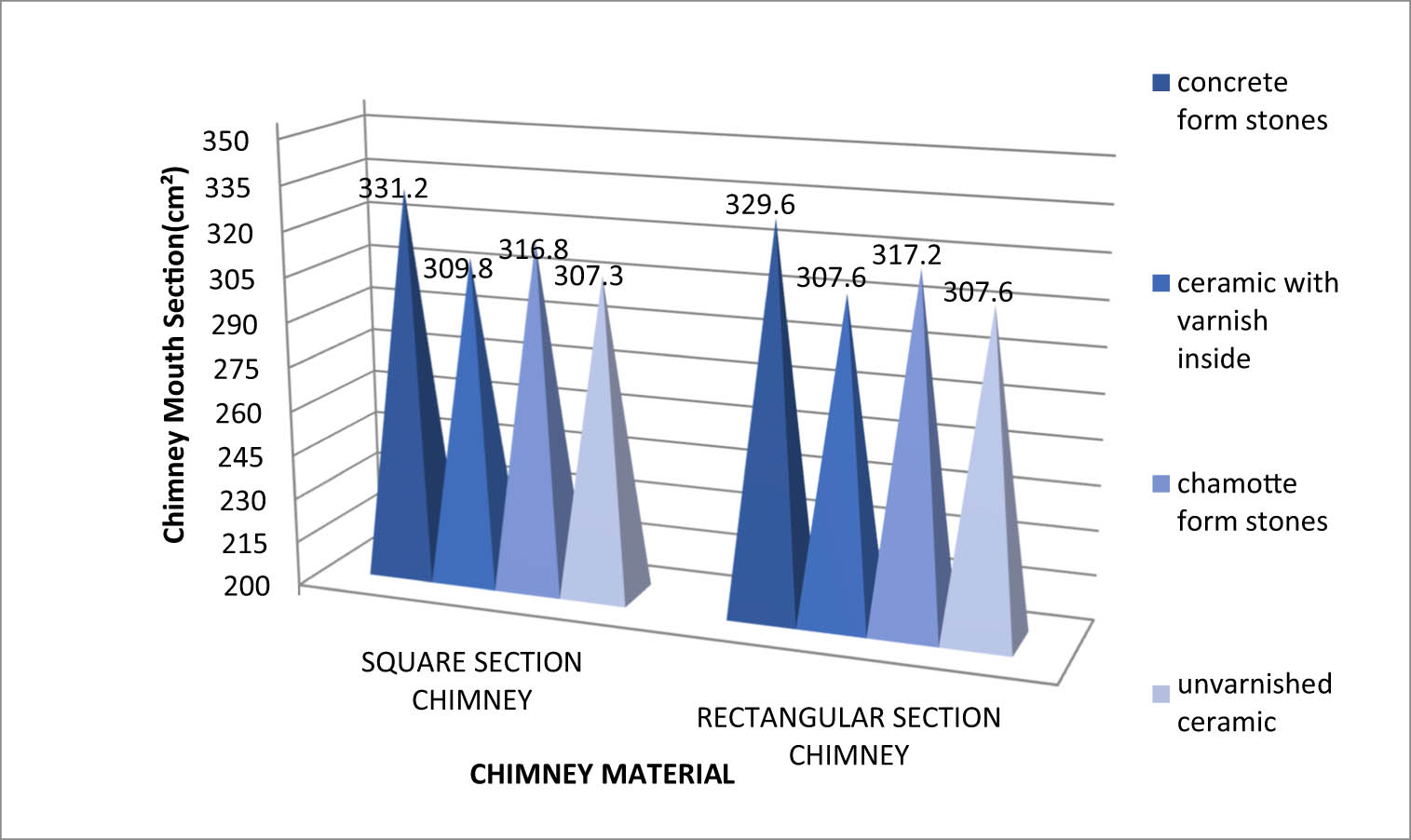
Figure 1
Comparison of rectangular and square form chimney mouth cross-section.
Source: Author’s contribution.
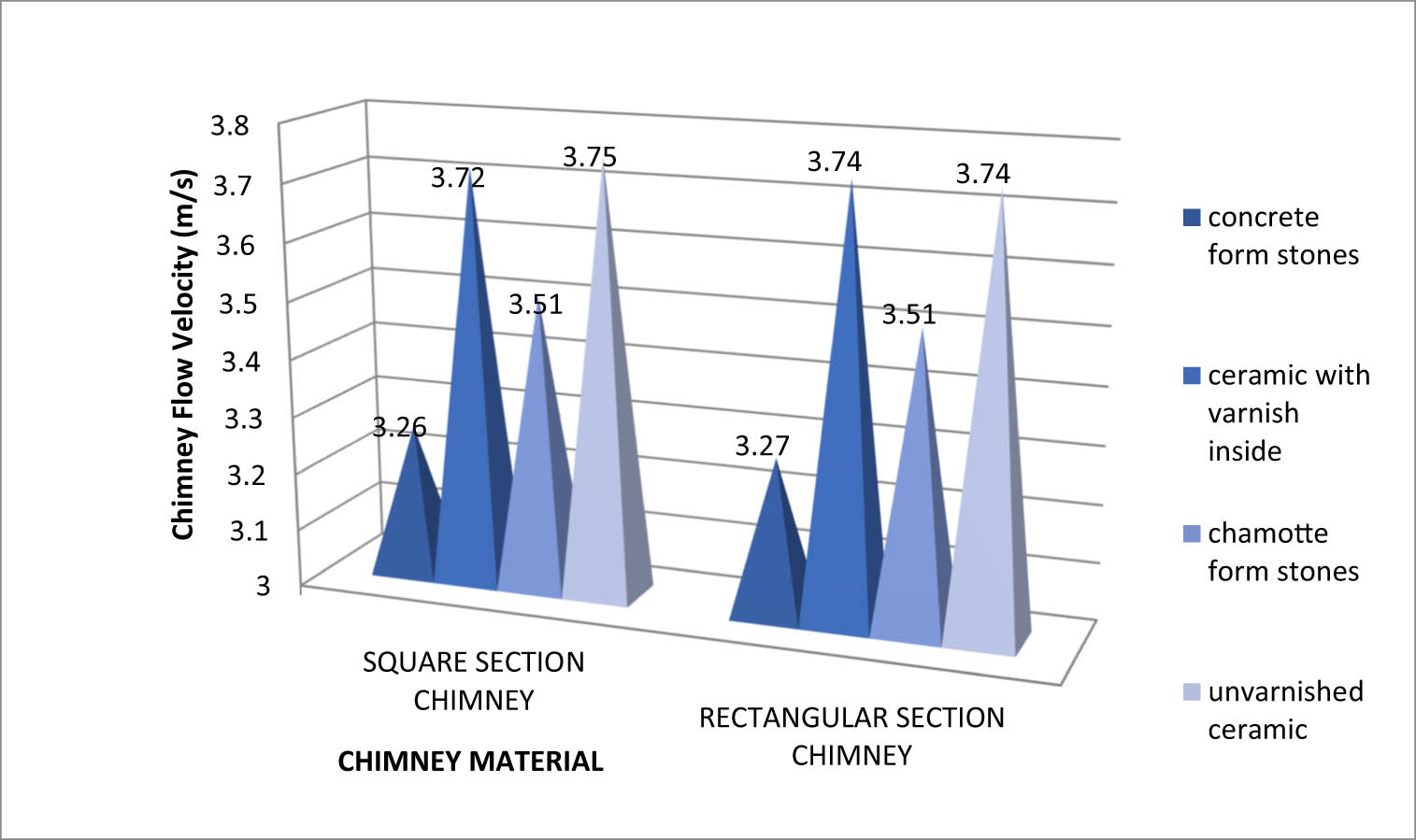
Figure 2
Comparison of stack flow velocity in rectangular and square form.
Source: Author’s contribution.
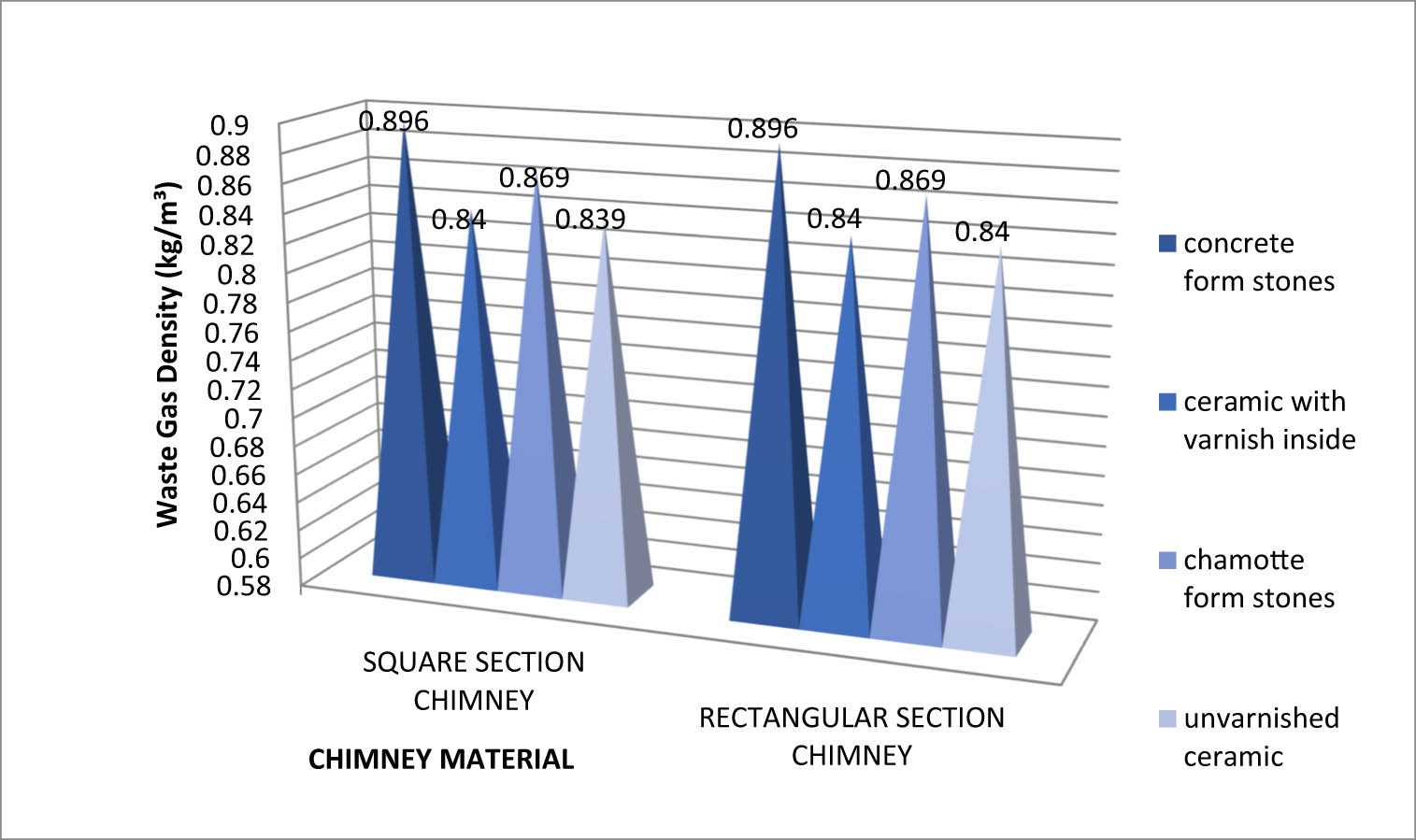
Figure 3
Comparison of flue gas density from rectangular and square stacks.
Source: Author’s contribution.
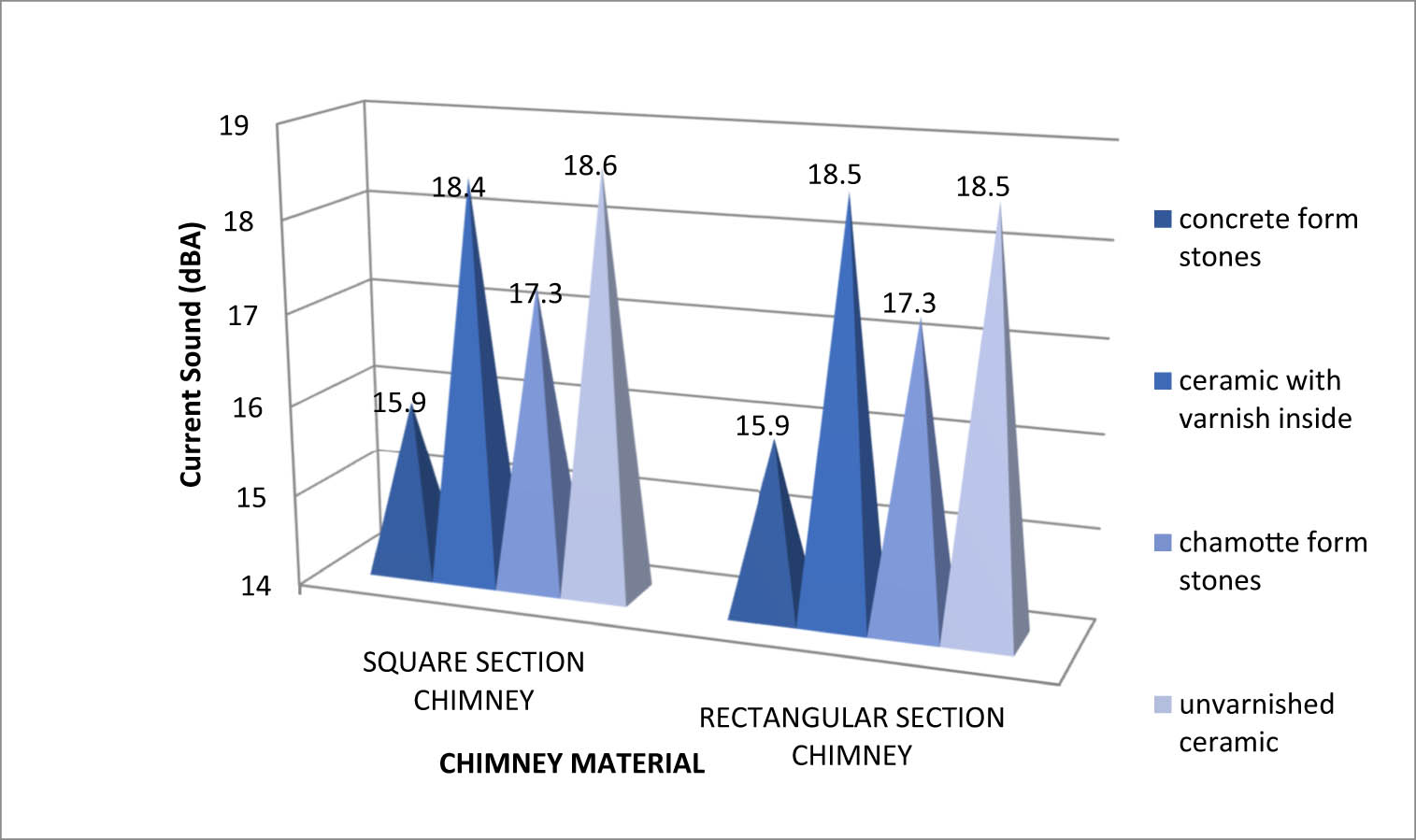
Figure 4
Comparison of chimney flow sound in rectangular and square forms.
Source: Author’s contribution.
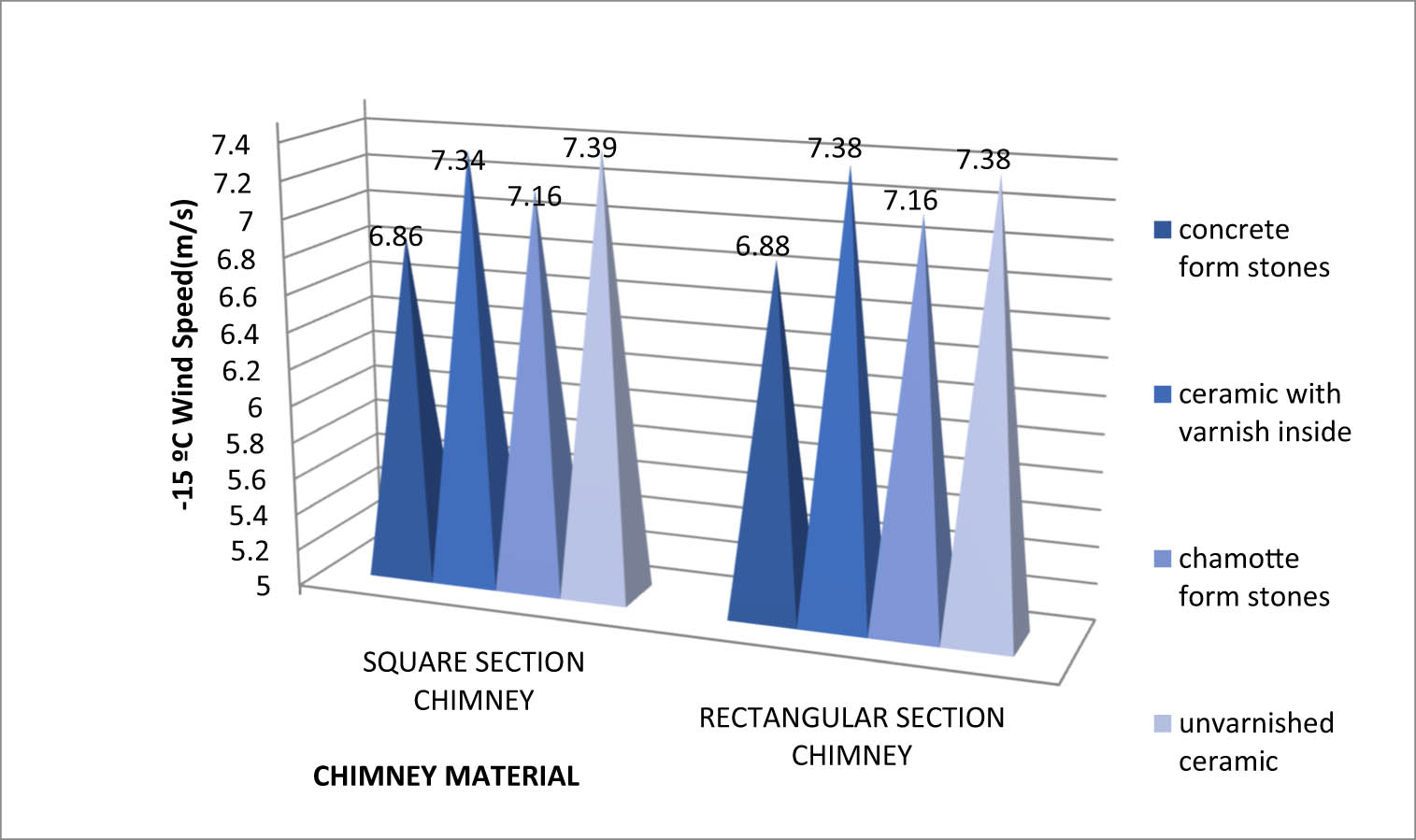
Figure 5
−15°C wind speed comparison for rectangular- and square-shaped chimneys.
Source: Author’s contribution.
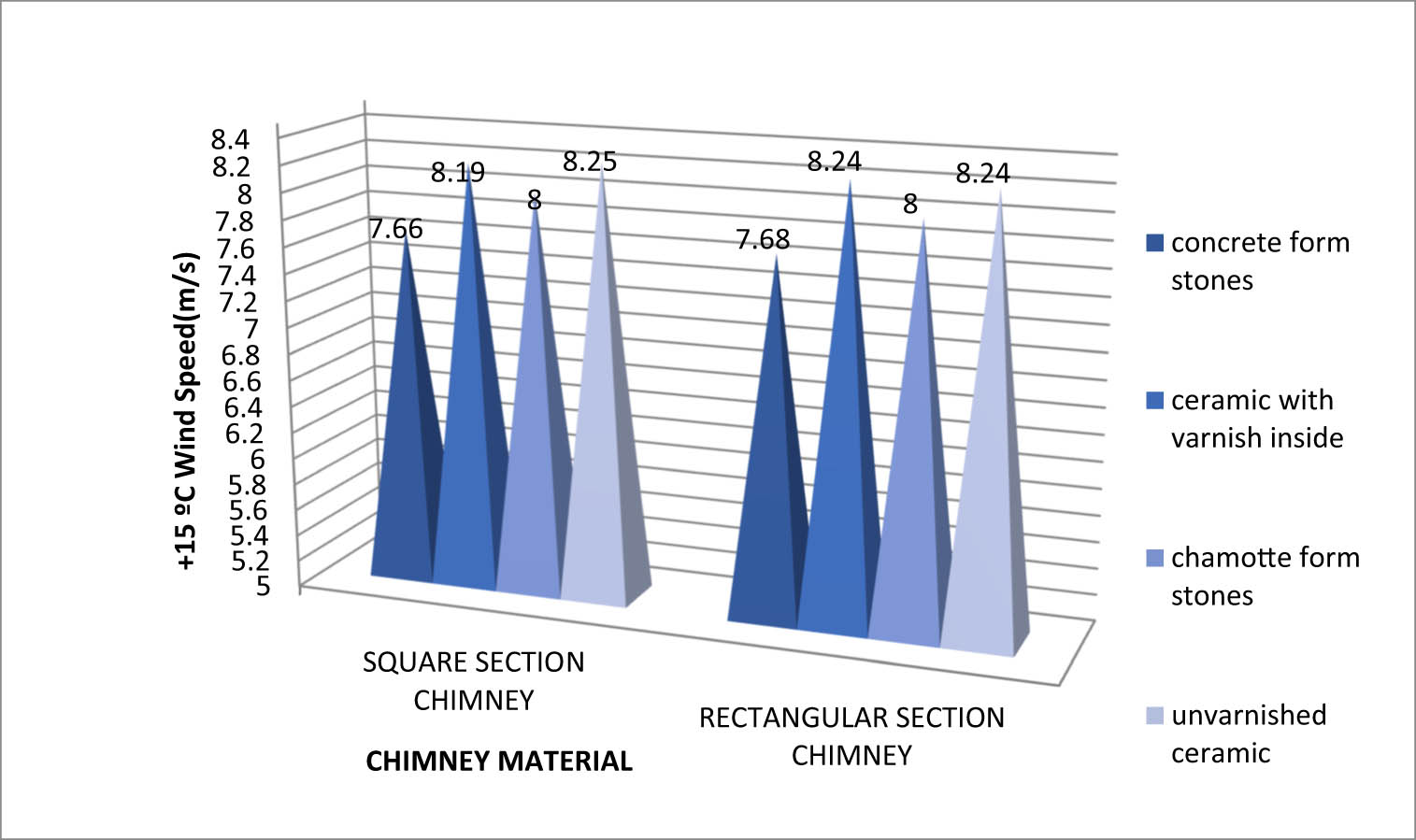
Figure 6
Comparison of wind speed (+15°C) of rectangular- and square-shaped chimney.
Source: Author’s contribution.
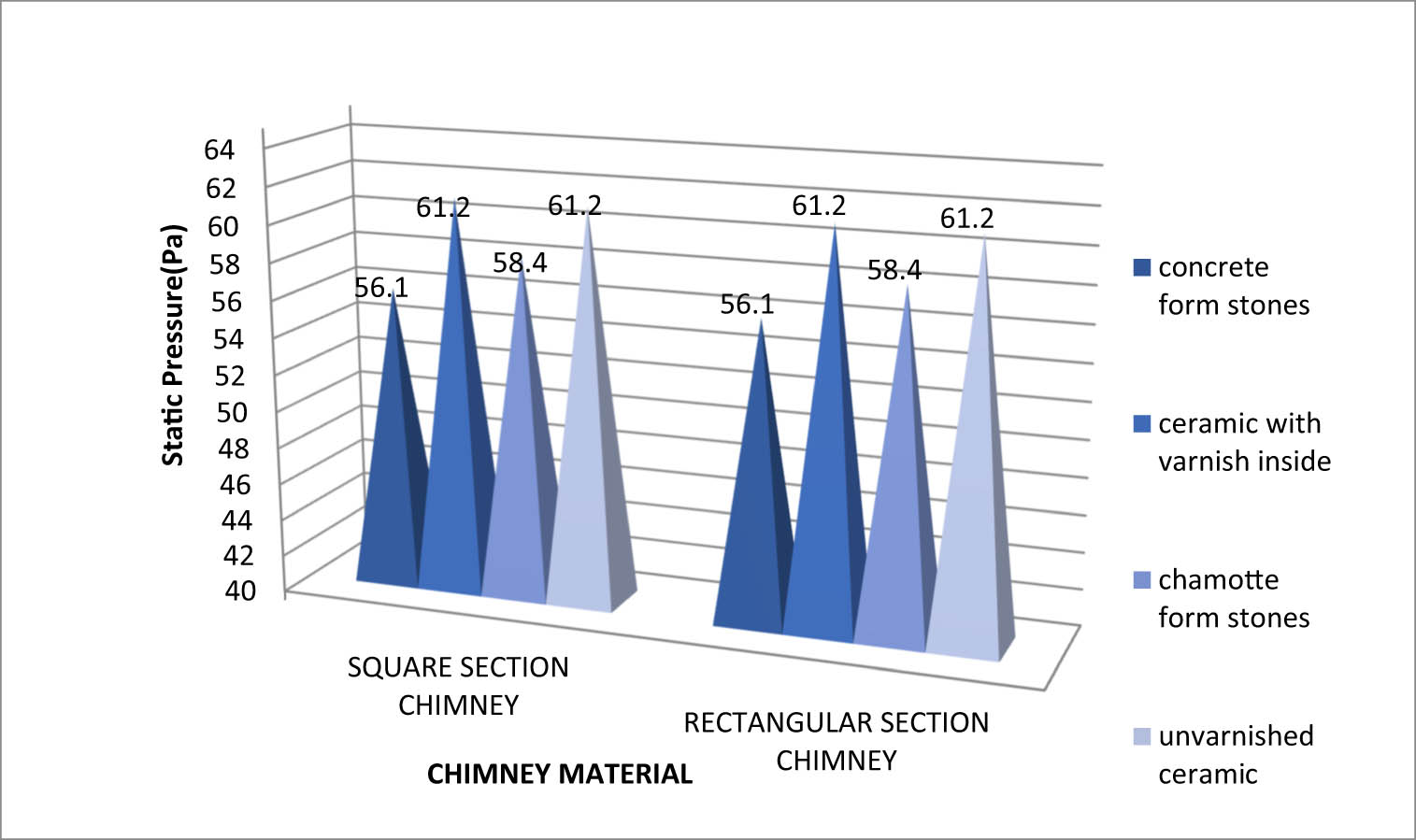
Figure 7
Comparison of stagnant pressure in rectangular- and square-shaped chimneys.
Source: Author’s contribution.
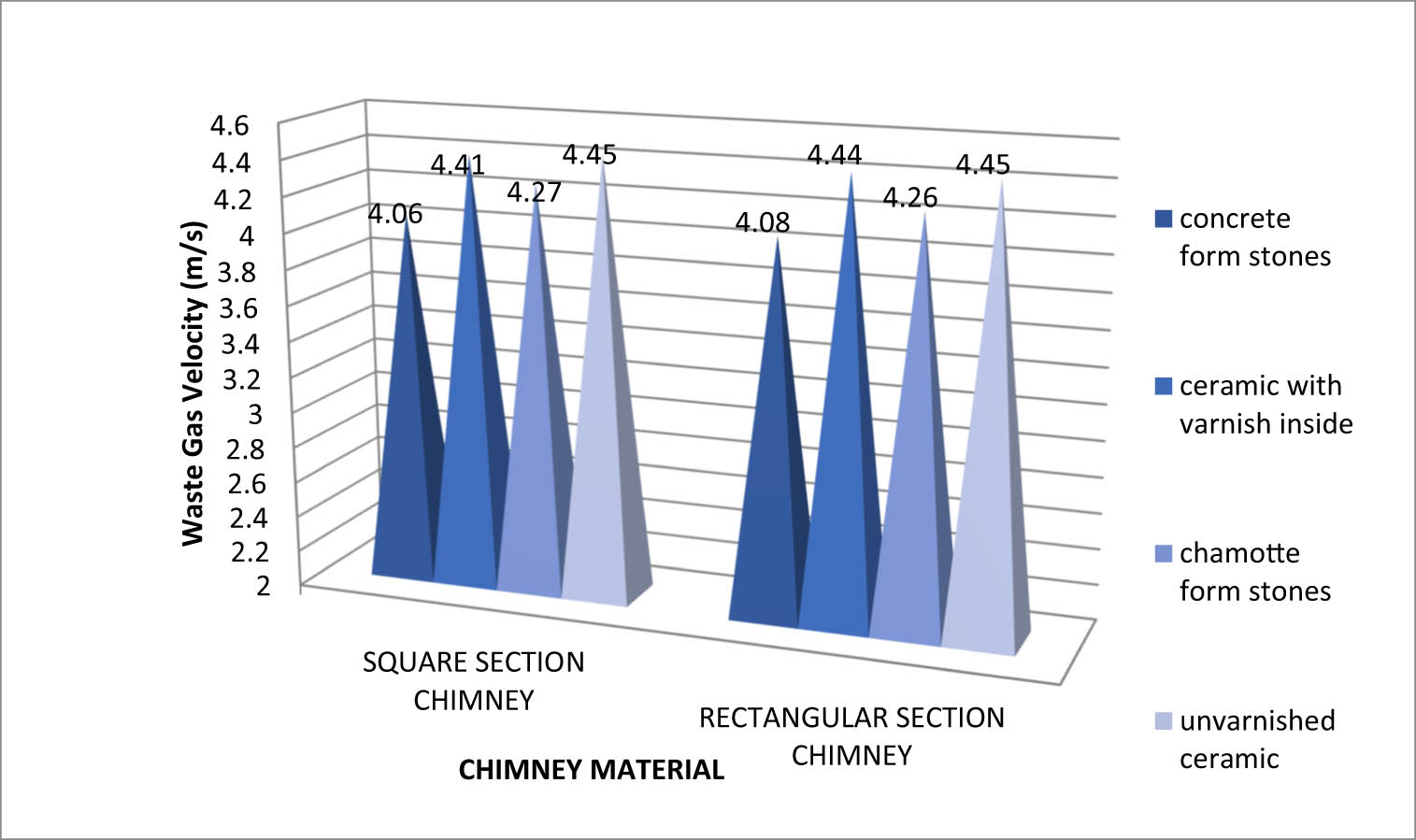
Figure 8
Comparison of flue gas velocity in rectangular- and square-shaped chimneys.
Source: Author’s contribution.
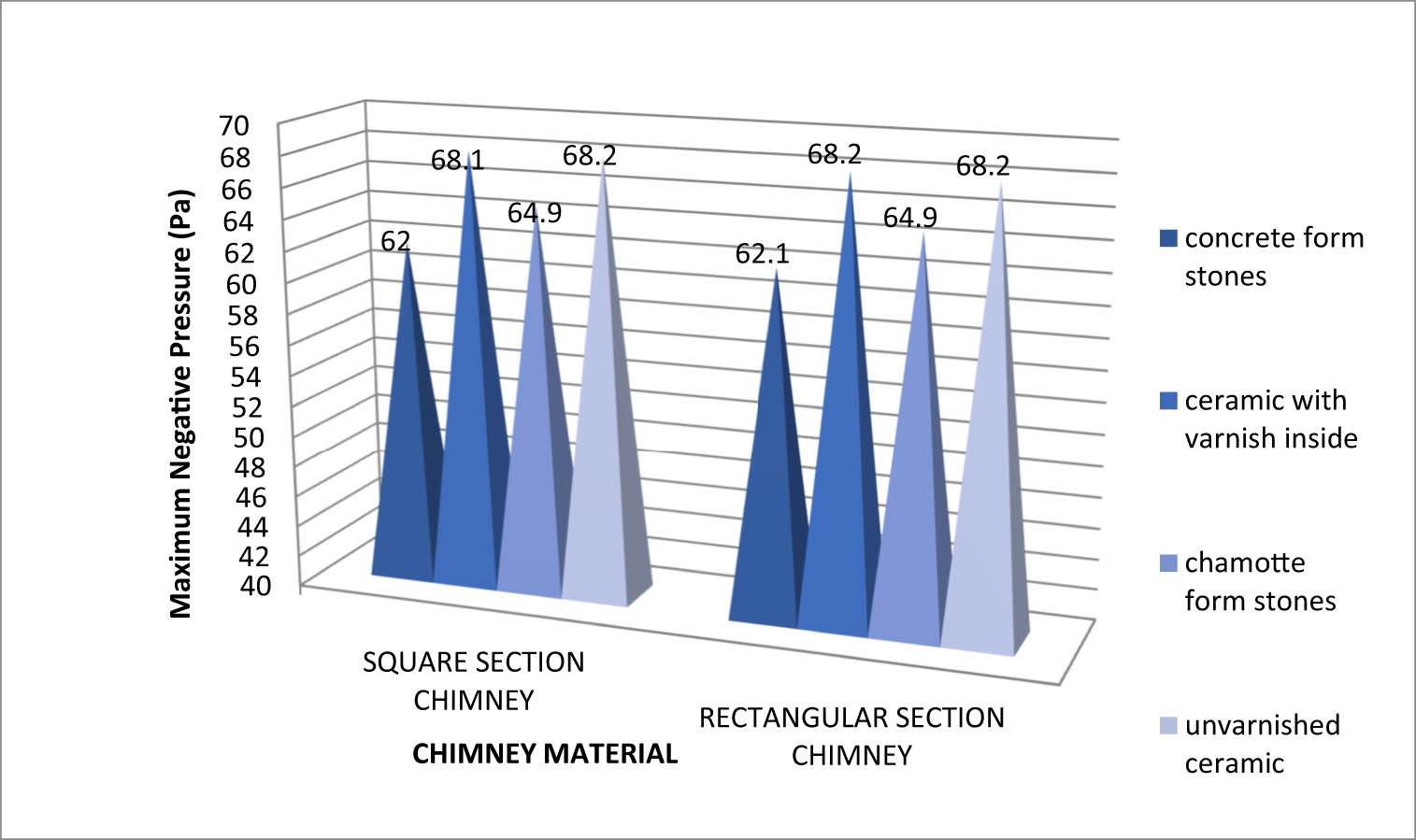
Figure 9
Comparison of maximum negative pressures of rectangular- and square-shaped chimneys.
Source: Author’s contribution.
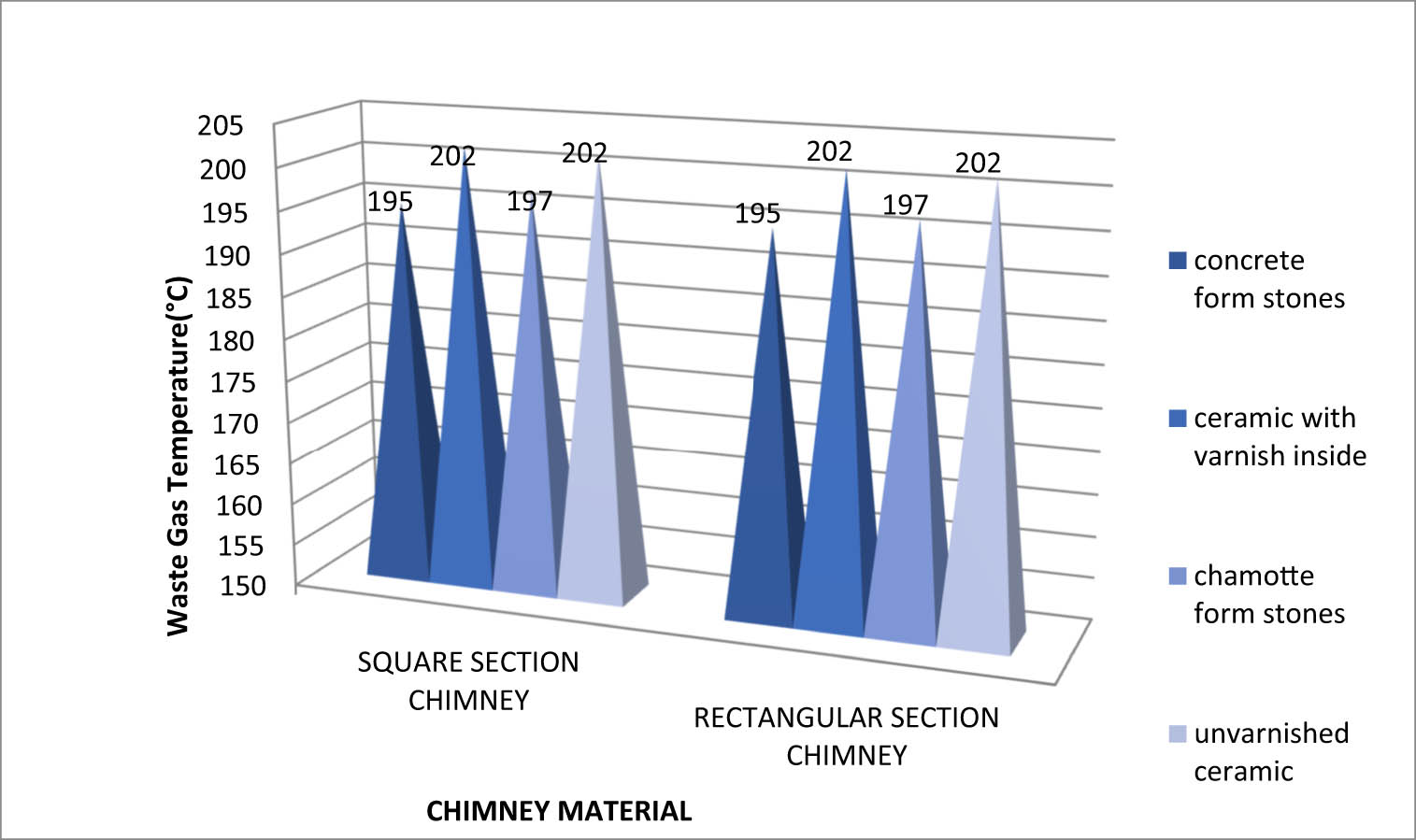
Figure 10
Temperature comparison of exhaust gases of rectangular- and square-shaped chimneys.
Source: Author’s contribution.
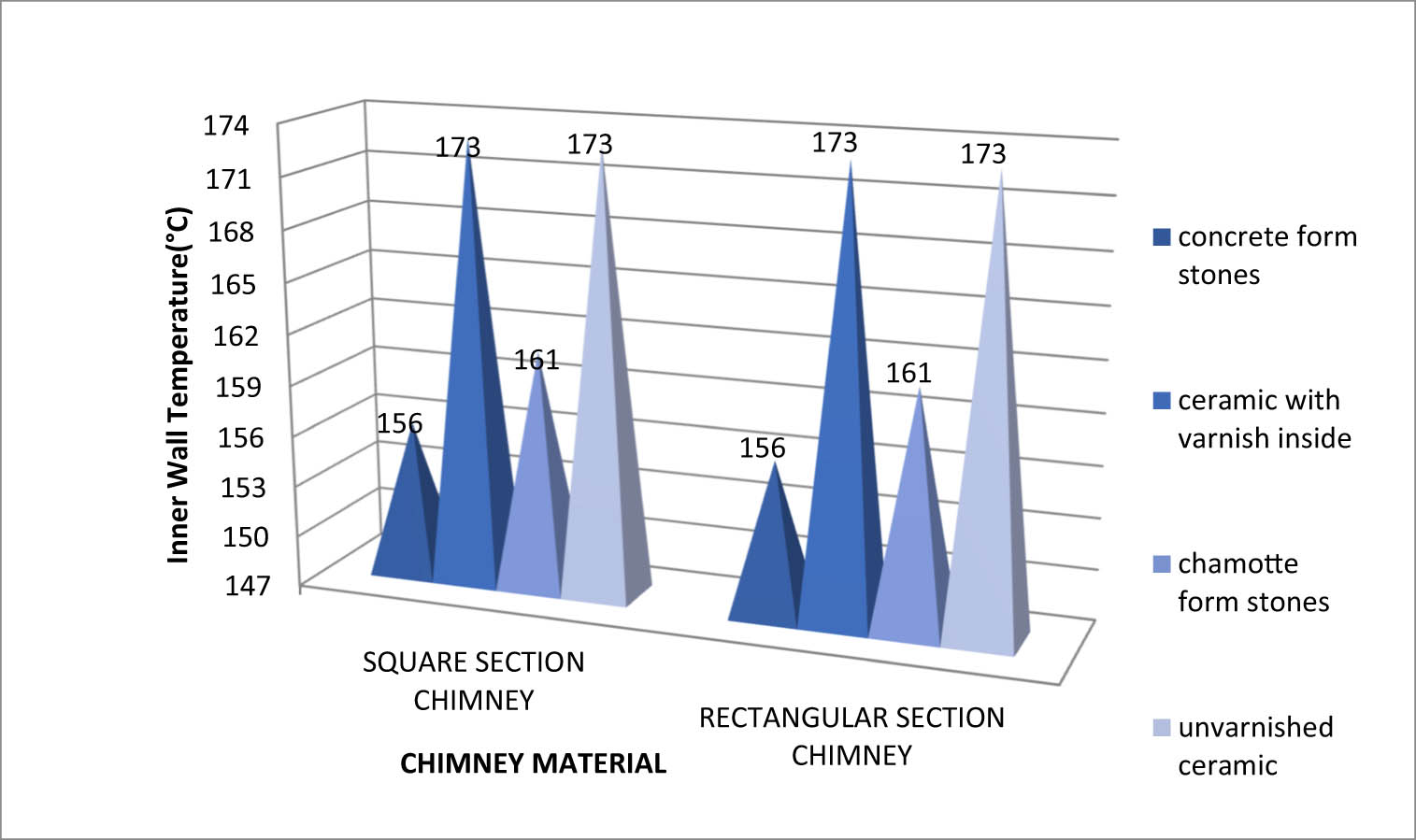
Figure 11
Temperature comparison of the inner wall of rectangular- and square-shaped exterior and interior chimneys.
Source: Author’s contribution.
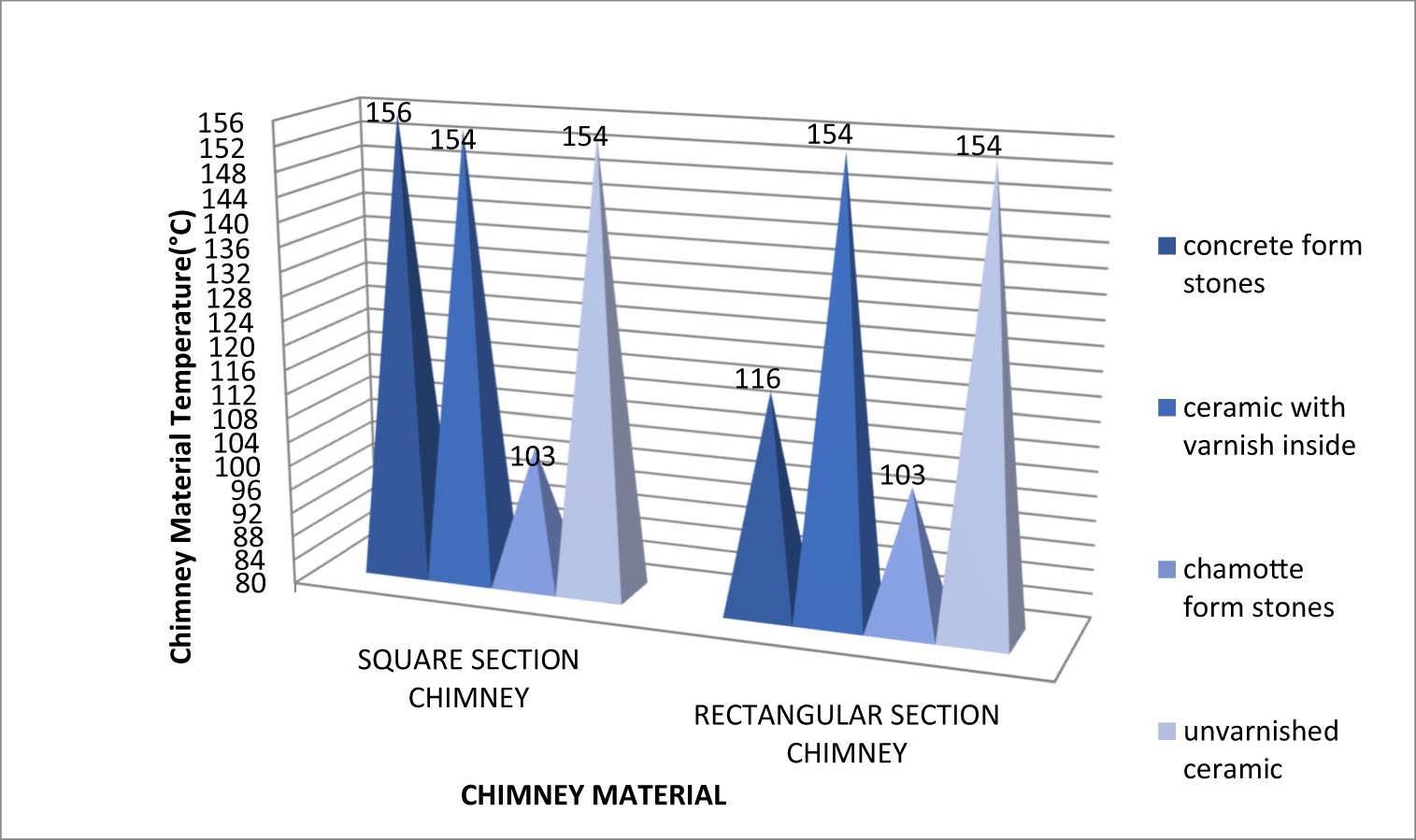
Figure 12
Comparison of temperature for rectangular and square flue materials.
Source: Author’s contribution.
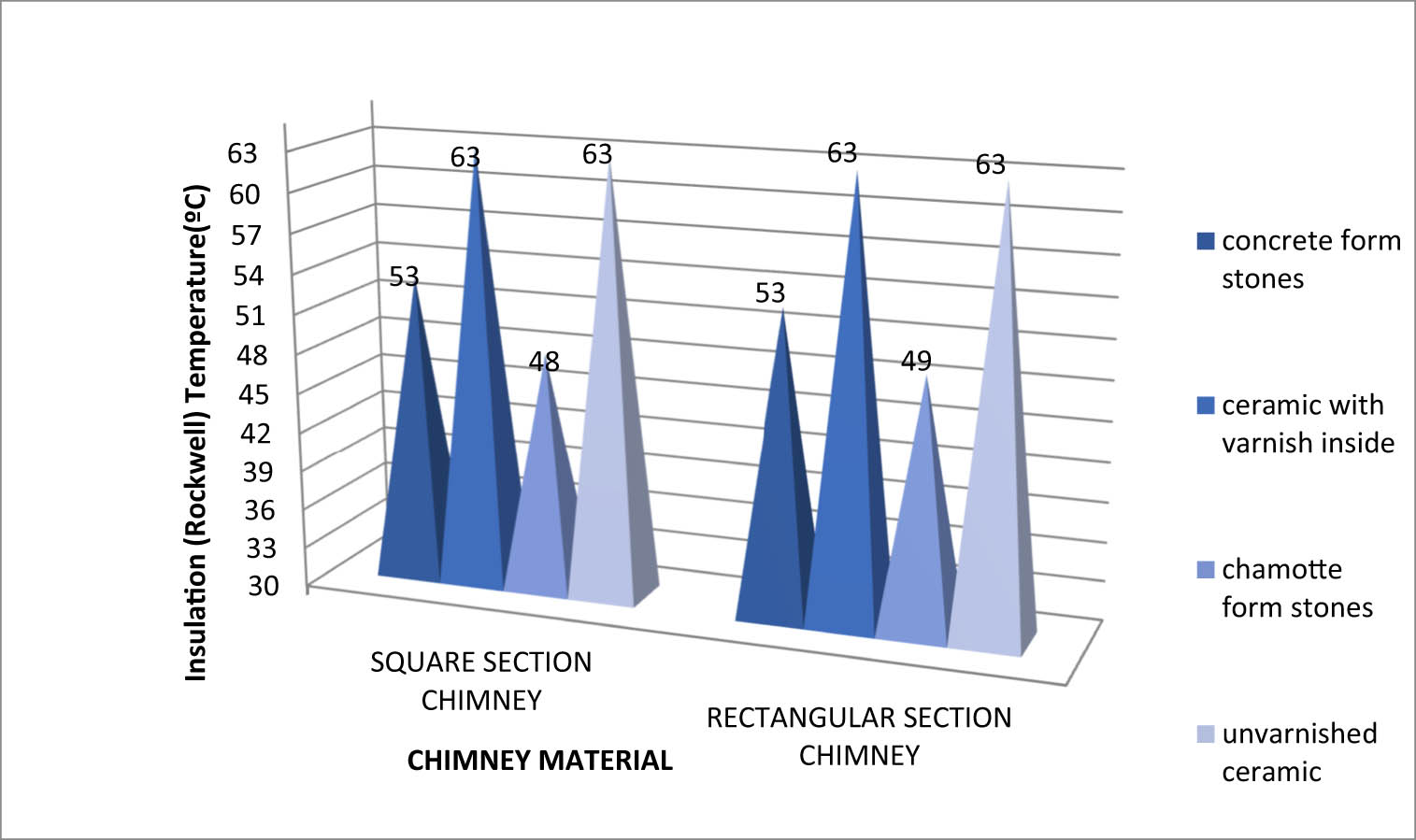
Figure 13
Temperature comparison of the material used in rectangular and square chimney insulation.
Source: Author’s contribution.
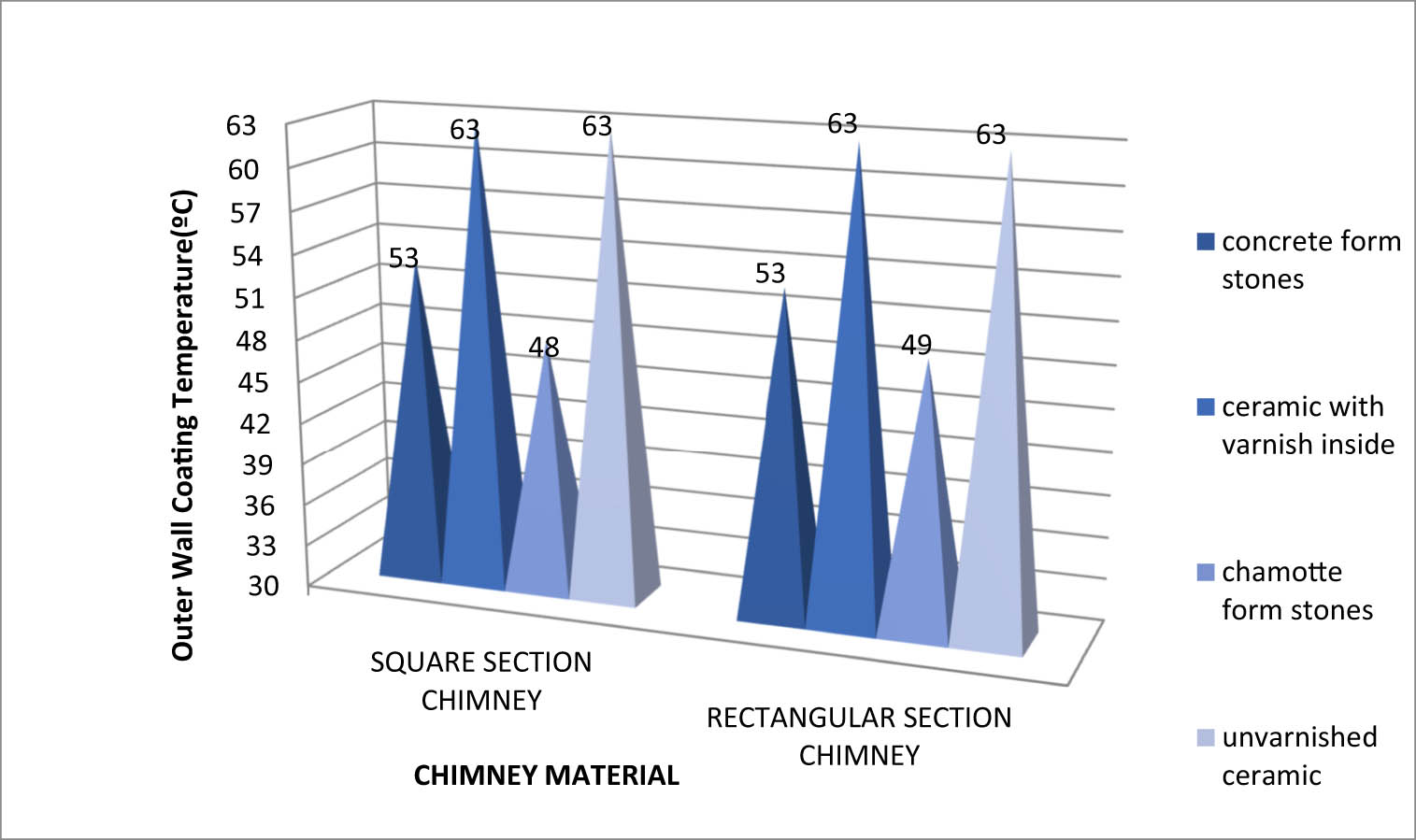
Figure 14
Temperature comparison of materials used in the outer wall coating of rectangular- and square-shaped chimneys.
Source: Author’s contribution.
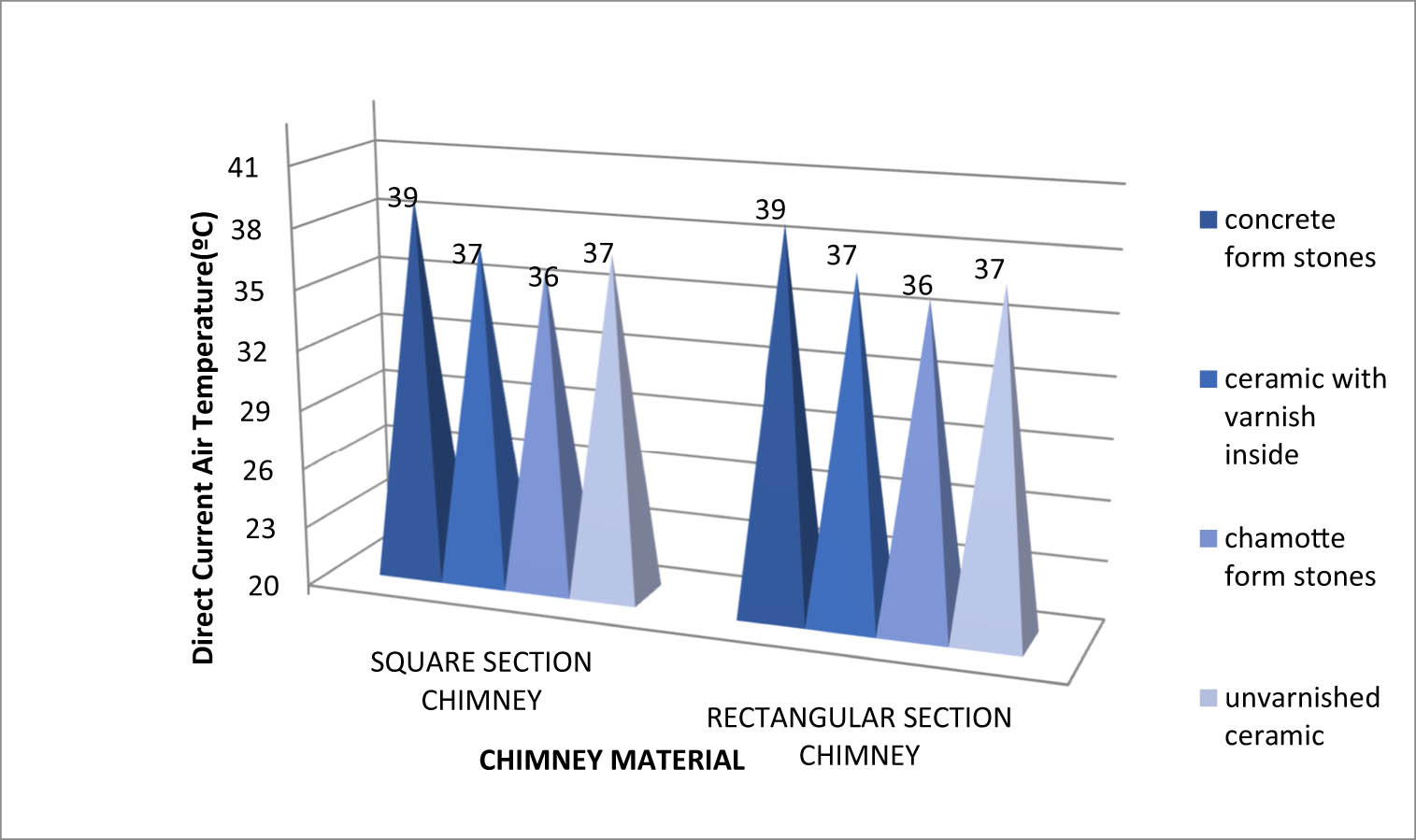
Figure 15
Comparison of air temperature in direct current of rectangular- and square-shaped chimneys.
Source: Author’s contribution.
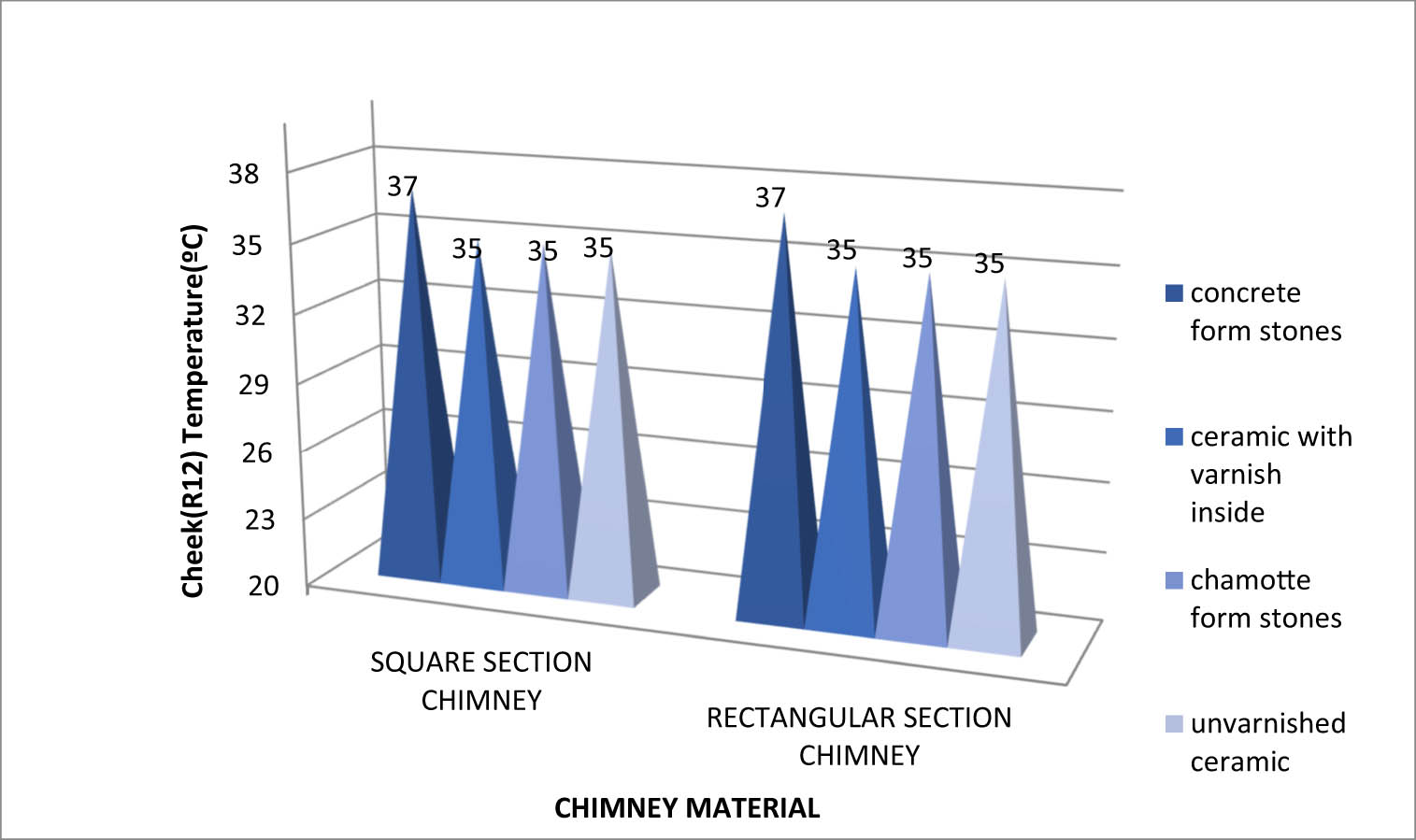
Figure 16
Rectangular- and square-shaped chimney sidewall (R12) temperature comparison.
Source: Author’s contribution.
A total of 8 configurations (2 geometries × 4 materials) were modeled. Each scenario was assessed for its:
− Energy efficiency (based on temperature retention and flow optimization)
− Structural and thermal compatibility with Rize’s climate
− Acoustic comfort performance
− Wind and pressure stability
The goal was to identify the optimal combination of flue geometry and material that would maximize chimney performance while minimizing energy losses and environmental impact. Simulation results were synthesized into a comprehensive performance matrix to support scenario selection for future building designs in similar climatic zones.
3. Analysis results and evaluations
3.1. Energy-environmental analysis for chimneys by Kesa-aladin simulation
In the context of this study, a detailed comparative evaluation of square and rectangular flue cross-sections constructed with four different material types – concrete form stones, chamotte form stones, varnished ceramic, and ceramic with varnished interiors – was performed using simulation-based modeling in Kesa-aladin software. The aim was to assess the effects of geometric and material variations on thermal behavior, aerodynamic performance, emissions, and energy efficiency within a solid fuel-based heating system designed for a library building in Rize province. Figures 1–16 summarize the simulation results and form the basis of the technical discussion.
The cross-sectional area of the flue mouth is a fundamental determinant of pressure loss and draft capability. The square cross-section with varnished ceramic exhibited the smallest area (307.3 cm²), while the rectangular section with concrete form stones had the largest area (331.2 cm²). Smaller cross-sections can improve draft pressure but may increase flow resistance, whereas larger sections facilitate easier flow but may suffer from thermal losses and turbulent eddies. This highlights the importance of balancing geometric optimization with material thermal characteristics.
The flow velocity directly affects the chimney draft and the evacuation of flue gases. The highest flow velocities (3.75 m/s square and 3.74 m/s rectangular) were observed in systems using unvarnished ceramic, benefiting from their relatively smoother internal surfaces. Conversely, the lowest velocities (∼3.26–3.27 m/s) with concrete form stones reflect higher surface roughness and thermal mass, which slow down the flow. Flow velocity consistency across square and rectangular forms indicates that material characteristics outweigh geometric effects under steady-state conditions.
Flue gas density affects the buoyant force driving chimney draft. Both geometries showed maximum flue gas density of 0.896 kg/m³ with concrete form stones, consistent with their lower flue gas temperatures and slower velocities. This suggests greater heat retention and slower gas expansion, favorable for insulation but less effective for draft generation. Lower densities were observed in ceramic-based chimneys due to higher exit gas temperatures and more efficient combustion.
Acoustic emissions were most significant in square chimneys with varnished ceramic (18.6 dBA), slightly higher than rectangular ones (18.5 dBA). This is attributed to higher velocity and turbulence within square conduits when smooth ceramic materials are used. While differences are minor, they may influence acoustic comfort in sensitive spaces such as libraries. The results suggest that material finish and flow speed are dominant factors affecting draft noise.
This analysis simulates wind interference under cold conditions. The square chimney with concrete form stones recorded the lowest wind speed intrusion (6.86 m/s), compared to 6.88 m/s for rectangular, implying marginally better wind resilience. These findings underline the role of thermal mass and structural form in mitigating external aerodynamic effects during peak winter conditions.
At warmer ambient conditions, the difference narrows, with square chimneys reaching 8.25 m/s and rectangular 8.24 m/s, both with varnished ceramic. Increased temperatures reduce density contrast, enhancing flow rates. The minimal differences reflect the geometric stability of both forms and the prominent influence of internal surface finish on wind-induced flow acceleration.
Maximum stagnant pressure, a crucial draft performance indicator, was 61.2 Pa in both forms with varnished ceramic, reflecting optimal momentum transfer and minimal internal resistance. This confirms that surface finish significantly enhances pressure stability, independent of flue geometry. Concrete-based systems showed lower values (56.1 Pa), reaffirming the impact of roughness and thermal inertia.
The highest flue gas velocity (4.45 m/s) was achieved with varnished ceramic, while the lowest (4.06 m/s rectangular and 4.08 m/s square) was observed with concrete form stones. These results validate the performance of high-gloss ceramic interiors in maintaining velocity and reducing friction. This has implications for the optimization of draft in energy-intensive public buildings.
Negative pressure is essential for continuous combustion. The maximum value (68.2 Pa) was seen in both flue geometries with varnished ceramic, while minimum values (∼62 Pa) were seen with concrete form stones. The consistency across geometries highlights the dominant role of internal finish in negative pressure generation, reinforcing varnished ceramic’s suitability for solid-fuel systems.
The flue gas temperature affects draft performance and insulation requirements. The lowest values (195°C) were recorded with concrete form stones, indicating significant thermal retention and slower heat transfer. Higher temperatures (202°C) with ceramics are advantageous for improving stack effect and combustion efficiency but may increase heat loss if not properly insulated.
Inner wall temperatures reflect thermal conductivity and insulation performance. Lowest temperatures (156°C) occurred with concrete form stones, aligning with their mass and insulating characteristics. Highest values (173°C) occurred with varnished ceramics, emphasizing the need for complementary insulation strategies when using ceramics in cold climates.
Material temperature data showed lowest values (103°C) with chamotte form stones, confirming their superior thermal resistance and slower heat saturation rates. These properties are ideal for maintaining stable temperature gradients and minimizing external radiation losses.
Thermal insulation behavior was assessed via Rockwool temperatures. Lowest values (49°C rectangular, 48°C square) were observed with chamotte, while peak values (63°C) were observed with varnished ceramic. This trend reiterates the superior insulation potential of refractory stones over ceramic-based options.
Outer steel wall temperatures were highest (63°C) with varnished ceramic, indicating greater thermal transmission. Effective thermal breaks or additional insulation layers may be needed when such materials are used, especially in exposed applications.
Direct air temperature represents residual thermal gain in post-combustion flow. Concrete form stones maintained the highest air temperature (39°C), confirming their effectiveness in retaining and slowly releasing thermal energy, which may support energy recovery applications.
Sidewall temperatures ranged between 35 and 37°C, with highest values for concrete form stones, indicating slow thermal dissipation, and lowest for chamotte and ceramic variants, confirming their superior insulation behavior. This parameter is critical for determining surface heat losses and the need for safety clearances.
The comparison of the sidewall (R12) temperature in rectangular and square chimneys is shown in Figure 16. The lowest and highest values for the system in both forms were determined as 35 and 37°C, respectively. In the investigated systems, the highest chimney sidewall (R12) temperatures were analyzed for concrete form stones and the lowest chimney sidewall (R12) temperatures were analyzed for chamotte form stones, varnished ceramics, and ceramic materials with varnished interiors at the same value (Table 5).
Table 5
Maximum and minimum values of the outputs of the Kesa-aladin analysis
| Square section | Rectangular section | |||||||
|---|---|---|---|---|---|---|---|---|
| Concrete form stones | Varnished inside ceramic | Chamotte form stones | Unvarnished ceramic | Concrete form stones | Varnished inside ceramic | Chamotte form stones | Unvarnished ceramic | |
| Mouth section | 331.2 | 309.8 | 316.8 | 307.3 | 329.6 | 307.6 | 317.2 | 307.6 |
| Flow velocity | 3.26 | 3.72 | 3.51 | 3.75 | 3.27 | 3.74 | 3.51 | 3.74 |
| Fuel gas condensation | 0.896 | 0.84 | 0.869 | 0.839 | 0.896 | 0.84 | 0.869 | 0.84 |
| Flow noise | 15.9 | 18.4 | 17.3 | 18.6 | 15.9 | 18.5 | 17.3 | 18.5 |
| T – 15 | 6.86 | 7.34 | 7.16 | 7.39 | 6.88 | 7.38 | 7.16 | 7.38 |
| T + 15 | 7.66 | 8.19 | 8 | 8.25 | 7.68 | 8.24 | 8 | 8.24 |
| Static pressure | 56.1 | 61.2 | 58.4 | 61.2 | 56.1 | 61.2 | 58.4 | 61.2 |
| Fuel gas velocity | 4.06 | 4.41 | 4.27 | 4.45 | 4.08 | 4.44 | 4.26 | 4.45 |
| Maximum negative pressure | 62 | 68.1 | 64.9 | 68.2 | 62.1 | 68.2 | 64.9 | 68.2 |
| Fuel gas | 195 | 202 | 197 | 202 | 195 | 202 | 197 | 202 |
| Inner wall | 156 | 173 | 161 | 173 | 156 | 173 | 161 | 173 |
| Stainless steel | 156 | 154 | 163 | 154 | 116 | 154 | 103 | 154 |
| Rockwool | 53 | 63 | 48 | 63 | 53 | 63 | 49 | 63 |
| Outer wall, steel | 53 | 63 | 48 | 63 | 53 | 63 | 49 | 63 |
| Direction air | 39 | 37 | 36 | 37 | 39 | 37 | 36 | 37 |
| Sidewall (R12) | 37 | 35 | 35 | 35 | 37 | 35 | 35 | 35 |
Source: Author’s contribution.
3.2. Machine learning-based feature prioritization
Random forest is an ensemble-based machine learning algorithm that combines multiple decision trees to improve prediction accuracy and reduce the risk of overfitting compared to a single tree model. The algorithm operates by generating a large number of bootstrap samples from the original dataset, on which individual decision trees are trained. During the training of each tree, only a random subset of features is considered at each split, which further enhances model diversity and robustness [46]. In regression problems, the final prediction is obtained by averaging the outcomes of all trees, as expressed in equation (4)
where is the random forest prediction, h t (x) denotes the output of the t-th tree, and T represents the total number of trees in the ensemble.A key advantage of random forest is its ability to estimate the relative importance of input features in determining the predictive outcome. Feature importance is quantified by evaluating the average decrease in node impurity or prediction error when a specific feature is used for splitting. Mathematically, the importance of a feature f j can be expressed as follows:
where ΔI t (f j ) represents the contribution of feature f j to impurity reduction in the ttt-th tree. In this study, the random forest analysis identified maximum negative pressure and flow velocity as the most critical features for chimney performance, followed by thermal boundary conditions such as inner wall temperature and insulation temperature. These results demonstrate that random forest not only provides accurate predictive performance but also offers an interpretable framework for ranking input variables according to their influence on system behavior [47,48,49].The random forest analysis revealed that maximum negative pressure and flow velocity were the most influential parameters in predicting flue performance. These variables directly determine the aerodynamic stability and the efficiency of gas transport through the chimney system. Secondary influential features included ınner wall temperature and ınsulation temperature, indicating that thermal boundary conditions significantly contribute to the overall energy efficiency of the flue. Acoustic parameters such as flow sound showed moderate importance, reflecting their indirect role in system stability and energy losses. In contrast, geometrical variables (square vs rectangular cross-sections) and material type contributed to the model indirectly, mainly through their effects on thermal and acoustic conditions.
Overall, the random forest results suggest that chimney performance optimization should prioritize pressure stability and gas flow parameters, followed by improvements in thermal insulation. This hierarchy of importance provides a data-driven foundation for subsequent multi-attribute decision-approaches and regression-based quantification.
Table 6 gives the ranking of operational, thermal, and acoustic features according to their relative importance in predicting chimney performance. The maximum negative pressure (0.42) and flow velocity (0.31) emerged as the dominant parameters, directly controlling draft stability and gas transport efficiency. Inner wall temperature (0.10) and insulation temperature (0.09) contributed secondarily, highlighting the role of thermal boundary conditions in energy retention. Flow sound (0.08) showed moderate importance, reflecting turbulence and acoustic energy losses. All of these results show that aerodynamic stability and gas flow dynamics must be prioritized in design optimization, while thermal insulation improvements remain critical for enhancing overall efficiency.
3.3. Multi-attribute decision approach
To systematically rank the eight 8 alternatives (2 geometries × 4 materials), TOPSIS and VIKOR were employed (Tables 7 and 8).
Table 7
Comparison of TOPSIS and VIKOR methodologies
| Criteria | TOPSIS methodology | VIKOR methodology |
|---|---|---|
| Advantages | Considers both the ideal and anti-ideal solutions. | Balances group utility (majority rule) and individual regret (minority opposition). |
| Simple, intuitive, and easy to implement. | Effective in compromise decision-making. | |
| Provides clear ranking of alternatives. | Suitable for problems with conflicting criteria. | |
| Computationally efficient for large datasets. | Flexible for decision contexts requiring trade-offs. | |
| Disadvantages | Results are highly sensitive to the normalization method used. | Requires determining a compromise parameter (v), which may affect results. |
| Does not explicitly address conflict between criteria. | More complex to explain to non-experts. | |
| Distances may not fully capture decision-maker preferences. | Can produce rank reversals depending on dataset changes. | |
| Limitations | Assumes criteria weights are reliable and predetermined. | Sensitive to the selection of normalization and aggregation strategies. |
| Ignores uncertainty and fuzziness in input data unless extended versions (e.g., Fuzzy TOPSIS) are applied. | Performance depends on the accuracy of criteria weights and compromise parameter. | |
| Usage fields | Engineering design optimization. | Public policy and social decision-making. |
| Supplier and vendor selection. | Conflict resolution in resource allocation. | |
| Energy system evaluation. | Sustainable development planning. | |
| Environmental management and sustainability studies. | Healthcare and risk management decisions. |
Source: Author’s contribution.
Table 8
Comparative ranking of chimney alternatives using TOPSIS and VIKOR methods
| Geometry | Material | TOPSIS score | TOPSIS rank | VIKOR Q | VIKOR rank |
|---|---|---|---|---|---|
| Square | Chamotte form stones | 0.698 | 1 | 0.035 | 1 |
| Rectangular | Chamotte form stones | 0.685 | 2 | 0.044 | 2 |
| Rectangular | Concrete form stones | 0.498 | 3 | 0.984 | 7 |
| Square | Concrete form stones | 0.493 | 4 | 1.000 | 8 |
| Square | Unvarnished ceramic | 0.426 | 5 | 0.500 | 3 |
| Rectangular | Unvarnished ceramic | 0.426 | 6 | 0.504 | 4 |
| Rectangular | Varnished internal ceramic | 0.425 | 7 | 0.506 | 5 |
| Square | Varnished internal ceramic | 0.416 | 8 | 0.532 | 6 |
Source: Author’s contribution.
These methods allow for simultaneous consideration of multiple conflicting criteria. In TOPSIS methodology,
Apply criterion weights wjw_jwj and compute weighted normalized valuesDetermine ideal and anti-ideal solutionsCompute separation measuresCompute relative closenessRank alternatives by C i (higher is better) [50,51,52].VIKOR methodology identifies a compromise solution minimizing group regret
where v is the weight of the strategy of maximum group utility (commonly 0.5). Alternatives are ranked by ascending Q i [53,54,55,56].Table 2 compares the performance rankings of eight chimney design alternatives using the TOPSIS and VIKOR methods under equally weighted aerodynamic, thermal, and acoustic criteria. Both methods consistently identify chamotte-based chimneys (square and rectangular) as optimal solutions (Ranks 1–2), confirming the robustness of their superior aerodynamic and thermal behavior. However, discrepancies appear in mid-ranking alternatives: TOPSIS favors concrete designs over ceramics, whereas VIKOR highlights unvarnished ceramics as more balanced solutions. This divergence underscores the sensitivity of multi-attribute decision-results to methodological choice, reinforcing the necessity of cross-validating design decisions with multiple approaches. The overall convergence on Chamotte options aligns with the random forest prioritization, thereby providing a coherent, data-driven justification for material selection.
4. Conclusion
This study presented a detailed simulation-based analysis of chimney systems with varying geometries and material types, specifically tailored for a public library building located in Rize, Turkey. By modeling square and rectangular flue cross-sections with four different construction materials, the research provides comparative insights into the aerodynamic, thermal, and acoustic behavior of each configuration under real-world boundary conditions. Key findings from the simulation can be summarized as follows:
− The highest flue gas velocity and acoustic performance were achieved with varnished ceramic materials, irrespective of geometry.
− Concrete form stones, although structurally durable, demonstrated higher flue gas density and lower thermal performance, particularly at low external temperatures.
− Chimney systems with square cross-sections exhibited slightly more favorable thermal retention, while rectangular geometries provided more stable pressure gradients under fluctuating wind loads.
− The lowest inner wall and insulation temperatures were recorded for systems using chamotte materials, indicating their superior thermal insulation properties.
Beyond simulation results, additional data-driven approaches were employed to strengthen the robustness of the analysis. The random forest regression modeling identified maximum negative pressure and flow velocity as the most influential features in determining chimney performance, followed by thermal-related variables such as inner wall temperature and insulation temperature. Acoustic variables such as flow sound demonstrated moderate importance, while geometric and material-related factors contributed indirectly through their effects on thermal and aerodynamic parameters. This prioritization highlights that chimney optimization should first address pressure stability and flow dynamics, with secondary focus on thermal insulation improvements.
Furthermore, two multi-attribute decision approaches, namely, TOPSIS and VIKOR, were applied to rank 8 chimney alternatives (2 geometries × 4 materials). Both methods consistently converged on Chamotte-based chimneys as the optimal solution, independent of geometry. However, minor discrepancies were observed: TOPSIS ranked concrete-based designs higher than unvarnished ceramics, whereas VIKOR favored ceramics directly after chamotte. This divergence underlines the methodological sensitivity of multi-attribute decision approaches and suggests that material selection strategies may differ depending on the decision-making framework adopted.
Overall, the integration of simulation, machine learning, and multi-attribute decision approaches provides a comprehensive framework for evaluating chimney performance. The combined findings suggest that the most sustainable and energy-efficient designs are those prioritizing aerodynamic stability (via pressure and flow control), robust thermal insulation, and careful material selection. Such hybrid evaluation not only enhances the scientific rigor of chimney system research but also offers actionable findings for architects and engineers seeking resilient solutions in climates with high humidity and dynamic wind conditions, such as Rize.
Acknowledgements
This study was supported by Fırat University project number MF.25.67.
Funding information
Authors state no funding involved.
Author contributions
Conceptualization, F.B.; methodology, F.B.; formal analysis, A.K.; investigation, F.B.; writing – original draft preparation, F.B.; writing – review and editing, F.B.; project administration, F.B. All authors have read and agreed to the published version of the manuscript.
Conflict of interest statement
Authors state no conflict of interest.