
1. INTRODUCTION
Urban mobility is considered a vital part of urban life, providing connectivity and movement for individuals. The topic of urban mobility is a vital element in urban areas, and it is considered the spine of urban life. Through it, those areas get their vital and vibrant character. Gabrielli et al. state that governments and other stakeholders who are interested in advancing sustainability goals are increasingly focusing their research and intervention efforts on the design of urban mobility policies and systems [1].
As populations grow, cities enlarge in size, and with this rapid growth, new challenges occur that affect the urban mobility aspect, such as traffic congestion, limited public access options, pavement issues, and pedestrian safety concerns. Addressing those problems requires a comprehensive approach to urban design and accessibility. Understanding human mobility is crucial for addressing societal issues and improving urban transport and infrastructure. It helps policymakers invest in policies that enhance people’s movement or reduce the need for movement, as it is deeply intertwined with mobility patterns [2].
User-centered design (UCD) is a design process where end-users shape the design with a broad philosophy and various methods. Users are involved in various ways, but the key concept is that Users are involved in some way [3].The designs should prioritize the safety, accessibility, and comfort of the users. As pathways and sidewalks serve as the lifeblood of urban mobility, their design plays a crucial role in shaping the quality of daily life. A user-centric approach involves acknowledging users’ needs and preferences and incorporating them into the design. That way, the design produce a more effective and efficient result and serve the community and the development of more user-friendly urban mobility that serves the user’s needs.
North Cyprus’s exceptional location and diverse culture make the region a special case for observing and analysing urban mobility. The region is facing a vast development and urbanization movement that is changing the landscape and identity of the area, and those changes affect the urban mobility aspects of the city. The capital city, Nicosia, is particularly affected by these issues. The area faces the dilemma of maintaining its unique cultural identity while at the same time providing for a growing population.
1.1. Aim of the Study
This study seeks to address the urban mobility challenges related to sidewalks and pathways in Northern Cyprus. The study focus on the analysis of a street in Nicosia (Belediye Boulevard) to understand the current status of urban mobility through a user-centric approach to urban design. This includes an examination of the design and conditions of sidewalks and pathways and the urban design of the road with regard to the standards. Concerns regarding pedestrian safety and comfort in relation to sidewalks and pathways. The study also explore the usability of the sidewalks and pathways for pedestrians and individuals with disabilities. Additionally, the study investigate the accessibility of sidewalks and pathways in terms of their width, slope, and presence of obstacles. It also consider the availability of amenities such as benches, lighting, and crosswalks to enhance the overall pedestrian experience.
1.2. Limitations of the Study
This study endeavors to shed light on the urban mobility of pathways and sidewalks design and challenges in Northern Cyprus, there are certain limitations that should be taken in mind first the study is confined to a specific urban area Belediye Boulevard and the results may not applicable to the whole region of Northern Cyprus. Climate conditions may also affect the observation of the area, and the study’s snapshot approach may not capture long-term trends. In addition, the language and cultural barrier in the questionnaire survey could result in biased results. Moreover, the results of the DepthmapX analysis few limitations accrued because of the lack of data to be used in the analysis such as plans, and minor errors may occur.
2. LITERATURE REVIEW
2.1. Urban Mobility
The urban mobility concept has become an essential part of modern urban life. Addressing the movement of humans and things within the urban landscape. Planning and administering urban facilities and services requires an understanding of the dynamics of the residents’ daily mobility patterns [2]. So urban mobility is about the ability to understand the users’ needs and patterns to create a way for them to navigate in the urban fabric. The rapid growth in urban centers, private vehicle fleets, and inadequate transportation planning have led to a decline in mobility, causing environmental issues. Mobility is a crucial social resource and articulator in society, as it facilitates people’s movement between socio-spatial hierarchies, making it a vital societal resource [5].
the willingness and ability to move, as well as the actual act of moving, are both indicated by the term mobility. There are many different types of mobility, including social, professional, intellectual, and spatial mobility. Temporary relocations, like trips, and permanent relocations, like job changes or migration, are both considered forms of spatial mobility. Changes in the location of activities are implied by permanent relocations [6].
In rapidly expanding cities, improving the quality of life for citizens depends heavily on the efficiency, sustainability, and inclusivity of urban mobility systems. The majority of developed cities’ urban mobility is evolving. More significantly, these alterations are not linked to the persistence of previous linear patterns, like the notable rise in motorization that was observed in the latter part of the 20th century. Rather, cities are feeling the effects of more disruptive change more and more, whether because of new policy initiatives, socioeconomic shifts, or technological advancements [7].
2.2. Urban Mobility Challenges / Principles
Urban mobility faces many challenges that need creative and comprehensive solutions. The global mobility challenge requires coordinated actions from the private and public sectors, including technological advances, commercialization, funding, intelligent policies, and business-model innovation. This improve productivity and create sustainable cities, preventing global gridlock. Multimodal services, including walking, cars, buses, bikes, and trains, are already being developed [8].
Moreover, the issue of urban mobility poses a significant challenge that requires immediate attention: lowering greenhouse gas emissions and advancing sustainability. In order to do this, it needs to make the adoption of electric cars a top priority, grow shared mobility services, and put in place laws that promote the use of electric scooters and bicycles as well as other forms of alternative transportation [9, 10].
Urbanization and the expansion of the city in an unconventional manner can lead to serious challenges that affect urban mobility. Cities do not grow spontaneously or uncontrollably; rather, physical infrastructure and human interaction shape and direct urban growth. However, unchecked urban sprawl, which results in an inefficient use of natural resources and space, indicates worldwide urban expansion. Low density and social segregation limit human interactions and opportunities for innovation. Currently, urban planning is essential to raising people’s standard of living and well-being. In order to properly address sustainable urban transportation, cities must be planned with greater awareness. To improve the quality of life and build on current planning practices while taking urban mobility into consideration, a strategic plan for urban mobility is needed. However, a sound policy framework, sufficient financial resources, a well-structured framework for citizen participation, and a sufficient number of personnel with the necessary planning skills and facilities are all necessary for the process to be successful [11].
2.3. User-Centric Approach in Architecture
The User-centric approach in architecture is the concept of having the human experience at the core of any design and solving any issue. By doing so, it is prioritizing the user’s needs as our main goal in the design. The built environment and spatial design’s potential to impact end-user performance and satisfaction have drawn the attention of both architects and spatial designers in recent years. This interest reflects both the continued need for innovative methods of architecture design that involve the end-user in the design process and the significance of taking end users’ needs and preferences into account in the early stages of design. The phrase “user-centered design” (UCD) originated from the long-standing belief that comprehending user needs and behaviour is a crucial factor in product design [12, 13].
Numerous terms have been coined to describe UCD, which is described as a cycle that begins at the beginning of any design process and ends at the end. Examples of these terms include “user/client-oriented design”, “people-cantered design”, “human-centered design”, “universal design”, and “person-cantered design”. [13, 14, 15].
Like many other disciplines, architecture places a high value on the concept of experience. The idea of experience has grown in significance, particularly with the latest advancements in information technologies, and it now aids designers in creating designs that broaden user perspectives and experiences. Engaging with the space’s image, texture, taste, smell, and sound makes the experience more real. Experience is subjective, but designers have the power to shape users’ perceptions without affecting design. In order for the design to produce successful results, it is expected to provide solutions that meet the needs of the users during the space’s construction stages. This is because experiences vary depending on many parameters, including past experiences, cultural differences, and the ages of the users. Design cycles are made up of the following steps: identifying the needs, identifying the problems, applying information technologies to make the problems aesthetically pleasing, and assessing user interaction [16].
2.4. Design Principles for Pathways and Sidewalks
The design of pathways and sidewalks requires a comprehensive understanding of not only the user’s needs for safety, accessibility, and aesthetic appeal. But its functionality and the way it is designed make it usable and beneficial.
Sidewalks are the primary walking routes, which are thought to be important for encouraging people to be physically active and building a healthy community [17]. The earliest mode of transportation is walking, and sidewalks are the essential components of a network of pedestrian areas. Sidewalks are a vital resource for older adults who don’t drive anymore to stay active and socialize. Above all, it makes it possible for elderly individuals to travel to a number of essential locations, including stores and hospitals. The lack of consideration for pedestrians can lead to many issues. The main cause is the focus on the automobile as a transportation method and the neglect of the user’s path. Many communities prioritize automobiles over pedestrians, leading to inadequate sidewalks, construction close to streets, and poor maintenance, which discourages walking and hinders destination reach.
The quality of the pathway design is a crucial part of the user’s experience. Walking from home to bus stops is essential, ranging from easy strolls to strenuous journeys. Some towns have benches, trees, and weather protection, while others have signs. Proper lighting at stops provides a better sense of safety, while others lack this. Some communities have benches, trees, and weather protection, while others lack these features [18].
The basic principle of universal design (UD) is to take into account individuals irrespective of their abilities and socioeconomic background. Surprisingly, sidewalks haven’t been designed with all pedestrians’ needs in mind. In particular, implementing the first UD principle, equitable use (EU), can create pathway systems that benefit all users, regardless of their ability.
The equitable use guidelines are defined as the following:
Offer all users the same methods of operation: similar when feasible, equivalent when not.
Refrain from stigmatizing or dividing users.
Ensure that all users have equal access to privacy, security, and safety measures.
Ensure that every user finds the design pleasing.
It is crucial to determine the elements influencing sidewalk users’ satisfaction in order to improve the usability of the outdoor environment, especially pedestrian areas. The usability of sidewalks is affected by various factors, including surface material, horizontal clearance, lighting, signage, width, and changes in level Figure 1. These findings have been reported in several studies and guidelines [19].
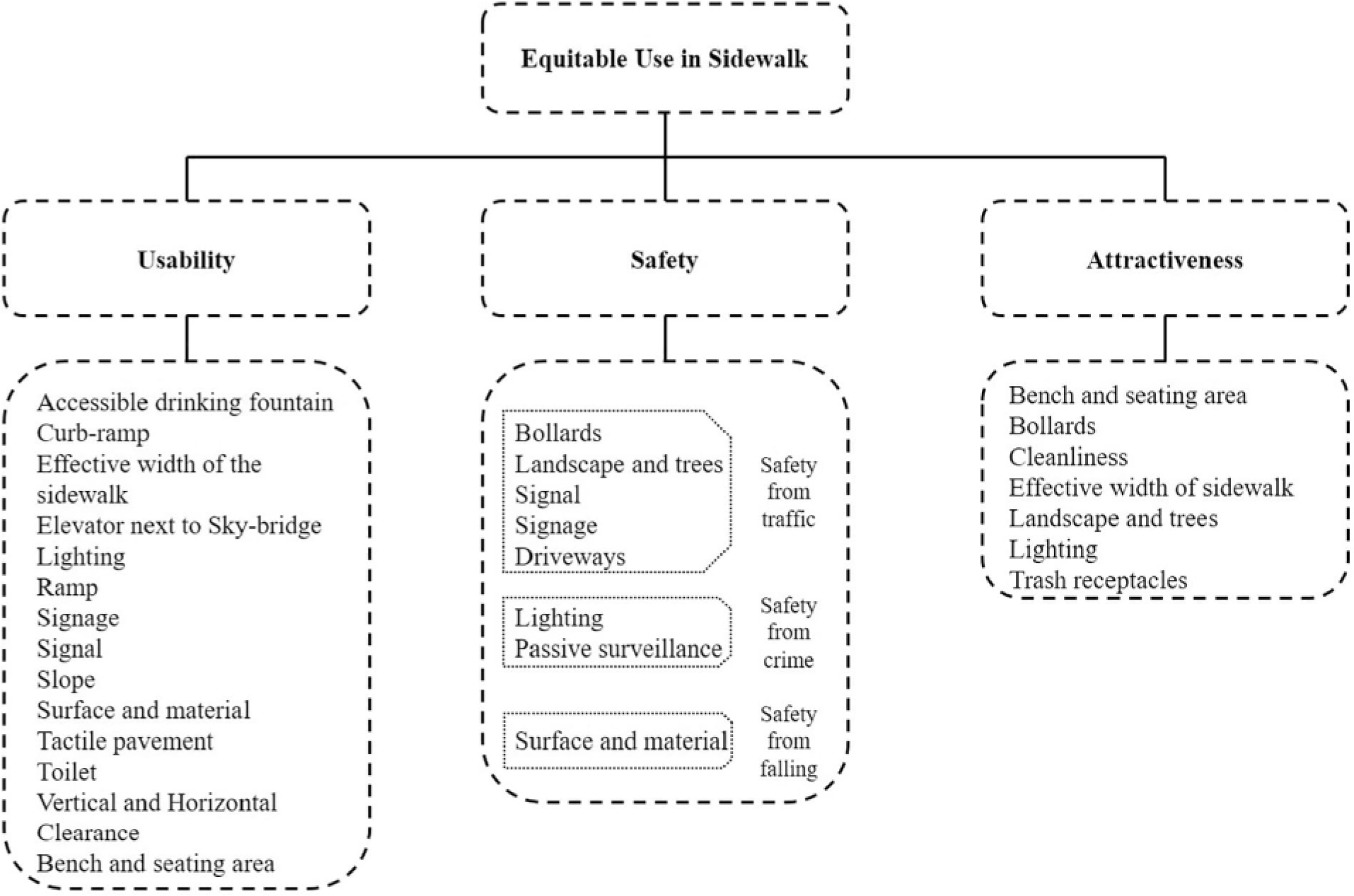
Figure 1.
Classification of sidewalk design factors based on their contribution to the main dimensions of equitable use of sidewalks [19]
The importance of designing walkable communities with a focus on creating safe, comfortable, and attractive environments for pedestrians and bicyclists. Designing a walkable community ensures a safe, comfortable, and attractive environment for pedestrians and bicyclists by creating a safe separation between vehicles and reducing speed. McNally further states that sidewalks should be designed to enhance pedestrian safety, connect to neighborhood amenities, and provide buffers from vehicular traffic, following specific guidelines for sizing, buffers, and crosswalks [20].
The eight principles for creating quality sidewalks in Brazilian cities. These principles were defined through a meta-analysis of over 30 publications on urban public space. The attributes of well-designed sidewalks were identified and grouped according to potential outcomes for urban space and quality of life. The information provided is crucial for ensuring excellence in pedestrian infrastructure projects in the country. Keywords associated with these attributes were used to find further studies [21].
3. METHODOLOGY
This study adopts a mixed-methods research design, combining quantitative and qualitative approaches. The quantitative aspect involves a questionnaire survey to gather structured data on user perceptions and preferences related to sidewalks and pathways in Belediye Boulevard. The qualitative component includes observational methods to capture details of the sidewalk design, the presence of challenges that can be faced by the users and the environmental context, and a review of literature by diving into existing research and publications. A structured questionnaire was distributed to a diverse sample of residents, and pedestrians in the chosen areas. The survey focuses on gathering information about user experiences, satisfaction levels, and specific challenges related to sidewalks and pathways. Direct observation was employed to study the design, condition, traffic patterns, and overall accessibility of sidewalks and pathways. The accessibility for disabled people and the existence of uneven surfaces, and obstacles can lead to accidents. The presence of vegetation, seating areas, trash bins, and buffer areas. DepthmapX is multi-platform, open-source software for spatial network analysis at various scales. Originally called DepthmapX, the program was created by Alasdair Turner of the Space Syntax group [22]. The combination of case study analysis data, DepthmapX analysis results, and observational findings aims to provide a holistic understanding of the current state of Belediye Boulevard. The collected data underwent a thorough analysis process. Quantitative survey data was analyzed using statistical tool (SPSS) to identify correlations, and significant patterns in user responses. Qualitative data from observations are subjected to thematic analysis, allowing for the extraction of qualitative insights into user experiences and challenges. The integration of both quantitative and qualitative findings provide a comprehensive understanding of the urban mobility dynamics related to sidewalks and pathways in the study areas. The study area is Northern Cyprus, Belediye Boulevard, in the capital city of Nicosia. In the Yenikent district. The Yenikent district, known for its modern amenities and community spirit the area is mostly residential buildings except for the main boulevard, which is considered a commercial area. The area is known for its blend of commercial and residential spaces. Belediye Boulevard is a popular hub for locals and visitors alike, contributing to the area’s vibrancy and community life. The Boulevard measures almost 1.40 km, with a vehicle road width that ranges from 6 to 13 meters. Figure 2 shows the design and layout of the Boulevard and the division of pedestrian and vehicle routes.
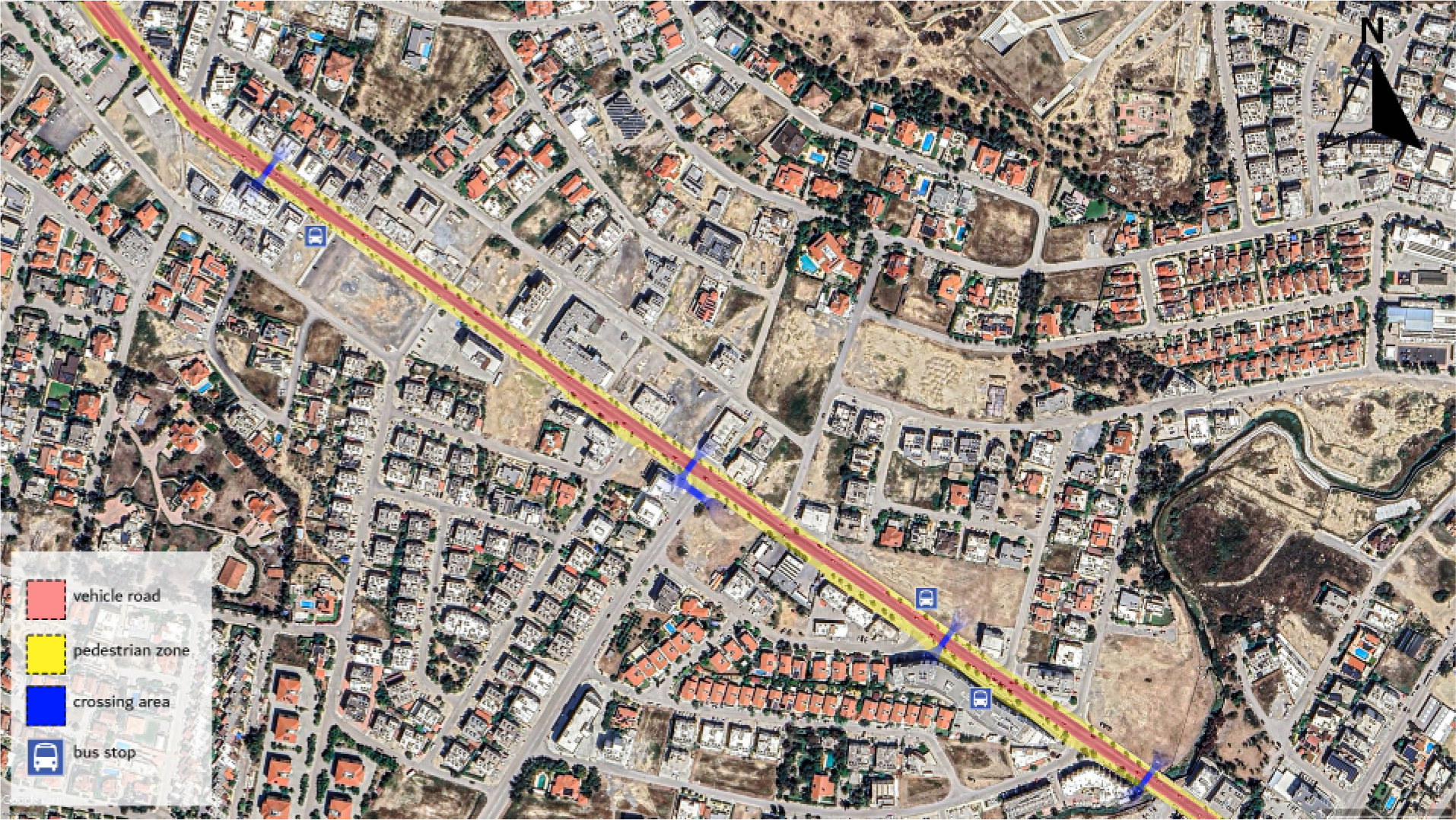
Figure 2.
Site master plan of Belediye Boulevard identifying Automobile route and the pedestrian route [Enhanced Google Earth image]
Table 1.
The eight principles of sidewalks, their elements and the expected outcome of their application [21]
| PRINCIPLE | ELEMENT | RESULTS |
|---|---|---|
| Proper sizing |
| Guarantees enough space for people to walk and occupy the sidewalks. |
| Universal accessibility |
| Provides an urban space that everyone can use. |
| Safe connections |
| Ensures continuous walking routes connected to other means of transport. |
| Clear signage |
| Promotes communication between people and the urban space. |
| Attractive spaces |
| Provide an environment where people feel comfortable. |
| Permanent security |
| Invites people to occupy urban spaces with more regularity. |
| Quality surfaces |
| Confer a sense of comfort and safety while walking. |
| Efficient drainage |
| Fosters sidewalk resilience. |
4. FINDINGS OF THE STUDY
Observation of the sidewalk, it included different elements of the design width, level differences, uneven surfaces, obstacles, and vegetation. Different dimension widths can be seen throughout the road due to change in vehicle road width that affects the pedestrian sidewalk. In addition, the step back that some buildings have allows for more width added to the sidewalk and the presence of a bus stop area. As a result, a prominent difference can be observed in the pedestrian sidewalk, ranging from 9 meters to 1 meter. The first area is located in front of the restaurant, with a width of 3.6 meters of sidewalk. The width is sufficient to allow for the free movement of users, but issues such as a lack of separation from the vehicle road, and the location of the trees in the middle of the sidewalk can result in some challenges that the users can face Figure 3.
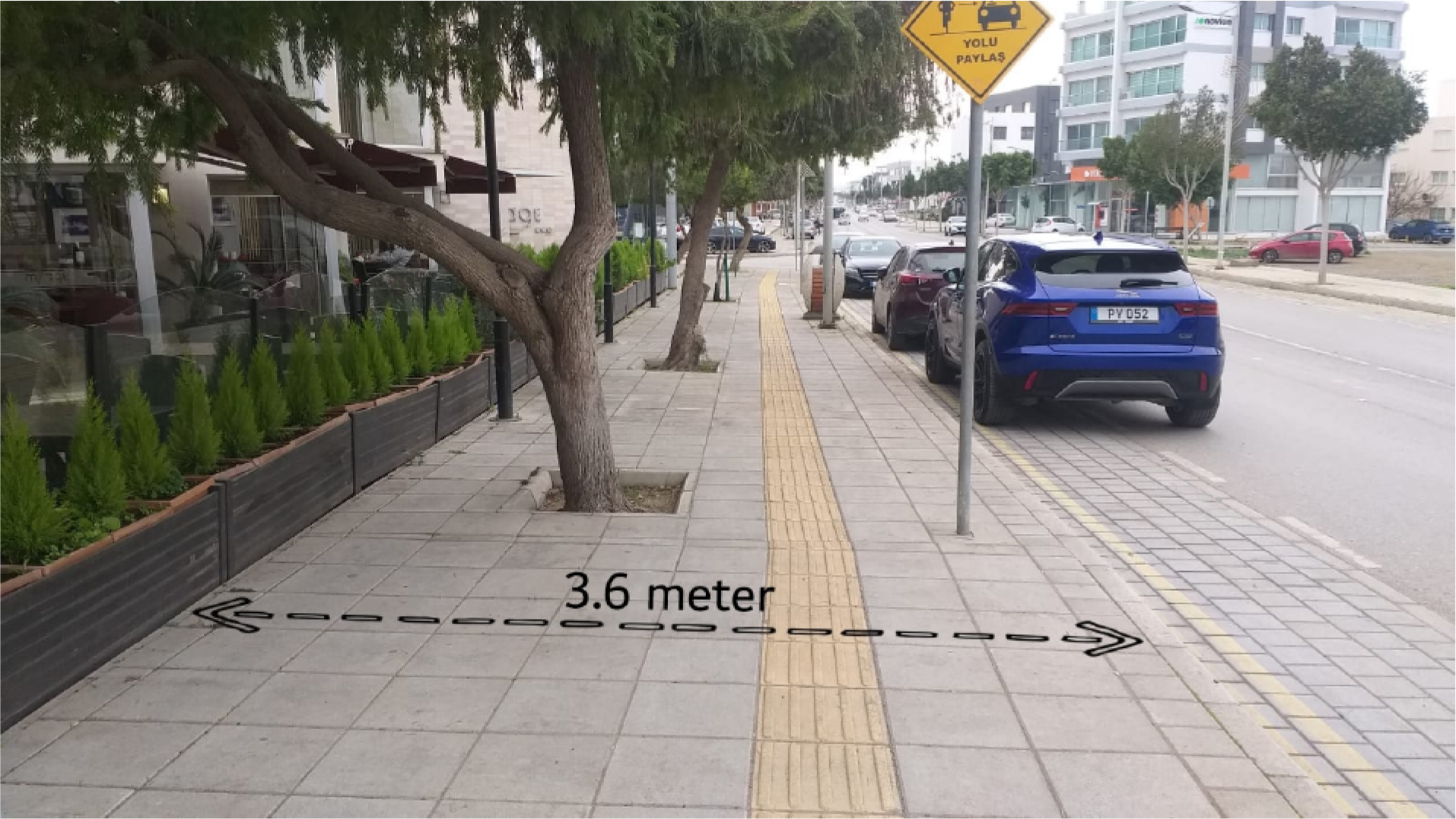
Figure 3.
The sidewalk near a restaurant area with a width of 3.6 meters (Author, 2025)
The second area is the widest, with a dimension of 9 meters (Figure 4). The area is mostly commercial stores and very open and inviting; part of that width is used for car parking, so pedestrians can’t take advantage of all the space on the path. So during certain hours, this pathway can create difficulties for many people trying to navigate between parked cars. The path has a clear lack of green areas, except for the trees alongside the road. According to the standards, it is preferred to have a green buffer area between the road and the pedestrian pathway. The path consists of two parts, with a small level difference between them a stone-tiled part with a width of 6.25 meters and a concrete part with a width of 2.7 meters (Figure 5).
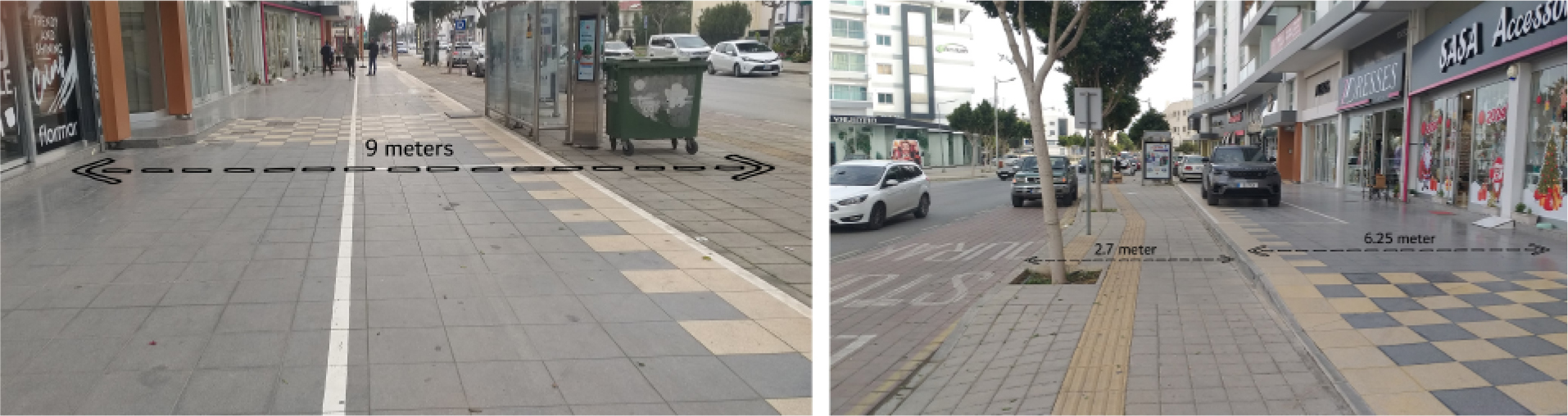
Figure 4-5.
The widest pathway with a width of 9 meters consisting of two separate parts (Author, 2025)
The common width of the pathways in the area is between 2.5 and 2.7; those paths are connected to the wider areas. As mentioned previously, the lack of a green buffer can be seen in all parts of the sidewalk (Figures 6–7). The presence of some elements can be a challenge for users; some of those are in the concrete tactile surface, which can create challenges for blind people and those with vision impairments. Telephone openings can create uneven surfaces, which can be challenging for many users, and some extrusion can be seen in multiple areas along the Boulevard (Figures 8–9).
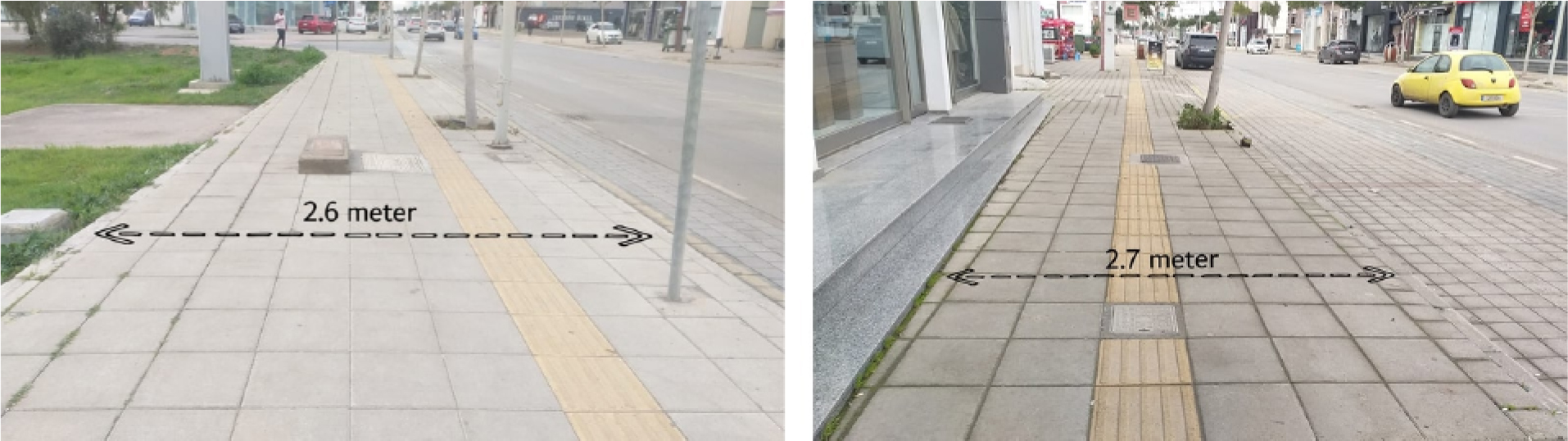
Figure 6-7
Pathways along the Boulevard with a width between 2.5-2.7 meters (Author, 2025)
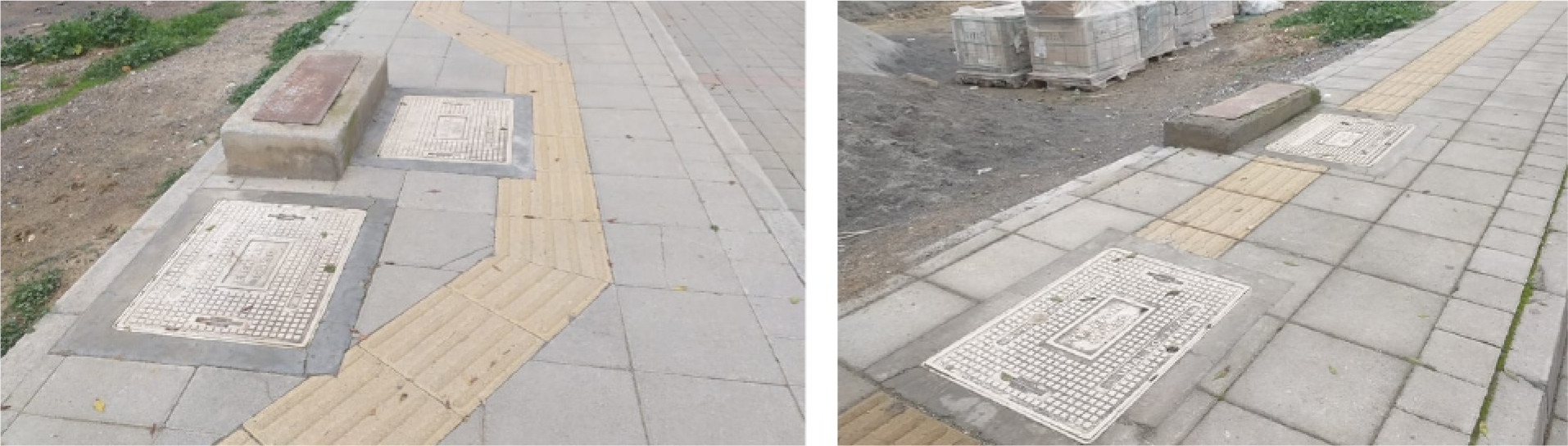
Figure 8-9.
Telephone openings and extrusions interrupting the concrete tactile surface (Author, 2025)
The area has witnessed the construction of new café buildings, both of which have outside open terrace areas, taking a distance from the sidewalk. As a result, a pronounced difference can be observed in the width of the sidewalk in front of the cafes, and the uneven surfaces in those areas create many challenges for all users. The width can get even below the standards with a 1-meter width (Figure 10). A ramp entrance with telephone openings creates a lot of obstacles, as seen in (Figure 11) a clear lack of shade and buffer spaces can create an unsafe environment for users.
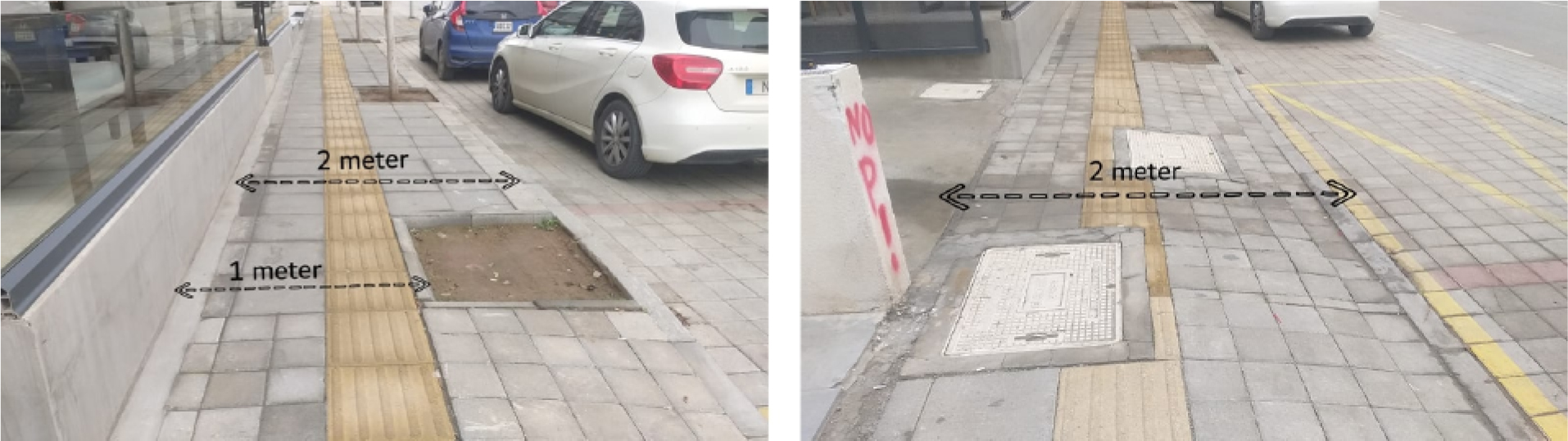
Figure 10-11.
A clear decrease in the width in front of cafe area to 2-1 meter (Author, 2025)
Another area in the pathway after the café has multiple obstacles in the same location. The area has a ramp entrance adjacent to it, so an inclination on both sides exists, which creates an uneven surface. In addition to that, a concrete tactile surface of this limited width can create an uneven surface for users. With telephone openings and an extrusion, this area can be very difficult to navigate and use for people with physical disabilities and any user. With a width that gets as low as 90 cm, according to the standards, this is 60 cm below the preferred width. With a lack of green parts in the sidewalk and the parking zone, this area is of limited width and accessibility, creating a bad experience for the user (Figure 12).
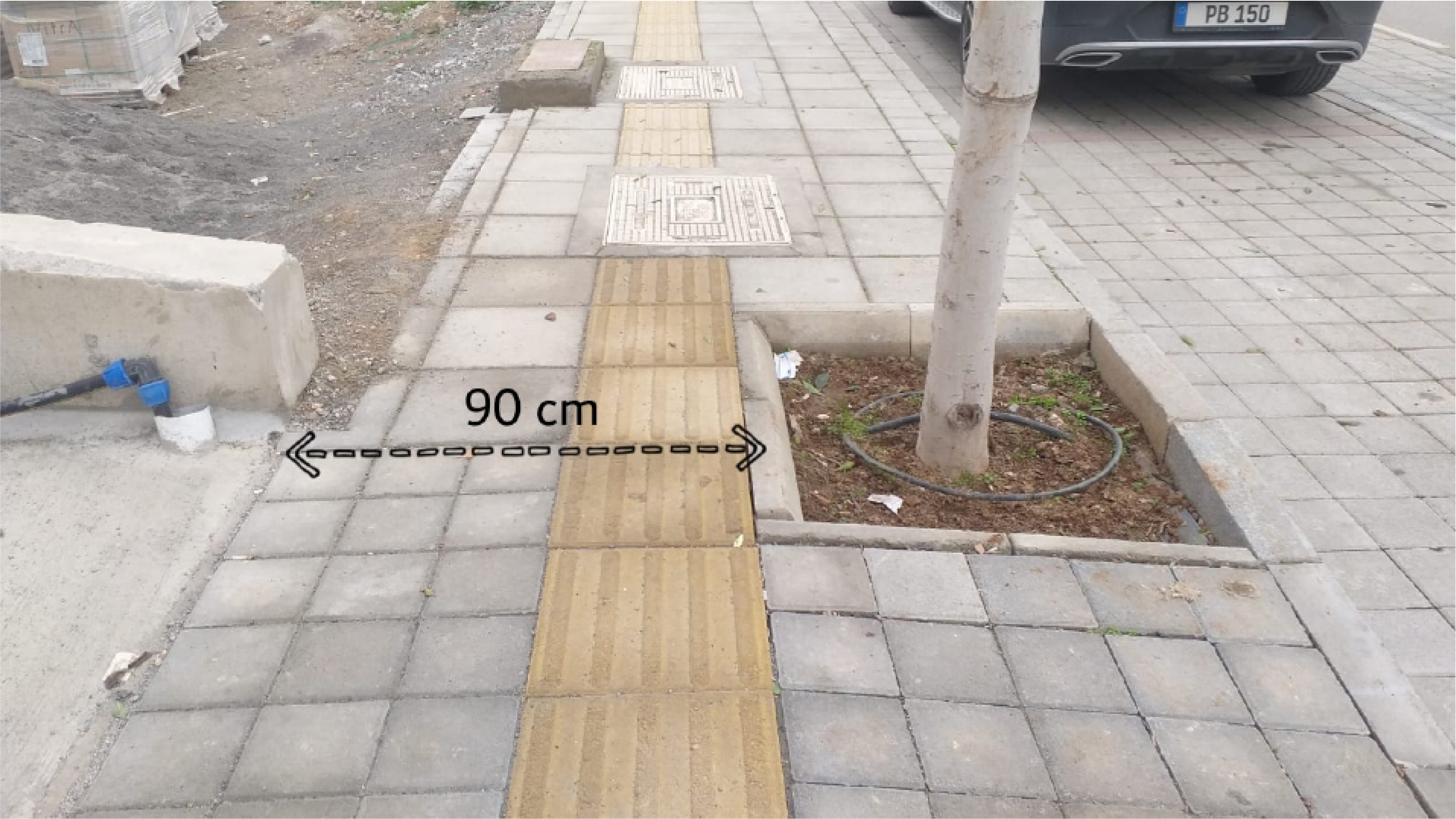
Figure 12.
A limited width in the sidewalk to 90cm creates accessibility issues (Author, 2025)
Using DepthmapX software analysis results, the aim is to provide a clear understanding of the accessibility and connectivity of roads on Belediye Boulevard. And all the surrounding roads that connect to the main boulevard, through this analysis, measures how many points in the street connect to each other’s. To understand the relationship between the boulevard itself and the roads that are connected to it. The red color represents the most connected areas, which means fewer interruptions for pedestrians and vehicle users. Yellow and green are moderately connected areas and blue areas are the least connected. The areas near the sidewalk face a noticeable lack of connectivity due to the many segregations the street has which lower the connectivity on this side (Figure 13).
The results of our DepthmapX software integration analysis, Assess the degree to which a street is centrally located within the network. Red represents the most integrated areas, yellow and green are moderately integrated, and blue represents segregated areas. The results show a clear integration of the boulevard with the other connected roads, with the red colour having a higher number in the area as shown in (Figure 14).
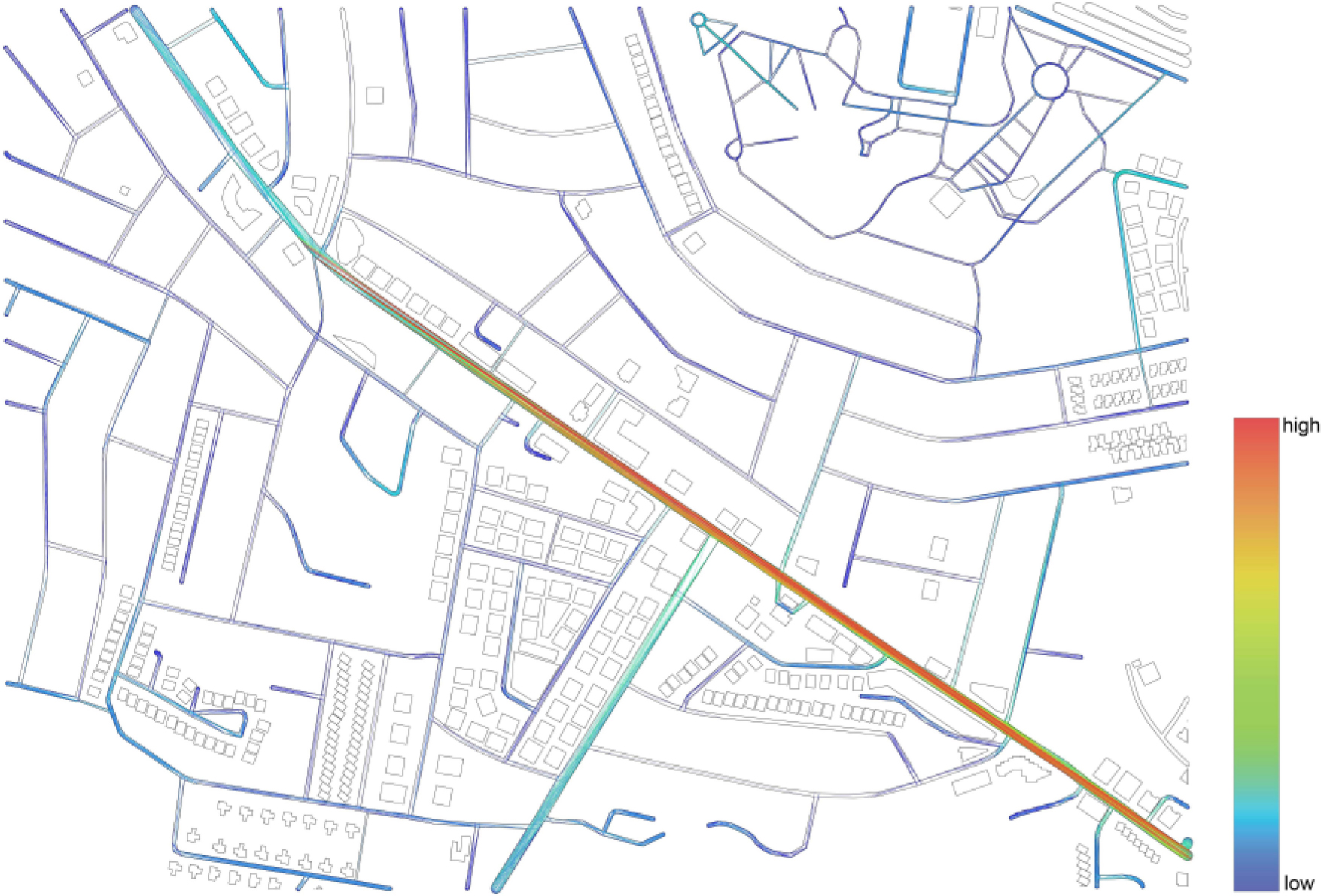
Figure 13.
The figure shows DepthmapX Visibility Graph Analysis results and the distribution of connected and disconnected areas [22]
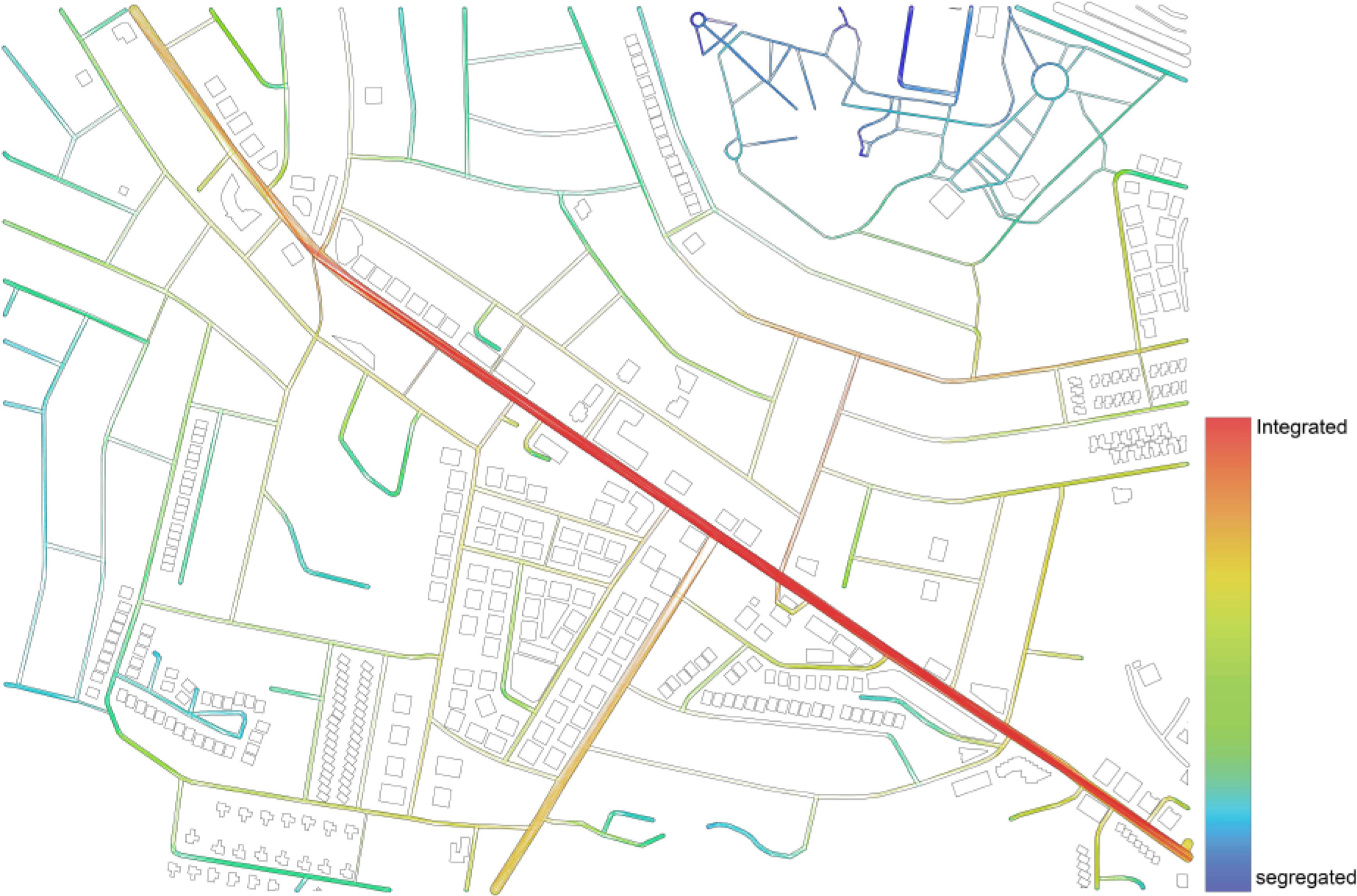
Figure 14.
The figure shows DepthmapX Visibility Graph Analysis results and the distribution of integrated and segregate areas [22]
The survey consists of 30 questions divided into 11 sections: demographics, commuting patterns, safety and accessibility, design preferences, traffic and flow, etc. The sections included closed-ended and open-ended questions. Through these sections, the ultimate goal is to get a holistic understanding of the user’s experiences on Belediye Boulevard, Through the use of SPSS software. Out of 54 participant 51.9%percentage were females marked as the highest and 40.7% percentage males and 7.4% percentage chose prefer not to say as shown in Figure 15.
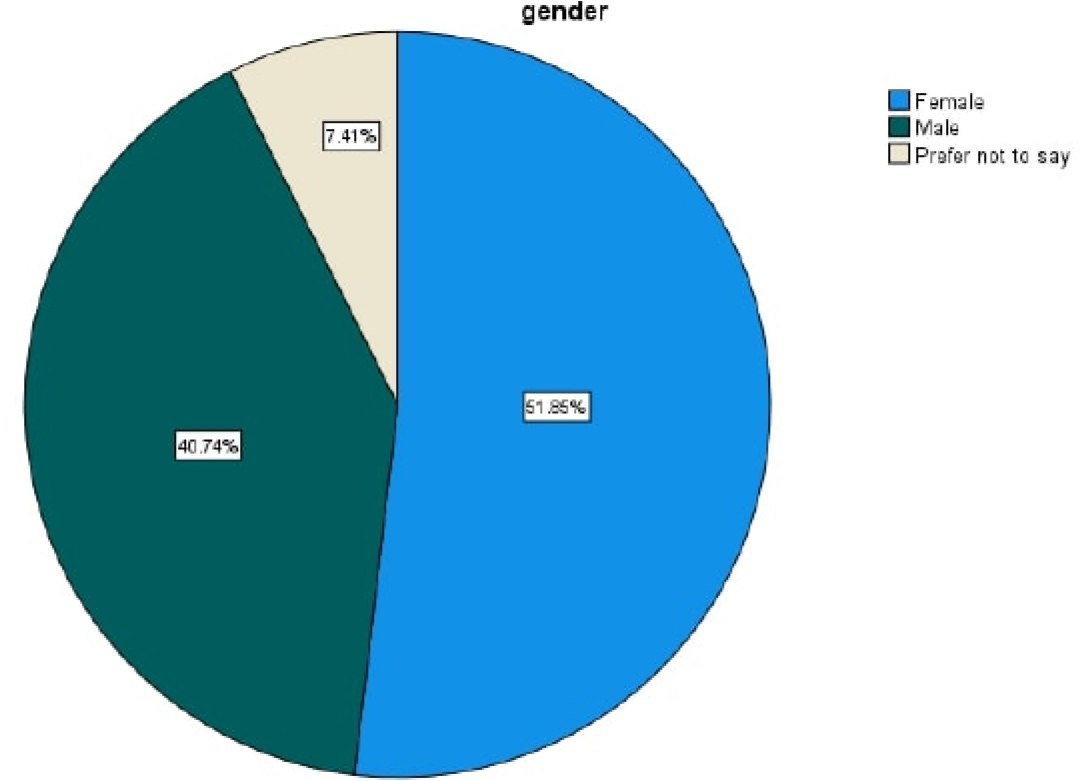
Figure 15.
Percentage chart of participant gender (Author, 2025)
Regarding the gender of the participants, the biggest percentage (90.7%) is between the ages of 18 and 29. (5.6%) between 30-39, (1.9%) 50-59, and (1.9%) no answer. This reveals that the majority of the participants were young adults between the ages of 18 and 29 as seen in Figure 16.
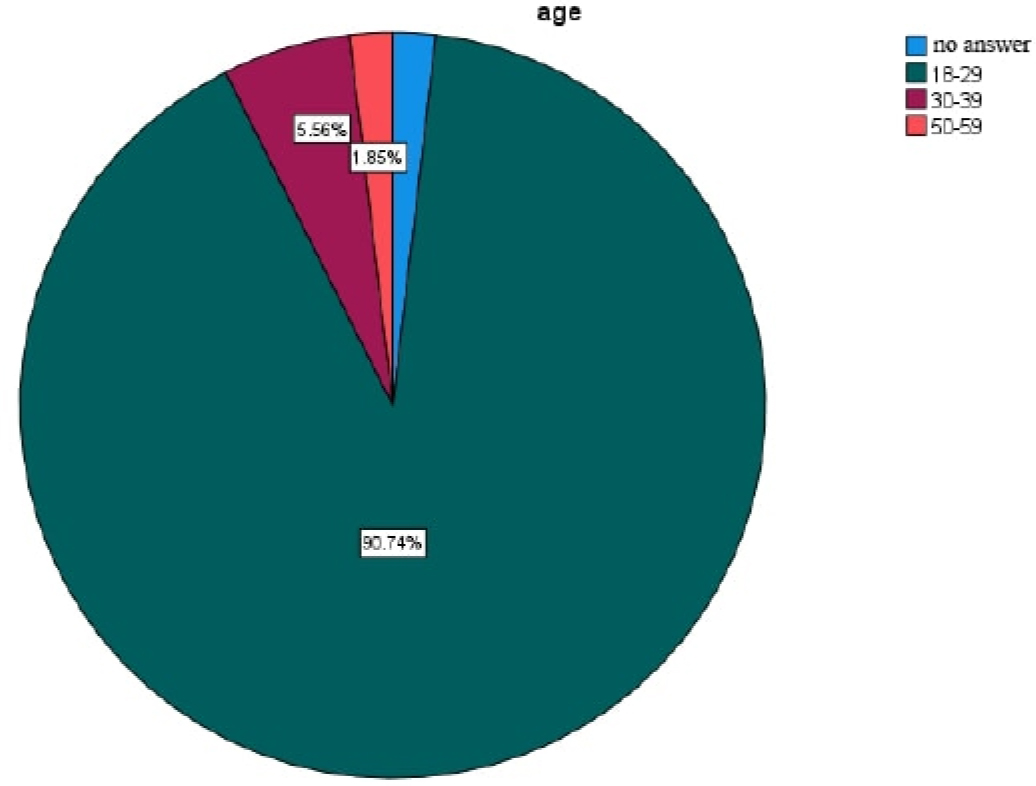
Figure 16.
Percentage chart of participant ages (Author, 2025)
Results for methods of transportation show that 37% use walking, 35.2% use public transportation, and 24.1% use private vehicles (Figure 17). These findings indicate a reliance on walking as a method used by the users of Belediye Boulevard. Putting more emphasis on the importance of sidewalk enhancement and design.
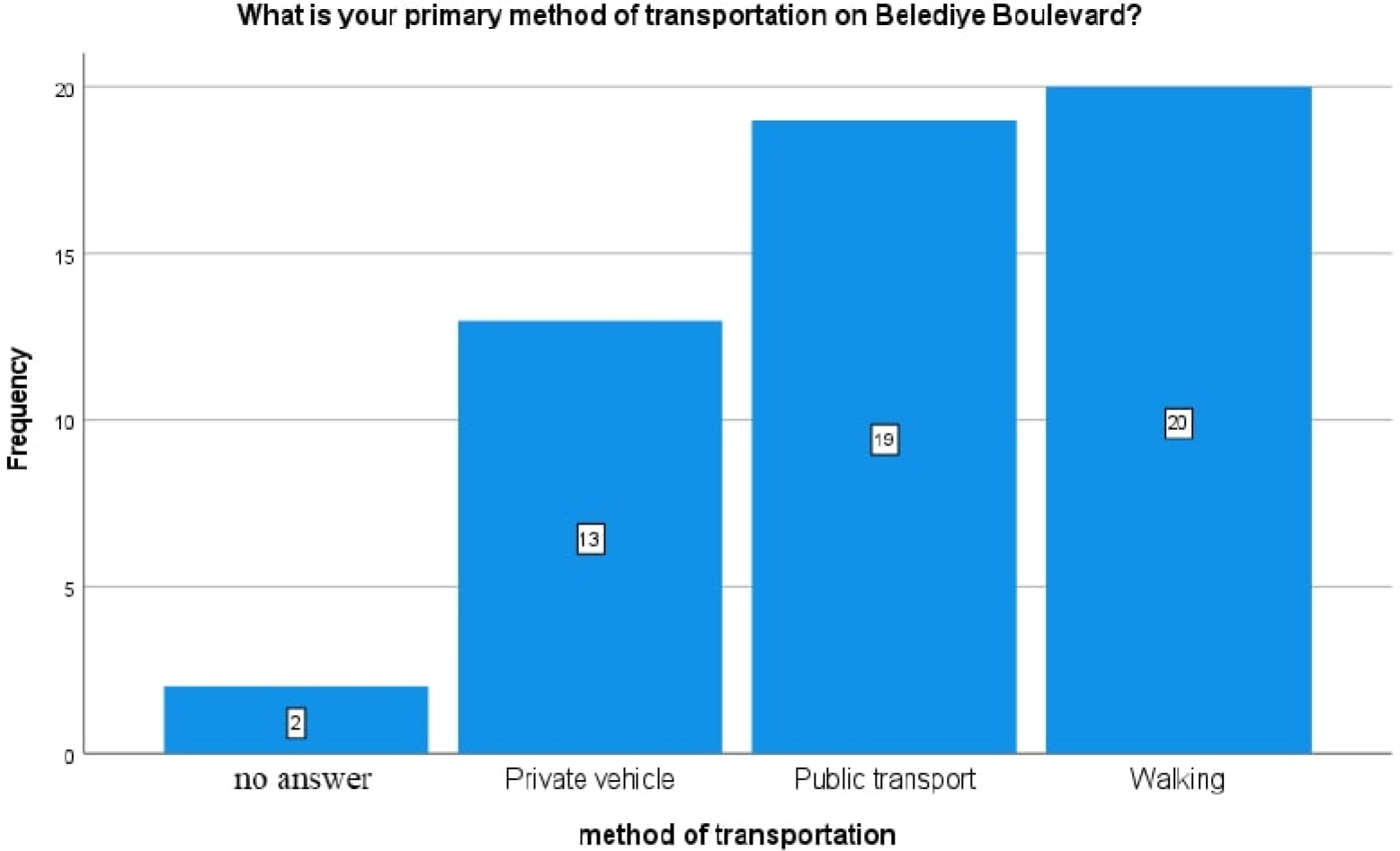
Figure 17.
The chart shows the number of users according to the method of transportation (Author, 2025)
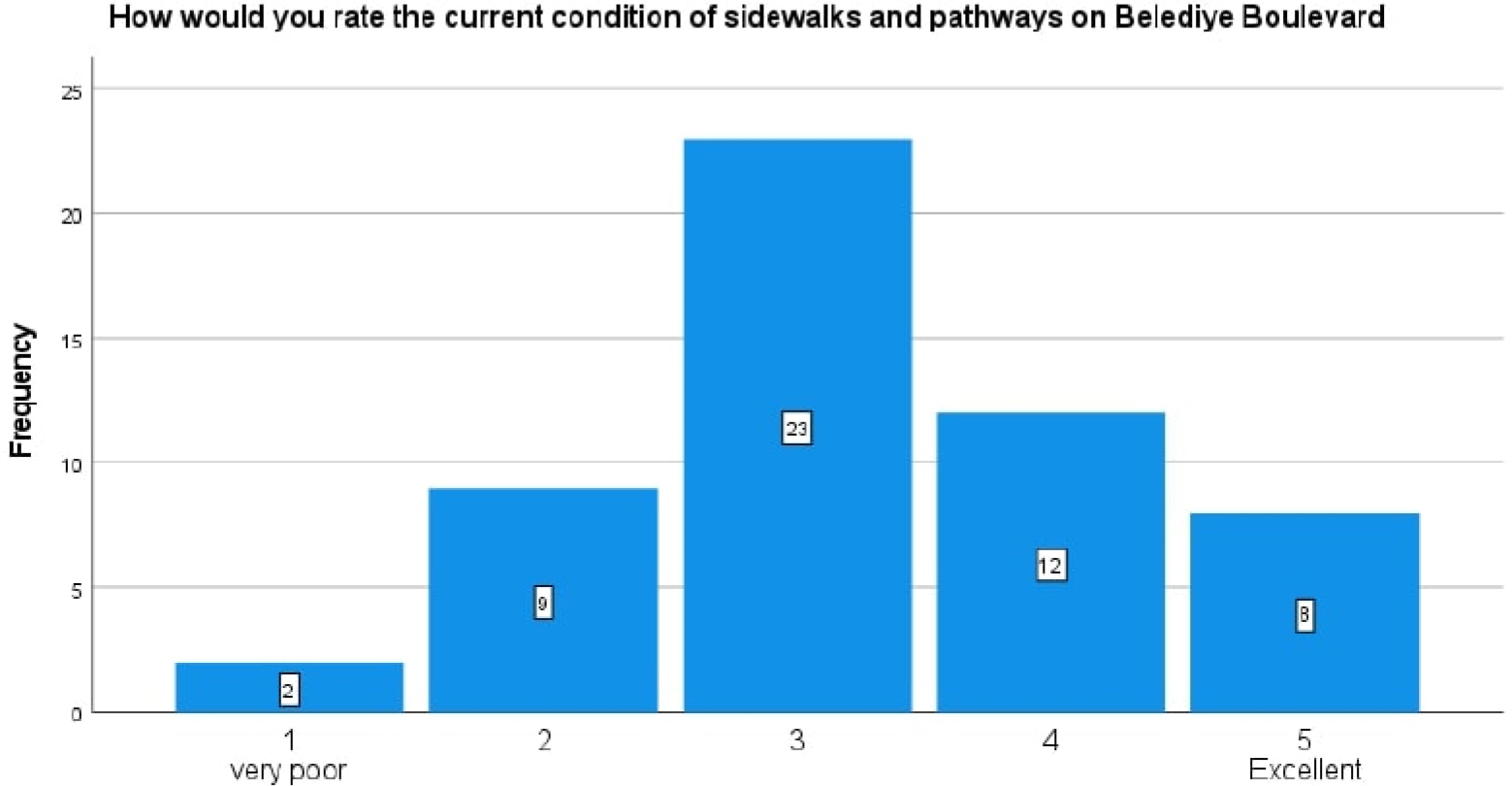
Figure 18.
The chart shows the scale factor determining the condition of Belediye Boulevard (Author, 2025)
In response to the question, “How would you rate the current condition of sidewalks and pathways on Belediye Boulevard?” With a scale of 1 being very poor and 5 being excellent. A high percentage of 42.6% chose number 3 on the scale, representing a moderate percentage. The second-highest percentage was number 4 (22.2%), and the fourth was number 5 (14.8%), choosing excellent.20.4% selected numbers 2 and 1 representing poor rating of the paths.
Question regarding safety for the pedestrian, as a large proportion of (83.33%) selected that they feel safe. on the other hand (14.81%) chose that they don’t feel safe. This suggests a strong sense of safety among the users figure 19. When asked about if there are enough seating areas a high percentage (50%) says there are not enough seating areas or benches. (33.33%) answered with not sure and (14.81%) selected yes figure 20. The results indicate a clear lack of seating areas on the Boulevard the same results can be seen in the observation confirming the results of the survey.
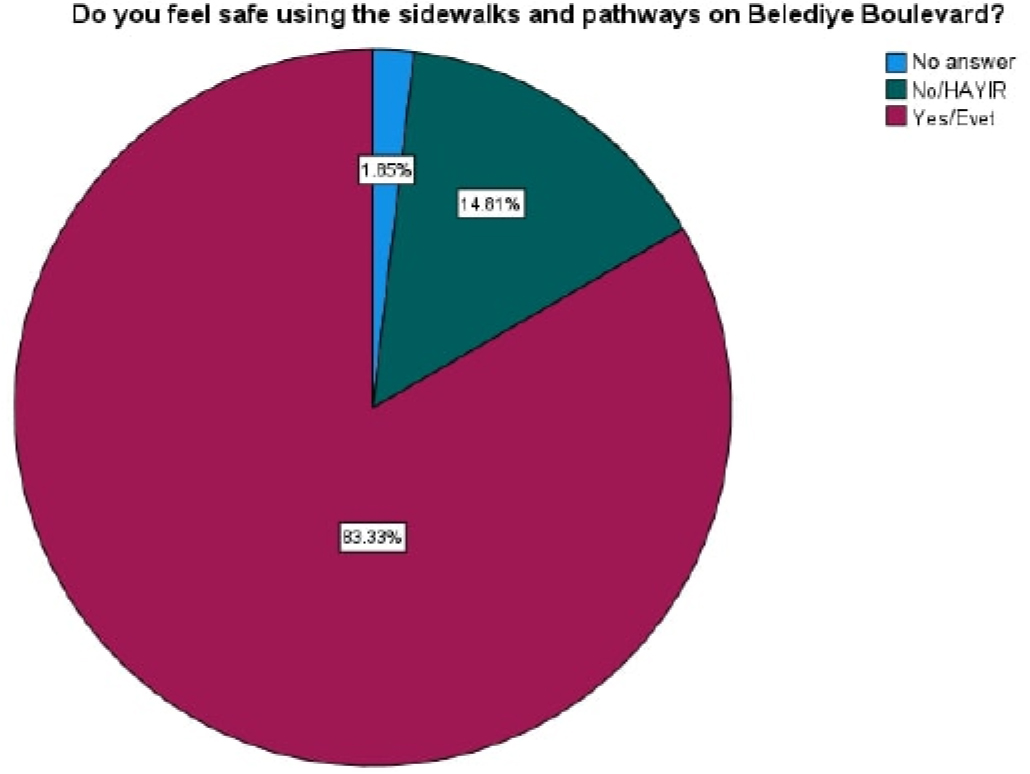
Figure 19.
Safety of the users while using Belediye Boulevard (Author, 2025)
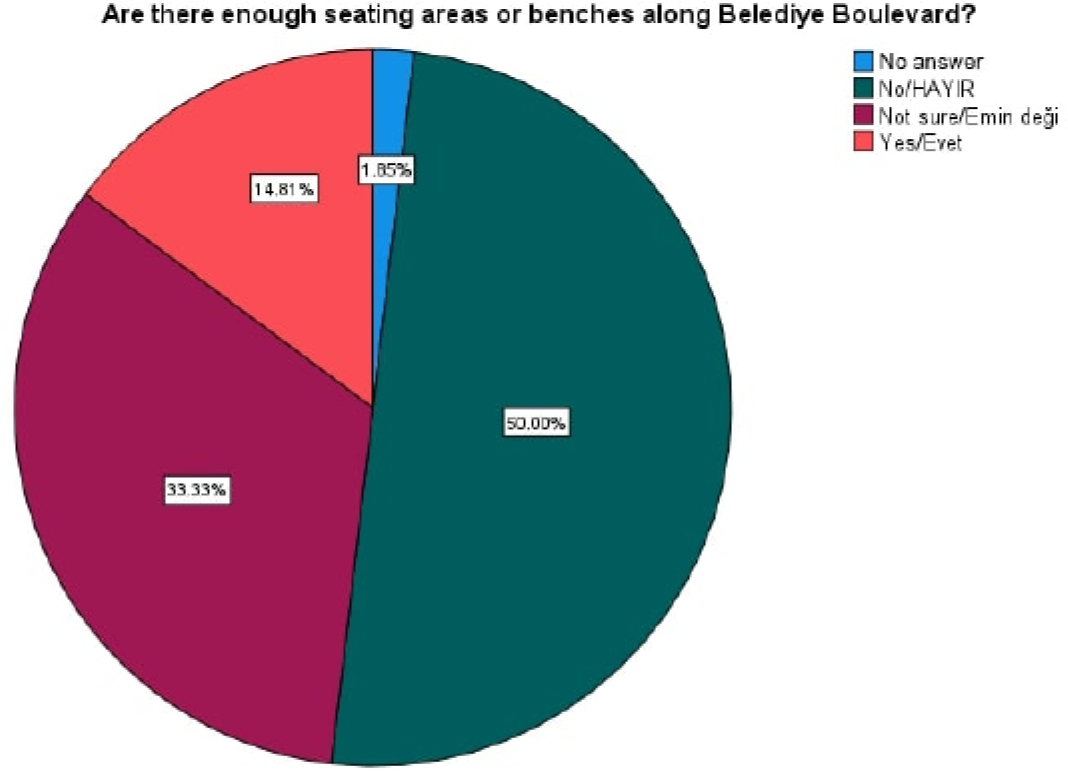
Figure 20.
Evaluation of the seating areas in Belediye Boulevard (Author, 2025)
The survey results indicate a clear lack of green spaces in the design of Belediye Boulevard 53.70% of the respondents consider that there are not enough green spaces. 27.78% chose that there are enough green spaces. This can be a great evidence of the issue of greenery and the need for more sustainable environment Figure 21.
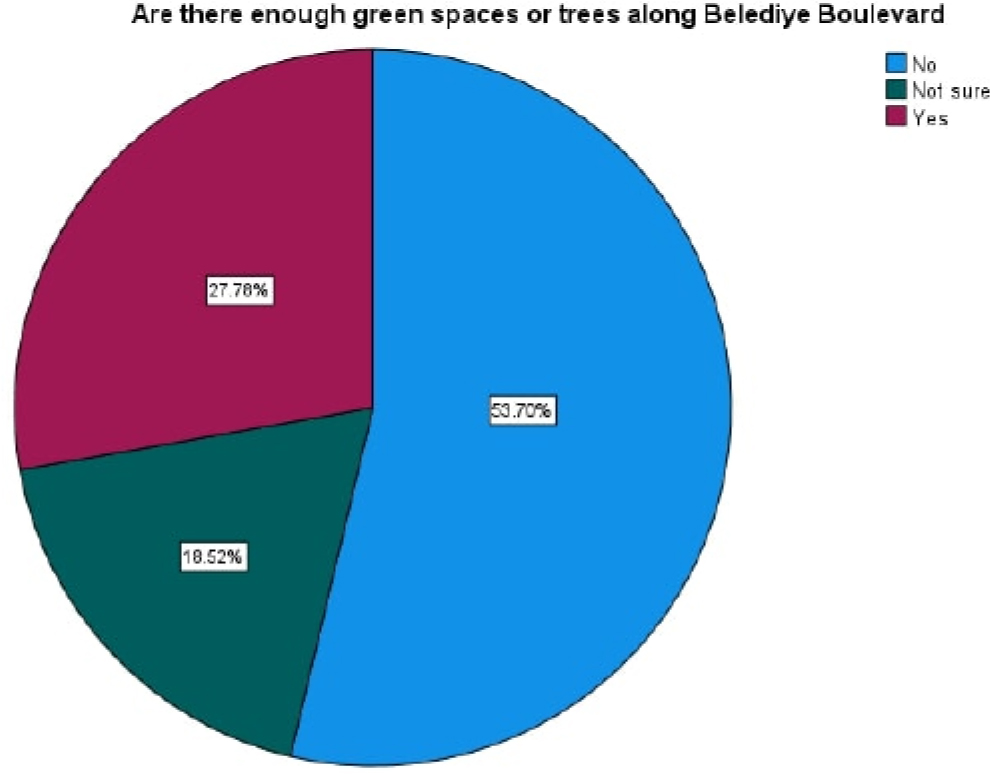
Figure 21.
Chart of the green areas’ percentage (Author, 2025)
The Cross section drawing in Figure 22 showing the boulevard current status, the section represents one area in the case as width and design changes throughout the boulevard. The lack of setting areas and green spaces can be clearly seen, reflecting a more vehicles dominant design omitting the user’s experience. Furthermore, with constant transformation in the boulevard and new construction, the sidewalks width is being frequently affected which results in lesser spaces for pedestrians.
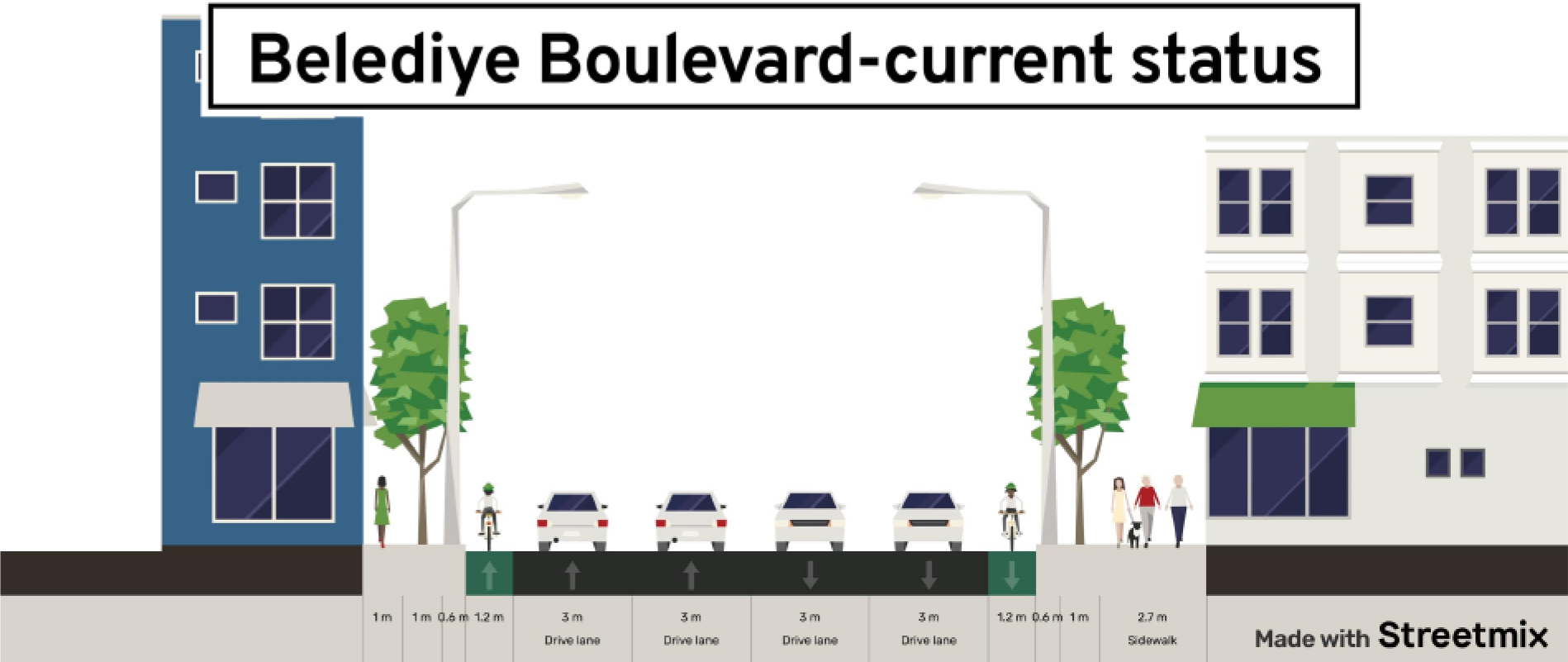
Figure 22.
Cross section of Belediye Boulevard current status [23], [Edited by Author, 2025]
In line with the study findings, the proposed design, which is shown in Figure 23, is designed according to the European Union (EU) standard for the sidewalk and vehicle road width across the boulevard. The sidewalk and vehicles road width designed of 3 meters. A separating green area is designed between the car lanes, and a green buffer zone between the road and the sidewalk. Seating areas along the sidewalk and a wider bike lane, in this design, the greenery and pedestrians are the priority, focusing on the user’s experience and needs. Those proposed amendments require more dimensions for the boulevard, as the current design does not adhere to the European Union design standards.
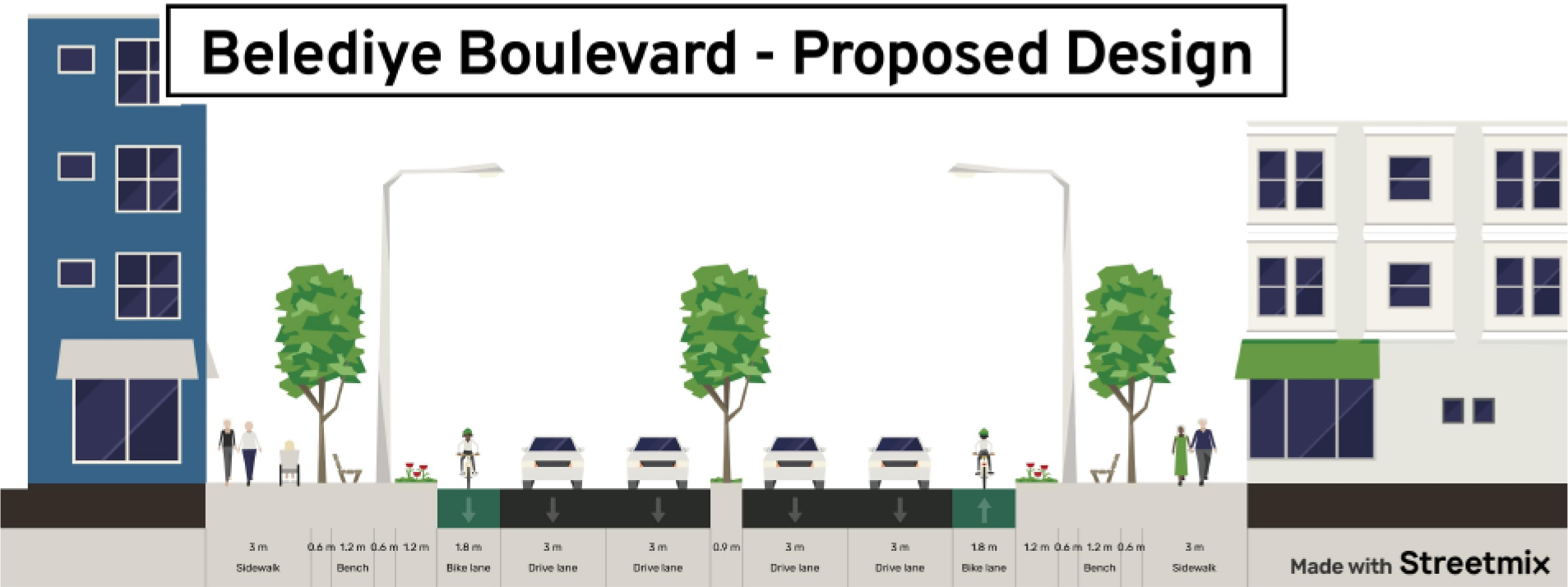
Figure 23.
Cross section of Belediye Boulevard current status [23], [Edited by Author, 2025]
5. CONCLUSION
Through this study, the aim was to get a holistic understanding of the user’s experiences and mobility by using different methods. This study sheds light on the issue of urban mobility on Belediye Boulevard in Northern Cyprus. The results of the observation showed a wide range of results regarding the width of the sidewalk, with very wide open areas up to 9 meters, creating an accessible and dynamic environment for all users to engage and interact. And accommodate width spaces ranging from 2.5 to 2.7 meters. On the other hand, some observed areas can have very limited width, creating serious mobility issues for all users, especially because of the context surrounding those areas, which are cafes and active hub locations, this can increase those challenges.
In addition, the limitation of green spaces and areas can be seen in all parts of the Boulevard, as well as green buffer zones between Vehicle Road and the sidewalk. Those elements are crucial in the context of urban design, creating balance. Without sufficient green spaces and buffer zones, the Boulevard may feel overcrowded and lacking in natural elements, impacting the overall aesthetic and functionality of the area and affecting the air quality. Uneven surfaces and extrusions seen during the observation can be challenging for physically disabled people. Those obstacles can be seen in different locations along the Boulevard. And the interruption of concrete tactile surfaces may cause issues for blind people and people with visual impairments. In addition, inclination in some parts of the sidewalk and telephone openings can create difficult surfaces to navigate for all users.
The DepthmapX analysis results gave a profound insight into the connectivity and integration of Belediye Boulevard and all the connected roads. The connectivity analysis showed some issues in the areas near the sidewalk due to the many separations in the street. The integration analysis demonstrates the boulevard’s seamless integration with the other connected roads, with the area’s red color having a higher density.
Moreover, the survey results showed many results that confirm the observation method. The lack of seating areas on the Boulevard creates a challenge for pedestrians who may need to rest or take a break. Limiting the possibility of gathering and inclusivity in those areas. The respondents confirm the insufficient amount of green space. Which further exacerbates the lack of seating options. Additionally, the survey respondents expressed a desire for more green spaces, as they believe it would enhance and promote a healthier environment within the boulevard.
5.1. Recommendation
Based on the findings of the study and the results of the observation, connectivity/integration analysis, and survey, it is recommended to implement a comprehensive redesign for the boulevard. Ensuring a consistent width of the sidewalks throughout the entire boulevard should be with a width of 3 meters as recommended by the European Union standards, and taking into consideration areas with very limited width. In areas where there is limited sidewalk space width should be designed with a minimum of 1.2 meters. The adaptation of the woonerf concept in the boulevard can be a successful and suitable solution for this case with bigger sidewalks, slower vehicles, and prioritizing the pedestrian’s user experience. The design of the sidewalk should consider users with physical disabilities by eliminating obstacles such as uneven surfaces and extrusions, and ensuring that all surfaces are smooth and clear from obstacles. Furthermore, it is advisable to consider the installation of benches or similar seating arrangements, at locations, along Belediye Boulevard and ensure they are comfortable and accessible to all. This will help address the lack of seating areas and provide pedestrians with opportunities to rest and engage with others. It is crucial to plan the layout of these spaces ensuring that they cater to a range of user preferences and requirements fostering inclusivity. To improve the environment and overall air quality, it is recommended to increase the presence of green spaces and buffer zones. By planting trees and adding greenery along the boulevard, we can create a sustainable urban landscape. To enhance the appeal of the area and achieve balance, it is essential to incorporate green buffer zones between the sidewalk and the road for vehicles. A successful boulevard redesign is crucial, it should involve participation, from the local community. By engaging residents and business owners in the decision making process we can gain perspectives and insights. This collaborative approach will contribute to the development of urban mobility solutions that are both sustainable and driven by the needs of our community.
ACKNOWLEDGMENT
I would like to express my profound gratitude to Assoc. Prof. Dr. Çilen Erçin, from the Department of Architecture at Near East University, for her invaluable contributions to the completion of my article.