Have a personal or library account? Click to login
Castlehim: A Semantic H-Bim Framework Supporting Sustainable Conservation and Management of Castles of the Polish Jurassic Highland Cover

Castlehim: A Semantic H-Bim Framework Supporting Sustainable Conservation and Management of Castles of the Polish Jurassic Highland

Open Access
|Dec 2025

Figures & Tables

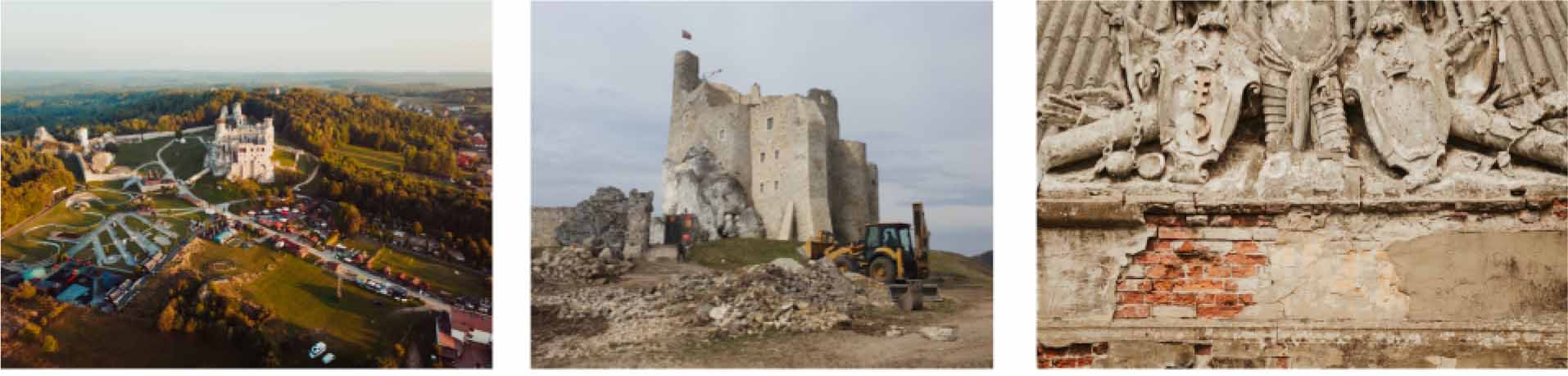
Figure 1.

Representative examples of castles in the Kraków–Częstochowa Upland: (a) Ogrodzieniec Castle surrounded by tourist stalls and attractions; (b) Mirów Castle during the reconstruction process; (c) degrading architectural details of Palace in Pilica. Author’s work
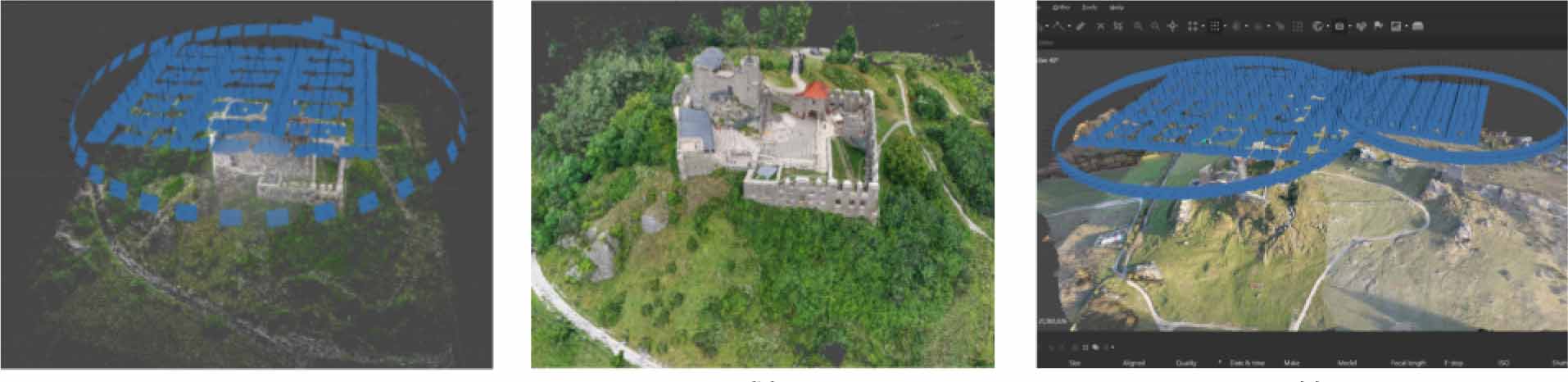

Figure 2.

Photogrammetric processing of Rabsztyn Castle: (a) location of cameras and sparse Tie Points alignment, (b) Rabsztyn Castle: generated Dense Cloud after cleaning, illustrating the increased accuracy and completeness of spatial data, (c) unified model created by merging partial point clouds through marker-based alignment. Author's work
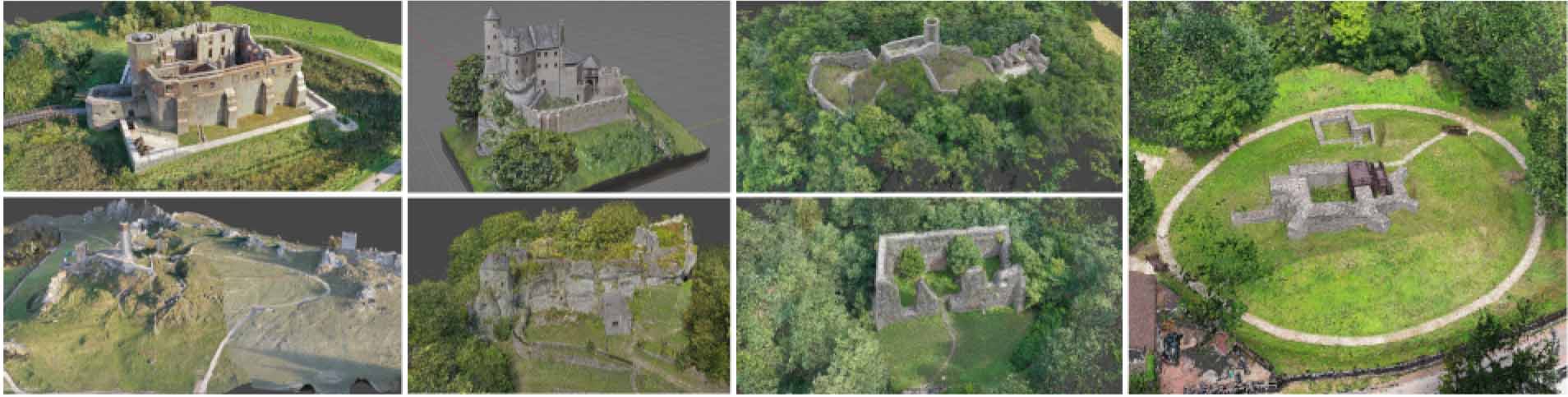

Figure 3.

Selected photogrammetric models of castles in the Kraków–Częstochowa Upland, illustrating differences in preservation state and level of geometric detail captured for subsequent HBIM modelling. Author’s work
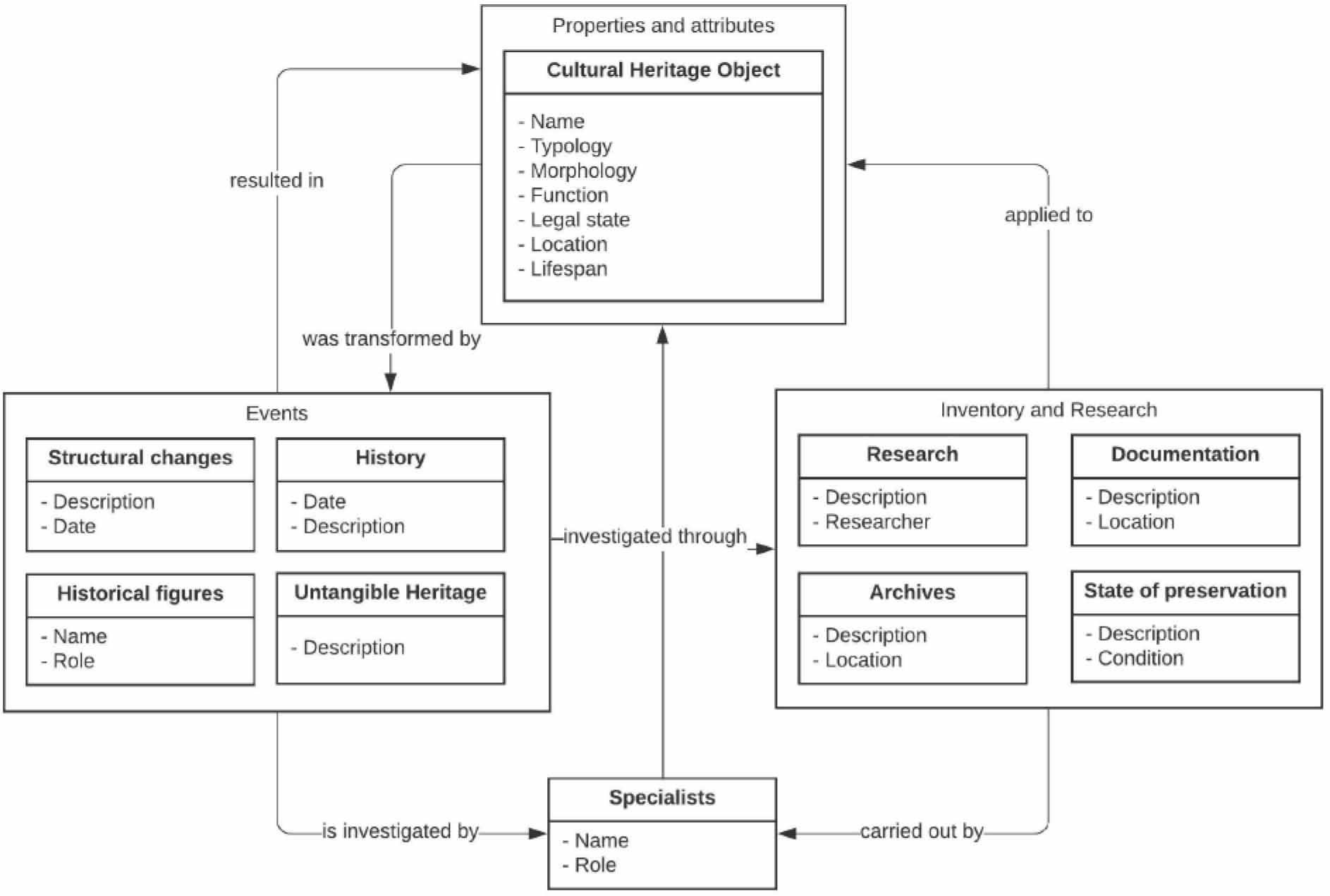

Figure 4.

Schematic structure of CastleHIM, integrating CIDOC CRM with HBIM (Revit), showing four information sets (Properties and Attributes, Events, Inventory and Research, Specialists) and the Documentation class linking semantic and geometric data. Author’s work
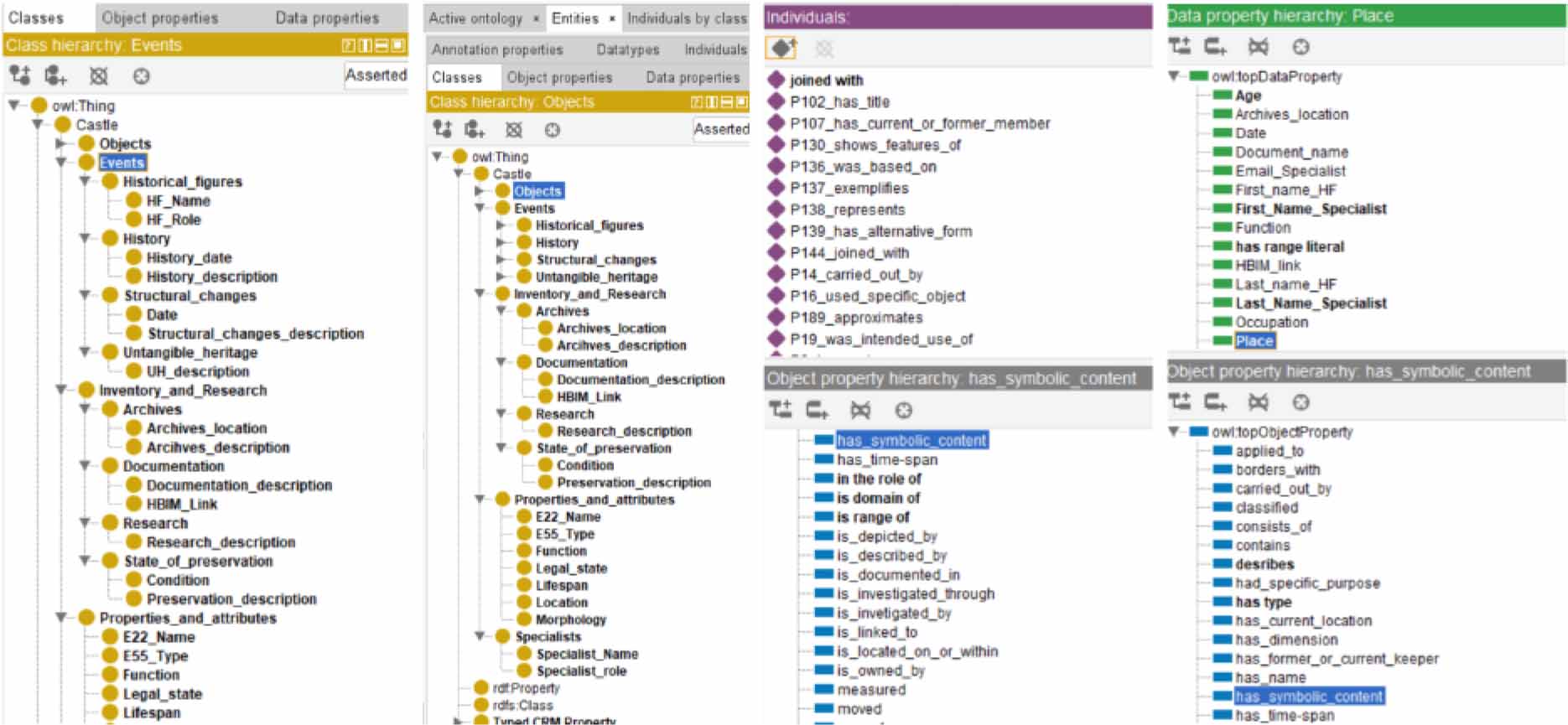

Figure 5.

Data model structure implemented in Protégé, showing the organization of classes and relationships within the CastleHIM ontology, aligned with the CIDOC CRM standard
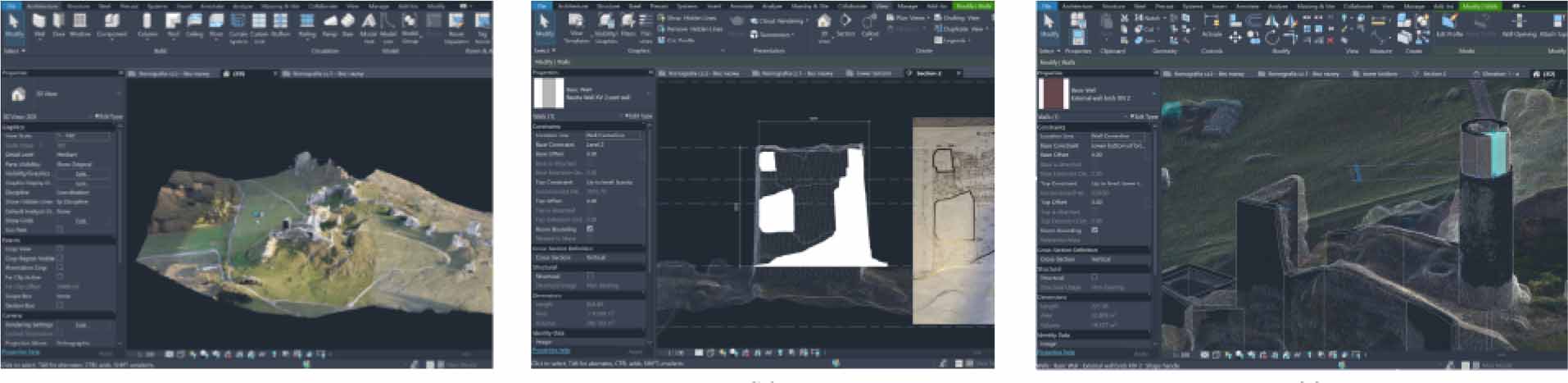

Figure 6.

Integration of photogrammetric and archival data in the Revit environment: (a) photogrammetric model embedded in Revit as the basis for HBIM reconstruction; (b) sectional view of a castle element reconstructed from archival sources; (c) manually modeled castle elements, reflecting their irregular geometry
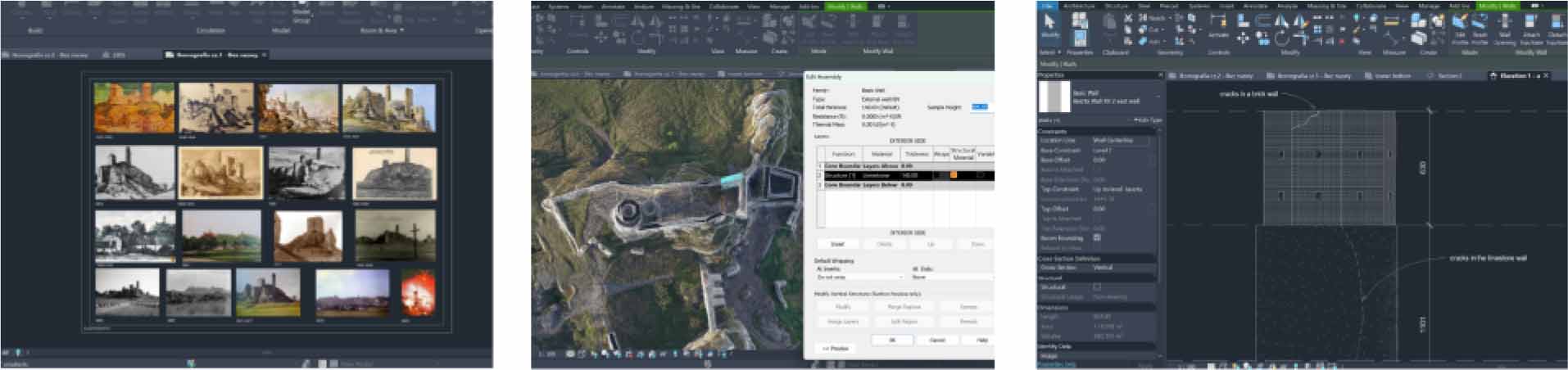

Figure 7.

Archival documentation integrated into the Revit file: (a) historical photographs and postcards attached to the HBIM model; (b) metadata embedded in model elements, including information on materials, construction techniques, and conservation history; (c) representation of structural changes and damages, reconstructed based on the digital model, archival documentation, photographs, and in-situ survey data. Author’s work
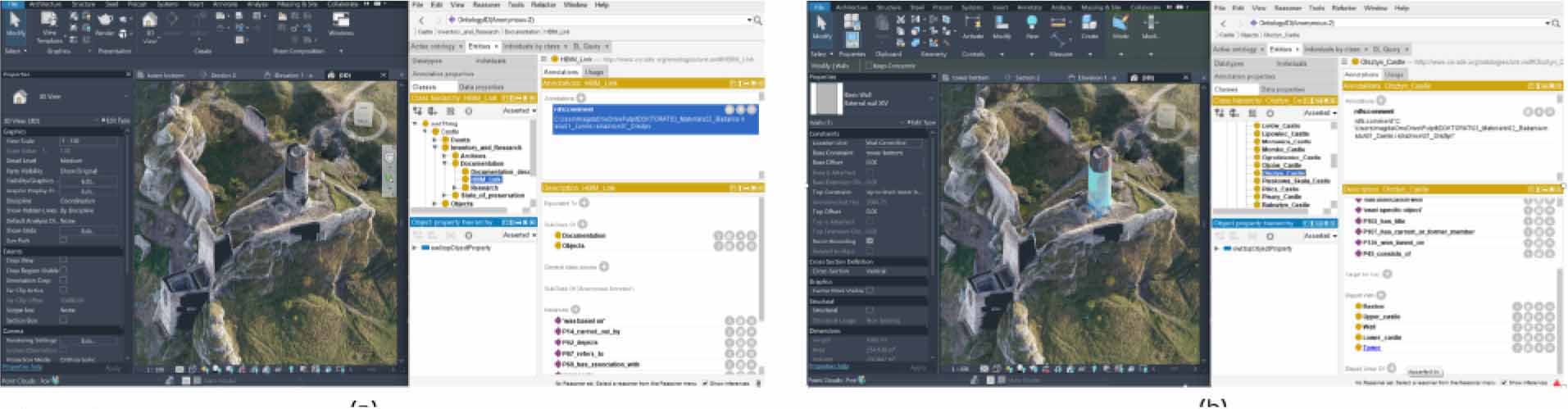

Figure 8.

Connections between the Revit and Protégé environments: (a) integration of the Revit HBIM file within the Protégé ontology, (b) visualization of linked elements. Author’s work
DOI: https://doi.org/10.2478/acee-2025-0046 | Journal eISSN: 2720-6947 | Journal ISSN: 1899-0142
Language: English
Page range: 51 - 60
Submitted on: Oct 14, 2025
|
Accepted on: Nov 20, 2025
|
Published on: Dec 26, 2025
In partnership with: Paradigm Publishing Services
Publication frequency: 4 issues per year

© 2025 Magdalena WAŁEK, published by Silesian University of Technology
This work is licensed under the Creative Commons Attribution 4.0 License.

Volume 18 (2025): Issue 4 (December 2025)