
1. INTRODUCTION
An edge may be more than simply a dominant barrier if some visual or motion penetration is allowed through it – if it is, as it were, structured to some depth with the regions on either side. It then becomes a seam rather than a barrier, a line of exchange along which two areas are sewn together [1]
Kevin Lynch, 1960
1.1. Research problem
Technical monuments which are situated by the railway line – but no longer in use – are “left on a siding” due to the modernisation of railways for the purposes of transport intensification and radical acceleration. The fan-shaped locomotive depot in Katowice is one of such deserted places (“splinters” of progress).
The EU policy of sustainable development in railway transport aims to achieve the following goals: an increase in the number of long-distance train services, including transborder ones, acceleration of train velocities (in Poland: KDP – High Speed Railway – HSR), intensification and multiplication of railway traffic, reduction of transport costs and an increase in its accessibility. Modernisation of the infrastructure includes investments into railway stations, improvement of technical parameters of track system and rolling stock. At the same time, both economic and social benefits are being considered – the most important aspect being an increase in mobility [3]. A similar development of the railway network can be observed also in Poland [4, 5], and this phenomenon is gradually gaining momentum [6].
The process of modernisation and velocity increase has resulted in the reinforcement of the significance of railway stations in the urban tissue. Railway stations have been transforming into multifunctional service and transfer centres, whereas smaller and unprofitable stations as well as technological facilities have been closed down due to the failure to meet contemporary requirements [7]. An example illustrating this phenomenon is former steam locomotive depots, including fan-shaped depots that used to be so widespread in Europe and around the world.
1.2. Subject of the study
An example of such facilities, having a system of a double fan, is a steam locomotive depot in Katowice. It was closed down in 2011, however, in 2021, thanks to the efforts made by the Association “Congress for the Protection of Monuments”, was enlisted (along with two turntables, a water tower constructed in accordance with Otton Intze’s patent and a locksmith’s shop) in the register of heritage monuments of the Province of Silesia (Silesian Voivodeship) under number A/920/2021[8]. At present, this technical monument, located in an intertrack space, is falling into ruin as it was partly consumed by successive fires (2021, 2022). To make the matters worse, modernisation works of the Katowice railway hub (2024-28) do not take into consideration the revitalisation of the depot [9]. However, the location of the former steam locomotive depot and its unique character make it a structure of great potential, worth investing in.
2. LITERATURE REVIEW
2.1. Typology of the architectural object being the subject of this research project
Steam locomotive depots are facilities equipped with devices for servicing and minor repairs of rail vehicles (the main hall – a staging area, the place of current servicing including inspection pits and cranes as well as diagnostics facilities with workshops, cleaning and fuel-feeding devices; in the case of steam engine depots these were: cranes with water towers and coal storages) [10]. Thanks to the application of turntables, it was possible to park rolling stock in a fanshaped system. There were different types of such systems – small, single fans (Wolsztyn, Pyskowice; built on a plan of segments of a circle; such depots are more and more often revitalised nowadays due their smaller cubature) and bigger, double-fan systems (Berlin, Augsburg, Katowice; built on a plan of semi-circles providing spaces for several dozen stands) as well as steam locomotive depots under the roof, including turntables, designed on a plan of a full circle – the so-called railway roundhouses (Birmingham, Piła, London, Saint Petersburg, Chambéry) and some other types, for instance – stepshaped depots (Krośniewice). Due to similar technical parameters and utility technology, certain solutions and patents were repeatable and resulted in the construction of typical buildings. Because of that fact, modern revitalisation models can be applied also in other locations, for instance for the purposes of museums, cultural institutions or community goals. Adaptations connected with culture and museology dominate in this field: Deutsches Technikmuseum Berlin, Bahnpark Augsburg, Süddeutsches Eisenbahnmuseum Heilbronn, Budapest North Depot, Železniční depozitář Chomutov, Age of Steam Roundhouse Museum in Sugarcreek (Ohio), Roundhouse Park in Toronto, Valley Heights Locomotive Depot Heritage Museum in Australia, The Roundhouse at Hazelwood Green Pittsburgh (accelerator of technology and co-working space), London Roundhouse Campden (a place of progressive music, radical theatre, cultural centre) etc. Obviously, each case has an individual location in the urban fabric and specific urban-planning issues.
2.2. The case of the steam locomotive depot in Katowice
The former steam locomotive depot in Katowice is situated in Raciborska street, in an intertrack space, in the vicinity of the main railway station and the Katowice Station Shopping Mall (Galeria Katowicka), on the edges of the following municipal districts: Załęże, Śródmieście (Downtown) and Dąb. It borders on the International Coach Station across the tracks, a municipal cemetery on the north side, whereas on the south side it is adjacent to the sidings belonging to the Silesian Railway Service (Koleje Śląskie) and a complex of allotments. In the vicinity there is also the Municipal Sports and Recreation Centre (MOSiR), headquarters of many businesses as well as dense housing and services building development.
The location of the steam locomotive depot is of an insular (island) character. The depot is situated on a precious site in terms of investments, being a reserve of green areas and a junction of important urban spaces. This area is clearly visible from the windows of trains going to or from Katowice. This technical monument of the Province of Silesia (Silesian Voivodeship), having a rare shape of a double fan with the system of turntables, is located in the rail area which is under re-construction and re-organisation of railway tracks. The building and its premises have been left out of control as dilapidated and devastated wasteland.
The double-fan-shaped steam locomotive depot from the turn of the 19th and 20th centuries, built from bricks [11], is a one-storey building designed in the Historicism style by the designing team: Lohse and Zebrowski. Initially a steel footbridge and later an underground passage linked it with Kamienna street. This passage does not exist any more and the inaccessible plot of the depot only reinforces the barrier created by the railway. The depot fan on the west side (surface area 4 900 m2) was designed for 26 stands / tracks, whereas the one located on the east side (4 080 m2) was initially designed for 12, and after the extension works for 24 stands / tracks. A former warehouse of the rolling stock was equipped with turntables of a diameter of 20 m with an electric drive. The turntables made it possible to set in the right direction and drive rail vehicles into the building’s interior, position them over individual inspection pits and ensure simultaneous operation of many stands. In addition, the whole facilities included a water tower (of a surface area of 49,8 m2, constructed in accordance with Otton Intze’s patent), a locksmith’s workshop, a kerosene and other materials storage, a sand drying room, a rail car wash, baths and accommodation facilities for the workers. After the Second World War, the steam locomotive depot was used by electric locomotives. Following its closure in 2011, there appeared some ideas of the building adaptation for the purposes of a railway museum/open-air museum or a local centre of culture. There were also some attempts to sell or commercialise this space, however, they were all to no avail.
2.3. The issue of urban-development barriers caused by railway
The role of transport in urban development has become a feature of the age of industrialisation (Knowles, Ferbrache, Nikitas, 2020) [12]. Mobility and the diversification of transport modes have gradually increased in periods since the second half of the 19th century. High-speed rail and breakthrough technologies can support the further sustainable development of clean, automated, high-frequency public transport in the future [12]. The location of railway stations (mobility hubs) has been discussed in the context of the design of local public spaces (Bertolini, Spit, 1998) [13] and the problems associated with the implementation of interchanges (Taylor, 2011) [14]. Rethinking the railway station area requires the creation of functional mixed layouts and the elimination of the barrier effect created by the tracks (Conceição, 2011) [15].
The problem of urban-development barriers caused by railways was discussed as early as in the 1960s in the previous century. Kevin Lynch (1960) spoke about the necessity of ensuring physical or visual penetration, which would cause that an urban-development edge should cease to be a barrier and become an urban seam – a line of exchange [1]. Jane Jacobs (1961) [16] drew attention to the issue of borderline voids in the vicinity of major rail and road transportation arteries. Their curse consists in the brutal slashing of the city tissue, fragmentation of the city and a slow death of the torn-off areas (see the example of the Katowice steam locomotive depot). Such a division is caused by railroads, railway embankments and rail vehicles passing by at high speed, which renders pedestrian circulation impossible and generates bothersome nuisance (such as noise, vibration and litter). A low standard of housing development in the vicinity of railway tracks, numerous risks and the lack of pedestrian circulation augment the unfavourable effect of the borderline – the railway areas have been transformed into the land of social and economic segregation [16]. The exception to the rule is railway stations – the gates to the cities, integral elements of public space. They are constantly being modernised and at present their function is evolving towards the satisfaction of more and more refined needs of travellers and local inhabitants. The ensurance of accessibility and permeability of barriers is particularly important in the epoch of the implementation of a ‘high speed’ rail model. The result of implementing this model is the transformation of railroad infrastructure, the increase in importance of selected stations, the need to revitalize others, the formation of new smart urban solutions (Gare d’Austerlitz, Paris) [17]. The issue of the integration of railway with the city has been raised in Spain, which, next to France, belongs to European trailblazers in the introduction of high-speed railway [18]. Santos y Ganges (2011) defines strategies of such integration, namely: adjustment (matching), integration with the context, ensurance of barrier permeability, modernisation of the fringes and existing infrastructure. All authors addressing this issue draw our attention to the necessity of weakening borderlines through the generation of crosswise (intersecting) mobility systems. Mobility is understood here in a broad sense – not only as physical one, such as movement, but also mental one, meaning the encounter of people and places (such as cultural heritage) on the way. Such a human dimension of mobility is pointed out by David Slim (2020) [19], who called it a social mobility. Sadly, due to economic reasons it is not taken into consideration in the processes of railway modernisation.
2.4. Priorities in the development of railway infrastructure
According to railway investment standards (2014) [6], priority objectives include renovation, revitalisation and modernisation works, such as: improvement of tracks and platforms conditions as well as travelling comfort and safety, ensurance of full accessibility of transport services for the people with disabilities, bringing cities and provinces (voivodeships) closer together, achievement of new velocity standards: over 300 km in under 3 hours, co-existence of rail and air transport. However, the priorities do not highlight the co-existence with the city. From the railway’s perspective, it is a secondary matter. A “rapidly accelerating” [20] modernisation of railway (which has been implemented by the Polish Railway PKP PLK since 2019) focuses solely on the improvement of transport (infrastructure re-construction and transport zoning): suburban and long-distance transport, investments in regional lines [21], passengers’ safety and comfort, modernisation of railway stations, increase in speed – acceleration being nowadays one of the major priorities of transport infrastructure development [22], similar to light urban rail [23]. The modernisation of the Katowice railway hub aligns with this scenario (2024-28). [9] The investment focuses on the minimisation of costs and mitigation of social impacts, understood in the field of railway services as: disruptions inconveniencing passengers’ mobility due to the removal of unprofitable rolling stock [5] or temporary suspensions.
3. METHODOLOGY
3.1. Research project assumptions
The aim of the research study: “A Vision of Multifunctional Mobility and Service Structure on the Basis of the Facilities of the Former Steam Locomotive Depot in the City of Katowice” (conducted at the Faculty of Architecture of the Silesian University of Technology, in the Department of Residential and Public Architectural Design in 2024) was to find variant options of the development of the above-mentioned facilities and their preservation as a technical heritage site by finding a new function for the object. Simultaneously, it became possible to address urban-planning issues resulting from the long-standing barrier formed by the railway tracks in this area. The revitalisation concepts attempted to reinstate the significance to the areas bordering on railway lines to enable them to become a chance of development for the city and its districts, similar to the days when they were thriving. In this way, taking into consideration all up-to-date design priorities, such areas could again become – a city-forming element.
3.2. Course of studies
The research work encompassed the following methods: literature studies, desk research of available websites, in-situ investigations and research related to design. Initial materials included available documentation of the facilities and results of the survey conducted by the project partner within the framework of the programme Active Citizens (Aktywni Obywatele).
The Katowice Steam Locomotive Depot – A New Life for the Technical Monument and Local Community (Parowozownia Katowice – Nowe Życie dla zabytku i społeczności lokalnej) – a joint initiative of the Bona Fides Civic Activity Association (Stowarzyszenie Aktywności Obywatelskiej) and the Association for the Protection of Industrial Heritage “Congress for the Protection of Monuments” (Stowarzyszenie Ochrony Dziedzictwa Industrialnego Kongres Ochrony Zabytków) was implemented within the framework of a grant financed by Iceland, Liechtenstein and Norway from the EEA and Norway Grants [24]. Expert consultations were conducted in the Municipal Office with the participation of its representatives as well as conservation experts and architects. In addition, an on-site inspection was carried out and consultations with the public were performed: in-depth interviews in a group of representatives of various circles, potentially interested in the revitalisation of the selected area (62 participants), focus studies involving groups of residents (46 participants) and an online survey using the CAVI method (250 participants) [24]. The results of the above-mentioned pre-design studies (surveys and interviews conducted by external entities) containing suggestions made by particular interested parties were presented to research groups at the Faculty of Architecture during lectures and design workshops. Following that, research by design was conducted by 29 engineering teams (consisting of 3-4 participants) under the supervision of 8 academic teachers and a structural engineer. The work in design teams were preceded by individual studies of the subject literature and desk research of the site history as well as an urban-planning analysis of the location. During the initial summary phase, in a seminar-discussion format, the compilation of the data was performed and research objectives were defined for each group. The studies done under the author’s supervision included:
preservation of the technical monument,
elimination of spatial barriers connected with railway,
restoration of public space continuity through the integration of railway with the city and simultaneously the integration of municipal districts divided by railway premises,
revitalisation of a green island in the Katowice city centre,
initiation of polemics with the current direction of development of the areas bordering on the railway tracks.
The results of investigations constitute a voice in a discussion on the possibilities of creating model solutions in the borderline areas in the age of railway restructuring and acceleration (High-Speed Railway – HSR), as such processes contribute greatly to the reinforcement of architectural barriers.
4. RESULTS
In the above-mentioned group, 4 variants of the solution of a multifunctional centre were discussed, being a voice in the debate on the possibility of the development of a selected municipal area as well as the implementation of repeatable procedures for managing railway wasteland in the epoch of rail modernisation with the purpose of restoration of urban continuity:
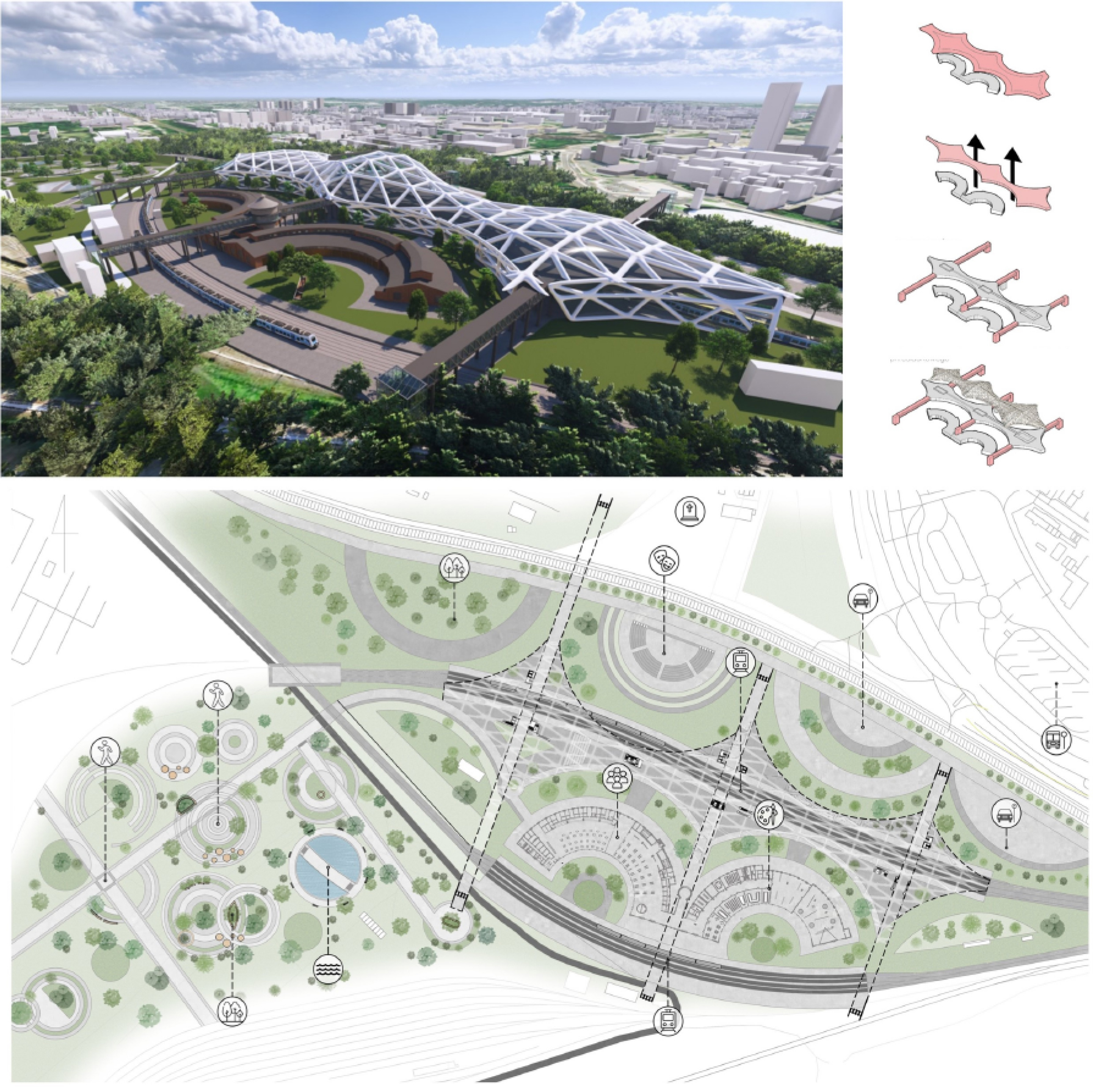
Figure 1.
Design: Jonatan Mirek, Eng. Arch.; Wiktor Malinowski, Eng. Arch.; Erasmus trainees: Regina Juarez, Abenezer Weldemariyam. Supervisor: Author
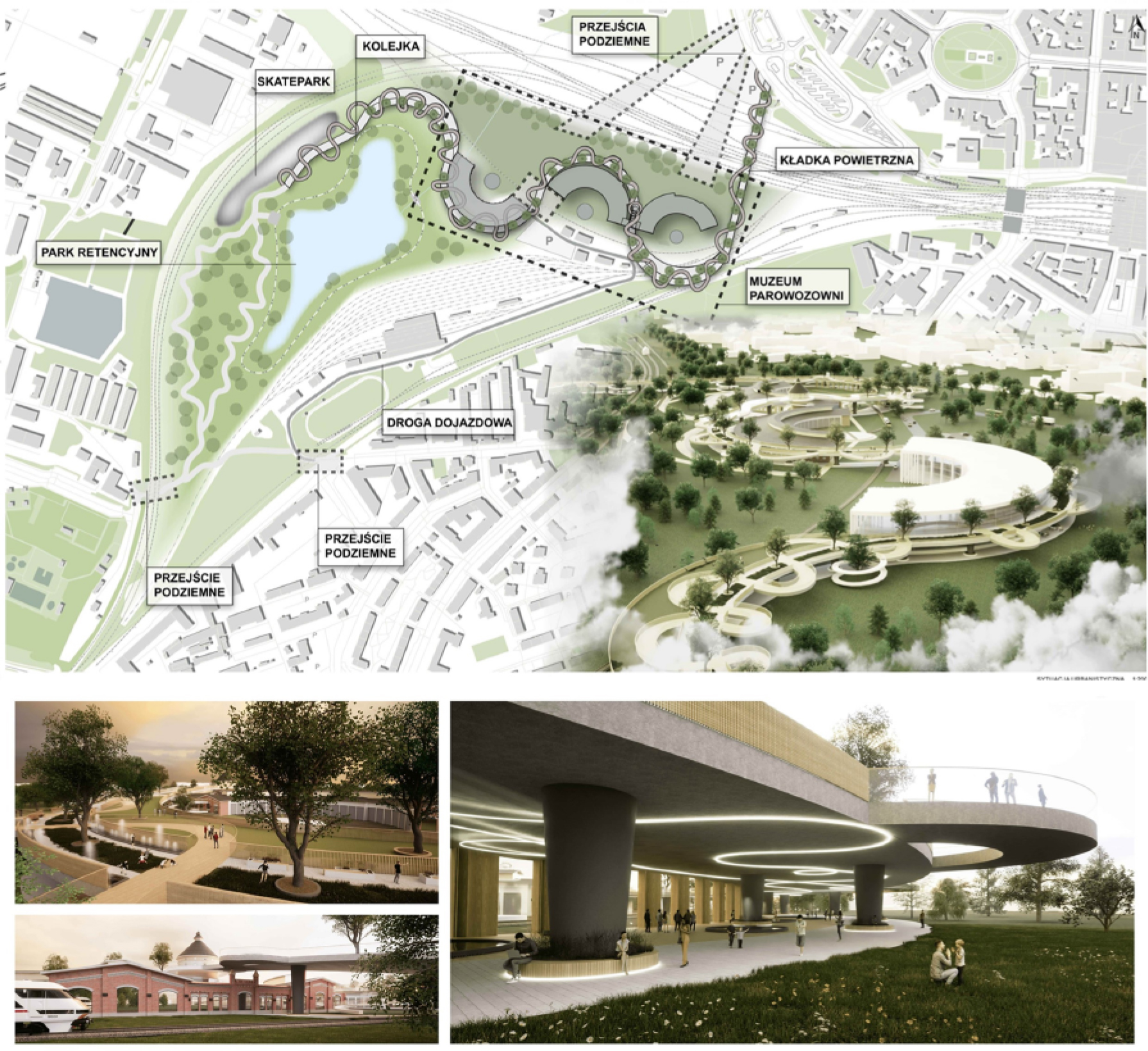
Figure 2.
Design: Aleksandra Mech, Eng. Arch.; Alicja Marzec, Eng. Arch.; Oliwia Kuras, Eng. Arch.; Monika Łukoszek, Eng. Arch. Supervisor: Author, Source: RAr-2 archive
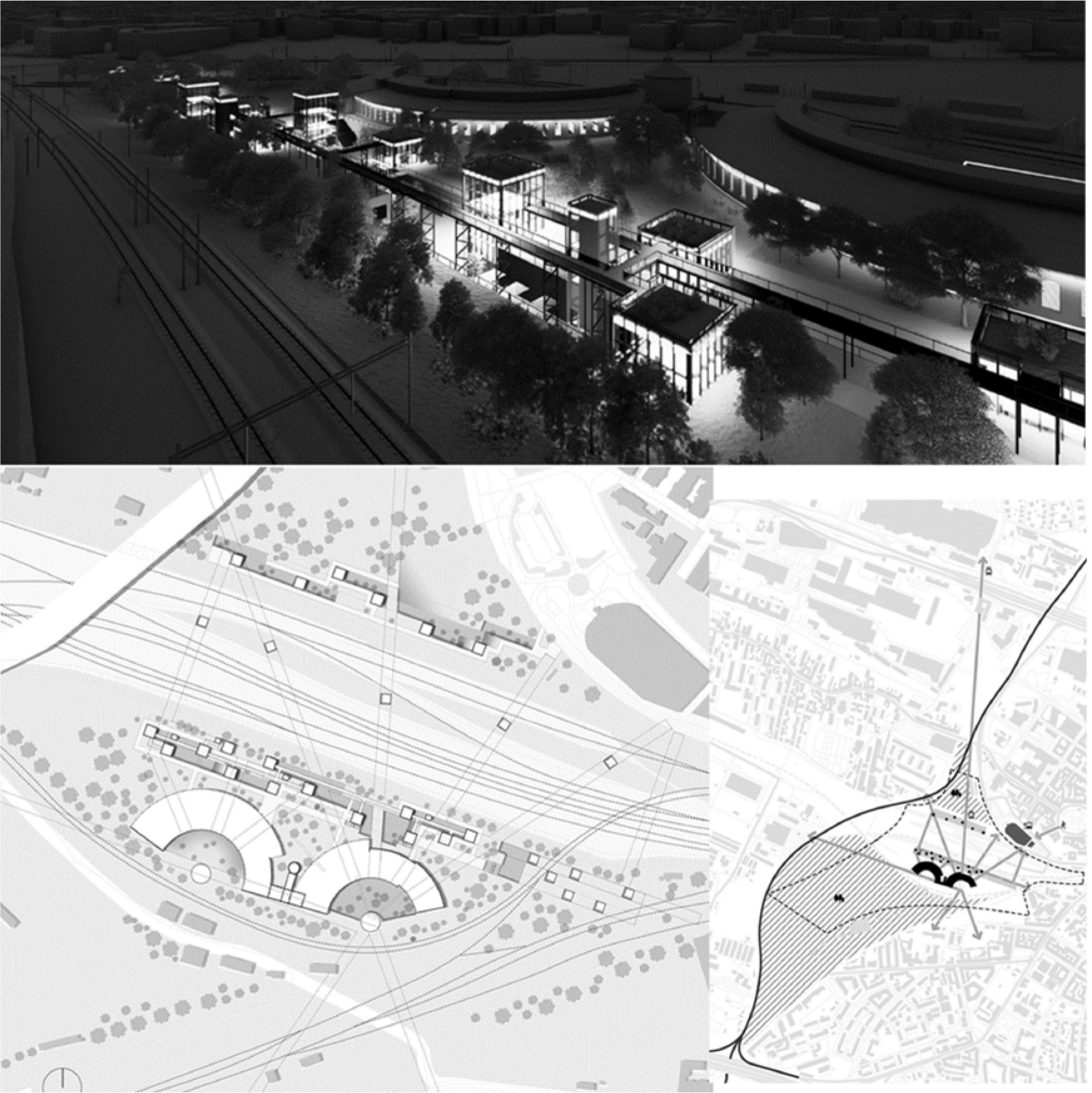
Figure 3.
Design: Kuternak Katarzyna, Eng. Arch.; Piesiur Kornelia, Eng. Arch.; Wojciech Kupka, Eng. Arch. Supervisor: Author. Source: RAr-2 archive
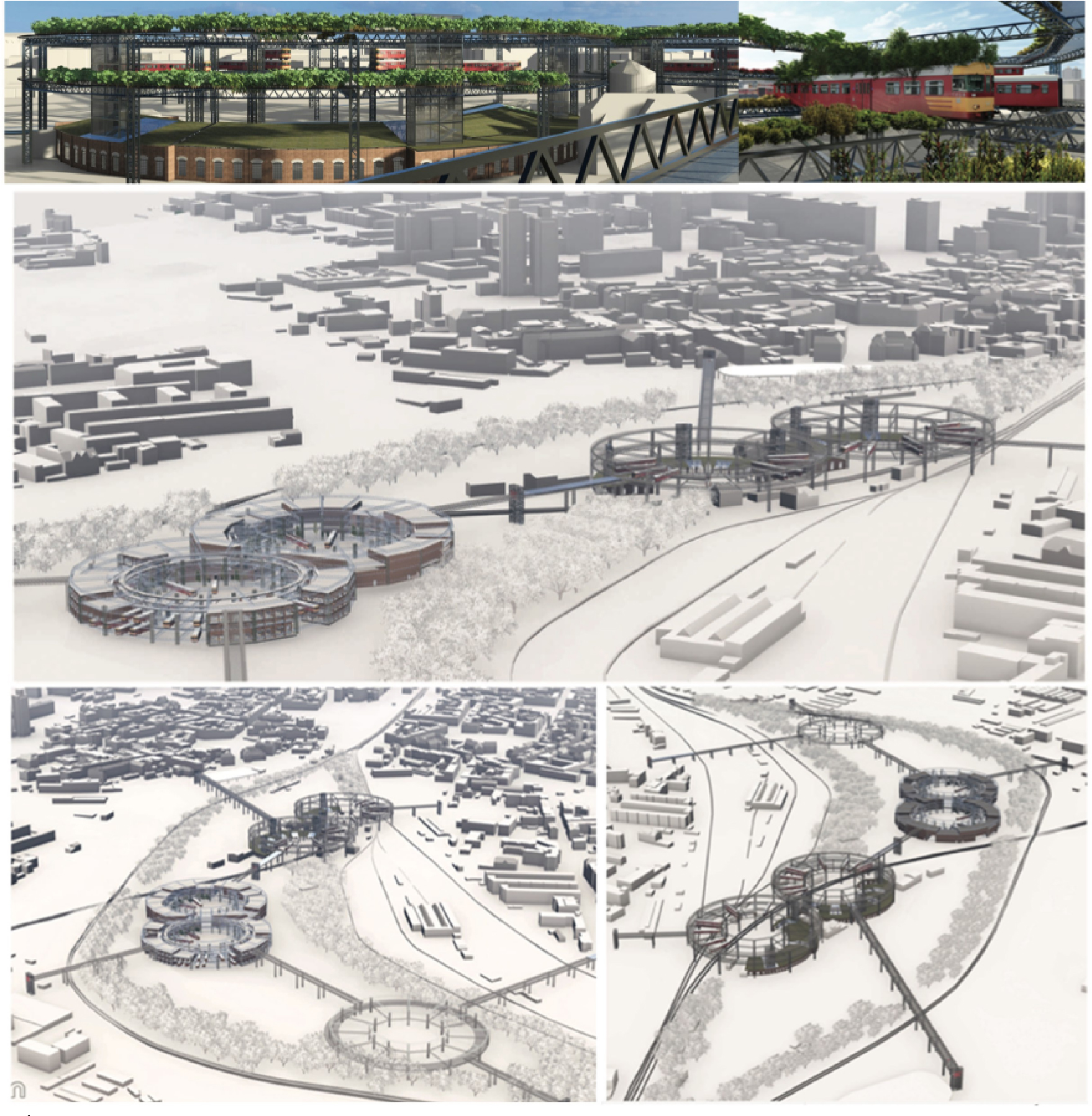
Figure 4.
Design: Paulina Kusmierz, Eng. Arch.; Magdalena Matłoch, Eng. Arch.; Agnieszka Stawiarz, Eng. Arch. Supervisor: Author. Source: RAr-2 archive
Table 1.
Projected impact of the Variant 1 on the values of the public space of the City Centre: program, spatial solutions, new connections, characteristics of public space
| program | multifunctionality; inside the structure there is a railway station platform, whereas in the adjacent semi-circles (including the fan buildings of the locomotive depot) there is space provided for the development of social initiatives, coworking, recreation, culture and art, in compliance with the local community’s expectations shown in the pre-design survey |
| spatial solutions | a proposal is based on the geometry of circles supplementing the layout of the locomotive depot; in its central part the development is covered by a glazed structure of an organic shape |
| new connections | independent footbridges connect neighbouring districts and create a functional structure of collision-free passages over the rail tracks |
| characteristics of public space | an accessible, centralised, multifunctional space combining transport and cultural services, based on a synthesis of the geometry of a fan-shaped locomotive depot and pedestrian bridges, linking areas crossed by tracks |
Table 2.
Projected impact of the Variant 2 on the values of the public space of the City Centre: program, spatial solutions, new connections, characteristics of public space
| program | a railway museum with a system of multifunctional facilities, which can be used for the purposes of exhibitions, cultural events as well as commercial and business purposes |
| spatial solutions | the proposal is to extend the fan-shaped depot buildings with a third, higher segment to accommodate educational spaces, conference rooms and multimedia exhibitions; a park area with recreational and educational functions is planned to the south |
| new connections | an elevated meandering footbridge between the buildings provides a two-storey public space which, together with the subways, connects the districts to the north, the depot and the green areas to the south; a narrow-gauge railway is designed in the southern park |
| characteristics of public space | the mixed use public space is a hybrid of green space, amusement park and cultural space with multidirectional links offsetting the barrier created by the railway tracks |
Table 3.
Projected impact of the Variant 3 on the values of the public space of the City Centre: program, spatial solutions, new connections, characteristics of public space
| program | multifunctionality and adaptability to users’ needs (zones of recreation and relaxation, a large gastronomic zone – in the form of an open-air railway museum, functions of culture, education and business; green solutions) |
| spatial solutions | elements of various typology: large-scale locomotive depot halls, small-size cubic modules of a light, scattered structure located along the tracks, a system of atria and linear underground connections, are a compositional extension of the locomotive depot fans; adapted elements of the rolling stock are used in the project |
| new connections | multimedia exhibitions located underground connect areas parted by the railway tracks; such passages lead to important destinations within the city, one of them houses the first underground (metro) line in Katowice |
| characteristics of public space | accessibility and mixed use; the concentric layout of the links, offsetting the effects of the spatial barrier represented by the tracks, integrates the system of functions distributed along the railway line; it is subordinated to the geometry of the steam engine house |
Table 4.
Projected impact of the Variant 4 on the values of the public space of the City Centre: program, spatial solutions, new connections, characteristics of public space
| program | the planned functions encompass: an open-air railway museum, a multi-level park, orangery, a hotel featuring a fitness and recreation centre, a business-oriented section |
| spatial solutions | a complex of five architectural cylinders freely located in a park-like green area reminiscent of a railway siding layout; the building forms complement the fan-shaped geometry of the locomotive shed |
| new connections | the facilities and adjacent areas are spatially and functionally linked by a system of steel footbridges |
| characteristics of public space | an accessible and multifunctional space with recycled elements; the steel structure consists of modules with exhibition, green, education, coworking, catering, accommodation and other functions; some of which are reused railway carriages |
5. DISCUSSION
As the literature studies and design research revealed, new strategies of the city-railway integration should be based on the following aspects: adjustment (matching), integration with the context of the surroundings, modernisation of the fringes and existing infrastructure, adaptation of former facilities for public purposes and creation of barrier permeability. Both fringes and the whole districts can be subjected to revitalisation. Thanks to proper urban-planning solutions, the consolidation and integration of the railway with the city will follow, resulting in greater urban cohesion. The following facilities are often subject to modernisation:
a) railway stations [25]; modernisation results in an increase in the accessibility of railway infrastructure, adaptation of transport devices to technological advancements and improvement of passengers’ comfort (Figure 5), maximisation of profits through the application of multifunctional approaches; in less populated destinations – the adaptation of ineffective or unused railway stations for residential purposes or the function of services or production [5], culture-related purposes (Station of Culture – Library Rumia/Stacja Kultura – Biblioteka Rumia/, Stanica Žilina-Záriečie), display of motifs connected with railways; the revitalised “station” becomes an architectural metaphor – a place of stopover, accessibility, a meeting place, the beginning of a ‘mental journey’; recycling restores technical monuments to the public space of the city, whereas new multifunctional solutions contribute to the creation of local centres around the railway;
b) tracks and rail traction; the renovation of old lines and the construction of new ones are underway, the replacement of components with new ones, which have better technical parameters and are suitable for the needs of high-speed railway (HSR); the modernisation results in the creation of conflict-free railway and road intersections, new solutions for cyclists, pedestrians, wildlife; there is reconstruction and revitalisation of railway viaducts (Figure 6); the above-mentioned solutions restore urban continuity;
c) rolling stock [4]; decommissioned carriages and steam locomotives are suitable for recycling in new architectural solutions, serving the purpose of urban furniture or museum exhibits documenting technological development; such details enhance the stylistic coherence of the railway with the city and serve also social purposes;
d) other elements of infrastructure; new investments in rolling stock depots and maintenance facilities include the following: locomotive depot buildings, rail cars washing facilities, social facilities, railway traffic control systems, diagnostic stations for rolling stock, which will have impact on the railway operation and functioning; some of the historic technical buildings do not satisfy requirements [7] and are not suitable for modernisation; their location and technical parameters do not create favourable conditions for the planned improvements and cannot be used for logistic purposes; their adaptation for public purposes, using new spatial solutions, makes it possible to eliminate barriers in the areas located on the fringes of transport hubs.
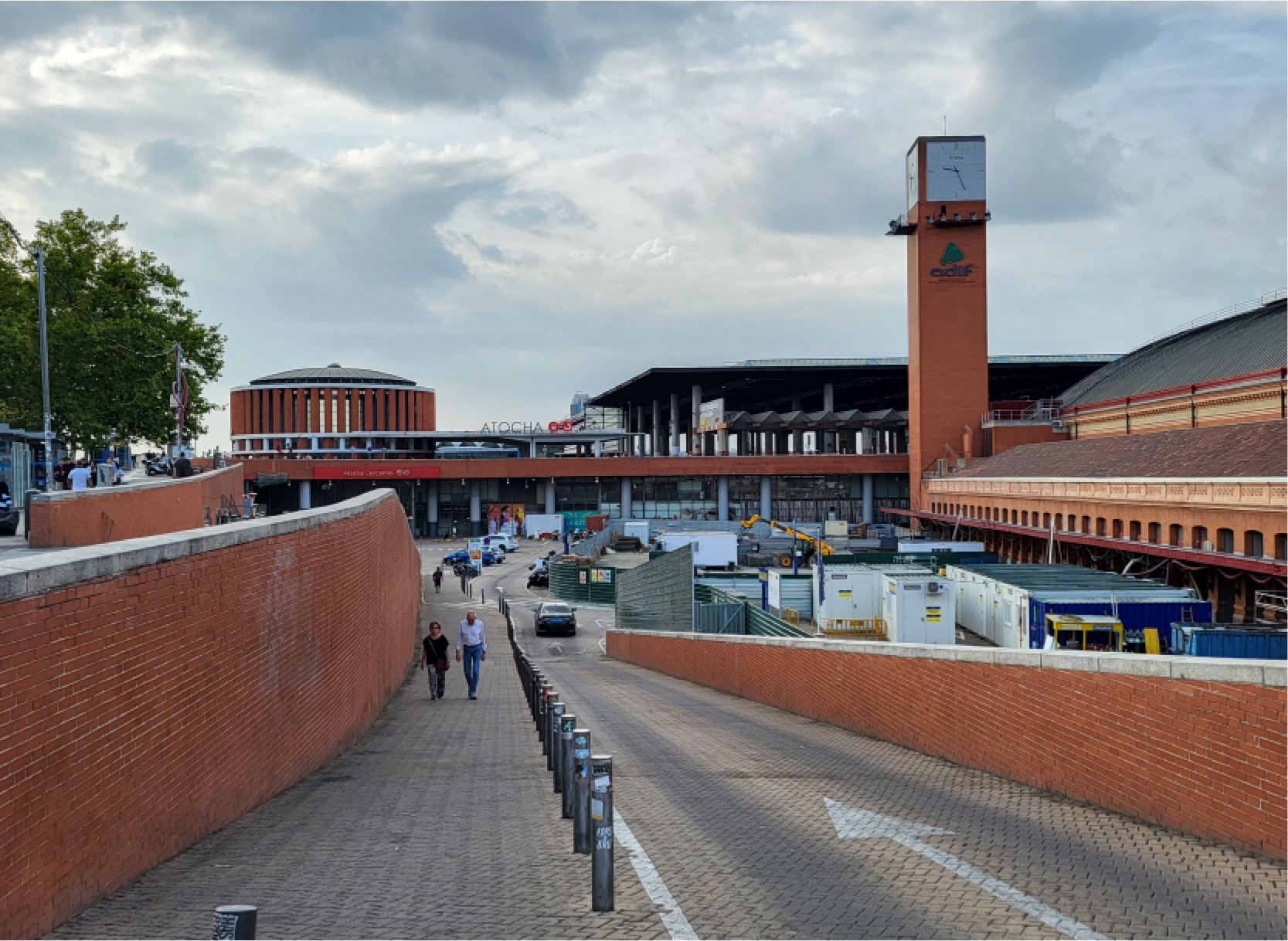
Figure 5.
Madrid – Puerta de Atocha. Rafael Moneo. Revitalisation of the railway station 1992, 2012. Photo: Author 2024
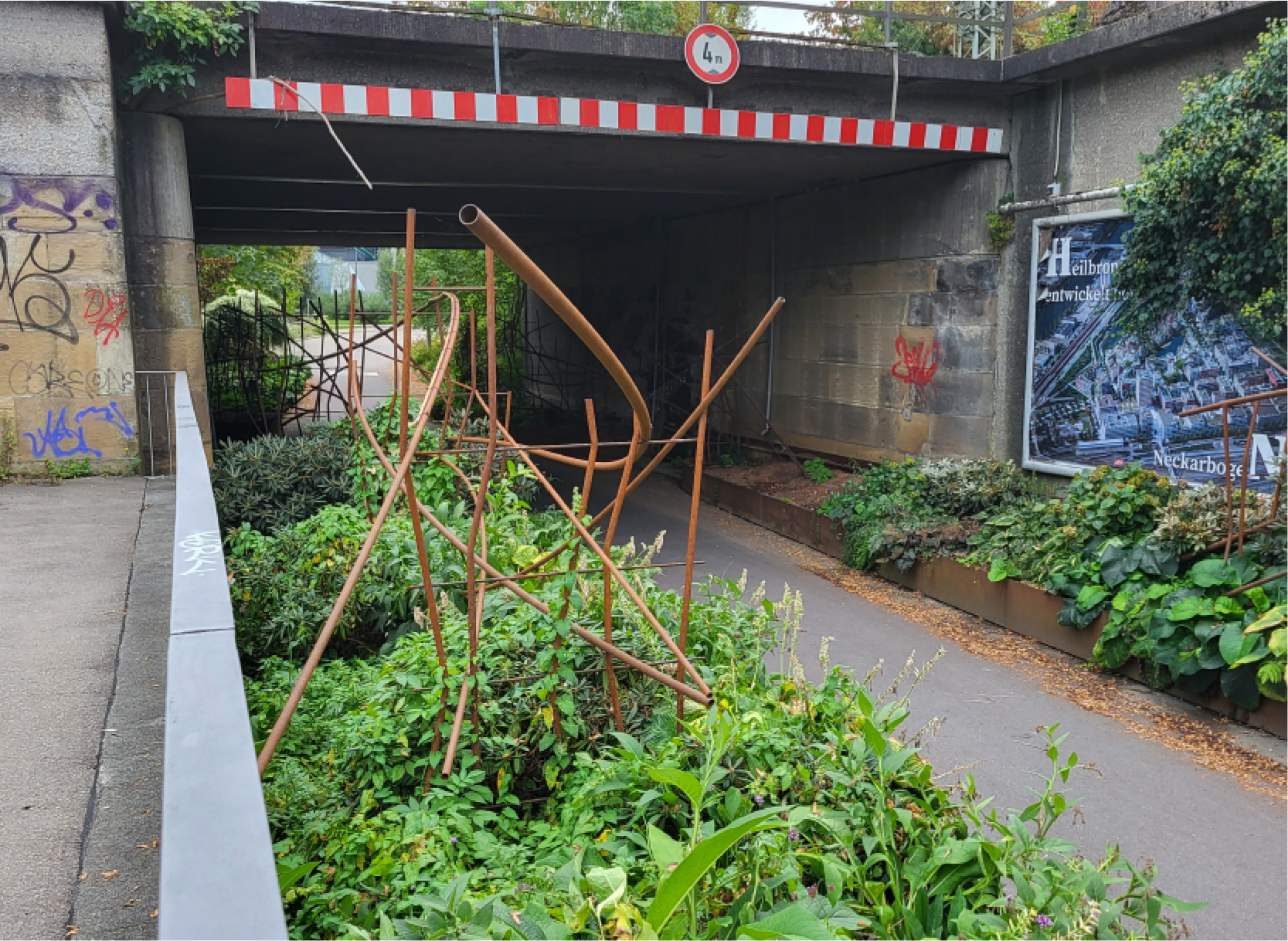
Figure 6.
Green path to Experimenta Neckar. Revitalisation of the railway viaduct in Heilbronn. Photo: Author 2023
Z. Taylor in the introduction to the monograph Rozwój i regres sieci kolejowej w Polsce (Development and Regression of Railway Network in Poland) (2007) [5] quotes poet Heinrich Heine’s statement from 1843 (which has been cited at the beginning of this chapter in its original version): Railways have killed space, all we have left is time… [2] This sentence reflects, in a particular way, the priorities of the development of rolling stock, where care for the quality of urban space loses with ‘acceleration’. A rational approach demands seeking ways of integration of railways with the city – the elimination of barriers and using the available potential of rail infrastructure (in terms of economy, culture, education and space) as well as taking care of the preservation and development of public space – understood as common good and public benefit. To achieve the effect of compatibility between railway lines and urban development, it is necessary to initiate interdisciplinary collaboration and fight against time to preserve the architectural and technical heritage of the transport industry.
6. CONCLUSIONS AND RECOMMENDATIONS
Along the railway lines there remain architectural structures which are no longer in use and lost their importance due to the modernisation aimed at the transport intensification (for instance, the fan-shaped steam locomotive depot in the vicinity of the Katowice railway hub). The value of the above-mentioned structures consists in the fact that, on the one hand, they are precious technical monuments (featuring unique technological solutions), on the other hand, they are located on sites where it is necessary to generate links across the tracks with the rest of the city and to restore significance to the degraded areas. New urban-planning systems created on the basis of such relics of the past have a capacity to recover urban continuity in places claimed by the railway, where the long-term use produced an unfavourable barrier or border effect or (as it is in this case) formed inaccessible islands. On the basis of such sites, new systems (structures) of traffic, circulation and “mental” mobility can be created between heritage sites and people who will be gathering in such new multifunctional spatial developments. These new structures constitute a crucial condition for the cohesion of urban spaces. The model solutions proposed in design variants may also be applied to other similar locations.