
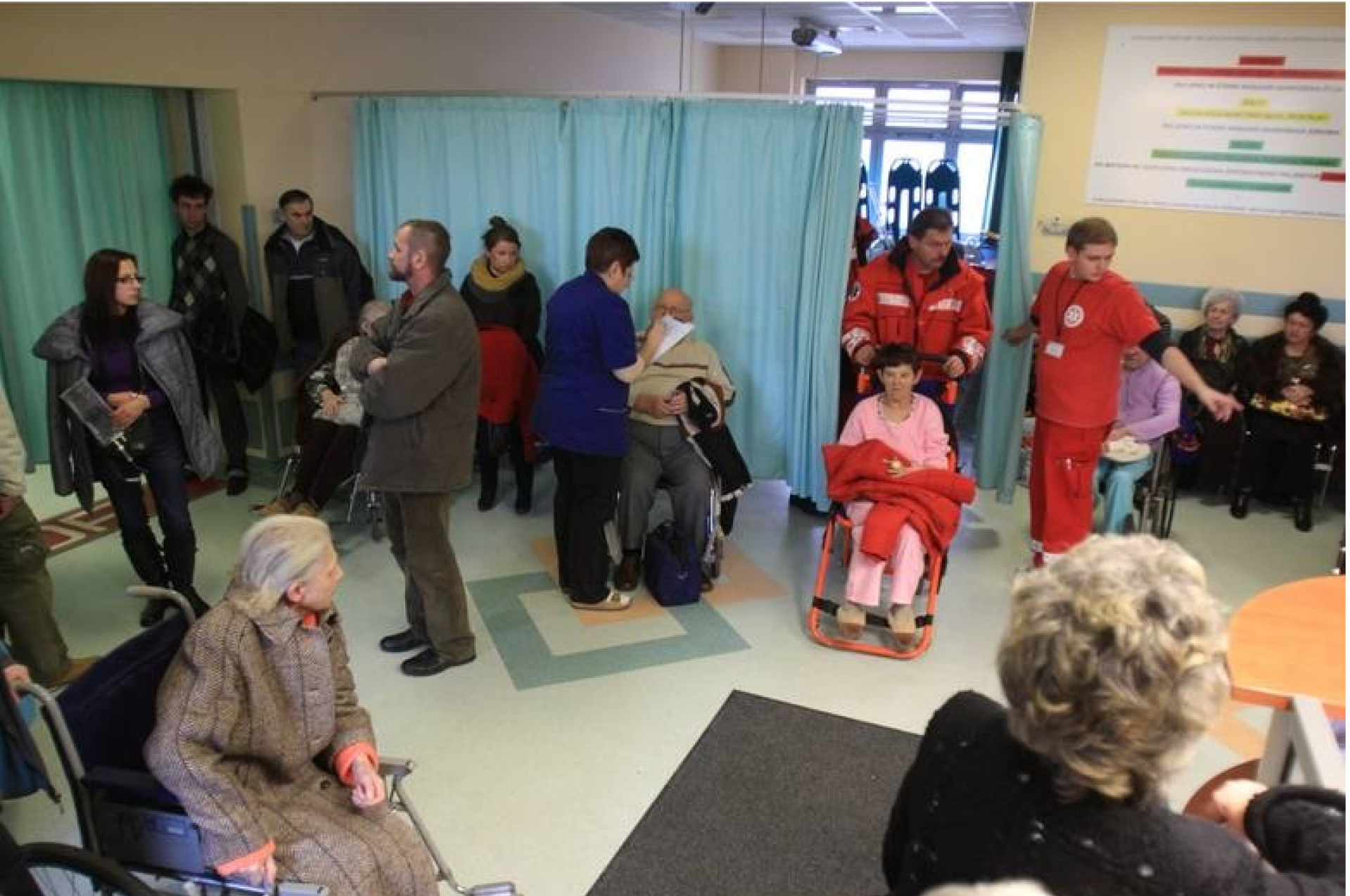
Figure 1.
Emergency Department – overcrowded – main ED hall in Romania hospital. Source: Photo by the author
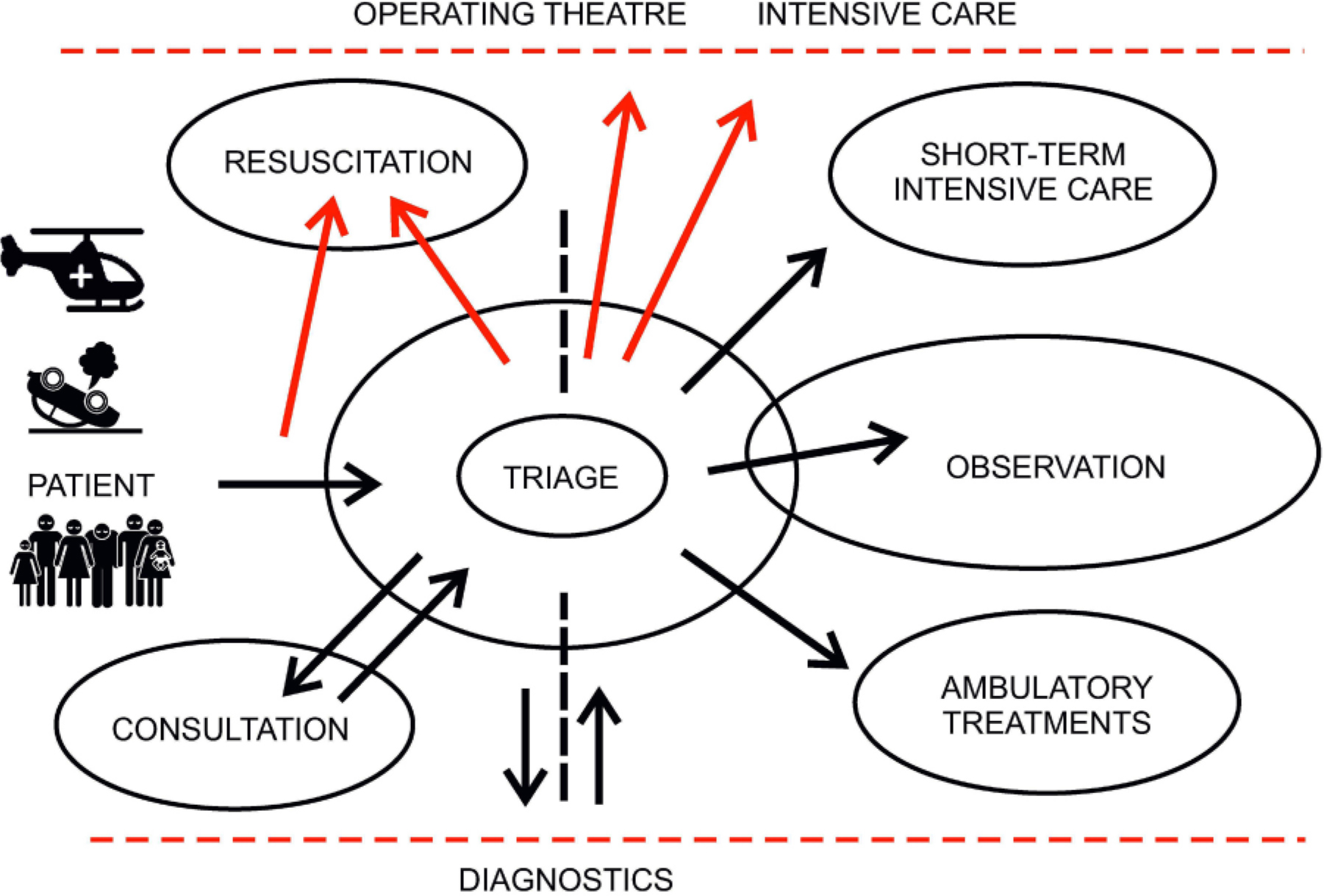
Figure 2.
Emergency Department – general scheme. Source: Diagram created by the author
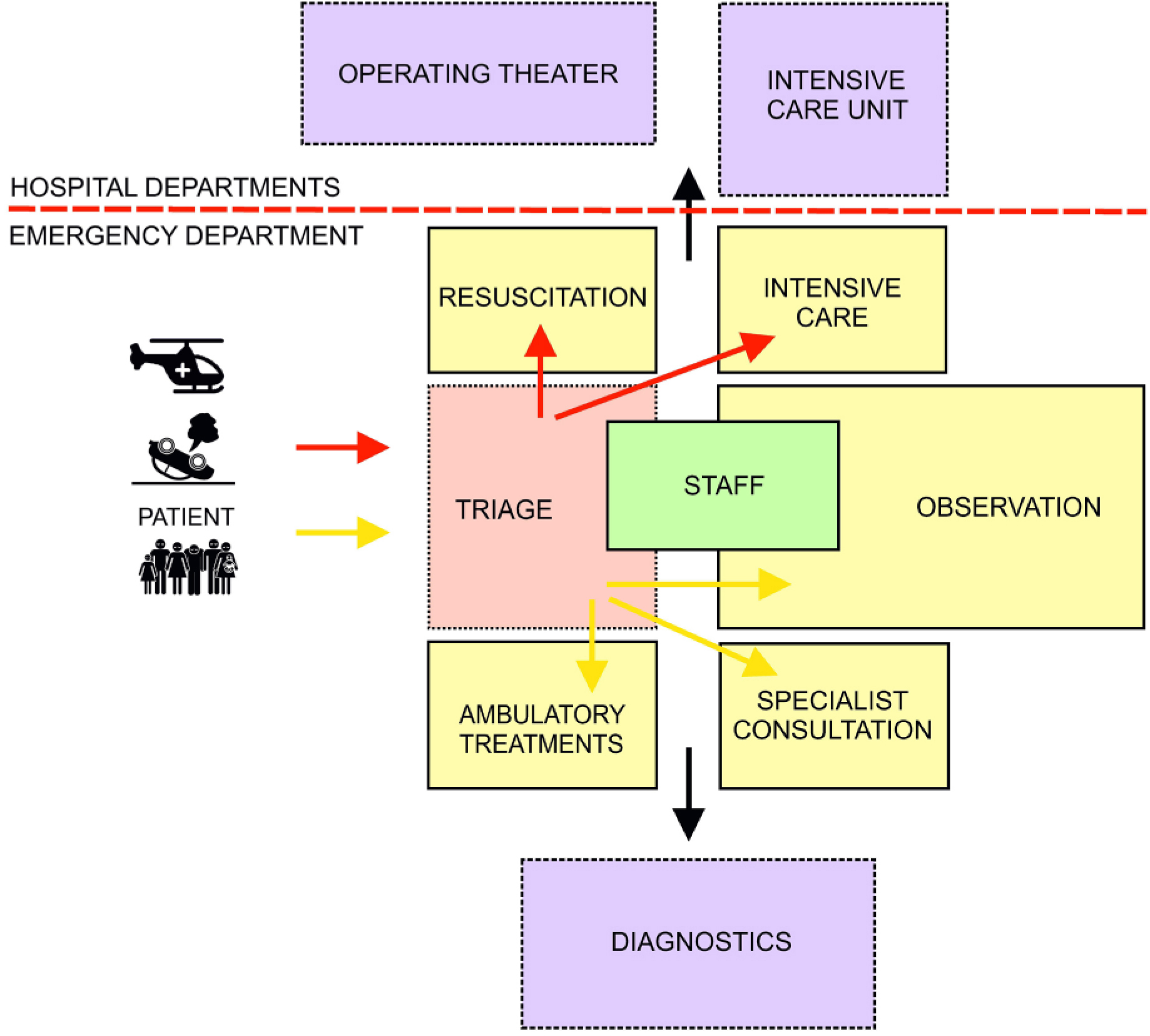
Figure 3.
Emergency Department – functional diagram (standard spatial layout). Source: Diagram created by the author
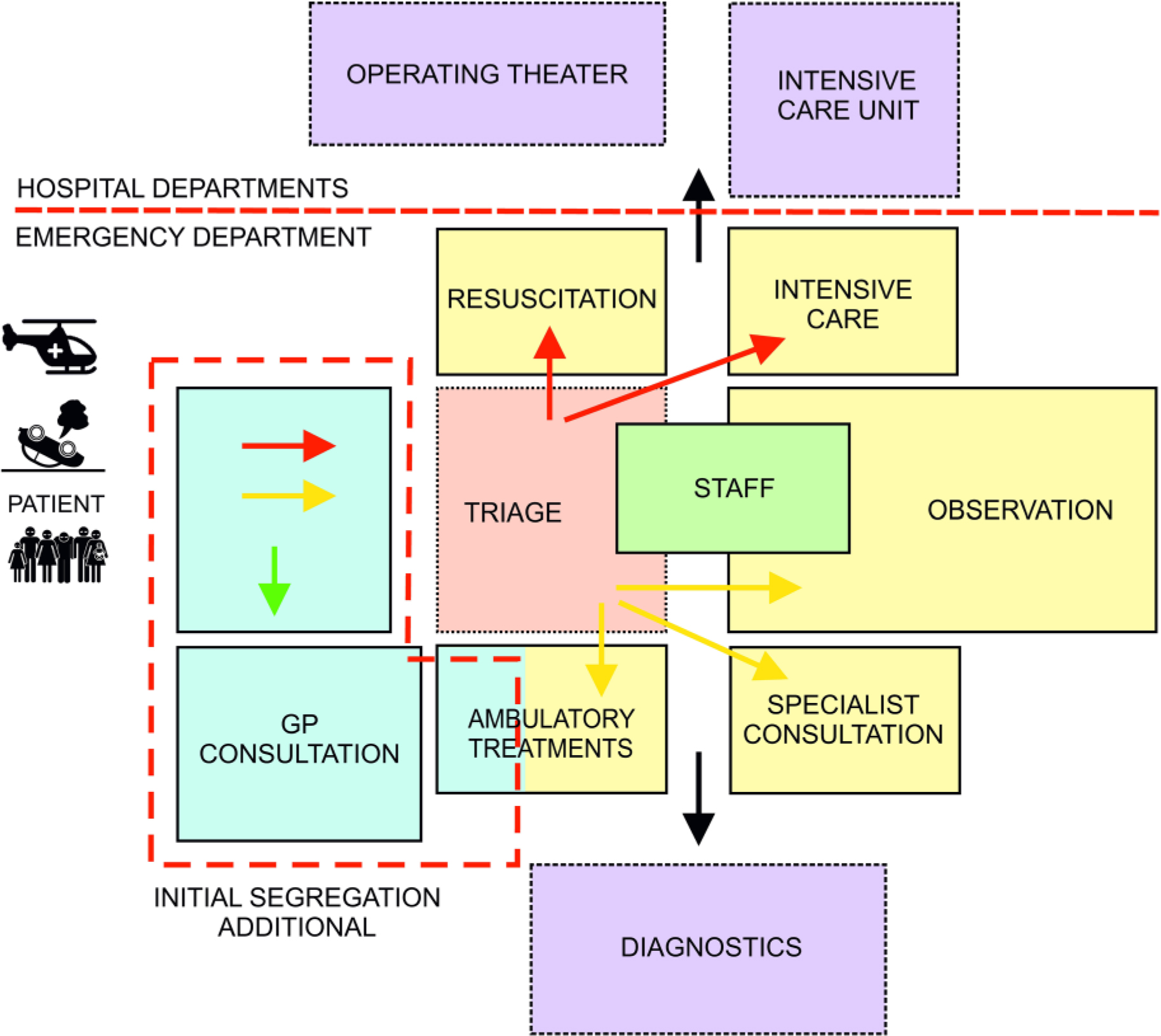
Figure 4.
Emergency Department – functional diagram (espanded spatial layout). Source: Diagram created by the author
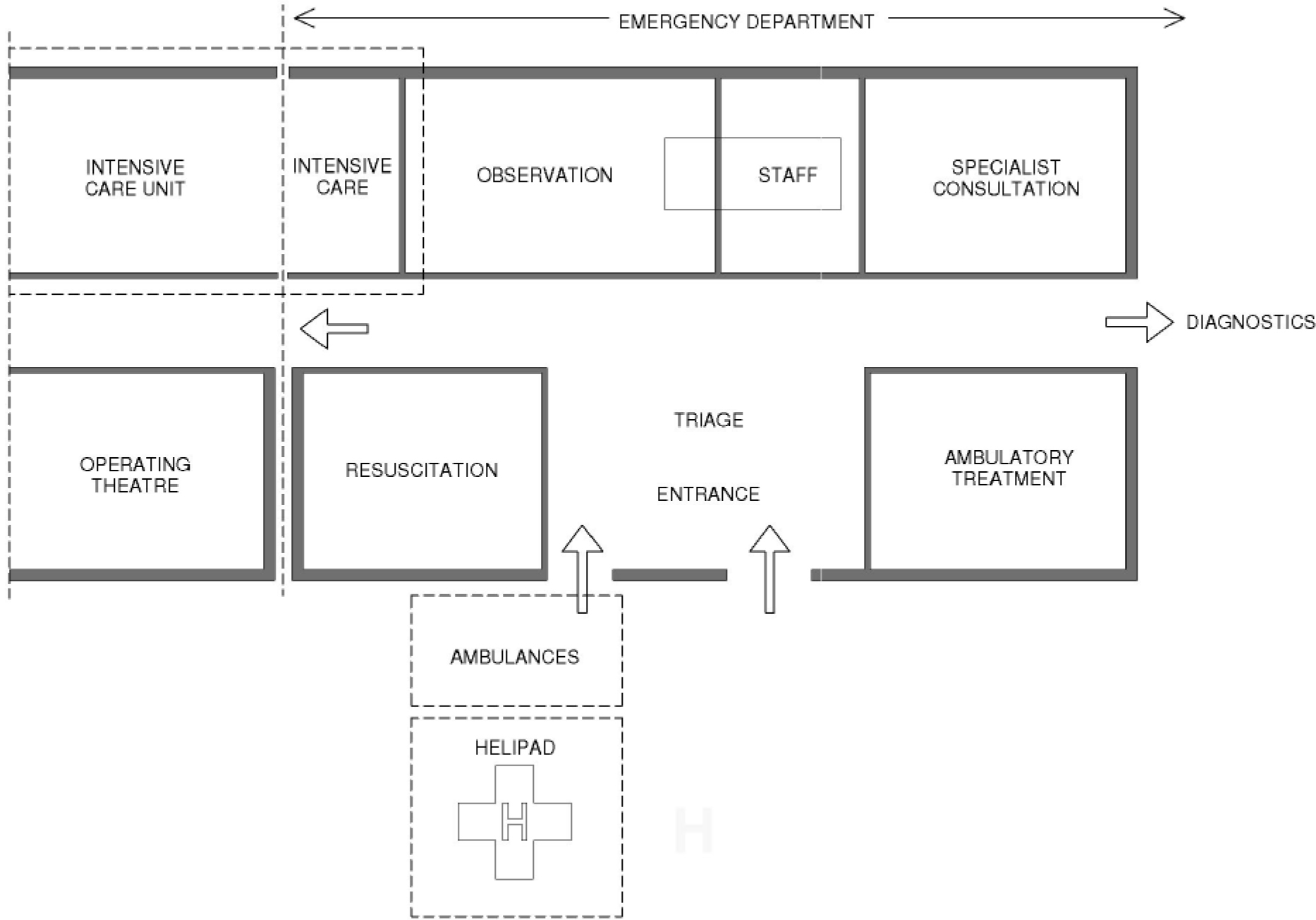
Figure 5.
Emergency Department (standard layout). Source: Diagram created by the author
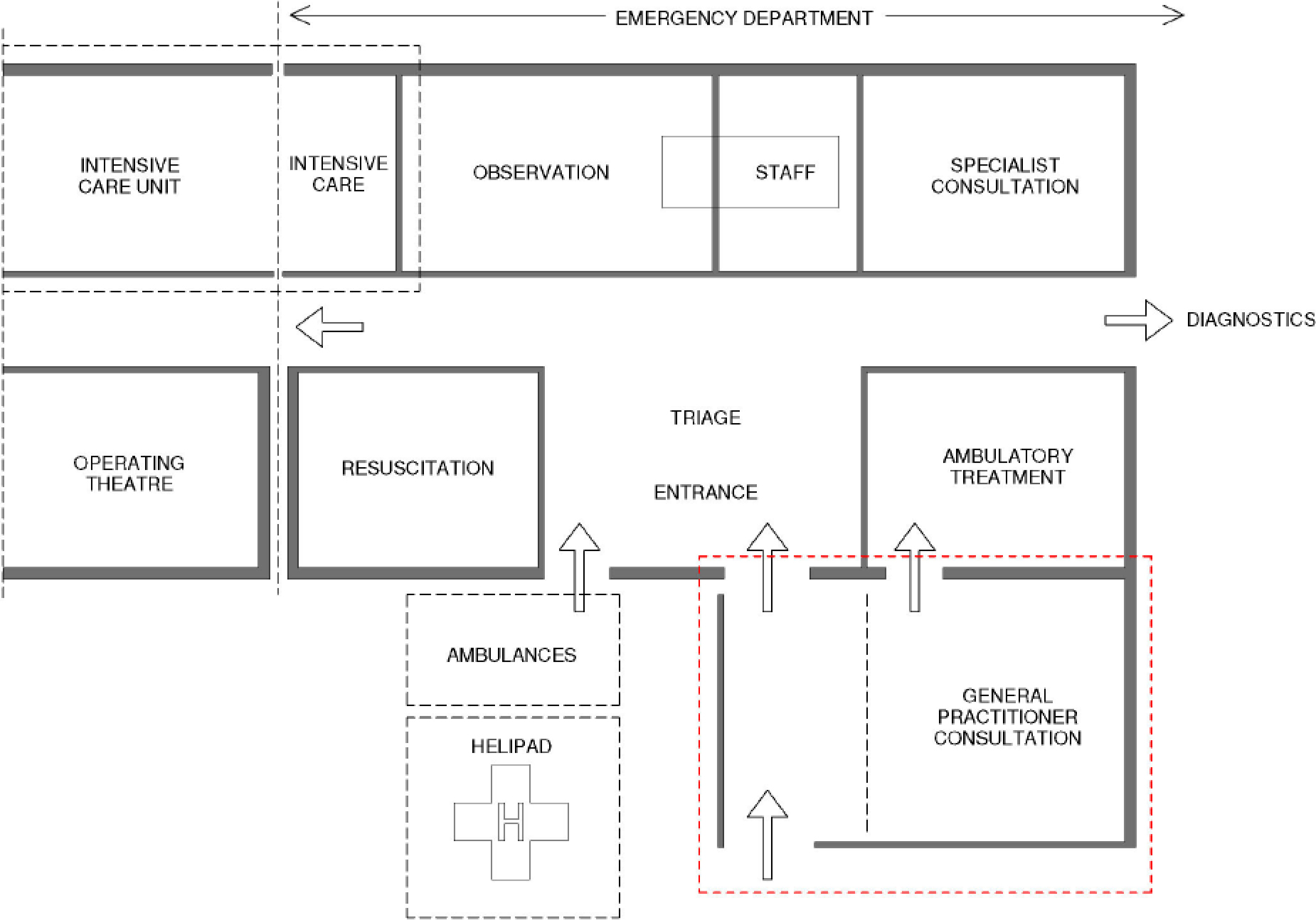
Figure 6.
Emergency Department (extended layout). Source: Diagram created by the author
Table 1.
Patient waiting times in ED (ER) departments [43]
| Country | Main waiting time in ER or ED |
|---|---|
| United States | In the U.S., average emergency room (ER) wait times are around 40 minutes to see a doctor, but total visit times, including treatment and discharge, can exceed 2–3 hours. In overcrowded urban hospitals, waits can be longer, sometimes up to 6 hours or more for non-critical cases. |
| United Kingdom | Under the National Health Service (NHS), the target is to treat or discharge patients within 4 hours of arrival. However, in recent years, many hospitals have struggled to meet this goal, with some patients waiting over 8 hours, especially during winter surges. |
| Canada | Wait times in Canadian emergency departments are known to be lengthy, often exceeding 4 hours for less urgent cases. Critical cases are prioritized, but patients with non-urgent needs may wait 6–8 hours or more in busy hospitals. |
| Australia | In Australia, about 70% of patients are seen within the recommended timeframes based on the urgency of their condition. However, for non-critical cases, wait times can range from 2 to 4 hours, depending on hospital demand. |
| Germany | German emergency departments typically have shorter wait times due to a robust healthcare system. Most patients are seen within 30–60 minutes, but during peak times, waits can extend to 2–3 hours. |
| India | In India, wait times vary widely depending on the hospital and whether it is public or private. In private hospitals, patients are often seen quickly, sometimes within 15–30 minutes, whereas public hospitals may have wait times of several hours. |
| Nordic Countries: Sweden, Norway, Finland | In countries like Sweden, wait times in emergency departments can range from 1–3 hours for non-critical cases. These systems prioritize acute and severe cases, ensuring minimal delays for life-threatening conditions. |
| France | In France, most patients are seen within 1–2 hours, but non-urgent cases in large urban hospitals may experience longer waits during busy periods. |