
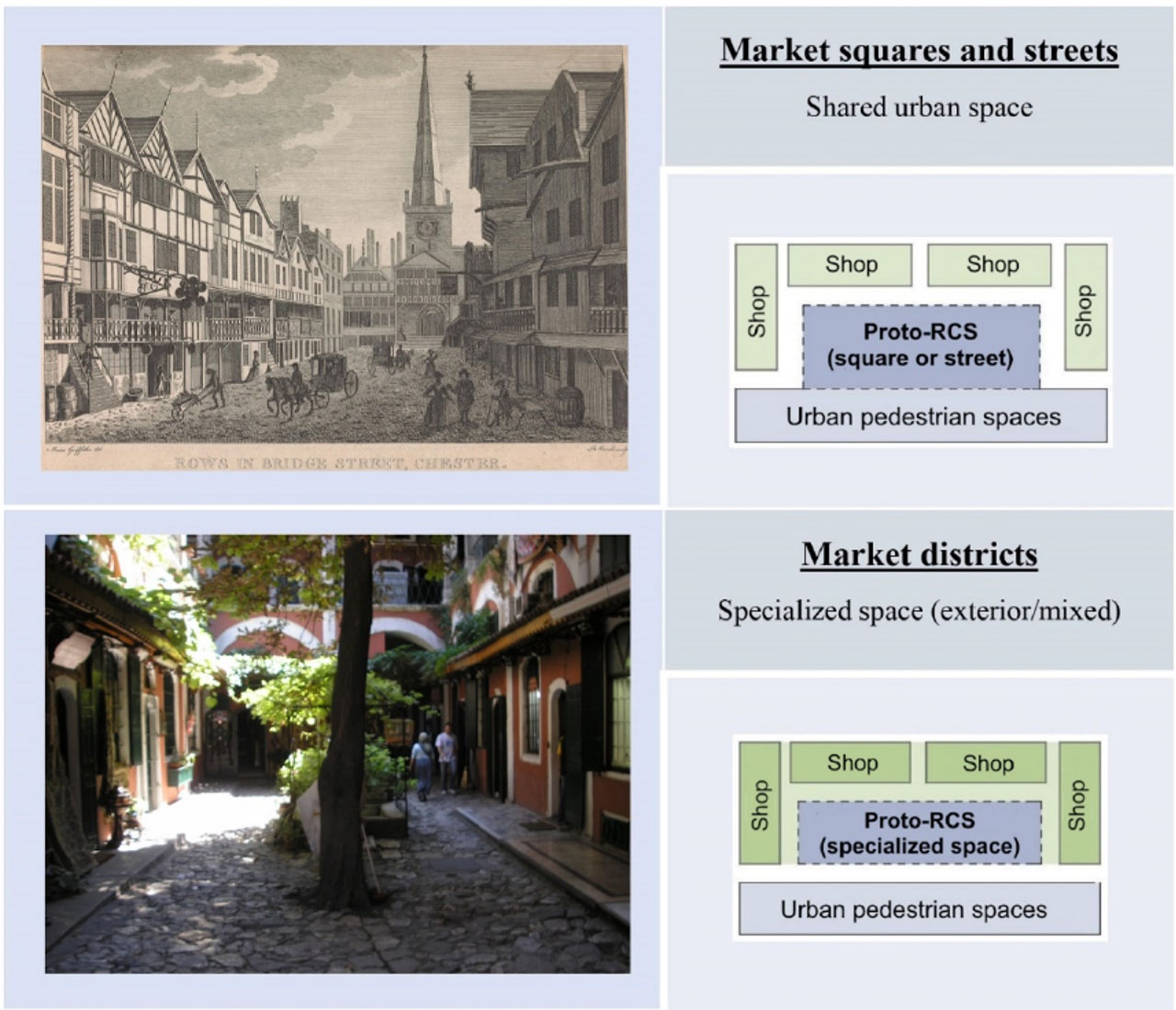
Figure 1.
Spatial structure of market squares, streets and districts. Top illustration – Rows in Bridge Street, Chester, UK, art by P. Mazell, Public domain [16]; bottom illustration – Grand Bazaar in Instabul, Turkey, photo by Gryffindor, Public domain [16]
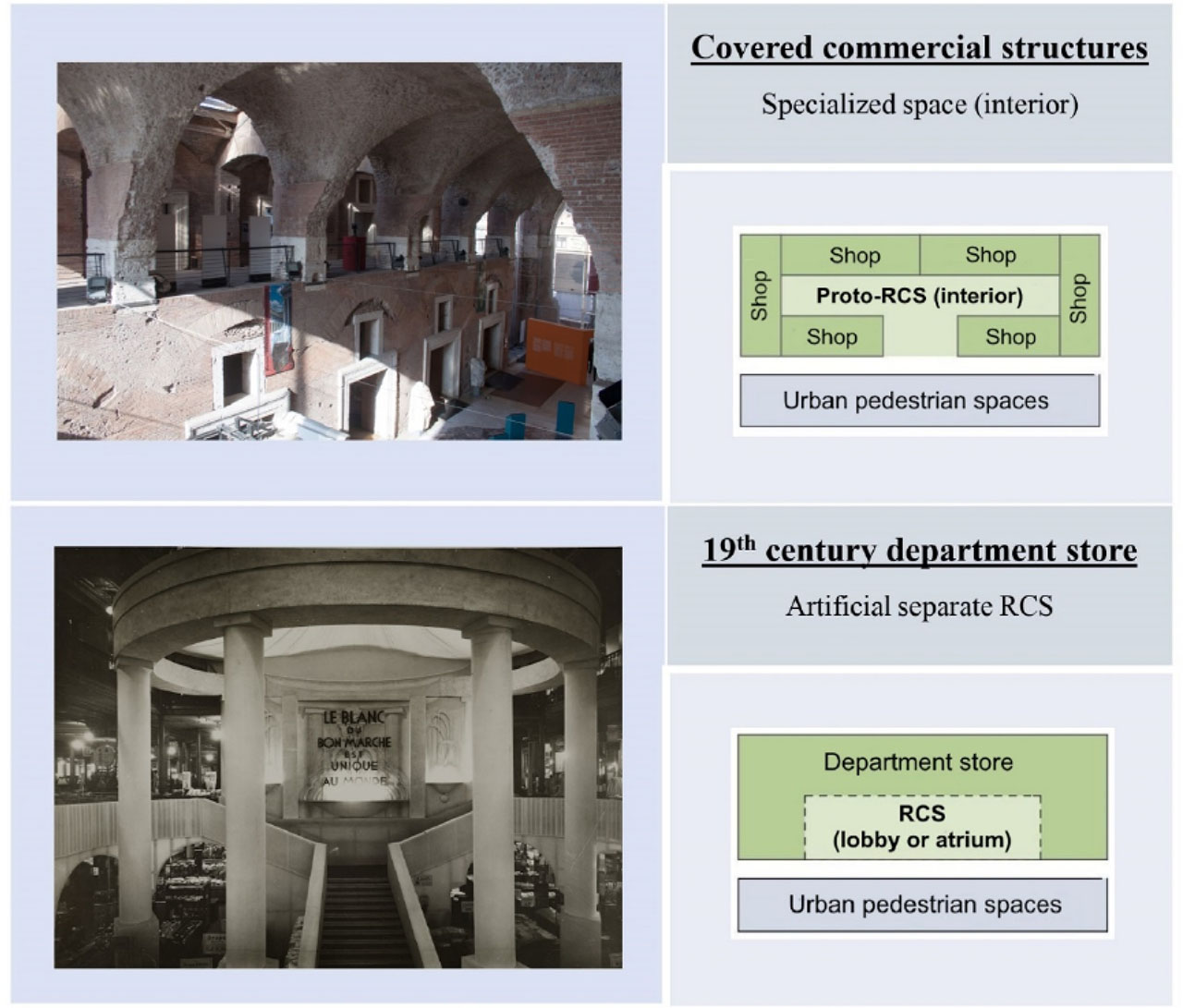
Figure 2.
Spatial structure of covered commercial structures and 19th century department stores. Top illustration – Trajan Market in Rome, Italy, photo by Szilas, Public domain [16]; bottom illustration – “Au Bon Marche” in Paris, France, photo by anonymous author, Public domain [16]
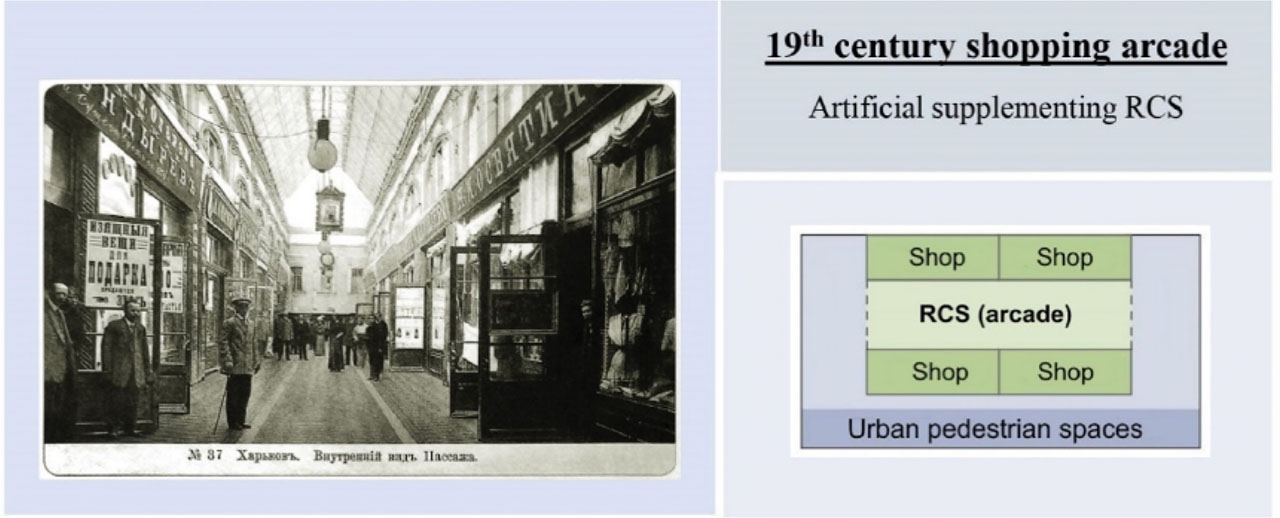
Figure 3.
Spatial structure of 19th century shopping arcades. Illustration – Paschenko-Tryapkin (Old) Arcade in Kharkiv, Ukraine, postcard [17]
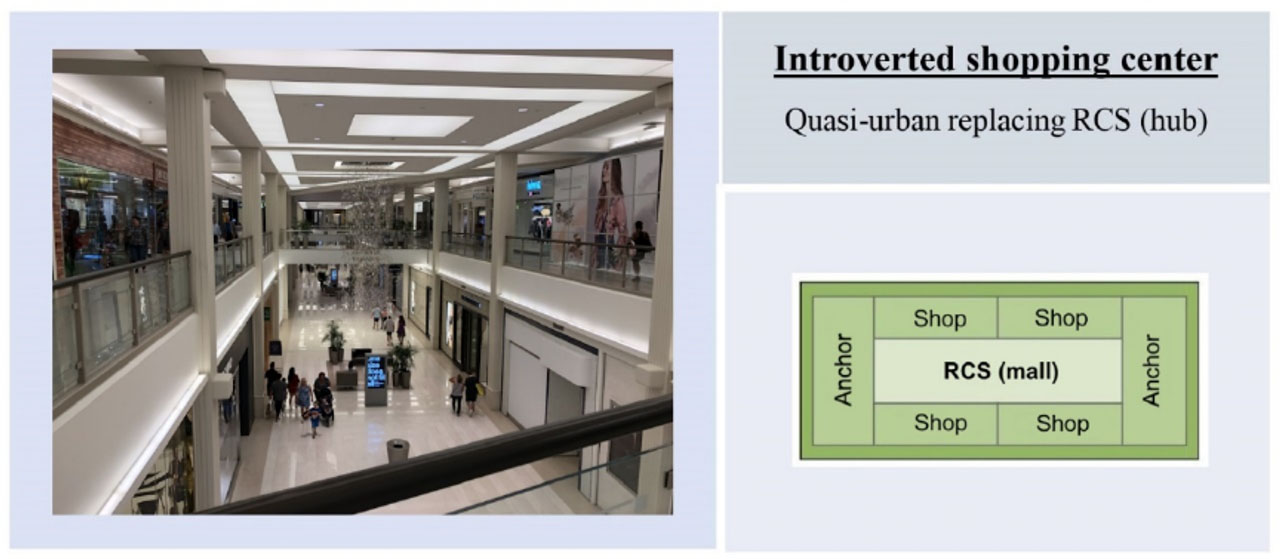
Figure 4.
Spatial structure of an introverted shopping center. Illustration – “Mall of America” in Bloomington, USA, photo by Thomson200, Public domain [16]
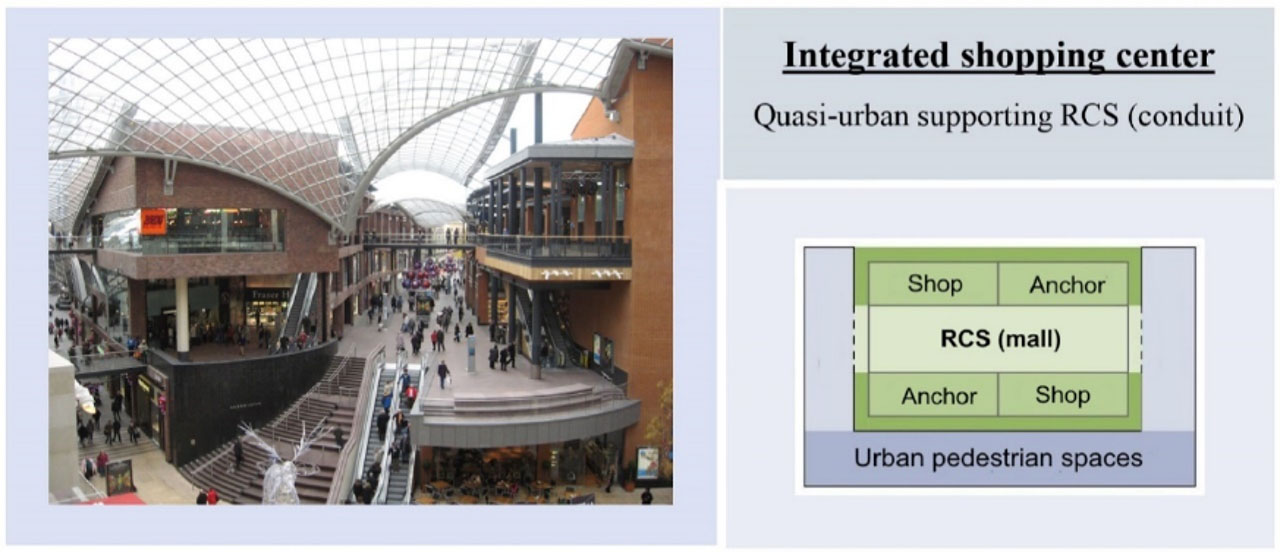
Figure 5.
Spatial structure of an integrated shopping center. Illustration – “Cabot Circus” in Bristol, UK, photo by Jongleur100, Public domain [16]
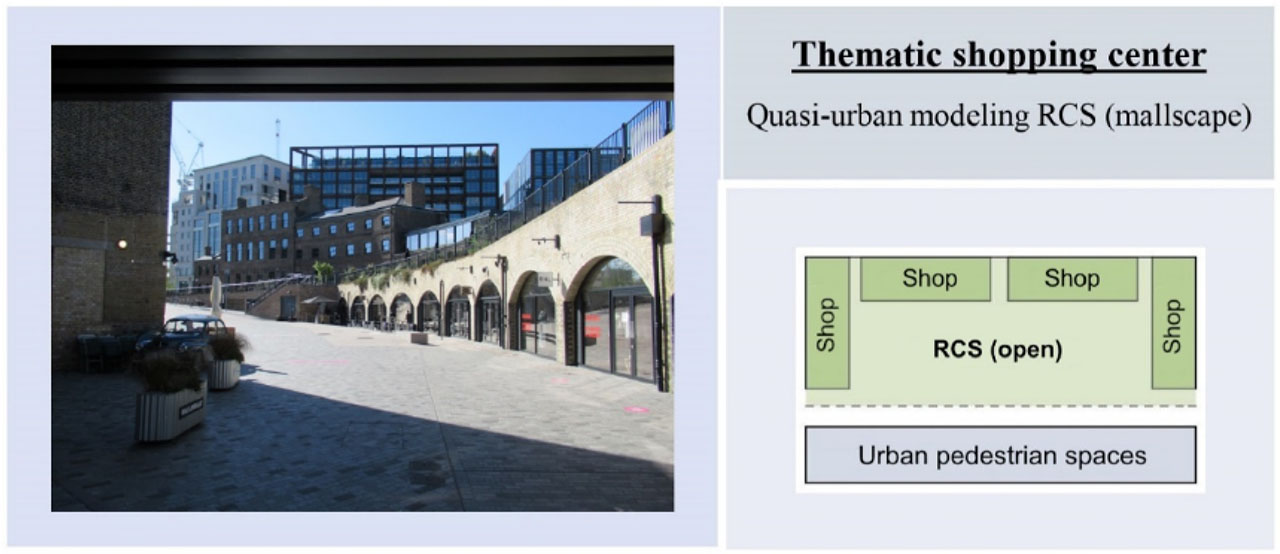
Figure 6.
Spatial structure of a thematic shopping center. Illustration – “Coal Drops Yard” in London, UK, photo by Andy Scott, Public domain [16]
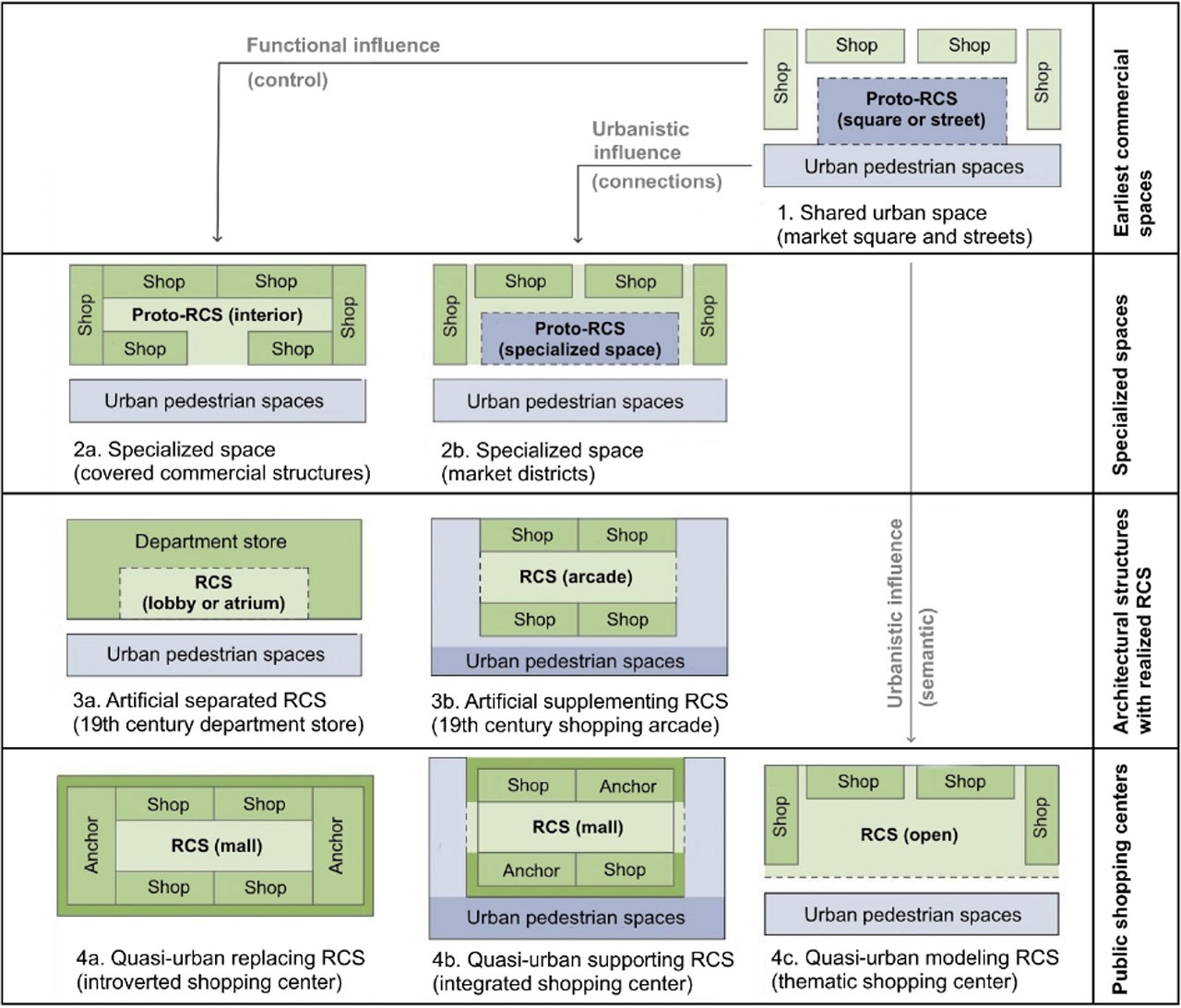
Figure 7.
Transformation of recreational communication space of public shopping centers and their antecedents. Own work
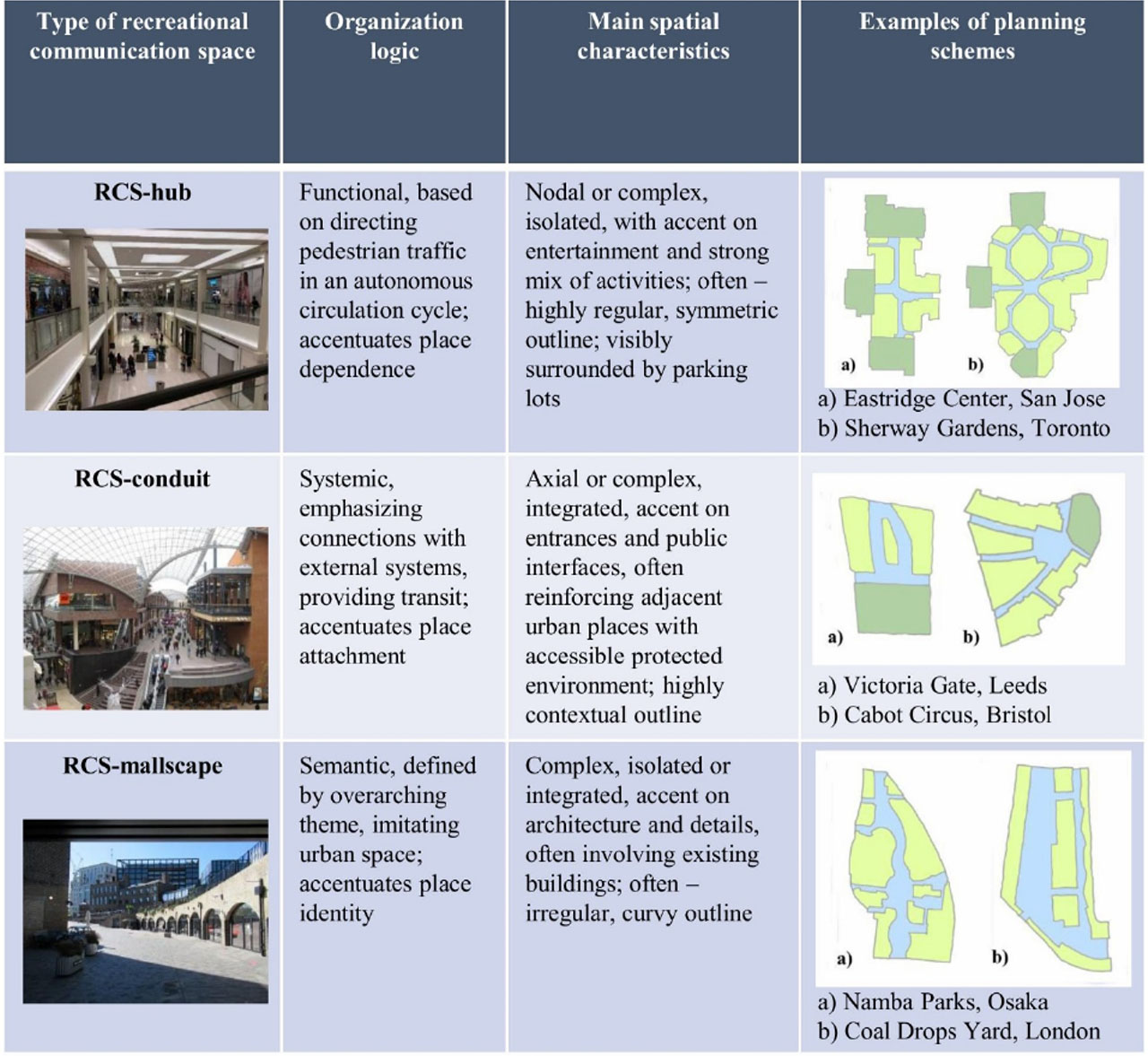
Figure 8.
Three types of recreational communication spaces by their primary logic of spatial organization (blue color on the schemes denotes RCS, light green – shops and additional functions, dark green – department stores as anchors). Illustrations, top to bottom – “Mall of America” in Bloomington, USA, photo by Thomson200, Public domain [16]; “Cabot Circus” in Bristol, UK, photo by Jongleur100, Public domain [16]; “Coal Drops Yard” in London, UK, photo by Andy Scott, Public domain [16]; planning schemes – own work