Have a personal or library account? Click to login
The Criterion of Access to the Sky View in Residential Environment Architectural Designing Cover

The Criterion of Access to the Sky View in Residential Environment Architectural Designing

Open Access
|Feb 2023

Figures & Tables

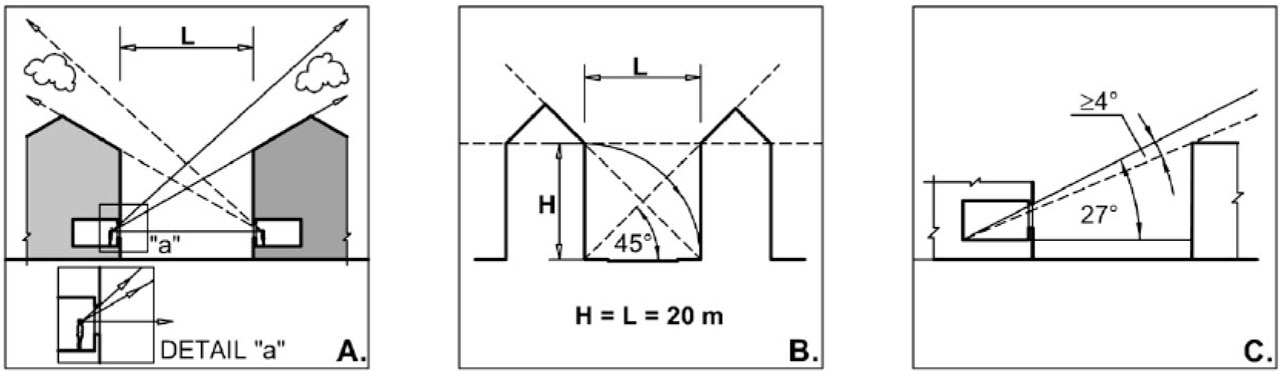
Figure 1

Chosen historical methods of establishing building-to-building distances in the context of daylighting and access to the sky view A. More than 200 years ago, Prussian land law clearly regulated the distances between adjacent residential buildings, requiring that the sky was visible from the ground floor windows of each of these buildings. Source: author, based on [30].B. New regulations concerning the buildings and streets of times of the Haussmannian transformation of Paris (1853–1870) – the facades couldn't exceed 20 meters in height in streets 20 meters in width and the roofs had to be diagonal at 45 degrees. Source: author, based on [31].C. The principle of opening angle 4° and incidence angle 27°, as a method of determining the daylight illumination of living quarters according to DIN. Source: author, based on [32]
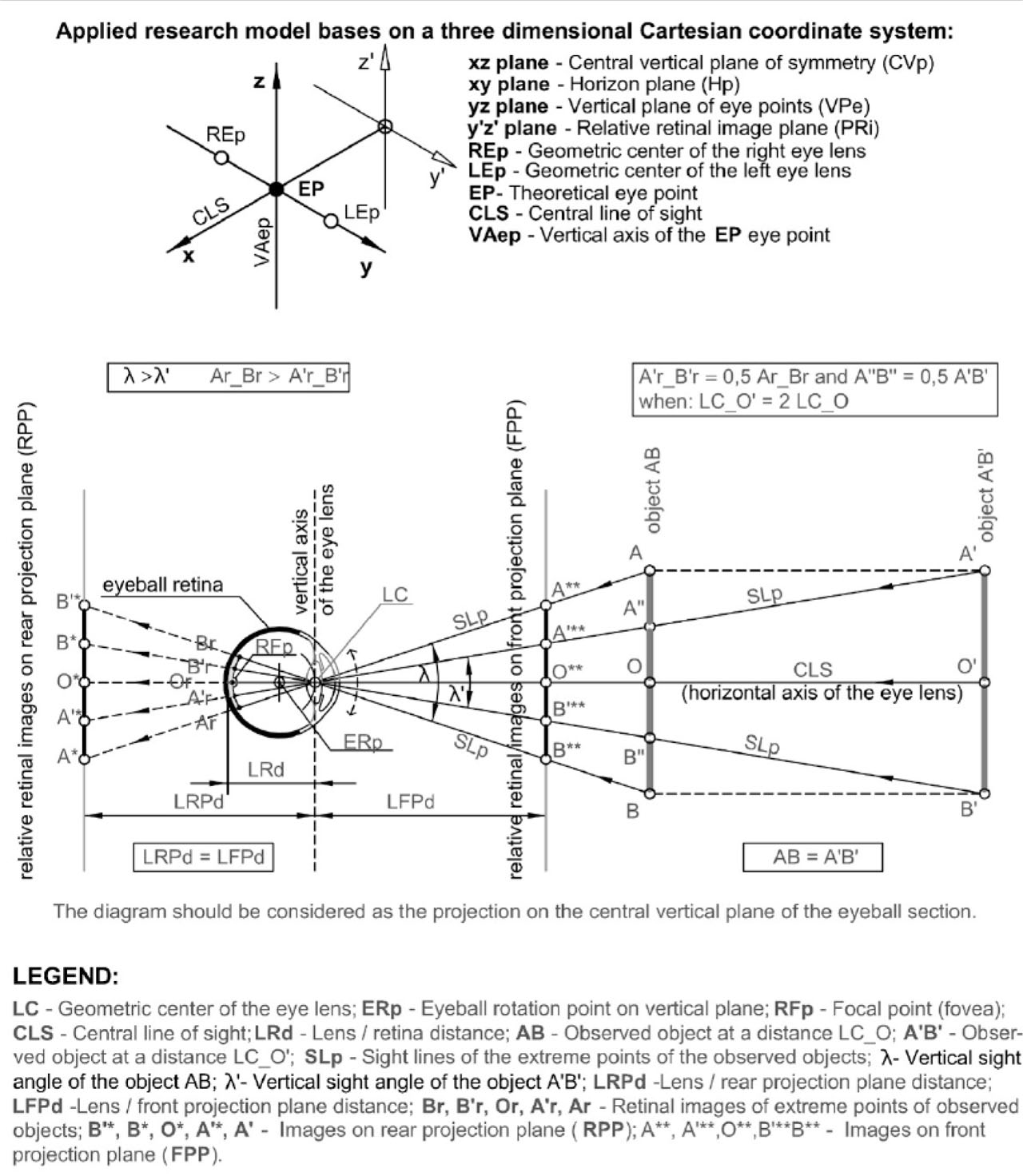

Figure 2

Basis of the Relative Retinal Image Method. Source: author, based on [40b]
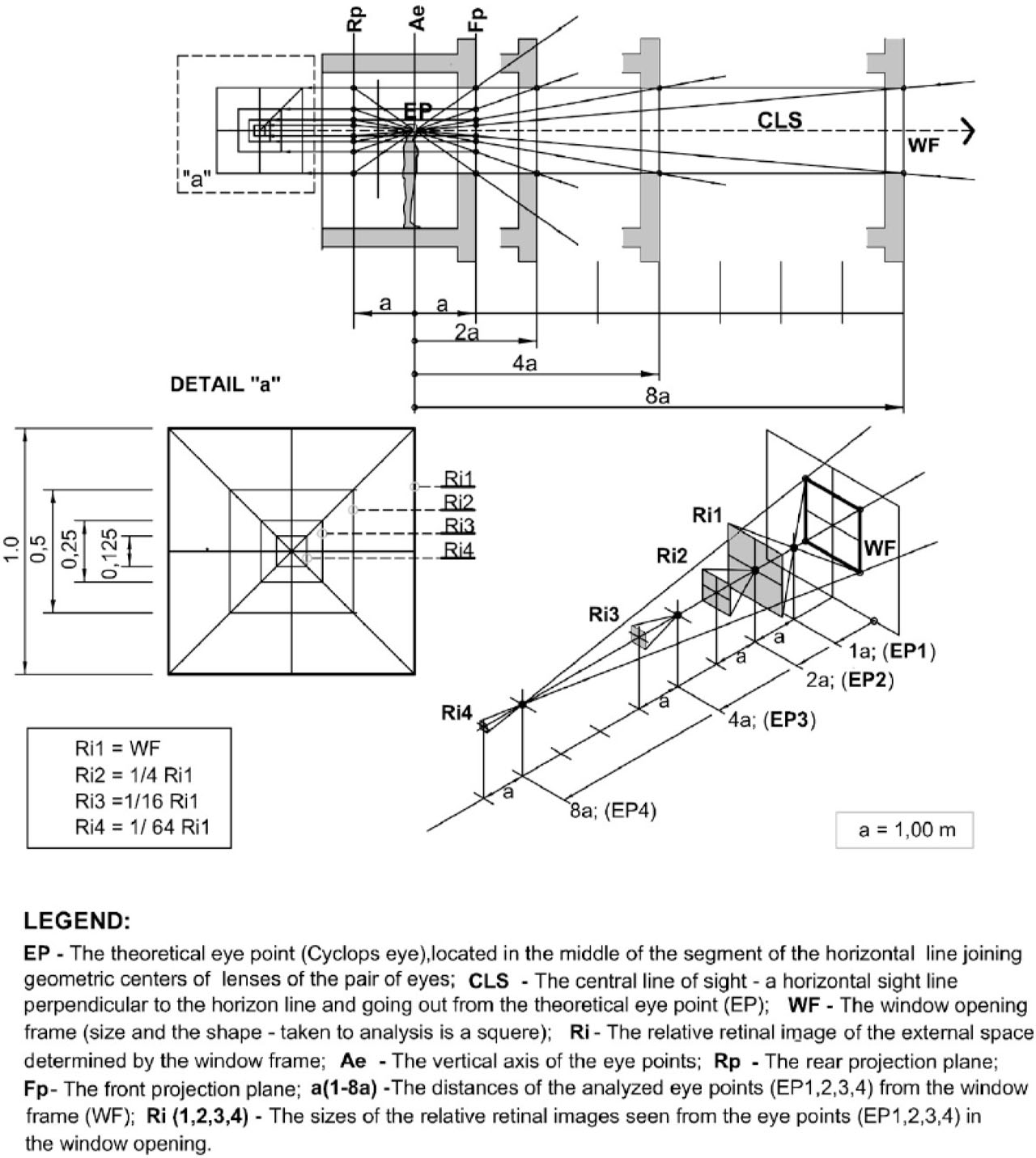

Figure 3

Dependence of the external environment image size and scope in the window opening frame on the observer distance. Source: author
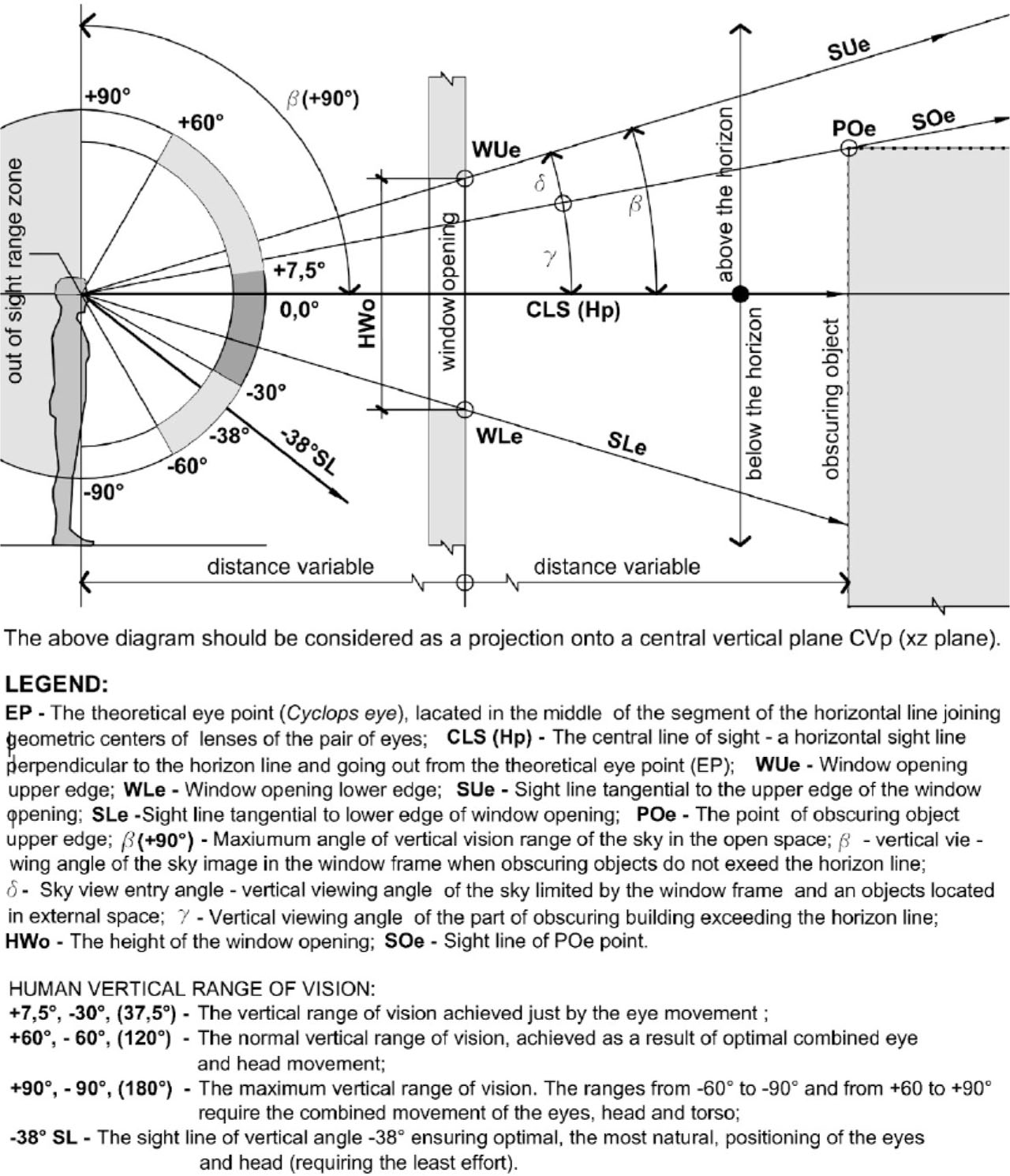

Figure 4

The issue of access to the sky view – definition of general theoretical basis of the analysis. Source: author
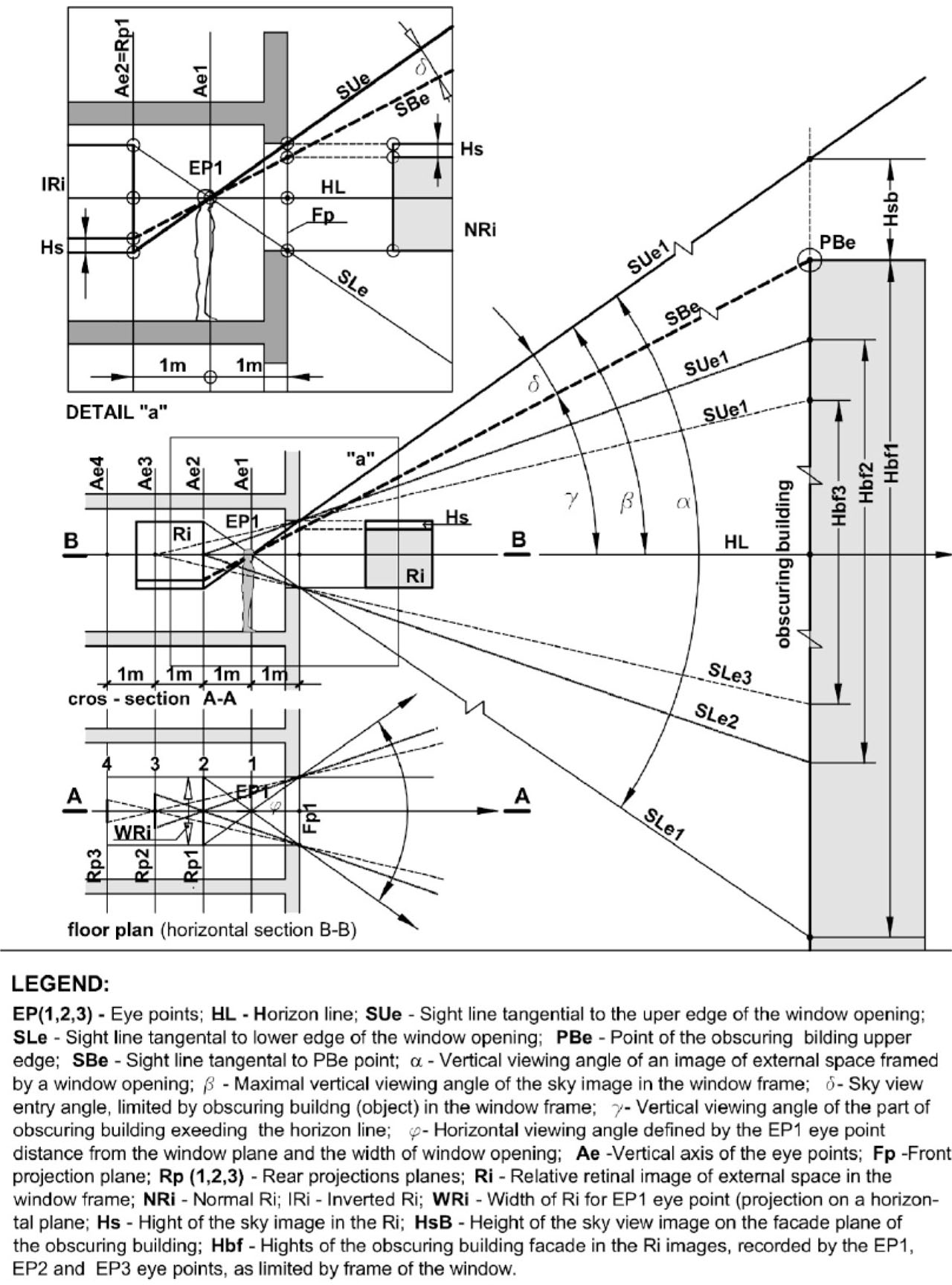

Figure 5

The research model based on the application of the relative retinal image method. Source: author, based on [40a]
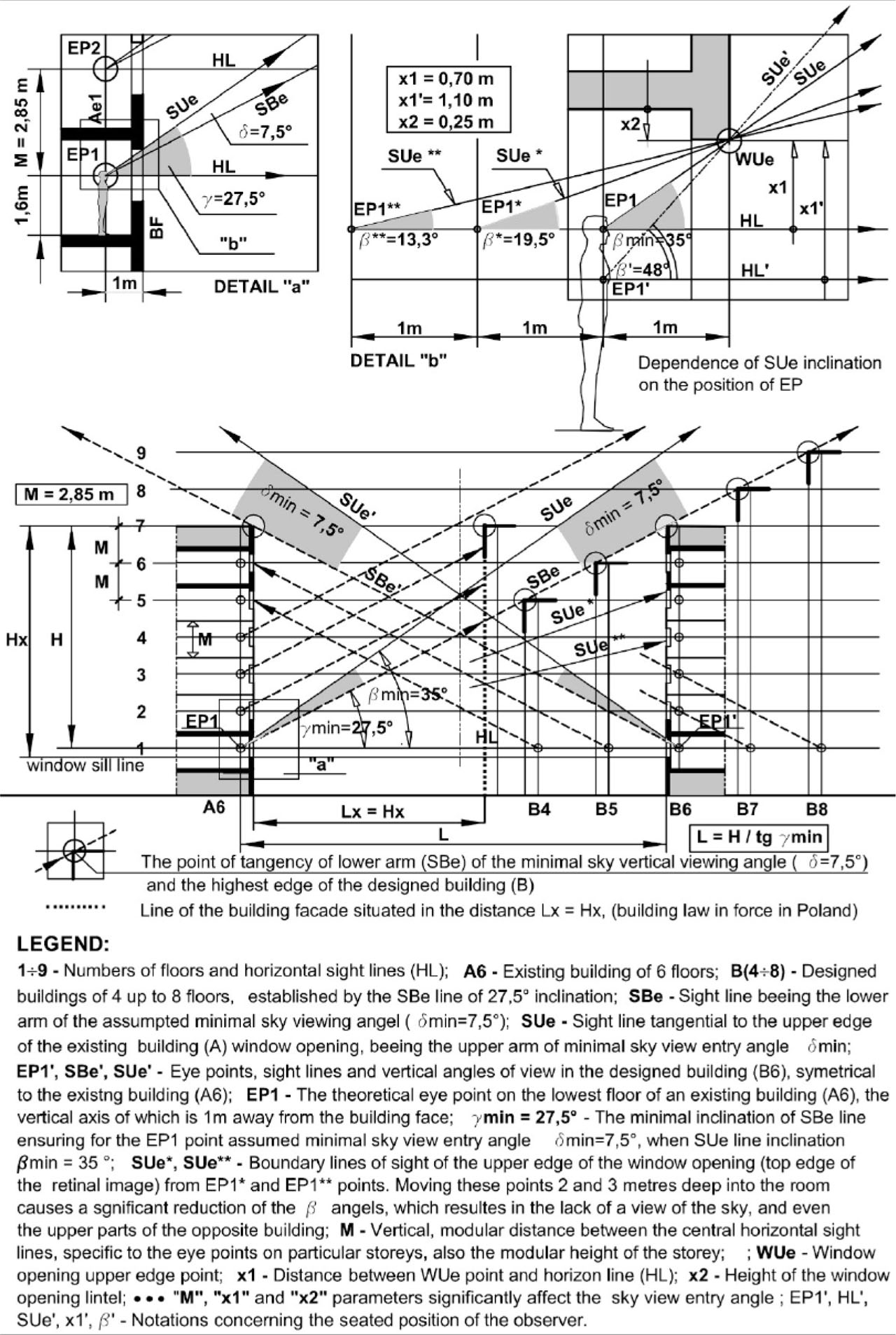

Figure 6

Analysis of the impact of minimal sky view entry angle on the distance between buildings. Source: author
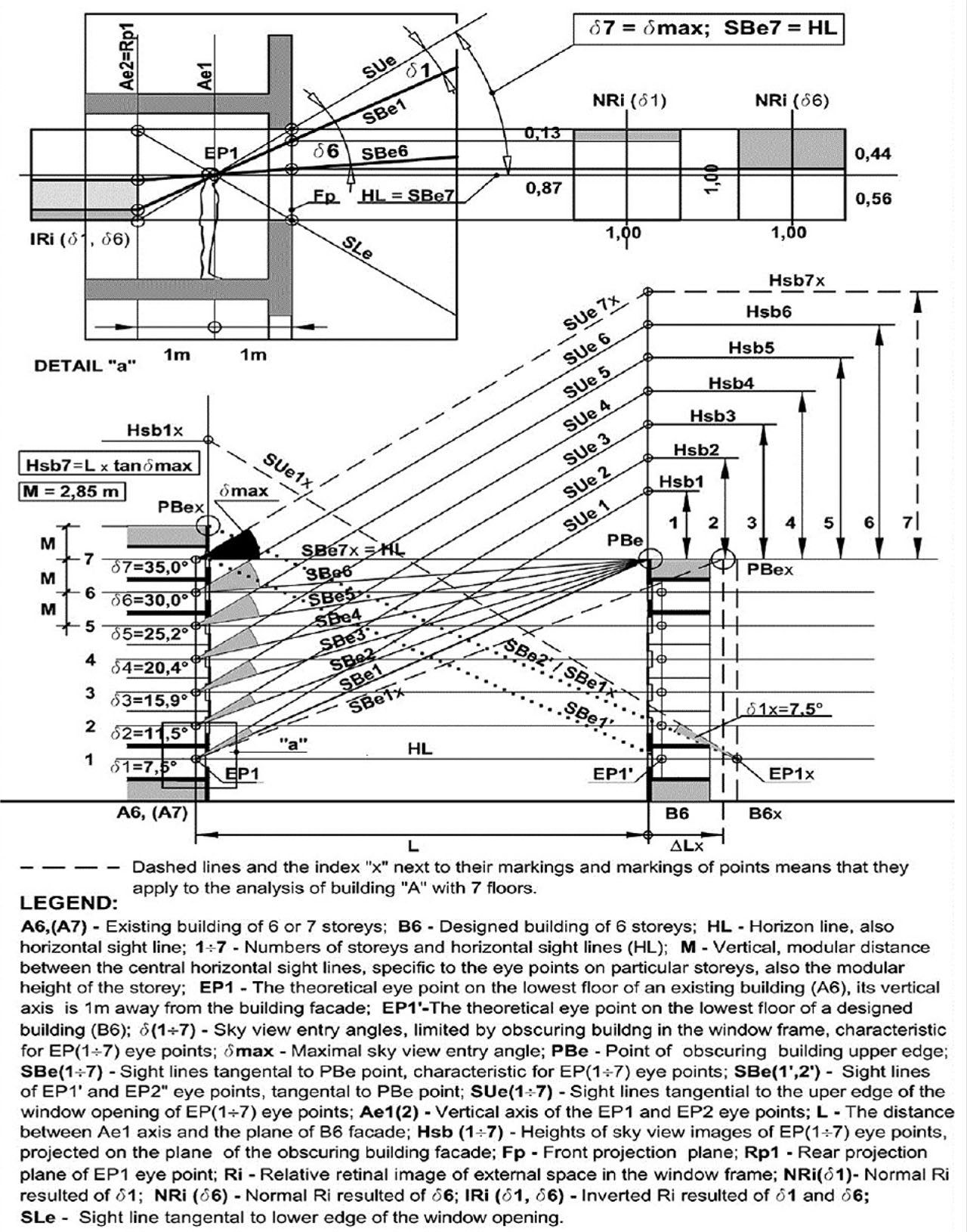

Figure 7

Analysis of the height of the relative retinal images of the sky for eye points EP (1–7) of building A. Dependence of the size of the sky view entry angles on the position of the EP eye points on individual storeys of the building under study. Comparison of the extreme sizes of the retinal sky images in the window frame for the eye points EP1 and EP6, (Detail “a”). Source: author
DOI: https://doi.org/10.2478/acee-2022-0037 | Journal eISSN: 2720-6947 | Journal ISSN: 1899-0142
Language: English
Page range: 43 - 61
Submitted on: Jul 13, 2022
Accepted on: Nov 29, 2022
Published on: Feb 3, 2023
Published by: Silesian University of Technology
In partnership with: Paradigm Publishing Services
Publication frequency: 4 issues per year

© 2023 Zdzisław Pelczarski, published by Silesian University of Technology
This work is licensed under the Creative Commons Attribution-NonCommercial-NoDerivatives 4.0 License.