
Table 1.
Composition and health impacts of major air pollutants
| Air pollutant | Sources | Health effects | Reference |
|---|---|---|---|
| PM2.5 | Complex mix of solid and liquid particles | Mouth, intestinal, and nervous system disorders; increased risk of various diseases | [21, 29] |
| O3 | Highly reactive oxidizing gas | Chronic inflammation; neurodegenerative and intestinal conditions | [31, 32] |
| SO2 | Burning fuels containing sulfide | Respiratory issues; increased risk of mortality, dental problems, enteritis, and stroke | [33, 36] |
| NO2 | Burning fossil fuels and vehicle emissions | Mucous membrane damage; increased risk of peptic ulcer bleeding and Parkinson's disease | [39, 42] |
| CO | Incomplete combustion of hydrocarbons | Tissue oxygen deprivation; increased risk of oral conditions, Sjogren's syndrome, and migraine | [43, 46] |
| PAHs | Incomplete combustion of organic matter | Toxic, mutagenic, and carcinogenic; increased risk of oral cancer, brain shrinkage, and motor impairments | [48, 58] |
| Dioxins | Waste burning, chemical production, steel plant operations, vehicle use, and accidental landfill fires | Accumulate in living organisms; increased risk of dental problems, inflammatory bowel conditions, and cognitive decline | [49, 53, 56] |
| Heavy metals (Chromium, Pb, Hg, Cd) | Various industrial and anthropogenic activities | Renal, cardiovascular, and neurological issues; increased risk of diabetes and cancer | [57, 59] |
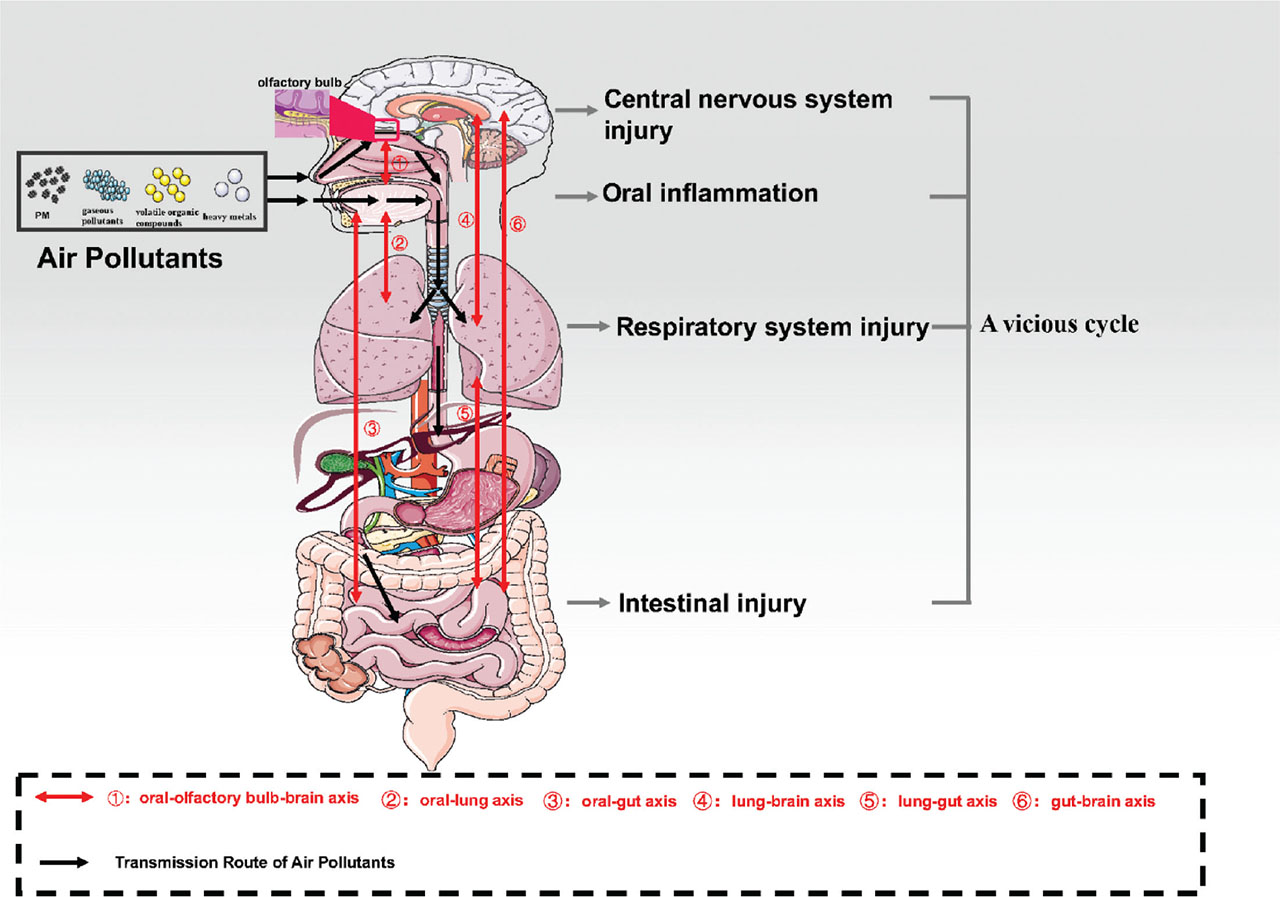
Figure 1.
The transmission route of air pollution components in the oral–gut–brain axis.
Table 2.
Related molecular mechanisms of air pollution components to body injury
| Categories | Targets | Reference | |
|---|---|---|---|
| Inflammatory response | Pulmonary inflammatory response | MAPK/AP-1, JAK/STAT, NF-κB activation; NLRP3 inflammasome#; TNF-α, IL-1β, IL-6# | [105,106,107,108,109,110] |
| Intestinal inflammatory reaction | MMP-9 and TLR4#, Tight junction protein$; Increased intestinal permeability | [86, 111] | |
| Neuroinflammatory response |
| ||
| Oxidative stress |
| ||
| Mitochondrial dysfunction |
| ||
| Epigenetic changes | DNAm |
| |
| Histone modification |
| ||
| Non-coding RNA |
|
[i] BBB, blood-brain barrier; DNAm, DNA methylation; HDAC2, histone deacetylase 2; IFN-γ, interferon-γ; lncRNA, Long-chain non-coding RNAs; JAK/STAT, Janus kinase/signal transducer and activator of transcription; MAPK/AP-1, mitogen-activated protein kinase/activator protein 1; MMP-9, Matrix metalloproteinase-9; NLRs, NOD-like receptors; NF-κB, nuclear factor kappa B; PINK1, PTEN induced putative kinase 1; ROS, reactive oxygen species; SIRT6, Sirtuin 6; TNF-α, tumor necrosis factor alpha.
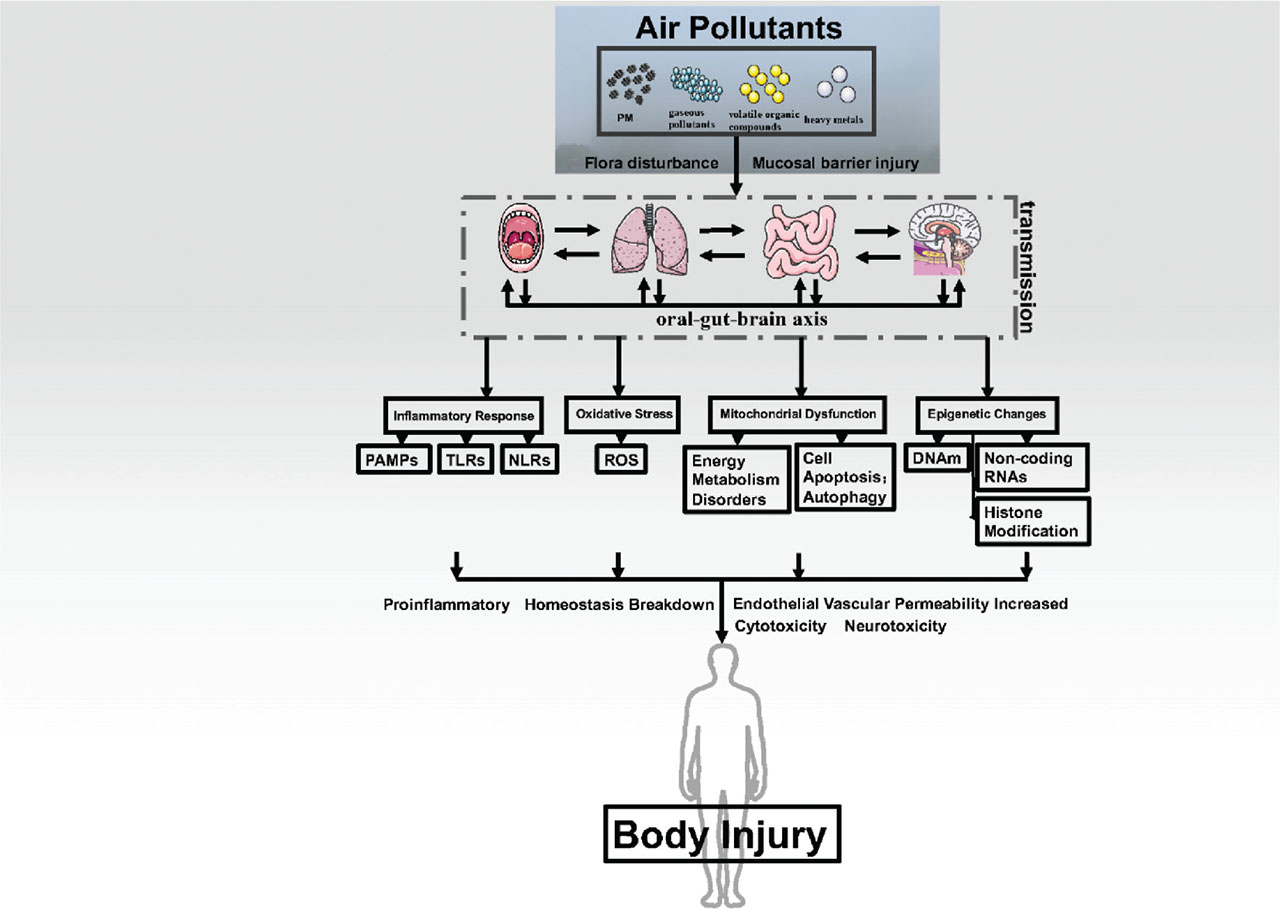
Figure 2.
The correlative pathway of air pollutants to body injury. NLRs, NOD-like receptors; PAMPs, pathogen-associated molecular patterns; ROS, reactive oxygen species; TLRs, Toll-like receptors.