
Preterm newborns are those that are born before 37 weeks of gestation. Despite the great progress made in the field of perinatology, the prevalence of preterm is increasing and it is considered an important factor associated with childhood complications [1]. Although the death rates of term and preterm neonates have significantly decreased over the past 3–4 decades, premature neonates are still prone to many diseases [2]. It is believed that about 23% of neonatal mortality in our Neonatal Intensive Care Unit (NICU) is related to birth asphyxia [3].
Severe prematurity is one of the most common reasons for neonatal mortality in our center [4].
The loss of blood circulation or the disruption in the gas exchange to the fetus is followed by prenatal asphyxia and can affect the neonate before, during, or after birth [5]. Prenatal asphyxia is one of the main reasons for brain damage and in severe cases, it can cause attention deficit hyperactivity disorder (ADHD), seizures, cerebral palsy (CP), multiple system dysfunction, and even death [6], [7], [8].
The factors related to the period before, during, or immediately after birth can play a major role in asphyxia occurrence [9]. Mother's ill health during pregnancy can lead to problems such as impaired fetal blood circulation, intrauterine growth retardation (IUGR), and difficulties during labor and neonatal asphyxia. Hence, there should be serious supervision immediately after birth. Asphyxia is a crucial and common issue in prenatal care [10]. The diagnosis of severe asphyxia is achieved by relying on the Apgar score, arterial blood gases, and hypoxic-ischemic encephalopathy (HIE) signs [10]. Many studies have been conducted toward studying the diagnostic biomarkers of asphyxia and its prognosis in term neonates. Many diagnostic biomarkers are used for the assessment of asphyxia; some of them are as follows: lactate, Lactate dehydrogenase (LDH), creatine kinase, adenylate kinase, prooxidant–antioxidant balance (PAB), interleukins S-100 β, neuron-specific enolase, brain-specific creatine kinase, neuro proteins, calcium bounded with proteins, vasoactive factors and inflammatory mediators [11], [12], [13], heat shock protein (HSP) [10, 14, 15], and also the number of nucleated red blood cells (NRBCs) found in umbilical cord blood [10], [11], [12], [14], [15], [16]. However, in preterm neonates, the diagnostic value of these markers still remains unknown.
There are various difficulties in diagnosing asphyxia in premature neonates. Many factors that are used for the indication of asphyxia in term neonates are not efficient in the diagnosis of asphyxia in preterm neonates. One of the differences between term and preterm neonates can be the cellular defense against asphyxia.
In preterm neonates, the defense systems are premature due to damages caused by asphyxia and ischemia, and may lead to multiple harmful consequences in these neonates. One of these premature systems is PAB. There is a delicate balance between the production and elimination of prooxidants in neonates. Oxidative stress is defined as the imbalance between prooxidants and antioxidants [9]. The increase in oxidants and decrease in antioxidants affects the pathogeneses of many diseases such as asphyxia. Following oxidative stress, cellular adaptive responses occur, which require certain processes for the production of antioxidants. As a result of oxidative stress, the deoxyribonucleic acid (DNA) of lipids and proteins is severely damaged. Oxidative stress is the result of an excessive increase in the production of oxidants or reactive types of oxygen [10].
Due to large intake of oxygen, the weakness of the antioxidant systems, its incapability of defending against hyperoxia, challenges early after birth, and the imbalance between the prooxidants and antioxidants systems, premature neonates are considerably prone to oxidative stress. The production of free radicals can result in oxidative damage to organs and systems throughout the body [17].
The imbalance between the prooxidants and antioxidant factors can increase the oxidative stress factors, which affect cell functions. Due to asphyxia and stress, the PAB changes in the body can turn to be an indicator of asphyxia [11]. The results of a study have shown that the mean serum PAB in term neonates having asphyxia increases [18]. In another study, PAB measurements and the degree of HIE altogether have been used for asphyxia diagnosis [19].
The role of oxidative stress in the pathogenesis and progress of prenatal asphyxia in preterm neonates is not quite known. One of the greatest shortcomings in this field can be the absence of an accurate and reliable method to measure the balance of the prooxidant–antioxidant simultaneously in these patients. A simple, fast, yet inexpensive method to measure PAB is by using 3,3,5,5 tetra methyl benzidine (TMB) cations. In addition, redox factor allows us to study PAB simultaneously [20].
The majority of studies in this field have been conducted on term neonates, and there is no enough information about preterm neonates at hand. The diagnosis of asphyxia can have an important role in accelerating asphyxia treatment in premature neonates. Considering the high prevalence of asphyxia, its long-term impacts on premature neonates, and the fact that there is no specific standard for the diagnosis and long-term prognosis of asphyxia, this study has been conducted for researching the diagnosis and prognosis of neonates with asphyxia by using the oxidative factor PAB.
Methods
The approval to conduct this study was provided by the ethics committee of Mashhad University of Medical Sciences (IR. MUMS. REC.1394.57). The written informed consent was obtained from the guardians of the newborns.
In a prospective cohort study, we studied the PAB in preterm neonates with and without asphyxia whose blood sample had been taken 1 h after birth. Prognosis at 2-years-old was studied at Ghaem Hospital Mashhad, Iran, during the years 2016–2022, by convenience sampling method. Neonates with a gestational age <37 weeks with asphyxia were included in this study. Neonates with at least two of the below-mentioned symptoms or signs were considered to have asphyxia:
History of detectable complications during labor (placental abruption, uterine rupture, umbilical cord prolapse) accompanied by fetal intrapartum monitoring disorders.
Potential of Hydrogen Ion (pH) <7.2 in fetal blood sample/umbilical cord/first hour after birth.
Multiple system disorders in <48 h after birth, such as kidney, liver, and heart dysfunctions.
Excessive need for ventilation (>72 h) while not having respiratory diseases/neuromuscular diseases.
Delaying in the improvement of metabolic acidosis (>24 h).
Specific area damage (white matter injury, periventricular leukomalacia (PVL), basal ganglia without affecting the cerebral cortex) in Magnetic Resonance Imaging (MRI) examination.
Premature neonates born without the clinical signs of asphyxia mentioned above and without the need for resuscitation in the delivery room were included as the control group.
Exclusion criteria were: congenital defects, congenital infections, and chorioamnionitis. To evaluate PAB, two ccs of blood were taken from the umbilical cord while performing other tests.
The PAB was calculated by using TMB in two different reactions: (1) an enzymatic reaction in which chromogens were oxidized into cationic TMB by peroxide, which in this test is (H2O2) and (2) the other is a reaction in which cationic is revived by antioxidants (in this test, it is uric acid). For this purpose, 16 mg of TMB powder was dissolved into 10 mL of dimethyl sulfoxide (DMSO) until the TMB/DMSO solution was obtained. Afterward, to create a cationic TMB solution, 400 mL of the above solution was added to 20 mL of the sodium buffer acetate solution (pH = 4.5/0.05 M). About 70 mL of recently made chloramine-T (100 mM) was added to 20 mL of this solution, mixed well, and incubated for 2 h in a darkened room and at room temperature. In the second step, 25 U of the peroxidase enzyme solution was added to 20 mL of cationic TMB solution and 1 cc was distributed among microtubes and kept at 20°C temperature. To prepare the TMB solution, 200 mL of the Tetra Methyl Benzidine (TMB)/DMSO solution was added to 10 mL of sodium buffer acetate (pH = 5.8/0.05 M) and then 1 mL of cationic TMB solution, which had peroxidase enzyme (step two solution), would be mixed with 10 mL of the TMB solution and incubated for 2 min at room temperature in a darkened room. About 10 mL of each standard serum sample or blank (distilled water) with 200 mm of the (third step solution) has been mixed and injected into Elisa and was incubated for 12 min at 37° temperature.
From the information gained from the standard samples (uric acid and H2O2' 20%, 25%, 50%, 75%, 100%) with specified concentrations, a standard curve was obtained, which can be used to determine the concentration of the said samples at 450 nm wavelength. From the standard samples, a standard curve will be obtained that can demonstrate the PAB value by Hamidi-Koliakos (HK) unit. This curvature shows the effects of hydrogen peroxide on the standard solution. The value of the samples is calculated on a basic basis and their amount is shown on the curved lines [20].
Patient evaluation has been done based on clinical examinations, needed laboratory surveys, and in case of having scientific indications, by using imaging methods such as chest X-Ray, ultrasound, or MRI.
The control group included neonates admitted to the Neonatal Intensive Care Unit (NICU) who did not show any signs of asphyxia. The data related to this study have been categorized into 3 sections by using the researchers' checklist. The first and second sections included the data related to the mother (mother's age, parity, difficulties during labor, gestational age) and the neonates (gestational age, birth weight, first minute and fifth minute Apgar score), respectively, and the third segment included the laboratory information (PAB in umbilical cord blood).
Neonates were under follow-up after being discharged in 6 months, 12 months, 18 months, and 24 months by using the Denver II test. Denver II developmental screening test is an international test used for monitoring children's growth and evolution, from birth until the age of 6, which covers 4 functions: gross motor, language, fine motor-adaptive, and personal-social, and is widely used for diagnosis of speech and learning disorders, autism, mild to mid-mental retardation and psychosocial complications.
The items in Denver II have been carefully selected in terms of reliability and comprehensiveness of norms across all subgroups and cultures. If the infant had a problem in one of the 4 areas, it would be considered a developmental delay.
In case of having a problem in only one area, it would be considered as mild developmental delay, in two areas, moderate developmental delay, and in three or above areas, the neonate would be considered to have severe developmental delay [21].
Neonatal outcomes caused by asphyxia were investigated in both groups with normal and adverse outcomes. Adverse outcomes included developmental delay and death.
Statistical calculation
The outcomes of neonates with asphyxia were analyzed after follow-up. In the case of being normal in all areas, it would be considered as a normal outcome, and in the case of having at least one problem in one area or death, it was considered as an abnormal outcome. First, by using figures and tables, the outcomes were described, and then chi-squared test and t test were used. Also, to indicate predicting factors in preterm neonates, regression models were used for indicating the diagnostic value of PAB. In the prognosis and diagnosis of asphyxia, the Receiver Operating Characteristic (ROC) curve was used. In all cases, P ≤ 0.05 was considered.
Results
In the current study, 239 premature neonates were enrolled. In total, 150 neonates (66.7%) were without asphyxia and 89 newborns (33.3%) were diagnosed with asphyxia.
Twenty-eight neonates died during the first 2 months (9 in the group of neonates without asphyxia and 19 in the group of neonates with asphyxia).
From the 239 premature neonates under study, we were able to follow up on 183 of the cases up to 2 years, and were not able to follow up on 46 cases (31 neonates were not admitted for the follow-up, 6 neonates were diagnosed with metabolic diseases, and 9 of them had a history of developmental delay in their family) (Figure 1).
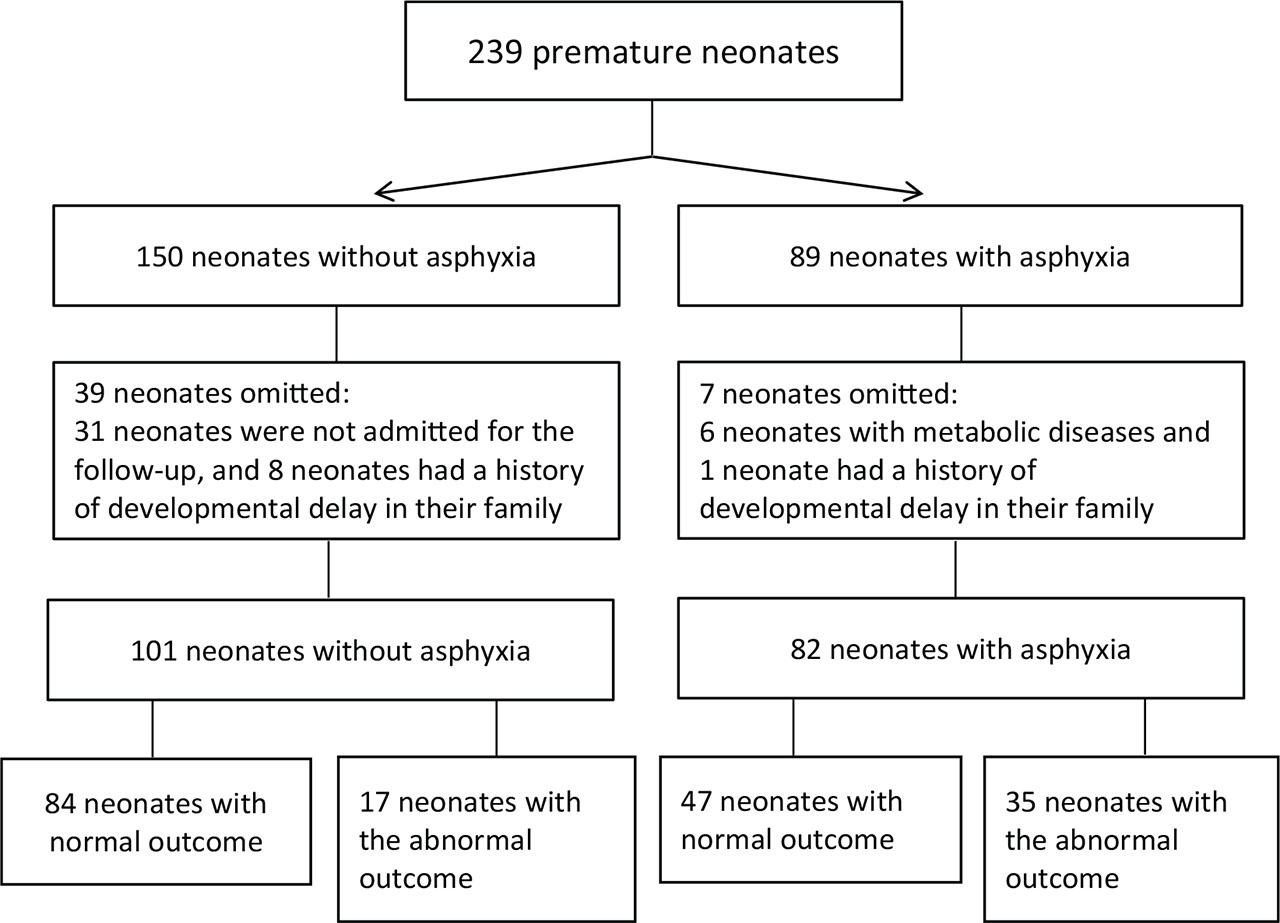
Figure 1.
Selected neonates.
The number of neonates admitted at the beginning of the study was 229, 186 at 6 months, 173 at 1 year, 164 at 18 months, and 155 at 2 years follow-up.
In neonates with asphyxia (82 neonates), 47 neonates (57.3%) had normal outcomes and 35 neonates (42.7%) had abnormal outcomes. Of the neonates without asphyxia (101 neonates), 84 of them (75.24%) had normal outcomes and 17 neonates (14.86%) had abnormal outcomes.
For neonates studied in our research, the mean and standard deviation gestational age was 32.31 ± 2.70 weeks, birth weight was 1647.46 ± 614.75 g, and PAB was 31.62 ± 24.91 HK.
The two groups of neonates without and with asphyxia had a significant statistical difference in mother's age, gestational age, birth weight, first pH, and first- and fifth-minute Apgar Score (Table 1). The value of serum PAB in neonates with asphyxia was reasonably more (P = 0.019) (Figure 2). The t-test outcomes show that PAB (P = 0.000), in the two groups of neonates with normal outcomes and abnormal outcomes had a significant difference (Figure 3). The value of PAB was higher in neonates with abnormal outcomes.
Table 1.
The comparison between clinical and laboratory parameters of mothers and neonates in two groups of neonates with asphyxia and without asphyxia
| Variables Groups | Neonates without asphyxia n = 82 | Neonates with asphyxia n = 101 | P (T–Test) |
|---|---|---|---|
| Mother's age (year) | 7.99 ± 27.12 | 6.50 ± 29.69 | 0.006 |
| Parity | 1.48 ± 2.02 | 1.39 ± 2.18 | 0.368 |
| Gestational age (week) | 32.45 ± 2.48 | 33.55 ± 3.00 | 0.013 |
| First PH | 7.29 ± 0.10 | 7.19 ± 0.13 | 0.000 |
| First minute Apgar Score | 7.20 ± 1.69 | 4.32 ± 1.49 | 0.000 |
| Fifth minute Apgar score | 8.70 ± 1.26 | 6.47 ± 1.81 | 0.000 |
| Birth Weight (gr) | 1575.24 ± 505.61 | 2135.89 ± 749.48 | 0.000 |
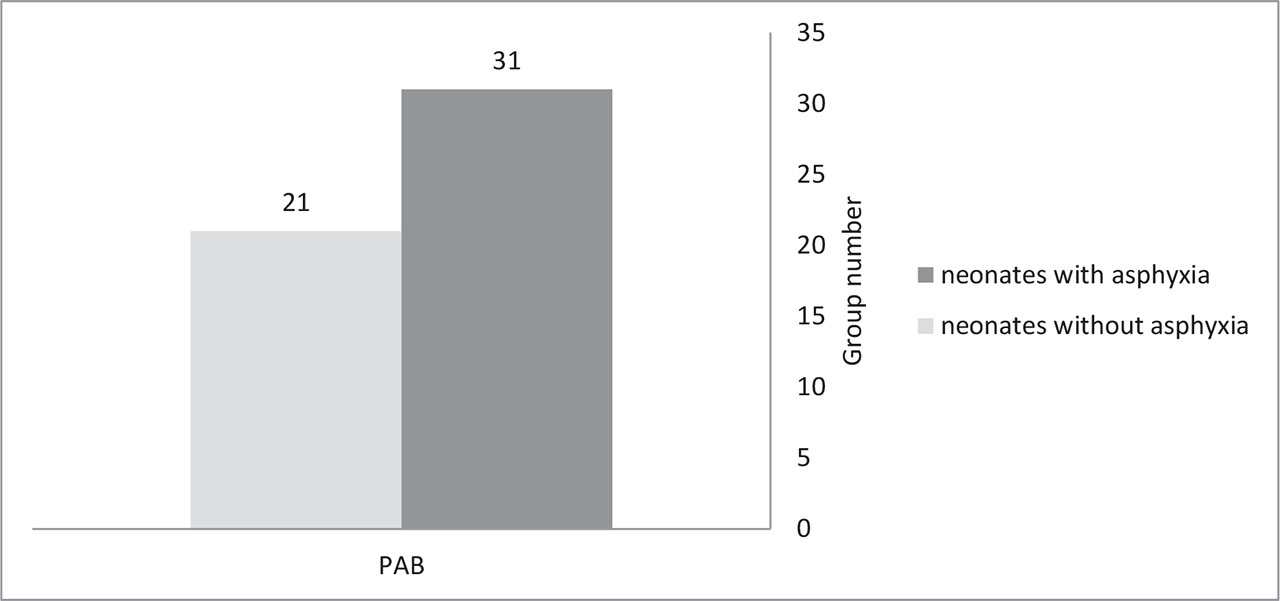
Figure 2.
The comparison of mean PAB in neonates with and without asphyxia. PAB, prooxidant–antioxidant balance.
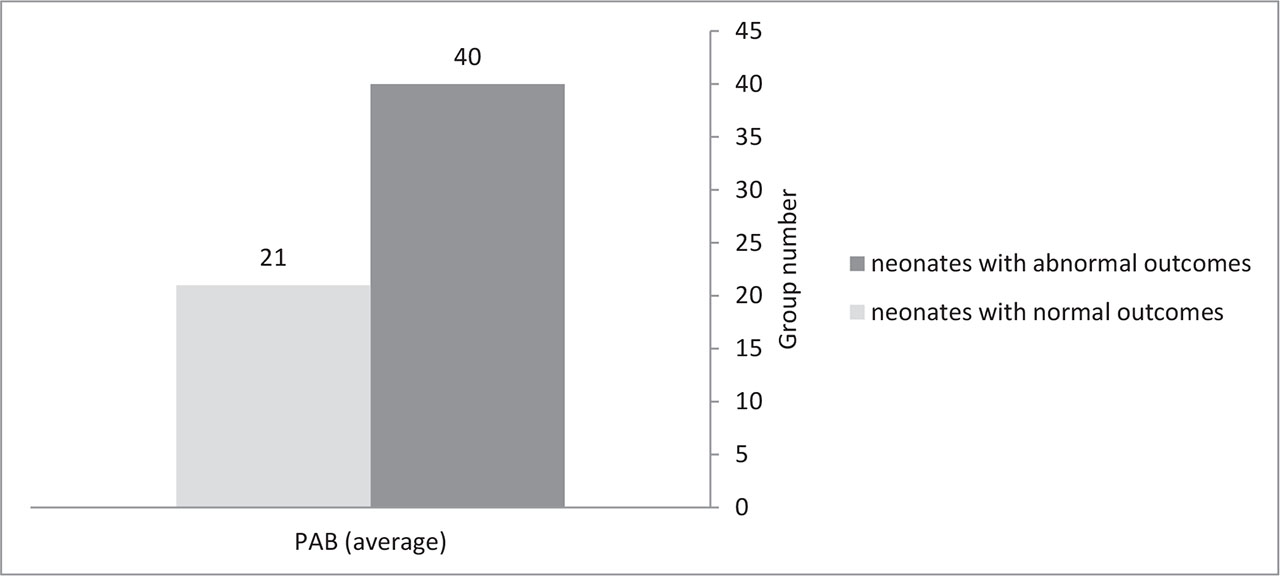
Figure 3.
The comparison of PAB in the two groups of neonates with normal or abnormal outcomes. PAB, prooxidant–antioxidant balance.
In the current study, the PAB above the cutoff 25 HK, in the two groups of neonates with normal outcomes and abnormal outcomes, had a meaningful difference (P = 0.000). Taking the ROC line into consideration, the PAB sensitivity for the diagnosis of asphyxia prognosis in preterm neonates was 83.3% and its specificity was 81%.
In terms of asphyxia severity, 32 neonates did not have HIE, 30 neonates had Hypoxic ischemic encephalopathy (HIE)1, 10 neonates had HIE2, and 10 neonates had HIE3. The PAB in the group of neonates without HIE was 17.17 (13.22), with HIE1 (12.40) 21.12, HIE2 (19.37) 27.00, and with HIE3 was (32.54) 47.07.
Normal and adverse neonatal outcomes (developmental delay and death) in the group of neonates with asphyxia and the group of neonates without asphyxia were investigated.
In this study, the PAB variable in the group of neonates with asphyxia having normal and abnormal outcomes (P = 0.002) had a significant data difference. The incidence of this variable in neonates with asphyxia and abnormal outcomes was three times higher than in neonates with asphyxia and normal outcomes. Also, the PAB variable did not have a significant difference between the group of neonates without asphyxia with normal and abnormal outcomes (P = 0.253) (Figure 4).
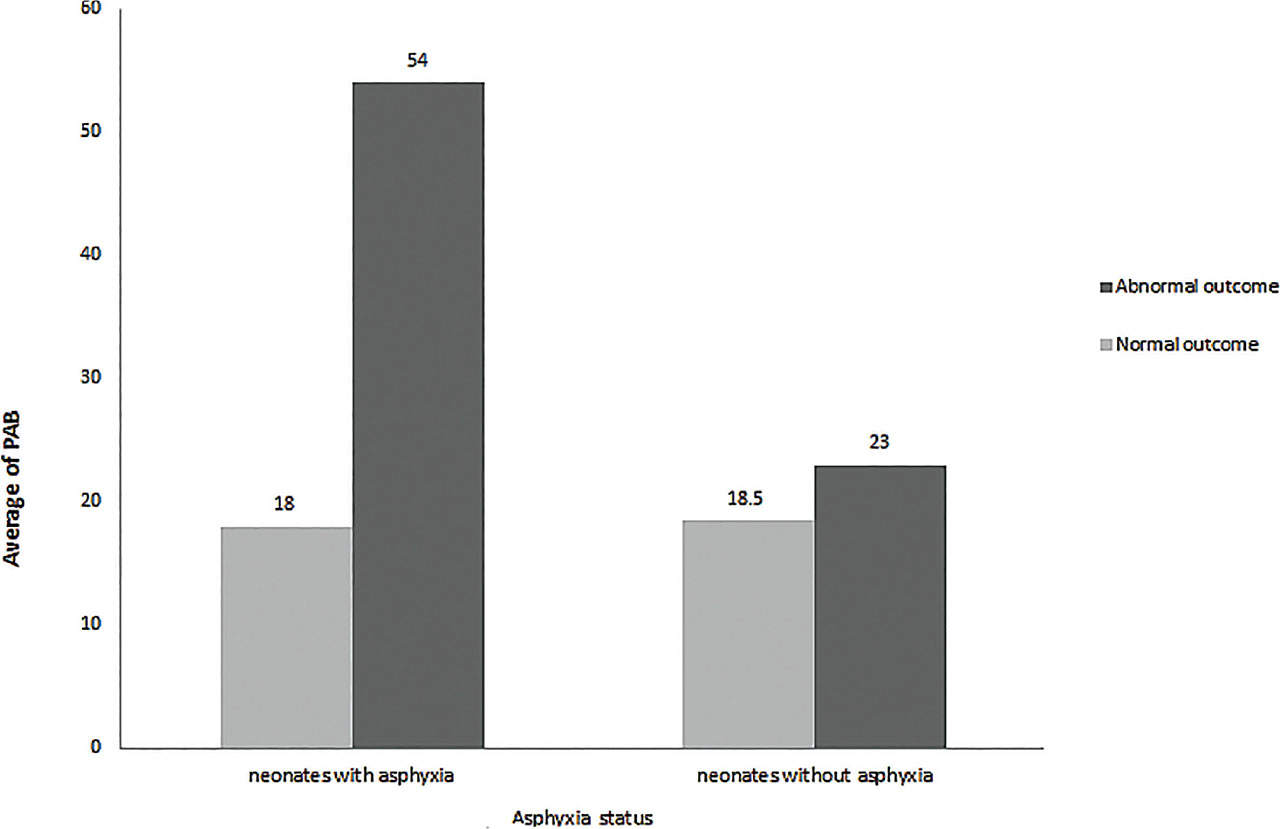
Figure 4.
The comparison of PAB in two groups of neonates based of having or not having asphyxia; having normal or abnormal outcomes. PAB, prooxidant–antioxidant balance.
Furthermore, in this study, the severity of asphyxia is different between groups, and the clinical severity or PAB correlated better to clinical outcomes.
Discussion
According to our research, the value of PAB in neonates with asphyxia was about 1.5 times more than in neonates without asphyxia. In one study, the mean serum PAB in neonates with asphyxia was two times more than in healthy neonates. In a study by Boskabadi et al. [11], the PAB level in neonates with asphyxia was three times more than in healthy term neonates. Results of Aydemir et al.'s [22] study show that the PAB in the cases of prenatal asphyxia is disturbed and is in favor of prooxidants, and the degree of oxidative stress is related to the severity of the nervous system involvement in the neonates' first days of life.
The outcomes of Bahbah et al.'s [23] study depict that the capacity of combating oxidative stress in premature neonates compared to healthy term neonates was reduced. Prenatal asphyxia was considered one of the main reasons for the occurrence of oxidative stress during the infancy period.
Premature neonates are born before the formation of antioxidant systems. These antioxidant systems are capable of neutralizing the free oxygen radicals. Birth by itself can be a reason for oxidative stress, which when combines with other agents, namely, hypoxia, asphyxia, hyperoxia, reperfusion, or inflammation, can disturb the preterm neonates' defense mechanisms [24]. Therefore, analyzing the levels of serum PAB can be beneficial for the early diagnosis of prenatal asphyxia. Preterm newborns are prone to oxidative damage due to a reduction in the antioxidant enzyme activities such as catalase and glutathione peroxidase. Also, the imbalance between prooxidants and antioxidants can cause oxidative damage [25].
In the current study, >42.7% of the newborns with asphyxia had abnormal outcomes. In a study on term neonates, 23.5% of the neonates with asphyxia had abnormal prognoses [26].
In a study conducted on term neonates, the incidence of PAB in HIE grades one, two, and three was 7.03 HK, 19.4 HK, and 21.6 HK, respectively [27]. It has been indicated that fetal and neonatal antioxidant systems are premature and therefore they are prone to harmful effects of oxidative stress. Free radicals are highly reactive substances that can cause cell death or apoptosis with Self-reinforcing chain reactions. Oxidative stress damage can occur when the balance between the antioxidant enzymes produced and the free radicals changes in favor of free radicals. Therefore, oxidative stress plays a role in many fetal and neonatal diseases, which are usually caused by hypoxia [28].
According to the findings of our study, the incidence of PAB in the umbilical cord of premature neonates with asphyxia and having abnormal development was about three times more than in neonates with asphyxia having normal development (21.00 ± 18.67 HK compared to 40.00 ± 60.84 HK). While in another study, the mean serum PAB in term neonates with asphyxia having normal outcomes and abnormal outcomes was 17/1 ± 9/23 HK and 48/27 ± 41/30 HK, respectively [21].
Oxygen free radicals are responsible for brain damage following the occurrence of neonatal asphyxia. In the first stage of asphyxia reoxygenation, changes are made in the antioxidant enzyme activity, which can have an essential role in turning on and off the cascade reactions that damage neurons.
Hypoxia/ischemia causes the brain to activate its inner mechanisms such as antioxidant enzymes to set right the disturbed or lost neural circuits [29]. During hypoxic-ischemic cycles and reoxygenation, the inner production of superoxide radicals increases following the reduction of nicotinamide adenine dinucleotide phosphate (NADPH) [30]. In normal physiological conditions, antioxidant enzymes can offer protection against cell damage. However, during asphyxia, the antioxidant barrier would be inadequate for protection. Also, disturbances in PAB can occur following neonatal asphyxia impacting oxidative processes, which can lead to oxidative stress and hence neurological damage [31]. The brain is prone to oxidative stress because of the following reasons: neurons' membranes are filled with polyunsaturated fatty acids which are an important source of oxygen free radicals; antioxidant enzymes activity noticeably reduce in the brain; some areas of the brain are rich in iron and when the iron is not attached to protein, it has a prooxidative effect that can lead to the production of free radicals with harmful effects [32].
In the current study, the PAB >25 HK in the group of neonates with abnormal outcomes was 7 times more than in the group of neonates with normal outcomes. In this study, the PAB value of >25 HK was used for diagnosis of asphyxia prognosis in premature neonates; its sensitivity was 83.3% and its specificity was 81%. Outcomes of a study have shown that PAB >11.3 HK was used for diagnosis of asphyxia prognosis in premature neonates, and its sensitivity was 84% and the specificity was 92% [27]. In another study, combining the HIE intensity and PAB was used for predicting the outcomes in neonates with asphyxia, which had a high diagnostic value of 95.2% [21].
The main limitations of this study are considered to be our control group, which included hospitalized newborns that did not show any signs of asphyxia. Additionally, we were not able to follow up on the significant number of neonates admitted under the study.
Considering that the PAB index in asphyxiated neonates, as well as in asphyxiated neonates with abnormal outcomes, it can be used as an accurate test with high sensitivity and specificity to evaluate the prognosis of asphyxiated neonates.
Acknowledgments
This study was supported by Mashhad University of Medical Sciences (code number 4010990).
Notes
[2] Contributed by Author contributions. BH substantially contributed to the conception and design. ZM and AS substantially contributed to the acquisition of data, the analysis, and interpretation of data. BH and ZM drafted the manuscript. AS critically revised the manuscript. All the authors reviewed the results and approved the final version of the manuscript and agree to be accountable for all aspects of the work in ensuring that questions related to the accuracy or integrity of any part of the work are appropriately investigated and resolved.
[3] Conflicts of interest statement. Each author has completed and submitted an International Committee of Medical Journal Editors Uniform Disclosure Form for Potential Conflicts of Interest. None of the authors has any potential or actual conflicts of interest concerning the published article to disclose.
[4] Data sharing statement. All data generated or analyzed during the present study are included in this published article. Further details are available for noncommercial purposes from the corresponding author on reasonable request.