
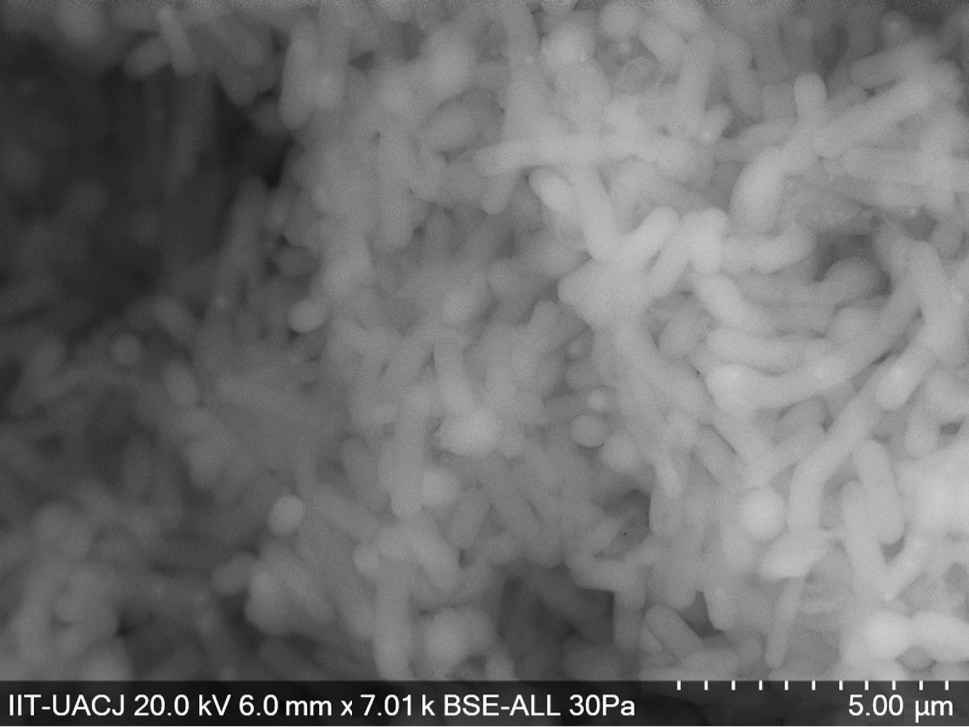
Fig. 1.
A high resolution image of bacterial colonies of the HN31(22) strain taken under scanning electron microscope (SEM).
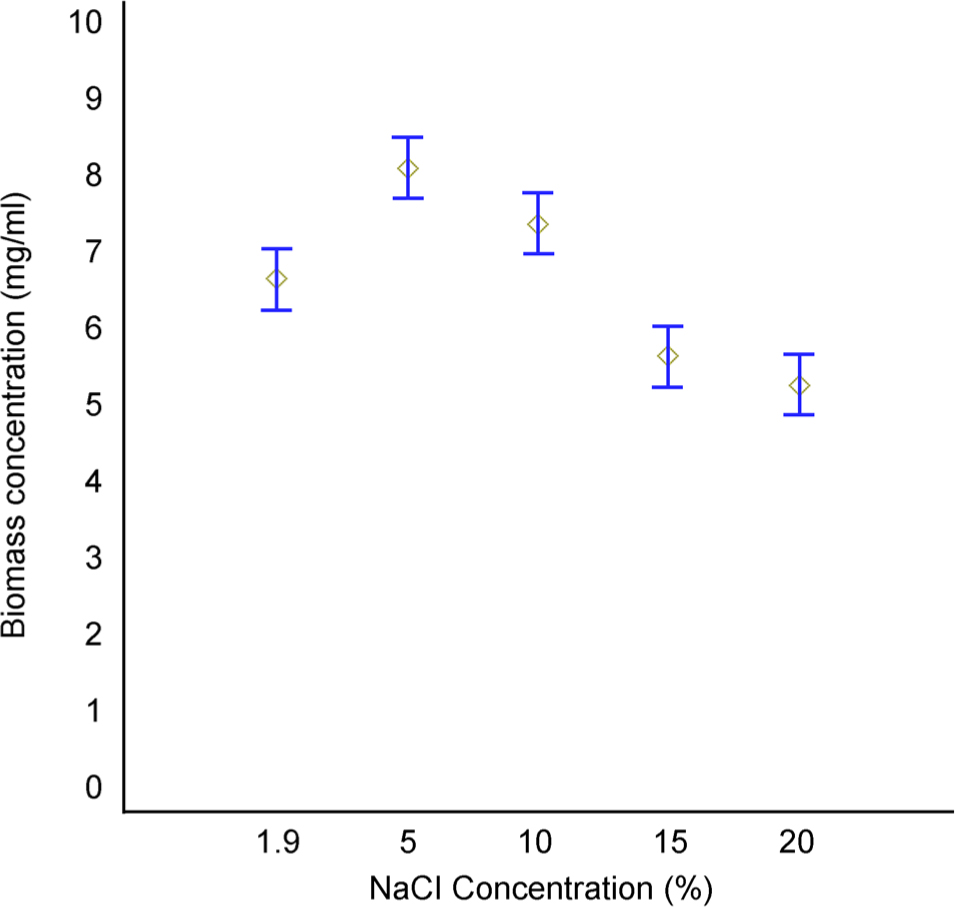
Fig. 2.
The concentration of biomass (mg/ml) of the HN31(22) strain in marine medium at different NaCl concentrations (1 9–20%).
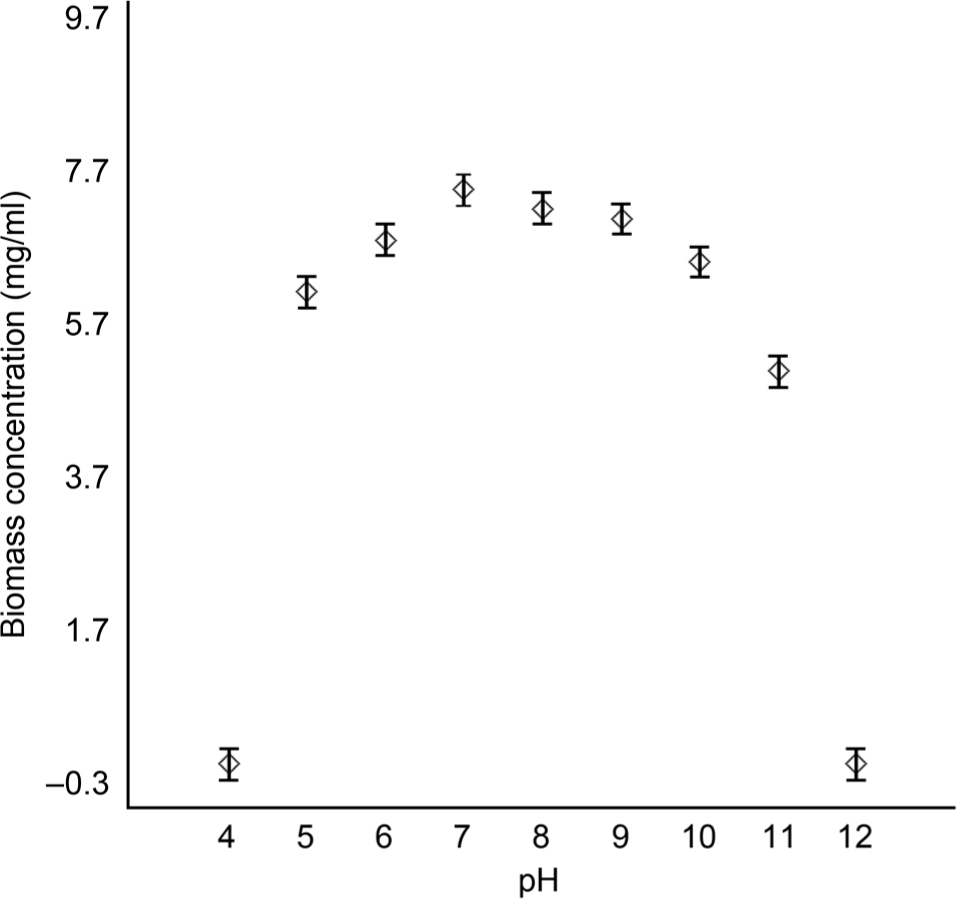
Fig. 3.
The concentration of biomass (mg/ml) of the HN31(22) strain in marine medium at different pH (4–12).
Table I
Growth of bacteria of the HN31(22) strain in marine agar at different temperatures (4, 30, 37, 40, 55°C).
| Temperature (°C) | Growth (CFU/ml) |
|---|---|
| 4 | 0 |
| 30 | 4.2 × 10³ |
| 37 | 34 × 104 |
| 40 | 18 × 104 |
| 55 | 0 |
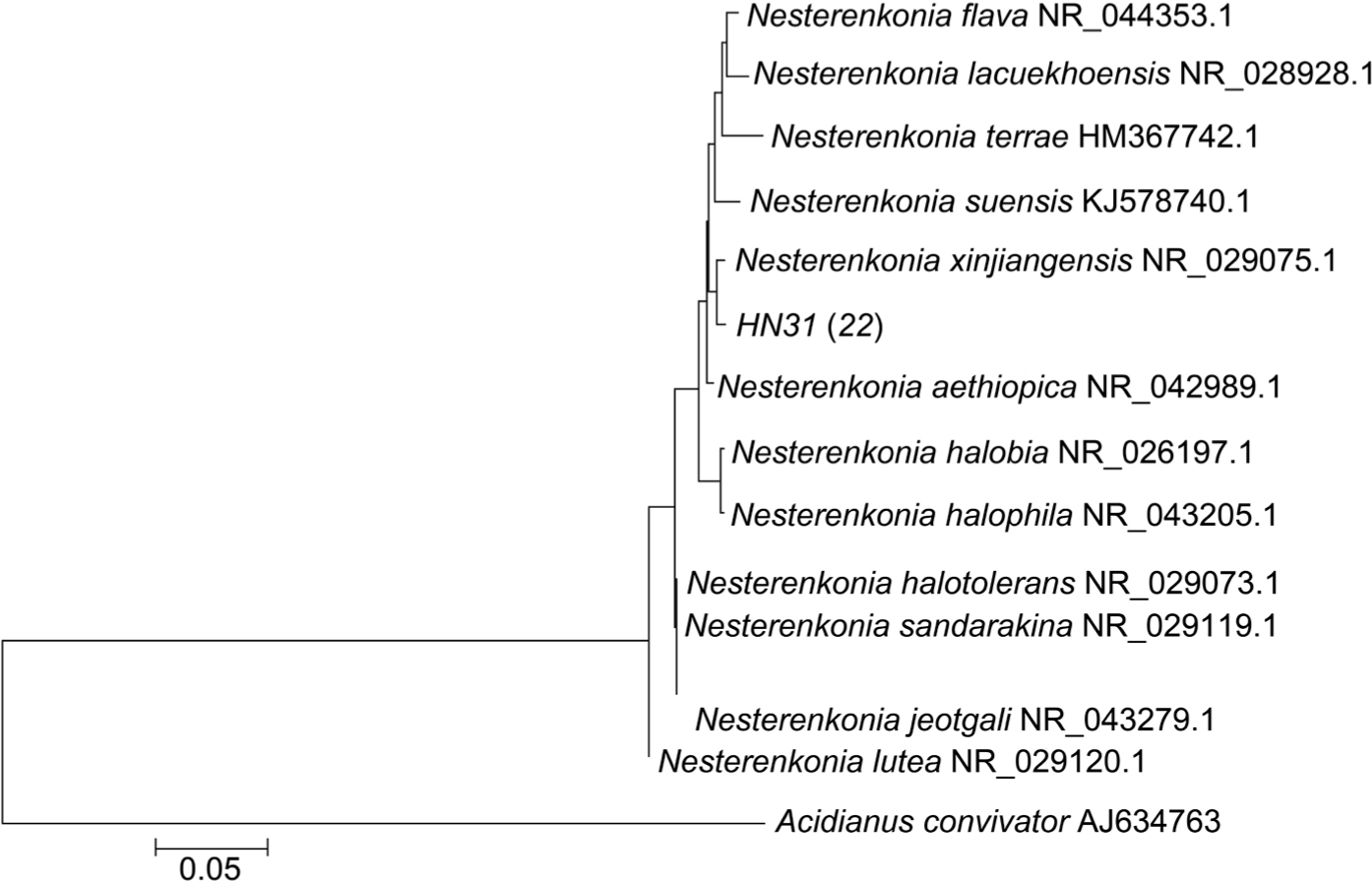
Fig. 4.
Phylogenetic relationship of species of the Nesterenkonia genus based on the16S rDNA gene sequences.
Table II
Comparison of phenotypic characteristics of bacteria of the HN31(22) strain with the other species of Nesterenkonia (1. N. flava, 2. N. lacusekhoensis, 3. N. suensis, 4. N. xinjiangensis, 5. N. halotolerans, 6. N. aethiopica, 7. N. sandarakina, 8. N. lutea, 9. N. jeotgali, 10. N. halophila (Collins et al. 2002; Li et al. 2004, 2005, 2008; Delgado et al. 2006; Yoon et al. 2006; Luo et al. 2008; Govender et al. 2013).
| Characteristic | HN31(22) | 1 | 2 | 3 | 4 | 5 | 6 | 7 | 8 | 9 | 10 |
|---|---|---|---|---|---|---|---|---|---|---|---|
| Morphology | Short roads | Short roads | Short roads | Short roads | Short roads | Cocci | Short roads | Cocci | Cocci | Cocci | Cocci |
| Tincion | HN31(22) | Gram + | Gram + | Gram + | Gram + | Gram + | Gram + | Gram + | Gram + | Gram + | Gram + |
| Colony pigmentation | Yellow | Yellow | Yellow | Yellow | Yellow | Orange/Yellow | Yellow | Orange/Yellow | Yellow | Yellow | White ivory |
| Temperature (°C) | 30–40 | 40–42 | 8.5–42 | 35–37 | 20–40 | 4–40 | 25–40 | 4–36 | 4–36 | 4–36 | NR |
| pH | 5–11 | 8–12 | 7.5–9.5 | 7–11 | 7–12 | 7–9 | 7–11 | 5–12 | 6.5–10 | 6–8.5 | 6–10.5 |
| NaCl (%) | 0–20 | 0–10 | 0–15 | 0–18 | 0–25 | 0–25 | 3–12 | 1–15 | 0–20 | 0–16 | 0.5–30 |
| Catalase | + | + | NR | + | NR | NR | + | NR | NR | NR | NR |
| Oxidase | – | – | – | – | – | – | + | – | – | – | – |
| Urease | – | NR | NR | NR | + | + | – | – | – | – | NR |
| Nitrate reduction | – | – | – | + | – | – | NR | – | + | – | + |
| Citrate test | + | – | W | – | NR | NR | – | NR | NR | NR | NR |
| Voges-Proskauer | – | – | – | – | NR | NR | – | – | – | + | NR |
| Acid produced from: | |||||||||||
| Galactose | – | – | – | – | – | – | – | + | + | + | NR |
| Trehalose | + | – | + | – | – | – | – | W | + | W | – |
| Mannitol | + | – | – | – | – | – | – | + | + | + | NR |
| Sucrose | + | NR | NR | – | – | – | – | NR | NR | NR | – |
| Fructose | + | NR | NR | + | – | – | + | NR | NR | NR | NR |
| Utilization of: | |||||||||||
| Glucose | + | + | NR | + | + | + | + | + | W | + | + |
| Trehalose | + | – | + | – | – | – | – | + | – | + | NR |
| Fructose | – | + | + | + | + | + | + | + | + | + | + |
| Mannose | + | + | + | + | + | + | – | + | + | W | + |
| Sucrose | + | + | NR | + | + | + | W | + | + | + | NR |
| Maltose | + | + | NR | – | + | + | NR | + | + | + | NR |
| Hydrolysis of: | |||||||||||
| Starch | + | + | – | + | – | – | + | – | + | – | – |
| Gelatin | + | + | – | NR | + | + | + | + | – | – | NR |
| Tween 80 | + | + | – | + | NR | NR | NR | – | – | – | – |
| Casein | + | NR | NR | – | + | – | + | – | + | NR | – |