Have a personal or library account? Click to login
Effect of seed-applied fluopyram on Meloidogyne incognita infection and maturity in cotton and soybean Cover

Effect of seed-applied fluopyram on Meloidogyne incognita infection and maturity in cotton and soybean

By: Tracy Hawk and  Travis R. Faske  
Open Access
|Aug 2020

Figures & Tables

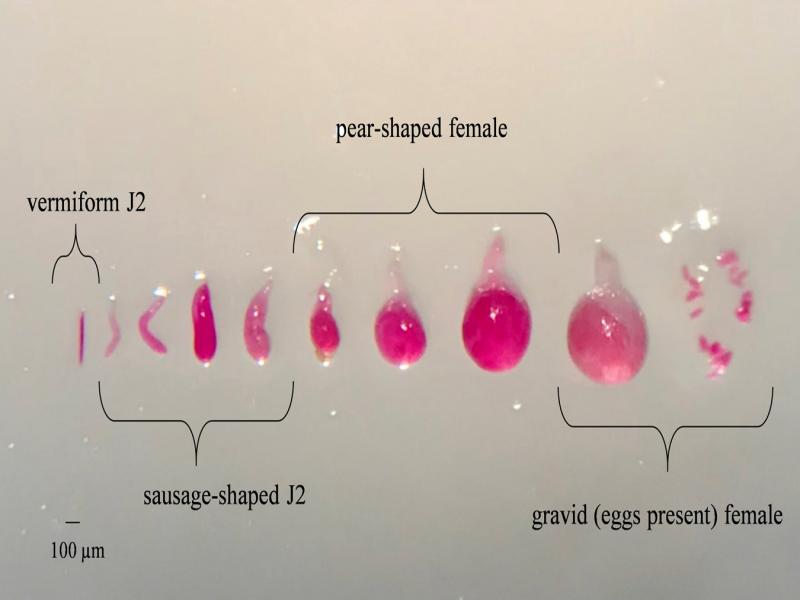
Figure 1:

Various life stages of Meloidogyne incognita stained with acid fuchsin. Life stages include vermiform second-stage juvenille (J2), sausage-shaped juvenile, pear-shaped female, and gravid (eggs present) female.
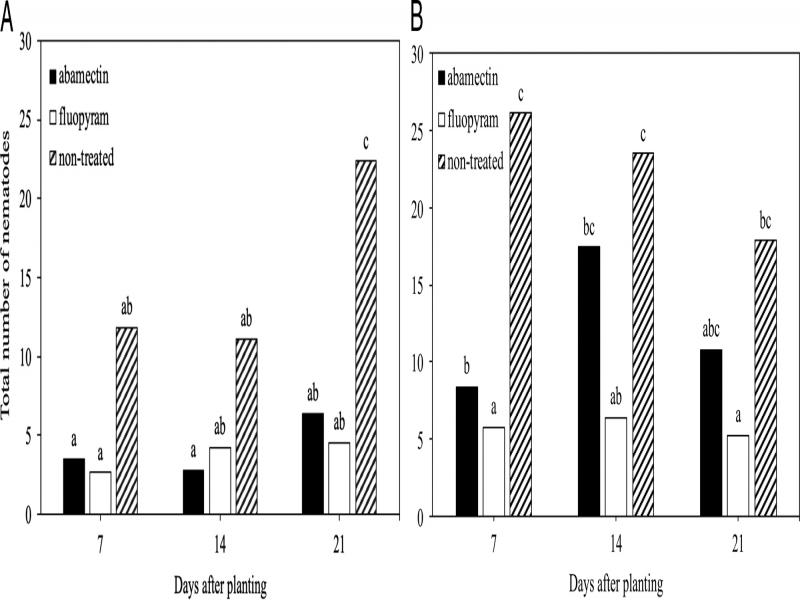

Figure 2:

Suppression of Meloidogyne incognita at three sample times by seed-applied nematicides in cotton (A) and soybean (B). Different letters above bars indicate significant differences at α = 0.05 according to Tukey’s HSD test.
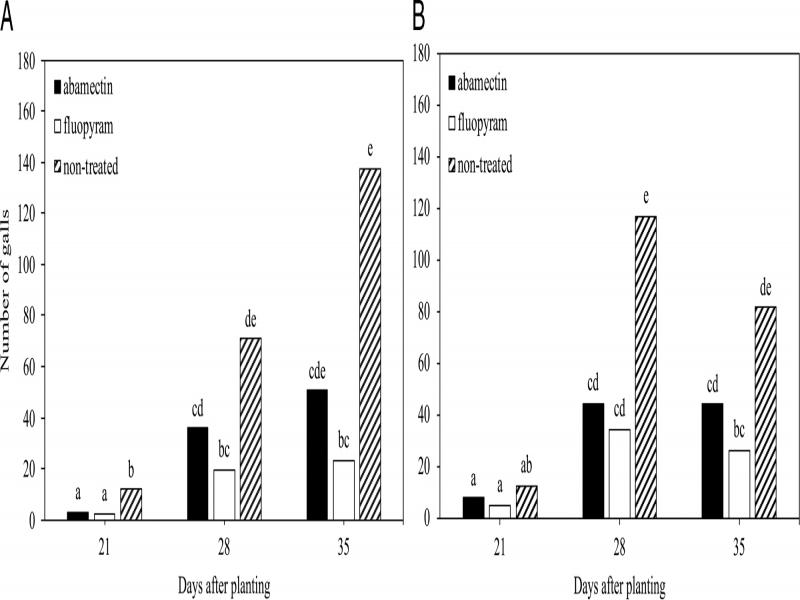
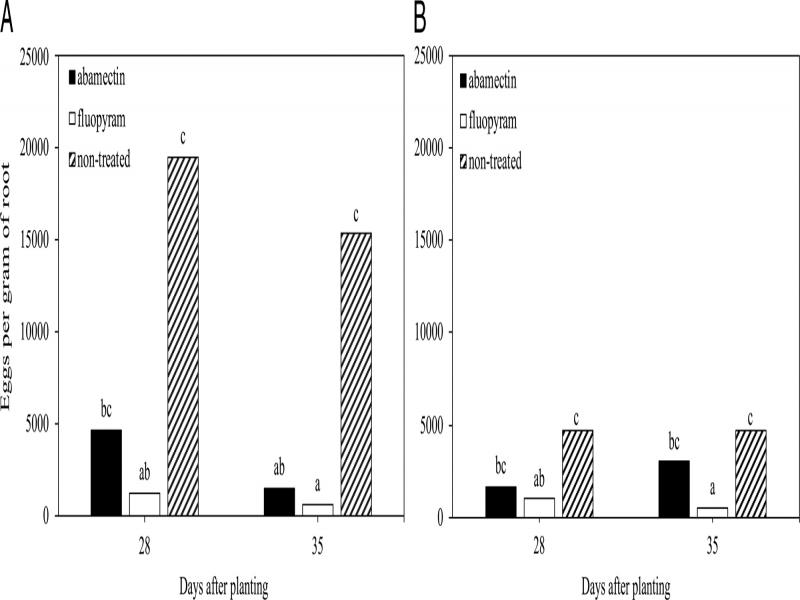
Figure 3:

Suppression of Meloidogyne incognita root galling by seed-applied nematicides at three sample times on cotton (A) and soybean (B). Different letters above bars indicate significant differences at α = 0.05 according to Tukey’s HSD test.
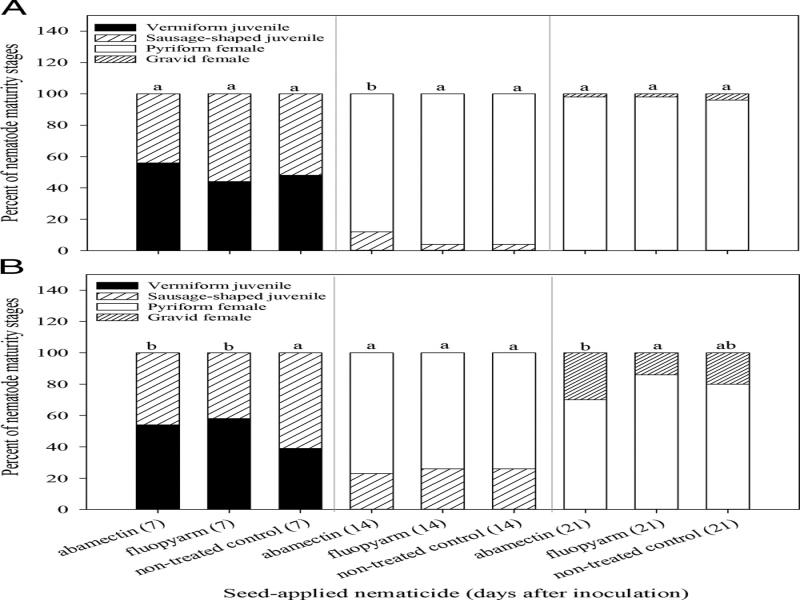

Figure 4:

Reproduction of Meloidogyne incognita on cotton (A) and soybean (B) in response to seed-applied nematicides. Different letters above bars indicate significant differences at α = 0.05 according to Tukey’s HSD test.

Figure 5:

Post-infection maturity of Meloidogyne incognita on cotton (A) and soybean (B) in response to seed-applied nematicides. Different letters above bars indicate significant differences at α = 0.05 according to chi-square analysis applied in pairs of treatments within each sample time.
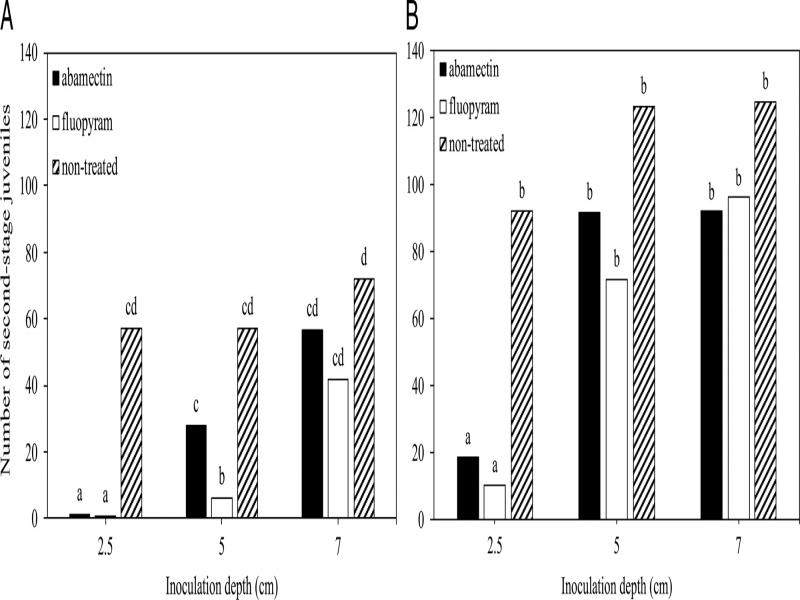

Figure 6:

Suppression of Meloidogyne incognita root penetration at three inoculation depths by seed-applied nematicides in cotton (A) and soybean (B). Different letters above bars indicate significant differences according to Tukey’s HSD test at α = 0.05.
DOI: https://doi.org/10.21307/jofnem-2020-083 | Journal eISSN: 2640-396X | Journal ISSN: 0022-300X
Language: English
Page range: 1 - 7
Published on: Aug 25, 2020
In partnership with: Paradigm Publishing Services
Publication frequency: 1 issue per year

© 2020 Tracy Hawk, Travis R. Faske, published by Society of Nematologists, Inc.
This work is licensed under the Creative Commons Attribution 4.0 License.