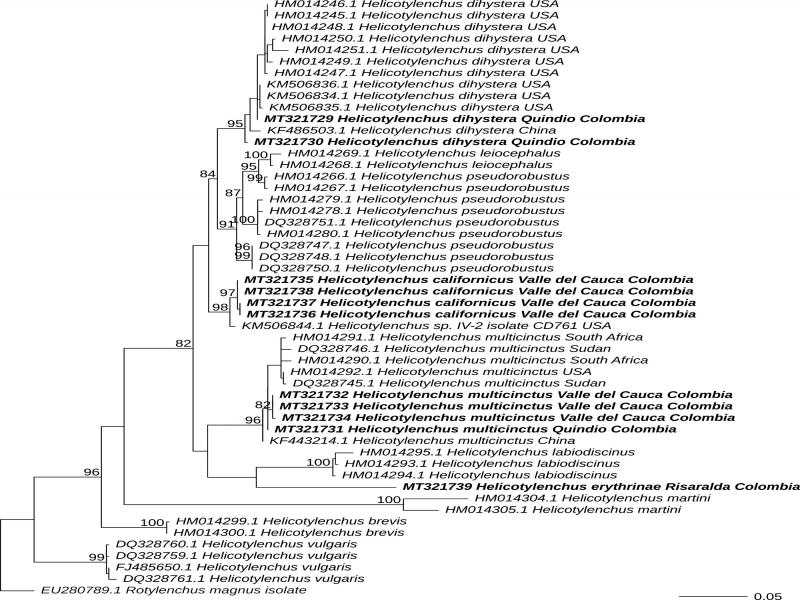
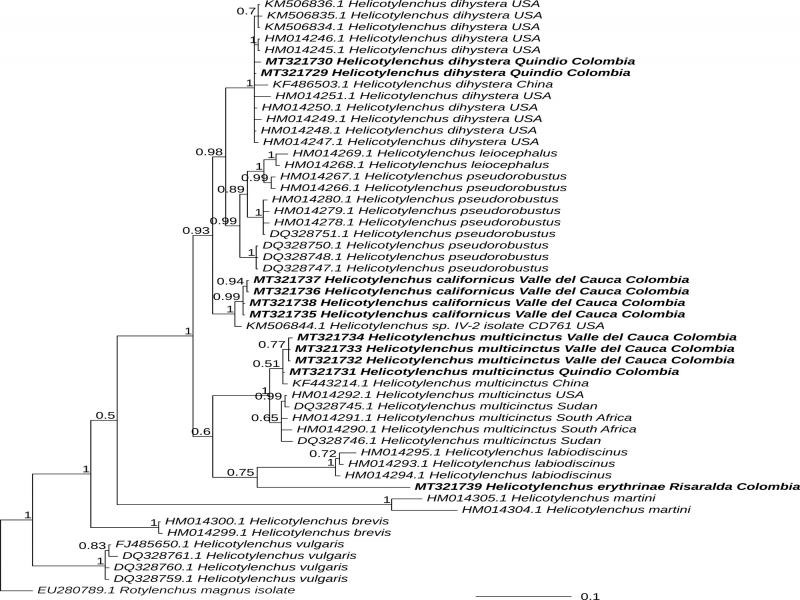
Helicotylenchus species are ecto and semiendoparasitic nematode, with worldwide distribution and with great importance in crops of Musa spp., as it causes the highest losses of production and yield after Radopholus similis, Pratylenchus spp., and Meloidogyne spp. (Araya and De Waele, 2004; Karakas, 2007; Singh et al., 2013; Ravichandra, 2014). The most limiting Helicotylenchus species in banana and plantain crops around the world are H. multicinctus (Golden, 1956), H. dihystera (Sher, 1961), and H. erythrinae (Golden, 1956). However, other species of Helicotylenchus have been found to be associated with Musa spp. crops in minor frequency. These species include H. abunaamai (Siddiqi, 1972), H. incisus, H. africanus, H. punicae, H. egyptiensis, H. variocaudatus (Fortuner, 1984), and H. digonicus (Perry et al., 1959; Castillo and Gómez-Barcina, 1993; Van Den Berg et al., 2003; Khan and Hasan, 2010; Ravichandra, 2014).
These species occur individually or in a mixture associate with Musaceae of different production zones in the world, including Vietnam, Venezuela, Democratic Republic of Congo, Brazil, South Africa, India, Mexico, and Greece. These nematodes cause injuries to outer layers of cortical tissue (observed as brown–reddish to black discrete spots), as well as disruption and progressive deterioration of the roots system and, as a consequence, the plant’s capacity for the uptake of water and nutrients is affected negatively (Orbin, 1973; Ngoc Chau et al., 1997; Crozzoli, 2009; Dias-Arieira, 2010; Khan and Hasan, 2010; Kamira et al., 2013; Roy et al., 2014; Daneel et al., 2015; Lara et al., 2016; Tzortzakakis et al., 2017). In addition, bunch maturation and size are reduced, with production losses between 19 and 34% at 2 to 3 years after planting, although the damage may be greater when R. similis is absent (McSorley and Parrado, 1986; Barekye et al., 2000; Guzmán-Piedrahita, 2011; Selvaraj et al., 2014).
Production losses in plantain and banana by Helicotylenchus spp. depend on two main factors. On the one side, the susceptibility of planting material and nematode density, because differences in the population level of H. multicinctus have been registered among Musa spp. cultivars with a high correlation between its density and the necrotic and dead roots percentage (Speijer and Ssango, 1999). On the other hand, losses depend on environmental conditions, since Helicotylenchus spp. are predominant in crops cultivated between 1,000 and 1,350 meters above sea level in andisols and vertisols soils with high contents of Ca, P, Mn and reduced organic matter (Speijer and Ssango, 1999; Karakas, 2007; Araya et al., 2011).
Although Helicotylenchus has been reported in the banana and plantain crops of Colombia and Brazil, morphological, morphometric, and molecular data are scarce for these geographical regions (Zuñiga et al., 1979; Villegas, 1989; Guzmán-Piedrahita and Cataño-Zapata, 2004; Torrado-Jaime and Castaño-Zapata, 2009). In order to contribute to the knowledge of the taxonomic identity of the species of Helicotylenchus associated with Musaceae in Colombia and Brazil, the present study has the following objectives: (i) to identify the species of Helicotylenchus that are associated with banana and plantain crops, using a combination of morphological, morphometric, and molecular analysis, and (ii) to elucidate the phylogenetic relationships of Helicotylenchus species that are associated with banana and plantain crops in the departments of Quindío, Risaralda y Valle del Cauca in Colombia and Minas Gerais in Brazil.
Materials and methods
Area of study, sampling, and nematodes extraction
Root and soil samples were collected from banana and plantain rhizosphere crops in the departments of Quindío (Calarcá and Córdoba municipalities), Risaralda (La Celia municipality), and Valle del Cauca (Palmira and Buenaventura municipalities) in Colombia and in Janauba, Minas Gerais state, Brazil during 2015 to 2018. In each crop, compound samples were collected, comprising 15 to 20 plants/ha. Nematodes were extracted from roots and soil using a modification of Cobb’s method (Ravichandra, 2014). Afterwards, representative populations of Helicotylenchus were selected for posterior analysis in the microbiology and molecular biology laboratories of the National University of Colombia (Palmira, Valle del Cauca, Colombia) and the Laboratory of Nematology of the Biological Institute (Campinas, São Paulo, Brazil).
Morphologic and morphometric analysis
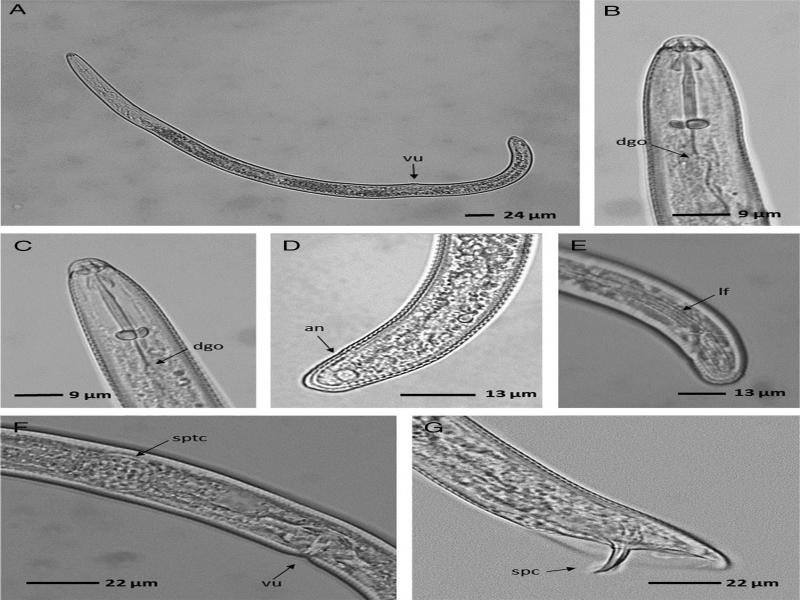
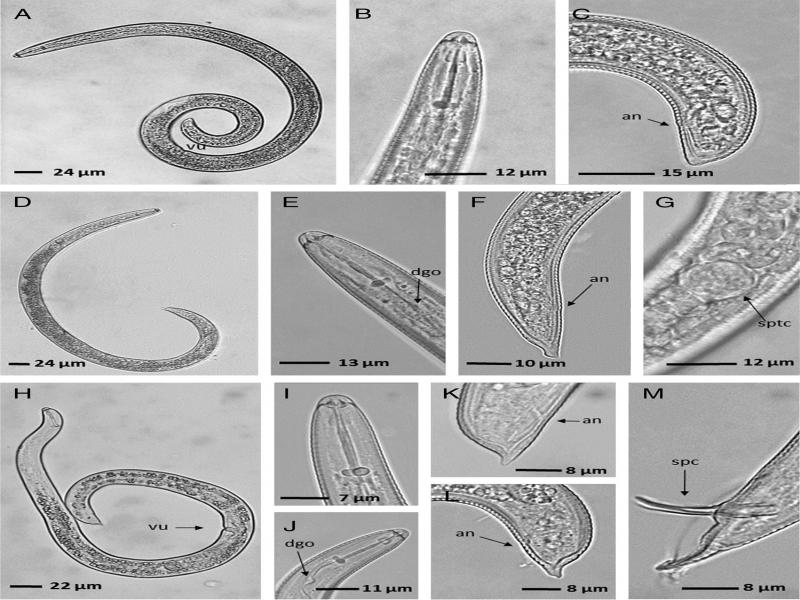
Nematodes extracted and identified as Helicotylenchus were killed with heat at 60°C for 4 min and fixated in 2% formalin. Semipermanent preparations were made and morphometric data were registered following Boag and Shamim Jairajpuri (1985) and Uzma et al. (2015). Microphotographs were taken using a compound microscope equipped with differential interference contrast–DIC (DM2500, Leica, Germany).
Statistical analysis:
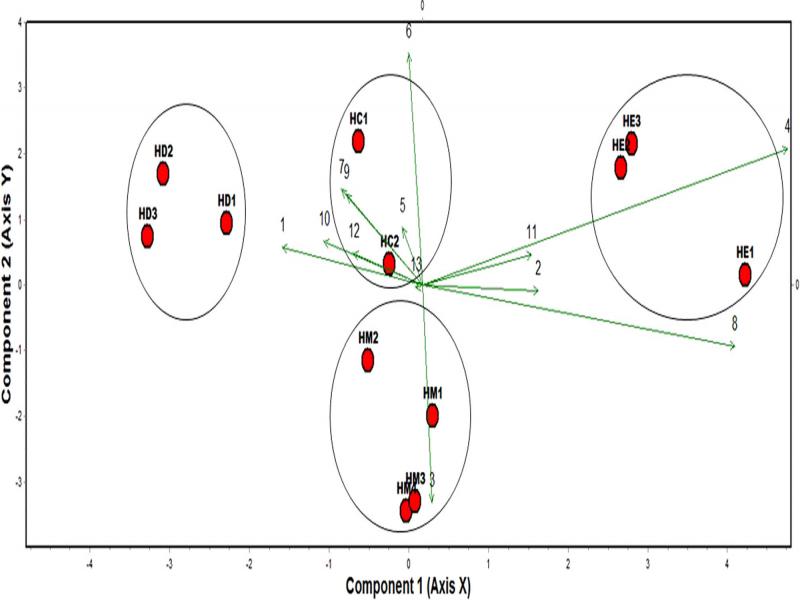
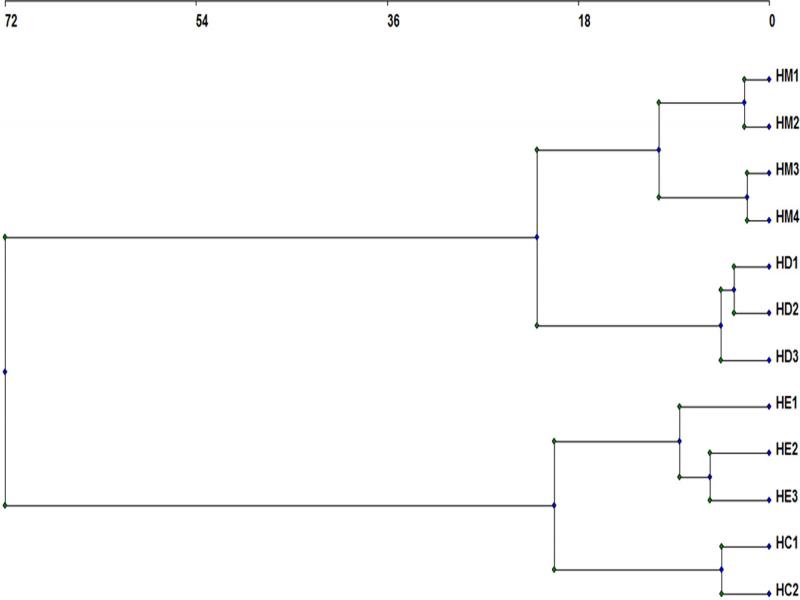
Morphometric data were analyzed using the Community Analysis Package (PISCES Conservation Ltd, Lymington UK, 1995) with principal components analysis (PCA) and conglomerate analysis to determine groupings and evaluate those characters that could discriminate species.
Extraction, amplification, and DNA sequencing
For molecular analysis, DNA was extracted by the Proteinase K method of Múnera et al. (2009) with modifications. A single nematode was crushed with a sterile scalpel and transferred to an Eppendorf tube with 15 µl of worm lysis buffer (50 mM KCl, 10 mM Tris pH 8.0, 15 mM MgCl2, 0.5% Triton x–100, 4.5% Tween–20, 0.09% Proteinase K). The tubes were incubated at −80°C (15 min), 65°C (1 h), and 95°C (15 min), centrifuged to 16,000 g (1 min) and stored at −20°C. Amplification of D2 to D3 expansion segment of the large subunit – LSU of ribosomal DNA (28S) was done using forward primer D2A (5′–ACAAGTACCGTGAGGGAAAGTTG–3′) and reverse D3B (5′–TCCTCGGAAGGAACCAGCTACTA–3′) (De Ley et al., 1999). The PCR conditions were initial denaturation during 2 min at 94°C followed by 40 cycles of 45 s at 94°C, 45 s at 55°C, and 1 min at 72°C and final extension of 10 min at 72°C. PCR products were sequenced in both directions at BIONNER Korea.
Phylogenetic analysis
Consensus sequences were edited using the software Geneious (Kearse et al., 2012) and BLAST (Basic Local Alignment Search Tool) at NCBI (National Center for Biotechnology Information) was used to confirm the species’ identity of the sequences. To estimate the phylogenetic history of Helicotylenchus, D2 to D3 sequences of others specimens of the species were downloaded from GenBank, including a sequence of Rotylenchus magnus, which was used as outgroup. Sequence alignment was performed using MAFFT v7 (Katoh et al., 2002) (protocol Q-INS-i), and jModelTest v2.1.7 (Posada, 2008) to find the best nucleotide substitution model, based on the Akaike information criterion corrected for small sample sizes. Afterwards maximum likelihood (ML) was used to estimate a tree with 250 bootstraps and the general time reversible model with allowance for gamma distribution of rate variation (GTR+Γ) in RAxML v8 (Stamatakis, 2014). The phylogeny of Helicotylenchus was inferred using MrBayes v3.2.6 (Ronquist et al., 2012) with the GTR + Γ model. Two independent Metropolis-coupled Markov chain Monte Carlo (MCMCMC) searches were performed for 2 million generations sampling every 2,000 steps. Convergence was assessed using Tracer v1.5 (burn-in = 20% of the samples), and by examining the average standard deviation of split frequencies among parallel chains. The consensus tree was calculated from the posterior distribution of 1,600 phylogenies. The Bayesian analysis was performed in the CIPRES Science Gateway (Miller et al., 2010).
Results
Morphological and morphometric identification of nematodes
Four species of Helicotylenchus were identified in the study areas: H. multicinctus, H. dihystera, H. erythrinae, and H. californicus. Morphological and morphometric data from each species closely resembled type and reference populations species (Tables 1-4).
Table 1.
Morphometric data of H. multicinctus and reference populations.
| Species | H. multicinctus | H. multicinctus | H. multicinctus | H. multicinctus | H. multicinctus | H. multicinctus |
|---|---|---|---|---|---|---|
| Locality/publication | Plantain, Cordoba–Quindío–HM1 n = 19 | Plantain, Rozo–Palmira–HM2 n = 20 | Banana, Brazil HM3–* n = 24 | Banana, Brazil 233–HM4 n = 21 |
Goodey (1940), Golden (1956) n = 2 |
Uzma et al. (2015) n = not defined |
| L | 0.6 ± 0.1 (0.4–0.8) | 0.6 ± 0.04 (0.5-0.7) | 0.5 ± 0.05 (0.5-0.6) | 0.5 ± 0.1 (0.4-0.6) | 0.54 (0.46-0.68) | 0.47-0.53 |
| a | 26.1 ± 2.8 (22.5-31.1) | 24.4 ± 1.5 (22.1-27.4) | 24.7 ± 1.9 (22.4-30.3) | 24.5 ± 2.0 (21.2-27.9) | 24.47 (23.8-28.5) | 24.0-30.0 |
| c | 45.6 ± 5.1 (36.1-55.2) | 44.6 ± 5.6 (36.5-59.8) | 49.2 ± 7.0 (37.7-64.1) | 50.7 ± 7.4 (39.6-69.6) | 53.8 (48.0-63.0) | 35.0-46.0 |
| c′ | 0.9 ± 0.1 (0.7-1.1) | 0.9 ± 0.1 (0.7-1.0) | 0.8 ± 0.1 (0.6-1.1) | 0.8 ± 0.1 (0.4-1.0) | 0.8-1.0 | 0.8-1.0 |
| V% | 68.4 ± 1.6 (65.9-71.7) | 67.2 ± 1.7 (64.1-70.0) | 68.9 ± 2.3 (65.0-73.1) | 69.1 ± 1.1 (66.2-71.1) | 69.0 (64.6-71.8) | 65.0-69.0 |
| DGO | 8.6 ± 0.6 (8.0-10.0) | 9.5 ± 0.5 (9.0-10.0) | 9.1 ± 1.0 (7.0-11.0) | 9.3 ± 1.1 (7.0-11.0) | – | – |
| Stylet length | 23.4 ± 1.3 (21.0-26.0) | 23.7 ± 0.7 (23.0-25.0) | 23.5 ± 0.9 (22.0-25.0) | 23.1 ± 0.8 (22.0-24.0) | 20.0-24.0 | 22.0-24.0 |
| Number of head annuli | 4.0 ± 0.6 (3.0-5.0) | 4.0 ± 0.5 (4.0-5.0) | 4.0 ± 0.5 (4.0-5.0) | 4.0 ± 0.0 (4.0-4.0) | 3.0-5.0 | 3.0-4.0 |
| Tail length | 13.0 ± 1.9 (10.0-16.0) | 12.9 ± 1.2 (10.0-15.0) | 11.3 ± 1.7 (8.0-15.0) | 10.5 ± 1.9 (7.0-15.0) | – | – |
| Number of tail annuli | 9.0 ± 1.2 (7.0-12.0) | 9.3 ± 1.3 (7.0-12.0) | 8.0 ± 1.9 (5.0-12.0) | 7.7 ± 1.5 (5.0-10.0) | 6.0-13.0 | 6.0-12.0 |
| Position of phasmid | 3.0 ± 1.2 (2.0-6.0) | 3.8 ± 1.0 (3.0-6.0) | 5.0 ± 2.1 (2.0-7.0) | 5.0 ± 1.2 (3.0-7.0) | 1.0-6.0 | 2.0-6.0 |
| Species | H. californicus | H. californicus | H. californicus | H. californicus | H. californicus | |
|---|---|---|---|---|---|---|
| Locality/publication | Plantain, Delfina–Buenaventura–HC1 n = 12 | Banana, Brazil HC2 n = 19 |
Van Den Berg and Heyns (1975) n = 25 |
Uzma et al. (2015) n = not defined |
Sher (1966) n = 16 | |
| L | 0.6 ± 0.05 (0.5-0.6) | 0.6 ± 0.1 (0.5-0.7) | 0.7 (0.6-0.8) | 0.58-0.78 | 0.6 (0.5-0.7) | |
| a | 23.5 ± 1.0 (22.0-25.2) | 24.6 ± 1.4 (21.5-26.6) | 28.8 (23.4-35.0) | 27-32 | 24.1 (21.1-26.2) | |
| c | 35.5 ± 4.7 (27.2-45.8) | 34.9 ± 3.0 (30.3-40.2) | 39.0 (30.8-53.0) | 32.0-50.0 | 38.7 (31.2-48.1) | |
| c′ | 1.0 ± 0.1 (0.8-1.1) | 1.1 ± 0.1 (1.0-1.3) | 1.1 (0.7-1.5) | 0.8-1.3 | 1.2 (0.9-2.1) | |
| V% | 62.1 ± 1.7 (59.3-64.8) | 65.6 ± 3.0 (61.3-75.5) | 63.0 (60.0-64) | 59-64 | 64 (60-67) | |
| DGO | 11.4 ± 1.2 (10.0-14.0) | 11.4 ± 2.4 (8.0-14.0) | – | – | 10 (8-14) | |
| Stylet length | 22.4 ± 0.9 (20.0-23.0) | 23.5 ± 1.0 (21.0-25.0) | 24.1 (22.8-27.2) | 24-27 | 27 (26-29) | |
| Number of head annuli | 4.7 ± 0.7 (4.0-6.0) | 4.2 ± 0.5 (4.0-6.0) | 3.0-5.0 | 4 | 5-7 | |
| Tail length | 15.9 ± 1.0 (13.0-19.0) | 16.5 ± 1.5 (14.0-20.0) | 17.9 (15.1-25.0) | – | 16 (13-21) | |
| Number of tail annuli | 7.8 ± 1.1 (6.0-9.0) | 7.8 ± 0.9 (6.0-9.0) | 10.0-17.0 | 8 | 9 (6-12) | |
| Position of phasmid | 6.8 ± 1.3 (5.0-8.0) | 6.0 ± 2.7 (2.0-8.0) | 3.0-14.0 | 2 | 1-11 | |
| Species | H. dihystera | H. dihystera | H. dihystera | H. dihystera | H. dihystera | |
|---|---|---|---|---|---|---|
| Locality/publication | Banana, Córdoba–Quindío–HD1 | Plantain, Córdoba–Quindío–HD2 | Sher (1961) | Uzma et al. (2015) | Wount and Yates | |
| n = 10 | n = 15 | n = 12 | n = not defined | n = 10 | n = 10 | |
| L | 0.62 ± 0.08 (0.53-0.77) | 0.61 ± 0.06 (0.48-0.69) | 0.67 (0.61-0.86) | 0.59-0.79 | 0.67 ± 0.05 (0.57-0.73) | 0.71 ± 0.04 (0.61-0.75) |
| a | 25.5 ± 1.94 (22.93-29.69) | 24.0 ± 1.83 (20.50-28.13) | 29.5 (26.0-34.0) | 27-35 | 29.3 ± 2.21 (26.0-33.0) | 29.5 ± 1.35 (27.0-32.0) |
| c | 43.8 ± 8.36 (25.12-55.45) | 45.3 ± 4.49 (39.0-56.3) | 48.0 (40.0-65.0) | 35- 49 | 46.0 ± 4.69 (37.0-53.0) | 43.0 ± 4.67 (35.0-50.0) |
| c′ | 1.0 ± 0.17 (0.80-1.31) | 0.9 ± 0.07 (0.71-0.94) | 1.0-1.3 | 0.8-1.2 | 1.11 ± 0.11 (1.0-1.3) | 1.09 ± 0.11 (0.9-1.3) |
| V% | 64.6 ± 1.19 (62.24-66.35) | 64.5 ± 1.24 (61.94-66.12) | 63.0 (60.0-66.0) | 60-65 | 65 ± 1.32 (63.0-67.0) | 63.0 ± 0.84 (61.0-64.0) |
| DGO | 14.7 ± 1.38 (13.0-16.0) | 14.9 ± 1.57 (13.0-17.0) | – | – | 11.5 ± 1.63 (8.5-13.5) | 10.0 ± 1.25 (7.0-11.0) |
| Stylet length | 24.4 ± 0.97 (23.0-26.0) | 23.8 ± 0.77 (23.0-25.0) | 26.0 (24.5-27.5) | 24-29 | 27.9 ± 1.08 (25.5-29.0) | 26.1 ± 0.74 (25.0-27.0) |
| Number of head annuli | 4.0 ± 0.0 (4.0-4.0) | 4.0 ± 0.26 (4.0-5.0) | 3.0-4.0 | 4-5 | – | – |
| Tail length | 14.5 ± 3.06 (11.0-21.0) | 13.5 ± 1.51 (12.0-16.0) | – | – | 14.5 ± 1.48 (12.0-17.0) | 16.7 ± 2.50 (12.0-21.0) |
| Number of tail annuli | 8.0 ± 1.88 (5.0-12.0) | 8.0 ± 0.68 (7.0-10.0) | 8-12 | 6-12 | – | – |
| Position of phasmid | 8.0 ± 0.99 (7.0-10.0) | 9.0 ± 1.91 (6.0-11.0) | 6-12 | 5-11 | – | – |
| Species | H. erythrinae | H. erythrinae | H. erythrinae | H. erythrinae | H. erythrinae | |
|---|---|---|---|---|---|---|
| Locality/publication | Banana, Calarcá–Quindío (La Julia)–HE1 | Plantain, Calarcá –Quindío (Resta)–HE2 | Van Den Berg and Heyns (1975) | Uzma et al. (2015) | Wount and Yates | |
| n = 15 | n = 25 | n = 7 | n = not defined | n = 10 | n = 10 | |
| L | 0.53 ± 0.1 (0.4-0.7) | 0.6 ± 0.1 (0.46-0.68) | 0.5 (04-0.6) | 0.48-0.61 | 0.87 ± 0.06 | 0.69 ± 0.05 |
| a | 25.03 ± 2.0 (22.7-29.7) | 25.90 ± 2.2 (22.86-30.91) | 25.1 (21.1-26.7) | 23.0-26.0 | 29.7 ± 1.64 (27.0-32.0) | 28.2 ± 1.87 (24.0-30.0) |
| c | 25.93 ± 4.1 (19.2-31.5) | 28.09 ± 3.0 (21.82-32.94) | 28.9 (23.3-30.3) | 27.0-34.0 | 43.0 ± 5.99 (31.0 -51.0) | 48.0 ± 10.55 (35.0-74.0) |
| c′ | 1.46 ± 0.2 (1.1-1.7) | 1.41 ± 0.15 (1.13-1.73) | 1.4 (1.3-1.4) | 1.0-1.6 | 1.13 ± 0.106 (1.0-1.3) | 1.03 ± 0.206 (0.60-1.30) |
| V% | 63.8 ± 1.8 (60.1-67.6) | 63.7 ± 2.16 (60.82-68.54) | 64.0 (61.0-67.0) | 60.0-65.0 | 62.0 ± 2.85 (58.0-68.0) | 63.0 ± 2.22 (59.0-65.0) |
| DGO | 10.36 ± 2.6 (5.0-8.0) | 12 ± 1.97 (8.0-15.0) | – | – | 9.6 ± 2.07 (75.0-13.0) | 9.1 ± 0.94 (7.0-10.0) |
| Stylet length | 22.7 ± 1.0 (21.0-25.0) | 22.8 ± 0.83 (21.0-24.0) | 24.6 (21.7-26.8) | 23.0-26.0 | 28.3 ± 1.23 (26.0-30.0) | 27.9 ± 0.97 (25.5-29.0) |
| Number of head annuli | 4.0 ± 0.0 (4.0-4.0) | 4.0 ± 0.32 (3.0-5.0) | 4.0 | 4.0-5.0 | – | – |
| Tail length | 20.53 ± 2.2 (17.0-25.0) | 20.65 ± 2.39 (17.0-26.0) | 17.9 | – | 20.6 ± 2.8 (16.0-24.0) | 14.7 ± 2.71 (9.0-18.0) |
| Number of tail annuli | 10.0 ± 2.8 (7.0-17) | 11.0 ± 1.01 (10.0-13.0) | 10.0-14.0 | 6.0-12.0 | 13.4 ± 0.97 (12.0-15.0) | 10.2 ± 2.25 (7.0-15.0) |
| Position of phasmid | 6.0 ± 0.9 (4.0-7.0) | 3.0 ± 1.01 (1.0-5.0) | 9 | 4/2 | – | – |
| Principal component | Eigenvalues | Cumulative total | % of Total variance | Cum. % of total variance | |
|---|---|---|---|---|---|
| 1 | 4.92 | 4.92 | 37.88 | 37.88 | |
| 2 | 3.75 | 8.68 | 28.88 | 66.76 | |
| 3 | 2.16 | 10.84 | 16.63 | 83.39 | |
| 4 | 1.04 | 11.88 | 7.99 | 91.39 | |
| 5 | 0.35 | 12.23 | 2.70 | 94.09 | |
| 6 | 0.29 | 12.52 | 2.22 | 96.31 | |
| 7 | 0.22 | 12.74 | 1.68 | 97.99 | |
| 8 | 0.16 | 12.89 | 1.23 | 99.22 | |
| 9 | 0.06 | 12.95 | 0.43 | 99.65 | |
| 10 | 0.04 | 12.99 | 0.29 | 99.94 | |
| 11 | 0.01 | 13 | 0.06 | 100 | |
| 12 | 1.5128E–7 | 13 | 1.16369E–6 | 100 | |
| 13 | –4.65844E–10 | 13 | –3.58342E–9 | 100 |
| Vector | Diagnostic character | 1 | 2 | 3 | 4 |
|---|---|---|---|---|---|
| 1 | L | –0.25 | 0.21 | 0.02 | 0.66 |
| 2 | a | 0.09 | –0.01 | –0.57 | 0.35 |
| 3 | c | –0.34 | –0.33 | –0.01 | 0.02 |
| 4 | c′ | 0.36 | 0.28 | –0.12 | –0.11 |
| 5 | V % | –0.06 | –0.48 | –0.13 | 0.01 |
| 6 | DGO | –0.22 | 0.35 | –0.25 | –0.27 |
| 7 | Stylet length | –0.31 | –0.05 | –0.39 | –0.03 |
| 8 | Number of head annuli | 0.01 | 0.05 | 0.61 | 0.07 |
| 9 | Number of tail annuli | 0.37 | 0.07 | –0.09 | 0.33 |
| 10 | Position of phasmid | –0.29 | 0.31 | –0.09 | –0.40 |
| 11 | Maximum body diameter | –0.39 | 0.22 | 0.02 | 0.15 |
| 12 | Tail length | 0.32 | 0.35 | –0.10 | –0.05 |
| 13 | Anal body diameter | –0.24 | 0.37 | 0.17 | 0.22 |
| Species name | Location | Plant-host | GenBank accession number | Reference or source |
|---|---|---|---|---|
| H. dihystera | Colombia, Córdoba, Quindío | Musa AAA (Banana) | MT321729; MT321730 | Present study |
| H. dihystera | USA, Florida, Ft Lauderdale | Schefflera arboricola | HM014245 | Subbotin et al. (2011) |
| H. dihystera | USA, Florida, Goulds | Bromeliads | HM014246 | Subbotin et al. (2011) |
| H. dihystera | USA, Florida, Ft Pierce | Ficus | HM014247 | Subbotin et al. (2011) |
| H. dihystera | USA, Hawaii, Kawai | Grasses | HM014248 | Subbotin et al. (2011) |
| H. dihystera | USA, Georgia | – | HM014249 | Subbotin et al. (2011) |
| H. dihystera | USA, Hawaii, Kawai | Grasses | HM014250 | Subbotin et al. (2011) |
| H. dihystera | USA, Georgia | – | HM014251 | Subbotin et al. (2011) |
| H. dihystera | USA, California, Kern county | Vitis vinifera | KM506834 | Subbotin et al. (2015) |
| H. dihystera | USA, Texas (plant shipment) | – | KM506835 | Subbotin et al. (2015) |
| H. dihystera | USA, California, Merced | Grasses | KM506836 | Subbotin et al. (2015) |
| H. dihystera | China, Fujian Province | Musa sp. | KF486503 | Xiao et al. (2014) |
| H. leiocephalus | USA, Nebraska, Lincoln, Nine mile Prairie | Amorpha canescens | HM014268; HM014269 | Subbotin et al. (2011) |
| H. pseudorobustus | USA, Kansas, Konza Prairie, Manhattan | Koeleria pyramidata | HM014266; HM014267 | Subbotin et al. (2011) |
| H. pseudorobustus | New Zealand, MAF farm, Kaitoke | Lolium perenne, Trifolium repens | HM014278 | Subbotin et al. (2011) |
| H. pseudorobustus | New Zealand, Rotorua | Lolium perenne | HM014279; HM014280 | Subbotin et al. (2011) |
| H. pseudorobustus | China, Beijing | – | DQ328747 | Subbotin et al. (2011) |
| H. pseudorobustus | USA, California, Fresno | – | DQ328748 | Subbotin et al. (2011) |
| H. pseudorobustus | Italy, Ancona | – | DQ328750 | Subbotin et al. (2011) |
| H. pseudorobustus | Germany, Münster, BBA glasshouse | – | DQ328751 | Subbotin et al. (2011) |
| Helicotylenchus spIV-2 | USA, Florida, Gainesville, Winter garden | Calathea sp. | KM506844 | Subbotin et al. (2015) |
| H. multicinctus | Colombia, Calarcá, Quindío | Musa AAA (Banana) | MT321731 | Present study |
| H. multicinctus | Colombia, Rozo, Palmira, Valle del Cauca | Musa AAB (Plantain) | MT321732; MT321733; MT321734 | Present study |
| H. multicinctus | South Africa, Lambani | Musa sp. | HM014290; HM014291 | Subbotin et al. (2011) |
| H. multicinctus | USA, Florida, Ft. Pierce | Ficus benjamina | HM014292 | Subbotin et al. (2011) |
| H. multicinctus | Sudan | Musa sp. | DQ328745; DQ328746 | Subbotin et al. (2011) |
| H. multicinctus | China, Fujian Province | Musa sp. | KF443214 | Xiao et al. (2014) |
| H. californicus | Colombia, La Delfina, Buenaventura, Valle del Cauca | Musa AAB (Plantain) | MT321735; MT321736; MT321737; MT321738 | Present study |
| H. erythrinae | Colombia, La Celia, Risaralda | Musa AAB (Plantain) | MT321739 | Present study |
| H. labiodiscinus | USA, Kansas, Manhattan | Poa pratensis | HM014293 | Subbotin et al. (2011) |
| H. labiodiscinus | USA, Kansas, Manhattan | Andropogon gerardii | HM014294 | Subbotin et al. (2011) |
| H. labiodiscinus | USA, Kansas, Manhattan | Schizachyrium scoparium | HM014295 | Subbotin et al. (2011) |
| H. martini | South Africa, Lambani | Grasses | HM014304; HM014305 | Subbotin et al. (2011) |
| H. brevis | South Africa, North West Province | Solanum mauritianum | HM014299; HM014300 | Subbotin et al. (2011) |
| H. vulgaris | Italy, Ancona | – | DQ328759; DQ328760; DQ328761 | Subbotin et al. (2011) |
| H. vulgaris | USA, Kansas, University of Arkansas | – | FJ485650 | Subbotin et al. (2011) |