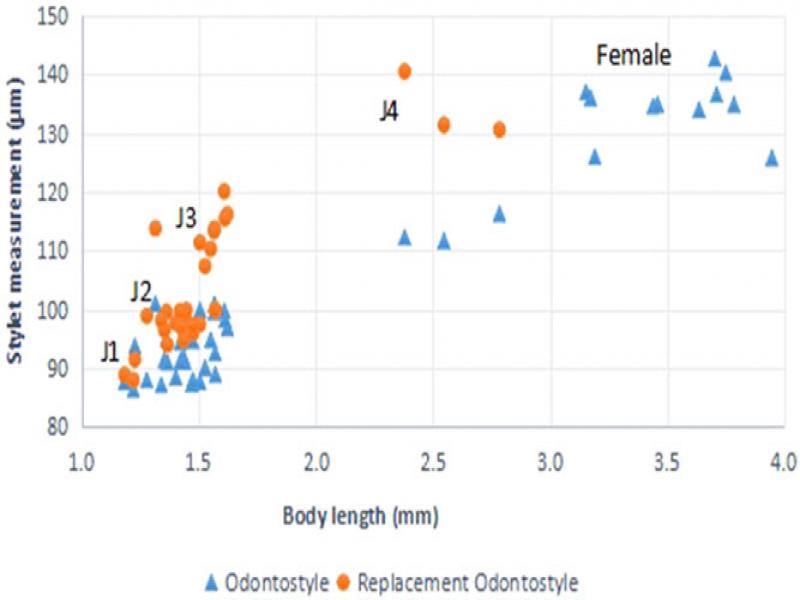
The family Longidoridae Thorne, 1935 comprises a group of migratory plant-parasitic species that damage a wide range of wild and cultivated plants through direct feeding on root cells and the transmission of several plant-pathogenic viruses (Decraemer and Robbins, 2007; Decraemer and Chaves, 2012). Members of these genera are known to transmit nepoviruses and are regulated by quarantine inspections in many countries (Gutiérrez-Gutiérrez et al., 2016). Longidorus and Paralongidorus belong to family Longidoridae, both are globally distributed and have 160 and 90 known species, respectively (Palomares-Rius et al., 2013; Archidona-Yuste et al., 2016; Esmaeili et al., 2016).
Some species of Paralongidorus have controversial status due to synonymization of Longidoroides (Khan et al., 1978) and Siddiqia (Khan et al., 1978), and some Paralongidorus species have been wrongly included and belong to genus Longidorus (Decraemer and Coomans, 2007). The major difference used to separate Longidorus, Longidoroides, and Paralongidorus is the shape of amphids (pouch like in Longidorus and Longidoroides vs. funnel/stirrup shaped in Paralongidorus) and the opening of amphidial aperture (pore-like in Longidorus vs. slit-like in Longidoroides and Paralongidorus) (Oliveira and Neilson, 2006). Several new species of Paralongidorus have published with complete molecular characterization and scanning electron microscopy (SEM) observations (Palomares-Rius et al., 2008, 2013; Pedram et al., 2012; Gutiérrez-Gutiérrez et al., 2017; Barsi and Luca, 2017) which enables the discrimination between Longidorus and Paralongidorus species. However, there is no molecular evidence to distinguish Longidoroides species which leaves the status of this genus as junior synonym of Paralongidorus as suggested by Decraemer and Coomans (2007).
During a routine nematological survey of Hangzhou, Zhejiang Province, eastern China, two populations of longidorid nematodes were isolated from the rhizosphere of woody perennials. The population isolated from Cyclobalanopsis glauca (Thumb.) Oerst, 4 juvenile stages were recovered and identified as Longidorus jonesi, the population from Castanopsis sclerophylla (Lindl.) Schottky, 3 juvenile stages were recovered and was identified as Paralongidorus sali.
Robbins et al. (1995) reported 3 juveniles stages of L. jonesi and no first stage juvenile or male were observed additionally this is the first report of genus Paralongidorus found in China. Therefore, the objectives of the present study were to: (i) provide updated morphological descriptions of first-stage juvenile P. sali, and male of L. jonesi, (ii) characterize the molecular data of both species using the D2–D3 expansion segments of 28S rRNA and partial 18S rRNA gene sequences, and (iii) demonstrate the phylogenetic relationships of both species with related species.
Materials and Methods
Nematode sampling, extraction and morphological study
Nematodes were extracted from soil samples using modified Baermann funnel method for 24 hr. For morphometric studies, nematodes were killed and fixed with hot formalin (4% with 1% glycerol), and processed in glycerine (Seinhorst, 1959) as modified by De Grisse (1969). The measurements and light micrographs of nematodes were performed using a Nikon eclipse Ni–U 931845 compound microscope. For the SEM examination, the nematodes were fixed in a mixture of 2.5% paraformaldehyde and 2.5% glutaraldehyde, (the mixture contained = 25 ml of 8% paraformaldehyde, 10 ml of 25% glutaraldehyde, 50 ml of 0.2 M phosphate buffer, and 15 ml distilled water) washed three times in 0.1 M cacodylate buffer, postfixed in 1% osmium tetroxide, dehydrated in a series of ethanol solutions and critical-point dried with CO2. After mounting on stubs, the samples were coated with gold at 6 to 10 nanometer thickness and the micrographs were made at 3 to 5 kv operating system (Maria et al., 2018).
Molecular analyses
DNA was extracted from single specimens as described by Zheng et al. (2003). Polymerase chain reaction (PCR) and sequencing were completed in two laboratories: LPN and IB, China. PCR conditions were as described by Ye et al. (2007). Several sets of primers were used for PCR: the forward D2A (5′-ACAAGTACCGTG AGGGAA AGTTG-3′) and the reverse D3B (5′-TCGGAAGGAACCAGCTACTA-3′) primers for amplifying the D2–D3 expansion segments of 28S rRNA gene (De Ley et al., 1999). Nearly full length 18S region was amplified with two sets of two sets of primers, the first set was 18s39F (5′-AAAGATTAAGCCATGCATG-3′) and 18s977R (5′-TTTACGGTTAGAACTAGGGCGG-3′). The second set was 18s900F (5′-AAGACGGACTACAGCGAAAG-3′) and 18s1713R (5′-TCACCTACAGCTACCTTGTTACG-3′) (Olson et al., 2017). PCR products were separated on 1% agarose gels and visualised by staining with ethidium bromide. PCR products of sufficiently high quality were purified for cloning and sequencing by Invitrogen, Shanghai, China or Quintara Biosciences CA, USA.
Phylogenetic analysis
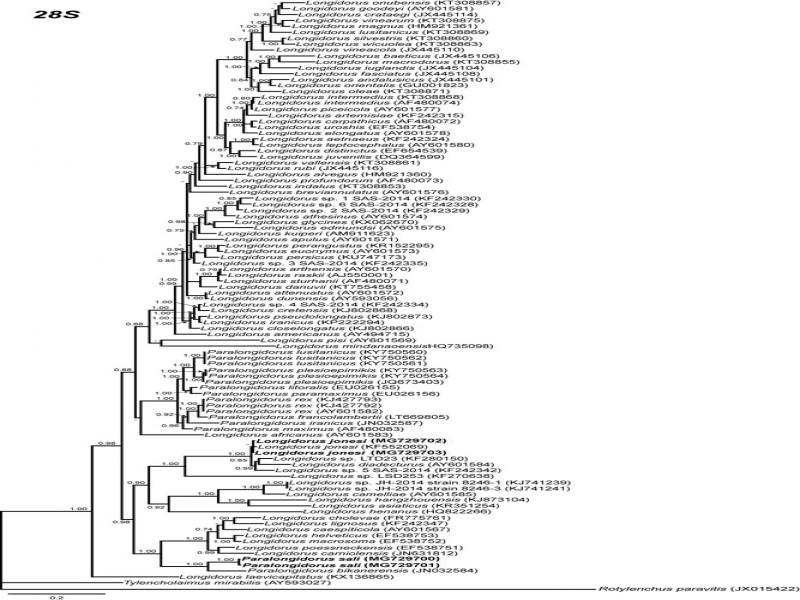
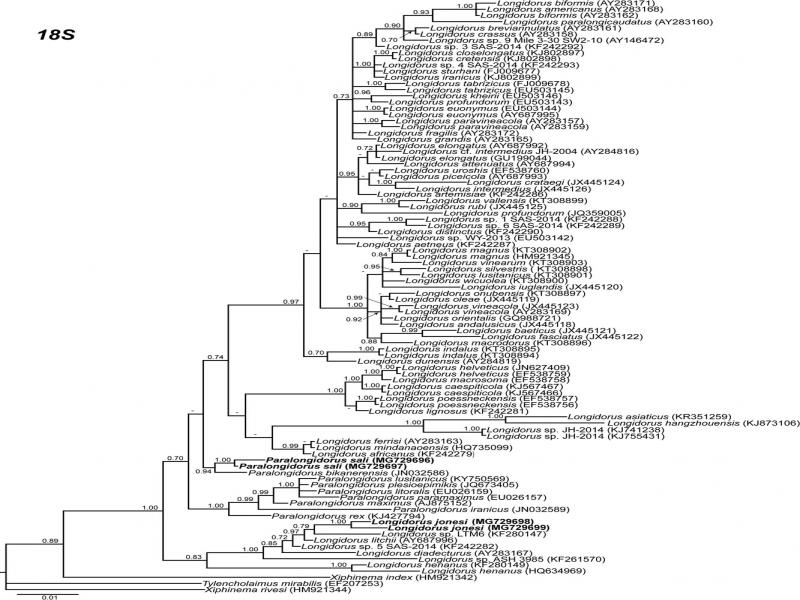
D2–D3 28S segments, and partial 18S rRNA sequences of different Longidorus and Paralongidorus species from GenBank were used for phylogenetic reconstruction. Rotylenchus paravitis (JX015422) for D2–D3 of 28S and Tylencholaimus mirabilis (EF207253), Xiphinema rivesi (HM921344) for 18S tree were selected as outgroup taxa for each dataset following previous published studies (He et al., 2005; Holterman et al., 2006; Gutiérrez-Gutiérrez et al., 2013; Archidona-Yuste et al., 2016). Multiple sequence alignments of the different genes were made using the Q-INS-i algorithm of MAFFT V.7.205 (Katoh and Standley, 2013). Sequence alignments were manually visualized using BioEdit (Hall, 1999) and edited by Gblocks ver. 0.91b (Castresana, 2000) in Castresana Laboratory server (http://molevol.cmima.csic.es/castresana/Gblocks_server.html) using options for a less stringent selection (minimum number of sequences for a conserved or a flanking position: 50% of the number of sequences +1; maximum number of contiguous non-conserved positions: 8; minimum length of a block: 5; allowed gap positions: with half). Percentage similarity between sequences was calculated using the sequence identity matrix in BioEdit. For that, the score for each pair of sequences was compared directly and all gap or place-holding characters were treated as a gap. When the same position for both sequences had a gap it was not treated as a difference. Phylogenetic analyses of the sequence datasets were based on Bayesian inference (BI) using MrBayes 3.1.2 (Ronquist and Huelsenbeck, 2003). The best-fit model of DNA evolution was obtained using JModelTest V.2.1.7 (Darriba et al., 2012) with the Akaike Information Criterion (AIC). The best-fit model, the base frequency, the proportion of invariable sites, and the gamma distribution shape parameters and substitution rates in the AIC were then given to MrBayes for the phylogenetic analyses. General time-reversible model with invariable sites and a gamma-shaped distribution (GTR + I + G) for the D2–D3 segments and a transitional of invariable sites model with invariable sites and a gamma-shaped distribution (TIM2 + I + G) for the 18S rRNA gene. These BI analyses were run separately per dataset using four chains for 2 × 10⁶ generations for all of molecular markers. A combined analysis of the two genes was not undertaken due to some sequences not being available for all species. The Markov chains were sampled at intervals of 100 generations. Two runs were conducted for each analysis. After discarding burn-in samples and evaluating convergence, the remaining samples were retained for further analyses. The topologies were used to generate a 50% majority-rule consensus tree. Posterior probabilities (PP) are given on appropriate clades. Trees from all analyses were visualized using FigTree software V.1.42 (http://tree.bio.ed.ac.uk/software/figtree/).
Results
SYSTEMATICS
Paralongidorus sali (Siddiqi et al., 1963)
Description
Female
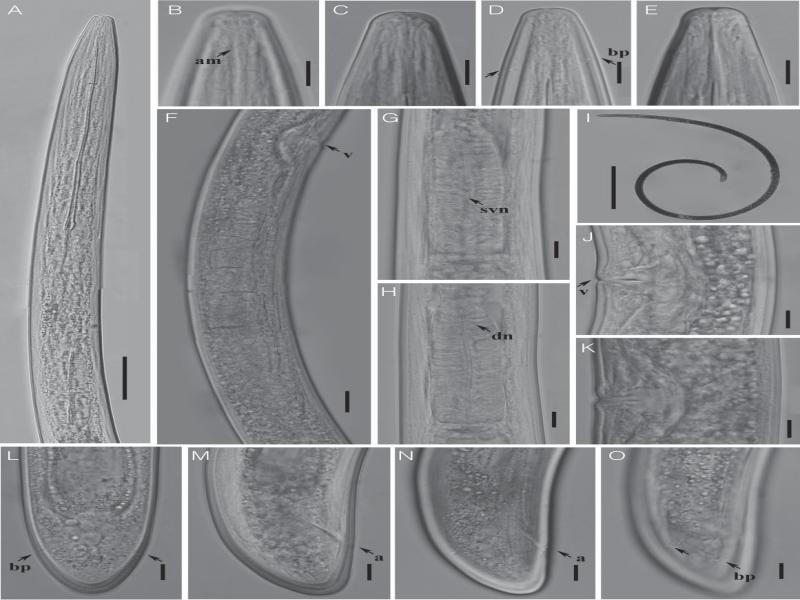
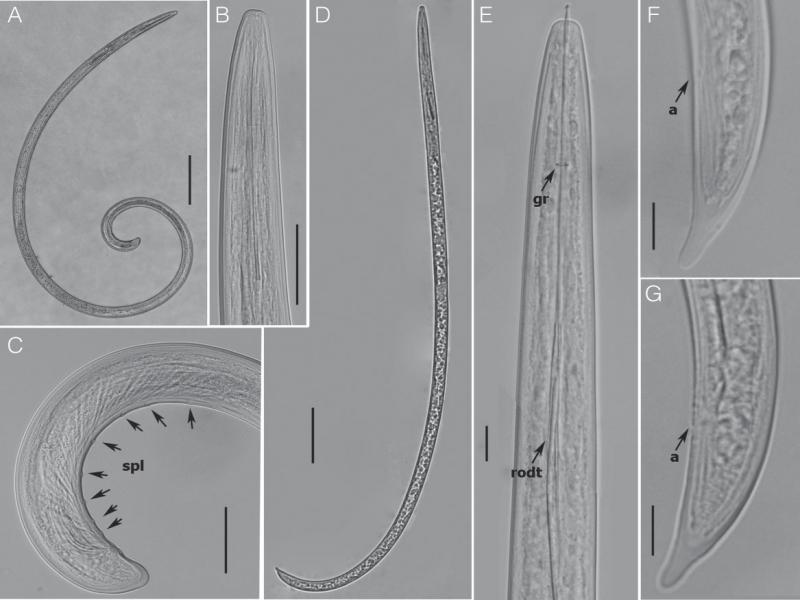
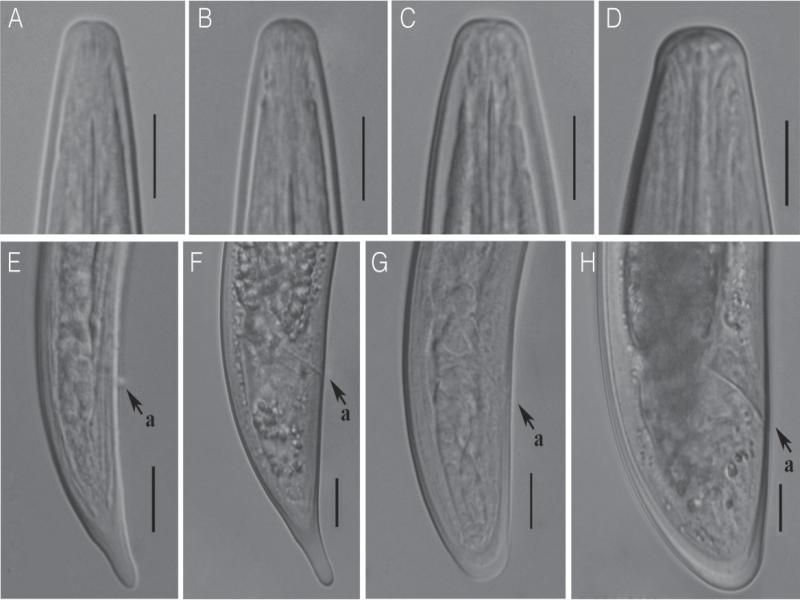
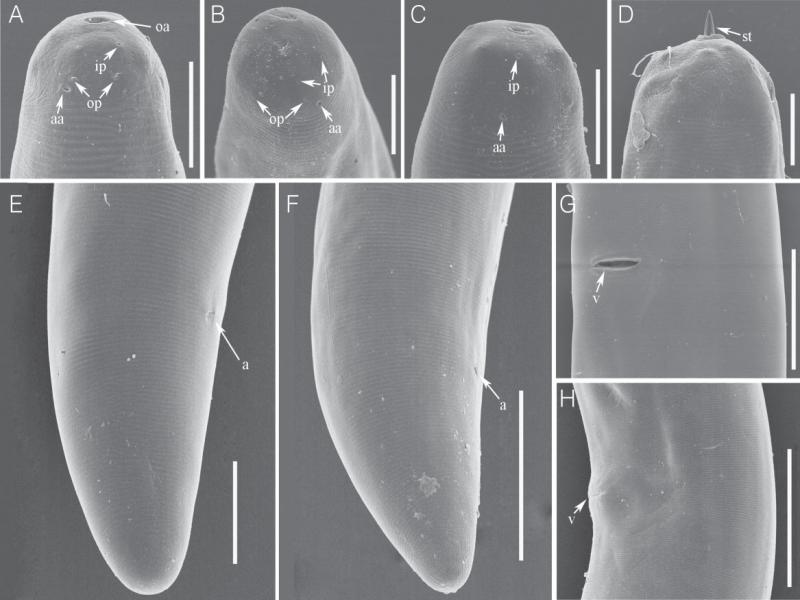
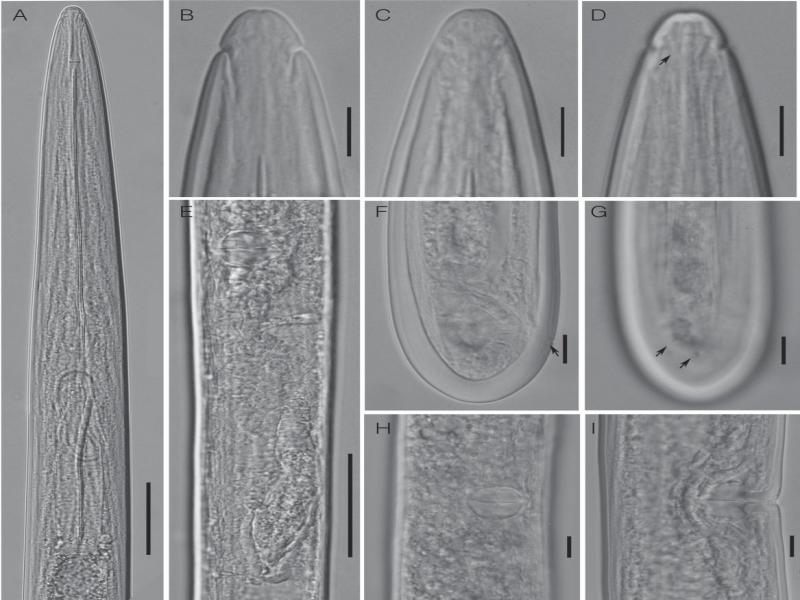
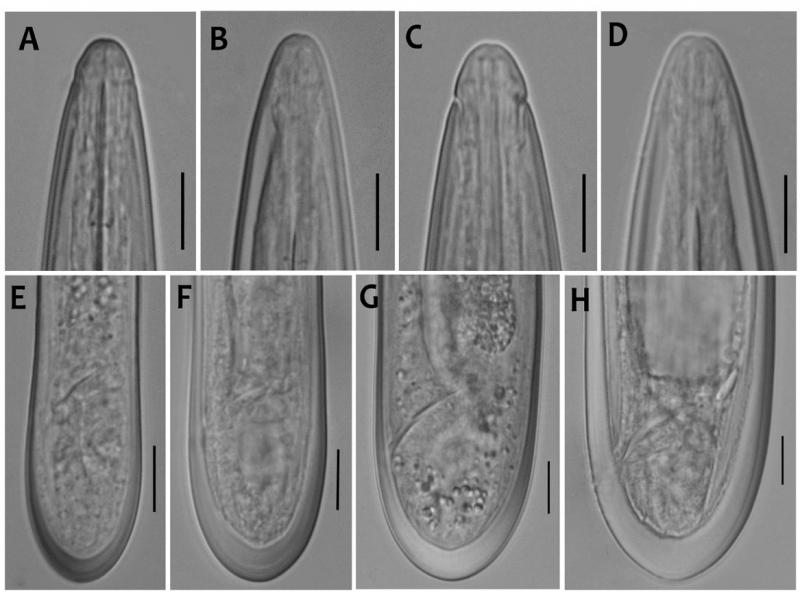
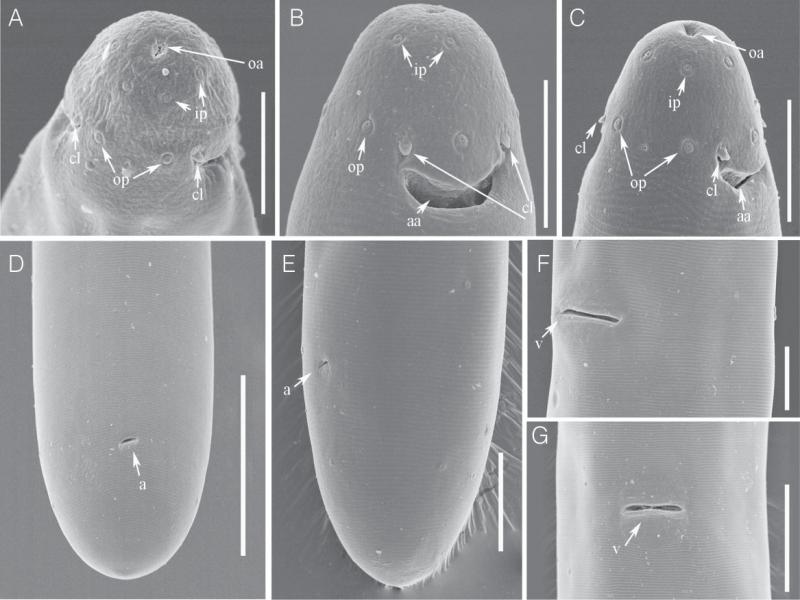
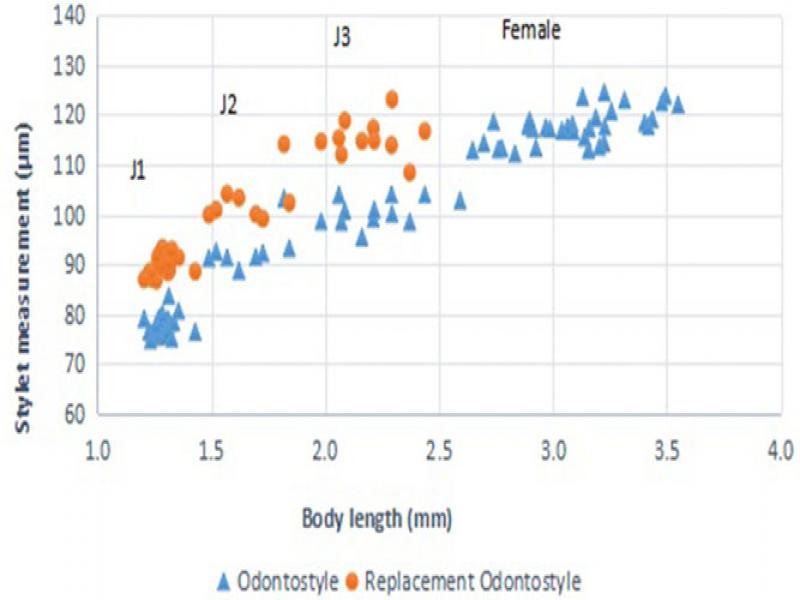
Body elongated, slender, slightly tapering anteriorly and posteriorly, open C-shape when heat relaxed. Cuticle appearing smooth, 3.9 (3.5–4.0) μm thick near vulva, 8.6 (7.0–10.0) μm thick at tip tail, and marked by very fine, superficial, transverse striae mainly, in tail region. Lip region dome-shaped, continuous with the rest of the body. SEM observations showed a slit-like oral aperture surrounded by six inner and six outer labial papillae in en face view, labial lobe distinct, amphidial fovea stirrup-shaped, with conspicuous, crescent-shaped amphidal aperture having slightly rounded margins. Odontostyle straight or slightly arcuate, twice the length of odontophore, odontophore weakly developed, with slight basal swellings. Guiding ring located anteriorly ca more than three times the lip region width distance from anterior end. Nerve ring encircling pharynx, located slightly posterior to middle of pharynx. Oesophagus dorylaimoid, typical of genus. Anterior slender part of oesophagus usually with loop overlapping basal bulb. Basal bulb cylindrical, 108 (104–115) μm long and 24.5 (24.0–25.0) μm in diam. Dorsal oesophageal gland nucleus located 28 to 32 μm from the anterior end of oesophageal bulb, two ventro-sublateral nucleus located (SV1 = 61.2–63.5, SV2 = 59.1–61.3) μm from the anterior end of pharyngeal bulb. Cardia elongated, conoid shaped 9.8 (8.5–11.0) μm long. Reproductive system didelphic with reflexed ovaries, vulva a transverse slit, vagina perpendicular to body axis ca less than half of corresponding body diam. Inconspicuous, oocytes arranged in multiple rows, pre-rectum variable in length 403 (359–445) μm and rectum 29.5 (28.5–30.5) μm long, anus a small slit. Tail short, hemispherical (Figs. 1–4, Tables 1, 2).
Table 1
Morphometrics of Paralongidorus sali (Siddiqi et al., 1963). All measurements are in micrometer and in the form: mean ± s.d. (range).
| Characters/ratios | J1 | J2 | J4 | Females | ||
|---|---|---|---|---|---|---|
| n | 25 | 8 | 13 | 30 | ||
| L | 1290 ± 46 (1205–1429) | 1636 ± 116 (1621–1695) | 2199 ± 204 (1819–2592) | 3089 ± 243 (2647–3494) | ||
| a | 52.3 ± 2.4 (46.3–56.8) | 51.9 ± 2.5 (48.9–56) | 52.4 ± 5.2 (43–57.8) | 55.9 ± 4.4 (49.3–64.6) | ||
| b | 4.4 ± 0.5 (3.8–5.9) | 4.8 ± 0.3 (4.6–5.3) | 5.7 ± 1 (3.9–7.6) | 6.6 ± 0.5 (5.7–7.8) | ||
| c | 59.4 ± 6.3 (48.5–78.9) | 66.4–4.2 (58.8–73.1) | 90.2 ± 10.8 (71.5–109.4) | 128.7 ± 9.1 (111.9–142) | ||
| c′ | 1.17 ± 0.11 (0.9–1.37) | 0.97 ± 0.12 (0.72–1.11) | 0.78 ± 0.08 (0.68–0.96) | 0.65 ± 0.05 (0.56–0.78) | ||
| V | – | – | – | 48.6 ± 1.7 (46.2–54.3) | ||
| Total stylet | 127.8 ± 3.4 (120.0–137.0) | 148.2 ± 3.2 (143.0–154.0) | 158.2 ± 5.0 (149.0–165.0) | 186.8 ± 4.4 (179.0–196.0) | ||
| Odontostyle | 77.9 ± 2 (75.0–84.0) | 90.8 ± 1.6 (89.0–94.0) | 100.7 ± 2.7 (95.0–104.0) | 117.4 ± 3.3 (112.0–124.5) | ||
| Odontophore | 50.0 ± 2.5 (44.0–54.0 | 56.7 ± 2.6 (52.0–61.0) | 58 ± 4.2 (51.0–63.0) | 68.9 ± 1.9 (66.0–74.0) | ||
| Replacement Odontostyle | 89.8 ± 1.9 (87.0–93.0) | 101.2 ± 1.8 (99.0–104.0) | 115.3 ± 3.6 (108.0–123.0) | – | ||
| Oral aperture to guide ring | 23.9 ± 0.4 (23.0–25.0) | 29.6 ± 0.8 (28.0–31.0) | 33.7 ± 1.1 (32.0–35.0) | 39.2 ± 1.2 (37.0–41.0) | ||
| Lip region width | 7.7 ± 0.6 (7.0–9.0) | 8.1 ± 0.5 (7.0–9.0) | 9.3 ± 0.6 (9.0–10.0) | 10.4 ± 0.5 (9.0–11.0) | ||
| Body width at guide ring | 14.9 ± 0.4 (14.0–16.0) | 17.3 ± 0.5 (17.0–18.0) | 20.4 ± 0.8 (20.0–22.0) | 23.4 ± 0.7 (22.0–25.0) | ||
| Anal body width | 18.8 ± 0.8 (18.0–22.0) | 24.5 ± 1.9 (21.0–27.0) | 31.2 ± 2.2 (27.0–35.0) | 36.7 ± 1.9 (33.5–41.0) | ||
| Tail length | 21.9 ± 2.2 (17.0–26.5) | 23.8 ± 2.1 (20.0–27.0) | 24.4 ± 2.7 (22.0–31.0) | 24 ± 1.7 (21.0–27.0) | ||
| Anterior end to vulva | – | – | – | 1497 ± 111 (1287–1663) | ||
| Pharynx | 298.2 ± 25.8 (217.0–340.06) | 341.1 ± 24.6 (295–376.8) | 393 ± 40.7 (311–462) | 470.7 ± 32 (413.4–528.7) | ||
| Body width at vulva | – | – | – | 53.8 ± 5.5 (48–67.4) | ||
| Hyaline tail | 4.8 ± 0.4 (4.0–5.5) | 5.8 ± 0.5 (5.0–6.5) | 6.6 ± 0.7 (6.0–8.0) | 8.5 ± 0.7 (7.0–10.0) | ||
| Max body diameter | 24.7 ± 1.5 (22.5–28.0) | 31.6 ± 2.9 (27.0–36.0) | 42.5 ± 7.4 (33.0–60.0) | 55.5 ± 5.9 (45.0–69.0) |
| This study | Siddiqi et al. (1963) | Choi and Duan 1988 | ||||
|---|---|---|---|---|---|---|
| Locality | Hangzhou, China | India | Korea | |||
| Host | Castanopsis sclerophylla (Lindl.) Schottky | Shorea robusta Gaertn | Pinus densiflora L. | |||
| n | 30 | 20 | 9 | |||
| L | 3.09 ± 0.24 (2.65–3.49) | 2.58 (2.25–2.85) | 3.34 ± 0.21 (3.0–3.63) | |||
| a | 55.9 ± 4.4 (49.3–64.6) | 65 (60–71 ) | 67.3 ± 3.4 (61.7–71.7) | |||
| b | 6.6 ± 0.5 (5.7–7.8) | 6.3 (5.2–7.4) | 8.0 ± 0.3 (7.6–8.6) | |||
| c | 128.7 ± 9.1 (111.9–142) | 117 (107–129) | 120.9 ± 6.8 (110.9–131) | |||
| c′ | 0.65 ± 0.05 (0.56–0.78) | – | 0.7 (0.6–0.8) | |||
| V | 48.6 ± 1.7 (46.2–54.3) | 51 (50–54) | 48.1 ± 1.0 (46.0–49.9) | |||
| Total stylet | 186.8 ± 4.4 (179.0–196.0) | – | – | |||
| Odontostyle | 117.4 ± 3.3 (112.0–124.5) | 102 (98.0–107.0) | 112.4 ± 2.5 (109.0–117.0) | |||
| Odontophore | 68.9 ± 1.9 (66.0–74.0) | 59 (52.0–62.0) | 66.5 ± 7.3 (54.0–84.0) | |||
| Oral aperture to guide ring | 39.2 ± 1.2 (37.0–41.0) | 31 (30.0–32.0) | 37.7 ± 1.5 (34.0–40.0) | |||
| Lip region width | 10.4 ± 0.5 (9.0–11.0) | – | – | |||
| Body width at guide ring | 23.4 ± 0.7 (22.0–25.0) | – | – | |||
| Anal body width | 36.7 ± 1.9 (33.5–41.0) | – | – | |||
| Tail length | 24 ± 1.7 (21.0–27.0) | – | – | |||
| Anterior end to vulva | 1497 ± 111 (1287–1663) | – | – | |||
| Pharynx | 470.7 ± 32 (413.0–529.0) | – | – | |||
| Body width at vulva | 53.8 ± 5.5 (48.0–67.0) | – | – | |||
| Hyaline tail | 8.5 ± 0.7 (7.0–10.0) | – | – | |||
| Max body diameter | 55.5 ± 5.9 (45.0–69.0) | – | – | |||
| Presence/absence males | Absence | Absence | Absence |
| Characters/ratios | J1 | J2 | J3 | J4 | Females | Males |
|---|---|---|---|---|---|---|
| n | 4 | 20 | 7 | 3 | 9 | 2 |
| L | 1227 ± 39 (1183–1278) | 1440 ± 62 (1340–1571) | 1603 ± 79 (1505–1756) | 2570 ± 203 (2379–2784) | 3534 ± 242 (3153–3785) | 2619 ± 243 (2447–2791) |
| a | 54.5 ± 4.2 (48.7–58.4) | 54.4 ± 2.4 (50.7–59.2) | 51.8 ± 4.0 (44.5–57.6) | 52.6 ± 3.8 (48.3–55.6) | 58.8 ± 3.2 (54.6–64) | 50.1 ± 7 (45.1–55) |
| b | 4.5 ± 0.1 (4.4–4.6) | 5.4 ± 0.6 (4.6–6.8) | 4.8 ± 0.6 (4.2–5.4) | 5.8 ± 0.5 (5.4–6.4) | 7.7 ± 0.4 (7.2–8.2) | 5.9 ± 0.8 (5.3–6.5) |
| c | 31.9 ± 2.9 (29.3–35.7) | 34.3 ± 2.6 (31.3–42.5) | 49.4 ± 5.8 (44.8–61.3) | 72.5 ± 7.9 (67.9–81.6) | 104 ± 9 (89.1–116.3) | 70 ± 4.6 (66.8–73.3) |
| c′ | 2.4 ± 0.1 (2.3–2.5) | 2.2 ± 0.2 (1.8–2.4) | 1.35 ± 0.15 (1.1–1.6) | 1 ± 0.1 (0.87–1.07) | 0.84 ± 0.07 (0.73–0.92) | 0.98 ± 0.07 (0.93–1.03) |
| V/T | – | – | – | – | 48.3 ± 3.3 (44–51.8) | 84.7 ± 4.7 (81.4–88.0) |
| Total stylet | 133.2 ± 2.3 (130.0–135.0) | 138.1 ± 3.3 (130.0–143.0) | 152.7 ± 5.8 (145.0–160.0) | 183 ± 5.4 (179–189.0) | 216.2 ± 8 (204.0–229.0) | 198.8 ± 7 (193.8–203.7) |
| Odontostyle | 89 ± 3.3 (86.0–94.0) | 91.3 ± 2.6 (87.0–95.5) | 98.7±2.2 (95.0–101.0) | 113.4 ± 2.5 (112–116.0) | 136.8 ± 2.9 (138.0–143.0) | 129.3 ± 12.1 (120.7–137.8) |
| Odontophore | 44.8 ± 2.6 (42.0–47.0) | 47 ± 2 (43.0–50.0) | 53.3 ± 5.7 (46.0–60.0) | 69.7 ± 6.7 (65.0–77.0) | 80.3 ± 5.9 (71.0–87.0) | 73.2 ± 3.7 (70.6–75.8) |
| Replacement Odontostyle | 91.8 ± 4.9 (88.0–99.0) | 98 ± 1.8 (94.0–101.0) | 115 ± 4.1 (110.0–121.0) | 134.2 ± 5.5 (131–140.5) | – | – |
| Oral aperture to guide ring | 40 ± 2.1 (37.0–42.0) | 39.1 ± 1.6 (36.0–42.0) | 51.8 ± 3 (45.0–54.0) | 61.3 ± 2.7 (58.0–63.0) | 75.9 ± 3.7 (71.0–82.0) | 71.6 ± 0.2 (71.5–71.8) |
| Lip region width | 7.9 ± 0.3 (7.5–8.0) | 8 ± 0.2 (7.5–9.0) | 10 ± 0.4 (9.5–10.5) | 12.5 ± 0.4 (12.0–13.0) | 14.5 ± 0.7 (14.0–15.5) | 14.9 ± 0.28 (14.7–15.1) |
| Body width at guide ring | 16.8 ± 0.5 (16.0–17.5) | 17.3 ± 0.7 (16.0–19.0) | 21.6 ± 1.3 (20.0–24.0) | 29.3 ± 1.8 (28.0–31.0) | 35 ± 2.1 (32.5–38.0) | 33.9 ± 1.8 (32.6–35.1) |
| Anal body width | 16 ± 1.7 (15.0–16.5) | 19 ± 1.7 (17.0–25.0) | 24.3 ± 1.5 (22.0–26.0) | 36.1 ± 3.2 (33.0–39.0) | 40.1 ± 3.6 (35.0–46.0) | 38.2 ± 3.4 (35.8–40.6) |
| Tail length | 38.7 ± 3 (34.0–41.0) | 42.2 ± 3 (35.0–47.0) | 32.7 ± 3.1 (26.0–36.0) | 35.5 ± 1.8 (34.0–37.5) | 33.1 ± 3.6 (27.0–38.0) | 37.6 ± 5.9 (33.4–41.8) |
| Anterior end to vulva | – | – | – | – | 1726.5 ± 92.6 (1610–1903) | – |
| Pharynx | 275.6 ± 13.1 (265.0–290.0) | 267.9 ± 30.1 (199.0–299.0) | 341 ± 44.2 (303.0–397.0) | 442.2 ± 26.8 (421–472.5) | 451.7 ± 36 (404.0–504.0) | 443.7 ± 19.7 (429.7–457.6) |
| Body width at vulva | – | – | – | – | 58.5 ± 5.5 (53.0–66.0) | – |
| Hyaline tail | 11.2 ± 1.2 (10.0–13.0) | 11.6 ± 1.3 (9.0–14.5) | 6.3 ± 0.4 (6.0–7.0) | 7.3 ± 0.7 (6.5–8.0) | 7.9 ± 1.1 (7.0–10.0) | 6.5 ± 1.3 (5.6–7.4) |
| Max body diameter | 22.6 ± 1.9 (21.0–25.0) | 26.9 ± 2.9 (24.0–37.0) | 31.3 ± 3 (27.0–36.0) | 49.3 ± 7.6 (43.0–58.0) | 60.3 ± 5.4 (54.5–67.0) | 52.5 ± 2.5 (50.7–54.2) |
| Supplements | – | – | – | – | – | 7–8 |
| Spicule | – | – | – | – | – | 63.4 ± 2.6 (61.5–65.2) |
| Xu and Hooper 1990 | Xu and Hooper 1990 | Siddiqi et al. (1962) | Palomares-Rius et al. (2014) | ||
|---|---|---|---|---|---|
| Locality | This study | Nanjing (China) | Suzhou (China) | India | Japan |
| Host | Cyclobalanopsis glauca (Thumb.) Oerst. | Prunus persica (L.) Bastch & Curpressus funebris Endl. | Prunus mune(Sleb.) | Prunus armeniaca L. | Prunus sp. |
| n | 9 | 15 | 3 | 20 | 22 |
| L(mm) | 3.53 ± 0.24 (3.15–3.79) | 3.92 ± 0.32 (3.57–4.86) | 4.37 (3.97–4.81) | 3.43 (3.17–3.48) | 3.6 ± 0.3 (2.9–3.9) |
| a | 58.8 ± 3.2 (54.6–64) | 66 ± 4.7 (58–77) | 64 (61–66) | 66 (61–75) | 67.1 ± 7.7 (55.2–84.8) |
| b | 7.7 ± 0.4 (7.2–8.2) | 9.6 ± 1.7 (7.9–14.4) | 12.0 (10.9–14.3) | 8.6 (8–9.3) | 8.1 ± 1.4 (6.5–12.4) |
| c | 104 ± 9 (89.1–116.3) | 131 ± 14.3 (116–170) | 122 (113–128) | 167 (140–185) | 113.3 ± 11.7 (95.9–131.5) |
| c′ | 0.84 ± 0.07 (0.73–0.92) | 0.8 ± 0.07 (0.7–1.0) | 0.8 (0.8–0.9) | 0.75 (0.6–0.87) | 0.8 ± 0.1 (0.7–0.9) |
| V | 48.3 ± 3.3 (44–51.8) | 49 ± 1.6 (47–52) | 47 (46–48) | 50.8 (50–52.4) | 49.7 ± 1.3 (47.2–51.4) |
| Total stylet | 216.2 ± 8 (204.0–229.0) | 190 ± 5.6 (182.0–206.0) | 194 (192.0–195.0) | 182.7 (174.0–192.0) | – |
| Odontostyle | 136.8 ± 2.9 (138.0–143.0) | 118 ± 4.6 (109.0–131.0) | 119 (117.0–120.0) | 113 (107.0–120.0) | 132.9 ± 5.6 (123.0–142.5) |
| Odontophore | 80.3 ± 5.9 (71.0–87.0) | 72 ± 3.4 (66.0–77.0) | 75 (74.0–76.0) | 68.5 (66.0–73.0) | 70.5 ± 4.7 (63.0–82.5) |
| Oral aperture to guide ring | 75.9 ± 3.7 (71.0–82.0) | 68.7 ± 2.7 (64.0–72.0) | 71.6 (68.0–74.0) | 61.5 (57.0–66.0) | 71.3 ± 3.3 (64.5–76.5) |
| Lip region width | 14.5 ± 0.7 (14.0–15.5) | 13.8 ± 0.5 (13.0–15.0) | 13.8 (13.5–14.0) | – | 12.9 ± 0.7 (12.0–14.0) |
| Body width at guide ring | 35 ± 2.1 (32.5–38.4) | 33.8 ± 1.4 (31.8–36.4) | 33.7 (32.8–34.6) | – | – |
| Anal body width | 40.1 ± 3.6 (35.4–45.6) | 36.8 ± 2.1 (34.1–41.9) | 40.0 (37.3–42.8) | – | – |
| Tail length | 33.1 ± 3.6 (27.0–38.0) | 30.1 ± 2.5 (25.0–34.0) | 33.8 (31.0–35.5) | – | 32.0 ± 2.8 (27.0–38.0) |
| Pharynx | 451.7 ± 36 (404.0–504.0) | – | – | – | – |
| Anterior end to vulva | 1726.5 ± 92.6 (1610–1903) | – | – | – | – |
| Hyaline tail | 7.9 ± 1.1 (7.0–10.0) | – | – | – | – |
| Max body diameter | 60.3 ± 5.4 (54.5–67.0) | 59.4 ± 5.0 (52.0–68.0) | 68.7 (65.5–72.8) | – | – |
| Presence/absence males | Absence | Absence | Absence | Absence | Absence |