
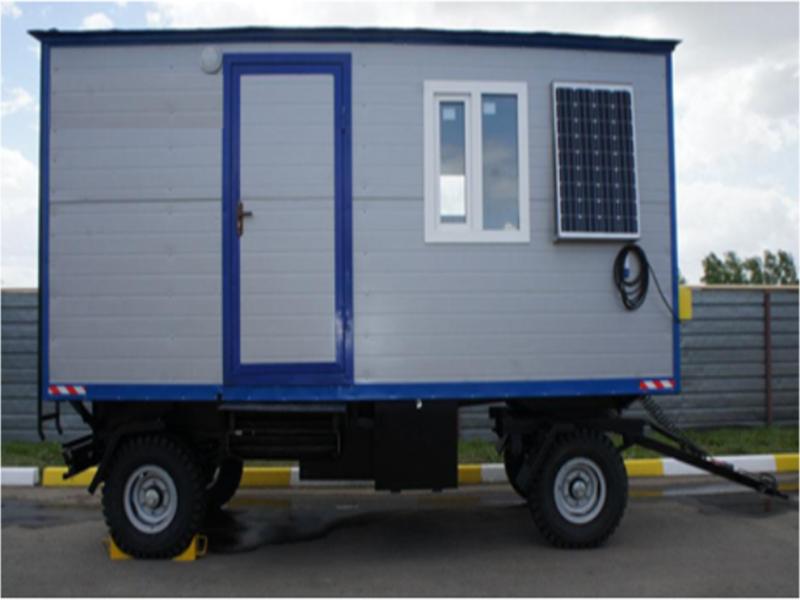
Figure 1:
Farmer’s house.
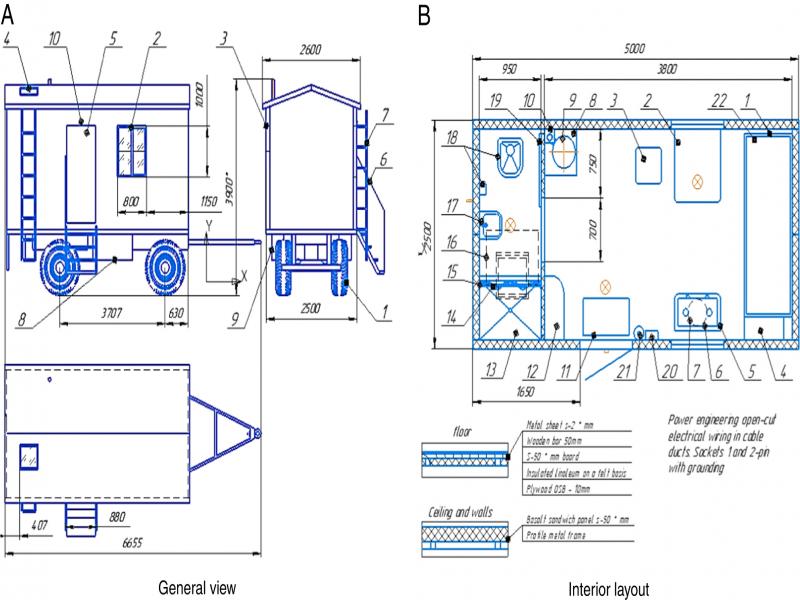
Figure 2:
Working drawings of the farmer’s house.
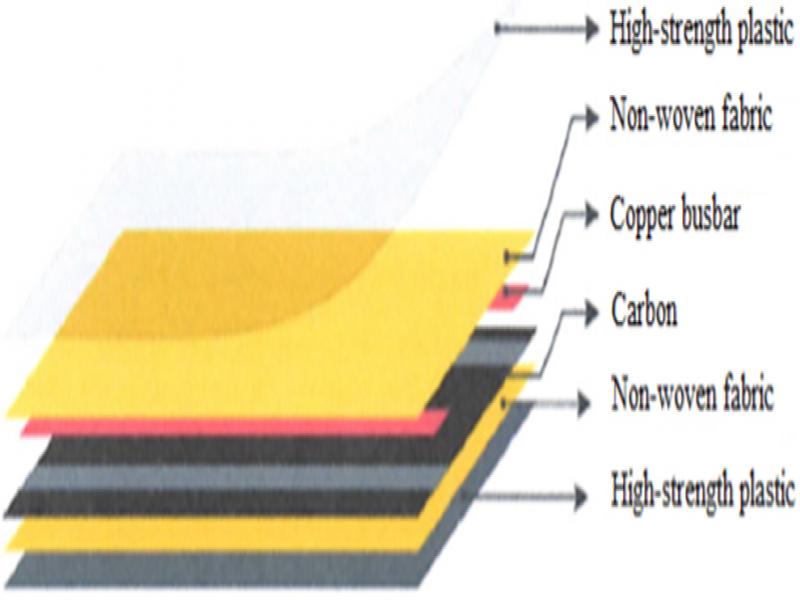
Figure 3:
Infrared heating system film design. (A) Front side. (B) Reverse side.
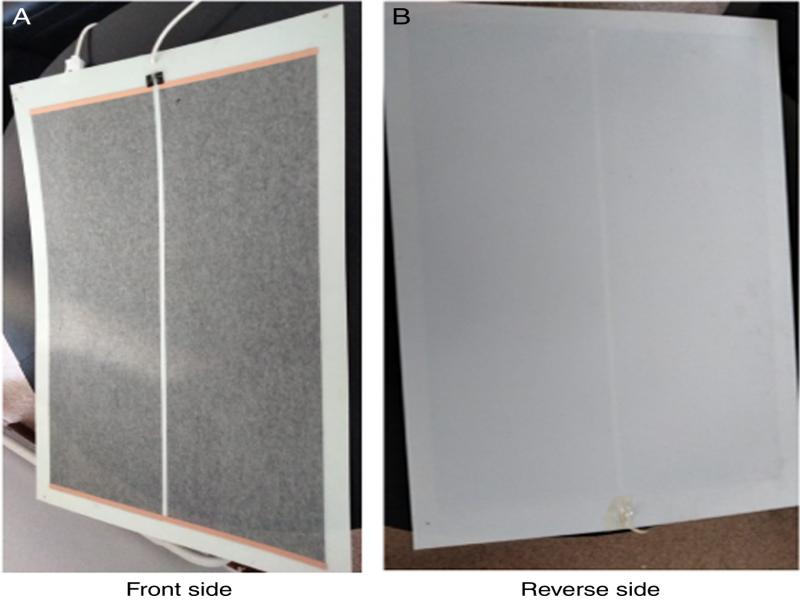
Figure 4:
Carbon-based flexible fuel material.
Table 1.
Technical characteristics of the ZDNY-250C60 monocrystalline solar module.
| Indicator name | Value |
|---|---|
| Maximum power, Pmax | 250 W |
| Voltage at Pmax, Vm | 31.17 V |
| Current at Pmax, Im | 8.03A |
| Open circuit voltage. Voc | 37.85V |
| Short circuit type, Isc | 8.40A |
| Cell efficiency | 17.4% |
| Panel efficiency | 15.3% |
| Cell type | Monocrystal, 156 × 156 mm |
| Power deviation (Pmax) | +0–3% |
| Number of cells | 60 |
| Panel size, mm | 1650 × 992 × 45 |
| Weight, kg | 22.5 |
| Maximum system voltage | 1000V(TUV)/600V(UL) |
| Maximum fuse current | 15 A |
| Operating temperature | ‒40 to 85°C |
| Nominal operating cell temperature | 47°C |
| Temperature coefficient of Isc | +0.06%/°C |
| Temperature coefficient of Voc | ‒0.35%/°C |
| Temperature coefficient of Pmax | ‒0.4%/°C |
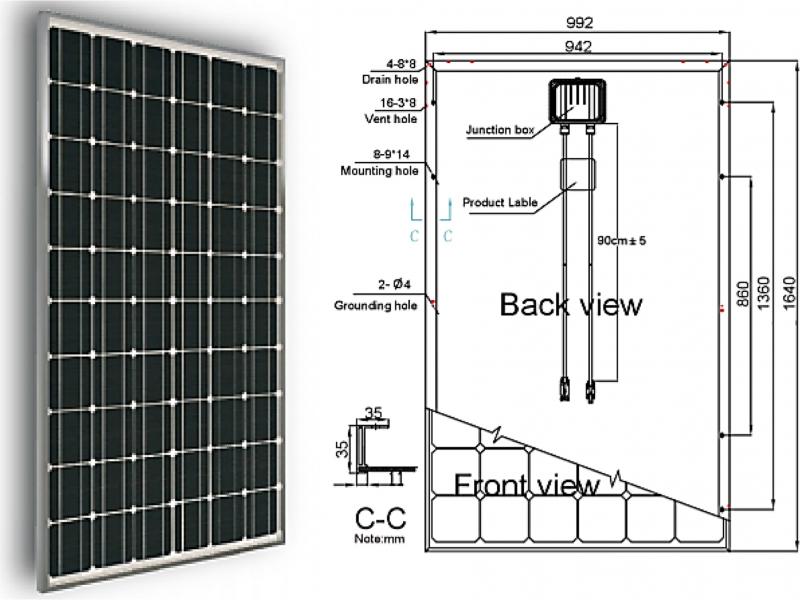
Figure 5:
Monocrystalline solar module ZDNY-250C60. (A) Solar panels. (B) Batteries, controller, inverter.
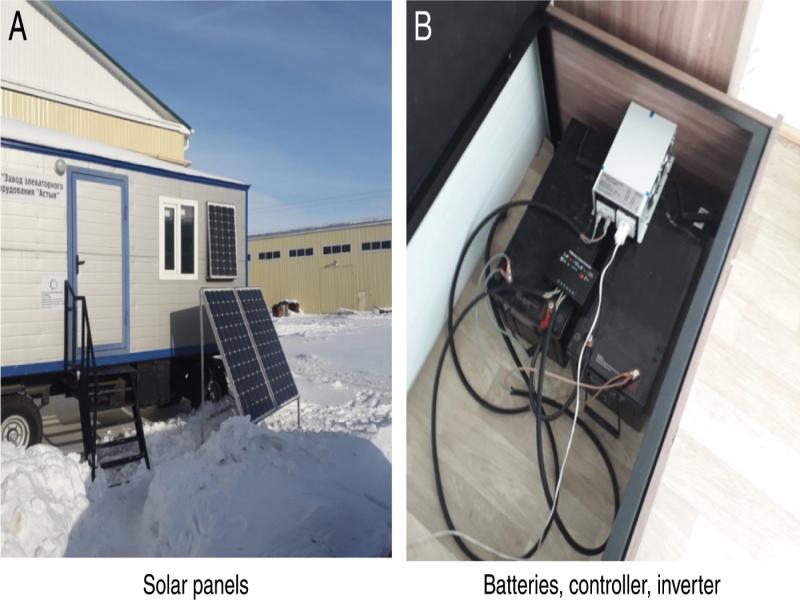
Figure 6:
Solar plant.
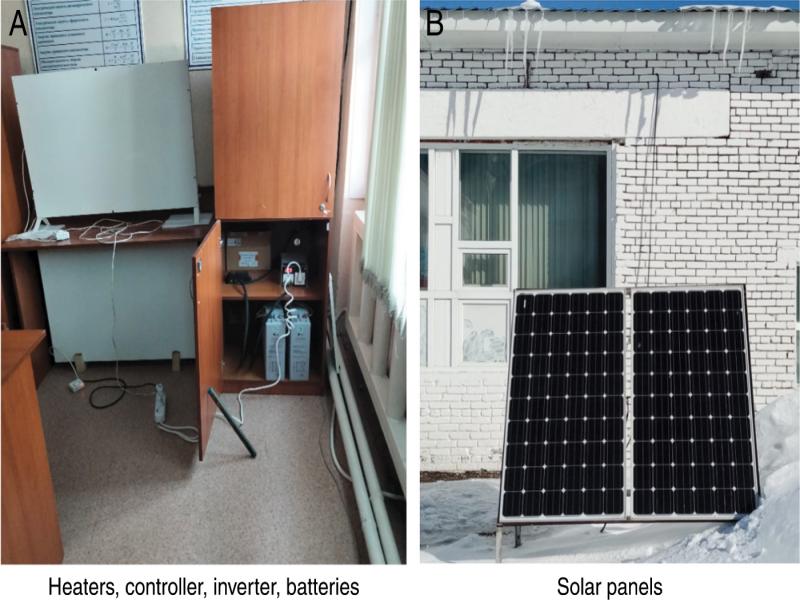
Figure 7:
Heating system in a stationary room. (A) Heaters, controller, inverter, batteries. (B) Solar panels.
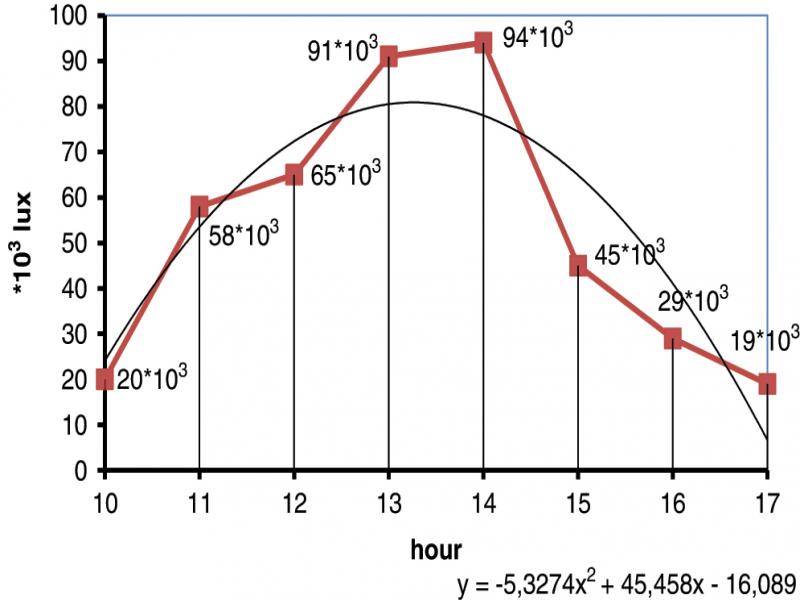
Figure 8:
Daylight illumination value.
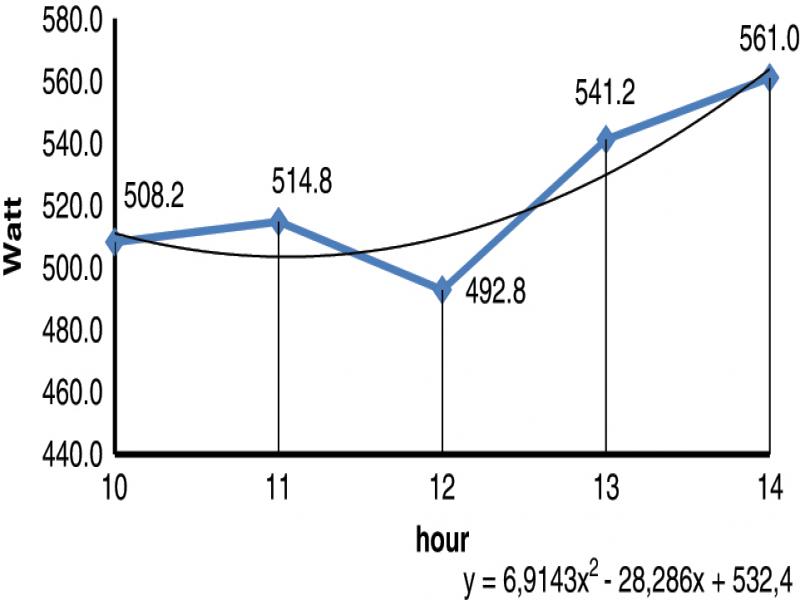
Figure 9:
Power consumption graph.
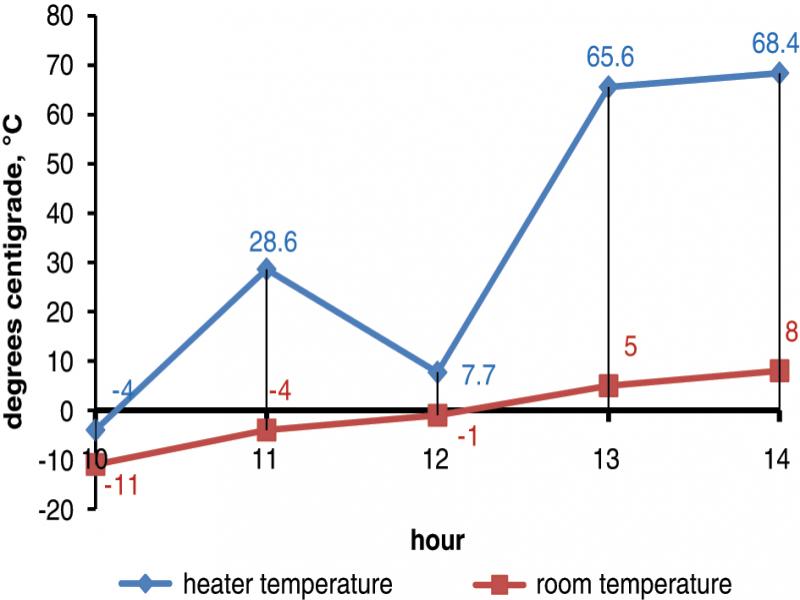
Figure 10:
Change in heater and room heating temperature.
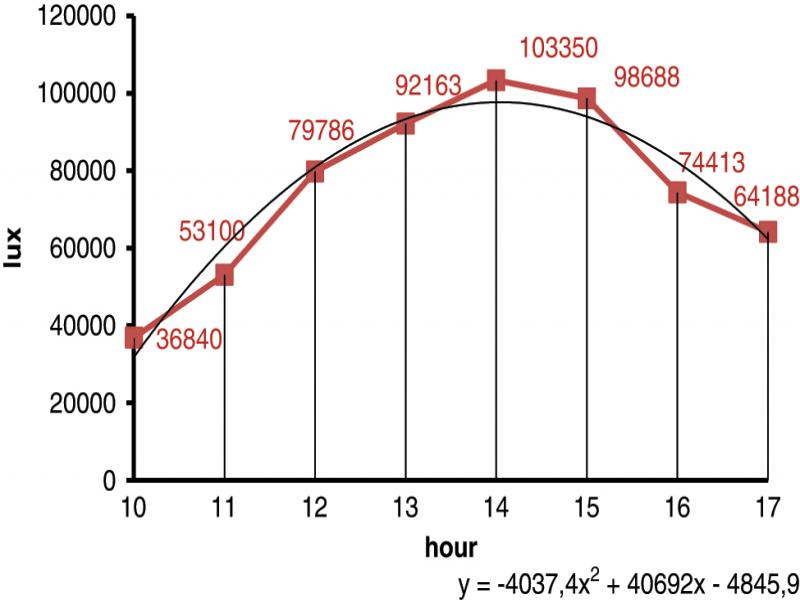
Figure 11:
Fluctuation of the average illuminance value.
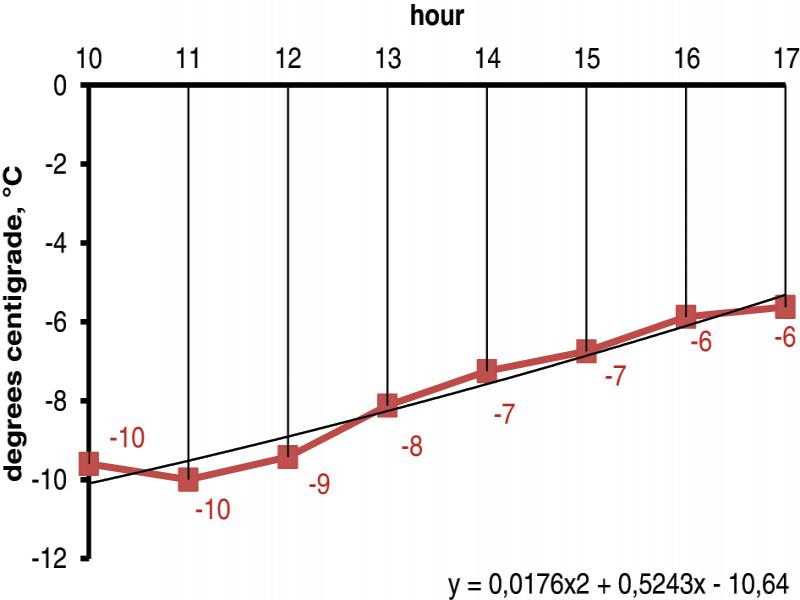
Figure 12:
Fluctuation in ambient temperature.