Introduction
The microclimate of residential and industrial premises should provide optimal conditions for human life, contributes to the preservation of the internal balance of the human, maintaining his/her ability to work at the proper level (Iyendo et al., 2016).
The acceptable and recommended values of the microclimate, as well as the requirements for the design, installation and maintenance of heating systems are established by the current state standards. Residential heating systems, as well as other engineering communications must be designed and assembled to meet energy efficiency and safety requirements (Peculiarities of Installing Heating Systems in a Residential Building. Electronic Resource, 2020).
It still remains a challenge to develop highly efficient heating products with high heating rates and stable heat dissipation. In the course of the study, the research materials of some scientists were studied and the following information was identified.
Infrared radiation materials including tourmaline, ZrO2, and medical stone nanoparticles (NPs) were successfully introduced into the carbon fabric through interfacial adhesion. It was found that 30% tourmaline, 9% ZrO2, and 15% medical stone exhibited excellent heat generation performance among different samples with different ingredients. The temperature with degrees Celsius of heating fabric can be rapidly raised up from room temperature to around 60 °C in 10 min under a voltage of 10 V. This infrared heating element is expected to be widely applied in the fields of physiotherapy, biomedical treatment and flexible electronics (Tian et al., 2021).
A solar dryer comprised of a smooth solar air heater, shell and tube storage unit, and drying chamber, has been constructed and tested to dry a Chinese medicinal fungus (Poria Cocos). The dryer has been operated under two airflow rates and then, energy and exergy analysis applied to the system. The results show that: solar air heater averaged thermal and exergy efficiency were 66.2% (Abdelkader et al., 2021).
Owing to easy processability, ultralight weight, and low cost, carbon- and polymer-based composite materials are among emerging and promising electrothermal materials for high-performance flexible electric heaters. A sandwich-like structured electrothermal film composed of hybrid conductive fillers [Super-P (SP) and graphite], polymer blends matrix [thermoplastic polyurethane (TPU) and polyethersulfone (PES)], and alumina oxide (Al2O3) as a non-conductive filler has been fabricated by a facile slurry coating method Hybrid conductive fillers of graphite and SP particles have a uniform spatial distribution in a TPU/PES polymer matrix, which construct a highly stable and continuous conductive network with a low percolation threshold of conductive filler content that allows electrothermal films to operate at a low applied dc voltage (Xia et al., 2021).
In Iraq, a study to demonstrate the possibility of taking advantage of the high solar radiation effectively in heating the air for worming rooms and buildings in winter was conducted. The optimal diffusion of solar air heating applications depends mainly on the amount of heat stored and how quickly this heat is transferred to the air. The use of phase change materials to increase thermal storage is one of the best alternatives to date. The disadvantage of these materials is a clear reduction in their thermal conductivity, which impedes the rapid transfer of heat from them to the air. In this study, single wall carbon nanotubes (SWCNTs) was added to a local Iraqi made paraffin wax, and the nanocomposite was used in a solar air heater. The SWCNT/paraffin nanocomposite thermophysical pro-perties were examined to show its effect on the solar air heater performance. The SWCNT/paraffin nanocomposite has improved the stored thermal energy by 20.7% for natural convection, and by 21.2% for forced convection compared to pure paraffin. Results of practical tests confirmed the possibility of using the proposed air heater to work in Iraqi weather conditions (Habib et al., 2021).
An all printed flexible, energy-efficient heater was fabricated using a conductive ink principally made of MWCNT. Herein, a systematic investigation on employing PEDOT:PSS as an effective binder and dispersant for affordable conductive ink manufacturing was carried out. Screen printable room temperature curing formulation made of MWCNT and PEDOT:PSS is being reported for the first time. The ink’s enhanced stability is contributed by the π-π interaction between MWCNT and PEDOT:PSS. The screen printed flexible heater based on MWCNT-PEDOT:PSS nanocomposite has impressive energy efficiency and thermal stability, generating a peak temperature of 136 °C at the expense of only 0.137 W/cm2 (Pillai et al., 2021).
Heat pump water heaters (HPWHs) could reduce residential energy consumption but there are two barriers preventing their uptake: the space cooling effect which increases space heating costs in cold climates and the high capital costs. These barriers may be mitigated by coupling a HPWH with an air-based solar collector to preheat inlet HPWH air, and using a lifecycle thinking approach to evaluate HPWHs or solar-assisted HPWHs (SAHPWHs) to encompass low operating costs. The findings presented illustrate economical clean water heating options, and subsidies that could be introduced to further encourage uptake of low carbon water heating (Treichel and Cruickshank, 2021).
A graphene-based film heater is proposed based on laser-reduced graphene oxide (LRGO) fabricated by the simple and eco-friendly laser direct writing technology at ambient conditions. Benefiting from high photothermal effect of CO2 laser with wavelength of 10.6 um, the LRGO-based film heater has a high heating rate of 15.3 °C/s up to 196 °C with a fast response of 12.84 s at a low power density of 1 W/cm2. Moreover, it exhibits good anti-interference ability to the mechanical effect and shows potential important application for de-icing. This work is helpful for the development of graphene-based device in practical application (Huang et al., 2021).
The uncertainties such as loads and renewable energy sources have significant impacts on operational performances of hybrid combined cooling, heating, and power (CCHP) systems. A multi-objective stochastic optimization model of a hybrid CCHP system is proposed, which contains a gas turbine, photovoltaic/thermal collectors, an absorption chiller/heater, a ground source heat pump, and storage devices of battery and water tank. Considering the uncertainties with system reliability, the hybrid CCHP system is optimized to achieve the best energetic, economic, and environmental benefits using the non-dominated sorting genetic algorithm-II (Wang et al., 2021).
An experimental study has been carried out to enhance a solar air heater’s performance by integrating artificial roughness through baffles on the absorber plate (Rajendran et al., 2021).
The leading study investigates the experimental development of a new energy-saving system by integrating a solar water heater and solar cooling absorption cycle with a conventional boiler for domestic hot water and heating purposes. A 65 flat plate solar collector-chiller system with a total surface area of 130 m2 was integrated with the boiler and used to supply heating and cooling for a three-story building (1500 m2). The solar water heating/cooling system has the potential to provide more than 50% of the house energy demand free of charge with a significant reduction in carbon footprint (Al-Smairan et al., 2021).
Douglas Haigh analyzed the experience of heating rooms using solar collectors (panels) in some countries, found that the most optimal is to use them for indirect heating of water in the storage tank, which is then heated directly by an additional heating device (for example, a gas boiler) (Solar Thermal Systems. Electronic Resource, 2020).
Of great interest is the work “Solar energy for net zero energy buildings—a comparison between solar thermal, PV and photovoltaic–thermal (PV/T) systems”, in which comparative modeling of solar thermal, PV and photovoltaic systems has been carried out. The research has established that “… for local energy generation, solar thermal and photovoltaic (PV) installations will eventually compete for space on roofs and facades. Hybrid photovoltaic–thermal (PV/T) modules, in which heat and electricity is generated simultaneously, are therefore an interesting technology for building applications, which can potentially lead to a higher total efficiency and lower use of space.” (Good et al., 2015).
In areas without central heating, heating of mobile residential premises is provided by solid fuel boilers or stoves using firewood, coal, pellets, etc. Recently, pyrolysis furnaces of long-term combustion have been used. It is possible to use bioethanol as a source of electrical and thermal energy (Ismuratov et al., 2020).
In this case, gas and liquid fuel furnaces or boilers can be used. The most popular furnace in the Russian Federation is the Solarogas PO brand stove with a heat output of 1.8 kW. The main problems of diesel-fuelled heaters are:
complicated ignition with the release of a large amount of carbon monoxide;
unpleasant smell during the burner start-up;
frequent replacement of the wick, cleaning of the burner.
Therefore, a liquid fuel furnace is usually started on the street, brought in after the combustion chamber has warmed up. The second option is a diesel heat gun with a torch burner. A fan heater is much more efficient than thermal panels, convectors, oil and water heating registers. Therefore, if necessary, for year-round operation, it is better to consider this heating option.
The disadvantage of a heat gun is energy dependence. In the absence of electricity, the fan will not work; the efficiency of the thermal device will decrease. There may be fuel outages at a distance from an inhabited locality (Heating a Cabin in Winter. Electronic Resource, 2016).
At remote sites, where the work cycle runs from April to November, wood-burning cookers remain almost the traditional way of heating systems. This includes distant livestock workers and field workers who are engaged in sowing or harvesting crops.
However, if there is a considerable distance (40–100km) from the settlement, there are problems with fuel supply:
lack of road infrastructure;
the delivery of firewood, coal, liquid or liquefied gaseous fuel is expensive;
fuel storage requires the use of special rooms or containers, which reduces mobility;
lack of centralized power supply.
Thus, the question about the use of alternative energy for heating mobile residential premises arises.
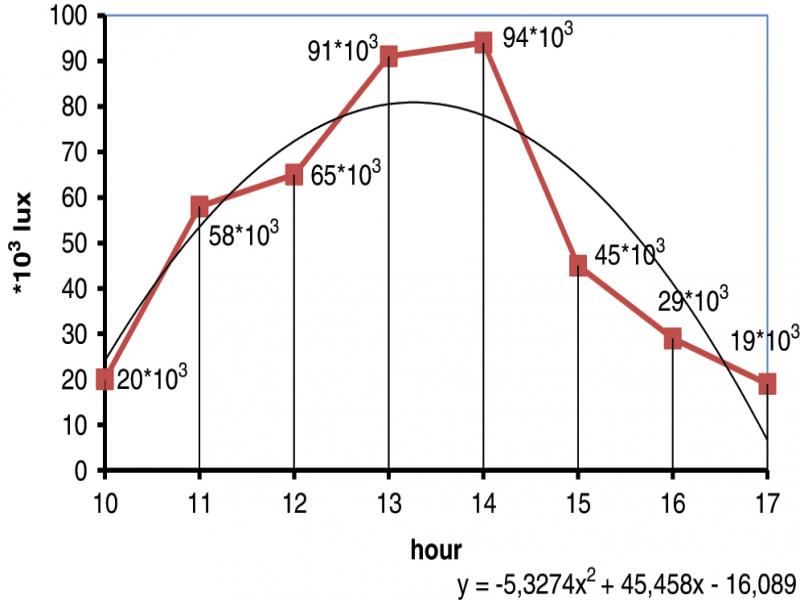
The climate of Kazakhstan is sharply continental in most of the territory, with large temperature amplitudes; relatively dry. In the northern regions of Kazakhstan, the West Siberian climatic region of a moderate climate prevails. Spring is short with a sharp temperature drop; it begins in mid-April and lasts on average about a month. In the summer, precipitation falls in the form of heavy rains, but in some years, most often in the northern parts of the region, precipitation can be prolonged. In summer, frosts are observed in June and August. Autumn is dry with early frosts. Despite the long cold period, the resources of solar radiation are high. The territory of Northern Kazakhstan extends in the range from 49°s. w. to 55° s. w. In this connection, there is a significant fluctuation of daylight depending on the time of year (Climate of Kazakhstan. Electronic Resource, 2021).
The objective of the current study is to investigate the use of an alternative energy source in the form of solar radiation and carbon-based fuel flexible material as a heater for the heating of farmers’ mobile houses.
Materials and Research Methodology
The research was carried out on the basis of the Kostanay Engineering and Economic University named after M. Dulatov and the limited liability partnership “Astyk Elevator Equipment Plant”. The “Astyk” elevator equipment plant has own production sites, uses high-quality domestic and imported materials and modern technologies. The plant produces elevator equipment, granaries and mobile houses for farmers. The farmer’s house is installed on the trailer chassis, which allows it to be transfered by trucks (Figures 1 and 2).
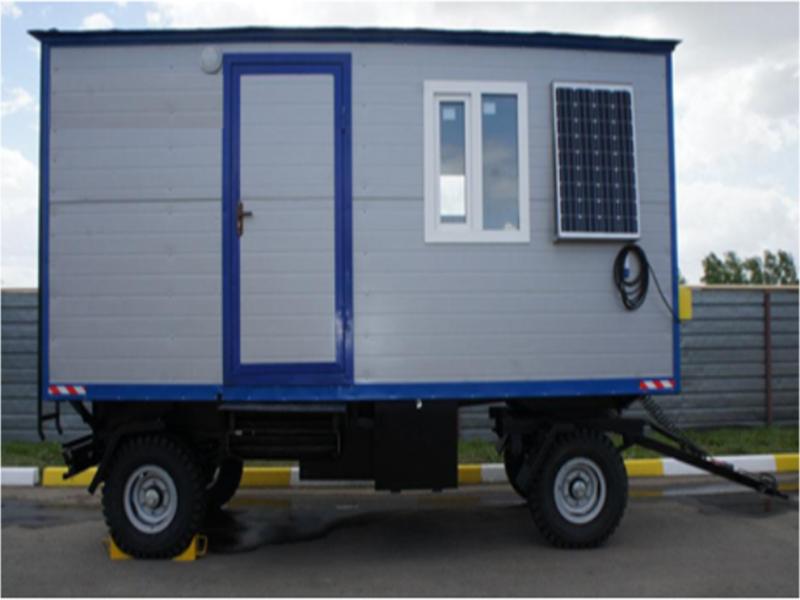
Figure 1:
Farmer’s house.
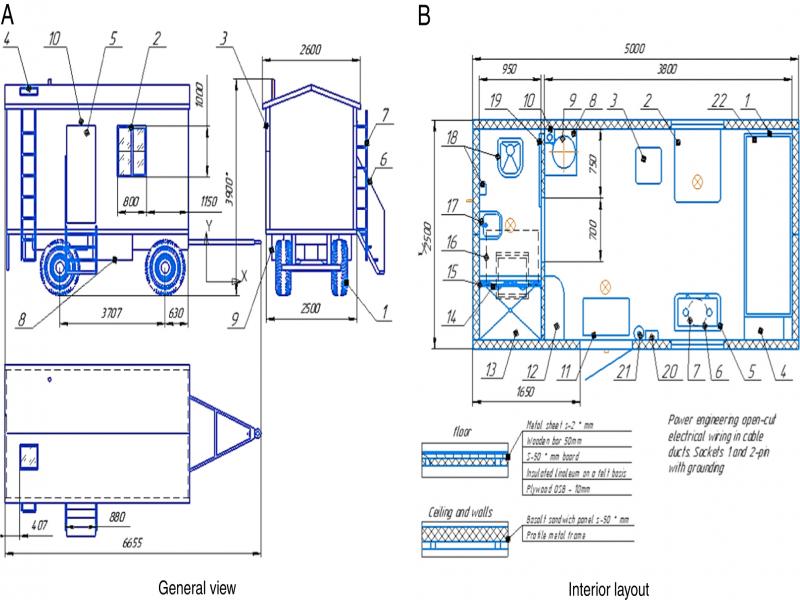
Figure 2:
Working drawings of the farmer’s house.
The farmer’s house is designed for use in various conditions with the possibility of mobile delivery to any area. The farmer’s house is very convenient to use in rural areas, for the conditions of “shift work”, etc. The house is equipped with a shower, a sink, a bio toilet, a bunk bed, a table for a gas stove and cooking, a wardrobe, a solid fuel stove, a photoelectric kit (solar battery, 100 W battery, 220 W lighting, a 3 kW gas generator). The windows of the house are plastic triple glazing with a complex opening. There is a shower tank with electric heaters and a service water tank. The equipment of the house can be completed according to the customer’s request - axe, hacksaw, shovel, jerrycan, blowtorch, paraffin lamp, bucket and other tools. The temperature conditions of the cabin allow it to be used in the temperature range from ‒50 to +50°C (Farmer’s house. Electronic resource, 2021).
Characteristics of the mobile farmer’s house (Fig. 2):
height: 2.5 m;
width: 2.4 m;
length: 4.2 m;
the walls are made of sandwich panels on a basalt basis, the wall thickness is 50 mm;
plastic window 1000 × 800 mm with triple glazing;
the floor is covered with a felt-based linoleum.
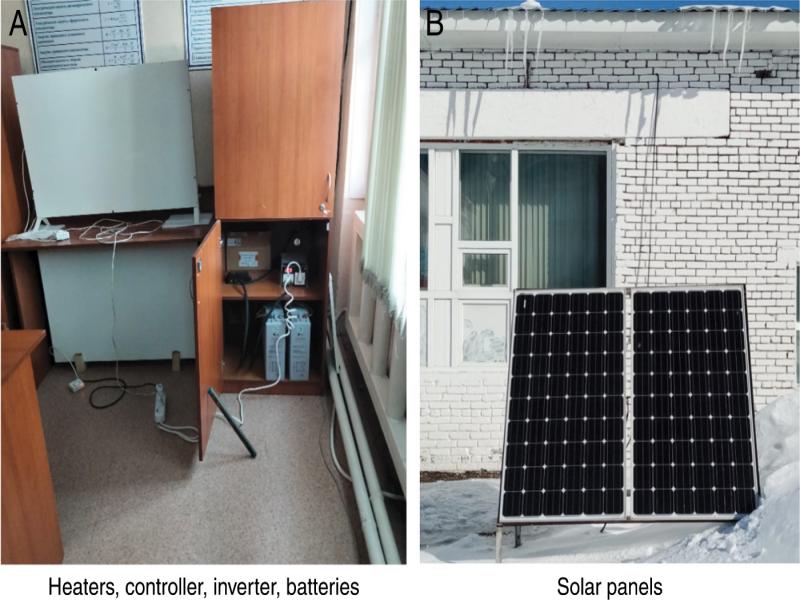
The authors have proposed a heating system for farmer’s house. The system heats mobile homes remote from power lines and settlements through the use carbon-based fuel flexible material and solar plants. The technical result consists in that, in the claimed system, the heating device is a carbon-based fuel flexible material supplying electricity from the solar station.
Carbon-based fuel flexible material is a thermal film (heating grid), which is made by interweaving longitudinal and transverse carbon filaments and, for safety reasons, covered with an electrical insulating material.
The heat source in the mesh is a heating carbon filament with a conductive layer without the use of metal (Pat. Nº-17940, KZ; Kogay et al., 2015). The heating elements are laminated on both sides in special electro technical polyester that provides full water resistance and high protection from electrical puncture. The film can therefore be used for both supplementary and primary space heating by installing in wall panels, ceilings and floors.
1—Trailer chassis (new) 2PTS-6.5; 2—Plastic window (1000 × 800) mm (difficult opening); 3—Plastic window (800 × 500) mm (difficult opening); 4—Plastic window (500 × 500) mm (with opening); 5—Entrance door (metal insulated with a mortise lock) (1900 × 800) mm; 6—Ladder ladder with handrail (1200 × 800) mm; 7—Removable ladder (2850 × 434) mm (telescopic); 8—Box 3-section (1100 × 500 × 500) mm; 9—Inventory box (2300 × 1100 × 500) mm; 10—Front door light.
General view
1—2-tiered bed (1900 × 700, H-1425) mm; 2—Folding table (700 × 800, H-800) mm; 3—Chair (400 × 400 × 600) mm; 4—Pencil case (250 × 600, H-1425) mm; 5—Food preparation table; 6—Gas stove (2-camphor) (300 × 600) mm; 7—Gas cylinder V-25L; 8—Asbestos sheet (500 × 500) mm; 9—Solid fuel stove; 10—Reflector (500 × 500, H-700) mm; 11—Doormat (700 × 400mm); 12—Hanger with hooks (700 × 300) mm; 13—Waterproofing material; 14—Shutter (1200 × 850) mm; 15—Crossbar 25 mm; 16—Capacity V-100L with heating element (for industrial water); 17—Sink with a pedestal (300 × 350, H-810) mm; 18—Bio toilet (427 × 383, H-414) mm with holder toilet paper; 19—Sliding door (1800 × 800) mm; 20—Electrical shield; 21—Fire extinguisher; 22—Mattress.
Interior layout
At the same time, the heater is not designed for outdoor use without proper protection. The product is manufactured using a polymer film (polyester) with high dielectric values; it conducts infrared heat well and is heat resistant. The carbon paste is applied to the polymer film with a technological precision of less than 1 micron. The process of applying the carbon and other materials and the final lamination itself takes place at 140 °C (Figures 3 and 4).
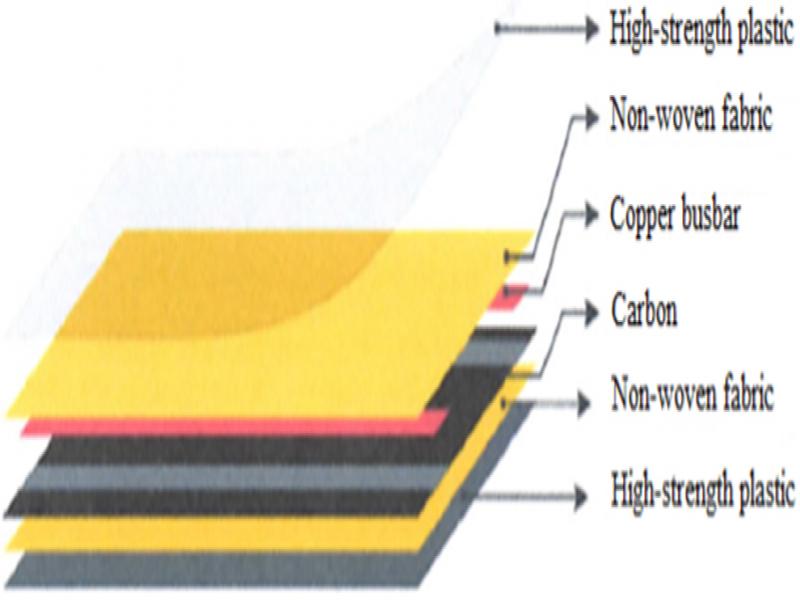
Figure 3:
Infrared heating system film design. (A) Front side. (B) Reverse side.
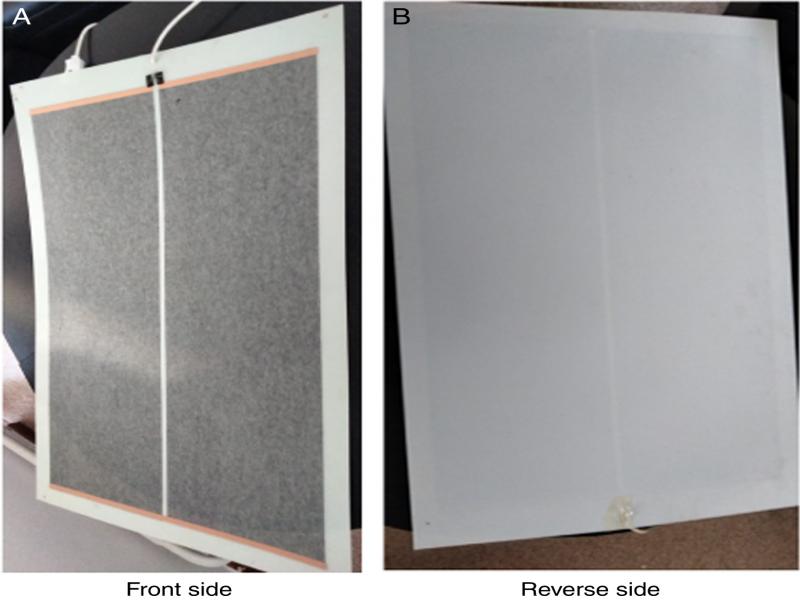
Figure 4:
Carbon-based flexible fuel material.
Carbon fiber is characterized by high strength, wear resistance, rigidity and low weight compared to steel. Its density ranges from 1450 to 2000 kg/m³.
The higher price of carbon fiber compared to fiberglass plastic and glass fiber is due to the more complex, energy-intensive, multi-step process, expensive resins and more expensive equipment. Moreover the strength and elasticity are higher, in addition to a number of other undisputed benefits:
40% lighter than steel and 20% lighter than aluminum;
carbon made from carbon is slightly heavier than from carbon and rubber, but much stronger; it cracks and crumbles on impact, but does not shatter;
high temperature resistance: carbon retains its shape and properties up to +200°C;
has good vibration absorbing properties and thermal capacity;
corrosion resistance;
high tensile strength and elastic limit;
aesthetic and decorative features.
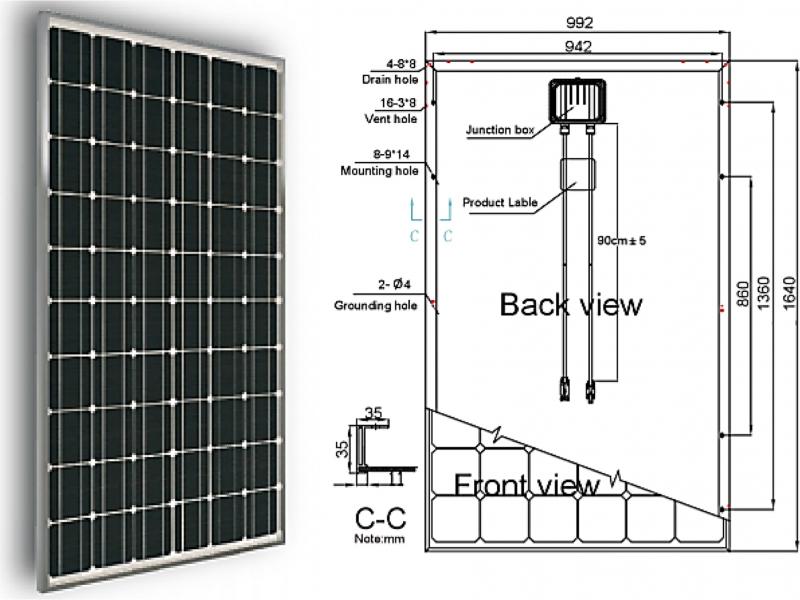
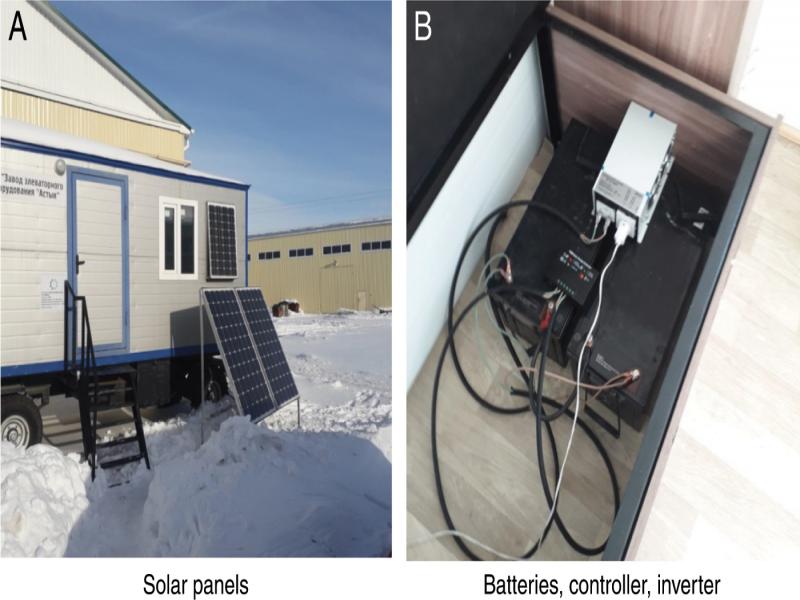
Solar plant includes two monocrystalline solar modules ZDNY-250C60 sized 1650 × 992 × 45 mm with capacity 250 W, PWM controller, sinusoidal inverter IS-24-1500U, two storage batteries with capacity 100 A*hour.
The structure of the ZDNY-250C60 (Table 1) monocrystalline solar module consists of many silicon cells that convert sunlight into electricity (Fig. 5). The advantages of these panels are the compactness, low weight and higher efficiency. The monocrystalline panels are placed in a robust and sturdy fiberglass enclosure that protects the photovoltaic cell from moisture and dust penetration.
Table 1.
Technical characteristics of the ZDNY-250C60 monocrystalline solar module.
| Indicator name | Value |
|---|---|
| Maximum power, Pmax | 250 W |
| Voltage at Pmax, Vm | 31.17 V |
| Current at Pmax, Im | 8.03A |
| Open circuit voltage. Voc | 37.85V |
| Short circuit type, Isc | 8.40A |
| Cell efficiency | 17.4% |
| Panel efficiency | 15.3% |
| Cell type | Monocrystal, 156 × 156 mm |
| Power deviation (Pmax) | +0–3% |
| Number of cells | 60 |
| Panel size, mm | 1650 × 992 × 45 |
| Weight, kg | 22.5 |
| Maximum system voltage | 1000V(TUV)/600V(UL) |
| Maximum fuse current | 15 A |
| Operating temperature | ‒40 to 85°C |
| Nominal operating cell temperature | 47°C |
| Temperature coefficient of Isc | +0.06%/°C |
| Temperature coefficient of Voc | ‒0.35%/°C |
| Temperature coefficient of Pmax | ‒0.4%/°C |