
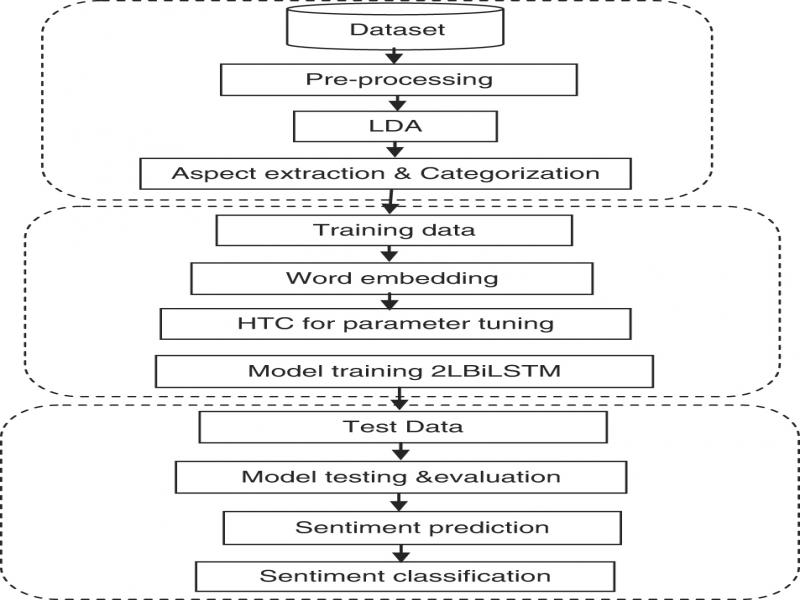
Figure 1:
The flow of the proposed algorithm.
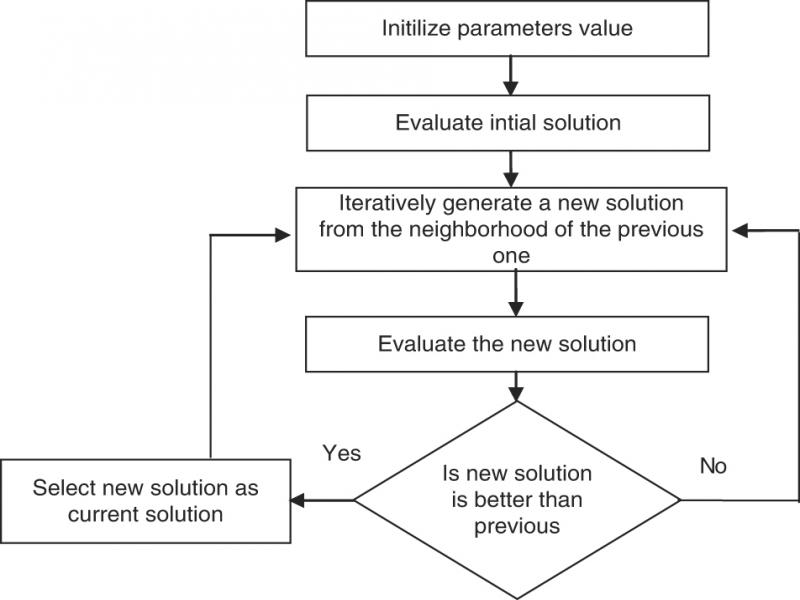
Figure 2:
Flow of the proposed HCT algorithm.
Table 1.
Dataset statistics.
| Dataset domain | Total | +ve | ‒ve |
|---|---|---|---|
| Restaurant from Yelp | 1,000 | 500 | 500 |
| Mobile from Amazon | 1,000 | 500 | 500 |
| Movies from IMDB | 1,000 | 500 | 500 |
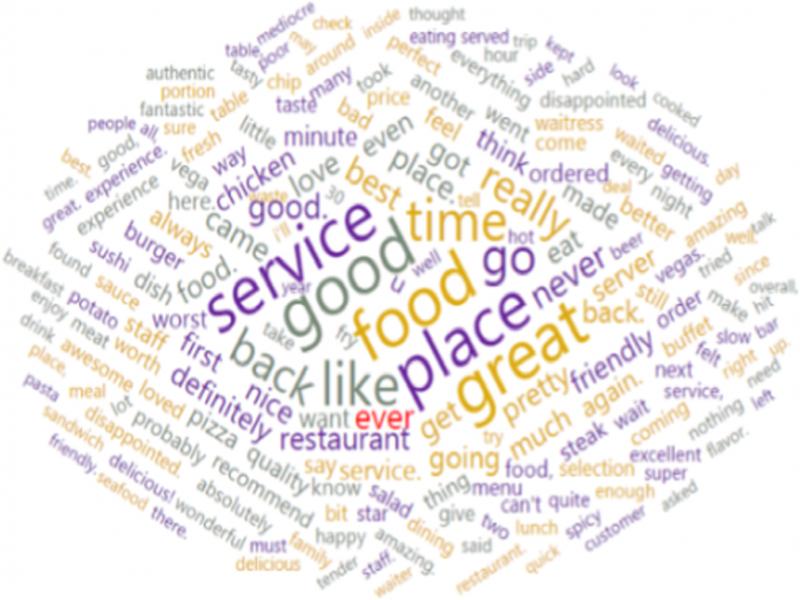
Figure 3:
Hotel dataset frequent terms.
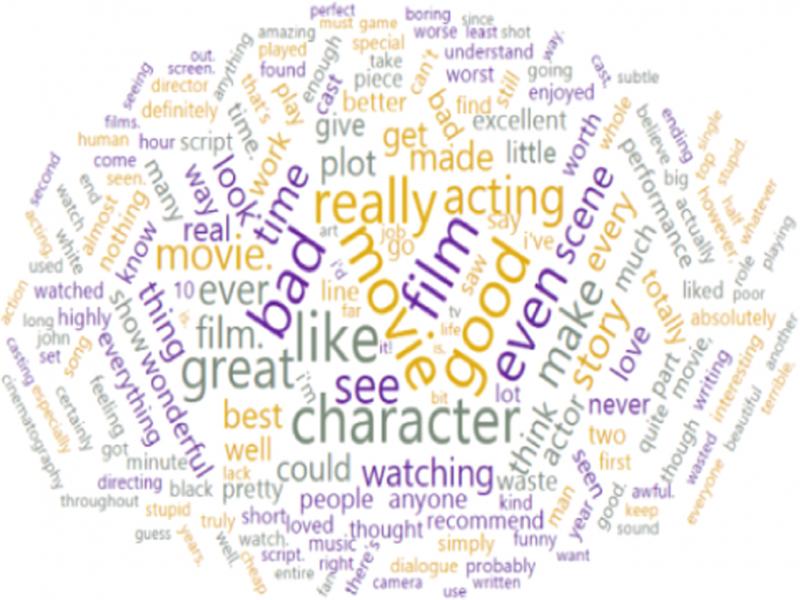
Figure 4:
Movie dataset frequent terms.
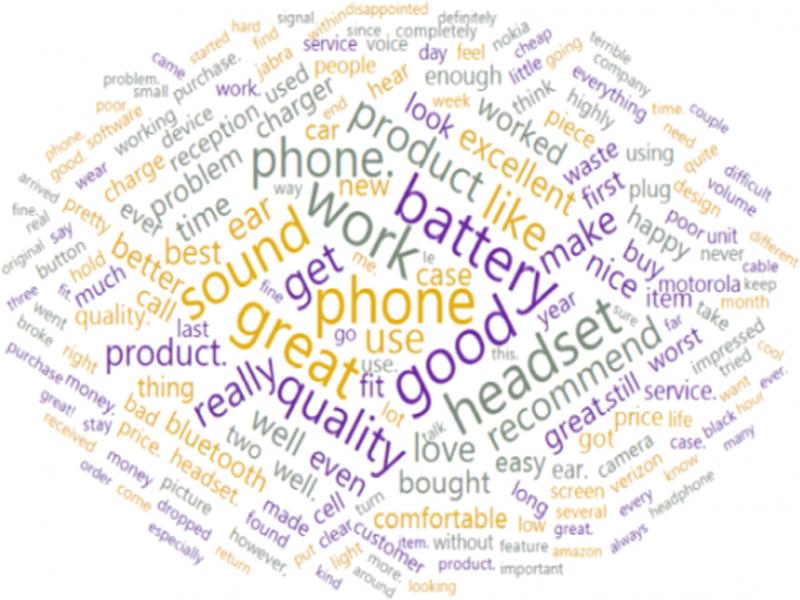
Figure 5:
Mobile dataset frequent terms.
Table 2.
Various model parameters.
| Parameter | Value |
|---|---|
| Vocabulary size | 10,000 |
| Bi-LSTM | 2 layer |
| Dense | 1 |
| Activation | Sigmoid |
| Optimizer | Adam function |
| Loss Function | Binary cross-entropy |
| Input Length | 100 |
| Learning rate | 0.002 |
| Epoch | 10 |
Table 3.
Comparison of proposed HCL-Bi-LSTM model.
| Model | Single-layer Bi-LSTM (Hameed and Garcia-Zapirain, 2020) | Two-layer Bi-LSTM | Two-layer HCT Bi-LSTM | |||
|---|---|---|---|---|---|---|
| Dataset | T | V | T | V | T | V |
| Amazon | 0.83 | 0.51 | 0.91 | 0.70 | 0.95 | 0.76 |
| Yelp | 0.84 | 0.70 | 0.85 | 0.72 | 0.86 | 0.75 |
| IMDB | 0.71 | 0.81 | 0.90 | 0.81 | 0.95 | 0.82 |
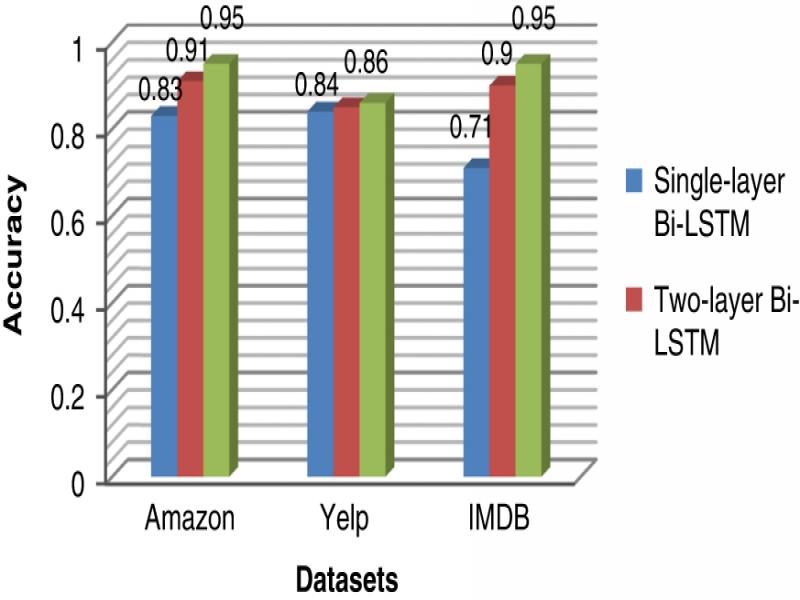
Figure 6:
Accuracy comparison of the proposed model for three different datasets.
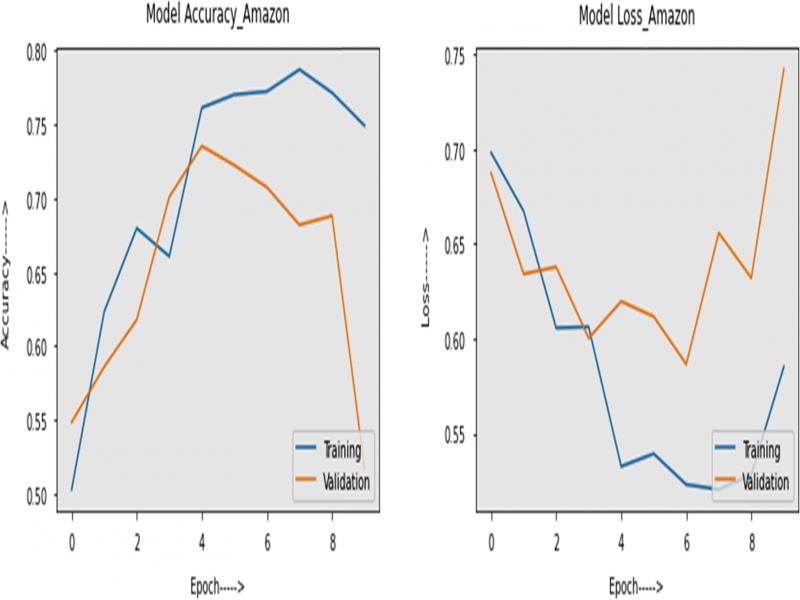
Figure 7:
Performance of single-layer Bi-LSTM on Amazon dataset.
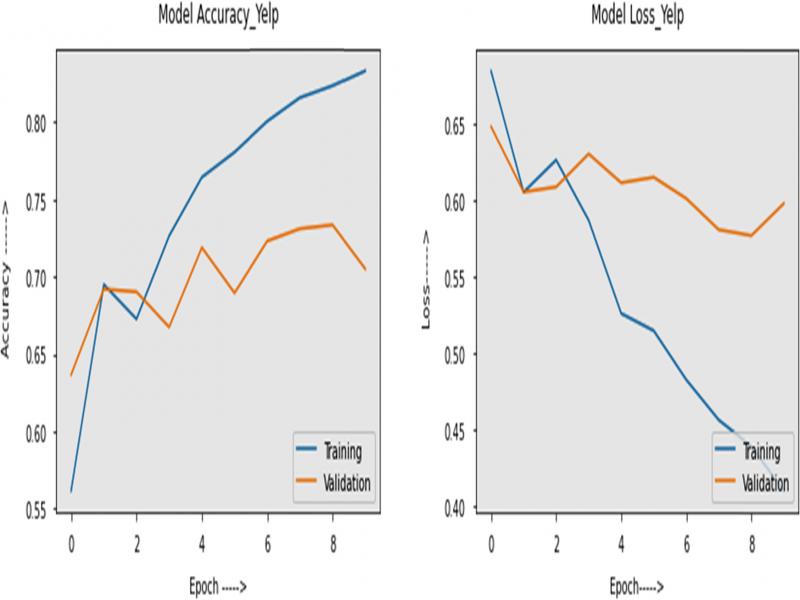
Figure 8:
Performance of single-layer Bi-LSTM on Yelp dataset.
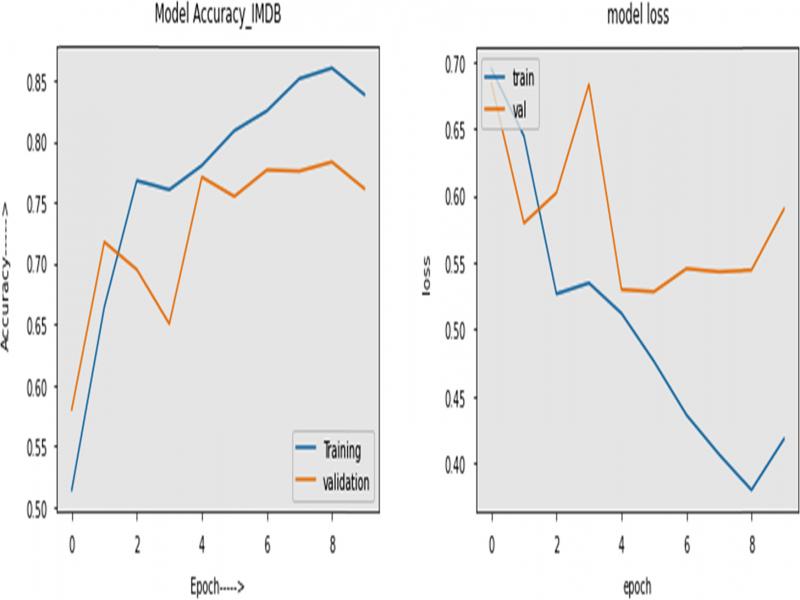
Figure 9:
Performance of single-layer Bi-LSTM on IMDB dataset.
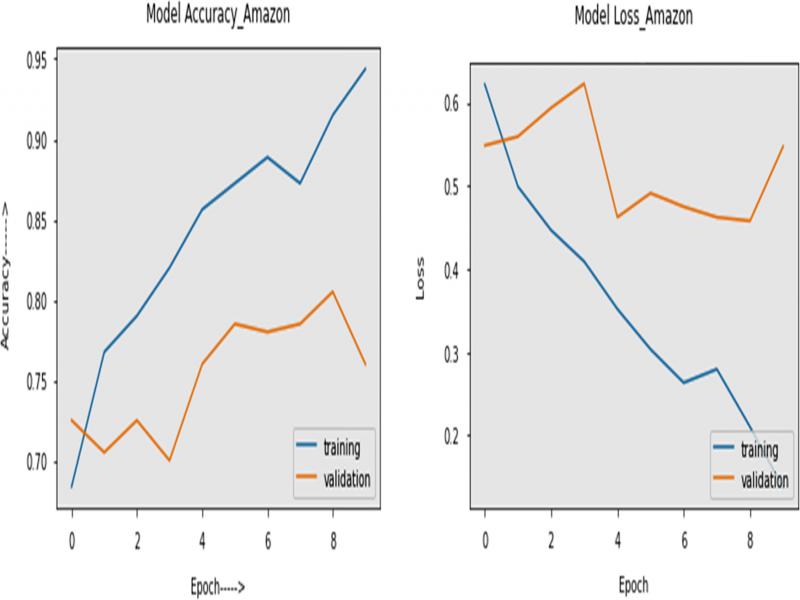
Figure 10:
Performance of HCT two-layer Bi-LSTM on Amazon dataset.
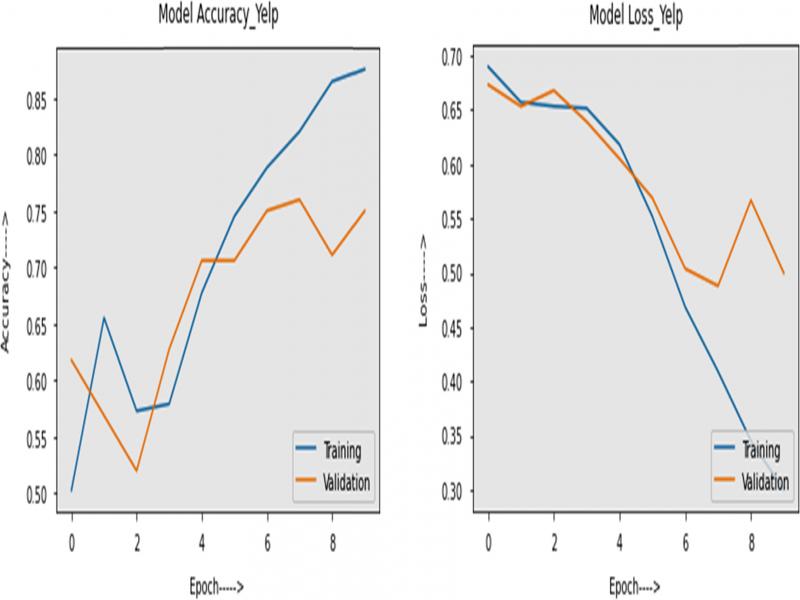
Figure 11:
Performance of HCT two-layer Bi-LSTM on Yelp dataset.
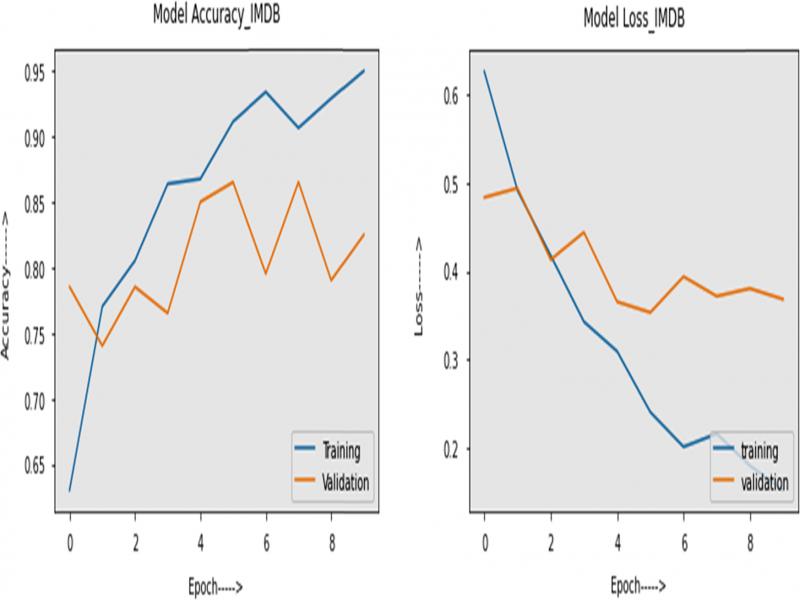
Figure 12:
Performance of HCT two-layer Bi-LSTM on IMDB dataset.