
Table 1.
Dyes used at the experiment – characterization (based on [29])
| Triphenylmethane dyes | |||

| |||
| Molecular formula: C27H34N2O4S | Molecular weight: 482.63 g/mol | Absorbance – λ max.[nm]: 624 | Nr C.I.: 42040 |

| |||
| Molecular formula: C25H30N3Cl | Molecular weight: 407.98 g/mol | Absorbance – λ max.[nm]: 590 | Nr C.I.: 42555 |
| Fluorone dyes | |||

| |||
| Molecular formula: C20H6I4Na2O5 | Molecular weight: 879.84 g/mol | Absorbance – λ max.[nm]: 527 | Nr C.I.: 45430 |
| Disazo dyes | |||

| |||
| Molecular formula: C34H24N6Na4O14S4 | Molecular weight 960.79 g/mol | Absorbance – λ max.[nm]: 606 | Nr C.I.: 23860 |
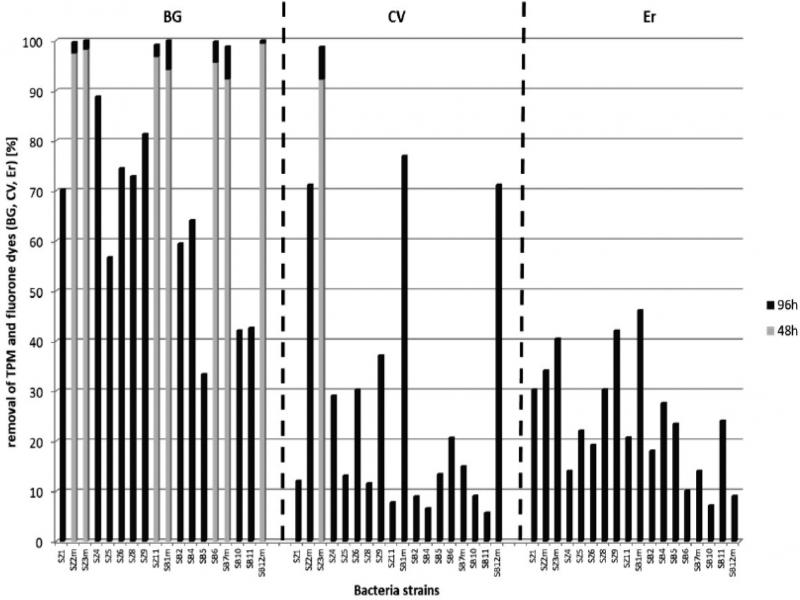
Figure 1.
Decolorization potential of bacteria strains isolated from sewage
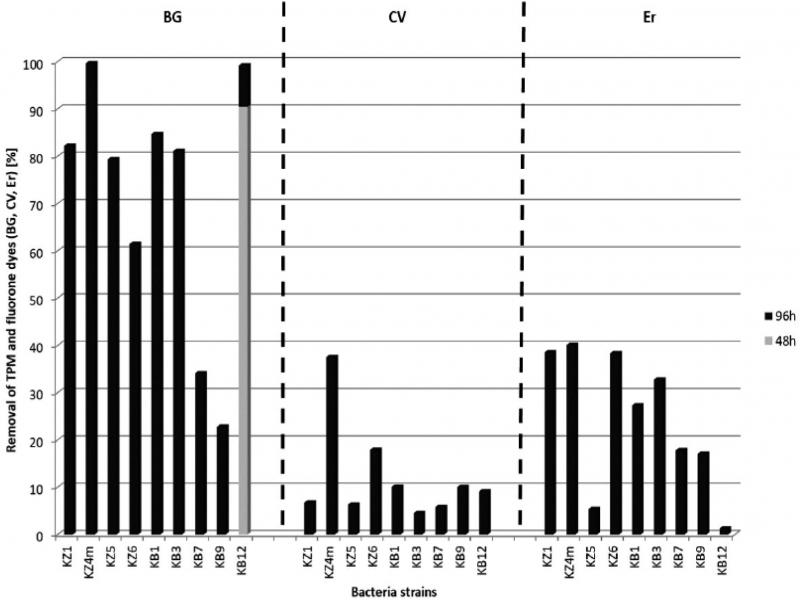
Figure 2.
Decolorization potential of bacteria strains isolated from compost
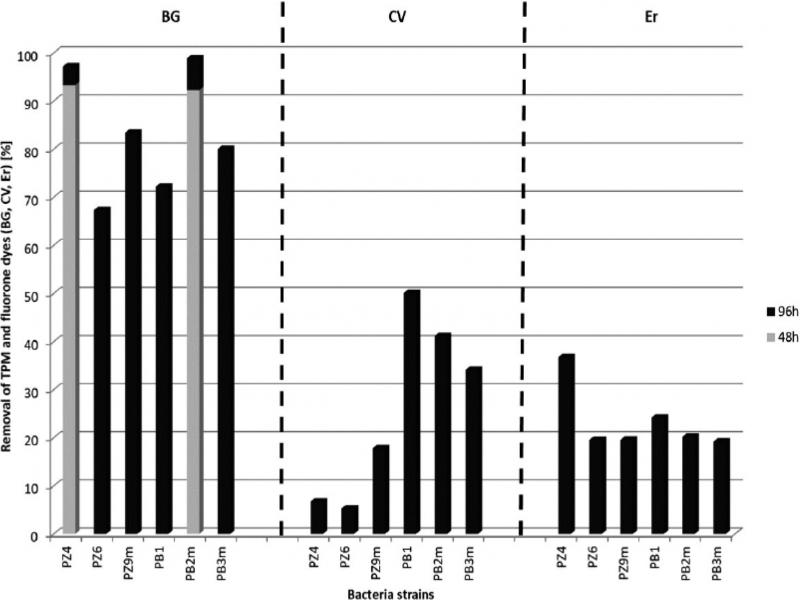
Figure 3.
Decolorization potential of bacteria strains isolated from rotten wood of beech
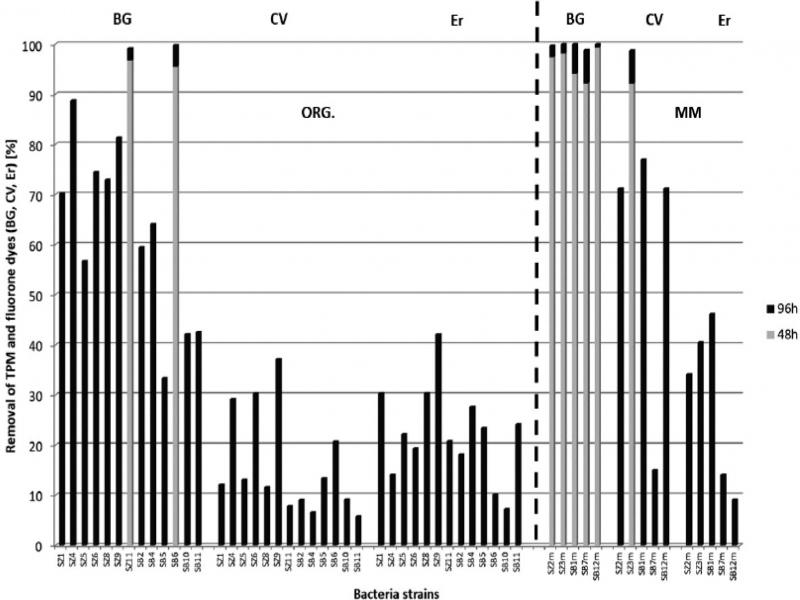
Figure 4.
The impact of usage the organic or mineral medium on decolorization potential of bacteria isolated from sewage
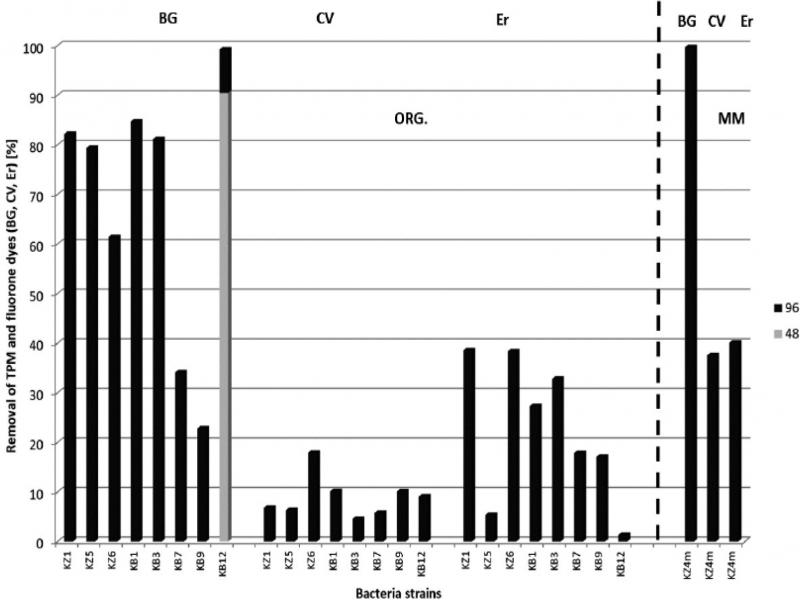
Figure 5.
The impact of usage the organic or mineral medium on decolorization potential of bacteria isolated from compost
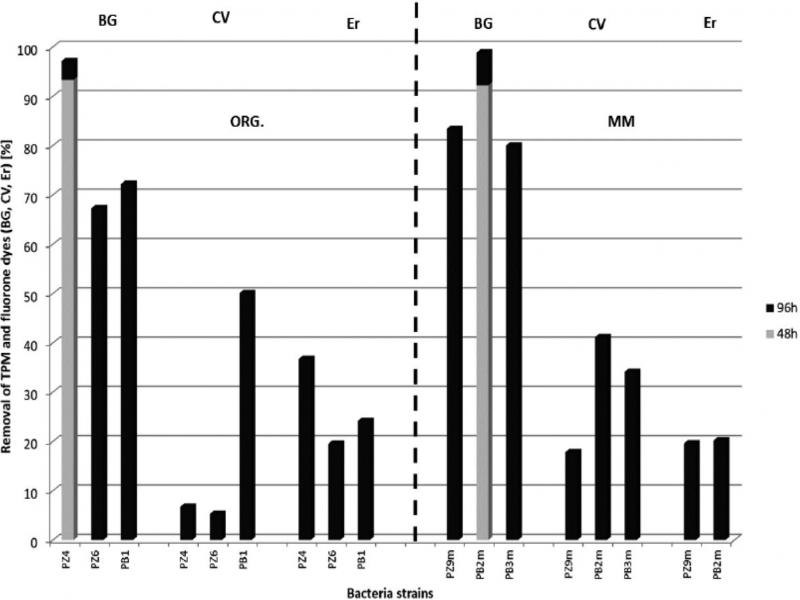
Figure 6.
The impact of usage the organic or mineral medium on decolorization potential of bacteria isolated from rotten wood beech
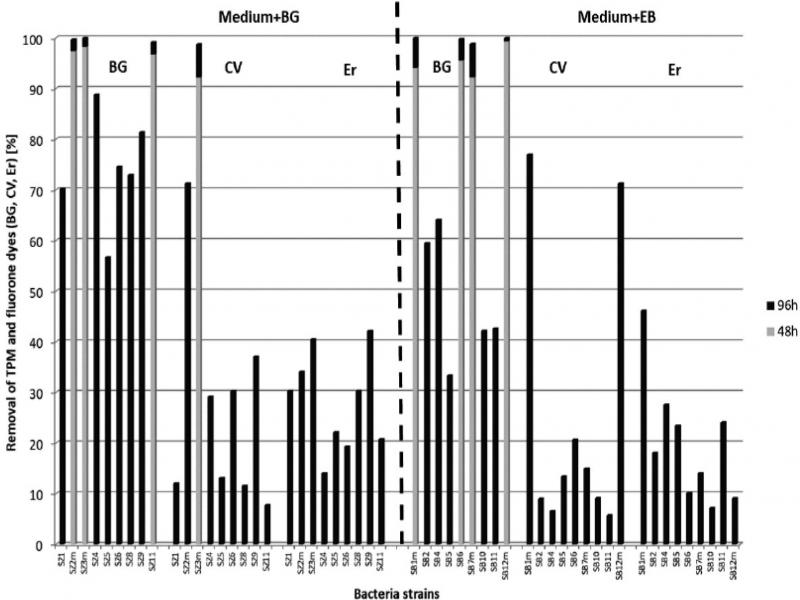
Figure 7.
The impact of dye used for isolation on decolorization potential of bacteria isolated from sewage
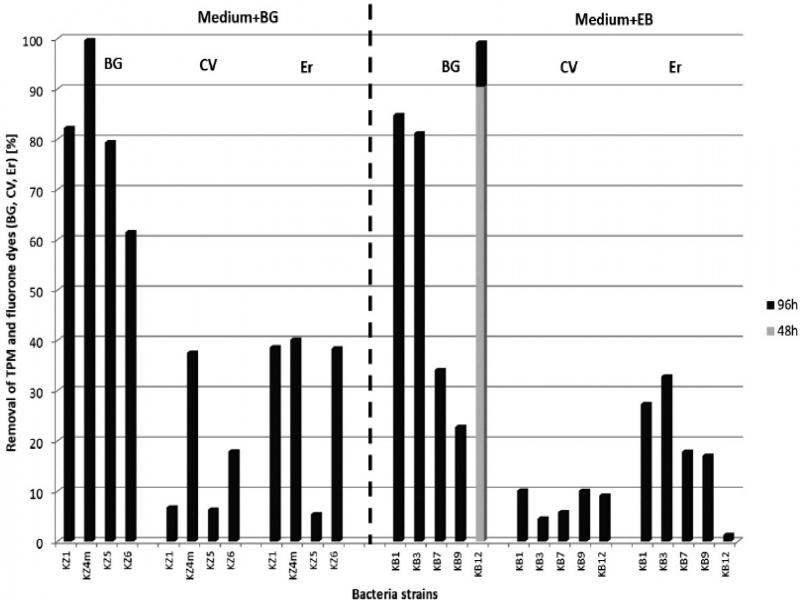
Figure 8.
The impact of dye used for isolation on decolorization potential of bacteria isolated from compost
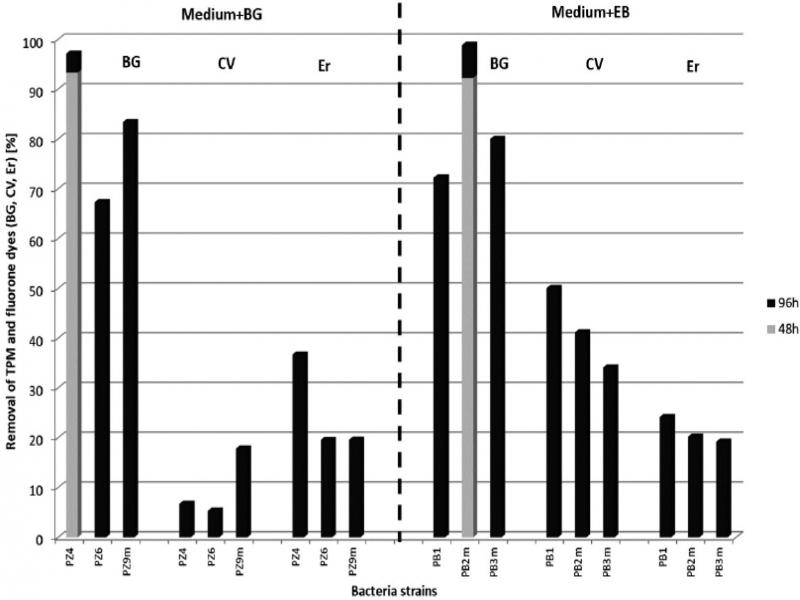
Figure 9.
The impact of dye used for isolation on decolorization potential of bacteria isolated from rotten wood of beech