
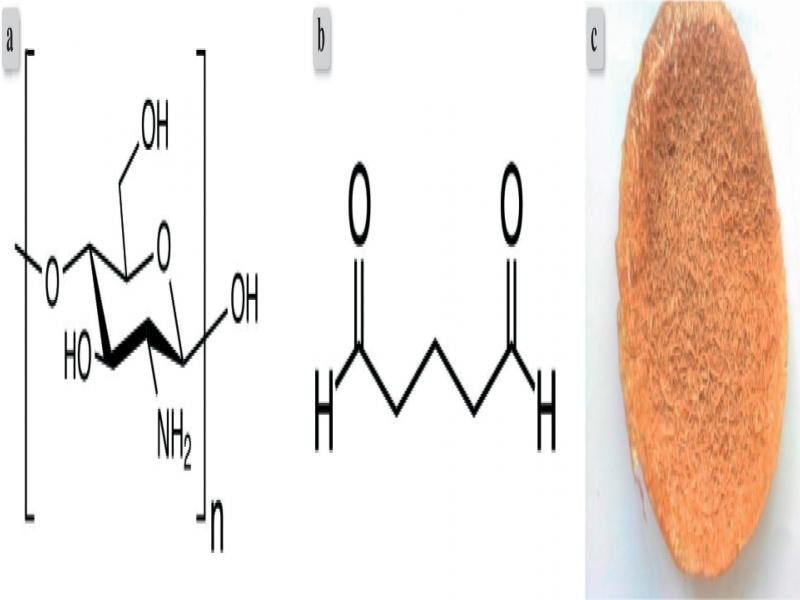
Figure 1.
The chemical structure of (a) CTS, (b) Glutaraldehyde and the appearance of the CTS/CF ratio of 20/80 membrane cross-linked with Glutaraldehyde (c)
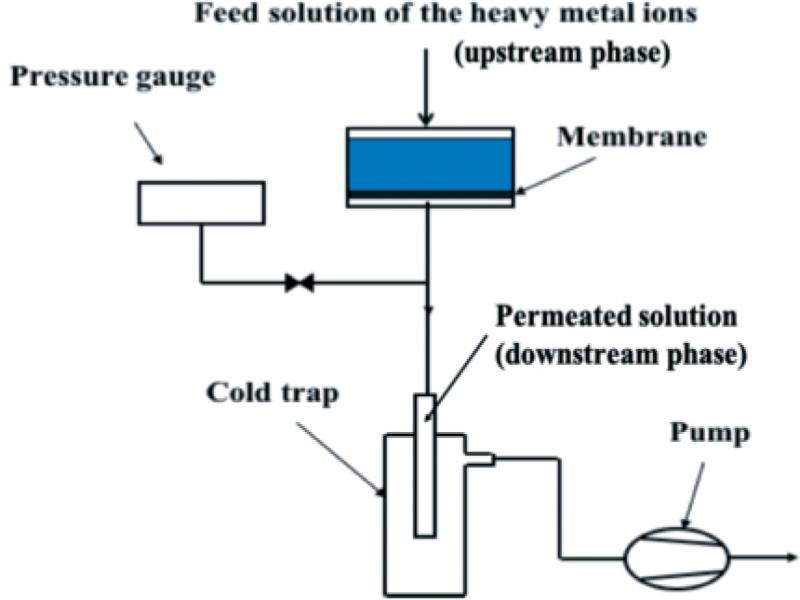
Scheme 1.
The pervaporation apparatus of the elimination process of the heavy metal ions
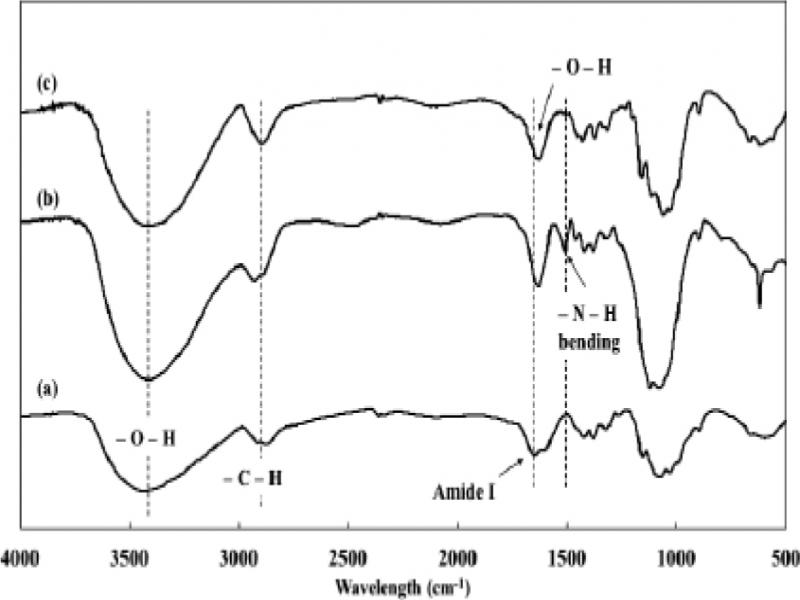
Figure 2.
(a) The FT-IR spectra of the CTS, (b) the cross-linked CTS/CF 20/80 membrane, and (c) the CF modified with NaClO/NaOH
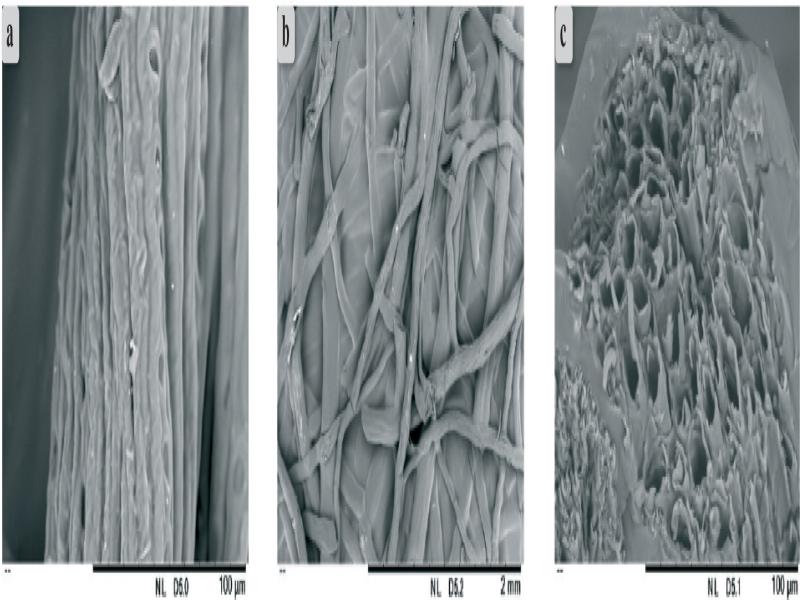
Figure 3.
(a) SEM of the CF treated with NaClO/NaOH, (b) the CTS/CF 20/80 membrane surfaces, and (c) the cross-sectional area of the CTS/CF 20/80 membrane
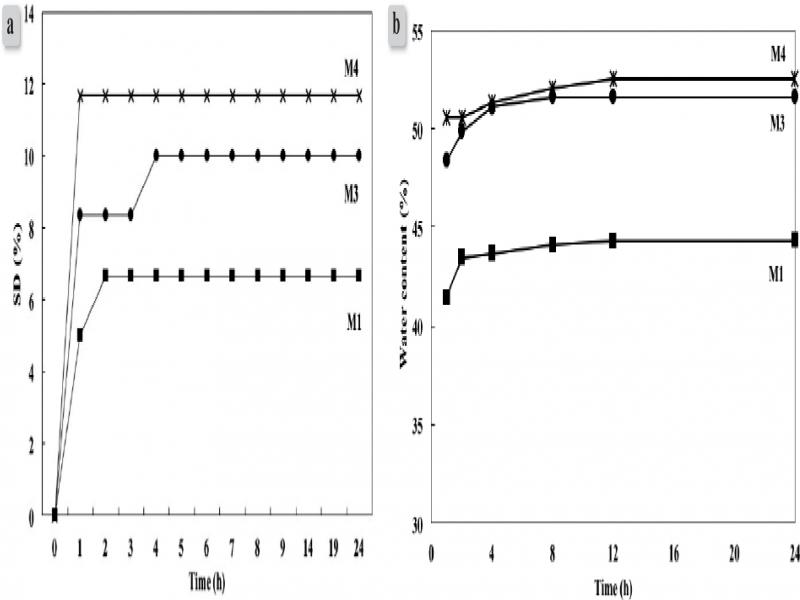
Figure 4.
(a) SD (%) and (b) EWC (%) of the CTS/CF membranes M1: CTS/CF (100/0), M3: CTS/CF (20/80), and M4: CTS/CF (50/50)
Table 1.
Physical properties of the CTS/CF composite membranes at various ratios of CF
| Sample | Ratio CTS:CF | SD (%) | EWC (%) | TS (MPa) |
|---|---|---|---|---|
| M1 | 100:0 | 6.3 | 41.6 | 45.6 |
| M2 | 80:20 | 7.5 | 46.0 | 55.6 |
| M3 | 20:80 | 10.1 | 52.5 | 89.8 |
| M4 | 50:50 | 11.9 | 51.6 | 75.2 |
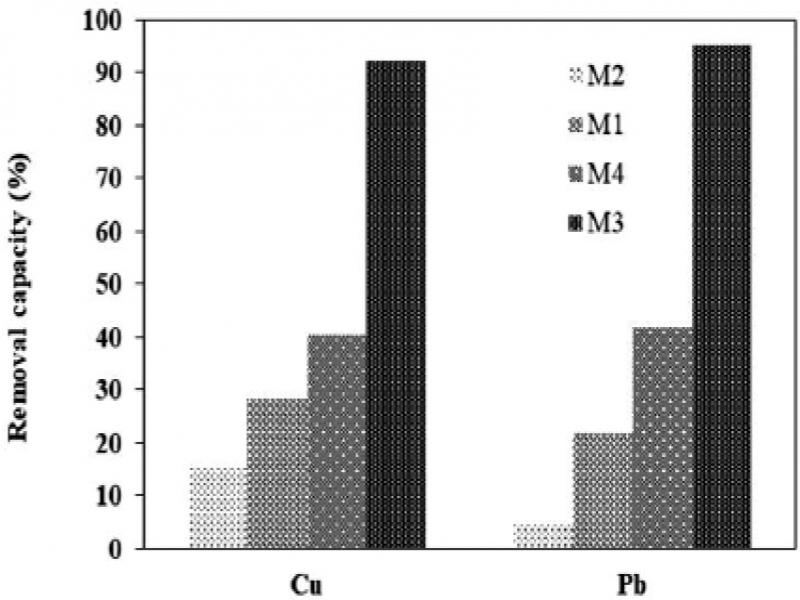
Figure 5.
Efficiency of CTS/CF membranes in heavy metal removal, M1: CTS/CF (100/0), M2: CTS/CF (80/20), M3: CTS/CF (20/80), and M4: CTS/CF (50/50)
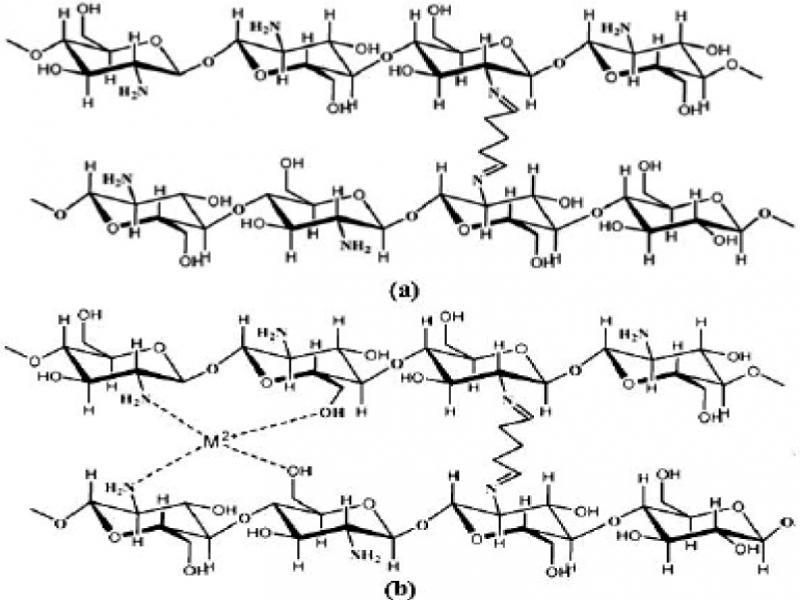
Figure 6.
(a) Interaction between CTS/CF and glutaraldehyde and (b) the complexing mechanism of CTS/CF membranes with cations