
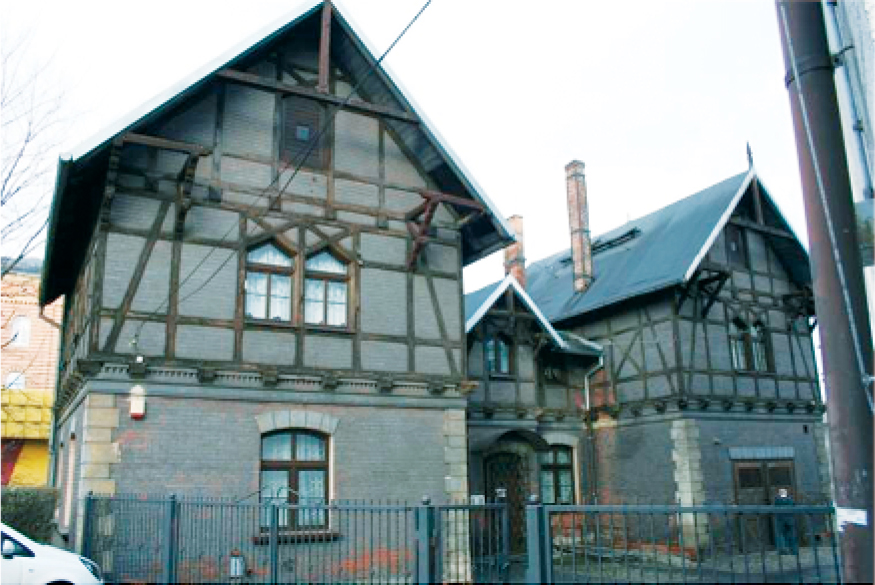
Figure 1.
Prussian wall in the building of State Music School in Gliwice [11]
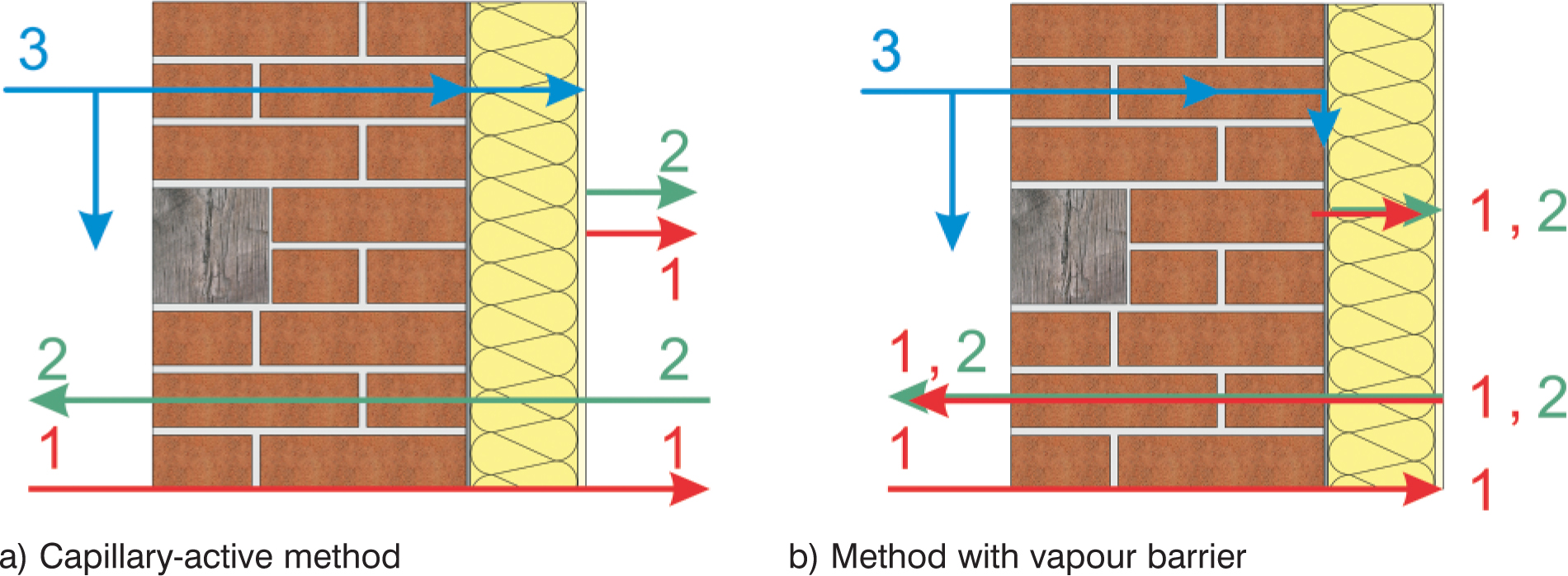
Figure 2.
Selected insulation methods from the inside for the Prussian wall [16] (1 – summer vapor diffusion flux, 2 – winter vapor diffusion flux, 3 – flux of slanting rain)
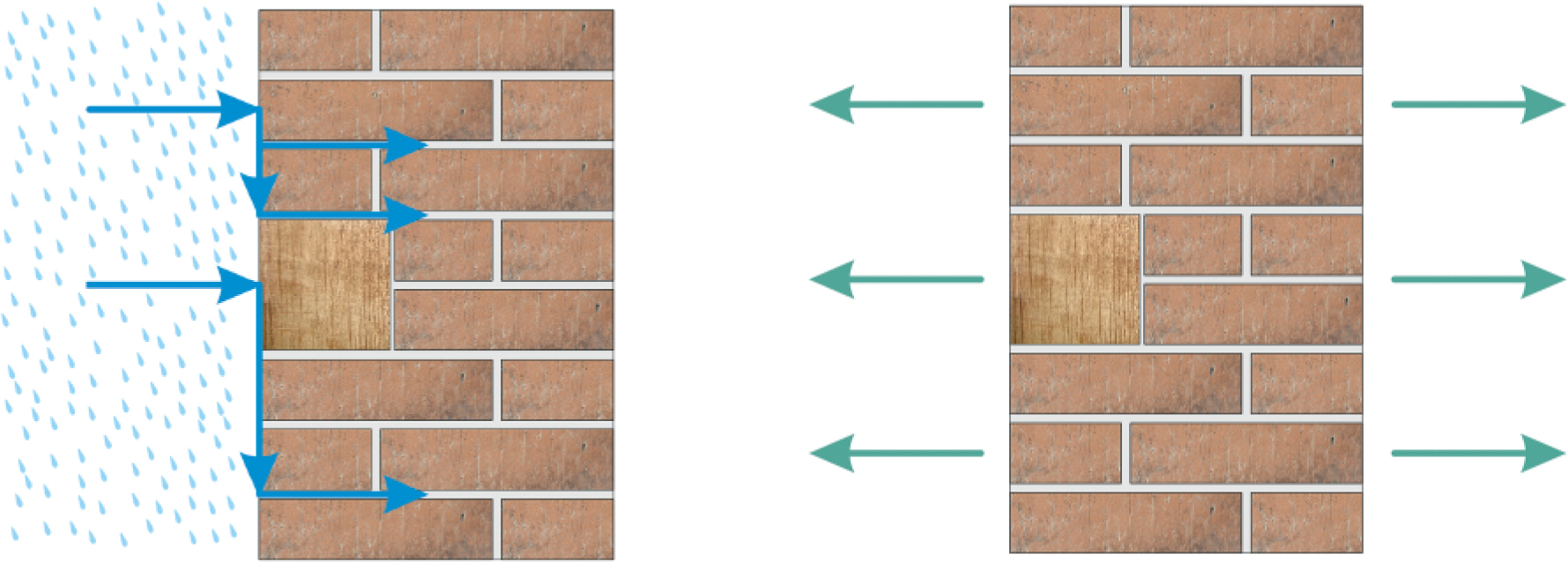
Figure 3.
Moistening with lashing rain and drying-out of the non-insulated Prussian wall
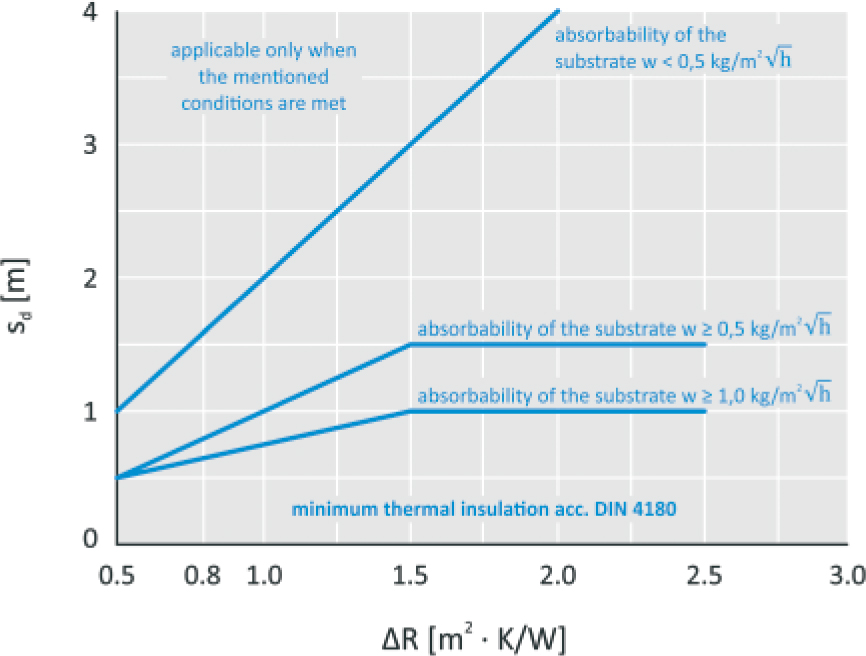
Figure 4.
Minimum requirements involving thermal insulation layer, depending on the thermal resistance of insulation for substrates characterized by different capillary activity [20]
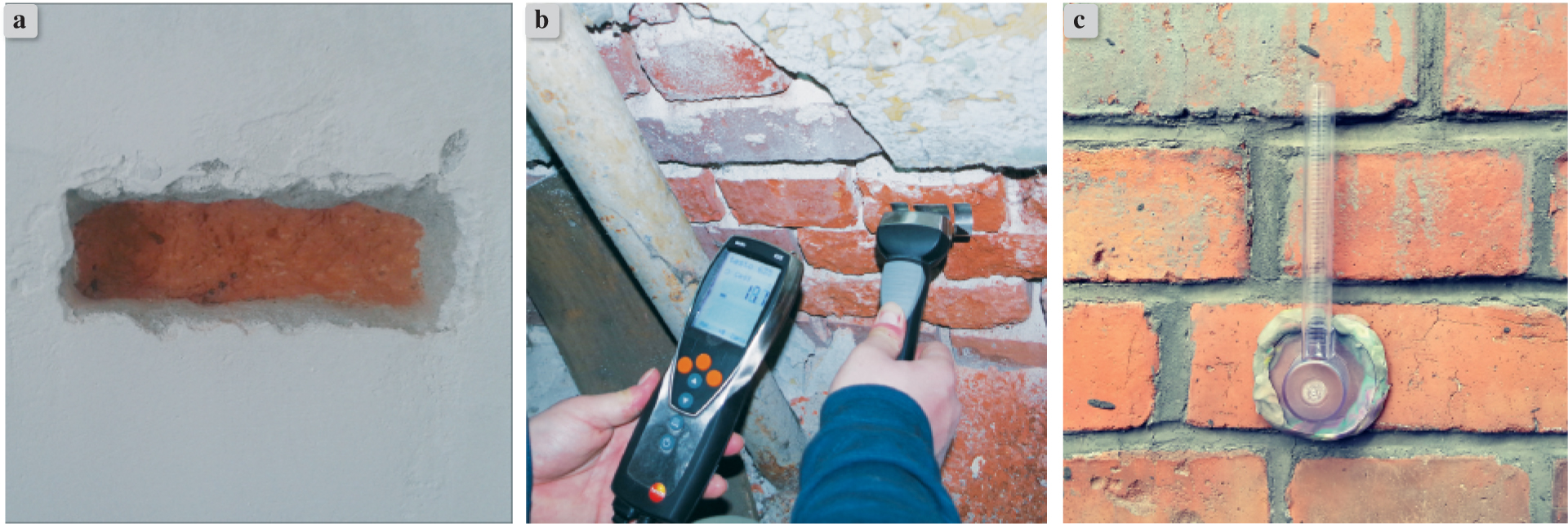
Figure 5.
a) Making opencasts and collecting material for the wall from the room side; b) Measurement of surface humidity; c) Measurement of water absorbency of the wall
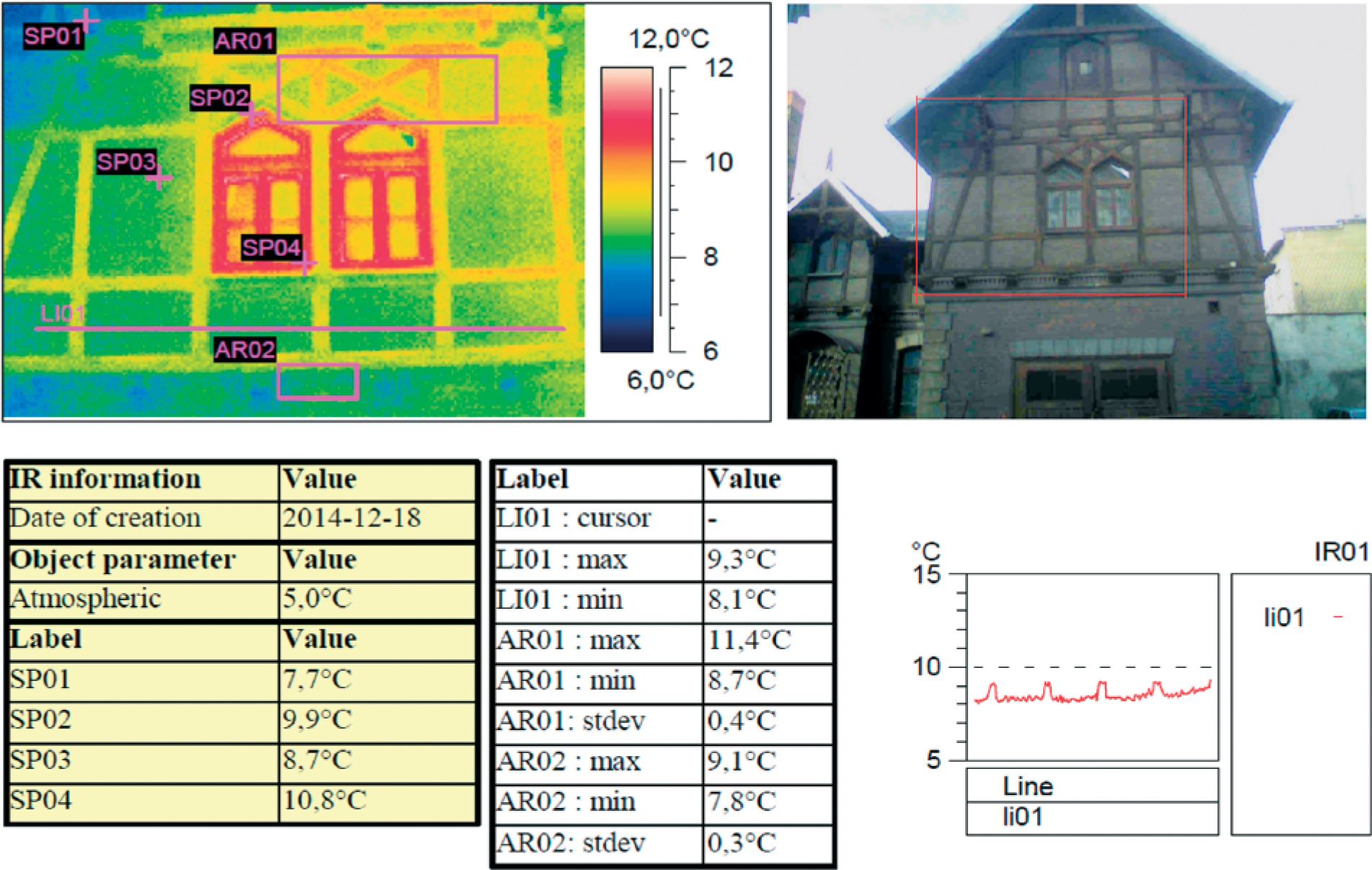
Figure 6.
Thermogram made from the outside of the building in Gliwice
Table 1.
Summarized data accepted for analysis
| No | Material/Layer | R.H. [-] | μ[-] | λ[W/m·K] | ρ[kg/m3] |
|---|---|---|---|---|---|
| 1 | Wood | 0.8 | 200 | 0.13 | 650 |
| 2 | Solid Brick; historical | 0.8 | 15 | 0.60 | 1800 |
| 3 | Lightweight concrete | 0.8 | 4 | 0.04 | 115 |
| 4 | Polyurethane plates | 0.8 | 90 | 0.022 | 44 |
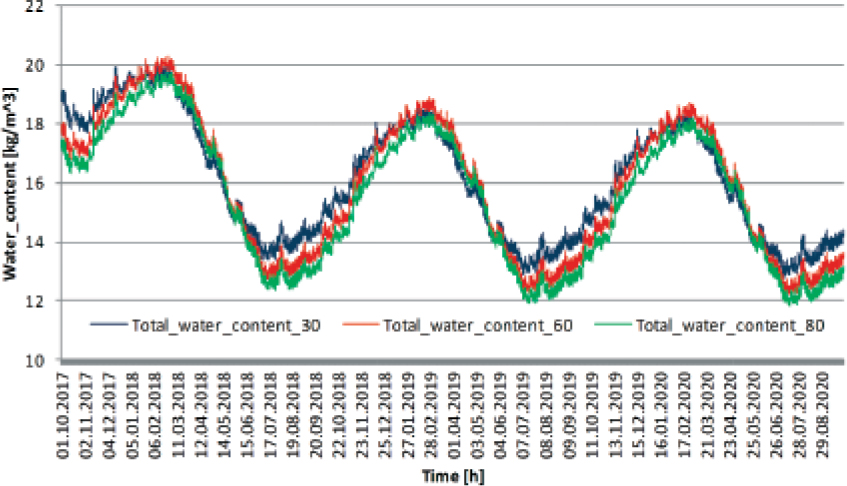
Figure 7.
Total water content in the envelope (25 cm) insulated with lightweight cellular concrete (markings: 30–30 mm insulator; 60–60 mm insulator; 80–80 mm insulator)
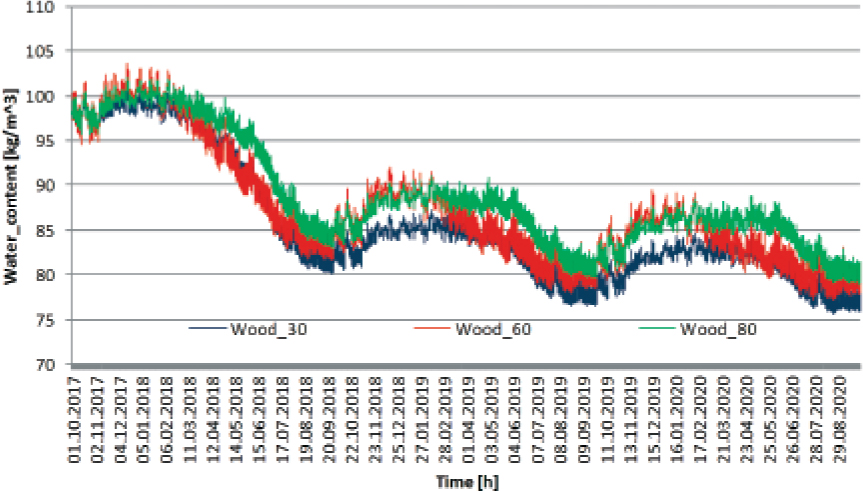
Figure 8.
Changes of water content over time in a layer of the wooden frame stud in the wall insulated with lightweight cellular concrete (markings: 30–30 mm insulator; 60–60 mm insulator; 80–80 mm insulator)
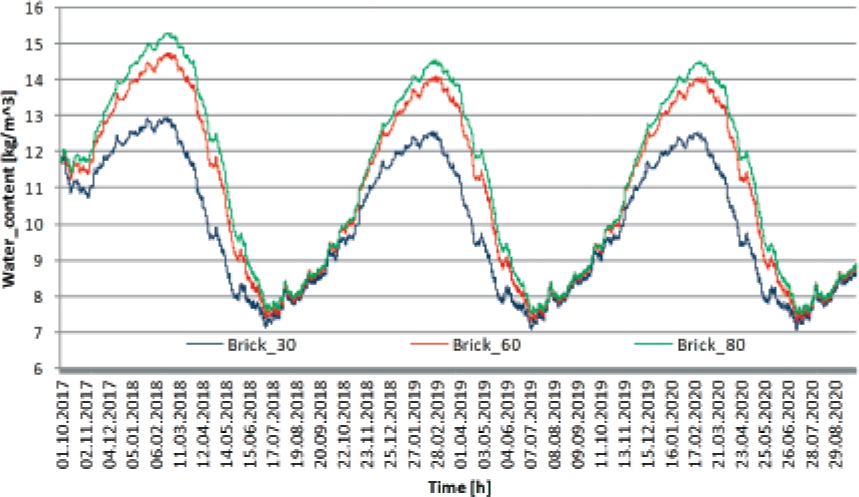
Figure 9.
Changes of water content over time in a layer of the brickwork (25 cm) insulated with lightweight cellular concrete (markings: 30–30 mm insulator; 60–60 mm insulator; 80–80 mm insulator)
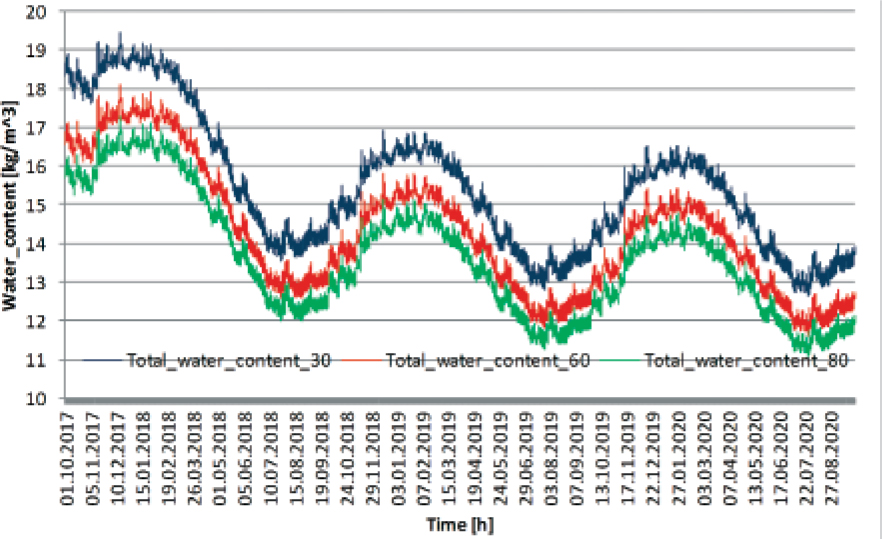
Figure 10.
Total water content in the envelope (25 cm) insulated with polyurethane panels (markings: 30–30 mm insulator; 60–60 mm insulator; 80–80 mm insulator)
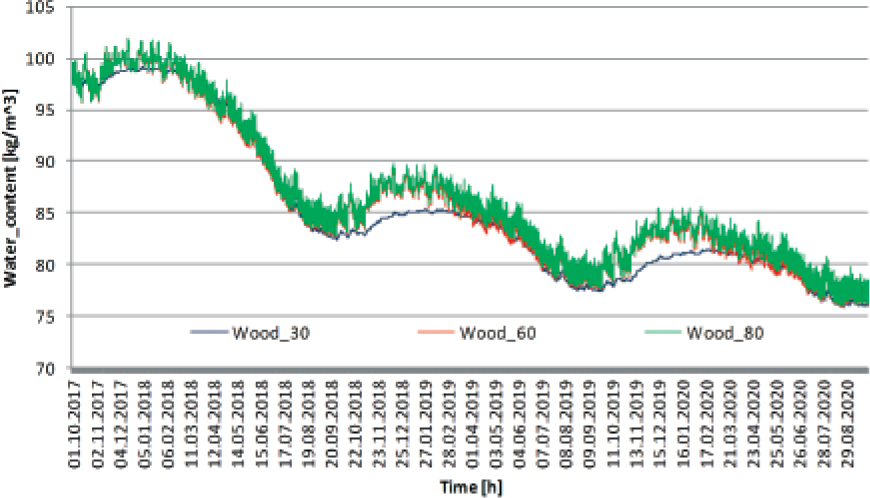
Figure 11.
Changes of water content over time in a layer of the wooden frame stud in the wall with polyurethane panels (markings: 30–30 mm insulator; 60–60 mm insulator; 80–80 mm insulator)
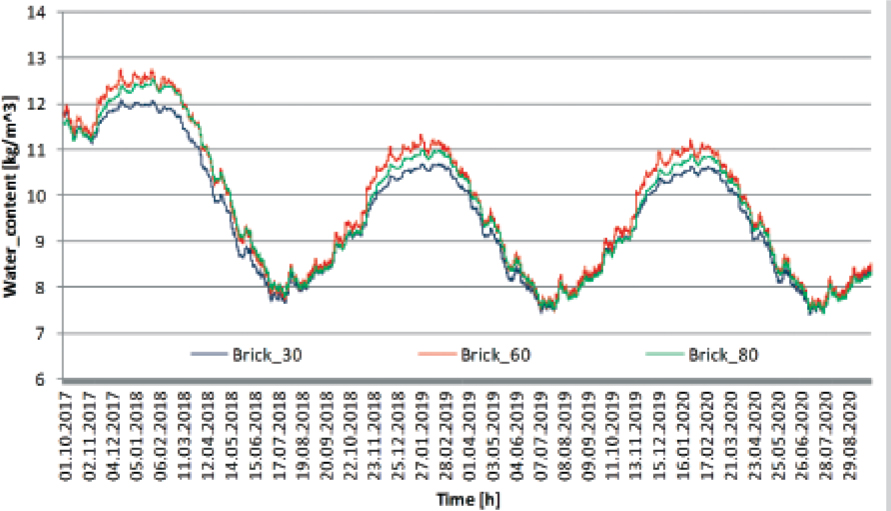
Figure 12.
Changes of water content over time in a brickwork layer (25 cm) insulated with polyurethane panels (markings: 30–30 mm insulator; 60–60 mm insulator; 80–80 mm insulator)
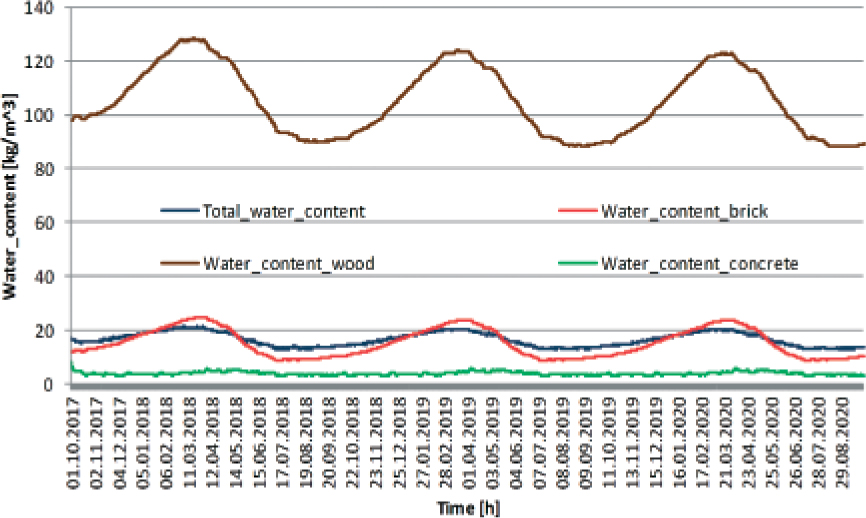
Figure 13.
Changes of water content over time for a 12 cm-thick wall insulated with 8 cm-thick light cellular concrete
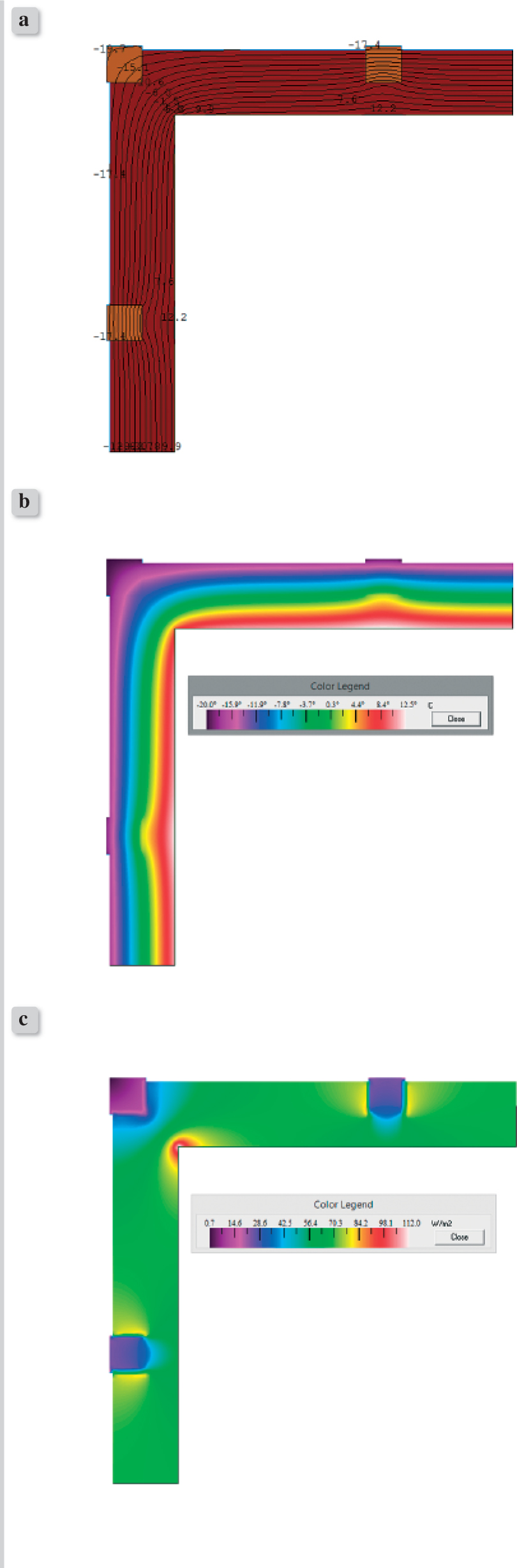
Figure 14.
Summary of calculation results for the corner of Prussian wall without thermal insulation (a, b – distribution of isotherms, c – distribution of heat flux density)
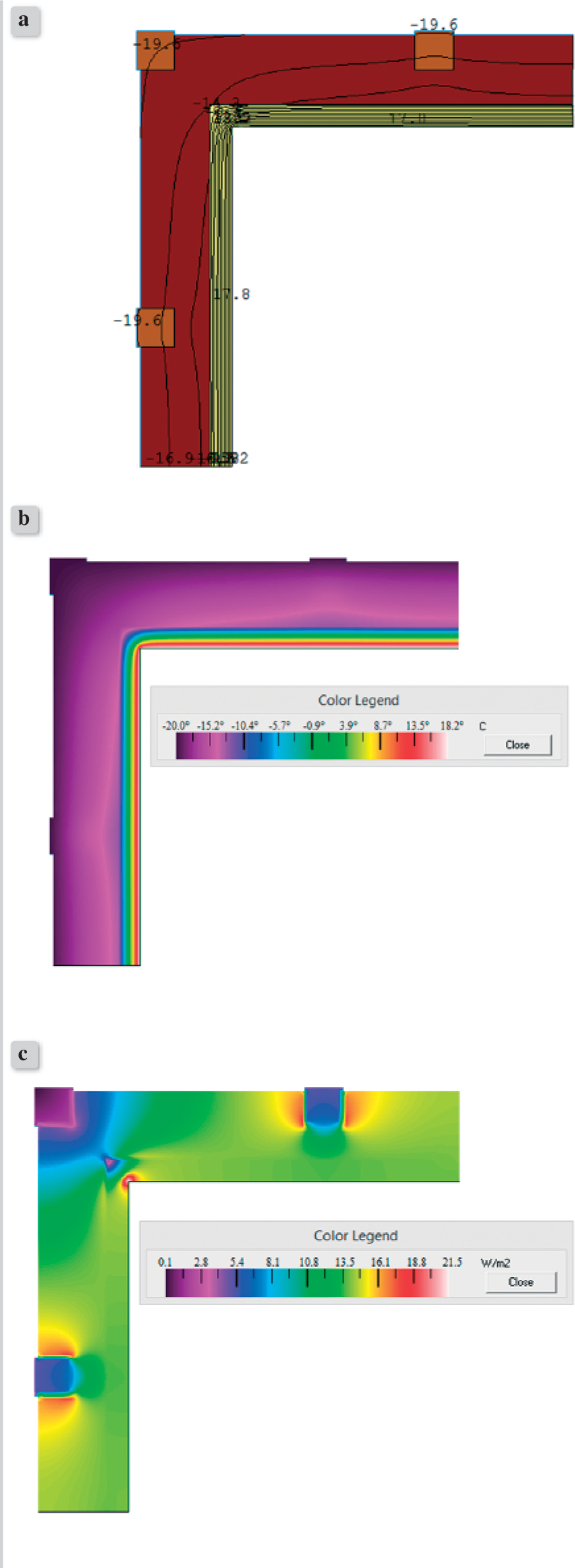
Figure 15.
Summary of calculation results for the corner of Prussian wall with 8cm-thick thermal insulation (a, b – distribution of isotherms, c – distribution of heat flux density)
Table 2.
Summary of results (*values calculated for the whole bridge (both branches)
| Non-insulated wall | Insulated wall (8 cm thick) | |
|---|---|---|
| U [W/m2K)] | 1.57 | 0.34 |
| Li 2D[W/m·K]* | 4.4250 | 0.8673 |
| Le 2D[W/m·K]* | 4.4250 | 0.8673 |
| ψi [W/m·K]* | 0.3304 | -0.1846 |
| ψiwall [W/m·K] | 0.1652 | -0.0923 |
| ψe [W/m·K]* | -0.5048 | 0.0465 |
| ψewall [W/m·K] | -0.2740 | 0.0233 |
| fRsi [-] | 0.54 | 0.81 |