
Each year, approximately 200,000 service members transition from military service to civilian life (Bond et al., 2022; Department of Veterans Affairs, 2018; Edwards et al., 2023; Gurkin, 2019). This transition has been widely studied in relation to structural outcomes such as employment, housing, substance use, and suicide risk (Bond et al., 2022; Brunger et al., 2013; Edwards et al., 2026; Geraci et al., 2020; Kline et al., 2011; Morin, 2011; Orazem et al., 2017; Rogers et al., 2017; Sokol et al., 2021); recent data suggest improvement in some structural indicators. For example, the veteran unemployment rate was recorded at 3.8% in March 2026—a slight decrease from the previous month. Also, veteran homelessness decreased by 8% from 2023 to 2024 (National Coalition for Homeless Veterans, n.d.; United States [U.S.]. Department of Labor, Veterans’ Employment and Training Service, 2026). However, the early transition period remains a time of heightened vulnerability.
The U.S. Department of Veterans Affairs, Office of Suicide Prevention (2026) reports that suicide risk is highest during the first year following separation, with an estimated 45–50 suicides per 100,000 veterans during this period. In response to these risks, several national initiatives have sought to strengthen crisis response, access to care, lethal means safety, and post-discharge follow-up for veterans. These include the 988 Suicide and Crisis Lifeline rollout in 2022 (Purtle et al., 2023; Strombotne et al., 2024; Suran, 2023), the MISSION Act of 2018 (Aggarwal, 2020; Riblet et al., 2023; U.S. Department of Veterans Affairs, 2023), firearm lethal means safety efforts beginning in 2021 (Ruiz et al., 2023; U.S. Department of Veterans Affairs, 2023), and safety planning and follow-up during the first 90 days after psychiatric hospitalization discharge (Goodman et al., 2021; Johnson et al., 2014; Johnson et al., 2019; O’Connor et al., 2023; Riblet et al., 2023). While these initiatives address important points of risk, the emotional experiences that shape veterans’ adjustment during military separation remain less clearly mapped.
Despite growing awareness of the risks associated with military separation, far less attention has been given to the emotional processes that shape veterans’ experience and navigation of the transition to civilian life (Albright et al., 2018; Brunger et al., 2013; Derefinko et al., 2019; Edwards et al., 2023). Within the existing literature, emotions are most often examined indirectly; particularly in relation to employment and help-seeking behaviors (Albright et al., 2018; Brunger et al., 2013; Derefinko et al., 2019; Shue et al., 2021; Silvestrini & Chen, 2023). Several studies indicate that service members commonly experience fear of appearing weak or vulnerable if they express emotions or seek mental health care, concerns that may influence decisions about disclosure and engagement with support services during transition (Albright et al., 2018; Albright et al., 2019; Brunger et al., 2013; Derefinko et al., 2019; Edwards et al., 2023; Russell & Russell, 2018; Shue et al., 2021; Silvestrini & Chen, 2023). This transition represents a major life change that extends beyond occupational adjustment, encompassing shifts in identity, social roles, relationships, and sense of purpose (Angel et al., 2018; Bond et al., 2022). These findings suggest that emotional experiences are not peripheral to the transition process but may meaningfully shape how veterans interpret challenges, access support, and navigate civilian roles following separation.
Much of the existing research and transition assistance programming emphasizes vocational readiness, educational benefits, or the identification and treatment of diagnosable mental health conditions such as posttraumatic stress disorder (PTSD), depression, and anxiety (Ahmadi-Montecalvo et al., 2025; Albright et al., 2019; Alruwaili et al., 2023; Bond et al., 2022; Buzzetta et al., 2020; Castro et al., 2015; DiGangi et al., 2018; Ferruolo, 2016; Fischer et al., 2015). These approaches are critically important, particularly given the elevated mental health risks faced by veterans. However, an exclusive focus on employment outcomes and psychiatric diagnoses may obscure the broader emotional landscape that accompanies military separation. Research increasingly suggests that emotional processes play a central role during transition, influencing identity reconstruction, social belonging, meaning-making, and overall, well-being during reintegration (Angel et al., 2018; Edwards et al., 2023; Elnitsky et al., 2017; Orazem et al., 2017).
Veterans, particularly those from the post-9/11 era, frequently encounter complex and overlapping stressors, including unemployment, housing instability, family role changes, and difficulties navigating civilian workplace cultures (Ahmadi-Montecalvo et al., 2025; Bond et al., 2022). Many also enter service with higher rates of adverse childhood experiences and accumulated exposure to chronic stressors, which may amplify emotional vulnerability during separation (Ahmadi-Montecalvo et al., 2025; Bond et al., 2022; Borowski et al., 2021; Cheney et al., 2025; DiGangi et al., 2018; Edwards et al., 2026; Kahn et al., 2016; Lake & Branson, 2021; Sokol et al., 2021). Importantly, these challenges often give rise to emotional experiences that fall outside traditional diagnostic frameworks (Castro et al., 2015; Edwards et al., 2023; Edwards et al., 2026). Veterans describe feelings such as loss of purpose, identity disruption, moral conflict, demoralization, shame, and social alienation, experiences reported by veterans both with and without formal mental health diagnoses (Angel et al., 2020; Castor et al., 2015; Dexter, 2020; Edwards et al., 2023; Edwards et al., 2026; Lake & Branson, 2021; Mamon et al., 2020; Morton et al., 2025; Senecal et al., 2021; Sokol et al., 2021).
These emotional experiences are not solely individual psychological phenomena but are deeply embedded within social, relational, and structural contexts (Albright et al., 2018; Alruwaili et al., 2023; Angel et al., 2018; Borowski et al., 2021; Cheney et al., 2025; Derefinko et al., 2019; Dexter, 2020; Edwards et al., 2023; Edwards et al., 2026; Elnitsky et al., 2017; Shue et al., 2021; Sokol et al., 2021). The loss of military camaraderie, uncertainty about civilian roles, shifting family dynamics, and encounters with unfamiliar institutions can intensify feelings of anxiety, frustration, isolation, and disorientation (Albright et al., 2018; Alruwaili et al., 2023; Angel et al., 2018; Borowski et al., 2021; Cheney et al., 2025; Derefinko et al., 2019; Dexter, 2020; Edwards et al., 2023; Edwards et al., 2026; Elnitsky et al., 2017; Shue et al., 2021; Sokol et al., 2021). Despite the availability of post-separation resources, many service members are underprepared for these emotional dimensions of transition (Ahmadi-Montecalvo et al., 2025; Angel et al., 2018; Bond et al., 2022; Cheney et al., 2025; Derefinko et al., 2019; Edwards et al., 2023; Edwards et al., 2026; Shue et al., 2021; Sokol et al., 2021). Stigma surrounding emotional vulnerability and mental health care, combined with limited emotional education prior to separation, may delay help-seeking and hinder adjustment (Ahmadi-Montecalvo et al., 2025; Angel et al., 2018; Bond et al., 2022; Cheney et al., 2025; Derefinko et al., 2019; Edwards et al., 2023; Edwards et al., 2026; Shue et al., 2021; Sokol et al., 2021).
To my knowledge, no comprehensive scoping review has systematically mapped how emotional experiences during the military–civilian transition has been conceptualized, described, and supported within the peer-reviewed literature (Alruwaili et al., 2023). This scoping review aims to fill that gap by synthesizing findings from quantitative, qualitative, and mixed-methods studies that focus on the emotional experiences of U.S. veterans during their transition. Specifically, this review aims to identify the range of emotions reported, the circumstances that elicit these emotional responses, and the support associated with emotional well-being, thereby advancing a more holistic understanding of emotional adjustment during military separation and informing future research, practice, and transition preparation efforts.
Methods
This scoping review was conducted to address the following research question: What emotional experiences do veterans face in transition from military to civilian life?
Identifying Literature
Scoping review procedures were employed to detect pertinent literature using SCOPUS and PsycINFO databases and resources published by the U.S. Department of Veterans Affairs (VA) from January 2015 through February 2026. A review registration was created in the Open Science Framework (OSF) on January 28, 2026.
Search Terms
To identify relevant literature, a set of search terms was used, including military transition, veteran transition, veteran reintegration, transition experience, civilian transition, post-service transition, emotional experience, and emotions. For more information on how these search terms were combined to create search strings; see Appendix A.
Eligibility Criteria
In this review, a veteran is defined by their legally recognized status, established through statute, regulation, or official policy. Studies were included if they (1) examined the emotional experiences of American military veterans during the transition from active-duty service to civilian life; (2) involved adults aged 18 years and older from all eras of military service and of all genders; (3) used quantitative, qualitative or mixed methods empirical designs; (4) were published in peer-reviewed journals between 2015 and 2026; and (5) focused on post-separation experiences rather than active-duty service. Studies were excluded if they (1) focused exclusively on reserve or National Guard populations; (2) examined veterans from countries outside the United States; (3) were dissertations, editorials, commentaries, or non-peer-reviewed publications; (4) addressed emotional experiences during active-duty service rather than the transition to civilian life; or (5) focused on the transition from incarceration to civilian life.
Study Identification, Screening, and Selection
Two databases, SCOPUS and PsycINFO, were used to identify relevant literature for the scoping review. A single reviewer conducted the search, which was finalized in February 2026. The reviewer was a licensed clinical social worker with experience in behavioral health, substance use treatment, and veteran-related psychosocial concerns. This professional background supported interpretation of studies addressing emotional well-being, help-seeking, suicide risk, and reintegration challenges. To reduce potential reviewer bias, the review followed a prespecified protocol registered in the Open Science Framework, used predefined eligibility criteria, applied standardized search terms and screening procedures, and organized extracted data using a structured Covidence extraction form. Decisions about inclusion, exclusion, coding, and synthesis were documented throughout the review process to support transparency and reproducibility.
All articles retrieved from these databases were uploaded to Covidence, a platform designed to streamline the collection of studies for literature reviews. In total, N = 1,103 records (Figure 1) were identified through database searches, including PsycINFO (n = 702) and Scopus (n = 401). No additional records were identified through citation searching, grey literature, or other sources. After removing 595 duplicate records (589 identified by Covidence and 6 identified manually), 508 unique records remained for title and abstract screening. During initial screening, 359 records were excluded due to not meeting inclusion criteria, leaving 149 studies for full-text retrieval. All full texts were successfully obtained and assessed for eligibility.
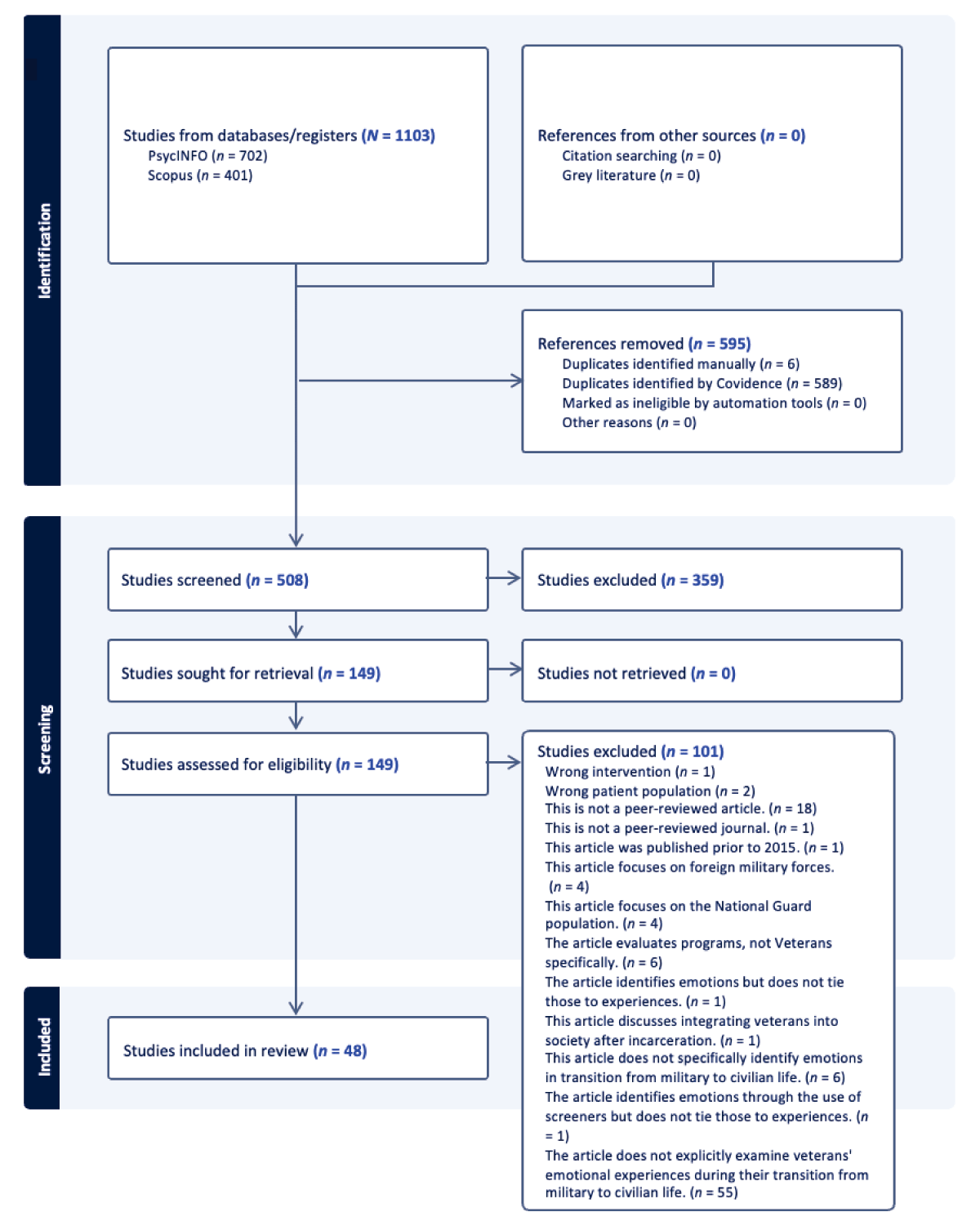
Figure 1
PRISMA Flow Diagram Showing the Process of Literature Selection.
After the full-text review, 101 studies were excluded for failing to meet the inclusion criteria. The most common reasons for exclusion were failure to explicitly examine veterans’ emotional experiences during the transition from military to civilian life, lack of relevance to the target population or phenomenon of interest, and publication or peer-review status issues. Ultimately, 48 studies met the inclusion criteria and were included in the scoping review. At the time of the review, there were no studies awaiting classification and no ongoing studies included. Table 1 provides a complete list of studies used for the scoping review.
Table 1
Included Studies.
| # | FIRST AUTHOR AND YEAR | STUDY TITLE | JOURNAL/TYPE OF STUDY |
|---|---|---|---|
| 1. | Ahmadi-Montecalvo et al. (2025) | Examining health-related social needs and their association with stress and mental health among US Veterans using 2022 behavioral risk factor surveillance system (BRFSS) data | Discover Public Health; Quantitative |
| 2. | Ainspan et al. (2018) | Psychosocial approaches to improving the military-to-civilian transition process | Psychological Services; Narrative review of quantitative, qualitative, and mixed methods |
| 3. | Albright et al. (2018) | Barriers and resources for veterans’ post-military transitioning in south Alabama: A qualitative analysis | Traumatology; Qualitative |
| 4. | Albright et al. (2019) | When women veterans return: The role of postsecondary education in transition in their civilian lives | Journal of American College Health; Quantitative |
| 5. | Alruwaili et al. (2023) | Supporting the Frontlines: A Scoping Review Addressing the Health Challenges of Military Personnel and Veterans | Healthcare; Scoping review of quantitative, qualitative, and mixed methods |
| 6. | Angel et al. (2018) | Team Red, White & Blue: A community-based model for harnessing positive social networks to enhance enrichment outcomes in military veterans reintegrating to civilian life | TBM (Translational Behavioral Medicine); Mixed-methods |
| 7. | Angel et al. (2020) | The Enriched Life Scale (ELS): Development, exploratory factor analysis, and preliminary construct validity for U.S. military veteran and civilian samples | TBM (Translational Behavioral Medicine); Quantitative |
| 8. | Bennett et al. (2015) | Survey of retired military pharmacist’s transition to a civilian pharmacy career path | Military Medicine; Quantitative |
| 9. | Bond et al. (2022) | Transition from military service: Mental health and well-being among service members and veterans with service-connected disabilities | The Journal of Behavioral Health Services & Research; Quantitative |
| 10. | Borowski et al. (2021) | Work-family conflict and subsequent depressive symptoms among war-exposed post-9/11 U.S. military Veterans | Journal of Military, Veteran and Family Health; Quantitative |
| 11. | Buzzetta et al. (2020) | Student veterans: Meaning in life, negative career thoughts, and depression | The Career Development Quarterly; Quantitative |
| 12. | Castro et al. (2015) | The combat veteran paradox: Paradoxes and dilemmas encountered with reintegrating combat veterans and the agencies that support them | Traumatology; Qualitative |
| 13. | Cheney et al. (2025) | Transitioning between institutions: Social (re)location and positionality in student veteran health and well-being | Human Organization; Mixed-methods |
| 14. | DeLucia & Kennedy (2021) | A veteran-focused art therapy program: co-research to strengthen art therapy effectiveness | International Journal of Art Therapy; Qualitative |
| 15. | Derefinko et al. (2019) | Perceived Needs of Veterans Transitioning from the Military to Civilian Life | The Journal of Behavioral Health Services & Research; Qualitative |
| 16. | Dexter (2020) | Human resources challenges of military to civilian employment transitions | Career Development International; Qualitative |
| 17. | DiGangi et al. (2018) | Differential impact of post-deployment stress and PTSD on neural reactivity to emotional stimuli in Iraq and Afghanistan veterans | Journal of Psychiatric Research; Quantitative |
| 18. | Edwards et al. (2023) | Supporting the nation’s transitioning veterans: Narrative review of practices and recommendations for psychotherapy and counseling of veterans separating from military service | Psychological Services; Narrative review of quantitative and qualitative |
| 19. | Edwards et al. (2026) | Veteran suicide thoughts and attempts during the transition from military service to civilian life: Qualitative insights | Death Studies; Mixed-methods |
| 20. | Elnitsky et al. (2017) | Military service member and veteran reintegration: A conceptual analysis, unified definition, and key domains | Frontiers in Psychology; Qualitative |
| 21. | Ferruolo (2016) | Psychosocial equine program for veterans | Social Work; Mixed-methods |
| 22. | Fischer et al. (2015) | Perspectives of family and veterans on family programs to support reintegration of returning veterans with posttraumatic stress disorder | Psychological Services; Qualitative |
| 23. | Geraci et al. (2020) | The modern-day Odysseus: How mental health providers can better reintegrate modern warriors and mitigate suicide risk | Journal of Clinical Psychology; Qualitative |
| 24. | Harrod et al. (2017) | “I’ve never been able to stay in a job”: A qualitative study of veterans’ experiences of maintaining employment | Work; Qualitative |
| 25. | Hirst (2021) | “Videogames Saved My Life”: Everyday Resistance and Ludic Recovery among US Military Veterans | International Political Sociology; Qualitative |
| 26. | Kahn et al. (2016) | Post-9/11 veterans and their partners improve mental health outcomes with a self-directed mobile and Web-based wellness training program: A randomized controlled trial | Journal of Medical Internet Research; Quantitative |
| 27. | Keeling (2024) | Stories of transition: U.S. veterans’ narratives of transition to civilian life and the important role of identity | Journal of Military, Veteran, and Family Health; Qualitative |
| 28. | Kukla et al. (2015) | Mixed methods study examining work reintegration experiences from perspectives of Veterans with mental health disorders | Journal of Rehabilitation Research and Development; Mixed-methods |
| 29. | Lake & Branson (2021) | Eusocial theory of suicide risk: Clinical presentations and commentary: Science and Practice | Clinical Psychology; Qualitative |
| 30. | Libin et al. (2017) | Perspectives of veterans with mild traumatic brain injury on community reintegration: Making sense of unplanned separation from service | American Journal of Orthopsychiatry; Qualitative |
| 31. | Mamon et al. (2020) | Connecting Veterans and Their Community Through Narrative: Pilot Data on a Community Strengthening Intervention | Community Mental Health Journal; Mixed-methods |
| 32. | Matthieu et al. (2018) | Veterans volunteering: An emerging practice and satisfaction with a civic service program for U.S. veterans returning from Iraq and Afghanistan | Best Practices in Mental Health; Mixed-methods |
| 33. | Meca et al. (2020) | The role of United States identity in adjustment among veterans | Military Psychology; Quantitative |
| 34. | Miloslavich et al. (2026) | Anger mediates the relationship between changes in alcohol use and violence: A longitudinal examination among Iraq/Afghanistan-era veterans | Psychological Trauma; Quantitative |
| 35. | Morton et al. (2025) | Loneliness after service veteran loneliness and exclusion by veterans and nonveterans in Cyberball | Journal of Psychiatric Research; Quantitative |
| 36. | Olsen & Jette (2025) | Exploring CrossFit as a Site of Transition for Wounded Veterans: A Thematic Analysis | Palaestra; Qualitative |
| 37. | Pebole et al. (2026) | Veterans’ perspectives on two transdiagnostic group workshops to improve military to civilian reintegration: A comparative thematic analysis | Psychological Services; Mixed-methods |
| 38. | Raabe et al. (2024) | Facilitating United States Service Members’ Transition Out of the Military: A Self-Determination Theory Perspective | Journal of Career Development; Qualitative |
| 39. | Rattray et al. (2023) | Learning from women veterans who navigate invisible injuries, caregiving, and reintegration challenges | BMC Women’s Health; Qualitative |
| 40. | Russell & Russell (2018) | It’s not just showing up: How social identification with a Veterans Service Organization relates to benefit-finding and social isolation among veterans | Psychological Services; Quantitative |
| 41. | Saunders et al. (2023) | Bended womanhood bended back: The intersection of race, gender, and culture in women of color veterans and their transition into higher education | Journal of Diversity in Higher Education; Qualitative |
| 42. | Senecal et al. (2021) | The Formation of Antisocial Tendencies in Veterans via Combat Excitement | Peace and Conflict; Qualitative |
| 43. | Shankle et al. (2023) | Transitioning from military to civilian life: The Ohio story | Journal of Community & Applied Social Psychology; Qualitative |
| 44. | Shue et al. (2021) | The career transition experiences of military Veterans: A qualitative study | Military Psychology; Qualitative |
| 45. | Silvestrini & Chen (2023) | “It’s a sign of weakness”: Masculinity and help-seeking behaviors among male veterans accessing posttraumatic stress disorder care | Psychological Trauma; Qualitative |
| 46. | Sokol et al. (2021) | The deadly gap: Understanding suicide among veterans transitioning out of the military | Psychiatry Research; Narrative review of qualitative |
| 47. | Stanley & Larsen (2019) | Emotion Dysregulation and Military Suicidality Since 2001: A Review of the Literature | Political Psychology; Literature review of qualitative |
| 48. | Vetro-Kalseth et al. (2021) | Treatment description and case series report of a phased music therapy group to support Veteran reintegration | Military Psychology; Qualitative |
Data Extraction
Data from the included sources were organized using a standardized data extraction form developed in Covidence. The extracted variables included bibliographic information (e.g., author, year), study characteristics (including study design and data collection instruments), and sample characteristics (e.g., population description, sample size). The substantive data extracted focused on emotional experiences during the transition from military to civilian life. This included the types of emotions reported, the authors’ explanations of the relationship between emotions and the transition process, and the circumstances that triggered these emotional responses. Furthermore, items were documented regarding support or interventions that impacted emotional well-being, key findings, and the relationships between emotional experiences and the circumstances that triggered them. The author identified research gaps to guide future research directions. All data were organized for each source to support a descriptive synthesis, in accordance with scoping review methodology.
Data Synthesis
This review examined the emotional experiences of veterans by distinguishing between specific emotion categories and broader emotion domains. Emotion categories refer to the specific feelings that veterans identified, such as anxiety, loneliness, or guilt, and reflect the nuanced ways in which people describe their emotional lives (Barrett, 2017; Cowen & Keltner, 2017). In contrast, emotion domains are higher-order groupings that cluster related experiences based on shared functional, social, moral, or existential characteristics (Barrett, 2017; Cowen & Keltner, 2017). This approach aligns with contemporary emotion science, which shows that emotions do not form fixed categories but instead emerge as context-dependent and meaning-based constructions (Barrett, 2017). Reported emotional experiences occupy a rich and overlapping semantic space rather than existing in discrete categories (Cowen & Keltner, 2017). Following PRISMA-ScR guidelines and the descriptive aims of scoping review methodology, emotion domains were used as an analytical framework to map patterns across studies while preserving the specificity of veterans’ language (Tricco et al., 2018). Therefore, the identified domains serve as organizational tools for synthesizing the literature rather than claiming universal or discrete structures of emotion (Barrett, 2017).
Results
The search results from SCOPUS and PsycINFO, including the literature selection process and reasons for exclusion; see Figure 1. Table 2 provides a breakdown of the affective, social, moral, and existential dimensions of the transition experience identified across the included studies. The table summarizes 20 emotion categories and 773 associated circumstances derived from the included studies.
Table 2
Emotion and Circumstance Frequencies.
| EMOTION | EMOTION COUNT | CIRCUMSTANCE | CIRCUMSTANCE COUNT |
|---|---|---|---|
| Anger | 47 | Betrayal by a trusted person | 12 |
| Anger | Feeling dismissed or ignored | 9 | |
| Anger | Injustice or unfair treatment | 11 | |
| Anger | Interrupted plans or goals | 7 | |
| Anger | Verbal attack or criticism | 8 | |
| Anxiety | 63 | Academic or work performance pressure | 14 |
| Anxiety | Financial uncertainty | 10 | |
| Anxiety | Health-related fears | 12 | |
| Anxiety | Social evaluation or judgment | 15 | |
| Anxiety | Uncertainty about the future | 12 | |
| Contempt | 18 | Encountering perceived incompetence | 6 |
| Contempt | Moral or ethical disagreement | 7 | |
| Contempt | Status or superiority perception | 5 | |
| Disgust | 22 | Ethical or moral violations | 9 |
| Disgust | Exposure to offensive content | 7 | |
| Disgust | Physical contaminant exposure | 6 | |
| Embarrassment | 29 | Failing publicly at a task | 8 |
| Embarrassment | Public correction or reprimand | 7 | |
| Embarrassment | Social norm violation | 9 | |
| Embarrassment | Unwanted attention from others | 5 | |
| Envy | 24 | Observing others’ achievements | 10 |
| Envy | Perceived unfair advantage of others | 8 | |
| Envy | Social comparison on appearance | 6 | |
| Fear | 54 | Dark or unfamiliar environments | 7 |
| Fear | Physical danger or threat | 15 | |
| Fear | Potential loss of a loved one | 12 | |
| Fear | Social rejection or exclusion | 11 | |
| Fear | Uncertainty and loss of control | 9 | |
| Grief | 38 | Death of a loved one | 16 |
| Grief | End of a significant relationship | 10 | |
| Grief | Loss of a cherished opportunity | 7 | |
| Grief | Loss of health or capability | 5 | |
| Guilt | 33 | Acting against one’s own values | 9 |
| Guilt | Failing to meet responsibilities | 11 | |
| Guilt | Harm caused to another person | 8 | |
| Guilt | Neglecting a relationship | 5 | |
| Happiness | 71 | Achieving a personal goal | 15 |
| Happiness | Acts of kindness received | 9 | |
| Happiness | Celebrations and social gatherings | 13 | |
| Happiness | Family or romantic connection | 14 | |
| Happiness | New positive experiences | 10 | |
| Happiness | Unexpected, pleasant surprises | 10 | |
| Hope | 41 | Anticipation of positive change | 13 |
| Hope | New opportunity or possibility | 14 | |
| Hope | Recovery or improvement in health | 8 | |
| Hope | Support from others | 6 | |
| Jealousy | 27 | Perceived romantic rivalry | 10 |
| Jealousy | Sibling or peer comparison | 9 | |
| Jealousy | Workplace recognition given to others | 8 | |
| Loneliness | 35 | Being in an unfamiliar place | 7 |
| Loneliness | Disconnection from social community | 10 | |
| Loneliness | Feeling misunderstood | 9 | |
| Loneliness | Lack of meaningful relationships | 9 | |
| Love | 58 | Deep friendship or platonic bond | 11 |
| Love | Parental or familial affection | 14 | |
| Love | Romantic partnership | 18 | |
| Love | Sense of belonging to a group | 9 | |
| Love | Spiritual or communal connection | 6 | |
| Pride | 46 | Academic or professional achievement | 13 |
| Pride | Helping others succeed | 9 | |
| Pride | Overcoming a personal challenge | 12 | |
| Pride | Recognition of effort by others | 7 | |
| Pride | Witnessing a loved one’s success | 5 | |
| Regret | 31 | Choosing comfort over growth | 8 |
| Regret | Failing to act when needed | 10 | |
| Regret | Missed relationship opportunities | 7 | |
| Regret | Words said in anger | 6 | |
| Relief | 36 | Completion of a stressful task | 11 |
| Relief | Danger or threat passing | 10 | |
| Relief | Positive medical or test outcome | 9 | |
| Relief | Reconciliation after conflict | 6 | |
| Sadness | 52 | Disappointment in self or others | 11 |
| Sadness | Empathy for another’s suffering | 9 | |
| Sadness | Failure to reach a meaningful goal | 10 | |
| Sadness | Separation from loved ones | 13 | |
| Sadness | Witnessing suffering or loss in the world | 9 | |
| Shame | 28 | Falling short of personal ideals | 9 |
| Shame | Perceived moral failure | 8 | |
| Shame | Public exposure of a private matter | 7 | |
| Shame | Social rejection or humiliation | 4 | |
| Surprise | 20 | Encountering an unexpected event | 9 |
| Surprise | Receiving unexpected news | 7 | |
| Surprise | Sudden change in environment | 4 | |
| TOTAL CC | 773 |
[i] Note. Emotions are organized alphabetically. EC = Emotion Count, which reflects total instances of that emotion across all circumstances. CC = Circumstance Count, which reflects instances for that specific emotion–circumstance pairing. Overall total EC Categories = 20. Overall total CC = 773.
Analytical Approaches
In the studies reviewed, emotional experiences during the transition from military to civilian life were classified into 20 distinct types of emotions and domains. These domains encompass a wide range of affective, social, moral, and existential aspects of the transition experience. It is important to note that the identified emotion categories reflect veterans’ subjective emotional experiences rather than clinical diagnoses. Emotional experiences were frequently described as overlapping and co-occurring, reflecting the complex interplay between affective distress, identity disruption, moral conflict, and social disconnection. This domain-based framework provides an integrative structure for understanding the breadth and complexity of emotional experiences reported across the literature and underscores the multifaceted nature of emotional well-being during transition.
Key Findings, Protective Supports and Interventions, and Gaps in Literature
Synthesis of findings revealed three dominant areas of coming together across the included studies: (1) key emotional and psychosocial findings related to transition experiences, (2) supports and interventions associated with improved emotional well-being, and (3) persistent gaps in the existing literature that constrain understanding and intervention development. These areas reflect recurring patterns across diverse study contexts and veteran populations. Figure 2, Military-to-Civilian Transition Venn Diagram, visualizes the overlap in domains of key findings, available supports, and research gaps.
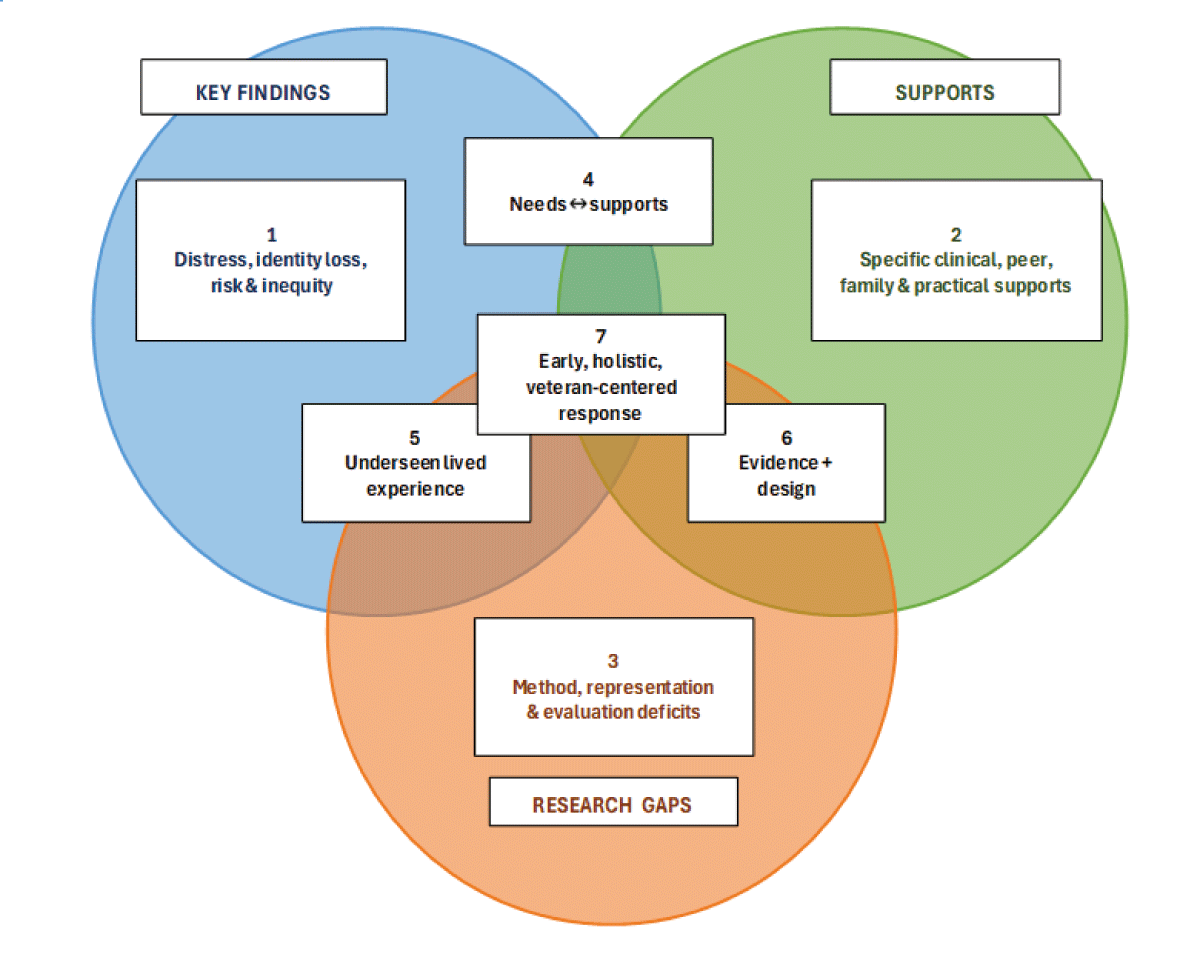
Figure 2
Military-to-Civilian Transition Venn Diagram.
Note. The seven regions represent where different parts of the transition overlap.
The findings show that the military-to-civilian transition is a high-risk, dynamic process shaped by emotional, relational, identity, and structural conditions. The supports literature responds with integrated clinical, peer, family, purpose-oriented, and practical interventions. The central cross-cutting need is for early, veteran-centered, rigorously evaluated support that treats well-being holistically rather than as diagnosis alone. Region 1, Key Findings, highlights themes during the military-to-civilian transition of distress, suicidality, identity and purpose loss, and amplified challenges for some subpopulations. Region 2, Supports, highlights themes during the military-to-civilian transition of named intervention modalities, such as peer, clinical, family, complementary, purpose-oriented, and practical supports. Region 3, Research Gaps, identifies themes during the military-to-civilian transition related to methodological, representation, longitudinal, evaluation, and veteran-perspective deficiencies. Region 4, Needs and Supports, highlights observed emotional and structural needs aligned with integrated care, connection, purpose, and practical stability. Region 5, Key Findings and Research Gaps, highlights themes around veterans’ lived experiences that were missed or overlooked, such as identity, relational suffering, structural context, and diverse veteran experiences, which are consequential but underexamined. Region 6, Supports and Research Gaps, shows the intervention evidence gap, such as that promising supports need earlier deployment, veteran co-design, continuity, and more rigorous evaluation. Region 7, Key Findings, Supports, and Research Gaps, presents the cross-cutting conclusion that the transition should be treated as a dynamic, high-risk process requiring early, holistic, veteran-centered responses.
Key Findings: Emotional Distress as a Multidimensional Transition Experience
Across all studies (N = 48), emotional distress during the military–civilian transition was consistently described as extending beyond diagnosable mental health conditions such as PTSD, depression, or anxiety. Veterans’ accounts included multifaceted emotional experiences encompassing stress, loneliness, anger, moral conflict, and identity-related distress (24 studies: 1, 7, 12, 14–15, 18–21, 23, 25–26, 29–30, 33–35, 37, 39–40, 43–44, & 46–47). These emotional states were frequently described as overlapping rather than discrete, indicating that transition-related distress is cumulative and interactive in nature (29 studies: 1, 7, 9, 12, 14–15, 18–21, 23–30, 32–35, 37, 39–40, 43–44, & 46–47).
Identity loss and disruption of purpose emerged as central organizing experiences underlying many emotional challenges reported across studies (22 studies: 1, 7, 12–14, 18–21, 23, 27–30, 32–33, 37–39, 43–44, & 46). Veterans frequently described the loss of a mission-driven role, structured environment, sense of usefulness, and military camaraderie as emotionally destabilizing (27 studies: 3, 6–8, 12–16, 18–21, 23–24, 27–30, 32–33, 35, 37–39, 43–44, & 46). This loss of meaning was commonly associated with feelings of emptiness, confusion, reduced self-worth, and emotional withdrawal during reintegration (14 studies: 7, 14, 18–21, 27–30, 33, 37, 42, & 46).
Emotional experiences during transition were also consistently embedded within broader social and structural contexts. Distress was closely linked to employment instability, financial strain, housing insecurity, workplace cultural mismatch, family role renegotiation, stigma surrounding help-seeking, and challenges navigating civilian institutions (27 studies: 1, 3–4, 9–10, 13–16, 18–21, 23–24, 26–27, 29–30, 33–35, 37–38, 43–44, & 46). These findings indicate that emotional well-being during transition cannot be fully understood without considering the broader social and material context in which veterans reintegrate.
Notably, several studies highlighted that certain subpopulations experience amplified emotional challenges, including women veterans, racial and ethnic minority veterans, student veterans, wounded veterans, and those experiencing involuntary or medical discharge (11 studies: 1, 3–4, 11, 13, 21, 30, 36, 39, 41, & 46). For these groups, emotional distress was often compounded by gendered expectations, marginalization within veteran and civilian systems, caregiving demands, and barriers to culturally responsive care (11 studies: 1, 3–4, 11, 13, 21, 30, 36, 39, 41, & 46). These findings underscore that emotional well-being during transition reflects the interaction of individual emotional processes with relational and systemic conditions.
Supports Contributing to Emotional Well-being During Transition
Despite widespread challenges, the literature identified multiple supports and interventions associated with improved emotional well-being during the transition period. Across studies, peer support and veteran community connection emerged as some of the most consistently protective factors (21 studies: 2, 3, 5–7, 12, 15, 18, 20, 23, 25, 27, 29, 31–32, 36, 38, 40, 43–44, & 48). Engagement with Veteran Service Organizations (VSOs), peer mentorship, veteran-only groups, and civic service programs provided opportunities for shared identity, mutual understanding, and restored belonging (15 studies: 2, 6–7, 15, 18, 20, 23, 27, 29, 31–32, 36, 40, & 43–44). Activities that fostered meaning and purpose were also strongly associated with positive emotional outcomes (8 studies: 2, 8, 11, 27, 29, 32, 38, & 40). Volunteering, civic engagement, meaningful employment, and education aligned with personal values helped veterans reconstruct a sense of contribution and direction, counteracting feelings of aimlessness and loss of mission (8 studies: 2, 8, 11, 27, 29, 32, 38, & 40).
Integrated mental health and psychosocial care was frequently cited as beneficial when approaches extended beyond symptom reduction to address identity, relationships, and emotion regulation (15 studies: 12, 14–15, 18, 20–23, 26, 29, 37, 43, 45, 47, & 48). Trauma-informed counseling, skills-based interventions (e.g., cognitive-behavioral and dialectical behavior therapies), and suicide prevention programs were particularly effective when delivered in culturally competent and veteran-centered ways (15 studies: 12, 14–15, 18, 20–23, 26, 29, 37, 43, 45, 47, & 48). Family and relational support also played a critical role. Family psychoeducation, couple-based interventions, and partner-inclusive programs helped reduce relational strain, improve communication, and strengthen social support systems, factors closely tied to emotional stability during reintegration (6 studies: 15, 21, 22, 26, 37, & 48). In addition, a growing body of studies highlighted the value of non-traditional and complementary interventions, including art and music therapy, equine-facilitated therapy, community-based fitness programs, and gaming communities (6 studies: 14, 21, 25, 31, 36, & 48). These approaches provided alternative pathways for emotional expression, social connection, and regulation, particularly for veterans who were reluctant to engage in conventional mental health services (6 studies: 14, 21, 25, 31, 36, & 48).
Finally, structural and practical supports, such as employment assistance, career counseling, financial literacy training, GI Bill benefits, housing stability, and accessible healthcare, were repeatedly identified as foundational to emotional well-being (22 studies: 1, 2, 3, 8–10, 13, 15–16, 20, 23–24, 26–27, 29–30, 33, 37–38, 43–44, & 46). Early transition planning and continuity of care, including transition assistance programs and trusted points of contact during reintegration, further supported emotional adjustment by reducing uncertainty and the burden of navigating systems (9 studies: 10, 15, 19, 23, 26, 30, 43, 44, & 46).
Gaps Identified in the Literature
Despite the breadth of findings, several significant gaps were consistently identified across studies. A prominent limitation was the overemphasis on diagnostic outcomes, with many studies prioritizing PTSD, depression, or anxiety measures while under examining identity loss, moral distress, relational suffering, and existential disruption, experiences repeatedly identified as central by veterans themselves. Additionally, transition was frequently conceptualized as a static outcome rather than a dynamic process, limiting understanding of how emotional experiences evolve over time. Few studies adopted longitudinal designs or explicitly examined different phases of reintegration.
The literature also demonstrated substantial underrepresentation of diverse veteran populations, including women veterans, veterans of color, LGBTQ+ veterans, non-VA-enrolled veterans, and nonbinary veterans (16 studies: 4, 15, 18, 21, 27, 30, 34–39, & 41–46). This limits the generalizability of findings and obscures intersectional sources of emotional distress (16 studies: 4, 15, 18, 21, 27, 30, 34–39, 41, 43, & 45–46). Another critical gap involved the lack of early-stage intervention research, particularly during the first 3–12 months post-separation, a period associated with heightened suicide risk (5 studies: 9, 18, 19, 37, & 46). While many studies documented distress during this window, few evaluated targeted interventions specifically designed for this phase (5 studies: 9, 18, 19, 37, & 46).
Across studies, emotional well-being was often analyzed separately from social and structural determinants, such as employment, housing, and community belonging, despite evidence that these factors are deeply interconnected (16 studies: 1, 3, 9–10, 15, 18, 20–21, 23, 27, 29–30, 33, 37, 43, & 46). Moreover, non-traditional and emerging supports, including creative arts, civic engagement, and fitness-based interventions, remain undervalued and lack rigorous comparative designs (6 studies: 14, 21, 25, 31, 36, & 48). Finally, many programs and interventions were described as provider- or system-driven, with limited incorporation of veterans’ lived experiences, preferences, and self-defined needs (9 studies: 14, 18, 23, 27, 31, 36, 37, 43, & 48). This gap underscores the need for more veteran-centered and participatory approaches to transition research and support.
Discussion
Interpreting Emotional Well-being During the Military–civilian Transition
This scoping review demonstrates that emotional well-being during the military–civilian transition is characterized by multidimensional, overlapping emotional experiences that extend beyond diagnosable mental health conditions. Across the included studies, veterans described constellations of affective distress, identity disruption, social disconnection, and moral conflict that frequently co-occurred rather than presenting as discrete emotional states (Ahmadi-Montecalvo et al., 2025; Angel et al., 2020; Bond et al., 2022; Castro et al., 2015; DeLucia & Kennedy, 2021; Derefinko et al., 2019; Edwards et al., 2023, 2026; Elnitsky et al., 2017; Ferruolo, 2016; Geraci et al, 2020; Harrod et al., 2017; Hirst, 2021; Kahn et al., 2016; Keeling, 2024; Kukla et al., 2015; Lake & Branson, 2021; Libin et al., 2017; Matthieu et al., 2018; Meca et al., 2020; Miloslavich et al., 2026; Morton et al., 2025; Pebole et al., 2026; Rattray et al., 2023; Russell & Russell, 2018; Shankle et al., 2023; Shue et al., 2021; Sokol et al., 2021; Stanley & Larsen, 2019).
Identity loss and disruption of purpose emerged as central organizing experiences that shaped how veterans interpreted and navigated other emotional challenges during reintegration (Ahmadi-Montecalvo et al., 2025; Angel et al., 2020; Castro et al., 2015; Cheney et al., 2025; DeLucia & Kennedy, 2021; Edwards et al., 2023, 2026; Elnitsky et al., 2017; Ferruolo, 2016; Geraci et al., 2020; Keeling, 2024; Kukla et al., 2015; Lake & Branson, 2021; Libin et al., 2017; Matthieu et al., 2018; Meca et al., 2020; Pebole et al., 2026; Raabe et al., 2024; Rattray et al., 2023; Shankle et al., 2023; Shue et al., 2021; Sokol et al., 2021).This pattern aligns with contemporary emotion theory, which conceptualizes emotions as dynamically constructed and shaped by situational and social context (Barrett, 2017).
Emotional Distress Beyond Diagnostic Models
A central contribution of this scoping review is the identification of emotional distress during the military-civilian transition that extends beyond traditional diagnostic frameworks. While depression, anxiety, and post-traumatic stress disorder remain prevalent and clinically significant, veterans across the included studies frequently describe emotional experiences using language not fully captured by diagnostic criteria, including emptiness, demoralization, shame, moral conflict, and perceived burdensomeness. These experiences were often articulated in relation to loss of purpose, disrupted identity, social invisibility, or moral dissonance rather than discrete symptom constellations (Ahmadi-Montecalvo et al., 2025; Angel et al., 2020; Castro et al., 2015; DeLucia & Kennedy, 2021; Edwards et al., 2023, 2026; Elnitsky et al., 2017; Ferruolo, 2016; Geraci et al., 2020; Lake & Branson, 2021; Libin et al., 2017; Meca et al., 2020; Rattray et al., 2023; Shankle et al., 2023; Sokol et al., 2021). Such findings are consistent with critiques of diagnosis-focused approaches to veteran adjustment, which may obscure existential, relational, and meaning-based dimensions of distress that significantly shape well-being and functioning (Barrett, 2017; Rogers et al., 2017).
Importantly, the presence of these emotional experiences among veterans both with and without formal mental health diagnoses suggests that emotional suffering during transition exists along a broader continuum than diagnostic thresholds alone can capture (Angel et al., 2020; Castro et al., 2015; Dexter, 2020; Edwards et al., 2023; Edwards et al., 2026; Lake & Branson, 2021; Mamon et al., 2020; Morton et al., 2025; Senecal et al., 2021; Sokol et al., 2021). Failure to attend to non-diagnosable yet distressing emotional states risks under-identifying vulnerability, delaying support, and reinforcing stigma for veterans who do not perceive their experiences as “clinical” or who are reluctant to engage in diagnosis-driven services (Albright et al., 2018; Rogers et al., 2017; Edwards et al., 2023; Silvestrini & Chen, 2023). These findings highlight the need for models of transition support that recognize emotional distress as multidimensional and contextually embedded, and that integrate diagnostic assessment with explicit attention to identity disruption, meaning-making, moral distress, and social belonging during reintegration.
Identity Loss and Purpose Disruption as Central Organizing Processes
Across the reviewed literature, identity loss and disruption of purpose emerged as central organizing experiences underlying many emotional challenges reported during the transition to civilian life (Ahmadi-Montecalvo et al., 2025; Angel et al., 2020; Castro et al., 2015; Cheney et al., 2025; DeLucia & Kennedy, 2021; Edwards et al., 2023, 2026; Elnitsky et al., 2017; Ferruolo, 2016; Geraci et al., 2020; Keeling, 2024; Kukla et al., 2015; Lake & Branson, 2021; Libin et al., 2017; Matthieu et al., 2018; Meca et al., 2020; Pebole et al., 2026; Raabe et al., 2024; Rattray et al., 2023; Shankle et al., 2023; Shue et al., 2021; Sokol et al., 2021).Veterans frequently described the loss of a mission-driven role, military structure, and shared identity as emotionally destabilizing, contributing to feelings of emptiness, demoralization, self-doubt, and nostalgia for military life (Albright et al., 2018; Angel et al., 2018, 2020; Bennett et al., 2015; Castro et al., 2015; Cheney et al., 2025; DeLucia & Kennedy, 2021; Derefinko et al., 2019; Dexter, 2020; Edwards et al., 2023, 2026; Elnitsky et al., 2017; Ferruolo, 2016; Geraci et al., 2020; Harrod et al., 2017; Keeling, 2024; Kukla et al., 2015; Lake & Branson, 2021; Libin et al., 2017; Matthieu et al., 2018; Meca et al., 2020; Morton et al., 2025; Pebole et al., 2026; Raabe et al., 2024; Rattray et al., 2023; Shankle et al., 2023; Shue et al., 2021; Sokol et al., 2021).These findings align with prior work suggesting that reintegration difficulties are often rooted in challenges to identity coherence and meaning-making rather than employment status or symptom severity alone (Orazem et al., 2017; Angel et al., 2018). Importantly, identity-related distress was reported across diverse transition contexts, including education, employment, disability adjustment, and family role renegotiation, indicating that identity reconstruction is a foundational process shaping emotional well-being throughout reintegration, rather than a concern limited to early or crisis-driven stages of transition (Bond et al., 2022; Cheney et al., 2025; Elnitsky et al., 2017; Orazem et al., 2017).
Social and Structural Embedding of Emotional Well-Being
The findings further demonstrate that emotional well-being during the military–civilian transition is deeply embedded within social and structural contexts. Emotional distress was consistently linked to employment instability, financial strain, housing insecurity, workplace cultural mismatch, and difficulties navigating civilian institutions, underscoring that emotional experiences cannot be disentangled from the material and relational conditions of reintegration (Ahmadi-Montecalvo et al., 2025; Albright et al., 2018, 2019; Bond et al., 2022; Borowski et al., 2021; Cheney et al., 2025; DeLucia & Kennedy, 2021; Derefinko et al., 2019; Dexter, 2020; Edwards et al., 2023, 2026; Elnitsky et al., 2017; Ferruolo, 2016; Geraci et al., 2020; Harrod et al., 2017; Kahn et al., 2016; Keeling, 2024; Lake & Branson, 2021; Libin et al., 2017; Meca et al., 2020; Miloslavich et al., 2026; Morton et al., 2025; Pebole et al., 2026; Raabe et al., 2024; Shankle et al., 2023; Shue et al., 2021; Sokol et al., 2021).Veterans’ reports of loneliness, alienation, and thwarted belongingness were frequently attributed to the loss of military camaraderie and challenges forming meaningful civilian connections, reinforcing the protective role of social belonging and community continuity in emotional adjustment (Albright et al., 2018, 2019; Angel et al., 2018, 2020; Bennett et al., 2015; Bond et al., 2022; Borowski et al., 2021; Castro et al., 2015; Cheney et al., 2025; DeLucia & Kennedy, 2021; Derefinko et al., 2019; Dexter, 2020; Edwards et al., 2023, 2026; Elnitsky et al., 2017; Ferruolo, 2016; Geraci et al., 2020; Harrod et al., 2017; Hirst, 2021; Keeling, 2024; Lake & Branson, 2021; Libin et al., 2017; Mamon et al., 2020; Matthieu et al., 2018; Miloslavich et al., 2026; Morton et al., 2025; Olsen & Jette, 2025; Pebole et al., 2026; Rattray et al., 2023; Russell & Russell, 2018; Saunders et al., 2023; Shankle et al., 2023; Shue et al., 2021; Sokol et al., 2021; Vetro-Kalseth et al., 2021). This pattern supports relational and constructionist perspectives on emotion, which emphasize that emotional experiences are shaped by situational demands, social roles, and access to valued social contexts, rather than residing solely within individuals (Barrett, 2017; Angel et al., 2018; Cowen & Keltner, 2017).
Protective Supports and Implications for Intervention
Despite pervasive challenges, the review identified a range of supports associated with improved emotional well-being. Peer connection and veteran community engagement emerged as particularly prominent protective factors, providing opportunities for mutual understanding, identity continuity, and restored belonging (Angel et al., 2018; Edwards et al., 2023). Similarly, interventions that fostered meaning and purpose, such as civic engagement, volunteering, and meaningful work, appeared especially effective in mitigating identity-related distress (Angel et al., 2018; Orazem et al., 2017). Integrated, trauma-informed mental health care was most beneficial when it extended beyond symptom reduction to include identity exploration, emotion regulation, and relational support (Ainspan et al., 2018; Edwards et al., 2023). Notably, non-traditional and complementary interventions, including creative arts therapies, fitness-based communities, and gaming spaces, offered alternative entry points for veterans who may be reluctant to engage in conventional clinical services (DeLucia & Kennedy, 2021; Edwards et al., 2023; Ferruolo, 2016; Olsen & Jette, 2025; Vetro-Kalseth et al., 2021). These findings suggest the value of flexible, culturally responsive support models that align with veterans’ preferences and lived experiences.
Addressing Persistent Gaps in the Literature
The review revealed several persistent gaps that warrant attention. First, the literature continues to favor diagnostic outcomes over emotional, identity-based, and relational experiences, limiting the field’s ability to capture the full scope of transition-related distress. Second, reintegration is often treated as a static endpoint rather than a dynamic, longitudinal process, constraining understanding of how emotional needs evolve over time (Ahmadi-Montecalvo et al., 2025; Ainspan et al., 2018; Albright et al., 2018, 2019; Alruwaili et al., 2023; Angel et al., 2018, 2020; Bennett et al., 2015; Bond et al., 2022; Borowski et al., 2021; Buzzetta et al., 2020; Castro et al., 2015; Cheney et al., 2025; DeLucia & Kennedy, 2021; Derefinko et al., 2019; Dexter, 2020; DiGangi et al., 2018; Edwards et al., 2023, 2026; Elnitsky et al., 2017; Ferruolo, 2016; Fischer et al., 2015; Geraci et al., 2020; Harrod et al., 2017; Hirst, 2021; Kahn et al., 2016; Keeling, 2024; Kukla et al., 2015; Lake & Branson, 2021; Libin et al., 2017; Mamon et al., 2020; Matthieu et al., 2018; Meca et al., 2020; Miloslavich et al., 2026; Morton et al., 2025; Olsen & Jette, 2025; Pebole et al., 2026; Raabe et al., 2024; Rattray et al., 2023; Russell & Russell, 2018; Saunders et al., 2023; Senecal et al., 2021; Shankle et al., 2023; Shue et al., 2021; Silvestrini & Chen, 2023; Sokol et al., 2021; Stanley & Larsen, 2019; Vetro-Kalseth et al., 2021). Notably, early transition phases, particularly the first-year post-separation, remain understudied despite evidence of heightened suicide risk (Bond et al., 2022; Edwards et al., 2023, 2026; Pebole at el., 2026; Sokol et al., 2021; U.S. Department of Veterans Affairs, Office of Suicide Prevention, 2026).
Additionally, women veterans, veterans of color, LGBTQ+ veterans, non-VA-enrolled veterans, and nonbinary veterans remain underrepresented, raising concerns about equity and generalizability (Albright et al., 2019; Derefinko et al., 2019; Edwards et al., 2023; Ferruolo, 2016; Keeling, 2024; Libin et al., 2017; Miloslavich et al., 2026; Morton et al., 2025; Olsen & Jette, 2025; Pebole et al., 2026; Raabe et al., 2024; Rattray et al., 2023; Saunders et al., 2023; Shankle et al., 2023; Silvestrini & Chen, 2023; Sokol et al., 2021). Finally, many interventions documented in the literature remain system-driven rather than veteran-centered, with limited incorporation of veterans’ voices in design and evaluation (DeLucia & Kennedy, 2021; Edwards et al., 2023; Geraci et al., 2020; Keeling, 2024; Mamon et al., 2020; Olsen & Jette, 2025; Pebole et al., 2026; Shankle et al., 2023; Vetro-Kalseth et al., 2021).
Implications for Future Research and Practice
The findings of this scoping review highlight the need for future research to move beyond outcome-focused and diagnosis-driven approaches toward longitudinal, veteran-centered investigations of emotional well-being during the military–civilian transition. Studies that track emotional trajectories across multiple phases of reintegration, including the early post-separation period marked by elevated suicide risk, are particularly needed to capture how identity, belonging, moral meaning, and emotional experiences evolve over time. Incorporating qualitative and mixed-methods designs, as well as participatory approaches that center on veterans’ lived experiences, would strengthen understanding of emotional processes that are not readily captured by standard diagnostic measures.
Future research should also prioritize greater inclusion of historically underrepresented veteran populations, including women veterans, veterans of color, LGBTQ+ veterans, non-VA-enrolled veterans, and nonbinary veterans. Addressing to intersecting identities and structural inequities is essential to developing more equitable and responsive models of transition support. In addition, research that explicitly integrates emotional well-being with social and structural determinants, such as employment stability, housing security, and community connection, would better reflect the lived reality of reintegration and inform the development of more comprehensive interventions.
For practice, the findings underscore the limitations of models that rely exclusively on symptom reduction or diagnostic thresholds to define need and guide service delivery. Effective transition support should adopt holistic, veteran-centered frameworks that attend to identity reconstruction, meaning-making, social belonging, and moral distress alongside clinical assessment and treatment. Interventions that integrate peer support, community engagement, and non-traditional modalities may offer accessible entry points for veterans who are reluctant to engage in conventional clinical services. Collectively, these implications call for coordinated, multisector approaches to transition support that recognize emotional well-being as a multidimensional and socially embedded process, requiring sustained attention across clinical, community, and policy contexts.
There are several ways to address the challenges of transitioning from military to civilian life. First, it would be to provide education for active-duty service members about the potential life experiences they may encounter. This education should focus not only on practical skills for employment and further education but also on the emotional experiences service members might face during this transition. Insights from veterans who have successfully navigated this journey could be included to enhance understanding. The educational program should cover emotional situations that may trigger certain feelings and introduce support and interventions that can promote emotional well-being. Additionally, it could include training on emotional regulation techniques.
Furthermore, active-duty service members should participate in biopsychosocial assessments to evaluate the biological, social, and psychological aspects of their lives, providing a comprehensive understanding. While these assessments might include diagnostic screenings, they should also consider veterans’ unique experiences, which are not always fully captured by traditional diagnostic tools. The information gathered from these assessments could help identify tailored support and interventions to address service members’ specific needs before they leave the military. This preparation should include connections to community organizations, recommendations for clinical interventions, and clear steps for accessing these resources. Such a structured approach could effectively address the lack of guidance often reported in post-service life.
In addition to recommendations for interventions to implement with service members prior to separating from active duty, there are suggestions for future research. This research should prioritize the first-year post-separation period by developing and evaluating interventions tailored to the first three to 12 months. The focus should include outcomes related to suicide risk, feelings of belongingness, perceived burdensomeness, and rapid access to care. It is crucial to include women veterans, veterans of color, LGBTQ+ and nonbinary veterans, as well as non-VA-enrolled veterans, in this research and to analyze their intersecting identities instead of treating all veterans as a homogeneous group. Finally, conducting comparative or pragmatic trials for initiatives such as creative arts, civic engagement, fitness communities, gaming, and peer-led models, with clearly defined logic models and standardized outcomes, will allow for comparisons with conventional services.
Conclusion
This scoping review demonstrates that emotional well-being during the military–civilian transition is shaped by interlocking emotional, relational, identity-based, and structural processes. Veterans’ emotional experiences extend well beyond diagnosable mental health conditions and are deeply embedded in disruptions to identity, belonging, purpose, and social context. The findings underscore the limitations of diagnosis-focused frameworks and highlight the need for holistic, veteran-centered approaches that attend to meaning-making, community connection, and contextual stability during reintegration. Persistent gaps in the literature, including limited longitudinal research, underrepresentation of diverse veteran populations, and insufficient early-stage interventions, point to critical directions for future inquiry and practice. Effective support for transitioning veterans requires integrated models that recognize emotional well-being as a multidimensional, socially embedded process and a shared societal responsibility rather than an individual burden.
This scoping review mapped the extent, nature, and characteristics of the peer-reviewed literature examining emotional experiences during the transition from military service to civilian life among U.S. veterans. Across 48 included studies published between 2015 and 2026, the review identified a wide range of emotional experiences associated with military separation, extending beyond diagnosable mental health conditions to include affective, social, moral, and existential dimensions of transition. Emotional experiences included 20 emotion categories. This highlights the extensive ways in which emotional well-being has been described in the literature.
By systematically mapping the existing evidence, this scoping review clarifies how emotional experiences during the military–civilian transition has been conceptualized, studied, and supported in the literature. The findings highlight the need for future research to adopt longitudinal, veteran-centered approaches that examine emotional well-being as a dynamic process shaped by identity, belonging, meaning, and structural context. The results also suggest opportunities for practice and policy to move toward integrated models of transition support that address emotional well-being alongside social and material conditions. Consistent with the purpose of a scoping review, these findings provide a foundation for refining research questions, informing intervention development, and guiding more comprehensive and inclusive inquiry into emotional well-being during military–civilian reintegration.
Permissions
The author confirms that no third-party copyrighted or restricted content requiring permission has been reproduced in this manuscript. Any cited materials are referenced appropriately.
Additional File
The additional file for this article can be found as follows:
Appendix A
Electronic Search Strategy for All Databases (SCOPUS/PsycINFO). DOI: https://doi.org/10.21061/jvs.v12i2.898.s1
Acknowledgements
The author expresses gratitude to the National Catholic School of Social Service at The Catholic University of America for their support in completing this scoping review as part of their coursework.
Data Accessibility Statement
Data supporting the findings of this scoping review are available in the article’s appendices, including the search strategy, included studies, and extracted synthesis tables. No new human participant data were generated or analyzed for this study. The supplementary data can be found at Appendix A.
Author Contributions
Ruth Anne Kramer was the sole author of this manuscript and was responsible for the study conception and design, literature search, screening, data extraction, synthesis, manuscript drafting, and final approval of the submitted version.