
Table 1
Thematic Synthesis of Sleep, Stress, and Musculoskeletal Injury Trajectories Across the Military-to-Veteran Lifespan.
| THEMATIC DOMAIN | KEY FINDINGS | LIMITATIONS | RESEARCH GAPS | VETERAN LIFESPAN IMPLICATIONS |
|---|---|---|---|---|
| 1. MSI during active duty | Noncombat MSIs are highly prevalent; training load and load carriage primary drivers; lower extremity injuries common. | Variable injury definitions; underreporting. | Limited service-to-veteran longitudinal tracking; few functional measures. | Early injuries may drive chronic pain, disability, and reduced civilian occupational sustainability. |
| 2. Sleep disturbance & injury risk | Sleep loss increases injury risk; bidirectional sleep-pain relationship; impaired recovery and cognition. | Few longitudinal interventions; reliance on self-report. | Limited veteran-specific studies on sleep intervention outcomes. | Early sleep optimization may reduce chronic pain transition and later functional decline. |
| 3. Stress & recovery dysregulation | Stress and PTSD linked to injury risk, pain sensitivity, and impaired recovery. | Limited biomarker integration; mostly cross-sectional designs. | Little research on stress biomarkers across transition periods. | Chronic stress may accelerate aging and worsen musculoskeletal decline. |
| 4. Integrated prevention & holistic interventions | Multidomain programs outperform single-focus strategies; mind-body approaches improve resilience. | Inconsistent implementation; limited scalability evidence. | Few evaluations within the VHA or community veteran systems. | Coordinated DoD/VHA prevention may reduce long-term disability and costs. |
| 5. Chronic pain to chronic disease | Chronic pain is linked with depression, cardiovascular disease, sleep disorders, and reduced quality of life. | Causality unclear in many studies; limited trajectory models. | Few early-intervention studies have targeted MSIs as upstream risks. | MSIs may initiate broader chronic disease trajectories in aging veterans. |
| 6. Functional decline (ADLs/IADLs) | Pain and sleep disturbance associated with ADL/IADL impairment; impacts employment and identity. | Functional outcomes are rarely measured during service. | Limited longitudinal studies connecting injury to participation outcomes. | Functional decline affects reintegration, social participation, and quality of life. |
[i] Note. MSI = musculoskeletal injury; ADL = activity of daily living; IADL = instrumental activity of daily living; DoD = Department of Defense; VHA = Veterans Health Administration; PTSD = posttraumatic stress disorder.
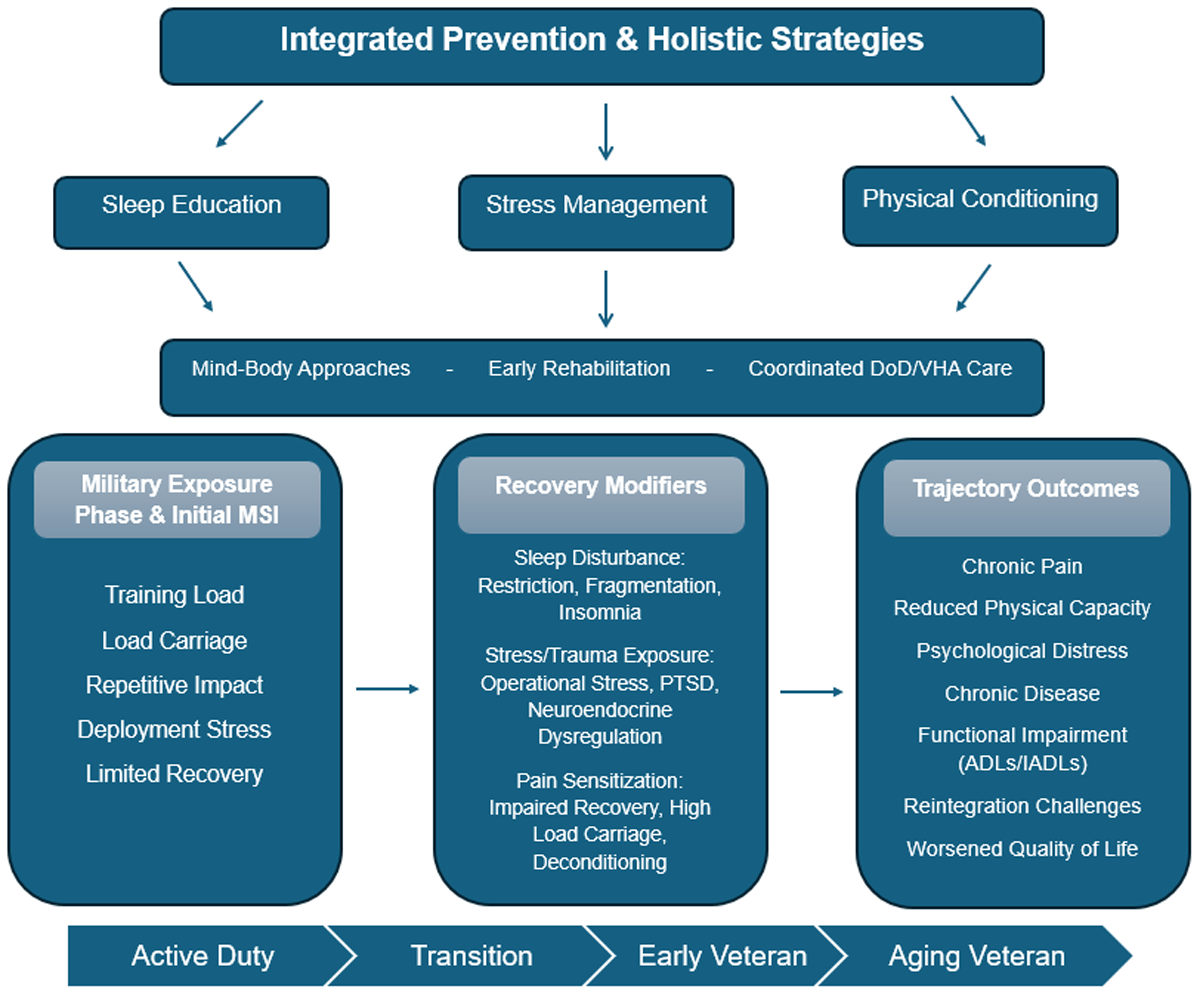
Figure 1
Lifespan Biopsychosocial Model of Musculoskeletal Injury Trajectories Across the Military-to-Veteran Continuum.