
Service members move through several critical phases of military careers, including entry into service, operational duties and deployments, and transition into civilian life following separation (McBride et al., 2022). Although personnel typically enter service with above-average physical and mental health, prolonged exposure to high training loads, load carriage, operational stress, limited recovery, and psychological demands progressively erodes resilience (Laroche et al., 2023). These cumulative exposures increase injury risk and may initiate long-term health trajectories marked by chronic pain, disease risk, functional decline, and reduced well-being after service.
Within this context, musculoskeletal injuries (MSIs) pose a substantial threat to both operational readiness and long-term veteran health. Evidence indicates that injury risk is amplified by inadequate sleep, chronic stress exposure, and insufficient injury-prevention strategies, which together delay recovery and increase vulnerability to noncombat injuries and secondary health conditions (Lisman et al., 2022). Despite this burden, military training and the Veterans Health Administration (VHA) remain largely reactive, emphasizing treatment after injury rather than preventive approaches that address recovery behaviors and modifiable risk factors.
The problem is that MSIs among service members and transitioning veterans frequently progress into chronic pain and functional decline due to inadequate integration of sleep hygiene, stress regulation, and injury prevention strategies within training environments, recovery systems, and post-service care (Laroche et al., 2023; Lisman et al., 2022). Addressing these domains proactively during service and through the transition to civilian life may reduce the persistence of injury and improve long-term functional outcomes among veterans.
Accordingly, this literature review synthesized interdisciplinary scholarship examining how sleep hygiene, stress exposure, and injury-prevention strategies influence musculoskeletal injury trajectories, the development of chronic pain, and functional health across the military-to-veteran continuum. Rather than viewing MSIs as isolated orthopedic events, this review promotes a lifespan-oriented, veteran-centered framework that considers MSIs as initial stressors within interconnected biopsychosocial systems shaping chronic pain, disability, and long-term functional participation throughout aging. Understanding how these domains interact across the military-to-veteran continuum also reveals opportunities to improve prevention strategies, healthcare delivery, and transition programs within veteran-serving systems to reduce long-term disability and enhance functional outcomes. This review addresses the core research question: How do sleep hygiene, stress exposure, and injury-prevention strategies affect trajectories of musculoskeletal injury, chronic pain development, and functional outcomes, including activities of daily living (ADLs) and instrumental activities of daily living (IADLs) across the military-to-veteran lifespan?
Methodology and Approach
This review used a structured narrative synthesis to examine interdisciplinary evidence on MSIs and recovery pathways among military and veteran populations. The synthesis was guided by the research focus outlined in the introduction, exploring how sleep hygiene, stress exposure, and injury-prevention strategies affect trajectories of MSI, chronic pain development, and long-term functional outcomes throughout the military-to-veteran lifespan. A structured narrative approach was chosen to integrate findings across multiple disciplines, including military medicine, rehabilitation science, psychology, and public health (Sukhera, 2022).
A systematic literature search was conducted across CINAHL Complete, JSTOR Collections, MEDLINE Complete, PsycInfo, and Google Scholar for peer-reviewed articles published between 2015 and 2025. Search terms included combinations of active duty, veteran, military, MSI, chronic pain, chronic disease, sleep hygiene, stress, injury prevention, post-traumatic stress disorder (PTSD), ADLs, IADLs, disability, and military transition. These terms aimed to identify research examining both the immediate and long-term health impacts of MSIs among military and veteran populations. The search initially yielded 305 records, of which 42 duplicates were removed before screening. After removing duplicates, 263 articles were screened at the title and abstract level for relevance to the review topic. Subsequently, 60 full-text articles were assessed for eligibility based on the inclusion and exclusion criteria. Following screening and eligibility assessment, 43 studies were included in the final synthesis.
Inclusion criteria encompassed peer-reviewed empirical studies, systematic reviews, and meta-analyses that examined MSI, sleep disturbance, stress exposure, injury-prevention strategies, chronic pain, chronic disease risk, or functional outcomes among active-duty service members or veterans. Studies solely on combat trauma without MSI or functional health outcomes were excluded. Articles were also excluded if they did not address recovery, health trajectories, or long-term functional implications related to MSI. The included studies were analyzed using thematic synthesis to identify patterns, overlaps, and gaps in the literature across disciplines. Findings were iteratively compared and organized into thematic domains addressing injury risk factors, recovery behaviors, chronic pain development, and long-term functional outcomes. This interpretive synthesis informed the development of a conceptual framework linking MSI exposure, behavioral and environmental factors, chronic pain and disease risk, and functional decline from military service through veterans’ lives.
Thematic Synthesis
The thematic synthesis in this review adopts a conceptually integrated, lifespan, biopsychosocial perspective, in which MSIs are seen not as isolated clinical events but as initial stressors within interconnected physiological, behavioral, and social systems that unfold across the military-to-veteran continuum. Thematic analysis identified six interconnected domains: (1) MSIs during active duty; (2) sleep disturbance as a factor in injury risk and persistent pain; (3) stress exposure and recovery dysregulation; (4) injury prevention and holistic health interventions; (5) progression from chronic pain to chronic disease; and (6) functional decline impacting ADLs and IADLs. Across these domains, several consistent patterns stand out. First, strong agreement across disciplines shows that MSIs in military populations rarely happen as isolated orthopedic events; instead, they develop within interconnected systems involving sleep issues, psychological stress, training load, and recovery behaviors. Second, the literature consistently found bidirectional relationships among sleep disturbance, pain, and stress physiology, indicating that these domains reinforce one another and influence both injury risk and recovery pathways. Third, although substantial evidence supports multidomain prevention approaches targeting sleep, stress regulation, and rehabilitation behaviors, relatively few studies examine integrated interventions covering the entire military-to-veteran continuum. Consequently, gaps remain in understanding how early prevention and recovery efforts during active service impact long-term outcomes like chronic pain, chronic disease development, and functional independence for veterans. Table 1 summarizes key commonalities and research gaps across these themes.
Table 1
Thematic Synthesis of Sleep, Stress, and Musculoskeletal Injury Trajectories Across the Military-to-Veteran Lifespan.
| THEMATIC DOMAIN | KEY FINDINGS | LIMITATIONS | RESEARCH GAPS | VETERAN LIFESPAN IMPLICATIONS |
|---|---|---|---|---|
| 1. MSI during active duty | Noncombat MSIs are highly prevalent; training load and load carriage primary drivers; lower extremity injuries common. | Variable injury definitions; underreporting. | Limited service-to-veteran longitudinal tracking; few functional measures. | Early injuries may drive chronic pain, disability, and reduced civilian occupational sustainability. |
| 2. Sleep disturbance & injury risk | Sleep loss increases injury risk; bidirectional sleep-pain relationship; impaired recovery and cognition. | Few longitudinal interventions; reliance on self-report. | Limited veteran-specific studies on sleep intervention outcomes. | Early sleep optimization may reduce chronic pain transition and later functional decline. |
| 3. Stress & recovery dysregulation | Stress and PTSD linked to injury risk, pain sensitivity, and impaired recovery. | Limited biomarker integration; mostly cross-sectional designs. | Little research on stress biomarkers across transition periods. | Chronic stress may accelerate aging and worsen musculoskeletal decline. |
| 4. Integrated prevention & holistic interventions | Multidomain programs outperform single-focus strategies; mind-body approaches improve resilience. | Inconsistent implementation; limited scalability evidence. | Few evaluations within the VHA or community veteran systems. | Coordinated DoD/VHA prevention may reduce long-term disability and costs. |
| 5. Chronic pain to chronic disease | Chronic pain is linked with depression, cardiovascular disease, sleep disorders, and reduced quality of life. | Causality unclear in many studies; limited trajectory models. | Few early-intervention studies have targeted MSIs as upstream risks. | MSIs may initiate broader chronic disease trajectories in aging veterans. |
| 6. Functional decline (ADLs/IADLs) | Pain and sleep disturbance associated with ADL/IADL impairment; impacts employment and identity. | Functional outcomes are rarely measured during service. | Limited longitudinal studies connecting injury to participation outcomes. | Functional decline affects reintegration, social participation, and quality of life. |
[i] Note. MSI = musculoskeletal injury; ADL = activity of daily living; IADL = instrumental activity of daily living; DoD = Department of Defense; VHA = Veterans Health Administration; PTSD = posttraumatic stress disorder.
Prominent Theme 1: MSIs During Active Duty and Their Lifespan Consequences
MSIs in Military Personnel
MSIs are common during military service and often persist after discharge, contributing to chronic pain, chronic disease, functional limitations, and reduced civilian physical activity (Hilgeman et al., 2022). As a result, many veterans face long-term health challenges linked to injuries sustained during active-duty service, including sedentary behavior, worsening cardiovascular risk, and diminished quality of life. Understanding the active-duty context of MSIs is therefore essential for addressing their lasting consequences throughout the veteran lifespan.
Military readiness depends on service members’ ability to perform physically demanding tasks across diverse environments while remaining healthy and injury-free (Lovalekar et al., 2021). However, repetitive high-volume training, load carriage, environmental stress, limited recovery, sleep deprivation, and psychological strain collectively increase the risk of injury (Dos Santos Bunn et al., 2021). MSIs account for approximately 80–85% of all military injuries, and nearly half of service members report sustaining at least one injury annually, with most occurring during routine training rather than combat operations (Hughes et al., 2019; Lisman et al., 2022; Lovalekar et al., 2021; Smith et al., 2023). Training intensity and inadequate recovery demonstrate a clear dose-response relationship with injury incidence, particularly for overuse injuries affecting the lower extremities and back.
The burden of MSIs extends beyond physical health, imposing substantial operational and economic costs. MSIs account for nearly 50 million restricted-duty days annually, resulting in lost training time, reduced deployment readiness, and increased healthcare utilization and cost (Lisman et al., 2022; Smith et al., 2023). In 2019 alone, medical providers authorized more than 7 million limited-duty days for approximately 122,000 service members over five months, with nearly 60% attributed to MSIs (Lovalekar et al., 2021). These injuries generate high financial costs through direct medical expenditures, salary costs for medically non-deployable personnel, and retraining replacements (Dijksma et al., 2020; Dos Santos Bunn et al., 2021).
Injury-related medical discharges further compound these impacts. Service members injured early in their careers are approximately three times more likely to separate from service prematurely, contributing to workforce attrition and increased recruiting and training costs (Hughes et al., 2019). Economic estimates suggest that MSIs cost the Marine Corps alone more than $100 million annually, while medically non-deployable personnel across the Department of Defense (DoD) account for billions in salary expenditures each year (Dijksma et al., 2020; Dos Santos Bunn et al., 2021). These outcomes disrupt both immediate readiness and long-term occupational stability.
Importantly, the consequences of MSIs extend far beyond military service. Persistent pain, decreased physical capacity, and altered movement patterns often continue after separation, leading to disability, lower physical activity, and reduced quality of life among veterans (Hilgeman et al., 2022). Overall, these findings position MSIs not only as readiness concerns but also as triggers within broader lifespan health trajectories, highlighting the need for comprehensive prevention and recovery strategies that span from the military to veteran life. Across the reviewed literature, there is consistent agreement that MSIs occur more frequently during routine training rather than combat operations and impose significant operational and economic burdens. However, studies vary in how much they emphasize demographic versus behavioral factors as primary risk drivers, reflecting differences in study design and the military populations studied. Notably, few studies examine how early injuries influence long-term health outcomes among veterans beyond active-duty service (Garcia-Davis et al., 2025). Understanding these downstream effects requires examining the interacting factors that contribute to MSIs during active service, as these early exposures shape recovery trajectories throughout a veteran’s lifespan.
Factors Contributing to MSIs
Military training is designed to enhance physical readiness, resilience, and operational performance. However, when training demands exceed recovery capacity, service members experience elevated stress, poor sleep, fatigue, and increased risk of injury (Chennaoui et al., 2021; Dijksma et al., 2020; Güler et al., 2023). Demographic characteristics, environmental exposures, and behavioral factors interact to shape injury vulnerability during active-duty service, establishing patterns that frequently persist into veteran life (Lisman et al., 2022; Lovalekar et al., 2021; Nye et al., 2023; Wardle et al., 2017).
Non-Modifiable Risk Factors. Age, sex, and environmental conditions significantly influence MSI risk. Service members aged 30–34 with 10–15 years of service have a 22% higher risk of injury than their younger counterparts, reflecting declines in aerobic capacity and musculoskeletal resilience (Dos Santos Bunn et al., 2021). Older men who sleep fewer than four hours per night are 56% more likely to sustain an injury, illustrating the interaction between biological aging and recovery behaviors (Grier et al., 2020). Women experience approximately 2.4 times greater MSI risk, particularly early in service, partly due to biomechanical differences and lower bone mineral density, which increase susceptibility to stress fractures (Dos Santos Bunn et al., 2021; Wardle et al., 2017). Environmental conditions, including extreme temperatures, altitude, noise, and confined sleeping environments, further elevate injury risk by increasing physiological strain and disrupting recovery (Harrison et al., 2022; Nye et al., 2023; Schmied et al., 2021).
Modifiable Risk Factors. Sleep disruption, chronic stress, inadequate recovery practices, and suboptimal training strategies are key modifiable contributors to MSI risk (Dos Santos Bunn et al., 2021). Insufficient sleep and high stress impair cognitive performance, delay tissue repair, and increase vulnerability to overuse injuries (Chennaoui et al., 2021; Good et al., 2020). At the same time, structured recovery practices, physical conditioning, and injury-prevention education reduce risk and improve resilience (Lisman et al., 2022; Nye et al., 2023). Addressing these factors through integrated interventions represents a critical opportunity to reduce injury burden during service and mitigate long-term health consequences after separation. Collectively, these findings suggest that the high burden of MSI during active service cannot be fully understood through biomechanical exposure alone; rather, recovery-related factors, particularly sleep, emerge as critical mechanisms influencing injury risk, healing, and long-term veteran health trajectories.
Prominent Theme 2: Sleep Disturbance as a Driver of Injury Risk and Pain Persistence
Sleep is a foundational biological process that supports musculoskeletal recovery, neuromuscular coordination, cognitive performance, emotional regulation, and immune function (Chennaoui et al., 2021; Ebrahimi et al., 2023). Insufficient or fragmented sleep impairs tissue repair, increases inflammation, reduces pain tolerance, and compromises physical and cognitive resilience. In military contexts, chronic sleep restriction is both an operational readiness issue and a contributor to long-term musculoskeletal and mental health outcomes that may persist into veteran life (Teyhen et al., 2021).
Sleep deficiency is pervasive across military environments. Over 60% of service members report sleeping fewer than six hours per night, and up to 42% average fewer than five hours, particularly during deployment, shift work, and high-tempo training (Good et al., 2020; Grier et al., 2020; Harris et al., 2015). Navy Special Warfare Operators and deployed naval personnel typically average only 5–6 hours of sleep per night, despite requiring at least seven hours for optimal performance and recovery (Harris et al., 2015; Harrison et al., 2017). Operational demands, environmental constraints, and cultural norms emphasizing endurance over recovery reinforce chronic sleep deprivation even outside deployment settings (Harrison et al., 2017; Teyhen et al., 2021).
Sleep loss is strongly associated with an increased risk of MSI. Grier et al. (2020) demonstrated a dose-response relationship between sleep duration and injury incidence among over 7,576 Army Special Operations soldiers, with injury risk rising significantly as sleep duration decreased. Similarly, Ruan et al. (2021) found that recruits with poor sleep quality during basic training were 2.3 times more likely to sustain an MSI, and Lisman et al. (2022) confirmed elevated injury rates among chronically sleep-restricted service members. These findings are supported by laboratory and field evidence showing that sleep deprivation impairs reaction time, balance, motor coordination, attention, and decision-making, thereby increasing vulnerability to injury during physically demanding tasks (Tait et al., 2024).
Sleep disruption interacts bidirectionally with pain and injury recovery. Ritland et al. (2023) reported that higher pain intensity was associated with poorer sleep quality and increased daytime sleepiness, perpetuating a cycle of delayed healing, reinjury, and chronic pain. Service members with a history of MSIs consistently report poorer sleep, regardless of age or length of service, suggesting that sleep disturbance becomes embedded in post-injury trajectories and continues into veteran life (Grier et al., 2020; Güler et al., 2023). These patterns co-occur with reduced physical activity, cardiovascular risk, and psychological distress among veterans (Good et al., 2020; Harrison et al., 2017).
Operational and environmental factors further worsen sleep disruption. Shift work, night operations, jet lag, combat exposure, noise, confined sleeping environments, and irregular schedules reduce sleep efficiency and increase sleep latency, while lifestyle factors such as caffeine consumption, substance use (nicotine and alcohol), poor nutrition, and chronic stress intensify sleep disruption (Harrison et al., 2017; Knapik et al., 2023; Schmied et al., 2021).
Overall, the literature shows strong agreement supporting a dose-response relationship between sleep restriction and injury risk, as well as a bidirectional sleep-pain cycle that affects long-term recovery. Although most studies find consistent links between sleep restriction and injury occurrence, fewer directly examine causal mechanisms or test sleep-focused interventions in operational military settings. Additionally, few longitudinal studies follow service members into veteran status to assess whether early sleep interventions significantly impact long-term pain or functional outcomes. Importantly, sleep loss both reflects and worsens psychological stress within military environments. Understanding its role in injury persistence involves examining how stress exposure and disruptions to recovery interact to influence physiological resilience and long-term health.
Prominent Theme 3: Stress Exposure and Recovery Dysregulation
Military training and operational environments expose service members to sustained psychological and physiological stress from high workloads, performance pressure, sleep deprivation, caloric restriction, environmental extremes, and exposure to trauma (Güleret et al., 2023). Acute stress responses may temporarily enhance vigilance and performance; however, chronic stress disrupts neuroendocrine regulation, elevates cortisol, impairs immune and musculoskeletal recovery, and degrades cognitive function (Bulmer et al., 2022; Tait et al., 2024). When combined with physical loading and inadequate rest, prolonged stress increases fatigue, compromises neuromuscular control, and substantially elevates the risk of both acute and overuse MSIs (Bulmer et al., 2022; Tait et al., 2024).
Stress is consistently identified as a key predictor of sleep disruption and recovery impairment in military populations. Schmied et al. (2021) found that stress was the most frequently reported barrier to sleep among service members, who often relied on caffeine rather than relaxation strategies to manage fatigue. This maladaptive coping pattern reinforced cycles of poor sleep, reduced recovery, and heightened injury vulnerability. Similarly, Güler et al. (2023) reported that 59% of military academy students experienced poor sleep, and elevated stress was associated with worse physical performance, higher fatigue, impaired academic functioning, and increased engagement in unhealthy behaviors such as alcohol and tobacco use. Knapik et al. (2023) and Müller-Schilling et al. (2019) further demonstrated that stress, particularly when combined with low aerobic fitness and insufficient recovery, significantly predicted MSI incidence.
Stress-related injury risk is especially pronounced during initial training and high-tempo operational phases. Bulmer et al. (2022) observed substantial fluctuations in stress during basic training, particularly during field exercises, with sleep duration consistently below seven hours per night. These periods were associated with impaired recovery, reduced resilience, and increased injury rates. Good et al. (2020) similarly found that chronic sleep deprivation during deployment heightened stress, worsened mood, and degraded physical performance, further increasing injury susceptibility. These findings suggest that stress and sleep interact synergistically to create a physiological environment that undermines tissue repair, neuromuscular coordination, and injury resistance.
The long-term consequences of unmanaged stress extend beyond active-duty injury risk and shape veteran health outcomes. Chronic stress is strongly associated with persistent pain, PTSD, anxiety, depression, substance use, and cardiovascular disease, all of which independently impair physical function and recovery from MSI (Good et al., 2020; Harrison et al., 2017). Veterans with co-occurring pain and psychological distress demonstrate lower physical activity, greater disability, and poorer quality of life compared to those without these comorbidities. These findings position stress management as a central lever for improving both injury prevention during service and long-term functional health after separation.
Evidence supports structured stress-management interventions, such as mindfulness training, cognitive behavioral therapy (CBT), breathing exercises, yoga, and relaxation-based techniques, for enhancing sleep quality, pain perception, emotional regulation, and physical performance (Knapik et al., 2023; Ritland et al., 2023; Smith et al., 2023). Smith et al. (2023) reported that service members engaging in mindfulness and yoga interventions experienced fewer MSIs and showed improvements in flexibility, balance, mood, and sleep compared to controls. These findings highlight the importance of incorporating stress management into training, rehabilitation, and post-service care to bolster resilience, lower injury risks, and promote sustained health throughout the military-to-veteran transition. However, few studies investigate long-term post-service outcomes or the integration of stress-management programs within the VHA (Groessl et al., 2023). These results indicate that lowering injury risk requires moving beyond isolated risk-factor models to comprehensive prevention strategies that target stress regulation, recovery behaviors, and physical conditioning across the military-to-veteran continuum (Knapik et al., 2023; Ritland et al., 2023; Smith et al., 2023). Groessl et al. (2023), Knapik et al. (2023), and Smith et al. (2023) collectively demonstrate that stress interacts synergistically with sleep disruption and physical load to increase injury risk and slow recovery. Nonetheless, much of the current research relies on cross-sectional or short-term training groups, which limits understanding of how chronic stress exposures during service influence long-term paths to veteran health (Groessl et al., 2023; Smith et al., 2023). Longitudinal studies examining stress regulation and recovery across the military-to-veteran transition are scarce.
Prominent Theme 4: Injury Prevention and Holistic Health Interventions
Sleep disturbances, chronic pain, and psychological stress frequently co-occur in military populations and remain highly prevalent among veterans, reinforcing one another across the service-to-civilian transition (Ee et al., 2016). Emerging evidence suggests that effective MSI prevention and recovery must begin during active service and extend into post-service care through integrated approaches that combine physical rehabilitation, sleep optimization, stress regulation, and behavioral health strategies (Teyhen et al., 2021). While pharmacological treatment remains common, non-pharmacological interventions increasingly demonstrate sustainable benefits with fewer long-term risks, supporting recovery trajectories across the military-to-veteran continuum (Ebrahimi et al., 2023; Harrison et al., 2022).
Leadership and organizational culture play a critical role in sharing injury trajectories and help-seeking behaviors. Military norms emphasizing endurance and mission priority may delay treatment and reinforce maladaptive coping strategies that complicate recovery after separation (Nye et al., 2023). Conversely, leaders who promote rest, recovery, and early care-seeking help normalize protective behaviors that support long-term health outcomes for veterans (Nye et al., 2023; Teyhen et al., 2021).
Physical Conditioning and Rehabilitation
Physical conditioning remains central to MSI prevention; however, high training demands also represent a primary injury risk. Evidence indicates that prior injury history strongly predicts future MSIs, underscoring the importance of comprehensive rehabilitation, injury surveillance, and progressive return-to-duty protocols (Grier et al., 2020; Teyhen et al., 2020). Optimized training progression, structured warm-up and recovery practices, and individualized programming, including chronotype-informed scheduling, have been associated with reduced injury incidence and improved resilience (McGinnis et al., 2022; Wardle et al., 2017). Collectively, these findings support prevention models that balance performance demands with recovery capacity.
Sleep Education
Sleep education has emerged as a core component of injury prevention and long-term health promotion. Operational demands frequently disrupt sleep patterns during service, contributing to fatigue, heightened pain sensitivity, and delayed recovery that often persist into veteran life (Ee et al., 2016; Reilly et al., 2021). Despite growing evidence supporting sleep hygiene education, the military has yet to fully recognize the need for comprehensive sleep management programs fully. Abdelwadoud et al. (2022) found that sleep education remains underprioritized, contributing to continued reliance on pharmacological sleep aids such as zolpidem and eszopiclone, which may impair cognitive performance, reaction time, and physical readiness while posing risks of long-term dependence (Good et al., 2020). These treatment patterns frequently extend into veteran care settings, where sleep medications remain common despite limited long-term effectiveness and potential side effects (Reilly et al., 2021).
In contrast, non-pharmacological interventions, including structured sleep hygiene education, circadian rhythm training, and cognitive-behavioral strategies, demonstrate sustainable improvements in sleep quality, fatigue, and recovery capacity (Schmied et al., 2021). Technology-enabled tools such as mobile applications and telehealth platforms further expand access and support continuity of care during the military-to-civilian transition, reinforcing sleep health as a modifiable target for long-term functional resilience.
Mind-Body Interventions
MSI recovery is deeply influenced by psychological and emotional processes, with stress exposure, trauma history, and sleep disruption interacting to amplify pain sensitivity and delay healing. These interconnected pathways often begin during military service and persist into veteran life, contributing to chronic pain syndromes, functional limitations, and reduced quality of life (Teyhen et al., 2021). Mind-body interventions address these overlapping domains by targeting stress regulation, emotional resilience, and physiological recovery, making them particularly valuable for service members and veterans navigating complex injury profiles.
Research supports mindfulness-based interventions, relaxation training, and cognitive-behavioral strategies to improve sleep quality, reduce pain catastrophizing, and enhance coping capacity (Good et al., 2020; Schmied et al., 2021). These interventions are especially relevant for veterans with comorbid PTSD, anxiety, or depression, where psychological distress intensifies pain perception and limits rehabilitation engagement (Good et al., 2020; Harrison et al., 2017; Papconstantinou et al., 2021; Powell et al., 2015). By improving emotional regulation and attentional control, mind-body approaches may reduce sympathetic nervous system activation and promote the recovery processes necessary for musculoskeletal healing (Papaconstantinou et al., 2021; Teyhen et al., 2021).
Mind-body practices such as yoga, acupuncture, mindfulness-based stress reduction (MBSR), and mantram repetition have shown consistent benefits for chronic pain, sleep disturbance, and psychological symptoms across military and veteran populations (Groessl et al., 2023). These interventions enhance autonomic regulation, increase interoceptive awareness, and improve movement confidence, helping individuals engage in rehabilitation and physical activity despite ongoing pain. Psychological flexibility training has emerged as an important mechanism for reducing pain interference by encouraging engagement in valued activities rather than avoidance behaviors (Veehof et al., 2016). Such approaches support long-term musculoskeletal health by promoting sustained movement participation and reducing fear-based inactivity (Veehof et al., 2016).
Multidisciplinary models integrating medical, psychological, and educational strategies further strengthen outcomes by addressing the biopsychosocial contributors to MSIs (Güler et al., 2023). When introduced during active-duty service and reinforced during veteran care, these approaches help individuals develop durable self-regulation skills that reduce pain flare-ups, lower reliance on medication, and promote long-term functional independence (Garcia-Davis et al., 2025; Minooeefar et al., 2021; Papaconstantinou et al., 2021; Reilly et al., 2021; Veehof et al., 2016). This continuity is particularly important during the military-to-civilian transition, when structured support systems often diminish.
Alternative medicine approaches, particularly yoga and acupuncture, have gained increased attention as non-pharmacological strategies for managing chronic pain and reducing MSI burden (Abanes et al., 2022; Groessl et al., 2023; Pey-Shan et al., 2022). As concerns regarding opioid use and medication-related side effects persist in veteran populations, these interventions offer low-risk options that emphasize self-management and long-term resilience (Teyhen et al., 2021). Yoga, which combines movement, breathwork, and meditation, has demonstrated reductions in chronic pain, fatigue, sleep disturbance, and PTSD symptoms, while also improving mood and emotional regulation (Groessl et al., 2023). Large-scale military training studies suggest that integrating mindfulness and yoga into training environments improves stress regulation and reduces pain frequency, supporting both prevention and rehabilitation pathways (Smith et al., 2023).
Acupuncture similarly demonstrates benefits for pain reduction, improved sleep, and stress modulation, particularly during structured treatment periods (Abanes et al., 2022; Papaconstantinou et al., 2021). By influencing both somatic pain pathways and autonomic stress responses, acupuncture may complement traditional rehabilitation approaches, particularly within veteran healthcare settings where integrative medicine services are expanding. Although delivery logistics may limit use during deployment, these therapies become increasingly relevant after separation, when veterans are navigating chronic pain, identity transition, and long-term self-management of health (Abanes et al., 2022; Papaconstantinou et al., 2021).
Collectively, mind-body and integrative interventions offer tools that extend beyond symptom reduction, helping veterans rebuild confidence in movement, improve emotional regulation, and re-engage with valued life roles. Their integration across DoD and VHA may therefore be a critical component of long-term MSI recovery and functional independence across the lifespan. Building on these integrative approaches, structured psychotherapeutic interventions provide a targeted behavioral framework for addressing the cognitive and emotional processes that sustain pain, sleep disturbance, and functional avoidance following MSI.
Psychotherapy
Psychotherapeutic approaches, particularly Cognitive Behavioral Therapy for Chronic Pain (CBT-CP) and Cognitive Behavioral Therapy for Insomnia (CBT-I), have emerged as key non-pharmacological strategies for addressing behavioral and psychological contributors to MSI persistence and recovery (Reilly et al., 2021; Taylor et al., 2020). MSIs are frequently accompanied by chronic pain, sleep disturbance, fear of movement, and avoidance behaviors, which interfere with rehabilitation engagement and increase the risk of long-term disability (Veehof et al., 2016). CBT-based interventions target these interconnected processes by modifying maladaptive thoughts and behaviors, improving sleep and pain coping, and supporting gradual re-engagement in physical activity.
CBT-CP focuses on reducing pain interference rather than pain intensity, using pacing strategies, cognitive restructuring, and behavioral activation. Evidence suggests that CBT-CP improves both pain outcomes and functional capacity, reinforcing the importance of psychological factors in musculoskeletal recovery (Papaconstantinou et al., 2021). By helping individuals reinterpret pain signals and reduce fear-avoidant behaviors, CBT-CP may support sustained participation in movement and rehabilitation, an outcome particularly relevant for veterans navigating chronic pain after separation from service.
CBT-I, widely recognized as the gold-standard behavioral treatment for insomnia, addresses sleep disturbance through stimulus control, sleep restriction, and cognitive restructuring (Reilly et al., 2021). Because poor sleep increases pain sensitivity and impairs tissue recovery, improving sleep with CBT-I has indirect but significant benefits for injury prevention and pain management. Studies in military populations show that CBT-I improves both subjective and objective sleep outcomes, and digital delivery platforms such as the CBT-I Coach app show promise for service members and veterans with irregular schedules or limited access to care (Ee et al., 2016; Papaconstantinou et al., 2021; Reilly et al., 2021). These improvements in sleep quality may also enhance emotional regulation, cognitive performance, and adherence to rehabilitation programs.
Evidence increasingly supports integrating CBT-CP and CBT-I as combined treatment approaches to produce greater long-term improvements in sleep, pain interference, and physical functioning than addressing either domain in isolation (Papaconstantinou et al., 2021). This integrated model aligns closely with biopsychosocial frameworks of MSI recovery, recognizing that pain and sleep disturbances reinforce one another over time (Papaconstantinou et al., 2021; Veehof et al., 2016).
Acceptance-based therapies such as Acceptance and Commitment Therapy (ACT) further extend this approach by promoting psychological flexibility and encouraging engagement in valued activities despite discomfort (Veehof et al., 2016). Rather than emphasizing symptom elimination, ACT focuses on functional engagement, which may reduce disability and support long-term adaptation among veterans living with chronic pain.
Despite strong evidence supporting these interventions, implementation remains inconsistent across the military and the VHA. Barriers include limited provider training, time constraints, and continued preference for pharmacological management in some settings. Nevertheless, behavioral interventions are often preferred by service members and veterans because they are sustainable and lack medication-related side effects (Ee et al., 2016). Expanding access to CBT-CP and CBT-I through integrated care models and digital platforms may therefore represent a critical opportunity to improve MSI recovery and long-term functional outcomes across the military-to-veteran continuum.
Collectively, these findings suggest that injury prevention and recovery interventions are most effective when delivered as integrated, multi-domain strategies that address sleep, stress regulation, psychological resilience, and physical rehabilitation simultaneously (Papaconstantinou et al., 2021; Reilly et al., 2021; Veehof et al., 2016). When implemented early and sustained across the military-to-veteran continuum, these approaches may interrupt trajectories that otherwise progress from acute injury to chronic pain and long-term functional decline. However, when these multi-domain prevention and recovery strategies are inconsistently implemented or discontinued after separation from service, unresolved injuries and persistent pain may develop into broader chronic health issues, underscoring the need to examine the transition from chronic pain to chronic disease among veterans. The literature shows growing support for multidomain, non-pharmacologic interventions that simultaneously target sleep, stress regulation, and physical rehabilitation. However, evidence regarding implementation within military training environments and sustained delivery within the VHA remains uneven. Few studies evaluate how integrated prevention models started during service influence long-term veteran functional outcomes.
Prominent Theme 5: From Chronic Pain to Chronic Disease in Veteran Populations
Quality of Life Consequences
MSIs are among the most prevalent and disabling health conditions affecting service members and veterans, with consequences that extend far beyond the period of active duty. Although initially framed as threats to operational readiness and mission effectiveness, MSIs frequently evolve into chronic pain conditions that impair physical functioning, mental health, and quality of life after military separation (Ee et al., 2016; Reilly et al., 2021). The cumulative physical demands of training, operational tempo, sleep disruption, and psychological stress create injury patterns that often persist into civilian life, contributing to long-term disability, opioid exposure, and reduced workforce participation among veterans. Sleep disturbances acquired during service, including insomnia, sleep apnea, and circadian disruption, often persist post-service, exacerbating pain sensitivity, emotional dysregulation, and recovery limitations (Reilly et al., 2021). Similarly, unmanaged stress and trauma exposure increase the likelihood of chronic pain syndromes and functional decline across the veteran lifespan.
Researchers have long recognized the connection between MSIs, chronic pain, chronic disease, and diminished quality of life across military and veteran populations (Ritland et al., 2023). Chronic pain, defined as pain persisting longer than three to six months, remains one of the primary reasons service members seek healthcare and frequently persists following transition to civilian life (Powell et al., 2015; Teyhen et al., 2021). Nearly 40% of service members returning from deployment develop chronic pain, most commonly due to musculoskeletal conditions, which are also the primary cause of medical evacuations, lost duty days, and disability during active service. These service-related injuries frequently continue into veteran life, contributing to reduced mobility, diminished work capacity, and progressive functional decline (Ord et al., 2021).
Chronic pain substantially disrupts emotional, physical, and social well-being, increasing healthcare utilization and psychological distress while diminishing quality of life (Papaconstantinou et al., 2021; Veehof et al., 2016). Importantly, this burden extends beyond symptom severity; pain-related sleep disruption and chronic stress increase vulnerability to reinjury and accelerate broader physiological decline. As a result, veterans may experience impairment in ADLs and IADLs, limiting independence and participation in civilian life. These findings underscore the importance of addressing chronic pain as a long-term health trajectory rather than an isolated clinical outcome.
Chronic Pain
Chronic pain affects approximately 33–47% of veterans, with low back and neck pain representing the leading sources of disability and social and occupational impairment (Ord et al., 2021; Papaconstantinou et al., 2021). Evidence across military populations demonstrates a strong bidirectional relationship between pain and sleep disruption, in which poor sleep amplifies pain sensitivity while persistent pain further degrades sleep quality (Teyhen et al., 2021). This self-reinforcing cycle often originates during active service and persists after separation, shaping long-term trajectories of veteran health.
Sleep disturbances are highly prevalent among individuals with chronic pain, with nearly 59% reporting clinically significant sleep difficulties (Papaconstantinou et al., 2021). Service members who present with sleep disorders during initial injury episodes are significantly more likely to develop chronic pain conditions, including chronic low back pain, suggesting that early sleep disruption may influence long-term outcomes (Lisman et al., 2022). Veterans caught in this pain-sleep cycle experience substantially higher healthcare utilization, with visits and costs estimated to be up to 80% higher than among those without sleep disturbances, underscoring the downstream burden for both individuals and the VHA (Teyhen et al., 2021).
Comorbid mental health conditions, including anxiety, depression, and PTSD, further intensify pain severity and sleep disturbances, reinforcing functional decline and poorer reintegration outcomes (Papaconstantinou et al., 2021; Powell et al., 2015). Although opioid medications are frequently used for pain management, evidence suggests they may worsen sleep architecture and perpetuate pain cycles rather than resolve them (Teyhen et al., 2021). Collectively, these findings position chronic pain as a central mechanism linking service-related injury to long-term disability, physiological dysregulation, and disease risk among veterans.
Chronic Disease
The long-term consequences of MSIs extend beyond pain to broader chronic disease burden. Chronic diseases, including cardiovascular disease, diabetes, cancer, and chronic respiratory conditions, account for more than half of the global disease burden and nearly three-quarters of all deaths worldwide (Minooeefar et al., 2021). Veterans experience disproportionately higher rates of these conditions compared to civilian populations, partly due to the cumulative effects of service-related injury, persistent pain, disrupted sleep, and chronic stress.
Empirical evidence highlights the intersection of MSI and chronic disease in veteran populations. Among 1,785 veterans with lower-limb MSIs, nearly one-third (32%) reported hypertension, underscoring the strong overlap among musculoskeletal dysfunction, cardiovascular risk, and long-term disease burden (Minooeefar et al., 2021). Chronic pain contributes to inactivity, inflammatory activation, and autonomic imbalance, while sleep disruption further amplifies metabolic dysregulation and cardiovascular risk (Lisman et al., 2022; Ritland et al., 2023).
Sleep deprivation is a key mechanistic pathway linking injury to chronic disease progression. In a cohort of 146,365 service members, sleeping fewer than seven hours nightly was associated with a significantly higher prevalence of musculoskeletal disorders, cardiovascular disease, metabolic dysfunction, mental health conditions, and nervous system disorders (Knapik et al., 2023; Teyhen et al., 2021). Individuals sleeping fewer than four hours were more than 2.5 times as likely to have diagnoses including depression, anxiety, PTSD, insomnia, sleep apnea, and cardiometabolic disorders. Sleep duration also declines naturally with age due to changes in circadian regulation and sleep architecture, further increasing vulnerability to chronic disease across both active-duty and veteran populations (Knapik et al., 2023).
Over time, the convergence of chronic pain, sleep disruption, and stress contributes to physiological wear, reduced physical capacity, and diminished health-related quality of life among veterans (Ord et al., 2021; Ritland et al., 2023). Evidence across the reviewed literature suggests that chronic pain serves as a transitional mechanism through which service-related MSI evolves into broader chronic disease progression and functional decline (Minooeefar et al., 2021; Lisman et al., 2022; Ord et al., 2021; Ritland et al., 2023; Teyhen et al., 2021). Rather than representing an isolated outcome, chronic pain operates within interconnected systems of sleep disturbance, stress dysregulation, and behavioral adaptation that shape veteran health trajectories across the lifespan. However, significant gaps remain, particularly in longitudinal research following service members into veteran life to clarify causal pathways and determine whether early integrated interventions alter long-term disease progression and functional outcomes. Ultimately, these cumulative effects become most visible through declines in functional independence, making ADLs, IADLs, and civilian participation critical outcomes for understanding long-term trajectories of veteran health.
Prominent Theme 6: Functional Decline and Impact on ADLs and IADLs
Functional limitations in ADLs and IADLs are critical downstream consequences of service-related MSIs, chronic pain, sleep disturbance, and chronic disease in veteran populations. In a large cross-sectional study of 1,520 veterans, McBride et al. (2022) reported significantly greater impairments in mobility, self-care, ADLs, IADLs, and pain/discomfort than in the general population. Sleep quality emerged as a central determinant of functional health, consistent with broader evidence linking poor sleep to PTSD symptoms, reduced physical functioning, and diminished quality of life. These findings suggest that ADL and IADL impairments may serve as sentinel indicators of declining veteran health and functional independence across the lifespan.
Sleep disturbances further exacerbate functional decline. Song et al. (2015) found that shorter sleep duration, lower sleep efficiency, frequent nocturnal awakenings, and longer wake time after sleep onset were associated with poorer ADL and IADL performance in older veterans. These impairments limit self-care and independent living capacity, contributing to greater healthcare utilization, increased caregiver burden, and reduced community participation. Interventions targeting sleep hygiene, psychological flexibility, and behavioral self-management, including cognitive-behavioral approaches, have demonstrated promise for improving both functional outcomes and overall well-being among veterans (McBride et al., 2022).
Veterans may also experience accelerated aging relative to non-veteran populations, necessitating earlier and more proactive care planning across the VHA (Garcia-Davis et al., 2025). Over one-third of veterans report difficulty with core ADLs, such as bathing, dressing, transferring, and toileting, alongside challenges with IADLs, including shopping, cooking, cleaning, and medication management (Garcia-Davis et al., 2025). These functional limitations frequently co-occur with chronic pain, sleep disruption, cardiometabolic disease, and psychological distress, highlighting the cumulative impact of military service exposures on long-term independence, participation, and quality of life (Garcia-Davis et al., 2025).
Across veteran-focused studies, impairments in ADLs and IADLs consistently emerge as downstream markers of cumulative injury burden and chronic health conditions. However, functional outcomes are rarely incorporated into injury-prevention or recovery research during active service, representing a significant gap in lifespan-oriented veteran health scholarship. Early identification and multi-domain intervention targeting sleep, pain, stress regulation, and mobility may therefore be essential for preserving independence and reducing long-term disability among veterans. Collectively, these findings suggest that functional decline is the most visible downstream expression of cumulative injury, sleep disruption, stress exposure, and chronic disease, reinforcing the need for coordinated prevention and care strategies that span the DoD and VHA. Taken together, the findings indicate that reframing MSIs as lifespan health events, rather than episodic injuries, offers a more comprehensive understanding of veteran health trajectories and provides a foundation for integrated prevention, treatment, and policy strategies (Figure 1).
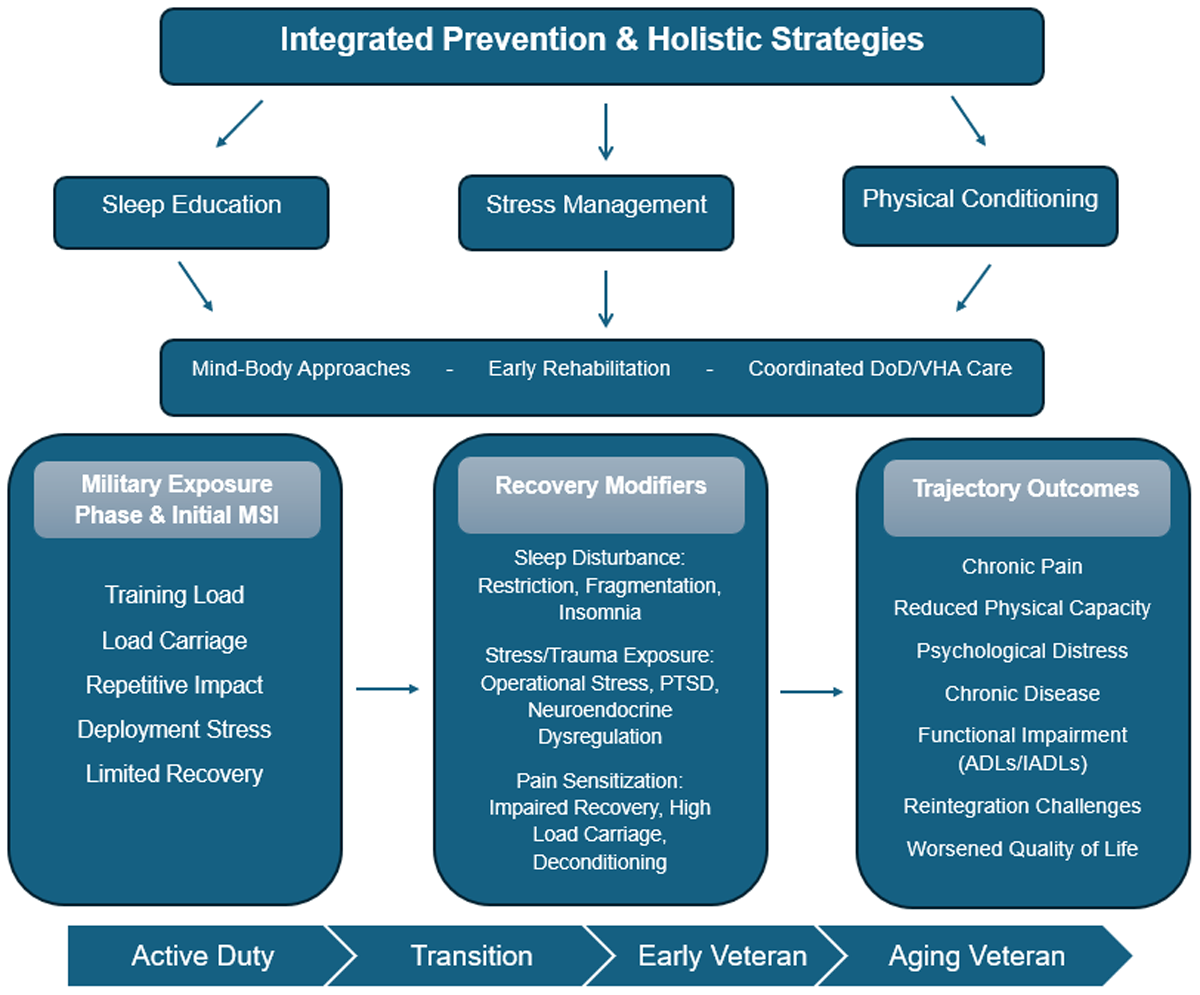
Figure 1
Lifespan Biopsychosocial Model of Musculoskeletal Injury Trajectories Across the Military-to-Veteran Continuum.
Discussion and Implications
Synthesizing findings across domains, this review advances a lifespan-oriented biopsychosocial framework in which MSIs function not merely as isolated orthopedic events but as initiating stressors within interconnected sleep, stress, and pain systems that shape chronic pain, chronic disease progression, and functional participation across the military-to-veteran continuum (Figure 1). The thematic synthesis (Table 1) demonstrates strong convergence in the literature on bidirectional relationships among sleep disturbance, chronic stress exposure, and pain sensitization, while also revealing critical gaps in longitudinal and veteran-specific research. Collectively, these findings reframe MSIs as both readiness concerns and lifelong veteran health issues. Taken together, prominent themes 4–6 demonstrate how exposures occurring during active service may cascade into chronic pain, chronic disease, and functional limitations that shape veteran participation across the lifespan.
Clinically, these reframings support integrating structured sleep education, stress regulation training, and multidomain injury-prevention programming into military training environments and VHA care models. Rather than treating MSIs reactively after symptom escalation, early intervention targeting recovery behaviors may alter downstream trajectories toward chronic pain and functional decline. Routine incorporation of functional assessments, including ADLs and IADLs, would enable providers to capture meaningful participation outcomes that extend beyond pain scores and return-to-duty metrics.
Policy implications center on continuity of care across systems. Strengthening coordination between the DoD and VHA may reduce fragmentation during military-to-civilian transition, particularly for individuals with persistent musculoskeletal pain. Expanding access to non-pharmacologic pain management strategies, including CBT-I, CBT-CP, ACT, yoga, meditation, and acupuncture, aligns with growing evidence supporting biopsychosocial treatment models. Embedding injury-prevention and recovery education within transition programming may further equip separating service members with durable self-management skills that support long-term health.
Leadership culture also emerges as a modifiable systems-level determinant. Leaders who prioritize sleep, normalize recovery, encourage early care-seeking, and integrate injury-prevention education into training pipelines may shape not only short-term readiness but also lifelong health behaviors that persist into veteran status. Operational practices such as fatigue management systems, load monitoring, and protected recovery time represent practical strategies to reduce the cumulative injury burden while reinforcing sustainable performance models.
Despite strong convergence across domains, notable gaps remain. Few studies longitudinally track service members into veteran years to determine whether early sleep, stress, and injury prevention interventions meaningfully alter chronic pain trajectories, chronic disease risk, or functional independence during aging. Functional performance measures are rarely incorporated into active-duty injury research, limiting understanding of how early MSIs influence long-term participation and vocational sustainability. Future research should prioritize longitudinal veteran cohorts, subgroup analyses by demographic and service characteristics, and evaluations of integrated multidomain interventions that simultaneously target sleep, stress, and injury prevention. Emerging technologies, including wearable sleep monitoring, fatigue-tracking systems, and mobile behavioral health platforms, offer promising opportunities to support continuity of care across service and post-service environments.
Beyond clinical and policy implications, this review contributes theoretically to veterans’ studies by reframing MSIs as initiating events within a lifespan biopsychosocial system rather than isolated orthopedic outcomes. Positioning MSIs within interconnected domains of sleep regulation, stress physiology, and functional participation shifts the analytic lens from episodic injury treatment toward longitudinal health trajectory modeling. This conceptualization integrates readiness science, rehabilitation theory, and veteran reintegration scholarship, while encouraging veteran studies to move beyond deficit-focused narratives toward systems-level models that account for adaptation, resilience, and functional participation across aging veteran populations.
Together, these findings suggest that addressing sleep disturbance, chronic stress exposure, and injury prevention in an integrated manner may interrupt maladaptive recovery cycles that otherwise contribute to chronic pain, disease progression, and functional decline among veterans.
Conclusion
MSIs remain among the most pervasive and disabling health challenges affecting both military personnel and veterans, with consequences extending beyond operational readiness to long-term quality of life, functional independence, and healthcare utilization after service. Within a lifespan biopsychosocial framework, MSIs are not merely physical injuries but initiating events within interconnected systems of sleep disruption, stress dysregulation, and pain sensitization that may shape veteran health trajectories for decades.
Evidence synthesized in this review indicates that modifiable behavioral and environmental risk factors, including insufficient sleep, chronic stress exposure, and inadequate recovery practices, contribute substantially to injury risk and persistence. There is growing support for multidomain interventions that integrate sleep hygiene, stress regulation, and injury-prevention education to reduce the injury burden, improve recovery trajectories, and enhance resilience. Embedding these strategies during active service and sustaining them through coordinated DoD and VHA care models may reduce the prevalence of chronic pain, mitigate disease progression, and protect functional independence across aging veteran populations.
By synthesizing evidence across injury science, behavioral health, and veteran reintegration scholarship, this review advances a conceptual framework that reframes MSIs as life-course determinants of veteran health rather than isolated orthopedic events. This reframing invites a shift from reactive treatment toward proactive, systems-level prevention. Integrating behavioral health, physical conditioning, and recovery science across the military-to-veteran continuum may strengthen both force readiness and long-term veteran well-being.
Ethics and Consent
This manuscript does not involve human subjects research, human participants, or identifiable human data. Institutional Review Board (IRB) approval was therefore not required.