
Background
Transitioning out of the Australian Defence Force (ADF) into civilian life is a complex and multidimensional experience, shaped by veterans’ social, environmental, and personal circumstances. Successful transitions are supported by strong social connections and community engagement (Keeling, 2018); however, many veterans face significant challenges that disrupt these connections. Challenges, including cultural dissonance, loss of identity, and difficulty rebuilding social networks, can lead to social isolation and poor mental health outcomes (Guthrie-Gower & Wilson-Menzfeld, 2022; Shepherd et al., 2021). Crucially, these transition-related difficulties are not only detrimental to wellbeing but also contribute to housing instability and, in severe cases, homelessness.
The Royal Commission into Defence and Veteran Suicide (2024a) identified disconnection and isolation as key factors in deteriorating mental health, including suicidality. These issues often stem from the stark contrast between military and civilian life, compounded by trauma, multiple deployments, and the loss of comradeship (Smith & True, 2014; Wilson et al., 2019). Social isolation, which often persists long after discharge, has been linked to reduced wellbeing (Shankar et al., 2015) and increased life dissatisfaction (Biddle et al., 2022). The absence of ‘mateship’ in civilian life can intensify feelings of loneliness, which, if unresolved, may lead to depression, suicidality, and physical health decline (Heinrich & Gullone, 2006; Holt-Lunstad et al., 2015). Moreover, disengagement from social support networks fosters alienation and a diminished sense of belonging, both factors that significantly heighten the risk of homelessness (Guthrie-Gower & Wilson-Menzfeld, 2022). Veterans with service-acquired disabilities are particularly vulnerable in this regard, often experiencing heightened psychological distress following discharge (Bond et al., 2022; Vogt et al., 2019).
Veteran homelessness in Australia is a growing concern. Housing All Australians (HAA; 2023) reported that 5.3% of veterans experience homelessness with up from 5.2% in the Australian Government’s earlier report (Hilferty et al., 2019). Veterans are disproportionately affected compared to the general population, with one-quarter classified as chronically homeless, facing prolonged housing instability alongside mental illness, substance abuse, or physical disability (Australian Housing and Urban Research Institute, 2019).
The current landscape of housing instability has contributed to a global housing crisis driven by chronic underinvestment in housing, historically low rental vacancy rates, and limited housing supply (Freemark, 2025). These challenges are further intensified by broader economic pressures, including the cost-of-living crisis, and rapid population growth, which place additional strain on housing systems and disproportionately affect vulnerable populations such as veterans (Homelessness Australia, 2025). In high-cost urban areas, veterans with temporary shelter are at high risk of homelessness due to unaffordable housing and insecure living arrangements (Veteran Housing Australia [VHA], 2025). These pressures may lead veterans to reside in inadequate or unstable conditions, such as sleeping in vehicles or couch surfing with friends or family, often without certainty regarding the duration or stability of their stay in order to avoid homelessness (Veterans 360 Australia, 2024).
Several targeted programs exist in Australia and internationally to address and support veteran housing needs. Australian government-led initiatives and community-based collaborations offer funding and support to help at-risk veterans maintain stable housing and access essential services (Australian Government, 2025). Complementary efforts by not-for-profit organisations, such as Veteran Housing Australia in regional Victoria (VHA, 2025) and the Andrew Russell Veteran Living program by RSL Care (Returned and Services League Care) in South Australia (RSL Care, 2022), provide tailored housing solutions and support. In the United States (U.S.), the collaborative supportive housing program between the Department of Housing and Urban Development (HUD) and the Department of Veterans Affairs (VA)—known as HUD-VASH—provides rental vouchers for private housing to assist veterans in securing housing accommodations and supportive services (U.S. Department of Veterans Affairs [VA], 2024). Addressing veteran homelessness requires a comprehensive and integrated approach, with wraparound services that combine housing assistance, mental health care, substance abuse treatment, and employment support to promote long-term stability and successful reintegration (U.S. VA, 2017).
Despite the challenges in transitioning into civilian life, many veterans transition successfully, demonstrating resilience and adaptability as they navigate post-service challenges. This positive transition is well-documented in countries such as Australia, the United Kingdom (UK), and the U.S. (Kerr et al., 2023; MITRE Corporation, 2023; Slapakova & Suman-Chauhan, 2025). Protective factors such as stable employment, strong social networks, access to education and training, and veteran-specific supports contribute to positive outcomes (Soldier on Australia, 2025). Military service cultivates transferable skills such as discipline, leadership, and strategic thinking that support reintegration and personal growth in civilian contexts (University of New South Wales, 2025). Thus, recognizing the diversity of veteran experiences is essential to avoid framing their transitions solely through a deficit lens and to promote more strengths-based approaches to wellbeing and social inclusion.
This scoping review aimed to explore the multifaceted pathways to homelessness among veterans and examine housing solutions across a broad spectrum of evidence. Given the complexity of veteran homelessness, particularly its intersection with mental health and transition challenges, as highlighted in the Final Report of the Royal Commission into Defence and Veteran Suicide (2024a), a scoping review was chosen to comprehensively synthesise existing research. This approach enabled the integration of both measurable outcomes and lived experiences, providing a holistic understanding of the structural, psychological, and social factors that contribute to housing instability.
Methods
This scoping review was conducted in accordance with the Joanna Briggs Institute (JBI) scoping review framework (Peters et al., 2017). This scoping review encompassed a range of study designs, including experimental, observational, descriptive, and qualitative studies, as well as systematic reviews and opinion papers. Ethics approval was not required since the review only examined publicly available literature without involving human participants or personal data. An initial database search conducted in October 2024 revealed that no existing scoping or systematic reviews addressed this overarching topic, although several narrower reviews on specific aspects were included.
Search Strategy
The search period for this review was from January 2014 to October 2024. The scoping of relevant sources of evidence involved five steps, in which the first three steps occurred concurrently:
Searching for existing reviews of the literature (however named) to identify the evidence from national and international literature on veteran transition, homeless, and housing.
Searching of the databases: CINAHL Plus with Full Text, Psychology and Behavioural Sciences Collection, Medline (EBSCO), PubMed, The Cochrane Library, and Joanna Briggs Institute EBP Database using keywords.
Searching Google and Google Scholar.
Scan reference lists of retrieved articles for additional literature.
Performing grey literature searches, forward and backwards citations, and handsearching using concepts and ideas from the previous three steps.
The search strategy keywords were veteran, defence force, military, physical, mental health, transition, social connection, civilian life, loneliness, isolation, health, mental health, resilience, suicide, policy, programs, and housing. The keywords were adapted for each database and/or information source. The reference list of all included sources was hand searched for additional studies.
Inclusion Criteria
Literature was included if it was a peer-reviewed article, professional journal publication, report, review, commentary, grey literature, or website materials published between January 2014 and October 2024. Inclusion criteria required full-text availability in English, a focus on veterans, and relevance to key outcomes of interest, including pathways to homelessness (e.g., transition from military service, health issues, community integration), housing solutions (e.g., emergency, transitional, and affordable housing), and broader housing challenges (e.g., post-discharge behavioural impacts on home life and involvement with corrective services).
Literature Selection
Studies identified by the search were exported to EndNote Version 20 (Clarivate, 2013), and duplicates were removed. Grey literature sources were manually collated in a separate folder for review. Two independent reviewers (TC & MC) screened the titles, abstracts, and subsequent full texts for the preset inclusion criteria. To ensure consistency, the two reviewers met regularly throughout the screening process to discuss and clarify the application of the inclusion criteria. Any disagreements were resolved through consensus-building discussions, which helped maintain alignment in the decision-making process. As the aim of this review was to explore a broad spectrum of evidence, a quality appraisal of the literature was not conducted. The review was designed to identify key concepts, gaps, and the types of evidence available, which was useful for this complex area of interest.
Data Extraction and Synthesis
Data were extracted from the full-text papers by two independent reviewers (TC & MC), who divided the studies and recorded relevant information into a Microsoft Excel spreadsheet that served as the analytic framework. Extracted data included author, year, country, title, study design, database, key outcomes of interest, and a summary of findings (Table 1). Thematic categorisation was applied to the extracted data, focusing on pathways to homelessness and housing solutions. Due to the interconnected nature of many factors, such as post-discharge behavioural issues, wellbeing, and involvement with corrective services, broader housing challenges were integrated into these two overarching themes to better synthesise and present the findings.
Table 1
Summary of Included Literature.
| AUTHOR | TITLE | PAPER TYPE | DATABASE | KEY OUTCOMES OF INTEREST | SUMMARY OF OUTCOMES OF INTEREST |
|---|---|---|---|---|---|
| Austin et al. 2014 USA | VA’s expansion of supportive housing: successes and challenges on the path toward housing first | Qualitative study | Google Scholar | Affordable housing portfolios Community integration and wellbeing | Difficulties are reported in securing appropriate housing types in suitable locations during the transition to a Housing First model. Delays in establishing on-site healthcare contribute to increased reliance on costly inpatient services for veterans with complex mental and physical health needs. |
| Bulanchuk et al. 2024 USA | The mediating role of social support in associations between childhood adversity, military sexual trauma, and homelessness in a nationally representative sample of US veterans | Data linkage study | PubMed | Community integration and wellbeing | Connection to VA services, local resources, and support networks enhances social reintegration. Participation in neighbourhood activities and engagement with religious or community institutions fosters a sense of belonging and stability. |
| Bamberger, 2024 USA | Housing ends homelessness | Commentary | CINAHL | Affordable housing portfolios. Mental and physical health issues. | Funding is required to bridge the gap between what a veteran can subsidise rent. Veterans with medically complex needs are not suitable for independent housing but expensive hospital-based care is unaffordable. As homeless veterans age increases, there is a greater need for assisted living facilities. |
| Barile et al. 2018 USA | A latent class analysis of self-identified reasons for experiencing homelessness: Opportunities for prevention | Descriptive survey | CINAHL | Mental and physical health issues | Financial constraints need to be reduced by streamlining disability benefits for veterans with chronic physical and mental health issues. Integrate veteran health services and traditional social services. Wraparound service model is appropriate for individuals with a disability or physical issue. |
| Bennett et al. 2019 USA | Military veterans’ overdose risk behaviour: Demographic and biopsychosocial influences | Cross-sectional survey | PubMed | Behaviour issues post discharge affecting home and family life. Community integration and wellbeing. | Unstable housing is a significant social stressor and leads to increased risk behaviour particularly in relation to opioid related overdose. Government programs need to be robust and integrated with healthcare and social services to enhance veterans’ wellbeing. |
| Betancourt et al. 2022 USA | Substance use relapse among veterans at termination of treatment for substance use disorders | Data linkage study | CINAHL | Mental and physical health issues | Clear need for SUD treatment programs in conjunction with stable housing and supported employment options. |
| Blosnich et al. 2020 USA | Differences in methods of suicide among veterans experiencing housing instability 2013–2016 | Data linkage study | PubMed | Behaviour issues post discharge affecting home and family life | Unstable housed veterans have a higher risk of suicide related to drugs and other biological substances than stable housed veterans who were more likely to use firearms. |
| Brenner et al. 2017 USA | Traumatic brain injury, psychiatric diagnoses, and suicide risk among Veterans seeking services related to homelessness | Quantitative study | CINAHL | Mental and physical health issues | Chronic homeless veterans more likely to have traumatic brain injury, psychiatric diagnosis and suicide risk affecting their housing readiness. Traumatic brain injury may affect the veteran’s ability to commit to the program or follow rules. TBI veterans are supported by Housing First programs where needs are prioritised and separate from treatment needs. |
| Carter et al. 2019 USA | Housing instability characteristics among transgender veterans cared for in the veterans’ health administration, 2013–2016 | Data linkage study | CINAHL | Transition from military | Transgender veterans leaving the military have increasingly higher rates of housing instability. |
| Chinchilla et al. 2019 USA | Community integration among formerly homeless | Data linkage study | PubMed | Community integration and wellbeing | The pursuit of mental health services to improve mental health can lead to housing stability, engagement in vocational rehabilitation and community adjustment and individual wellbeing. |
| Chinchilla et al. 2020 USA | Exploring community integration among formerly homeless veterans in project-based versus tenant-based supportive housing | Qualitative study | CINAHL | Affordable housing portfolio | Permanent housing, such as apartments in the community is only a starting point in the process of recovery for HUD-VASH participants. Benefits include long-term recovery, aided by not having close proximity to other recovering veterans although community integration occurs by social contact with other veterans and use of veteran resources. |
| Creech et al. 2015 USA | Identifying mental and physical health correlates of homelessness among first-time and chronically homeless veterans | Administrative data | Psychology and Behavioural Sciences Collection | Mental and physical health issues | Differences exist between first time homeless veterans and those whose status is considered chronic or repeat unstable homeless. Chronic homelessness is linked to long-term issues like substance use and mental illness, while first-time homelessness often stems from sudden health crises worsened by economic hardship. |
| Cretzmeyer et al. 2014 USA | Barriers and facilitators to veterans’ administration collaboration with community providers: The lodge project for homeless veterans | Qualitative case study | CINAHL | Transition housing | VA collaboration with local community provider for a supportive program for homeless veterans. Eligibility is persistent mental illness, no recent suicidality, no current substance abuse, and willing to work 20 hours/week and address AOD issues. |
| Cusack & Montgomery, 2017 USA | Examining the bidirectional association between veteran homelessness and incarceration within the context of permanent supportive housing | Administrative data study | MEDLINE | Affordable housing portfolio | Veteran care matching includes Housing First with permanent support and intensive case management (e.g. ACT, recovery housing). Most effective for veterans with SUD and criminal history to reduce re-incarceration. |
| Cusack & Montgomery, 2018 USA | Barriers and facilitators to housing access and maintenance in HUD-VASH: Participant and staff perspectives | Mixed method study | CINAHL | Transition from military | Barriers to achieving housing success include challenging processes, communication difficulties, and lack of affordable and suitable housing stock. During transition barriers to maintaining housing are described as the program rules, mental health issues, substance use, and access to resources such as household goods. |
| Cusack et al. 2022 USA | Providers’ reflections on infrastructure and improvements to promote access to care for Veterans experiencing housing instability in rural areas of the United States: A qualitative study | Qualitative study | CINAHL | Community integration and wellbeing | Rural areas have barriers for veterans facing housing instability, such as transport and internet constraints and access to healthcare and lack of housing options. |
| Dinnen et al. 2014 USA | Trauma-informed care: A paradigm shift needed for services with homeless veterans | Case management commentary | PubMed | Behaviour issues post discharge affecting home and family life | Lack of trauma-informed case management may overlook links between trauma and homelessness; care should include individual trauma histories and PTSD treatment. |
| Elbogen et al. 2023 USA | How often does homelessness precede criminal arrest in veterans? results from the U.S. survey of prison inmates | Administrative data study | MEDLINE | Veterans in corrective services | U.S. nationally representative data reported 27% of veterans experienced homelessness within 12 months before a criminal arrest. |
| Ellison et al. 2016 USA | Patterns and predictors of engagement in peer support among homeless veterans with mental health conditions and substance use histories | Quasiexperimental study | CINAHL | Community integration and wellbeing | Peer support for homeless veterans should be age-tailored, flexible, and intensity-adjusted, with older veterans more likely to engage. |
| Evans et al. 2022 USA | U.S. Department of Housing and Urban Development–Veterans Affairs Supportive Housing Program: bring all homeless veterans’ home | Commentary | CINAHL | Community integration and wellbeing | Case management with cultural competence and experience with veterans is needed for homeless veterans. |
| Fairweather & Zotterelli, 2019 USA | The Vietnam war and a legacy of veteran neglect | Media article | CINAHL | Mental and physical health issues | Despite eligibility for assistance, veterans avoid use and end up in expensive emergency care. Veterans’ village model has an on-site nurse, psychiatric nurse practitioner, and geriatrician help build trust and support health management. |
| Felder & Delaney, 2020 USA | The life course of homeless female Veterans: Qualitative study findings | Qualitative study | Google Scholar | Behavioural issues post discharge affecting home/family life | Women veterans face unique challenges, such as an increased risk of housing instability for those who have experienced intimate partner violence without tailored interventions to ensure safety and stability. |
| Finlay et al. 2019 USA | Veterans in prison for sexual offenses: Characteristics and re-entry service needs | Administrative data study | MEDLINE | Veterans in corrective services | Sexual offending is less common among homeless veterans, possibly due to survival priorities, engagement in non-violent crime, or underreporting within homeless communities. |
| Fletcher et al. 2022 USA | Stakeholder perspectives on sustainment of Housing First in a VA permanent supportive housing program | Mixed method study | MEDLINE | Affordable housing portfolios | External barriers include limited affordable housing and geographic challenges (metro vs rural). Internal constraints found are financial limits, staffing shortages, and weak leadership. Housing First needs to adapt to local conditions to support veterans’ health and safety. |
| Flike & Byrne, 2023 USA | Systematic review of access to healthcare and social services among US women veterans experiencing homelessness. | Systematic review | CINAHL | Transition housing | Emergency and transitional housing accommodations, have a need for a privacy and safety features (such as adequate lighting, working locks, and security cameras), to reduce sexual harassment, and for suitability for children. |
| Gabrielian et al. 2015 USA | Factors affecting exits from homelessness among persons with serious mental illness and substance use disorders | Administrative data study | PubMed | Affordable housing portfolios | The attainment and retention of permanent housing and independent living for veterans with cognitive impairment is impacted by relational, social, and mental health issues. |
| Gabrielian et al 2016 USA | Factors associated with premature exits from supported housing | Administrative data study | PubMed | Transition from military | Disengagement factors include challenges such as outpatient care adherence, SUD, chronic pain, justice involvement, and frequent hospital use. Disengaged individuals are more likely to remain homeless or be incarcerated. Housing-first models without rehab focus may lead to premature exits. |
| Gabrielian et al. 2017 USA | “They’re homeless in a home”: Retaining homeless-experienced consumers in supported housing | Mixed method study | CINAHL | Transition from military | Premature disengagement is more likely to be related to unmet needs for those veterans with significant mental health issues. |
| Gettings et al. 2022 UK | Exploring the role of social connection in interventions with military veterans diagnosed with PTSD | Systematic Narrative Review | Google Scholar | Community connections | Veterans have a need for unique support and treatment for loneliness and social isolation to reintegrate into the community. |
| Goggin et al. 2018 USA | Experiences of incarcerated veterans in all-veterans housing unit – A qualitative study | Qualitative descriptive study: | Google Scholar | Veterans in corrective services | Effective reintegration requires planning, training and education, mental health treatment. |
| Gorman et al. 2018 USA | Veteran coffee socials: A community building strategy for enhancing community re-integration of veterans | Commentary | Google Scholar | Community connections | Coffee social events provide a platform for engagement in activities, share information and resources and a safe place for discussion. |
| Ijadi-Maghsoodi et al. 2022 USA | Beyond housing: understanding community integration among homeless-experienced veteran families in the US | Mixed method study | MEDLINE | Affordable housing portfolios | First time homeless veterans in permanent housing become isolated and are affected by fears of losing housing. Ongoing case management, advocacy, and support after obtaining permanent housing is required. |
| Jacobs et al. 2022 USA | Improving consumer experiences in Permanent Supportive Housing Co-Located with health centers: A case study from the Department of Veterans Affairs | Qualitative study | CINAHL | Affordable housing portfolios | Limited permanent housing requires matching veterans to suitable models. Best for veterans with complex health needs, especially near healthcare services. PSH must include gender-specific accommodations. |
| Johnson et al. 2017 USA | No wrong door: Can clinical care facilitate veteran engagement in housing services? | Longitudinal survey study | MEDLINE | Transition from military | Veterans who accessed primary care were more likely to move into a stable housing program faster. |
| Jutkowitz et al. 2019 USA | Homeless veterans in nursing homes: care for complex medical, substance use, and social needs | Cross-sectional study | Google Scholar | Mental and physical health issues | Homeless veterans are more likely to be at risk of nursing home admission with chronic health conditions. |
| Keller et al. 2022 USA | Homelessness: Women veterans without billets | Commentary | MEDLINE | Community integration and wellbeing | Homeless women veteran rehabilitation requires an interprofessional case management approach to ensure the priority of individual needs. Embedding of nurses in wraparound services is a significant way to ensure progression and addressing of needs. |
| Klinge & Ollwitz, 2020 AUST | Andrew Russell: Veteran Living — Meeting the needs of homeless veterans in South Australia | Commentary | Grey Literature | Emergency accommodation | Average length of stay in ARVL emergency accommodation is around 110 nights, during which they receive support to access services to help secure long-term accommodation. |
| Mennella & Schub, 2022 USA | Case management | EBP resource | Grey Literature | Transition housing | Case management as a way to deliver healthcare to meet the complex needs of the homeless. Benefits include reintegration into housing and positive employment outcomes. |
| Montgomery et al. 2017 USA | Supporting veterans’ transitions from Permanent Supportive Housing | Mixed method study | MEDLINE | Transition from military | Case managers and their relationships with veterans impacts the ability to transition to more permanent housing options. |
| Montgomery et al. 2018 USA | Recent intimate partner violence and housing instability among women veterans | Administrative data study | PubMed | Behaviour issues post discharge affecting home and family life | Increased risk of housing instability for women veterans who have experienced intimate partner violence. |
| Nelson et al. 2018 USA | Costs associated with health care services accessed through VA and in the community through Medicare for veterans experiencing homelessness | Observational study | CINAHL | Mental and physical health issues | Veterans with housing instability have higher cost related to greater usage of outpatient, inpatient care and emergency care. |
| Nelson et al. 2024 USA | Temporary financial assistance for housing expenditures and mortality and suicide outcomes among US veterans | Cohort study | PubMed | Affordable housing portfolios. Mental and physical health issues | Veterans with financial assistance have improved health outcomes such as all-cause mortality and suicidal ideation. |
| Nichter et al. 2023 USA | Prevalence, correlates, and mental health burden associated with homelessness in U.S. military veterans | Administrative data study | PubMed | Behaviour issues post discharge affecting home and family life. Mental and physical health issues | One in ten U.S. veterans has experienced homelessness. Prevention of generational cycles of homelessness occurs through assistance of homeless veterans with dependent children. Adverse childhood events are factor associated with lifetime homelessness. |
| Novacek et al. 2022 USA | Examining racial differences in community integration between black and white homeless veterans | Cross-sectional study | PubMed | Community integration and wellbeing | Community integration is more difficult with psychiatric symptoms. Social integration affects the severity of psychotic, depression, anxiety, and agitation experienced. Cultural competence needed to ensure social support for homeless veterans and their families. |
| O’Connell et al. 2016 USA | Impact of supported housing on social relationships among homeless veterans | Longitudinal study | PubMed | Affordable housing portfolios. Community integration and wellbeing | Access to housing is a facilitator of positive change in other areas of a veterans’ life including social support. Supported housing plays a positive role in enhancing social connections and relationships between homeless veterans, other veterans, and providers of services. |
| Petrovich et al. 2014 USA | Characteristics and service use of homeless veterans and nonveterans residing in a low-demand emergency shelter | Qualitative study | PubMed | Emergency accommodation | High prevalence of alcohol and drug problems among users of emergency shelters. |
| RAAFAWA, 2023 AUST | Andrew Russell Veteran Living: Supporting veterans who are homeless or at risk of homelessness | Report | Grey Literature | Emergency accommodation | Temporary accommodation using an adapted housing first solution, with the primary goal to assist veterans to secure permanent housing. Care includes individualised care plans to support active work with external and ex service organisations. |
| Rivera-Rivera & Villarreal, 2021 USA/Caribbean | Homeless veterans in the Caribbean: Profile and housing failure | Administrative data | PubMed | Transition housing | The most prevalent characteristics of homeless veterans were low social support, unemployment, extreme poverty, substance use, and psychiatric disorders. Age, social isolation, low support, and psychiatric disorders influence readmission risk. Veterans are more prone to trauma-related and anxiety disorders (e.g. PTSD) and older cohorts had more schizophrenia and depression. Substance use link may reflect family estrangement and social isolation. |
| Roggenbuck, 2022 AUST | Housing First: An evidence review of implementation, effectiveness and outcomes | Evidence Review | Grey Literature | Emergency accommodation Affordable housing portfolios Community integration and wellbeing | Emergency accommodation for homeless veterans varies widely by country, as different nations have developed unique approaches to address veteran homelessness. Addressing housing issues for veterans requires a dual focus on community integration and well-being. |
| Roncarati et al. 2024 USA | Risk of dementia among veterans experiencing homelessness and housing instability | Cross-sectional study | CINAHL | Mental and physical health issues | Veterans with housing instability have higher risk of an eventual diagnosis of Alzheimer’s disease and related dementias. |
| Schutt et al. 2021 USA | Health service preferences among veterans in supported housing in relation to needs expressed and services used | Qualitative study | CINAHL | Mental and physical health issues | Veterans perceived the most important treatment needs were medical problems followed by mental issues and AOD. Support needed to give veteran choice of treatment to increase motivation to change when accessing programs. |
| Searle et al. 2019 AUST | Homelessness amongst Australian contemporary veterans: pathways from military and transition risk factors | Data linkage study | Google Scholar | Transition from military Behavioural issues post discharge affecting home and family life Veterans in corrective services | Homelessness is associated with childhood and more recent trauma, PTSD symptoms, psychological distress, anger alcohol issues, justice system involvement and unemployment. Financial strain, lower social support, mental health issues and difficulties in intimate relationships are also associated with homelessness. |
| Semeah et al. 2019 USA | Rental housing needs and barriers from the perspective of veterans with disabilities | Qualitative descriptive study | Google Scholar | Mental and physical health issues | Veterans accessing social services with disabilities require appropriate elements such as elevators, or systems with audio announcing features. Older housing is less likely to be modifiable, with physical barriers that affect ADLs. Financial constraints lead to challenges accessing disability benefits. |
| Schaffer, 2016 USA | Incarcerated veterans outreach program | Cross-sectional study | Google Scholar | Veterans in corrective services | Re-entry for veterans following incarceration is a collective approach requiring short, long, or intensive follow up. Readjustment issues facing veterans are medical, psychiatric, SUD, PTSD, domestic abuse, and employment challenges. |
| Spinola et al. 2021 USA | A psychosocial mediational model of homelessness among U.S. male and female veterans who served in Iraq and Afghanistan | Data linkage study | CINAHL | Community integration and wellbeing | Veterans who experience adverse childhood events may have more challenges developing social resources and supports for social connections after discharge. |
| Sreenivasan et al. 2023 USA | Reset for systematic action: Removing VA barriers to housing and treatment for military veterans with sexual offenses | Commentary | MEDLINE | Behaviour issues post discharge affecting home and family life | Veterans with sexual offences have a need for access to specific treatment to help address impulses and consequently gain employment and secure housing. Transient veterans are at risk of absconding from parole or supervision when not suitably housed, which can affect community safety. |
| Stacy et al. 2017 USA | Reasons for job loss among homeless veterans in supported employment | Quasiexperimental study | CINAHL | Behaviour issues post discharge affecting home and family life | Veterans have difficulty in the maintenance of employment with likelihood of termination because of substance and drug and alcohol use. |
| Sturtevant et al. 2015 USA | Housing and services needs of our changing veteran population serving our older veterans, female veterans, and post-9/11 Veterans. National housing conference/ Centre for housing policy | Report | Google Scholar | Transition housing Affordable housing portfolios | Affordable housing portfolios need to be reinforced through assessment of housing and service future needs. Need to sustain and expand funding for specialised supportive services that are combined with housing. |
| Tejani et al. 2014 USA | Incarceration histories of homeless veterans and progression through a national supported housing program | Administrative data study | CINAHL | Veterans in corrective services | Homeless veterans with incarceration histories have more mental illnesses than those with no incarceration history. |
| Tsai et al. 2014a USA | Client satisfaction with a new group-based model of case management for supported housing services | Cross-sectional survey | PubMed | Transition housing | Veterans engaged in a group peer support program which encouraged information-sharing and mentoring, found benefits in social interactions, and relationships with case management staff. Greater engagement addressed needs and veterans were less likely to leave the transition housing program. |
| Tsai et al. 2014b USA | Alcohol and drug use disorders among homeless veterans: Prevalence and association with supported housing outcomes | Administrative data study | PubMed | Transition housing | On admission to the HUD-VASH program, 60% of homeless veterans had a SUD, and 54% had both SUD and alcohol/drug use. The inclusion of individuals with SUD in supported housing, require special support, and findings show subsequent homelessness was slowed. |
| Tsai & Rosenheck, 2015 USA | Risk factors for homelessness among US veterans | Systematic review | PubMed | Community integration and wellbeing Transition from military | Lack of social support is a risk factor for homelessness. Income related variables such as low income and unemployment and financial mismanagement are significant risk factors for homelessness. |
| Tsai et al. 2015 USA | Characteristics and use of services among literally homeless and unstably housed U.S. veterans with custody of minor children | Administrative data study | PubMed | Transition housing Behaviour issues post discharge affecting home and family life | Homeless and unstably housed veterans are more likely to be in families with children leading to homeless families rather than individuals. |
| Tsai et al. 2020 USA | Is homelessness a traumatic event | Administrative data study | CINAHL | Community integration and wellbeing | Veterans who have extensive trauma histories, and homelessness may also be traumatic and lead to PTSD. There is a greater concern around PTSD and safety for veterans than other adults. |
| Tsai et al. 2021 USA | Is there more public support for US Veterans who experience homelessness and posttraumatic stress disorder than other US adults? | Cross-sectional survey | Psychology and Behavioural Sciences Collection | Mental and physical health issues | PTSD rates was found in one-third of veterans with a history of homelessness which is five times the respective rates found in veterans who had never been homeless. Veterans who experienced homelessness had different life histories and were exposed to more potentially traumatic events. |
| Tsai et al. 2023 USA | Unmet needs of homeless U.S. veterans by gender and race/ethnicity: Data from five annual surveys | Administrative data study | MEDLINE | Transition from military | Transition programs need to consider addressing the diverse needs of veterans such as gender, race, and ethnicity in services to meet consistent unmet needs. |
| Tsai & Byrne, 2024 USA | Rates and predictors of returns to homelessness among veterans, 2018–2022 | Administrative data study | PubMed | Affordable housing portfolios | Veterans who are successful in achieving PSH are not likely to return to homelessness within 12 months, The critical period for exiting is within 12 months. |
| Twamley et al. 2019 USA | Neurocognition, psychiatric symptoms, and lifetime homelessness among veterans with a history of traumatic brain injury | Cross-sectional study | PubMed | Mental and physical health issues | Long-term homelessness with unemployment is associated with depression, anxiety, PTSD, SUD, and post concussive symptoms. |
| Umucu et al. 2024 USA | Geographic and psychosocial correlates of homelessness or unstable housing among US veterans in the Midwest | Cross-sectional study | MEDLINE | Mental and physical health issues Transition from military | Physical health conditions and psychiatric conditions are more common in homeless veterans compared to stably housed veterans. The greater likelihood of unstable housing is related to increased visits to the emergency department, older age and risky behaviours. Strong associations between homelessness and unstable housing were incarceration and rural location. Incarceration experience may lead to more use of services post release. |
| Waddell et al. 2021 AUST | What are the risk factors for ex-serving defence force personnel to enter corrective service systems in Australia and/or other relevant jurisdictions | Rapid evidence assessment | Google Scholar | Veterans in corrective services | Veterans in corrective services were more likely than non-veterans to be sentenced for violent crimes or sexual offending. Risk factors for incarceration include male, a minority group, and exposure to trauma, lack of treatment or help-seeking behaviours and more likely than non-veterans to be sentenced for violent crimes or sexual offending. Veterans have higher rates of mental health issues related to alcohol abuse. Childhood adversity is a risk factor for adult offending in the general population. |
| Wallace et al. 2023 AUST | Veteran homelessness in Australia: What do we know? What has been done? What do we need to do? | Commentary | CINAHL | Mental and physical health issues | Australian veterans risk factors for homelessness are mental disorders SUD and include higher risk of suicidality. |
| Weber et al. 2017 USA | Understanding the health of veterans who are homeless: A review of the literature | Literature review | CINAHL | Mental and physical health issues | Homeless veterans are impacted more heavily by physical and mental issues, and SUD than other populations. |
| Winer et al. 2021 USA | Housing and social connection: Older formerly homeless veterans living in subsidized housing and receiving supportive services | Qualitative study | CINAHL | Community integration and wellbeing Transition from military | Transition to emergency housing was affected by the slow process of receiving financial aid. The stability of a home provides quality of life but can also be a source of stress and loneliness affecting social integration. Barriers to community integration include transportation. Project based housing runs social events and treatment groups such as AA. There is a reluctance to engage in opportunities for social interaction, and some avoidance of close friendships. |
| Wong et al. 2022 USA | Housing outcomes among homeless-experienced Veterans engaged in vocational services | Administrative data study | MEDLINE | Transition housing | Vocational services provided in transitional housing increased the likelihood of gaining a semi-permanent housing option. |
| Wood et al. 2022 AUST | Out of the trenches; prevalence of Australian veterans among the homeless population and the implications for public health | Administrative data study | MEDLINE | Mental and physical health issues | Higher prevalence of brain injuries or head trauma in veterans. Higher prevalence of chronic illness, cancer and mental health issues. |
| Young, 2021 USA | Study results highlight formerly homeless veterans need for case management | Media release | Media | Behaviour issues post discharge affecting home and family life | Behavioural issues post discharge include PTSD, other mental health issues and substance and alcohol use. Veterans may face a range of behavioural issues post-discharge that can impact their home and family life. Support networks are necessary but challenging for veterans. |
| Yu et al. 2020 USA | The intersection of interpersonal violence and housing instability: Perspectives from women veterans | Qualitative study | MEDLINE | Community integration and wellbeing | Safety from violence was a consideration with housing for women veterans who have experienced intimate partner violence. |
Results
A total of 1434 studies were identified, and after removal of duplicates and abstract screening, 175 records proceeded to full-text review. Seventy-seven records (Figure 1) were included in this review. The included studies varied in research design, ranging from quantitative and qualitative studies to mixed-methods studies, as well as commentaries, various reviews, and grey literature, including government and media reports. The papers originated from three countries: Australia (n = 7), the United Kingdom (n = 1), and the U.S. (n = 69).
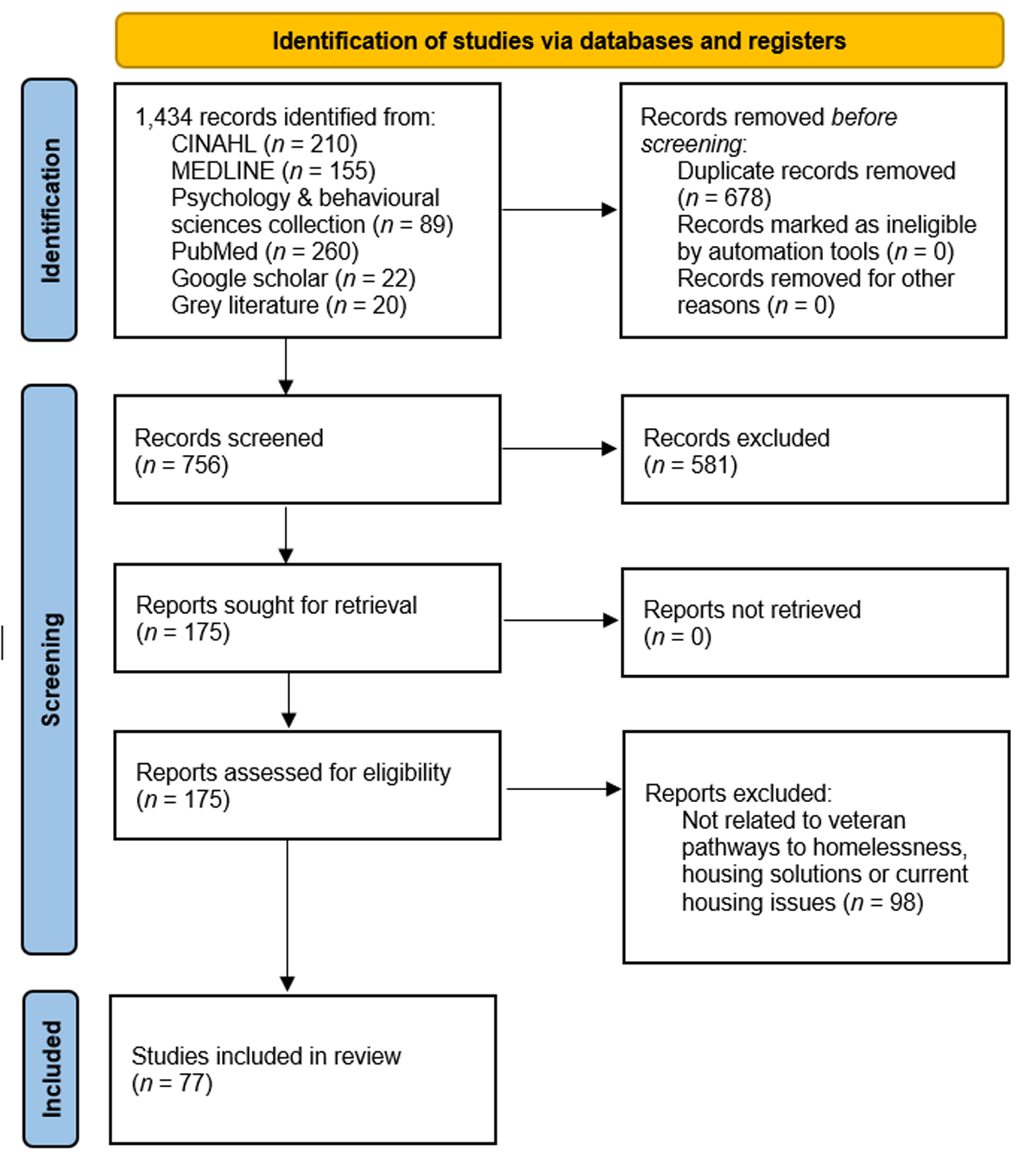
Figure 1
PRISMA Diagram.
Pathways to Homelessness
Economic Instability
The literature reported that economic instability is a key factor, often from the misalignment between military-acquired skills and civilian job requirements. This results in unemployment or underemployment, which impacts housing options (Rivera-Rivera & Villarreal, 2021; Searle et al., 2019; Tsai & Rosenheck, 2015). Cusack and Montgomery’s (2018) mixed-method study found that veterans’ financial insecurity was compounded by the high cost of housing and limited access to affordable options. Furthermore, veterans from marginalised groups face additional barriers, including discrimination and systemic inequities, due to gender, race and ethnicity (Carter et al., 2019; Tsai et al., 2023). While financial assistance has been empirically shown to improve health outcomes, including reductions in mortality and suicidal ideation (Nelson et al., 2024), economic barriers often deter first-time homeless veterans from seeking care (Creech et al., 2015). Additionally, chronically homeless veterans rely heavily on costly emergency services (Fairweather & Zotterelli, 2019; Nelson et al., 2018). Thus, economic instability, driven by skill mismatches, housing costs, and systemic barriers, is a key contributor to veteran homelessness, with limited access to care that reinforces reliance on emergency services.
Mental Health
Mental health conditions, particularly Post-Traumatic Stress Disorder (PTSD), depression, anxiety, and substance use disorders, are described frequently among transitioning and homeless veterans, which significantly impairs their ability to maintain employment, housing, and social relationships (Cusack & Montgomery, 2018; Gabrielian et al., 2017; Rivera-Rivera & Villarreal, 2021; Schutt et al., 2021; Searle et al., 2019; Umucu et al., 2024). PTSD, in particular, was reported at rates more than five times higher among homeless veterans compared to housed veterans and often co-occurs with other conditions such as depression, aggression, and social withdrawal, further hindering community and family engagement (Nichter et al., 2023; Tsai et al., 2020). Additionally, suicidal ideation and self-harm are more prevalent among unstably housed veterans, who face a higher risk of suicide (Blosnich et al., 2020; Brenner et al., 2017; Weber et al., 2017; Wood et al., 2022), which is further discussed as a significant problem in a report of veteran homelessness in Australia by Wallace et al. (2023). These mental health challenges are linked to increased substance use and risky behaviours (Bennett et al., 2019; Blosnich et al., 2020; Stacy et al., 2017). Media reporting suggests behavioural issues associated with alcohol and substance use significantly disrupt home and family life, contributing to social isolation and barriers to housing options (Dinnen et al., 2014).
In addition, several quantitative studies highlighted a strong association between chronic homelessness and a history of traumatic brain injury (TBI; Brenner et al., 2017; Twamley et al., 2019; Wood et al., 2022). The cognitive impairments resulting from TBI, such as memory loss, mood disorders, and executive dysfunction, further intensify mental health challenges, which can severely hinder a veteran’s capacity to secure stable housing, maintain employment, and manage daily responsibilities. The convergence of mental health-related vulnerabilities creates a persistent cycle of instability, significantly impairs the ability to maintain housing, employment, and relationships, and underscores the need for integrated, trauma-informed support systems.
Housing Instability
Housing instability encompasses a range of precarious living conditions, including frequent relocations, difficulty affording rent or mortgage, overcrowding, unsafe environments, and the risk or experience of homelessness (Roggenbuck, 2022; Royal Australian Air Force Association WA [RAAFAWA], 2023; Sturtevant et al., 2015). Importantly, definitions of homelessness can vary across cultural contexts; for example, for Indigenous people, it may include disconnection from land, family, or heritage, beyond physical displacement (Searle et al., 2019). Semi-permanent housing models that incorporate wraparound services, such as on-site medical care and social support, are reported by studies, commentary, and the media to foster trust and improve engagement with healthcare systems (Bamberger, 2024; Barile et al., 2018; Fairweather & Zotterelli, 2019; Johnson et al., 2017; Keller et al., 2022). However, the slow implementation of these wraparound services increased reliance on more costly inpatient services (Austin et al., 2014).
Integrated service models that combine veteran-specific and general social supports are identified by quantitative studies as particularly effective for those with substance use disorders (SUD; Betancourt et al., 2022) and TBI (Brenner et al., 2017; Twamley et al., 2019). Quantitative data also show housing instability is linked to increased risk of Alzheimer’s disease and related dementias, chronic illnesses, and cancer, which is found to contribute to higher rates of nursing home admissions due to early functional decline and limited access to preventative care (Bamberger, 2024; Jutkowitz et al., 2019; Roncarati et al., 2024; Wood et al., 2022). These findings underscore the urgent need for coordinated, culturally responsive, and accessible housing solutions tailored to the diverse needs of veterans.
Veterans with Vulnerabilities
Veterans with disabilities face additional housing challenges due to the need for accessible features, such as lifts or audio systems, which are often unavailable in independent housing (Bamberger, 2024; Creech et al., 2015; Jacobs et al., 2022; Semeah et al., 2019; Umucu et al., 2024). Barile et al.’s (2018) survey data also revealed the difficulty veterans have in accessing disability benefits. These barriers highlight the importance of housing programs such as Housing First and HUD-VASH, which have demonstrated success in supporting veterans with complex needs and disabilities by prioritising stable housing as a foundation for recovery and reintegration, along with additional financial support (Barile et al., 2018; Cusack & Montgomery, 2018; Semeah et al., 2019). However, transitional housing programs often fall short with a focus on short-term placement without addressing long-term rehabilitation and life skills, which leads to premature exits and repeated homelessness (Cusack & Montgomery, 2018; Gabrielian et al., 2016).
Family homelessness among veterans is also an emerging concern. Administrative data show that veterans with children face complex challenges, including cumulative trauma and parental psychiatric conditions, which can contribute to neglect and generational homelessness (Nichter et al., 2023; Tsai et al., 2015). Female veterans are particularly vulnerable, with those experiencing intimate partner violence being four times more likely to face housing instability (Montgomery et al., 2018). Qualitative studies and commentary highlight distinct challenges for female veterans related to housing and family care, often linked to multiple traumatic experiences and elevated rates of intimate partner violence (Felder & Delaney, 2020; Keller et al., 2022; Yu et al., 2020). These findings underscore the need for tailored interventions that prioritise safety and stability, as emphasised in lived experience accounts (Felder & Delaney, 2020).
Veterans with sexual offence histories also require specialised support. However, such offences are less common among homeless veterans (Finlay et al., 2019), and barriers to housing and treatment persist, exacerbating instability as noted in a commentary by Sreenivasan et al. (2023). Additionally, social isolation, driven by the loss of military structure, trauma, and limited rural access undermines wellbeing and housing stability. Peer and community-based supports are vital for fostering connection and resilience, particularly among older and female veterans. Overall, housing instability is shaped by intersecting factors including health, age, sex, and trauma, with wraparound and integrated service models offering more effective support than standard housing approaches. Nonetheless, vulnerable groups such as female veterans, families, and those with complex needs remain underserved.
Justice System Involvement
Justice system involvement was identified as a significant disrupter of housing stability for veterans and creates long-term barriers to reintegration and access to essential support services. Veterans who experience homelessness are disproportionately affected by incarceration, often due to behaviours linked to untreated trauma and substance use (Gabrielian et al., 2016; Searle et al., 2019). A rapid evidence review found risk factors for incarceration specifically identified as male gender, minority status, and lack of mental health treatment (Waddell et al., 2021). Notably, 27% of veterans in the U.S. experienced homelessness within 12 months prior to a criminal arrest, which highlights the strong link between housing instability and justice system involvement (Elbogen et al., 2023).
Veterans with incarceration histories are also reported as presenting with more severe mental health issues than their non-incarcerated counterparts (Tejani et al., 2014; Waddell et al., 2021). However, Umucu et al. (2024) also found incarceration can serve as a point of intervention, with increased access to mental health and substance use treatment post-release. Effective reintegration requires coordinated pre-release planning, including referrals to medical, psychiatric, and social services, as well as intensive follow-up support (Goggin et al., 2018; Schaffer, 2016). Thus, justice system involvement disrupts housing stability for veterans and requires coordinated pre-release planning and post-release support for successful reintegration.
Social Isolation
Social isolation was frequently linked in the literature to the loss of military structure and camaraderie, which further exacerbates vulnerability to homelessness. Studies and reviews show veterans often struggle to rebuild social networks, especially those with adverse childhood experiences, which can impair resilience and access to informal support systems (Nichter et al., 2023; Spinola et al., 2021; Tsai et al., 2021; Tsai & Rosenheck, 2015; Waddell et al., 2021). This isolation not only contributes to emotional distress but also limits access to temporary housing or crisis support during periods of instability. Community integration is a critical component of veteran wellbeing and housing stability. However, it is often disrupted by severe psychiatric symptoms and past trauma, which are associated with increased social isolation and poorer integration outcomes, as demonstrated in quantitative, qualitative, and review studies (Chinchilla et al., 2019; Gettings et al., 2022; Novacek et al., 2022; Winer et al., 2021).
A qualitative study by Winer et al. (2021) also highlighted that while stable housing can reduce financial stress and support access to employment and education, it may also lead to feelings of loneliness and psychological strain. The quality of relationships between veterans and case managers is also reported as a critical factor in successful transitions to permanent housing (Montgomery et al., 2017) and as a necessity in an evidence-based resource by Mennella and Schub (2022) and is closely tied to sustained rehabilitation. Peer support services that are age-specific, flexible, and culturally competent are effective in fostering engagement and reducing social isolation among older veterans (Ellison et al., 2016; Evans, 2022; Novacek et al., 2022; Tsai et al., 2014a).
In addition, participation in veteran-specific services, community activities, and informal initiatives such as coffee social events or support groups (e.g., Alcoholics Anonymous [AA]), can strengthen interpersonal connections, interpersonal support, belongingness, and emotional stability (Bulanchuk et al., 2024; Gorman et al., 2018; O’Connell et al., 2016; Winer et al., 2021). Participation challenges are especially acute for veterans in rural areas, who face barriers such as limited transportation, poor internet access, healthcare shortages, and scarce affordable housing (Cusack et al., 2022). Indigenous veterans also require culturally appropriate support services (Roggenbuck, 2022). Addressing these multifaceted barriers is essential to fostering meaningful engagement, housing stability, and long-term wellbeing among veterans.
Housing Solutions
Emergency Accommodations
The literature highlights emergency accommodations as a critical entry point for homeless veterans, by offering immediate shelter and support while acting as a bridge to longer-term housing and reintegration. An evidence review by Roggenbuck (2022) found that emergency and temporary housing services vary internationally, with nonprofit organisations playing a central role in countries such as the U.S., UK, Canada, and Australia. Typically, in Australia, emergency accommodations are short-term, lasting up to 110 nights, and provides essential services, including meals, shelter, and referrals to housing and health resources (Klinge & Ollwitz, 2020).
Reports on veteran housing needs indicate emergency accommodations facilitates entry into the broader veterans’ service system, helping individuals connect with longer-term support networks and housing pathways (RAAFAWA, 2023; Sturtevant et al., 2015). However, the transition into emergency housing is hindered by the slow process of receiving financial aid through vouchers or other means (Winer et al., 2021). When veterans can access emergency accommodations, it plays a pivotal role in stabilising individuals during a crisis, enabling a smoother transition into ongoing support services and permanent housing solutions.
Transitional Housing
Transitional housing is described by studies and reports as structured, time-limited accommodation for homeless veterans, integrating services such as primary care, mental health support, and legal assistance to address barriers like unemployment, SUD, and mental health challenges (Petrovich et al., 2014; Sturtevant et al., 2015; Tsai et al., 2014a; 2014b). These programs provide stabilising environments where veterans can access targeted support, case management, and employment services, to prepare for independent living (Cretzmeyer et al., 2014; Mennella & Schub, 2022; Wong et al., 2022). This holistic approach is also demonstrated to help reduce social isolation and promote reintegration into the community (Rivera-Rivera & Villarreal, 2021). Young (2021), in a commentary on a recent study, emphasised that managing post-discharge challenges requires a multifaceted, veteran-engaged approach, reinforcing the need for integrated and responsive transitional housing models.
Cretzmeyer et al. (2014) suggested that eligibility criteria are likely to exclude individuals with recent suicidal behaviours or active substance use, potentially limiting access for those most in need. As the number of female veterans grows, there is an increasing need for transitional housing that meets their specific requirements of safety, privacy, and family support. A literature review highlighted features such as secure lighting, locks, and child-friendly spaces as essential for female veterans and those with children (Flike & Byrne, 2023). Similarly, Tsai et al.’s (2015) analysis of data highlighted concerns around the practical environment and the need for additional services for veterans with children. Transitional housing, therefore, provides structured support for homeless veterans, addressing health, legal, and employment barriers. However, access remains limited for those with acute needs, and female veterans require tailored, safe, and family-friendly environments.
Affordable Permanent Supportive Housing
Affordable Permanent Supportive Housing (PSH) is a cornerstone of long-term recovery and stability for veterans who have experienced homelessness. These housing models typically combine financial assistance, such as rent subsidies and vouchers, with supportive services and have been linked to improved health outcomes (Bamberger, 2024; Sturtevant et al., 2015). However, the sustainability of PSH is challenged by both external and internal factors. Externally, the limited availability of low-income housing, particularly in metropolitan, rural, and healthcare-adjacent areas, restricts access for veterans (Fletcher et al., 2022; Jacobs et al., 2022). While the private rental market has the potential to supplement social housing supply, veterans from culturally diverse backgrounds, including Indigenous people, continue to face discrimination, further limiting their housing options (Roggenbuck, 2022). Internal organisational factors such as staff shortages, limited financial resources, and ineffective leadership can undermine the sustainability of veteran support programs (Fletcher et al., 2022). These constraints also reduce the range of available choices, which, in turn, can negatively impact veterans’ motivation to engage in change processes (Schutt et al., 2021).
Findings report the need to tailor housing models to veterans’ diverse and complex needs; for example, gender, disability, and rehabilitation requirements, which are essential for fostering safety, health, and social support (Fletcher et al., 2022; Jacobs et al., 2022; O’Connell et al., 2016). Tsai and Byrne (2024) examined exit data and found that veterans who secure PSH are unlikely to return to homelessness within the first 12 months, the critical period for establishing stability. However, Ijadi-Maghsoodi et al.’s (2022) mixed-method study shows that the fear of losing permanent housing can lead to isolation, highlighting the need for ongoing case management and support even after housing is secured. Additionally, the volatility of the housing market presents challenges for organisations in their attempt to secure appropriate properties that align with Housing First principles and meet veterans’ needs (Austin et al., 2014). PSH offers a stable foundation for veteran recovery, but access and sustainability are challenged by housing shortages, organisational constraints, and the need for tailored, ongoing support to meet the diverse needs of veterans.
Housing First Approaches
Housing first approaches, combined with intensive case management models like Assertive Community Treatment and recovery housing, are considered as effective for veterans with SUD, criminal histories, (Cusack & Montgomery, 2017; Roggenbuck, 2022) and cognitive impairments (Gabrielian et al., 2015) in both transitional and permanent housing. These models reduce re-incarceration and support reintegration by prioritising stable housing as the basis for recovery. Veterans benefit most from housing arrangements that balance privacy with opportunities for socialisation. Chinchilla et al. (2020) further describe shared housing within a single building as fostering community among veterans with similar recovery goals. However, proximity to others in different stages of recovery and placement in neighbourhoods may be perceived as unsafe, may hinder progress, undermine stability, and discourage community engagement. Therefore, Housing First models with intensive case management can effectively support veterans with complex needs; however, housing arrangements need a balance between privacy and community to avoid undermining recovery and reintegration.
Discussion
This scoping review aimed to explore the multifaceted pathways to homelessness among veterans and examine housing solutions across a broad spectrum of evidence. The distribution of included studies and literature highlights a significant concentration of research and commentary originating from the United States., which accounted for the vast majority (n = 69) of the literature, compared to a smaller number from Australia (n = 7) and only one from the United Kingdom. The predominance of U.S.-based literature (90%) complicates the generalisability of findings to the Australian context. Differences in societal values, individual motivations for military service, and post-service support systems, including welfare and healthcare provision, vary significantly between countries. These contextual disparities limit the direct transferability of findings and highlight the need for locally grounded research that reflects the unique experiences of Australian veterans.
The findings across the literature were synthesised into two themes: pathways into homelessness and corresponding housing solutions, which highlight the complex and interconnected challenges faced by veterans experiencing homelessness in Australia and internationally. The literature highlights several key, interconnected factors that contribute to veteran homelessness, which often do not occur in isolation but overlap significantly. For instance, economic instability is frequently compounded by mental health issues or disability, which, in turn, may lead to housing instability or involvement with the justice system. Likewise, veterans experiencing social isolation may be less likely to access support services early, resulting in delayed intervention and more entrenched homelessness. Similarly, the housing solutions identified do not operate in isolation. Emergency accommodation often serves as an entry point to transitional or permanent housing, and Housing First approaches are most effective when integrated with mental health, substance use, and social support services. Across both pathways and solutions, it is clear that outcomes are shaped by the interaction between multiple personal, structural, and systemic factors. Hilferty et al.’s (2019) final report of the Australian Housing and Urban Research Institute inquiry affirms this interdependence, underscoring the need for integrated, trauma-informed, and veteran-specific responses that acknowledge the complex and compounding nature of veteran homelessness.
This scoping review found that while the existing literature on veteran homelessness and housing solutions is robust, significant challenges remain in translating evidence into practice within the Australian context. Models such as Housing First and integrated service approaches are well-supported by research and have demonstrated effectiveness abroad, particularly in the U.S., where national programs and centralised data systems facilitate consistent implementation and evaluation. In contrast, Australia lacks a coordinated national framework and consistent and reliable data collection across states and territories, as indicated by the Royal Commission into Defence and Veteran Suicide (2024b), and in an earlier review of the research and statistical evidence on veteran homelessness in Western Australia (Kaleveld et al., 2018).
This continuing fragmentation hampers the scalability of proven interventions and limits the ability to assess their impact, resulting in uneven service delivery and missed opportunities for evidence-informed practice. Although veterans are known to be disproportionately represented among the homeless population (Hilferty et al., 2021), current census and administrative datasets often fail to reliably capture veteran status, including gender specific data (Women Veterans Australia [WVA], 2025). This data gap restricts efforts to track prevalence, understand the pathways of homelessness, and evaluate the effectiveness of targeted interventions. To align with international best practices and improve outcomes for veterans experiencing homelessness, Australia must prioritise the development of a coordinated national database that includes veteran identifiers (Hilferty et al., 2021). Such infrastructure would support ongoing monitoring, facilitate research, and enable more consistent service delivery. Additionally, expanding research capacity through large-scale, longitudinal studies is essential to deepen the understanding of veteran homelessness and inform the design of evidence-based policies and programs.
Veteran homelessness in Australia is shaped by a complex interplay of systemic and structural challenges. Cusack et al. (2020) describe the process of resolving housing instability as not linear, with many veterans experiencing multiple cycles of housing insecurity throughout their lives, influenced by changing circumstances and vulnerabilities. The separation of responsibilities between the federally governed Department of Veterans’ Affairs (DVA) and state and territory governments, which oversee housing, creates fragmented service pathways that can delay or complicate access to support. Long-term funding deficits at both federal and state levels, compounded by the ongoing housing crisis, have further constrained the development and sustainability of veteran housing initiatives (Productivity Commission, 2025; VHA, 2025).
Despite recent efforts, such as the $30 million Veterans’ Acute Housing Program funded through the Housing Australia Future Fund (Australian Government, 2025), demand continues to outpace supply. While transitional and crisis accommodation options are available, their effectiveness is also limited by constrained funding (VHA, 2025) and inconsistent availability across states and territories (HAA, 2023). Moreover, the current system relies heavily on Ex-Service Organisations, community housing providers, and charitable initiatives to fill critical service gaps. This reliance on non-government actors, while valuable, underscores the absence of a coordinated national housing strategy for veterans. Without sustained investment in purpose-built, veteran-specific housing and integrated support services, many will continue to fall through the cracks.
A critical gap in Australia’s veteran housing landscape lies in the limited integration of diverse medical and wraparound services within project-based housing programs. Despite the clear benefits for veterans with complex medical and behavioural health needs, few initiatives embed full-time nurses or healthcare professionals into housing environments. This lack of embedded care contributes to a growing issue: a subset of veterans whose medical needs are too complex for independent living but not severe enough to qualify for institutional care. Additionally, bureaucratic barriers to accessing Medicare, such as delays in processing, lack of clarity around eligibility post-discharge, and fragmented service coordination, can critically undermine housing stability and recovery for veterans with complex physical or mental health needs. These individuals often cycle between costly hospital admissions and inadequate housing or shelter options, only receiving appropriate institutional support once their conditions deteriorate significantly (Hilferty et al., 2019).
A recent literature review highlights the growing number of homeless veterans aged 60 and over, alongside a rising demand for assisted living facilities specifically designed to meet their needs (Gahan et al., 2025). Addressing this gap requires investment in intermediate care models that bridge the divide between independent housing and institutional care, ensuring veterans receive timely, appropriate support before reaching crisis points.
The absence of veteran status in census and administrative datasets, combined with small-scale research samples, limits the ability to track prevalence and evaluate interventions effectively. Underrepresented groups such as female veterans (WVA, 2025), minority groups such as Indigenous veterans (Langton et al., 2022), and those with justice system involvement (Wadham et al., 2023) are especially impacted by these gaps, as current services often fail to reflect their specific needs. These intersecting issues make the pathways into and out of homelessness for veterans in Australia deeply complex and multifaceted. Addressing them requires a nuanced understanding of veterans’ lived experiences, alongside national leadership, cross-sector collaboration, and investment in inclusive data infrastructure to ensure equitable and effective support for all veterans.
The Housing All Australians (2023) report indicates that the way forward is through a place-based approach, providing housing that is secure and appropriately located, with access to healthcare, social services, employment opportunities, and veteran communities. Significantly, a report on the National Suicide Prevention Trial by Black Dog Institute (2021) emphasised a place-based initiative which encouraged veterans to grow their community connections while maintaining the uniqueness of veteran culture, necessary for suicide prevention success. This place-based approach complements national strategies focused on veteran transition and wellbeing, reinforcing the importance of integrated support systems that address both practical and psychosocial needs.
The agreed-upon Wellbeing Framework between Defence and DVA (Figure 2) proposes a shared vision for the preparation and transition of veterans and their families, inclusive of the six priorities outlined in Veteran Transition Strategy (Australian Government et al., 2023) and the Veteran Transition Action Plan (Australian Government et al., 2024). This Strategy defines transition as a personal and evolving journey from military to civilian life, involving not just practical changes but also emotional, cultural, and relational adjustments. In recognition of the diverse experiences of veterans and their families, the Strategy outlines six key priorities to improve transition outcomes: early planning, accessible support, family engagement, opportunities in employment and education, financial wellbeing, and a sense of support and recognition.
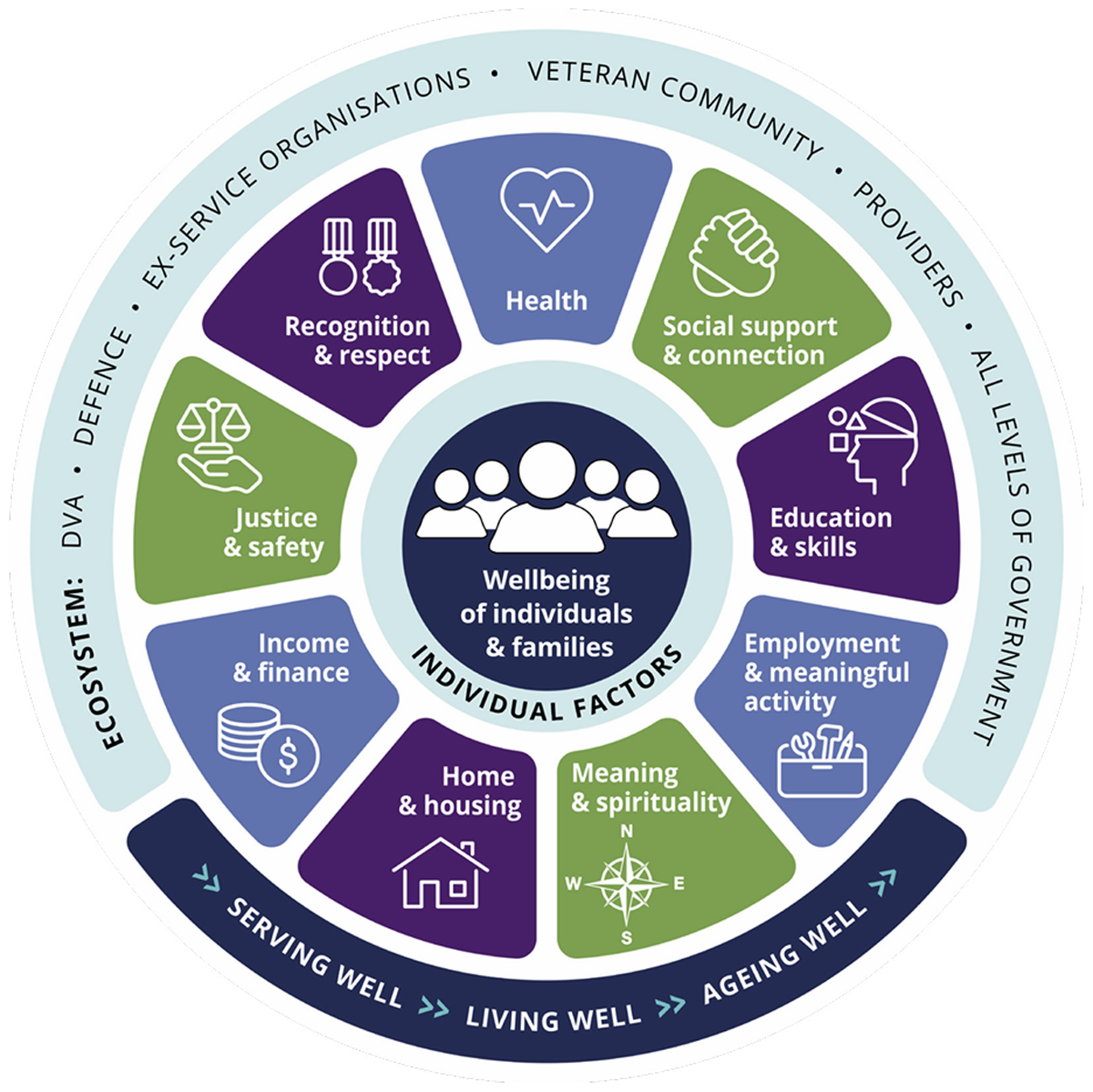
Figure 2
Wellbeing Framework.
Note. Australian Government et al. (2024).
Despite growing recognition of the importance of psychosocial supports in veteran reintegration, Australia has yet to fully leverage the potential of peer support, veteran-specific services, and community-based institutions. These supports are not merely supplementary; they are foundational to fostering belonging and psychological resilience, particularly for veterans facing homelessness, trauma, or identity disruption. Peer support, grounded in shared military experience, is uniquely positioned to rebuild trust, reduce stigma, and encourage engagement with services (Matthews, 2025). Yet, such programs remain underutilised and inconsistently funded across regions. Veteran-specific services offer culturally competent care that addresses the distinct challenges of military life, including moral injury, PTSD, and the loss of identity. However, access to these services is challenging, especially in rural and remote areas where geographic isolation compounds the risk of disconnection.
Community institutions, such as Alcoholics Anonymous, local faith-based organisations, and veteran-led groups, provide low-barrier, non-clinical environments where veterans can rediscover their purpose, build social capital, and access informal support networks (Open Arms, 2025; Salute for Service, 2025; Werber et al., 2015). These spaces are particularly vital in the Australian context, where formal care systems may be difficult to navigate or culturally misaligned. Moreover, evidence suggests that interventions promoting protective psychosocial traits such as resilience, gratitude, and purpose can significantly mitigate mental health risks and support post-traumatic growth (Fogle et al., 2020). These outcomes are not incidental; they are essential to sustainable reintegration and housing strategies. Belongingness must be recognised not just as a protective factor, but as a strategic priority in veteran policy. Without a deliberate investment in these relational and community-based supports, Australia risks perpetuating cycles of disengagement and unmet need among its veteran population.
Directions for Future Research
Future research should focus on strengthening the Australian evidence base for veteran homelessness through longitudinal and mixed-methods studies that capture the diversity of veteran experiences. This includes a better understanding of underrepresented groups, such as females, minority groups, and justice-involved veterans, as well as evaluating integrated care models and place-based housing approaches, particularly in rural areas. Improving veteran identification in national datasets is also critical. Importantly, veterans who have transitioned successfully, along with service consumers, can offer valuable insights and should be included as participants in research to inform strengths-based, preventative strategies. Their diverse experiences can help shape inclusive policies and programs that promote long-term stability and wellbeing across the veteran community.
Limitations
A key limitation of this review is the geographic concentration of studies, with the majority originating from the U.S. This may limit the applicability of findings to the Australian context, given differences in military structures, healthcare systems, and veteran support services. In addition, due to the nature of this scoping review, the report does not provide a detailed description of every paper included. However, the Table 1 summary indicates the outcomes of interest identified on the topic. Literature was limited to full-text availability and English language, which may have excluded papers that are relevant but not accessible to the researchers. The search terms were chosen to cover the areas of interest; however, because this is a wide field, all studies of interest may not have been captured. In addition, relevant grey literature was found during the search process; however, this was not exhaustive due to time limitations. Despite the limitations identified, the literature chosen on the topic provided a comprehensive overview of what is known about veterans identified as at risk of or experiencing homelessness, with a focus on the pathways to homelessness, short- and long-term housing solutions available, and the key requirements to support veteran transition to community integration and wellbeing.
Conclusion
This scoping review highlights the complex and interconnected challenges veterans face in transitioning to civilian life and securing stable housing. Factors such as economic hardship, mental health issues, and social isolation contribute to housing instability, while fragmented governance, inconsistent data collection, and underrepresentation of vulnerable subgroups such as female, Indigenous, and justice-involved veterans further hinder recovery and reintegration. Although evidence-based Housing First models are well-supported internationally, their implementation in Australia is constrained by systemic barriers and a lack of national coordination. Stable housing, integrated health and social services, and strong community support, particularly those that foster a sense of belonging are essential to preventing homelessness and promoting long-term wellbeing. Addressing these issues requires a coordinated, trauma-informed, and veteran-centred approach, supported by improved data infrastructure and inclusive research. Future efforts should also learn from veterans who have transitioned successfully, using their experiences to inform strengths-based strategies that promote resilience and sustainable reintegration for all.
Data Accessibility Statement
No new primary data were created for this study. All data consist of previously published sources that are publicly available and cited in the reference list.
Competing Interests
The authors have no competing interests to declare.
Author Contributions
All authors (TC, MC, and KR) contributed to writing and editing of the scoping review. TC and MC developed the methodology, performed study screening, data extraction and data analysis.