
Over the past several decades, research has increasingly recognized the importance of understanding the experiences of military veterans and their families, hereafter termed veteran families. Research has documented the unique challenges veteran families experience when transitioning out of military service and sustaining family life in the civilian sector. Such challenges include the need to maintain healthy family dynamics and promote stability (Cathcart, 2019), navigating changes in benefits and access to services (McKee et al., 2023), and managing potential physical and psychological consequences of service-related trauma (O’Toole et al., 2018). Though the research tempo for veteran family topics has increased, much remains to be learned about veteran family experiences and how their unique needs may be met most effectively.
A foundational research tenet for those studying family relationships and interactions is the interdependent nature of families, such that family members rely on, and are inextricably connected to, one another. In other words, it would be challenging and potentially incomplete to understand one family member without understanding others and the family system more broadly. The theme of interdependence emerges across foundational family theories, such as family systems theory (Kerr & Bowen, 1988), Bronfenbrenner’s (1986) ecological systems theory, and the life course perspective (Elder, 1998). Family systems theory describes the family as a system consisting of interdependent units (i.e., family members) and subsystems (i.e., relationships between family members; Kerr & Bowen, 1988). Through a broader lens, Bronfenbrenner’s ecological systems theory situates the developing individual in the context of their relationships with the surrounding world, elevating the family as the most proximal context in which growth and change occur (Bronfenbrenner, 1986). Similarly, the life course perspective emphasizes the interdependence of the individual, their family, and sociohistorical context across the lifespan, noting the concept of linked lives, positing that individuals’ lives are linked or connected to the experiences and happenings of important others, primarily family (Elder, 1998).
These theories collectively highlight the dynamic patterns through which individual family members influence and are influenced by one another, a concept collectively known as mutual influence (Allen & Henderson, 2023). In other words, individual family members are comprised of their collective experiences, qualities, and outlooks, which impact each other and how they function together. Similarly, individuals are impacted by other family members, family dynamics, and the overall well-being of the family system. Capturing mutual influence through multi-informant studies tends to enrich findings by enhancing the perspective of the findings and providing a more nuanced and inclusive account (Dunning et al., 2004). Additionally, including multiple voices (i.e., persons or entities providing data or information on behalf of the veteran and the veteran family) in research ensures a systematic approach that broadens veteran family research beyond the veteran as the center figure in the family and sole informant.
However, our current perspective of mutual influence in military families is limited by military and veteran research commonly framing families as supportive figures maintaining care for service members rather than observing the overall quality of families themselves (Cramm & Fear, 2024). Thus, veteran family researchers must center the experiences of multiple family members when studying family experiences. However, no known literature review has been conducted to examine the extent to which researchers include multiple informants within veteran families.
Current Study
This study aimed to identify whose voices are most represented in veteran family research and assess whether multi-informant approaches are used. To that end, a collaborative team of scholars conducted a scoping review of empirical, peer-reviewed studies published over a 5-year period between 2018 and early 2023. The team systematically examined the data sources for each manuscript that met the inclusion criteria (e.g., veteran populations with a connection to family experiences and samples from the Five Eyes Alliance nations). Data sources can be internal to the family system (i.e., veterans, partners/spouses, children, other family members) and external to the family system (i.e., administrative records, and non-family members [e.g., service providers]). Determining who speaks for veteran families will inform gaps and strengths in the research. More specifically, it will illuminate opportunities to enhance current knowledge about veteran families and, ultimately, inform policies and services designed to meet the needs of veteran families.
Methods
Given that this study aimed to identify the most common sources of data utilized in the veteran family literature, a scoping review was deemed the most appropriate method for the study. A scoping review allowed us to map available research and highlight gaps in knowledge, in this case, gaps in methodologies (Munn et al., 2018). A systematic approach to identifying the extant literature on veteran families was implemented in alignment with Arksey & O’Malley’s (2005) methodological framework for completing a scoping review. The five stages of the framework include identifying the research question, locating relevant studies, selecting studies to review, charting the data, and summarizing the results (Arksey & O’Malley, 2005). Ethical approval was not required from an Institutional Review Board, as data were extracted from existing literature–not human subjects.
Identifying the Research Question
This study was guided by the following research question: “Whose voices are captured in veteran family research?” Per the Population Concept Context (PCC) framework for question development (Arksey & O’Malley, 2005), the identified population is veteran families, the concept is voices captured through data sources, and the context is veteran family research.
Locating Relevant Studies
A team of six military and veteran family scholars conducted a systematic search to identify studies published in peer-reviewed academic journals within a 5-year period (January 2018–March 2023). This period aligns with the purpose of our review to examine the range and nature of the most recent veteran family studies (Arksey & O’Malley, 2005). The study selection process ended in March 2023, when the research team began analysis. The search was conducted using electronic databases, including EBSCO Discovery Service (a comprehensive search engine that retrieves documents from a wide selection of databases), PsycINFO, Google Scholar, and the Military REACH online library (a United States Department of Defense-funded digital library of military and veteran family research). These databases were selected given their comprehensiveness and credibility. These databases include a wide range of journals that publish peer-reviewed veteran family studies. Search terms included combinations (using AND and OR) of population terms (i.e., veteran(s), ex-military, former military, or ex-service) and subject terms (i.e., family, families, couple, couples, marriage, married, cohabiting, parent, parents, parenting, child, children, relational, relationship, or relationships), which were used to identify articles in the databases listed above. Searches were also filtered by date, beginning in 2018 and continuing through the date of retrieval in March 2023. This strategy was consistent across databases.
Inclusion and Exclusion Criteria
Covidence, a digital, collaborative software for facilitating systematic reviews, was used to screen the abstracts of the identified studies (N = 387) according to inclusion and exclusion criteria (Veritas Health Innovation, 2023). Inclusion criteria required that studies have a clear research focus on veteran populations connected to family experiences. Family science is “the scientific study of families and close interpersonal relationships” (National Council on Family Relations, 2024). To align with this definition, our search for veteran family studies prioritized those that explored the roles, experiences, and dynamics among veteran family members (e.g., parenting, parent-child relationships, romantic relationships). Only studies published in English with study samples from Five Eyes Alliance nations (i.e., Australia [AU], Canada [CA], New Zealand [NZ], the United Kingdom [UK], and the United States [US]) were considered for review. These nations were selected due to a “common language, similar military involvement/deployment patterns, and similarities in society and culture” (Armour et al., 2022, p. 9).
The authors noticed a trend of researchers using the term “veterans” to refer to varying populations. For instance, many studies referred to individuals discharged from military service during data collection (i.e., ex-service) as “veterans.” Others used “veterans” to refer to individuals who served in a particular military conflict and may still be active duty. A few studies even used the term “veterans” to refer to active-duty service members. Thus, for the current review, studies were screened to ensure that the sample comprised of only veterans who have left military service. Active-duty combat veteran samples and mixed samples of ex-service military veterans and current service members were excluded from the analytic sample as they were considered contextually distinct. That is, families with a current service member have qualitatively different experiences from veteran families who are no longer subject to military requirements such as frequent relocation or deployment. Additionally, active-duty service members in the United States can sometimes receive certain services from the Veterans Health Administration (VHA), so we excluded studies from the current review if they used VHA data but did not specify the ex-service status of subjects. Finally, studies were only retained if the methods included primary or secondary data analysis. Perspective or commentary pieces, meta-analyses, and literature reviews were excluded. However, the references section for such articles were scanned to identify additional studies that may fit this study’s inclusion criteria. Figure 1 provides a visual review of the selection process.
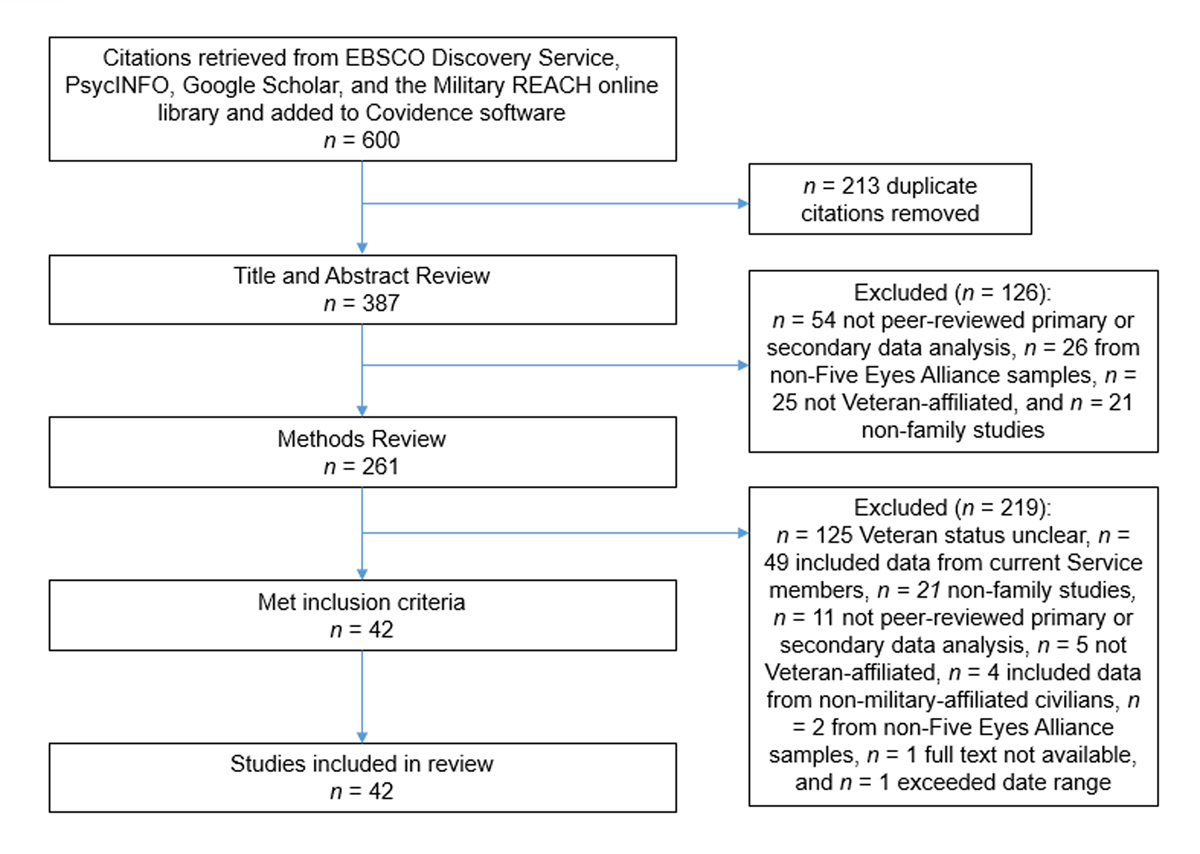
Figure 1
Flowchart of Search Strategy and Article Selection.
Selecting Relevant Studies
Predefined search processes were implemented, and potentially relevant articles were imported into Covidence screening software to support a blinded screening process. In the initial screening process, two members of the research team read the abstract of each study to ensure it met the inclusion criteria for the current review. Abstracts that were screened differently by the two blinded screeners were discussed by all team members until an agreement was reached. To ensure concurrence with the inclusion criteria, members of the research team reviewed the methods sections of each article to see if the sample met the inclusion criteria. When this was deemed insufficient, as there was a lack of contextual information, the first author (ALT) also read the full text of each article for a final inclusion decision.
Charting the Data
Extracted information included author(s), date of publication, country of origin, study aim, methodology, sample composition, and data sources. Data sources were identified and labeled as sources internal to the family system (i.e., veterans, partners/spouses, children, and other family members) and external to the family system (i.e., administrative records and non-family members [e.g., service providers]). Additionally, the number of data sources per family was recorded. Single or multi-informant designs were indicated by the presence of multiple data sources sampled to represent each family under study.
Summarizing the Results
The final sample of studies was categorized to understand “who” speaks on behalf of veteran families in veteran family research and the extent to which multi-informant designs are utilized. From the charted data, we categorized studies based on data sources and single versus multi-informant designs. From there, the categorical data were used to assess the different voices as they appeared in the literature base and to calculate the frequency of single versus multi-informant samples.
Results
The initial search for veteran family research yielded 387 titles, with 42 studies meeting the inclusion criteria. Notably, a primary reason studies were excluded (32.30%, n = 125) was their lack of clarity on whether “veteran” referred to ex-service veterans (i.e., no longer in the military), the focus of this study, or combat veterans (i.e., veterans of a certain war or conflict who are still serving).
Table 1 provides data on each of the 42 studies included in this scoping review and denotes each study’s data source(s) and whether there were multiple data sources per family. Figure 2 details the frequencies at which each data source was sampled. The most common data sources internal to the family were veterans and partners, who were each sampled in 52.38% (n = 22) of the studies reviewed. Another 35.71% (n = 15) sampled children, and 19.05% (n = 8) sampled other or unspecified family members. Regarding sources external to the family, 11.90% (n = 5) relied on data from administrative records, while 9.53% (n = 4) used data from non-family members.
Table 1
Data Extracted from Veteran Family Studies Published between 2018–2023.
| ARTICLE | COUNTRY | AIM | METHODOLOGY | PARTICIPANTS | DATA SOURCE |
|---|---|---|---|---|---|
| Beks & Cairns, 2020 | CA | Explored factors that influence mental health service use among partners of veterans with posttraumatic stress disorder | Qualitative, Primary | 16 female partners of male veterans with PTSD | Partner |
| Bommersbach et al., 2022 | US | Compared children and families of veterans to children and families of nonveterans regarding sociodemographic, clinical, and school performance factors | Quantitative, Secondary | 4,028 veterans or partners reporting on behalf of their child, 38,228 civilian parents | Veteran or partner |
| Brady et al., 2021 | US | Evaluate the influence of a supportive supervisor training program on veteran couples’ relationship and family outcomes | Quantitative, Secondary | 250 veterans and their partners | Veteran and partner |
| Cathcart, 2019 | CA | Examined personal support structures of veteran family members that facilitated the transition out of the military | Quantitative and Qualitative, Primary | 55 family members of veterans, only 5 interviewed | Partner, child, or other family member |
| Corry et al., 2022 | US | Examined spouse well-being (i.e., psychological health, physical health, and family relationships) and identified protective factors for spouses after the transition out of the military | Quantitative, Secondary | 4,087 spouses of service members, of whom 1,199 transitioned out of the military by follow-up | Partner and administrative records |
| Dighton et al., 2018 | UK | Examined the impact of veterans’ gambling on family outcomes and how family factors may influence gambling | Quantitative, Secondary | 257 veterans | Veteran |
| Dockerty et al., 2020 | NZ | Examined veteran’s health status and compared the health of veterans and their adult children | Quantitative, Primary | 83 veterans, 65 adult children of veterans | Veteran or child |
| Doncaster et al., 2019 | UK | Examined civilian partners’ perceived impact of their veteran partners’ trauma symptoms on each partner and the relationship | Qualitative, Primary | 15 female partners of male veterans | Partner |
| Evans et al., 2021 | AU | Evaluated the delivery of Mental Health First Aid training for family members of Veterans with a mental health condition | Quantitative, Primary | 59 immediate and extended family members of veterans | Partner, child, or other family member |
| Forrest et al., 2018 | AU | Examined associations between Vietnam veterans’ deployment and their adult children’s mental health | Quantitative, Primary | 1,966 adult children of veterans | Child and administrative records |
| Friedman et al., 2022 | US | Examined reproductive and physical outcomes among Gulf War Era women veterans and their children and associations with deployment history | Quantitative, Secondary | 239 women Gulf War veterans | Veteran |
| Goger et al., 2022 | US | Examined whether women veterans’ perinatal psychopathology was associated with parenting stress and difficulty bonding with their child | Quantitative, Primary | 28 women veterans | Veteran |
| Gunter et al., 2020 | AU | Examined gendered associations among parent-child attachment, family emotional climate, and mental health outcomes among children of Vietnam veterans | Quantitative and Qualitative, Secondary | 133 sons and 182 daughters of veterans | Child and administrative records |
| Harper et al., 2022 | US | Examined the impact of romantic relationship functioning on veterans’ mental healthcare utilization | Quantitative, Secondary | 760 veterans | Veteran and administrative records |
| Hinrichs & Christie, 2019 | US | Examined challenges and opportunities when providing end-of-life care for an older, lesbian veteran to highlight disparities in care for LGBT veterans | Qualitative (case study), Primary | 1 partner of a veteran and their healthcare team | Partner and non-family member |
| Ijadi-Maghsoodi et al., 2022 | US | Examined the community integration experiences and barriers of homeless-experienced veteran families living in permanent housing | Qualitative, Primary | 9 homeless-experienced veterans and 7 homeless service providers | Veteran and non-family member |
| Kamdar et al., 2022 | US | Examined low-income veterans’ reflections on their experiences trying to provide adequate, nutritious food for themselves and their families | Qualitative, Primary | 17 low-income, post-9/11 veterans | Veteran |
| Karre et al., 2022 | US | Examined protective factors associated with fathers’ positive parenting behaviors and parenting satisfaction | Quantitative, Secondary | 3,810 veteran fathers | Veteran |
| Kinder et al., 2022 | US | Described veterans’ use of community-based hospice services and associations with bereaved families’ perceptions of care | Quantitative, Secondary | 2,118 partners, 1,201 children, 205 siblings, 157 other family members, and 286 non-family members of veterans | Partner, child, other family member, or non-family member, and administrative data |
| Lawrence & Matthieu, 2018 | US | Examined the perceived impact of veterans volunteering on family outcomes and compared the impact across demographic and mental health subgroups | Quantitative, Secondary | 346 post-9/11 Veterans | Veteran |
| Maguire et al., 2022 | AU | Described veteran family needs and explored service providers’ and families’ experiences of accessing and navigating support systems | Qualitative, Primary | 18 service providers, 7 veterans, 7 partners of veterans, and 2 adult children of veterans | Veteran, partner, child, other family member, or non-family member |
| McCormack et al., 2022 | AU | Examined intergenerational trauma exposure and primary combat exposure among veterans who were children of veterans | Qualitative, Primary | 4 Army veterans who had a father who served in the military | Child |
| McGaw et al., 2020 | AU | Examined partners of veterans’ perspectives of parenting and relationships in the context of their partners’ military-related posttraumatic relationship disorder | Qualitative, Primary | 8 female partners of Australian veterans | Partner |
| Min, 2021 | US | Examined whether student veteran status, deployment history, metal health conditions, substance use, and marital instability were associated with experiencing emotional, physical, or sexual abuse in an intimate relationship. | Quantitative, Secondary | 2,354 student veterans and 102,224 civilian college students | Veteran |
| Morgan et al., 2022 | US | Examined risk and protective factors for parental functioning and parenting satisfaction among post-9/11 veteran mothers after transitioning out of the military | Quantitative, Secondary | 711 Women veterans within 3 months of separating from the military | Veteran |
| Nieforth et al., 2022 | US | Investigated the emotions of partners of veterans assigned service dogs for posttraumatic stress disorder | Quantitative, Primary | 87 partners of veterans participating in a service dog clinical trial | Partner |
| Norris et al., 2022 | CA | Examined how veteran families cultivate resiliency while experiencing the challenges of the military to civilian transition and a mental health problem | Qualitative, Secondary | 6 intimate partners of Canadian veterans | Partner |
| Norris et al., 2023 | CA | Examined the experiences of family members of veterans living with mental health problems, including operational stress injuries | Qualitative, Primary | 26 family members, including 22 partners, 3 parents, 1 adult child, and 1 sibling of Canadian veterans with a mental health problem | Partner, child, or other family member |
| O’Toole, 2022 | AU | Assessed associations among veteran fathers’ posttraumatic stress disorder (PTSD), family emotional climate, and children’s PTSD | Quantitative, Secondary | 181 veterans and their 163 adult daughters and 120 adult sons | Veteran and child |
| O’Toole et al., 2018 | AU | Described the family emotional climate of adult children of Australian Vietnam veterans and examined gendered associations among family emotional climate, parents’ mental health, and children’s mental health | Quantitative, Secondary | 197 veterans and their 135 female partners, 180 adult daughters, and 135 adult sons | Veteran and child |
| Phelan et al., 2018 | US | Examined the association between stigma, discrimination, and caregiver strain, caregiver well-being, and patient community reintegration among veterans with traumatic brain injury and their caregivers | Quantitative, Primary | 347 parents, 181 spouses, and 36 other family members informal caregivers of veterans | Partner, child, or other family member |
| Portnoy et al., 2022 | US | Examined associations between veterans’ traumatic brain injury and persistent postconcussion symptoms with their perpetration of intimate partner violence | Quantitative, Secondary | 815 veterans | Veteran |
| Romaniuk et al., 2018 | AU | Evaluated the impact of equine-assisted therapy on the mental health and quality of life outcomes among veterans and their partners | 25 veterans and 11 veterans and their 11 partners participating in equine-assisted therapy | Veteran and Partner | |
| Sanders et al., 2019 | US | Examine the contributions of family stressors on veterans’ mental health above and beyond combat during deployment and whether family stressors amplified the negative effects of combat on postmilitary mental health | Quantitative, Secondary | 651 veterans who lived with a partner or had children | Veteran |
| Schwartz et al., 2021 | CA | Explored veteran families’ experiences of formal and informal support during the military to civilian transition | Qualitative, Primary | 30 spouses, 3 parents, and 2 adult children of Canadian veterans | Partner, child, or other family member |
| Shepherd-Banigan et al., 2020 | US | Described the caregiving experiences and needs of family caregivers of veterans with mental, physical, and cognitive comorbidities | Quantitative, Secondary | 1,159 family caregivers of veterans | Partner, child, or other family member |
| Sherman et al., 2018 | US | Examined the intersection of trauma, spirituality, and the impacts of trauma on partners and intimate relationships | Qualitative, Secondary | 11 male veterans and 9 female partners of veterans | Veteran and partner |
| Skomorovsky et al., 2020 | CA | Examined challenges and caregiving experiences among veteran spouses during the military to civilian transition | Quantitative, Secondary | 595 spouses of veterans who recently transitioned out of the military | Partner |
| Smith et al., 2021 | US | Examined the mediating role of dysfunctional behavior during marital conflict on the association between posttraumatic stress disorder and heightened cardiovascular response. | Quantitative, Secondary | 64 male veterans and their 64 female partners | Veteran and partner |
| Sullivan et al., 2022 | US | Examined the associations between veteran parents’ mental health and employment with adverse outcomes for their children and the moderating role of school climate | Quantitative, Secondary | 218 veteran parents of children in K-12 schools | Veteran |
| Wells et al., 2022 | AU | Explored the retrospectively reported experiences of children of veterans during the military to civilian transition | Qualitative, Secondary | 10 adult children of Australian veterans | Child |
| Whitworth et al., 2020 | US | Examined the experiences of partners of veterans with posttraumatic stress disorder participating in a service dog program | Mixed methods, Primary | 15 partners of veterans with PTSD participating in a service dog program | Partner |
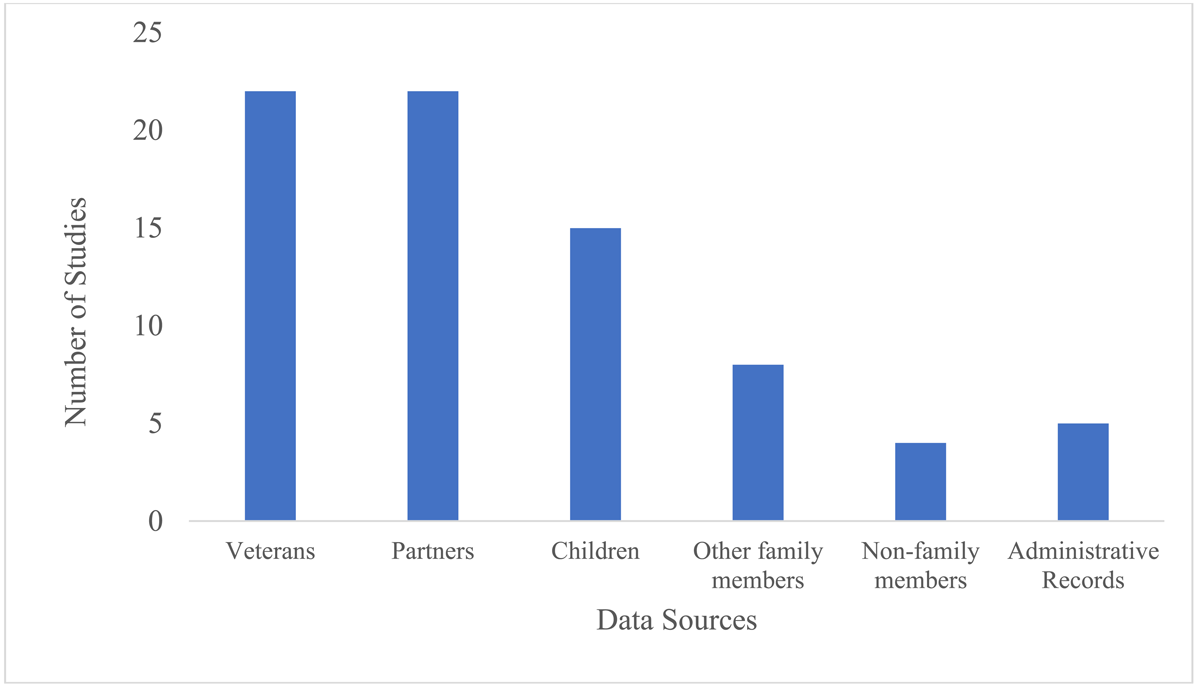
Figure 2
Frequencies of Data Sources Sampled in Veteran Family Studies Published between 2018–2023.
Note. Some studies used more than one data source; thus, the total is greater than 42.
Figure 3 depicts the proportion of studies that sample single versus multiple data sources per family. Of the 42 studies included in the review, 69.05% (n = 29) analyzed data from a single data source per family. Among the 29 single data source articles, 20 studies (47.62%) collected data from the same data source across all families in the sample. For example, Dighton and colleagues (2018) collected data solely from veterans to examine associations between gambling and family outcomes, whereas McCormack and colleagues’ (2022) data collection came from veteran status and adult children of veterans to explore intergenerational trauma exposure. The other nine studies (21.43%) collected data from a single representative to speak on behalf of the family experience, but that representative varied across families within the study. Essentially, multiple data sources may have been sampled across families, but only one source per family was represented. For example, Schwartz and colleagues (2021) sampled partners, parents, and adult children of veterans, with one representative per family, to speak on family supports during the military to civilian transition. Across studies that analyzed data from a single data source, the most common data sources included veterans (26.19%, n = 11), followed by veterans’ partners (16.67%, n = 7) and either partners or children or other family members of veterans (14.29%, n = 6).
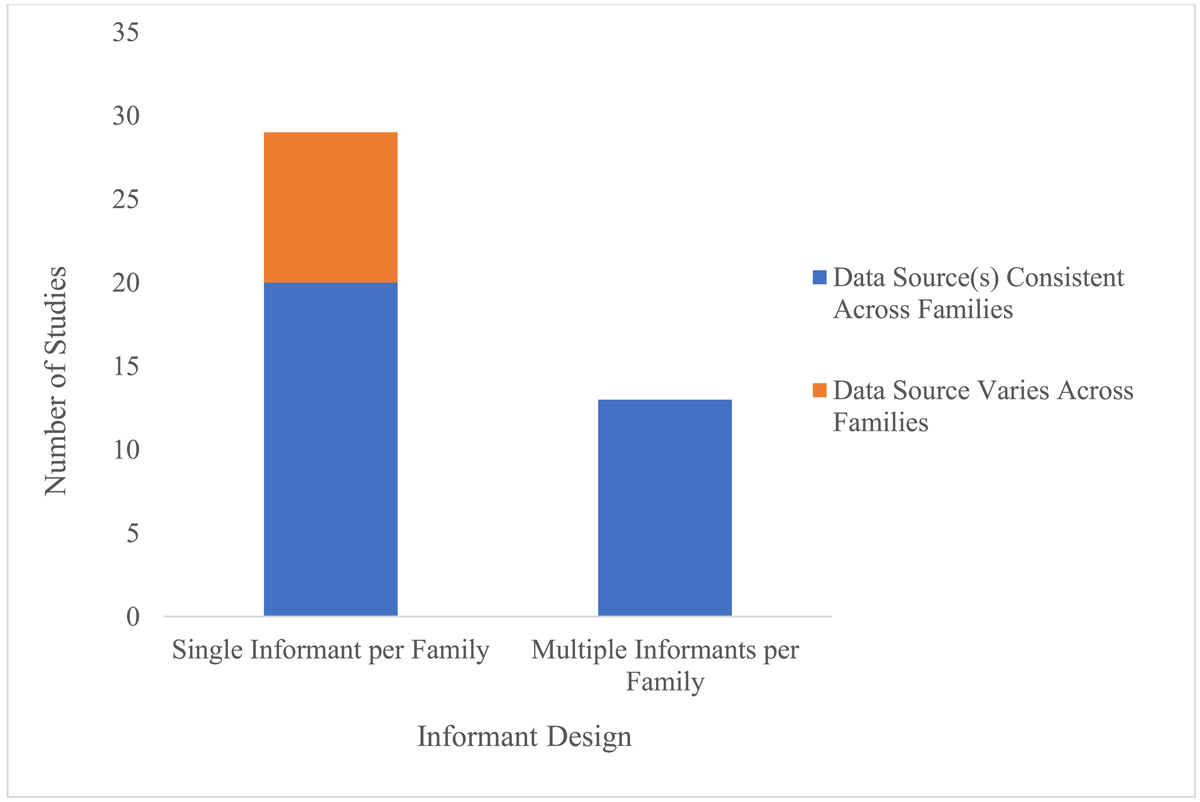
Figure 3
Frequencies of Informant Designs in Veteran Family Studies Published between 2018–2023.
Of the 42 studies, 13 (30.95%) used a multi-informant approach and examined data from more than one source per family. The most combined data sources among these studies were veterans and their partners (9.52%; n = 4), veterans and their children (4.76%, n = 2), and children of veterans and administrative records (4.76%, n = 2).
Discussion
This scoping review of peer-reviewed, veteran family studies published between January 2018 and March 2023 revealed patterns in the representation of veteran families. Most studies relied on single data sources per family to assess family experiences and processes. The overreliance on single source data leads to a greater risk of bias in the estimates produced in these studies (Dunning et al., 2004). Thus, these studies may not reflect the lived experiences of veteran families as a whole. Rather, they elevate the voice and perspective of a single vantage point from each family, limiting the insight gained from the data.
Few studies included in our review employed a multi-informant design, though there were some exceptions. For example, Smith and colleagues (2021) collected data from 64 veteran couples (i.e., male veterans with female partners) to study the links between posttraumatic stress disorder, warmth, and control during marital conflict, and each partner’s cardiovascular responses. The concept of mutual influence is evident in Smith and colleagues’ (2021) estimation of self- and partner-effects, which assess how variables are related within each partner and between the two partners. In another study, veterans and their partners were interviewed to discuss the links between veterans’ posttraumatic stress disorder, both partners’ spirituality, and both partners’ perceptions of the couple’s relationship (Sherman et al., 2018). These studies are examples of veteran family studies that successfully implemented multi-informant designs in line with family theories supporting the interdependent nature of familial relationships (Bronfenbrenner, 1986; Elder, 1998; Kerr & Bowen, 1988).
A second noteworthy pattern emerged regarding which voices were sampled to report on veteran family experiences. Veterans and partners represented the majority of those sampled, followed by children. There are numerous reasons why veterans serve as one of the primary data sources in the family literature. Firstly, studies in our sample often recruited participants through Veterans Health Administration clinics, medical or administrative records, veteran peer networks, or veteran-oriented nonprofit organizations, all of which tend to directly serve veterans more than their family members. As such, veterans may be the first point of contact for recruitment and, thus, a more convenient source of data collection in single-informant designs. This finding, which aligns with research pointing to challenges obtaining funding and interest in collaboration as barriers to accessing veteran family members (Cramm et al., 2015), points to a significant limitation in the veteran family research base. Additionally, topics studied in the current sample tended to be more veteran-centric (e.g., veteran’s parenting, veteran’s pregnancy, veteran’s couple relationship experiences), making the veteran a logical data source. The focus on the veteran alone in many studies downplays the relational nature of these research topics.
Partners of veterans were represented equally across studies. Partners tended to more frequently report on topics such as their children, couple relationship issues, and family caregiving experiences than veterans. While it is encouraging that researchers are capturing the perspectives of veterans’ partners, the similarities between the topics reported on individuals and dyads display how different foci can lead to different perspectives of family functioning. This notion emphasizes the importance of considering the entire family’s perspective. For instance, researchers may seek to include the parents of ill or injured veterans, who often adopt the role of caregiver and do not often have support tailored to their needs by veteran or military organizations (Tam-Seto et al., 2024). This lack of resources for parents of veterans is in part due to their lack of representation in veteran family research.
Limitations
As mentioned previously, this study did not include studies if the ex-service status of participants was not clearly stated, including those using Veterans Health Administration data. The review also excluded studies using mixed samples of active-duty and veteran families, given the notable variations in their experiences, and the goal of isolating studies that speak to the experiences of veteran families independently. Therefore, this selection of studies may have inadvertently presented a biased snapshot of veteran family research that underrepresents the use of some data sources. Further, this selection of studies may have excluded studies examining the experiences of veteran families transitioning out of military service. Future research may examine the literature with a broader focus to gather a more comprehensive overview of the veteran family literature.
Though we sought to find studies from all the Five Eyes Alliance countries, more than half of the included studies were conducted on veteran families in the United States. This means that the ambiguities in our findings surrounding the service status of veterans may not be generalizable to all veteran family research in Five Eyes nations. As health care for veterans and their families looks different when comparing the Five Eyes nations, administrative data may be captured differently, further contributing to the lack of generalizability to other nations. Future research examining trends in research within each country may also point to unique gaps and strengths in veteran family research.
Furthermore, this review included literature spanning before and during the COVID-19 pandemic. The ‘lockdown protocol’ during this period may have introduced barriers to research that limited veteran family researchers’ options for collecting data among veteran families. Thus, as life returns to normal and some of these barriers have been lifted, future research reviews in the coming years may clarify how researchers represent veteran family voices in their samples.
Call to Action
The results of this review support a call to action for researchers who study veteran families. To understand veteran family systems more holistically and not just from the perspective of single informants within those families, researchers must regularly implement multi-informant approaches for data collection and model building, particularly when studying family processes and outcomes. Diversifying the representation of veteran families in the literature entails capturing the perspectives of other family members within veteran families (i.e., partners, children, and other relatives), as well as those outside families who may provide more objective reports (i.e., practitioners and administrative records). Though difficulties in reaching these populations are pervasive within this field, failing to capture multiple voices leads to an inadvertent prioritization of one family member’s voice, most often the veteran’s voice, above other members of the family. This lack of an inclusive and comprehensive family approach further perpetuates the tendency for research to conceptualize veterans as separate from their family unit. Including more and multiple veteran family voices will establish a more rigorous knowledge base through which policy and practice can be informed. Strategies researchers may consider employing to overcome access barriers include leveraging digital surveys to collect data from multiple veteran family members. Further, researchers may partner with community organizations in civilian and veteran communities to access community-based samples of veteran families.
When discussing veterans, it is critical for researchers to use consistent and non-ambiguous language surrounding service status. When service status is not clearly defined as either ex-service veterans or combat veterans specifically, it becomes impossible to properly distinguish between these populations, whom, along with their families, may experience different adversities and have different needs. A clear distinction will facilitate serving both populations and providing proper supports. We, thus, urge military and veteran family scholars to clearly distinguish the service status of the populations they study.
Conclusion
In summary, this scoping review identified patterns describing which voices represent veteran family experiences in empirical research published across the Five Eyes Alliance nations. We highlighted limitations in the current literature base, including the underrepresentation of voices other than veterans or their partners and an overreliance on single-informant approaches. Veteran family researchers are encouraged to capture more diverse perspectives on veteran families and to implement multi-informant approaches to better reflect the experiences of veteran families, and thus to support the development and implementation of supports to meet the needs of veteran families.
Ethics and Consent
This study did not require approval from an Institutional Review Board, as no data were collected from human subjects. All information was extracted from prior literature.
Competing Interests
The authors have no competing interests to declare.