
Almost 20 years have passed since I have served in the military and to this day, my closest and most trusted friends are people I had served with. Certainly, my situation is not unique. The “brotherhood” shared among soldiers has been a central theme for centuries in classic texts (Rieu, 1950; Shakespeare, 2009), and modern literature and film (Ambrose, 2001; Bowden, 2010; Junger, 2016; Winters & Kingseed, 2008). Brotherhood and intense in-group social cohesion is a foundational part of military culture (Buhrmester et al., 2015; Hart & Lancaster, 2019), is part and parcel of most modern industrial nation’s militaries, and is baked into initial military training, rites, rituals and structural elements (Marks, 2020; Sando, 2004; Winslow, 1999). Indeed, servicemembers frequently refer to each other using familial language (Hart & Lancaster, 2019; Shils & Janowitz, 1948; Winslow, 1999; Woodward & Jenkings, 2011), and tend to form fictive or psychological kinship with their comrades (Buhrmester et al., 2015; Woodward & Jenkings, 2011).
For many servicemembers transitioning back to the civilian world, a career in civilian law enforcement seems like a logical choice because of several similarities to military life (e.g., uniformed service, chain of command, and being perceived as dangerous). Within this context, particularly intriguing for me was the so-called “thin blue line,” conjuring images of intense loyalty and brotherhood among police officers (Zacarese, 2017). Although the prospect of recreating the camaraderie that I personally experienced in the military was compelling, ultimately, I chose a different path, and have not worn any uniform since 2007.
Study Summary
Psychological kinship is a phenomenon where individuals conceive of their (non-biologically related) fellow in-group members as “family” (Bailey, 1988). This has been observed in the military, however, its underlying causes are contested or underdeveloped especially outside of a military context (Gómez et al., 2020; Madej, 1978; Whitehouse, 2018). This study explores what social mechanisms may cause psychological kinship. The degree to which civilian police officers experience a similar military-style bond is largely unexplored. Any resulting causal insights regarding psychological kinship, therefore, remain unexamined. Military veterans who pursued law enforcement careers post-service are positioned to provide unique insight into what some of these causal mechanisms may be, by comparing their own occupational experiences. This study used a first-person anthropological approach where qualitative, in-depth semi-structured interviews (Bernard, 2011) were conducted with 18 military veterans of the US armed forces who also served as civilian police officers, in an effort to contrast their social experiences as military servicemembers with their social experiences serving as police officers. The respondents’ interviews were interpreted using a new unified model: identity fusion + spatial proximity = psychological kinship, to explore the explanatory power of these concepts individually and conjoined. This exploratory, comparative study hypothesizes that combining both theories into a single unified theoretical model better explains the psychological kinship experienced by many military servicemembers, rather than either spatial proximity or the identity fusion shared-dysphoric-experiences-pathway do individually.
Why the Military and Police?
The military and the civilian police are ideal populations to explore the question of what may cause the emergence of psychological kinship. This is because of the important structural similarities as well as differences. In terms of structural similarities, both the military and civilian police are seen as part of government service to the broader community, are armed and uniformed occupations, have a hierarchical chain of command, are generally perceived to be potentially dangerous occupations, and both are said to share a sense of camaraderie (Souhami, 2020). Both military and civilian police are enculturated via initiation rites, symbolic rituals, a bootcamp style initial training, and both can reasonably be expected to be exposed to traumatic events (Zacarese, 2017). An important distinction, however, is the military is described as ultra-social (Winslow, 1999), whereas civilian policing is described as relatively solitary (Zacarese, 2017).
It is generally accepted that many service members feel a sense of family-like bonds with their comrades (Hart & Lancaster, 2019; Swann et al., 2014; Winslow, 1999; Woodward & Jenkings, 2011), and that the military context is conducive to the emergence of psychological kinship (Buhrmester et al., 2015). Civilian police have a subculture of their own (Ganapathy & Cheong, 2016), and are anecdotally said to have camaraderie and brotherhood, and bonds forged helping each other through the challenges of patrol (Owsinski, n.d.; Zacarese, 2017).
Understanding the causal mechanisms of psychological kinship has relevance outside the military and civilian first responder context, but the aforementioned similarities and differences make these populations ideal social ecologies in which to explore this question. In general, organizations which operate in potentially dangerous environments, are reliant on their group member’s ability to overcome suspicion of their comrades overriding self-interest or “free-riding,” which requires group cohesion and trust (Baba, 1999; Hamwey et al., 2021; Siebold, 2007; Van Der Kloet et al., 2004). Cooperation and teamwork is paramount to successful military operations and team member well-being (Fors Brandebo et al., 2022), and is facilitated by social bonds between group members (Baba, 1999; Carron & Brawley, 2000; Winslow, 1999). Indeed, these characteristics are a central tenet of military culture as codified in military doctrine and oaths (Army.mil, n.d.; Naval History and Heritage Command, 2017). Despite the structural similarities in the military and civilian police, there are no qualitative studies comparing the social experiences of service members and civilian police. Scholarship on police has primarily been focused at the institutional level (Kraska, 2021; Schrader, 2021; Stoughton, 2014), the individual officers attitudinal orientation (Hussey, 2020; Stoughton, 2015), and on occupational stress (Davis, 1984; Hartley et al., 2013; Patterson, 2002), but not at the interpersonal level. This study hopes to explore the viability of using military and police occupational cultures to garner insights about human sociality more generally.
Terms Used
Defining and operationalizing complex and abstract social traits like social bonds, solidarity, and social cohesion is inherently subjective and challenging (Carron & Brawley, 2000). Indeed, cohesion, solidarity, camaraderie, and trust are not exactly the same thing, however, at the experiential level, they follow very similar patterns. Of these kinds of terms, camaraderie is colloquially salient, more accessible outside of an academic audience, and an essential element of cohesion (Hamwey et al., 2021; Van Der Kloet et al., 2004). Therefore, for the purposes of this study the terms cohesion, solidarity, and camaraderie are measured equivalently and used interchangeably.
Theoretical Framing
This paper focuses on two prominent explanatory pathways which lead to psychological kinship: the sharing of “suitably” dysphoric (i.e., traumatic) experiences causing group member’s individual identity and group identity to “fuse,” becoming interwoven and porous leading to psychological kinship—a concept called identity fusion (Reese & Whitehouse, 2021; Whitehouse, 2018); and the mapping of primary group status onto fellow soldiers, sergeants, and officers through prolonged and intimate physical and psychological proximity—a foundational concept called spatial proximity (Shils & Janowitz, 1948). Both theoretical frameworks have been explored exclusively independent of each other, most likely because each are primarily only explored within their individual disciplines: sociology (Shils & Janowitz, 1948; Siebold, 2011), social psychology (Gómez et al., 2020; Swann et al., 2014), and anthropology (Whitehouse, 2018). Spatial proximity and identity fusion are flexible constructs and not necessarily mutually exclusive (Hart & Lancaster, 2019), leaving room for the unified model used in this study.
Theoretical Background
There is a lengthy history of scholarship about the importance of social cohesion and solidarity at both the macro-societal level, and the micro-interpersonal level as described in enduring foundational theories such as Durkheim’s (1897, 1984) organic solidarity and mechanical solidarity, and Ferdinand Tönnies’ Gemeinschaft and Gesellschaft (Tönnies et al., 2001). Then in the twentieth century, the sociologist Charles Cooley (1910) further refined the micro-level theoretical base with the concept of, and importance of, the primary group—an individual’s social group characterized by “intimate face-to-face association and cooperation” best illustrated by the family, and immediate community (p. 23). Later, Shils (1957) would call this “we-consciousness,” as it is illustrative of how the individual and the group are inexorably interdependent in the forming of the individual and social self. These in-group social bonds are thought to be primordial (Shils, 1957) and these primary associations of cooperation and social unity are a human universal emerging from mutual aid and common activity (Cooley, 1910).
Empirical Background
Since World War II, evolutionary scholars and social psychologists have further developed our understanding of just how profound the importance of the in-group is in human sociality. Much theoretical and empirical scholarship has supported the concept that humans are fundamentally “groupish” that is, they inherently gravitate towards and cooperate with others from their social in-groups in ways that may seem to transcend apparent self-interest, and has been explored by evolutionary theorists, social psychologists, and anthropologists (Haidt, 2012; Henrich, 2004; McNamara & Henrich, 2017; Moya, 2023; Sarkar & Wrangham, 2023; Wrangham, 2021). Alignment or attachment to a group has been empirically demonstrated to happen quickly and develop early in ontogeny (Over & Carpenter, 2009; Sørensen, 2023; Watson-Jones et al., 2016; Wen et al., 2016); even as children, humans adopt and adhere to group characteristics, no matter how arbitrary (Dunham et al., 2011). This inherent need to form (and bias towards) an “in-group,” by default creating an “out-group,” has been shown to be potent and virtually universal in psychological experiments (Tajfel, 1970, 2004; Vaughn et al., 2018), and is virtually omnipresent in the context of intergroup conflict (Tajfel, 2004). Sociologists, anthropologists and social psychologists have observed intimate social bonds to be especially intense among those facing danger, conflict, and violence (Littman & Paluck, 2015; Malesevic, 2017), and among soldiers, in particular (Fors Brandebo et al., 2022; King, 2015; Madej, 1978; Shils & Janowitz, 1948; Siebold, 2007, 2011; Winslow, 1999).
What is Spatial Proximity?
In 1948 the sociologists Edward Shils and Morris Janowitz mapped Charles Cooley’s (1910) primary-group model and secondary group model onto the German army’s social group. The researchers convincingly posited that individual German infantryman were primarily motivated by the “steady satisfaction of certain primary personality demands afforded by the social organization of the army” (Shils & Janowitz, 1948, p. 281). For Shils and Janowitz, the soldier, once removed from their civilian primary group, comes to rely on their comrades from their immediate unit (i.e., team, squad, or platoon) as their primary source of “social and psychological sustenance” (Shils & Janowitz, 1948, p. 284). Because of spatial proximity—the prolonged and intimate physical and psychological proximity soldiers shared with their immediate comrades, non-commissioned officers, and commissioned officers—soldiers tended to develop high degrees of affect, trust, and loyalty (Shils & Janowitz, 1948). Decades later, the social psychologist Guy Siebold (2007) extended the model, incorporating critiques that Shils and Janowitz failed to account for material and instrumental variables like “military skill and efficiency” and the scope of the war in their model (Madej, 1978, p. 233). Siebold’s (2007) standard model of military group cohesion maintains affective elements but moves beyond friendship and comradeship as the “essence of cohesion” (p. 292) and adds “instrumental aspects” (p. 288). This model is structured exclusively within a military frame, focuses on military efficacy, and remains dominant today (Siebold, 2007, 2011).
For this study however, the standard model of military group cohesion has limited viability. First, because it is designed and applicable in a strictly military context, its usefulness may be limited in other social environments. Second, it is unlikely the degree of military skill and other instrumental aspects needed to achieve stable unit cohesion can occur without the physical and psychological closeness, and mutual aid provided via spatial proximity. And finally, although it is outside the scope of this study, a strictly instrumental view focused on military efficacy does very little to explain extreme acts of self-sacrifice (e.g., jumping on a grenade to save fellow soldiers).
What is Identity Fusion?
Identity fusion is a powerful and visceral, non-psychopathological, sense of oneness or alignment with one’s social in-group (Swann et al., 2014; Whitehouse et al., 2017). A person is said to have a “fused” relationship with a group when the boundaries of the individual’s identity and their group identity are porous creating a powerful sense of a “shared essence” between the individual and fellow group members which can even transcend biological kinship (Whitehouse, 2018; Whitehouse et al., 2017). Identity fusion theory emphasizes the centrality of this sense of shared essence leading to psychological kinship (Buhrmester et al., 2015). Therefore, an external threat or attack on the group is perceived by fused group members as an attack on themselves or their family (Whitehouse, 2018). A hallmark of identity fusion and psychological kinship is a willingness to fight and die for fellow group members (Swann et al., 2014; Whitehouse, 2018; Whitehouse et al., 2014).
Identity fusion theory has been supported empirically in various domains (Gómez et al., 2020), observed cross-culturally (Swann et al., 2014), and is associated with higher stated willingness to fight and die for the group against external threats (Whitehouse, 2018). Groups researched are varied, including Libyan revolutionary fighters (Whitehouse et al., 2014), Vietnam War veterans, martial artists, and fraternity “brothers” (Whitehouse et al., 2017). In addition to a willingness to engage in out-group aggression when threatened, identity fusion can serve as a highly fused “secure base” where “in-group members feel safe, agentic, and supported” (Klein & Bastian, 2023, p. 107), encouraging beneficial reciprocal-relationships and cooperation with members of “non-threatening” and “familiar” out-groups (Vázquez et al., 2023, p. 2).
According to the theory of identity fusion, there are two pathways which lead to fusion (and psychological kinship). One is through shared biology, and the other is through shared experiences (Reese & Whitehouse, 2021; Whitehouse, 2018). The shared-biology pathway is based on phenotypic similarity with family members; the shared-experience pathway relies on “suitable” shared experiences, which are both dysphoric and transformative prompting reflection leading to identity fusion and psychological kinship. Dysphoric experiences are traumatic, painful or otherwise agonizing (e.g., intense initiation rituals, or frontline combat), characterized by being life-changing, and highly emotionally arousing enough to trigger self-reflection (Reese & Whitehouse, 2021; Whitehouse, 2018; Whitehouse et al., 2017).
Military and Police Cultural Cross-Pollination
Military veterans are over-represented in civilian police in the United States, and many law enforcement agencies actively recruit veterans, offering preferential treatment, or extra points towards promotion (Hussey, 2020). Although military veterans only account for 8% of the total workforce in the United States, they make up 22% of state and local law enforcement officers (Hussey, 2020). Additionally, only 6% of the general population are military veterans, yet 19% of police officers are military veterans (Hussey, 2020). Some large police departments report upwards of 35%–40% of police recruits were Operation Enduring Freedom/Operation Iraqi Freedom veterans (Johnson, 2013). Participants of this study experienced an all-encompassing intimate ultra-social environment designed to foster intense affective bonds and intense shared hardships and trauma (the military), as well as serving as civilian police officers who experience traumas and hardships but in a much more solitary occupational environment. Examining the experiential differences of individuals through the lens of the structural similarities and differences can provide insight into the roots of psychological kinship and provide direction for future research.
Methods
In-depth qualitative, semi-structured interviews (Bernard, 2011) were conducted with United States military veterans who went on to serve as civilian police officers. Participants were recruited for this study primarily through social media and snowball sampling. Nineteen individuals who met the criteria were found and committed to participate. One participant rescinded the offer to participate, leaving the total number of participants to 18. This study used the National Institute of Health demographic categories (NIH, 2015) to allow informants to self-identify their demographic status. A total of four females and 14 males were interviewed. Most participants were white non-Hispanic/Latino males (10 of 18), with ages ranging from 27 to 61 years old. Three participants completed at least one master’s degree, six completed undergraduate degrees, eight completed some college, and one attained a high school diploma as their highest level of education completed.
To be eligible to participate in this study, individuals had to meet two criteria: they must have served in the US military in any branch, in any capacity for any length of time, and also must have been employed as a civilian police officer. Participants were not differentiated by their military occupational specialty (their “job” in the military), deployment history, or combat exposure. In particular, this study focused on law enforcement officers who had a “patrol” element to their duties, that is, they served and proactively interacted with the public. Participants served as police officers or sheriffs in towns, city, states, municipalities, counties, or specialized jurisdictions (e.g., university police, capital police, transit police, or port authority). Federal officers, border patrol agents, officers of the court, corrections officers, jailers, probate or generally any officer in the penal system were not eligible to participate.
Participants represented four branches of the military: Army, Marine Corps, Navy, and Air Force, and served on active duty, in the Reserves, and in the National Guard components. Fifteen of the interviewees served in the Army or Marine Corps, and three served in the Navy or Air Force. Fifteen of the interviewees served in combat-arms or the military police. Most participants served between five and nine years in the military, with years of service ranging from three to 33 years. Thirteen interviewees reported serving in a combat zone, and 11 stated they experienced enemy combat during their military service. Table 1 displays participant military occupational specialties (MOS), military branches, and years of military service. To allow for the possibility of negative, violent and/or traumatic events which may occur that are not combat related (e.g., military sexual violence), the participants were asked if they experienced what they would define as a traumatic event during their military service, being combat related or not; thirteen of the interviewees answered in the affirmative, that they did experience a traumatic event during their service.
Table 1
Participant Military Occupational Specialty (MOS) and Military Service by Branch.
| MOS | ARMY | MARINE CORPS | NAVY | AIR FORCE | TOTAL |
|---|---|---|---|---|---|
| Military police | 7 | 1 | – | 2 | 10 |
| Combat arms | 3 | 2 | – | – | 5 |
| Helicopter mechanic | 1 | – | 1 | – | 2 |
| Health field | 1 | – | – | – | 1 |
| Total | 12 | 3 | 1 | 2 | 18 |
| MILITARY SERVICE | ARMY | MARINE CORPS | NAVY | AIR FORCE | TOTAL |
| ≤ 4 years | 2 | – | 1 | – | 3 |
| 5–9 years | 6 | 3 | – | – | 9 |
| 10 years + | 4 | – | – | 2 | 6 |
| Total | 12 | 3 | 1 | 2 | 18 |
The law enforcement experiences of the participants were quite varied. Table 2 displays the law enforcement agency type and years of service in the police. Half of the participants served more than 10 years in civilian law enforcement. Six respondents were police officers with five years or less on the force. Participants worked in civilian law enforcement in nine different US states (see Figure 1) and worked in varied police agencies described as “very small” to departments employing thousands of officers. They described the communities they served in ranging from rural to city, and from having a very low rate of crime to having a high rate of crime. Table 3 displays the participants’ descriptions of the type and perceived crime level of community they served as police officers. Four of the respondents were no longer serving in law enforcement at the time of the interviews.
Table 2
Participant Police Service by Agency Type.
| POLICE AGENCY TYPE | CITY/MUNICIPAL | COUNTY | STATE | SPECIALIZED JURISDICTION | MULTIPLE AGENCIES | TOTAL |
|---|---|---|---|---|---|---|
| ≤5 years | 3 | – | 1 | 1 | 1 | 6 |
| 6–10 years | 1 | 2 | – | – | – | 3 |
| 11–19 years | 2 | 1 | 1 | – | 3 | 7 |
| 20 years + | 1 | – | – | 1 | – | 2 |
| Total | 7 | 3 | 2 | 2 | 4 | 18 |
Table 3
Crime Level by Community Served Type*.
| CRIME LEVEL | CITY/MUNICIPALITY | SUBURB | RURAL | TOWN | TOTAL |
|---|---|---|---|---|---|
| Very High | – | – | – | – | – |
| High | 2 | 2 | – | – | 4 |
| Medium | 4 | 3 | 3 | 2 | 12 |
| Low | – | – | 1 | – | 1 |
| Very Low | – | – | – | 1 | 1 |
| Total | 6 | 5 | 4 | 3 | 18 |
[i] *This data is solely based on the participants’ responses.
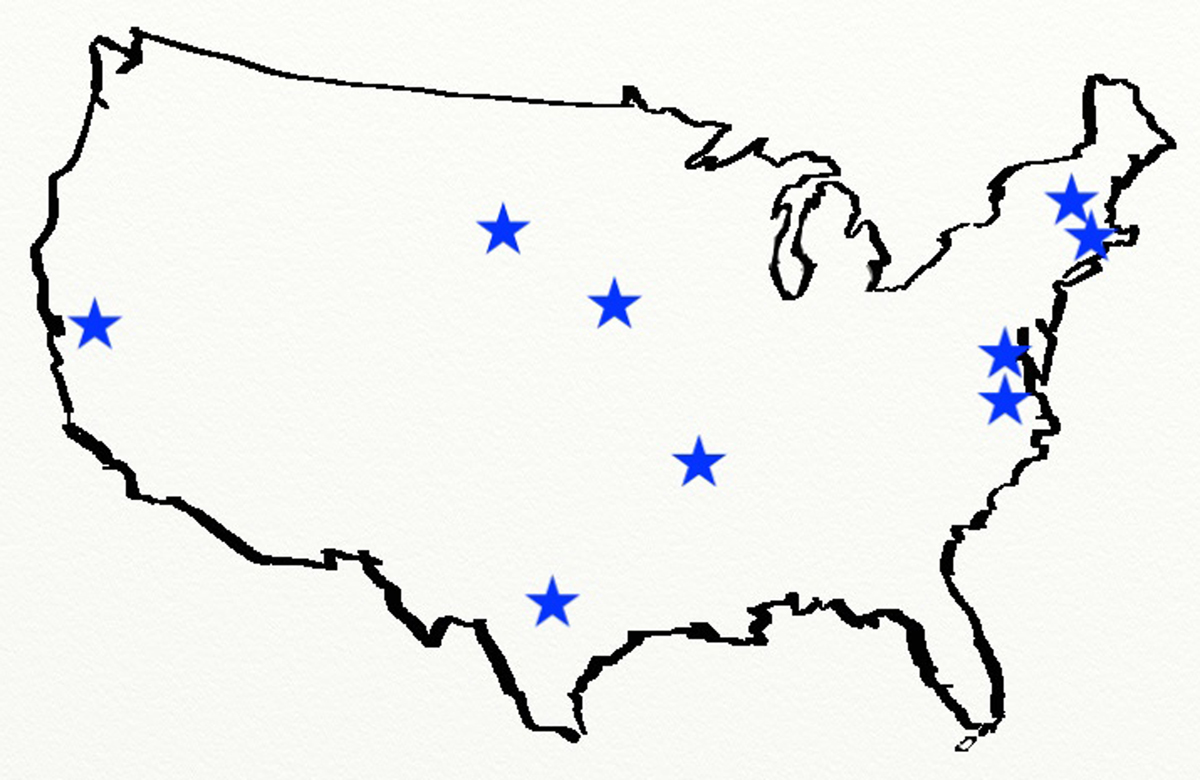
Figure 1
Map of Regions Participants Served as Civilian Police.
This study was approved by the University of Massachusetts, Boston Institutional Review Board and informed consent was obtained from all participants. Interviews were conducted and the audio recorded using the Zoom conferencing platform, and most lasted between one hour and 15 minutes to one hour and a half. After a five-to-ten-minute ice breaker conversation with participants to build rapport, the interview was conducted and usually an additional 15 to 20 minutes chatting “off the record” to allow for any questions or concerns the participant may have had. This “offline” chatting allowed time to thank the participants and to ask if they could refer others to this study who met the participant criteria as well. None of the “offline” discussion content is included in this paper.
The interview guide was designed to collect the interviewee’s perceptions of their social experience in the military and civilian police occupational culture in four parts. In Part I, they were asked a series of open-ended questions exclusively about their experiences in the military. In Part II, they were asked a mirrored series of those same questions only about their experiences in the police. In Part III, they were asked to compare and contrast their experiences in the military with their experiences with being in the police. Finally, Part IV asked for basic demographic information.
The data were analyzed comparatively using a “semantic approach” focused on semantic/explicit keywords, and a top-down, “theoretically-driven” thematic analysis (Bernard, 2011; Bernard et al., 1986; Braun & Clarke, 2006). This subjective approach allowed for a systematic and efficient method of analysis to describe semantic and thematic prevalence’s across participants. After manually transcribing all the interview audio files into text, the participants’ answers were organized by participant and interview question. This allowed for intra-subject and inter-subject comparison by theme (e.g., familial language, or traumatic events), and relevant key words (e.g., “family” or “brotherhood”). Interviewee perceptions of camaraderie and psychological kinship were subjectively compared between their experiences in the military and their experiences in the civilian police, and comparisons were made between individual participants’ experiences.
All efforts were made to present the data here in such a manner as to protect the identities of the participants. Participants were assigned an identifier code in place of their name, and information which may be used to identify them was either changed or removed. Most nonessential utterances such as “like” or “um” were removed from participant quotations in this paper to improve readability while maintaining the overall integrity of the content.
Results
Most participants can be categorized as having positive feelings towards, and identifying strongly with, both their military and civilian police identities. Camaraderie was mostly described as being needed in both occupations. Whether on deployment or on garrison duty, military members move through the stages and rhythms of military life collectively, sharing virtually all aspects of life intimately. On the other hand, policing was described as a solitary profession, where individuals patrolled alone and only sporadically shared experiences, especially after graduating from the police academy. The overwhelming majority of discussion with the participants entailed descriptions of a virtually universal sense of psychological kinship in their military experience, fostered through shared dysphoric experiences in a prolonged and psychologically and physically intimate social milieu; and a far less degree of psychological kinship which was sometimes contingent on personal affinity, transactional, or non-existent in the police. Similar to the military, participants described experiencing dysphoric events in policing, but they were not as consistently and intimately shared with their fellow officers. There was an observable tension in many of the participants as they at times struggled to articulate the role of camaraderie, cohesion and trust in their law enforcement experience, although it seemed effortless for the military context.
In the military, camaraderie was described by all interviewees as foundational to the success of the unit and execution of the mission. A few participants also said camaraderie and cohesion is also vital in policing. For example, one participant said the following about camaraderie in police: “We’ve got to have it, we can’t do this alone.” There were a few participants who felt camaraderie was similar in both their military and police experiences. One participant who pointedly described their experience of camaraderie in the police as falling “extremely short” also said this about the need for camaraderie in police:
When you’re at work, [camaraderie] plays a very big role… you really have to put a lot of faith and trust in the person, you know, pulling up behind you. And if that’s not there, you don’t trust them, and you guys don’t communicate, and you’re not training together, not talking to each other? Mistakes happen.
Several participants started by describing camaraderie as an important part of policing, but then described camaraderie and social bonds as less salient in their own experience in policing. For example, a participant who initially said camaraderie and cohesion was very important in police went on to say the following:
Uh, I mean, there’s some semblance of camaraderie… you can have those bits and pieces, you know? We want to have camaraderie, but I don’t- We don’t need camaraderie to respond to a 911 call. You know, we don’t need camaraderie to, you don’t need to- we don’t need to be together. I just, you know… if I’m making a decision on making a motor vehicle stop. I don’t think camaraderie plays into any of that.
Spatial Proximity in the Military
In the military, camaraderie met or exceeded their expectations, and played a significant and positive role in their military experience. Illustrated by this statement: “[camaraderie was] one of those things that the recruiter advertises, or the commercial advertises, that doesn’t fall short.” This theme was particularly present in 12 of the 18 descriptions of the military experience where servicemembers were “always together.” Almost half of the interviewees directly mentioned living together in the military. Several participants explicitly mentioned sleeping alongside one another, one recalling nostalgically, “living with the same people… literally sleeping right next to them, in the dirt.”
Numerous participants discussed the blurred and porous boundary between on-duty and off-duty, work, and personal life, illustrating a social world where the environment, the institutional character and interpersonal relationship were inexorably inter-woven. They were constantly with their comrades, cohabitated, sharing many intense and often mundane experiences. Hardships, trauma, and triumphs are endured and celebrated together in a wholly interdependent milieu, as described by these participants:
I mean just the, the bonds that are created between people, where through shared experiences or hardships or even shared successes. You can almost speak another language because you’re around somebody so much that they understand what you’re thinking before you even say it… So, I think that’s just being able to be yourself, and completely comfortable around somebody. I mean that’s the level of camaraderie that’s cultivated in those environments.
When I was in [the military], you spend 100% of your time with those people. I mean… [chuckles] everything blurs into one big social interaction.
Spatial Proximity in the Police
Policing was described as being a solitary profession, where individuals patrolled alone and periodically shared experiences (including dysphoric experiences) with their fellow officers. The fact that police “work alone” was expressed by most participants, descriptions of individuality came up several times. For example, after describing the particulars of solitary patrol in their agency, one participant pointed out that: “100% of the time a police officer is going to be outnumbered… if we need backup, you know, it’s a ways’ away.” A different participant said, “I feel like [in police] there’s more individuals, and people are more individually, motivated or minded, you know?” Another officer described feeling this individuality even as soon as completing the initial police academy training:
You spend [many weeks] in the academy building up those bonds and those friendships and helping you through the hard scenarios and getting through the shooting and the driving and then, then you go out and we’re by ourselves like most of the time.
Contrastingly, one participant pointed out that in the military, “you never do anything alone” and said this about their experience in law enforcement:
You’re kind of on your own until you go to a call and see somebody, see another officer, or you know if its late at night and you like meet up in a parking lot to talk about something, but, as far as- you’re alone in a cruiser no matter what position you’re in.
Identity Fusion in the Military
In line with the shared-experiences pathway which leads to identity fusion and psychological kinship (Reese & Whitehouse, 2021; Whitehouse, 2018), many participants pointed out that camaraderie and cohesion was developed through shared experiences, and generally, the more intense, stressful, or the perceived danger of the experience, the greater the bonding. This individual expressed a feeling of symbiosis which emerged from shared intense dysphoric experiences:
[Camaraderie in the military] helps you during the times when things go to shit… because you’re going to be cold, you’re going to be hungry, you’re going to be hot, you’re going to be tired, you’re going to be scared… you’re going to be angry, all those things. Where it’s like, the person next to you… You can count on them. You can look at them, and, I mean, they’re probably thinking the same thing or feeling the same emotions that you are. That kind of helps you. It’s like, okay, I’m not alone. Like, I’m scared, he’s scared. I’m tired, he’s tired. And you can kind of look at each other and be like ‘okay, we got this.’
Identity Fusion in the Police
Similar to the military context, participants described many traumatic and dysphoric events in their time in law enforcement. On duty, police may be exposed to the dark side of humanity, encountering violence, fatalities, sexual assaults, traffic accidents, domestic and child abuse, and other traumatic experiences (Zacarese, 2017). The potential for danger was expressed consistently, as exemplified by this respondent:
When you go into the domestic or traffic stop you never know what you’re coming up against. Those are the ones that are really scary… You want someone there that’s going to take care of you and make sure that you’re going to go home at night.
Unlike in the military, however, consistent sharing of all aspects of the dysphoric experiences was lacking, as this officer succinctly explained: “You know a lot of times, from the policing aspect, by the time your backup gets there, or you get there- backing somebody else up, most of the real critical incident has already happened. Just because of geography.”
Comparing Social Experiences in the Military and Police
Whether they had a positive or negative view of camaraderie in the civilian police, it was consistently expressed that there simply were not nearly as many opportunities for spatial proximity, nor consistently shared experiences in the police as there were in the military. In contrasting their experience, one participant said, “I think- to be honest with you, the fellow soldiers felt more like family. It felt closer. More… more of a bond there. And as a, as a police officer… it was more of just friendship type.” While listing specific differences between their experience in the military and their experience as a police officer, these participants said:
You go to work with these people in the Army. And then you go home with these people in the Army, and you wake up with these people in the Army, and you got to work with them, and you know, they’re literally your family. like you spend more time with them than you’d want to spend with anybody in the world [chuckles]… but in the, the police department, you go to work with these people, and you leave work with these people, and then you don’t see them again for three or four days, and then you go back and do a shift with them and it’s very- your life, and your profession is very separate. For some people. For me.
There’s guys, especially in bigger departments that you don’t see… for [chuckles] weeks on end, you know if you’re working overnights and the other guy is on the opposite day shift or something… You may not see him for weeks, or maybe just a couple times a year… [camaraderie is] on a smaller scale in the police [and limited to the] guys are on your shift.
In the military… we all ate at the same chow hall, we all slept in the same compound, we all worked together. So that’s where you get that, that camaraderie, you’re all in it together. Compared to the civilian [police]. You may only work with a guy for eight hours, and then you’re off shift… Whereas in the military that’s not the case… That was really the big difference where the camaraderie really was different… You’re all- all of you are not celebrating Christmas at home. You know, you’re away. And you’re all experiencing the same thing, you’re all in the same boat together, and I think most of the time that brings, it brings the unit, the group, whatever it may be. It brings you closer.
I’ll make… a comparison to the military. You know, every Friday we would have a battalion run … where it was an opportunity for us to get together, sing cadences, you know, sow esprit de corps and be proud of where we’re at, you know what I’m saying? you know, and proud of who we are… I’m not saying that we don’t have those moments in law enforcement, you know, but it’s usually something we’re surrounded in- you know, maybe sometimes it’s a loss of life or it’s you know, it’s something sad when we’ve got to come together, or somebody lost their job and we got to support them or this and that, so we don’t get those opportunities to share, you know, I think the camaraderie’s different, it is different, you know?
Several participants expressed surprise at how powerful and long-lasting the impact of the bonds formed in the military were in comparison to their police experience. The following officers (two female and three male, from four different states) who all had a generally positive view of policing, stated:
Um, So, you’re- I definitely have good friends, and close friends, that are police officers that I’ve worked with and do work with, but it’s not to the level of the guys that I served within the military. Just because I guess, the hardships weren’t as acute [chuckles]. Um, So, that’s…they, they’re very, very good friends. But they’re not like, lifelong companion level, guys, you know, or girls… I didn’t expect the level of camaraderie that I had with the people that I served with to be there, you know? I mean, I’ve been off active duty for 15 years now, and I’ve got friends that still come stay at my house, bring their kids, you know, that I hadn’t- Um, you know, we’ve maintained in touch, we’re still very, very good friends… You know the, the bonds that being in that kind of environment create are inseparable.
I still have friends from [the military], that are my best friends now. And I’ve been on the police department 14 years, and I have some good friends, but it’s nothing like the friends that I made those almost three years that I served in the military.
I’d say, I think for the military, the camaraderie was like the thing I expected, that exceeded expectations. I think all the opposite with police. I mean you see everyone be like “oh it’s a brotherhood” this and that. but like I said, because here you have other things to worry about, in the military everyone’s getting paid the same, everyone lives in the same type of room. Most guys don’t have cars because you know we don’t get paid very much. And I just think, law enforcement is just viewed as more of a check in and check out kind of thing. And uh, guys worry about, you know, they care about each other, but at the end of the day it’s, you know, they have 100 other things on their mind, their families, their friends, their, their whole life that they have outside of the job. So, I think like the lack of camaraderie was like the biggest thing that I didn’t realize was, was, was absent in law enforcement, or at least where I [am].
Just the fact that to this day still my closest friends are people that I served with in the military. And we don’t live near each other, we don’t live nowhere near each other… [In the police] we have camaraderie amongst each other, and law enforcement we come together when we need to. But I don’t feel like it’s, it’s not on the same level as it was when I was in the military, you know?
Indicative of psychological kinship, there are family metaphors describing pseudo-kinship relationships, citing closeness, intimate bonds, and togetherness that were frequently used by the participants to describe the camaraderie they felt with their fellow servicemembers. Thirteen of the 18 participants described military camaraderie using the terms “brotherhood” or “sisterhood,” that they “care for each other,” or that they were “like” family. These two interviewees’ descriptions are illustrative of the soft camaraderie described by many participants:
I had a stronger bond with some of the guys that I served with then maybe even my family or my wife, you know, just because you’re around them so much and you spend so much time with them. And you do you go through those hardships and moments where you’re- at the time you’re like, Man, this is the worst ever…
Camaraderie in the military, like I said, the friends I made in those few years, they’re my family. Um, some of them are far more family than my own blood… It’s just like, that literally is my family member, and I want to make sure that they get home, day in and day out.
[In the police] you do your 40 hours or however many hours you want to do, and then you go home to your other life, your family or friends as opposed to the military where it’s your friends, and… your family are the guys that you work with.
Fewer interviewees used familial metaphors in describing civilian police camaraderie than they did for describing military camaraderie. And of those that did use familial terminology, they used similar descriptors for their experience in both occupational cultures. Although the word “friend” came up many times in the police context, only eight of the participants used the words “brotherhood” or “sisterhood,” who were “like” family, or that they “care for each other.” A few participants implied that cohesion and trust has lessened over time: “Um, there is, there’s still a little bit of the ‘you try to have someone’s back.’ I mean they try to call it like… the thin blue line kind of thing.”
I feel like the blue community right now has a little bit of an Instagram relationship. [chuckles] When you look really good on Instagram, you’re all posing for these pictures and you’re like blue this, and blue that. But I think in real life, like, we have some problems. We’re having some relationship problems.
A Willingness to Fight and Die for the Group
A hallmark of identity fusion and psychological kinship is a willingness to fight and die for fellow group members (Swann et al., 2014; Whitehouse, 2018; Whitehouse et al., 2014). In the military, through on and off-duty experiences individual group members demonstrated a willingness to unconditionally support the others, even at great personal risk, and explicitly expect the same in return. Interviewees showed an extraordinarily consistent level of interdependence and confidence in their group’s commitment to their ability to fight, protect, and potentially sacrifice for each other. These interviews illustrate this phenomenon in the military context: “You’re building that trust to basically die for each other and put your life on the line for each other”; “[Camaraderie in the military is] looking at the person to your left and your right, knowing that, you know, I would absolutely die for you, I know you’d do the same. No matter what, we have each other’s back”; “When you’re willing to bleed together on the battlefield or in training for that battlefield. That to me, is what real camaraderie looks like.” Almost half of the respondents explicitly described their comrades as being unconditionally there for them. These two interviewees pointed out that one would always fight for the person next to them: “Nobody wants to see each other bleed, nobody wants to see each other die, so you, you do it, and you make it home, and then you deal with all the other crap later”; “it’s guys that you knew had your back no matter what. I mean, that’s the biggest thing is knowing that the guy next to you is going to fight for you, and die for you. If he has to.” Succinctly put by another respondent:
I think the camaraderie you get in the [military] is that un-abiding faith in the people around you. I mean you’re literally trained to put your lives in their hands. And so that itself, has built a trust that you’ll never get outside of the military.
Non-Contingent Trust in the Military
In the military context, interpersonal commitment, cohesion and trust was described as applying to all members of the group, regardless of personal affinity, or demographic. Everyone in the group is relied upon and uses the reliance of that commitment as a benchmark for their own behavior and expectations. Many participants specifically mentioned interpersonal affinity was not a factor in-group cohesion and trust, as exemplified by these two statements:
All the guys don’t always get along, but at the end of the day, you have their back even if you don’t like them necessarily. Because you spent enough time with guys, you’re you know, definitely not going to like all of them. But I think it’s just looking around, just knowing like, hey, if the shit hits the fan, these guys, these guys will have my back no matter what, like no questions asked.
You can’t have a military that people don’t trust each other, or where people won’t say, ‘Hey, I don’t really care for you but when things start getting bad, ‘I got you’.
Contingent Trust in the Police
Several participants described instances of their fellow police helping them out on calls, with paperwork, and “having each other’s back.” However, unlike in the military context trust in their police experience was often described as inconsistent and contingent on subjective factors such as interpersonal affinity, situational context between group members, or demographics.
Participants were not specifically asked about receiving back up, coming to a fellow officer’s aid, trust, or reciprocal cooperation directly. However, unsolicited, almost half of the participants expressed some need to strategize, identify, or otherwise manage the variation of how quickly they would get “back up” either because of shift variation or individual officers’ willingness or lack thereof. This sentiment was not expressed by any interviewees in the military context. These seven participant’s demographics include both Hispanic and non-Hispanic, White, Asian, and American Indian. Three were female, and four were male officers, from five different states from five different regions of the US (Northeast, Southeast, South, Midwest, and Southwest). Their experience in law enforcement ranged from one to 16 years. The congruity with which officers with quite varied experiences from different areas of the country, were relatively consistently expressing this sentiment was surprising. One participant made an illustrative and powerful statement expressing the inconsistency and contingent nature of reciprocal trust and cooperation in their police experience:
You kind of learn like [fellow police officers’] strengths and weaknesses. You kind of find- figure out which ones are the guys that will be, you know- maybe will get there quicker than other guys to a call that you may need backup at. So, you kind of learn who you can trust more than others, because kind of unlike the military, you have to kind of, you have to think about what guys, which guys may be there, which guys care more than others, I would say. I don’t know if that’s putting it to black and white but…trying to like, figure out how to word this. Um… One second, [pauses…]. Let’s, just say camaraderie [in the police], like I said is too, it’s too limited, it’s on a smaller scale.
It is subtly implied that the trust and confidence felt in their fellow police officers is not universal, but varies by which officers are on shift, and whether or not they have a sufficiently developed relationship to trust them to come to their aid when needed. By implication, then, there are times they work with officers that they do not “trust.” In describing interactions with “unsuccessful police officers” another participant said:
[There are] Individuals that when a ‘hot call’ comes out, they miraculously have a flat tire, they stop a speeder instead of responding to backup when another officer is calling for assistance … So, when we get a call, say it’s a’ hot call’, going to like- like something serious is going on. And they’ll check off ‘Oh, I’m at a traffic stop.’ And it’s like ‘hey, come on’ we have this serious call, let’s go take care of this serious call, and just- they’d rather- ‘oh I gotta be over here,’ or- you’re there, in a struggle with somebody. Somebody that’s resisting… and you’re calling for backup, and you got some that show up. And of course, they show up there quick; and then you got that one person that showed just- he doesn’t show up. And you call him out on it and so- I, oh. well, there’s a million excuses as to why, or why he got there last to a call.
Another officer details several scenarios illustrating how a breakdown of interpersonal relationships can lead to another officer not receiving proper backup if needed:
If everyone hates each other on their shift, who are you going to double check with, you know, if you’re going to be not making the right decision? Or if you’ve never dealt with this type of situation before, who are you gonna call? Like, you know, are they going to answer the phone If you don’t like that guy, you know? or… Um, it’s important, to have that, that team building, and that camaraderie with each other… You know, how fast are they going to back you up? Basically, is a big one too. That guy you know, like ‘f’ that guy, you know, I’ll just, I’ll do 40 miles an hour to go drive to his call even though he- you know, he might need somebody like in the next 10 minutes, you know… And they- they’ll do that [chuckles]. You pissed them off, and they don’t like you, and you call for back up, and they’re like yeah I’m going, but I’m going to take my time getting there.
Another officer described a sentiment shared by a few of the participants, “it to me seemed like cops were out to get other cops,” they continued: “What was the most surprising thing to me and what eventually turned me off to being a police officer is that in my own experience, that camaraderie and brotherhood was not there.” The fundamental difference and inconsistency in the social experience and social cohesion, is illustrated powerfully by this statement:
There’s this huge, just, family atmosphere in the military… we had a very tight knit group in the military, and I understand that not everybody’s like that, but in my own experience, I did have that. In the police force, once you clock out, it’s over. You know, you might talk to a guy, you might see him, you might, you know, go grab a beer with a guy, things like that, but it’s not the same. Once you clock out, you’re off the clock. You take your badge off, it’s over, they go to their family you go to yours… it’s just not that continuous flow of brotherhood or family or things like that with, with the police force like it was in the military.
In conclusion, the military was described as an intense social world, where individuals cohabitate with, and experience traumatic events, hardships, and pleasure, as well as the aftermath of those events, together with their comrades. The civilian police on the other hand were described as a mostly solitary occupation, where hardships and successes are also experienced, but these events are shared more sporadically than in the military. The police generally do not cohabitate with their fellow officers, and the distinction between work and personal life was described as less porous in the civilian police than it was in the military.
Discussion
Findings Summary
Individuals who served in the ultra-social military, and who also served in the relatively solitary civilian police force are uniquely positioned to provide insight into the primary social mechanisms which contribute to the psychological kinship experienced by many service members. The patterns emerging from these interviews support the concepts of spatial proximity and identity fusion theory individually, but also support this study’s hypothesis that the unified model: identity fusion + spatial proximity = psychological kinship, has more explanatory power with these concepts conjoined, than individually. In the military, interviewees experienced spatial proximity and shared traumatic events with their fellow servicemembers. The participants described far less spatial proximity in the police, and although they also experienced traumatic events, far fewer of them were consistently shared with their fellow officers.
Psychological Kinship via Spatial Proximity
Indicators of psychological kinship through spatial proximity like the use of familial metaphors, and consistent, prolonged, and intimate physical and psychological proximity were overwhelming expressed in the military context. In law enforcement, participants expressed less of these psychological kinship indicators, which many attributed to the lack of spatial proximity and far fewer opportunities for consistently shared dysphoric and mundane experiences. The participants stated most police officers in the United States (and all of the interviewees), normally patrol by themselves, and usually only interacted with their squad-mates as needed (e.g., for backup or assistance). Additionally, the nature of shift work and squad make-up means individuals work with and support each other inconsistently (Davis, 1984).
Psychological Kinship via Identity Fusion
Participants reported experiencing “suitably” dysphoric events as service members (e.g., tough training and combat exposure) and as police officers (e.g., “hot calls” and traumatic events). The difference in the respondents’ descriptions is primarily in the degree to which, and how extensively and consistently, the dysphoric events were shared by fellow police officers versus their fellow servicemembers. Although not as consistently as in the military context, participants did describe some shared traumatic events, and times their fellow police officers came to their aid.
By the accepted shared-dysphoric-experiences pathway to identity fusion (Reese & Whitehouse, 2021; Whitehouse et al., 2014, 2017) these events should trigger fusion in both the individuals and the group as a whole. There are two likely reasons fusion and psychological kinship are not manifesting in these responses: the dysphoric events are not numerous or traumatic enough to achieve the “fusion” affect; or the dysphoric events are not being consistently shared and experienced. It seems unlikely the events are not traumatic enough because police face a variety of fearful, stressful, and traumatic events (Hartley et al., 2013; Johnson, 2013; Zacarese, 2017). It is more likely that dysphoric experiences (and their aftermath) are not being consistently experienced collectively and consistently. Police generally have a solitary structure built around shift work. Functionally, individual police officers may experience elements of a traumatic event together, then return immediately to patrol alone. In fact, they may not see that fellow officer for days, weeks or longer.
Study Limitations and Future Research
This was an exploratory study conducted through an anthropological and subjective lens with a non-representative sample using strictly qualitative interviews. This research has successfully raised some important questions and themes for further exploration; however, it is not possible to make broad or generalized claims. It is also important to acknowledge some important limitations in this study. Firstly, sample size and occupational variation are significant factors to consider. Individual experience serving in the military and civilian police will vary widely because of the sheer size and attitudinal variation within the military and law enforcement institutions. Subsequent research with more participants could clarify and refine these initial findings. Factors such as: different branches of the military, participant military occupational specialty (MOS), and deployment history will dramatically affect participant experiences. Secondly, the size, make up, and location of the community, as well as the demographics of a police officer and that of the community they serve will also affect how law enforcement is experienced. Thirdly, most participants served in the military many years ago. It is possible the time elapsed contributes to a degree of romanticization in recalling their time in the military, allowing for a favoring of more positive memories over the more frustrating ones. Fourthly, future research should include civilian police without military service backgrounds. There could be biases exclusive to veterans which could be addressed by incorporating non-veteran voices. Additionally, psychological kinship models can be further tested by comparing the military experience with other first responders, especially firefighters who often cohabitate in 24 hour blocks, could provide valuable insight into the role of spatial proximity and identity fusion. Fifthly, and perhaps most significantly, it should not be taken for granted that camaraderie and cohesion is desirable in law enforcement. After all, camaraderie is not inherently good. In fact, it can be toxic, unproductive, and at times even dangerous. In such an intimate interpersonal environment, cliques may form and disputes within the primary group may spiral out of control if central unifying identities grow thin (Woodward & Jenkings, 2011). The individual or the group’s identity and loyalty can become misplaced and fall out of balance, leading to unhealthy and anti-social behavior (Winslow, 1999). Although military training is designed to foster unit cohesion through spatial proximity and shared dysphoric experience, and cooperation to “marshal the capabilities of each individual member for the pursuit of a common goal” (Winslow, 1999, p. 429), it is not entirely clear if it is, in fact, desirable in policing.
The descriptions of the social environment which fosters the emergence of psychological kinship, almost universal trust, and willingness to fight and die for each other in the military is consistent with previous scholarship and the psychological kinship construct. The relatively solitary approach to patrol all but ensures the absence of spatial proximity, and consistently shared dysphoric experiences. This is an indicator that the experiential pathway to identity fusion and spatial proximity in-and-of-themselves may not be sufficient to explain the emergence of psychological kinship. The respondents’ interviews support that this sense of family and trust is formed by both prolonged, intimate psychological and physical proximity, and consistently shared hardships and traumatic experiences. Figure 2 illustrates the unified model identity fusion + spatial proximity = psychological kinship which maps convincingly onto this outcome.
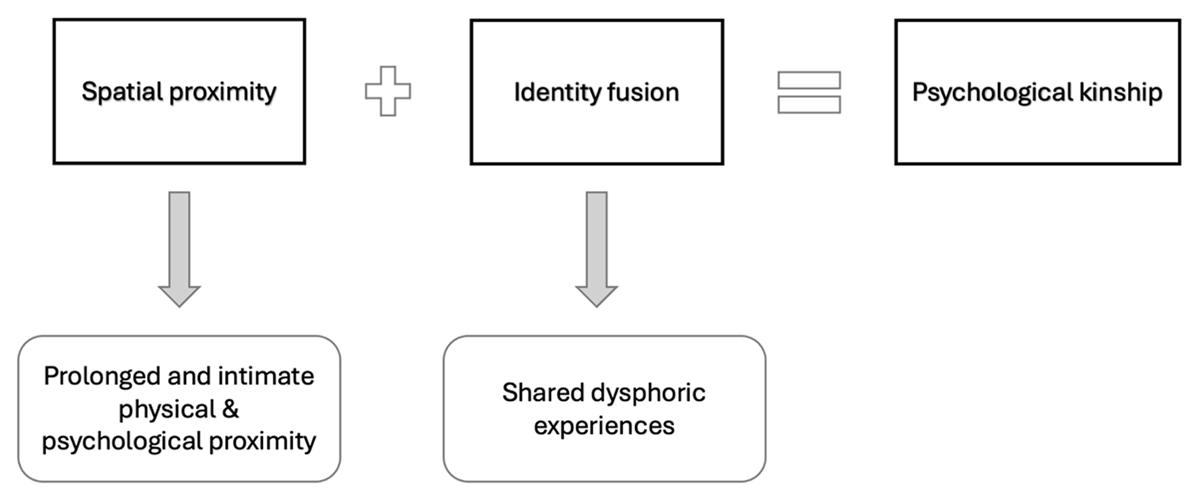
Figure 2
Unified Model.
This exploratory study’s findings pose important theoretical and practical questions which should be addressed in further research. It must be mentioned, however, that human sociality is immeasurably complex, variable, and contextual. Overly simplified causal explanations are not likely to prove useful in predicting or influencing behavior in humans in varied contexts. To that end, although this study achieves its goal of exploring and identifying novel approaches to test the psychological kinship construct, it can only be a start. Further interdisciplinary research will hopefully continue to build useful models to attain a better understanding of the causal mechanisms of the extraordinary complexities of human in-group sociality.
Data Accessibility Statement
Access to study data can be requested via correspondence with the author at steve.medeiros001@umb.edu.
Acknowledgements
The author wishes to thank the editorial staff and reviewers for their thoughtful attention and advice, friends and mentors, and the participants who graciously gave their time and earnest insight.
Competing Interests
The author has no competing interests to declare.