
American student veterans continue to report challenges regarding their transition into higher education and their overall experiences forming a new identity and role in a post-COVID environment. However, it is important to note that this is not a group of students who lack persistence, resilience, or have not known and experienced hardships. Thus, we found it necessary to qualitatively assess undergraduate student veterans’ overall well-being, including their hardships and their strengths/resiliencies at a large institution, which has a high percentage of student veterans and military connected students. Our funded study utilized photovoice methodology, an innovative and creative qualitative approach, to explore the perceptions and experiences related to well-being. To our knowledge, only a few photovoice studies with student veterans are published, adding to the need to expand upon this approach. Below, we provide background information regarding the population of student veterans, in addition to a literature review of photovoice studies which have been conducted with student veterans to rationalize our current study.
Background
According to the US Department of Veterans Affairs (2023), nearly 700,000 veterans were eligible to use their educational and vocational benefits to further their education as of 2018, and over 702,000 veterans have used their benefits since the Post 9/11 G.I. benefits bill passed in 2008 (para. 1). However, we know that many veterans have yet to take advantage of these benefits. Moreso, as typical of nontraditional students, veterans transitioning from military service may face significant challenges adjusting to college life (Adams et al., 2017, p. 23; Clary et al., 2023; US Department of Veterans Affairs, 2023). Even with the assistance of financial benefits such as the Post 9/11 G.I. Bill, selected benefits from some states, and other services and support programs, veterans still can face lower than average rates of completion compared to their civilian counterparts, as well as culture shock when entering the civilian environment of the higher education classroom (Hunter-Johnson et al., 2020).
Research has attempted to uncover causes linked to difficulty transitioning from the military to the university environment. Numerous studies report these barriers being varied and vast. First, studies show that many veterans may face complex health issues including traumatic brain injuries (TBI), posttraumatic stress disorder (PTSD), chronic pain from service-related injuries, depression, and anxiety resulting from some of their military experiences (Elnitsky et al., 2017; Yeager, 2022b). These complicated diagnoses may negatively affect some veteran’s ability to consistently engage at a level required in higher education. It is important to note that some of these mental health or medical issues may have also been present before one’s military service, and further exacerbated due to service-related assignments and/or being unaddressed while serving. Second, many veterans are first-generation college students, and they may be less prepared to navigate collegiate systems (Hunter-Johnson et al., 2020). Without guidance from family members and loved ones, student veterans may experience additional difficulties not experienced by other more traditional students. For example, research has focused on challenges veterans face. This includes diminished academic skills because of the gap in education due to their time in service between high school and entering college (DiRamio et al., 2008). Moreso, time away from the classroom may result in forgetting previously learned information, and many veterans are not in a position to relearn these skills before re-entering the classroom due in large part to financial constraints. Further, because of their experience in the military and their age, many veterans have difficulty connecting to other students whom they may view as less worldly or mature (DiRamio et al., 2008). Clary and Byrne (2023) also found that transitional challenges among emerging adult (18–29-year-old) student veterans included: (a) feeling as if they are starting over, (b) an inability to relate to others on campus, (c) lacking a concrete purpose or a plan, (d) their support systems changing, and (e) people only viewing them with their veteran identity.
However, on the flip side, it is important to acknowledge the strengths and positive attributes student veterans do bring. For example, student veterans have also reported that they feel as if they have more life experience than their counterparts (DiRamio et al., 2008). Other studies illuminate strengths and resiliencies this population possesses that have supported their well-being and success in higher education including strong communication, leadership, dedication/drive (Sullivan & Yoon, 2020), greater worldview due to their experiences compared to non-veteran students, being emotionally mature, having a diverse/wider perspective, connection to the larger community (Blaauw-Hara, 2016), self-discipline, teamwork abilities (Olsen et al., 2014), punctuality, flexibility, adaptability, and global perspective (Cox, 2019). Thus, veterans have many traits that can bring an added leadership dimension to the campus environment.
Photovoice Studies
Several qualitative methodology approaches have been utilized to look at the experiences of student veterans to try to better understand their experiences, strengths, and challenges. Common qualitative methods used include individual interviews and focus groups. However, among these qualitative methodologies, photovoice has emerged as a more commonly used and exciting innovative approach researchers are using to explore the personal experiences of student veterans. According to its creators Wang and Burris (1997), photovoice methodology is a “process by which people can identify, represent and enhance their community through a specific photographic technique” (p. 369). The process of photovoice methodology includes participants taking photographs according to a specific prompt, question, or topic. Then, through a thorough, in-depth interview or focus group process, the meanings and symbolism behind the photographs and images are explored, described, and examined further.
Numerous studies have been published exploring the experiences of student veterans as they navigate the college campus environments. However, only a few have utilized photovoice methodology to investigate the topic. One study conducted by Towson University employed photovoice methodology to look at the experiences of student veterans on college campuses in terms of what barriers and supports aided academic success and wellness. However, the scope of the study only included nine women veterans (Yeager, 2022a). In this particular study, the researcher sought to better understand female student service members’ and veterans’ experiences transitioning to higher education. Results from the study suggested several emerging themes including beneficial skills adopted from their time in service, barriers to social interactions, institutional barriers that affected academic participation, challenges associated with fulfilling multiple roles, the importance of relationships, and coping mechanisms. This study also suggested that future research should investigate the unique challenges of female student service members and veterans who are also mothers (Yeager, 2022a).
Two similar studies also conducted by Towson University had a limited number of participants (N = 12 and N = 2, respectively) resulting in a limitation of results (Yeager & Rennie, 2021; Yeager, 2022b). These studies found that despite initial challenges integrating into a university setting, student veterans made improvements over time in various dimensions of wellness, such as helping reestablish identity; understanding university systems and roles; and reestablishing camaraderie and social connectedness. These studies indicate the need to provide supports that are specific to the needs of student veterans to provide tailored assistance. This can be accomplished through initiatives such as veteran centers and social events that enable connectedness and provide mentoring opportunities.
Another photovoice study conducted by True and colleagues (2015) with 40 veteran participants, focused on barriers to health and mental health services. Participants were given 2- weeks to take photographs related to their health and health care needs because of their time in service and/or deployments. After they had collected photos, researchers conducted a second individual interview to discuss the photos. Finally, researchers led small group discussions to examine the emerging themes with the participants. They found three themes that were important predictors of accessing mental health services including: how the military culture of stoicism and self-reliance encouraged transitioning veterans to not seek help; coping strategies for their mental health conditions, such as PTSD, and how it worked against them going to appointments (e.g., traveling in cars for long periods of time to access VA sites); and the negative aspects of some services, such as being labeled as just a number, led them to abandon treatments. However, the study did not look specifically at student veterans and a discussion on broader family and social context themes were not explored (True et al., 2015).
Another study conducted by a master’s student from the University of Wisconsin-Milwaukee used photovoice methodology to investigate the experiences of student Veterans on campus (Tomar & Stoffel, 2014). This study offered insights regarding the reach photovoice methodology can offer when assessing veterans after transitioning from the military and found four themes relevant in terms of potential areas of impact of photovoice: reflections on military service, the transition from service to civilian student life, entry to a new stage of life, and the university and community environment around them (Tomar & Stoffel, 2014). The study emphasized the usefulness of photovoice, specifically illuminating the unique perspective it allows from each individual participant.
Although these studies point to the potential positive benefits of employing photovoice methodology, there is an increased need for additional research using this approach. According to several studies, there should be more research aimed at understanding how student veterans’ conceptualization of help-seeking behaviors and communication affect their success on an academic level (Tomar & Stoffel, 2014; True et al., 2015). Additionally, other studies suggest that longitudinal research looking at student veteran transitions to higher education and the resources needed to assist in this transition, such as military and veteran centers, should be studied further (Yeager & Rennie. 2021; Yeager, 2022b). Research also suggests that universities overwhelmingly aim their programming to assist traditional students (Yeager, 2022b). Therefore, there is a need to better understand how to assist and support the well-being of nontraditional students, especially student veterans, who may have multiple roles and identities.
Current Well-Being of Student Veterans
Student veterans face higher rates of depression, PTSD, and suicidal ideation than their civilian counterparts (Fortney et al., 2016). Of those student veterans who have served in combat, the prevalence of PTSD ranges from 12% to 30% over the course of their lifetime (Stefanovics et al., 2020). Additionally, a survey of 628 student veterans found a unique prevalence of mental health challenges among participants. Approximately 35% of participants reported having anxiety and 46% reported having thoughts of suicide with 20% of those reporting having a plan for attempting suicide (Rudd et al., 2011). These findings suggest that student veterans’ mental health and well-being is strained and that mental health services that address these issues are vital.
Study Rationale
Our literature review suggests that the use of photovoice with student veterans’ needs to be further explored specifically as it relates to their campus experiences, their overall well-being, and how the combination might be tied to provision of needed services to address their transitions and success. The need for this study has a foundation in the limited research available surrounding student veterans and their well-being through alternative, creative, and innovative methods of research, such as photovoice methodology.
Study Aims
Our study builds on recent manuscripts which used photovoice methods with Veterans and military-connected students (Dobson et al., 2019; Tomar & Stoffel, 2014; True et al., 2015; Yeager & Renney, 2021). Photovoice is a unique qualitative methodology that utilizes photos and interviews that elicit the meaning of these images to help explore and answer the research questions. It is important to emphasize that few photovoice studies have been conducted with student veteran populations, thus emphasizing the importance and innovation of our current research project. Our photovoice study aimed to (a) understand how student veterans conceptualize and experience well-being through picture taking and semistructured interviews and (b) examine the potential benefits of using photovoice methodology with undergraduate student veterans. In our study, we qualitatively explore the following eight dimensions of well-being: physical, emotional, financial, social, occupational, spiritual, intellectual, and environmental using photovoice strategies and report the thematic results found after rigorously coding the data as a team.
Methods
Our research team received Institutional Review Board (IRB) approval from Texas State University to conduct this qualitative study with undergraduate student veterans. Further, we were internally funded by a research accelerator grant that provides funding for promising and innovative studies. Our team recruited student veterans in the fall of 2022 to participate in the multi-method photovoice study. Strategies for recruitment included using university student veteran email listservs, learning management sites for student veterans, flyers at the veterans student center on campus, active outreach at veteran-focused events, and word of mouth or snowball sampling (Naderifar et al., 2017). Participants were eligible to participate if they (a) were a current undergraduate student veteran at the institution and (b) had access to a smartphone to take pictures. Our goal was to recruit 20 individuals, and we ended recruitment with 18 eligible participants. Upon completion of the study, all participants received a $50 Amazon E-gift card as remuneration. We used recommended qualitative standards to guide our data strategies, collection, analysis, interpretation, reporting and dissemination (Levitt et al., 2018), in addition to the photovoice methodological guide (Sutton-Brown, 2014).
Photovoice Methodology
A photovoice study is a participatory action research strategy that uses a deep reflection on images/visual representations, associated meaning, and call to action from the interpretations (Sutton-Brown, 2014). Participants are considered to direct and lead their experience in this approach, as they choose what to take pictures of and make meaning through their everyday experiences (Foster-Fishman, 2005). This approach assumes that participants are experts of their lived experiences, histories, and events (Wang et al., 1996) and stresses the “the importance of telling their story, rather than trying to tell the story” (Sutton-Brown, 2014, p. 171). This is an empowering and highly engaging data collection method that has been used in mental health and wellness research (Han & Oliffe, 2016).
The methodological guide of implementing our photovoice study was followed by the following steps: (a) selecting a target audience, (b) recruiting a group of participants, (c) introduction of the methodology and expectations of the study, (d) obtaining informed consent, (e) posing an initial theme/area to focus the picture taking, (f) providing time for participants to take pictures in their environments, and (g) meeting to discuss the photographs’ meaning through individual interviews (Sutton-Brown, 2014).
Research Environment
The research study took place at a large higher education institution with an overall student population of 38,000 students, including 3,800 veterans and military connected students, representing about 10% of the entire student population. The university is a federally designated Hispanic-Serving Institution (HSI) with a diverse student population of almost 52% ethnic minorities. The campus lies in a corridor with major military installations and in a state with a significant military and Veteran population, which is in the top three across the United States (Texas Workforce Investment Council, 2021).
In 2008, the university initiated a veteran and military-connected program to support the transitioning needs of its growing student veterans and build overall success for their transition, well-being, and graduation. This award-winning program is focused on coordinated services across departmental units on campus beginning with admissions through career services. This veterans initiative program included a holistic, coordinated approach that emphasizes academic, social, career, health, and behavioral health program elements, supporting the overall well-being of student Veterans (Selber, 2014). The peer driven service model also aimed to engage outside collaborators and stakeholders to support the overall goal of helping veterans successfully transition into, throughout, and out of the university setting, into the civilian sector workforce/professional field.
Data Collection
During August through December 2022, we employed four phases of data collection: (a) an online confidential Qualtrics survey, (b) an individual research study orientation session via Zoom or in person, (c) photo taking by participants over 2 weeks, and (d) an individual semistructured interview with one research team member. Our research team consisted of four members: two social work professors both with military family connections and extensive research supporting veterans and two research assistants also with military family members. One of the professors (Katherine Selber) was also an original founder on campus of the veteran’s initiative program and veterans advisory council and had experience training professionals to serve veterans as well as to conduct research with veterans. The other professor (Kelly Clary) has extensive experience with leading funded research projects with veterans, military connected students/family members, and student veterans. Both research assistants (Rachel Ortiz and Bryan West), were enrolled students in the school of social work on-campus program, as either an undergraduate or graduate student, completed at least one research methods class, and had strong interests in supporting veteran populations.
Online Qualtrics Survey
All interested student veteran participants emailed the primary research investigators (Kelly Clary and Katherine Selber) sharing their interest in participating in the study. Once their eligibility was confirmed, they were then directed to complete the confidential online Qualtrics survey. Participants completed the survey which captured demographic information and data on well-being. Standardized measures included the General WHO-5 Well-Being Scale (Topp et al., 2015) and the PERMA-Profiler (Butler & Kern, 2016) (i.e., well-being measures that have both been used with veteran populations). The survey took approximately 10 to 15 minutes to complete.
Measures
We utilized two reliable and valid measures which have been used with veteran populations in prior research, to quantitatively assess the current well-being of our participants. First, the WHO-5 Well-Being Index (Bech, 2004; Topp et al., 2015) is a survey with 5 questions (i.e., I have felt cheerful in good spirits, I have felt calm and relaxed, I have felt active and vigorous, I woke up feeling fresh and rested. My daily life has been filled with things that interest me) measured on a 0 (at no time) to 5 scale (all of the time). The raw score ranges from 0 to 25 where 0 represents low quality of well-being and 25 represents high quality of life. Recent studies have used this measurement with veteran populations including in a Veterans Health Administration (VHA) primary care setting (Glover et al., 2016) and with Kosovar veterans (Shahini et al., 2019).
Second, the PERMA (Positive Emotion, Engagement, Relationships, Meaning, and Accomplishments) Profiler (Butler & Kern, 2016) is a measurement with 15 questions with three questions per domain. The scale also assesses physical health and vitality. Questions are listed on an 11-point scale ranging from 0–10. The positive emotion category measures general contentment and joy based on questions like “In general, how often do you feel joy?” The engagement category refers to being absorbed and interested in an activity or the world and is based on questions such as “How often do you become absorbed in what you are doing?” The relationships category measures the level one feels loved and supported based on questions such as “To what extent do you receive help from others when you need it?” The meaning category of the PERMA Profiler measures how an individual feels regarding having a sense of purpose in life. This is measured by questions such as “In general, to what extent do you lead a purposeful and meaningful life?” The final measure of the PERMA Profiler is accomplishment. This measures subjective feelings of accomplishment by using questions such as “How much of the time do you feel you are making progress towards accomplishing your goals?” This measurement has been used with numerous populations including caregivers (Stephan, 2023), physicians (Lagina et al., 2022), students (Tansey et al., 2017; Wingert et al., 2022), and student veterans in recent research studies (Umucu et al., 2020; Weiss, 2021).
Zoom Orientation Session
Once participants completed the survey, they then scheduled an informational orientation session either online via Zoom or in person to learn about the study’s goals, procedures, and review the confidentiality procedures. This was a 30-minute individual, confidential informational session providing an opportunity for one researcher to build rapport with the participant and review the study’s goals, procedures, and the informed consent. A PowerPoint guide was used to make sure all informational sessions were similar. Participants were encouraged to discuss questions or concerns pertaining to the study. In this session, student veteran participants were instructed to take approximately 10 photos on their cellular device, based on one prompt: Take a photograph when you feel, think about, or experience well-being in your various environments. Participants were encouraged to think about well-being across the spectrum of negative and positive interactions and were provided with descriptions of eight dimensions of well-being to consider (i.e., physical, emotional, financial, social, occupational, spiritual, intellectual, and environmental). Participants received a $5 Amazon e-gift card for completing the survey and research informational orientation.
Photo Taking
Participants were given approximately 2 to 3-weeks to capture photos on their cellular devices. We encouraged participants to take photos within the university environment (e.g., campus spaces) and in their community environments (e.g., home and work) to holistically capture their identities, experiences, and well-being as a student veteran. At the end of their photo taking, participants were reminded via email to upload their final images to their confidential OneDrive folder, and to schedule a confidential, audio-recorded interview via Zoom or in person with a research team member. The research team tried to schedule interviews with the same research team member that completed their orientation for continuity and rapport purposes. Participants received a $15 Amazon e-gift card for uploading their images.
Interview
Participants engaged in an individual audio-recorded interview, either in person or via Zoom, within 3 weeks of uploading their images to their confidential OneDrive folder. The same four research team members/authors conducted all the interviews. The purpose of the 60–90-minute interview was to gather information about each participant’s photos and their meaning. The SHOWeD method (i.e., What do you See here?, What is really Happening here?, How does this relate to Our lives?, Why does this problem, concern, or strength exist?, How could this image Educate the community?, and What can we Do about it?.) was tailored to the study’s goals and used to guide the interview protocol and to assist with interpreting the images and narratives (Tomar & Stoffel, 2014; Wang & Burris, 1997). During the interview, the images were shown to the participant one at a time and open-ended questions such as: “Tell me why you took this photograph?” And “why is it important for you?. The interview concluded with “Are there any photographs that you might have wanted to take but you did not?” And “how was your experience in this research study?” The full interview protocol can be found in the Appendix A. Upon conclusion of the interview, participants were asked if they wanted any of their images deleted for data analysis and dissemination purposes. Participants received a $30 Amazon e-gift upon completion of the interview.
Data Analysis
All interviews were transcribed verbatim with all identifying information (e.g., name, city/town, institution) removed by two research team members (Rachel Ortiz and Bryan West). The NVivo 12 software platform was used for data analysis. Four coders (all authors) assisted with data analysis and interpretation. An initial codebook with five a priori codes was developed based on the semistructured interview protocol. The codebook can be found in Appendix B. The codebook was structured by (a) name of the code, (b) rules on when to use, and (c) quote examples. With the initial code book, the research team randomly selected one transcript and utilized line-by-line open coding (Bradley et al., 2007).
Weekly coding meetings ensued among the research team and the draft codebook was updated accordingly. Over 2 months, all authors coded a random set of six random transcripts, then authors one and four coded the same additional six transcripts and authors two and three coded the last six additional transcripts. This ensured that each transcript was coded by at least two people and one third of all transcripts were coded by every author. Inter rater reliability was 60% or above across all four coders during the initial round of coding. This is important as anything above 61% is considered substantial in regard to rigor and credibility of the coding (Hallgren, 2012; Landis & Koch, 1977). During the coding meetings, discussion on coding procedures, biases and interpretations transpired, and consensus for any code discrepancies was reached. Further, overall impressions and relevant topics were shared. When the coding was completed, a rigorous thematic analysis approach (Braun & Clarke, 2012), was employed using NVivo features which included word cloud, word frequency, cross tab, matrixes, and analyzing the number of references (i.e., quotes) in each code. Qualitative themes were agreed upon, representative photos were chosen, and the respective illustrative quotes were shared.
Our qualitative results are broken down into three primary themes: (a) Positive Well-Being and the subthemes of Animals, Self-Care, Relationships, and Freedom; (b) Poor Well-being and the subthemes Challenges as a Student Veteran, Mental and Emotional Health, and Military Service Reminders; and (c) Mixed Well-Being, which has the subthemes Transitioning Out of the Military and Institutions in Place for Support. These subthemes are often intertwined with the various dimensions of well-being, which were shared with participants ahead of time—physical, emotional, financial, social, occupational, spiritual, intellectual, and environmental domains. We provide context to the images and excerpts as they relate back to the primary themes and various dimensions of well-being.
Results
In our study, 18 participants completed all four data collection activities. Participants were encouraged to take and upload approximately 10 photos. In total, we received 187 images, with participants submitting a range of 6 to 17 photos. One participant revoked access to their images upon conclusion of the research study; however, they did not revoke access to their interview. Therefore, we have consent to include excerpts from their interview in the narrative. Individual interviews ranged from 15 minutes to 82 minutes, with the average interview lasting 43 minutes. We report the demographics of the participants, WHO-5 Well-Being Scale results, PERMA Profiler results, and qualitative results via exemplary photos/images and their respective quotes and meaning below. In our discussion, we provide interpretations and implications of our findings as they relate to relevant literature.
Demographics
On average, participants were 30.9 years old (range = 20–45 years). There was an even split of men and women. Of the 18 participants, 6 were White, 1 was Asian, 1 was African American, 4 identified as Hispanic/Latino, 5 identified as two or more races, and 1 identified as South American. The majority were in the Army (n = 8), followed by United States Marine Corps (n = 7), Navy (n = 3), Air Force (n = 1), with 1 participant serving in both the Army and the Air Force (n = 1). Many participants reported having not been deployed (n = 9), eight participants selecting they did deploy, and 1 selecting “they prefer not to say.” On average, participants actively served for 72 months (range = 23–249). The average time of deployment among participants was 7.3 months (range = 3–69). Participants were all enlisted and their rank ranged from E3 to E6, with most participants (n = 8) selecting the rank of E4. Participants yearly individual income ranged from less than $10,000 to $149,000; two participants did not select their income in the survey. See Table 1 for results.
Table 1
Sociodemographic Characteristics of Participants.
| n | % | |
|---|---|---|
| Age | ||
| 30.9 (Mean) | ||
| 20–45 (Range) | ||
| Gender | ||
| Male | 9 | 50 |
| Female | 9 | 50 |
| Race/Ethnicity | ||
| White | 6 | 33.3 |
| Black/African American | 1 | 5.6 |
| Hispanic or Latino | 4 | 22.2 |
| Two or more races | 5 | 27.8 |
| Asian | 1 | 5.6 |
| Other | 1 | 5.6 |
| Marital Status | ||
| Married | 6 | 33.3 |
| Divorced/separated | 2 | 11.1 |
| Never married | 1 | 5.6 |
| Single | 5 | 27.8 |
| In a serious relationship | 3 | 16.7 |
| Education | ||
| Some college | 8 | 44.4 |
| Bachelor’s degree | 3 | 16.7 |
| Associate degree/technical degree | 7 | 38.9 |
| Employment Status | ||
| Employed full time (more than 35 hours) | 1 | 5.6 |
| Employed part time (less than 35 hours) | 2 | 11.1 |
| Full time student | 9 | 50 |
| Unemployed | 2 | 11.1 |
| Employed P/T and student | 3 | 16.7 |
| Employed F/T and student | 1 | 5.6 |
| Military Branch | ||
| Army | 7 | 38.9 |
| Navy | 3 | 16.7 |
| Marine Corps | 7 | 38.9 |
| Other (Air Force and Army) | 1 | 5.6 |
| Rank | ||
| E3 | 4 | 22.2 |
| E4 | 8 | 44.4 |
| E5 | 4 | 22.2 |
| E6 | 2 | 11.1 |
| Deployed | ||
| Yes | 8 | 44.4 |
| No | 9 | 50 |
| Prefer not to say | 1 | 5.6 |
| Average length of deployment: 7.3 months (range = 3–69) | ||
| Active Duty | ||
| Yes | 2 | 11.1 |
| No | 3 | 16.7 |
| Previously active duty | 13 | 72 |
| Currently in the Reserves | ||
| Yes | 2 | 11.1 |
| No | 14 | 77.8 |
| Previously in the reserves | 2 | 11.1 |
| Annual income | ||
| Less than 10,000 | 3 | 16.7 |
| 10,000–19,999 | 1 | 5.6 |
| 20,000–29,999 | 2 | 11.1 |
| 30,000–39,999 | 5 | 27.8 |
| 40,000–49,999 | 2 | 11.1 |
| 50,000–59,999 | 1 | 5.6 |
| 70,000–79,999 | 1 | 5.6 |
| 100,000–149,999 | 1 | 5.6 |
| Not selected | 2 | 11.1 |
WHO-5 Well-Being
There was an average score of 10.7 on the WHO-5, with a range of 1 to 20. The WHO-5 scale ranges from 0–5, 0 being at no time, and a 5 meaning at all times. Each category is added up for an overall WHO-5 score. See Table 2 for results.
PERMA Profiler
The PERMA Profiler scoring system is based on five categories that culminate from three scores for a total average. The final PERMA Profiler score is based on the average of these categories with a one being a low PERMA Profiler score, and 10 being a higher score representative of increased positive responses to that individual category. The PERMA Profiler results are as follows: Positive Emotion was 5.08, with a range of 3–8.9, Engagement was 5.7 with a range of 0.7–9, Relationships was 6.3 with a range of 2–9, Meaning was 5.7 with a range of 1.7–10, Accomplishment was 6.1 with a range of 3.3–9. The average overall score of all participants was 5.76 with a range of 3–8.9. See Table 3 for results.
Qualitative Results
Well-being was discussed in many facets including physical, emotional, financial, social, occupational, spiritual, intellectual, and environmental. Based on the variety of feelings of these areas, we categorized and coded well-being into the two primary categories: positive well-being, poor well-being, and one emergent, or less common theme of mixed well-being. Within these categories common topics included an array of areas including pets/animals, food, influence of military service reminders and/or identity, and identity and influence of being a student. These examples can be referenced or traced back to the eight domains of well-being. Below we explain the three identified themes, provide exemplary images, and then discuss the participants’ explanation for taking the image and the meaning behind each image. In the discussion section, we interpret these findings and relate it back to relevant literature.
Positive Well-Being
Positive Well-Being was defined as any discussion related to optimistic and uplifting well-being. Such examples include topics which brought the participant joy, happiness, or other positive-related and felt emotions. Further, this discussion also included behaviors that they engaged in to support and improve or enhance their well-being such as self-care or relevant hobbies. Other examples that were discussed included religious/spiritual practices, physical health behaviors and activities such as exercise, positive and supportive social life or relationships, pets/animals, nature/outdoors, video games, music, and reading. We see a variety of well-being domains captured in this theme including spiritual, physical, emotional, social, occupational, intellectual, and environmental.
Animals
One participant shared the positive emotions that their cat brings them daily, emphasizing the importance of their emotional and relational well-being (Figure 1).
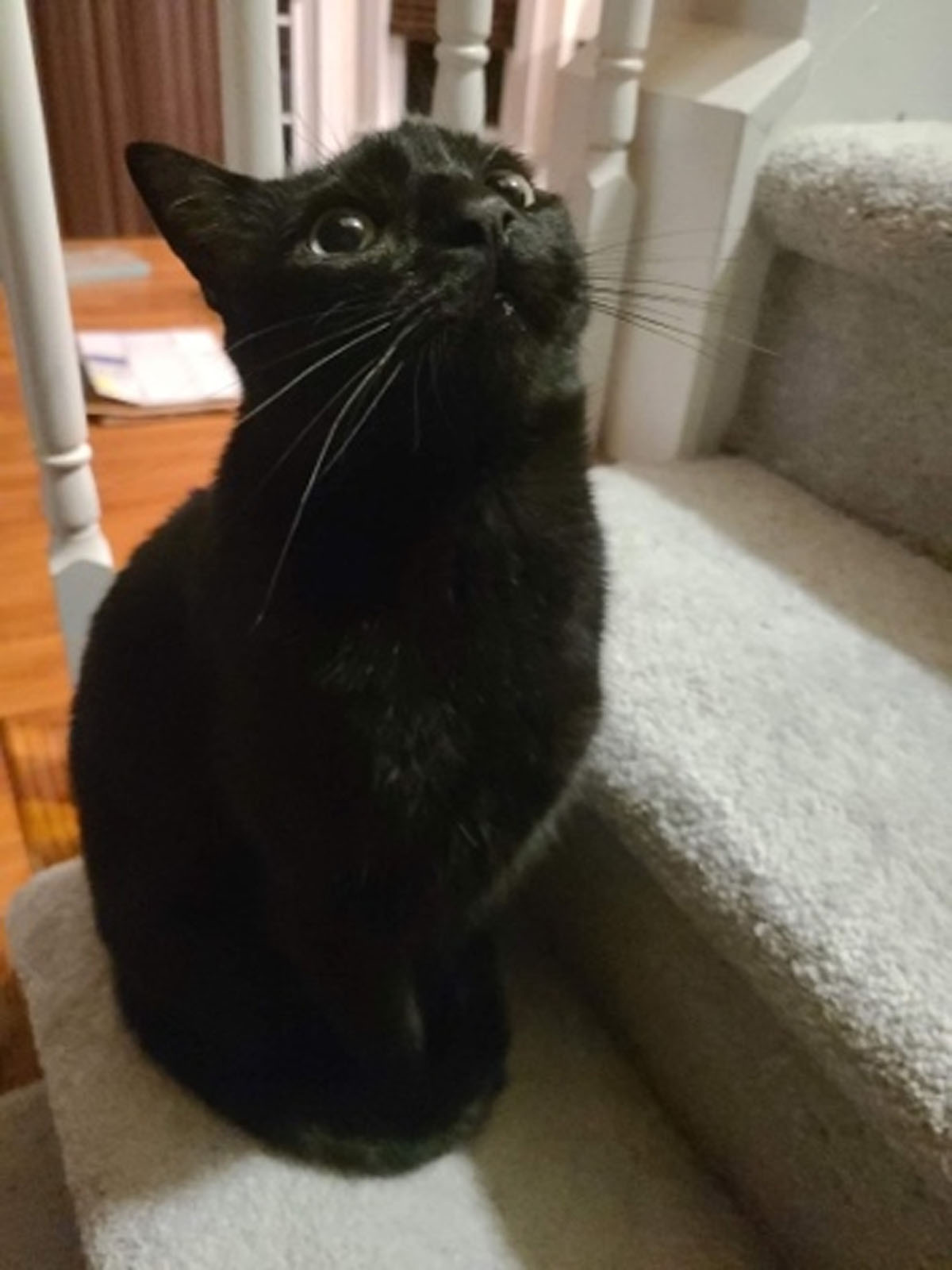
Figure 1
A Best Friend.
[Animal’s name] is probably one of the best things that has ever happened in my life. He came to me when I wasn’t even expecting to own a cat. He is truly like one of my best friends. And yeah, I really appreciate him. (Male, 33 years old, Army, Figure 1)
The next participant shared the influence of their dog encouraging them, by needing to take them to the dog park, to enjoy nature and socialize with other dogs and dog owners—illuminating their connection to positive well-being (Figure 2).
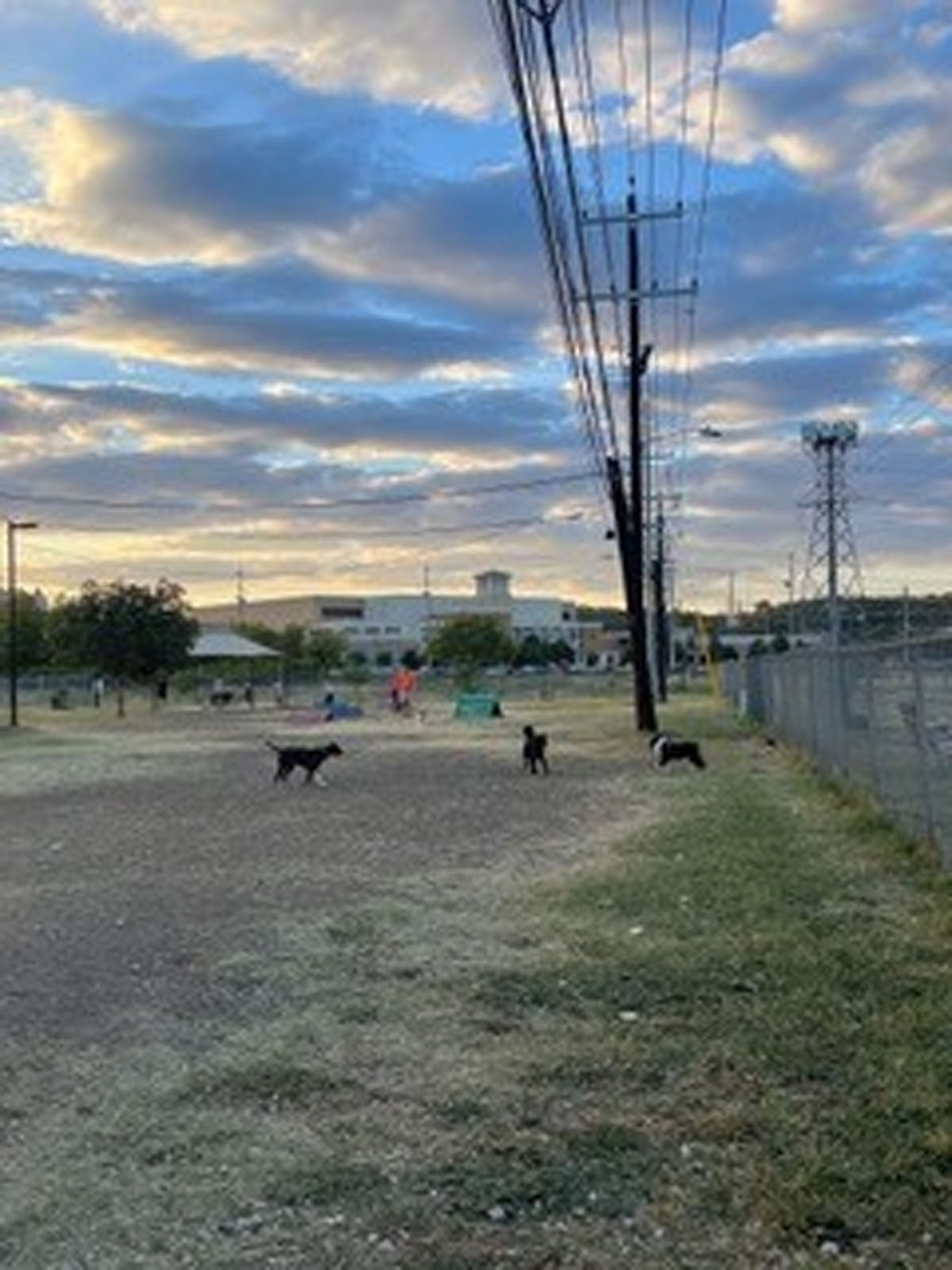
Figure 2
The Dog Park.
I took this picture at the Dog Park when I was with [dog’s name], and the sun was setting, and everything just like so beautiful. And it was very nice outside. It was like 72 degrees, and I was like, Wow! I had a really good day, and I just wanted to take a picture. It forces me to go outside because I have to take my dog to the dog park every day, so it forces me to go outside. It forces me to get fresh air; it helps. We like to socialize, too, because there’s a group at the dog park that I talk to, and we’re all friends now, and honestly going to the dog park has really helped me be more social and get out more. (Female, 24 years old, Navy, Figure 2)
Self-Care
Next are a variety of photos that represented positive self-care activities. Self-care was mentioned as it related to physical activity, engaging in nature and the outdoors, spiritual and religious activities, relaxing, and hobbies such as video gaming, music, and reading. One participant shared an image from the campus recreation center illuminating their physical well-being (Figure 3):
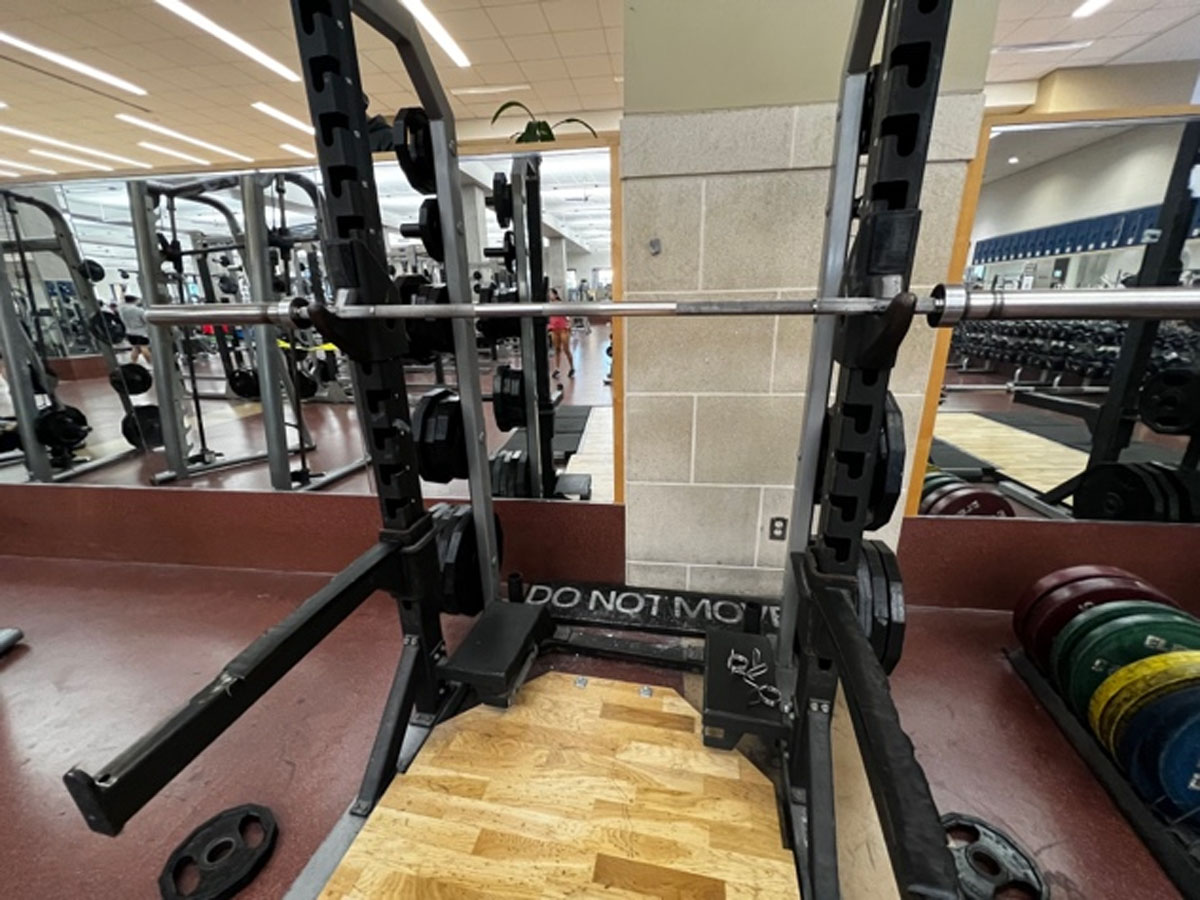
Figure 3
Physical Activity.
Well, physical activity is important to me. For a few reasons: It makes me feel like I did something productive that day. It also gives me something to work on, and just when I do it, it makes me feel good, especially afterwards, and it sort of gives me a sense of purpose. Physical activity was important in the military. I think it’s a habit that most service members picked up. Uh, I guess we’re all kind of made to. We get paid to. That’s the way I was told once, and I had not looked at that way before. You know, you’re paid to work out and be in good physical shape. Yeah, since you’re kind of made to there’s not much of a choice there. We kind of take it for granted, and then we don’t. We don’t realize the good of it. So, I think it’s important to remember. And try it out, when you get out of the service. (Female, 30 years old, Marine Corps, Figure 3)
In their excerpt, this participant emphasizes the important of their physical activity and how it supports their overall well-being. The next participant describes how they are working on expanding their spiritual well-being (Figure 4):
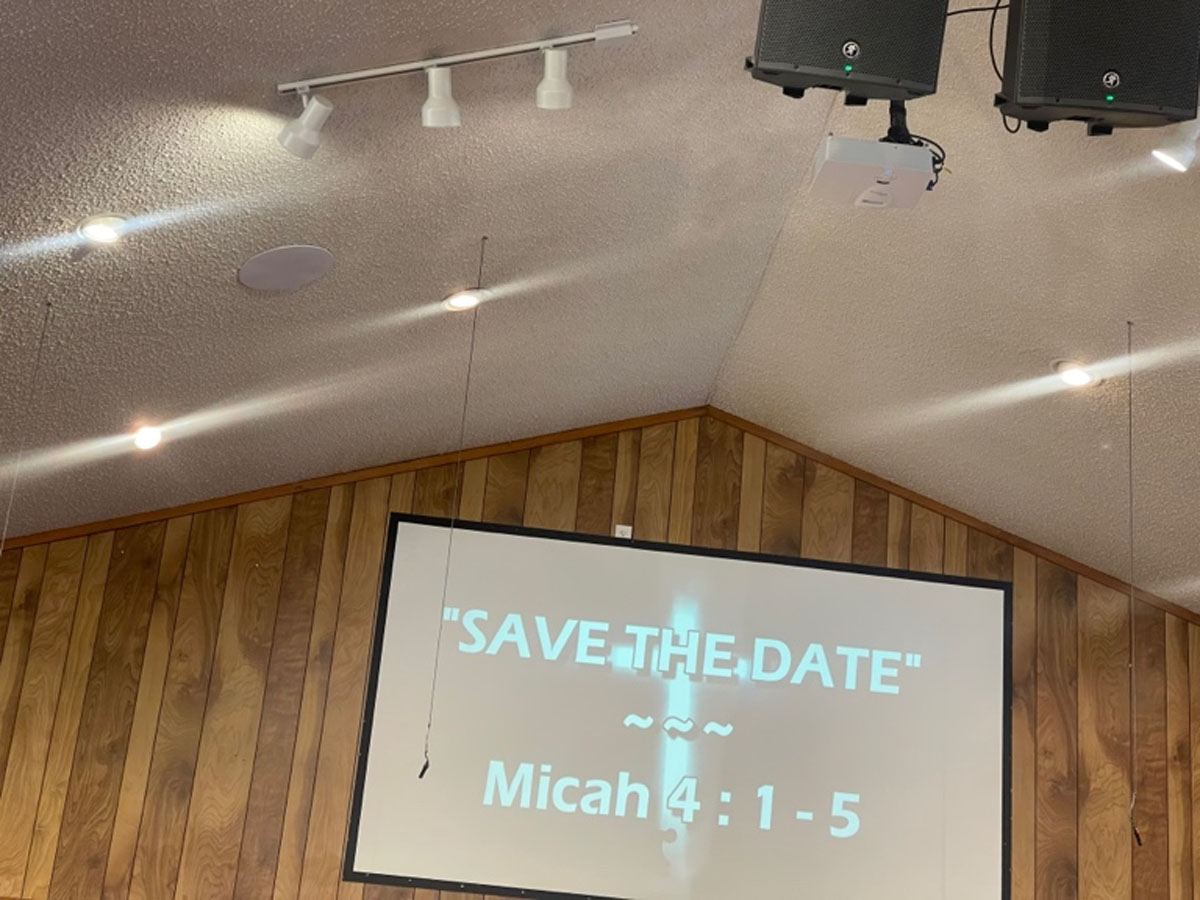
Figure 4
Church.
It’s not like a super big part of my life, but I’m trying to incorporate church into my lifestyle more. I’m at least going once a week, so I do go to like Bible study on Thursdays. It relates to my life as a veteran, because when I was in basic training, I relied on my spirituality a lot to help guide me through like the hard times. Um, we weren’t able to go to church, but I remember COVID was kind of a big thing when I was in basic training. So sometimes we would just stay in, and me and my battle buddies we would have Bible study with ourselves, like in the bathroom. (Female, 20 years old, Army, Figure 4)
This participant recalled how COVID-19 impacted their spiritual well-being. The following participant shared an image of their dedicated space where they can relax, de-stress, and engage in self-care activities including gaming (Figure 5).
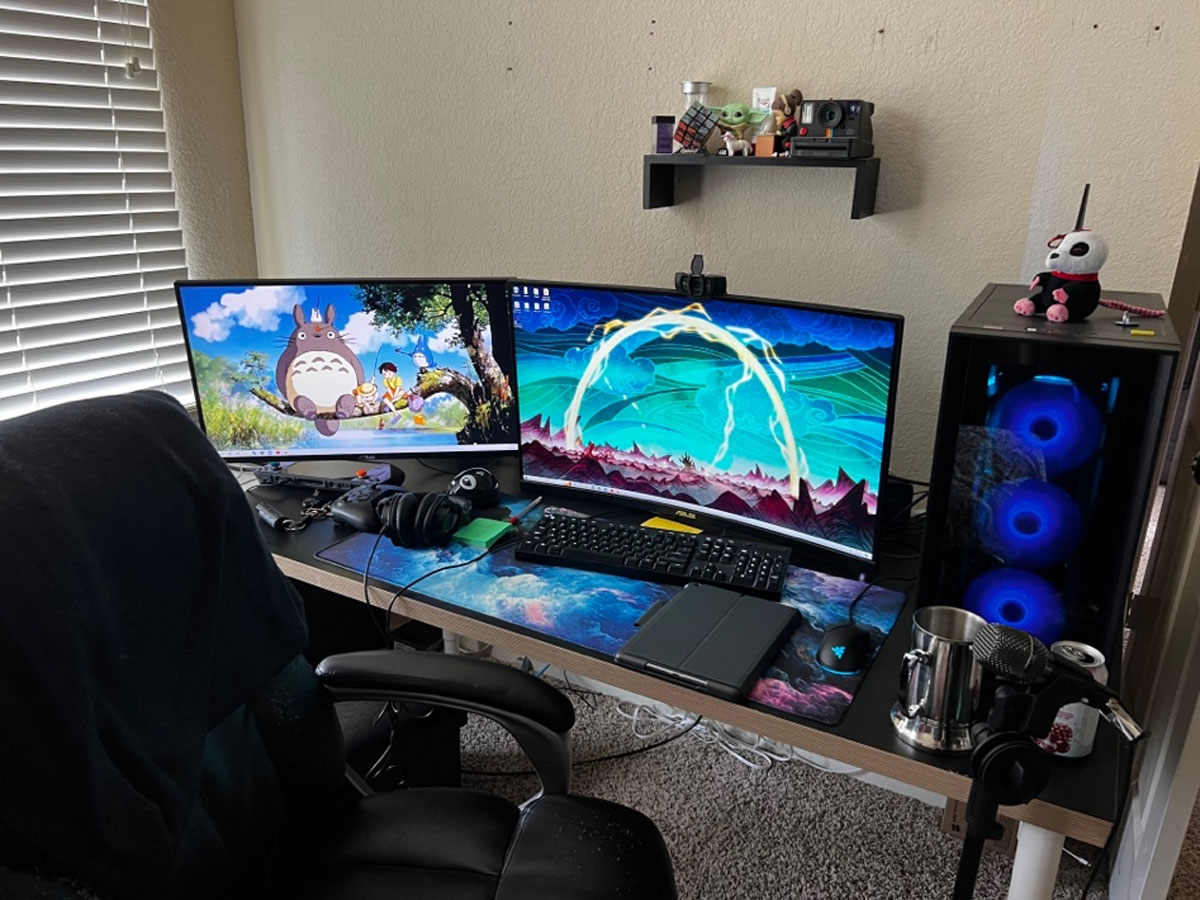
Figure 5
A Relaxing Space.
It’s just my computer setup. I have a desktop PC, with two monitors. There’s a floating shelf up there that has some trinkets on there, my office chair and my desk with some electronics on there, my iPad and some gaming stuff. I think everybody needs their own space to relax, and it’s having that sort of thing is a strength that can be like a stress reliever. It’s a good play. It’s good to have a place of your own to relax. (Female, 30 years old, Marine Corps, Figure 5)
Relationships
The other domain that frequently came up as it relates to positive well-being was social or relational, whether this be a romantic relationship such as spouse/significant other, a strong friendship or bond from their time in the service/military, or family members. It was said multiple times that family was not defined only by blood, but rather other attributes such as trust, commitment, and shared interests.
One person shared a picture of them and their significant other holding hands and explains how it relates to their emotional, relational, and social well-being (Figure 6).
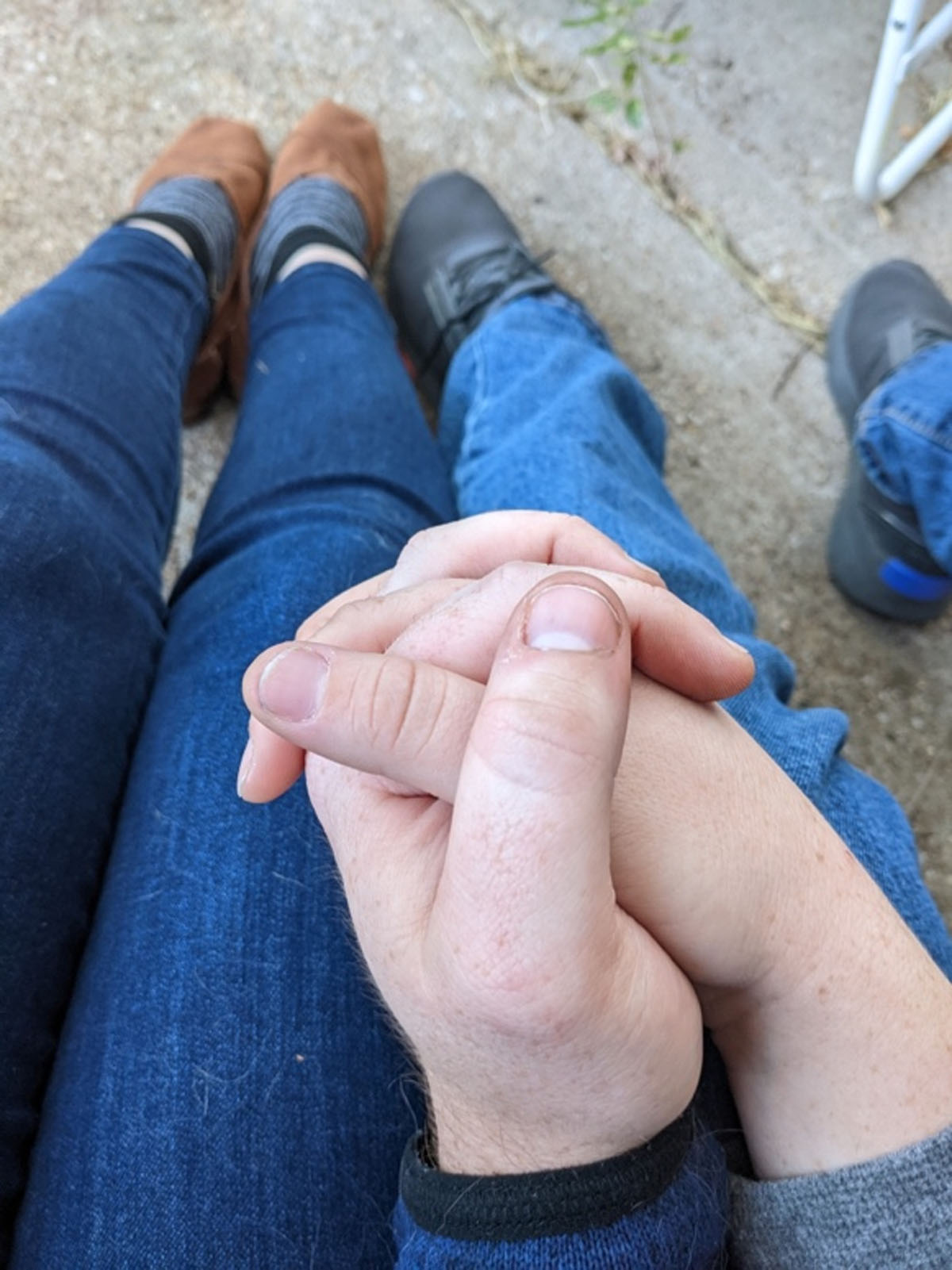
Figure 6
Physical Touch.
So, this was right after I got back from visiting family, and my friend’s wedding. We hate being apart, especially because in the military sometimes I’d have to go on tour for a whole month or more. And I hated that so much, because that killed the music for me. Honestly, the Marine Corps kind of killed it a little bit for me, because it’s not worth it. If you’re not, you know, getting the other things. But anyway, you can’t just live, for one thing. So, like for me, I can’t just live for music. I need other things that are important to me, and obviously my husband is a very important thing to me. So as soon as I got home, we just spent so much time together, because, like I said, I’m a very like touch kind of person. I need to be held. I need to constantly know that, you know, I’m safe, you know. Protected um, and so he is that person for me. So, it’s kind of nice to come back home, and it’s like, okay, I can take off my brave face, and I can, you know, be the baby I want to be and just be loved and held. But I can also do that for him, because without me he won’t talk to his friends about anything. So, we’re there for each other, and it’s really important to have someone that you can feel comfortable just being yourself in front of, and you know, meeting your needs, but you’re also meeting theirs. (Female, 28 years old, Marine Corps, Figure 6)
Freedom
Another positive topic that frequently arose was the discussion around freedom. Freedom was described in not only freedom from constraints of their military service, but also the ability to actively choose and make their own decisions. Such choices were around making food choices, the ability to travel, and no longer being constrained or required to follow a strict schedule. One participant shared the emphasis of freedom as they take on their new identity or occupation as a student veteran (Figure 7).
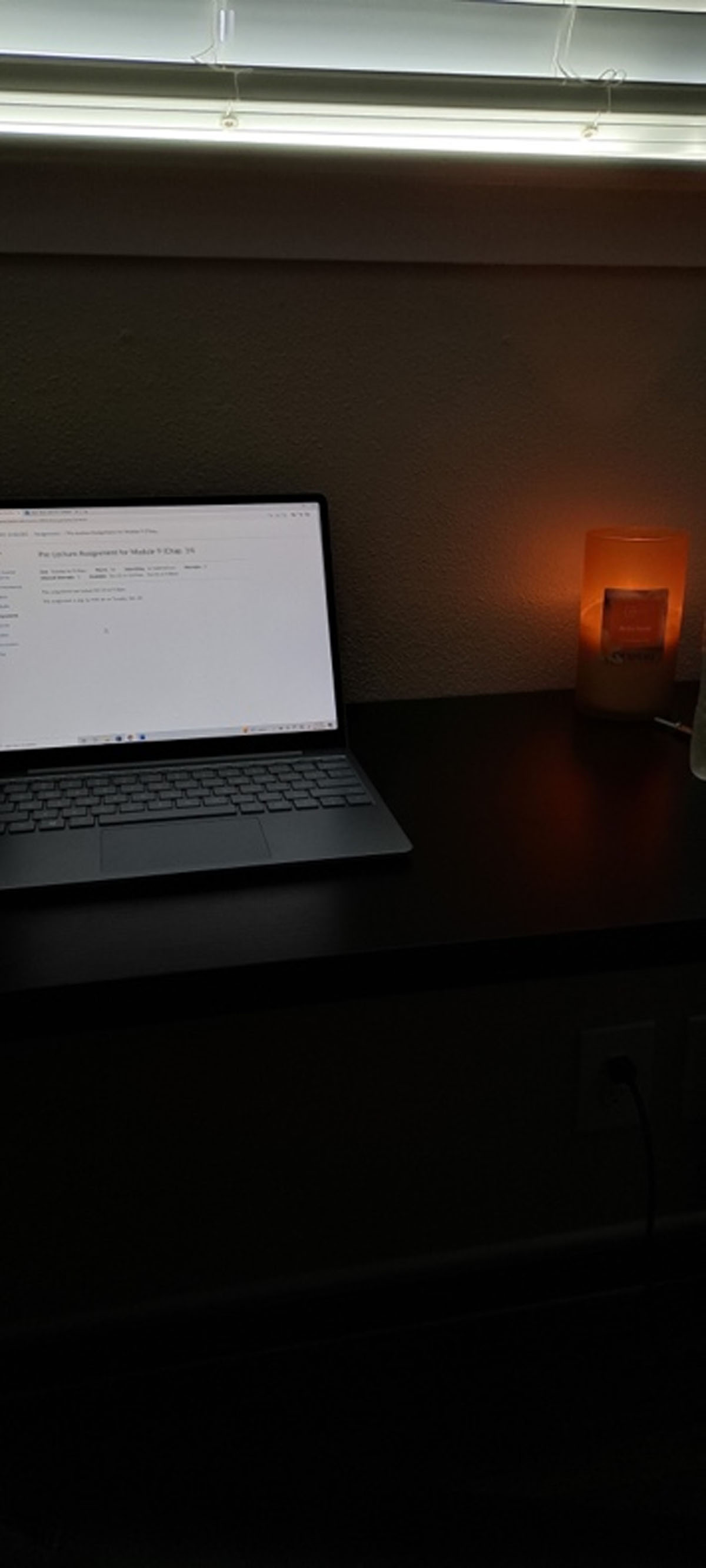
Figure 7
My chosen ritual.
This one was right before I think I had a pre-lecture quiz or pre-lecture assignment, and so I had to work on that. So, it was kind of like for me, I have like not a ritual exactly, but I do have things that we [sic] get into my zone when it comes to studying or exams assignments. I would have never imagined in the past, like 2 years ago that I actually enjoyed doing some of this work. But the truth is, I really don’t mind it because it’s not the same as like sometimes in the military you do a lot of things where you don’t necessarily enjoy it, or you’re like man, “This is work, this feels like work.” But with college it doesn’t always have to be that way, because for me, I’m studying things I really want to be more invested in. I’m studying things that I’m going to make a career out of. And I always have to remind myself it’s like, no one’s making me do this stuff. This is all my choice. And so, because of that, it’s like one, I can stop anytime I want, and because, you know the military, it’s like you must do things, and it’s always somebody, you know, higher up than you is going to tell you what to do, but in in college, it’s all up to you, and you get to give the orders, and that’s a privilege, you know. You don’t realize that you’re out and it’s like, you know, “Wait, I get to be the boss of myself?” And it’s like, yeah, you know that’s it’s incredible. It’s scary. It’s intimidating, at times. But if you can control yourself, and you know, issue orders to yourself, and then follow through with those you know, you can get your life together, and that’s great! (Male, 25 years old, Marine Corps, Figure 7)
This participant provided an in-depth explanation of the combination of their freedom and new identity as a student veteran and the enjoyment that it has led to illuminating a domain of their positive well-being.
Poor Well-Being
Poor Well-Being, originally called “Negative” was defined as any discussion related to well-being that brought sadness, anger, frustration, abandonment, anxiety, depression, isolation, or other poor-health related emotions or maladaptive coping behaviors such as self-medication of substances (e.g., tobacco, alcohol). Examples that were discussed included challenges as a student veteran due to courses, financial struggles, and negative military service reminders that often lead to mental health challenges, triggers, or stressors. Terms that were discussed or named frequently across multiple interviews included PTSD, grief, moral injury, depression, stigma, sadness, and loneliness.
Challenges as a Student Veteran
One person shared their challenges in the classroom as a student veteran.
I took this photo because I was at the library studying for chemistry, and I wanted to cry because I didn’t understand anything. [I took this photo] because it reminds me to not stress. I don’t know. Crying at that moment was not going to change the fact that I still didn’t understand anything, you know? Why would I cry? It’s hard to grasp something whenever you’ve been outside of school for 5 years, and you haven’t taken like chemistry since junior year of high school, and you’re almost 25 now. So, going back to school has been pretty hard for me. (Female, 24 years old, Navy, Figure 8)
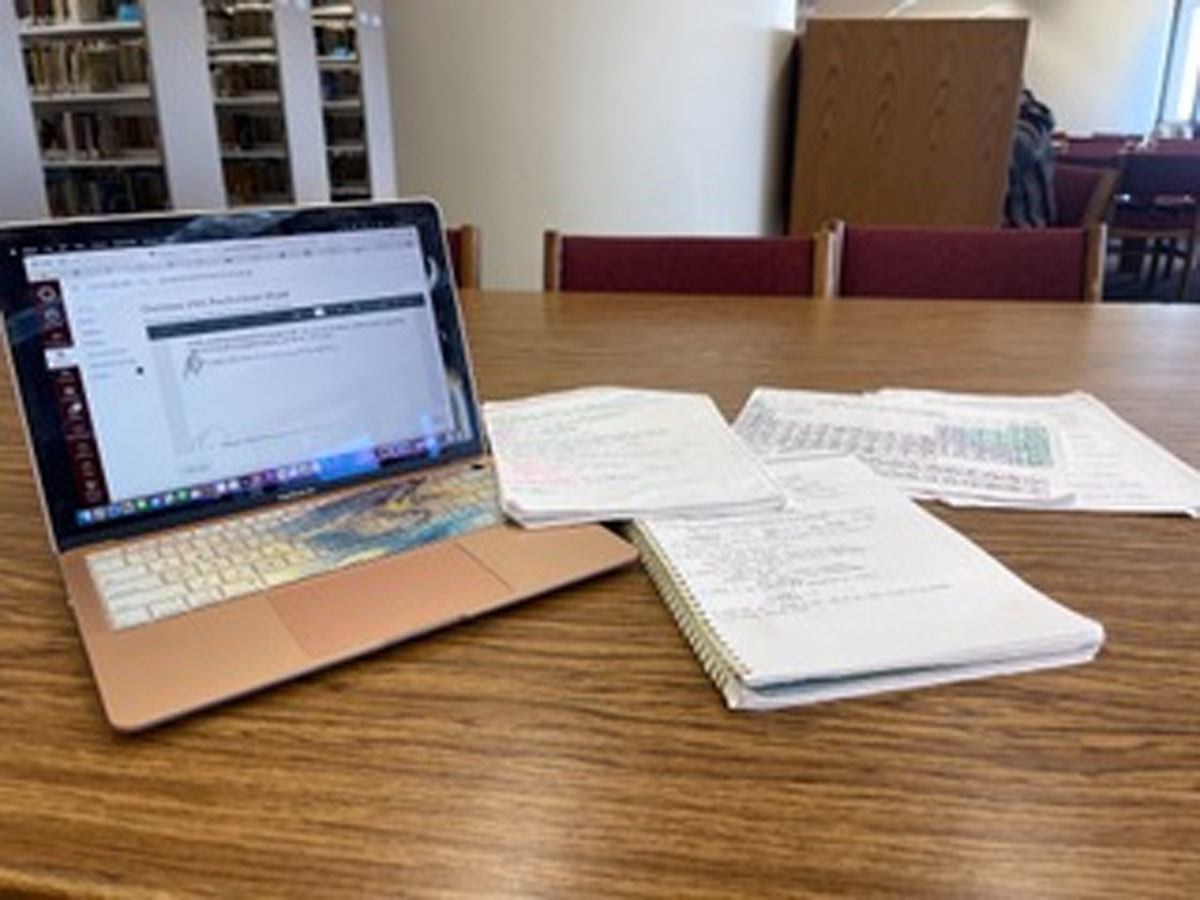
Figure 8
Holding back tears.
This participant transparently shared their vulnerable feelings and emotions as only a snippet of their well-being, specifically a poor well-being area (Figure 8). Another student shared similar sentiments about seeking help for their course challenges and how this event invoked a poor well-being emotion of anxiety (Figure 9):
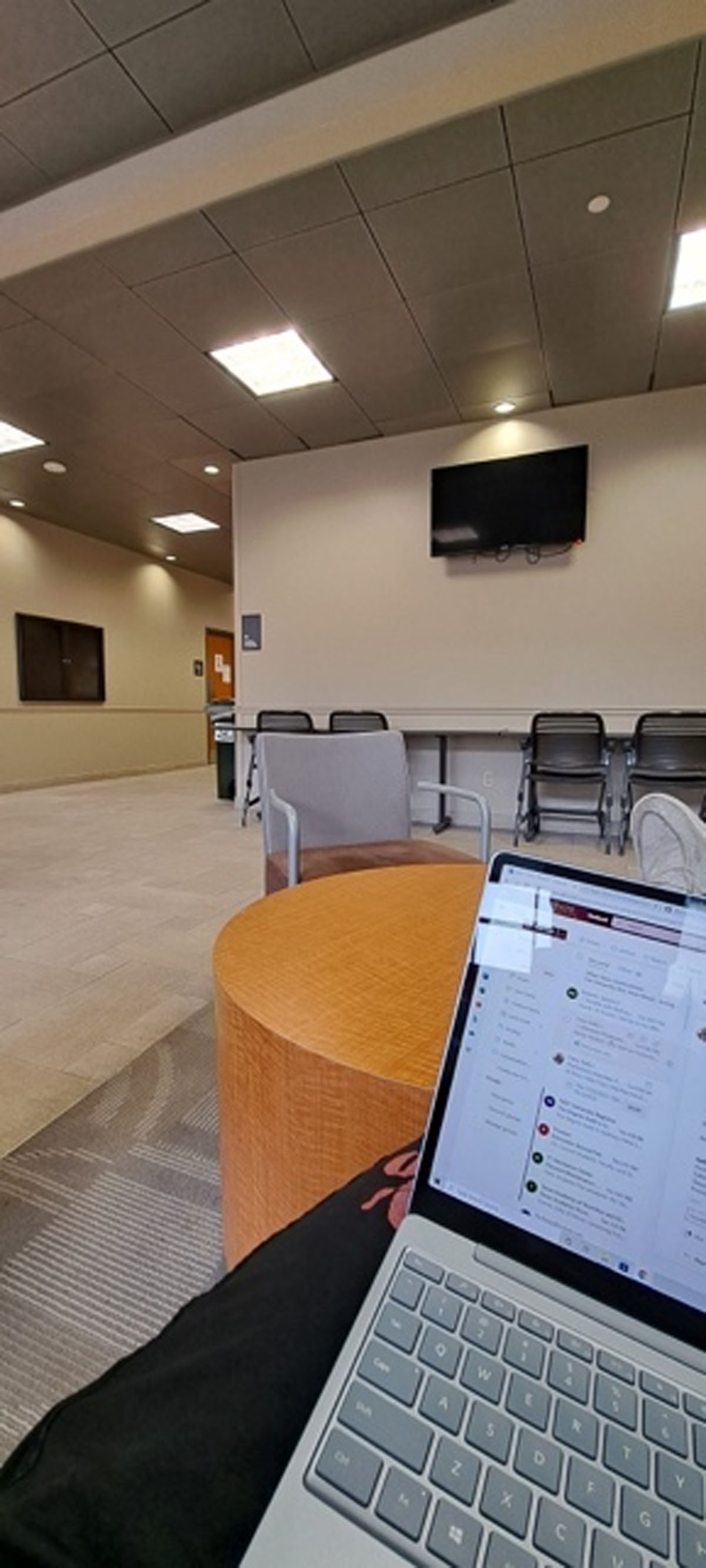
Figure 9
Anxiety speaking.
So, this one I took right before I went into, it was a little tutoring time. I went with my one of my teachers because I was having a little bit of trouble with an online source we were using. And so, at the time I was a little bit confused and kind of anxious, because, uh, I thought it was due that day. It turns out it wasn’t. It was the next day, so I took it because, like I said in a moment, I was feeling a little bit anxious about it, because I didn’t know what the teacher was going to say to me, I didn’t know what I was going to do to finish the homework I was working on, or the project I had at the time, so like I said I was feeling a little bit anxious, and that was about, I think maybe 5 minutes before I went into that tutoring session to ask this question and, I want to make sure I always stay on top of it and everything. And so, when I hit kind of that bump in the road with this. It was like, oh, I thought I had everything together. (Male, 25 years old, Marine Corps, Figure 9)
Mental and Emotional Health
Continuing to discuss mental health struggles and “poor” well-being feelings, another participant encapsulates their emotions with the following image (Figure 10).
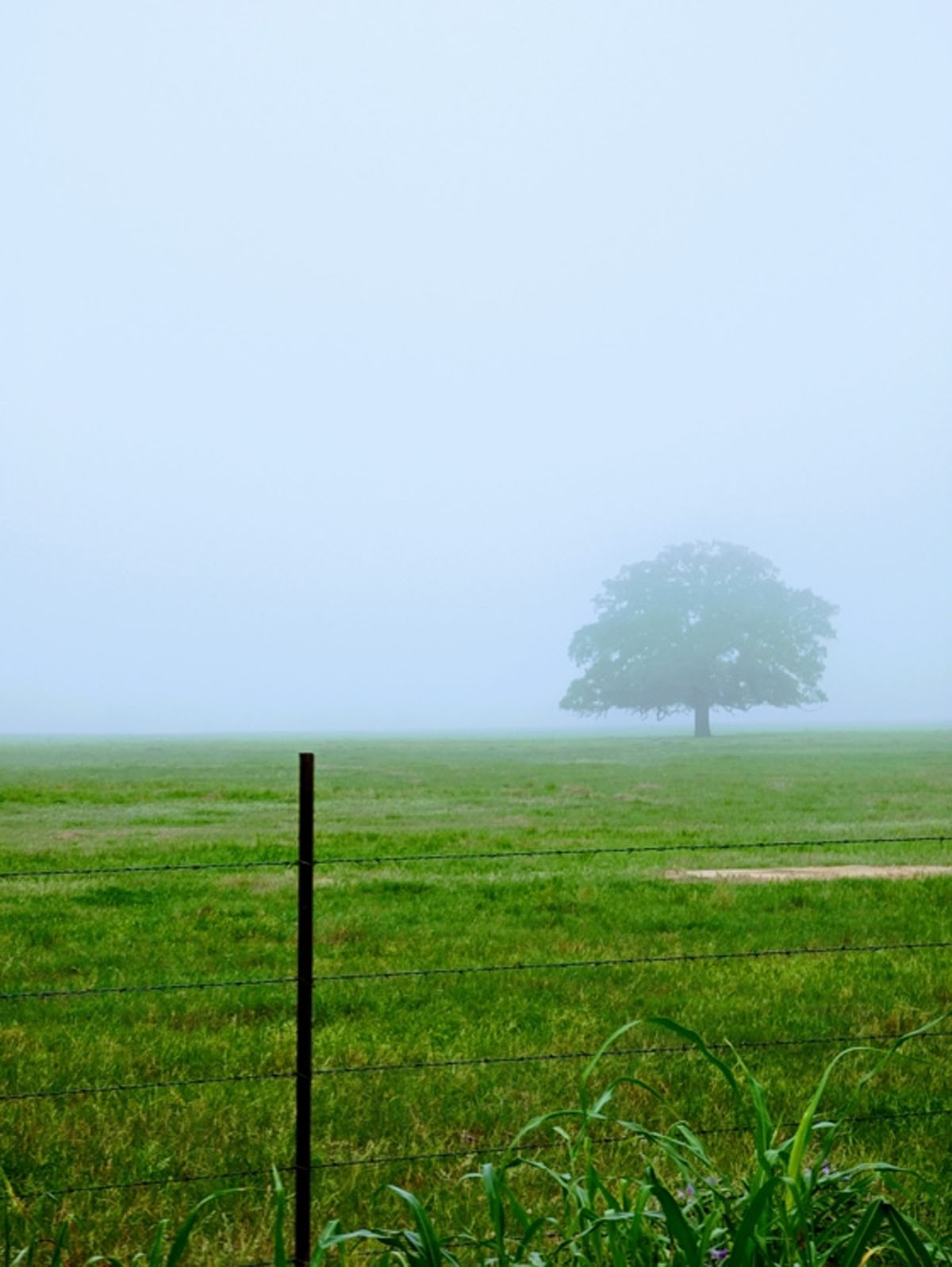
Figure 10
Feeling extra cloudy.
I was heading to work or school excuse me, and this is like right when the weather was changing and it just represented my mood. Like, I was in a very like, I don’t want to say low mood, but just kind of like unmotivated, and I felt like this is like a mile from where I live. So, I live out in the country, and uh, I like the tree because I feel like that represented me. I kind of was in a feeling of like displacement away from, like, you know, in my personal and professional life. And so the tree just really captured my mood and kind of like where I was currently, I guess, with my well-being is why I took that picture. It captured like things that I felt like I wasn’t able to say, like in particular, like to like my wife. Like what I’ve been feeling, like feeling extra lonely, feeling extra cloudy. Nobody wants to share those kind of emotions, especially with those they love, right? (Female, 35 years old, Army, Figure 10)
This participant made connections between their poor well-being, emotions/feelings, and their environment. The picture captured more than they could share with others. The next participant did not describe their emotional struggles, but instead explained a maladaptive coping mechanism of using their phone for over 10 hours in 1 day (Figure 11).
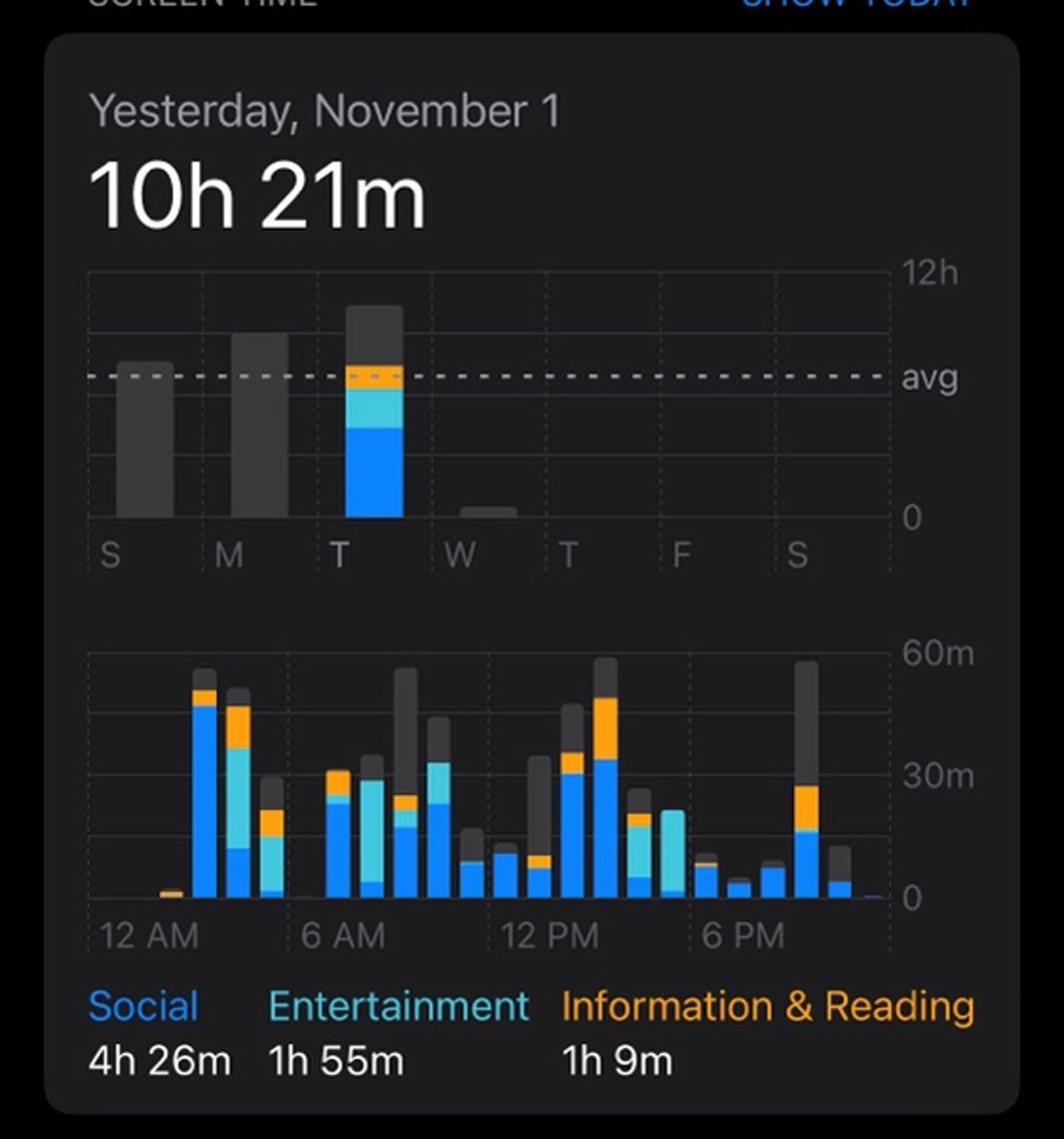
Figure 11
Unhealthy use of my phone.
This is the system that iPhone uses to track your phone usage, and it tracks the amount of hours that you are on your phone, and in this picture, I used my phone for 10 hours and 21 minutes that day. It relates to mental health a little bit, because, I don’t feel very productive when I’m using my phone. I probably use it as sort of a crutch to try to take my mind off of things, and it might be a little bit worse than just staying in my room as well, because the way I use it. I spend a lot of time on social media, which doesn’t feel very healthy. I know a lot of us [veterans] have issues, struggles with depression and stuff like that, and that can lead to using your phone or anything else unhealthily. (Female, 30 years old, Marine Corps, Figure 11)
Military Service Reminders
The participant above acknowledged that some veterans have struggles, and some participants felt comfortable sharing how some events, items, or circumstances reminded them of negative things or feelings that occurred in, during, or after the military. The following participant provided a deep, meaningful metaphor by sharing an image of coins as it relates to how he felt he was treated in and then out of the military (Figure 12).
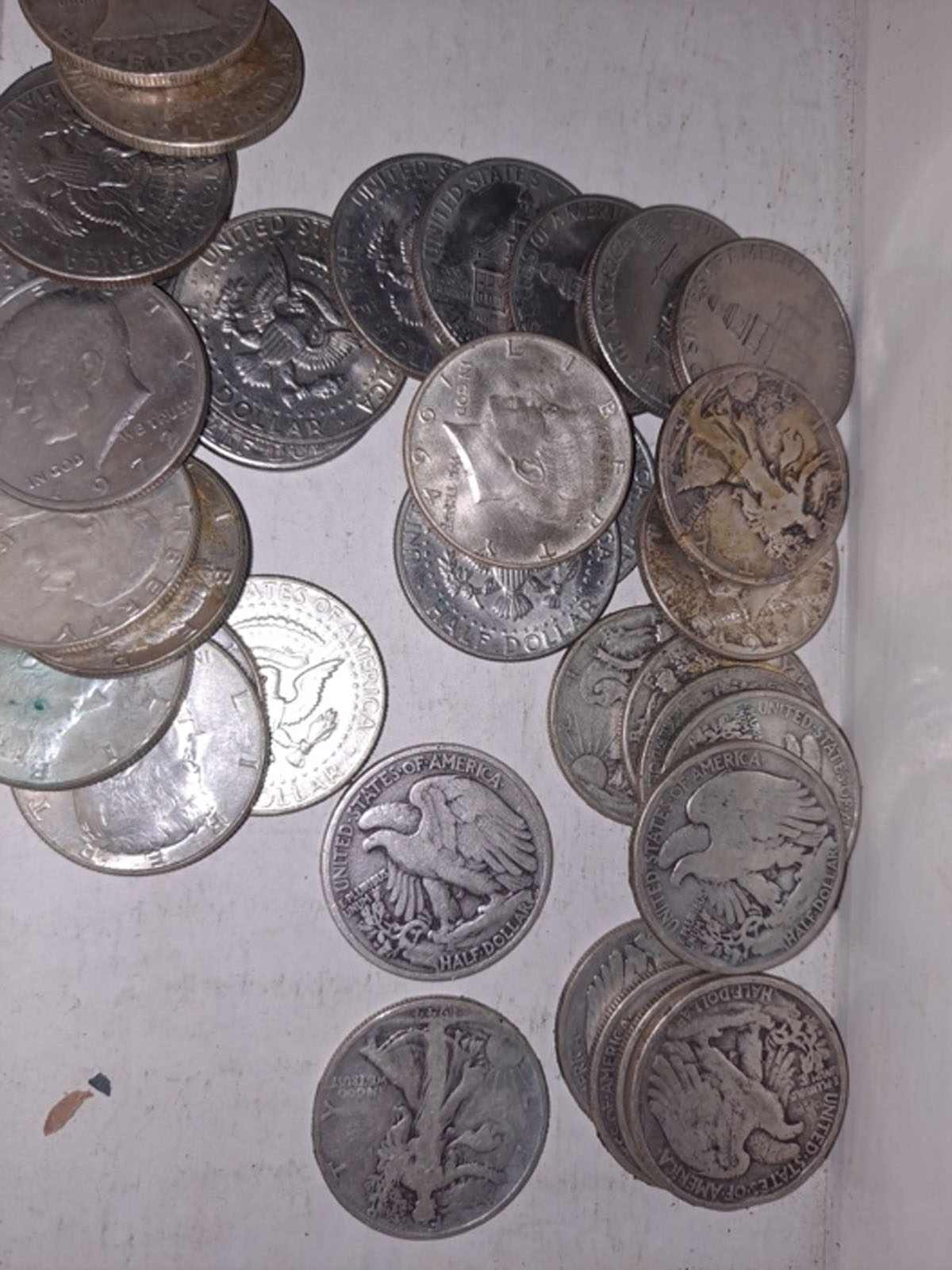
Figure 12
My value as a Veteran.
Coins are something that make history tangible; to see something survive over 100 years. These are worth rated as a penny, and now worth over $300. It’s 300% up its value, like way, way way higher; probably more now. But, uh, it’s the value of something that is appreciated over time, and I kind of sort of relate myself to that, and as a veteran. I am only appreciated more throughout time.
Unfortunately for veterans of Vietnam, they weren’t welcomed when they came home, and it’s only through time that they were. We realized how much their worth was, and how much more they’re appreciated. When I came back from Afghanistan, and I was no longer active-duty status. There was no party for me either. I mean, my family were welcoming and happy, and all that stuff, but as a community, I didn’t see my community react any differently. I was kind of saddened by the fact that I was like, there was no real community outreach for veterans other than Veterans Day, so I was all like “I’ll prove my worth or value sometime later in the future.” And it’s only after 10 years that I’m finally starting to prove my worth and value, because, I’ve actually given up doing security related jobs and start focusing on my education where I can actually be a teacher and all that stuff, so I feel my value has only increased over time. (Male, 31 years old, Marine Corps, Figure 12)
Another participant shared their thoughts related to their military service and how it has had a strong influence on their current mental and emotional well-being. This participant chose to revoke access to their images; however, because of the strong meaning behind their words, we believe it is important to share the quote:
It’s like the calm before the storm. After this photo was taken, I got to my unit, and then we were deploying. So it’s, you know, like trying to appreciate everything in the quiet of it. This picture just represents a lot of me before I actually deployed, before a lot has changed. For me, it brings me peace. It’s the peace and tranquility of it, and where I was at, and where I’m at now. I mean, it’s just a 180, you know, I didn’t have the issues mentally. Yeah, I was one of the other ones there, but I wasn’t as damaged as I am now. (Male, 42 years old, Army, Image access revoked).
Emergent Theme: Mixed Well-Being
Mixed Well-Being captured the complexity of an image that depicted both positive or optimistic emotions, but also included a deeper feeling that may also have negative or poor connotation. However, how these images were talked about did not follow consistent storytelling. Some deliberately, or unintentionally (we will never know), shared the positive/optimistic side first, while others chose to share the negative/poor side first. Nonetheless, these images were described with thoughtful words, metaphors, and meaning that was not obvious to anyone observing. Instead, these images had a “hidden” interpretation that could only be uncovered by discussing with the person who captured the photo. This phenomenon emphasizes the importance of hearing the phototaker discuss the meaning behind the images and giving them the voice to tell their own story. Two common topics were uncovered which included the transition out of the military and the experiences with the various institutions including the VHA and the university system.
Transitioning out of the Military
For most participants, transitioning out of the military brought forth an array of diverse emotions. One person shared their spectrum of feelings as they reflect on eating a salad (Figure 13).
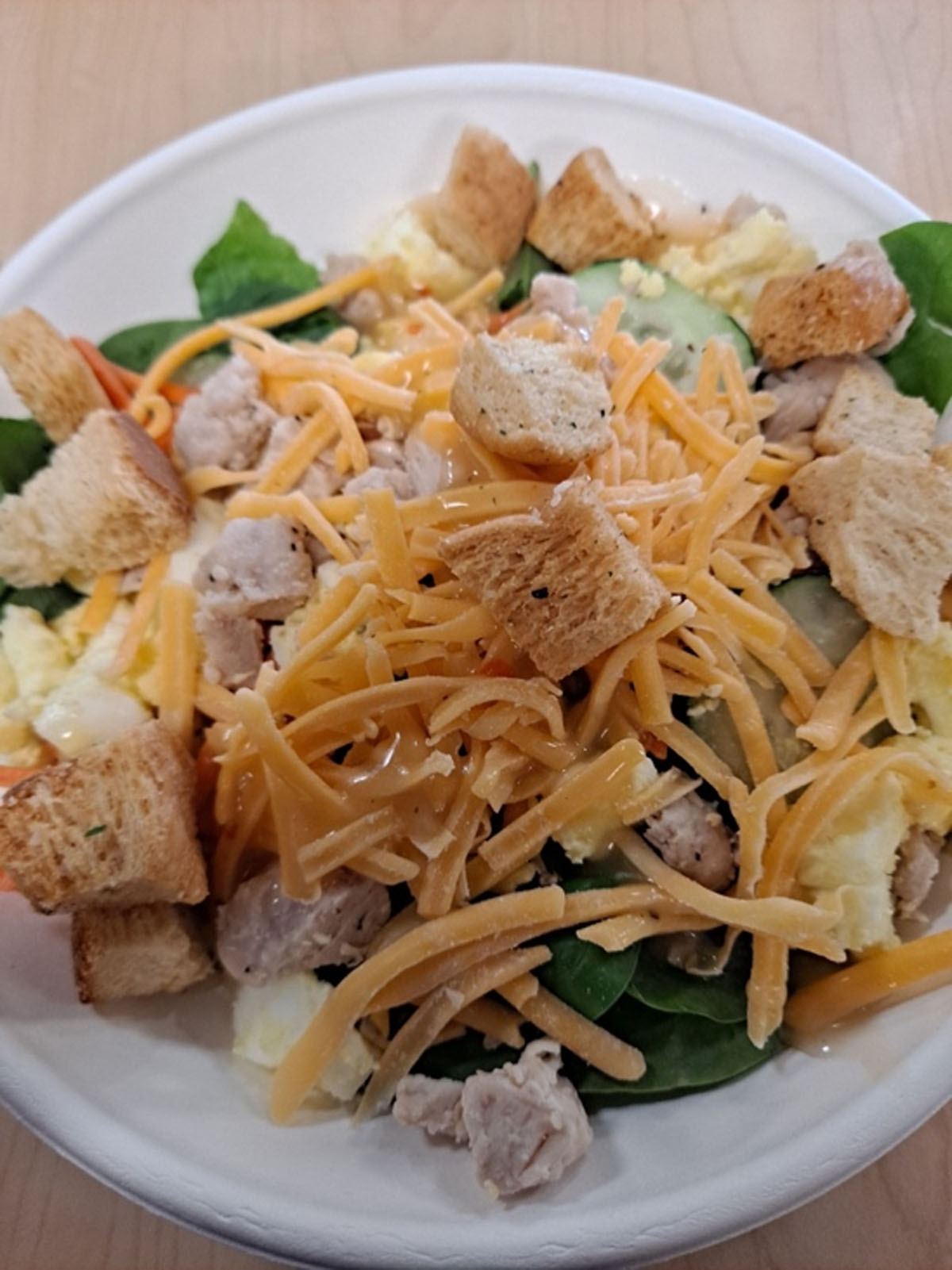
Figure 13
The guilt persists.
This one is me being a good old boy of doing diet. I am doing everything I should, following my strict diet, helping my digestion problems. I don’t know how many other, I would say mostly veterans, I know they deal with the IBS [irritable bowel syndrome] more than anything else. But, uh, I can’t seem to help think I still feel guilty. Eating right still feels guilty to me. And I took this picture in the concept. I guess you could say, even doing the right thing can feel bad. It’s more mental health. I’m trying to break it down, or at least make it conceptual or relatable that sometimes, even if you’re doing the right thing, all for the right reasons and everything like that, you still feel guilty. You could say, uh military wise. You did your mission, you did your job. You did all right. Everything was according to plan. But what’s the difference between a freedom fighter and a terrorist? It’s just the person [sic] believes in them. That’s all really is one side [sic] for the other. You could do everything right on your side. But uh, on the other side they’re thinking you’re invaders. You’re taking over their land, disrupting their peace. And all this stuff like, even though I believe my service was honorable. Yeah, I’m pretty sure other people say it wasn’t. I don’t know if I want to use the word penance. I’m going to throw that word out there. But, I have IBS and I constitute that between all the caffeine induced MRE [meals ready-to-eat] bags and portions I had to eat outside of a regular diet, because a regular diet was not available to me for a while. There is a penance to doing all that sacrifice. And right now, my penance is eating salads. (Male, 31 years old, Marine Corps, Figure 13)
This person encapsulated and explained a spectrum of diverse emotions and feelings—something that most participants related to when they shared about their overall well-being. Another person related their story and military and transitional experiences to those items that are showcased on their bookshelf (Figure 14).
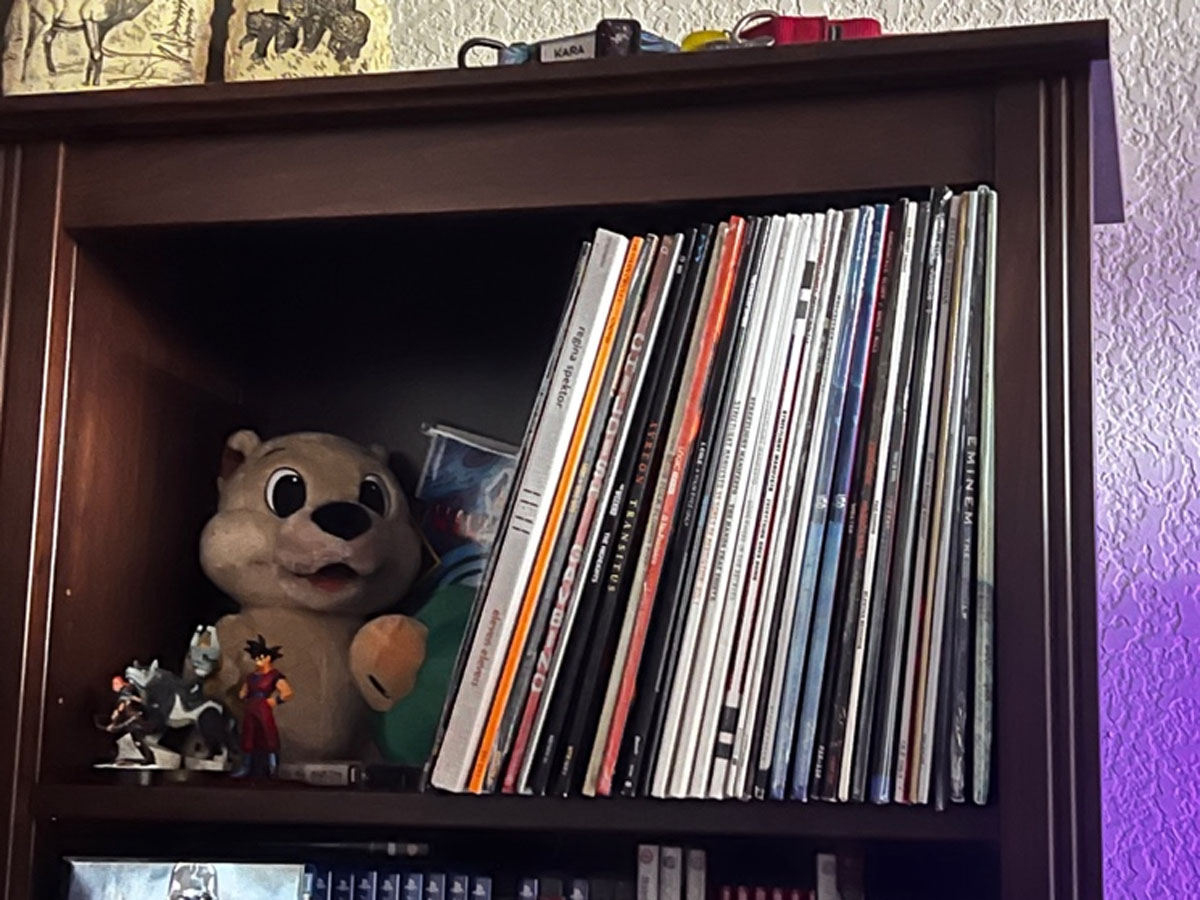
Figure 14
Everyone has a story to tell.
I think everybody has a story, and the things that we collect sometimes can carry on some of those they represent, some of those stories. I think it’s okay to just sort of have things for the sake of it if it brings you comfort, because a lot of the times, I remember my time in the military. I just felt everything, and I feel kind of everything is just so utilitarian and kind of for a good reason, but once you’re out, it’s fine, and it’s good to, and healthy to express yourself in whatever way you feel is right. (Female, 30 years old, Marine Corps, Figure 14)
This participant acknowledged and embraced the importance of sharing one’s story, both the “good” and the “bad” spectrum of experiences—as long as it feels right for the storyteller.
Institutions In Place for Support
There are certain institutions that are in place to support veterans, particularly higher education institutions and the VHA. While these operations are expected to provide support, those who use their services do not always feel as if they are being best helped. The following participant shared their frustration:
We’re all in the same boat. We’re all pissed because we’re not getting anything done from the VA, or from other places that are supposedly trying to help. You know, they say we’re here to help veterans. You guys aren’t helping us. You guys aren’t doing shit for us, you know? Yeah, I’m pissed, pissed off, you know? What action is it going to take for you guys to see that we’re trying to get help, we’re crying for help, you know, for you guys to realize that you know, you need to stop what you’re doing and reevaluate. (Male, 42 years old, Army, Figure 15 [access revoked])
Discussion
Our photovoice study aimed to allow student veterans to conceptualize and make meaning of their well-being through photo taking and storytelling about their images. We engaged 18 undergraduate student veterans in our funded research study to assess their overall well-being, as it relates to physical, emotional, financial, social, occupational, spiritual, intellectual, and environmental domains. In addition, we asked for feedback on their experiences of being involved in such an innovative approach. Using a rigorous thematic approach, we found themes as they relate to positive well-being, poor well-being, and mixed well-being and shared exemplary images and their respective quotes to provide meaning and context to the images, as images/photos can and are interpreted by each viewer, and it is imperative for our photovoice participants to share their story. Our study provides pertinent information to current campus and community stakeholders to better support the overall well-being of student veterans through outreach, programming, and support services. The study also fills a large literature gap, as only a handful of published student veteran studies using photovoice methodology exist.
Well-Being and Its Comprehensive Meaning
One aspect of well-being that came to light in the study is that it is conceptualized and defined differently for all individuals, including our student veteran participants. It has unique meaning that can be reflected somewhat differently for each student veteran. Also, some student veterans placed a priority on certain well-being domains, such as physical and spiritual dimensions, and others such as financial or environmental may be less emphasized. This is important to be aware of and understand when we support student veterans, as we cannot assume that all those we work with will view well-being the same way.
When we work with student veterans, we should ask about their well-being priorities, and use strength-based approaches (Pulla, 2017) to emphasize these areas. In addition, it is evident that a few of these domains overlap or influence each other; for example, participants shared how having an animal such as a dog encouraged them to walk outside and engage in physical activity while also enjoying their natural environments and potentially socializing with other dog owners. This critical approach should be used when we consider emphasizing a variety of well-being domains with our student veterans. One participant also mentioned how owning a dog gave them a new purpose, a common challenge we hear from student Veterans who are transitioning due to their previous mission focus while serving (Clary & Byrne, 2023).
Deeper Meanings of Well-Being
Not only did we collect images and interview data in this study, but we also collected two measures to quantify well-being. The PERMA Profiler showed average scores on all domains: positive emotion, engagement, relationships, meaning, and accomplishments, with the highest satisfaction being with relationships and accomplishments following next. This quantitative measure suggest that it may correlate with positive relationships shared via images including animals/pets, significant others, and friends. Related, accomplishments may be reflected via their military achievements and now feeling a sense of success due to their acceptance and perseverance into higher education. The WHO-5 Scale had an average of 10.7 across all the participants, with most participants reporting average overall well-being.
Challenges as a Student Veteran
Our participants expressed challenges transitioning back into the civilian sector. This is a common challenge we hear across veterans who are transitioning (Borsari et al., 2017). Student veterans are also expected to navigate a new environment and take on a new identity, with additional freedom to create their own schedules where they are no longer required to follow strict orders from the military, emphasizing the theme of freedom. While most shared the positive side of this new phenomenon, others may view this as an uphill battle. Moreso, researchers have shared best practices for higher education institutions when working to support student veterans. Some of these suggestions include raised campus awareness, direct support such as veteran organizations and supportive and trained faculty, professional development programs for university employees, creating a culture of trust and connectedness, collaboration with local community agencies, and creating and implementing data tools to track information on veterans, as these have been proven to increase retention, satisfaction with their experiences, and graduation rates among this population (Dillard & Yu, 2018; Kirchner, 2015; Klaw et al., 2021).
Moreso, engaging in help-seeking behaviors is often negatively impacted due to perceived stigma of problems and the weakness associated with seeking out support and help, often due to a variety of factors including masculinity and barriers to accessing care (Clary et al., 2023). In addition, help seeking behavior is often influenced inside the military by unit leadership’s attitude toward promoting help seeking and self-care. This pattern can then follow the member out of the military into civilian life (Porcari et al., 2017).
As a methodology, photovoice is a visual and storytelling method that is powerful and empowering to those who use it. It also seemed to become a bridge from military service to civilian life, bridging the civilian-military gap discussed in the literature but in the reverse. Student veterans seemed eager to discuss their experiences, both strengths and areas of stress or challenge, while discussing their photos. This strategy has the potential to reduce the stigma of discussing their lived challenges both in and outside of the military and, most importantly, in transitioning. This approach holds promise for community building, bridging the gap between the civilian and military divide, and providing potential therapeutic insights for those who support veteran and military populations.
One of the key factors in transitioning is that military members come back to a society that they no longer understand or that they perceive does not respect their sacrifices. The ubiquitous “Thank you for your service” should be replaced with “What was your life like over there and how is it now?” Resources on college campuses and social services in the community should provide more spaces and platforms for allowing veterans and military connected populations to share images, photos, and stories of their multifaceted challenges and strengths. There have been several efforts over the years to turn these stories into theatre performances (Nichols et al., 2022). But photovoice is an individual tool and can be useful to help veterans reflect on their own stories. Moreso, it would be worthwhile to consider sharing these images in public spaces with captions and context, as research has evidenced that socially engaged art has the potential can be used to destigmatize stereotypes and bring about dialogue among individual and community levels (Jemal et al., 2022; Schneller & Irizarry, 2014). Moreover, these types of community viewing events can help communities better understand what veterans have been through as well as hold a space for accountability. Related, storytelling projects that use innovative and creative technology platforms may be an additional creative mechanism that can engage veterans and encourage them to share their stories and experiences with others.
Implications of Participation in the Research Study
Multiple participants discussed how this research study was a fun and engaging project that forced them to pause, reflect, and become more aware of their surroundings. This also encouraged participants to be more mindful of their current well-being emotions and thoughts, whether positive, poor, or a combination. Engaging in the photo taking activity and then discussing the images was overwhelmingly viewed as a positive experience and something that participants enjoyed doing. This was evident as multiple participants encouraged other friends to participate through word-of-mouth recruitment. This type of activity should be considered among helping professionals, including those who are in higher education institutions, in community agencies, and those in clinical settings, who support veteran and military populations.
Further, it is important for researchers to look deeper into causal positive effects of photo taking and the act of discussing the meaning, as it has the potential to be used as a therapeutic strategy or intervention especially in terms of helping veterans tell their stories (Geisler & Juarez, 2019). Future research should use our project as a guide to implement a similar approach with veteran populations, especially when we consider and focus on the topics around mental health, well-being, transitions, moral injury, and identity transition. It is also evident that our student veterans are aware and recognize the importance of their well-being but may not know where relevant and appropriate support is to assist with their challenges. Making sure that campus resources are veteran inclusive, readily available, and accessible, and culturally competent is imperative.
Building Emerging Identities and Sense of Agency in Student Veteran Populations
One of the positive well-being subthemes was the student veteran’s newly found freedom from the military structure and routines, as well as the freedom to make decisions on a variety of elements if their lives like food intake, creating their own schedules, and raising pets. This theme has potential for self-actualization and personal development utility, re-establishing their civilian identities, and helping them to navigate newly required routines in new organizations. It is both poignant and compelling to note that when veterans are transitioning, simple routine choices that civilians might take for granted, such as choosing a food to eat, are in fact of delight and importance. This can indicate the power of helping veterans build back their new identities through storytelling using images.
It has long been known that storytelling helps express our deepest meanings, but it may also enable veterans to feel agency over their lives at a time when they need to reestablish themselves and their new identities to overcome current challenges, feel as if they have a purpose, and feel successful and accomplished again with a new mission. They are not the same people who went into the military as when they exited service. Storytelling through photovoice can assist them in potentially figuring out who they are or want to be now. Veterans who tell their stories can be compared to a warrior traveler who is on their journey back home. They have been outside of their homes in wartime and in foreign lands and now coming home they may have lost their way. Just as warriors in ancient lands were listened to by their communities when returning home to cleanse their wartime experiences (Junger, 2017), so too may photovoice help reframe veterans’ self-image using photos to pave their way into their returning communities and homecoming. Stories also give the storyteller a sense of belonging to the community who listens. How and what they tell about their stories helps them become engaged and reintegrated into their community again and are thus powerful tools we should capitalize on. Having visual images, through drawings, photo taking, or other means, to share with the world, may further help them tell and make meaning of their story (Giesler & Juarez, 2019).
Policy Implications for University Settings
Although since the passage of the Post 9/11 G.I. Bill in 2008 many universities have increased their services for the student veteran population, existing research suggests that those student veterans who do access campus and community services tend to remain enrolled and involved in higher education settings (Borsari et al., 2017), which speaks to the need for systematically implementing appropriate and relevant resources. This study echoes this importance as seen in the views shared by the student veterans of their well-being and how this impacted their perceived identities and successes. This is not a group of students who lack persistence, resilience, or have not known and experienced hardships. They share many leadership qualities but also like in the literature, study participants shared challenges such as loneliness, isolation, self-doubt, and health and mental health issues. As one participant discussed their self-care during COVID-19, it is important to be mindful of potential differences or challenges that one may have experienced or are currently experiencing post-COVID-19. Specifically, we suggest that in a post-COVID environment, universities must rebuild service approaches for not only student veterans but all students due to changes with budgets, new technologies and social media. This is important as some of these aspects drive enrollment in online classes and speak to the needs of instructors appropriately engaging student Veterans and teaching content in different formats. Moreso, collecting or analyzing data before and after COVID-19 might provide some important insight into suggested changes or modifications that could better support student veterans.
Limitations of the Study
While the current study fills important literature gaps, the qualitative study should also be viewed within the context of its limitations. Due to the moderate number of student veteran participants (N = 18), this study is not representative of the entire student veteran population on this campus or across the United States. Additionally, with half of participants identifying as women (n = 9), the demographics are not representative of the military, as only 15% of military members identify as women (Garamone, 2022). The higher number of women veterans in the study may be reflective of how active women student veterans are on campus, especially in recent years within the official student veteran group. Data collection took place over a single semester and only included undergraduate student veterans, neglecting those who were actively serving in the Reserves or National Guard, and those student veterans in graduate school. We recognize that results may have been different if the study had taken place over a longer time period and/or had included active-duty service members or reservists, or graduate students. Moreso, a consistent comment from participants was that their photos may have looked different if the study was conducted at a different time in the academic semester, and/or time of the year. This illuminates the idea that well-being does fluctuate over time, and we must take this into consideration when interpreting findings from a photovoice study, as it is only a cross-sectional data collection method illuminating our title of it being a snapshot in time.
Conclusion
Our study not only provides pertinent information to campus and community stakeholders to better support student veterans and their well-being, but it fills a gap in the literature, as only a small number of published student veteran studies using photovoice exist (Dobson et al., 2019; Tomar & Stoffel, 2014; True et al., 2015; Yeager & Rennie, 2021; Yeager, 2022a). Further, participants reported overwhelmingly positive experiences participating in the research study itself, lending this tool to further investigation of how photo taking and discussing images could be potentially therapeutic for veterans and military connected populations, particularly student veterans who are grappling with the transition of new environments, identities, emotions, and experiences while carrying service-related health conditions with them.
Our study also points to the idea that veterans are resilient and are built to recover not damaged beyond repair. They have realistic views of wellbeing in that there are both challenges and protective factors in their lives and that they have agency over them. Veterans have had hard experiences and come out on the other side and thus know that they can do hard things including be successful again with a new mission. Photovoice and storytelling can help them arrive at this and own the idea that they already may have what it takes to recover and heal and need only find their niche and perhaps get some help.
Veterans’ transitions back to the civilian world are unique. Our study suggests for those returning first to university environments that this is a crucial environment; a layover in their transition. It is a temporary stop along the way, and one that can greatly influence their overall success as they reintegrate back into civilian society. The job of the university system is to provide them with tools that can assist them in gaining knowledge and skills, and also support their overall well-being by helping them identify, develop, and share their stories. Armed with their story they can then proceed along the way to their final destination—civilian society. The question is can universities understand and focus not only on academic success but also on overall well-being as a priority and positive outcome? This study reflects the potential importance of doing just that by helping close the civilian-military gap while student veterans are on campus.
Appendices
Appendix A: Interview Protocol
Please ask the participant to choose 5–10 images from their folder
Ask the participant to choose the first photo (and then the next, etc.), then ask the seven following open-ended questions for each image:
1. Tell me why you took this photograph.
2. Why is it important for you?
Showed questions
3. What do you see here?
4. What is really happening here? (e.g., relation to well-being)
5. How does this relate to our lives? (e.g., veterans and civilians)
6. Why does this problem, concern, or strength exist?
7. How could this image educate the community? (e.g., veterans and civilians)
Last question
8. Are there any photographs that you might have wanted to take but you did not?
A. Tell me more about them.
9. Can you tell us about your experiences in the research study?
B. Anything else you want to share with us that would be helpful?
Funding Information
This study was funded by the Texas State University Research Accelerator Grant Program.
Competing Interests
The authors have no competing interests to declare.