
Military service members and veterans (MSMVs) return from active service with the expectation of reintegrating into civilian life. The process of reintegration entails MSMVs adapting to culturally appropriate roles in the family, community, and workplace. Successful reintegration, defined as achieving satisfactory levels of performance in home, work, relationship, and community roles (Sayer et al., 2011), is a process that may take years to accomplish. Returning MSMVs separating from the military often find reintegration into civilian life difficult, especially as they face challenges with their psychological health (Sayer, et al., 2015), which may actually worsen over longer periods of post-deployment (Eekhout et al, 2016; Vasterling et al., 2016). Research indicates that over a quarter of veterans have problems keeping a job and completing tasks at home, work, or school (Sayer et al., 2010) and that a loss of military culture, community, identity, and purpose can complicate the reintegration process (Romaniuk & Kidd, 2018). Despite the US Department of Veteran Affairs strategic plan (2022) identifying reintegration as a national priority and emphasizing the need for federal, state, and local systems to support MSMVs’ reintegration into civilian life, many veterans do not seek care or complete reintegration support programs due to barriers such as stigma for seeking help, posttraumatic stress disorder (PTSD), traumatic brain injury, chronic anxiety, and major depression (Elnitsky et al., 2013; Institute of Medicine, 2014; Sayer et al., 2014). To improve reintegration outcomes, the US Military now requires returning MSMVs to attend programs designed to address reintegration challenges and to facilitate veteran engagement in community and family roles (US Department of Defense, 2019). However, veterans can only improve psychological health status and receive treatment if they actively engage in reintegration programs, which continues to be an issue (Aronson et al., 2019).
Equine-assisted services (EAS), formerly known as equine-assisted activities and therapies, is an umbrella term for horse-related programs that focus on human-animal interaction to improve well-being. These services are emerging as therapeutic and efficacious for reducing PTSD, depression, and anxiety symptoms, as well as for facilitating personal growth and social connection (Boss et al., 2019; Fisher et al., 2021; Johnson et al., 2018; Lanning et al., 2018; Marchand et al., 2021). EAS more commonly used for psychological growth are (a) therapeutic riding (TR), defined as adaptive horsemanship without the presence of a licensed mental health professional; (b) psychotherapy that incorporates equines; (c) and equine-assisted learning that also includes a mental health expert (Marchand, 2023). Research indicates that adults seeking psychological health treatment achieved increased levels of self-actualization and decreased their general distress while participating in TR or equine-assisted learning programs (Bivens et al., 2007; Lanning et al., 2018). MSMVs, specifically, that participate in TR or psychotherapy with equines have reported experiencing significant improvements across several health domains, reporting less physical and emotional limitations while in the program and fewer depressive symptoms over time (Fisher et al., 2021; Lanning & Krenek, 2013; Lanning et al., 2018; Malinowski et al., 2018). These changes improve overall quality of life and may lead to higher levels of reintegration success for MSMVs.
While research on the effects of EAS for MSMVs is encouraging, little is known about why and how these types of programs may benefit MSMVs’ reintegration into civilian life. A theoretical framework can be used to help answer two basic questions: What is the problem or question and why is the approach to solving the problem feasible (Lederman & Lederman, 2015)?
Elnitsky, Blevins et al. (2017), used the Ecological Model (EM) to better understand MSMV reintegration. The EM views the individual as being influenced by family, community, environment, and society (Bronfenbrenner, 1979). The authors stressed that reintegration is both a process and an outcome, and adapted the EM to better understand the linkages between the psychosocial and environmental factors in MSMV reintegration. Others have used more person-centered theories to examine reintegration such as stress and coping strategies (Wheeler & Stone, 2010) and post-traumatic growth (Benetato, 2011). A few researchers have used a theoretical framework to understand the effects of EAS on specific populations, with the attachment theory being the most common (Vincent & Farkas, 2017). However, most researchers have focused on outcomes instead of theory to validate the efficacy and potential effectiveness of EAS. To date, none have used Self-Determination Theory (SDT) to explore the impact of EAS, or specifically the impact of TR, on reintegration difficulties for MSMVs.
In the broad sense, SDT is a comprehensive theory of motivation, which may prove helpful in understanding how EAS broadly, and TR in particular, affect MSMVs reintegration. More specifically, the theory is an interpersonal model that includes ideas of self-actualization, motivation, and a person’s quest for ownership of their behavior leading to a path of positive adaptation and development (Sheldon et al., 2003). The SDT model includes three basic psychological needs—autonomy, competence, and relatedness—as critical components of human motivation and as key facilitators of behavior change (Deci & Ryan, 2008a, 2008b). Autonomy is the need to control the course of one’s life, that a person has choice and volition. It is supported by experiences of interest and undermined by experiences of external control. Competence is related to mastery, a sense that one can successfully master a skill and can grow. Competence is best supported within well-structured environments that provide opportunities for growth, feedback, and positive support. Relatedness is the need to have close, affectionate, and respected relationships with others. A sense of belonging and connection to others. It is encouraged through respect and caring (Deci & Ryan, 2008a, 2008b; Sheldon et al., 2003; Ryan & Deci, 2020). Further, SDT posits that there are different yet connected types of motivation that can be found in the psychological needs of autonomy, competence, and relatedness, and the type of motivation is generally more predictive of positive life outcomes than the mere level of overall motivation (Ryan & Deci, 2000, 2020).
Embedded within SDT is the idea that increases in psychological needs and intrinsic motivation can be applied to many areas of a person’s life (e.g., work, family). Research on the SDT process model (specifically autonomous supportiveness leading to autonomous/intrinsic motivation) highlights the value of behavioral interventions that include a focus on psychological needs in schools to improve child school performance (Taylor et al., 2014), clinical settings for disease management and weight loss, leisure activities, and even in psychotherapy for depression (Ntoumanis et al., 2021; Ryan & Deci, 2020; Sheldon et al., 2003). Social contexts/environments and programs that facilitates satisfaction in all three areas of psychological need will support and promote optimal motivation in the person and yield more positive psychological and behavioral outcomes (Ryan & Deci, 2000). However, few studies have explored participants’ view of EAS through the lens of motivational theories, and, to our knowledge, no studies have applied the SDT constructs to TR programs for MSMVs experience reintegration difficulties.
In their work on reintegration, Elnitsky, Fisher, and Blevins (2017) found that effective reintegration programs for MSMVs should include opportunities that allow for personal and professional growth, social interactions, and peer support to build and sustain veteran involvement. Further, Gettings et al. (2019) found that communicating acceptance and autonomy to the MSMV may improve family and community reintegration. TR programs provide many of those opportunities. Participants of TR programs report that the horse makes a difference and that the barn or horse environment is a draw for further participation (Lanning et al., 2018), but little is known how TR programs affect autonomy, competence, relatedness, and ultimately intrinsic motivation for behavior change and reducing reintegration difficulties.
Therefore, the aim of this mixed methods exploratory project was to use the SDT as a framework to evaluate the psychosocial and reintegration outcomes for MSMVs participating in a therapeutic riding program. Specifically, we aimed to discern to what extent a 5-week (10 sessions) TR program for MSMVs is associated with an increase level of self-determination and a decrease in reintegration difficulties for MSMVs. Using a convergent mixed-methods approach, we also sought to explore how working with a horse may impact self-determination and how that may or may not translate into less difficulties with reintegrating into civilian life after deployments or formally separating from the military. The mixed-methods approach provides an opportunity to identify the nuances of the TR experience that may influence psychological well-being that goes beyond a mono-method approach.
Materials and Methods
Participants
A sample of 20 participants was chosen a priori as a reasonable number of people the facility could accommodate for the study. A sample size of 15–20 is considered adequate for an exploratory study where trend and qualitative data will be considered (Fugard & Potts, 2015). After receiving approval from the Baylor University Institutional Review Board, we recruited MSMV’s by flyers, newsletters, and word-of-mouth to participate in a 10-session TR intervention at a local therapeutic riding facility. All potential participants completed an intake form to determine study eligibility. MSMVs were included as participants in the study if they (a) were a service member actively separating from the military or veteran, (b) had been diagnosed with PTSD, and (c) had not participated in equine activities in the past 6 months. MSMVs were excluded if they (a) had a diagnosis of bipolar, schizophrenia, presence of psychosis; (b) reported active substance dependence within the last 3 months; and (c) reported suicidal ideation. Twenty (20) qualified MSMVs agreed to participate and signed the informed consent. Fifteen (15) participants completed all 10 TR sessions and assessment surveys. Reasons for not completely the program included change of schedule, moving, and time constraints. Relevant demographic characteristics for the 15 participants can be found in Table 1.
Table 1
Demographic Information (N = 15).
| PARTICIPANT CHARACTERISTIC | MEAN (SD)/% (N) |
|---|---|
| Age, mean | 45.8 years (SD = 15.9 years) |
| Sex % | |
| Male | 47% (7) |
| Female | 53% (8) |
| Branch | |
| Air Force | 14% (2) |
| Army | 53% (8) |
| Marine Corps | 6% (1) |
| Navy | 27% (4) |
| Status | |
| Active Duty | 14% (2) |
| Inactive Reserve | 6% (1) |
| Other Veteran | 53% (8) |
| Retired | 27% (4) |
| Rank | |
| E2 | 14% (2) |
| E4 | 48% (7) |
| E5 | 6% (1) |
| E6 | 14% (2) |
| Sgt | 6% (1) |
| Spc E4 | 6% (1) |
| Did not answer | 6% (1) |
[i] Note: E2-E6 refers to pay grade within the military.
Assessments
We used a convergent mixed-methods research design. In a convergent design, the quantitative and qualitative data are collected and analyzed separately, then the results compared (integrated) and metainferences are made about the findings (Creswell, 2022). Quantitative data were collected to assess changes in self-determination and reintegration difficulties while qualitative data were collected to provide in-depth personal perspectives of the TR experience. A direct content analysis approach was used for the qualitative data (Hsieh & Shannon, 2005). Construction of the post-intervention questionnaire was informed by previous research (see Lanning et al, 2017) and the concepts found within the SDT and reintegration difficulties assessments. The questionnaire consisted of open-ended questions and was administered via Qualtrics. Questions were constructed to gather participants’ feedback on behaviors, attitudes, experiences with the horse, and level of life satisfaction without using SDT specific construct terms. This enabled us to assess the degree to which content related to the constructs arose spontaneously as participants discussed their TR experience. Questions included:
Why did you decide to try the veteran riding program?
Describe your life before starting the program.
Have you experienced a change in behavior or attitude since participating in the program?
If yes, in what ways have you changed and how soon did you start to notice the difference?
Is working with a horse different than working with a person?
Did you learn anything about yourself from working with a horse?
Where do you see yourself in the next 5–10 years?
Quantitative data were captured using a pre and post-survey administered through Qualtrics. The survey consisted of 54 questions: 1 consent question, 6 demographic questions, and questions from the following two surveys.
Basic Psychological Need Satisfaction & Frustration Scale (BPNSFS-General)
The BPNSFS-General scale (Chen et al., 2015) addresses both need satisfaction and frustration in general in one’s life and is used to measure the constructs of the SDT. Chen et al. (2015) found the 24 question, 6-factor scale was predictive of well-being across multiple cultures and populations. Specifically, internal consistency for each subscale in the US adult population ranged from 0.71–0.89. The 6-factor model has also been subjected to rigorous validity and reliability testing in children, adolescents, and adults (Van der Kaap-Deeder et al., 2020). The 24 questions address satisfaction and frustration of autonomy, relatedness, and competence. In the current study, internal consistency was acceptable for all 6 factor subscales: autonomy satisfaction (0.76), frustration (0.60); relatedness satisfaction (0.87), frustration (0.86); competence satisfaction (0.88), frustration (0.90). All 24 questions are answered using a Likert scale response 1 to 5, where 1 = not true at all and 5 = completely true.
Military to Civilian Questionnaire (M2C-Q)
The M2C-Q (Sayer et al., 2011) is a brief 16-item self-report measure of post-deployment reintegration difficulty among veterans and military service members as they related to 5 areas: (a) interpersonal relationships with family, friends, and peers; (b) productivity at work, in school, or at home, (c) community participation; (d) self-care; (e) leisure; and (f) perceived meaning in life. Items are rated on a 5-point Likert scale, with higher scores indicating worse reintegration difficulties (0 = no difficulty, 1 = slight difficulty, 2 = moderate difficulty, 3 = large difficulty, 4 = extreme difficulty). Respondents can indicate “Does not apply” for the 4 items that assess relationship with spouse/partner, relationship with child/children, work, and school functioning. A total score is calculated by dividing the sum of item scores by the number of items completed with responses other than “Does not apply.” In a study of 754 Afghanistan and Iraq war veterans, the M2C-Q demonstrated high internal consistency, factor analysis supported use of a single summary score, and associations with theoretically related constructs provided initial support for the construct validity of M2C-Q scores (Sayer et al., 2011). Internal consistency (Cronbach’s α) was the same for those with and without PTSD (α = .92). In the current study, the Cronbach’s α coefficient was .87. The M2C-Q is in the public domain and permission is not required to use it.
Procedure
Qualified participants were asked to sign the informed consent, complete the intake form, and complete the pre-intervention survey prior to starting the TR program. Participants who completed ten, 60-minute sessions of the TR program were asked to complete the post-intervention survey and answer post-intervention open-ended questions to gather qualitative feedback on behaviors, attitudes, experience with the horse, and level of life satisfaction.
Participants completed all 60-minute TR sessions at a therapeutic riding facility in the Midwest region of the United States of America. The facility was a Professional Association of Therapeutic Horsemanship International (PATH Intl.) Premier Accredited therapeutic riding center. All the TR instructors were certified riding instructors through PATH International. Participants were partnered with one of the 10 horses in the program. A therapeutic riding instructor selected the horse that matched the physical, emotional, and experience needs of the participant. For example, Oatie (horse) was selected for one, inexperienced participant because he is quiet and confident for nonriders or riders with little equestrian experience.
The TR curriculum was designed to improve a person’s riding skills by including basic horsemanship and riding instruction. The main components were leading, brushing and caring for the horse, bridling and saddling, learning proper aids such as leg cues and use of rein, riding at a walk, or trot, and steering through obstacles. Each session was further tailored to the participant’s skill level and emotional needs. For example, one participant lacked confidence in the beginning; their riding lesson included learning to control their breathing, slowing down movement, and learning to ride while walking and trotting slowly. The participants built on horsemanship skills learned in previous sessions as the program progressed.
The 10 horses in the program consisted of 9 geldings and 1 mare. The ages ranged from 6 to 22 years with an average age of 14.5 years. All horses were well-adjusted to therapeutic riding and had been in the program for at least 7 years. Two of the horses have been part of the program for 13 years. The certified therapeutic instructors are trained to evaluate the horse’s well-being subjectively. If the horse demonstrates unusual stress responses, such as excessive pawing, weaving in the stall, unusual agitation, aggressiveness, the horse is removed from the environment and/or program. The horses involved in this study did not demonstrate unusual stress responses during the sessions.
Data Analysis
Our data analysis process followed the steps of convergent mixed-methods design as outlined by Creswell (2022). First the quantitative data from the BPNSFS-General and M2C-Q were analyzed followed by the qualitative data from the open responses. Next, the results were compared (merged), and then metainferences were made through the integrative process. A joint display of the data can be found in the results section.
Quantitative Data Analysis
BPNSFS-General
The BPNSFS instrument is designed to measure satisfaction of the psychological need for autonomy, competence, and relatedness. All three subscales of the BPNSFS were used to determine level and change of satisfaction and frustration across three elements of need. The data were examined using both a trend test for each question within the subscales (elements of need) and paired t-tests for overall satisfaction and frustration composite scores as well as summation scores across all subscales. A trend test measures changes in response after the treatment. The trend test counts the number of responses for each Likert scale option. Counts are then separated into the pre-treatment group and post treatment group and compared.
A two-step process was used to assess data normality. Data was examined for normality using the Shapiro-Wilk test. Scores determined to be significantly different from a normal distribution were assessed using the Wilcoxon signed-rank test—the non-parametric equivalent of the dependent t-test (Wilcoxon, 1945) while scores that were not significantly different were assessed using a paired t-test. A paired t-test was conducted to determine differences in level of satisfaction and frustration pre to post intervention for each subscale, except autonomy satisfaction. A paired t-test was also conducted to determine differences in overall satisfaction and frustration scores pre to post (collapsing of all three elements into one composite score). Effect sizes for the paired t-test were calculated using Hedges g and 95% confidence intervals.
M2C-Q
The M2C-Q is designed to measure post-deployment reintegration difficulties experiences by veterans. Participants may choose “Does not apply” on 4 of the survey questions. These questions relate to a job, spouse, children, and school. A summary score was formed by dividing the number of items completed with responses other than “Does not apply.” Using this method, M2C-Q scores range from 0 to 4 with the higher scores indicating more reintegration difficulty (Sayer et al., 2011). The same two-step process used with the BPNSFS for determining data normality was used with the M2C-Q data. Results are reported as significant with the respective 95% confidence interval (CI).
Effect sizes for the paired t-tests were calculated using Hedges g and r was calculated for the Wilcoxon signed rank test (Rosenthal, 1991; Rosnow & Rosenthal, 2021). Because of the small sample size, the effect size 95% confidence intervals for r values were calculated using bootstrapping. Standard conventions were used to interpret effect size (Cohen, 1992, 2013): small (r = .10, g = .20), moderate (r = .30, g = .50), and large (r = .50, g = .80). Bivariant correlations were conducted to determine the relationship of satisfaction and frustration post-subscale scores and post-integration difficulties sum scores. All data were analyzed using SPSS version 26 software and R statistical software.
Qualitative Data Analysis
All 15 participants answered the 7 open-ended questions via Qualtrics. There was no word limit to the response so participants could add as much detail as they needed to answer each question. Responses were download and reviewed with no change to the responses. A directed approach to content analysis was used to explore the qualitative data. This type of approach can be used to validate or extend a theoretical framework (Hsieh & Shannon, 2005). The purpose of the study was to examine the effects of TR through the SDT lens, which necessitated a more deductive approach to the content analysis (Mayring, 2015), although an inductive approach was used during step one. The following six steps were developed based on Hsieh and Shannon (2005) and Hickey and Kipping (1996) processes for conducting directed content analysis: (a) Immersion and identification of preliminary codes, (b) reaching consensus on codes, (c) operationalizing definitions of categories based on the theoretical framework, (d) coding content using the theory-based categories, (e) assessing rogue responses, and (f) interpreting coding through frequency and salient content.
Results
Data from all 15 participants were used in the final analyses. One participant completed the first two parts of the post survey (BPNSFS-General and the M2C-Q), which allowed us to include this participant’s data in the analysis of these two instruments only.
Self-Determination Subscales
Frustration scores decreased pre to post testing across all three elements: autonomy (Mpre = 11.40, SD = 2.97 ; Mpost = 9.80, SD = 2.80), relatedness (Mpre = 9.20, SD = 3.40; Mpost = 8.27, SD = 2.63), competence (Mpre = 13.13, SD = 3.98; Mpost = 11.27, SD = 3.53), while satisfaction scores increased pre to post testing over the three same needs autonomy (Mpre = 14.07, SD = 2.78. Mpost = 15.07, SD = 2.76), relatedness (Mpre = 14.60, SD = 2.97; Mpost = 16.00, SD = 2.63), competence (Mpre = 13.47, SD = 3.50; Mpost = 15.07, SD = 2.89). The composite scores for frustration decreased (Mpre = 33.73, SD = 9.25; Mpost = 29.33, SD = 8.01) and composite satisfaction scores increased (Mpre = 42.13, SD = 8.25; Mpost = 46.13, SD = 7.77) over time. However, none of the changes were statistically significant at the .05 level, which is not surprising with the small sample size. See Table 2.
Table 2
Basic Psychological Need Satisfaction & Frustration Scale (N = 15).
| NEED ELEMENT | M (SD) | CHANGE MEAN POST-PRE | df/n | t/z | p | g [95% CI] |
|---|---|---|---|---|---|---|
| Pre-autonomy satisfaction | 14.07 (2.78) | 1.00 | 15 | –1.518 | .129* | –.261 [–.232, .744] |
| Post-autonomy satisfaction | 15.07 (2.76) | |||||
| Pre-autonomy frustration | 11.40 (2.69) | –1.60 | 14 | –1.565 | .140 | –.382 [–.874, .123] |
| Post-autonomy frustration | 9.80 (2.80) | |||||
| Pre-relatedness satisfaction | 14.60 (2.97) | 1.40 | 14 | 1.305 | .213 | .319[–.179, .806] |
| Post-relatedness satisfaction | 16.00 (2.85) | |||||
| Pre-relatedness frustration | 9.20 (3.40) | –.93 | 14 | –.844 | .413 | –.206 [–.687, .282] |
| Post-relatedness frustration | 8.27 (2.63) | |||||
| Pre-competence satisfaction | 13.47 (3.50) | 1.60 | 14 | 1.450 | .169 | .354 [–.148, .844] |
| Post-competence satisfaction | 15.07 (2.89) | |||||
| Pre-competence frustration | 13.13 (3.98) | –1.87 | 14 | –1.399 | .184 | –.342 [–.830, .159] |
| Post-competence frustration | 11.27 (3.53) | |||||
| Composite scores | ||||||
| Pre-satisfaction | 42.13 (8.25) | 4.00 | 14 | 1.359 | .195 | –.332 [–.167, .820] |
| Post-satisfaction | 46.13 (7.77) | |||||
| Pre-frustration | 33.73 (9.25) | –4.40 | 14 | –1.317 | .209 | –.321 [–.809, .177] |
| Post-frustration | 29.33 (8.01) |
[i] *Wilcoxon Ranked Test conducted.
Effect sizes calculated using Hedges g.
Question-level trend data was used to gain a clearer understanding of how participants perceived their level of need within each subscale. Within autonomy satisfaction, the two largest shifts in positive responses (mostly true + completely true) occurred with “I feel my choices express who I really am” and “I feel that my decisions reflect what I really want.” Likewise in competence satisfaction, the participants were more likely after the program to respond positively to “I feel I can successfully complete difficult tasks” and “I feel capable at what I do.” Participants’ perception of relatedness frustration also shifted. They were more likely to report not true or rarely true to “I feel the relationships I have are just superficial” after the sessions. Overall, the participants’ shift in responses pre to post indicated they believed they could better express their wants, complete difficult tasks, and form more meaningful relationships. See Figures 1, 2, 3, 4 for all questions and responses.
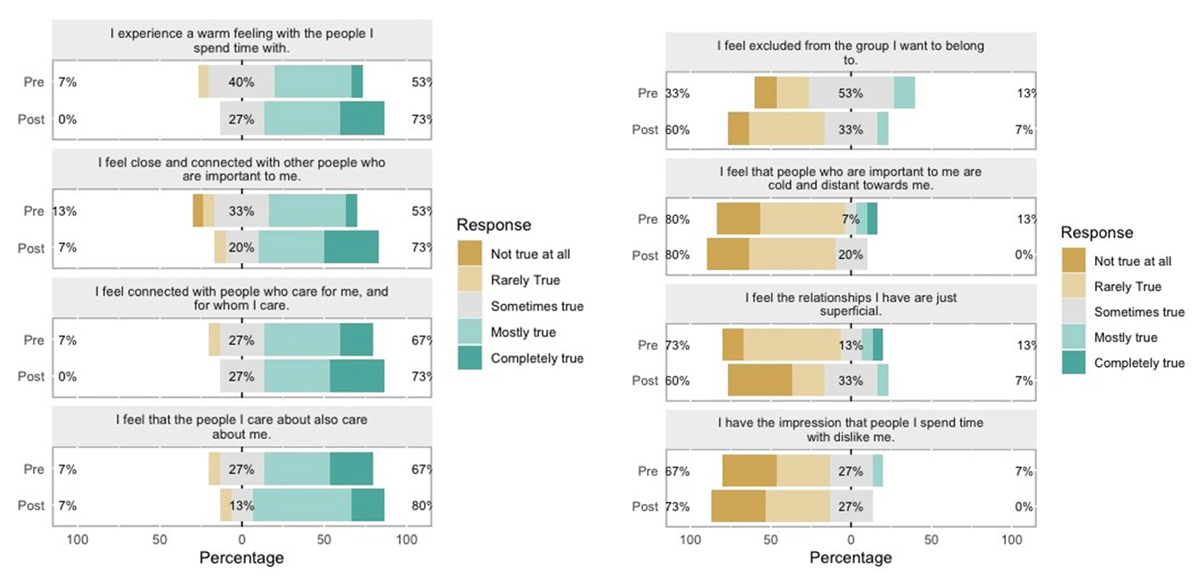
Figure 1
Relatedness Satisfaction and Frustration (N = 15).
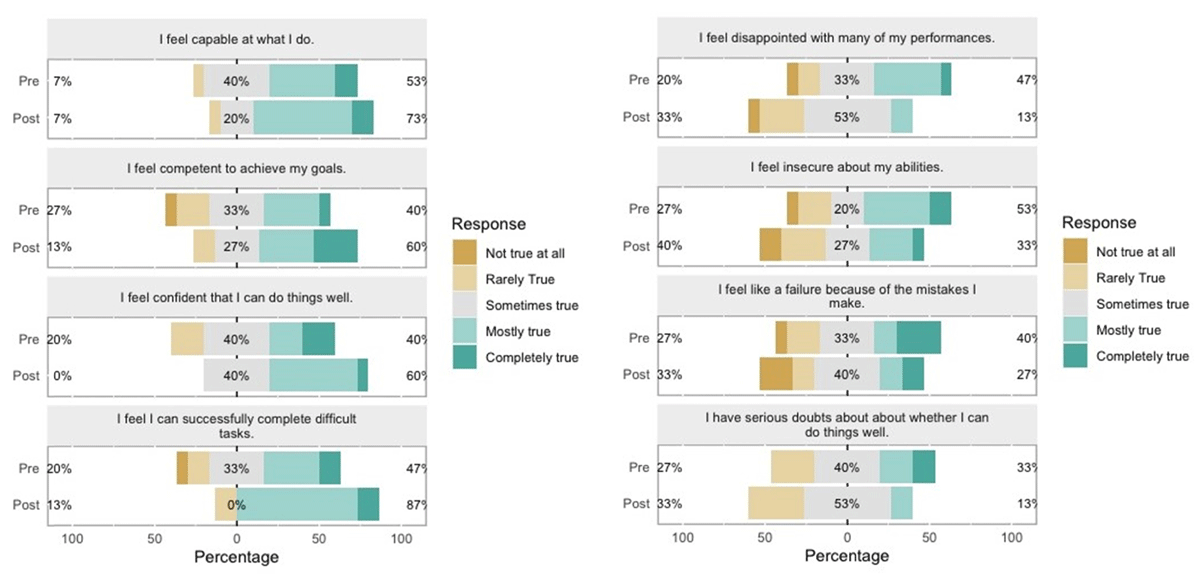
Figure 2
Competence Satisfaction and Frustration (N = 15).
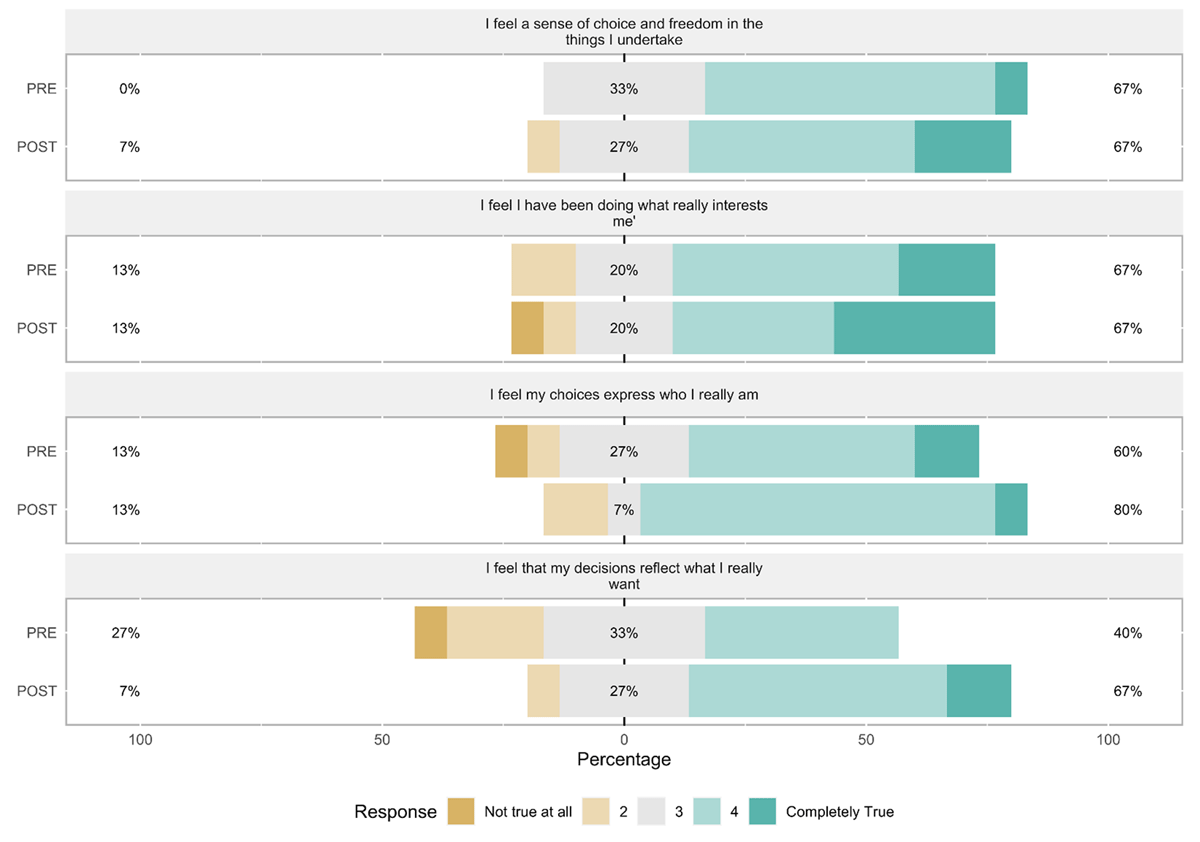
Figure 3
Autonomy Satisfaction (N = 15).
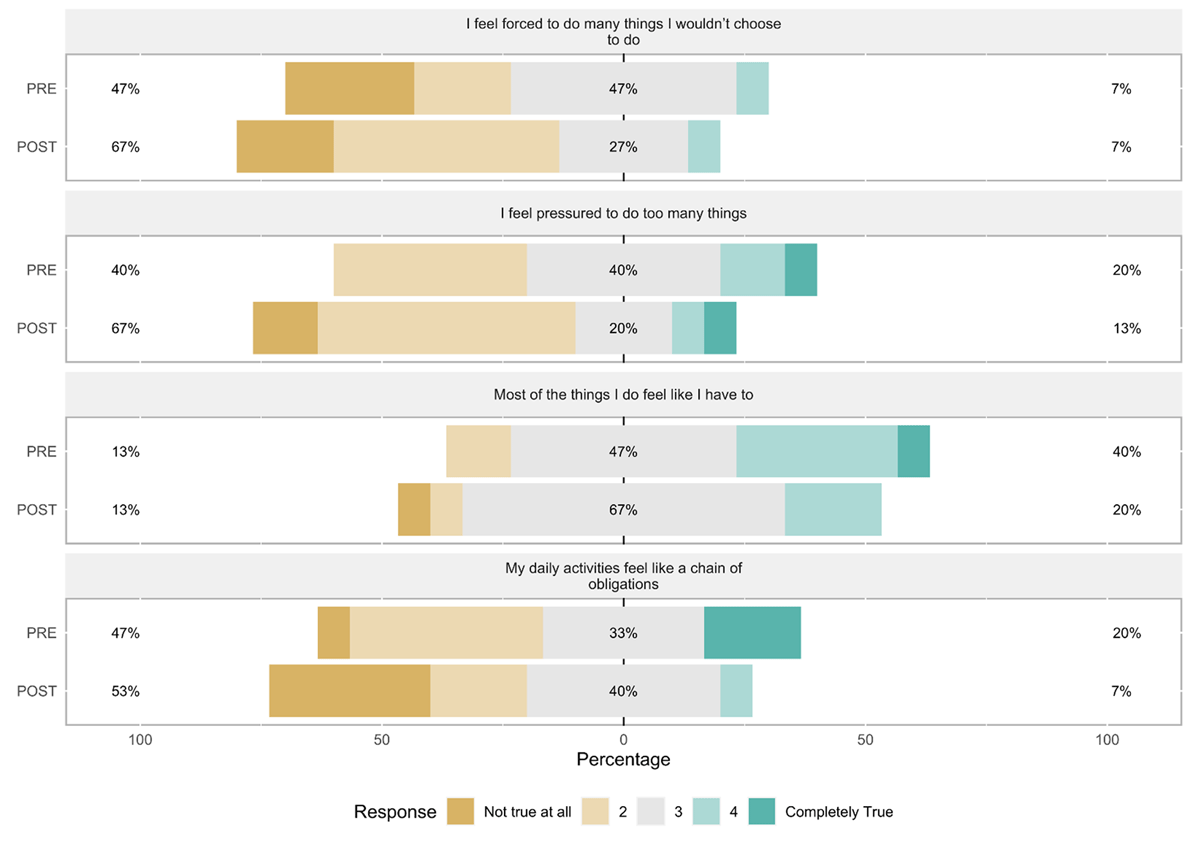
Figure 4
Autonomy Frustration (N = 15).
Reintegration Difficulties
To evaluate if there were any changes in reintegration difficulties pre to post intervention, a paired t-test was conducted revealing a statistically significant change in perceived difficulties following the program, t = –2.273, p = 0.034, with a moderate to large effect size of g = .60, 95% CI [–1.13, –.05]. Baseline estimated mean score was 2.23 indicating some reintegration difficulties. Post estimated mean was 1.37 indicating that reintegration difficulties decreased pre to post. Individual item analysis revealed a statistically significant change in means scores for questions 10 and 13 through 16. See Table 3 for all score, effect sizes, and 95% confidence intervals.
Table 3
Military to Civilian Questionnaire (M2C-Q) pre- and post-scores.
| PRE-TEST | POST-TEST | POST-PRET-TEST/WILCOXON | |||||||||
|---|---|---|---|---|---|---|---|---|---|---|---|
| N | M | SD | N | M | SD | t/z | df/n | p | g/r [95%CI] | ||
| Over the past 30 days, have you had difficulty with… | |||||||||||
| 1. | Dealing with people you do not know well (such as acquaintances or stranger)? | 15 | 1.60 | 1.18 | 14 | 1.21 | 1.31 | –1.104 | 13 | 0.290 | –0.28 [–.78, .23] |
| 2. | Making new friends? | 15 | 2.33 | 1.17 | 14 | 1.86 | 1.29 | –1.144 | 13 | 0.273 | –0.29 [–.79, .22] |
| 3. | Keeping up friendships with people who have no military experience? | 15 | 1.93 | 1.38 | 14 | 1.07 | 1.14 | –2.008 | 13 | 0.066 | –0.50 [–1.03, .03] |
| 4. | Keeping up friendships with people who have military experiences (including friends who are active duty or veterans? | 15 | 1.67 | 1.23 | 14 | 1.29 | .99 | –0.717 | 13 | 0.486 | –0.18 [–.67, .32] |
| 5. | Getting along with relatives (such as siblings, parents, grandparents, in-laws and children not living at home)? | 15 | 2.13 | 1.35 | 14 | 1.36 | 1.44 | –1.883 | 13 | 0.082 | –0.47 [–.99, .06] |
| *6. | Getting along with your spouse or partner (such as communicating, doing things together, enjoying his or her company? | 6 | 2.50 | 1.64 | 9 | 1.33 | 1.41 | –1.282 | 8 | 0.256 | –0.44 [–1.15, .30] |
| *7. | Getting along with your child or children (such as communicating, doing things, together, enjoying his or her company)? | 7 | 1.43 | 1.39 | 5 | .80 | 1.78 | 0.190 | 4 | 0.861 | 0.07 [–.65, .77] |
| *8. | Finding or keeping a job (paid or nonpaid or self-employment)? | 10 | 2.30 | 1.82 | 6 | 1.50 | 1.76 | 0.000a | 6 | 1.000 | 0.00 [0.0,1.0] |
| *9. | Doing what you need to do for work or school? | 9 | 1.78 | 1.56 | 5 | 1.60 | 1.34 | –0.378a | 5 | 0.705 | –0.25 [0.13, 1.0] |
| 10. | Taking care of your chores at home (such as housework, yard work, cooking, cleaning, shopping, errands)? | 15 | 2.33 | .90 | 14 | 1.36 | 1.08 | –3.017 | 13 | 0.010** | –0.76 [–1.32, –.18] |
| 11. | Taking care of your health (such as exercising, sleeping, bathing, eating well, taking medications as needed)? | 15 | 2.33 | 9.0 | 14 | 1.43 | 1.22 | –1.992 | 13 | 0.068 | –0.50 [–1.02, .04] |
| 12. | Enjoying or making good use of free time? | 15 | 2.33 | 1.29 | 14 | 1.43 | 1.28 | –2.253 | 13 | 0.042** | –0.57 [–1.10, –.02] |
| 13. | Taking part in community events or celebrations (for example, festivals, PTA meetings, religious or other activities)? | 15 | 2.93 | 1.22 | 14 | 1.71 | 1.54 | –2.973 | 13 | 0.011** | –0.75 [–1.31, –.17] |
| 14. | Feeling like you belong in “civilian” society? | 15 | 2.13 | 1.30 | 14 | 1.07 | 1.29 | –2.565a | 14 | 0.010** | –0.74 [0.53, 0.85] |
| 15. | Confiding or sharing personal thoughts and feelings? | 15 | 2.53 | .91 | 14 | 1.43 | 1.28 | –2.895 | 13 | 0.013** | –0.73 [–1.28, –.15] |
| 16. | Finding meaning or purpose in life? | 15 | 2.73 | 1.10 | 14 | 1.29 | 1.49 | –3.000 | 13 | 0.010** | –0.75 [–1.31, –.17] |
| M2C-Q composite score | 14 | 2.23 | .849 | 14 | 1.37 | 1.05 | –2.273 | 13 | 0.034** | –0.60 [–1.13, –.05] | |
[i] *Questions that could be answered as “Does not apply”.
**Significant at a p < 0.05, a Computed with Wilcoxon Signed-rank test, Effect size calculated using Hedges g for t-tests.
Bivariant Correlations
Bivariant correlations were conducted between the self-determination subscale scores and the reintegration difficulties composite score revealing strong relationships between variables. Strong negative correlation between autonomy satisfaction and reintegration difficulty scores, r (14) = –.699, p = 0.005, and a strong positive correlation between autonomy frustration scores and M2C-Q scores, r (14) = .802, p = 0.001 were noted indicating participants who expressed higher levels of autonomy frustration also indicated more difficulties with reintegration tasks. Likewise, strong correlations between overall psychological needs satisfaction and frustration and post-reintegration difficulty scores, r (14) = –.752, p = 0.002; r (14) = .711, p = 0.004, respectively were found. Participants who reported increased needs satisfaction also reported less reintegration difficulties. See Table 4.
Table 4
Correlations between post psychological needs satisfaction and frustration and post reintegration difficulties.
| 1 | 2 | 3 | 4 | 5 | 6 | 7 | 8 | 9 | ||
|---|---|---|---|---|---|---|---|---|---|---|
| 1. | Post autonomy satisfaction | 1.00 | ||||||||
| 2. | Post autonomy frustration | –.670** | 1.00 | |||||||
| 3. | Post relatedness satisfaction | .716** | –.776** | 1.00 | ||||||
| 4. | Post relatedness frustration | –5.92* | .742** | –.904** | 1.00 | |||||
| 5. | Post competence satisfaction | .885** | –.588* | .658** | –.669** | 1.00 | ||||
| 6. | Post competence frustration | –.713** | .684** | –.718** | .731** | –.746** | 1.00 | |||
| 7. | Post total satisfaction | .947** | –.742** | .866** | –.791** | .928** | –.795** | 1.00 | ||
| 8. | Post total frustration | –.736** | .889** | –.878** | .903** | –.747** | .910** | –.862** | 1.00 | |
| 9. | Post reintegration difficulties scores | –.699** | .802** | –.760** | .560* | –.624* | .579* | –.752** | .711** | 1.00 |
[i] Note: **Correlation is significant at the 0.01 level (2-tailed).
*Correlation is significant at the 0.05 level (2-tailed).
Post-Intervention Responses
A two-stage process of coding was used to analyze the qualitative responses (Saldana, 2021). First, the primary author (BL) and research assistant (CM) independently read through the responses for familiarization and to develop an initial set of codes. The In Vivo (inductive) coding process was used to develop codes using the participants’ own words that reflected their experience with TR. The two coding efforts were compared with discrepancies resolved through consensus. Eight general codes related to attitude, behavior change, and experiences with the horse were developed (a) their self-efficacy (confidence), (b) self-esteem, (c) social relationships, (d) sense of kindness, (e) joy and happiness, (f) reduced anxiety, (g) new knowledge, and (h) sense of purpose. Second, the eight initial codes were collapsed and relabeled as categories using the SDT constructs of autonomy, competency, and relatedness (deductive analysis) as the coding framework. All responses were then recoded using the three categories. Responses that did not fit one of the three categories were coded using an additional category of purpose (sense of purpose, life worthwhile). While these responses did not fit directly within the SDT constructs they did relate to reintegration questions. Frequency counts and content salience were used to determine which categories best described the participants’ responses. Most responses described competence and relatedness with a smaller number describing autonomy and purpose.
Integration and Metainference
The value of a mixed-methods research design is the ability to use qualitative data to extend the understanding of quantitative data findings. The experience of TR for MSMVs and the effects on reintegration difficulties can be viewed through the four constructed categories: autonomy, competence, relatedness, and purpose. See Table 5 for integration and summation of quantitative and qualitative findings.
Table 5
Joint display of TR experiences on psychological needs and reintegration.
| TR BENEFITS | CHANGE IN SDT | REINTEGRATION DIFFICULTIES (LEVEL) | CHANGE IN MC2-Q SCORES | PARTICIPANT EXPERIENCES |
|---|---|---|---|---|
| ↑Autonomy satisfaction | 14.07 to 15.07 | ↓Finding and keeping a job. | 2.30 to 1.5 |
|
| ↓Autonomy frustration | 11.40 to 9.80 | ↓Doing what is needed. | 1.78 to 1.60 | |
| ↓Taking care of health. | 2.33 to 1.36 | |||
| ↑Relatedness satisfaction | 14.60 to 16.00 | ↓Dealing with people. | 1.60 to 1.21 |
|
| ↓Making friends. | 2.33 to 1.86 | |||
| ↓Relatedness frustration | 9.20 to 8.27 | ↓Keeping friends. | 1.67 to 1.29 | |
| ↓Getting along with relatives. | 2.13 to 1.36 | |||
| ↓Sharing emotions | 2.53 to 1.43 | |||
| ↓Taking part in community. | 2.93 to 1.71 | |||
| ↓Feeling like you belong. | 2.13 to 1.07 | |||
| ↑Competence satisfaction | 13.47 to 15.07 | ↓Finding and keeping a job. | 2.30 to 1.5 |
|
| ↓Doing what is needed. | 1.78 to 1.60 | |||
| ↓Competence frustration | 13.13 to 11.27 | ↓Taking part in community. | 2.93 to 1.71 | |
| ↑Overall needs satisfaction | 42.13 to 46.13 | ↓Finding meaning or purpose in life | 2.23 to 1.37 |
|
| ↓Overall needs frustration | 33.73 to 29.33 |
Autonomy
The trend analysis showed participants were more likely to report that their decisions reflect what they really want, and that they are less likely to view mistakes as failures after participating in the TR sessions. This shift was also noted in their direct responses to the open-ended question about behavior/attitude change. Three participants stated, “I make stronger decisions for myself and ask for help more often.” “I have committed to riding every week and staying sober.” “I have learned not to repeat the bad behaviors that made my life more difficult.” The ability to make good decisions, especially as it relates to health, translates to less reintegration difficulties. Both post autonomy satisfaction and frustration scores were highly correlated with post-reintegration scores (r = –.699, r = .802, respectively). See Table 4 above. As autonomy satisfaction scores increased, reintegration difficulty scores decreased. Further, participants’ scores on the M2C-Q self-care question (#12) improved pre to post TR sessions. See Table 3 above. Making positive decisions about one’s health is an important component to successful reintegration.
Competence
Most of the participants’ open responses mapped to the category of competence. The TR experience provided a learning environment where the participant was able to learn new riding skills as well as life skills which facilitated a change in self-confidence/competence. Participants commented,
“I’ve become more confident and my self-esteem has improved.”
“I feel I have gone from being extremely depressed much of the time to having confidence and a sense of purpose and direction.”
“More confident in being myself.”
“I can learn things. I am not stupid.”
“I don’t have to give up when things are difficult.”
The trend data on competence mirrors the participants’ responses. The largest shift is noted in the competence satisfaction question, I feel I can successfully complete difficult tasks. Only 47% of participants reported the statement was mostly true or completely true prior to the TR sessions compared to 87% reporting this statement was mostly or completely true post TR (Figure 2 above). The same trend is noted in the competence frustration scores where the participants reported less frustration pre to post. While there are no specific questions related to competence directly on the M2C-Q survey, competence can be associated with finding and keeping a job (question 8), doing what is needed for work or school (question 9), taking part in community events (question 13). Scores on all three questions improved pre to post. See Table 3 above. Post competence satisfaction and frustration scores were significantly correlated with post reintegration difficulties scores (r = –.624, r = .579; respectively). Table 4 above.
Relatedness
A high number of participants’ responses reflected the idea of relatedness: the need to have close, affectionate, and respected relationships with others. A sense of belonging. The participants commented on developing meaningful relationships with both the horse during the TR sessions and with other participants. The ability to develop relationships while participating in TR also appeared to improve relationships outside of the riding sessions. Participants commented,
“Your entire relationship with a horse revolves around trust.”
“I struggle with trust and opening up. It takes me a while with the right person. With a horse I trust and open up without even realizing.”
“The first time I looked into the eyes of the horse something just changed.”
[by working with a horse] “I found myself I made friends.”
“I have even gotten over fears that I’ve had for a long time such as working with women.”
“I feel like I fit in around the people I ride with.”
“It used to be difficult for me to carry on a conversation or talk with others and now you can’t get me to shut up.”
The trend data also revealed the shift from lower levels of relatedness satisfaction to higher levels. Some of the larger shifts occurred in responses to I experience a warm feeling with the people I spend time with, and I feel close and connected with other people who are important to me. (Figure 1 above). Questions 1–7 on the M2C-Q were designed to assess the level of difficulties with relationships. Participants reported less difficulties for all seven questions. Question 14 and 15, indirectly relate to relationships by assess the participants response to if they feel they belong to civilian society and if they are able to confide or share personal thoughts and feelings. Participants reported significantly less difficulties with both after participating in the TR sessions (Table 3 above). Developing meaningful relationships with family and friends is an integral part of reintegration and is reflected in the concept of relatedness. The improvement of relatedness satisfaction was strongly correlated with less reintegration difficulties post TR (r = –.760, Table 4 above). The changes participants experienced in developing trust and relationships during the TR session appeared to translate to less issues with reintegration and highly levels of relatedness.
Purpose
While SDT does not explicitly include a measurement of purpose, the theory does posit that improved satisfaction with all three psychological needs (autonomy, competence, relatedness) improves intrinsic motivation and that healthy individuals are proactively interested in their social environments and experiences (Ryan et al., 2021). Several participants commented that their experience with the horse in TR helped them discover meaning to their lives. For example,
“Rather than waking up and saying why can’t I die today it [the TR program] has changed my life.”
“I feel like being in the program has given me something to look forward to and truly enjoy as well as something I want to be even more involved in.”
“I have a sense of purpose and direction.”
“I learned that no matter what my diagnosis is, it doesn’t have to remain as my identity. I can push forward and have a life.”
“I am happy and it feels good to be happy. I don’t want to be a statistic and life is hard but I feel it’s worth living.”
[In the next 5 years] “I want to work with horses and help other veterans heal.”
“I still feel like I have something to contribute to this world.”
[I want to] “Build more relationships with friends.”
The change of attitude expressed by the participants is also reflected in their response to question 16 of the M2C-Q, Over the past 30 days have you had difficulty with finding meaning or purpose in life? The participants reported significantly less difficulty with finding purpose in life post TR sessions. Table 3 above. While no specific subscale of the SDT defined purpose, it is not a far stretch to see how improvement in competence and relatedness specifically can influence how a person views their life with meaning and purpose.
Discussion
This exploratory study provided insight into how a therapeutic riding program for MSMVs can impact self-determination and reintegration. The mixed-methods approach allowed us to explore the participants’ reported experience with TR through the SDT lens and to expand that understanding to potential difficulties with reintegration. Further, the qualitative data provided key insight into how, and possibly why, the participants’ interactions with the horse affected their psychological wellbeing and reintegration into civilian life.
After completing 10 sessions of TR, participants reported higher levels of competence, relatedness, autonomy, and a decrease in community reintegration difficulties. Statistical analysis revealed a high correlation between overall psychological needs satisfaction and decreased reintegration difficulties. The participants reported higher levels of overall psychological needs satisfaction and lower levels of needs frustration pre to post; the largest changes occurred in competence frustration, competence satisfaction, relatedness satisfaction, and autonomy frustration. While the change in mean scores were not statistically significant at a .05 level, the positive change in psychological needs satisfaction indicates a shift towards intrinsic motivation and well-being (Ryan & Deci, 2000). Most participants’ free responses about their TR experience supported the findings and revealed behavioral and attitude changes most closely aligned with competence and relatedness. The impact of TR on autonomy and its synergistic role in positive reintegration was also noted.
TR, Competence, and Reintegration
Competence is related to the feeling of mastery, ability to learn and grow and is best cultivated by well-structured challenging environments. When combined with autonomy (personal ownership of the decision) the outcome can be improved intrinsic motivation for wellbeing and growth (Ryan & Deci, 2020). The participants in the current study reported higher levels of competence satisfaction and less frustration, highlighting improved confidence in doing things well, completing difficult tasks, and in learning new skills.
The progressive nature of the therapeutic riding sessions facilitates a growth and mastery trajectory in riding skills. The participants often started with basic riding and horsemanship skill development such as leading and brushing the horse or learning suppling (turning) exercises at a walk. Then, if ready, they moved to trotting exercises and guiding their horses around obstacles. The TR setting and partnership with the horse provides the challenging structured environment needed for improved competency that appeared to translate to less reintegration difficulties.
Some MSMVs experience difficulties with reintegration during a time of post-deployment or upon retirement. Most participants in the current study were retired service members with two participants indicating active duty. All participants reported some level of reintegration challenges prior to engaging in the TR sessions but improvement after participating. The participants’ open responses revealed a lack of confidence, depression, isolation, and hopelessness prior to the program. Research suggests that some veterans overcome challenges to reintegration by engaging in community activities and learning opportunities (Verkamp, 2021). Further, the veteran’s sense of self or self-concept can impact reintegration as they search for a new civilian identity (Smith & True, 2014). Several participants commented that their TR experience improved their level of confidence, self-esteem, and sense of accomplishment. This change of attitude about self may transfer to other tasks outside of the TR sessions such as seeking new employment or further education.
TR, Relatedness, and Reintegration
Relatedness, the sense of belonging and connection, is an important aspect of self-determination theory and a person’s psychological health (Ryan et al., 2021). The ability to connect with others and form trusting relationships for MSMVs can be a challenge during the reintegration process. In post-deployment, former soldiers must reacquaint themselves with their loved ones and/or develop new relationships to confirm their old identity or form a new identity as a civilian (Smith & True, 2014). In the current study, participants expressed feeling lost, miserable, isolated, and distant from others prior to starting the TR program. One participant commented, “Before the program I was in my parent’s basement, getting divorce, fresh out of the army, and I barely left the house.”
Post TR, the participants reported higher levels of relatedness satisfaction and less frustration along with fewer difficulties with keeping friendships and making new friends. Significant changes were noted in feeling like they belong to a civilian society. Participants commented that their interaction with the horse in the TR program helped facilitate the process of developing and strengthening relationships. They commented interacting with the horse helped them feel accepted, open, and it helped them learn to trust again. The horse, being a large animal, adds an additional challenge and experience to the skill development process by requiring the participant to engage in a dynamic relationship with the horse. The horse must understand the participant’s/rider’s cues and be willing to follow their lead. Frustration on both the participant’s side and the horse’s side can occur when the cues are not clear or there is a lack of trust in the human-horse partnership. This added dimension to the learning process is one of the unique qualities of TR that may provide the participant deeper insight about their everyday activities and other human relationships.
TR and the Synergistic Role of Autonomy
Autonomy, a sense of choice and control, plays an important role in a person’s ability and desire to make choices about their health and behavior (Ryan et al., 2021). A core tenet of SDT is that the more a person is motivated through autonomous action, whether that is in connection with competence or relatedness, the higher level of function and well-being they will experience. (Ryan et al, 2021). The transition from a military culture to a civilian culture requires a shift towards more autonomy (Coll et al, 2011; Orazem et al, 2017). MSMVs are faced with making independent decisions more frequently as they take on civilian type roles, many of which require the renewal or building of relationships (relatedness) within a sense of autonomy (choice; Ahern et al., 2015). One of the most common difficulties faced by veterans is establishing or re-establishing social relationships (Elnitsky, Fisher, and Blevins, 2017). However, supporting the veteran’s autonomy has been found helpful in encouraging help-seeking behaviors and reducing reintegration challenges (Gettings et al, 2019). SDT supports the synergistic properties of autonomy on competence, relatedness, and motivation which leads to positive life outcomes (Ryan & Deci, 2000, Ryan et al., 2021). The TR experience for MSMVs provides an opportunity to improve autonomy satisfaction in relation to the other psychological needs.
As a prey and herd animal, a horse naturally relies on other horses for support and leadership, not a human. The TR curriculum included sessions where the horse was free to interact with or avoid the participant. There was choice involved on both the participant and horse side of the equation. The horse’s well-being was emphasized, and the riding instructors provided insight about how to recognize stress and/or discomfort in the horse while developing the human-horse partnership. While the instructor provided information on how to interact with the horse to foster a relationship, the participant was allowed to interact with volition. Deci et al. (2006) recognized that the mutuality of autonomy in developing a relationship fosters both relatedness and autonomy needs satisfaction. While they described it in terms of human relationships, the horse-human relationship may provide similar benefits.
In the current study we found a high correlation between autonomy frustration and reintegration. Higher levels of autonomy frustration were associated with more reintegration difficulties while higher levels of reported autonomy and relatedness satisfaction were correlated with less reintegration difficulties. The ability to develop autonomous relationships appeared to improve community and family reintegration. Rattray et al. (2023) reported similar findings in their recent study of veteran community reintegration noting that social support and having a sense of life purpose were critical for successful reintegration. In general, environments that support autonomy, positive feedback, skill development, and non-controlling language, specifically environments that foster self-determined competence (e.g., learning a new skill that is self-directed) and autonomy, foster psychological well-being (Ryan et al., 2021).
While the current study provided unique insight into the therapeutic riding experience for MSMVs and their reintegration challenges, there are several noted limitations. First, the small sample size limits the interpretation of statistical findings. The statistical analysis procedures and the research design were chosen to address issues with small sample size, but the findings should be interpreted with the limitations in mind. The use of trend analysis at the question level provided additional information about changes in participant’s attitudes and behaviors that are not easily capture in traditional t-tests with small sample sizes. Additionally, the mixed-methods research design allowed us to analyze and interpret the findings using the totality of the data. A mixed-methods research design is well-suited for studies with small sample sizes.
A second limitation is the use of self-assessments. The two quantitative surveys used in the study were designed to be answered by the participant. With self-assessments there is always a risk of self-knowledge and social-desirability biases. Participants may have reported what they thought was expected instead of what they felt about each question. However, using multiple assessments and qualitative data in the final analysis provided a more complete analysis of the data than would have been possible with just the survey data. A proxy assessment by a family member or close friend could be included in future research to provide a more objective perspective.
The third noted limitations is the lack of information about length of retirement. We did not include year of military separation as a variable in the study. With a small sample size, it would be statistically difficult to assess the relationship between years of separation to level of reintegration difficulties. All participants reported a moderate level of reintegration difficulties before participating in the TR sessions. Some might speculate length of retirement improves reintegration, but that may not be the case for all veterans. In a study of 598 veterans, Vasterling et al. (2016) posited that adverse mental health conditions and stress responses post-military separation may actually increase over time. Including length of separation (retirement) in future TR studies with larger populations may provide more insight into how the TR experience impacts specific reintegration difficulties and the psychological well-being of the participants.
Conclusion
SDT is a valuable framework to examine the effects of a TR program for MSMVs. Programs that provide a need-supportive environment, such as TR programs, offer opportunities for personal growth in psychological needs satisfaction, especially autonomous (intrinsic) motivation. While there were noted limitation, the study design was appropriate for the posed research questions. The current findings shed new light on the possible effects of therapeutic riding to improve self-determination and to reduce reintegration difficulties often reported by the MSMVs as they transition to civilian life. Using the SDT framework and the mixed-methods study design to connect psychological needs with reintegration difficulties provided unique insight into how a program that includes horses may positively impact a veteran’s individual growth and well-being. Future research utilizing the SDT framework with larger samples sizes and multiple types of programs that include horses would allow researchers to determine if changes in psychological needs, specifically autonomous motivation, is a common and expected outcome for programs integrating horses.
Data Accessibility Statement
This study was not preregistered. Data available from the corresponding author upon request.
Acknowledgements
The authors wish to thank the veterans and military personnel for their participation in the study. They would also like to thank BraveHearts Therapeutic Riding and Educational Center for assisting with this project.
Competing Interests
The authors have no competing interests to declare.