
Table 1
Value-added and non-value-added activities in a hypothetical healthcare facility.
| ENTITY | PERSPECTIVE | VALUE ADDED ACTIVITY | NON-VALUE-ADDED ACTIVITY |
|---|---|---|---|
| Surgery room | Surgeon | Operating on a patient | Re-opening a patient to retrieve a retained surgery kit |
| Pharmacy | Technician or prescription | Creating an intravenous formulation | Reprocessing medications that were returned from patient units |
| Inpatient room | Nurse | Administering medications to a patient | Copying information from one computer system into another or to paper |
| Radiology | Technician | Performing MRI procedure | Performing a medically unnecessary scan |
| Exam room & laboratory | Sample collector or Medical technician | Interpreting test results | Fixing a broken instrument |
| Food & nutrition | Cook or server | Preparing food for inpatient customers | Stacking and restacking plates and trays |
| Emergency room | Patient | Admitting, evaluating and treating | Unnecessary waiting to be seen |
| Clinical laboratory | Patient specimen | Being centrifuged and evaluating results | Specimen waiting to be moved to next station as a batch |
| Post-operative procedures | Patient food tray | Food is being cooked or tray is being prepared | Reworking because tray was made incorrectly |
Table 2
Various types of waste and their hypothetical examples from healthcare perspective.
| WASTE TYPE | DESCRIPTION | EXAMPLE FROM HEALTHCARE PERSPECTIVE |
|---|---|---|
| Defects | Time and effort spent doing something incorrectly, inspecting for errors, or fixing errors | Surgical case cart missing an item; wrong medicine or wrong dose administered to patient |
| Overproduction | Doing more than what is needed by the customer | Conducting unnecessary diagnostic procedures; producing medications that are not used before the orders change or patient is discharged |
| Transportation | Unnecessary movement of the ‘product’ (patients, specimens, materials) in a system | Poor layout, such as the catheter lab being located a long distance from the emergency room, patients moving from building to building to receive various treatments |
| Waiting | Waiting for the next event to occur or next work activity | Employees waiting for a patient, information, or work to do; patients waiting for an appointment, care, or discharge |
| Inventory | Excess inventory cost incurred by finance charge, and costs for storage, movement, or spoilage | Expired supplies that must be disposed of, such as out-of-date test kits or medications |
| Motion | Unnecessary movement by employees in the system | Nurse dragging a bag of dirty linen down a hallway instead of housekeeping; lab employees walking miles per day due to poor layout; walking to find missing supplies, equipment, or medications; unnecessary clicks in an EMR system |
| Overprocessing | Doing work that is not aligned with patient needs | Entering data into a computer system that is never seen or used; excessive warnings in an EMR system that physicians and nurses just click through |
| Human potential | Waste and loss due to not engaging employees or listening to their ideas | Employees get burned out and stop giving suggestions for improvement or quit their job |
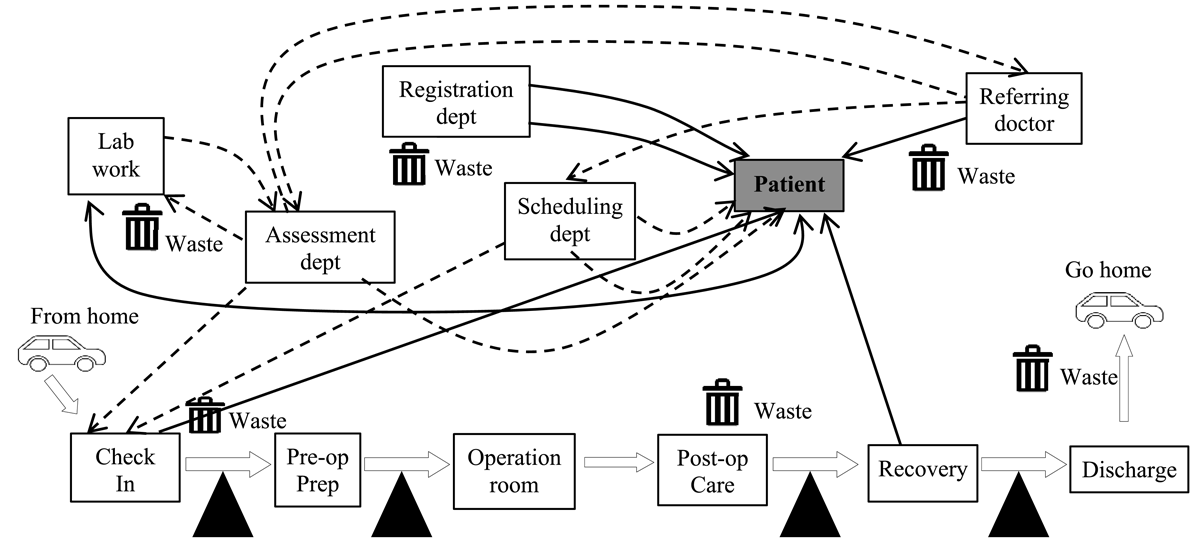
Figure 1
A simplified high-level value stream map for an outpatient surgery patient.
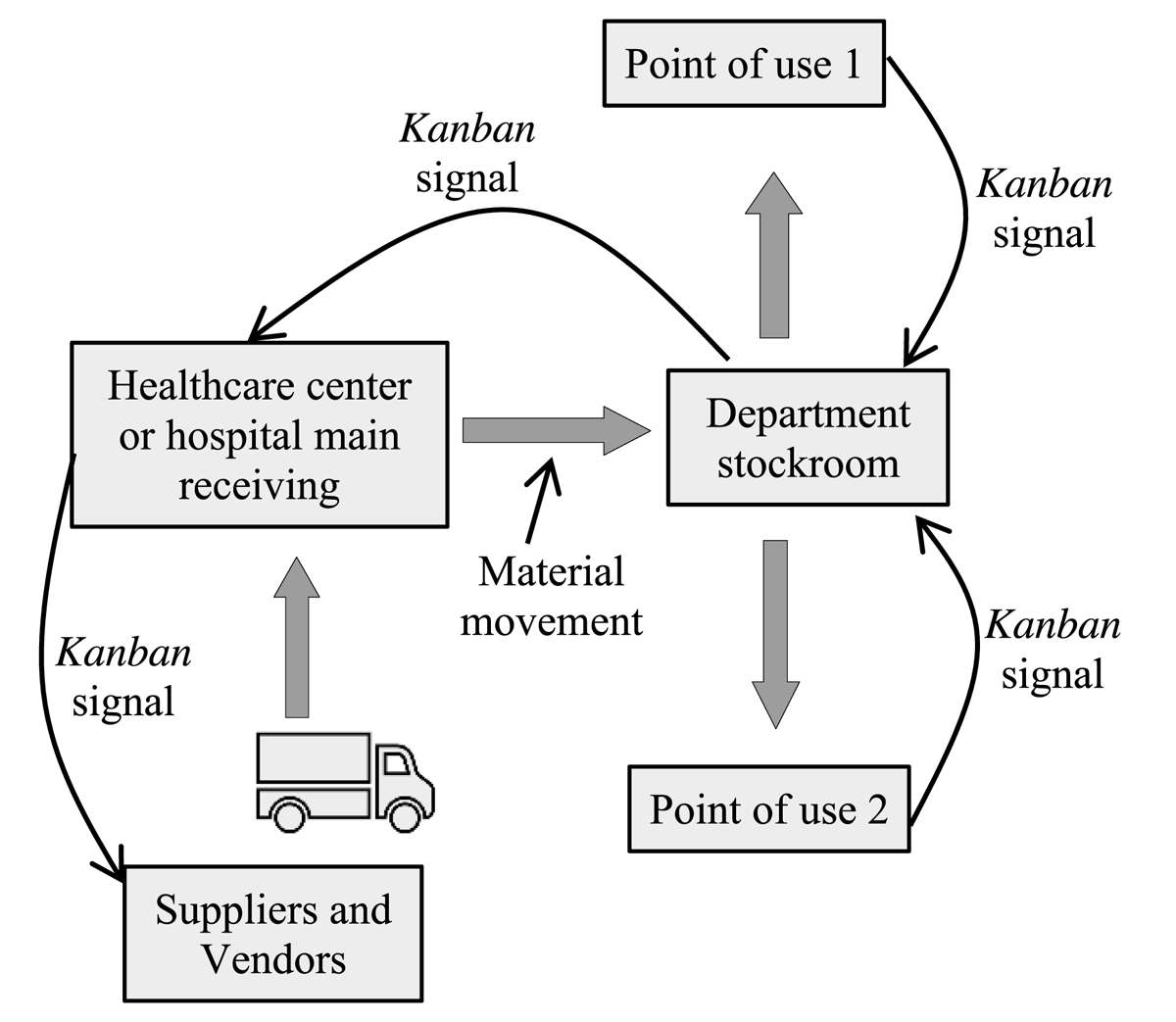
Figure 2
An illustration of the supply flow structure linked with multistage Kanban system in which each downstream area pulls material from an upstream location.
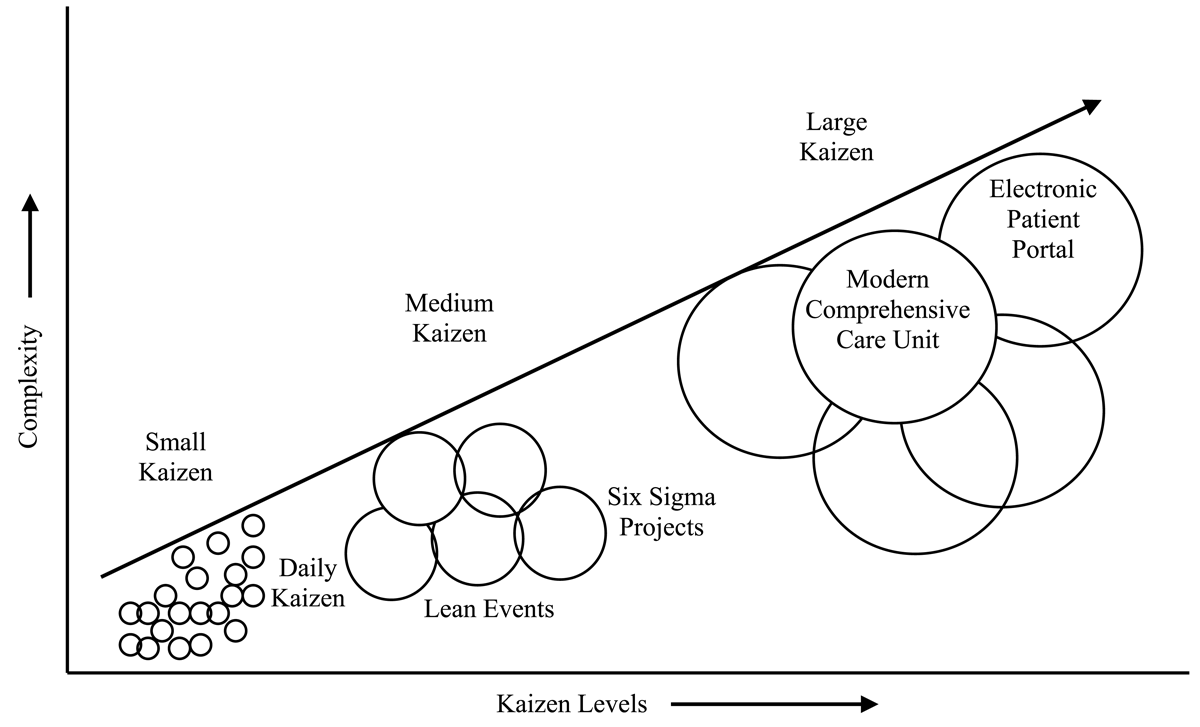
Figure 3
An illustration of three levels of kaizen, where bubble size roughly represented relative effort size.
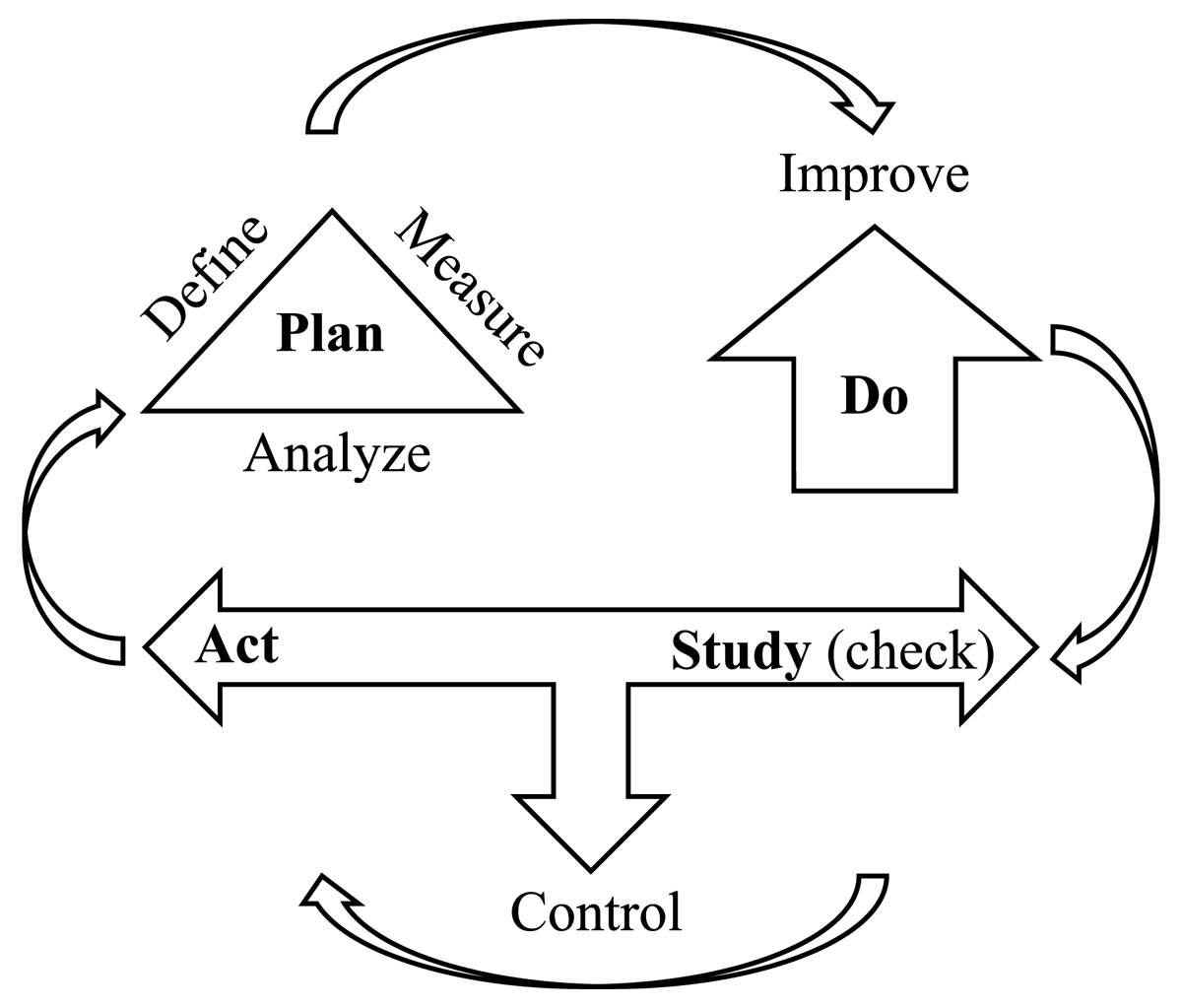
Figure 4
Interrelationships between Plan-Do-Study-Act and Define-Measure-Analyze-Improve-Control cycles.
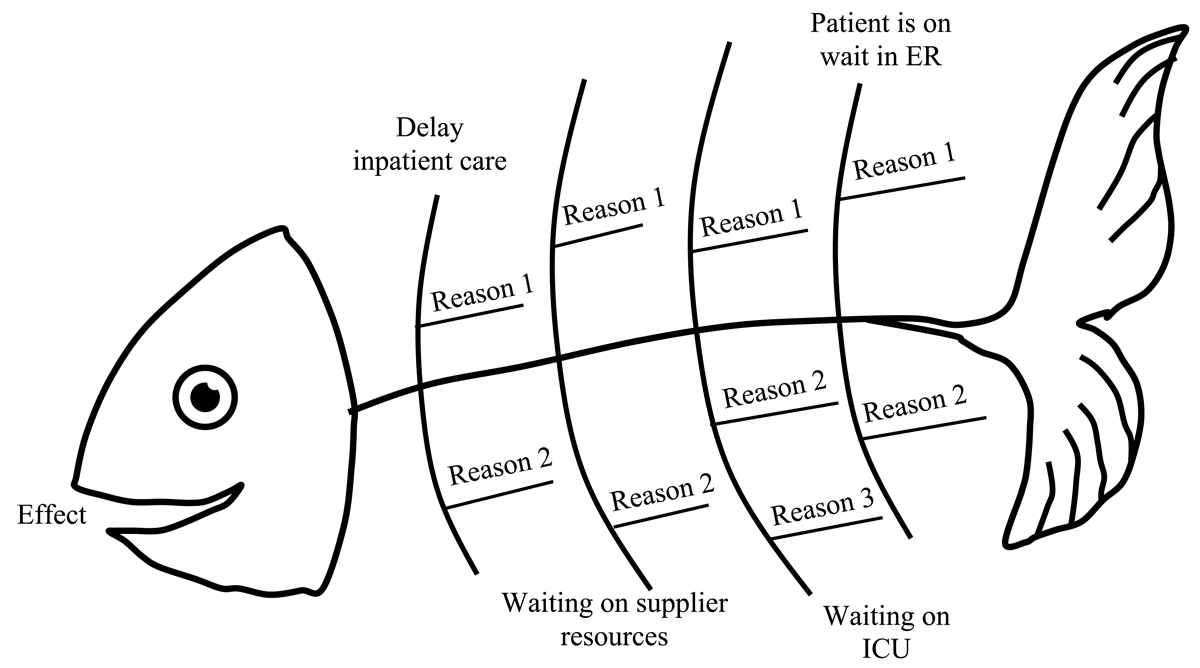
Figure 5
An illustration of the fishbone or cause and effect or Ishikawa diagram.
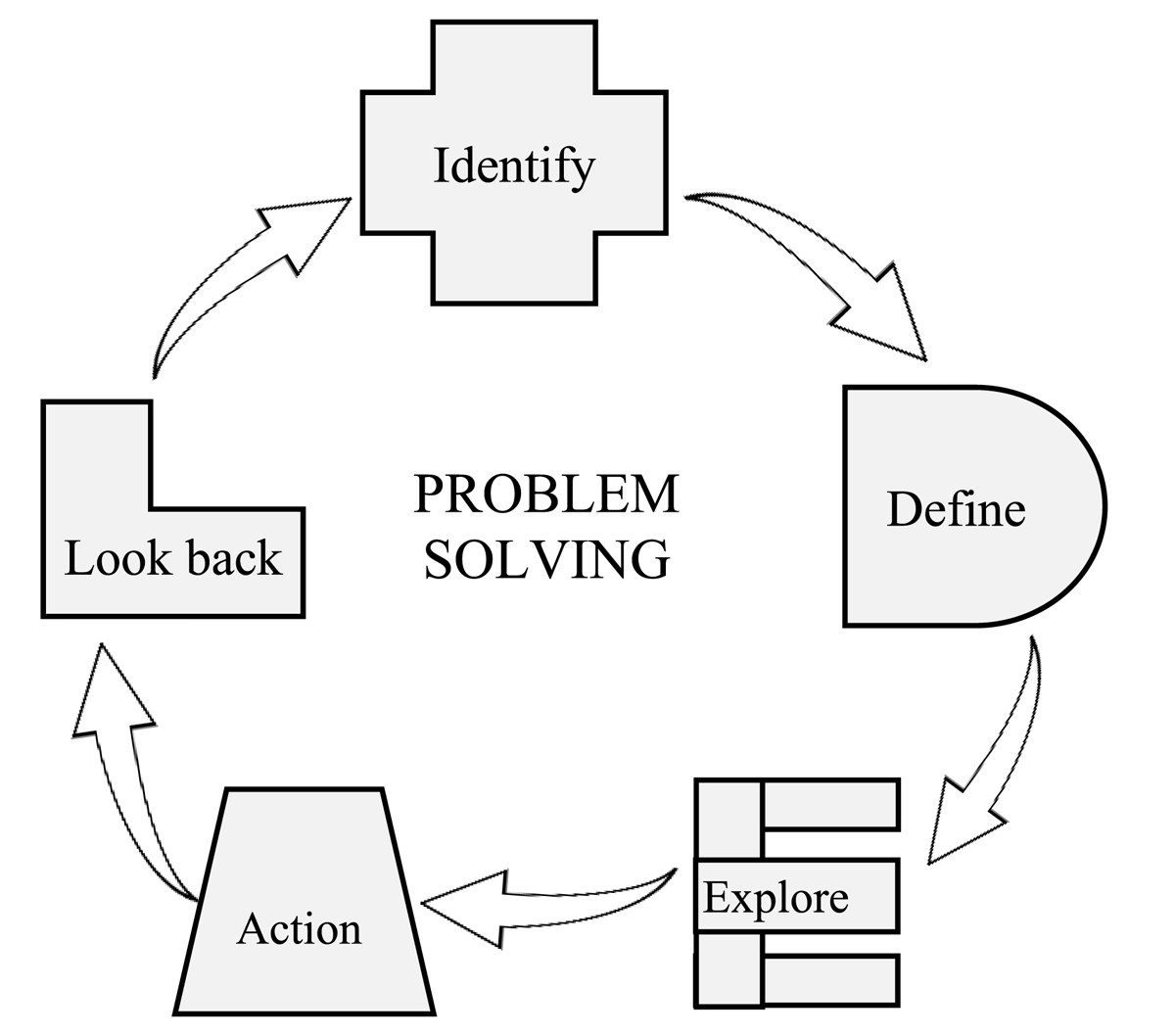
Figure 6
An illustration of the interconnected steps of the A3 problem-solving approach.
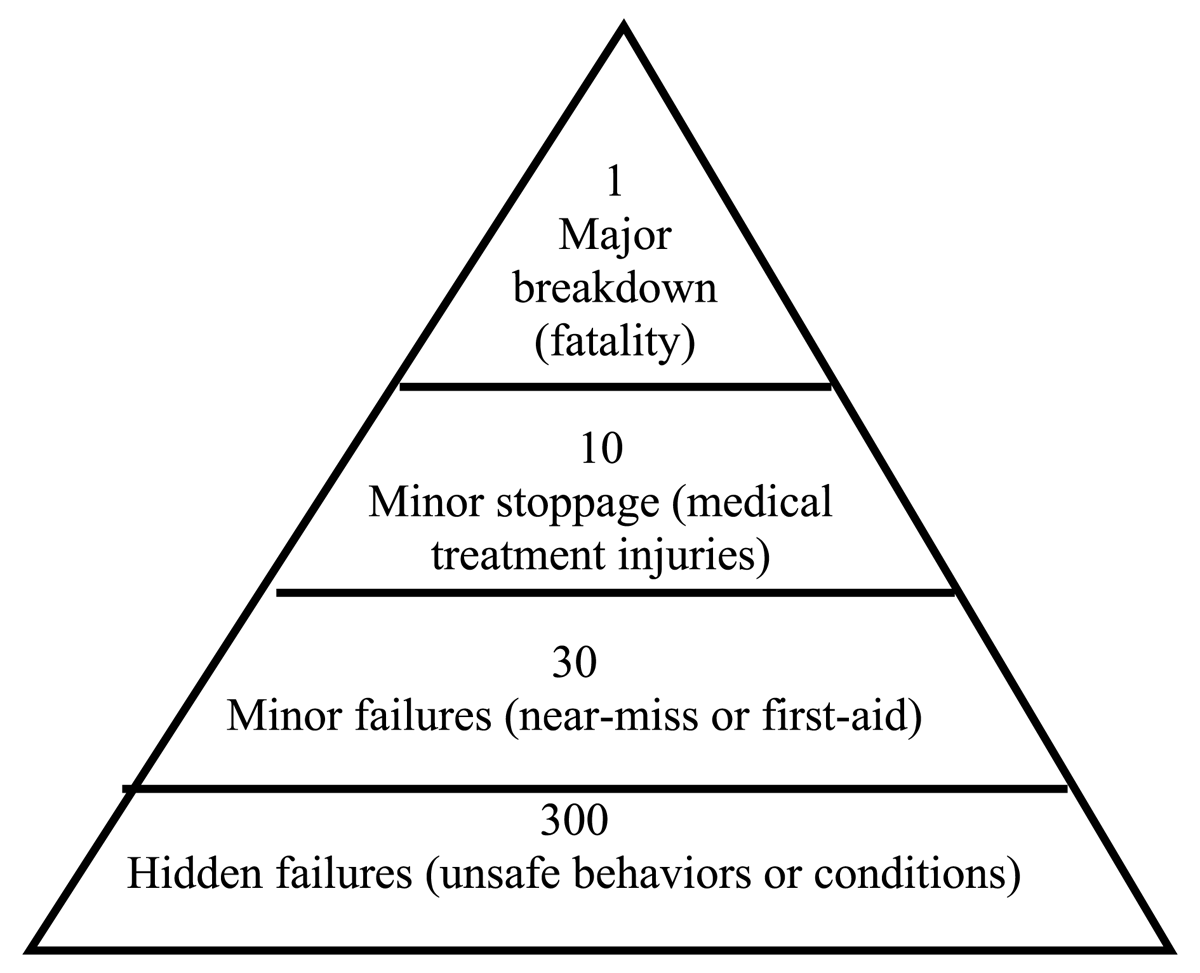
Figure 7
Fatality pyramid in a healthcare center to illustrate analogous to machine losses.
Table 3
Lean management for healthcare contents fitting with Bloom’s taxonomy.
| BLOOM’S LEVEL | BLOOM’S TAXONOMY | LEARNING LEVEL | LEVEL OF THINKING |
|---|---|---|---|
| 1 | Remember | Recognize and recall LSS facts, concepts, theories, definitions, formulas, dates, events. | Lower level convergent* |
| 2 | Understand | Understand LSS facts mean; identify, classify, describe, and provide examples of the facts. | Higher level convergent |
| 3 | Apply | Apply LSS tools, rules, concepts and the use of organization specific situation to approach as well as implementation. | Lower level divergent** thinking |
| 4 | Analyze | Break down information into LSS component parts; draw connections among ideas and concepts. | Higher level divergent |
| 5 | Evaluate | Judge the value of LSS information or ideas; justify a stand and appraise positions. | Higher level divergent |
| 6 | Create | Combine LSS parts to make a new whole work; respond creative scenarios towards process improvement. | Higher level divergent |
[i] * Convergent thinking is the cognitive process of assembling or combining elements of a topic together.
** Divergent thinking is the disintegrating capability on a topic into its constituent parts (Lawrence, 2020).