
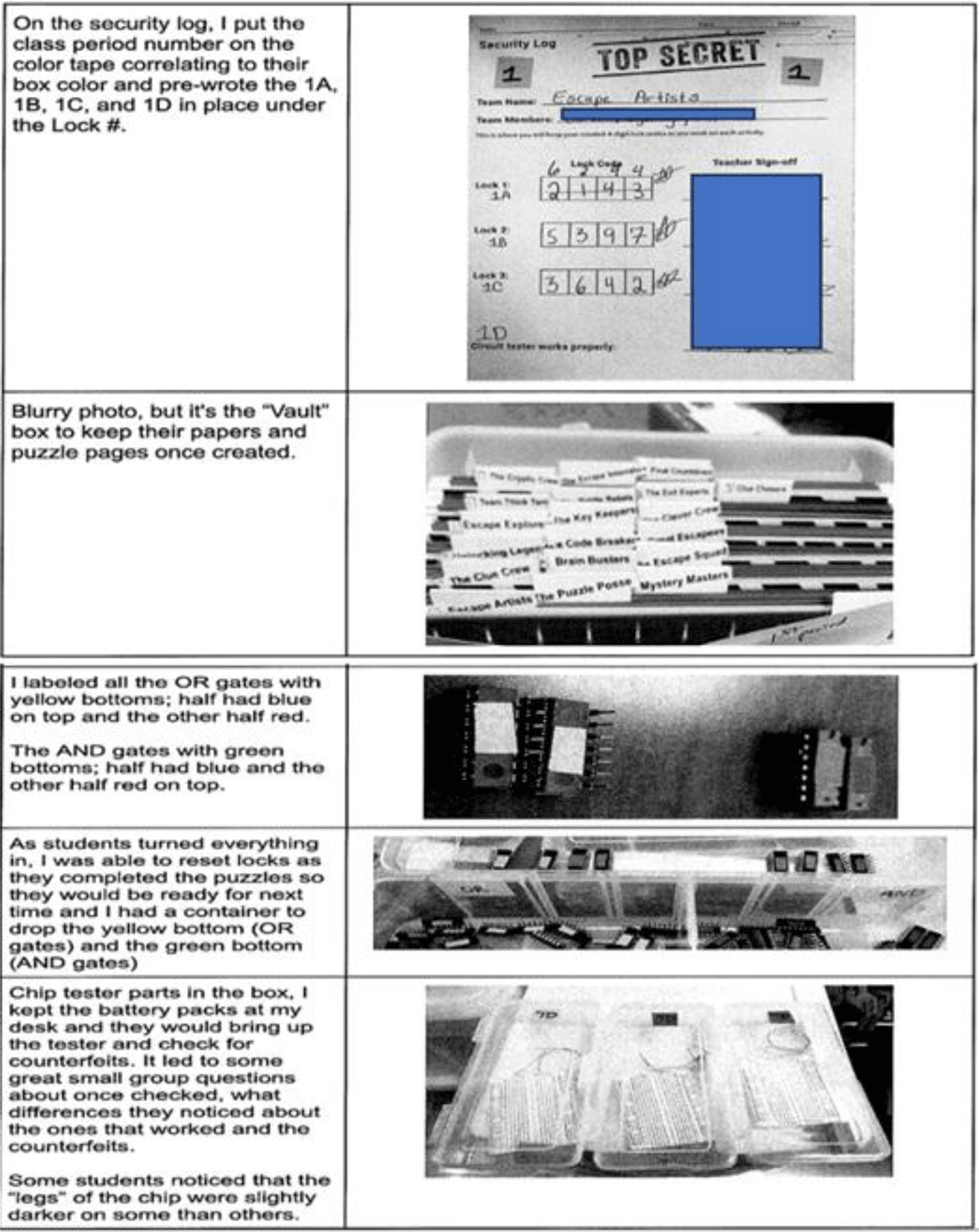
Figure 1
Example Teacher Implementation Notes
Table 1
Microelectronics Middle School Unit Overview
| Unit Title | What’s in the Box | |
| Level | Grades 6–8 | |
| Unit Summary | The microelectronics industry has earned strong national support to enhance supply chain resilience and national security, resulting in significant investments and a rising demand for skilled workers. A new microelectronics packaging company is establishing a facility in our community, creating over a thousand jobs. In partnership with a local escape room, they have launched an interactive project to educate the community on microelectronics through an Escape Room Box challenge. Our class has been invited to design a four-level escape room box that demystifies microchips. The levels will cover microelectronics basics, coding, logic circuits, and chip functionality. You will work in small groups to create an escape room box and the related clues, which will be tested in class by solving each other’s escape boxes using the clues. This project links classroom learning with industry advancements, preparing us for future opportunities in microelectronics. | |
| Lessons (40 Min.) | Title | Objectives |
| Lesson 1a | The Little Black Box (Part 1) | Gwen the knowledge of the semiconductor industry, students will be able to create an electronic quiz game for their peers to explain the relationship between semiconductors and microelectronics. |
| Lesson 1b | The Little Black Box (Part 2) | Given electronic components (i.e., conductive tape, LEDs, a battery, & wires), students will be able to create a working circuit for an electronic quiz device. |
| Lesson 2a | Coding with Chips (Part 1) | Students will be able to explain the relationship between microcontrollers and microelectronics using the appropriate vocabulary (i.e., microprocessor, printed circuit board, inputs, outputs, sensors). |
| Lesson 2b | Coding with Chips (Part 2) | Given a microcontroller, such as a micro:bit, students will be able to develop a program to collect information from a sensor and use that information to control a desired output. |
| Lesson 3a | What’s on a Chip (Part 1) | Given an integrated circuit chip, students will be able to complete a truth table t0 define the inputs and outputs of the related logic gates. |
| Lesson 3b | What’s on a Chip (Part 2) | Given the knowledge of basic logic gates (ANDs, ORs, & Inverters), students will be able to design a digital logic circuit to receive a desired output. |
| Lesson 4a | Chip Detective (Part 1) | Students will be able to explain the potential negative societal impacts of counterfeit microchips within the microelectronics supply chain. |
| Lesson 4b | Chip Detective (Part 2) | Given electronic components (i.e., breadboard, wires, LEDs, integrated circuit chips, and resistors), students will be able to design a circuit to test the inputs and outputs of an integrated circuit chip. |
| Lesson 5a | The Final Countdown (Part 1) | Given an escape room box challenge, students will be able to assess their own knowledge of microelectronics series of academic challenges. |
| Lesson 5b | The Final Countdown (Part 2) | Students will be able to use evidence to make recommendations to address a client’s need. |
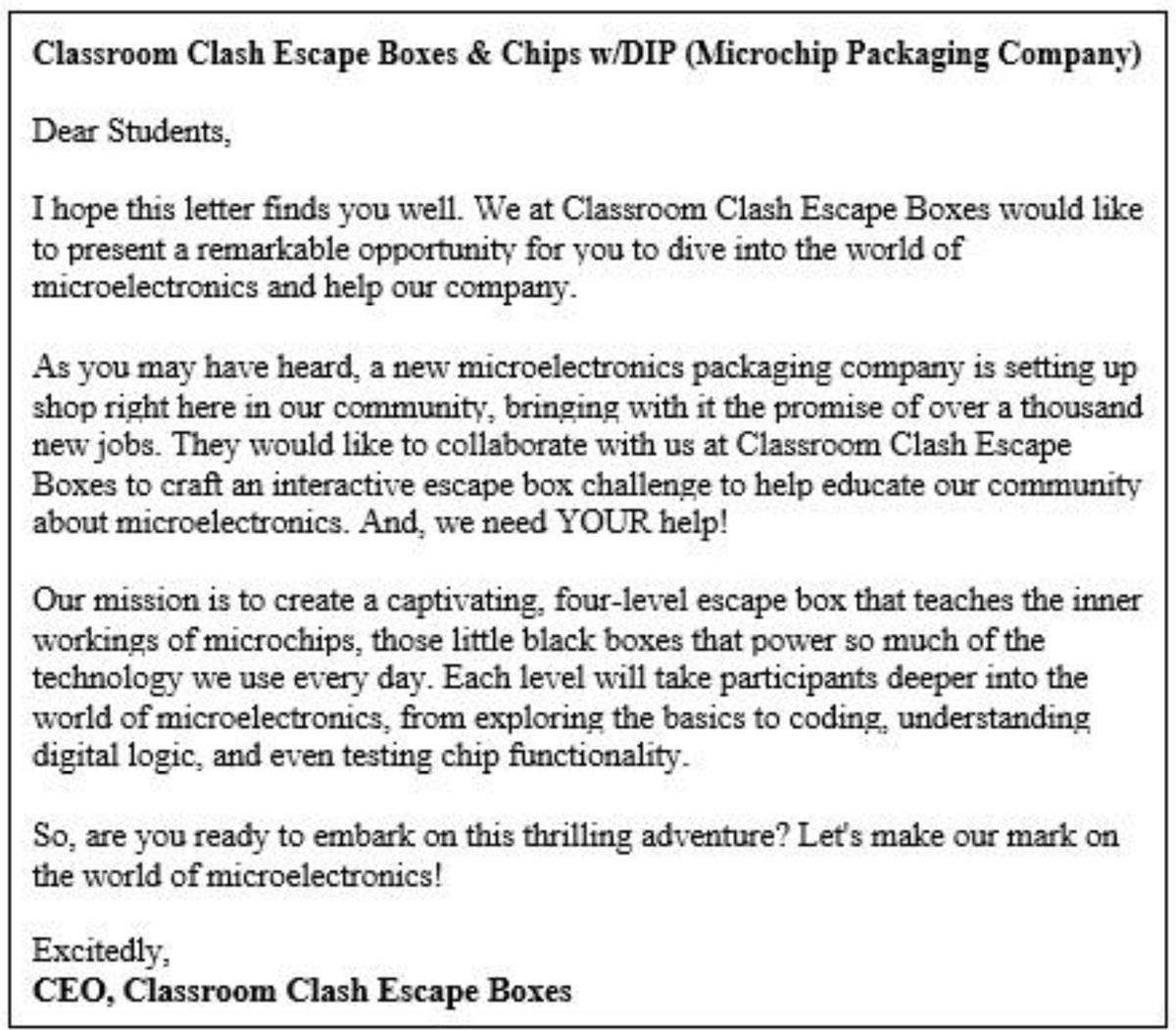
Figure 2
Client Letter
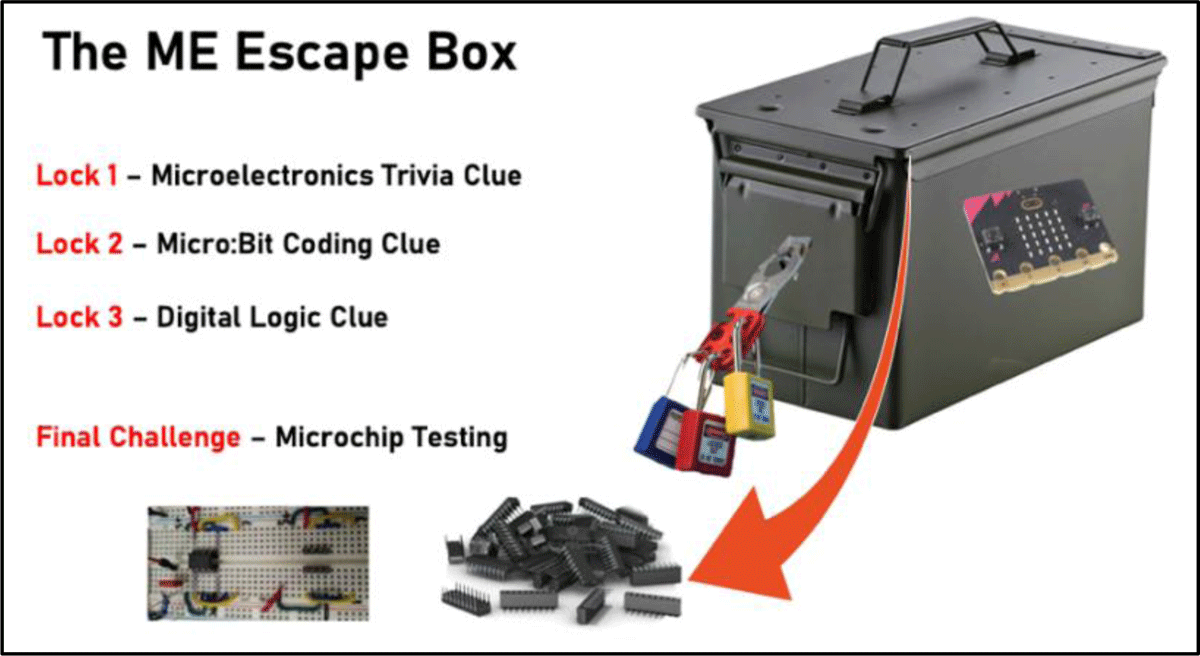
Figure 3
The Microelectronics Escape Room Box Diagram
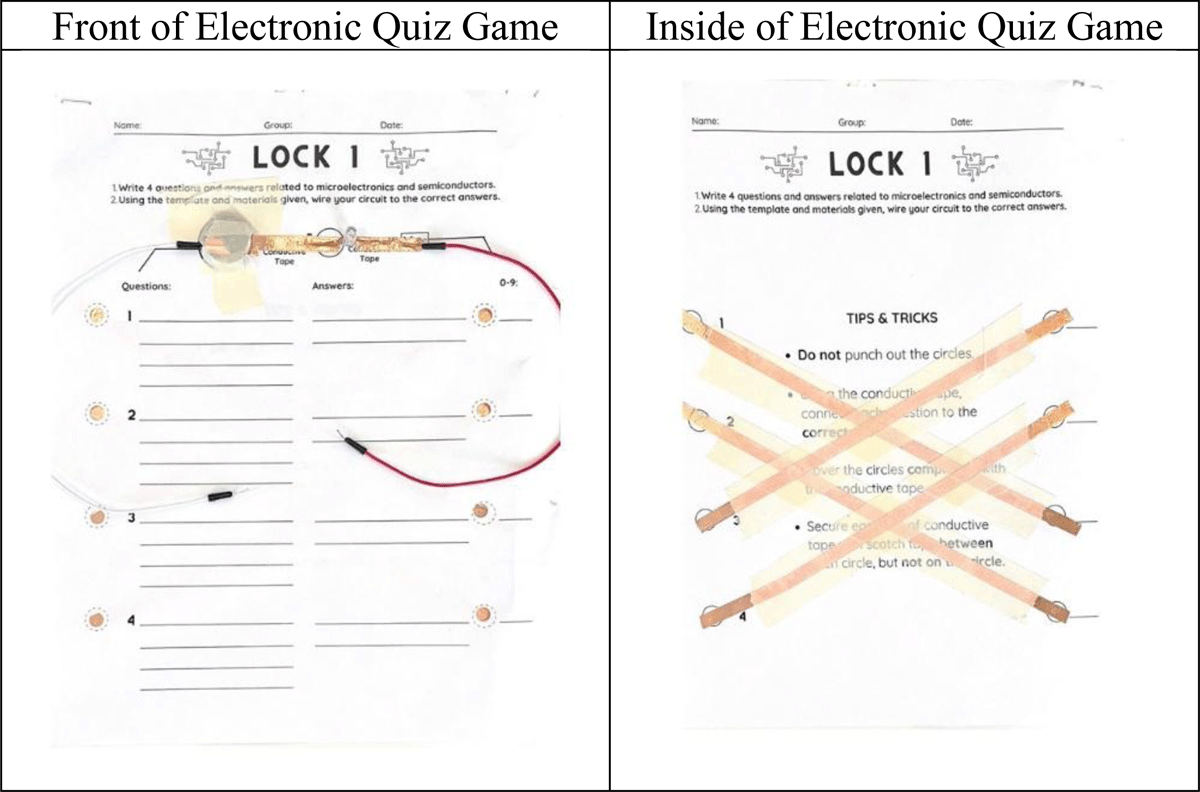
Figure 4
Lock 1 Clue Example
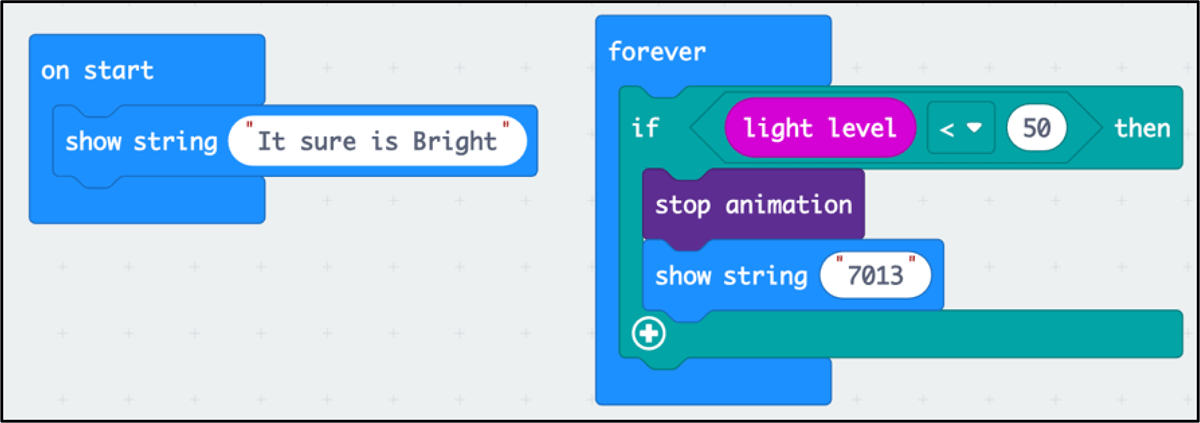
Figure 5
Lock 2 Puzzle Example
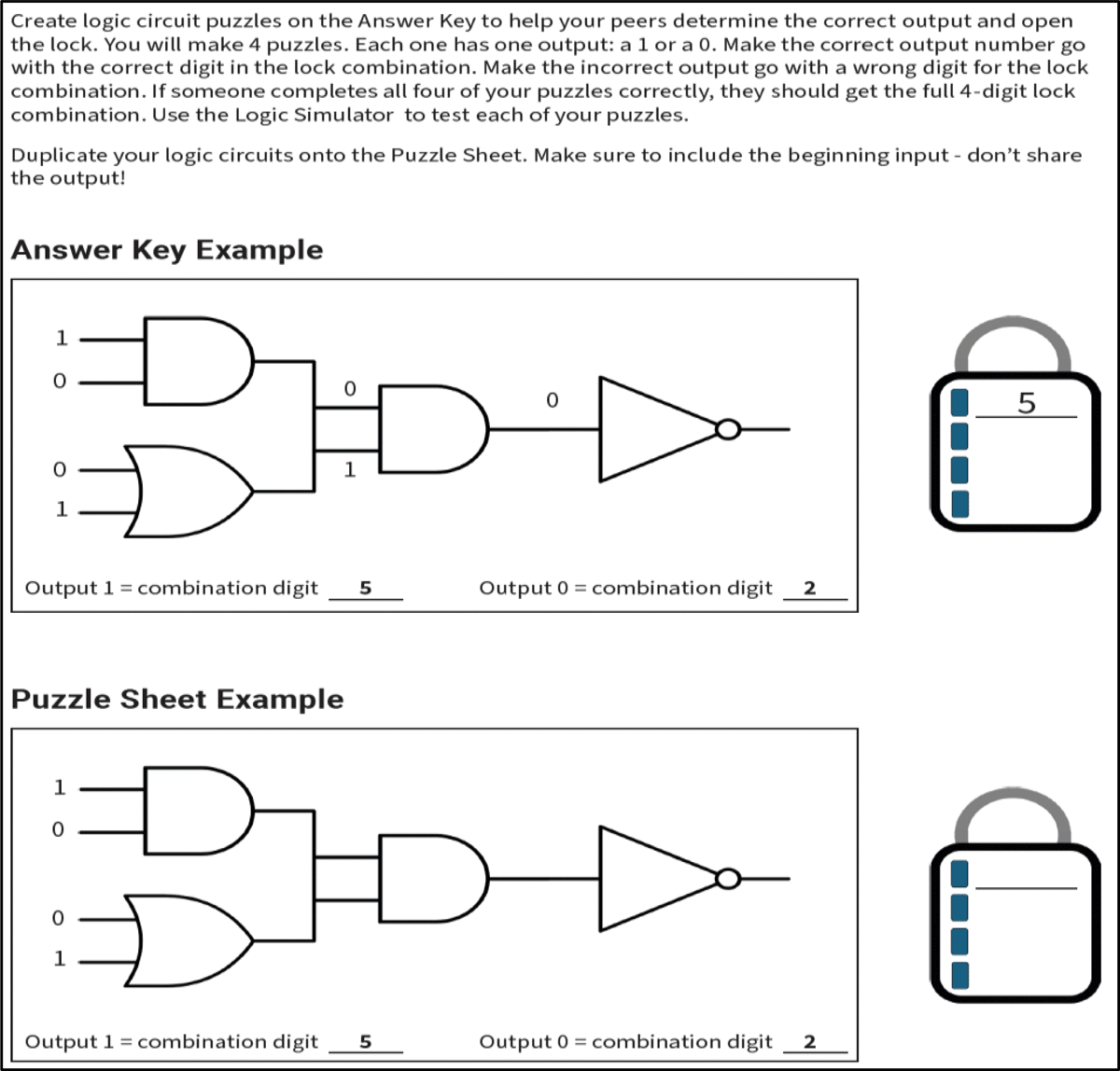
Figure 6
Lock 3 Clue Example
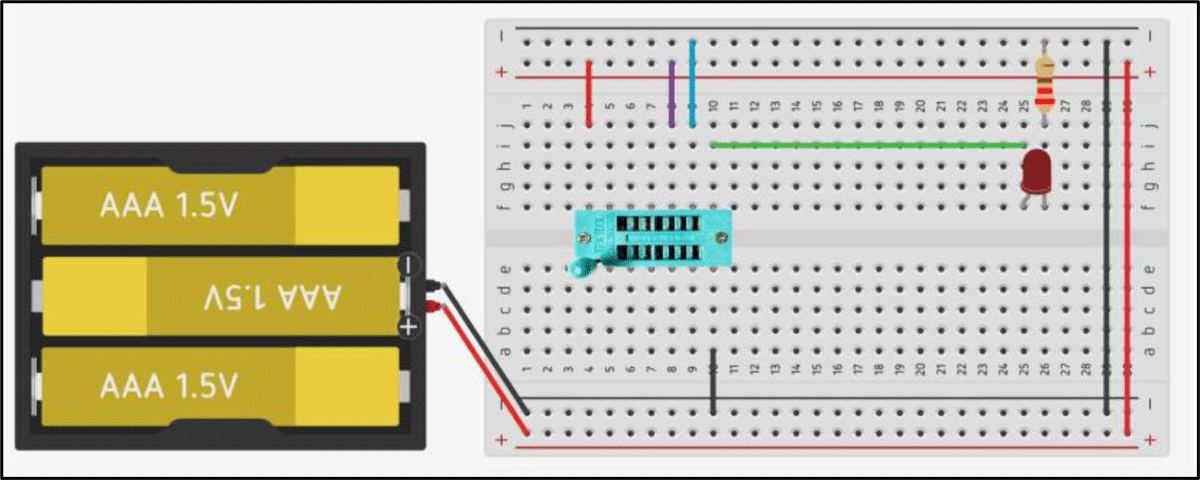
Figure 7
Counterfeit Chip Tester Circuit
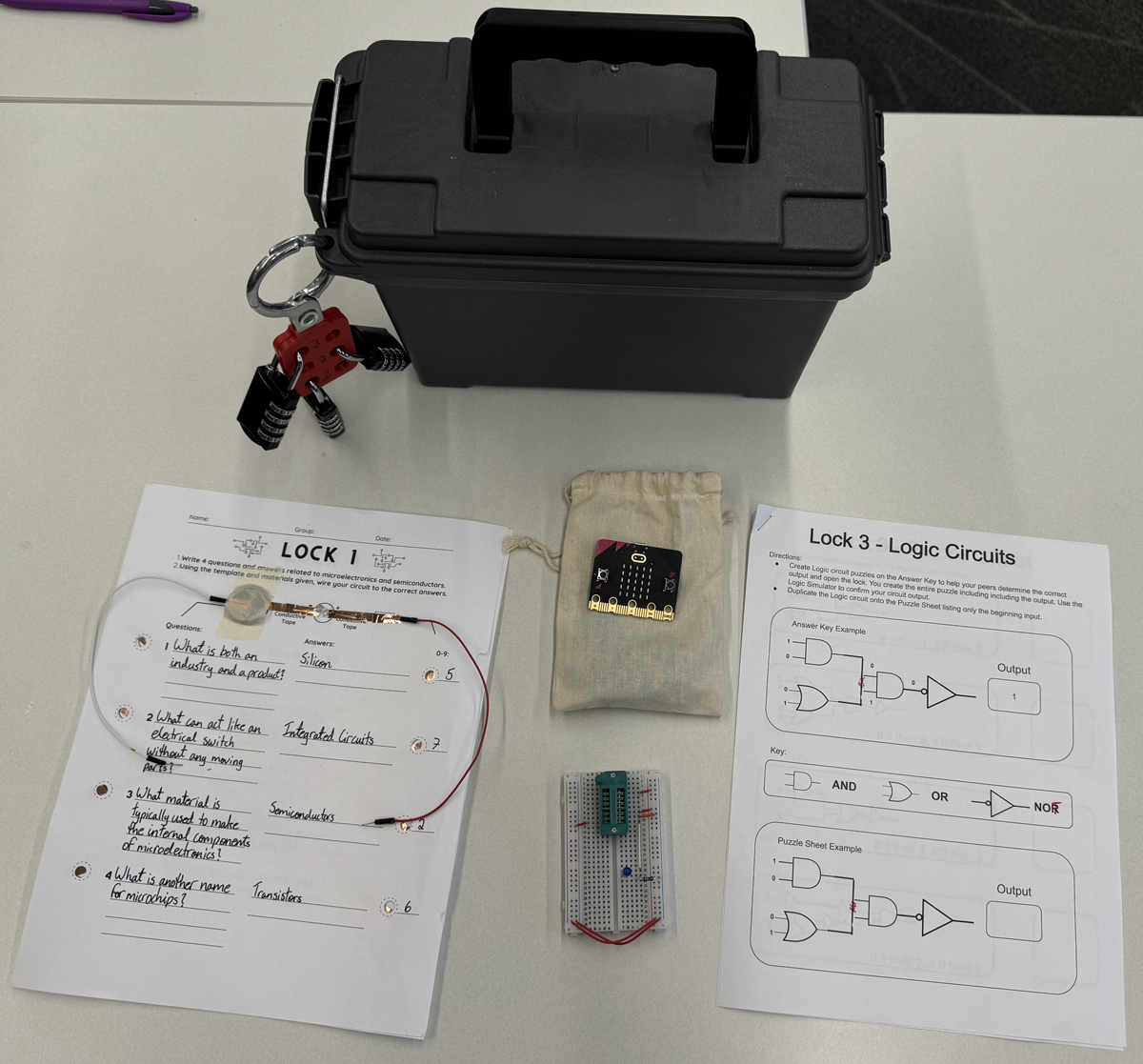
Figure 8
A Complete Microelectronics-themed Escape Room Box
Table 2
Cross-Referencing Data, Codes, and Speculations
| Theme | Field Note Evidence | Emergent Codes | Implementation Propositions |
|---|---|---|---|
| Engagement & Student Interest | “The students have been asking for a list of the materials, so they can ask for a micro:bit for Christmas!”; “At the end of the day, [teacher] asked how many students wanted him to send the link to their parents… the majority of the students raised their hands.”; “A student came up to him and said, ‘I want to be a Micro Engineer when I get older.’” | Student enthusiasm; Aspirational identity; Participation impacts | Students demonstrated engagement that extended beyond the classroom and expressed career awareness related to microelectronics. However, it is important to be mindful of previous experiences and how that may impact participation. |
| Developing Troubleshooting Skills | “Several groups were needing help troubleshooting why their circuit for Lock #1 was not working.”; “I wonder if circuit troubleshooting is a valuable skill unto itself and could be one lesson in most of our units?”; “Students were having challenges getting their circuits to work, several needed new batteries. Teacher did quite a bit of the troubleshooting to figure out what was not working.” | Troubleshooting as a learning objective; Troubleshooting challenge | Troubleshooting emerged as both a barrier and a skill-building opportunity, suggesting it should be an explicit instructional goal. |
| Collaboration & Group Dynamics | “Several groups had 1 or 2 students complete the various clues while the other team members were passive.”; “The structure of the solving process did not force every student to contribute to the demonstration of the skills learned in the unit.”; “Many of the groups only had one student doing the coding.” | Uneven participation; Promise of structured interdependence | Group projects did not guarantee even participation in activities, indicating a need for more structured interdependence during the hands-on tasks. |
| Planning workforce-relevant Instruction with Classroom-ready Materials | “There were about 20 broken locks today, but [teacher] reached out… we are looking for some better ones to order.”; “Some groups had a challenge due. to the fact that the leads on the ‘probe pins’ were not quite long enough to reach…”; “I wonder if the conductive copper tape has a protective coating that is hindering the flow of electrons…” | Material durability; Classroom usability | Physical material limitations (locks, leads, tape) disrupted learning, showcasing difficulties in bringing more technical workforce-driven content into the classroom. |
| Pacing & Instructional Adjustments | “Certain lessons, particularly troubleshooting circuits or working with logic gates, took longer than anticipated.”; “Some students struggled with the logic, gate component.”; “Teacher mentioned that this could easily take longer than the 10 days and I really should not have waited until the end of the grading period.”; “Teacher created a folder with a checklist… including Copper Tape quiz, micro:bit, and Digital Logic Gate puzzle to keep students on track.” | Instructional adaptability; Time management | Teachers adapted lessons in response to pacing challenges, suggesting the need for scaffolding, pre-unit preparation, and flexible timing. |
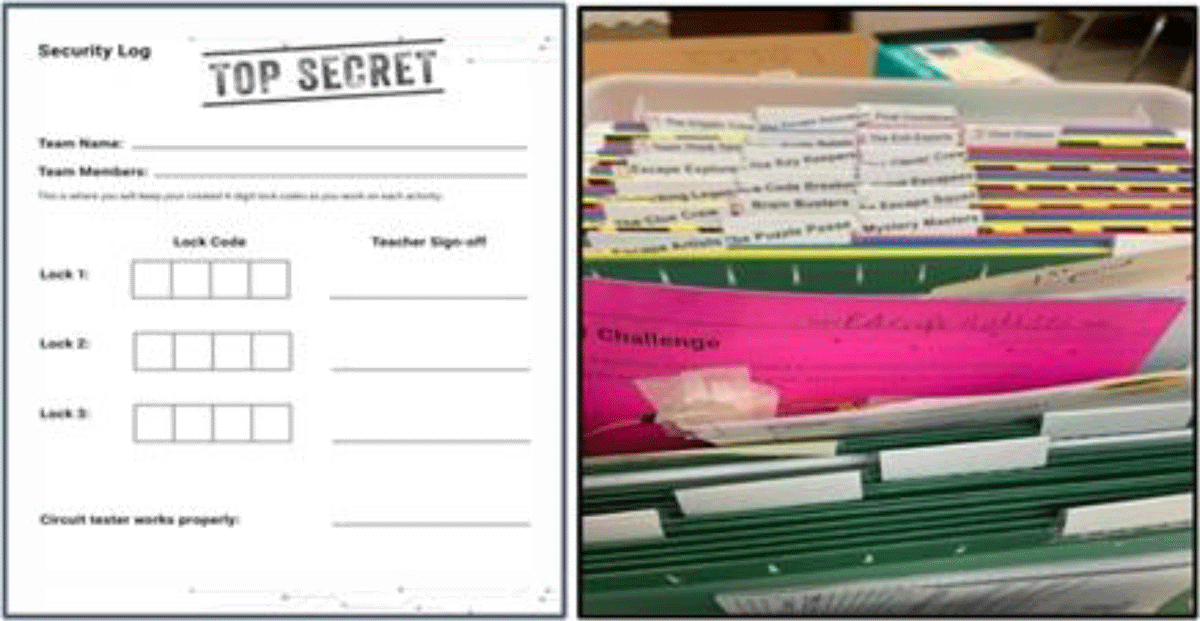
Figure 9
Teacher Security log and vault.
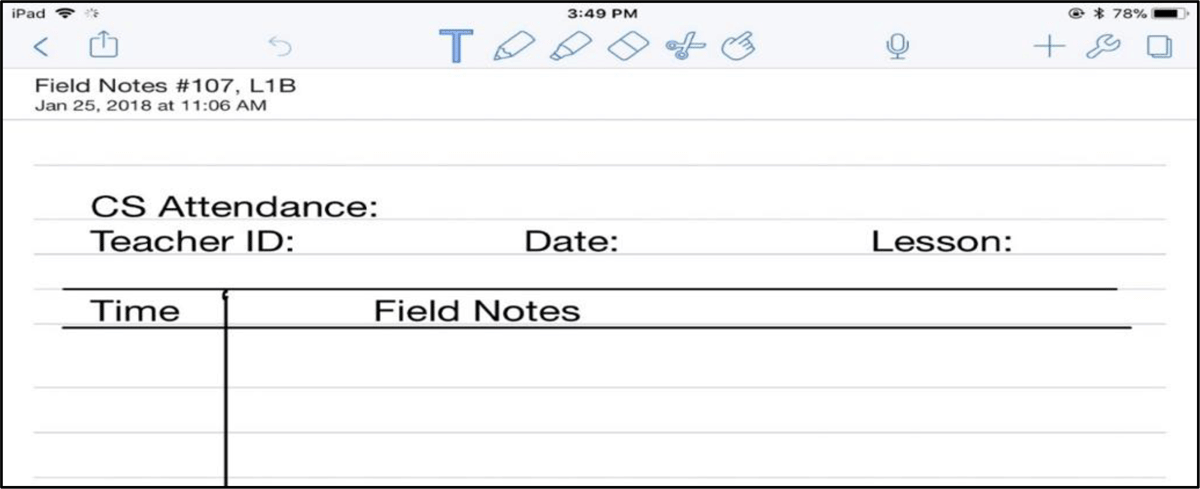
Figure 10
Field Note Formatting