
Introduction
Microelectronics (ME) is a broad field that involves the design and production of nanoscopic-scale electronic devices such as microchips. Microchips, also known as integrated circuits, are the foundation of modern electronic devices and thus, play a critical role in national security, communications, and technological advancement. Microchips are made from semiconductor materials which are the fundamental components that enable the electronic devices to operate and process information in the form of electrical signals. Today, especially with the rise of artificial intelligence, the Internet of Things, and 5G communication, microchips have become a fundamental technology for economic and societal advancement (U.S. Congress, 2022). However, the global shortage of microchips during the COVID–19 pandemic disrupted the production of numerous electronic goods, including smartphones, computers, and automobiles, leading to significant delays and economic losses across multiple industries (Mohammad, Elomri, & Kerbache, 2022; U.S.-Taiwan Business Council, 2022). This crisis revealed the importance of ME manufacturing, prompting countries worldwide to increase their investments in the semiconductor industry (Deloitte, 2021). For example, the international microchip supply chain concern led the United States government to invest in domestic semiconductor production through the passage of the CHIPS and Science Act of 2022 (Pub. L. No. 117-167, 136 Stat. 1372; The White House, 2024). This strategic investment has led to the establishment of new facilities aimed at enhancing microchip design, fabrication, and packaging capabilities. These types of investments also represent how nations are striving for self-reliance in the microchip supply chain (Deloitte & Global Semiconductor Alliance, 2023). However, a significant concern accompanying the semiconductor industry expansion is the projected workforce shortage to staff new ME development and production facilities (Deloitte, 2024; U.S. Congress, 2022). To address this issue, investments in the semiconductor industry have also included efforts to develop a well-prepared engineering and technical workforce, starting at the K-12 level (Deloitte, 2022; 2024). However, translating complex concepts from the semiconductor industry to middle-school appropriate learning objectives and activities can be challenging and will likely require various teacher supports for curriculum development and implementation.
Accordingly, a K-12 ME workforce development initiative, hereafter referred to as “SCALE K-12,” was launched in the United States with the goal of integrating the emerging workforce context of semiconductors and ME into primary and secondary education (Moore et al., 2024a). This article presents a practical study of that initiative detailing how authentic ME applications and industry insights can be integrated into K-12, with the aim of cultivating student interest in, and developing foundational skills for, future job openings in this expanding field. Specifically, this case study followed four middle school Technology & Engineering (T&E) teachers as they participated in SCALE K-12 to design, implement, and refine a ME-focused instructional unit. The study includes a review of the ME-focused instructional materials the four teachers developed and refined, as well as observations of their classroom implementations. In reviewing these data, the researchers sought to answer the question of “How can middle school T&E teachers integrate emerging STEM workforce contexts (e.g., semiconductors and ME) into their curriculum?” Concurrently, the researchers sought to identify the potential challenges and opportunities related to integrating STEM workforce-driven instructional resources into classroom practice.
Implementing new instructional content, such as emerging industries related to ME, in school settings is expected to present some challenges. For example, McLure and Aldridge (2022) conducted a systemic literature review to identify factors that support or hinder education change efforts. The review shows how school change initiatives often face challenges with the coordination of implementation efforts; coherence between goals, strategies, professional learning, and the vision/needs of the school; fit with sociocultural factors found in each school context; and establishment of school leaders to support change efforts. Through studies such as these, numerous barriers are identified in the implementation of new curricular approaches. That said, there is an opportunity to learn more regarding the integration of new or emerging workforce-driven contexts/content within the middle school curriculum, which through qualitative exploration can lead to broader understandings of the strategies/challenges involved.
Acting on this opportunity, the exploratory case study presented here was conducted to review the integration of ME in T&E classrooms. Case studies, such as this, can allow for a rich exploration of newer real-world issues within a small number of instances, capturing detailed and context-specific insights (Sage, 2010; Stake, 1995; Yin, 2003). As a key research outcome, this article presents the refined instructional unit developed by the four T&E teachers, serving as a practical example of how ME and semiconductor contexts and concepts can be integrated into middle school curriculum. The instructional unit at the center of this specific case focuses on demystifying the inner workings of microchips by exploring the basics of ME production, coding microchips to control devices, demonstrating digital logic, and testing microchip functionality. These learning objectives are achieved by tasking students with designing a ME-themed “escape room box” for an industry/community partner. By sharing this case study and the implementation of the ME-focused instructional unit, the aim is to provide educators, researchers, and curriculum developers with practical insights for responding to emerging STEM workforce trends.
Background
To establish the context for this case, this section reviews the growing significance of semiconductors and ME globally, followed by an exploration of the integration of this emerging STEM workforce context in primary and secondary schooling. This background information provides the foundation for exploring the development of ME-focused curriculum as well as T&E classrooms as a strategic entry point for introducing emerging workforce contexts into secondary education.
Significance of Semiconductors and Microelectronics
Semiconductors—materials with electrical conductivity between that of conductors and insulators—are fundamental to modern electronics, enabling the control of electrical currents as a form of information in devices such as computers and smartphones (Gupta & Gupta, 2016). These semiconductor materials are the necessary resources to create the ME or microchips, which are the miniature components that form complex and extremely small integrated circuits, that enable electronic devices to operate. Innovation in ME continues to drive advancements in compact, high-performance technology (Di Paolo Emilio, 2016). Over the years, the industry has focused on miniaturization, the process of designing ever-smaller and more powerful electronic components. This focus has necessitated continuous innovation in materials, fabrication techniques, and metrology tools, requiring significant investments in research and development (National Science & Technology Council, 2024). The high cost and complexity of semiconductor manufacturing has led to industry consolidation, with only a few companies globally competing to produce the latest generations of advanced ME (National Science & Technology Council, 2024). However, this consolidation has become a concern for countries like the United States as, beyond their technological applications, semiconductors and ME are critical to economic growth, national security, and innovations in industries ranging from healthcare to defense (National Science & Technology Council, 2024). And, as supply chain challenges have occurred, such as what happened following the COVID-19 pandemic, nations have realized the need for developing more reliable, regional capabilities to produce ME. As a result, the United States government, among others, have prioritized microchip manufacturing. For example, in 2022 the United States passed the CHIPS & Science Act which has allocated tens of billions of dollars in grants for semiconductor manufacturing and research (McKinsey & Company, 2022). But, as nations work to create a more resilient and self-sufficient ME supply chain, there becomes an urgent need to develop interest in the related careers. According to McKinsey & Company (2022), official estimates in the United States project that by 2030, there will be a shortage of 300,000 engineers and 90,000 skilled technicians across the semiconductor industry.
The demand for talent within the semiconductor industry has created intense competition among companies to secure qualified professionals. A McKinsey & Company (2022) report highlights the struggles businesses are having to attract and retain skilled personnel, with workforce shortages threatening the ability to scale production. The semiconductor industry also demands a wide range of skills, given the variety of job opportunities in the field. Without a steady influx of trained engineers and technicians, efforts to expand ME manufacturing could be significantly hindered. To address these supply challenges and support regional capabilities, the United States government has made ME workforce development a national priority.
For example, the CHIPS and Science Act also provides funding for workforce development (The Whitehouse, 2024). Addressing the workforce gap in this industry can necessitate a comprehensive transformation of the education pathways to meet the predicted shortage. Incorporating ME into K-12 education can be considered a strategic imperative for addressing the expanding demand for a skilled workforce in this critical industry. This effort can involve integrating ME content into curricula from the earliest stages of education, thereby cultivating a strong foundational knowledge and interest in these fields among students. The CHIPS and Science Act in the United States exemplifies this strategy by providing substantial funding for industry-aligned educational programs, hands-on learning opportunities, and professional development for educators. By embedding ME in the K-12 curriculum, these initiatives can begin to create a pathway for talent that not only meets the current demands of the industry but also drives future innovations in this field.
Integrating Semiconductors and Microelectronics in K-12
As discussed, semiconductors are fundamental to modern electronics, forming the backbone of ME components used in all the electronics that drive the global economy (Simchi-Levi, Zhu, & Loy, 2022; U.S.-Taiwan Business Council, 2022). Given the pivotal role of these technologies and the growing demand for a skilled workforce, it can be considered essential to introduce ME concepts at the K-12 level. Early exposure can be crucial for building a foundational understanding that prepares students to engage with and contribute to an increasingly technology-driven world. Integrating ME into K-12 education can then present a unique opportunity to cultivate 21st-century skills (Hebebci & Usta, 2022) while aligning with broader educational goals focused on preparing students for the demands of the workforce (Marginson et al., 2013; National Science Foundation, 2020).
The successful integration of ME and the related STEM concepts into K-12 education hinges on the preparedness and support of teachers. Educators must be equipped with the knowledge and skills to teach ME content, which can require a deep understanding of both content and pedagogy (Ball, Thames, & Phelps, 2008). Consequently, professional development programs are essential in providing teachers with the training needed to design and implement engaging, standards-aligned curricula that incorporate ME (Brand, 2020; Whitworth & Chiu, 2015). Brand’s (2020) study showed that collaborative professional development can enhance teachers' ability to deliver STEM education, potentially leading to better student outcomes. Ongoing support and accessible resources for teachers implementing ME curricula then appear essential for sustaining these workforce-driven K-12 initiatives. Equally important is ensuring that educators can continuously adapt and refine their teaching strategies to meet the evolving needs of students (National Science & Technology Council, 2024). These ideas support the significance of new K-12 STEM education initiatives for helping teachers to excite, motivate, and prepare students for participation in the growing ME workforce.
This exploratory study centers on the SCALE K-12 ME initiative that partnered with midwestern school districts and their teachers to design curricula integrating semiconductor and ME concepts across disciplines and grade levels, while introducing students to related career pathways. A key objective during this process was to ensure that semiconductor and ME topics were thoroughly integrated, making it difficult for teachers to teach specific lessons without covering the targeted ME concepts. This objective was achieved by following a STEM workforce integration curriculum development framework by Moore et al. (2024b). The framework consists of the following items that are necessary to address when developing ME-focused curricula: (1) motivating and engaging content, (2) meaningful integration of ME contexts, (3) realistic clients, (4) appropriate disciplinary content, (5) relevant instructional strategies, (6) teamwork activities, (7) different ways of communication, (8) organized instructional steps, and (9) performance and formative assessments. One emphasized component was the incorporation of realistic clients using client letters. According to McDonnell et al. (2025) these letters, which can be fictional or authentic, help to embed the learning tasks into a realistic scenario and contextualize the experience in a way that connects the learners to the desired content. By making these types of items integral to the curriculum development process, the teachers that were part of SCALE K-12 were prepared to provide students with an understanding of how ME intersects with various academic areas.
The academic area that is the specific focal point of this case study within SCALE K-12, is the T&E school subject. T&E classrooms can be well-positioned to integrate semiconductor and ME content and contexts given the concepts covered by, and the inherent flexibility of, the subject area (Hacker, 2023; Strimel, 2025). For example, the Standards for Technological & Engineering Literacy (2020) highlight contexts for classrooms that involve coding and programming microcontrollers, using electronic sensors, and designing technological systems related to robotics. These standards also include learning objectives such as describing the properties of different materials and how they may conduct or stop the flow of electricity, investigating the history of technological advancements (including electronics), and controlling technological systems through electronic feedback. In addition, the T&E subject in K-12 is an area that is not overly assessed with standardized testing, which provides the opportunity, time, and flexibility for instructors to dive deep into new contexts and content such as ME (Hacker, 2023; Strimel, 2025). Accordingly, SCALE K-12 in this case, experienced more participation from T&E teachers than other teachers in the partnering school districts. And, as these teachers worked to develop, implement, and refine a ME-focused instructional unit, there was an opportunity to further explore how middle school T&E teachers integrate emerging STEM workforce contexts, specifically semiconductors and ME, into their curriculum as well as how the resources might be leveraged to advance workforce integrated STEM teaching approaches.
Purpose
The purpose of this case study was to document the integration of emerging STEM workforce contexts and content into T&E middle school instruction with the aim of highlighting practical instructional examples for such integration. To this end, the questions guiding this case study were:
How can middle school T&E teachers integrate emerging workforce contexts and content (e.g., semiconductors and ME) into their curriculum?
What are the challenges/opportunities toward integrating new workforce-driven STEM curriculum in the middle school T&E classroom?
By exploring SCALE K-12’s curriculum development process, classroom implementation, and teacher reflections, this study provides insights into strategies that can guide the integration of new educational contexts and content reflecting emerging industries, specifically within T&E.
Method
This exploratory case study centers on the middle school T&E portion of the SCALE K-12 ME initiative mentioned in the introduction. This initiative, which was supported by state and federal funding in response to the need to develop an industry-ready workforce (Moore et al., 2024a), is an on-going collaboration among various school districts in the Midwest region of the United States to create and incorporate ME-focused curriculum across all grade levels. As part of this initiative, instructional units have been developed collaboratively by K–12 teachers, university faculty, and graduate students, supporting the alignment between classroom needs and workforce expectations. These units were then tested in classrooms, where teachers received ongoing support through a structured coaching system. This coaching system consisted of teachers who have been trained within the initiative and who, in turn, supported their colleagues in implementing ME curricula in their schools.
Participating school districts followed a comprehensive approach to designing and implementing ME curricula, incorporating vertical alignment planning, curriculum improvement, and professional development. This approach aimed to ensure that educational experiences are interconnected across grade levels, creating cohesive learning experiences for students. By facilitating curriculum development workshops and establishing vertical alignment strategies, the initiative positioned educators to design engaging and meaningful instructional units for their respective subject areas. In addition, the combination of these activities helped equip teachers with the resources to create learning experiences to introduce students to, as well as prepare them for, career pathways in the field of ME.
The following bulleted list details how SCALE K-12 supported educators in creating, implementing, and refining ME-focused learning experiences for students.
Curriculum Development: SCALE K-12 brought together teams of teachers, university faculty, and graduate research assistants to develop instructional units that embed ME contexts and concepts within existing K–12 courses. As part of this process, teachers from each partnering school district agreed to attend a week-long summer workshop focused on curriculum development. Key activities in this workshop included: (1) exploring ME fundamentals (e.g., hardware, applications, and career pathways), (2) understanding engineering design principles and their relevance to ME lesson planning, (3) participating in a classroom “ME materials exploration fair” to familiarize teachers with instructional tools, (4) touring cleanroom facilities to gain insights into semiconductor manufacturing environments, and (5) developing integrated curricula that align ME concepts with their discipline-specific learning objectives. This collaborative curriculum development process helped to ensure that teachers could integrate ME content into their existing instructional frameworks in ways that were both engaging and industry-relevant.
Pedagogical Content Knowledge: In addition to curriculum design, the initiative provided the support to prepare teachers with both technical knowledge and pedagogical strategies for teaching about ME. The summer workshop, together with ongoing professional development during the school year, was designed to offer educators a multidisciplinary perspective on ME, covering: (1) national priorities in semiconductor research and workforce development, (2) industry applications of ME, including manufacturing and supply chain processes, (3) hands-on classroom applications, such as working with microcontrollers, circuit design, and digital logic, and (4) pedagogical best practices for integrating the related STEM content into engaging, design and/or project-based lessons. These experiences were positioned to help teachers design instructional units that include: (a) authentic, real-world applications to connect students with the industry, (b) STEM integration strategies that promote interdisciplinary learning, (c) evidence-based reasoning through problem-solving and design challenges, and (d) intentional learner assessments to track student understanding and engagement. The goal of this professional development model was to both strengthen teacher content knowledge and build their confidence in delivering ME lessons.
Vertical Alignment: To help ensure long-term sustainability, participating districts also engaged in vertical alignment planning, aligning ME-focused education with their existing STEM learning, career awareness, and employability skills initiatives. This process involved: (1) integrating ME content across all grade levels, ensuring a progressive learning experience from elementary to high school, (2) developing a district-wide implementation for sustaining ME education beyond individual classrooms, (3) creating career awareness activities that expose students to ME-related jobs, and (4) ensuring that technical skills development is aligned with workforce needs. Each participating district formed a vertical alignment team, comprised of classroom teachers and school administrators, to develop a long-term strategy for embedding ME concepts into K–12 education. The final vertical alignment plans detailed a structured experience for students, outlining their exposure to career awareness, employability skills, and technical competencies related to ME. The goal of this approach was to foster a seamless progression of learning experiences, equipping students with the knowledge and skills needed to pursue careers in this field.
Classroom Implementation and Continuous Improvement Cycle: Teachers who participated in the SCALE K-12 initiative played a key role in field testing the instructional units they developed. During the implementation phase, the following data were collected: (1) teacher observation notes to document instructional challenges and successes, (2) classroom artifacts, such as student work samples, needed to assess engagement and understanding, and (3) video recordings of classroom activities to analyze instructional value and student participation. These data informed a continuous improvement cycle, in which the instructional units were refined based on teacher feedback and classroom observations. After implementation, the units were revised to enhance curricular quality and help ensure that they are scalable for adoption by additional schools.
The approach described above presented an opportunity to explore how K–12 ME education can support broader workforce development initiatives. To examine this in detail, this study employed an exploratory case study approach, using the data collected through the curriculum development, implementation, and refinement process (i.e., curriculum documents, classroom implementation observations, and field notes). As Creswell and Creswell (2023) state, the case study approach is well-suited for exploring complex, real-world educational implementations. The data for this case study were collected following the approved Institutional Review Board protocol (IRB-2023-1279 – 2022-1673).
Data Collection and Analysis
In the summer of 2024, over 70 teachers participated in SCALE K-12 and developed instructional units that integrate ME content into various K-12 subject areas. To understand and share the practical application of the initiative's approach, a specific case (a middle school T&E instructional unit) from this initiative was reviewed, with findings provided in the results section. This specific case involved a group of four middle school T&E teachers collaborating to produce an instructional unit for implementation in their classrooms during the 2024-2025 school year. These teachers spanned the range from early, mid, to late career in teaching. The teachers were from three distinctly different types of middle schools, ranging from rural to suburban settings, each serving between 400 and 500 students. It is relevant to mention that each of these schools are located near current or planned ME development/production facilities.
After the initial instructional unit development and obtaining the appropriate student/parent consent and assent, the research group, consisting of trained graduate students, then observed each day of the unit implementation by each teacher. During these observations, the researchers recorded video of the teachers’ delivery of the lesson as well as consenting student group participation in the developed ME-lesson activities. During the observations, the researchers also recorded detailed field notes. According to Schwandt (2015) field notes are records created by researchers during a field study to document behaviors, activities, events, and contextual details of an observation. These notes can serve as evidence for analysis and interpretation, providing data that may either stand alone or complement other research methods. Field notes typically involve two main components: (1) descriptive information that objectively documents the setting, participants, actions, interactions, and relevant dialogue; and (2) reflective information that records the observer’s impressions, questions, interpretations, and emerging insights or themes. With this information in mind, the researchers followed common guidelines for generating their field notes. As part of this process, student artifacts and teacher implementation notes were also collected during the observations. The data collection protocol is provided in Appendix A.
The teacher implementation notes and student work were then used by the teachers and project staff to refine the instructional unit. The outcome of this process, which is the completed ME-focused unit, is presented in the results section as a specific example of how teachers can integrate the emerging STEM workforce context of ME into middle school, addressing Research Question 1.
The results section will also provide emergent themes from the collected field notes to serve as suggestions toward ME integration—responding to Research Question 2. Three researchers reviewed the field notes independently to identify the similarities and differences across the four classrooms regarding the implementation of the unit; looking for details related to instructional strategies, classroom challenges, curricular adjustments, and student participation. Through group discussions, the researchers came to agreement on a set of emerging themes toward integrating this workforce context. Quotes from the field notes and teacher implementation notes were then drawn across observations, to help confirm the unique and common strategies and challenges for ME-curriculum integration. The data and codes listed in Table 2 directly informed the emergent themes regarding student engagement/interest, troubleshooting skills, group collaboration, workforce-relevant classroom materials/resources, and instructional adjustments and pacing. Given this article details a straightforward and practical curricular example without the intention of assessing its effectiveness, the results section simply provides the unit developed in this case as an instructional exemplar and insights resulting from the observational field notes.
Results
The results from this exploratory case study are presented in two parts. First, the refined ME-focused instructional unit is presented to show how the teachers integrated ME into their middle school T&E curriculum. This is followed by a review of the themes derived from observing the implementation of the instructional unit. It is important to note that implementation data and experiences were used by the teachers to revise the instructional unit presented in the first part of the results section.
RQ1: The Refined Middle School Microelectronics Instructional Unit
This middle school instructional unit, referred to as What’s in the Box, was developed, field tested, and refined to immerse students in grades six through eight in the field of ME by exploring the rapid growth of the industry and its national significance. Implementation data, such as the example teacher notes provided in Figure 1, were used to refine the unit detailed in this section.
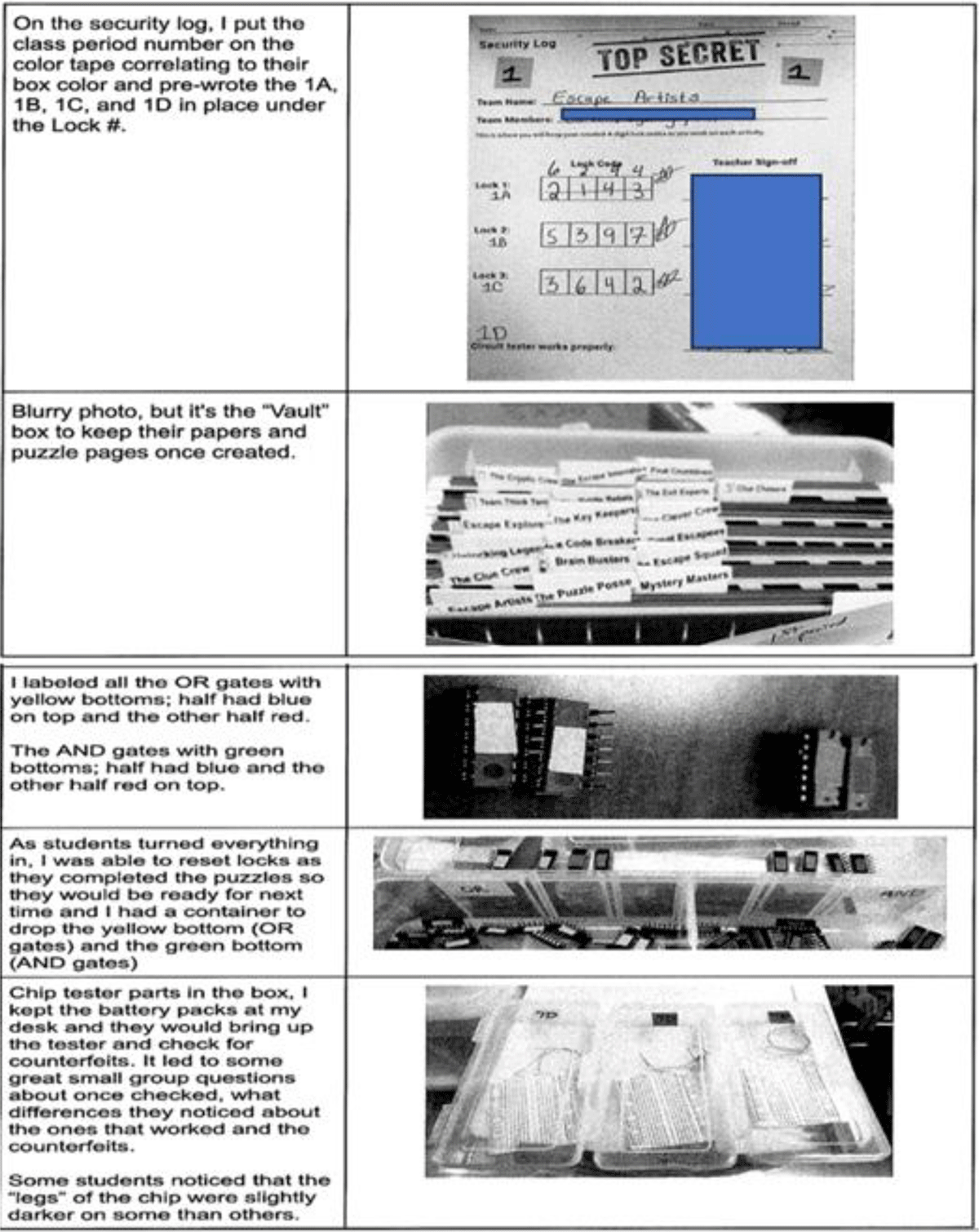
Figure 1
Example Teacher Implementation Notes
Set against the backdrop of a new ME packaging company opening in the community, the What’s in the Box unit (Table 1) introduces students to an exciting partnership between a local escape room business and the new company to expose students to various careers in the semiconductor industry and general ME knowledge.
Table 1
Microelectronics Middle School Unit Overview
| Unit Title | What’s in the Box | |
| Level | Grades 6–8 | |
| Unit Summary | The microelectronics industry has earned strong national support to enhance supply chain resilience and national security, resulting in significant investments and a rising demand for skilled workers. A new microelectronics packaging company is establishing a facility in our community, creating over a thousand jobs. In partnership with a local escape room, they have launched an interactive project to educate the community on microelectronics through an Escape Room Box challenge. Our class has been invited to design a four-level escape room box that demystifies microchips. The levels will cover microelectronics basics, coding, logic circuits, and chip functionality. You will work in small groups to create an escape room box and the related clues, which will be tested in class by solving each other’s escape boxes using the clues. This project links classroom learning with industry advancements, preparing us for future opportunities in microelectronics. | |
| Lessons (40 Min.) | Title | Objectives |
| Lesson 1a | The Little Black Box (Part 1) | Gwen the knowledge of the semiconductor industry, students will be able to create an electronic quiz game for their peers to explain the relationship between semiconductors and microelectronics. |
| Lesson 1b | The Little Black Box (Part 2) | Given electronic components (i.e., conductive tape, LEDs, a battery, & wires), students will be able to create a working circuit for an electronic quiz device. |
| Lesson 2a | Coding with Chips (Part 1) | Students will be able to explain the relationship between microcontrollers and microelectronics using the appropriate vocabulary (i.e., microprocessor, printed circuit board, inputs, outputs, sensors). |
| Lesson 2b | Coding with Chips (Part 2) | Given a microcontroller, such as a micro:bit, students will be able to develop a program to collect information from a sensor and use that information to control a desired output. |
| Lesson 3a | What’s on a Chip (Part 1) | Given an integrated circuit chip, students will be able to complete a truth table t0 define the inputs and outputs of the related logic gates. |
| Lesson 3b | What’s on a Chip (Part 2) | Given the knowledge of basic logic gates (ANDs, ORs, & Inverters), students will be able to design a digital logic circuit to receive a desired output. |
| Lesson 4a | Chip Detective (Part 1) | Students will be able to explain the potential negative societal impacts of counterfeit microchips within the microelectronics supply chain. |
| Lesson 4b | Chip Detective (Part 2) | Given electronic components (i.e., breadboard, wires, LEDs, integrated circuit chips, and resistors), students will be able to design a circuit to test the inputs and outputs of an integrated circuit chip. |
| Lesson 5a | The Final Countdown (Part 1) | Given an escape room box challenge, students will be able to assess their own knowledge of microelectronics series of academic challenges. |
| Lesson 5b | The Final Countdown (Part 2) | Students will be able to use evidence to make recommendations to address a client’s need. |
A ME packaging company focuses on the final stage of ME fabrication that involves protecting the tiny semiconductor chips by (a) placing them in a protective casing (what often makes the microchip look like a little black box) and (b) providing the electrical connections between the chip and any external components. Escape rooms, on the other hand, are interactive adventure games where groups of participants work together to solve puzzles or challenges within a set time limit to "escape" from a locked room. In this unit, students are tasked with designing a new challenge for the escape room business, in collaboration with the ME packaging company, to help introduce the local community to the semiconductor industry. Specifically, middle school students are tasked with creating an “Escape Room Box,” a portable version of the escape room experience where participants solve challenges and riddles to unlock a series of locks and reveal “what is in the box.” For this particular escape room box, the theme is ME, and it involves solving a series of challenges that teach participants about microchips (sometimes referred to as little mysterious black boxes inside electronics). The educational goal for having students design their ME-themed escape room boxes, is for them to learn important foundational ME concepts and become more aware of the semiconductor industry themselves. Through this process, students are provided a hands-on learning experience directly connected to a relevant and important career field (Table 1).
The hands-on project is the centerpiece of this unit where students design and build a four-level ME-themed escape room box. Through this task, students will need to dive into the basics of ME/semiconductors as well as build simple circuits, program microcontrollers, apply digital logic using integrated circuits, and explore the challenges of counterfeit microchips within the supply chain. Ultimately, students will use these concepts and skills to create challenging puzzles for their escape room box, blending creativity with technical expertise. Collaborating in groups, students will not only create escape room boxes but also challenge each other by testing and solving the puzzles designed by their peers. Students will also be exposed to different careers as they relate to the ME content in this unit. The various careers explored in this unit include electrical technician, electrical engineer, software developer, computer scientist, various production occupations, and data scientist. The overarching goal of this unit is to connect students with ME and equip them with foundational knowledge for exploring future careers in this rapidly evolving field. Unit lessons include:
Lesson 1A – “The Little Black Box (Part 1)” is focused on helping students explain the relationship between semiconductors and microelectronics through creation of an electronic quiz game. It opens by introducing students to the escape room box challenge through a Client Letter (Figure 2), which outlines the task of creating a four-level escape box and which also helps to demystify ME and microchips. In this lesson, students are to learn the parameters for the escape room box, which includes exploring ME basics, coding to control devices, understanding digital logic, and testing microchip functionality.
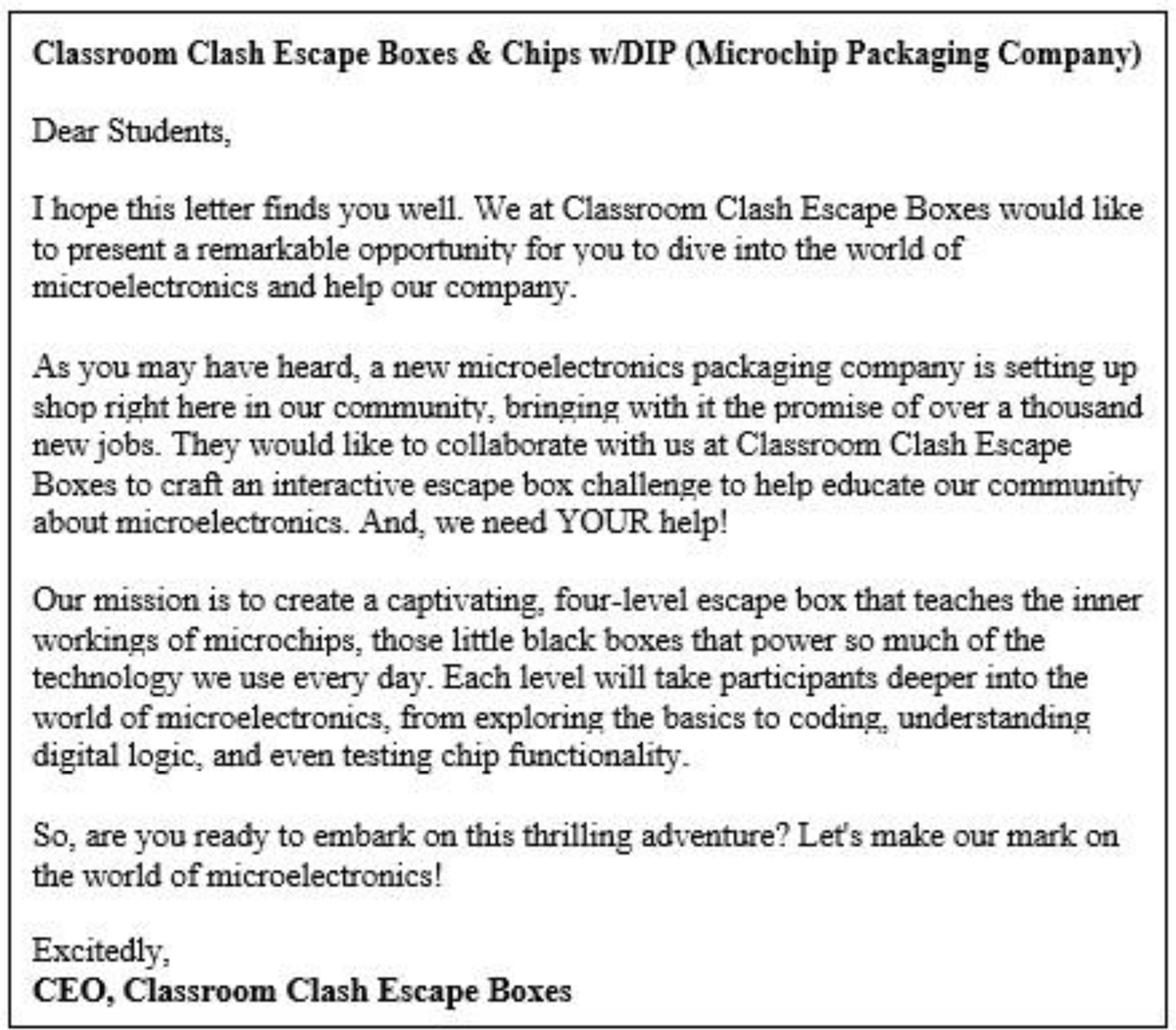
Figure 2
Client Letter
Figure 3 shows a diagram of the escape room box detailing the first three levels, or puzzles, corresponding to a specific lock and that the final level is a challenge given once the box is unlocked.
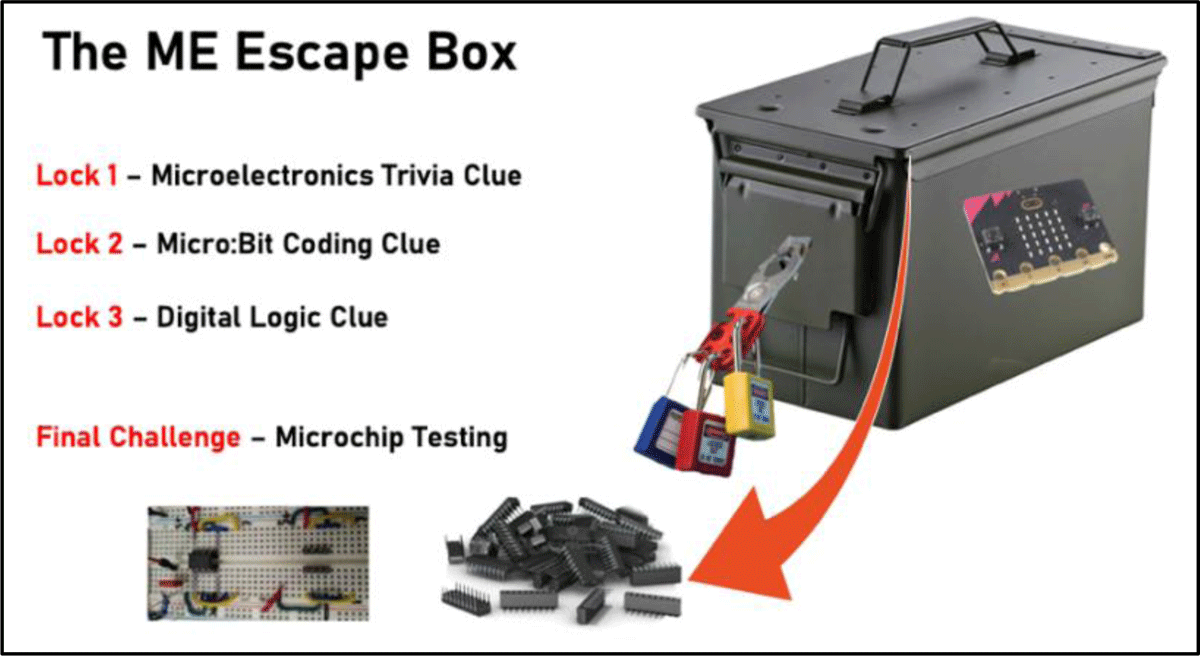
Figure 3
The Microelectronics Escape Room Box Diagram
When the box is unlocked, students will find that it contains several microchips. They will then need to create a “chip tester circuit” to determine which microchips are the correct ones (i.e., non-counterfeit chips). Students will also learn about ME, semiconductors, and transistors, and examine a microchip under a microscope to explore its inner workings. This lesson demonstrates different ME career pathways such as an electrical technician and an electrical engineer.
Lesson 1B – “The Little Black Box (Part 2)” allows students to apply their knowledge by creating the first lock puzzle. This puzzle is a 4-question electronic quiz game to test participants' knowledge of ME (Figure 4).
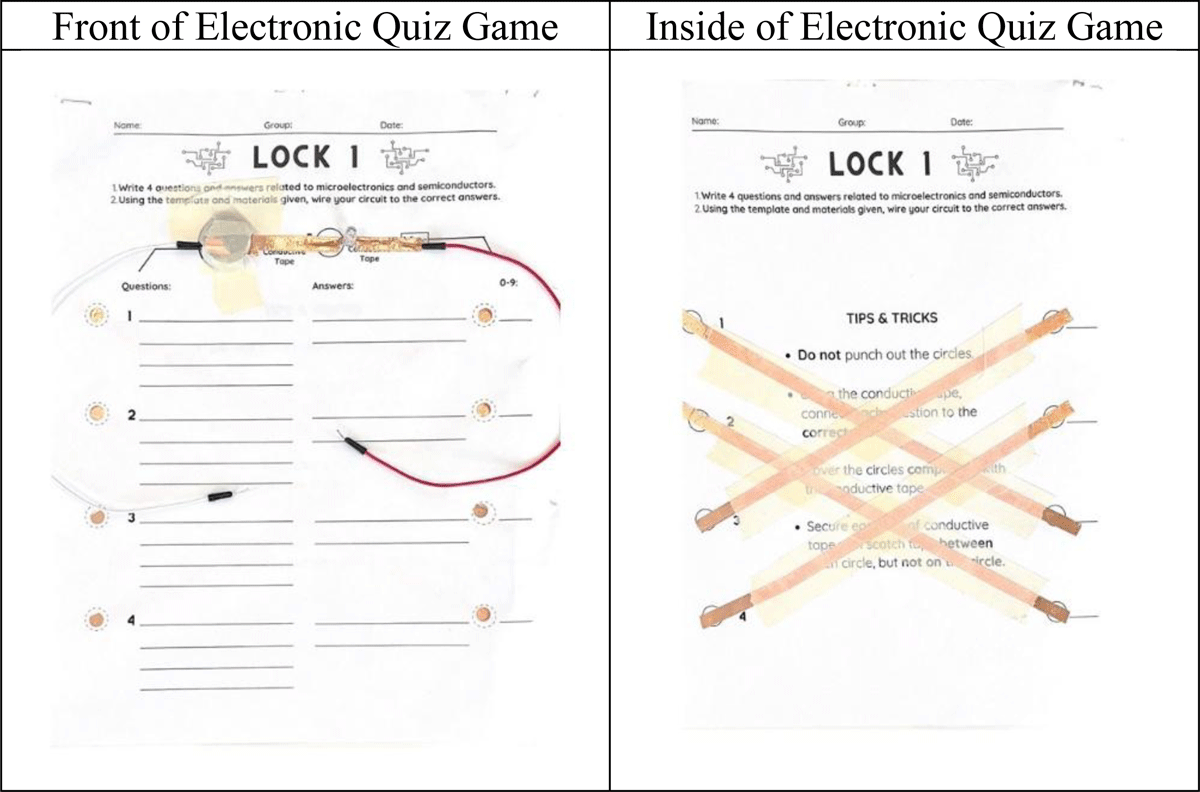
Figure 4
Lock 1 Clue Example
Working in groups, students write four questions related to ME and semiconductors, wiring them into simple circuits that light up an LED when the correct answers are connected, revealing the first lock combination for the escape box.
Lesson 2A – “Coding with Chips (Part 1)” introduces students to microcontrollers using the micro:bit, a small programmable device. They learn about the hardware components of the micro:bit and explore the related coding platform used to program the device.
Students are shown sample code for the micro:bit that uses its built-in sensors as an example of a puzzle for lock 2 on the escape room box (Figure 5). For this example, when a participant turns on the micro:bit it will display a message or clue that says, “It sure is bright.” The message serves as a visual clue helping participants realize they need to make it dark by covering the light sensor on the micro:bit. When they do cover the light sensor, the micro:bit will display the second lock combination. After the students explore the example puzzle, they are given time to experiment with the different sensors that can be used to collect information via the micro:bit. This lesson allows students to explore the career of a software developer and computer scientist.
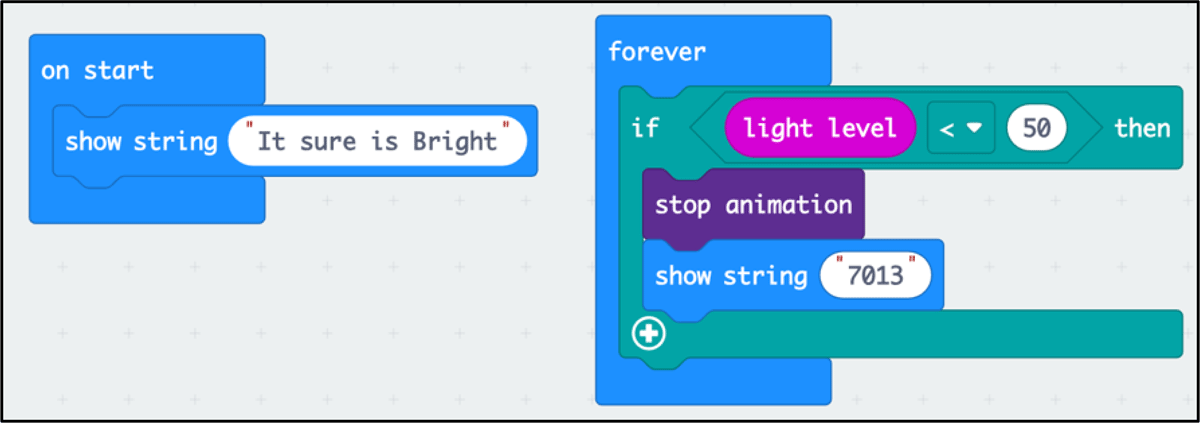
Figure 5
Lock 2 Puzzle Example
Lesson 2B – “Coding with Chips (Part 2)” allows students to use their new knowledge by designing and coding a program to serve as a puzzle for the second lock combination. Using various sensors on the micro:bit, they create a unique puzzle to reveal the lock combination that will open the second lock of their escape room box.
Lesson 3A – “What is on a Chip? (Part 1)” begins with students exploring Boolean and digital logic, starting with a discussion on these concepts. They investigate breadboards wired with different microchips (integrated circuits) to see how digital logic gates determine the output of the integrated circuit based on the electrical inputs received. Students further explore these concepts using an online simulator that allows them to create and experiment with logic circuits.
Lesson 3B – “What is on a Chip? (Part 2) provides an opportunity for students to develop the third puzzle for the escape room box that involves solving the output for four different logic circuits. They create a puzzle sheet and an answer key (see Figure 6) that the participants will use to solve the puzzle. The logic circuits they create form the code for the third lock on the escape room box.
Lesson 4A – “Chip Detectives (Part 1)” teaches students about counterfeit microchips and their implications for personal and national security through a presentation and worksheet. They discuss the importance of authentic microelectronics and the risks posed by counterfeit chips. This knowledge will serve as the foundation for the challenge presented to the participants when they open the escape room box. This lesson allows students to explore more sides to an electrical engineer, electrical technician, and computer scientist.
Lesson 4B – “Chip Detectives (Part 2)” has students work with breadboards, integrated circuits, and other electrical components to build their own “counterfeit” chip tester. A schematic (Figure 6) is provided for them to use to recreating the circuit with the given materials. This counterfeit chip tester will be used in the final challenge of the escape room box.
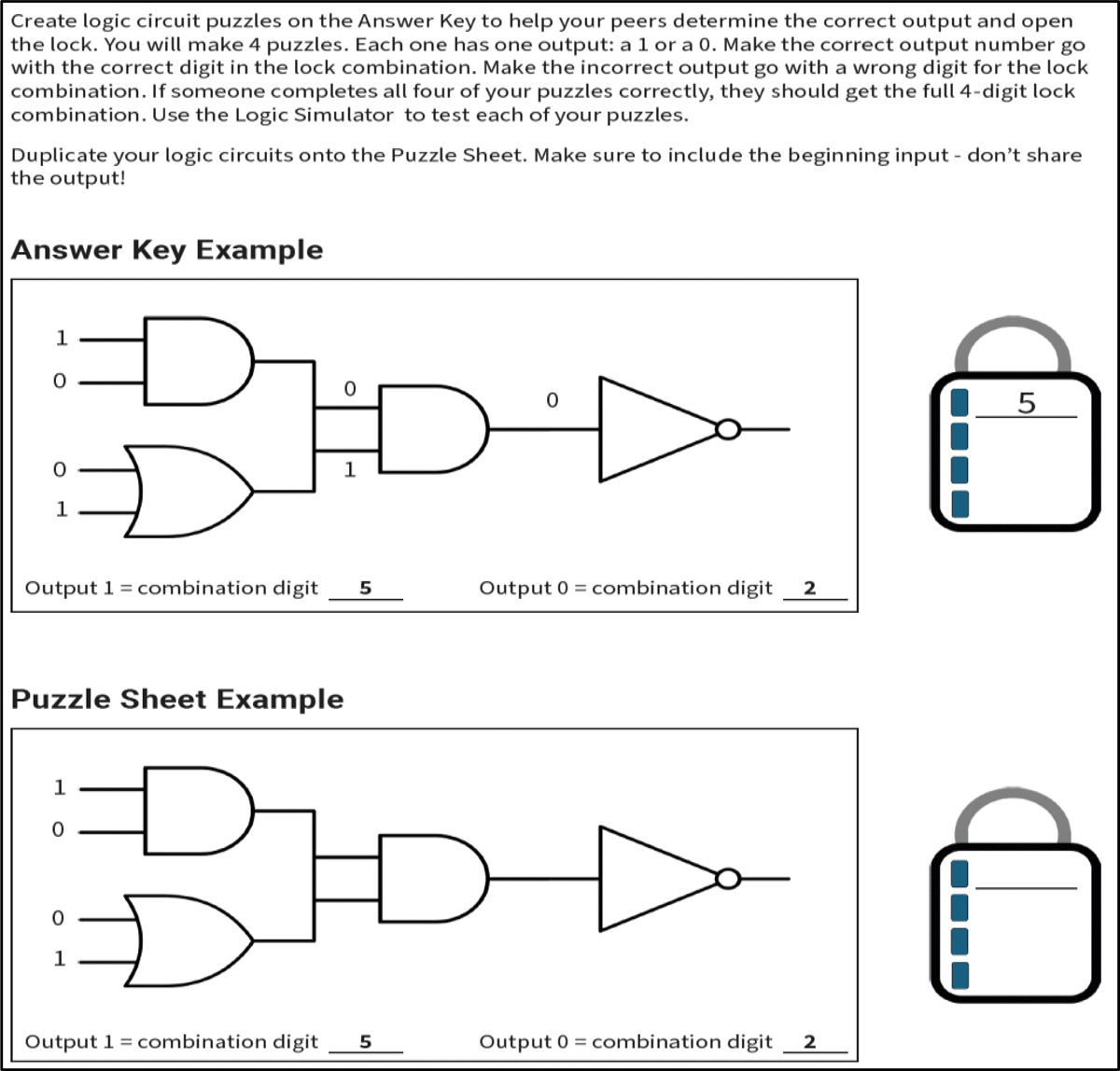
Figure 6
Lock 3 Clue Example
When participants open the box, they will be presented with several microchips, and they will need to use the chip tester to determine which chips have the correct digital logic circuits. They test the chips by placing them in the circuit on the breadboard. If the light turns on, then it is the correct chip.
Lesson 5A – “The Final Countdown (Part 1)” gives students the opportunity to test out the escape room boxes they have created. They switch boxes with another group and work to solve the other group's three lock combinations. This involves taking a ME quiz, investigating a micro:bit and its sensors, and solving a digital logic puzzle. Once they unlock the escape room box, they find an assortment of microchips (integrated circuits). Using the counterfeit chip tester (Figure 7) they created in Lesson 4b, they test each chip to determine its authenticity, indicated by an LED lighting up in the circuit
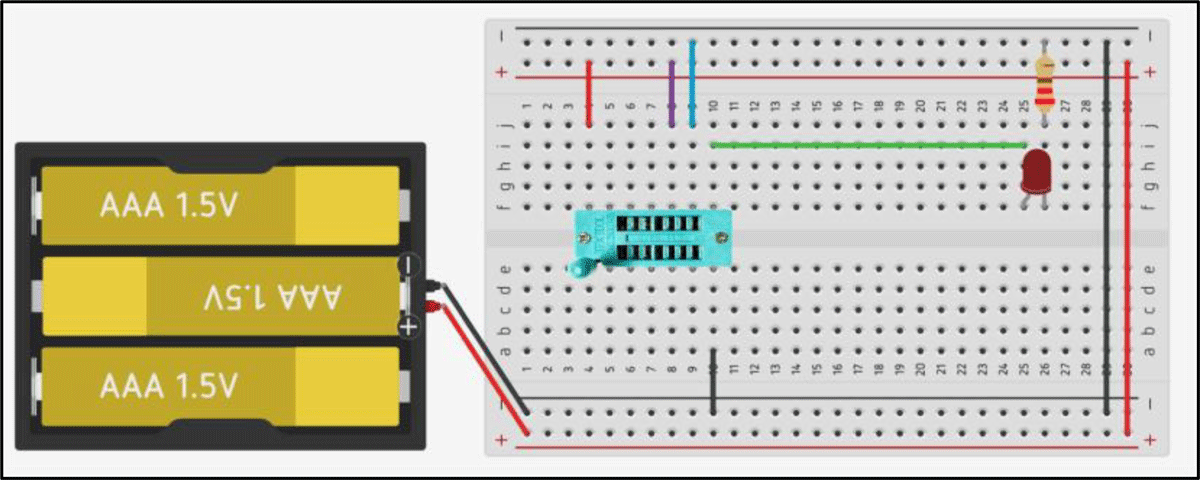
Figure 7
Counterfeit Chip Tester Circuit
Lesson 5B – “The Final Countdown (Part 2)” engages students in a comprehensive reflection on their experiences throughout the unit. They consider the process of designing, building, and testing the escape room boxes, reflecting on what they have learned about ME and semiconductors. Students discuss the challenges they faced, how they overcame them, and the successes they experienced.
The discussion concludes with students in the class selecting and submitting the best “Escape Room Box” design (Figure 8) to their client according to evidence-based reasoning.
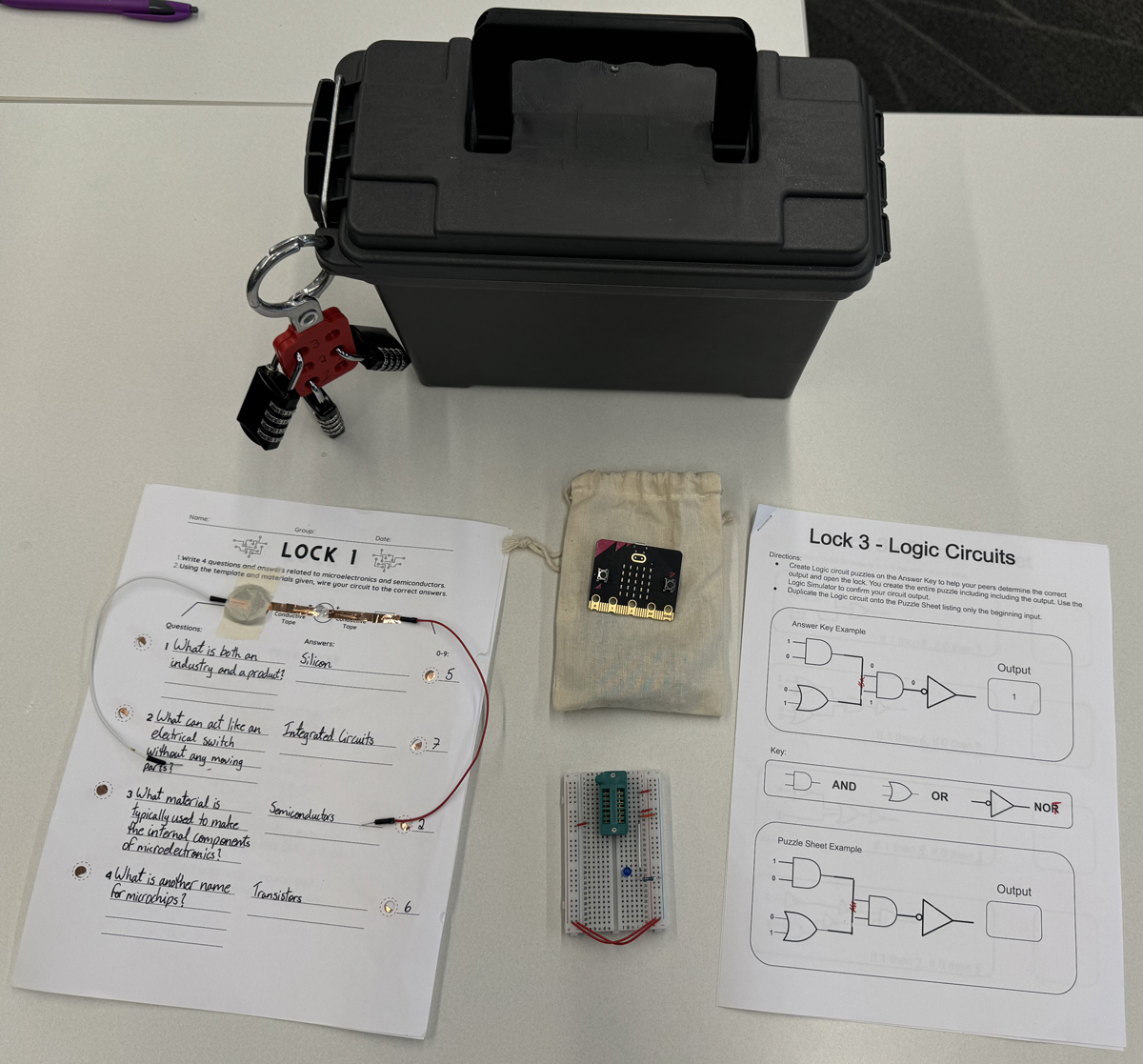
Figure 8
A Complete Microelectronics-themed Escape Room Box
RQ2: Integrating Microelectronics and Insights from the Classroom
The observational data collected during the implementation of the middle school T&E ME-focused unit revealed both promising strategies and areas for refinement regarding the integration of this emerging STEM workforce context. Table 2 provides an overview of how observational field notes collected during the implementation of the What’s in the Box? unit were reviewed and organized by themes. Direct excerpts from field notes are included as illustrative evidence supporting an identified theme and the resulting implementation propositions. However, the implementation observations also exposed challenges related to troubleshooting technical activities, group dynamics, material reliability, and instructional pacing. These challenges were identified across the four schools and provided important areas for both refining the ME-focused unit as well as enhancing the integration of such STEM workforce-related contexts. Themes identified through unit analysis are presented in the following sections along with select supporting observational data.
Table 2
Cross-Referencing Data, Codes, and Speculations
| Theme | Field Note Evidence | Emergent Codes | Implementation Propositions |
|---|---|---|---|
| Engagement & Student Interest | “The students have been asking for a list of the materials, so they can ask for a micro:bit for Christmas!”; “At the end of the day, [teacher] asked how many students wanted him to send the link to their parents… the majority of the students raised their hands.”; “A student came up to him and said, ‘I want to be a Micro Engineer when I get older.’” | Student enthusiasm; Aspirational identity; Participation impacts | Students demonstrated engagement that extended beyond the classroom and expressed career awareness related to microelectronics. However, it is important to be mindful of previous experiences and how that may impact participation. |
| Developing Troubleshooting Skills | “Several groups were needing help troubleshooting why their circuit for Lock #1 was not working.”; “I wonder if circuit troubleshooting is a valuable skill unto itself and could be one lesson in most of our units?”; “Students were having challenges getting their circuits to work, several needed new batteries. Teacher did quite a bit of the troubleshooting to figure out what was not working.” | Troubleshooting as a learning objective; Troubleshooting challenge | Troubleshooting emerged as both a barrier and a skill-building opportunity, suggesting it should be an explicit instructional goal. |
| Collaboration & Group Dynamics | “Several groups had 1 or 2 students complete the various clues while the other team members were passive.”; “The structure of the solving process did not force every student to contribute to the demonstration of the skills learned in the unit.”; “Many of the groups only had one student doing the coding.” | Uneven participation; Promise of structured interdependence | Group projects did not guarantee even participation in activities, indicating a need for more structured interdependence during the hands-on tasks. |
| Planning workforce-relevant Instruction with Classroom-ready Materials | “There were about 20 broken locks today, but [teacher] reached out… we are looking for some better ones to order.”; “Some groups had a challenge due. to the fact that the leads on the ‘probe pins’ were not quite long enough to reach…”; “I wonder if the conductive copper tape has a protective coating that is hindering the flow of electrons…” | Material durability; Classroom usability | Physical material limitations (locks, leads, tape) disrupted learning, showcasing difficulties in bringing more technical workforce-driven content into the classroom. |
| Pacing & Instructional Adjustments | “Certain lessons, particularly troubleshooting circuits or working with logic gates, took longer than anticipated.”; “Some students struggled with the logic, gate component.”; “Teacher mentioned that this could easily take longer than the 10 days and I really should not have waited until the end of the grading period.”; “Teacher created a folder with a checklist… including Copper Tape quiz, micro:bit, and Digital Logic Gate puzzle to keep students on track.” | Instructional adaptability; Time management | Teachers adapted lessons in response to pacing challenges, suggesting the need for scaffolding, pre-unit preparation, and flexible timing. |
Engagement and Student Interest
One of the themes from the classroom observations involved the engagement and interest that students displayed for hands-on activities in the unit. The use of escape-room-style challenges, where students worked collaboratively to “unlock” solutions had them participating in building circuits, programming micro:bits, and solving digital logic puzzles. The engagement in ME-related material was supported by notes such as “At the end of the day, [the teacher] asked how many students wanted a link sent to their parents for how to purchase a micro:bit and breadboard for possible holiday gifts (the majority of the students raised their hands)” and “the students have been asking for a list of the materials, so they can ask for a micro:bit for Christmas.” One student even went so far as to explicitly state during this conversation, “I want to be a microelectronics engineer when I get older,” reflecting the potential career awareness and interest from integrating ME at this grade level
Despite this perceived positive engagement, there were some inconsistencies in prior knowledge among students that may have impacted their participation in the unit activities. Some had previous exposure to coding and electronics while others were encountering these concepts for the first time. Teachers noted that while the unit provided a strong introduction to ME, students with little prior experience sometimes struggled to keep pace. Relatedly, the field notes detailed how one of the teachers “did some preliminary work for two days, getting the students prepared with some background knowledge on microelectronics” before implementing the unit, which was not the original intent of the unit. The other teachers during their implementation also indicated a need for some type of pre-unit activities to build foundational knowledge, helping to ensure students enter the unit with some baseline understanding of key concepts such as electronics and programming. One teacher note stated “This could easily take longer than the 10 days; especially if they have not used the online tools before” and if it is implemented at the end of the grading period “it was a real struggle to keep them engaged.” These observations highlight how students’ prior experiences with technology as well as timing of the delivery can shape their engagement in ME-focused instruction and point to the need for pre-unit scaffolding to provide foundational knowledge.
Developing Troubleshooting Skills
Another emerging theme was the role of troubleshooting during technical tasks. Observations made during unit implementation indicated students were challenged with troubleshooting their circuits. For example, several students encountered difficulties in making their circuits function correctly, particularly when using the conductive copper tape and LED components for the Lock 1 puzzle. In response, teachers frequently stepped in to diagnose these issues, often replacing batteries, adjusting wiring, or identifying weak connections in the copper tape. The observer field notes stated that “Students were having challenges getting their circuits to work, several needed new batteries. Teacher did quite a bit of the troubleshooting to figure out what was not working to make the LED light up.” While troubleshooting support seemed necessary at times, the need for teacher intervention led one observer recording a reflective note of “noticed an opportunity to build in intentional troubleshooting skill development for situations involving electrical circuits as part of all ME units.” These observations and notes can highlight troubleshooting not only as an implementation challenge but also as a potential instructional opportunity.
Rather than viewing troubleshooting as a distraction from core learning goals, it could be reframed as a deliberate pedagogical objective that mirrors authentic engineering practice. The teachers even suggested that instead of providing immediate solutions, students could be encouraged to engage in systematic troubleshooting, testing one variable at a time. One researcher noted “Several groups [of students] were needing help troubleshooting why their circuit for Lock #1 was not working.” This researcher wrote a reflective note stating “I wonder if circuit troubleshooting is a valuable skill unto itself and could be one lesson in most of our units? May also need to coach teachers to challenge the students to do more of their own troubleshooting rather than quickly going to the teacher to determine why the circuit isn't working.” Given these observations, incorporating a dedicated troubleshooting lesson would support students in gaining an understanding of circuit behavior and help them to become more independent problem-solvers. Additionally, refinements to the instructional materials—such as clearer schematics or guidance on preparing copper tape for conductivity—were noted as ways to potentially help reduce some of these challenges while still allowing students to develop troubleshooting skills.
Collaboration and Group Dynamics
The instructional unit was designed to be collaborative, with students working in small groups to develop and solve puzzles related to ME concepts. While such classroom organization is typical in hands-on activities, unit implementation observations show that group dynamics can continue to be a challenge. As an observer noted “Could more interdependence be structured into the unit so that all team members would be more engaged in each step of the learning and problem solving process?” In multiple instances, one or two students took the lead in constructing circuits and writing code, while other group members remained passive observers. Field notes mentioned “the students displayed enjoyment in the format of activities of today but the structure of the solving process did not force every student to contribute to the demonstration of the skills learned in the unit that were designed to be the pathway to determining the code to unlock the locks.” This unevenness in participation can suggest a need for more structured interdependence in group work. A proposed solution in the teacher conversation was to assign individual accountability within each group, ensuring that every student contributed meaningfully to the problem-solving process. For example, teachers discussed the possibility of structuring lock combinations so that each digit was derived from a separate student’s puzzle, making it necessary for all group members to engage with the content. Adjustments such as these could help ensure that collaborative learning translates to meaningful participation for all students.
Planning Workforce-relevant Instruction with Classroom-ready Materials
Observations of unit implementation also highlighted some logistical challenges with bringing more technical workforce contexts into middle school, particularly with respect to the selection and durability of materials. For example, “some groups had a challenge due to the fact that the leads on the ‘probe pins’ were not quite long enough to reach [across the circuit],” and another observer speculated that “the conductive copper tape has a protective coating that is hindering the flow of electrons.” Notably, both teachers and students exhibited frustrations with the locks being used in the escape-room-box activities. In some classrooms, the locks failed or were unable to be reset, disrupting the flow of the lesson and causing frustration. However, the teachers were able to develop strategies such as creating a master security log for the sets of locks to assign to each group so that lock combinations would not need to be changed multiple times. One teacher even created a vault (Figure 9) to secure these logs.
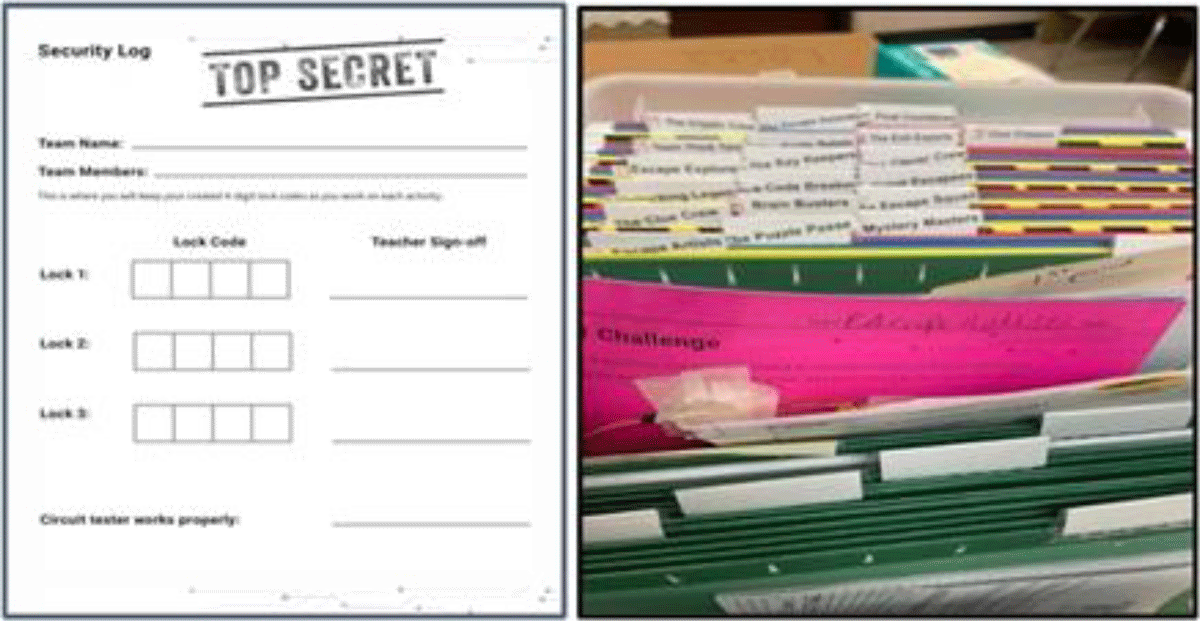
Figure 9
Teacher Security log and vault.
Similarly, some students encountered difficulties in correctly setting up their circuits due to inconsistencies between the printed schematics and the physical materials provided. For instance, some breadboards differed from the diagrams in the instructional materials, leading to confusion. Teachers suggested that clearer, more standardized visuals, or even hands-on demonstrations, could help mitigate these issues. One teacher “had given the students resources to train themselves if they were the Lock 2 experts during the prep 2 days prior to the start of the unit.” This is another example of the teacher using scaffolding to help prepare students to learn about logic gates with prior information. However, it is equally valuable to review with students the importance of understanding the schematics and electrical components instead of simply following a diagram step-by-step without interpreting what the circuit and components are actually doing.
Pacing and Instructional Adjustments
Finally, pacing emerged as an important consideration. Some lessons took longer than expected. As one observer noted, “Certain lessons, particularly troubleshooting circuits or working with logic gates, took longer than anticipated.” Another observer noted that, “Some students struggled with the logic gate component.” To address these issues, teachers implemented scaffolds, such as customized checklists, to keep students on track: “Teacher created a folder with a checklist… including Copper Tape quiz, micro:bit, and Digital Logic Gate puzzle to keep students on track.” These observations suggest that pacing adjustments are not only necessary but also an expected part of integrating emerging workforce contexts into middle school instruction. Teachers’ adaptability in real time can show the importance of pre-unit scaffolding and flexible lesson structures to accommodate different levels of student readiness.
Summary
Collectively, the classroom implementation data reveal both the promise and complexity of integrating ME into middle school T&E education. Classroom observations provided evidence that the instructional unit did help capture student interest in learning about ME concepts. The interactive, hands-on approach was instrumental in helping students see the real-world applications of microchips, resulting in some expressing a newfound interest in the related career fields. At the same time, the findings suggest the importance of framing troubleshooting as a skill-building objective, designing group work for more interdependence, careful selection of materials, and allowing flexibility in pacing. The field notes recorded during unit implementation provided insights for points of potential refinement in unit design. For example, future development of ME-focused units could benefit from:
A dedicated troubleshooting component, helping students develop circuit building skills.
Pre-unit scaffolding to ensure all students have the necessary foundational knowledge in coding and circuitry.
Improved group work structures to foster balanced participation.
Refinements to pacing and lesson structure, particularly in areas where students needed additional support, such as digital logic. On the other hand, perhaps this is an area that could be viewed as stretching beyond the appropriate level for middle school learners.
Addressing these areas when designing future instructional units would enhance the integration of ME into middle school T&E classrooms.
Discussions
Integration of Emerging STEM Workforce Contexts in K-12
The SCALE K-12 ME initiative, which sought to integrate industry-relevant content and contexts into classroom instruction, provides an example of how an instructional unit can be designed to engage students in direct minds-on/hands-on learning experiences with ME and the semiconductor industry. The unit developed through this initiative demonstrates a viable approach for introducing students to the foundational role of microchips in modern technology and providing experiences that help connect them with future career opportunities. As shown in this case, teachers along with the initiative’s team was able to develop a middle-school unit that made complex, industry-driven ME content accessible while also aligning with the subject’s learning standards. Consequently, the ME Integration Curriculum Development Framework (Moore, et al., 2024b) used in this case study research can serve as a practical platform for guiding those interested in developing STEM workforce-driven curricula. The example instructional unit presented through this exploratory case study highlights the value of curriculum development supported by this framework. Equally important, the study found that future instructional units designed to address emerging STEM workforce contexts would be improved through incorporation of scaffolding to establish clearer career connections for students.
While one instructional unit can be impactful, there is likely a bigger need for a structured sequence of experiences that links K-12 education with career pathways in the industry. Although students had the chance to engage with a ME-based unit, it is still unclear what the students truly take away from a two-week classroom experience. A structured educational pathway might expose students to more ME applications, industry standards, and complex problem-solving skills valued for professional roles. For instance, while prototyping with electronic devices might teach basic circuit design and assembly, it may not cover essential topics like advanced fabrication techniques, integrated circuit design, or the industry-specific knowledge desired for technical/engineering careers. A structured pathway, such as a Career and Technical Education credential or work-based graduation route, could help address this gap by offering a clearer progression from foundational knowledge to advanced skills, including industry-recognized qualifications. A promising strategy employed in SCALE K-12 to incorporate such a progression of workforce-related pathways was the school district-wide vertical alignment process previously mentioned in the case explanation. This strategy was implemented within a collaborating school district in an attempt to progressively integrate ME content and experiences from kindergarten through high school. Vertical alignment was viewed as both (1) a curriculum planning process to provide a more structured learning experience, and as (2) an organizational strategy for embedding workforce contexts into district practice to promote long-term sustainability. The vertical alignment process involved establishing teams of administrators and teachers to establish a district-wide integration plan along with workforce development personnel. Such a structured approach may help ensure that students not only gain hands-on experience but also understand how their skills fit into the larger industry context overtime.
To support the continued progress in K-12 workforce development, establishing a vertically aligned curriculum that sparks initial interest and provides career opportunities, linked with industry-recognized certifications, can be beneficial for integrating new STEM workforce contexts and content. Such efforts can include developing partnerships (internships and externships) with industry stakeholders to provide real-world applications and experiences to both teachers and students, potentially enhancing the educational experience and aligning it with workforce needs. Such collaborations could improve the educational experience, allowing for students to possibly envision their future careers and see a pathway to obtain them. The instructional unit development presented through this case study demonstrates the potential of pre-college workforce development initiatives, demonstrating the practical outcomes that can be achieved through a structured framework for curriculum development and collaboration among stakeholders. Leveraging these examples and discussion points provides encouragement for continued development and refinement of similar workforce development initiatives needed to help address relevant workforce needs and provide students with new opportunities.
T & E Classrooms as Pathways to the Emerging STEM Workforce
It is of importance to recognize that the teachers involved in this specific case example, possessed a distinct advantage for integrating ME into their curriculum. Specifically, when compared to other units developed within the SCALE K-12 initiative originating from disciplines such as art, English/language arts, mathematics, etc., technology and engineering (T&E) teachers have classrooms and instructional spaces that provide unique opportunities for integrating new content, especially ME content, into their existing curricula. The implementation of the ME instructional unit presented in this case study highlights how T&E classrooms serve as vital teaching/learning spaces for preparing students to meet the emerging STEM workforce demands. This perspective aligns with broader discussions in T&E education emphasizing the unique position of the subject area to serve as an adaptable, responsive, and innovation/design-driven space for student learning during a typical school day (Hacker, 2023; Strimel, 2025). One potential strength of K-12 T&E education is its ability to act as a curricular area that can quickly integrate new technologies, respond to workforce trends, and provide students with real-world applications of STEM content. Unlike more rigidly structured subjects, T&E classrooms typically have the flexibility to incorporate hands-on experiences with relevant tools such as microcontrollers, electronic components, digital logic simulators, and integrated circuits. This flexibility was seen in the unit implementation, where teachers adjusted lessons in real time, provided troubleshooting guidance, and modified activities based on student progress and engagement. As national and global industries continue to shift, T&E classrooms can be well-positioned to introduce these emerging fields to students. The observed engagement among students—some of whom expressed a desire to continue working with ME beyond the classroom—demonstrates the potential power of experiential learning in T&E for sparking early interest in STEM-related careers.
As seen through this case study, T&E educators were uniquely equipped to facilitate early exposure to STEM workforce skills. The ability of these teachers to integrate design-based learning, troubleshooting, and project-based instruction positioned them well as facilitators of workforce readiness; teachers not only capable of covering fundamental technological concepts but also fostering the habits of mind necessary for success in technical careers. The instructional unit presented in this research showcased T& E’s breadth of instructional capacity in several ways:
Encouraging independent problem-solving: Teachers can guide students in troubleshooting circuit failures rather than immediately providing answers, helping to reinforce real-world engineering practices.
Promoting interdisciplinary skills: The integration of coding, circuit design, and logic gates can prompt students to apply mathematical and computational thinking in practical ways.
Fostering student agency: Students can take ownership of their learning, as demonstrated by their requests for micro:bits as holiday gifts and their stated interest in pursuing careers in ME.
These pedagogical strategies align well with the broader STEM education trends emphasizing the need for minds-on/hands-on, application-driven learning experiences to prepare students for careers in engineering, technology, and advanced manufacturing.
While implementation of the instructional unit presented through this case study achieved promising results regarding the integration of ME, also revealed were areas of potential T&E classroom optimization to enhance workforce preparedness. Specifically, the subject area can consider its relevance in supporting structured troubleshooting to develop students’ diagnostic skills in technological systems, providing continued access to industry-standard tools to provide authentic exposure to technical concepts, refining group work strategies to enhance student participation in hands-on activities, and incorporating explicit career connections through continued industry partnerships. By doing so, T&E classrooms have an opportunity to further their role within a school as an essential component of STEM workforce development, offering students the early skills, confidence, and interest that can be beneficial toward pursuing careers in emerging fields such as semiconductor manufacturing, computational design, and electronics engineering.
In summary, this case study highlighted the valuable role T&E education can play in bridging K–12 learning with emerging STEM workforce needs. As Liu and Brunhaver (2025) mention, engineering education across all levels is well-positioned to lead in the evolving workforce development landscape. They also discuss how it is important for the field to adapt alongside the changing workforce it serves in order to stay relevant. As national conversations around STEM preparedness continue, these classrooms may stand out as dynamic, flexible, and workforce-responsive learning environments as evidenced by the instructional unit that the teachers created and the way they implemented it in their classrooms. The integration of this ME unit provided students with a minds-on/hands-on introduction to the semiconductor industry while also providing practical skills important for future career success. One thought for further discussion then is how might schools better leverage the autonomy and adaptability of T&E education to help cultivate a channel of students who are aware of, and better prepared for, emerging trends in the STEM workforce.
Conclusion
This exploratory case study investigated the integration of ME-related context and content into middle school T&E curriculum. This research was conducted in response to the rise of investments in the semiconductor industry. By focusing on one K-12 ME workforce development initiative aimed at embedding real-world applications and industry insights into schools, the research presented provided an example of how such efforts can work toward meeting emerging STEM workforce demands and integrate novel industry contexts/concepts into the classroom. More specifically, this case study highlights the potential of secondary T&E classrooms as a bridge between STEM education and workforce development. The instructional unit, as presented, exemplifies the potential of the collaboration among educators interested in integrating new STEM workforce contexts into their classrooms. By following middle school T&E teachers as they designed, implemented, and refined a ME-focused instructional unit, this case study demonstrated ways in which ME contexts and concepts can be integrated through engaging and meaningful ways. The observation of classroom implementations highlighted both opportunities and challenges with integrating emerging workforce contexts into K–12 curricula. While students seemed to enjoy the interactive, escape-room-style format, the observed teachers identified needs for structured troubleshooting instruction, pre-unit scaffolding to address disparities in prior knowledge, and refinements to pacing and group work structures. Additionally, logistical challenges such as material durability and instructional clarity highlight the importance of continuous curriculum refinement and industry-aligned resources.
As national initiatives aim to expand the STEM workforce in areas like the semiconductor industry, this case study promotes a discussion relative to the role secondary T&E education might serve in introducing and preparing students for emerging workforce trends. By leveraging the flexibility of T&E classrooms and fostering industry partnerships, the potential exists for schools to help create meaningful STEM learning experiences that align with relevant workforce demands. However, sustaining these types of workforce initiatives will most certainly require ongoing collaboration with many stakeholders from industry, education, and the community to ensure the vertical alignment with evolving workforce needs as the industry continues to expand. In conclusion, the integration of ME into K-12 education, as showcased through this case study, represents a viable approach for connecting students with future opportunities in the semiconductor industry concurrent with the broader scope of engineering and technical jobs.
Appendices
Appendix A. Data Collection Protocol
Step 1. Consent & Assent
Confirm parental consent for minors and student consent for those 18+.
On the first day, distribute and collect student assent forms.
Seat non-consenting students outside of the recording frame; do not record or photograph their work.
Step 2. Arrival & School Check-In
Bring government ID and required background paperwork.
Check in at the school office for every visit.
Arrive at least 20 minutes before class to allow for setup.
Step 3. Equipment Setup
Collect the assigned equipment tote (cameras, tripod, wireless mics, iPad Pro, Apple Pencil).
Position cameras to capture the teacher and consenting students.
Test microphones and confirm video framing before instruction begins.
Step 4. Classroom Recording
Use wide, medium, and close-up shots to capture:
Whole-class instruction
Group work and collaboration
Teacher scaffolding and assessment
Student engagement, body language, and artifacts
Focus only on students with consent/assent on file.
Step 5. Field Notes
Use iPad Pro/Notability template with the following fields (Figure 10):
Case Study (student initials)
Teacher ID (not name)
Date (MM/DD/YYYY)
Lesson number/title
Time stamps for lesson start/end and activity changes
Field notes: record student actions, behaviors, and interactions
Include descriptive (what happened) and reflective (impressions, questions, emerging insights) notes.
Step 6. Student Artifacts
Collect and scan student worksheets (only from consenting students).
Photograph student work or prototypes without student identifiers.
Capture artifacts before/after testing when possible, to preserve detail.
Step 7. Closing Each Session
End field notes with time the lesson concluded.
Save, label, and securely store all recordings, notes, and scans.
Complete roll-over notes.
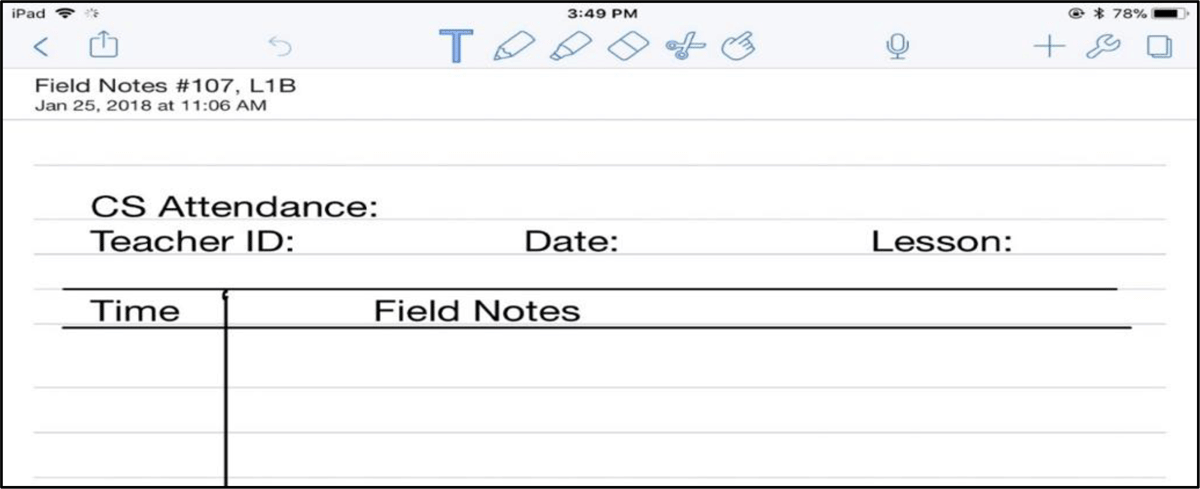
Figure 10
Field Note Formatting
Acknowledgements
The authors acknowledge support for the related educational programming from the Indiana Economic Development Corporation [Contract No. A281-3-IPF-1028 424208], U.S. Department of Defense through the Applied Research Institute [Contract No. SA-22036.001], and the National Science Foundation [2448266]. However, this content is solely the responsibility of the authors and does not necessarily represent the official views of these entities.
Statement on Artificial Intelligence
AI tools were used during the manuscript development process to assist with editing, rewording, improving transitions, shortening content, and outlining sections. These tools were employed as writing aids under the direction of the human authors. No AI tools were used for data generation or analysis. The authors are solely responsible for the accuracy and integrity of the content.
Competing Interests
The authors have no competing interests to declare.