
1. Introduction
The successful establishment of a functional microbial community in aerobic biofilters, such as those used in recirculating aquaculture systems (RAS), can take several weeks to months (Malone & Beecher 2000). During this critical acclimation period, the accumulation of ammonia and nitrite can reach toxic levels, posing serious risks to the health and productivity of cultured aquatic species. To accelerate microbial colonization and improve ammonia removal efficiency during biofilter startup or recovery, the addition of external organic carbon is a widely adopted strategy (Avnimelech 1999). Supplemental carbon promotes the growth of heterotrophic bacteria, which assimilate inorganic nitrogen into microbial biomass more rapidly than autotrophic nitrifiers (Avnimelech 1999; Ebeling, Timmons & Bisogni 2006; Crab et al., 2012). This process provides a short-term mechanism for controlling ammonia accumulation and stabilizing water quality.
Among the available carbon sources, solid-phase substrates have gained increasing attention due to their operational advantages: they release carbon gradually, support biofilm formation, eliminate the need for dosing systems, and reduce the risk of overdosing associated with soluble carbon supplements (Fahandezhsadi 2014). Poly(3-hydroxybutyrate) (PHB), a biodegradable thermoplastic from the polyhydroxyalkanoate (PHA) family, has been extensively studied under anoxic conditions as a carbon source for denitrification (Gutierrez-Wing et al., 2011, 2012; Chiama et al., 2025). However, its potential for aerobic ammonia removal via heterotrophic assimilation remains underexplored, particularly in the context of engineered blends designed to enhance both functionality and cost-effectiveness. This assimilation pathway, which incorporates ammonia directly into microbial biomass without producing nitrate or nitrite, presents a promising alternative to traditional nitrification, especially during system startup when autotrophic nitrifiers are slow to establish.
Despite its favorable performance characteristics, pure PHB is expensive, limiting its scalability in commercial aquaculture. Blending PHB with inexpensive biopolymers such as starch or cellulose could reduce material cost while also enhancing surface properties and biodegradability. Yet the effects of such blends on aerobic ammonia removal and carbon leaching behavior remain under explored. Prior studies have primarily focused on PHB for denitrification, or on its mechanical performance as a biodegradable plastic, leaving a clear gap in understanding how PHB-based composites perform in aerobic, heterotroph-driven total ammonia nitrogen (TAN) removal systems (Boley, Muller &Haider 2000; Gutierrez-Wing et al., 2011, 2012; Chiama et al., 2025).
This study addresses this knowledge gap by systematically evaluating PHB-starch (PHB:S) and PHB-cellulose (PHB:C) blends as solid-phase carbon sources and biofilm carriers for aerobic ammonia removal in a fixed-film system. Specifically, the study aims to:
assess the total ammonia nitrogen removal rate and COD release of the blends,
evaluate material cost reductions associated with blending, and
determine the suitability of these blends as start-up substrates for enhancing biofilter establishment in aerobic RAS environments.
2. Background
2.1 Recirculating Aquaculture Systems
Recirculating aquaculture systems (RAS) (Figure 1) are designed to optimize water reuse in intensive aquaculture by continuously treating and recycling water through mechanical and biological filtration units (Martins et al., 2010; Van Rijn 2013). Central to this process is the biofilter, which removes toxic ammonia via autotrophic nitrification (Malone & Beecher 2000; Ebeling & Timmons 2012). However, reliance on slow-growing nitrifying bacteria presents a major operational bottleneck. Biofilter maturation often takes several weeks, during which time ammonia and nitrite can accumulate to harmful levels, especially in newly commissioned or disinfected systems (Villaverde, FDZ-Polanco & Garcia 2000; Malone & Beecher 2000; Ebeling & Timmons 2012). Additionally, nitrifiers are highly sensitive to environmental stressors, such as organic overloading, pH fluctuations, and temperature shifts, that can compromise their stability and performance (Villaverde Garcia-Encina & FDZ-Polanco 1997; Ling & Chen 2005; Malone & Pfeiffer 2006).
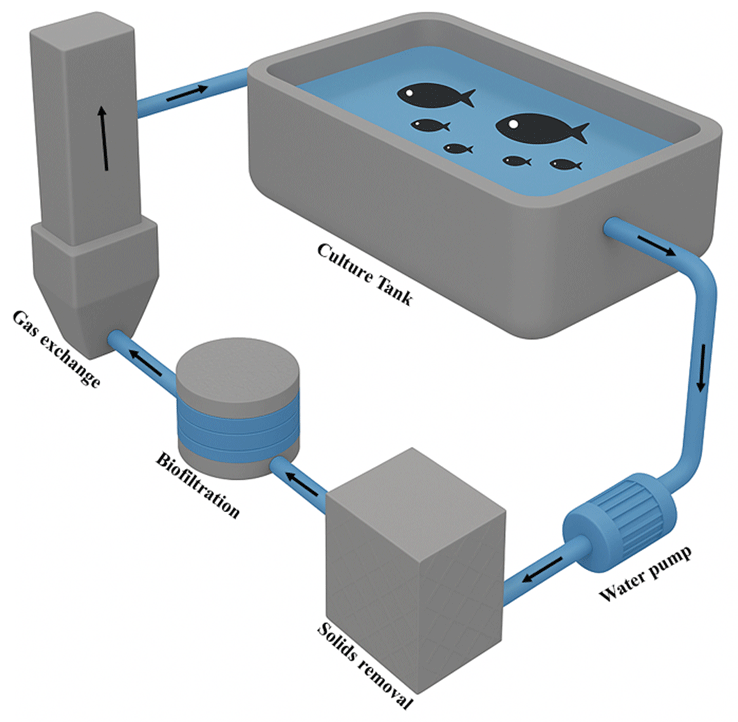
Figure 1
The typical RAS system consists of a culture unit, a mechanical filtration unit for solid capture, and a biofiltration unit.
To address these limitations, there is growing interest in heterotrophic ammonia assimilation as an alternative or complementary pathway. In the presence of organic carbon and oxygen, fast-growing heterotrophs can directly assimilate ammonia into microbial biomass, bypassing nitrification altogether (Ebeling, Timmons & Bisogni 2006; de Jesus Gregersen & Pedersen 2023). Their short doubling time allows for rapid dominance in microbial communities, making them well suited for applications where nitrifiers are suppressed such as start-up, shock recovery, or low-pH operation (Ferreira et al., 2021; Fahandezhsadi 2014). While this strategy is well-established in biofloc systems, its application in RAS has been limited by the challenges associated with dosing and managing soluble carbon sources. In this context, solid-phase carbon substrates offer a promising solution by providing gradual carbon release, supporting fixed-film biofilms, and minimizing the risks of overdosing or carbon-induced water quality deterioration.
2.2 Heterotrophic ammonia assimilation
Heterotrophic ammonia assimilation has emerged as a promising alternative to conventional nitrification in aerobic systems, particularly during system start-up, recovery, or under fluctuating environmental conditions (Fahandezhsadi 2014; de Jesus Gregersen & Pedersen 2023). Unlike nitrifiers, which are slow-growing autotrophs with doubling times up to24 hours, heterotrophic bacteria exhibit much faster growth rates with doubling times as short as 20–30 minutes under favorable conditions (Avnimelech 1999; Ebeling, Timmons & Bisogni 2006; Jiao et al., 2024). Due to their rapid growth, heterotrophs quickly dominate microbial communities in the presence of organic carbon, assimilating ammonia directly into microbial biomass rather than oxidizing it (Ray, Scholtz & Haritash 2019). This bypasses the formation of nitrate and nitrite, making heterotrophic assimilation highly effective for maintaining water quality in RAS, especially when biofilters are not yet fully established or are temporarily compromised.
Heterotrophic assimilation is widely applied in biofloc technology, where microbial aggregates (bioflocs) are cultivated directly within the culture unit to remove toxic ammonia from the water column (Avnimelech 2009; Crab et al., 2010; Crab et al., 2012; Khanjani & Sharifinia 2020). In these systems, heterotrophic bacteria outcompete nitrifiers due to the maintenance of a high carbon-to-nitrogen (C:N) ratio, typically achieved through organic carbon supplementation (Avnimelech 1999; Ebeling, Timmons & Bisogni 2006; Emerenciano et al., 2013; Yu et al., 2024). Liquid or soluble carbon substrates are commonly used because of their low cost and availability. However, their application requires precision to avoid overdosing or underdosing both of which can destabilize floc composition and negatively impact the health of cultured species (Minabi et al., 2020; Gou et al., 2019). Uncontrolled floc growth can lead to water quality deterioration, necessitating frequent intervention to maintain system balance. To address these limitations, the present study introduces a fixed-film system that employs solid-phase carbon substrates as a more stable and self-regulating alternative, eliminating the need for continuous dosing and reducing the operational complexity associated with liquid carbon sources.
2.3 Poly(3-hydroxybutyrate)
Poly(3-hydroxybutyrate) (PHB) is a biodegradable, non-water-soluble polyester used as a slow-release carbon supplement in biological wastewater treatment (Boley, Muller & Haider 2000; Gutierrez-Wing et al., 2012). PHB becomes available for bacterial utilization only when hydrolyzed by extracellular enzymes secreted by specific microorganisms, making it an effective passive carbon source (Hiraishi & Khan 2003; Zhang et al., 2021; Fu et al., 2022). However, its high cost limits its widespread application (Kumar, Sehgal & Gupta 2021; Chiama et al., 2025). Despite this, PHB possesses unique properties, such as a high melting point and low viscosity during processing, which can be leveraged by blending it with lower-cost organic materials such as starch and cellulose. This approach reduces overall costs while maintaining its functional benefits (Zhang & Thomas 2010; Fu et al., 2022).
One key advantage of PHB pellets as a solid carbon substrate is their ability to support biofilm growth by providing great support for microbial attachment. (Fahandezhsadi 2014) demonstrated that the heterotrophic assimilation of total ammonia nitrogen (TAN) into biofilms growing on PHB pellets is well described by the same hyperbolic relationships used to represent aerobic nitrification kinetics. In its common form, which neglects minimum substrate concentration, the relationship is defined by the zero-order constant and the half-order constant:
Where: VTR = Volumetric TAN Removal Rate (kg/m3 day)
VTRmax = Maximum volumetric TAN removal rate (kg/m3 day)
TAN = Total Ammonia Nitrogen concentration (mg/L)
Kb = Half-order constant. (mg/L)
In contrast to nitrification, the assimilation curves were found to have very low Kb values. The data illustrated (pH = 8 at 28°C) in Figure 2 has a Kb = 0.08 mg/L in the range of only about 10% of half-saturation values normally associated with fixed film nitrification. In typical start-up conditions, the TAN assimilation process is dominated by zero-order kinetics, and TAN concentrations have little impact. Eq.(1) reduces to:
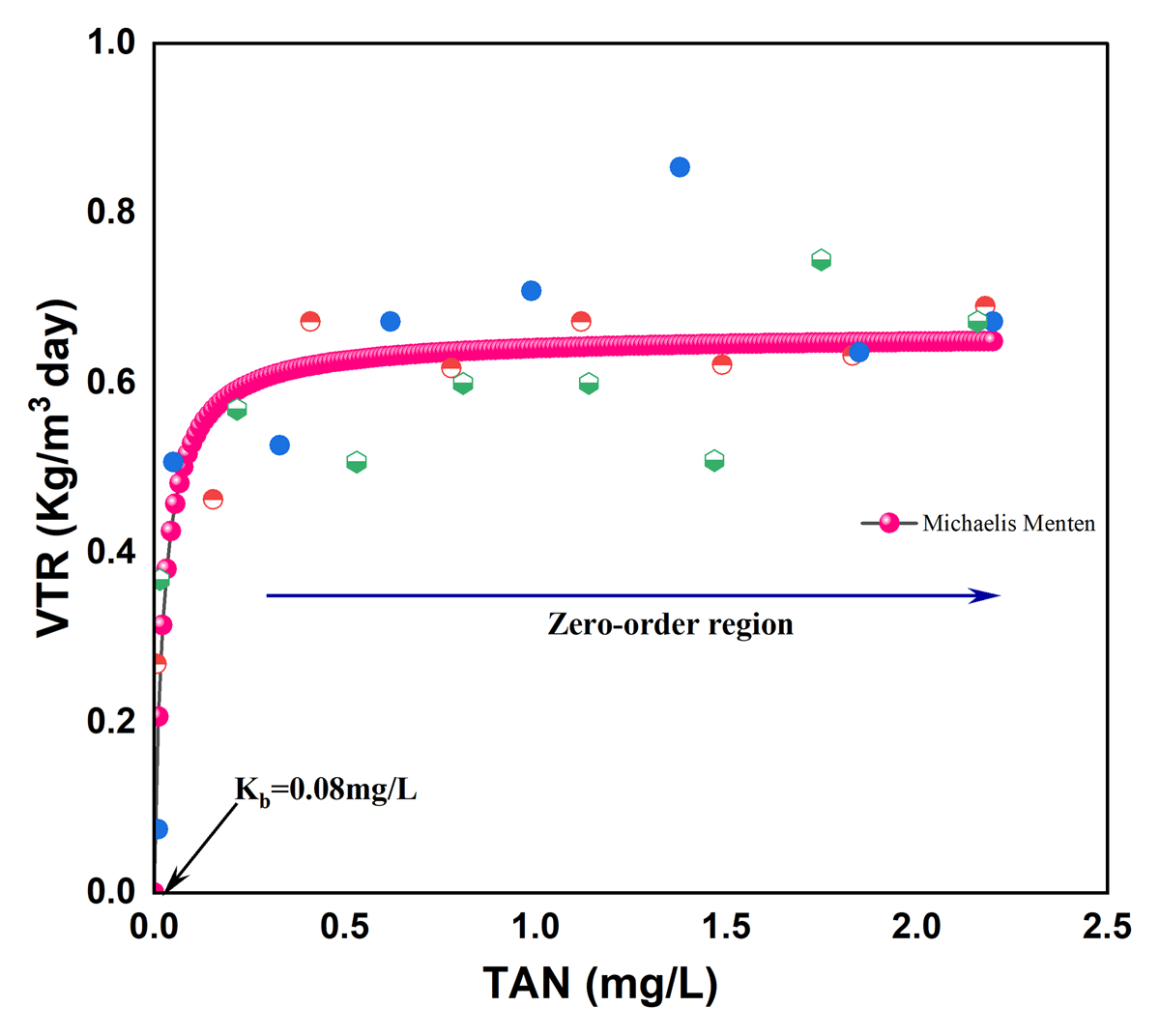
Figure 2
The aerobic assimilation of ammonia into biofilms on PHB pellets is well represented by hyperbolic kinetics and is dominated by zero-order kinetics with TAN levels above 0.5 mg/L (Fahandezhsadi 2014).
VTR normalizes the ammonia removal capacity of a filter to the bed’s volume and thus, is widely recognized as the principal characteristic for sizing of biofilters for the RAS community (Malone & Beecher 2000; Colt 2006; Drennan et al., 2006). And, given the low half saturation constants and relatively high TAN concentrations observed during acclimation VTRmax values are highly likely to serve well defining the amount of solid phase pellets that will be required to neutralize ammonia production during a biofilter imbalance.
2.4 Cellulose
Cellulose, the primary structural component of plant cell walls, is the most abundant biopolymer on Earth (Wertz, Mercier & Bedue 2014; Jiang & Zhang 2012; Hu et al., 2019; Li et al., 2021). Beyond its availability, its biodegradability, non-toxicity, low cost, and water insolubility make it an attractive candidate for environmental applications, particularly as a carbon substrate in biological wastewater treatment (Kumar, Sehgal & Gupta 2021; Zhang et al., 2024). While crude cellulosic materials such as woodchips, rice husks, and peanut shells have been widely used in denitrification systems under anoxic conditions (Shao et al., 2008; Lopez-Ponnada et al., 2017; Luo et al., 2018; Hu et al., 2022), their performance in aerobic systems, especially when structurally engineered into polymeric blends, remains underexplored. Importantly, cellulose’s high thermal stability and structural compatibility offer opportunities to modify polyhydroxybutyrate (PHB)-based substrates for improved mechanical integrity and controlled carbon release. This study investigates cellulose as a functional co-substrate within PHB blends, aiming to enhance ammonia assimilation under aerobic conditions without compromising water quality in recirculating aquaculture systems.
2.5 Starch
Starch, the second most abundant natural polymer after cellulose (Jane 1995), is widely recognized for its biodegradability, low cost, and biocompatibility (Jimenez et al., 2012). These attributes have made it attractive for various environmental applications, including its use as a biofilm carrier and carbon source in wastewater denitrification (Morrison, Tal & Schreier 2004; Wu et al., 2015; Chu & Wang 2016). However, native starch also presents challenges, such as poor thermal stability and susceptibility to structural degradation during processing methods like gelatinization and annealing (Hoover 2001; Biliaderis 2009; Ai & Jane 2015). These limitations restrict their stand alone use in applications requiring mechanical strength and durability. In contrast, PHB offers superior mechanical and thermal properties but is significantly more expensive. To address this trade-off, the present study explores the blending of starch with PHB as a cost-effective strategy to retain the functional advantages of both materials while mitigating their individual limitations.
3. Materials and methods
The properties of both starch and cellulose, including biocompatibility, biodegradability, and low cost, make them suitable blending materials for PHB, enabling cost reduction while maintaining carbon bioavailability and supporting microbial colonization. The procedures for the blending process are described below with the procedures employed for evaluation.
3.1 Preparation of blends
To evaluate the feasibility of using PHB/cellulose and PHB/starch blends as carbon substrates, poly(3-hydroxybutyrate) (PHB; Mirel Bioplastics), microcrystalline cellulose (ultra-pure powder; Chem Center, USA), and corn starch (ACH Food Companies, Inc., Chicago, USA) were commercially sourced. Microcrystalline cellulose was selected to minimize impurities commonly found in other cellulose forms. Both cellulose and starch, supplied in powder form, were incorporated as fillers into the PHB matrix. The blends were prepared by melting PHB at 130°C and incorporating 20%, 30%, or 40% (by weight) of cellulose or starch. After cooling, the resulting composites were mechanically shredded into smaller pieces, which were subsequently fed into a tabletop single-screw extruder (EX6 Filament Extruder, Filabot, USA) equipped with a 3.25 mm nozzle. The feed, back, middle, and front zones of the extruder were maintained at 50°C, 120°C, 125°C, and 130°C, respectively, with a screw rotation speed of 50 rpm. Pure PHB was also extruded under identical conditions as a control. The extruded filaments were manually pelletized into cylindrical beads with an average diameter of 3.25 mm and a height of 4 mm using a 3D-printed mold (Figure 3). The beads were also examined under a light microscope which reveal differences in texture and homogeneity of the compositions (Figure 4).
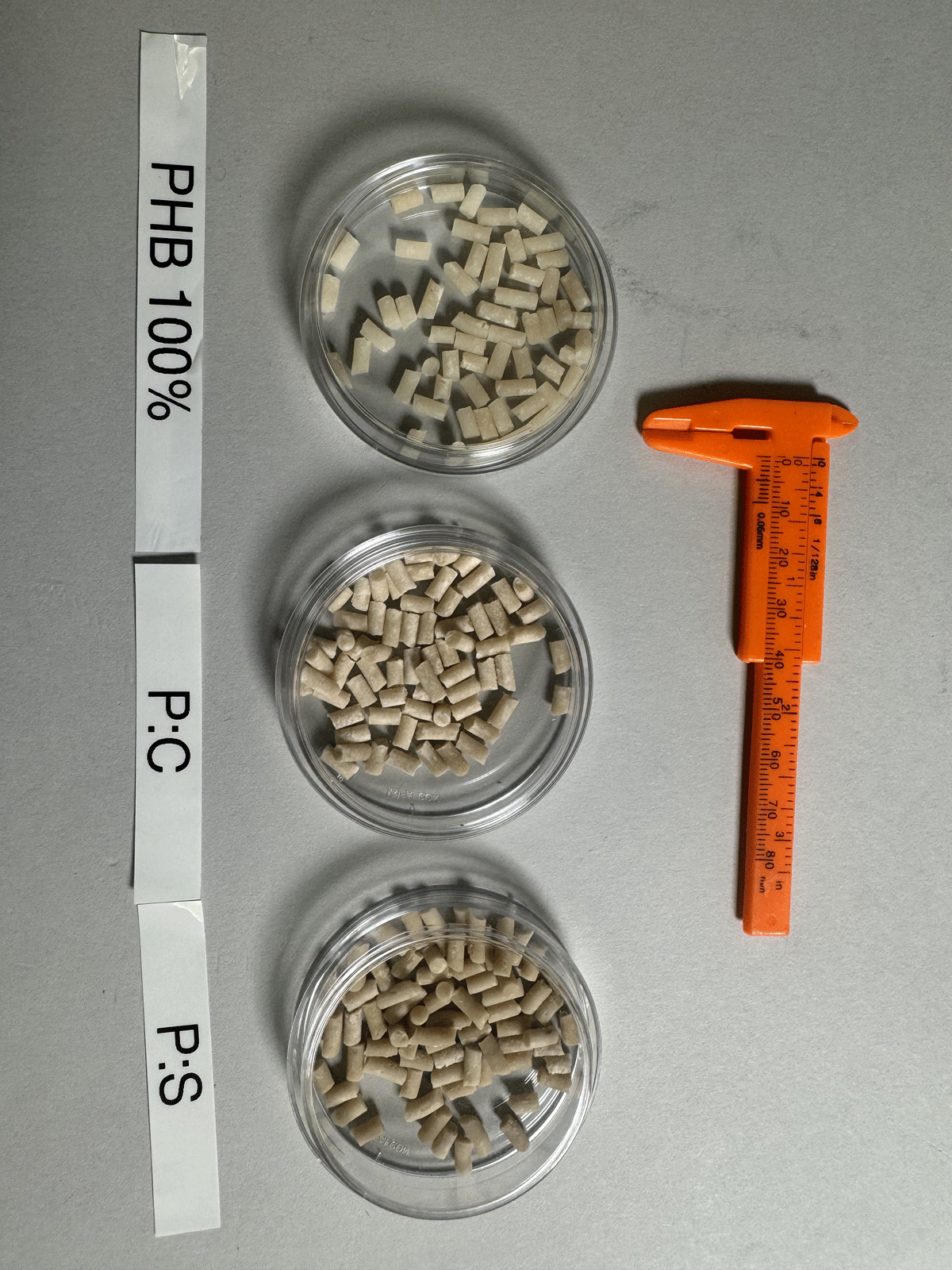
Figure 3
Biopellets of pure PHB, PHB/cellulose (P:C), and PHB/starch (P:S) blends produced for ammonia assimilation experiments. A caliper is shown for scale.
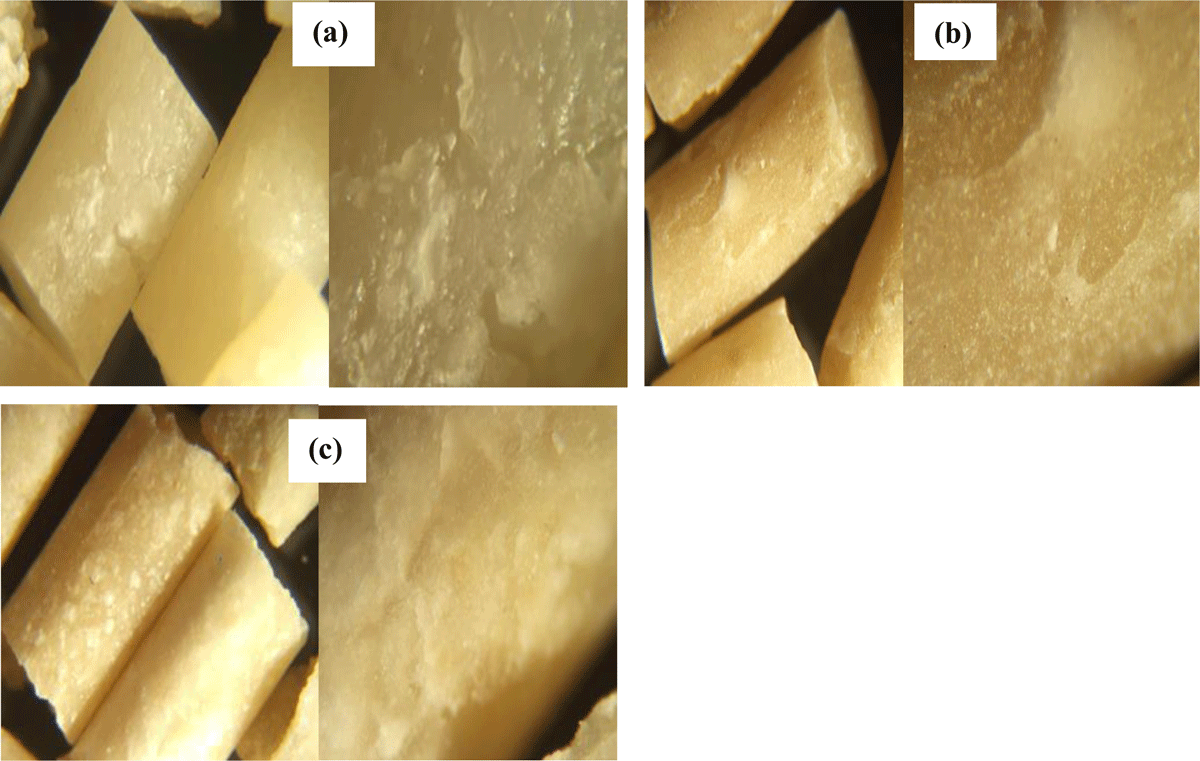
Figure 4
Image capture of prepared beads as observed under a light microscope with a magnification of 3.4 × 10: (a) pure PHB beads (b) PHB/cellulose beads (c) PHB/starch beads textures.
3.2 Continuous ammonia assimilation experiment
Ammonia conversion capacities were evaluated using seven identical upflow column bioreactors operated in parallel. Each bioreactor measured 305 mm in height with an inner diameter of 64 mm and was filled with 200 mL of beads: six columns with different PHB-based blend compositions (PHB/starch or PHB/cellulose) and one with pure PHB, which served as an experimental control. To prevent bead washout due to hydraulic flow, circular plastic screen plates (5 cm in diameter) with twelve 0.3 mm round holes each were fitted at both the bottom (inlet) and top (outlet) of the bioreactors. Two air manifolds were constructed to supply air for aerating the aquarium tanks (reservoirs) and backwashing the bio-beads in the reactors. Additionally, each bioreactor was equipped with an air injection port below the bed, designed for pneumatic backwashing of the beads during the experiment.
The experiments were carried out in a temperature-insulated laboratory room under controlled environmental conditions. All seven systems were operated simultaneously, and the entire experiment was replicated three times (n = 3). Each unit has one aquarium tank (reservoir) with a volume of 106 L, one bioreactor, a 3 cm aerator stone bubble diffuser connected to an air pump (air flow capacity: 3.3 LPM), and one submersible pump (maximum flow rate: 1817 LPH) (Figure 5). To ensure zero-order conditions, the experiment was conducted at high TAN concentrations, with reservoirs filled with synthetic wastewater containing 76.3 mg/L NH4Cl (~20 mg/L TAN) and 2.7 mg/L KH2PO4. Water was circulated from the reservoirs to the bioreactors through the inlet at the bottom of the bioreactors at a flow rate of 1.6 L/min, then returned to the reservoirs after treatment through the outlet at the top of the bioreactors. Continuous aeration was maintained in all reservoirs. An air impulse was automatically injected for 10 seconds into each bioreactor for pneumatic backwashing of the beads at 8-hour intervals. A 2.5 cm layer of plastic polyester fibers was used as a clarifier for biomass capture and removal as the treated water returned to the reservoir. There was no direct water discharge from the system. To compensate for evaporation, distilled water was added every two days.
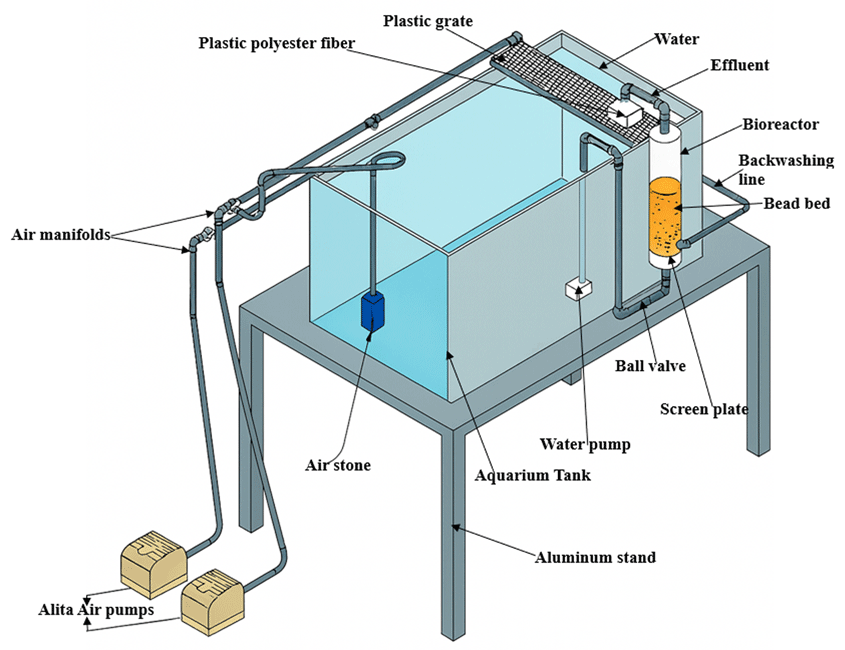
Figure 5
One of the seven systems configured for aerobic ammonia removal treatments.
Prior to each replicate run, fresh beads were loaded into the reactors, and the water reservoirs were treated with 50 mg/L chlorine to eliminate residual nitrifying bacteria. Chlorine was then neutralized using sodium thiosulfate. Subsequently, the reservoirs were filled with fresh synthetic wastewater, and initial condition samples were collected. The biofilter conversion rate was measured within five days to avoid nitrification interference by ammonia-oxidizing bacteria. Water parameters, including total ammonia nitrogen (TAN), chemical oxygen demand (COD), pH, temperature, and dissolved oxygen, were measured every 24 hours. Nitrite-N and nitrate-N were measured at the beginning and end of the experiment.
3.3 Water quality analysis
Water quality parameters were analyzed using standardized methods. A Hach DR3900 spectrophotometer (Loveland CO, USA) was used to measure TAN, nitrate-N, and nitrite-N concentrations, following Hach methods 10205, 10206, and 10207, respectively. Chemical oxygen demand (COD) was analyzed using Hach methods 10211 and 8000. Dissolved oxygen (DO) concentrations in the reservoirs were measured using a YSI self-stirring optical BOD/DO probe (Yellow Springs, OH) connected to a Pro20 DO meter. pH was monitored with a VIVOSUN digital pH meter (VIVOSUN LLC, Ontario, California, USA).
The volumetric TAN conversion rate (VTR), which reflects the conversion capacities of the beads, is one of the performance indicators of biofilters (Malone and Beecher, 2000) and was calculated using Equation 2 for recirculating systems.
Where: Vt is the volume of the water reservoir in L; K is the conversion factor of 0.001; T is the time interval over which the concentration was measured (day); TANi and TANf are initial and final ammonia concentrations in the water reservoir, respectively; Vb is the volume of the bead media (m3).
3.4 Statistical data analysis
All experimental data were statistically analyzed using OriginPro 2025 statistical software (OriginLab Corporation, Northampton, MA, USA). Data normality was assessed using the Shapiro–Wilk test, and homogeneity of variances across treatment groups was evaluated using Levene’s test. COD release and reduction in TAN concentrations in the water reservoirs, as well as volumetric TAN removal rates of the bead formulations, were compared using one-way analysis of variance (ANOVA), with statistical significance defined at p < 0.05. When the equal-variance and normality assumptions were satisfied, Tukey’s HSD test was applied for multiple pairwise comparisons. However, when normality and/or variance homogeneity assumptions were violated, Welch’s one-way ANOVA was employed, and post hoc comparisons were conducted using the Games–Howell test, which is robust to unequal variances and does not require homoscedasticity. All trials were triplicated and data reported as an average.
4. Results
4.1 TAN reduction, Nitrite-N, and Nitrate-N accumulation
Throughout the experiment, reservoir conditions across all treatments remained stable. Water temperature averaged 26.3 ± 0.4 °C under controlled laboratory conditions, and dissolved oxygen was sustained at 6.87 ± 1.25 mg/L through continuous aeration. The average pH was 7.72 ± 0.12.
As illustrated in Figures 5 and 6, total ammonia nitrogen (TAN) concentrations declined progressively across all treatments, reflecting sustained ammonia removal during the five-day operation. The TAN reduction followed a linear trend, as evidenced by high correlation coefficients (R² values) for PHB, PHB:C = 80:20, PHB:C = 70:30, PHB:C = 60:40, PHB:S = 80:20, PHB:S = 70:30, and PHB:S = 60:40, which were 0.979, 0.998, 0.999, 0.999, 0.998, 0.999, and 0.999, respectively. Notably, treatments containing 30% and 40% starch exhibited a more rapid TAN reduction within the first two days compared to other formulations. Analysis of final-day TAN concentrations revealed significant differences among treatments (p < 0.05). Post hoc analysis indicates that final-day TAN concentration (12.89 ± 0.54 mg/L) of PHB did not differ significantly from PHB:C 80:20 (12.37 ± 0.31 mg/L; p = 0.239) or PHB:C 70:30 (12.04 ± 0.14 mg/L; p = 0.104), exhibiting similar final-day TAN levels. PHB:C 60:40 (11.40 ± 0.1 mg/L) and PHB:S 80:20 (11.30 ± 0.53 mg/L) were statistically similar (p = 0.776) and exhibited significantly lower TAN levels than PHB (p = 0.037 and p = 0.022, respectively) and therefore constituted an intermediate-performance group. The greatest TAN reductions were observed in PHB:S 70:30 (8.24 ± 0.74 mg/L) and PHB:S 60:40 (6.06 ± 0.55 mg/L), which were statistically distinct from the other treatments (p ≤ 0.018). Additionally, nitrite and nitrate levels (Table 1) remained relatively low across all treatments throughout the testing period.
Table 1
Nitrite (NO2–N) and nitrate (NO3–N) concentrations at the end of the experiment remained very low across all PHB blend treatments (n = 3).
| TREATMENT | INITIAL NO2–N (mg/L) | FINAL NO2–-N (mg/L) AVG ± SD | INITIAL NO3–N (mg/L) | FINAL NO3–-N (mg/L) AVG ± SD |
|---|---|---|---|---|
| PHB | 0.0 | 0.015 ± 0.009a | 0.0 | 0.143 ± 0.046a |
| PHB:C = 80:20 | 0.0 | 0.018 ± 0.002a | 0.0 | 0.172 ± 0.026a |
| PHB:C = 70:30 | 0.0 | 0.015 ± 0.01a | 0.0 | 0.158 ± 0.012a |
| PHB:C = 60:40 | 0.0 | 0.016 ± 0.012a | 0.0 | 0.140 ± 0.022a |
| PHB:S = 80:20 | 0.0 | 0.009 ± 0.042a | 0.0 | 0.153 ± 0.037a |
| PHB:S = 70:30 | 0.0 | 0.030 ± 0.002b | 0.0 | 0.176 ± 0.013a |
| PHB:S = 60:40 | 0.0 | 0.051 ± 0.007c | 0.0 | 0.123 ± 0.061a |
[i] Different superscript letters within the same column indicate statistically significant differences (p < 0.05).
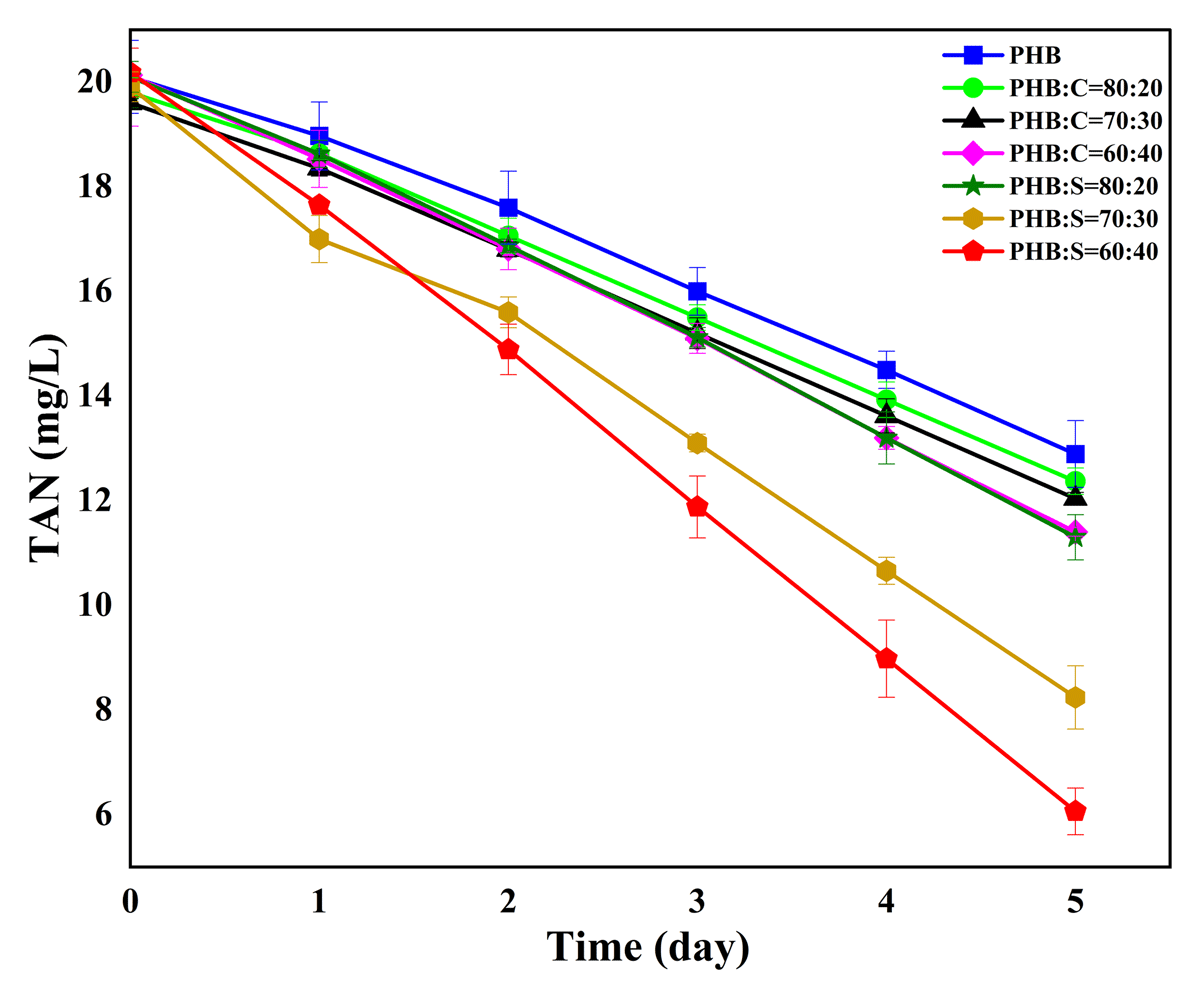
Figure 6
Decline in average TAN concentrations in reservoirs treated with PHB and blends containing varying ratios of PHB, starch (S), and cellulose (C).
4.2 Volumetric TAN Removal Rates (VTR) of the Blends
Apparent volumetric TAN removal rates (VTRs) (Figure 7) indicated that pure PHB (0.76 ± 0.11 kg TAN/m3 day) treatment exhibited no significant differences compared with PHB:C 80:20 (0.79 ± 0.09 kg TAN/m3day; p = 0.72) and PHB:C 70:30 (0.80 ± 0.08 kg TAN/m3 day; p = 0.55) confirming statistically comparable VTR performance among these formulations (p > 0.05). However, pure PHB was significantly lower than PHB:C 60:40 (0.93 ± 0.06 kg TAN/m3 day; p = 0.023). Within the PHB:C blend formations, no significant differences were observed between PHB:C 80:20 and PHB:C 70:30 (p = 0.81), whereas both treatments exhibited significantly lower VTRs than PHB:C 60:40 (p < 0.05), indicating improved performance at a higher cellulose content.
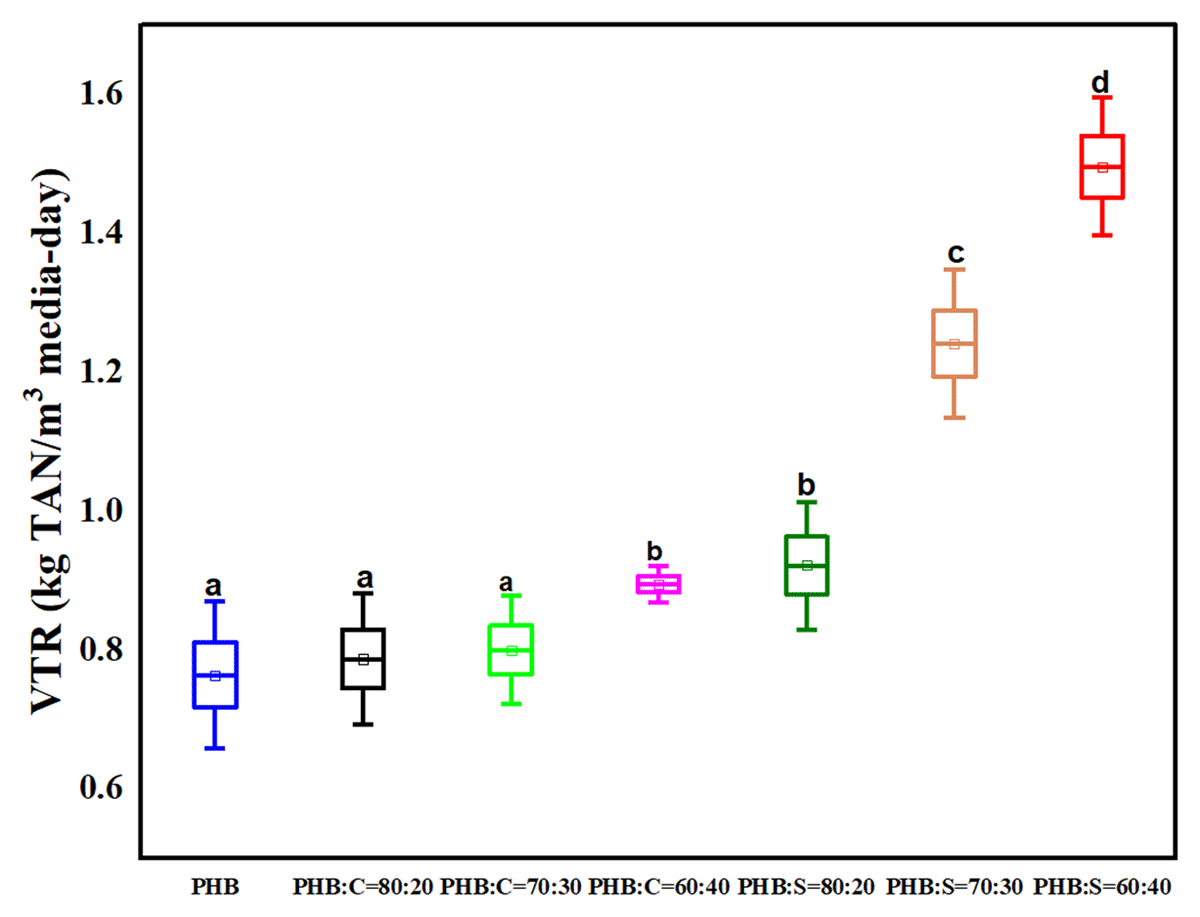
Figure 7
Volumetric TAN removal rates of PHB and PHB-blends. PHB:S blends exhibited higher VTRs compared to PHB and PHB:C blends, likely due to increased carbon release from starch solubility under aerobic conditions. Different letters on the boxes show statistical difference (p < 0.05).
On the other hand, within the PHB:S blend formulations, PHB:S 80:20 (0.92 ± 0.09 kg TAN/m3 day) was significantly lower than PHB:S 70:30 (1.24 ± 0.10 kg TAN/m3 day; p = 0.001) and PHB:S 60:40 (1.50 ± 0.10 kg TAN/m3 day; p = 0.001), while PHB:S 70:30 and PHB:S 60:40 also differed significantly (p = 0.0037), demonstrating a strong positive effect of increasing starch content on VTR. When directly comparing blend families at matched ratios, PHB:C 80:20 (0.79 ± 0.09) and PHB:S 80:20 (0.92 ± 0.09) were not significantly different (p = 0.050), whereas PHB:S 70:30 (1.24 ± 0.10) significantly exceeded PHB:C 70:30 (0.80 ± 0.08) (p = 0.001) and PHB:S 60:40 (1.50 ± 0.10) significantly exceeded PHB:C 60:40 (0.93 ± 0.06) (p = 0.001), indicating that increased starch loading produced a stronger enhancement in VTR than cellulose at comparable blend fractions. Overall, statistical analysis confirmed significant differences among bead formulations (p < 0.05), with statistical grouping indicating that PHB, PHB:C 80:20, and PHB:C 70:30 were statistically similar (group “a”), whereas PHB:C 60:40 and PHB:S 80:20 comprised an intermediate group (“b”). PHB:S 70:30 and PHB:S 60:40 formed distinct higher-performing groups (“c” and “d,” respectively) (Figure 7). Consistent with this pattern, Figure 8 shows a positive relationship (R² = 0.78) between apparent mean VTR and accumulated 5-day COD in the reservoirs, suggesting that increased carbon leaching contributed to the elevated ammonia removal rates. While this trend suggests that higher organic carbon availability may enhance ammonia removal, it is important to note that COD is not an independently controlled input variable but rather an outcome of bead dissolution.
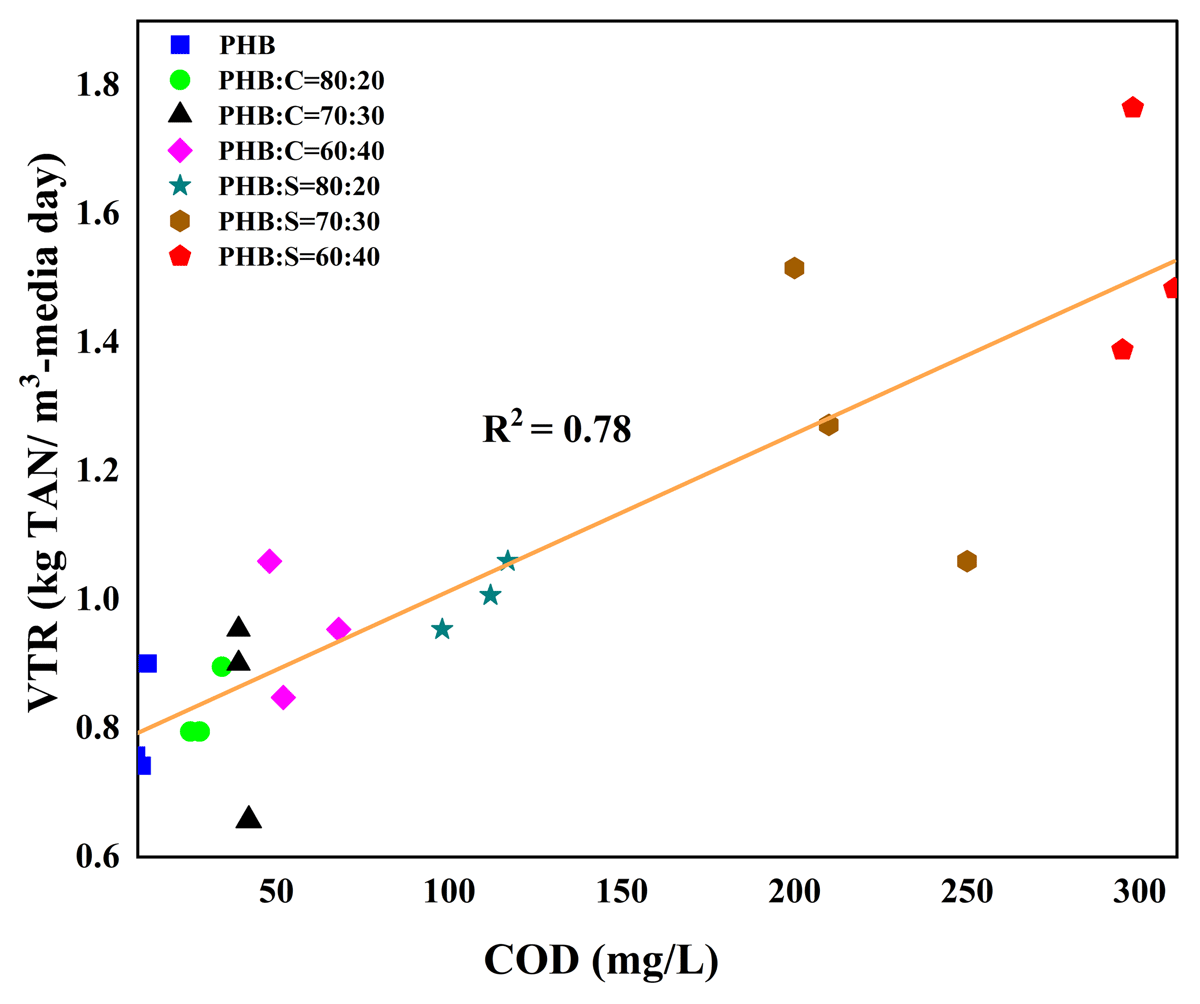
Figure 8
Linear regression analysis shows the relationship between COD accumulation and the volumetric TAN removal rate (VTR) across all PHB and PHB blends. COD release influenced ammonia conversion capacities (R² = 0.78).
4.3 COD performances of beads with different compositions
Figure 9 shows that COD accumulation in the water reservoirs differed markedly with PHB blend composition during the ammonia removal experiment. Pure PHB exhibited the lowest COD release, with a final concentration of 11.0 ± 1.7 mg/L. In the PHB:C blends, COD concentrations increased proportionally with cellulose content, exhibiting a moderate positive correlation (R² = 0.67, Figure 10), yielding final COD concentrations of 29.0 ± 4.7 mg/L, 41 ± 1.7 mg/L, and 56.0 ± 10.6 mg/L for PHB:C ratios of 80:20, 70:30, and 60:40, respectively. Pairwise comparisons against PHB indicated that PHB:C 80:20, PHB:C 70:30, and PHB:C 60:40 released significantly more COD than PHB, with p-values of 0.0139, 0.000235, and 0.016, respectively.
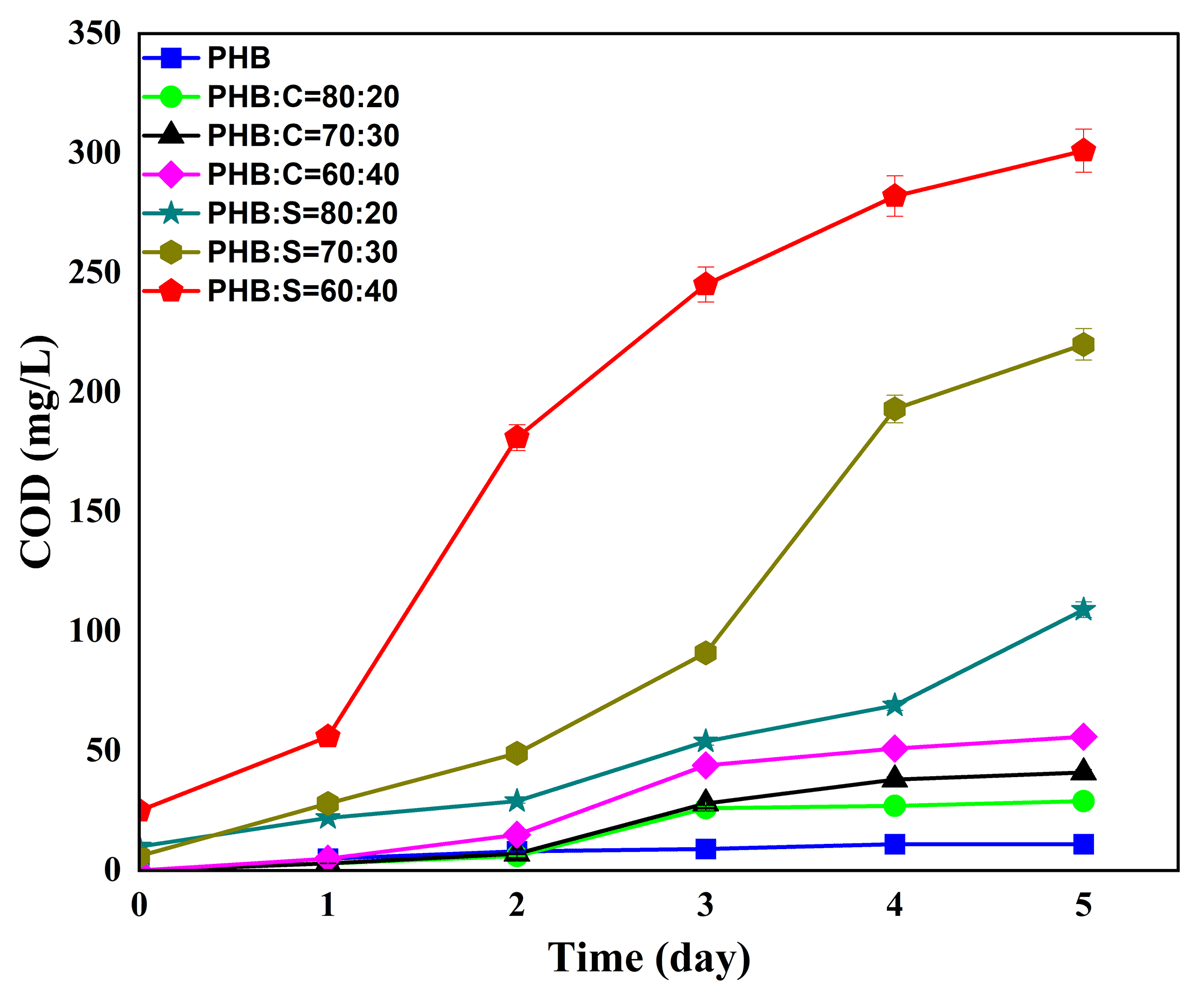
Figure 9
COD concentrations in the water reservoirs during the rate performance test for different PHB-based blend formulations. Results indicate that pure PHB is largely insoluble, whereas PHB:S blends exhibit high solubility and significant organic carbon release.
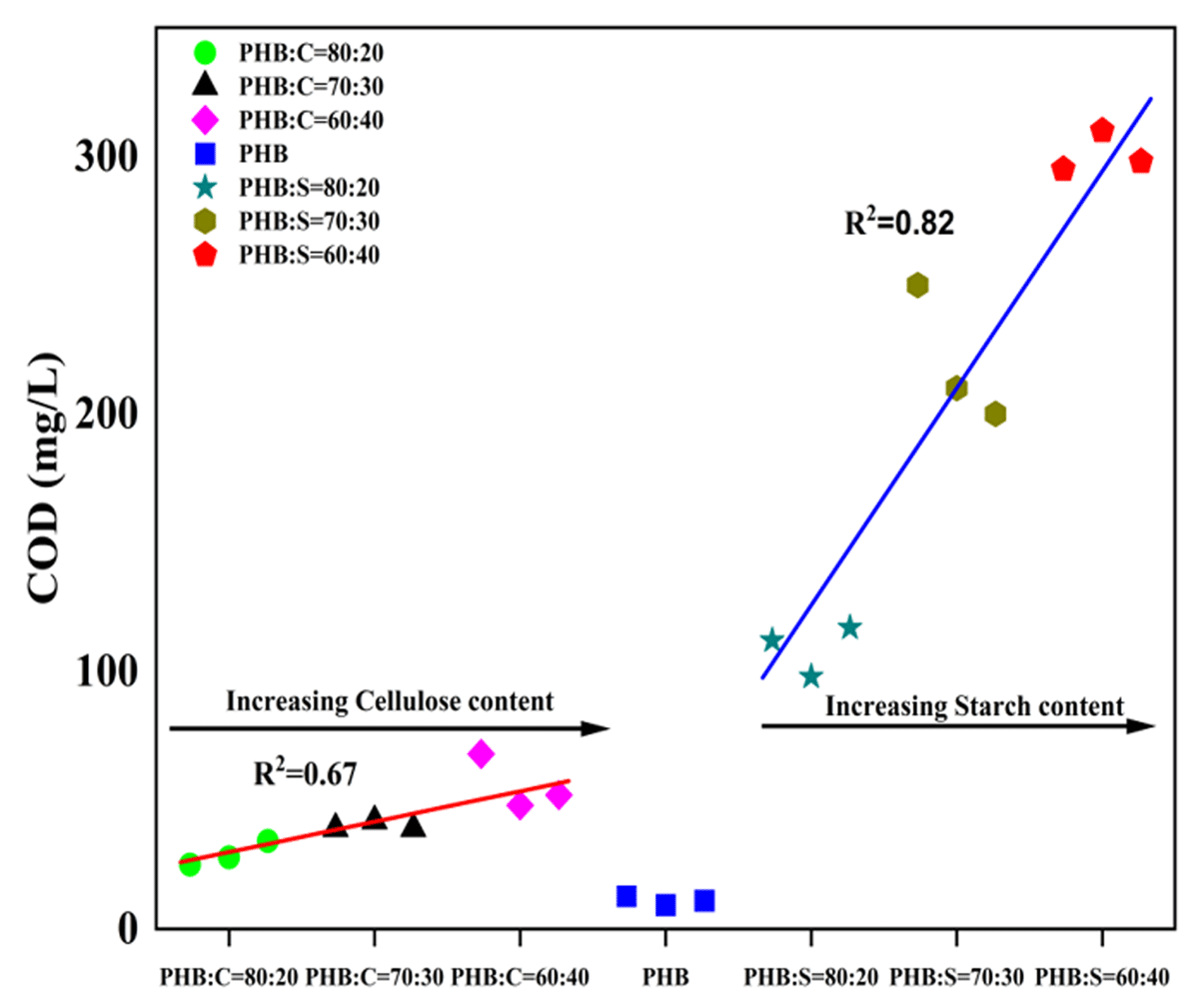
Figure 10
Effect of increasing cellulose and starch content in PHB-based blends on COD accumulation in the reservoirs. Cellulose addition showed a moderate increase in COD (R² = 0.67), while starch addition resulted in a sharp increase (R² = 0.82), indicating significantly higher organic carbon leaching.
Similarly, the PHB:S blends showed a strong positive correlation between starch content and COD release (R² = 0.82, Figure 10). As shown in Figure 9, PHB:S blends began leaching organic carbon immediately upon water flow through the bioreactors. The 30% starch blend released approximately twice the COD of the 20% blend, with final concentrations of 109.0 ± 9.8 mg/L and 220.0 ± 26.5 mg/L, respectively. The PHB:S = 60:40 blend recorded the highest COD accumulation of 301.0 ± 7.9 mg/L, which is approximately 5 times higher than the PHB:C = 60:40 blend and 27 times higher than pure PHB. Pairwise comparisons against pure PHB, showed that all PHB:S treatments produced significantly higher COD (PHB:S 80:20, p = 0.0111; PHB:S 70:30, p = 0.0206; PHB:S 60:40, p = 0.000599), confirming that increasing starch content substantially amplified carbon leaching into the reservoirs. At matched blend ratios, PHB:S blends generated significantly greater COD than PHB:C blends, with COD increases observed for 80:20 (p = 0.00706), 70:30 (p = 0.0277), and 60:40 (p = 7.77 × 10⁻⁵), demonstrating that starch-containing media imposed a substantially higher organic loading burden on the system compared with cellulose-containing formulations.
5. Discussion
5.1 TAN Removal and Organic Carbon Release Dynamics
The present study demonstrates that PHB, PHB/starch, and PHB/cellulose blends serve as effective solid-phase carbon substrates for aerobic ammonia removal. This conclusion is supported by the pronounced decline in total ammonia nitrogen (TAN) concentrations and the favorable volumetric TAN removal (VTR) values observed across all treatments within a five-day period. The addition of these substrates stimulated the proliferation of heterotrophic bacteria, which facilitated the rapid assimilation of ammonia into microbial biomass, consistent with reports on heterotrophic ammonia assimilation systems (Avnimelech 1999; Crab et al., 2012; Yogev & Gross 2019; Zhao et al., 2024). As expected in a purely aerobic heterotrophic system, residual concentrations of nitrite and nitrate remained consistently low across all treatments, indicating that ammonia removal was primarily governed by heterotrophic assimilatory pathways rather than nitrification or denitrification. These findings are consistent with those of (Fahandezhsadi 2014), who reported that ammonia depletion in PHB-based systems under aerobic conditions was predominantly driven by microbial biomass assimilation. Although biofloc systems fundamentally differ from fixed-film systems due to their reliance on suspended microbial flocs, previous studies have reported similarly low nitrate and nitrite accumulation when using PHB and other bioplastics, which is consistent with the observations in this trial (Luo et al., 2017; Liu et al., 2019; Kokkuar et al., 2021; de Jesus Gregersen & Pedersen 2023). This convergence across system types demonstrates that assimilatory ammonia removal via biodegradable polymers can occur under both fixed-film and suspended-growth conditions, provided sufficient carbon is available to support heterotrophic activity.
In comparison with previously reported PHB systems, the TAN removal rates of PHB observed in the present study were comparable to, but marginally higher than, those reported by (Fahandezhsadi 2014) (0.50–0.65 kg TAN/m3 day), likely reflecting minor differences in reactor configuration, aeration intensity, and biofilm development under the respective operating conditions. In contrast, the blended formulations evaluated in the present study exhibited higher TAN removal rates than the PHB performance reported by (Fahandezhsadi 2014), which may be partly attributed to the incorporation of cellulose and starch additives that provided more readily available carbon for bacterial utilization.
Consistent with these differences in TAN removal performance, distinct patterns of organic carbon release were observed among the tested substrates. Among all tested substrates, pure PHB beads exhibited the lowest levels of accumulated COD. This observation aligns with PHB’s known characteristics of hydrophobicity, limited solubility and slow hydrolytic degradation, which restrict organic carbon release into the surrounding water (Fu et al., 2022; de Jesus Gregersen & Pedersen 2023). Enzymatic cleavage of PHB molecules supports localized microbial assimilation of ammonia within the biofilm, minimizing carbon leakage into the bulk liquid. The COD values obtained in this study were lower than those reported by (Fahandezhsadi 2014) (15.14 ± 5.3 mg/L). The value observed here was approximately 27% lower, which potentially is due to the continuous biomass capture strategy applied in this system.
These differences in carbon release were particularly evident when comparing cellulose- and starch-based blends. Compared to PHB:S blends, PHB:C formulations exhibited superior water quality performance. Specifically, the accumulated COD levels for the 20%, 30%, and 40% cellulose blends were approximately 27%, 19%, and 19%, respectively, of those observed in their starch-based counterparts. While accumulated COD provides a useful proxy for the magnitude of organic release, it is important to recognize that COD represents total oxidizable organic matter and may include both readily biodegradable fractions and more slowly degradable or recalcitrant compounds derived from the polymer matrix. Nevertheless, the markedly lower COD observed in PHB:C treatments suggests substantially reduced organic contamination. This performance is attributed to cellulose’s intrinsic physicochemical features, high crystallinity, dense hydrogen bonding, and low water solubility (Etale et al., 2023). These properties not only limit the release of dissolved organics but also preserve structural integrity during thermal processing due to cellulose’s high decomposition temperature (~180°C) (D’Arienzo et al., 2024; Zhang et al., 2024). Such characteristics facilitate slow and controlled carbon release, favoring fixed-film biofilm activity and reducing risks of water quality deterioration in RAS environments.
In contrast to the PHB:C blends, PHB:S blends exhibited distinctly different TAN conversion dynamics. Within this group, the 20% starch blend recorded the lowest VTR, likely due to its comparatively limited solubility and reduced carbon availability. Conversely, the 40% starch formulation yielded the highest overall VTR, which may be attributed to enhanced heterotrophic activity on reactor surfaces and, potentially, within the bulk water, stimulated by increased organic carbon leaching. Compared with PHB:C formulations, which likely supported predominantly attached growth due to slower carbon release, the PHB:S blends may have promoted both attached and suspended microbial growth, thereby expanding the effective reactive volume for ammonia assimilation. This difference can be mechanistically linked to starch-specific material properties: starch’s amorphous, thermally gelatinized structure facilitates water penetration and solubilization (Yu et al., 2021; Ai & Jane 2015), while abundant hydroxyl functional groups enhance hydrogen bonding with water, increasing dissolution and bioavailability of leached organics (Wu et al., 2015). In contrast, the crystalline matrix of cellulose acts as a robust diffusion barrier, ensuring stability and limited solubility.
Furthermore, although suspended-growth systems can reduce nutrient mass-transfer limitations by increasing contact between substrates and microorganisms, microbial activity in recirculating systems is not limited to freely suspended cells. The extensive surface area provided by RAS plumbing, including pipes, fittings, pump housings, and tank walls, together with turbulent flow, promotes widespread biofilm formation throughout the system. Consequently, ammonia removal in suspended-growth systems reflects the combined activity of suspended microorganisms and surface-attached biofilms, facilitated by enhanced diffusion of nutrients and oxygen to attached communities, which likely played a key role in enhancing the TAN removal rates observed for the 30% and 40% starch blends. Nevertheless, fixed-film biofilter configurations are generally preferred in RAS operations because they are designed to localize and control microbial activity within a dedicated reactor, reducing uncontrolled growth in the culture environment and associated biosecurity risks (Malone & Pfeiffer 2006; Guerdat et al., 2010; Van Rijn 2013).
The performance differences among the blends are further supported by the morphological characteristics observed among the various blend types (Figure 4). Pure PHB beads were translucent, rigid, and rough due to crystallinity and hydrophobicity. PHB:C beads were pale-yellow and fibrous with high porosity, confirming cellulose incorporation and providing greater surface area for microbial colonization, which enhanced biofilm formation and carbon retention. PHB-starch beads exhibited a granular texture with visible starch granules, likely due to poor distribution. This structural inconsistency might have led to rapid starch solubilization, uncontrolled carbon release, and consequent excessive COD accumulation.
Furthermore, starch’s biodegradability supports its function as a short-term carbon source. However, rapid solubilization and elevated carbon release in PHB:S blends resulted in pronounced COD accumulation. Upon reactor startup, especially in high-starch formulations, immediate carbon leaching caused COD spikes and likely stimulated microbial proliferation beyond the reactor, resulting in biofloc formation that caused visible turbidity, discoloration, and occasional odor, indicating undesirable impacts on overall water quality. These responses reflect fundamental material–microbial interactions associated with starch-rich formulations.
5.2 Position Relative to Conventional Biofilters
In the present study, PHB-based media supported ammonia removal primarily through fixed-film heterotrophic assimilation rather than chemoautotrophic nitrification. This distinction is reflected in the rapid TAN reduction observed during start-up and the consistently low accumulation of nitrite and nitrate. Unlike nitrifying systems, in which ammonia is oxidized to nitrate using dissolved oxygen as the terminal electron acceptor and is accompanied by alkalinity consumption and pH sensitivity (Loyless & Malone 1997; Malone & Pfeiffer 2006), heterotrophic assimilation converts TAN directly into microbial biomass through organic carbon oxidation (Avnimelech 1999; Ebeling, Timmons & Bisogni 2006; De Schryver etal., 2008). Consequently, ammonia removal in the present system was less dependent on nitrifier establishment and was primarily governed by substrate availability and heterotrophic activity. In addition, the rapid acclimation observed here contrasts with the extended start-up periods and biomass sensitivity commonly reported for nitrifying fixed-film systems (Hagopian & Riley 1998; Malone & Beecher 2000; Golz et al., 1999) and is consistent with previous observations of PHB-supported heterotrophic systems (Fahandezhsadi 2014).
However, both technologies can be compared using VTR that links TAN removal capacity to the biofilter media volume. In conventional RAS biofiltration, nitrification-based systems employ inert media in fixed-film configurations, and reported VTRs vary widely with media type, oxygen delivery, TAN loading, temperature, and biofilm management. As summarized in Figure 11, early RAS nitrification studies commonly reported VTRs of about 0.07–0.68 kg TAN/m3day depending on reactor configuration and operating conditions (Westerman, Losordo 1996; Summerfelt & Wade 1997; Zhu & Chen 1999; Malone & Beecher 2000; Summerfelt et al., 2004; Van Gorder & Jug-Dujakovic 2005; Guerdat et al., 2010; Pfeiffer & Wills 2011); however, these values may underrepresent modern design performance for high-rate media and optimized hydraulics. For example, (Timmons & Summerfelt 1998) reported VTRs as high as 2.7 kg TAN/m3 day for warm-water fluidized sand beds. In addition, manufacturer-based sizing criteria compiled by Drennan et al. (2006) indicate that assumed design VTRs frequently fall within 0.46–1.50 kg/TAN/m–3 day, depending on media type and design philosophy. Similarly, the Aquaculture Systems Technologies (AST) approach defines a normalized conversion capacity (τ), such that VTR can be expressed as VTR = τ·TAN for low-substrate aquaculture regimes (Malone & Pfeiffer 2006; Malone & Perrin 2023). For broader wastewater operating ranges, nitrification design may transition toward Monod-type behavior, with conservative design VTRs commonly reported near 1.0–1.5 kg TAN/m3 day when safety factors are applied for enhanced bead media (Malone & Perrin 2023).
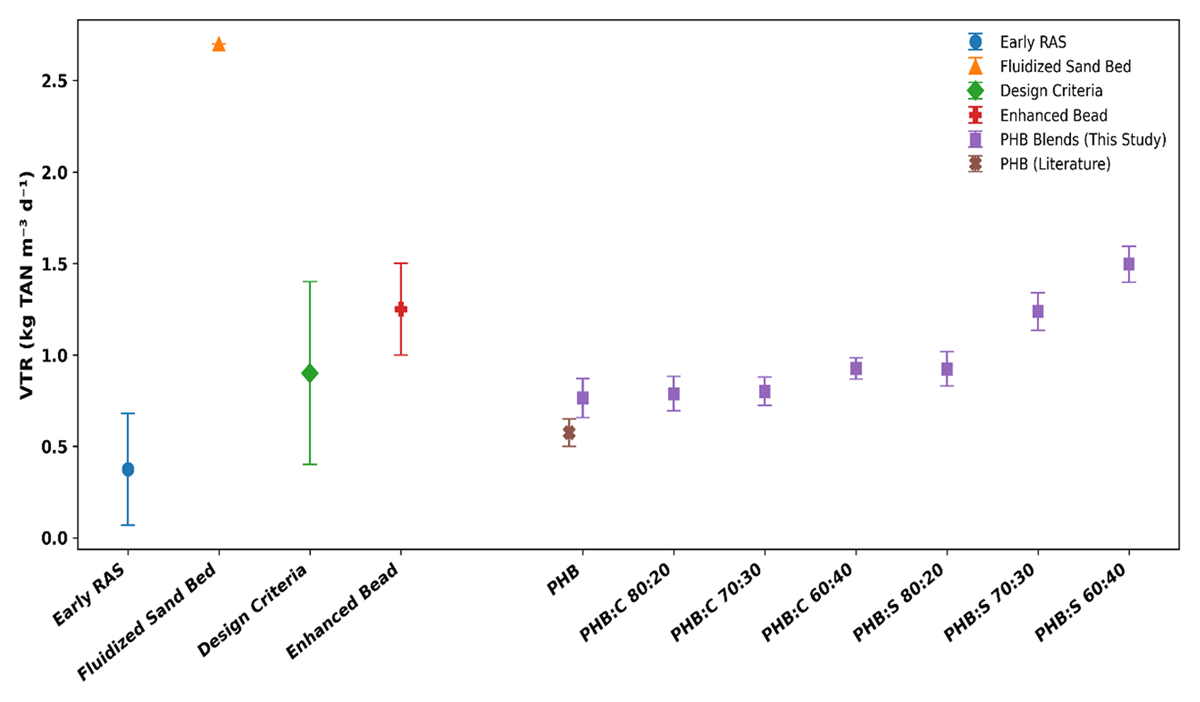
Figure 11
Volumetric TAN removal rates of conventional RAS biofilters reported in the literature and PHB-based blends investigated in this study. Error bars indicate reported ranges (literature) and standard deviations (experimental data).
Within this context, the PHB-based blends evaluated in this study achieved relatively high short-term VTRs during start-up, with PHB:C 60:40 reaching 0.93 ± 0.05 Kg TAN/m3 day and PHB:S 60:40 reaching 1.50 ± 0.09 Kg TAN/m3 day over the experimental period. These elevated rates were partly attributable to the relatively high influent TAN concentration (~20 mg L–¹) and the availability of biodegradable carbon released from the substrates, which together promoted rapid heterotrophic growth and assimilation. The combined supply of nitrogen and carbon favored accelerated biofilm development and enhanced short-term ammonia conversion. Notably, even under these high-loading and carbon-enriched conditions and within a short acclimation window, the observed VTRs were comparable to reported design and operational values for nitrifying biofilters. This indicates that solid-phase biodegradable carbon substrates can provide substantial initial TAN removal capacity via fixed-film heterotrophic pathways and may reduce reliance on liquid carbon dosing during early RAS operation. However, long-term implementation requires consideration of substrate longevity, COD release dynamics, biofilm stability, and compatibility with routine RAS biofilter management practices.
5.3 Economic evaluation of the blends
Cost is a critical consideration in the selection of solid-phase substrates for practical applications in RAS. Although PHB demonstrated superior performance in terms of both TAN removal and COD control, its relatively high market price (USD 9.75/kg; Chavez et al., 2022) remains a significant barrier to widespread adoption. Nonetheless, the findings of this study reinforce the role of pure PHB as a benchmark solid-phase carbon substrate for aerobic applications, particularly in RAS configurations that require stable water quality and minimal organic carbon accumulation.
Economically, starch presents a highly attractive alternative, with an average market price of USD 0.89/kg (selinawamucii.com). Its incorporation at 20%, 30%, and 40% by weight resulted in material cost reductions of 18.2%, 27.3%, and 36.3%, respectively, offering considerable cost savings (Table 2). However, the practical utility of starch in PHB:S blends was compromised by its high solubility in water, which led to undesirable leaching and water quality deterioration.
Table 2
Material cost reductions achieved by incorporating varying weight fractions of starch and cellulose into PHB.
| MEDIA | PHB REPLACEMENT (%) | MATERIAL COST REDUCTION (%) |
|---|---|---|
| PHB (100%) | — | 0 |
| PHB:S (80:20) | 20 | 18.2 |
| PHB:S (70:30) | 30 | 27.3 |
| PHB:S (60:40) | 40 | 36.3 |
| PHB:C (80:20) | 20 | 16.7 |
| PHB:C (70:30) | 30 | 25.1 |
| PHB:C (60:40) | 40 | 33.4 |
In contrast, PHB:C blends not only exhibited favorable performance metrics but also offered substantial economic advantages. With microcrystalline cellulose priced at approximately USD 1.60/kg (achemics.org), substituting 20%, 30%, and 40% of PHB with cellulose yielded material cost reductions of 16.7%, 25.1%, and 33.4%, respectively (Table 2). Additional cost reductions could be realized using low-cost, cellulose-rich agricultural by-products.
5.4 Practical Implications
Despite the negative impact of PHB:S blends on water quality, the solid carbon substrates evaluated in this study show promise to improve RAS performance under specific operational conditions. In newly established RAS systems, biofilter maturation may take several weeks, during which ammonia and nitrite levels can rise to toxic concentrations. PHB-based substrates, particularly those with slower carbon release profiles, can support the rapid growth of heterotrophic bacteria, which can enable direct ammonia assimilation and prevent acute toxicity. Additionally, these beads can serve as a temporary ammonia control mechanism during system failures, recovery phases, low-pH conditions, acclimation and shock-loading events, ensuring stable ammonia removal when nitrification is ineffective.
Overall, this study evaluated the volumetric TAN removal (VTR) performance of PHB, PHB-cellulose, and PHB-starch blends under aerobic conditions, an application largely underexplored in existing literature. While previous studies have primarily focused on PHB’s role in denitrification and biofloc systems (Boley, Muller & Haider 2000; Gutierrez-Wing et al., 2012; Luo et al., 2017; Chiama et al., 2025), this work extends its application to aerobic ammonia assimilation and fixed-film bioreactor design. The findings provide insights into the structural, chemical, and economic trade-offs among PHB-based formulations and establish a practical foundation for the development of cost-effective, water-stable carbon substrates tailored to the operational demands of RAS systems.
However, several limitations in the present study are acknowledged, along with key areas for future investigation. Although the blends were designed for use during biofilter start-up and system recovery phases, the five-day experimental duration limits the ability to draw definitive conclusions regarding long-term bead performance, particularly with respect to structural degradation and surface fouling. Because these substrates are intended for use during periods when nitrification is ineffective, such as during biofilter acclimation, extended testing periods of about 21 days (at 25°C) are essential to assess the durability and operational longevity of the best-performing PHB-based blends under sustained RAS conditions.
Furthermore, this study was conducted under controlled laboratory conditions using synthetic wastewater and was focused on screening solid-phase carbon substrates based on their ammonia conversion capacities during start-up. Based on the best-performing blend, future studies should evaluate its performance in pilot and full-scale recirculating aquaculture systems where biofilter acclimation is a critical operational challenge, including warmwater and temperate freshwater finfish systems (e.g., tilapia, catfish, and carp) as well as intensive crustacean production systems (e.g., shrimp and prawns).
While heterotrophic assimilation was inferred in this study based on nitrogen speciation and low nitrate and nitrite accumulation, microbial community composition was not directly characterized. In contrast, (Zhao et al., 2024) showed that different carbon sources selectively enriched distinct heterotrophic taxa (e.g., Corynebacterium, Pseudohoeflea, and Methylophaga) and promoted the expression of key ammonia assimilation genes (e.g., gdhA, glnA, and gltB), thereby directly linking carbon source selection to assimilation pathways and nitrogen recovery performance. Accordingly, future studies incorporating metagenomic sequencing or quantitative PCR targeting functional genes would enable more definitive evaluation of dominant microbial pathways and the extent of assimilation-driven TAN removal in PHB-based blends.
Increasing cellulose content beyond 40% in this study posed a significant formulation challenge. The weak interfacial compatibility between PHB and cellulose during melt blending led to phase separation and poor cohesion, undermining bead structural integrity. Future blend optimization should aim for higher cellulose loadings by incorporating biodegradable compatibilizers or plasticizers to improve PHB-cellulose interfacial compatibility. Similarly, starch formulations with reduced water solubility or controlled leaching could mitigate excessive COD release. Potential improvements may include low-temperature extrusion, pre-plasticization of starch prior to incorporation into PHB, and the application of biodegradable surface coatings, such as PHB-rich, polycaprolactone, or chitosan-based layers, to enhance structural integrity and reduce carbon solubilization.
Solid-phase carbon substrates inherently support microbial colonization through biofilm formation. However, excessive biofilm thickness can impede mass transfer of oxygen and ammonia, thereby limiting substrate utilization efficiency. Future studies should evaluate the impact of operational strategies, such as backwashing frequency adjusted as a function of daily feed loading and nitrogen input rates, on controlling biofilm thickness and maintaining effective substrate exposure. Optimizing this parameter may enhance TAN removal performance, sustain high VTRs, improve long-term reactor stability, and help determine substrate longevity.
6. Conclusions
This study demonstrates the feasibility of using PHB:C and PHB:S blends as solid-phase carbon substrates in a fixed-film system for aerobic ammonia removal, specifically tailored for application in RAS. The system’s performance was evaluated using VTR and COD as key indicators. While PHB:S blends exhibited the highest VTRs, their excessive carbon leaching and associated water quality issues limit their practical application. In contrast, PHB:C blends offered a more balanced solution by combining effective ammonia assimilation with lower COD release and reduced material costs, with the PHB:C 60:40 blend identified as the most favored formulation. Pure PHB, though effective, remains not cost-effective for large scale applications. Future work should focus on optimizing blend formulations, improving structural integrity at higher cellulose loadings, and evaluating long-term performance under operational RAS conditions.