
Introduction
Academic support programs are based on different models and are therefore known by different names, such as accelerated learning groups, embedded peer educators, Emerging Scholars, learning assistants, Peer-Assisted Learning, Peer-Led Team Learning, Supplemental Instruction-PASS, structured learning assistance, and video-based Supplemental Instruction (Arendale, 2023).
Having started at the University of Missouri-Kansas City (UMKC) in 1973, Supplemental Instruction Peer-Assisted Study Sessions (SI-PASS) has been widely adopted at higher education institutions around the world (Arendale, 1994). Since 1991, it has been recognized as one of the “exemplary education programs” by the U.S. Department of Education, and with the recognition of the program, supervision trainings have been given by UMKC and by Certified Trainers from other SI-PASS Regional Training Centers to support the expansion of the education practice in other countries (National Dissemination Study Group, 1991). It has been reported that as far as the European context is concerned, SI-PASS is being implemented in about 70 higher education institutions in nine countries with the facilitation of 5,000 student leaders who offer academic support for around 70,000 students annually (Malm & Bryngfors, 2019).
SI-PASS is an academic support program conducted with the cooperation of three critical stakeholders: SI-PASS supervisors, SI-PASS student leaders, and course instructors. SI-PASS supervisors implement the program, identify high-risk SI-PASS courses, recruit and train student leaders, and oversee and evaluate the outcome of the program (Dawson et al., 2014). SI-PASS student leaders are peer facilitators who aim to assist all students in the class with an emphasis on serving the low achievers in high-risk courses (Malm et al., 2012). Arendale (1994) contends that high-risk courses share some common characteristics, such as heavy weekly readings, occasional exams focusing on higher levels of Bloom’s taxonomy, voluntary attendance, and large classes resulting in limited teacher-student and student-student interaction.
Course instructors who teach the high-risk courses monitor to see if SI-PASS student leaders are competent in course content. SI-PASS student leaders meet with the course instructors on a weekly basis to go over the activities they plan to use in the upcoming SI-PASS sessions. SI-PASS sessions are carried out with the facilitation of SI-PASS student leaders who completed the course not long ago and with a good grade. In SI-PASS sessions that typically last for an hour and a half, SI-PASS student leaders design activities, such as problem-solving exercises or mock exams, to facilitate learning and initiate guided discussions around the content covered weekly in SI-PASS courses (Dawson et al., 2014). Typical session activities may also include worksheets completed individually and in groups, peer instruction, trivia-style games, and practice tests (Chambers-Turner, 2017). While SI-PASS student leaders are selected for being academically successful students who might prove competent in designing and carrying out collaborative learning activities, they must also demonstrate effective interpersonal and study skills and set a good example for participating students.
SI-PASS Student Leader Training
Effective student leader training has always been key to successful implementation of SI-PASS. As one of the indispensable stakeholders involved in SI-PASS, student leaders are responsible for completing tasks such as undergoing SI-PASS leader training before and during the semester, attending the supported SI-PASS course to introduce themselves, conducting SI-PASS sessions, providing course instructors with feedback on challenges students are facing, integrating course content and learning strategies in meaningful ways, and collecting data through attendance sheets and questionnaires to be used in SI-PASS program evaluation (Middle Tennessee State University Supplemental Instruction Program, 2014).
SI-PASS student leaders are also expected to fulfill several critical responsibilities, such as attending high-risk courses, clarifying common misconceptions held by low-achieving students, sharing their own knowledge and experience about course objectives, generating interaction among participants, and creating a class environment conducive to collaborative learning (Australasian Centre for PASS, 2010). To perform such duties, they receive extensive leader training (Malm et al., 2022).
In the early years of the program, student leader training primarily included group facilitation practices and collaborative learning techniques, such as think-pair-share, jigsaw, and group survey (Bruffee, 1994). SI-PASS student leaders were also trained to use icebreaker activities, such as speed-dating, paper tower, or human bingo. Training in nondirective leadership skills, group process skills, and learning skills was also provided as part of student leader training (Congos & Schoeps, 1993). It was also emphasized that—within the program—SI-PASS student leaders should position themselves as facilitators, not as instructors; therefore, facilitation techniques were widely practiced during trainings. Rather than teaching, the main purpose of student leaders in SI-PASS sessions was to provide guidance that would foster active discussion of relevant topics, enabling sharing of information and knowledge among peers by redirecting questions asked to the leader back to the group and by helping participants develop problem-solving skills and efficiently process the relevant topics. Student leaders were expected to go to the sessions well-prepared to assist participating students during the sessions, so they prepared problem-solving exercises, quizzes, or mock exams to facilitate learning (Dawson et al., 2014). Early approaches such as these laid the foundation for developing an effective SI-PASS student leader training program.
Trainings covering many of the aspects discussed above were presented through workshops emphasizing active learning (Zaritsky & Toce, 2006). Prior to the semester, intensive face-to-face workshops lasting for two to three days introduced potential SI-PASS student leaders to how SI-PASS worked, focusing on the differences between SI-PASS and other academic support programs.
Online SI-PASS Student Leader Training
Training approaches for SI-PASS student leaders have undergone a radical transformation in the past decade as online versions of SI-PASS expanded (McMaster & Fuchs, 2016). In addition to in-person trainings, some institutions now prefer online, or video-enhanced student leader training for reasons such as the advancements in educational technology and the onset of the COVID-19 pandemic.
A review of literature from the past decade on training SI-PASS student leaders shows certain requirements—such as institutional assistance and support, training in online meeting software and course learning management systems, and virtual engagement and interaction activities—must be met for developing quality online student leader training programs (Arendale, 2020).
In recent years, learning management systems, video conferencing tools, and online learning platforms became staples of SI-PASS student leader training (Parton & Noad, 2013). In addition to training on virtual learning environments and course management systems, SI-PASS student leaders also received training on how to use various instructional technologies such as Google Forms, Mentimeter, and other classroom response systems (Walsh, 2021). To accommodate the changing landscape of higher education, it became important to train SI-PASS student leaders to utilize digital resources and engage students in not only face-to-face but also online modalities. Thus, scholars such as Walsh (2021) now discuss their plans to offer SI-PASS leader training in a flipped format, mixing synchronous, asynchronous, and face-to-face activities.
The advent of COVID-19 is another factor forcing institutions to offer online SI-PASS sessions and train student leaders online. In one such example, student leaders were prepared through weekly online seminars facilitated by learning and content specialists (Dreyfuss et al., 2021). Seminars focused on facilitation and leadership skills as well as learning theories that would help student leaders effectively adapt to various learning environments. SI-PASS student leaders must learn how to host remote sessions and utilize online tools, such as Padlet, Kahoot, or Jamboard, to encourage active learning and engagement during online sessions (Hargreaves et al., 2022).
In their study, Carter-Hanson and Gadbury-Amyot (2016) experimented with implementing SI-PASS sessions online. In their student leader training program, they asked student leaders to complete an online training session to familiarize themselves with the web conferencing tool.
A hyflex for-credit course offered at the University of Toronto Mississauga called “Supplemental Instruction in Higher Education” focuses on virtual pedagogies and experiences of student leaders. Student leaders taking the course learn about the theory and practices in SI-PASS, develop an understanding of how to manage crises, apply professional facilitation skills, experience the use of educational technology, and analyze case studies through problem-solving (Coulson & Grimaldi, 2021). Other customized SI-PASS programs have started to explore how online learners could be supported through peer-assisted learning (Crowley-Cyr & Hevers, 2021) and how SI-PASS was perceived by learners during the transition to remote education (Eklund et al., 2021).
To create a more equitable learning environment aligned with Sustainable Development Goal 4: Quality Education, the University of Derby initiated an online SI-PASS scheme and trained student leaders online (Rawson & Rhodes, 2022). In their online SI-PASS pilot scheme, Rawson and Rhodes (2022) found out that awarding SI-PASS student leaders digital badges, promoting experienced student leaders to consulting positions, and student leaders’ being acknowledged by academic staff as important figures in the SI-PASS program would attract more student leaders and add to the value of the program.
It has also been noted that conducting SI-PASS sessions virtually brought about challenges in terms of teaching and organizing group discussions online, and it reduced student engagement (Thirukumar et al., 2021). Participation in SI-PASS sessions is reported to be a major challenge in online teaching modalities (Phelan et al., 2022). These issues need to be addressed when future SI-PASS student leaders are trained to teach remotely.
SI-PASS at University T
University T (pseudonym) was established in 2009 in the capital city of Türkiye as a foundation university. University T is funded by a Turkish non-governmental association that aims to enable students who come from financially disadvantaged families to receive quality education in its K–12 schools located throughout the country.
As of the 2021–2022 academic year, University T accommodates approximately 4,400 students in five faculties: the faculty of education, engineering, arts and sciences, economics and administrative sciences, and architecture and design. There are 478 faculty members and 103 administrative staff employed at the university. The ratio of students per academic staff is 14, and the ratio of students per administrative staff is 43. The medium of instruction in all faculties is English, which presents a considerable challenge for most of the students whose proficiency in English is quite low upon their admission to the university. English Language School provides intensive language instruction to nearly 80% of the incoming students in beginner, elementary, pre-intermediate, and intermediate levels. Students who successfully complete the one-year intensive language training are eligible to take the English proficiency exam and proceed to their undergraduate studies. In their first and second years, students take 10 common courses from the core curriculum regardless of the faculty they enroll in. The content in these courses ranges from adaptation to university life, digital competencies, and service learning to humanities, social and political studies, and scientific thinking. Undergraduate students are provided academic support via their faculties and the Center for Teaching and Learning (CTL). For courses with low pass rates, tutor support is provided at the discretion of the instructor of the course. Tutors are picked by the instructor and do not receive any standardized training. Usually, one tutor is assigned for one course, and attendance at tutoring sessions is voluntary.
SI-PASS was introduced at University T in the spring semester of the 2021–22 academic year with the incentive of the CTL. Staff working at the center received supervisor training offered by the European Centre for SI-PASS in Lund in November 2021. The program was initiated with three pilot courses. Those courses were picked based on the pass-fail ratio of the students registered for courses in the previous semesters. All three courses were compulsory first-year courses; English for Academic Purposes, Economics I, and Physics I. SI-PASS was introduced to the instructors of the courses, and they were asked to suggest potential SI-PASS student leaders based on their grades and interpersonal skills. Students were contacted and one-to-one interviews were held with the volunteers. Six student leaders were picked (two for each pilot course) and trained via online training modules designed by the SI-PASS supervisor and other experts. Student leaders held in-person and online SI-PASS sessions for 12 weeks. Each student leader offered a two-hour SI-PASS session weekly. A total of 144 hours of SI-PASS sessions were offered throughout the pilot program, and 14 students attended the sessions in total.
SI-PASS Student Leader Training Course at University T
The SI-PASS student leader training course was designed to train leaders who would take part in the pilot SI-PASS program to be implemented in the spring semester of 2022 at University T. The course was designed in coordination with three field experts: one in the field of curriculum and instruction, one in educational technology, and one in guidance and psychological counseling. It comprised three modules focusing on (1) what SI-PASS is, (2) structuring SI-PASS sessions, and (3) leader techniques. Each module included videos prepared by supervisors, short articles, reflective forum posts, short activities, and an end-of-module quiz. In addition, resources were shared to help student leaders facilitate SI-PASS sessions in terms of agenda setting, collaborative learning techniques, icebreakers, study skills, session evaluation strategies, and more. (See Appendix A for a detailed discussion of the course).
Student leaders were given one week to complete the modules. At the end of each module, synchronous meetings were held with all the leaders and the supervisor. Questions coming from the student leaders were addressed, and feedback about the content of the modules were received during those meetings.
Purpose of the Study
Student leaders in SI-PASS are often trained in face-to-face settings, and research regarding leader training online is not common yet. This research was designed to investigate the implementation of an online student leader training course developed and conducted in a Turkish foundation university setting.
In this study, the researcher explored participants’ evaluation of the online SI-PASS student leader training course taken by six student leaders based on course content, presentation of content, pace and length, course materials, assessment, course instructor, technical support offered, and course workload.
Research Methodology
Design
The study was designed as a mixed methods study in which the online SI-PASS student leader training course was evaluated through quantitative and qualitative data collected from six student leaders taking the online training course. The study was based on a sequential explanatory design approach in which quantitative data preceded qualitative data (Creswell et al., 2003).
Participants
All SI-PASS student leaders (n = 6) participated in the training course. As indicated in Table 1, of the participants, 66.7% were female (n = 4), and 33.3% were male (n = 2). Two participants majored in the faculty of economics and administrative sciences (33.3%), two in the faculty of engineering (33.3%), one in the faculty of education (16.7%), and one in the faculty of arts and sciences (16.7%). First-year college students made up 66.7% of the participants (n = 4), while one was a second-year (16.7%), and one was a third-year (16.7%). None of the participants had taken a leadership role before; namely, they were not involved in positions that required leadership roles such as tutoring or mentoring students.
Data Collection and Analysis
Data was collected through a course evaluation questionnaire and one-to-one interviews. The draft questionnaire was initially prepared by the researcher. Before the items were finalized, they were evaluated by three experts: one in the field of curriculum and instruction, one in educational technology, and one in English language teaching. It was also piloted with a student through cognitive interviewing, a method used for spotting potential problems with survey questions and making necessary modifications so that questions could produce the intended information (Beatty & Willis, 2007). Changes were recommended on the draft questionnaire, and revisions were made by the researcher.
The final version of the questionnaire was made up of three sections. Section 1 included questions exploring the profile of the participants. In Section 2, there were 15 items asking for participants’ evaluation of the course on a 5-point Likert scale (1: highly dissatisfied, 5: highly satisfied). Section 3 included six open-ended questions through which participants could comment on the strengths and weaknesses of the course. Survey data was analyzed through frequencies and percentages.
Qualitative data was collected through one-to-one interviews. Draft interview questions were prepared by the researcher after data collected via questionnaire was analyzed. Training course instructors provided feedback on draft questions before the interview protocol was finalized. There were nine questions in the interview designed to investigate participants’ in-depth evaluations of the course. Interviews were held online and recorded with participants’ consent. They lasted nearly 45 minutes and were conducted in Turkish.
Qualitative data was thematically analyzed by two experts. One of them was the researcher, and the other was one of the course instructors. They both independently coded, developed themes, and selected “exemplars” so that quotations would represent most of the responses (Corbin & Strauss, 2008). Interviews were transcribed and coded, guided by literature review and research questions. Similar codes were categorized into themes. Themes were explained and exemplified through representative quotations (Bogdan & Biklen, 2007). Quotations were translated from Turkish to English. Expert opinion was sought to make sure that the translated version of the quotations reflected the original meaning in the source text.
Results
Quantitative Results
Results revealed that participants were mostly content with the way the course was designed and delivered. As indicated in Table 2, the highest-ranking items in the questionnaire were items 10 and 13. Participants were of the opinion that “instructors were available via email or online discussion when needed” (M = 4.83, SD = 0.41). They also agreed that “weekly synchronous meetings were effective” (M = 4.83, SD = 0.41). Participants also reported that “course content was consistent with the module aims” (M = 4.67, SD = 0.52), that “presentation of the knowledge, skills, and concepts was sufficient” (M = 4.67, SD = 0.52), and “of good quality” (M = 4.67, SD = 0.52). They agreed that “videos prepared by the instructors were informative and easy to understand” (M = 4.67, SD = 0.52), and “technical support was available” (M = 4.67, SD = 0.52).
Table 2
Mode, Median, Mean, and Standard Deviation of Questionnaire Items.
| ITEM | MODE | MEDIAN | MEAN | SD |
|---|---|---|---|---|
| 1. The course content was consistent with the module aims. | 5.0 | 5.0 | 4.67 | 0.52 |
| 2. The content was presented in a clear and logical way. | 4.0 | 4.5 | 4.50 | 0.55 |
| 3. The presentation of the knowledge, skills, and concepts (through PowerPoints, videos, and PDF materials, etc.) was sufficient. | 5.0 | 5.0 | 4.67 | 0.52 |
| 4. The presentation of the knowledge, skills, and concepts (through PowerPoints, videos, and PDF materials, etc.) was of good quality. | 5.0 | 5.0 | 4.67 | 0.52 |
| 5. The pace and length of the modules was manageable. | 5.0 | 2.5 | 3.00 | 1.67 |
| 6. The amount of material covered in modules was adequate. | 4.0 | 4.0 | 4.33 | 0.52 |
| 7. The number of assignments, quizzes, and forum posts was appropriate. | 2.0 | 3.0 | 3.17 | 1.33 |
| 8. The assignments, quizzes, and forum posts were relevant with the course content. | 4.0 | 4.5 | 4.50 | 0.55 |
| 9. The videos prepared by the instructors were informative and easy to understand. | 5.0 | 5.0 | 4.67 | 0.52 |
| 10. The instructors were available via email or online discussion when needed. | 5.0 | 5.0 | 4.83 | 0.41 |
| 11. There was an opportunity in the course to interact with and learn from other PASS leaders (e.g., via asynchronous forum posts and during weekly discussions held after each module). | 5.0 | 5.0 | 4.50 | 0.84 |
| 12. Course workload (e.g., completion of assignments, videos, PDF files, forum posts, quizzes, etc.) was manageable. | 5.0 | 4.5 | 3.83 | 1.47 |
| 13. The weekly synchronous meetings were effective. | 5.0 | 5.0 | 4.83 | 0.41 |
| 14. Technical support was available. | 5.0 | 5.0 | 4.67 | 0.52 |
| 15. After completing this course, I feel confident about being a PASS leader. | 4.0 | 4.0 | 4.17 | 0.75 |
The lowest-ranking items were items 5 and 7. Participants were undecided whether “the pace and length of the modules was manageable” (M = 3.00, SD = 1.67), and whether “the number of assignments, quizzes, and forum posts was appropriate” (M = 3.17, SD = 1.33). They also did not completely agree that “course workload was manageable” (M = 3.83, SD = 1.47).
Qualitative Results
What Do You Remember from the Training?
Results showed that the main takeaways from the SI-PASS student leader training were in line with course objectives. Student leaders were asked to share what they most remembered from the training. Their responses are displayed in Figure 1. Student leaders reported that they remembered how to lead an SI-PASS session (f = 6), what SI-PASS is (f = 4), how to lead a discussion (f = 4), how to redirect questions (f = 3), how to increase interaction among SI-PASS participants (f = 3), Bloom’s taxonomy (f = 3), icebreakers (f = 3), wait time (f = 2), collaborative learning techniques (f = 2), how to get feedback from SI-PASS participants (f = 1), and student leader roles and responsibilities (f = 1).
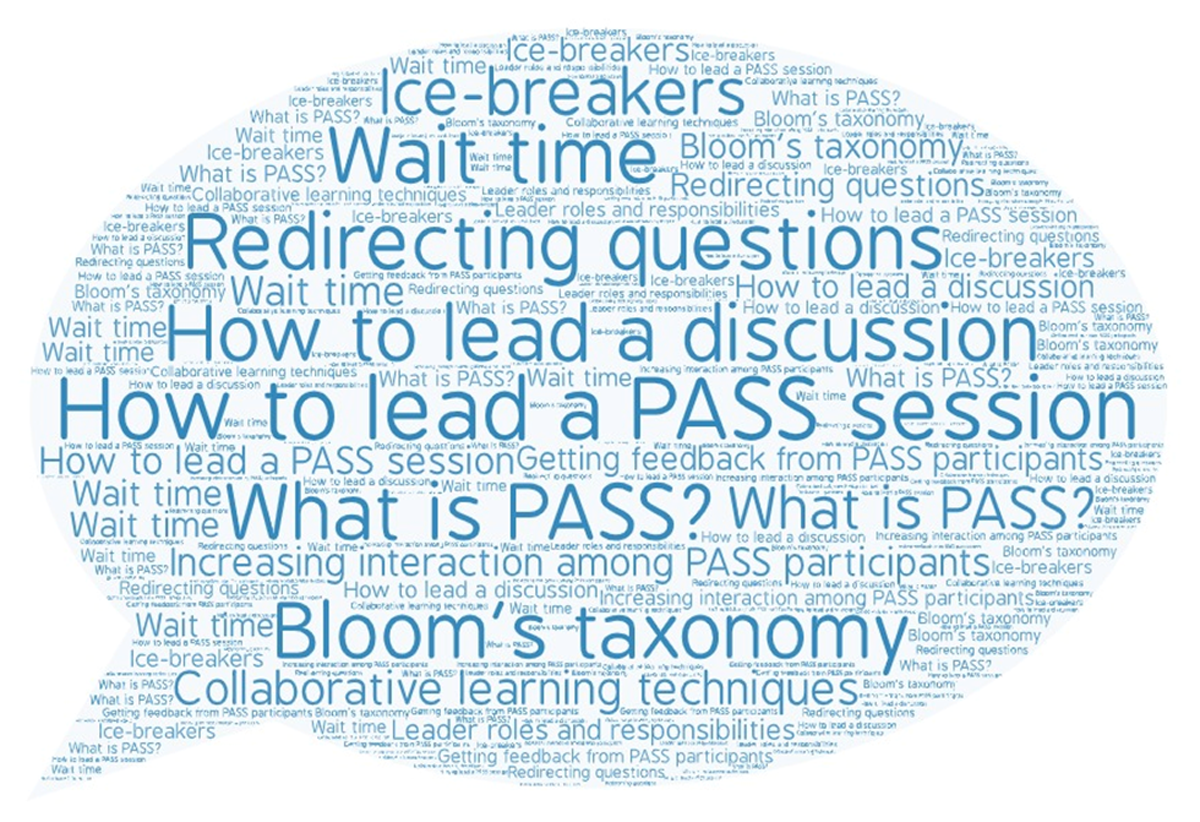
Figure 1
Responses to “What Do You Remember From the Training?”
Positive Aspects of the Training
Getting Prepared for Being an SI-PASS Student Leader
Results showed that student leaders thought the course helped them get prepared for being an SI-PASS leader when the objectives, content, and materials offered in the modules were considered (f = 6).
I had no previous experience as a mentor or leader. But having finished the training course, I felt quite ready for taking responsibility for organizing an SI-PASS session. The modules in the course made me feel confident that I could handle a group of 10 students in a session as a novice SI-PASS student leader. That’s quite an accomplishment for me. (P2)
The modules were designed in a way that SI-PASS student leaders could easily understand what the program was about, what was expected from a leader, and how we could start, continue, and finish a session. I was satisfied with the course content in that sense. I also felt excited to apply the things I learned in the course. I felt prepared in theory after I completed all the modules. (P4)
Course Content
Participants expressed their satisfaction with the content offered in the SI-PASS student leader training course (f = 5). They were provided with short videos explaining the topic of each module in a maximum of 20 minutes. Videos were also accompanied with PowerPoint files used by the instructors, and additional reading materials in PDF format were also provided. One of the participants pointed out how pleased she was with the content by saying,
I found the videos, PPTs, and PDFs shared with us in each module very instructive. Thanks to these materials, I could easily understand the fundamentals of the SI-PASS program and what I should be doing in a session I was expected to organize during the semester. (P1)
Participant 5 stated:
The content was comprehensive, yet easy to understand. The instructors presented the topics in a simple way, and they also were generous enough to share with us several additional materials such as the PPTs they used and extra reading materials we may refer to in future.
Reinforcement
Participants were asked to respond to open-ended questions in 100–150 words at the end of each module, and they shared their responses in forum posts. Results revealed that this played a facilitative role in the learning process (f = 4). Quizzes were also reported to be beneficial in letting participants see how far they progressed through instant feedback (f = 3).
Another thing that helped me learn better was the way the written assignments were designed. While trying to write them, I could refer to the things discussed in the module, reflecting on what I learned and what I found to be confusing. I liked that the assignments were in the essay format rather than multiple choice, or true/false questions. (P5)
Tasks were not designed for rote learning. They made us think, come up with solutions, and question module content. (P3)
Quizzes summarized important course content in 5 to 10 questions. I often used them to review module content. I feel they were also good at telling me how much I learned or what I should pay more attention to. (P6)
Synchronous Meetings
Another strength of the course repeatedly indicated by participants was the synchronous meetings held at the end of each module. Participants remarked that these meetings enabled them to create a group atmosphere, bringing human touch to remote learning (f = 6).
Seeing the instructors alive in the meetings was very motivating. Sharing end-of-module reflections with other student leaders and learning from each other was invaluable, and I also found listening to how others felt quite relieving. (P1)
To me, those meetings were critical, and I would strongly recommend that they be the staples of the training program. Seeing everybody taking the course in one place was great. I could openly share what was in my mind with the other student leaders, and I learned from their questions and comments. That’s why I liked the meetings most. (P4)
Interaction
Participants noted that the training program included opportunities for leader-leader interaction as well as instructor-leader interaction (f = 3).
Instructors responded to our emails quickly, and they also gave constructive feedback on our assignments. I felt they were approachable, easy to communicate, and were there to help me when I was in need. (P2)
I could read the responses of other student leaders in forum posts. We could comment on each other’s posts and ask questions. This was very helpful. There were many occasions in which I referred to other student leaders’ forum posts and learned from their point of view. The written conversation among us taught me a lot. (P5)
Points to Improve in the Training
Length of Modules
Survey results showed that student leaders were unhappy about the length of the modules (f = 4). To further inquire about the issue, they were asked how long it took them to complete each module. Table 3 shows the approximate amount of time participants spent to complete modules.
Table 3
Average Hours Spent for Each Module.
| PARTICIPANTS | COMPLETION OF MODULE 1 | COMPLETION OF MODULE 2 | COMPLETION OF MODULE 3 |
|---|---|---|---|
| 1 | 4 h | 2 h | 1 h |
| 2 | 1 h | 1 h | 1 h |
| 3 | 1 h | 2 h | 2 h |
| 4 | 3 h | 6 h | 5 h |
| 5 | 4 h | 5 h | 4 h |
| 6 | 2 h | 2 h | 2.5 h |
| Average | 2.5 h | 3 h | 2.6 h |
During the interviews, participants also mentioned how demanding it was to complete the modules. They reported the reasons for this as follows:
I aimed to finish a module at one go, but I couldn’t do so since the modules were too loaded. I think it makes the course not as effective as it would be if the modules took less time to complete. (P1)
They also emphasized that trying to keep up with the word limit in essay type questions was time-consuming.
I had to be careful about the word limit, and this meant that I had to organize my ideas well. For a 100-word limit writing task, I tended to produce a 500-word essay. Then I had to spend time to reduce the words. This took so much time. I think there should be no word limit at all. (P6)
Another student leader also expressed this difficulty by stating,
Just because I had to write a specific number of words, I had to write and rewrite the text. I felt like I was just repeating myself unnecessarily just for the sake of reaching the required number of words to write. This was a source of distress for me. (P4)
Student leaders were asked what the ideal time to complete a module should be. They said,
It depends, but it should not take longer than 1.5 hours for us to complete a module. When it gets longer, we get distracted and lose concentration and motivation to complete it. (P3)
You could divide the modules into smaller chunks to make sure that they do not last longer than 2 hours. (P4)
Repetitions
Participants felt that it would take less time and effort to complete the modules if repetitions were avoided (f = 3). They highlighted,
I think there were some repetitions in the essay questions and the number of assignments were a lot. Reducing these will make it a lot easier for future student leaders to benefit from the course. (P6)
Some questions were repetitive. Though this helped me to remember the important points from the training, I think instead of asking separate essay questions in each module, you could ask for one long essay at the end of the training. (P3)
I tried to say something different for each question asked. This was challenging. I had to, first, go back and check what I said in question 2 for example, before I responded to question 3. I often had to delete or modify my responses. Trying to do this in each module took time. (P4)
Format of Quiz Questions
Participants stated that they would feel more at ease if questions in the quizzes could be graded immediately, and they suggested replacing open-ended questions with other formats that would lend themselves into instant grading (f = 3). They stated,
I think quizzes should include fewer essay type questions. We needed more true/false, multiple choice, or matching questions from which we could get instant feedback and grades. (P1)
I can’t deny that short-answer questions helped me learn, yet I was looking for more regular questions, like the ones I have been used to such as fill in the blanks, multiple answers, drop-down items, and so on. (P2)
Suggestions by SI-PASS Student Leaders for the Future
Participants were asked to share specific suggestions that could help improve the course in later iterations. Below are excerpts from common suggestions.
Two participants suggested organizing in-person get-together events.
Face-to-face events for student leaders to get to know each other in person should be organized. At the beginning of each term, student leaders should gather and learn each other’s names, departments, etc. This is going to increase motivation and belongingness. We would feel more devoted and committed to SI-PASS if we had such a chance. (P6)
Three participants suggested training student leaders for one-to-one tutoring scenarios.
Thinking of the context in our university, I think you should also prepare student leaders for unexpected situations such as what we should do if only 1 or 2 people show up for the sessions. I knew how I would handle a group of students, but I had no idea what I would do when less than 5 five people or only 1 person attended a session. (P1)
Four participants suggested designing mock SI-PASS sessions.
A mock SI-PASS session could be designed. This would not only be fun but also let us see an example of how we should behave before a group of students. Getting feedback on our performance would also be helpful. (P4)
Five participants suggested simplifying the content discussing Bloom’s Taxonomy.
In module 1, there was a part devoted to Bloom’s and SOLO taxonomy. That was the most difficult part for me to comprehend. I couldn’t understand the terminology. This is partly because I major in engineering, yet you could consider changing that part to sound more natural for students like me. (P3)
Discussion
The aim of this study was to find out how an online SI-PASS student leader training course was perceived by the leaders taking the course in asynchronous and synchronous modes of delivery. Since SI-PASS has not been studied and practiced extensively in Türkiye, research on not only how student leaders can be trained but also how SI-PASS might affect the academic performance of SI-PASS participants is scarce, or even nonexistent.
The results of this study have shown that online student leader training was found to be effective by the participants for several reasons. One reason was that the instructors of the course were easily accessible. Participants were satisfied that the instructors were available via email or online discussions when they were most needed by student leaders. Student leaders were also happy with the weekly synchronous meetings during which their questions were addressed by either the instructors or other student leaders taking the course. Weekly meetings were held in an informal atmosphere in which module content was evaluated, reflected upon, and comments from student leaders were openly shared. This finding emphasizes that promoting social presence in online learning increases learners’ motivation and satisfaction, resulting in better learning outcomes. Qualitative data also revealed that synchronous meetings augmented learner experience. This finding corroborates Swan et al.’s study (2000), which underlines the critical role that interaction with instructors, peers, and participation in course discussions play in students’ perceptions of learning in online environments. The study emphasizes that more interaction with instructors results in more satisfaction with the course. As interaction is a fundamental component of online learning, when various interaction patterns are included in online courses, this will potentially affect learning positively due to learning from teacher feedback and other students’ comments, and lessening feelings of isolation. As indicated in the literature, online collaborative learning poses challenges, such as the absence of social context and lack of teacher and peer feedback (Havard et al., 2008). Online leader training in this study seems to have responded to those challenges through synchronous meetings. In addition to those meetings, student leaders suggested organizing face-to-face events, enabling them to mingle with other student leaders. Social factors that have an impact on communication and learning have been discussed in literature, as well (e.g., Walther, 1995), and in this study, student leaders pointed out that social gatherings would make their course experience more pleasant. It might be impractical to get learners together when they do not share the same face-to-face learning community, or when they live in different locations, yet in our case, student leaders could easily be asked to meet in person once at the end of each module. Gunawardena and Zittle (1997) assert that learning satisfaction is predicted by social presence, thus this suggestion is noteworthy as it would greatly contribute to the implementation of SI-PASS sessions.
It stands to reason that tools used in asynchronous learning extend think time, motivating learners to stop to think and understand course content more clearly (Chang & Lim, 2002). The study reinforces this theory by suggesting that the written conversations in forum posts increased think time and facilitated cooperation among student leaders by focusing their attention on a common learning task. Reflecting on each other’s responses, as well as asking and answering questions, increased the quality of student responses and contributed to student leaders’ learning.
In Young and Norgard’s study (2006), students surveyed about online course content mentioned that they felt they learned more from online course materials than they might have in a face-to-face lecture-based class. For learning to take place, interaction with course content in online environments has been found to be vital (Northrup, 2009). In Northrup’s study, students reported that rather than traditional lectures, they preferred course content that consisted of case studies, readings followed by discussions, and fun activities such as games. In our case, participants reported positive comments regarding course content. Student leader training modules were made up of various materials such as short lectures, YouTube videos, student leader stories, articles followed by personal reflection questions, matching games, and puzzles. Quality content aligned with course objectives was reflected in the main takeaways from the course, with student leaders stating that engaging course materials prepared them to serve as efficient leaders.
Although satisfied with content quality, participants found the course workload unmanageable, and they were not pleased with the pace and length of the modules or the number of evaluation tasks. Participants reported having completed modules in two-and-a-half to three hours, and they suggested that the ideal time for each module should not be longer than one-and-a-half to two hours. Their suggestions to lighten workload were mostly related to modifying or reducing essays and open-ended question types. Learners usually prefer online courses because they are self-paced, flexible, and save their time when compared to face-to-face courses (O’Malley & McCraw, 1999). Research shows that online courses require more study time (Young & Norgard, 2006); however, as this study suggests, there is a limit to how much time participants want to spend completing tasks online. Taking this fact into consideration, future iterations of the course could reduce student workload to more manageable lengths.
Timeliness is key to the success of online courses in terms of interaction and feedback (Lao & Gonzales, 2005). Receiving timely feedback seemed to matter to student leaders in this study. Students were satisfied with the way quizzes and written assignments reinforced their learning. Nevertheless, when open-ended questions were included in quizzes or assignments, this required more time to grade, delaying feedback students would otherwise have been given instantly. As also highlighted in Young and Norgard’s study (2006), students expect to receive feedback from their instructor to make sure that they are successful in learning the material. When such feedback is not given or is delivered late, as in this case, students’ satisfaction tends to be negatively affected.
Participants’ suggestions for improving the course were among the most prominent findings of this study. First and foremost, student leader training in SI-PASS is designed to prepare leaders to cater to the needs of a group of students, and the online training course offered in this study was designed according to this principle. Yet, students in this case did not show up to SI-PASS sessions in groups. They mostly came individually, and this caused anxiety among student leaders, making them feel that they were unprepared for one-to-one tutoring sessions. At higher education institutions with a similar student profile to University T, this concern should be addressed in student leader training sessions, and leaders should be prepared for instances in which students seeking individual help attend SI-PASS sessions. Another constructive suggestion was organizing mock SI-PASS sessions to help student leaders understand what would be expected of them in real SI-PASS sessions. Including a mock session at the end of the modules either online or in person will definitely increase the value of the course. Participants also suggested simplifying the jargon used in the course (e.g., developmental categories in Bloom’s and Structure of Observed Learning Outcomes (SOLO) taxonomies) to make it easier for non-education-major students to better grasp education-related concepts.
Conclusion
Participants’ perceptions count when it comes to course evaluation. This study indicates that evaluating the SI-PASS student leader online training course in terms of what student leaders found helpful or what hindered their learning could offer insights for the future iterations of the course. Success in online courses depends on several factors, such as course content, quality of interaction, technical support, and timely feedback, to name a few. The results of this study were consistent with research studies investigating students’ perceptions related to online course delivery. Encompassing both synchronous and asynchronous interactivity, student leader training analyzed in this study might serve as an alternative to face-to-face student leader training sessions widely organized in higher education institutions. Through constant evaluation of online student leader training, quality could be ensured, and student leader performance could be enhanced.
Additional File
The additional file for this article can be found as follows:
Acknowledgements
I want to express my gratitude to Associate Professor Joakim Malm from Lund University for his mentorship and never-ending support in the piloting phase of the SI-PASS program. His encouragement, expertise, and academic guidance enabled me to undertake this study and turn it into a research paper.
I am deeply indebted to Associate Professor Emeritus David Arendale from the University of Minnesota, who generously offered feedback on the manuscript. Without his guidance and constructive criticism, this paper would not be as complete as it is now.
I greatly appreciate the help from Deniz Özmeriç Şanal for her meticulous work in the implementation of the student leader training course.
Competing Interests
The author has no competing interests to declare.