Have a personal or library account? Click to login
Understanding the Correlations between Social Attention and Topic Trends of Scientific Publications Cover

Understanding the Correlations between Social Attention and Topic Trends of Scientific Publications

Open Access
|Sep 2017

Figures & Tables

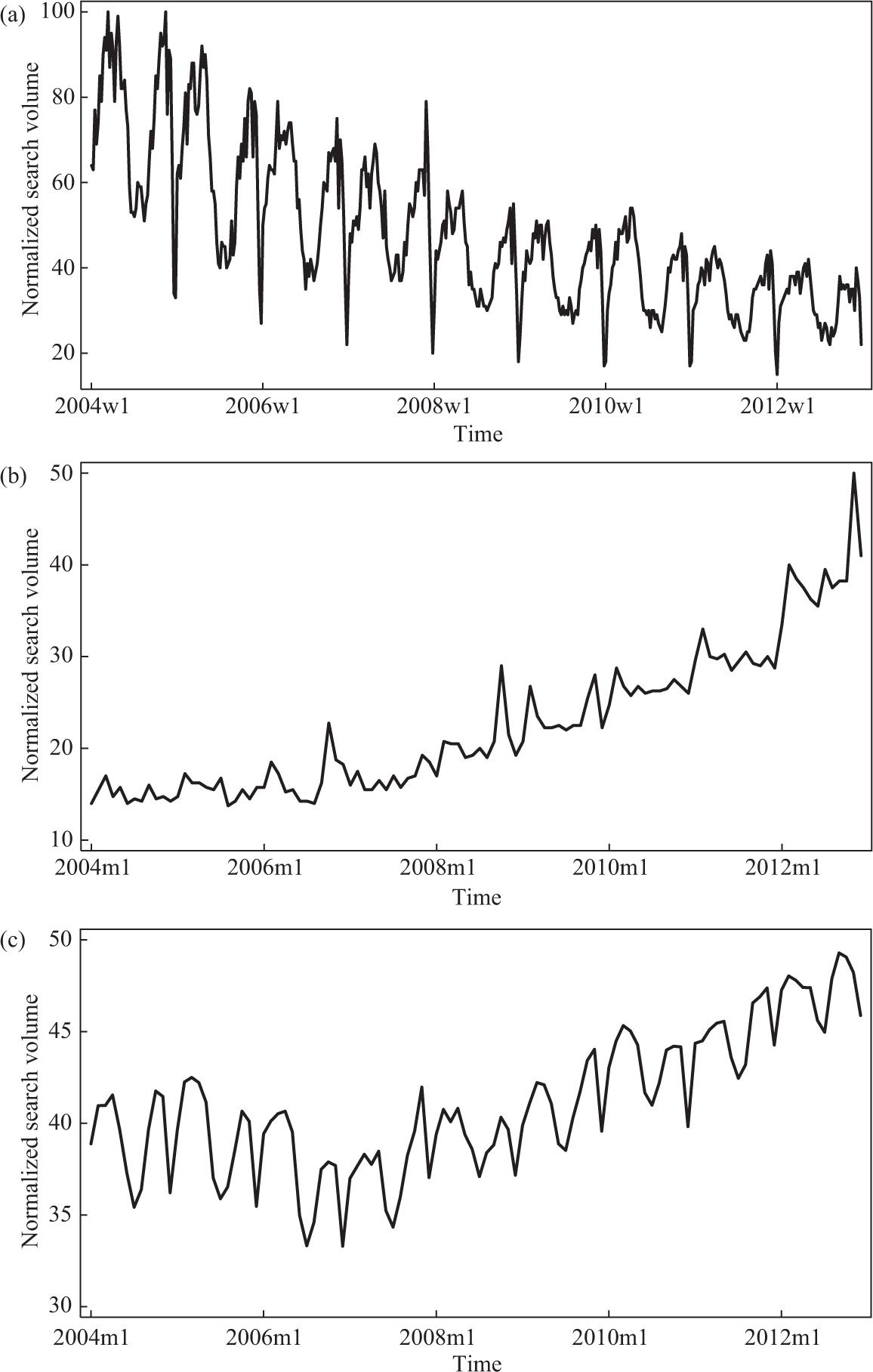
Figure 1

Google Trends graph showing (a) weekly search popularity of “obesity,” (b) monthly search popularity of “14,” and (c) average search trend of all the queries related to topic “child obesity.”

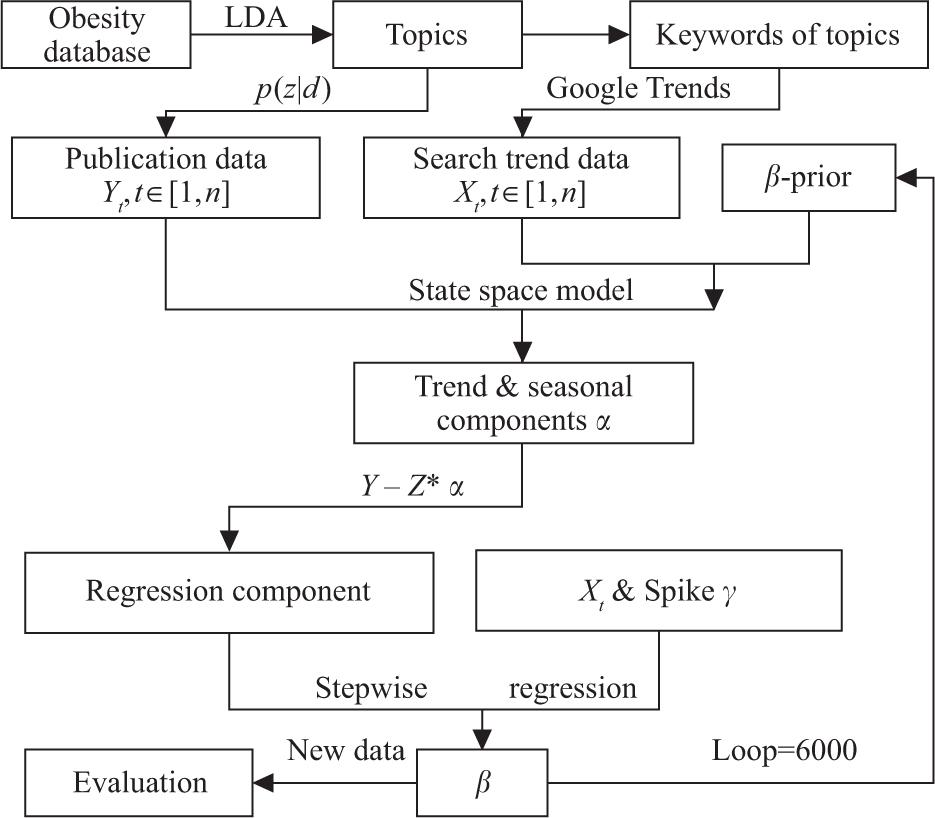
Figure 2

The overall framework of the methodology, where (1) p(z|d) denotes the probability that document d belongs to topic z; (2) β denotes the keywords’ effects on topics, that is, the coefficients of X; (3) spike γ can make most of the coefficients of X zeros, which ensures that the stepwise regression process will run correctly; and (4) Y – Z*α (regression component) refers to publication data with the time-series component, where tendency and seasonal components are not included.

Figure 3

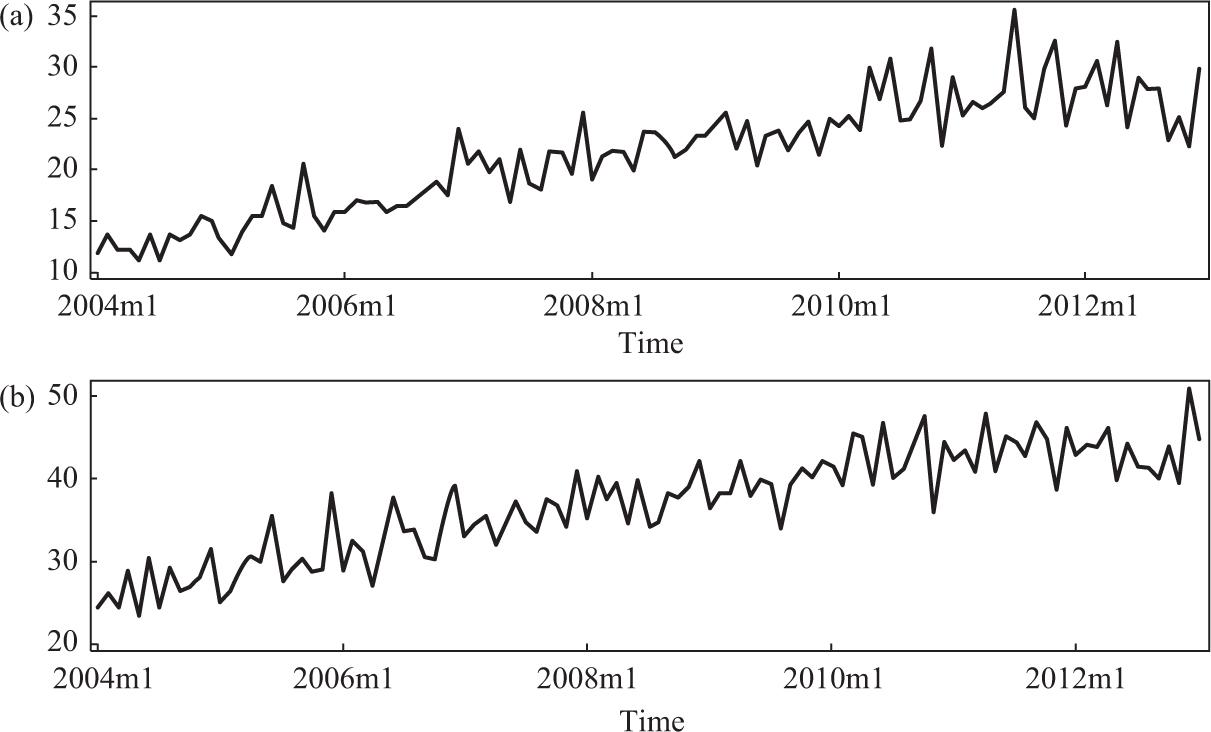
The monthly number of publications on (a) “child obesity” and (b) “diabetes” over time.

Figure 4

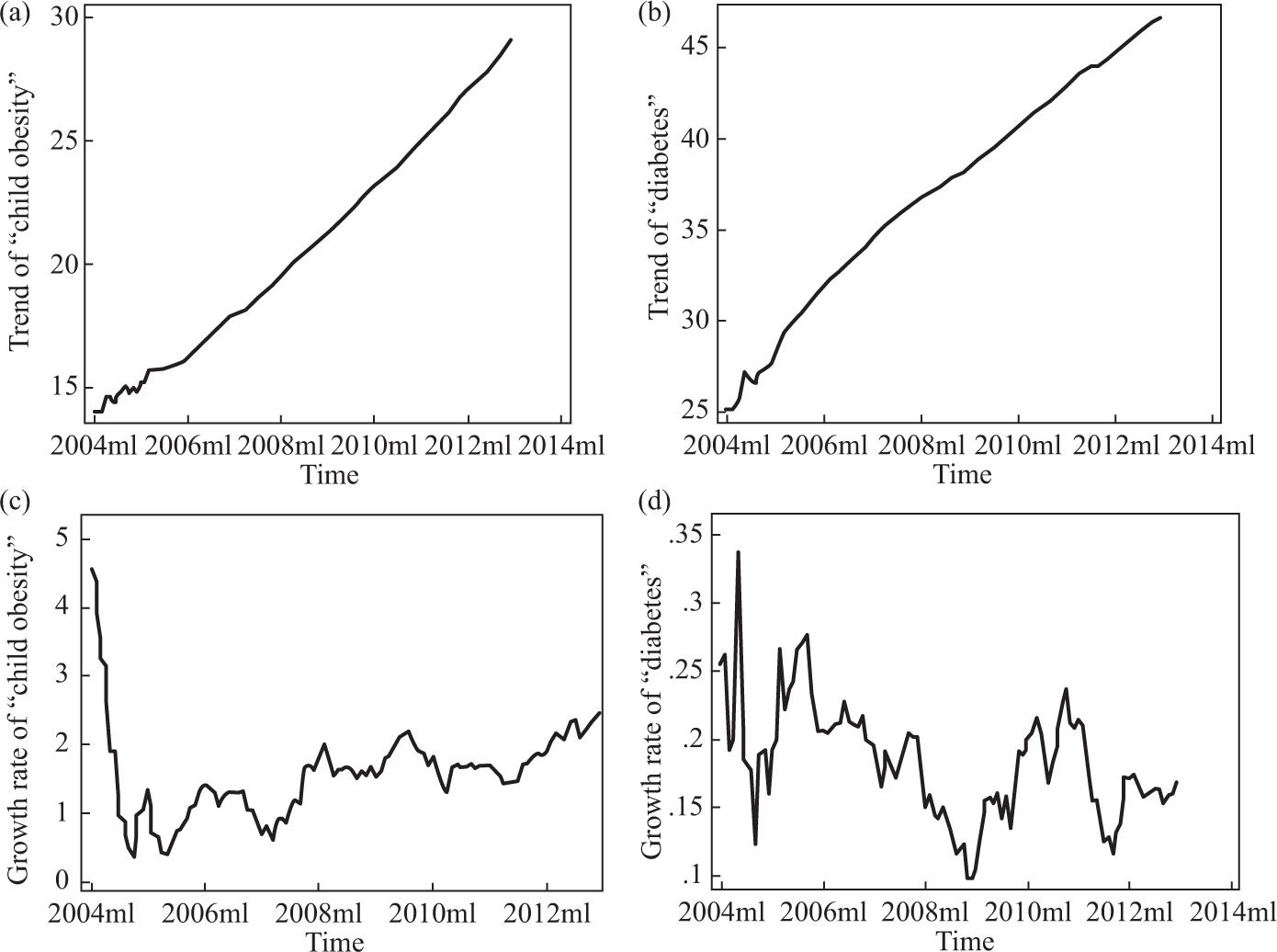
Trends of topics (a) “child obesity” and (b) “diabetes.” The x-axis represents time from January 2004 to January 2013; the y-axis represents the number of publications within a month on “child obesity” and “diabetes,” respectively. Growth rate of topics (c) “child obesity” and (d) “diabetes.” The x-axis represents time from January 2004 to January 2013; the y-axis represents the growth rate of publications within a month on “child obesity” and “diabetes,” respectively.

Figure 5

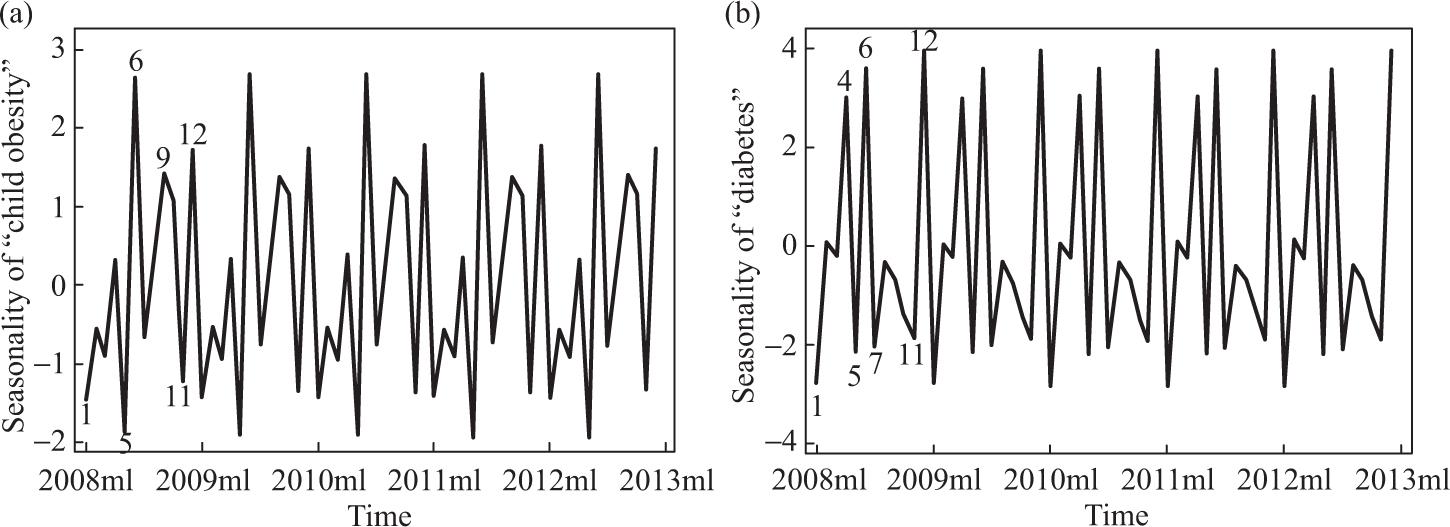
Seasonal effect for topics (a) “child obesity” and (b) “diabetes” from January 2008 to January 2013.

Figure 6

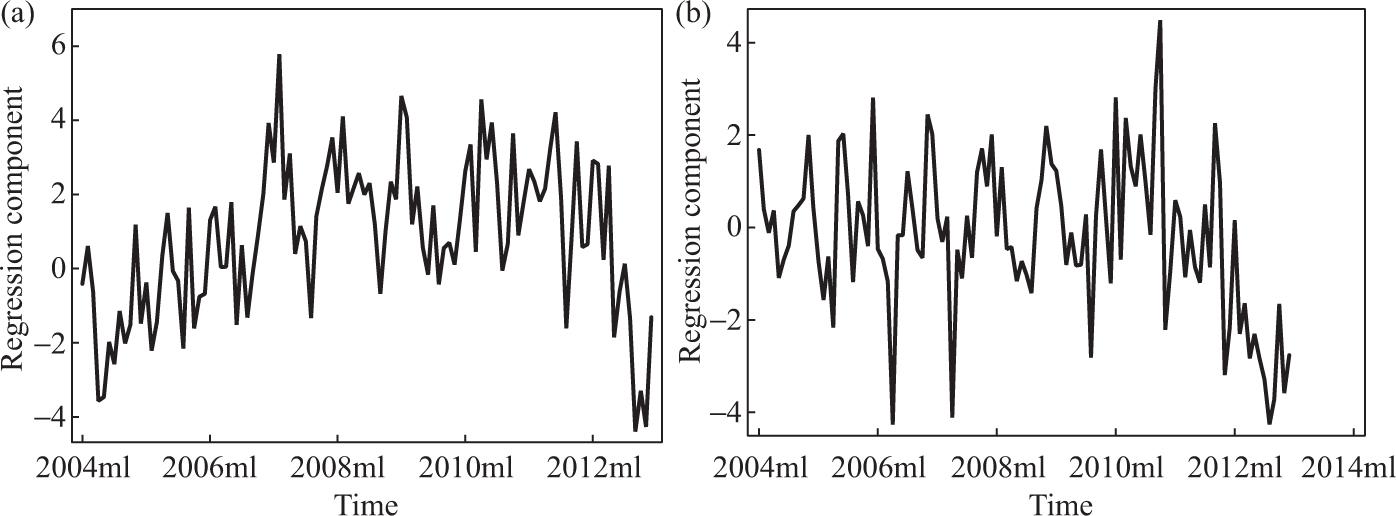
Regression components for obesity topics (a) “child obesity” and (b) “diabetes” over time.
DOI: https://doi.org/10.20309/jdis.201604 | Journal eISSN: 2543-683X | Journal ISSN: 2096-157X
Language: English
Page range: 28 - 49
Submitted on: Jan 18, 2016
Accepted on: Feb 27, 2016
Published on: Sep 1, 2017
Published by: Chinese Academy of Sciences, National Science Library
In partnership with: Paradigm Publishing Services
Publication frequency: 4 issues per year

© 2017 Xianlei Dong, Jian Xu, Ying Ding, Chenwei Zhang, Kunpeng Zhang, Min Song, published by Chinese Academy of Sciences, National Science Library
This work is licensed under the Creative Commons Attribution-NonCommercial-NoDerivatives 4.0 License.