

Figure 1
Graph from the 2021 AMIA Salary and Demographic Survey addressing rates of depression, anxiety, or other mental health issues (e.g. bipolar disorder, post-traumatic stress disorder).
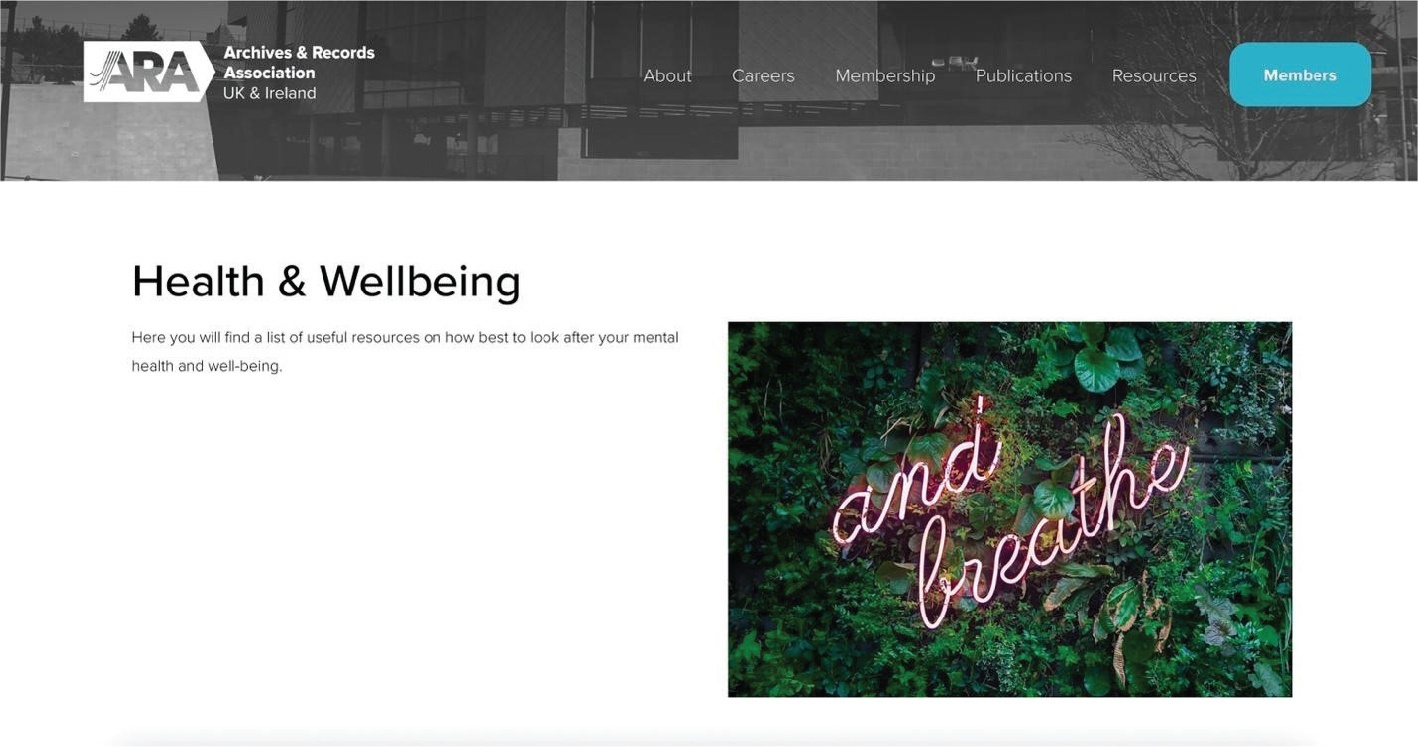
Figure 2
A screenshot from the Archives and Record Association (ARA)’s Health & Wellbeing page.
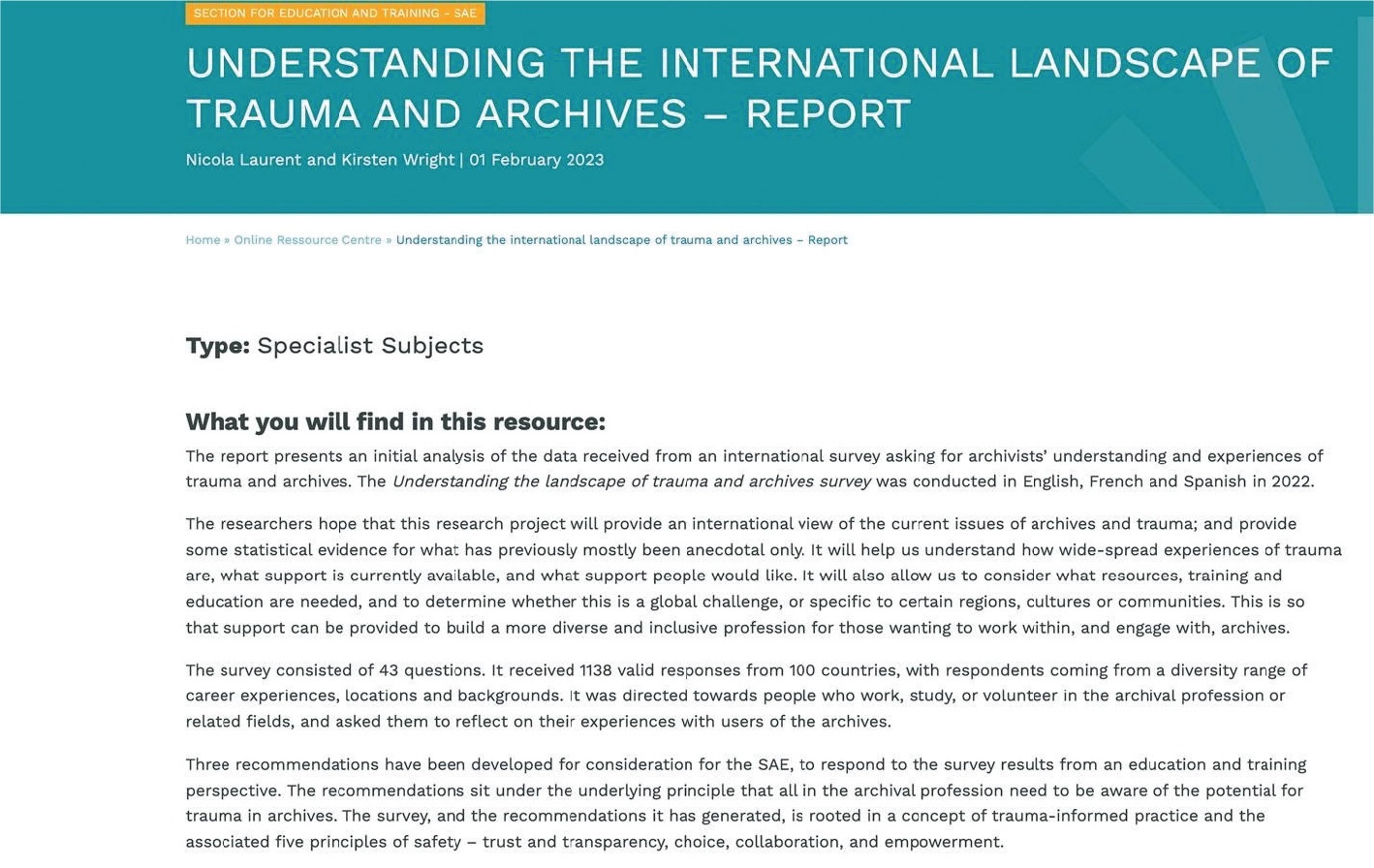
Figure 3
A screenshot outlining the Understanding the International Landscape of Trauma and Archives report.
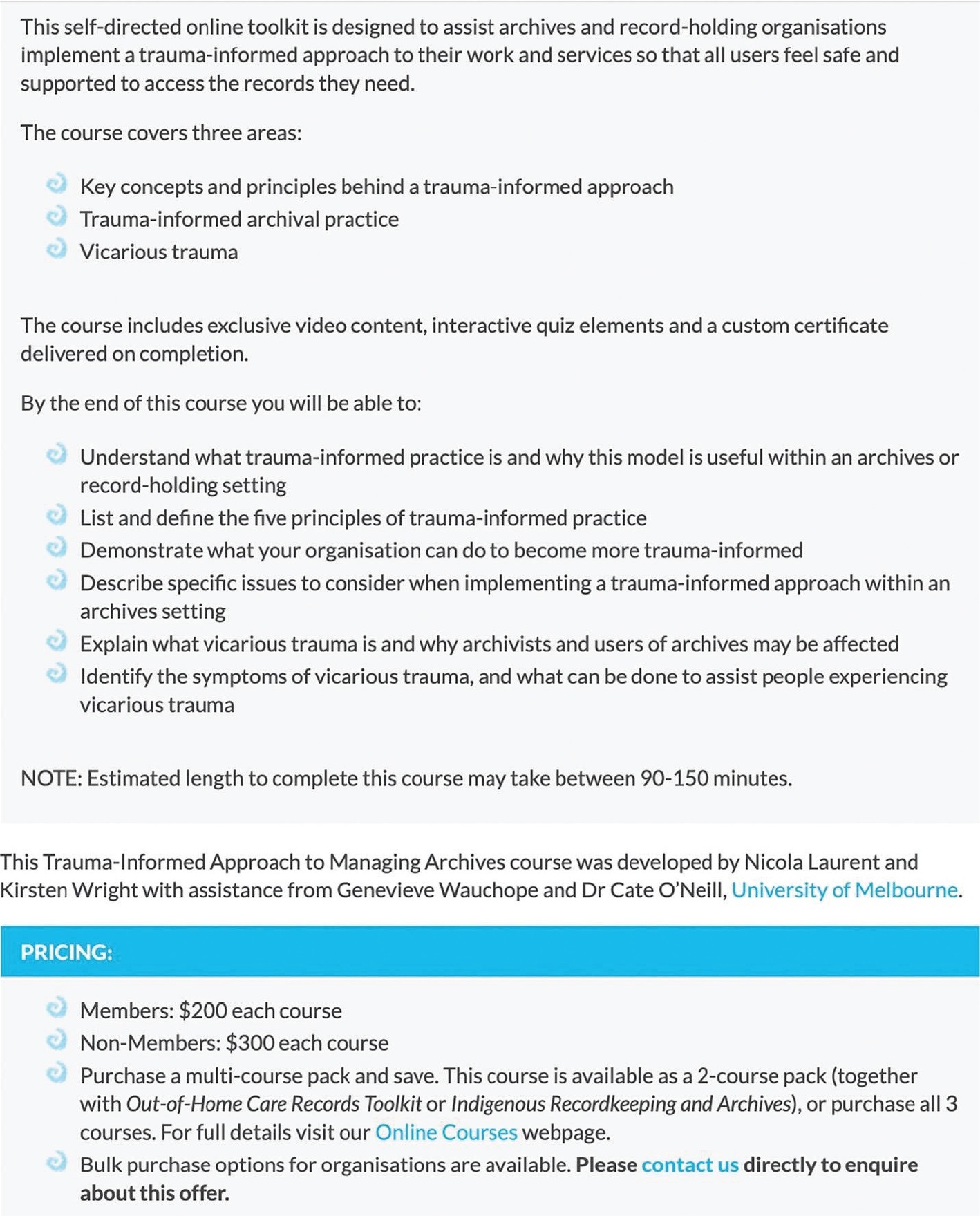
Figure 4
A screenshot from the Australian Society of Archivists A Trauma-Informed Approach to Managing Archives self-directed course outline.
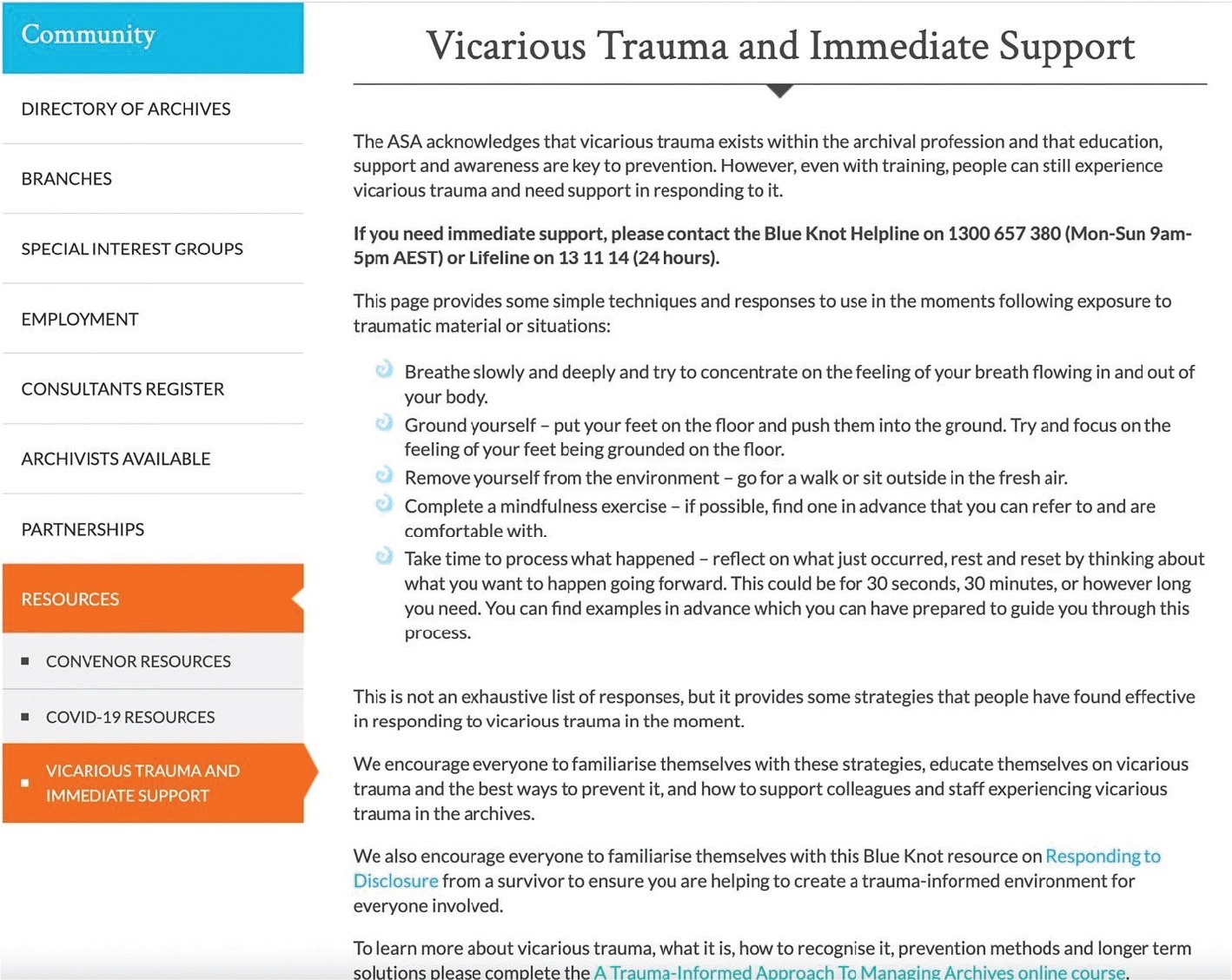
Figure 5
A screenshot from the Australian Society of Archivists Vicarious Trauma and Immediate Support page.
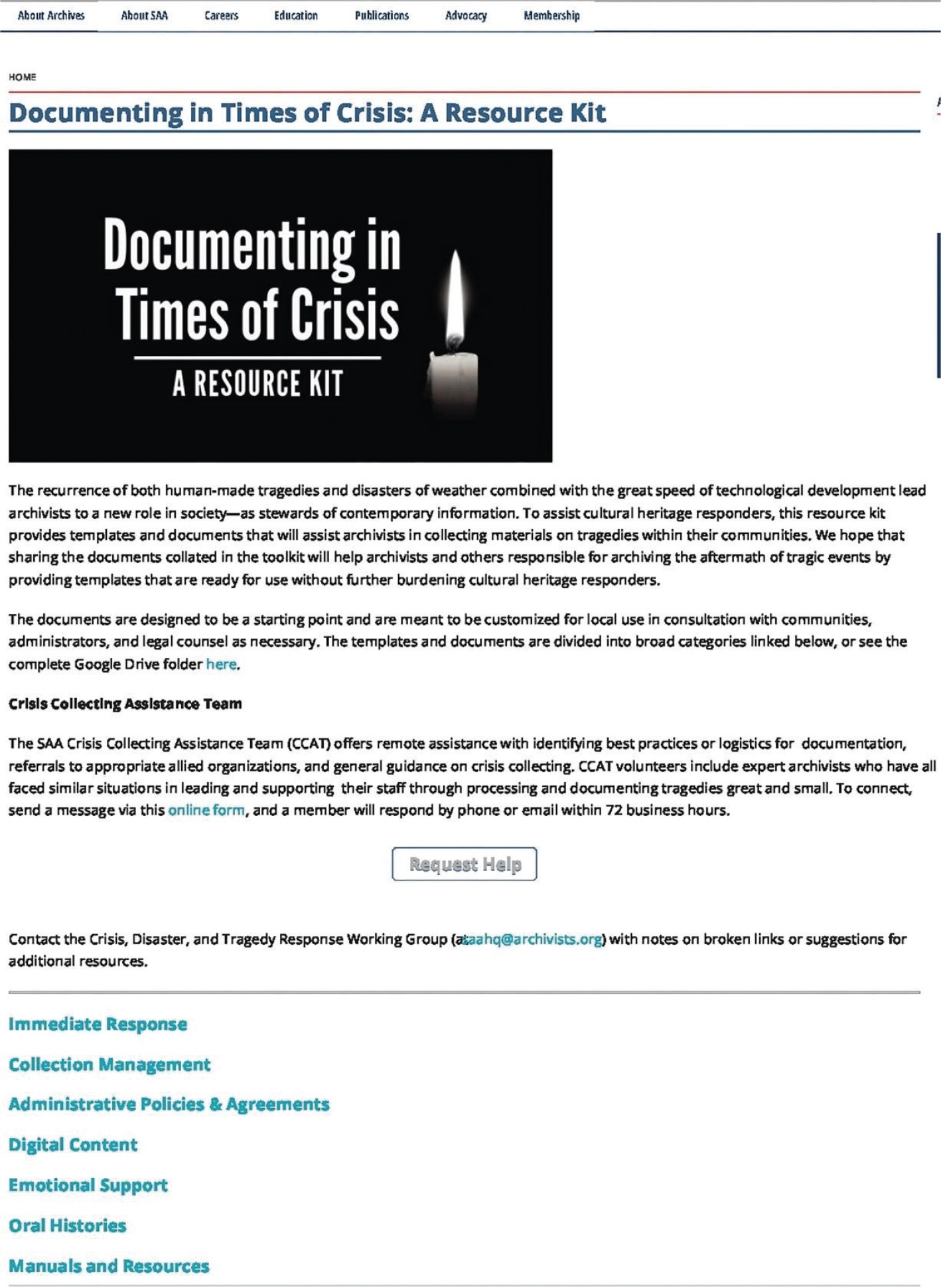
Figure 6
Screenshot from Documenting in Times of Crisis: A Resource Kit by the Society of American Archivists (SAA).
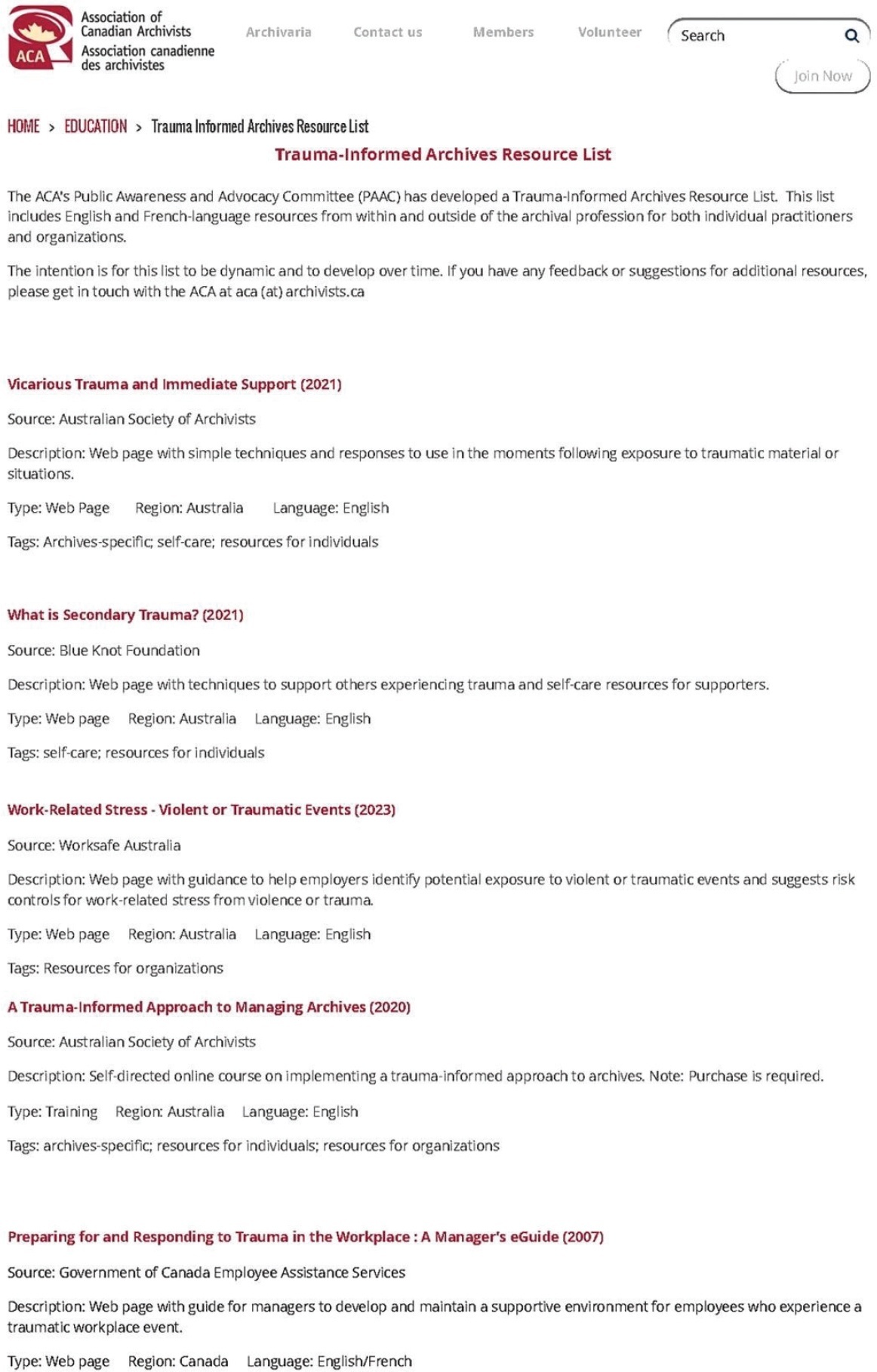
Figure 7
Screenshot from the Trauma-Informed Archives Resource List by the Association for Canadian Archivists (ACA).
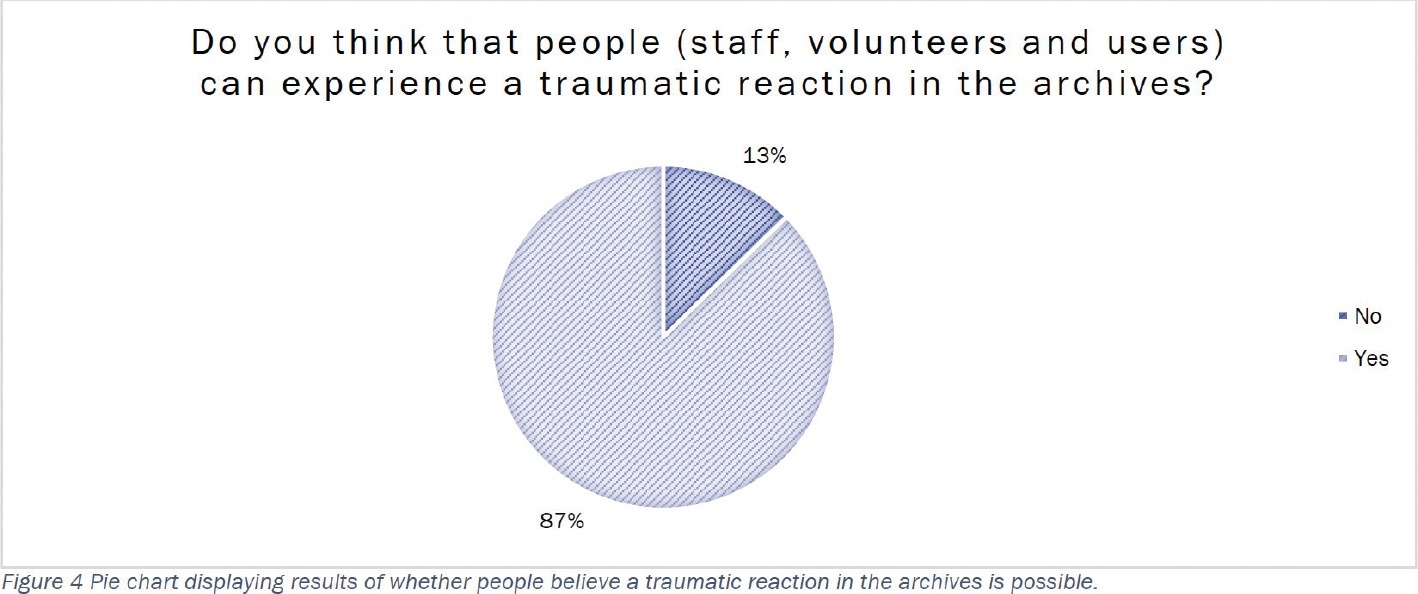
Figure 8
A chart from the Understanding the International Landscape of Trauma and Archives report regarding potential of traumatic reactions in archives
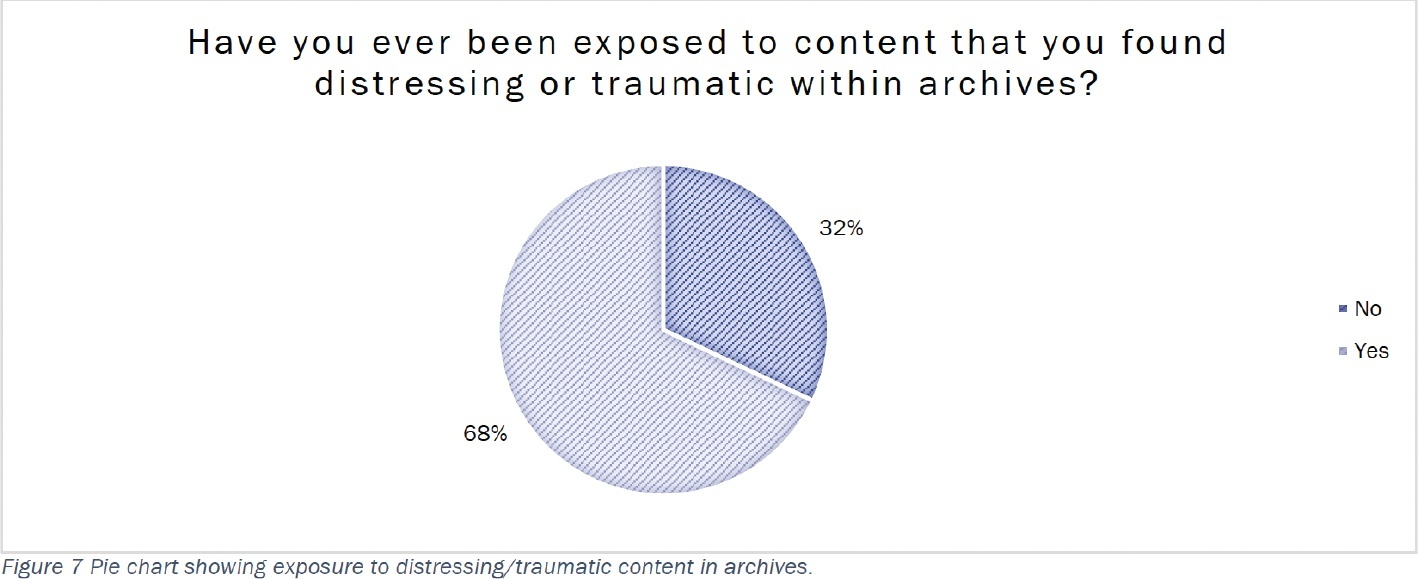
Figure 9
A chart from the Understanding the International Landscape of Trauma and Archives report asking respondents about traumatic content exposure in archives
Video 1
A Trauma-informed Approach to Managing Archives webinar hosted by Kirsten Wright and Nicola Laurent. Last accessed: 17/04/25.
Video 2
Trauma-Informed Reporting Best Practices webinar hosted by Bruce Shapiro. Last accessed: 17/04/25.
Video 3
A webinar titled Prioritizing Mental Health in the Newsroom: How to Create a Culture of Well-being hosted by the Shorenstein Center. Last accessed: 17/04/25.
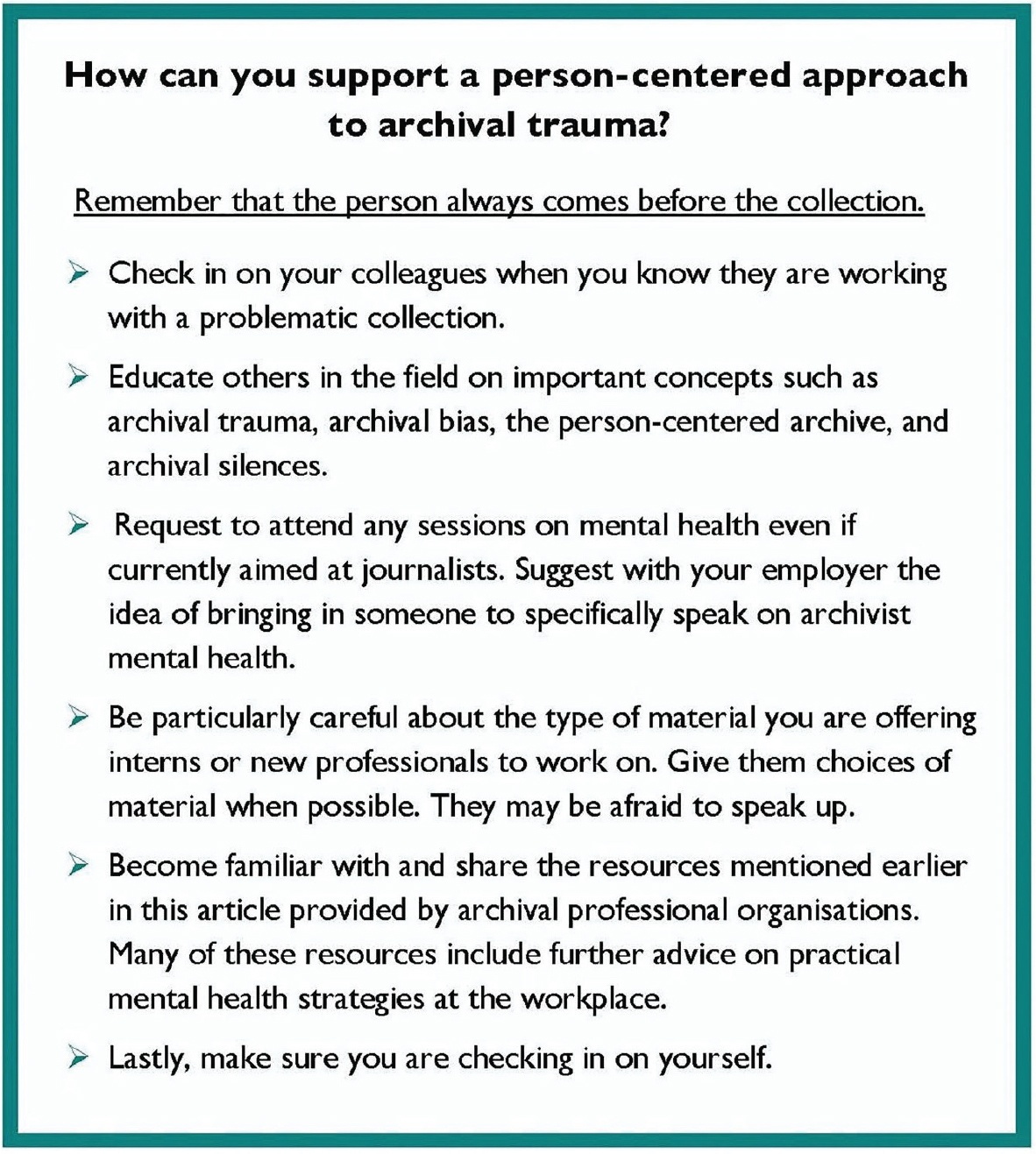
Figure 10
A bullet-point list I created that outlines steps that can be taken to support archivist mental health.