
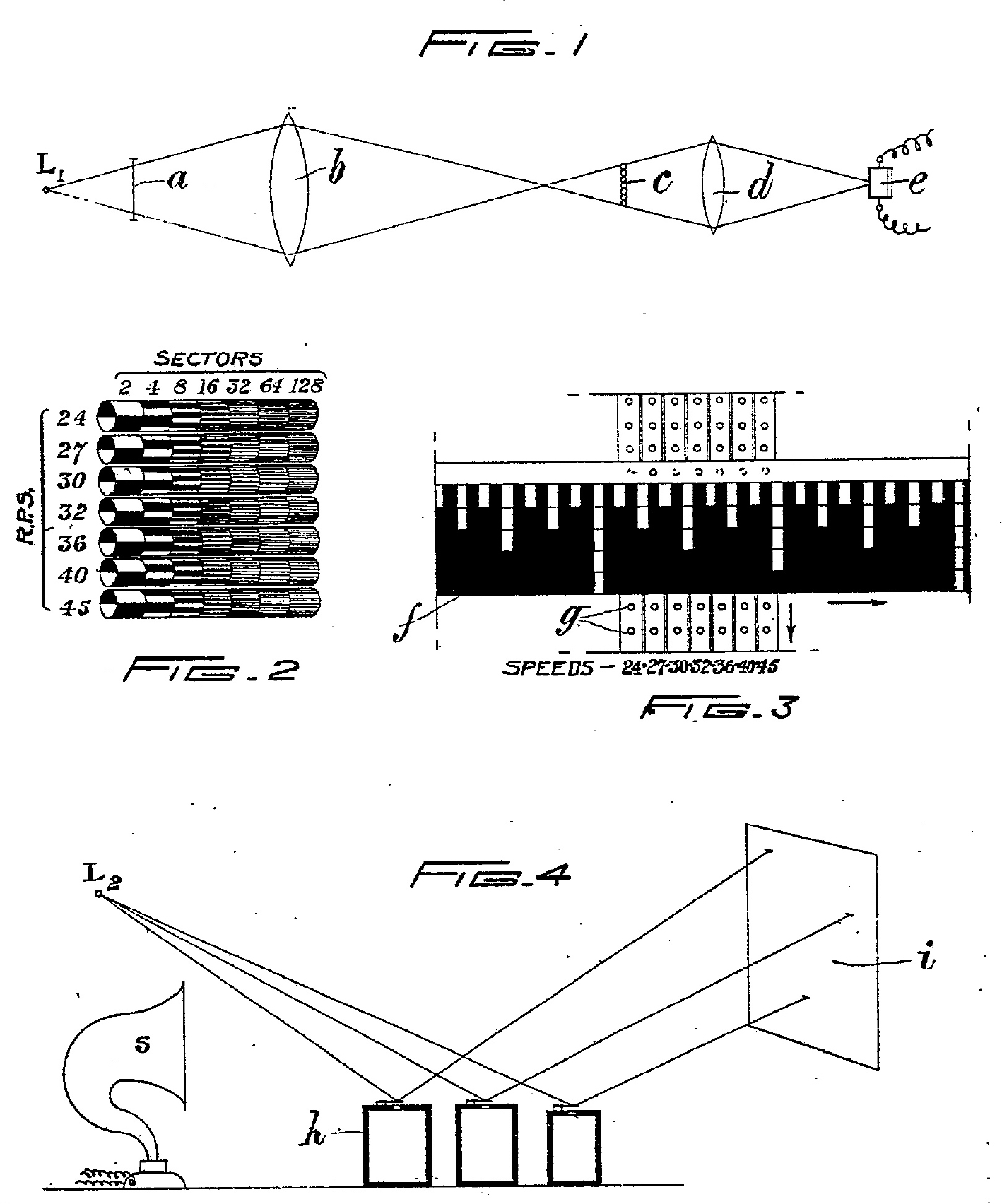
Figure 1
Fournier d’Albe’s televisual system, consisting of recording lenses (top, labelled ‘FIG. 1’), two alternative methods of frequency encoding (middle, ‘FIG. 2’, ‘FIG. 3’), and a receiver and projector (bottom, ‘FIG. 4’). Source: Edmund Edward Fournier D’Albe, “Telegraphic Transmission of Pictures and Images”, British Patent No. 233,746, filed on 15 January 1924.
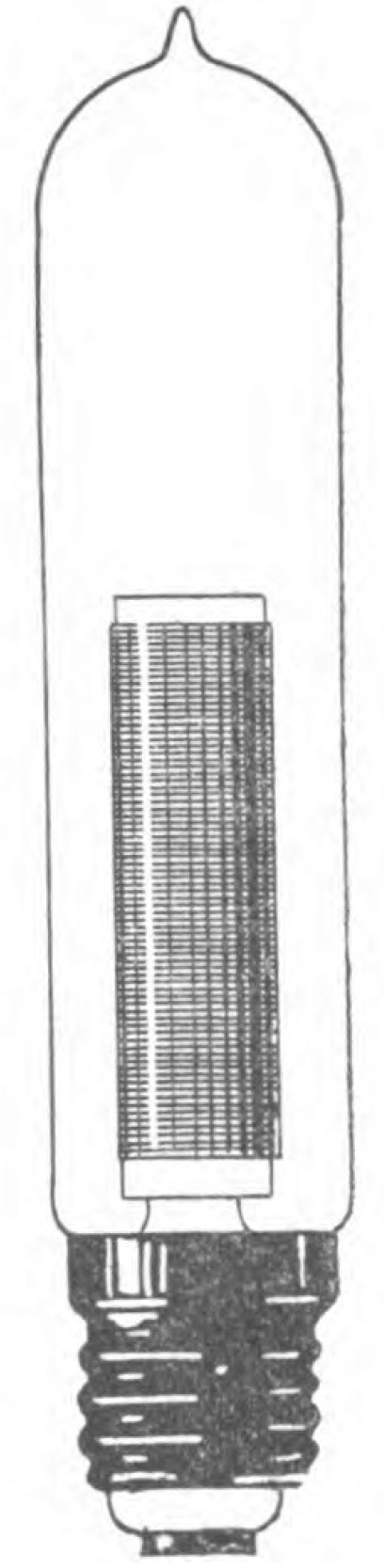
Figure 2
Ernst Ruhmer’s cylindrical photocell, modelled on the light bulb, was the key component in early television. Source: Ernst Ruhmer, Das Selen und seine Bedeutung für die Elektrotechnik (Verlag der Administration der Fachzeitschrift Der Mechaniker, 1902), 11.
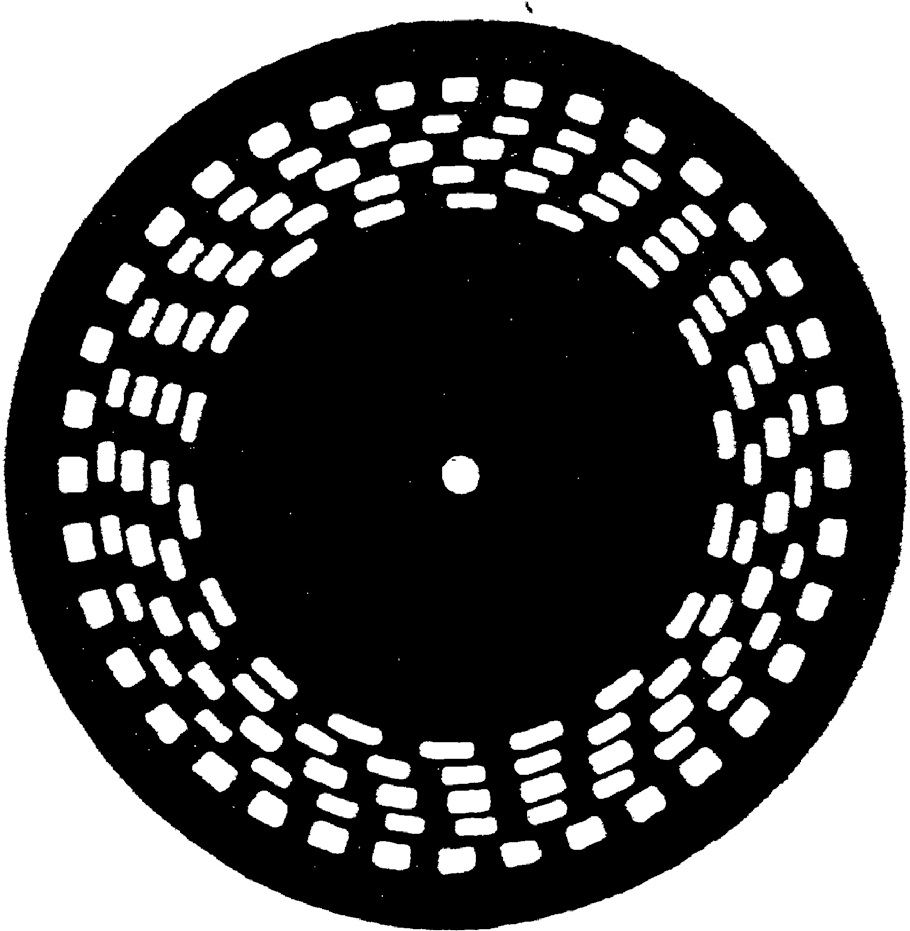
Figure 3
An optophone disc revolved at a rate of 30RPS above a light source and thereby filtered it onto a selenium detector. Source: Edmund Edward Fournier D’Albe, The Moon-Element: An Introduction to the Wonders of Selenium (D. Appleton, 1924), 127.
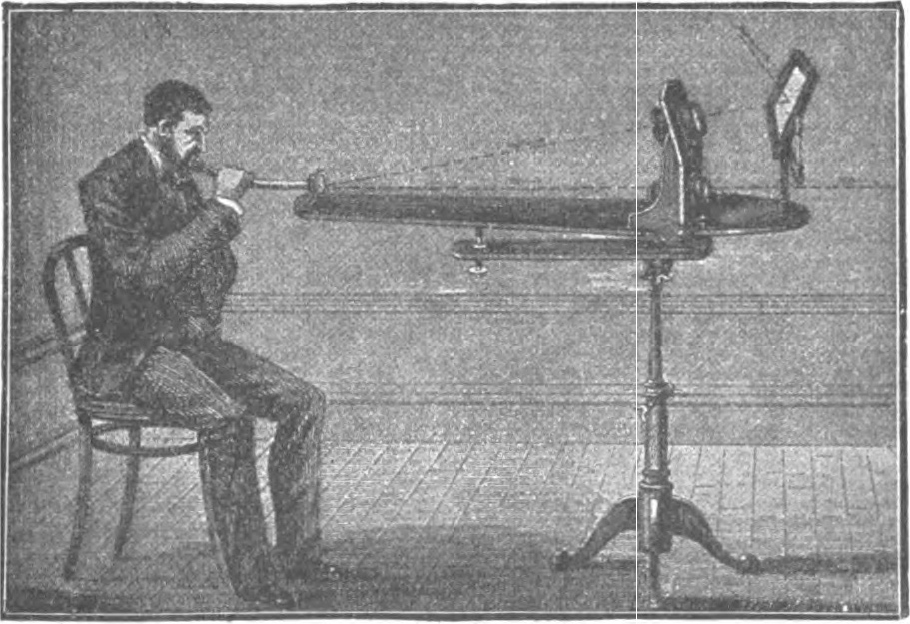
Figure 4
The transmitter for Bell and Taintner’s Photophone. Source: Ruhmer, Das Selen, 31.
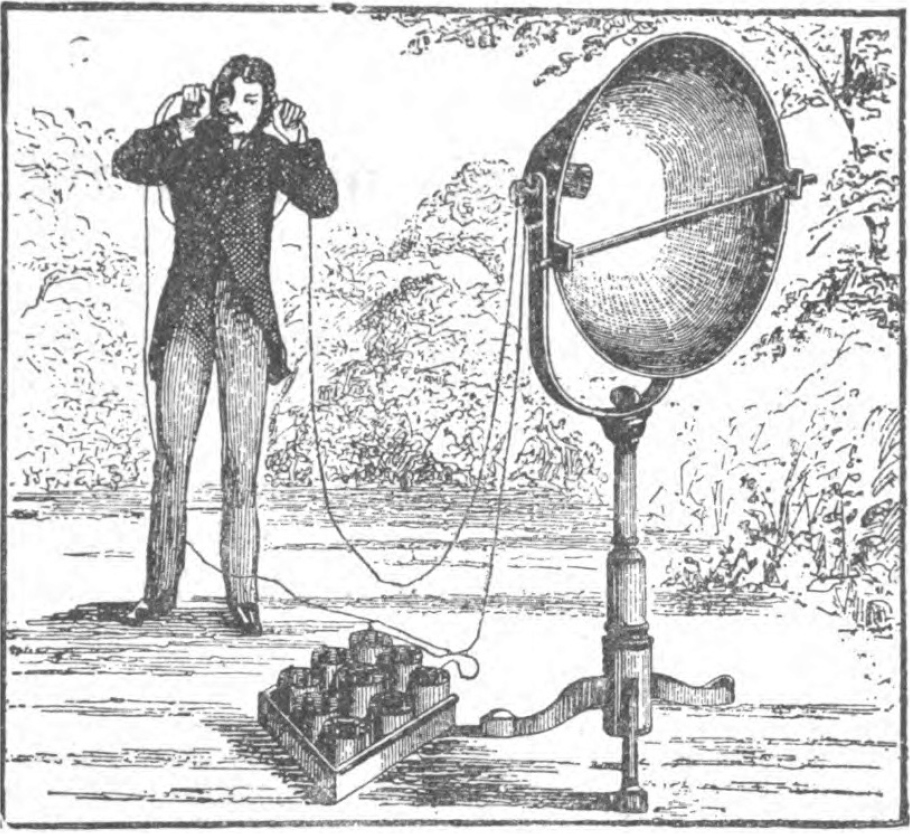
Figure 5
The receiver for Bell and Taintner’s Photophone. Source: Ruhmer, Das Selen, 32.
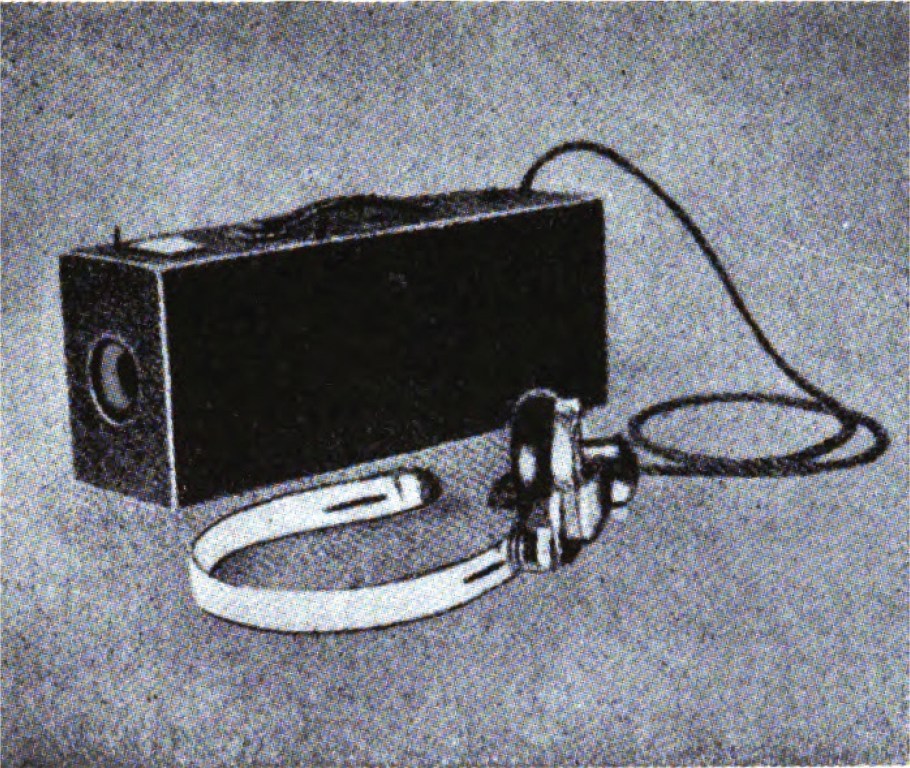
Figure 6a
Exploring Optophone; Source: Fournier D’Albe, The Moon-Element, 98.
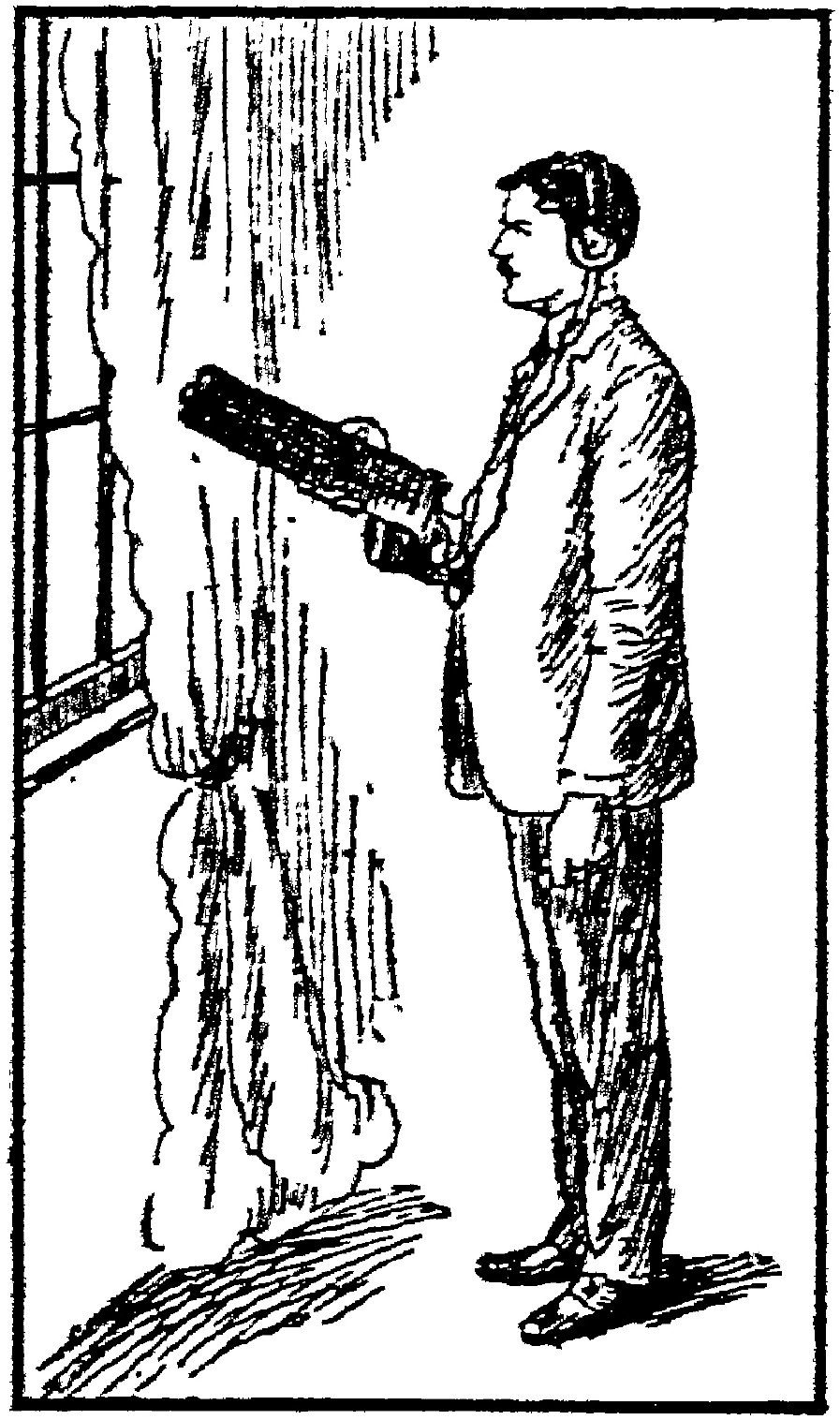
Figure 6b
Exploring Optophone; Source: Fournier D’Albe, The Moon-Element, 102.
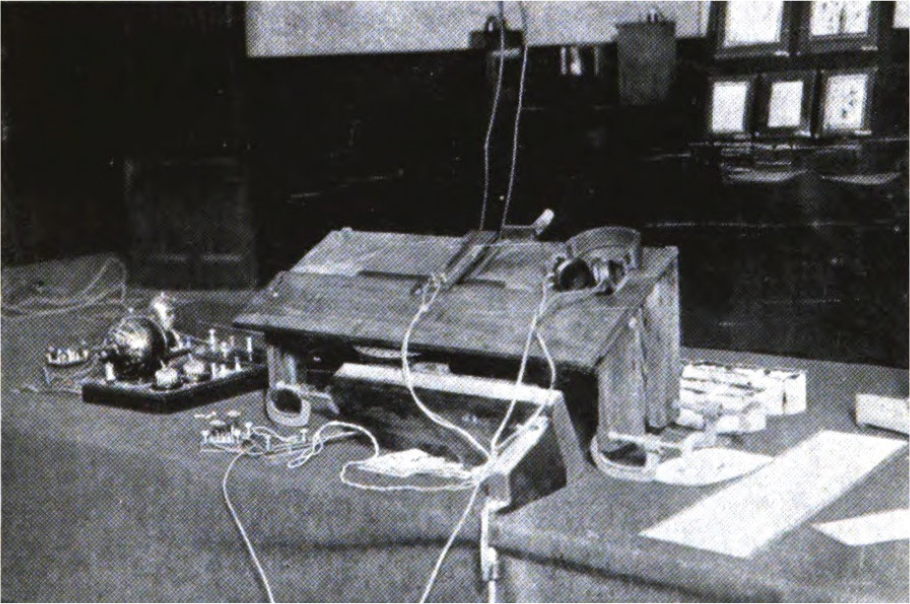
Figure 7a
Type-Reading Optophone; Source: Fournier D’Albe, The Moon-Element, 98.
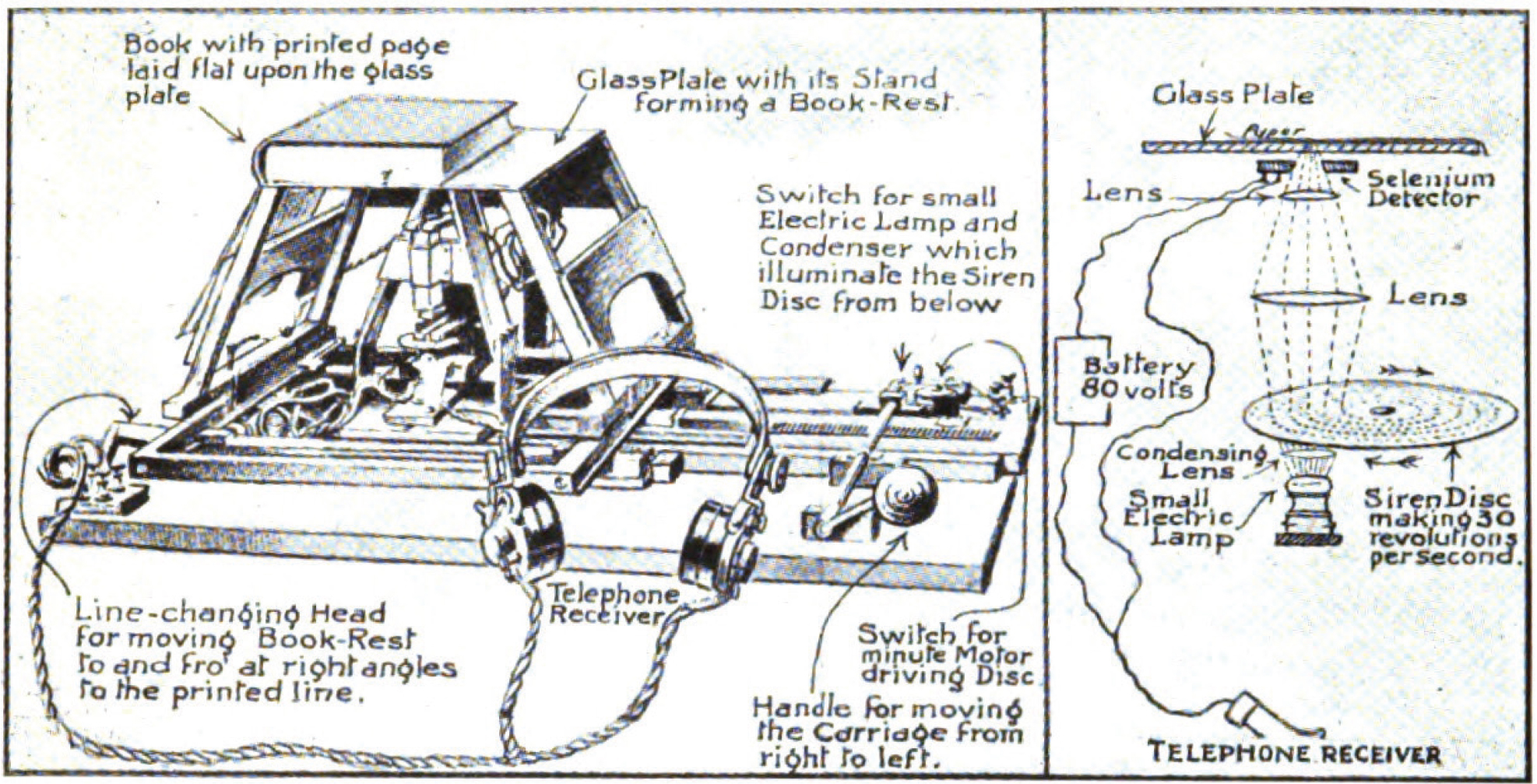
Figure 7b
Type-Reading Optophone; Source: Fournier D’Albe, The Moon-Element, 124.
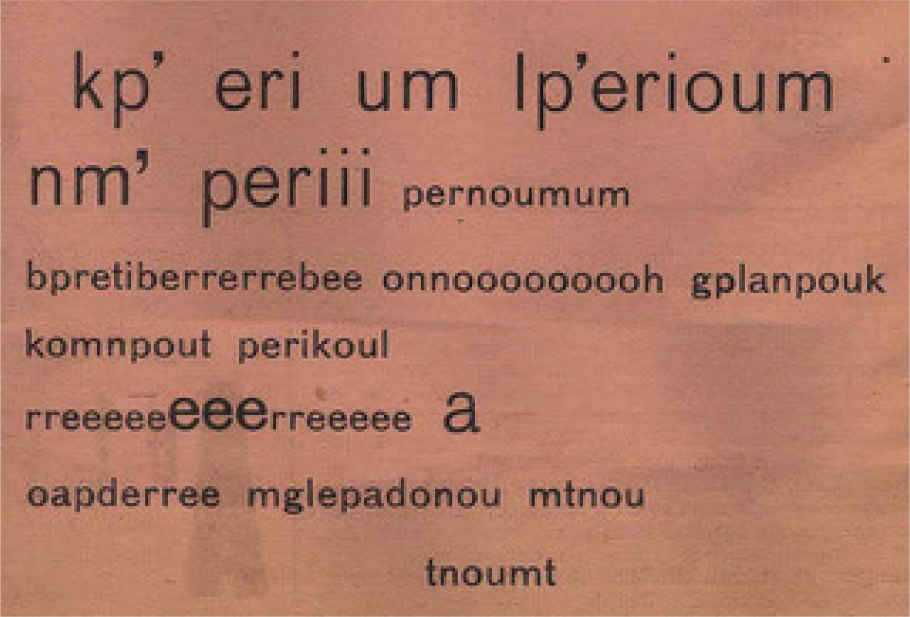
Figure 8
Hausmann’s optophonetic poem, ‘Kp’erium’ (later reworked as ‘Kp’erioum’); Source: Der Dada 1 (June 1919): 2.
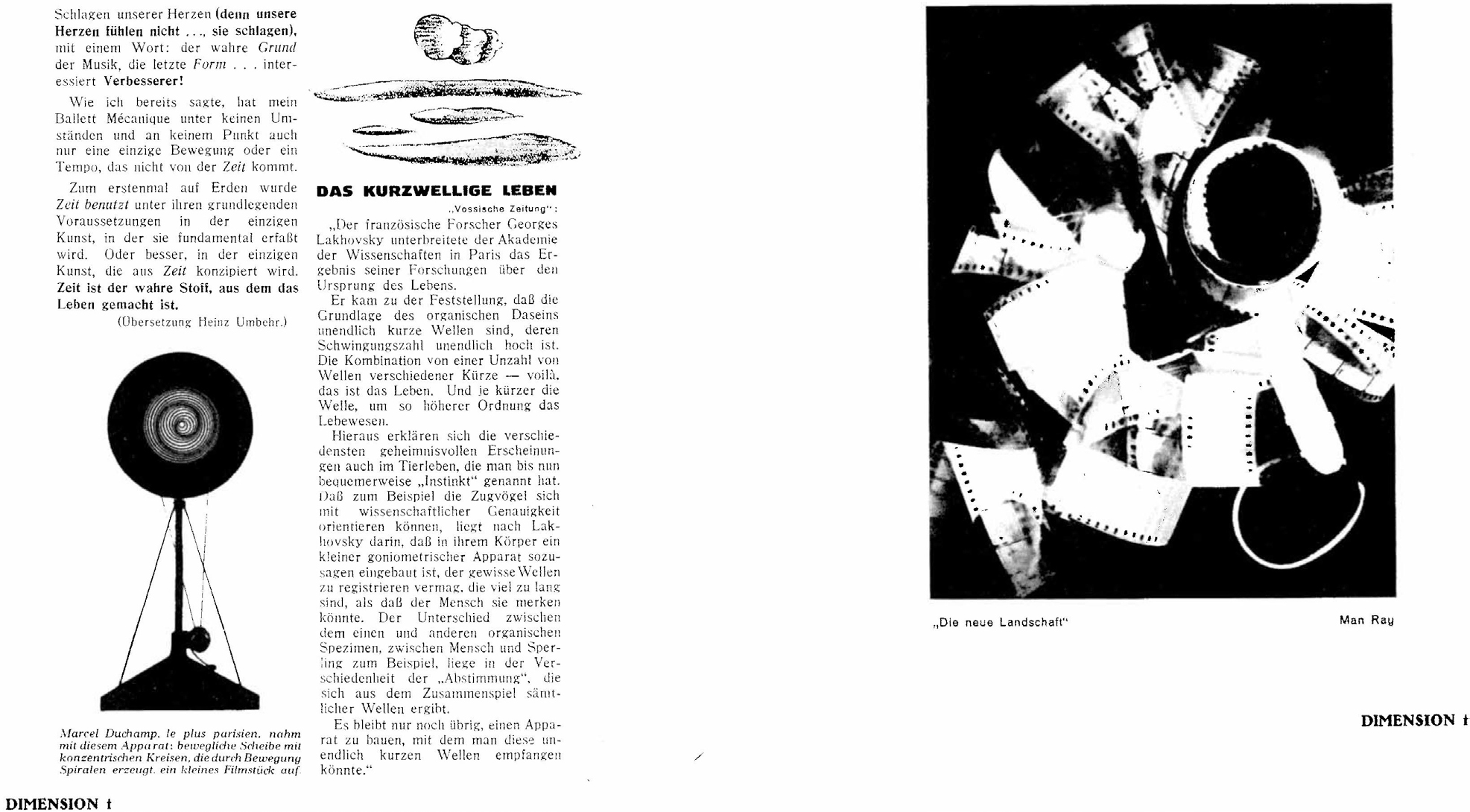
Figure 9
‘Vibratory modernism’, suggested by Marcel Duchamp’s spirals (left), Viking Eggeling’s drawing (centre top), a reprinted newspaper report on ‘Shortwave Life’ (centre bottom), and Man Ray’s photograph (right); Source: Hofacker, ed., G – Material zur elementaren Gestaltung, 120–121.