
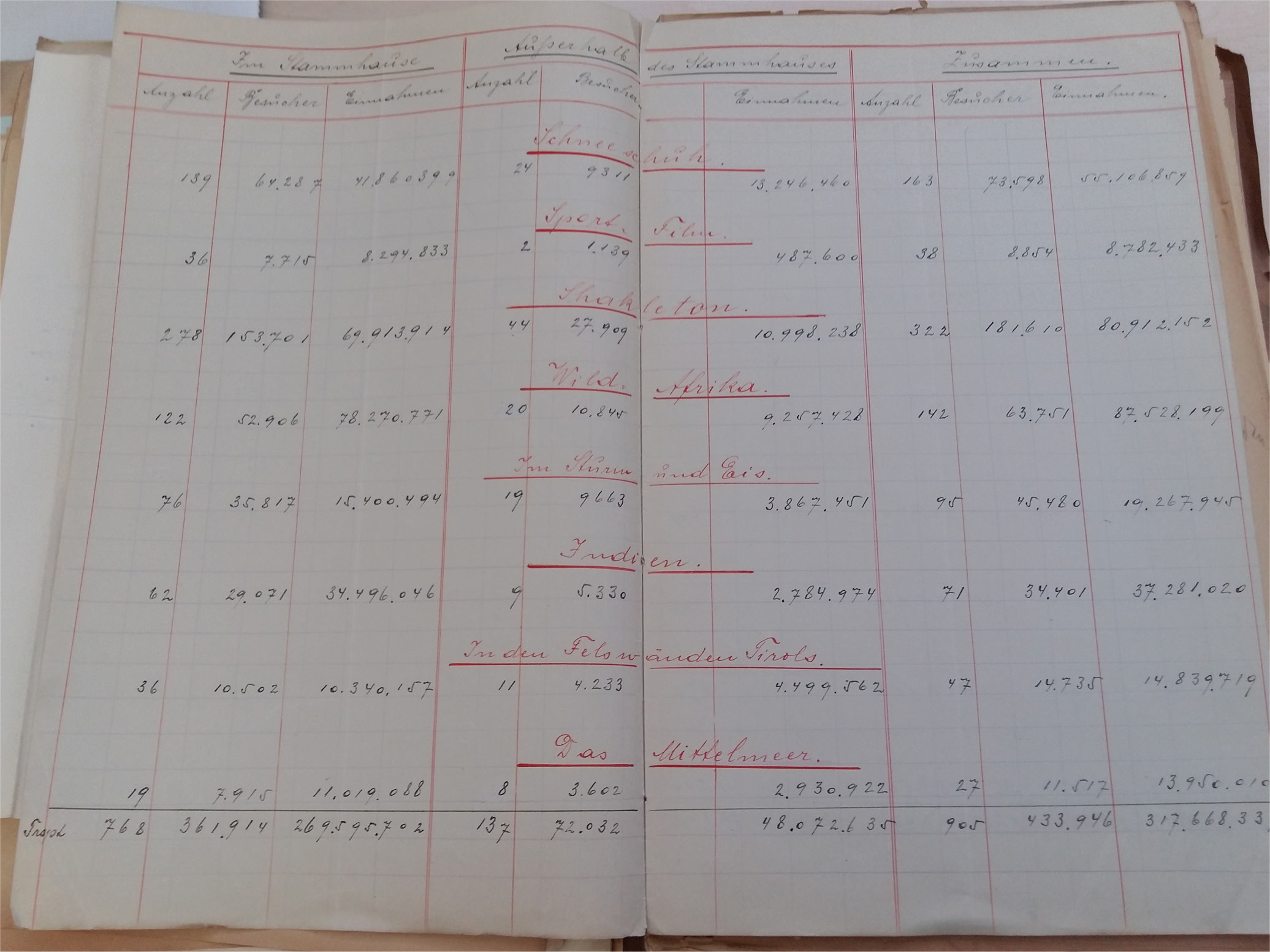
Figure 1
The listing “Uraniafilme vom Februar 1921–29. Februar 1924” (Urania-films 1921–1924) gives an overview of topics and their popularity. Source: ÖVA/Austrian Archives for Adult Education.
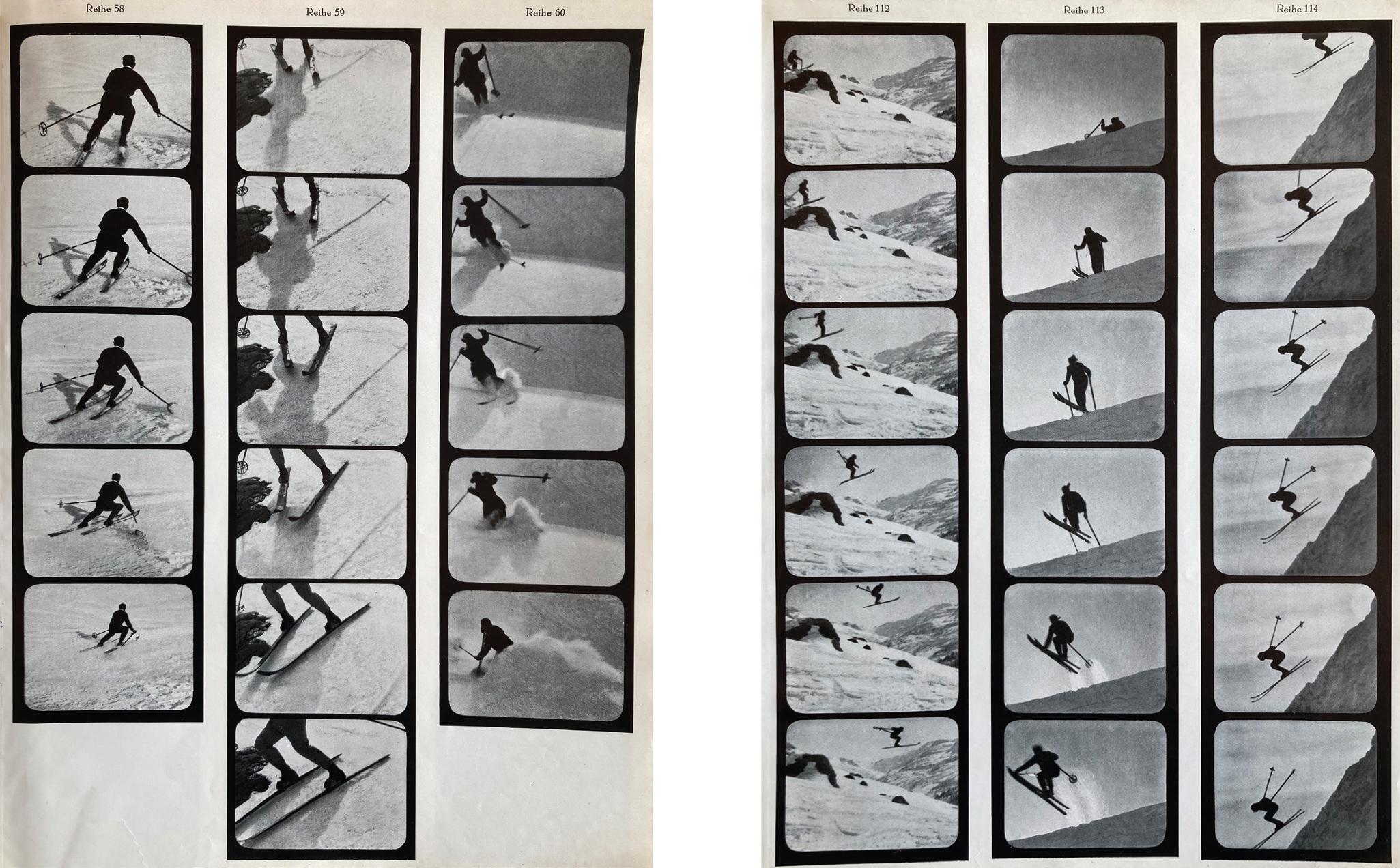
Figure 2
Image sequences from the film in the manual “Wunder des Schneeschuhs” depicting various skiing techniques. Source: Arnold Fanck and Hannes Schneider, Wunder des Schneeschuhs (Hamburg: Gebrüder Enoch Verlag, 1925).
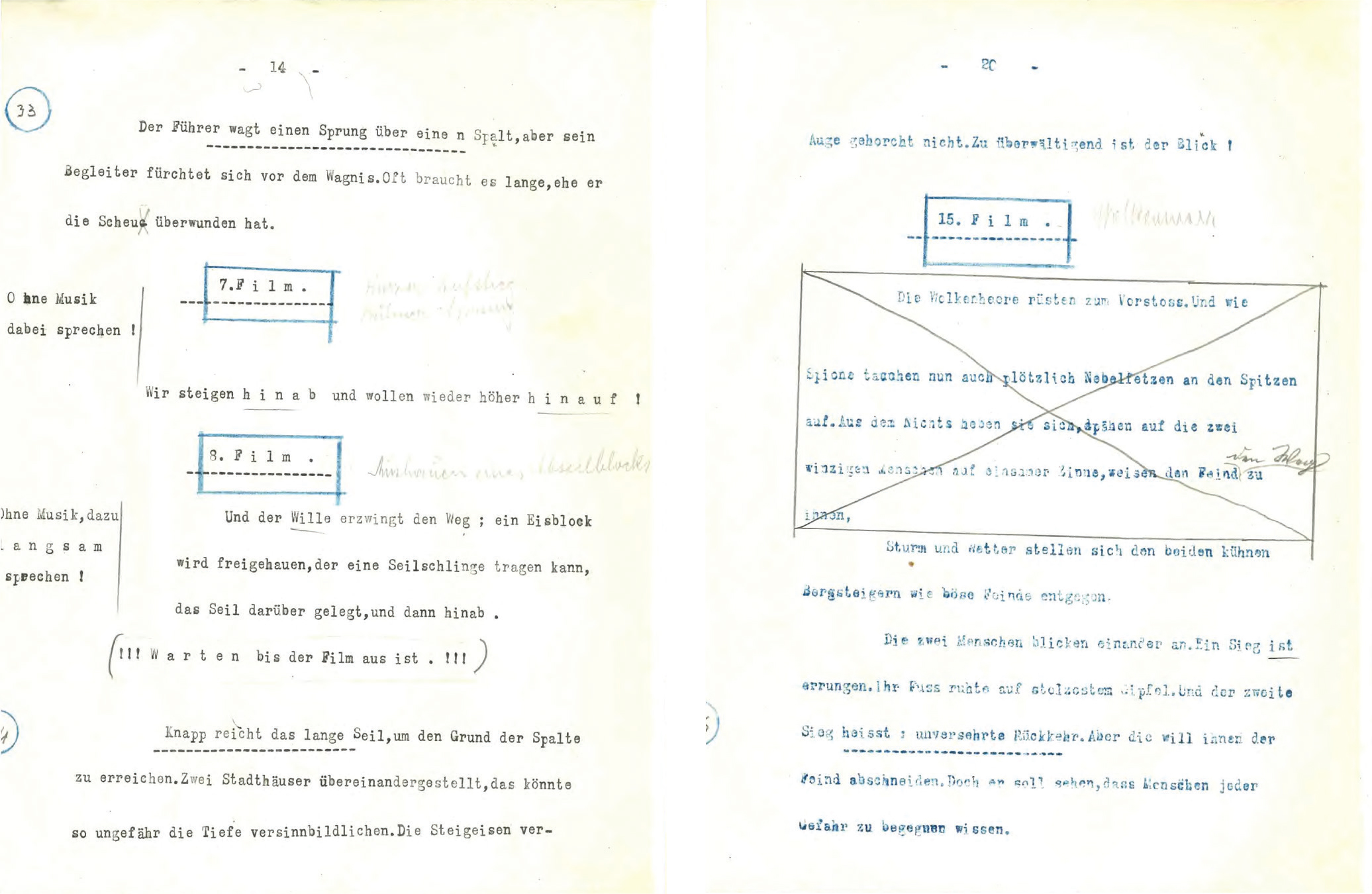
Figure 3
Pages from the manuscript for children/pupil screenings. Source: ÖVA/Austrian Archives for Adult Education.
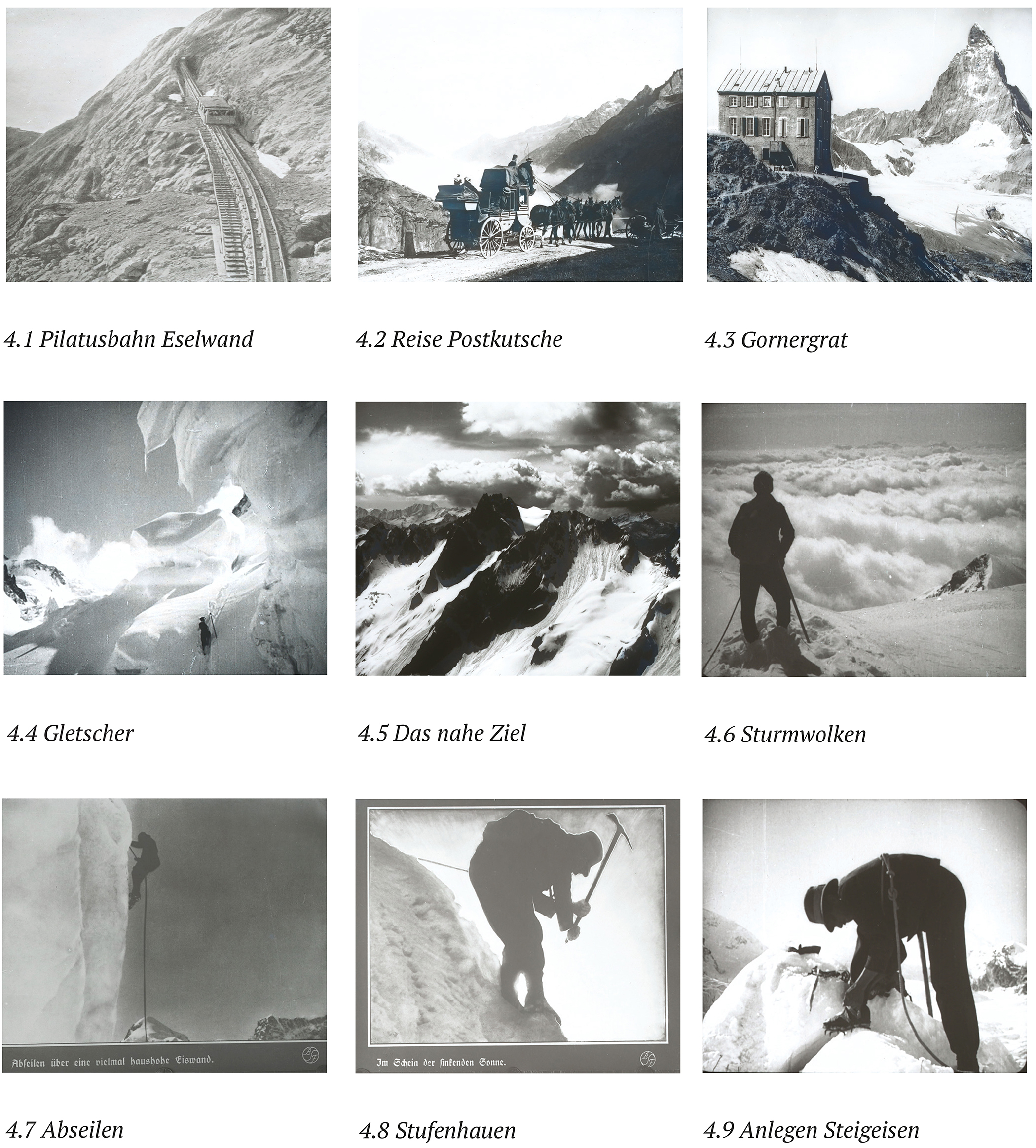
Figure 4
Slides from the film lecture “Im Kampf mit dem Berge”: 1-3 are part of the introduction and visualise the historical framing; 3 depicts the Matterhorn and was projected before the film started. The others are film images showing spectacular views that became iconic for the genre (especially the clouds; 4-6), or they are ‘instructional’ depicting abseiling (7) and the use of crampons and stomping ice steps from a medium-closeup (8-9). Source: ÖVA/Austrian Archives for Adult Education.
Figure 5
Sequence from the second part of “Mit Steigeisen und Eispickel”: Ice Climbing explained through text, drawing and moving images. The film combines different methods to teach new techniques. Source: Austrian Film Museum.
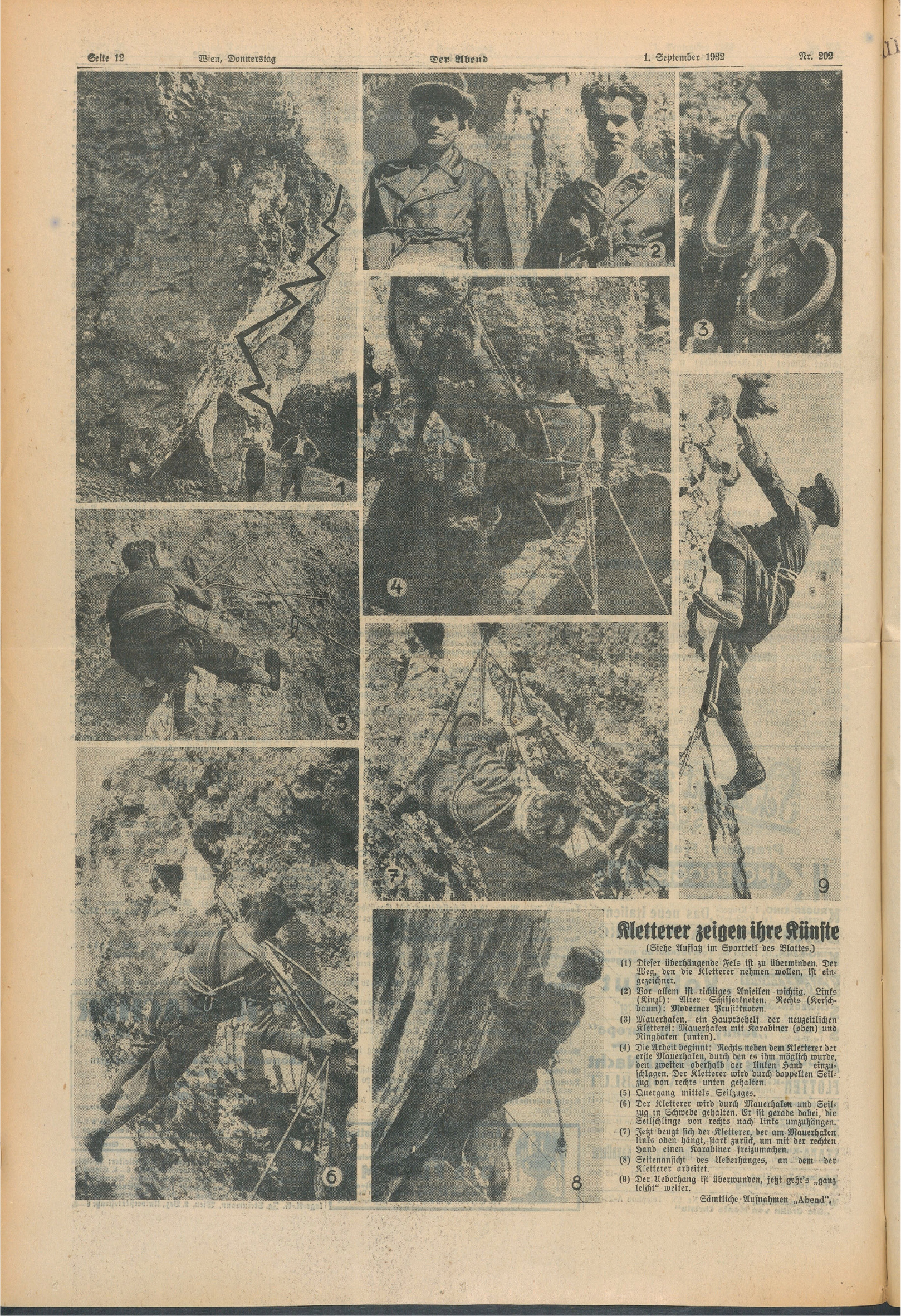
Figure 6
Karl Kinzl is one of the climbers who demonstrate modern climbing in “Der Abend”. The photographs are instructive and resemble illustrations in sports manuals; as in “Mit Steigeisen und Eispickel” techniques are portrayed in detail and explained using technical terms, meaning a certain knowledge was assumed. Source: Anno/Austrian National Library.
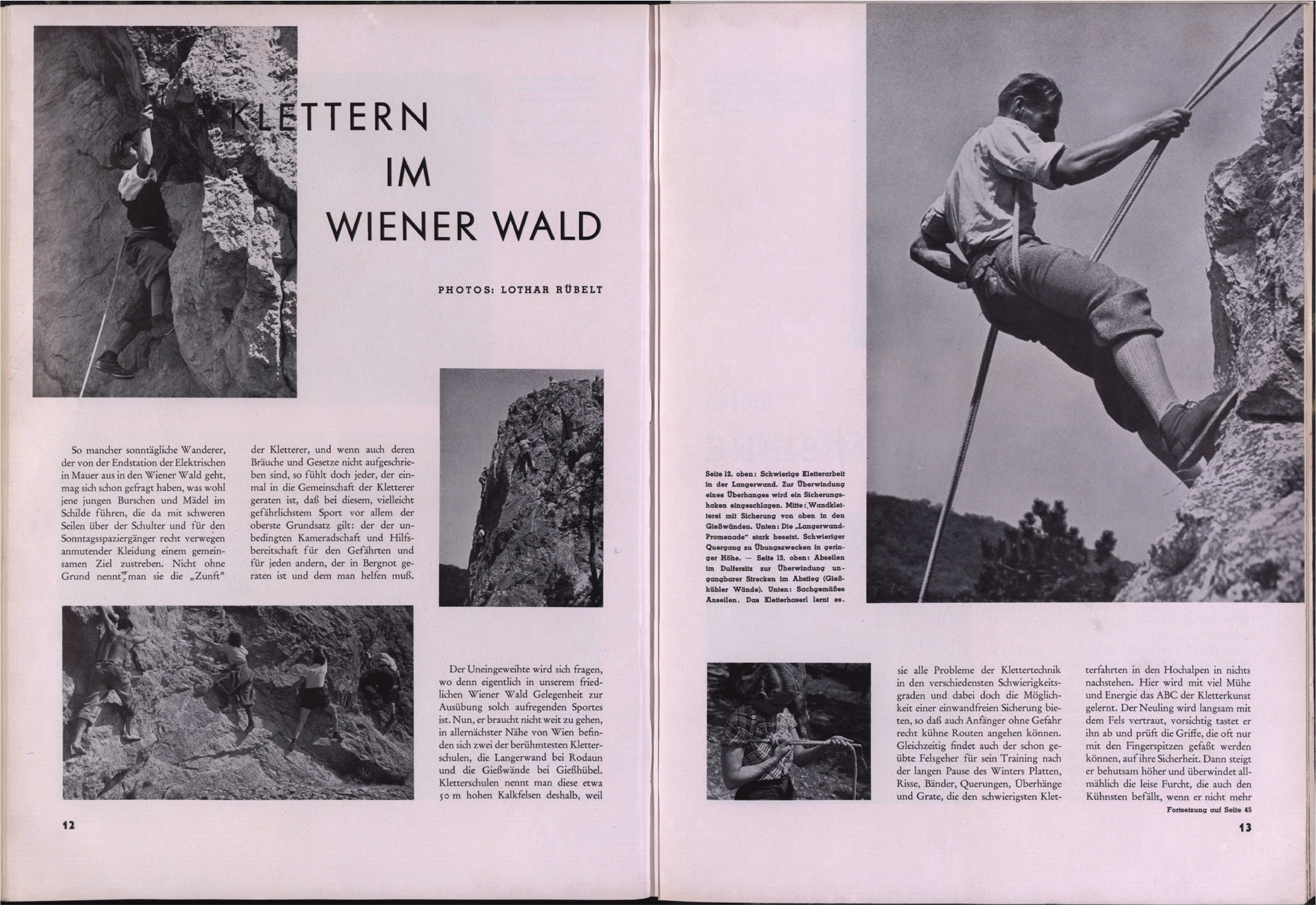
Figure 7
Die “Moderne Welt” visually presents climbing as a trend-sport for the young, fit and urban. The text still speaks of a ‘battle against the mountains’, here already congealed into a cliché. Source: Anno/Austrian National Library.