
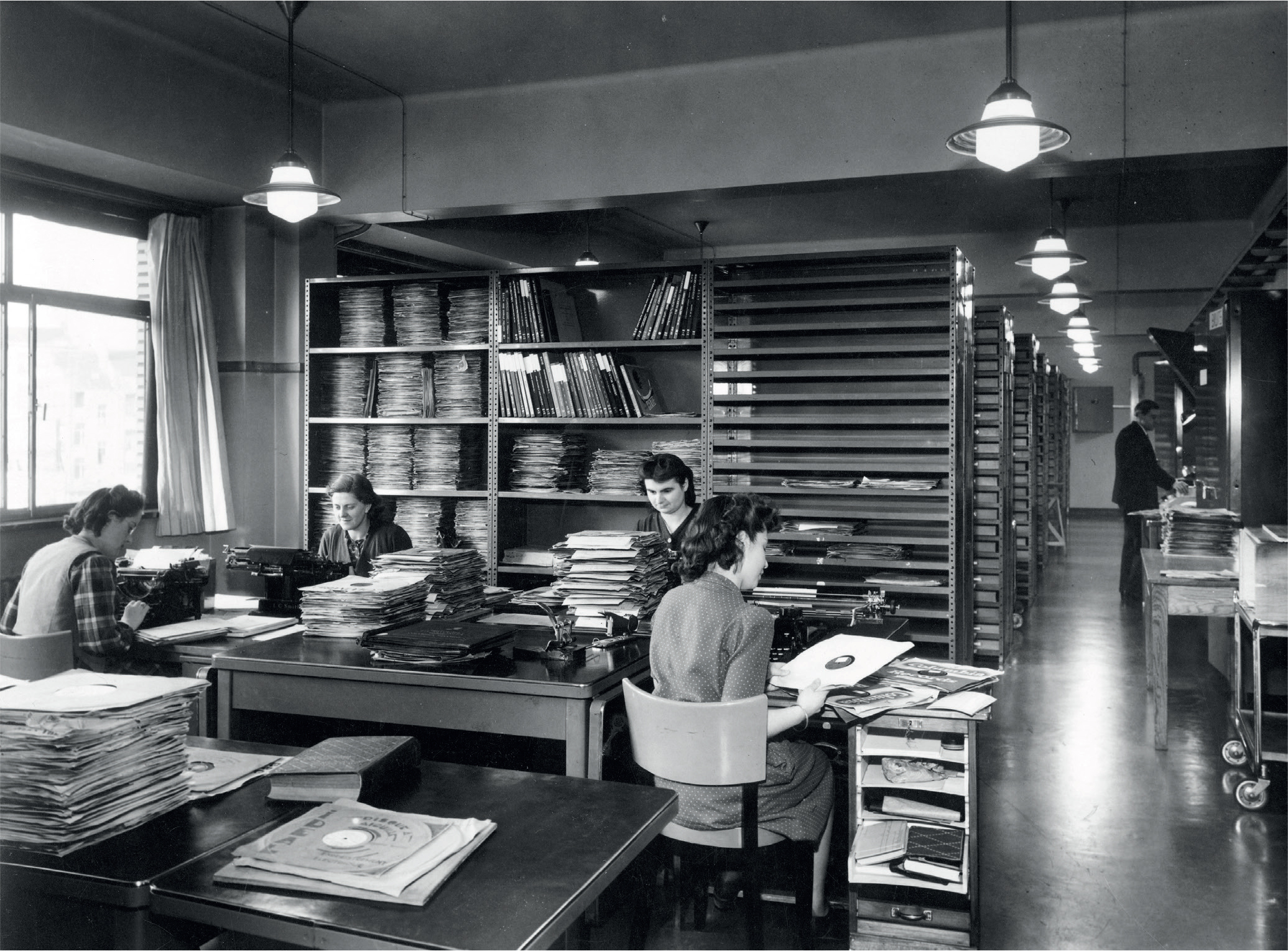
Figure 1
Photo depicting staff at work and behind them, rows of storage shelves for sound recordings in the NIR-INR recorded sound collection (discotheek), Brussels, Belgium. Dated as 1930s. Source: VRT Archive.
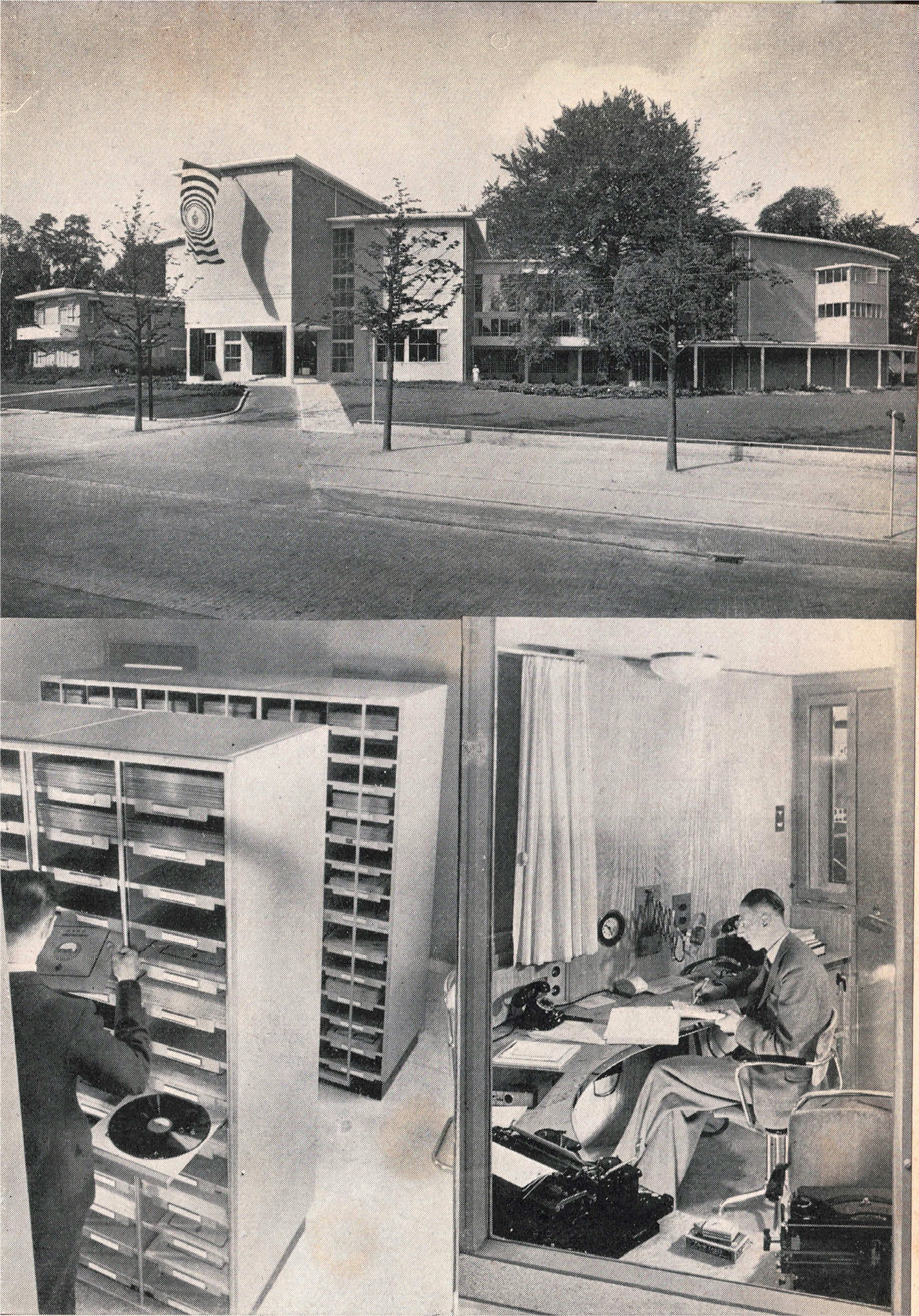
Figure 2
AVRO’s studio complex in Hilversum, The Netherlands (top), the recorded sound collection (bottom left) and the announcer Guus Weitzel preparing a programme (bottom right). Source: J.J.L. van Zuylen, Encyclopaedie voor Radio-Luisteraars (Baarn: Schuyt, 1939), 16-17.
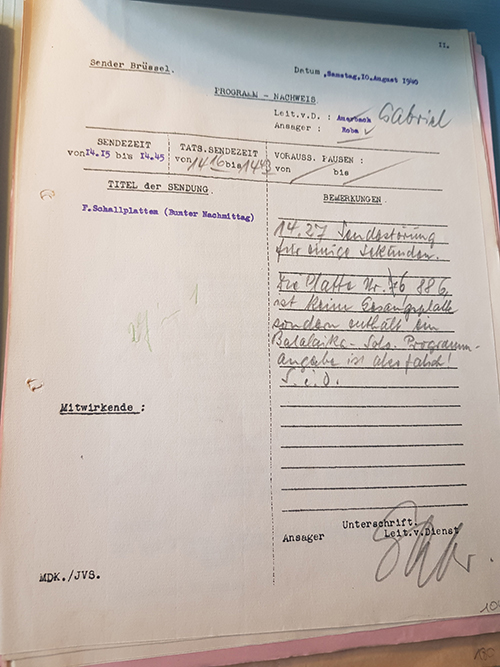
Figure 3
German-language standard form used for registering radio sound recordings including reference to a system of disc numbers, dated August 10, 1940, for the Flemish-language broadcaster Zender Brussel during the German occupation, in Brussels, Belgium. Source: CegeSoma Brussels, file no. AA33 19/09/40.
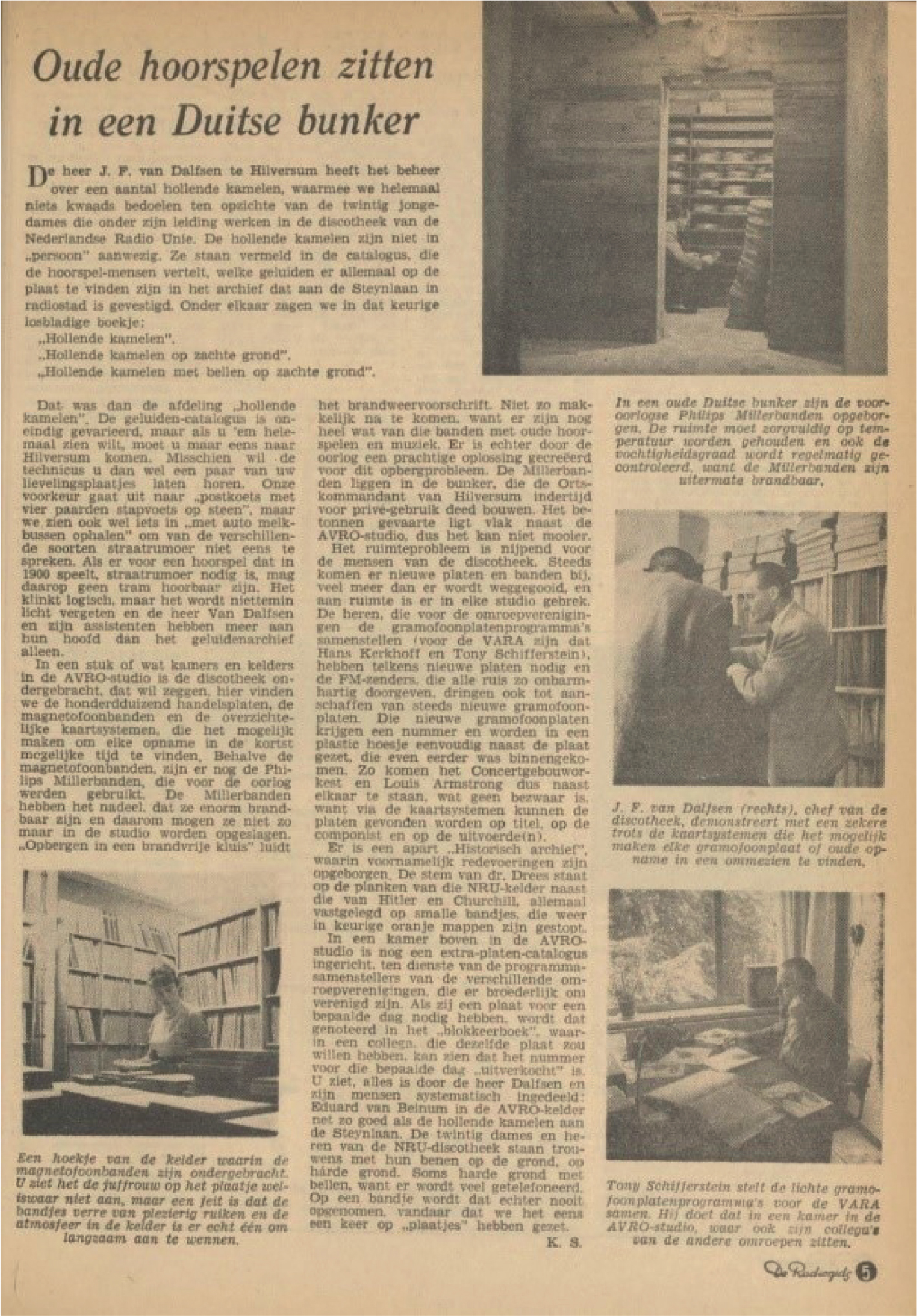
Figure 4
The former German bunker used by the Dutch national radio union soud archive to keep historical tape recordings cool (image top-right), along with images of the recorded sound collections (NRU-Discotheek) located in the AVRO building, Hilversum, The Netherlands. Source: K.S. “Oude hoorspelen zitten in een Duitse bunker.” Radiogids 25 no. 42 (June 1955): 5.
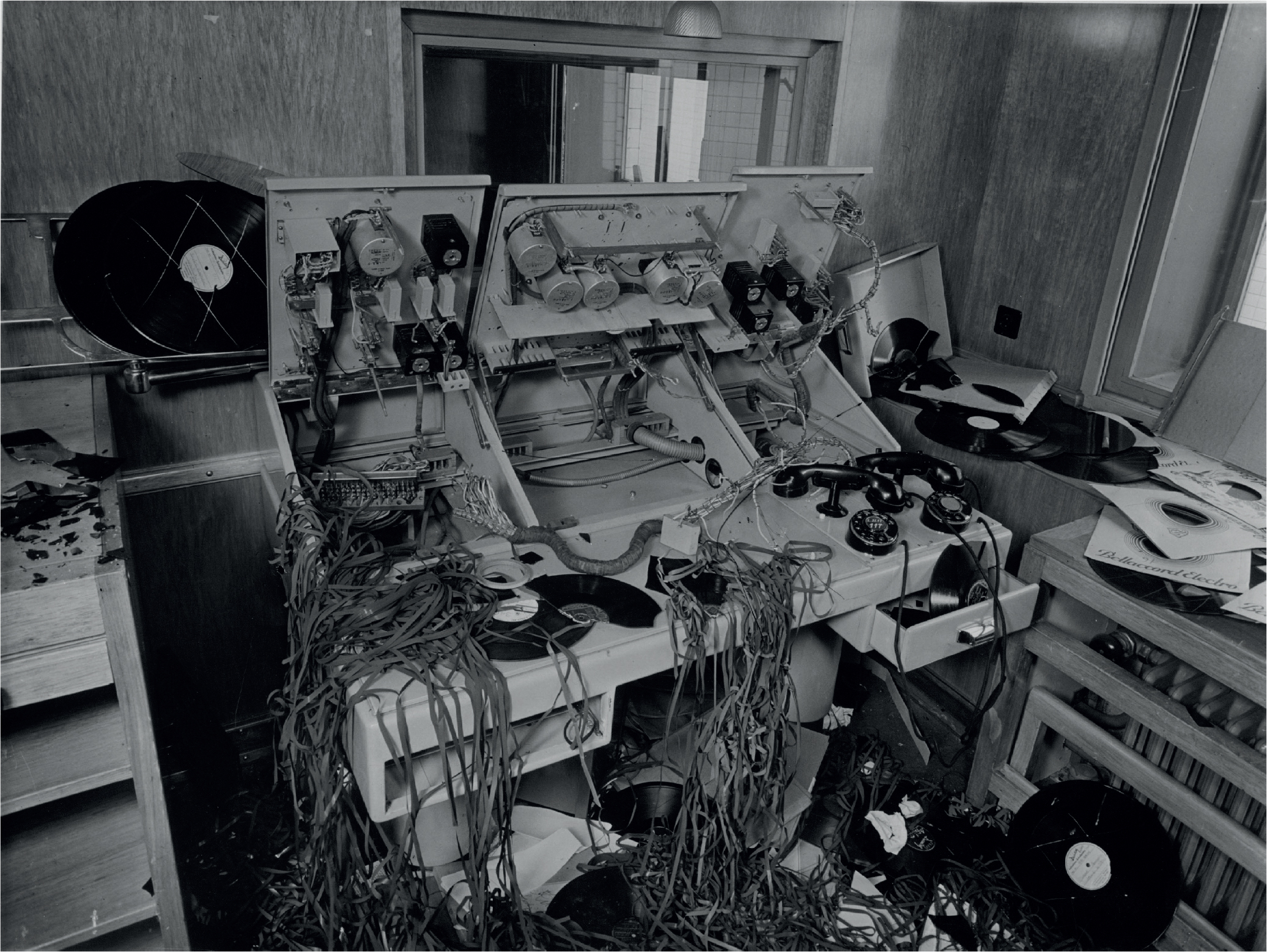
Figure 5
Damage at studio facilities at the NIR-INR building in Brussels, Belgium, including deliberately scratched and broken discs and unreeled tapes, ca. September 1944. Source: VRT Archive.
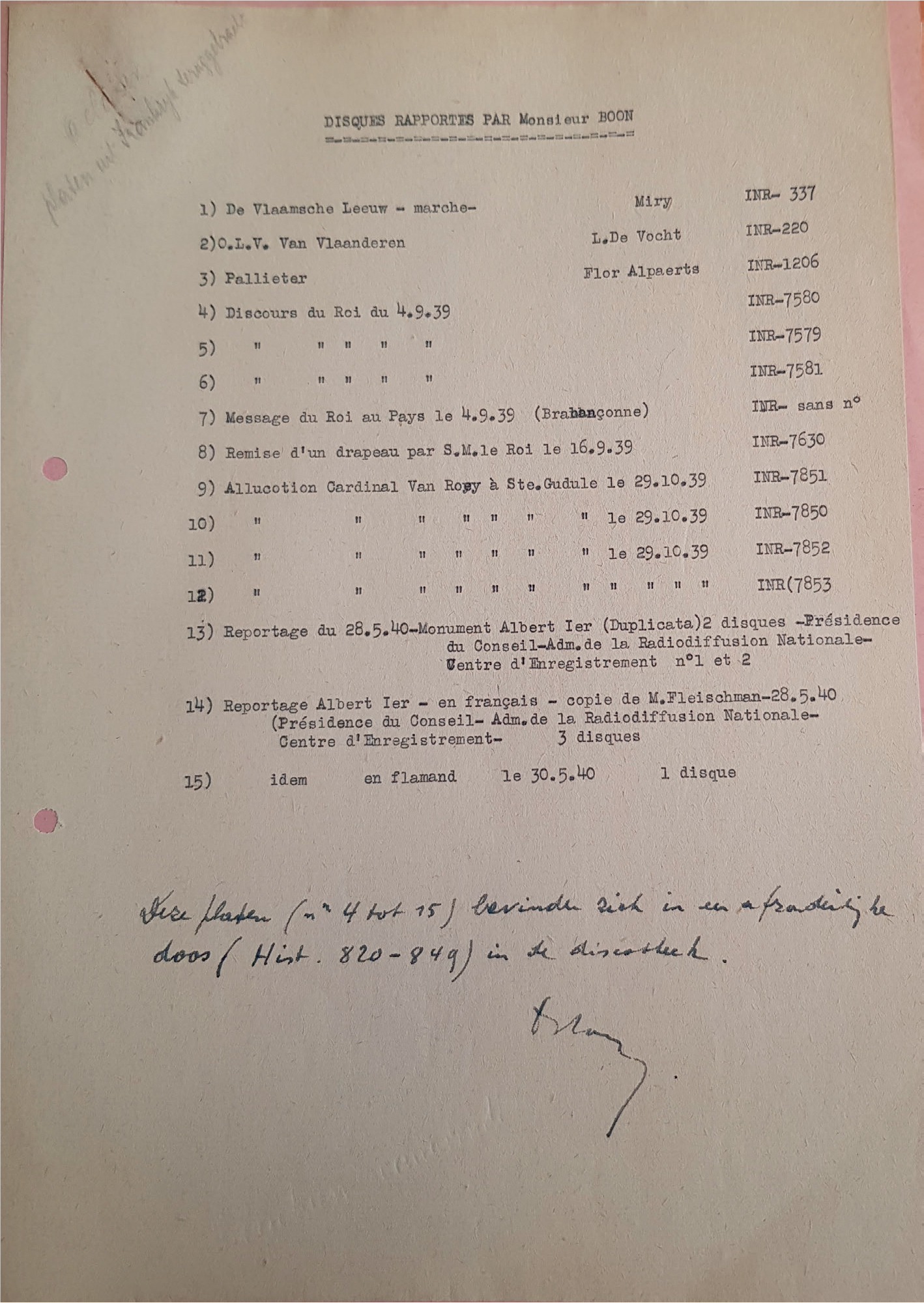
Figure 6
Archival list of the records (May-June 1940) that NIR-INR director Jan Boon brought back from France to the broadcast house in Brussels, Belgium. Source: National Archives of the Belgische Radio en Televisie (BRT), Inventory I 503, file no. 90.